Wednesday, August 03, 2022

AUSTRALIA
Corporations' profits soaring as inflation skyrockets and real wages fall, report reveals
There are fresh calls for big business to rein in their big or "supernormal" profits in order to provide low wage earners some desperately needed household budget relief.

Key points:

Big oil and gas companies almost doubled their profits in six months

An interim report shows the productivity growth that drives real wages is at a 60-year low

Some experts say the lack of wage growth is symptomatic of a broken industrial relations system


The Australian Council of Trade Unions (ACTU) wants businesses to share a greater portion of their profits with their workforce.

The latest national accounts show Australian companies are taking a record share of company earnings in the form of profits.

The latest profit results from Shell, Chevron, Exxon Mobil and BP show record half-yearly earnings.

Half-yearly profits for all companies together had almost doubled to $US55.2 billion ($79.6 billion), up from $US28.7 billion for the same period last year, the ACTU noted.

"These energy giants are posting staggering profits while fuelling our cost-of-living crisis," ACTU president Michele O'Neil says.

"Their shareholders are pocketing billions while working people are wondering how on Earth they can afford to fill up their car or heat their homes.

"The big oil and gas companies booked super windfall profits while Australian taxpayers have subsidised the bowser price of petrol.

The latest profit results from big energy corporations Shell, Chevron, Exxon Mobil, and BP show record half-yearly earnings.(ABC News: Lucas Hill )

"It's time that big businesses do their part to address the cost-of-living crisis gripping Australians right now.

"If the bargaining system was working the way it is supposed to, workers' standard of living wouldn't be hit as hard by big increases in power, gas and petrol prices."

Productivity first, according to businesses


Business groups argue that for real wages to lift, worker productivity needs to lift.

The Productivity Commission's interim report confirms that the productivity growth that drives real wages is languishing at 60-year lows, Business Council chief executive Jennifer Westacott says.

"This challenge is monumental because it is productivity that has overwhelmingly driven better living standards and higher wages for Australians since Federation.

But labour market economists say there should be less focus on the trend in the rate of productivity growth and more attention given to the difference between wage growth and productivity.

Figures from the Centre for Future Work, part of progressive the think tank The Australia Institute, show productivity growth has beaten wages growth for over a decade.

That should, in theory, mean a higher rate of pay growth for workers.

Productivity growth has beaten wages growth for over a decade, data from the Centre for Future Work shows.(Greg Jericho, ABS)

Impact Economics and Policy lead economist Angela Jackson says stubbornly low wage growth is a symptom of a broken industrial relations system.

She says the basic formula is that inflation plus productivity growth should equal wage growth.


"The system of wage determination and enterprise bargaining hasn't factored in productivity gains for decades," she says.

"It's frustrating."

The latest private-sector check on corporate profitability may only add to that frustration.

Double-digit rise in private infrastructure company profits


The big end of town, according to the latest gauge of corporate profitability, is swimming in cash.

Consulting firm Deloitte Access Economics has released its quarterly Investment Monitor.

It examines major engineering and commercial construction projects and their promoters.

The advisory firm markets the report as a "barometer of structural change in the Australian economy, and of the investment climate — now and in the future."

Deloitte Access Economics partner and report lead author Stephen Smith says the analysis confirms industry more generally is in rude health.

"Business profits grew at double-digit rates over the past year," he says.


He says big infrastructure firms are pushing the limits of what they are able to achieve in terms of work done, and are also looking to do more.

"Measures of spare capacity — a key leading indicator of investment — continue to tighten, and there is likely a degree of catch-up spending by businesses as supply chain disruptions ease."


In the June quarter, the value of definite projects (those under construction or committed) increased by $10.1 billion over the quarter, largely due to several infrastructure projects progressing through the planning stages.

A total of $417.1 billion worth of definite projects are currently included in the database.

That is the highest total seen since the end of the gas construction boom in late 2016, according to the report.

Rising inflation, interest rates, rent hikes and energy prices are creating a perfect storm for many Australians.(ABC Rural: Jane McNaughton)

Deloitte Access Economics forecasts business investment to grow through 2022 and 2023, but by less than previously expected.

"While it's a positive outlook, the long list of risks to that outlook has become longer," Mr Smith says.

"Public sector investment is expected to grow modestly in 2022 before falling in 2023."

The Bureau of Statistics will publish its latest measure of wage growth on August 17.


If inflation is being driven by profits, as new analysis suggests, some of the financial pain Australians are experiencing may be unnecessary — and something will have to give.

WW3.0

Hezbollah Threatens Israel With War Over Disputed Gas Field

  • Lebanon’s armed Hezbollah group threatened Israel that drilling at the Karish gas field could result in war.

  • Israel and Lebanon are in a years-long dispute over the demarcation of their territorial waters in the Mediterranean.

  • Israel has already warned early on that any damage to the drilling rig in Karish will result in an immediate reaction.

Lebanon’s armed Hezbollah group warned Israel on Sunday against drilling at an offshore gas field, renewing a threat that it could escalate the offshore border demarcation dispute to a war.

Hezbollah, backed by Iran, aired a video on its Al-Manar television channel, showing drone footage of Israeli barges at the gas field and their coordinates. The video ends with footage of a rocket with the words “within range” in Arabic and Hebrew. The text on the video message opens with “Playing with time is useless,” also in both languages.  

Israel and Lebanon, which do not have diplomatic relations, are in a years-long dispute over the demarcation of their territorial waters in the Mediterranean.

The dispute escalated this summer after UK’s Energean, which has been awarded the right to drill at the offshore Karish field, arrived on the site with a rig, prompting an immediate reaction from Beirut. The Lebanese president and the caretaker prime minister of the country accused Israel of violating Lebanon’s sovereignty.

Karish is the focus of the rift. According to Israel, Karish lies in its territorial waters. According to Lebanon, it falls within a triangle of contested waters because the two cannot agree where exactly the border passes.

Israel has already warned early on that any damage to the drilling rig in Karish—like attacks on any gas drilling rigs in its waters—will be construed as an attack on the state, implying there would be an immediate reaction.

The latest video threat from Hezbollah came as Amos Hochstein, U.S. Special Presidential Coordinator for the Partnership for Global Infrastructure and Investment, traveled to Lebanon on Sunday.

Hochstein was set to “discuss sustainable solutions to Lebanon’s energy crisis, including the Biden Administration’s commitment to facilitating negotiations between Lebanon and Israel on the maritime boundary,” the U.S. Department of the State said. “Reaching a resolution is both necessary and possible, but can only be done through negotiations and diplomacy,” the State Department added.  

By Charles Kennedy for Oilprice.com

After the CHIPS Act: U.S. still has a long road ahead to rival Asia in semiconductor manufacturing

PUBLISHED TUE, AUG 2 2022
Susan Caminiti@SUSANCAMINITI

KEY POINTS

After three years of stops and starts, Congress passed a $52 billion package designed to boost semiconductor manufacturing in the U.S. and improve competitiveness with China.

President Joe Biden is expected to signed the bill into law.

While top tech executives say a consistent supply of chips is crucial for technology advances like 5G and in medicine, not all are convinced that domestic manufacturing is critical to their business.


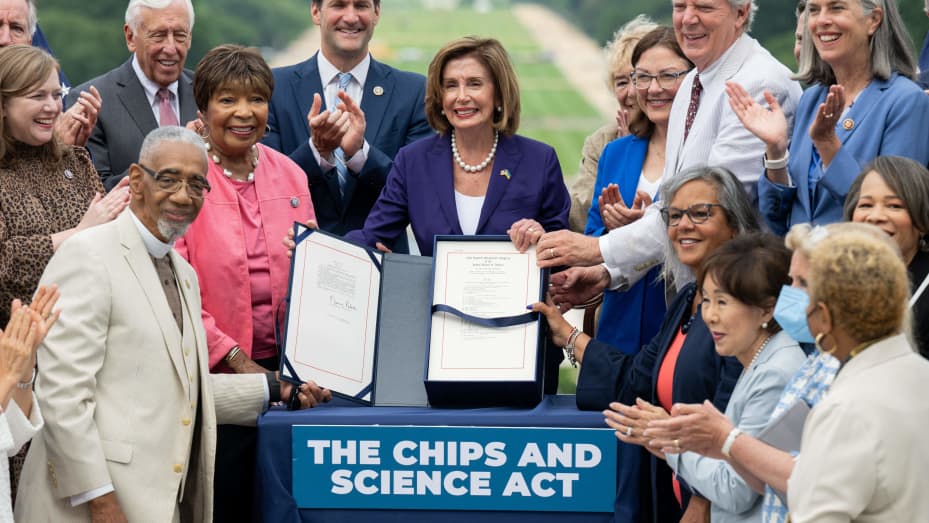
US Speaker of the House Nancy Pelosi, alongside members of Congress, holds the CHIPS and Science Act, providing domestic semiconductor manufacturers with $52 billion in subsidies to cut reliance on foreign sourcing, after signing it during an enrollment ceremony on the West Front of the US Capitol in Washington, DC, July 29, 2022.

Saul Loeb | AFP | Getty Images

The global semiconductor shortage that has left consumers waiting on coffee makers, computers, cars and medical devices — anything with a computer chip — might have an end in sight.

After three years of stops and starts, the U.S. House of Representatives passed a $52 billion package last week designed to boost semiconductor manufacturing in the U.S. and improve competitiveness with China. The bill passed the Senate with broad bipartisan support, and will now go to President Joe Biden to be signed into law.

The bill, known as the CHIPS-plus or Chips and Science Act, addresses concerns expressed by both parties that the U.S. needs to bring the production of these vitally important components back home and rely less on Asia-based manufacturers. Supporters, including companies such as Intel and Global Foundries, argued that the bill was necessary since other countries subsidize their semiconductor industry, making it hard for U.S. companies to compete without help.

Last month, Commerce Secretary Gina Raimondo, speaking with CNBC’s Jim Cramer, emphasized just how critical it is for the U.S. to begin making more chips at home and why passage of the CHIPS Act was central to that happening.

“Mark my words, if Labor Day comes and goes and this isn’t passed by Congress, companies will not wait, and they will expand into other countries,” she said. “The U.S. will lose out.”

The bill, of course, doesn’t preclude U.S. chip makers from also producing in Europe and elsewhere, but it does provide financial incentives to make manufacturing facilities in the U.S. more attractive. Intel has already pledged to build a $20 billion chip plant near Columbus, Ohio. The facility is expected to employ 3,000 workers along with 7,000 temporary construction jobs.

The package making its way to Biden’s desk has a few components, including $39 billion that would give direct financial assistance to companies building chip manufacturing plants at home. A separate $11 billion is earmarked to advance chip manufacturing research and workforce training, and a $2 billion slice is set aside to move lab innovation into military and other applications.

Creating the technology of tomorrow

Maryam Rofougaran, CEO of 5G startup Movandi, said passage of the bill will provide a reliable, consistent source of chips for companies like hers that are “pushing the envelope and creating the technology of tomorrow.”

“As the CEO of a 5G chipmaker, I know firsthand how critically important it is to have stable, reliable manufacturing partners and a resilient supply chain,” she says. “Making chips in the U.S. will help the companies get them consistently and it will create good-paying jobs which is good for the economy.”

Yet, not every business leader is as focused on where advanced chips are made as much as they are getting a consistent supply. Mike Jette, vice president of telecom, media and technology for supply chain software and consulting firm GEP, says supply continuity rather than U.S.-based manufacturing, is what he’s hearing is most critical for companies.

“The folks that are putting these chips into the products they make are more concerned with getting a consistent supply than where they’re made,” he says. “Yes, chip buyers are desperate for fabs outside of Taiwan, and they’d love for the supply to be coming from the U.S., but everyone knows this is a multi-year journey. Supply consistency is what’s most important.”

And as big a win as this is for the U.S. semiconductor industry, the impact could take years to be felt.

Building a chip plant is a long process, and attracting the talent needed to staff a new facility is not done overnight. Regulations, labor costs, and other roadblocks common in U.S. manufacturing are likely to further slow the process and the timetable for when U.S. companies can obtain these home-grown chips.

Geoff Martha, CEO of medical device company Medtronic, told CNBC’s Sara Eisen on “Closing Bell” that while he is encouraged by the passage of the bill, he thinks “it will take several years to get this capacity online.” A growing majority of the products that Medtronic makes contain chips.

Even so, Martha believes funding for R&D afforded by the bill’s passage will help usher in a new era of med-tech. “Semiconductors are at the center of that,” he said.
China blocks some Taiwan imports but avoids chip disruption

China has blocked imports of citrus and fish from Taiwan in retaliation for a visit by U.S. House Speaker Nancy Pelosi but avoided disrupting one of the world’s most important technology and manufacturing relationships

ByJOE McDONALD
AP Business Writer
August 03, 2022, 

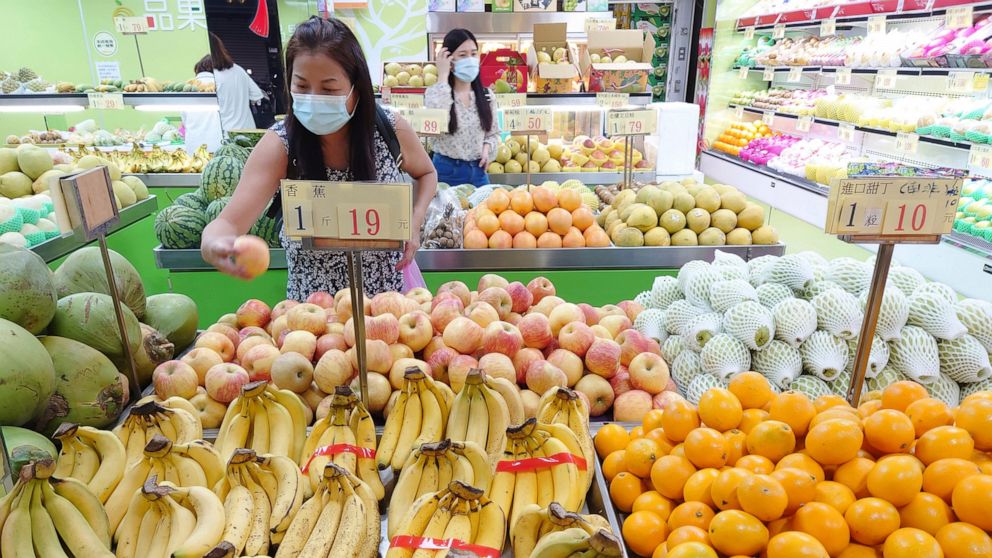
FILE - Customers buy fruit at a stall in Taipei, Taiwan, Sept. 20, 2021. China has blocked imports of citrus and fish from Taiwan in retaliation for a visit to the self-ruled island by a top American lawmaker but avoided sanctions on Taiwanese processor c...Show more
The Associated Press

BEIJING -- China blocked imports of citrus and fish from Taiwan in retaliation for a visit by a top American lawmaker, Nancy Pelosi, but has avoided disrupting one of the world's most important technology and manufacturing relationships.

The two sides, which split in 1949 after a civil war, have no official relations but multibillion-dollar business ties, especially in the flow of Taiwanese-made processor chips needed by Chinese factories that assemble the world's smartphones and other electronics.

They built that business while Beijing threatened for decades to enforce the ruling Communist Party's claim to the island by attacking.

Two-way trade soared 26% last year to $328.3 billion. Taiwan, which produces half the world's processor chips and has technology the mainland can't match, said sales to Chinese factories rose 24.4% to $104.3 billion.

“The global economy cannot function without chips that are made in either Taiwan or China,” said Carl B. Weinberg of High-Frequency Economics in a report.

On Wednesday, Beijing blocked imports of citrus fruits and frozen mackerel from Taiwan after Pelosi, speaker of the House of Representatives, arrived in Taiwan. Those products are only a fraction of Taiwan's total exports to the Chinese mainland. The ruling party has avoided disrupting the flow of chips and other industrial components, a step that would send shock waves through the shaky global economy.

Beijing also announced four days of military exercises with artillery fire in waters around Taiwan. That might delay or disrupt shipping to and from the island, one of the biggest global traders.

The potential disruption adds to concerns over weakening global economic growth, but Asian stock markets rose Wednesday after there was no immediate sign of Chinese military action.

The Communist Party says Pelosi's visit might embolden Taiwan to make its decades-old de facto independence permanent. Beijing says that would lead to war.

The administration of U.S. President Joe Biden has sought to tone down the volume on the visit, insisting there’s no change in America’s longstanding “one-China policy,” which recognizes Beijing but allows informal relations and defense ties with Taipei.


Meeting leaders in Taiwan, Pelosi said she and other members of Congress in a visiting delegation were showing they will not abandon their commitment to the self-governing island.

“America’s determination to preserve democracy, here in Taiwan and around the world, remains ironclad," Pelosi said in a short speech during a meeting with Taiwan’s President Tsai Ing-wen.

“Facing deliberately heightened military threats, Taiwan will not back down,” Tsai said.

The ban on imports of citrus fruits and frozen mackerel will hurt suppliers seen as Tsaí's supporters.

Taiwan plays an outsize role in the chip industry for an island of 24.5 million people, accounting for more than half the global supply.

Its producers including Taiwan Semiconductor Manufacturing Corp. make the most advanced processors for smartphones, tablet computers, medical devices and other products. Taiwan says chip sales to China factories rose 24.4% last year to $104.3 billion.

Beijing has invested billions of dollars in developing its own industry, which supplies low-end chips for autos and appliances but cannot support the latest smartphones, tablet computers, medical devices and other products.

Chips are China’s biggest import at more than $400 billion a year, ahead of crude oil.

That concentration has fueled concern in the United States and Europe about relying too heavily on supplies that might be disrupted by conflict. The U.S. government is trying to expand its domestic chip production capacity.

Overall, China is Taiwan’s biggest trading partner, taking more than twice as much of its exports as the United States, the island’s No. 2 foreign market.

Beijing has tried to use access to its markets to undermine Tsai and other Taiwanese leaders it accuses of pursuing independence.

The customs agency blocked imports of cookies and other food products from more than 100 Taiwanese suppliers on Monday ahead of Pelosi's visit, according to the Global Times and other Chinese news outlets. There was no official announcement.

The Communist Party also has used military action in the past to try to hurt Taiwanese leaders by disrupting the island's economy.

The mainland tried to drive voters away from then-President Lee Teng-hui ahead of the island's first direct presidential elections in 1996 by firing missiles into shipping lanes.

That forced shippers to cancel voyages and raised insurance costs but backfired by allowing Lee to brag about standing up to Beijing in front of cheering supporters. Lee won the four-way election with 54% of the vote.

Pelosi’s Taiwan trip spurs Chinese battery giant to pause plant debut

Bloomberg News | August 2, 2022 
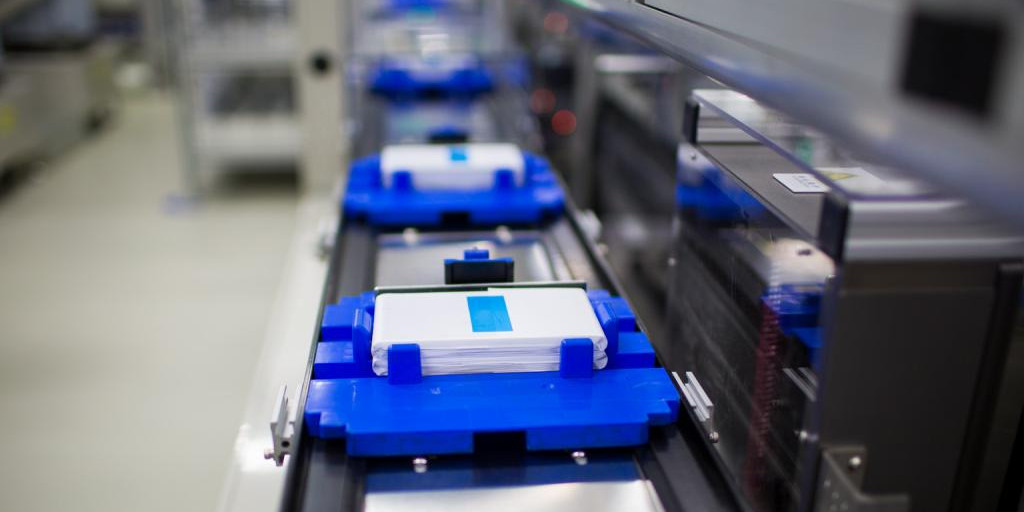
Credit: CATL

A giant Chinese supplier of electric-vehicle batteries decided to push back announcing a multibillion-dollar North American plant to supply Tesla Inc. and Ford Motor Co. due to tensions raised by House Speaker Nancy Pelosi’s trip to Taiwan, according to people familiar with the matter.


Contemporary Amperex Technology Co. Ltd., the world’s biggest maker of batteries for electric vehicles, has been considering at least two locations in Mexico near the Texas border, as well as sites in the US, for the plant. China’s CATL has been in an advanced stage of site selection and negotiating incentives, in anticipation of announcing its selection in the coming weeks.

CATL now plans to wait until September or October to make the announcement, the people familiar with the process said Tuesday, asking not to be identified as the information isn’t public. The concern is that an announcement could stoke tensions at a sensitive time in US-China ties amid the controversial Pelosi visit to Taiwan, they said.

A representative for CATL didn’t immediately respond to requests for comment. Tesla also didn’t respond to requests for comment. Ford declined to comment.

Shares of Tesla trimmed earlier gains, trading up 0.8% to $899.11 as of 1:36 p.m. in New York. Ford fell into negative territory, declining 0.7% to $15.24.

Pelosi landed in Taipei, Taiwan’s capital, on Tuesday evening local time in the face of threats and opposition from China, which regards Taiwan as part of its territory. Pelosi’s trip makes her the highest-ranking US politician to visit the island in 25 years, and Chinese officials have called it “provocative.”

CATL’s headquarters are in Fujian, across the Taiwan Strait from the island. China has announced military exercises will take place around the island this week in response to Pelosi’s visit to Taipei.

Bloomberg News reported last month that CATL is considering Ciudad Juarez, in the state of Chihuahua, and Saltillo, in Coahuila, and that the company is contemplating an investment of as much $5 billion in the project. Sites in the US and Mexico are still under active consideration, and there’s no intention to walk away from the plan, the people said.

CATL is also weighing the need to establish a North America site alongside the potential impact of a US legislative package being brokered between Democratic senators Chuck Schumer and Joe Manchin, the people said.

A key piece of that legislation requires EV makers to source a portion of battery minerals from — or processed in — a country with which the US has a free trade agreement, in order for their vehicles to qualify for consumer incentives. The US-Mexico-Canada Agreement went into effect in July 2020.

(By Eric Martin, Ed Ludlow and Gabrielle Coppola, with assistance from Keith Naughton)


SPACE WEATHER
Exact date solar storm will enter Earth's magnetic field with possibility of chaos

High speed solar winds from a hole in the sun's atmosphere is set to enter the Earth's magnetic field. Here's the date forecasted for the solar storm and what effects it might have


Malvika Padin
Trends Writer
2 AUG 2022
A solar storm is set to hit Earth's magnetic field this week 
(Image: Getty Images/Science Photo Library RF)


The Earth is occasionally hit by solar storms, which occur when the Sun emits huge bursts of energy that then send streams of electrical charges towards the Earth.

Now, a hole in the sun's atmosphere is giving rise to high-speed solar winds, which could enter the Earth's magnetic field this week and cause a minor solar storm.

The prediction comes from the National Oceanic and Atmospheric Administration's Space Weather Prediction Center (SWPC), who have observed that "gaseous material is flowing from a southern hole in the sun's atmosphere".

Here's that exact date that forecasters have predicted for the storm storm and what effects it might have.

When will the storm storm hit Earth?


A solar storm caused by a coronal hole in the sun's atmosphere is headed towards Earth
 (Image: Getty Images/Science Photo Library RF)

OMG THAT'S TODAY
Forecasters have predicted that a solar storm coming from coronal holes in the sun's atmosphere will hit the Earth's magnetic field on Wednesday, August 3.

Coronal holes are areas in the sun's upper atmosphere where the star's electrified gas is cooler and less dense, where instead of looping back on themselves, the magnetic fields from the sun beam outwards into space.

Solar material is carried by these beams at speeds of up to 1.8 million miles per hour, and this debris - which usually takes around 15 to 18 hours to reach Earth - is then absorbed by the planet's strong magnetic field, triggering solar storms.
What happens during a solar storm?

During a solar storm, the Earth's magnetic field gets compressed slightly due to the waves of highly energetic particles.

These solar particles trickle down the magnetic field lines near the poles, agitating molecules in the atmosphere and releasing energy in the form of light to create colourful auroras, similar to that of the famous Northern Lights.

How will the solar storm affect the Earth?


If a solar storm is strong enough, it can disrupt mobile phone and GPS system signals.

The solar storm on August 3 is predicted to be minor and quite weak. However, it also has potential to cause minor fluctuations in power grids and impact some satellite functions — including those for mobile devices and GPS systems.

In case of more extreme storms, the disruption to our planet's magnetic field can be powerful enough to even send satellites tumbling down to Earth, according to Live Science.

Earth to be hit by solar storm after hole opens in the Sun

Andrew Griffin
Tue, August 2, 2022 

(GETTY IMAGES)

A solar storm could be about to hit Earth, as material flows out of a hole in the Sun.

The G1 class storm could cause power grid failures, disrupt satellites and disrupt the migrations of animals, according to the US National Oceanic and Atmospheric Administration. Nonetheless, they are relatively minor – with much more dramatic effects possible during geomagnetic storms.

The organisation said that such conditions were “likely” on Wednesday, 3 August, as a result of a hole on our star.

Coronal holes appear as dark patches on images of the Sun when they are taken using ultraviolet and X-rays. They are cooler and less dense parts of our star, which means that the solar wind is more easily able to escape into space.

That means that fast streams of solar wind can be thrown out of the Sun – and may be directed towards Earth.

Such a stream will glance our atmosphere, leading to potential effects both in the space just above us as well as down the Earth.

Coronal holes can form at any time, though they happen more during the time of solar minimum. We are currently moving out of such a time and towards the solar maximum, where the Sun’s activity rises in intensity, which is expected to arrive sometime around 2025.

As that time approaches, scientists expect space weather to have a more regular and potentially more damaging impact on life on Earth. Scientists have repeatedly warned that human civilisation should be doing more to protect against damaging solar weather before more intense events arrive.

NOAA’s scale for solar weather begins at G1, as Wednesday’s storm is expected to be, which is referred to as “minor”.

It runs all the way to G2 – an “extreme” geomagnetic storm – where widespread power system problems are expected, spacecrafts could be disorientated, and radio signals and satellite navigation could be temporarily knocked out.

Such extreme solar storms are however relatively rare. Extreme solar storms of that kind only occur around four days in each of the Sun’s 11 year cycles.

GreenLight and Samsung Biologics complete first commercial-scale engineering run for mRNA COVID-19 vaccine

3-Aug-2022 

The mRNA synthesis reaction was achieved without the need for customisation, using standard equipment for contract development and manufacturing companies (CDMOs)

GreenLight Biosciences, a biotechnology company dedicated to making ribonucleic acid (RNA) products affordable and accessible for human health and agriculture, and Samsung Biologics, a leading global CDMO providing fully integrated end-to-end contract development and manufacturing services, announced the successful completion of the first commercial-scale engineering run for the companies’ mRNA production partnership.

Since the announcement of the strategic partnership between GreenLight Biosciences and Samsung Biologics in late 2021, technology transfer and scale-up from the lab bench to Samsung’s commercial facility was completed in seven months, demonstrating platform adaptability and scalability.

GreenLight’s process—from drug substance and lipid nanoparticle formulation to bulk drug product—can be completed in the same facility, an important capability. GreenLight’s mRNA synthesis reaction had a titre of 12 g/L at commercial scale and produced 650g of mRNA.

The company’s RNA platform allowed GreenLight to move from conceptualizing an mRNA vaccine to delivering released clinical trial material in less than two years. With the demonstration at Samsung, and with GreenLight’s COVID booster vaccine clinical trial expected to start in 2022, GreenLight would be capable of supplying mRNA vaccine at a commercial scale.

“This demonstrates a major achievement in our continuing goal to offer one-stop end-to-end mRNA production from Drug Substance to Aseptic Fill Finish to commercial release, all from a single site, as we strive across our biomanufacturing network to fight the pandemic,” said John Rim, CEO and President at Samsung Biologics.

Earlier this year, Samsung Biologics completed the expansion of its mRNA drug substance manufacturing suite at its Songdo headquarters, where the company is now fully equipped to provide end-to-end mRNA production for clients.

“One of the greatest challenges when producing quality pharmaceuticals is advancing from a small lab to large-scale commercial production,” said GreenLight CEO Andrey Zarur. “We are grateful for the help and support of Samsung in demonstrating that our small mRNA process can scale in a linear fashion to the industrial scale that will be needed to help satisfy the vaccine needs of humanity.”

To date, all comparability data conforms with expected outcomes, indicating successful scale up and fit of GreenLight’s process to Samsung Biologics’ Songdo facility. A second engineering run will start in August, to implement improvements indicated by the first run and to demonstrate repeatability at scale.

Are cattle at risk of SARS-CoV-2 infection?

In a recent research letter published in Emerging Infectious Diseases, researchers evaluated antibodies targeting severe acute respiratory syndrome coronavirus 2 (SARS-CoV-2) in cattle from farms in Germany.

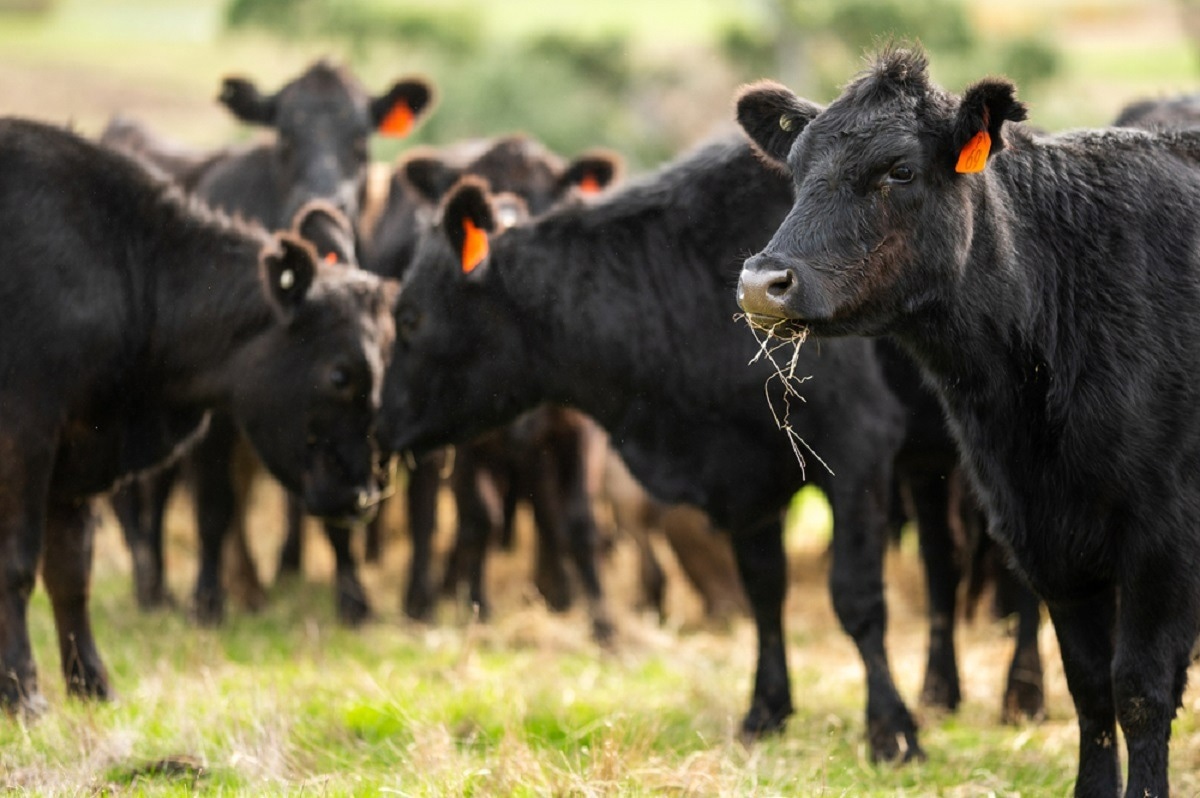
Study: Antibodies against SARS-CoV-2 Suggestive of Single Events of Spillover to Cattle, Germany. Image Credit: William Edge/Shutterstock
Study: Antibodies against SARS-CoV-2 
Suggestive of Single Events of Spillover to Cattle, Germany
Image Credit: William Edge/Shutterstock

Background

Since SARS-CoV-2, the causative agent of coronavirus disease 2019 (COVID-19) in humans, was initially discovered in late 2019, it has spread incredibly quickly globally. This massive worldwide pandemic has claimed more than 6.3 million human lives in roughly 2.5 years of virus circulation. 

SARS-CoV-2 infection in humans increases the possibility of animal transmission. With a particular focus on discovering vulnerable species and prospective reservoirs or intermediate hosts, various researchers evaluated the involvement of wildlife and livestock species at the human-animal interface since the COVID-19 pandemic's inception. 

According to prior reports, several animal species, including nonhuman primates, canids, felids, mustelids, white-tailed deer, and numerous Cricetidae rodent species, were susceptible to SARS-CoV-2 infection in experimental conditions, whereas swine or poultry were not. Following experimental SARS-CoV-2 inoculation, domestic ruminants like sheep, cattle, or goats had poor susceptibility; very few animals could contract the infection without animal-to-animal spread.

Furthermore, in only one to two days, cattle tested SARS-CoV-2-positive by reverse transcription polymerase chain reaction (rt-PCR) following experimental infection. Thus, serologic screening may be more valuable for detecting priorly infected animals and determining the spillover infection rates in the field.

About the study

In the present research, the scientists serologically examined 1,000 samples of cattle gathered in Germany at the end of 2021 to determine the COVID-19 risk to cattle. 

In detail, the team evaluated 1,000 plasma or serum samples obtained from cattle at 83 farms in four German federal states (Lower Saxony, Bavaria, Thuringia, and Saxony-Anhalt). They noted that no permissions were required to obtain these specimens because they were surplus material from standard diagnostic submissions made by the accountable veterinarians in the framework of the health surveillance of the specific cattle farm.

Sampling took place in the 2021 autumn and the early winter of 2021 to 2022, when a massive surge of SARS-CoV-2 infections attributed to the Delta variant of concern (VOC) occurred among humans. The researchers investigated two to 20 randomly chosen plasma or serum samples per farm. They sampled farm 31 twice, and the owner of the animals was quarantined in the interim.

A multispecies enzyme-linked immunosorbent assay (ELISA) based on the SARS-CoV-2 receptor-binding domain (RBD) was used to evaluate all samples from cattle. The authors analyzed an extra 100 randomly procured cattle control samples from 2016 in Germany.

Results

The study results showed that 11 cattle from nine farms were positive for the SARS-CoV-2 RBD ELISA among the 2021 cattle samples; one of these animals, from farm 31, was sampled after the quarantine of the owner. An indirect immunofluorescence test using Vero cells infected with the SARS-CoV-2 2019 nCoV Muc-IMB-1 strain as the antigen matrix confirmed positive results of ELISA for all but one sample from farm 8. Besides, titers varied from 1:8 to 1:512, with farm 31's seropositive animal having the highest titer.

The assessment of RBD-ELISA-positive 11 samples utilizing a surrogate virus neutralization test (sVNT) enabled the identification of SARS-CoV-2 neutralizing antibodies. The analysis was accomplished by simulating the interplay between the receptor protein of the host cell membrane, i.e., angiotensin-converting enzyme 2 (ACE2) and SARS-CoV-2. Moreover, four cattle from farms 74, 47, 31, and 11 had positive sVNT results.

Conclusions

According to the study findings, 11 cattle samples from Germany were positive for SARS-CoV-2 antibodies, implying that cattle may occasionally become virus-infected and seroconvert through exposure to COVID-19-infected keepers. Yet, the team found no additional evidence of intraspecies viral spread in the field, in line with the former experimental infection assessments.

However, the authors noted that future monitoring initiatives should include cattle farms, particularly given that another CoV (i.e., BCoV) was quite common across cattle, and a BCoV infection did not shield against contracting SARS-CoV-2 according to a prior study. Further, animal hosts' vulnerability to the Omicron VOC was unknown. Furthermore, recombination events between the two viruses could result from double infections in a single animal, a process seen with other CoVs.

The limited susceptibility of cattle to SARS-CoV-2 makes emergence extremely unlikely, but a potential chimera among SARS-CoV-2 and BCoV could pose an extra concern. The study stated that ruminants should be considered in outbreak studies and warranted routine testings to prevent the spread of novel SARS-CoV-2 variants across the livestock population.

Journal reference:
Synthetic embryos grown from stem cells don't need sperm or eggs
By Michael Irving
August 02, 2022

A sample of the synthetic embryos in the nutrient solution

Weizmann Institute of Science

Researchers have created synthetic mouse embryos out of stem cells, removing the need for sperm, eggs and even a womb. They were then grown to almost half the entire gestation period, at which point they had all of the organ progenitors, including a beating heart. The tech could eventually be used to grow organs for transplant.

The new study, from researchers at the Weizmann Institute of Science in Israel, built on two branches of the team’s previous research. The first involved reprogramming stem cells into a “naive” state that allows them to differentiate into all other cells, including other stem cells. The other work focused on developing a device that could grow embryos more effectively outside of the womb.

A sample of the synthetic embryos in the nutrient solution
Weizmann Institute of Science

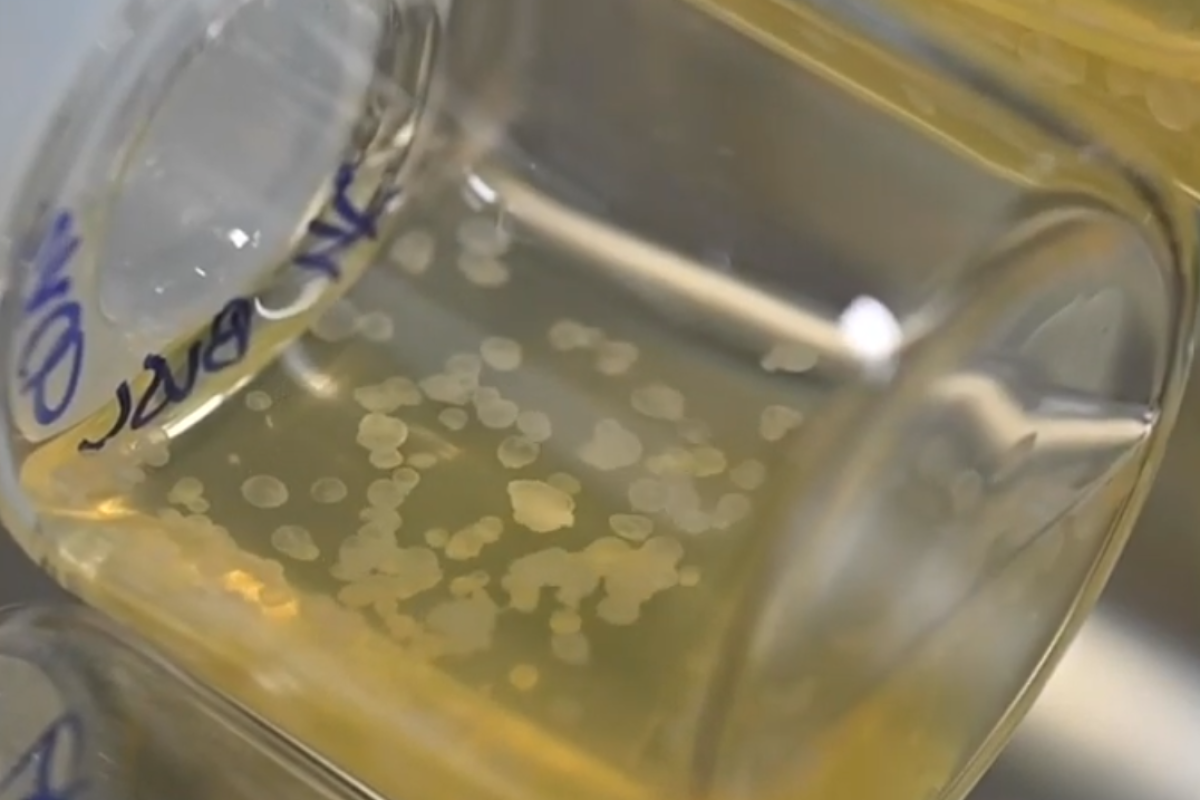
By combining the two techniques, the team has now grown some of the most advanced synthetic mouse embryos to date. They started with naive mouse stem cells, which had been cultured in a Petri dish for several years prior. These were separated into three groups that would play key roles in the embryo development.

One group contained cells that would develop into embryonic organs. The other two were treated with master regulator genes of extra-embryonic tissues – the placenta for one group and the yolk sac for the other. The three types of cells were then mixed together in the artificial womb, which carefully controls pressure and oxygen exchange, and gently moves the beakers around to simulate natural nutrient flow.

Once inside, the three types of cells clumped together to form aggregates, which had the potential to develop into embryo-like structures. As might be expected, the vast majority failed at that stage, with only 0.5% – or 50 out of about 10,000 – successfully developing further.


A synthetic embryo over its eight days of development
Weizmann Institute of Science

Those lucky few started to form spheres of cells, and eventually elongated structures resembling natural embryos, complete with placentas and yolk sacs. Thy were allowed to develop for over eight days, which is almost half of the mouse gestation period, by which point they had formed all the early progenitors of organs. That includes a beating heart, blood stem cell circulation, a well-shaped brain, an intestinal tract and the beginnings of a spinal column.

On closer inspection, the team found that the shape of internal structures and the gene expression patterns of these synthetic embryos matched natural ones to within 95%.

 
INCUBATOR
Weizmann Institute of Science

 Their organs also seemed to be functional.

The team says that this technique could help reduce the need for live animal testing, and could eventually become a plentiful source of tissues and organs for transplantation.

“The embryo is the best organ-making machine and the best 3D bioprinter – we tried to emulate what it does,” said Professor Jacob Hanna, lead researcher on the study. “Instead of developing a different protocol for growing each cell type – for example, those of the kidney or liver – we may one day be able to create a synthetic embryo-like model and then isolate the cells we need. We won’t need to dictate to the emerging organs how they must develop. The embryo itself does this best.”

The research was published in the journal Cell.

Source: Weizmann Institute of Science


In THE DIALECTIC OF SEX: THE CASE FOR FEMINIST. REVOLUTION, 
Shulamith Firestone cuts into the prejudice against women (and children)—
amplified through the.
258 pages

AUG. 3, 2022

SpaceX rocket debris lands in sheep paddock, Australian Space Agency confirms

NOT THE CHINESE ROCKET
A piece of space junk was found in a sheep paddock in the NSW Snowy Mountains.
(ABC South East NSW: Adriane Reardon)

The Australian Space Agency has confirmed debris found in the NSW Snowy Mountains belongs to SpaceX.

Key points:Three pieces of debris have so far been located

Snowy Mountains residents have been told more pieces could be found

People are being told to contact a hotline if they do find more


Three pieces of space junk have so far been found in the region, which are considered to be the biggest pieces found in Australia since 1979.

Two pieces were inspected by technical experts from the Australian Space Agency and NSW Police on Saturday.

Police have since confirmed they were also aware of the third piece being found in the region.

This piece of space junk is estimated to be up to three metres long. 
(ABC South East NSW: Adriane Reardon)

Authorities believed the space debris belonged to SpaceX but had been awaiting confirmation.

"The agency has confirmed the debris is from a SpaceX mission and continues to engage with our counterparts in the US, as well as other parts of the Commonwealth and local authorities as appropriate," an Australian Space Agency spokesperson said.

"The agency is operating under the Australian Government Space Re-entry Debris Plan which outlines roles and responsibilities for key Australian government agencies and committees in supporting the response to space re-entry debris."

This third piece of space junk was also found in the NSW Snowy Mountains, near Jindabyne.(Supplied: Nick Lodge)

It comes after locals reported hearing a loud boom on July 9, which was considered to have been caused by the SpaceX Dragon spacecraft, which was launched in November 2020, re-entering Earth's atmosphere.

Locals in the regions are being told that there's a possibility more pieces could still be found.

"If the community spots any further suspected debris they should not attempt to handle it or retrieve it," the agency said.

"They should contact the SpaceX Debris Hotline at 1-866-623-0234 or at recovery@spacex.com."

So what happens now?

While the space debris is expected to remain at the properties where they were found for now, the pieces could eventually be returned to US soil.

Australian National University's Institute of Space deputy director Cassandra Steer said there was an obligation under international space law to repatriate any debris to the country from where it originated.

Cassandra Steer is a space law lecturer and mission specialist at ANU's Institute of Space.(Supplied: ANU)

"Any space object, or part thereof, has to be repatriated, and I'm sure that's what's going to happen in this case as well," she said.

"Unless SpaceX says that it wants no part in the costs associated with it, and it would like to donate the debris to science, that's quite possible.

"But it should be sent back to the US."

Dr Steer said it was significant that there was confirmation the debris belonged to SpaceX.

"We have clarity in terms of lines of responsibilities," she said.

"The US is liable for any damage that is caused by this space debris ... and Australia could go to the US and seek some form of compensation if there are any costs involved in cleaning it up."
Farmers Mick Miners and Jock Wallace, along with astrophysicist Brad Tucker, have visited where the first two pieces of junk were found.
(ABC South East NSW: Adriane Reardon)

But she was confident the situation would be resolved amicably.

"Clearly this is not going to turn into a horrible diplomatic event; the US is one of our closest allies and partners," she said.

"But there does need to be a government-to-government response in to how to deal with this.

"Thankfully in this situation it doesn't look like there's huge, enormous damage so hopefully it can be sorted out very amicably and without any international diplomatic incident."

SpaceX has been contacted for comment.

Space junk has landed at two properties in the NSW Snowy Mountains.