Tuesday, October 14, 2025

Bangladesh: JeI’s International Outreach – Analysis


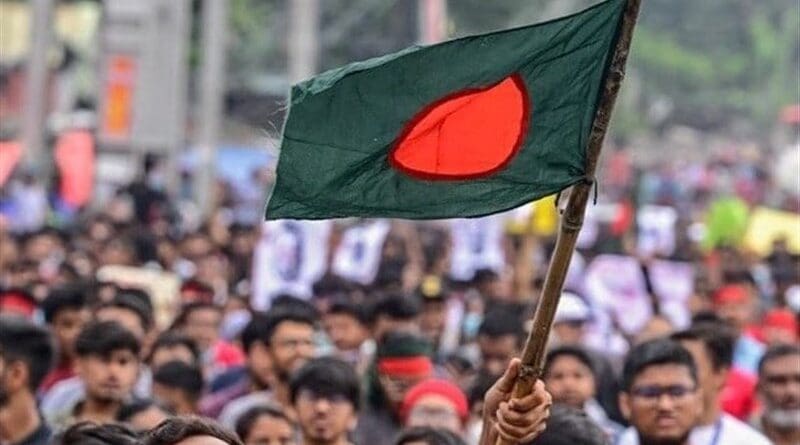
Protestors with the Bangladesh flag. Photo Credit: Tasnim News Agency

October 14, 2025 
By SATP
By Sanchita Bhattacharya


Since Sheikh Hasina’s ouster on August 5, 2024, Jamaat-e-Islami (JeI) has not only unleashed itself as a formidable domestic force in Bangladesh, but also very much on the international level. As the Interim Government under Muhammad Yunus lifted the ban on JeI and its students’ wing, the Islami Chhatra Shibir (ICS), on August 28, 2024, JeI has surged to the forefront in its interactions with various foreign dignitaries, ambassadors and organisations. Some of the latest engagements in this context include:

On October 12, newly appointed German Ambassador to Bangladesh RĂ¼diger Lotz paid a courtesy call on Jamaat Chief Shafiqur Rahman at his office at Dhaka’s Bashundhara Residential Area. In the meeting, various issues including human rights situation in Bangladesh, freedom of expression, sustainable democracy, and the need to further strengthen democratic institutions were discussed. Both sides expressed optimism that bilateral trade, investment, and economic cooperation between Bangladesh and Germany will continue to grow in the coming days.

On October 8, Algerian Ambassador to Bangladesh Abdel Wahab Saidani paid a courtesy call on JeI Chief Shafiqur Rahman in Dhaka. The dialogue focused on strengthening mutual relations between Bangladesh and Algeria, as well as the overall situation in Bangladesh. Both sides engaged in discussions covering topics purportedly related to sustaining democracy, investment and diplomatic issues.

On October 7, United Nations (UN) Resident Coordinator in Dhaka, Gwen Lewis, paid a courtesy call on JeI Chief Shafiqur Rahman in Dhaka. In the meeting discussions were held on various issues, including the current human rights and political situation in Bangladesh, the Rohingya crisis, and upcoming national elections. At the meeting, JeI Chief described the upcoming national elections [expected in February, 2026] as ‘extremely important’ for Bangladesh and sought the cooperation and technical assistance of the UN to ensure that the elections are free, fair, and acceptable. Additionally, the UN’s continued support was sought for the protection of women’s rights, development of skills in the workplace and overall development activities in Bangladesh.

On October 6, Ambassador of the Republic of Kosovo to Bangladesh Lulzim Pllana paid a courtesy call on JeI Chief Shafiqur Rahman in the Bashundhara area of Dhaka. During the meeting, the envoy inquired about the health of the JeI Chief, and wished him a speedy recovery. They exchanged views on the current political situation in Bangladesh as well as various issues of mutual interest, including bilateral relations between Bangladesh and Kosovo. Both sides expressed optimism that the existing ties between the two countries would be further strengthened in the days ahead.

On October 6, a JeI delegation met UK Trade Envoy Baroness Rosie Winterton, who was on a five-day visit to Dhaka. According to a press release issued by JeI’s central publicity department, a six-member JeI team, led by its Deputy Chief Mujibur Rahman, met the British envoy at the UK High Commission. Discussions focused on the current political situation in Bangladesh, the upcoming national elections, and progress in trade and commerce, particularly in the readymade garments, pharmaceuticals, agriculture, education, and economic development sectors.

On October 5, Switzerland’s Ambassador to Bangladesh, Reto Renggli, held talks with JeI Chief Shafiqur Rahman in Dhaka. They also discussed Bangladesh’s overall situation and ways to strengthen bilateral relations between the two nations. Both expressed optimism that cooperation and progress between the two countries would continue to grow in the future.

Jamaat’s global outreach is growing by the day, with formal meetings with foreign dignitaries of Argentina, Singapore, Algeria, Norway, Australia, Germany, Canada, Denmark, Japan, among others, as well. These meetings have been instrumental in showcasing the Jamaat’s legitimacy as an important political player. Such international validation of a group with a long history of Islamist violence and collaboration in the genocide of 1971, is a matter of some concern.

Apart from these countries, China, Pakistan, Turkey, and the UK have been proactive in their respective political engagements with Jamaat and its leaders. On September 2, 2024, a courtesy meeting of Chinese Ambassador Yao Wen with Jamaat Chief Shafiqur Rahman, at Jamaat’s central office in Moghbazar, Dhaka, kicked off this procession. This was the first visit of any diplomat to the Jamaat office since the beginning of War Crimes’ Trial in March, 2010. After the meeting, Yao Wen applauded Jamaat as “a disciplined party”. In addition, throughout 2025, Chinese envoys, including the Ambassador, have maintained courtesy calls and exchanges with Jamaat leaders. This pattern of outreach highlights Beijing’s resolve to engage across Bangladesh’s political spectrum, to safeguard its economic stakes, strategic projects, and diplomatic leverage.

Turkey, the United Kingdom, and Pakistan have also engaged in increasing diplomatic interaction with Jamaat-e-Islami in recent months. On October 6, 2025, Turkish Deputy Foreign Minister A. Berris Ekinci paid a courtesy call on Jamaat Chief Rahman. Their talks focused on prospects for increasing Turkish investment in different sectors of Bangladesh and fostering fraternal ties between the two countries. The gesture aligns with Ankara’s broader use of cultural and religious diplomacy to expand its influence in Muslim-majority countries. Earlier, on September 10, 2025, British High Commissioner Sarah Cooke met the Jamaat Chief and discussed the overall political situation in Bangladesh. Both sides expressed keen interest in further enhancing the longstanding relations between Bangladesh and the United Kingdom. This meeting was followed by the October 6, 2025, courtesy meeting between the British trade envoy Baroness Rosie Winterton, and Jamaat representatives, where discussions occurred on the political situation as well as sectors including readymade garments, agriculture, pharmaceuticals, education, and economic development.

Since August 2024, Pakistan’s engagement with JeI has involved several high-level diplomatic interactions. On August 23, 2025, Pakistan Deputy Prime Minister and Foreign Minister Ishaq Dar, during a visit to Dhaka, met a delegation from JeI led by Deputy Chief Syed Abdullah Muhammad Taher at the Pakistan High Commission. In a separate but related gesture, on August 24, Dar visited Jamaat Chief Rahman at his residence, inquiring about his health and conveying best wishes, accompanied by senior Pakistani officials. These visits have been framed by both sides in terms of reviving cooperation based on mutual respect and shared interests. From Jamaat’s side, issues discussed include unresolved historical matters between Bangladesh and Pakistan, and the upcoming national elections in Bangladesh. Pakistan’s public statements during these interactions emphasise respect for Jamaat’s resilience and suggest that Pakistan is committed to keeping open diplomatic and people-to-people channels, possibly to influence outcomes or build goodwill ahead of future political realignments.

Jamaat leaders have also travelled abroad to various countries. On November 27, 2024, a delegation comprising leaders of JeI, ICS, and four other Islamic parties, departed for their first time visit to China. The 14-member team was led by JeI’s Deputy Chief Syed Abdullah Mohammad Taher. Earlier, between November 10 and 21, 2024, Jamaat Chief Shafiqur Rahman visited the United Kingdom in what party sources described as a “community outreach and organizational strengthening” mission. During the trip, he met members of the Bangladeshi diaspora in London, Birmingham, and Luton, emphasizing internal coordination and the need for political mobilization abroad in support of Jamaat’s agenda within Bangladesh. On September 21, 2025, Syed Abdullah Mohammad Taher travelled to the United States as part of a delegation accompanying Muhammad Yunus to attend the 80th session of the UN General Assembly. Taher was received by expatriate Bangladeshi communities in New York and spoke at community events while in the United States.

It is astonishing to witness international players negotiating and exchanging views with an Islamist organization, 50 of whose leaders have been indicted by the International Crimes Tribunal (ICT) for War crimes committed during the 1971 Liberation War. Among these, prominent leaders of Jamaat were also convicted and hanged, including JeI politician Abdul Quader Mollah (hanged in 2013), Ameer Matiur Rahman Nizami (hanged in 2016) and Secretary General Ali Ahsan Mujaheed (hanged in 2015). Ghulam Azam was sentenced to 90 years in prison, while Delawar Hossain Sayedee’s death sentence was commuted to life imprisonment. Both died while serving jail terms.

The current interactions, while officially framed as routine diplomacy, indicate growing foreign recognition of Jamaat as a central political stakeholder in Bangladesh’s evolving landscape.

A systematic and gradual ingress of Jamaat has occurred since August 2025, into the political sphere in Bangladesh, with the tacit approval of the Muhammad Yunus’s Interim Government. Jamaat’s growing clout in the foreign policy of a disturbed and chaotic country should concern the world. The ever-increasing recognition of Jamaat as a political actor by various foreign countries will have far-reaching repercussions on the already dwindling democratic structure in Bangladesh.


Sanchita Bhattacharya
Research Fellow; Institute for Conflict Management
SATP
SATP, or the South Asia Terrorism Portal (SATP) publishes the South Asia Intelligence Review, and is a product of The Institute for Conflict Management, a non-Profit Society set up in 1997 in New Delhi, and which is committed to the continuous evaluation and resolution of problems of internal security in South Asia. The Institute was set up on the initiative of, and is presently headed by, its President, Mr. K.P.S. Gill, IPS (Retd).
Empowering India’s Marginalized, Building A Humane Society – Essay
Celebrating life and times of Dr Mohd Manzoor Alam


In September 2016 at Bodhgaya, Dr Mohd Manzoor Alam with H.E the Governor of Bihar Mr R N Kovind at the national seminar on ‘Importance of Inter-Religious Understanding: Its implications for Mankind’. Mr Kovind was President of India from 2017-2022. 
Photo-credit: IOS, New Delhi

October 13, 2025 
By Raju Mansukhani

Rarely is there a multifaceted personality in public life who is as deeply entrenched in politics, religion, academia, foreign affairs and economic issues and yet has the strength and courage of conviction neither to seek public office nor favours from the ruling elites in his own country or from overseas. Dr Mohd Manzoor Alam, who turned 80 in October 2025, is a shining example of such a towering intellectual-activist whose Institute of Objective Studies (IOS) was established in New Delhi in 1986 and has, since then, steadfastly worked to empower India’s marginalized. In his own words, he was vision-inspired to work towards building a humane society.

Having earned his doctorate in economics from Aligarh Muslim University back in 1977, Dr Alam spent a decade working in the Kingdom of Saudi Arabia, understanding issues of macro and micro-economics at the global and national levels, working with highly experienced men who became his mentors in the long journey he began when he decided to be back where his heart was: in India, in the dusty and hot heartlands where at least two generations of Indians were being marginalized, deprived of their Constitutional rights in free and independent India.

On 8 October 2025, three generations of Indians and foreign nationals gathered at the Constitution Club in New Delhi to felicitate the life and times of Dr Alam with the release of a well-researched biography aptly titled ‘Empowering the Marginalized’, written by A.U. Asif, a senior mediaperson who spent years on the book project ensuring Dr Alam shared details of his life, family, work and the vast global network of colleagues, associates and friends, all of whom gave IOS and Dr Alam the strength to face innumerable academic-intellectual-and spiritual challenges. Salman Khushid, former Union Minister of India and a senior parliamentarian, did the honours of releasing the book. Other dignitaries, Indian and foreign, spoke of the global recognition of Dr Alam’s work and the roll-out of IOS programs; the Institute was on Rooster Status with United Nations ECOSOC (as the Economic and Social Council is known as) and an active member of the Delhi Minorities Commission for decades.
Empowering the Marginalized’: Books on display at Constitution Club, New Delhi on 8 October 2025. Photo-credit: IOS, New Delhi


Intellectuals and activists

Speaking during the 25th Year Silver Jubilee Celebrations of IOS in 2011, Dr Alam said, “we hope you will appreciate our endeavour to involve and bring together a wide spectrum of academicians, intellectuals, ulema, legislators, mediapersons, opinion-makers and civil society activists from India and all over the world. They have been regularly participating in the international conferences, seminars, workshops, lecture-series and book release functions we have organized since 1987. Our efforts to build meaningful bridges between the intellectuals and leaders, on the one hand, and the grassroot-level activists, on the other, have continued to gain momentum. We have been vision-inspired to create and build a humane society: the thoughts, ideas, concepts, publications and road-maps that have emerged through the IOS programs have encouraged us to keep on forging ahead.”

Said AU Asif, during the October 2025 celebrations, “this biography delves into the life of an individual (we respectfully call him ‘Doctor Saheb’) with deep connections to the two iconic rivers of India, the Bagmati and Yamuna. Born on the banks of the Bagmati, Doctor Saheb was raised amidst the rich cultural heritage that flourishes along the river. His formative years, up to the completion of his matriculation, were spent in this vibrant environment. In 1964, he achieved the distinction of being the first matriculate from his village, Ranipur, Madhubani District, Bihar (the area comes under Mithila / Mithilanchal region), marking the beginning of his educational journey.” Quite obviously, the young Mohd Manzoor Alam soon became the first graduate, post-graduate and then the first Ph.D of the ancient land to which he belongs!

Asif pointed out that Dr Alam’s personal achievements as a young educated Indian went hand in hand with his significant contribution in leveraging formal education to combat illiteracy in Madhubani and in the region of Mithila. “That’s why the upcoming Census of India is expected to reveal significant positive changes compared to that of the previous years, such as 1961, 1981, 1971, 1991, 2001, and 2011, reflecting the ongoing efforts to eradicate illiteracy in this region,” he noted.


In Saudi Arabia

Some of the most formative years of Dr Mohd Manzoor Alam were spent in Saudi Arabia. The young economist from Aligarh Muslim University was now working in prestigious departments of the ministry of finance and affiliated departments. Nine long years into his employment in the Kingdom, his concerns towards the homeland did not flag. The biography notes that he remained determined, striving to pave the way for justice, inclusivity, and equality. “He came into contact with some of the important figures of that era which included Dr Ahmad Totonji, Dr AbdulHamid Ahmad AbuSulayman, Dr Taha Jabir Alalwani, Dr Hisham Altalib, Dr Jamal M Albarzinji, Dr Ismail Raji Al-Faruqi, Dr Fazlur Rahman, Dr Hassan Al-Turabi, Dr Anwar Ibrahim, Prof Omar Hasan Kasule, Dr Abdul Rahman Bin Aqeel, Dr Ahmed Mohammed Ali Al-Madani, Dr Ibrahim H Al-Quayid, Dr Abdullah Turkistani, Dr Sheikh Talal M Badkuk, Dr Abdullah Matouk Al-Maatouk, Prof Samir Qasim Fakhro, Datok Seri M Iqbal Rawther, Dr Mohd Ghazali Bin Md Noor, A J M Zaneer, Mohammad Siddiq, among others.”

Dr Anwar Ibrahim, now the Prime Minister of Malayasia, sent his special message for the book release function and expressed his views in the biography: “Dr M Manzoor Alam is a man of exceptional intellect, honesty and unwavering integrity. I’ve known him for over four decades. Certainly back then, our hair and beards were full black. Our paths first crossed at an International Islamic Federation of Student Organisation (IIFSO) conference in the 1970s, where I was immediately struck by his kindness and his deep commitment to the cause of dawah.”

“I have personally participated in numerous programs with Brother Manzoor in Delhi, Kozhikode (Calicut) and other places. He has a profound impact in bringing together great experts and thinkers to engage in academic work and research on various issues, particularly those related to the Muslims. He often cites notable reports like the Sachar Committee Report, which addressed the issues of Muslim educational and economic marginalisation and recommended immediate action for their resolution. He has also consistently been a voice for the Dalit community, the impoverished untouchables of India, believing that efforts to alleviate extreme poverty are essential and crucial for restoring the dignity of the entire Indian community, both individually and collectively,” he said.
Focus on the youth

From New York, a senior Islamic scholar-ideologue Dr Ahmad Totonji had recalled his memories of meeting and working with Dr Alam, “In Saudi Arabia, Dr Alam seized the opportunity to engage with students from 60 countries at Imam Mohammad Ibn Saud Islamic University (IMISIU). During this time, he also collaborated with Dr Ahmed Mohammed Ali Al-Madani, chairman of the Islamic Development Bank (IsDB) Group to present a comprehensive report on the state of the Muslims in India. Their findings recommended a ten-day visit to assess conditions first hand. Dr Alam compiled a detailed report, which the IsDB utilised to allocate US $10 million for the enhancement of the Muslim educational institutions and further improvements in conditions. Additionally, it was also decided to commit an additional US $10 million over subsequent years, a commitment that continues to this day.”

Dr Ahmed Mohammed Ali Al-Madani, Founder President Emeritus, IsDB Group in Jeddah words echo these achievements of Dr Alam, “I always appreciate Dr Mohammad Manzoor Alam’s role in launching the Islamic Development Bank (IsDB) scholarship program in India. I also acknowledge the immense support he provided when I, as the President of the IsDB Group, visited India for the first time to explore ways to support the Muslim community. During that visit, I had the opportunity to visit various educational institutions in India with Dr Alam and meet with leaders working on the Muslim community education. It’s true that thanks to Dr Alam’s collaboration, the Islamic Development Bank was able to establish its most successful scholarship programme for students in the Indian Muslim community.”


From Bahrain, Dr Samir Qasim Fakhro director of Arab Open University and Technology Educator is another old colleague and dear friend who said, “I first met Dr Mohammad Manzoor Alam in Delhi on November 13-14, 2006, at a two-day international conference on Indo-Arab Relations: Partnership in Development organised jointly by the Indo-Arab Economic Cooperation Forum and the IOS. Although this conference was a private initiative at a non-governmental level, the participation of some key officials, representatives, and experts from both regions and the serious consideration of Indo-Arab relations and cooperation at the public level essentially explained the importance of Dr Alam’s ‘bridge-like’ role. It is worth noting that he is the head of both the aforementioned institutions. He also has a deep understanding and expertise regarding both regions. He has also travelled to most of the countries in West Asia. It was only then that, on the occasion of this non-governmental conference, interaction between the then Indian Prime Minister Dr Manmohan Singh, five central ministers, Delhi Chief Minister Sheila Dikshit, and other experts, although not at the same level, was possible with high-level Arab representatives and renowned Asian policy expert and 10th Prime Minister of Malaysia, Dr Anwar Ibrahim. At that time, I felt the weight of Dr Alam’s determination that “we need to expand and enhance these opportunities in India and the Arab world, which, as a result of globalisation, are ensuring that inclusive and multi-dimensional growth is possible in our regions.”
Dr Mohd Manzoor Alam at the book release function on 8 October 2025, surrounded by friends and well-wishers. Photo-credit: IOS New Delhi

Presence across India

Dr Mohd Manzoor Alam was clear, crystal clear about the IOS mission which he always said was “to create synergy in the realm of ideas to foster peace, justice and universal brotherhood.” The IOS objectives were spelt out: developing paradigms and strategies in Islamic perspective; Creating specialized institutions and platforms for intellectuals, ulema and other religious scholars to establish a just and peaceful world culture; Promoting appropriate methodologies of enquiry and communication; Streamlining mechanism for the empowerment of Muslims and other marginalized communities; Disseminating information to the Ummah about challenges and opportunities in a changing global order.

As IOS reaches its landmark 40th year in 2026-2027 of establishing its pan-Indian presence, it can look back at organising over 1500 national and international conferences, seminars and workshops. There have been 500 or more publications, three journals and newsletters which underscore the importance of research in every domain of social sciences, with a focus on Islamic studies. Be it in English, Hindi, Urdu, Persian or Arabic, the IOS list of publications continues to grow and address the needs of its diverse audiences.

In one of the chapters of the biography Dr Alam speaks most powerfully and with utmost respect for “the privilege of being acquainted with two eminent figures of our time, each a luminary in their respective fields. One, a renowned authority in Islamic law, rendered numerous profound judgments as the esteemed Qazi, Imarat-e-Shariah, Phulwarisharif, Bihar. The other, a distinguished expert in modern law, delivered several landmark verdicts during his long career as a judge and finally as the Chief Justice of the Supreme Court of India. The legal pronouncements made by these esteemed individuals are not only historically significant but also serve as benchmarks and sources of inspiration in their respective domains.” Dr Alam was referring to Qazi Mujahidul Islam Qasmi and Justice AM Ahmadi, both of whom gave IOS the benefit of their encyclopaedic learning and wisdom.

He explained, “one individual enriched the legal realm with the invaluable tome ‘Islamic Justice’, while the other’s seminal work titled ‘Flow of Thoughts’ stands as a beacon for judges worldwide. Qazi Saheb, through his illustrious career, played a pivotal role in establishing the Qaziul Quzzzat at Imarat-e-Shariah, Phulwarisharif, as well as the Islamic Fiqh Academy of India. His leadership as the President of the All India Muslim Personal Law Board, and Chief Justice of the Central Shariat Court, left an indelible mark. The Islamic Fiqh Academy (India) fosters an environment conducive to ijtihad, promoting thoughtful discourse and exploration of contemporary issues in alignment with the teachings of the Quran and Hadith. The other led the country’s judiciary as the Chief Justice of the Supreme Court of India, and after retirement, participated in activities to enhance respect and dignity for the country’s Constitution among the general public. The companionship of both the experts in Islamic law and modern law not only provided me with camaraderie but also kept me aligned with my mission, and I had the privilege of supervising the IOS under their guidance.”

In 1996, in a documentary film commemorating the 10th Year Anniversary of Institute of Objective Studies, Dr Mohd Manzoor Alam spoke with poise and conviction in words that can be inscribed on stone: “A task without a vision is a drudgery; a vision without a task is but a dream; but a vision with a task is the hope of the world.”


Raju Mansukhani

Raju Mansukhani, based in New Delhi, is a researcher-writer on history and heritage issues; a media consultant with leading museums, non-profits, universities and corporates in India and overseas. Contributing regular columns, book reviews and features in the media he has drawn attention of the new generations to critical issues and personalities of Indian and Asian history. Over the last three decades he has authored books on diverse subjects including the media, palace architecture, sports and contemporary history. Through in-depth documentaries, he has profiled leading Asian public figures highlighting their research and publications.


OpenAI to invest up to $25bn in Argentina under Milei incentive scheme

OpenAI to invest up to $25bn in Argentina under Milei incentive scheme
The project is benefiting from Argentina's Incentive Regime for Large Investments (RIGI) framework, the libertarian government's scheme designed to attract large-scale investments.
By Mathew Cohen October 14, 2025

Artificial intelligence giant OpenAI and energy company Sur Energy have signed a letter of intent to develop a data centre hub in Argentina requiring investment of up to $25bn, in what would be one of the largest technology infrastructure projects in the country's history.

"We are proud to announce plans to launch Stargate Argentina, an exciting new infrastructure project in partnership with one of the country's leading energy companies, Sur Energy," OpenAI CEO Sam Altman stated, calling it “one of the largest energy technology and infrastructure initiatives in Argentina's history.”

The Stargate Argentina initiative will establish a large-scale facility capable of hosting next-generation AI computing with energy capacity reaching 500 MW. This represents the first Stargate project in Latin America, positioning Argentina at the forefront of the global artificial intelligence ecosystem, El Cronista noted.

The Office of Argentine President Javier Milei confirmed in an X post that the project will be focused on meeting AI computing needs and will carry a 500 MW energy capacity.

Sur Energy, founded by Argentine entrepreneurs MatĂ­as Travizano and Emiliano Kargieman alongside Stan Chudnovsky, will serve as the energy and infrastructure integrator, ensuring the data centre operates on secure, efficient, and sustainable power sources. The investment will be executed through a joint venture between Sur Energy and OpenAI.

The project is structured under Argentina's Incentive Regime for Large Investments (RIGI) framework, the libertarian government's scheme designed to attract large-scale investments. As of September, RIGI had secured 20 international project submissions worth a combined $33.6bn.

This landmark agreement represents a major validation of President Milei's investment-friendly policies and could establish Argentina as a regional technology hub. However, the project's success will depend on Argentina's ability to provide stable energy infrastructure and ensure that the substantial power requirements can be met sustainably.


Argentina's Milei heads for Trump meeting in search of political, economic lifeline


Argentina's President Javier Milei meets with ally US President Donald Trump on Tuesday in a bid to shore up political and economic support ahead of key elections on October 26. The US's promise of a $20 billion bailout to the Latin American country has failed to improve Milei's dismal disapproval ratings as the highly indebted country grapples with a fresh financial crisis.


Issued on: 14/10/2025 - 
By:FRANCE 24

Argentine President Javier Milei perfroms with his band during the presentation of his book "The Construction of the Miracle" in Buenos Aires, October 6, 2025. © Natacha Pisarenko, AP

Embattled Argentine President Javier Milei visits the White House on Tuesday, banking on a high-profile show of political and economic support from ally President Donald Trump ahead of crunch legislative elections.

With Argentina struggling to stave off yet another financial crisis and Milei's disapproval ratings rising, the libertarian firebrand is seeking help from a powerful friend.

Trump's administration has already promised $20 billion to prop up Argentina's economy and repeatedly voiced political support for Milei.

But it has not been a silver bullet to calm markets or improve Milei's polling ahead of the October 26 elections.

Their results will dictate whether Milei can pass tough cost-cutting reforms or face a legislative brick wall for the next two years of his term.

About half the seats in the Chamber of Deputies are up for grabs, and a third of those in the Senate.

In recent weeks, highly indebted Argentina has had to spend more than a billion US dollars to defend the peso, a strategy most economists believe is unsustainable.

That prompted Milei's allies in Washington to step in with a financial bailout.

Read moreTrump boosts Argentina's Milei with $20 bn economic lifeline as US buys pesos

"Argentina faces a moment of acute illiquidity," said US Treasury Scott Bessent, announcing a deal that would give Argentina access to US$20 billion.

"The US Treasury is prepared, immediately, to take whatever exceptional measures are warranted to provide stability to markets."

The announcement sparked a rally in Argentine bonds and stocks and helped ease pressure on the peso.

It also marked a rare instance of direct US intervention in Latin American currency markets, underscoring Washington's strategic interest in Milei's success.

"The United States saw this attack on Argentina, on the ideas of freedom, on a strategic ally – and that's why they supported us," Milei said in a radio interview Monday.

"They know we are a true ally," Milei said, referring to Argentina's alignment with US and Israeli interests.

During a recent meeting, Trump said that Milei was doing a "fantastic job".

"He, like us, inherited a mess, and what he's done to fix it is good," Trump said during a meeting on the sidelines of the United Nations General Assembly.

"We're backing him 100 percent". In Argentina, there has been fevered speculation about what Trump might want from Milei in return for his support.

Before Milei took power, Argentina – a major lithium producer – had been deepening ties with China.

The Argentine president's office said the leaders would discuss "multiple topics".

On Sunday, Economy Minister Luis Caputo ruled out immediate plans to dollarise the economy or alter the floating exchange rate band, amid speculation of post-election changes.

"The United States is willing to keep buying pesos," he said.

(FRANCE 24 with AFP)

Value of Argentina’s mining exports up about 33% in first nine months of 2025

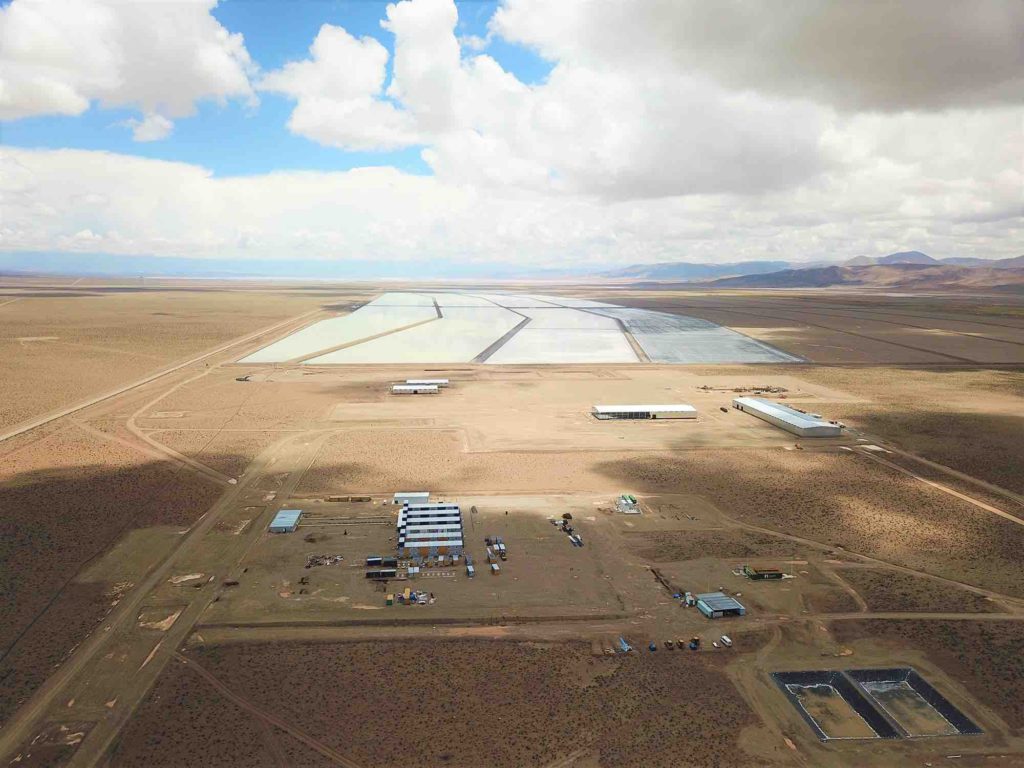
Construction at CaucharĂ­-Olaroz lithium project in Argentina. (Image courtesy of Lithium Americas Corp.)

Argentina’s mining exports reached $4.21 billion in total value in the first nine months of 2025, an increase of 32.9% compared to the same period last year, the South American country’s mining secretariat reported on Monday.

The figures mark a historic record for foreign sales from the national mining industry for the first nine months of a year, it added.

The secretariat credited the jump in export value in part to “outstanding” international prices for metals like gold and silver.

The country’s main mining exports are gold, silver and lithium, a key metal in battery production. Argentina is the world’s fifth-largest producer of lithium and has the second-largest reserves of the metal in the world.

“Lithium production in Argentina is expanding (with seven projects in operation), so the growth in export value is linked to this increase in production quantities,” the secretariat added, without providing details on the growth in lithium exports.

Argentina also has six world-class copper projects in advanced stages, although none have entered production yet.


(By Lucila Sigal; Editing by Paul Simao)

German businesses asked to repay COVID-19 emergency aid
DW
October 13, 2025

During the COVID-19 lockdown in 2020, the German government provided billions in support to small businesses, the self-employed and freelancers. Now they are being asked to repay the aid. Many are resisting.


Small businesses like hairdressers were forced to close shop for months during COVID-19 lockdowns
 (file photo from March 2020)Image: Frank May/picture alliance


Hairdresser Marion Alemeier still remembers March 23, 2020. It was day two of Germany's first lockdown in an effort to contain the spread of COVID-19, when then Economics Minister Peter Altmaier (CDU) and then Finance Minister Olaf Scholz (SPD) made bold promises. In his explanation of the coronavirus emergency aid for microenterprises and self-employed individuals, Scholz said: "It is very important to me that we are providing a grant, not a loan. This means that nothing needs to be repaid."

To which Altmaier added: "We will not leave anyone behind!"

Five and a half years later, Marion Alemeier now feels quite abandoned.

"There was a lot of hype, but none of the promises were kept," she told DW. "Many colleagues and friends warned me at the time: 'Be careful, you'll have to pay this back.' And I replied, 'No, that's not possible; they can't do that.'"

At the time, Alemeier received €9,000 ($10,400) in emergency aid, money she urgently needed because for six weeks she had lost all her income. It was not until May 4, 2020, that the social distancing rules were relaxed in Germany and hair salons were allowed to reopen.


Faulty calculation
s

Later, however, it was announced that the subsidy had only been awarded based on an estimate of what was needed to bridge the "liquidity gap" caused by the pandemic. The reason for this was that the Federal Economy Ministry estimated that of the approximately €13 billion that the federal and state governments had paid in emergency pandemic aid for the months of March to June 2020, €5 billion had been overpaid.

As a result, tens of thousands of requests for repayment were sent out — including to Marion Alemeier. The hairdresser was asked to repay €7,000. She took legal action against the official decision and won, but the North Rhine-Westphalian state government still wants half of the money from her, €3,500, as a settlement.

Self-employed individuals such as Alemeier were able to apply for €9,000, businesses with up to ten employees could get up to €15,000, and €25,000 were available for companies with ten to 50 employees. For many, this financial support was a lifeline at the time, or at least an enormous help.

This was also the case for hairdresser Guido Wirtz, a representative of hairdressers in the neighboring state of Rhineland-Palatinate.

In an interview with DW, he said: "Politicians made promises that they did not keep. There is a tremendous sense of disappointment and anger among all hairdressers. It wasn't until mid- to late 2024 that sales returned to pre-pandemic levels, but with significantly fewer customers."

Many of his colleagues were so desperate that they even canceled their retirement plans to make ends meet, while others simply gave up: "Us hairdressers are dying quietly."


Downside of German federalism


What really gets small business owners and the self-employed riled up is Germany's federal regulatory patchwork in which each state handles the issue of repayment differently.

In Bavaria and Baden-WĂ¼rttemberg, those affected were unable to appeal the decision and had to take legal action immediately. The Administrative Court of Baden-WĂ¼rttemberg has now ruled in favor of the entrepreneurs in five cases: they were not ordered to repay the money received during the COVID-19 pandemic.

The reasoning behind the ruling will be provided at a later date, as the judgments are not yet final.

In North Rhine-Westphalia, the repayment terms on the websites changed no less than 15 times in just a few weeks.

Hesse has now imposed a moratorium, temporarily halting the review of coronavirus emergency aid. Hesse's Minister of Economic Affairs, Kaweh Mansoori, explains the reasoning behind this decision: "Ultimately, this is not about large global corporations, but about the self-employed, small and medium-sized businesses and skilled trades. I therefore want to exhaust all legal options to give relief to those affected. For me, it is also a question of fairness."

Hairdresser Wirtz now has one fewer employee and is repaying his €15,000 in emergency aid in monthly installments of €635.

"Politicians no longer know how to get out of this situation," Wirtz said. "A politician once told me that they estimate the costs of processing the repayments to be significantly higher than the repayments themselves. After all, a lot of staff were hired to keep track of and handle the procedures."


Political disenchantment

Rainer Hermann is one of the people in North Rhine-Westphalia who knows the most about the details of the COVID-19 emergency aid. In mid-2020, the lawyer founded the IG NRW-Soforthilfe (IG NRW Emergency Aid) and now supports almost 11,000 people who are fighting back against the repayment requests, including Marion Alemeier.

In his opinion, the emergency aid program is a disgraceful administrative disaster. People are not only depressed, but also extremely angry, he told DW: "I have seen highly educated people, seasoned entrepreneurs, slip into extremism — you can't talk to them anymore. Others are completely desperate and broken. Many have already filed for bankruptcy or will have to do so shortly because, of course, the other economic aid measures are now being settled."

But what should Germany have done differently or better? Hermann doesn't have to think long: First, the federal government should have set uniform conditions for emergency aid, with the 16 states acting only as executive bodies, in order to avoid federal chaos. In addition, he thinks that applications should have been written in a clear and understandable manner, providing sufficient information in advance so that those affected would not "put their necks on the line" due to a lack of experience with subsidies and case law. Finally, he believes that the state government should view citizens as partners rather than opponents and not refuse to engage in constructive dialogue.

A quick glance at a neighboring country might have been enough.

"Our neighbor Belgium, of all countries, introduced a support program that was extended and/or modified, expanded and reduced every month," said Rainer Hermann. "There was a program that people could sign up for, and no one complained, grumbled, or lamented; instead, everything worked wonderfully."

This article was originally written in German.


Oliver Pieper Reporter on German politics and society, as well as South American affairs.

As Pakistan battles Afghan Taliban, fears of major war rise


Haroon Janjua i
n Islamabad
DW
October 13, 2025

Both Pakistani forces and the Taliban in Afghanistan are reeling after deadly clashes. Observers warn that border violence could escalate into a full-blown conflict.


Both Pakistan and the Taliban regime in Afghanistan claim to have inflicted heavy losses on the opposing side
 (file photo)Image: Wakil Kohsar/AFP


Fierce fighting erupted between the Pakistani military and Afghan Taliban forces over the weekend, marking the deadliest conflict between the neighbors since the Taliban returned to power in Kabul in 2021.

Both Pakistani officials and the Taliban regime in Afghanistan claim to have inflicted heavy losses on the opposing side.

The Taliban said on Sunday that they had killed 58 Pakistani soldiers in overnight border operations. Pakistan's army gave far lower casualty figures, saying 23 of its troops were killed. The Taliban also claimed to have captured 25 Pakistani army posts.

Pakistan's military claimed to have killed more than 200 Afghan fighters. The Taliban said only nine soldiers on its side were killed.

Claims from both sides could not be independently verified. Access to the border region remains heavily restricted.

Pakistan, Afghan Taliban border clashes: What's next? 05:28


Why are Pakistan and Afghan Taliban fighting?

Tensions between the countries, which were once allies, increased after Islamabad demanded that Kabul take action against the Tehreek-e-Taliban Pakistan (TTP), a separate group closely linked to the Afghan Taliban.

The TTP seeks to impose a hard-line interpretation of Islam, particularly on Pakistan's northwestern Khyber Pakhtunkhwa province, which borders Afghanistan.

According to Pakistan's government, the group operates from Afghan soil with impunity. The Afghan Taliban deny that.

TTP militants have stepped up attacks against Pakistani security forces in recent years.

A UN report this year found that the TTP "receive substantial logistical and operational support from the de facto authorities," referring to the Taliban government in Kabul.

More than 500 people, including 311 troops and 73 policemen, were killed in attacks from January through September 15, the AFP news agency reported, citing a Pakistan military spokesman.

Pakistan's government has also accused India of backing the Pakistani Taliban and other insurgent outfits in a bid to destabilize Pakistan. India denies such accusations and says Pakistan itself is involved in supporting secessionist militant groups operating in India-administered Kashmir.


Fragile cross-border situation

Last week, the Afghan Taliban accused Pakistan of bombing Kabul and a market in the country's east.

Pakistan's government did not confirm or deny the airstrikes. But Pakistan has repeatedly stressed the right to defend itself against what it said is a surging cross-border militancy.

Afghan Taliban forces said they launched attacks on Pakistani troops late Saturday as a "retaliation for airstrikes carried out by the Pakistani army on Kabul."

Michael Kugelman, a Washington-based South Asia analyst, told DW that the latest clashes between Pakistan and Afghanistan are "driven by Islamabad's failure to curb Afghanistan-based anti-Pakistan terrorism."

"Despite trying various strategies, including talks and limited military operations primarily within Pakistan, success has been elusive," Kugelman said. He added that "intensified counterterrorism operations" against targets in Afghanistan by Pakistan have now sparked a Taliban response, leading to the escalation.

Though the fighting seems to have largely ended for now, the situation remains fragile and tensions run deep.

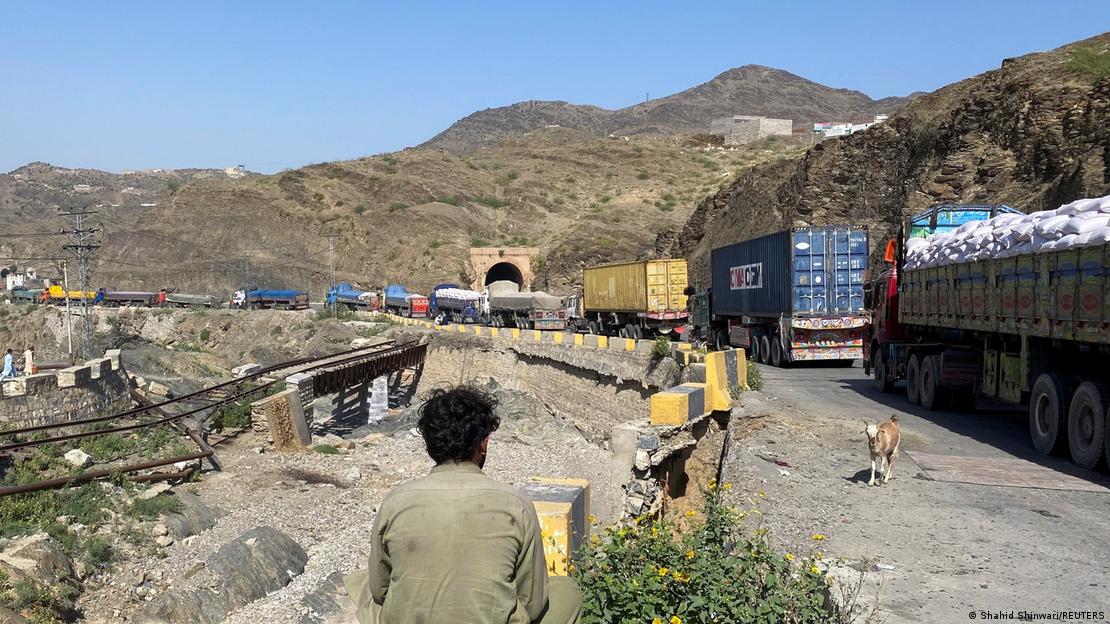
The clashes also prompted a halt in border trade between the countries as Pakistan closed crossings along the 2,600-kilometer (1,600-mile) frontier.

The move stranded scores of loaded goods vehicles on either side, a Pakistani industry representative told the Reuters news agency.

Trade between Afghanistan and Pakistan halted as Pakistan closed border crossingsImage: Shahid Shinwari/REUTERS
Will TTP increase attacks?

Omar Samad, former ambassador of Afghanistan to Canada and a nonresident senior fellow at the Atlantic Council, told DW that hostility between the two sides "can escalate into widespread violence and military action beyond what we are experiencing" and cause irreparable damage to the relationship between the countries.

"Tensions between the Pakistan military establishment and the de facto Afghan government have been rising for the past two years, partly caused by missteps, misunderstandings and mismanagement," Samad said.

Kugelman is of the view that one consequence of the crisis could be increased reprisal attacks by the TTP, "which has a strong presence in Pakistan despite its main base in Afghanistan."

He said the Afghan Taliban were not a match for Pakistan's military, despite being capable of staging operations at border posts.

"Thus, TTP reprisals, possibly encouraged by the Afghan Taliban, remain a major concern for Pakistan's future," he said.

Imtiaz Gul, a security expert and executive director of Center for Research and Security Studies in Islamabad, had a similar view.

"Pakistan will now face a growing threat of increased militancy from TTP more than ever after the clashes with Afghanistan," he told DW. "It now requires a strengthening of counterterrorism operations and intelligence capabilities to combat these threats and eliminate terrorism."


Is it time to deescalate?


Despite the rocky relationship between the governments, the neighbors have made attempts over the past year to improve ties.

In May, Pakistan's government announced that it would upgrade its diplomatic ties with the Afghan Taliban and designate an ambassador to Kabul, even though Islamabad has yet to formally recognize the Taliban government.

The neighboring nations also share close historical, cultural and people-to-people ties.

Millions of Afghans who fled their war-ravaged country over the past 40 years have found shelter in Pakistan.

But, amid strained ties with the Afghan Taliban, Pakistan's government started a massive initiative to repatriate approximately 4 million Afghans living in the country in 2023.

Pakistan's government has since deported more than 800,000 Afghans, creating another source of tension with Kabul.

'No time for deception'

Samad said both sides should hold constructive talks to resolve their issues instead of engaging in belligerent tactics.

"Despite bravado and hubris, both countries have vulnerabilities and strengths that are unmatched and contradictory," Samad said. "Afghans have little to lose against overwhelming military odds, but Pakistan is fragile from within."

"Now is the time for statesmanship, caution and honest dialogue," Samad said. "There is no time for deception, spin and bluster," he added.

Under Taliban shadow, Afghans in Pakistan look to Germany  03:52


Edited by: Srinivas Mazumdaru


Haroon Janjua Journalist based in Islamabad, focusing on Pakistani politics and societyJanjuaHaroon

Afghanistan-India-Pakistan: Renewed Flashpoint – Analysis


October 14, 2025 
By SATP
By Ajit Kumar Singh

The overnight clashes of October 11–12, 2025, along the volatile 2,640-kilometre Durand Line between Afghanistan and Pakistan marked one of the deadliest confrontations in recent years, resulting in several deaths and reigniting deep-seated tensions across South Asia. The violence followed Pakistan’s controversial airstrike in Kabul on October 9, 2025, which Islamabad claimed targeted Tehreek-e-Taliban Pakistan (TTP) chief Noor Wali Mehsud. The attack, however, allegedly struck a crowded civilian market, killing at least 15 non-combatants.

The incident triggered a spiral of artillery exchanges, drone strikes, and cross-border incursions across Pakistan’s northern sectors, particularly in Afghanistan’s Kunar and Paktika provinces. By dawn on October 12, heavy smoke was visible over Pakistan’s Bajaur and Khyber districts, as satellite imagery captured destroyed outposts and damaged fencing. The fighting also paralyzed vital trade arteries, including the Torkham and Spin Boldak crossings that handle over USD 2.5 billion in annual bilateral commerce, leaving thousands of traders stranded and compounding the economic distress in both countries. As of October 13, a fragile ceasefire mediated by Saudi and Qatari officials was in place, but hostility persisted.

Pakistan’s military swiftly characterised its actions as defensive operations, framing its response as a legitimate countermeasure to what it called “unprovoked Taliban aggression” against more than 20 border checkpoints. The Inter-Services Public Relations detailed a series of precision airstrikes and commando raids that reportedly neutralised over 200 Taliban fighters and associated TTP operatives, while dismantling 21 Afghan positions and several terrorist training camps inside Afghan territory. Islamabad confirmed the deaths of 23 Pakistani Security Force (SF) personnel and injuries to 29 others.

Pakistan’s Interior Minister Mohsin Naqvi denounced the Afghan actions as “barbaric and unprovoked,” vowing a calibrated response. Pakistan’s Foreign Ministry summoned the Afghan Ambassador, condemning Kabul for providing sanctuary to TTP cadres, while denying that its October 9 airstrike had violated Afghan airspace. Pakistan further invoked Article 51 of the UN Charter, asserting that its cross-border actions constituted legitimate self-defence.

The Taliban administration in Kabul offered a starkly different account, depicting the clashes as a justified retaliation against blatant Pakistani violations of Afghan sovereignty. The Defense Ministry confirmed retaliatory strikes on Pakistani border outposts as a response to the October 9 bombing that killed civilians. Taliban spokesperson Zabihullah Mujahid claimed that their forces eliminated 58 Pakistani soldiers while sustaining only nine fatalities, portraying the outcome as proof of Afghan military superiority. The Taliban described the confrontation as a defence of the Islamic Emirate’s territorial integrity against Islamabad’s “imperialist encroachments,” vowing to protect the Afghan side of the Durand Line, which they continue to reject as an artificial colonial boundary. While independent verification remains limited, reports from local Pashtun networks indicated that Taliban units briefly overran some Pakistani border posts.

By midday on October 12, artillery exchanges subsided following urgent mediation by Saudi Arabia and Qatar. Riyadh, leveraging its extensive financial and religious influence, pressured both sides to cease hostilities, warning that instability could jeopardise Hajj pilgrim logistics and USD 10 billion in Gulf remittances to the region. Qatar complemented these efforts by hosting virtual talks, invoking its past role in the Doha Accords. Both Kabul and Islamabad accepted the ceasefire, with Taliban Acting Foreign Minister Amir Khan Muttaqi crediting Saudi and Qatari diplomacy for “averting a greater calamity.” Nevertheless, the truce remained fragile. On October 13, Torkham remained closed, halting an estimated USD 50 million in daily truck traffic. United Nations observers reported approximately 5,000 displaced civilians, primarily Pashtuns, caught in the crossfire.

The record of Afghanistan–Pakistan border clashes dates back to April 2007, when the first SF-to-SF confrontation erupted over disputed outposts, establishing a pattern of recurring violence driven by fencing disputes and militant infiltration. According to South Asia Terrorism Portal (SATP) data, at least 39 such incidents occurred up to October 10, 2025, causing 60 deaths on the Pakistani side — 41 SF personnel and 19 civilians. The Durand Line continues to represent one of South Asia’s most combustible borders. As of 2025, Pakistan reports 98 per cent completion of its border fence, a project that has repeatedly triggered Afghan opposition. In 2024 alone, 16 SF-to-SF confrontations were documented, resulting in eight Pakistani deaths (five SF personnel and three civilians) and 24 persons injured – all SF personnel. Afghanistan acknowledged 19 deaths (eight SF and 11 civilians) and 25 military personnel injured in 2024.

United Nations High Commissioner for Refugees assessments highlight that such periodic exchanges have displaced thousands of civilians annually, further eroding confidence in bilateral security arrangements. The first nine months of 2025 recorded 12 SF-to-SF clashes before the October 11 escalation, resulting in three Pakistani SF fatalities and nine injured (six SF and three civilians). Kabul’s official tallies for the same period included one SF fatality and six injured (three civilian and three military). Analysts correlate the Taliban’s 2021 return to power with a 25 per cent uptick in such encounters, attributed to Pakistan’s USD 500 million fencing project.

Beyond state-on-state engagements, cross-border militant infiltration from Afghan territory into Pakistan has surged, primarily involving TTP operatives. SATP data shows 17 infiltration attempts in 2025 (up to October 10), resulting in 202 fatalities – 194 militants killed during counter-operations and eight Pakistani SF deaths – along with 33 injured (25 SF and eight militants). This represents a marked escalation from 2024, which recorded 19 attacks causing 74 deaths (68 militants and six SF personnel) and 14 injured (nine SF and five militants).

These infiltration attempts, largely launched from Afghan provinces such as Kunar and Nangarhar, embody Pakistan’s core grievance that Kabul tolerates TTP sanctuaries. Islamabad cites this evidence to justify its “hot pursuit” doctrine of limited cross-border strikes. The persistent threat has also imposed economic costs: repeated Torkham closures in 2025 have already inflicted USD 300 million in trade losses. While Pashtun leaders denounce the fencing as a “wall of shame,” Pakistani military officials insist it is a defensive necessity.

Saudi Arabia’s and Qatar’s mediation has proven central to preventing further escalation. Building on earlier interventions, Riyadh dispatched senior envoys, linking restraint to prospective USD 1.5 billion in bailout funding and Afghan wheat support. Kabul reciprocated by promising to restrict TTP cross-border movement. Qatar hosted a trilateral video dialogue, proposing the establishment of joint border monitors. Both Pakistan and Afghanistan publicly thanked the Gulf mediators. However, as of October 13, the implementation of joint patrols had yet to begin, illustrating the ceasefire’s fragility. Analysts interpret the Gulf mediation as motivated partly by the protection of Gulf investments in the China-Pakistan Economic Corridor, and regional Hajj security concerns.

At the centre of these developments was the ongoing visit of Taliban Acting Foreign Minister Amir Khan Muttaqi to India, which ran from October 9 to 16, 2025. The visit, the highest-level Taliban delegation to India since 2021, took place amid the border crisis and underscored Kabul’s attempt to diversify its diplomatic ties. Muttaqi met External Affairs Minister S. Jaishankar in New Delhi, where both sides agreed to elevate India’s Kabul mission to full embassy status and reopen USD 500 million in humanitarian corridors for Afghan aid. In joint statements, Muttaqi expressed Afghanistan’s “enduring affinity” for India and interest in channelling USD three billion investments through Iran’s Chabahar Port to bypass Pakistani trade routes.

During an October 12 Press Conference, Muttaqi criticised Pakistan’s “rogue elements” for fostering Islamic State-Khorasan Province networks and warned that Afghanistan would safeguard its sovereignty if Islamabad rejected dialogue. His remarks drew sharp reactions in Pakistan, where officials accused India of orchestrating Kabul’s rhetoric to isolate Islamabad diplomatically.

The Taliban regime in Afghanistan has intensified accusations against Pakistan for sponsoring Islamic State-Khorasan Province (IS-KP) terrorism to destabilize the country, alleging that Pakistan’s Inter-Services Intelligence provides safe havens, training camps, and logistical aid across the porous Durand Line border, particularly in Balochistan and Khyber Pakhtunkhwa. These claims escalated amid 2025 border clashes, with Taliban spokesperson Zabihullah Mujahid warning on October 12, 2025, that Pakistan ignores Islamic State presence on its soil, demanding expulsion of key members and revealing recruit funnelling through Karachi and Islamabad airports for attacks planned from there.

On September 11, Taliban’s intelligence chief Abdul Haq Wasiq stated that ‘foreign powers’, implying Pakistan, dispatch IS-KP operatives abroad, noting that the group holds no Afghan territory but poses an external threat warranting international action. According to reports, IS-KP mounted 24 attacks in Afghanistan in 2024, killing 135 civilians and 22 Taliban fighters; 16 IS fighters were also killed in these operations. These attacks dropped to 11 in 2025 (till October 12), with two civilian and 35 Taliban fatalities, as well as 11 IS terrorists – signalling reduced civilian tolls but persistent regime assaults, amid bolstered defences. Pakistan counters that Taliban-controlled Afghanistan harbours TTP militants, fuelling mutual reprisals and proxy war fears that threaten regional stability.

Muttaqi’s visit signalled a strategic recalibration in Afghanistan’s regional posture, shifting from historical dependence on Pakistan toward engagement with India. Pakistan denounced the India–Afghanistan joint communiquĂ© as a “malign diversion” and expelled several Afghan diplomats in protest. The timing of the visit, coinciding with the Durand Line clashes, amplified its geopolitical weight.

The diplomatic shifts now risk redefining South Asia’s security equilibrium. Pakistan, once the principal sponsor of the Taliban, finds itself in open confrontation with the forces it helped ascend to power in Kabul. Economically, India’s renewed engagement with Afghanistan offers Kabul a pathway to bypass Pakistani toll routes. Yet the regional security fallout has already been tangible: TTP attacks in Pakistan surged following Muttaqi’s India meetings. Observers note that, while Saudi and Qatari diplomacy may temporarily calm tensions, lasting peace along the Durand Line will require verifiable Taliban action against TTP sanctuaries and sustained bilateral dialogue, including talks reopening the issue of the permanent border between Afghanistan and Pakistan.

The October 2025 border crisis encapsulates the fragility of Afghan–Pakistani relations, where overlapping insurgencies, disputed borders, and external alignments perpetuate instability. The Saudi-Qatari ceasefire has temporarily halted escalation, yet structural grievances remain unresolved. A Pakistan increasingly isolated by an Afghan–Indian rapprochement may intensify counter-insurgency as well as covert operations, risking wider regional repercussions. As Torkham’s gates tentatively reopened on October 13, a semblance of normalcy returned. However, until Kabul and Islamabad reconcile their divergent approaches to the Durand Line, terrorist sanctuaries, and trade sovereignty, the frontier will remain a powder keg. In the words of Amir Khan Muttaqi from New Delhi, “Afghanistan craves peace first — but its resolve is eternal.”

Ajit Kumar Singh
Senior Fellow; Institute for Conflict Management


SATP

SATP, or the South Asia Terrorism Portal (SATP) publishes the South Asia Intelligence Review, and is a product of The Institute for Conflict Management, a non-Profit Society set up in 1997 in New Delhi, and which is committed to the continuous evaluation and resolution of problems of internal security in South Asia. The Institute was set up on the initiative of, and is presently headed by, its President, Mr. K.P.S. Gill, IPS (Retd).


Taliban visit to India upsets Pakistan, signals New Delhi's changing Afghan posture

Taliban visit to India upsets Pakistan, signals New Delhi's changing Afghan posture
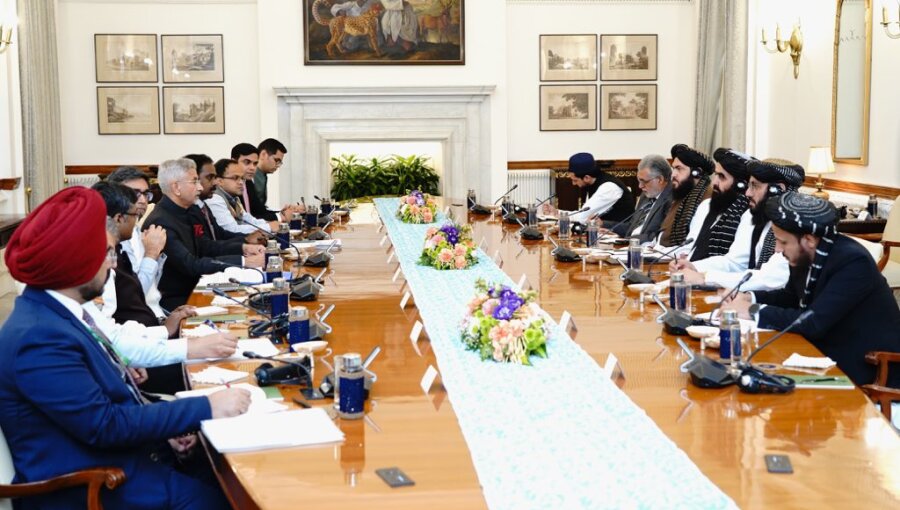
Dr. S. Jaishankar (left, centre) - External Affairs Mininister of India meeting the Afghan delegation / India External Affairs Mininister - X
By bno Chennai Office October 13, 2025

India’s hosting of the Taliban’s Foreign Minister Amir Khan Muttaqi marked a pivotal moment in New Delhi’s pragmatic realignment of its Afghan policy, reflecting a calculated effort to secure national interests amid shifting regional dynamics and ongoing security challenges.

The visit, notable for its diplomatic symbolism and the controversy surrounding a press conference, took place against the backdrop of violent border clashes between Pakistan and the Tehreek-e-Taliban Pakistan (TTP), as well as mounting scrutiny over women’s rights in Afghanistan and India’s diplomatic engagement standards. Until recently, India’s interaction with the Taliban regime was limited to humanitarian aid and emergency support managed by a small technical team at its shuttered Kabul embassy.

Muttaqi’s visit, made possible through a temporary UN travel exemption, marked a shift from this cautious stance. India announced that its technical mission would be upgraded to a fully operational embassy during the minister’s stay, while unveiling six new development projects and expanding trade opportunities. This engagement came without extending formal diplomatic recognition to the Taliban government.

The decision to open diplomatic channels likely reflects recognition of the realities on the ground rather than endorsement of the regime. The Afghan foreign minister expressed similar pragmatism, encouraging Indian firms to invest in mining and reconstruction, and pledging that Afghan territory would not be used for hostile activities against other nations. The joint statement issued after prolonged discussions outlined several key commitments.

India reaffirmed its support for Afghanistan’s sovereignty, independence, and territorial integrity, and promised assistance for forcibly repatriated Afghan refugees. Both sides condemned all forms of cross-border terrorism, avoiding direct reference to Pakistan but clearly alluding to recent attacks and border incidents linked to Islamabad.

Development cooperation was expanded, with India resuming infrastructure and humanitarian projects across Afghan provinces. The Taliban assured India of security guarantees, stating that no group would be allowed to plan or launch attacks against third countries from Afghan soil. Both governments also agreed to maintain dialogue aimed at promoting regional peace, stability, and mutual trust, signalling their rejection of external interference.

These commitments directly address India’s national security concerns, particularly after the Pahalgam attack earlier this year, which reportedly involved coordination from Afghan territory. The timing of Muttaqi’s visit coincided with rising violence between Pakistani forces and the Taliban’s affiliate group in Pakistan, the Tehrik-i-Taliban Pakistan(TTP).

Coinciding with Muttaqi’s visit, Pakistan conducted military operations targeting TTP leaders inside Afghanistan, followed by airstrikes on multiple border towns. The TTP retaliated by attacking police training facilities and border outposts, causing heavy casualties on both sides. As hostilities intensified, Pakistan accused Afghanistan of harbouring TTP militants and launched further artillery and airstrikes along the Durand Line.

The Taliban claimed to have inflicted several Pakistani casualties and captured a number of border posts, underscoring the deteriorating situation and complicating both India’s outreach and Pakistan’s regional calculations. In New Delhi, Amir Khan Muttaqi’s first press conference at the Afghan embassy drew widespread criticism after female journalists were barred from attending.

The exclusion triggered condemnation from Indian media associations, opposition parties, and international observers. Indian opposition leaders described it as gender discrimination, while journalist unions called it deeply concerning. The Indian Ministry of External Affairs distanced itself from the event, clarifying that it was organised independently by the Afghan embassy.

At a subsequent press conference attended by female journalists, Muttaqi attributed the incident to a technical oversight rather than deliberate intent. He stated that girls’s education was not prohibited in Afghanistan, claiming that 2.8mn out of 10mn schoolchildren were girls in his country. The controversy, however, renewed global attention on restrictions facing Afghan women and raised questions about India’s commitment to gender equality in its diplomatic engagements.

Muttaqi’s visit and India’s recalibrated approach highlight New Delhi’s attempt to safeguard its strategic interests in Afghanistan from both Pakistani interference and the influence of regional militant groups. India’s goals include restoring its presence in Afghan development and mining sectors to counter Pakistan and China, ensuring Afghan soil is not used for cross-border attacks, maintaining open diplomatic channels for crisis management and humanitarian coordination, and reaffirming its rights-based approach by publicly responding to gender exclusion.

Critics, however, argued that India’s response to the press controversy was too restrained. This pragmatic engagement reflects India’s evolving foreign policy in a region defined by fluid alliances and enduring instability. By reopening its embassy, India is neither endorsing the Taliban regime nor retreating from Afghanistan. Rather, it is positioning itself to influence outcomes in Central Asia while countering Pakistani and Chinese ambitions.

For the Taliban, the visit offered a platform to seek legitimacy, investment, and diplomatic credibility. For Pakistan, it was viewed with unease as India refrained from supporting its claims of Afghan complicity with the TTP and avoided direct criticism of Islamabad in the joint communiquĂ©. The future of India-Taliban relations remains uncertain and will depend on the Taliban’s ability to uphold its security assurances and gradually expand women’s participation in public life. India’s continued engagement will test whether it can balance strategic pragmatism with its stated democratic principles.

The visit marked the emergence of a new phase in Indian diplomacy, characterised by engagement without recognition, investment without illusion, and cautious advocacy for rights within the confines of regional power politics. It is a policy born of necessity but pursued with quiet determination.