Monday, December 01, 2025

Kazakhstan tells Ukraine to cease "unacceptable" attacks on its main oil export facility on Russian Black Sea coast

Kazakhstan tells Ukraine to cease
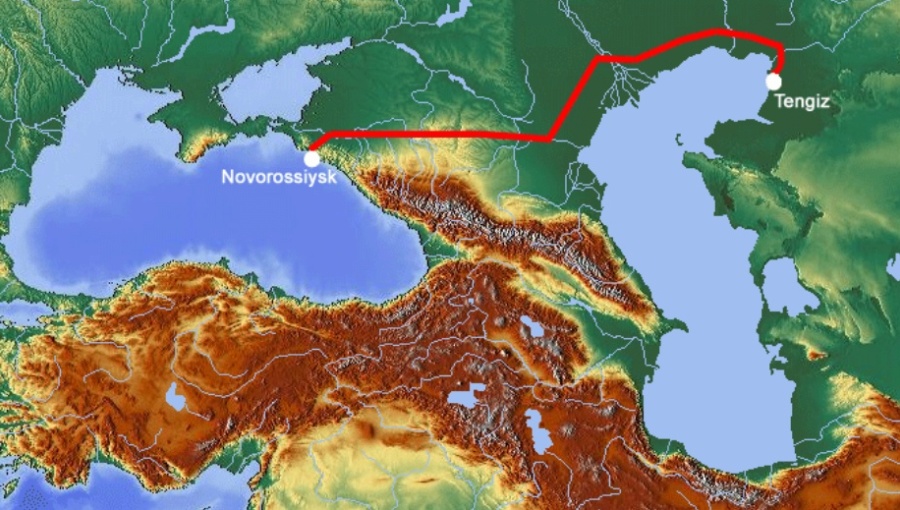
The CPC pipeline transits Kazakh oil around the Caspian Sea to the Black Sea export terminal in the vicinity of Novorossijsk, Russia. / Guido Grassow, wiki, GNU general public licence
By bne IntelliNews December 1, 2025

Kazakhstan on November 30 told Ukraine to stop making "unacceptable" attacks on the Russian Black Sea coast terminal that handles the big majority of its oil exports and more than 1% of global oil. It spoke out following a major sea drone attack that damaged loading infrastructure and led to the halting of export shipments.

"We view what has occurred as an action harming the bilateral relations of the Republic of Kazakhstan and Ukraine, and we expect the Ukrainian side to take effective measures to prevent similar incidents in the future," the Kazakh energy ministry said.

The ministry pointed out that the attacked Caspian Pipeline Consortium (CPC) oil export facility in the vicinity of Novorossiysk was an international energy project. Any forceful action against it posed direct risks to global energy security and caused “significant damage” to the interests of the consortium participants, it said.

CPC’s shareholders include Chevron, ExxonMobil, state-owned KazMunayGas and Russia’s Transneft, which participates on behalf of the Russian Federation.

CPC, which operates a pipeline that takes Kazakh oil from the Caspian region to the oil shipping facilities, suspended loading after one of the three single-point moorings at the terminal was damaged during overnight attacks, Bloomberg reported.

CPC said that a mooring was “significantly damaged” in what it described as “a targeted terrorist attack by unmanned boats”, adding that the facility could no longer operate, the news service’s report said. CPC said all tankers had been withdrawn from the terminal’s waters and that shipments would resume only when threats from unmanned boats and drones had been removed.

Ukraine, meanwhile, appears to have launched a campaign that targets Russian “shadow fleet” oil tankers on the Black Sea and possibly in other maritime locations too.

The energy ministry said it had “urgently activated a plan” to redirect Kazakh oil exports through alternative routes to preserve production rates and minimise disruptions, the Bloomberg report noted.

“The situation is under special control of the government,” the report quoted the ministry as saying.

Ukraine has not commented on the sea drone attack, though its General Staff confirmed a separate air drone strike on Afipsky oil refinery in Russia’s Krasnodar Region on the same night, according to the report.

The CPC terminal faced multiple attacks during November, highlighting its vulnerability as the largest conduit for exports from Kazakhstan’s major fields. The system also transports some Russian crude.

Loading at the terminal normally takes place at two moorings concurrently, each with a capacity of 800,000 barrels per day. With mooring two reportedly disabled and mooring three already offline for planned maintenance, CPC can operate only from mooring one.

The consortium said no injuries or oil spills into the Black Sea were recorded following the attack. Emergency systems were said to have shut down the relevant pipelines immediately after explosions at the mooring, preventing leaks.

Singapore allocates $250,000 for regional weather disaster relief


BE STILL MY BEATING HEART💓
Singapore allocates $250,000 for regional weather disaster relief
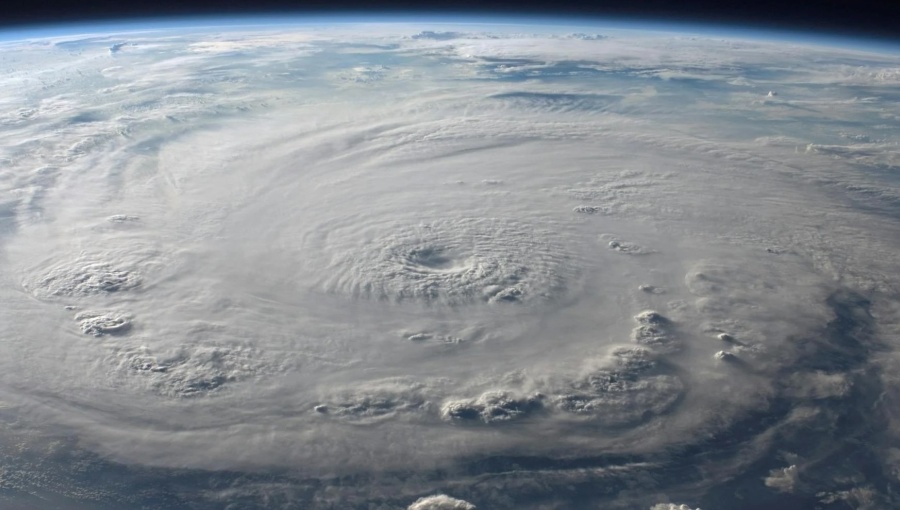
/ Pexels - CC - Earth Planet
By bno - Surabaya Office December 1, 2025

The humanitarian organisation Singapore Red Cross is directing $250,000 to five partner national societies to aid communities impacted by extreme weather, The Straits Times reports. Each affiliate, the relief networks in Sri Lanka, Indonesia, Malaysia, Thailand, and Vietnam, will be granted $50,000, according to an official announcement on December 1 by Singapore’s emergency assistance coordination body.

Intense monsoon systems, tropical storms, and cyclones have recently unleashed large-scale floods and landslides in Southeast Asia and Sri Lanka, damaging housing, infrastructure, and essential services while triggering casualties and mass evacuations. In Indonesia, more than 400 people have died in Aceh, Northern Sumatra already.

Regional response units are already operating on the ground. Teams from the Indonesian branch, Malaysian emergency chapters, Thai provincial groups, and Vietnam’s local units are working with municipal and district authorities to run evacuation shelters, manage rescues, distribute immediate-need items including food and drinking water, restore hygiene in affected neighbourhoods, and clear debris from critical transit or residential zones.

Local coordination by the Thai agency has included support for Singaporean tourists stranded in flood-hit areas in Hat Yai. The Malaysian affiliate and other national units continue to assist displaced families through provincial and district operational posts.

In Sri Lanka, the Sri Lankan relief network has activated emergency measures across 25 districts through its 25-branch system. Search-and-rescue support teams, first-aid units, and disaster-response volunteers have been deployed under 25 decentralised offices, alongside specialised Disaster Response Teams assigned to community triage, essential-items delivery, medical treatment, and rapid-needs analysis. All 25 divisions are currently engaged in emergency operations.

Singapore’s highest-ranking operational spokesperson, Benjamin William, said communities in Indonesia, Malaysia, Sri Lanka, Thailand, and Vietnam are experiencing significant climate-driven disruption. He added that national partners are delivering crucial aid, and Singapore remains committed to supporting them through shared logistics frameworks and cross-agency coordination.


Free leader Ocalan or peace process will grind to halt, PKK warns Turkey

Free leader Ocalan or peace process will grind to halt, PKK warns Turkey
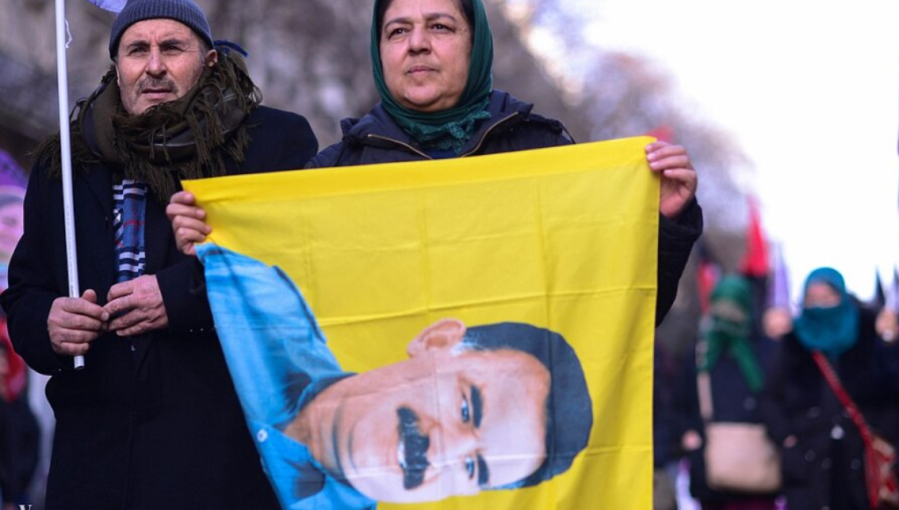
Ocalan seen on a flag at a Kurdish left gathering in Paris. / UCL Photos,Partout, France, Belgique, cc-by-sa 2.0
By bne IntelliNews November 30, 2025

A senior commander of the Kurdistan Workers’ Party (PKK) has told AFP that the politico-militant group will not implement any further steps in indirect talks on a peace process with Turkey as long as its founder Abdullah Ocalan remains imprisoned, France 24 reported on November 30.

The commander, Amed Malazgirt, was interviewed in a bunker in the Qandil mountains in northern Iraq, where the PKK is headquartered. He urged Turkey to advance negotiations and free 76-year-old Ocalan, known to followers as Apo,

Malazgirt was reported as saying: "All the steps the leader Apo has initiated have been implemented... there will be no further actions taken.

"From now on, we will be waiting for the Turkish state and they have to be the one taking steps."

The commander of the insurgent PKK – which fought an almost continuous four-decade conflict with Turkey prior to May’s formal declaration that the fighting is over and a pledge from the PKK to disband and disarm – added that the PKK wants Ankara to agree to two demands.

"First, the freedom of leader Apo... without this, the process will not succeed. The second is the constitutional and official recognition of the Kurdish people in Turkey," he said.

Female senior commander Serda Mazlum Gabar told AFP that "as long as the leadership is inside [prison], the Kurdish people cannot be free. Nor can we, as guerrillas, feel free."

"Our path to freedom passes through the freedom of our leadership," she added.

Ocalan is imprisoned on Imrali island near Istanbul, where he has been held in solitary confinement since 1999.

Turkish lawmakers from a cross-party committee set up to advance the peace process with the Kurds paid a first visit to Ocalan last week.

Though the PKK six months ago pledged to disarm, it has so far only burnt a handful of weapons in a cauldron in a symbolic ceremony to demonstrate commitment to the peace process.

Lately, it announced it was withdrawing all of its forces from Turkish soil into northern Iraq and confirmed the withdrawal of militia from a key border area in northern Iraq.

The parliamentary party that represents the Kurds in Turkey is left-wing DEM. If Turkish President Recep Tayyip Erdogan can form a successful partnership with DEM and, de facto, with the still outlawed PKK, he could secure votes that could be decisive in an attempt to change the constitutional law in a way that would permit him unending rule.

In northeastern Syria, the Kurds still run what amounts to their own statelet, despite heavy pressure from Ankara and Damascus to move forward with an integration into the post-Assad Syrian government led by the former jihadist commander Ahmed al-Sharaa.

In July, the US Ambassador to Ankara and Donald Trump’s special envoy for Syria, Tom Barrack, told Turkey’s government-run news service Anadolu Agency  “The US government has stated that it will review all their [the PKK commanders’] issues and do its best to ensure a fair and accurate decision. If they want to come to America and live with us, they can do so.” 

Cambodia reaffirms one-China policy support amid Taiwan tensions

Cambodia reaffirms one-China policy support amid Taiwan tensions
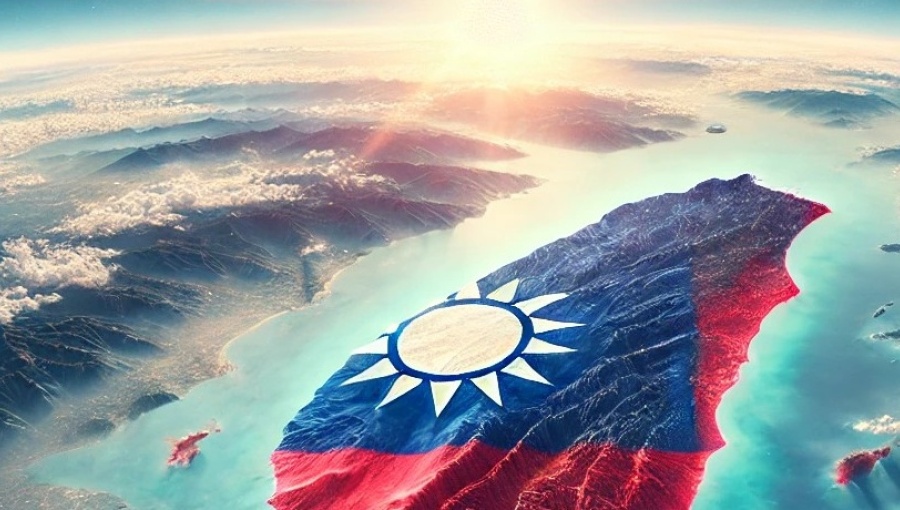
/ bno IntelliNews
By bno - Phnom Penh Office November 29, 2025

Cambodia has restated its support for the One-China Policy, declaring its opposition to any form of “Taiwan independence” as tensions rise between China and Japan. Japan has recently said it is prepared to defend Taiwan against a potential Chinese military action.

The Cambodian Ministry of Foreign Affairs and International Cooperation confirmed on November 26 that the country recognises Taiwan as an inseparable part of China and supports China’s efforts to reunify with Taiwan peacefully. The ministry also emphasised Cambodia’s commitment to regional peace and stability, encouraging dialogue and the peaceful resolution of disputes.

Speaking to Kiripost, political analyst Ou Virak of Future Forum commented that Cambodia’s stance aligns with the global consensus. “Supporting the One-China Policy is a sound approach,” he said. “It avoids upsetting China while maintaining stable relations with Japan, Taiwan, and other countries.”

Virak explained that Cambodia’s reaffirmation is unlikely to affect its diplomatic or economic ties with Japan or Taiwan. The international community generally hopes China and Taiwan will maintain the status quo without military conflict.

He added that most countries support a peaceful union between China and Taiwan, but this does not imply approval of a forceful takeover. “No nation supports Taiwan declaring independence, nor supports China using war to reunite Taiwan,” Virak said. “Cambodia’s position is reasonable and helps the country stay neutral between two powerful nations.”

Observers note that Cambodia’s clear adherence to the One-China Policy also helps protect its relations with China, which is a key economic and diplomatic partner, while avoiding entanglement in potential regional conflicts.

By reaffirming its position, Cambodia seeks to maintain stability, uphold international norms, and demonstrate its diplomatic prudence in managing relations with China, Japan, and Taiwan amid ongoing regional tensions.

Scientists Close In On Solving The Mystery Behind Intense Auroral Storms


December 1, 2025
By Eurasia Review

A University of Southampton study has revealed an intriguing new clue in the mystery of what triggers periods of very intense, brightly coloured activity during displays of both the southern and northern lights.

Known as ‘a magnetospheric substorm’, this awe-inspiring phenomena, which blankets the-night-sky in green and purple, is almost always preceded by what space scientists call ‘auroral beads’ – a necklace-like wave of multiple luminous points of light which eventually evolve into the storm.

Southampton scientists have now shown there is a link between these auroral beads and the intensity of low frequency radio waves above the aurora in the Earth’s magnetosphere – a vast area around our planet which is dominated by its magnetic field.

Their findings are published in the journal Nature Communications.

“The aurora borealis and aurora australis are caused by charged particles from space colliding with atoms and molecules in our atmosphere,” explains physicist Dr Daniel Whiter of the University of Southampton. “Particles ejected from the Sun flow out through the solar system carrying the Sun’s magnetic field with them, and this ‘solar wind’ is the source of energy for the aurora.

“Auroral substorms are caused by the accumulation and then release of magnetic energy stored in Earth’s magnetosphere during its interaction with the solar wind flow. However, what exactly triggers this energy to suddenly unload in spectacular fashion isn’t fully understood.”

An international team of researchers, led by Southampton physicists, examined data gathered from ground based observatories, imaging satellites and radio antennae onboard spacecraft, including NASA’s ‘Polar’ spacecraft, the Japanese ‘Arase’ spacecraft, and cameras stationed in Lapland operated by the Finnish Meteorological Institute.

In particular the team concentrated on examining auroral kilometric radiation (AKR) – naturally occurring radio emissions produced in near-Earth space directly above the aurora.

The scientists found that prior to a substorm occurring there is a distinct signal in AKR activity almost exactly as the auroral beads become visible. This burst of radio wave emissions suddenly increases in strength at the onset of the substorm.

Investigated for the first time, this distinct radio signal gives important clues about the physical processes operating before and during substorm onset, producing signatures both in visible aurora and invisible radio emissions.

Lead author of the study, post-doctoral researcher Dr Siyuan Wu of the University of Southampton comments: “The fine, frequency-drifting structures seen in AKR provide direct evidence of the formation of small-scale electric potential structures along magnetic field lines connected to the auroral beads. Their periodicity and propagation speed show remarkable consistency across multiple datasets.

“Together, these results provide new evidence in the generation of auroral beads and the substorm triggering process.”

The scientists believe this could be a universal mechanism manifesting itself in not just the northern and southern lights of Earth, but also in the magnetosphere of certain other planets in our solar system, such as Saturn and Jupiter. They hope their research can now be built on to fully understand what triggers auroral substorms.
Silicon Could Power Next Generation Of Lithium‑Ion Batteries

December 1, 2025 

By Eurasia Review


By adding silicon to battery anodes, energy storage can be doubled or even tripled. PhD student Ali Abo Hamad at FSCN Research Centre has developed a sustainable method to make silicon suitable for next-generation batteries.

In his licentiate thesis “Green thermochemical modification of silicon microparticles for next-generation lithium-ion battery anodes,” he shows how silicon can dramatically increase battery performance when processed in an environmentally friendly way.

Since the 1990s, graphite has been the standard anode material for lithium-ion batteries – but it has a limited capacity. Silicon can store up to ten times more charge per gram, yet its practical use has been restricted because it tends to crack and lose performance after only a few charge cycles.

To address this, Ali has developed an environmentally friendly method to make silicon particles porous, allowing them to expand and contract without breaking. Instead of using hazardous acids containing hydrogen fluoride, he turns to urea, a common fertilizer. When heated together with silicon, urea decomposes into gases that can etch the surface, creating a porous structure.

“Urea allows us to make silicon porous in a simple, low-cost, and safe process. This is what makes it possible to use silicon in practical batteries,” Ali explains.Two to three times higher capacity

The resulting porous silicon can be blended with graphite to form composite electrodes. Tests show that electrodes containing 10-20 percent porous silicon deliver capacities two to three times higher than pure graphite, while maintaining much greater stability than untreated silicon, which tends to lose performance rapidly.

Ali’s research demonstrates that silicon can significantly boost battery performance through a green and accessible process. The findings open the door to batteries that are more energy-dense, durable, and environmentally friendly.

“Even small amounts of silicon can double the battery capacity. My long-term goal is to understand how porosity affects stability – and eventually replace graphite completely with silicon,” he says.
COVID Lockdown Caused A ‘Baby Boom’ Of Bonelli’s Eagles


Bonelli’s eagle in flight. Photo: Tony Peral (@tony_peral_photography).


December 1, 2025 
By Eurasia Review


Thanks to more than three decades of monitoring, researchers at the University of Granada reveal how human absence during the pandemic impacted the reproduction of a threatened species: the Bonelli’s eagle

Scientists at the University of Granada (UGR) have revealed the real impact of human activities on endangered wildlife, taking advantage of the ‘natural experiment’ provided by the COVID lockdown. The research has been published in the journal Biological Conservation.

Using data from more than 1,200 reproductions of Bonelli’s eagles (Aquila fasciata), the authors found that their reproduction improved substantially in 2020. That year, the average number of chicks born per pair was the highest recorded in the 31 years of monitoring.

According to José María Gil and Marcos Moleón, scientists from the Department of Zoology at the UGR who led this work, «the lockdown coincided with critical stages of reproduction: the end of the incubation period and the entire time the chicks were growing in the nest. The absence of disturbance by humans in the vicinity of the nesting sites resulted in exceptional reproduction for our times, but reflects what must have been normal before human pressure reached current levels.»

The research reveals that the human factor poses a much greater threat to reproduction than natural elements, and that the activities that have the most negative impact are decoy partridge hunting and traffic: “The former carries a high risk of mortality from shooting of breeding eagles and chicks from lead poisoning, while the latter is related to other secondary activities such as hiking and mountain biking.”

More than three decades of monitoring and a lockdown

“Revealing the real impact of human presence on wildlife is complex, as under normal conditions there is no reference point without human activity with which to compare the extent of other possible natural constraints, such as weather conditions, competition with other species, or prey abundance,” the authors note. In this study, data from three periods were used: pre-COVID (1994-2019), COVID (2020), and post-COVID (2021-2024).

When it comes to endangered species, methods based on experiments are often impractical or directly involve an ethical conflict, so alternative techniques must be used. This analysis is based on the continuous monitoring of the breeding population of Bonelli’s eagles in the province of Granada, which the authors began in the early 1990s.

“Since then, year after year, we have visited all occupied and potential territories to estimate basic parameters, such as the percentage of pairs that successfully raise chicks and the number of chicks that survive,” says José María Gil Sánchez.

The work is innovative. There are hardly any scientific evaluations that take advantage of the COVID lockdown to examine the human impact on wildlife, especially on endangered species and outside urban environments, probably due to the lack of long-term fieldwork and the difficulties of going out to sample during those days.

“In our case,” the authors explain, “monitoring was possible thanks to a special permit issued by the UGR to go into the field, and to the work carried out during the de-escalation by all members of the research team in the province of Granada, in their respective municipalities.”

Caring for the Bonelli’s eagle


The results describe the main measures to be implemented to ensure the conservation of the Bonelli’s eagle in southeastern Iberia. First, the prohibition of decoy hunting for partridges, a practice that is culturally ingrained in areas of southern Spain, “but which is illegal under European law,” the study’s authors emphasize.

Secondly, the regulation and control of access by hikers, visitors, cyclists, and climbers in the vicinity of nesting sites, especially during the eagles’ breeding season, approximately from December to May.

“In the absence of this study, it was difficult to identify the most efficient management actions. Now that they have been identified, it is time to prioritize them and put them into practice, something that is not only the responsibility of environmental managers, but also of society as a whole, so that we can all make responsible use of our natural environment,” the authors conclude.
Why The US–South Africa Rift Could Reshape Global Power – Analysis

Eurasia Review 


Six months ago, a meeting in Washington set the stage for the geopolitical rupture now unfolding. In one of the year’s most contentious diplomatic encounters, U.S. President Donald Trump confronted South African President Cyril Ramaphosa with allegations of “white genocide” — a claim rooted in far-right conspiracy theories, rejected by Pretoria, discredited by independent researchers, and even contradicted by parts of Trump’s own national security apparatus. The exchange was tense and deeply unsettling for African observers. Many hoped the moment would fade. Few imagined it would return with greater force.

Now it has. Trump has announced that the United States will not invite South Africa to the 2026 G20 Summit in Washington — and will push to remove Pretoria from the G20 altogether. What began as a charged clash over a false narrative has become a political earthquake, shaking three continents at once.

Pretoria was blindsided. New Delhi, Brasília, Beijing — and even Washington’s own policy community — were caught off guard by the severity of the move. For India and much of Africa, Trump’s decision felt bigger than a diplomatic slap. It cut directly across the inclusive, multipolar vision they have spent years striving to build: a world order where Africa is not merely at the table but plays a central, agenda-setting role.

The shock was immediate, but it also revealed a larger truth: this moment is not just a crisis. It is a crossroads. And what India, Africa, and the United States decide now will help determine the shape of global governance for years to come.Subscribe
Why South Africa Matters Far Beyond Its Borders

Africa’s institutional anchor: South Africa is a leading voice in the African Union, SADC, and the G77. It is one of the few African states routinely consulted on global issues ranging from UN reform to climate diplomacy.

BRICS’ African Foundation: When South Africa joined BRICS in 2011, the grouping became truly global. It connected Africa to a powerful coalition stretching from Latin America to Eurasia. Without South Africa, BRICS loses its African balance — and its claim to speak for the Global South weakens.

A Diplomatic Bridge Between Worlds: South Africa’s history binds it to India, its economy ties it to the West, and its anti-apartheid legacy anchors it in the moral politics of the Global South. Few countries move as fluidly between these global spaces.

Removing South Africa from the G20 would therefore be more than punitive. It would send a message that African representation is conditional, dispensable, and reversible — a notion at odds with African aspirations, India’s strategic worldview, and the United States’ long-term interests.

BRICS: The Other Forum Everyone Is Watching


To understand the broader implications of the U.S.–South Africa rift, one must look closely at BRICS, the grouping that South Africa helped transform into a genuinely global platform.

Over the past ten years, BRICS has moved far beyond symbolism. It now includes:The New Development Bank, financing roads, power plants, and development projects without political strings
Local-currency trade agreements, reducing dependence on the U.S. dollar
Infrastructure partnerships across transport, digital connectivity, and renewable energy
Dialogues on digital public infrastructure, where India’s experience is shaping global thinking

Joint climate justice positions, with India and Africa often speaking in one voice

By 2025, the BRICS will have expanded to include Egypt, Ethiopia, Saudi Arabia, and the UAE. The grouping is now a continental bridge linking Africa, Asia, the Middle East, and Latin America.

In this expanded constellation, South Africa plays a stabilising role. Without it, BRICS would tilt more heavily toward China — something neither India nor the U.S. wants.

This is why Trump’s action raised alarm in New Delhi and quiet concern in Washington: weakening South Africa in the G20 could, unintentionally, strengthen China within BRICS.
India’s Three-Dimensional Challenge

India’s global strategy is built on three pillars, all of which intersect with South Africa:


A More Representative G20: India’s 2023 G20 presidency made history by bringing the African Union into the group as a permanent member. Removing South Africa would undermine that achievement — and the principle behind it.

A Multipolar Africa, Not a Binary One: India wants Africa to have multiple strategic options — not to be caught in a U.S.–China tug-of-war. A U.S. move that alienates Africa risks pushing the continent deeper into China’s embrace.

A Balanced BRICS: India values BRICS as a forum where it can shape global governance despite disagreements with China. South Africa’s presence is essential to that balance.

For New Delhi, therefore, Trump’s decision is not a faint squat. It is a direct challenge to India’s vision of a more inclusive, multipolar world.

Africa’s Response: Disappointment Yet Determination


Africa in 2025 is confident and assertive — very different from the Africa of two decades ago. Its leaders have no intention of being passive observers in global politics.

At the 2025 Johannesburg G20 Summit, African leaders called for reasonable climate finance, investment in local mineral processing, debt relief, financial reform, better food and fertiliser security, and balanced discussion of global conflicts. This was Africa’s moment, and the world saw it.

Trump’s decision to boycott Johannesburg and then threaten expulsion was perceived as an effort to suppress Africa’s emerging influence. African diplomats responded not with resignation but with determination.

The continent’s reaction was swift and unmistakable: “We will not be silenced.”African diplomats argue that if powerful nations punish them for independent positions, then the global system itself needs reform.

Many believe Washington has misread the moment. Instead of disciplining Pretoria, Trump’s move risks isolating the United States from a continent that the entire world — including India and China — is now courting.

China’s Quiet Gain — and India’s Quiet Worry

China has offered few public comments. It does not need to. Every part of Trump’s move works to Beijing’s advantage:It reinforces the idea that Western-led institutions are inconsistent.
It portrays China as the stable, long-term alternative.
It nudges South Africa closer to Beijing.
It makes BRICS appear more necessary.
It weakens platforms — like the G20 — where China’s influence is limited.

This is the strategic irony of the moment.

A policy that looks “tough” on BRICS may actually strengthen China’s hand within it — and weaken India’s ability to keep BRICS balanced.

India does not want Africa to become an arena for U.S.–China rivalry. Its entire Africa strategy is built on providing a third, trusted option.

India–Africa Cooperation: A Partnership Built on Trust

India’s presence in Africa is not based on heavy-handed geopolitics. It is rooted in something far more human: shared experience, solidarity, and mutual respect.

For decades, India has worked closely with African countries through:extensive training programmes for civil servants, teachers, engineers, and medical professionals
digital public infrastructure (DPI) partnerships
solar and renewable energy projects
Maritime security cooperation
affordable pharmaceuticals and healthcare support
concessional loans for development and connectivity
regular political dialogue based on equality

Africa sees India as a partner whose development path mirrors its own aspirations, and whose experience — from IT to health to digital governance — is directly applicable.

That is why the G20 crisis is not merely political. It is a test of India’s commitment to protecting African representation — not only because it is strategic, but because it is rooted in shared history and trust.

The U.S. Perspective: Strategy and Impulse in Conflict

The United States often describes Africa as a strategic priority:essential for critical mineral supply chains
home to some of the world’s fastest-growing economies
crucial for countering China’s global influence
central to maritime security in the Indian Ocean
a diplomatic heavyweight in the UN system

But Trump’s decision runs counter to each of these strategic needs.

Many U.S. diplomats and analysts privately acknowledge that excluding South Africa from the G20 hurts America’s long-term interests — and undermines the broader U.S. message that it seeks a respectful partnership with Africa.

The problem is that Trump’s foreign policy frequently combines personal narrative, domestic politics, and symbolic gestures. South Africa has been caught in that crossfire.

But the consequences are global.

Thanks for reading Peace. Security. Sustainability! Subscribe for free to receive new posts and support my work.Subscribe

The BRICS–Africa–India Triangle

Despite its imperfections, BRICS has created a space where African priorities genuinely shape global discussions.

It offers tools that resonate deeply with African nations:The New Development Bank, which avoids political conditionalities
local-currency payment systems, supporting monetary autonomy
value-added mineral partnerships, crucial for long-term development
joint climate diplomacy, demanding fairness from wealthy emitters
security cooperation in the Western Indian Ocean

If the G20 becomes less inclusive, BRICS and BRICS–Africa partnerships will almost certainly grow stronger.

This is not what the U.S. wants. Nor what India wants. ‘But it is the direction events will take unless the U.S.–South Africa rift is resolved.

What India, Africa, and the United States Must Do Now

India’s responsibilitiesQuietly block any attempt to remove South Africa from the G20
Deepen development and digital partnerships across Africa
Keep BRICS balanced, not China-dominated
Build a coalition of Global South states defending inclusive governance

Africa’s prioritiesStand united in defending its representation
Strengthen AU structures and the AfCFTA
Push ahead with mineral value chains and climate finance demands
Engage BRICS and the West on equal terms

U.S. strategic interestsAvoid alienating the very continent it says it wants to partner with
Coordinate closely with India on African strategy
Strengthen — not diminish — multilateralism
Recognise that punitive measures often backfire

A Defining Moment for the Emerging World


The U.S.–South Africa rupture is not a minor foreign-policy disagreement. It is a crossroads.

Down one path lies a world where membership in global institutions depends on the whims of powerful actors — a world that is brittle, unequal, and increasingly unstable.

Down the other lies a world where Africa, India, and the wider Global South participate meaningfully in shaping global norms. This world is more balanced, more representative, and more resilient.

India supports the second path. Africa demands the second path. And the United States, if it looks beyond short-term politics, may find that this path is in its own interests too.

BRICS will not replace the G20. But it will grow stronger every time the G20 stumbles.

If India and Africa work together — and if the United States chooses strategy over impulse — this moment could strengthen the foundations of a new global order. A world not just multipolar, but fair, inclusive, and unmistakably more human.


Ramesh Jaura

Ramesh Jaura is a journalist with 60 years of experience as a freelancer, head of Inter Press Service, and founder-editor of IDN-InDepthNews. His work draws on field reporting and coverage of international conferences and events.
Will Eurasia Repeat The Mistakes Of The Fossil Fuel Era? – Analysis


December 1, 2025 

By Sebastian Borell


Between the combined landmass of the continents of Europe and Asia, a new energy revolution is currently unfolding. Eurasia not only contains the world’s largest battery producing companies but is also home to the top consumers. While China leads on both counts – with its ownership of over 75% of the global battery manufacturing capacity and concurrent demand for 55% of produced batteries – countries like South Korea, Japan, and Germany also have notable production capabilities. Asia’s fast-growing economies, where some of the largest populations of the world are concentrated, combined with the European Union’s ambitious goals of achieving climate neutrality by 2050 and having 70 million electric vehicles run on their roads will only continue to fuel the demand for batteries in the decades to come.


In the current market dynamics, with several countries looking to diversify their supply chains, and build further mining, refining and production plants, the whole of Eurasia will soon be involved in the battery market on either the suppliers’ or the consumers’ end – or both. Pursuing the green transition also creates opportunities for innovation, job creation in sustainable construction and green technologies, and building increased economic resilience, therefore rendering it a desired step of several governments on the path towards greater levels of development. Following the rapid expansion of demand for fossil fuels and petroleum products during and after World War II, a rush for critical minerals slated for use to build the batteries that will power the economies of the future has ensued. In this race to secure more resources and own more batteries, however, a number of damaging patterns of the fossil fuel era can be replicated in lieu of more balanced strategies that favor long-term development.

State favoritism, environmental neglect, and a lack of reinvestment and diversification are some of the policy issues that analysts are already raising alarm bells about in the global battery industry, leading some even to bankruptcy. In China, Xiamen Hithium Energy Storage Technology Co presents an example of a company suffering from such a malaise. Although not technically bankrupt, the battery producer receives a notable portion of its income in the form of subsidies from the government, without which its balance sheet would not be in the positive. In the first half of 2025 alone, Hithium received 334 million RMB in government subsidies, nearly triple the 120 million RMB it obtained during the same period in 2024, and heavily outweighing their profits. Hithium’s trade receivables turnover times also appear to be increasing. While the company required 180 days in 2024 – an already high figure – this increased to nearly 230 days in 2025, casting doubt on the management of a firm supposedly still in its growth phase. Such figures have been explained by the provision of more diversified settlement terms to foreign partners, but such lending schemes provide a risky foundation.

The company has also sought to diversify activities, opening a battery-energy-storage manufacturing facility in North Texas valued at USD 200 million. Although described as a production facility, the plant actually focuses on assembly, with most of the components, including battery cells, arriving intact from China. Such activity should not meaningfully exempt the company from tariffs, given that battery cells compose the majority of the cost in energy storage systems. Hithium utterly failed to disclose such critical information to investors, which is a blatant breach of their fiduciary obligations. As the company is looking to get listed on the Hong Kong Stock Exchange (after an initial, failed attempt), its recent track record of having missed out on a number of high-value tender projects in mainland China points to additional problems with its business model.

In the shadow of China’s decades-long infrastructure and capacity-building experience, countries in Central Asia and the Caucasus are on the rise as significant producers of the critical minerals needed for the production of such battery mechanisms in the near future. Capitalizing on the rush for lithium, copper, rare earth elements and other minerals, these governments are offering several benefits to investors in the form of cheap land, tax holidays and breaks, and a generally lax regulatory environment to make their countries more attractive destinations for business.

A lack of stringent regulations means that environmental issues seem to accompany such projects wherever they emerge. Kazakhstan is one of the countries that had to step up efforts in battery recycling and waste management due to an increase in lead and arsenic beyond safe levels in both the air and the soil around its battery factories. Recycling is still a challenge in the much more developed battery ecosystem of China, forecasting problems for the up-and-coming battery producers of Eurasia. Similarly, Uzbekistan is experiencing challenges due to its already arid climate, which exploration projects for further lithium mining are likely to exacerbate in the near future. Recent research into the expansion of the battery manufacturing industry also indicates that information about new plants is scarcely available to local populations. This is a problem in Central Asia and Europe alike. Such examples harken back to the experiences of oil and gas producing countries with the negative environmental and social impact of their fossil fuel production initiatives, raising questions about the long-term sustainability of these projects.


Sustainability, on the other hand, also appears as an issue on the governmental side. While the deployment of state subsidies has not been characteristic of the development of Central Asian countries’ battery businesses, they are common in East Asia, Europe and even the United States. China’s model has been a prime example for others in this field. China has buttressed its battery manufacturing industry with significant amounts in the form of direct grants, research and development support, and consumer purchase subsidies, increasing the competitiveness of its products by on global markets.

Investments and subsidies notwithstanding, the issue of sustainability has emerged in both Asia and Europe, following the rapid rise and similarly significant fall of certain companies. The rush to establish mining, refining and production capabilities has mobilized tremendous amounts of funding, but several companies struggle with staying competitive in a cutthroat area of business. In addition to this, infrastructure development issues, such as outdated public energy grids, have also constrained the growth of these battery producers. A rising star of the European market, Sweden’s Northvolt filed for bankruptcy earlier in 2025 after it received billions of dollars in funding, but struggled to meet its financial targets.

Eurasia stands at a crossroads. The region has the resources, geography, and ambition to become a cornerstone of the world’s clean-energy transition, but it also carries the ghosts of its fossil-fueled past. If its governments and corporate partners repeat the same extractive, opaque, and short-term practices that once defined the oil era, then the promise of ‘green growth’ will be nothing more than a new kind of dependency dressed in sustainable language.


Sebastian Borell

Sebastian Borell is a renewable energy analyst based in Europe working in the investment banking sector. With over 5 years in the industry, Sebastian has contributed to reports from the Energy Institute, RenewableUK, and Wood Mackenzie, among others. He holds an MA from the University of Hagen.
SIPRI

World's Top 100 Arms Producers See Combined Revenues Surge As States Rush To Modernize And Expand Arsenals


By SIPRI

Revenues from sales of arms and military services by the 100 largest arms-producing companies rose by 5.9 per cent in 2024, reaching a record $679 billion, according to new data released today by the Stockholm International Peace Research Institute (SIPRI).

Global arms revenues rose sharply in 2024, as demand was boosted by the wars in Ukraine and Gaza, global and regional geopolitical tensions, and ever-higher military expenditure. For the first time since 2018, all of the five largest arms companies increased their arms revenues.

Although the bulk of the global rise was due to companies based in Europe and the United States, there were year-on-year increases in all of the world regions featured in the Top 100. The only exception was Asia and Oceania, where issues within the Chinese arms industry drove down the regional total.

The surge in revenues and new orders prompted many arms companies to expand production lines, enlarge facilities, establish new subsidiaries or conduct acquisitions.

‘Last year global arms revenues reached the highest level ever recorded by SIPRI as producers capitalized on high demand,’ said Lorenzo Scarazzato, Researcher with the SIPRI Military Expenditure and Arms Production Programme. ‘Although companies have been building their production capacity, they still face a range of challenges that could affect costs and delivery schedules.’
US arms revenues grow but delays and cost overruns persist

In 2024 the combined arms revenues of US arms companies in the Top 100 grew by 3.8 per cent to reach $334 billion, with 30 out of the 39 US companies in the ranking increasing their arms revenues. These included major arms producers such as Lockheed Martin, Northrop Grumman and General Dynamics.

However, widespread delays and budget overruns continue to plague development and production in key US-led programmes such as the F-35 combat aircraft, the Columbia-class submarine and the Sentinel intercontinental ballistic missile (ICBM). Several of the USA’s largest arms producers are affected by overruns, raising uncertainty about when major new weapon systems and upgrades to existing ones can be delivered and deployed.

‘The delays and rising costs will inevitably impact US military planning and military spending,’ said Xiao Liang, Researcher with the SIPRI Military Expenditure and Arms Production Programme. ‘This could have knock-on effects on the US government’s efforts to cut excessive military spending and improve budget efficiency.’
Rearmament under way in Europe, but threat of supply chain problems grows

Of the 26 arms companies in the Top 100 based in Europe (excluding Russia), 23 recorded increasing arms revenues. Their aggregate arms revenues grew by 13 per cent to $151 billion. This increase was tied to demand stemming from the war in Ukraine and the perceived threat from Russia. The Czech company Czechoslovak Group recorded the sharpest percentage increase in arms revenues of any Top 100 company in 2024: by 193 per cent, to reach $3.6 billion. The company attributes the majority of its revenue to Ukraine. Czechoslovak Group benefited from the Czech Ammunition Initiative, a government-led project to source artillery shells for Ukraine. Ukraine’s own JSC Ukrainian Defense Industry increased its arms revenues by 41 per cent to $3.0 billion.

‘European arms companies are investing in new production capacity to meet the rising demand,’ said Jade Guiberteau Ricard, Researcher with the SIPRI Military Expenditure and Arms Production Programme. ‘But sourcing materials could pose a growing challenge. In particular, dependence on critical minerals is likely to complicate European rearmament plans.’

As an example of the risks of such dependence, the trans-European company Airbus and France’s Safran met half of their pre-2022 titanium needs with Russian imports and have had to find new suppliers. Furthermore, in light of Chinese export restrictions on critical minerals, companies including France’s Thales and Germany’s Rheinmetall warned in 2024 of the potential high costs of restructuring their supply chains.
Russian arms revenues grow despite sanctions and skilled labour shortage

The two Russian arms companies in the Top 100, Rostec and United Shipbuilding Corporation, increased their combined arms revenues by 23 per cent to $31.2 billion, despite international sanctions that led to a shortage of components. Domestic demand was enough to more than offset the revenues lost due to falling arms exports.

‘Besides sanctions, Russian arms companies are facing a shortage of skilled labour. This could slow production and limit innovation,’ said Diego Lopes da Silva, Senior Researcher with the SIPRI Military Expenditure and Arms Production Programme. ‘However, we need to be cautious making such predictions, as Russia’s arms industry has proved resilient during the war in Ukraine, contrary to expectations.’
Asia and Oceania: problems in Chinese arms industry drive down regional total

Asia and Oceania was the only world region to see an overall decline in arms revenues among Top 100 companies in 2024, falling to $130 billion, 1.2 per cent less than in 2023. However, the picture was highly varied within Asia and Oceania. The regional drop was due to a combined 10 per cent decline in arms revenues among the eight Chinese arms companies in the Top 100. Most prominent was the 31 per cent fall in the arms revenues of NORINCO, China’s primary producer of land systems.

‘A host of corruption allegations in Chinese arms procurement led to major arms contracts being postponed or cancelled in 2024,’ said Nan Tian, Director of the SIPRI Military Expenditure and Arms Production Programme. ‘This deepens uncertainty around the status of China’s military modernization efforts and when new capabilities will materialize.’

In contrast, arms revenues continued to grow among Japanese and South Korean companies in the Top 100 on the back of strong European and domestic demand. The five Japanese companies increased their combined arms revenues by 40 per cent to $13.3 billion, while the four South Korean producers increased their arms revenues by 31 per cent to $14.1 billion. South Korea’s largest arms company, Hanwha Group, recorded a 42 per cent increase in its arms revenues in 2024, with more than half coming from arms exports.
Record number of Middle East companies in the Top 100

For the first time, nine of the Top 100 arms companies were based in the Middle East, with combined arms revenues of $31.0 billion. Arms revenues in the region grew by 14 per cent (see ‘For editors’ below). The three Israeli arms companies in the ranking increased their combined arms revenues by 16 per cent to $16.2 billion.

‘The growing backlash over Israel’s actions in Gaza seems to have had little impact on interest in Israeli weapons,’ said Zubaida Karim, Researcher with the SIPRI Military Expenditure and Arms Production Programme. ‘Many countries continued to place new orders with Israeli companies in 2024.’

The 2024 ranking includes five Turkish arms companies (with combined arms revenues of $10.1 billion, an 11 per cent year-on-year increase), after MKE entered the Top 100 for the first time. The United Arab Emirates’ state-owned conglomerate EDGE Group reported arms revenues of $4.7 billion in 2024.
Other notable developments The combined arms revenues of the three Indian companies in the Top 100 increased by 8.2 per cent to $7.5 billion on the back of domestic orders.
The four German companies in the Top 100 saw their combined arms revenues go up by 36 per cent to $14.9 billion, boosted by increased demand for ground-based air defence systems, ammunition and armoured vehicles due to the perceived threat from Russia.
US company SpaceX appeared in the SIPRI Top 100 for the first time, after its arms revenues more than doubled compared with 2023, to reach $1.8 billion.
For the first time, an Indonesian company entered the Top 100. DEFEND ID reported a 39 per cent increase in its arms revenues to $1.1 billion, boosted by industry consolidation and increased domestic procurement.

Download the SIPRI Fact Sheet here.


SIPRI

SIPRI is an independent international institute dedicated to research into conflict, armaments, arms control and disarmament. Established in 1966, SIPRI provides data, analysis and recommendations, based on open sources, to policymakers, researchers, media and the interested public. Based in Stockholm, SIPRI also has a presence in Beijing, and is regularly ranked among the most respected think tanks worldwide.