Thursday, February 26, 2026

President Trump: Give Back the Money and Stop Grabbing More


The White House and Congress can and should provide relief to American families who bore the costs of these illegal tariffs. The administration has the responsibility to design such relief. You took the money illegally; now you should return it.

President Donald Trump, you took funds from the American people that were never yours to take. Give them back, and end the abuse of power.

Friday, the Supreme Court confirmed what many of us argued from the beginning: Your sweeping tariffs were an unlawful overreach of executive power. The Constitution gives Congress, not the president, the authority to set tariffs. Yet you invoked emergency powers you do not have, in response to a supposed national emergency that does not exist. This was a power grab, and the court said so.

President Trump, your tariff regime was illegal, unfair, and detrimental to the American people. You also grossly misrepresented the facts to the American people by claiming that foreign countries were paying. They were not. American families paid.

Over the past year, roughly $140 billion in tariff revenue was collected at US ports. Economists at the Federal Reserve Bank of New York, the Kiel Institute, and other independent research institutions reached the same conclusion, that the burden of the tariffs fell overwhelmingly on American importers, businesses, and consumers. Foreign exporters barely reduced their prices, so the tariffs were passed on to Americans and have shown up as higher prices for consumers and businesses.

During the past year, on average, American households paid roughly $1,000 or more. For families living paycheck to paycheck, that is not abstract. That is rent stretched to the breaking point. That is groceries rising in price while wages fail to keep up. The working-class Americans who believed your promises were the ones who bore the cost of this power grab.

Each claim you made in favor of the tariffs was unsound and proven to be so. You said that the tariffs would slash the trade deficit. This was wrong because the US trade deficits reflect the low US saving rate, and especially the large US budget deficits. In fact, the US goods deficit in 2025 was $1.241 trillion, worse than the 2024 deficit of $1.215 trillion. You said that you would restore manufacturing jobs. Yet employment in manufacturing in January 2026 was 12.590 million, compared with 12.673 million in January 2025, a decline of 83,000 jobs year over year.

At the same time, you championed and extended tax cuts that disproportionately benefited the wealthiest households and large corporations. Independent studies have repeatedly shown that the largest permanent gains from those tax cuts flowed to the top of the income ladder. Your administration’s approach has effectively given tax relief for the rich, covered in part by regressive tariffs hitting the working class and poor. And much of your tax cuts are paid for by red ink, debts pushed into the future, that will be borne by today’s young people in later years.

Working families have paid more at the checkout counter. Wealthy households have received large tax cuts. And young Americans have been burdened with more debts.

And now comes insult added to injury. Following the Supreme Court’s ruling, Treasury Secretary Scott Bessent made clear the administration’s position. Speaking at the Economic Club of Dallas, he said, “I got a feeling the American people won’t see it,” referring to the prospect of tariff refund checks. He instead dismissed refunds as “the ultimate corporate welfare,” arguing that any repayments would go to importers rather than consumers.

The White House and Congress can and should provide relief to American families who bore the costs of these illegal tariffs. The administration has the responsibility to design such relief. You took the money illegally; now you should return it.

Astoundingly, in response to the Supreme Court decision, you have just announced a new across-the-board 15% tariff under Section 122 of the Trade Act, this time supposedly justified on emergency balance-of-payments grounds. Section 122 might possibly give you the temporary authority, for up to 150 days, to impose such a tariff in response to serious balance-of-payments difficulties. Here too, your authority is doubtful because the US is not in a balance-of-payments crisis. Yet even should the courts find that you have the authority, you should not use it.

A 15% across-the-board tariff will simply continue the same regressive tax on the American people that you illegally implemented with the claim of emergency powers. It would once again mean higher prices on food, clothing, electronics, building materials, and countless everyday essentials. It would once again fall hardest on working families who spend the largest share of their income on such goods.

An unlawful regressive tax cannot be remedied by replacing it with a possibly lawful and temporary regressive tax. It’s quite possible that the 15% tariff will be struck down too.

The United States needs real tax reform. Our tax code has become a distorted mess, shaped over decades by presidents of both parties to favor capital over labor, wealth over work, and obscurity over fairness. The tax code needs progressivity. It needs to close loopholes that allow the wealthiest Americans and multinational corporations to avoid paying their fair share of taxes, especially in an era when eleven Silicon Valley centibillionaires have $2.6 trillion in personal wealth.

Working Americans are not props in a political narrative. They are parents choosing between medical care and rent. They are families who were told someone else would pay, only to discover the higher prices in their own shopping carts.

President Trump, you asked Americans to believe that you stood with working people. Instead, you imposed illegal taxes on them and gave large tax cuts to the richest Americans. Now your Treasury secretary says the government will keep the money you took, and you have promised to continue to take this money in a different way.

Return the $140 billion that was taken under unlawful authority. Do not impose a new 15% tax on American households. Fix the tax code honestly and transparently through Congress.

The Constitution demands accountability. Justice demands restitution of the funds and an end to your tariff grab. The American people deserve better.


Jeffrey D. Sachs is a world-renowned economics professor, bestselling author, innovative educator, and global leader in sustainable development. Read other articles by Jeffrey, or visit Jeffrey's website.

Tax the Rich Rally in Albany

Mayor Mamdani won't be there


Democratic Socialist Zohran Mamdani’s election as mayor of the “capital of capitalism” was a tremendous accomplishment and a blow to Zionists, Wall Street and Democratic Party higher-ups. Even the New York Times described his victory as a “surge of anti-establishment discontent.” Just a few of Mamdani’s frequent pre-election critical comments on capitalism include:

* Taxation isn’t theft. Capitalism is.

* Socialism doesn’t mean stealing from the rich. It means taking back money from the rich who stole it from everyone else.

*Socialism isn’t some utopian fantasy but the only pragmatic response to the crisis we face.

Do I wish Mamdani had run as an independent socialist and not on the Democratic Party line? Yes. But I hope that he’s successful (I contributed to his campaign) in achieving his bold affordability agenda, a plan of action that requires raising taxes on the city’s wealthiest residents. The problem is that the state of New York must authorize these taxes and Democratic Governor Kathy Hochul, who Mamdani endorsed for re-election, has made it clear she adamantly opposes raising taxes even said, “I want to cut taxes.”

In response, Mayor Mamdani has threatened a 9.5 percent property tax as part of his proposed $127 billion preliminary budget. He also proposed taking $1.2 billion from NYC’s “Rainy Dad” fund and tapping into some retirement accounts. Mamdani stressed“This is a tool of last resort and something we do not want to do. This can’t be resolved on the backs of working and middle class New Yorkers.” After receiving $1.5 billion from Hochul, Mamdani said the city still needs $5.4 billion to make up a deficit left by former mayor Eric Adams.

He does not require Albany’s approval to raise property taxes but City Council must go along. My impression is that many of those who voted for Mamdani would be hurt by the taxes but my sense is this threat is meant to leverage pressure on Hochel who would be blamed for the new taxes. I know little about the inside games being played out in New York but this appears to be a risky strategy. How did this sorry state of affairs come to pass?

It follows from Mamdani’s DOA pitch at the state capitol to “Tax the Rich,” his central campaign promise to make NYC affordable. Recall that he campaigned on raising taxes on corporations and a 2% increase on city residents making at least $1 million. Gov. Hochul’s stance is part of the counteroffensive unleashed by established power, including the Democratic Party. Is this what trying to obtain anti-capitalist concessions from a capitalist party looks like? Here we might recall Marx’s observation that the “The executive of the modern state is but a committee for managing the common affairs of the bourgeoisie.”1

On February 25, tens of thousands of New Yorkers will descend on the capitol for a “Tax the Rich” rally. Mamdani has announced that he probably won’t attend, presumably because he doesn’t want to antagonize Hochul. Of course, given his nonpareil communication skills, Mamdani could give a press conference or interview where he explains how the capitalist system is responsible for blocking his agenda.

Further, It may be too late but he had over 100,000 energetic volunteers and as Jeff Booth of the Independent Socialist Group asserts, “If enough political pressure is organized, none of the capitalist power or institutions would be able to stop reforms from being won.” This means that Mamdani and DSA leaders “would be supporting mass protests, strike action, occupations, school walkouts, and other tactics that will meet the class struggle moment in NYC and across the U.S.”2 This raises the penultimate question about just how much political capital Mamdani is willing to expend to make good on the promises he made to those who elected him.

ENDNOTES:

  • 1
    Karl Marx and Friedrich Engels, “Bourgeois and Proletariat,” The Communist Manifesto (1948.)
  • 2
    Jeff Booth, Mamdani: “Governance” or Class Struggle? Independent Socialist Group, January 6, 2026. See, independentsocialistgroup.com.
Gary Olson is Professor Emeritus at Moravian College, Bethlehem, PA. Contact: glolson416@gmail.com. Per usual, thanks to Kathleen Kelly, my in-house ed. Read other articles by Gary.

 JAPAN

Sanae Takaichi and the LDP’s Pseudo-Democratic Elections


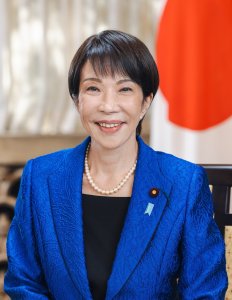
Jumping up and down like a fangirl called on stage by their favourite celebrity, Sanae Takaichi, Japan’s 104th prime minister, was all smiles standing next to US President Donald Trump aboard the USS George Washington. The image was symbolic of the decades long postwar US-Japan alliance, where Japan continues to serve as an ever more subservient client state and unsinkable aircraft carrier for the US empire.

On 8 February, just months after Takaichi took office, a snap election was held during a severe snow storm in most parts of the country, which overlapped with school entrance exams. Many argued that this was the worst time for political campaigning and casting ballots, but Takaichi paid no attention. After all, the timing was as deliberate and strategic as the elections themselves.

A Progeny of the LDP Tradition

Most of postwar Japanese politics can be described, without exaggeration, as a ‘one-party dictatorship’ by the Liberal Democratic Party (LDP) – enabled by US imperialism and the vested interests of a plutocracy of money and power. This signifies US postwar international policy of anti-communism, its exoneration and co-optation of war criminals and dictators for the sake of hegemony, and its rehabilitation of fascists. Japan’s LDP is no exception, functioning as a pseudo-government protecting Washington’s interests over its own citizens.

In October 2025, when Sanae Takaichi was sworn in as the new prime minister, critical online media were fast to point to this uncanny ‘tradition’ of the LDP. In 1994, a young female politician’s name and photograph, together with a message of recommendation, was printed in colour on a book praising the exploits of Nazi leader Adolf Hitler’s ‘election strategy’ in Japanese. The author of the book was LDP’s former public relations director and the young female politician was none other than Sanae Takaichi. After condemnation from human rights groups and citizens, the book was banned. Similar streaks of neo-fascist, ultra-right tendencies abound the LDP, and Takaichi has often been categorised as belonging to its core.

Nakamura Hiroshi (Japan), The Base, 1957.

Election as Tool for Distraction

The use of snap elections to manufacture and distort the public will when the tide is turning against the ruling LDP was a common practice by figures like the late Prime Minister Shinzō Abe. In July 2022, Abe was assassinated by a Moonies Cult survivor. Abe also happened to be Takaichi’s political paragon. Snap elections have also been used when crucial legislation proposed by the LDP, in favour of US imperialism, could not pass a majority vote through congress.

Back in 2005, Prime Minister Junichirō Koizumi faced strong opposition from factions within his party when he attempted to privatise the Japan Post Office. Koizumi declared a snap election to, in his own words, ‘Destroy the (old-guards of) LDP’ and ‘reform Japan’. In reality, the elections were used to realise his long-kept promise to Washington to open Japan Post’s $3.1 trillion fund to Wall Street’s moneyed interests. Via a media frenzy campaign lacking any substantive political debate, voters were flooded with emotive imagery and manoeuvres: Koizumi won a landslide victory and successfully privatised Japan Post, allowing Washington to usurp enough capital to sustain its war on Iraq.

The Result of Takaichi’s Election

Prior to 8 February, pre-election polls showed the prospect for Takaichi to win and secure a two-thirds supermajority in the 465-seat Lower House were high. While some media reports tried to highlight ties between her and the Moonies Cult or the controversial ‘slush funds’, social media was saturated with content depicting Takaichi as ‘determined and well-spoken’, ‘an independent, strong female leader’, and a ‘breath of fresh air’.

Many young social media content creators posted videos praising her character and image as a groundbreaking female prime minister. It was later verified that much of these posts were scripted, user-generated content, paid for by Takaichi’s campaign via recruitments on online job forums.

The snap election was held before Takaichi’s high approval rating of some 70% could decline, and the results were grim yet expected: the LDP won a two-thirds supermajority in the Lower House, giving Takaichi enough power to advance her ultra-right policy agenda with virtually zero opposition. This includes the late Abe’s pledge to amend Japan’s so-called Peace Constitution and other ultra-right, neo-fascist policies like the anti-espionage act, flag-desecration act, and amendment to the Imperial Household Law.

Ikeda Tatsuo (Japan), American Soldier, Child, Barracks, 1953.

Persistent Xenophobia

It is worthwhile to take a step back and examine LDP and Takaichi’s victory in a historical context. Together with their shadow government, the Nippon Kaigi (Japan Conference), the LDP has spent decades funding ultra-right grassroots movements – most notably by intervening in public education through the revision of history textbooks since the early 1990s. They adamantly spread false narratives that sanitize imperial Japan’s atrocious history of genocide and other crimes against humanity. These include the outright denial of military and government involvement in cases like the use of ‘comfort women’ and the Nanjing Massacre.

Formerly fringe ultra-right political parties have sprouted in recent years by latching on to this sanitized meta-narrative set forth by the LDP with their own versions of xenophobic, neo-fascist and conspiratorial claims. As witnessed during the most recent elections, these fascist, ultra-right politicians – spawned from the LDP themselves – continue to spread hate-speech targeting various minorities including immigrants, Okinawans, Chinese, Zainichi Koreans, and Koreans.

Online ultra-right commentary quickly forms mobs to stifle critics of US military bases in Okinawa or the US-Japan security alliance and increased militarisation of the Japanese Self-Defense Force as ‘un-patriotic’ or a ‘Chinese Communist spy’.

Takaichi, her cabinet, and other policymakers have shown no interest in tackling such tendencies in Japanese society nor desisting from outright aggressive behaviour. This can be seen as a natural consequence of her political evolution through the ranks of the LDP and has manifested more recently in her controversial statements regarding Taiwan.

Minoru Kinjo (Okinawa, Japan), Untitled, n.d.

The Power of Illusion

Although the results of this recent election garnered media headlines across the world as an overwhelming ‘landslide’ win for Takaichi and the LDP a closer look at the mechanics behind the scene sheds light on a different picture.

As Australian academic Gavan McCormack notes, Japan’s electoral system has been fraught with an illusory representation of votes since the single-seat constituency system was implemented under pressure by the US and business elites in 1994. Under the current system, voter results have been skewed to only benefit the ruling LDP. The LDP’s majority of seats in the Lower House often do not proportionally reflect the true number of votes won (Table 1).

Table 1

LDP Electoral Performance, (2005–2026)

YearVoteSeats
200548%73%
201243%79%
201448%75%
201748%74%
202649%86%
Okinawa Times (15 February 2026)

The results of the 2026 election follow a pattern of disproportional representation, given the fact that the overall approval rating of the LDP is only 31.5%. Other scholars have pointed out how the single-seat constituency system erodes democracy by making it harder for opposition parties to gain power, amplifying the ruling party’s seats beyond their popular vote share.

Tetsuya Ishida (Japan), Soldier, 1996.

The State vs. Local Government

One of the key questions where people’s democratic voices have long been ignored and violently suppressed by the Japanese central government and Washington is the question of Okinawa. The small chain of islands, home to indigenous Ryukyuans, still hosts approximately 75% of all US military bases in Japan despite making up less than 1% of the country’s land mass.

The people of Okinawa have voted against the construction of a new US military base in the pristine Oura Bay, but have continued to face virulent state oppression. After a referendum and numerous elections where local people explicitly opposed the construction of a new US military base in Henoko, the central government has resorted to a war of attrition against citizen groups leading the resistance, now mostly comprised of pensioners.

Okinawa Governor Denny Tamaki continues to confront the Japanese government and Washington with the local will to seek solutions through dialogue. His term as governor ends this autumn, meaning a new electoral battle awaits. How the LDP’s landslide victory in Prime Minister Takaichi’s snap election will affect the will and dignity of Okinawan civil society – which has sustained its resistance movement through grassroots democracy for decades – rests not only in the hands of the Japanese people, but in the hands of people worldwide who seek peace and liberation.

*****

Kinoko Beats is an independent researcher and artist from Tokyo currently living in Okinawa, and an organiser with No More Battle of Okinawa.

Disclaimer: The views expressed by the author do not necessarily reflect the views of Tricontinental: Institute for Social Research.


Tricontinental: Institute for Social Research seeks to build a bridge between academic production and political and social movements to promote critical critical thinking and stimulate debates. Read other articles by Tricontinental Asia.

Landslide Victory For The Ruling LDP Party in the General Election


Tuesday 24 February 2026, by Toshizo Omori


The general election held on February 8 concluded with a landslide victory for the ruling Liberal Democratic Party (LDP), securing over a two-thirds majority. The main opposition Centrist Reform Alliance, which was hastily formed on 15 January 2026 by the agreements between leaders of Constitutional Democratic Party (Rikken-minshutō, CDP) and Komeito, suffered a catastrophic defeat. [1]

Although this historic outcome was enough shocking, a more significant change for us was the defeat and marginalization suffered by the parliamentary Lefts - comprising the Japanese Communist Party (JCP), the Social Democratic Party (SDP), and Reiwa Shinsengumi, a progressive populist party, as well as the progressive wing of the former CDP.

Another significant change was the victory of LDP in Okinawa over the "All Okinawa" forces (a network of anti-US military bases movements). The latter lost all seats in the House of Representatives. When the Takaichi administration is stepping up its right-wing agenda—pushing for military expansion, arms exports, and the transformation of Okinawa and the Nansei Islands into military fortresses, the people resisting the militarization in Okinawa and the other regions lost the most important voices in the Diet.

Regenerating the left is now our urgent task. I will discuss the current situation of Japanese politics based on a detail analysis on the changes in voters’ political choices and clarify the immediate tasks for the regeneration of leftists in our country.

Voter Turnout and Dynamic Changes in the Political Situation

The defining characteristics of this general election that warrant our attention and analysis are: (1) LDP’s landslide victory, particularly its overwhelming dominance in single-seat constituencies; (2) crushing defeat of the Centrist Reform Alliance, especially the devastation of the former CDP camp; (3) further isolation and marginalization of the parliamentary Left; and (4) total loss of seats for the "All Okinawa" movement.

Before analyzing these points, let us look into the voter turnout. The turnout was 56.26%, an increase of 2.82% from the previous election (2024) and 0.34% from the one before that (2021). Yet, despite the immense popularity of Prime Minister Takaichi, this turnout was the fifth lowest in the postwar era. Although age-specific data has not yet been available, a Ministry of Internal Affairs sampling survey from last year’s The House of Councilors election clearly indicated a trend of an increase in youth turnout (increasing significantly among those in their late 20s from 38.19% in 2024 to 51.97%). It is reasonable to assume this trend is continuing or even accelerating. I was at a polling station all the day as an observer in an locality with many elderly residents, and noticed an unexpectedly high number of young people turned out. This implies that while a new layer of young voters is heading to the polls, another segment is withdrawing from the act of voting. Whether this correlates with the defeat of the political center cannot be determined at this moment.

The LDP’s Overwhelming Victory Supported by Strong Youth Turnout

The LDP secured 316 seats , a figure exceeding even the records in "Postal Privatization Election" in 2005 under the Koizumi administration and the "National Crisis Breakthrough Election" in 2017 under the Abe administration. In fact, since 14 seats were “conceded” to other parties in some districts the votes for LDP (in the propotional representation block) exceeded the votes needed for all their nominees to be elected. So effectively LDP would have got 330 seats. In single-seat constituencies, they won 249 out of 289. This was a vivid manifestation of the characteristics of the single-seat constituency system. In regions like Hokkaido, Tohoku, Niigata, Tokyo, Kanagawa, Aichi, and Okinawa—where opposition cooperation led by the CDP previously won seats—the LDP achieved a near-total victory.

In the proportional vote, the LDP garnered 21 million votes, second only to the approximately 25.88 million in the 2005 "Postal Election" (which saw a much higher turnout of over 69%). Exit polls by Yomiuri, NHK, and Nippon TV indicated that while the percentage of young people voting for the LDP was lower in 2024, it surged to 38% among 18–29-year-olds this time. Similarly, an ANN exit poll showed that 44% of teenagers and 37% of those in their 20s voted for the LDP. Given that these figures were only 12% and 11% respectively in last year’s The House of Councilors election, it is clear that PM Takaichi’s populist appeal is heavily driven by the younger generation.

Analysts explain LDP’s victory was a success in framing the election as a “binary choice”: "Takaichi or not." Takaichi’s political style—avoiding backroom deal-making and "banquet politics"—and her "clear and easy-to-understand" rhetoric likely left a positive impression on young people. According to Asahi Shimbun exit polls, 48% of those who "supported" the Takaichi Cabinet voted for the LDP in the proportional block, a figure not vastly different from the Kishida or Ishiba eras. The difference lies in the height of the approval rating itself. As the Asahi Shimbun noted, "The base of cabinet supporters has swelled compared to the last two elections of the House of Representatives. Cabinet approval tends to reflect the Prime Minister’s personal popularity, and it can be said that PM Takaichi’s personal popularity led to the LDP’s seat gain." Additionally, support from unaffiliated voters rose from 14% to 23%, making the LDP their top choice.

One factor contributing to this high support was Takaichi’s refusal to retract her comments on the "Taiwan Contingency," despite the resulting tensions with China. The younger generation supporting Takaichi has no lived experience of economic "growth." To such a generation, the slogan "A Strong and Prosperous Japan" likely resonated as an expression of hope against a sense of stagnation and anxiety about the future.

Regarding the issue of tightening regulations on foreigners—which significantly boosted the far-right Sanseito party in last year’s The House of Councilors election and paved the way for Takaichi’s victory in the LDP leadership race—a different trend emerged. According to Yomiuri exit polls, among those who prioritized "foreigner policy," the LDP’s share rose to 28%, overtaking Sanseito’s 26% (which had previously dominated this segment at 43%). This indicates that conservative voters who had defected to Sanseito returned to the LDP.

The LDP also dominated the SNS sphere, outperforming Sanseito and the Democratic Party for the People (DPFP). It is reported that PM Takaichi’s short videos were viewed 140 million times, and vast sums were spent on TV commercials and automated phone campaigns featuring her voice.

With this landslide victory, the Takaichi administration now has the power to re-pass bills in the House of Representatives even if rejected by the House of Councilors, granting her considerable free hand in policy execution. In the House of Councilors, the overwhelming majority in the House of Representatives will make it easier to form issue-based alliances with the DPFP or Sanseito. Moving forward, the administration is expected to push "economic measures centered on proactive fiscal policy," "amendments to the three defense documents, the creation of a National Intelligence Bureau, and the drafting of an Anti-Spying Law," and potentially "a review of the Three Non-Nuclear Principles." Other likely priorities include "strengthening foreigner management policies," "legalizing the use of maiden names as professional names," and "laying the groundwork for revising the Imperial House Law and the Constitution." Furthermore, Keidanren (Japan Business Federation) has called on the administration to realize a “science and technology-based nation through continuous innovation, promoting integrated tax, fiscal, and social security reforms, revitalizing regional economies and societies, labor reforms, maintaining and strengthening a free and open international economic order while considering economic security, securing a cheap and stable supply of clean energy and promoting Green Transformation (GX), and corporate governance reforms for sustainable growth.” The question now is how opposition movements can prepare to counter the materialization of these policies across various fields.

The Significance of the Former Constitutional Democratic Camp’s Catastrophic Defeat

While the Centrist Reform Alliance (CRA) suffered a crushing defeat with only 49 seats, the real loser was the former CDP wing. They secured only 7 seats in single-seat constituencies and 14 through proportional representation. However, 7 of those were effectively "conceded" by the LDP. Without this, the former CDP wing would have won only 14 seats—one-tenth of their pre-election strength—compared to the 28 seats won by the former Komeito wing. The CRA proportional vote plummeted to just under 10.14 million, a drastic drop from the 17.53 million combined votes of the CDP and Komeito in the previous election.

Under the leadership of Noda, CDP made a clear shift to " center-right voters." By abandoning the "united candidate" strategy with the JCP and others, they became unable to win single-seat constituencies alone. Therefore they pivoted rightward. This was the backdrop for the formation of the Centrist Reform Alliance with Komeito. However, the "coup-like" dissolution of the CDP and the formation of this alliance caused massive confusion among supporters. Consequently, only 64% of those who voted for the CDP in last year’s proportional block voted for the CRA this time; 30% voted for parties other than CRA or the LDP. The disappointment was likely immense for those who saw the CDP—originally formed in 2017 to oppose the "logic of exclusion"—abandon its core policies on nuclear energy and national security.

In an election framed as the choice of the leader -"Takaichi or not,"- the "powerful posture " of party leaders was the decisive factor. In this populist arena, the CRA leadership was mocked online as the "5G" (Five Geezers) and lacked the appeal to reach unaffiliated voters compared in comparison with Takaichi. An poll after this election showed that 81% of people attributed the LDP’s win to "expectations for PM Takaichi’s political stance," while 64% cited a "lack of appeal in opposition leaders."

The most serious result for us is that the progressive wing within the former CDP has been nearly wiped out. Why were these progressive lawmakers unable to resist the coup-like dissolution and policy shift? It is a deeply regrettable outcome. While some suggest CRA might split back into Komeito and the CDP, it is doubtful the former CDP side has the energy left to choose a path of cooperation with the parliamentary Left again. If they had that energy, they would have chosen a split when CRA was first formed. Instead, it is more likely they will be swallowed into some form of center-right realignment led by Komeito.

Bottomless decrease of Parliamentary Left’s Proportional Vote

The biggest losers in this election were the parliamentary Left: the JCP, Reiwa, and the SDP. These three parties fell from 18 seats to just 5. More serious than the seat count, however, is the proportional vote. Since Reiwa Shinsengumi first contested a national election in 2019, these three parties together consistently garnered 7 to 8 million votes—a stable support base for the Left. This time, they failed to even reach 5 million. Previously, Reiwa’s growth compensated for the decline of the JCP and SDP, but that structure has collapsed; the "bottom has fallen out."

The JCP secured 2.5 million proportional votes, but its decline remains unchecked. Their appeal for a "leftist rally" to counter the rightward shift of Japanese politics failed to gain traction among former CDP-supporting liberals. Local JCP activists are aging, making the future of the party uncertain. Even their reputed daily newspaper “Akahata” is said to be in financial crisis. Amidst this, some new challenges were made. For example, a kind of cooperation between the JCP, SDP, and New Socialist Party has been developed in some areas, and limited electoral cooperation with Reiwa were tried in certain districts. Whether these initiatives will be adopted as the general policy of these parties remains to be seen.

Meanwhile, the SDP fell well below 1 million votes, hitting a historic low and failing to secure a single seat in a general election for the first time, including the former Japan Socialist Party era. The party’s very existence is at risk.

Reiwa Shinsengumi’s visibility plummeted due to Representative Yamamoto’s absence from the campaign for health reasons. The party remains heavily dependent on Yamamoto’s charismatic appeal. Their proportional vote dropped to roughly 44% of their previous totals, securing only one seat due to an LDP shortage of candidates. Furthermore, as the ruling party began partially adopting "consumption tax abolition"—Reiwa’s signature policy—the party lost its unique selling point.

The Loss of "All Okinawa" Seats

Another grave defeat was the loss of all four seats in Okinawa. The "All Okinawa" candidates were defeated in every district, failing even to secure proportional seats. Consequently, Okinawa’s voice against the construction of the new base at Henoko has vanished from the House of Representatives. Internal friction within the "All Okinawa" camp, particularly a public dispute between the SDP central leadership and the local Okinawa chapter regarding candidate selection, contributed to this "mutual destruction."

Ongoing Political Realignment of Centrist Forces

Japan Innovation Party (JIP) and the DPFP also saw their seat counts decrease (excluding "conceded" seats). JIP’s focus on a "double election" in Osaka boosted its local vote but hindered its growth as a national party, reinforcing its image as a regional entity—perhaps akin to the relationship between Germany’s CDU and CSU. The DPFP, while losing overall votes, remained the second choice for voters in their teens to 30s after the LDP. As we head toward the 2028 election, we expect further realignment among center-right forces as they compete to show "policy affinity" with the Takaichi administration.

New Challenges for Leftist Regeneration

As we pointed out after last year’s The House of Councilors election, the Left is largely invisible to the younger generation and no longer functions as a channel for political participation. We must start by facing this reality. We need broad exchanges of opinion and experience, beyond our own circles, to understand why our claims are not reaching the youth.

Regenerating the Left is inseparable from the struggle against military expansion and constitutional revision, solidarity with local movements in Okinawa, and addressing the economic demands of the precarious "underclass." Furthermore, we must concretize an Eco-Socialist project as an alternative to the impending climate catastrophe.

These tasks have become even more urgent as the "bottom has fallen out" for the parliamentary Left. What is required now is a grounded, long-term discussion on how to deliver the Left’s message to the youth while maintaining a global perspective. This process involves surviving the current political climate, collaborating with radical movements, and preparing the ideological groundwork for a future mass upsurge. Our contribution will be to articulate the image of an Eco-Socialist society and its transitional demands in a way that resonates with the younger generation.

23 February 2026

Translated by Tsutomu Teramoto from “Weekly Kakehashi (Bridge)”

Footnotes

[1Photo: By 外務省 (MOFA), CC BY 4.0, https://comm