Sunday, March 29, 2026

A Bitter Irony: 9 Hollywood Films On Slavery, As US Rejects UN Resolution Against Enslavement

As the UN declares transatlantic slave trade the gravest crime against humanity, Hollywood's long reckoning with slavery feels more urgent and more ironic than ever.


Aishani Biswas
Updated on: 28 March 2026 
OUTLOOK INDIA


9 Hollywood Films On Slavery As US Opposes UN Resolution Photo: IMDb


Summary of this article


The UN has formally declared transatlantic slave trade the gravest crime against humanity, but the US voting against the resolution makes Hollywood's long history of confronting slavery feel sharply ironic.


American films have repeatedly returned to slavery not as the past, but as something that still shapes identity, justice and everyday life.


From brutal realism to genre storytelling, these films refuse to soften the history of slavery, forcing audiences to engage with its ongoing impact.


In a move that has sparked global debate, the US has voted against the United Nations General Assembly resolution declaring transatlantic slave trade as the "gravest crime against humanity". Backed by 123 countries and proposed by Ghana, the resolution calls for reparative justice, formal apologies, and a deeper reckoning with a past that continues to shape present inequalities.

When history is capitalised on screen but resisted in politics

The irony is difficult to ignore. The United States, a country whose film industry has repeatedly confronted the brutality of slavery, was among the very few that opposed the resolution, alongside Israel. Several European nations abstained.


Ghana's leadership framed the resolution as a necessary step towards healing, pointing out that the legacy of slavery still manifests in racial disparities today. The resolution may not be legally binding, but politically and morally, it draws a line in the sand: history cannot be softened, delayed, or selectively remembered.


This is where cinema becomes impossible to dismiss. Hollywood and its filmmakers have never treated slavery as distant history, but as a wound that continues to live and breathe. These films do not always get it right, and sometimes they are frustrating, stylised, or even exploitative. But taken together, they form an uneasy archive—one that often shows more willingness to confront the past than the politics of the present.


Here are nine films that engage with American slavery and its aftermath, forcing audiences to sit with what the world is still struggling to formally acknowledge.


1. The Colour Purple (1985 / 2023)


A Still From The Colour Purple 1985 Photo: IMDb


Based on Alice Walker's 1982 novel The Color Purple, the story found its first major screen adaptation in 1985, directed by Steven Spielberg. A new musical version followed in 2023, directed by Blitz Bazawule.


The story itself is not set during slavery, but remains inseparable from its legacy. Generations after emancipation, Black women are still negotiating violence, erasure and survival in a system built on their oppression. What makes The Colour Purple endure is its refusal to reduce suffering to spectacle. It centres interiority, sisterhood and resilience. If slavery was about stripping people of their identity, this film is about reclaiming it, piece by piece.

2. Sinners (2025)


A Still From Sinners Photo: IMDb


Directed by Ryan Coogler, Sinners premiered in 2025 and quickly became more than just another period film. Set against the backdrop of the Jim Crow-era South, it uses horror and music to tap into something deeper about memory and inherited trauma.


The film didn't just land; it stayed. Its run at the 2026 Academy Awards only cemented that, with 4 wins, including Best Actor for Michael B. Jordan and Best Original Screenplay for Coogler. Autumn Durald Arkapaw made history as the first woman and woman of colour in 98 years to win the Oscar for Best Cinematography.


What makes Sinners stand out in this conversation is its refusal to treat the past as contained. Slavery is not presented as history that can be revisited and neatly understood. It lingers, it mutates, it bleeds into the present. And that's exactly what gives the film its weight.


3. Django Unchained (2012)


A Still From Django Unchained Photo: IMDb


Quentin Tarantino’s take on slavery is divisive, and rightly so. It turns unimaginable brutality into a revenge fantasy, stylised and at times almost gleeful.


Yet, dismissing it entirely would be too easy. Django Unchained doesn't present slavery in a strictly realist or historical way. Instead, it uses genre, in this case a stylised revenge Western, to tell the story. The discomfort it creates is part of its point.


Still, it raises a larger question: who gets to tell these stories, and how? Films such as Django Unchained deepen the irony when filmmakers like Tarantino publicly espouse Zionism and their support for Israel during an ongoing genocide in Gaza.


4. 12 Years A Slave (2013)

A Still From 12 Years A Slave Photo: IMDb


Directed by Steve McQueen, this is perhaps the most unflinching depiction of American slavery in modern cinema.


Based on the real story of Solomon Northup, a free Black man kidnapped and sold into slavery, the film refuses any cinematic cushioning. There are no heroic shortcuts, no softened edges. The violence is relentless, but so is the humanity.


It remains essential viewing because it does not let audiences look away.


A Still From A Time to Kill Photo: IMDb


This film isn't about slavery in a literal sense, but about everything it left behind.


Set in the American South, this courtroom drama lays bare how deeply racial injustice is still woven into everyday life. The legal system here isn't neutral; it feels loaded, shaped by a history that refuses to loosen its grip.


That's exactly why this film belongs on this list. Slavery didn't simply end; it shifted, reappearing in structures that continue to decide who gets justice and who doesn’t. Few films make that connection between past and present feel this immediate, or this uncomfortable.


6. Roots (1977 / 2016)


A Still From Roots Photo: IMDb


Based on Alex Haley's 1976 book Roots: The Saga of an American Family, this landmark series follows Kunta Kinte, a young man taken from West Africa and enslaved in America, and then traces his descendants across generations, all the way into post-Civil War life.


What gives Roots its weight is that it doesn’t rush through history; it lets you feel how slavery fractures families and erases names. Yet somehow, it cannot fully erase memory. You watch identities being stripped away, but also quietly held on to.


That scale is what makes it so affecting. Slavery here isn't a single story or moment; it's a continuum that reshapes everything it touches, across decades.

7. Emancipation (2022)


A Still From Emancipation Photo: IMDb


Inspired by the photograph of "Whipped Peter", this film follows a man fleeing enslavement through unforgiving terrain.


It leans into survival and endurance, sometimes at the cost of emotional depth. But its central image, the scarred back that became proof of slavery's brutality, remains one of the most haunting visual records in American history. The film reminds us that documentation itself was a form of resistance.

8. Lincoln (2012)


A Still From Lincoln Photo: IMDb

Directed by Steven Spielberg, Lincoln turns its gaze towards the political machinery behind abolition, focusing on the tense final push to pass the Thirteenth Amendment.

It is less concerned with the lived experiences of the enslaved and more with the system that enabled slavery to exist for so long, and what it actually took to begin dismantling it. The film leans into backroom negotiations, fragile alliances and moral bargaining, showing how even something as fundamental as freedom had to be fought for within a deeply resistant structure.

That choice has been criticised, and fairly so, for sidelining Black voices. But it also lays bare an uncomfortable truth: justice, especially at that scale, is rarely clean. It is slow, compromised and often shaped by those in power. What the film leaves you with is a question that still feels relevant: how much should be negotiated in the pursuit of what is right, and who gets to make that call?

9. Sankofa (1993)


A Still From Sankofa Photo: X


Directed by Haile Gerima, Sankofa brings in a perspective that mainstream Hollywood has often overlooked or avoided.


Using a time-travel narrative, it pulls the African diaspora into a direct encounter with slavery, collapsing the distance between past and present. You're not just watching history unfold, you're made to feel its weight, its violence and its emotional cost in a way that’s hard to shake off.


The film is raw, spiritual and unapologetically political. It resists familiar storytelling rhythms and instead leans into something more urgent and personal. Sankofa doesn't just revisit history; it challenges you to reckon with it, especially if you're part of the world that continues to benefit from its aftermath.

Why these films still matter

Here's the thing about cinema. It cannot replace policies and storytelling is not the same as accountability. But when governments hesitate to formally acknowledge the scale of historical injustice, culture often steps in to fill that silence.


These films, across decades and styles, do one thing consistently: they refuse to reduce slavery to a footnote. They insist on its brutality, its complexity and its ongoing impact.

The contradiction remains stark. A country that has produced some of the most powerful cinematic reckonings with slavery is still reluctant, at a political level, to fully endorse that reckoning on the global stage. What this really means is that the work is far from over. Not in politics, not in culture, and certainly not in how history is remembered.

If these films have taught us anything, it is this: forgetting is never neutral.
Trump Claims Saudi Crown Prince ‘Kissing MyAss’ as He Praises Arab Allies Over NATO

The Wire Staff
21 hours ago


“He thought it’d be just another American president that was a loser … he didn’t think he’d be kissing my ass,” he said about Mohammed bin Salman.


US President Donald Trump speaks at the Future Investment Initiative in Miami, Florida. Photo: Screenshot from YouTube/The White House.

New Delhi: Claiming that Arab nations were closely working with Washington in the ongoing war against Iran, US President Donald Trump said Saudi Crown Prince Mohammed bin Salman had effectively ended up “kissing my ass”.

Speaking at the Future Investment Initiative conference in Florida, Trump elaborated on that claim by recounting what he said was a conversation with the Saudi royal about the US’s resurgence under his presidency.

“He said, you know, it’s amazing … a year ago, you were a dead country. Now, you’re literally the hottest country anywhere in the world,” Trump said.

Trump then directly linked that assessment to his characterisation of the current dynamic with Riyadh, repeating his claim in full rather than as an aside. “He didn’t think this was going to happen … he didn’t think he’d be kissing my ass … he thought it’d be just another American president that was a loser … but now he has to be nice to me,” he said.

He followed that with praise for the Saudi crown prince, calling him “a fantastic man” and “a warrior”, and saying the kingdom “can be very proud” of his leadership.

Trump said Saudi Arabia had stood with the US during the recent conflict with Iran, along with other Gulf partners. “Saudi Arabia fought, Qatar fought, UAE fought, Bahrain fought and Kuwait fought,” he said, adding that they “were with us … they were with us”.

The remarks come nearly a month into the US-Israel military campaign against Iran, which began on February 28 with large-scale strikes targeting Iranian military and nuclear infrastructure.

Iran immediately expanded the conflict across the region, with Tehran launching missile and drone attacks not only at Israel, but also multiple Gulf countries that host US military assets.

Despite coming under fire, the Gulf states have not formally joined the war as combatants. They have instead remained publicly cautious, concerned about the risks of retaliation and the broader economic fallout, particularly disruptions to energy infrastructure and the Strait of Hormuz.

However, according to some media reports, Gulf countries, especially the UAE and Saudi Arabia, have been egging Trump on to continue the war to decimate Iran’s military capabilities.

Against that backdrop, Trump portrayed them as active partners in the campaign on Friday.

He named Qatar’s Emir Sheikh Tamim bin Hamad Al Thani and UAE President Sheikh Mohamed bin Zayed Al Nahyan alongside the Saudi crown prince, describing them as “three great people” who had been “under tremendous attack” but remained aligned with Washington.

At the same time, Trump contrasted their role with NATO allies, saying, “we’re very disappointed … with NATO. They didn’t come to our aid”, and adding that the Gulf countries had done more “in all fairness … more so than NATO”.

He also linked political alignment to economic ties, pointing to Saudi investment commitments and defence deals, while urging Riyadh to join the Abraham Accords. “It’s now time … we’ve now taken them out … we got to get into the Abraham Accords,” he said.

Closing his remarks, Trump expressed a desire for his legacy to be that of a “great peacemaker”, claiming he has already “settled eight wars” and was the rightful recipient of a Nobel Peace Prize.

He repeated his claim to have intervened to halt a conflict between India and Pakistan. “I even stopped India and Pakistan … they were going at it … I said, if you keep fighting, I’m going to put a 250% tariff on each one … ‘all right, we won’t fight anymore’,” he said.
HOW THE WORLD SAW IT

'No Kings' Protests Draw Millions Across US And Europe Against Trump Administration


The protests, the third in a series that began in 2025, focused on several key grievances: US involvement in the war with Iran, strict immigration policies including enforcement actions that have drawn criticism


Outlook News Desk
Curated by: Pritha Vahsishth
Published at: 29 March 2026 


Protest near the Washington State Capitol building | Photo: AP/Lindsey Wasson


Summary of this article


Organizers claim millions participated in over 3,000 "No Kings" rallies held across all 50 US states and in more than a dozen countries including European cities like London, Paris, Berlin, and Rome, marking the third major wave of demonstrations since President Trump took office in 2025.


Protesters voiced opposition to the ongoing war with Iran, aggressive immigration enforcement, rising cost of living, and what they describe as authoritarian tendencies and expansion of executive power by the Trump administration.


The flagship event in Minnesota, headlined by Bruce Springsteen, drew large crowds at the State Capitol, while Republican officials dismissed the protests as "Hate America" or "Trump Derangement" events; turnout estimates vary, with previous rounds in 2025 drawing 5–7 million according to organizers.


Large-scale "No Kings" protests unfolded across the United States and parts of Europe, with organizers describing the day as one of the biggest mobilizations against the Trump administration to date. Demonstrations took place in more than 3,000 locations spanning all 50 states, from major cities like New York, Washington D.C., and Los Angeles to small towns and suburban areas. Solidarity events were also held in over a dozen countries, including rallies in London, Paris, Berlin, Madrid, and Rome, often organized by groups like Democrats Abroad.


The protests, the third in a series that began in 2025, focused on several key grievances: US involvement in the war with Iran, strict immigration policies including enforcement actions that have drawn criticism, and broader concerns over rising living costs and perceived overreach of presidential authority/


'Trump Is An Existential Threat': Robert De Niro Joins No Kings Protests; Jane Fonda, Bruce Springsteen & Others Attend

Outlook's Latest Issue: The Warlord With 'A Passion' For Peace

In Minnesota, which served as the flagship venue, thousands gathered at the State Capitol in St. Paul, where musician Bruce Springsteen performed to highlight local resistance to federal immigration measures. Protesters carried signs reading "Democracy Has No Kings" and chanted against what they called authoritarian rule.

Previous "No Kings" events reportedly drew millions , with organizers citing around 5 million in June 2025 and nearly 7 million in October 2025, and Saturday's turnout was expected to be significant, though independent verification of exact numbers remains challenging amid varying claims. Events remained largely peaceful, though some states had mobilized National Guard units as a precaution. In European cities, smaller but symbolic gatherings saw participants adapt messaging — using phrases like "No Tyrants" in monarchies such as the UK, Spain, and Sweden to avoid confusion.
NYT: Elon Musk Was on Trump-Modi Call on West Asia Crisis; India Says Talks Were Bilateral

The Wire Staff
28/Mar/2026

The New York Times noted that Musk's presence on the call for yet unclear reasons was unusual as he no longer holds an official post. The Indian foreign ministry has said the call was bilateral.


Elon Musk. Photo: Thomas Hawk/Flickr CC BY NC 2.0

New Delhi: Elon Musk, the billionaire businessman who runs Tesla, X and SpaceX, was part of a recent phone call between US President Donald Trump and Prime Minister Narendra Modi on the West Asia crisis, the New York Times reported on Friday (March 27).

Citing US officials, the report said it was not clear why Musk was on the call or whether he spoke. It described his presence as “an unusual appearance by a private citizen on a call between two heads of state during a wartime crisis”.

Neither the US nor Indian side mentioned his presence in their public accounts of the conversation.

When contacted by The Wire, India’s external affairs ministry had initially stated queries should be directed to the US side. The US embassy in New Delhi, when reached, said the matter should be taken up with the White House.

Responding to queries from ANI on the report, White House Press Secretary Karoline Leavitt said, “President Trump has a great relationship with Prime Minister Modi, and this was a productive conversation.”

Later, MEA spokesperson Randhir Jaiswal issued a statement. “We have seen the story. The telephone conversation on 24 March was between Prime Minister Narendra Modi and President Donald Trump only. As has been stated earlier, it provided the opportunity for exchange of views on the situation in West Asia.”

For example, The call, held on early Tuesday morning as per local Washington DC time, was first flagged by US ambassador to India Sergio Gor, with Modi confirming it soon afterwards in a post on X. There was no statement or readout issued by Trump or the White House about the call.

Modi said he had a “useful exchange of views” with Trump on the situation in West Asia, stressing the need for de-escalation and underlining the importance of keeping the Strait of Hormuz “open, secure and accessible”. He said both sides would remain in touch on efforts aimed at restoring peace and stability.

According to the NYT report, the discussion centred on the fallout from the Iran conflict, particularly disruptions around the Strait of Hormuz, a key route for global energy supplies. The paper noted that the halt to most maritime traffic had “led to surging energy prices worldwide and roiled markets”.

The newspaper also pointed out that Musk does not hold a government position anymore, making his participation striking given that “sensitive matters involving national security are often discussed” in such calls.

It was not clear in the report whether Musk spoke during the conversation or why he was included.

The report added that Musk’s business interests intersect with the issues at hand, pointing to investments from West Asian sovereign wealth funds in his companies and his long-standing interest in expanding commercially in India. It stated that SpaceX has been considering an initial public offering that could be affected by global economic instability.
IRONY

In Nation of  Meat Bans and Lynchings, India's Meat Exports Rose in Last Five Years: Govt Data

The Wire Staff
25/Mar/2026


Growth is driven primarily by buffalo meat exports, which accounts for an overwhelming share of India’s meat export earnings, at consistently around 97 to 98% over the five years.


A meat shop in Bengal's Andal, photographed because it was left open despite a directive from the BJP to keep it shut during Chhath Puja. Photo: Madhu Sudan Chatterjee/The Wire.

New Delhi: In the time that the ruling Bharatiya Janata Party and its foot-soldiers have harassed, injured and killed citizens over the sale, transportation and consumption of meat, India’s own exports of meat have only grown, an answer given by the government in parliament has revealed.

The government’s data shows India’s meat exports rising from $3.22 billion to $4.16 billion in the last five years.


Communist Party of India (Marxist) member of parliament John Brittas asked the Minister of Commerce and Industry for:

(a) quantum and details of the meat export from India during the last five years, the details thereof, state-wise and category wise;
(b) quantity of beef, buffalo and other categories of meat exported from India during the last five years, the details thereof, year-wise, State wise and category wise; and
(c) details of revenue earned from meat export during the last five years, the details thereof, year-wise, state-wise and category-wise.

In response, junior commerce minister Jitin Prasada said that the government maintains records only of “total meat exports” from India and does not have state-wise details. “The data for State wise exports of Meat is not maintained in absence of validation, as these are based on the basis of the state-of-origin code reported by the exporters in the shipping bills,” he said.

Prasada also claimed that as per Directorate General of Foreign Trade (DGFT)’s Foreign Trade Policy (FTP), “the export of beef (meat of cow, oxen, calf) is prohibited and is not permitted to be exported.”

The government thus provided in its answer the quantity of buffalo and other categories of meat exported from India during the last five years, and year-wise details of revenue earned from meat export during the last five years.


In 2020-21, exports of 10.98 lakh metric tonnes were valued at about US $ 3.22 billion. This increased in 2021–22 to US $ 3.38 billion and about 11.90 lakh tonnes. In 2022-23, while the quantity remained almost similar at around 11.91 lakh tonnes, the export value dipped slightly to US $ 3.27 billion.

A sharp rise was seen in 2023-24, when exports climbed to US $ 3.83 billion and 13.13 lakh tonnes, marking the highest volume in the period. In 2024-25, export value reached its peak at about US $ 4.16 billion, although the quantity declined slightly to around 12.74 lakh tonnes.


From the above two charts, it is clear that India’s meat exports are dominated by buffalo meat, which contributes to the bulk of India’s earnings across five years.

Buffalo meat exports rose from 2020-21, dipped slightly in 2022-23, and then surged to a peak in 2023-24, with export earnings reaching their highest level in 2024–25 despite a drop in quantity.

Growth is driven primarily by buffalo meat exports, which accounts for an overwhelming share of India’s meat export earnings, at consistently around 97 to 98% over the five years.

Sheep/goat and poultry meat exports show growth in both volume and value, though they remain a small share. Processed and other meat categories fluctuate and decline over time, becoming negligible by 2024–25.

This data comes close on the heels of a Scroll.in report on the fact that the 160-year-old Allana group, India’s top exporter of buffalo meat, donated an unprecedented Rs 30 crore to the Bharatiya Janata Party.

This information comes in the background of numerous reports of Bharatiya Janata Party, Vishwa Hindu Parishad, Bajrang Dal and other Hindutva party workers issuing threats to shut down meat shops ahead of or during any Hindu festivals. Same threats appear from time to time for meat shops close to places of Hindu worship, often from governments.

Instances of Muslim and Dalit meat traders being beaten up or lynched to death by purported cow protectors are by now well known.

Reclaiming Humanity Through Organic Food, Slow Life

At a time when analog is taking over and more are more startups are latching on to the “slowness” trend, these organisations have managed to carve a niche.


Chitrangda Singh

Published at: 7 March 2026
OUTLOOK INDIA


Reclaiming Humanity Through Organic Food, Slow Life


Summary of this article


The Farm, run by Shalini Philip and Arul Futnani, was started to sustain a family dairy farm as Chennai’s urban sprawl grew.


reStore, a non-profit organic shop, connects consumers directly with farmers where everything in this store is sourced directly from organic farmers who set their own prices.


Both initiatives emphasise community and sustainability, reminding consumers that what ought to be is called luxury.


At The Farm restaurant, the serenity is palpable as you walk through its tended garden, complete with a temple complex and a 40-year-old frangipani tree. It settles next to you at your table, under the shade of tall bamboo and leafy trees, or under the large, thatched roof with a view of wood-fired pizza ovens. The farm cats lounge in various corners, and you feel yourself unwind in their image as you settle in for a leisurely meal in a cocoon against the tirade of city life thundering just outside. Time moves slow.


Shalini Philip and Arul Futnani have been running The Farm on the rapidly developing outskirts of Chennai for 17 years and counting. Here, the food you eat still holds the spirit of the earth it was grown in. It is a small part of the thriving dairy farm that they have managed to keep alive amid skyscrapers, technology parks and myriad construction sites, symptomatic of the bleed of a metro city.


They tell me that they started the restaurant in a bid to sustain the family farm as Chennai’s urban sprawl crept closer to their doorstep. Selling produce wouldn’t help them break even on labour and land costs. “We were 100 per cent foolish. We followed our hearts and not our heads. We are not trained chefs, but we both love food,” Philip recalls with a smile.

Related Content

Uttar Pradesh Government: Seeds Of Change

Calling their menu “lawless”, she tells me how it developed to use what the farm produces throughout the year. The wood-fired ovens were chosen over electric ovens to use the farm’s surplus eucalyptus wood (originally planted to improve arid soil). The residual heat of the ovens is used overnight to slow-cook the

pork and dry out breadcrumbs (made from leftover home-baked bread) to coat their crispy cutlets. The ash from the ovens is then sprinkled in the fields as pesticide.


Being a dairy farm, they taught themselves to make artisanal cheeses, which crown their famous cheese plates, accompanied by homemade crackers and preserves, and adorned with garden blooms. For Christmas, they use the winter roselle flowers from the farm to make a jam they swirl into fresh ice cream.


A micro-roastery sits cutely in a corner of the restaurant where special ‘The Farm’ blends are roasted. Responding to my quizzical expression, I am told that this was their lockdown project while they had time on their hands, and they now source beans from carefully chosen estates all over India to make blends “with their own names and stories” and even supply to friends’ cafes in the city.


The restaurant espouses sustainability, offering organic and local produce, farm-to-table dining and employing closed-loop agricultural practices. But this terminology is conspicuously absent from their brand and design language. “We don’t tomtom these buzzwords, because to us, these practices are simply the most logical way to do what we do,” Philip explains.


Nothing that happens at the farm, the restaurant and its little shop is accidental. Their farm grows what the restaurant needs, as much as the restaurant uses what the farm offers it. Futnani and Philip’s way of life and doing business is a labour of their love for their farm, their love for food and their steadfastness in placing profit secondary to this. Their food carries the flavour of this authenticity.

Restoring Farmers’ Faith

A little closer to Chennai sits a rustic house, across from an imposing KFC. As you enter the gate, you are greeted by some or the other herbs drying in the sun, and just up the path, baskets of farm-fresh vegetables are set out to be probed, weighed, and piled into the bags you should have brought with you.


Inside the house, you will first find an assortment of homemade laddoos and treats, and past that, a variety of treasures from spices and unpolished millets and pulses and local honey, to podis and chutneys and herbal skin and hair care. A little room holds tins of cold-pressed oils and a larger room with an intoxicating fragrance holds more than 20 varieties of local rice.


This is reStore—a non-profit organic store started in 2008 by a group of passionate residents of Chennai looking to build sustainable practices into their lives. Everything in this store is sourced directly from organic farmers who set their own prices, and the store operates on a zero-waste principle.


Radhika Rammohan, one of the founders of reStore, tells me that they were moved by the increasing farmer suicides and the fraying connection between food and its consumers. Combining their experience working with non-profit and farmers’ organisations, they tried to emulate the food cooperatives and farmers’ markets they had seen in the West to create a transparent and fair way to bring food from the farms to city consumers.

“re-Storing” Farmers’ Faith


When asked how popular the store was at a time when ‘organic’ was not even a trend, Rammohan says: “Our launch in 2008 was attended by over 300 people, and this was just because of print media and internet groups.” In its 18th year, reStore sees a steadily growing customer base, despite the challenges of quick commerce, which it simply can’t compete with and the appeal of unbruised, uniform produce packaged in shiny plastic.


“Unlike a modern store where the customer is king, we are unable to absorb costs to give them perfect produce because our farmers set these prices. As with anything organic, there may be minor spoilage or damage. At a supermarket, they can just include that difference in the price and give you what looks perfect.” At reStore, the customer has to bring a degree of empathy and understanding for the imperfections of organic produce and real food. The gentle request to remove your shoes before you enter the shop is symbolic of what reStore asks of its customers—incurring a slight inconvenience for something bigger than you.


Philip, Futnani and Rammohan acknowledge the demands of a world that runs on the profit and loss axis, but they do not let it shake them from the purpose that launched them on their respective journeys.


Philip wonders whether The Farm is missing out on attracting clientele because they do not exploit the buzzwords that draw eyeballs, but, instead, choose to let their work speak for itself. Rammohan, too, wonders whether more people would be inclined to buy from the store if it could serve greater delivery demands and use plastic to store and transport produce more efficiently.


But that is inconsistent with who they are. As the popularity of sustainability rises, the commodification of the principles they have not let go of will also increase the noise in the spaces that they operate in. Philip affirms that the trends may come and go, but they just continue doing what they do.


The trend of labelling it a ‘luxury’ to enjoy local food and buy direct from farmers implies that this is a privilege. The demands of the market will produce red herrings that commodify these principles and exacerbate this perception. But The Farm and reStore are examples of ventures that throw their doors open to share what they treasure and believe in—hero-ing what they stand for and not merely what makes money.


As Radhika points out: “It is ironic that what ought to be is called luxury.” They are not alone. With the rise of community-supported agriculture, it is becoming easier to support local farmers—organisations like Navadarshanam outside Bangalore and Solitude Farm in Auroville offer baskets of fresh produce for consumers at home. The rise of permaculture workshops and courses allows urban dwellers to take ownership of their food by growing produce in limited spaces. Organisations like Locavore have created communities where participants share knowledge of local ingredients and heritage recipes. But to meaningfully engage with this ecosystem, we must recognise those who are in it for the long haul rather than a quick buck.


While the internet creates confusion and cacophony, it is also a source of community and knowledge. The Instagram page of The Farm blew up during the pandemic, and harvested many new followers around the world.


Priyanka Patel, an ecology conservationist working on a re-wilding project outside Bangalore, muses that “people who love plants somehow always find each other”. Through her Instagram, she has met people around the world who are generous with knowledge and curious about her work—although she wonders how many people will show up for these causes beyond their screens.

organic farming


By being generous with our time and effort, we have the opportunity to go the extra mile from consumers to actors with agency—to get our hands off our touchscreens and into the earth. The year 2026 is predicted to be the ‘year of the analog’, and it hopefully identifies in us the desire to return to our intuition about what is good, for us, and for the world around us. As the market latches onto slowness as a trend, it too will become a strategy rather than a standard. But it is returning to our first principles of community, care and intention that will motivate us to make the effort to engage with our world offline, and support local businesses and efforts. To quote Vandana Shiva: “Our separation from the natural world is a form of dehumanisation.” Reclaiming our connection to and our consumption of food is also reclaiming our humanity.


Chitrangda Singh is a corporate lawyer-turning-academic with an inimitable love for food and a good story
It Matters Nothing — War Is War

A poem about the futility of war and growing indifference


Ashwani Kumar
Updated on: 23 March 2026
OUTLOOK INDIA


It Matters Nothing — War Is War Photo: Artwork by Anupriya


Another girl is dead, another boy wounded. It matters nothing—war is war.

The oven is quiet in my kitchen. A cup grows cold beside the window.


I take a bite of the shrinking day, light a candle, and bake myself in the open for those who are dying for coffee.


Strange coincidence: I no longer remember there are not many bakeries in town.


Is it the wrath of God, or a futile struggle for survival?


Another girl is dead, another boy wounded. It matters nothing—war is war.


Ashwani Kumar is a poet, writer and professor in Mumbai. His most recent collection of poems is titled Map of Memories.
India’s First Court-Approved Passive Euthanasia Patient Harish Rana Dies

Once a BTech student at Panjab University, Rana became the face of India’s end-of-life debate after the Supreme Court allowed the withdrawal of life support under a supervised medical protocol at AIIMS Delhi.


Outlook News Desk
Curated by: Pritha Vashishth
Updated on: 24 March 2026 7:25 pm


Hairsh Rane


Summary of this article


Harish Rana, the first patient in India to be granted passive euthanasia by the Supreme Court of India, died at All India Institute of Medical Sciences Delhi.


The Supreme Court had allowed doctors to withdraw life-support measures through a carefully supervised medical protocol, marking a significant step in India’s legal and ethical approach to end-of-life care.


Rana’s case has become a landmark in India’s debate on the right to die with dignity, highlighting the role of palliative care, medical ethics, and legal safeguards in decisions around passive euthanasia.


Harish Rana, the first person in India to be granted passive euthanasia by the Supreme Court of India, died on Tuesday at the All India Institute of Medical Sciences Delhi, bringing an end to a long and painful chapter that has come to symbolise the country’s evolving conversation around dignity in death and end-of-life care.

The press release by AIIMS read Mr. Harish Rana passed away at 4:10 PM on 24th March 2026 at AIIMS, New Delhi. Hewas under the care of a dedicated team of doctors and was admitted to the Palliative Oncology Unit (IRCH), led by Dr. (Prof.) Seema Mishra, HoD, Onco-Anaesthesia.

Rana was just a young engineering student when his life took a tragic turn in 2013. At the time, he was pursuing a BTech degree at Panjab University. A fall from the fourth-floor balcony of his hostel left him with severe head injuries that caused irreversible brain damage. The accident pushed him into a permanent vegetative state, a condition in which patients remain alive but show no signs of awareness or cognitive function. For the next thirteen years, Rana survived with the support of artificial nutrition and intermittent oxygen assistance, while his family navigated the emotional and medical complexities of caring for someone who could neither communicate nor recover.

Over time, Rana’s case moved beyond the personal tragedy of one family and entered the national legal and ethical arena. The prolonged nature of his condition, with no meaningful hope of recovery, raised profound questions about whether life should be sustained indefinitely through medical intervention when consciousness and quality of life have effectively disappeared. These questions ultimately reached the Supreme Court of India, which in March 2026 allowed passive euthanasia in Rana’s case.


Supreme Court Allows Withdrawal Of Life Support In Landmark Passive Euthanasia Case

The court’s order permitted doctors to withdraw life-support measures in a carefully regulated manner. Passive euthanasia, unlike active euthanasia, does not involve administering substances to cause death. Instead, it involves the withdrawal or withholding of life-sustaining medical treatment, allowing the natural process of death to occur. The decision was seen as a landmark moment in India’s legal landscape, translating the court’s earlier recognition of the right to die with dignity into a concrete medical application.

Following the Supreme Court’s directive, Rana was shifted from his home in Ghaziabad to the palliative care unit at the All India Institute of Medical Sciences Delhi. The procedure was overseen by a multidisciplinary team of specialists, including experts in neurosurgery, anaesthesia, palliative medicine and psychiatry. The team worked under a carefully structured protocol designed to ensure that the withdrawal of life support was carried out gradually and ethically, while prioritising the patient’s dignity.


Doctors first assessed Rana’s condition in detail and then began the gradual withdrawal of artificial nutritional support under continuous monitoring. The process was conducted with sensitivity, reflecting both the legal scrutiny surrounding the case and the ethical weight of the decision. Medical professionals involved in the procedure emphasised that the goal was not to hasten death but to allow a dignified and natural end to a life that had long been sustained solely through medical intervention.


Rana’s death on March 24 marked the conclusion of a case that has had wide-ranging implications for India’s healthcare and legal systems. For years, discussions around euthanasia in India remained largely theoretical, shaped by court rulings and philosophical debates but rarely implemented in practice. Rana’s case transformed that conversation into a lived reality, forcing institutions, doctors and policymakers to confront the complexities of end-of-life decision-making.


The case has also drawn attention to the broader role of palliative care in India, a field that focuses on improving the quality of life for patients with severe or terminal conditions. Experts say the Rana case underscores the need for clearer medical protocols, stronger legal safeguards and greater awareness among families about patients’ rights and medical options at the end of life.


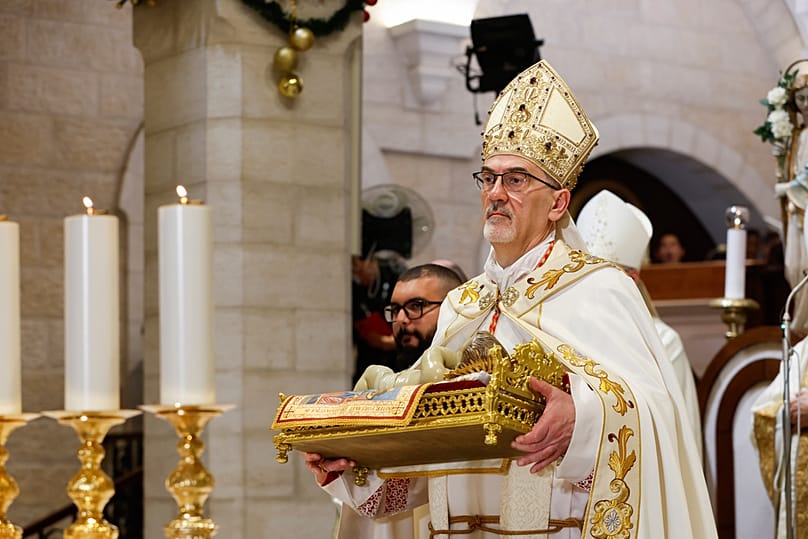
The History And Meaning Of Easter Eggs: Origins, Symbolism & Traditions

Have you ever wondered about the true Easter eggs meaning? Long before they were made of chocolate and hidden in gardens, eggs were profound ancient symbols of rebirth and spring. For Christians, Easter egg symbolism represents the sealed tomb and the glorious resurrection of Jesus Christ. From the royal courts of King Edward I to the legendary red egg of Mary Magdalene, discover the fascinating history of Easter eggs, the true origin of the Easter egg tradition, and exactly why we decorate Easter eggs to celebrate this joyful season.

Easter Eggs
The History And Meaning Of Easter Eggs: Origins, Symbolism & Traditions

When we think of Easter, a few familiar images instantly come to mind: colourful spring blooms, playful bunnies, and, most iconically, beautifully decorated eggs. Whether they are carefully painted, intricately designed, or made of chocolate and hidden for a festive hunt, they are a cherished part of the holiday. But what is the true meaning of Easter eggs, and how did this practice begin? Beyond their bright colours lies a fascinating story. By exploring the history of Easter eggs and the origin of the Easter eggs tradition, we uncover a beautiful blend of ancient spring festivals, profound Easter egg symbolism, and evolving cultural practices.

What Do Easter Eggs Really Mean?

At its heart, the egg has long been a universal symbol of new life, renewal, and fertility. This meaning existed well before Christianity, tracing back to ancient spring festivals that celebrated the end of winter and the rebirth of nature. The image of a chick emerging from an egg naturally came to represent fresh beginnings and the cycle of life.

With the rise of Christianity, this powerful symbol was given a deeper spiritual meaning. For Christians, the Easter egg represents the resurrection of Jesus Christ. The hard shell is seen as a symbol of the sealed tomb, while cracking the egg signifies Jesus rising from the dead, bringing with it hope, renewal, and the promise of eternal life.

In many traditions, eggs are also dyed in vibrant colours, especially red, which symbolizes the blood shed by Christ during the crucifixion. Over time, these symbolic practices blended with local customs, eventually evolving into the joyful Easter egg traditions we see today, where meaning, faith, and celebration come together in one simple yet powerful symbol.

Why Are Eggs Part of Easter?

The connection between eggs and Easter developed over centuries, blending ancient customs with Christian practices. Long before the rise of Christianity, many cultures celebrated spring festivals around the time of the vernal equinox. These festivals often focused on fertility and the return of light and life after winter, and symbols like eggs and rabbits (known for their prolific breeding) were likely used in these celebrations. As Christianity spread, it often incorporated existing pagan symbols and traditions, adapting them to fit Christian narratives. The egg, with its potent symbolism of new life, was a natural fit for celebrating the resurrection, the ultimate story of new life in Christian belief.

There was also a very practical reason rooted in religious observance. For centuries, Christians traditionally abstained from eating certain foods, including eggs, meat, and dairy products, during Lent – the 40-day period of fasting and repentance leading up to Easter. However, hens continued to lay eggs throughout this period. By the time Easter Sunday arrived, households often had a large surplus of eggs. What better way to celebrate the end of the fast and the joyous occasion of Easter than by decorating, sharing, and feasting on these accumulated eggs? This practical necessity helped solidify the egg's place as a staple of Easter celebrations.

Legends and Royals: The History of Easter Eggs

The origin of the Easter egg tradition is also steeped in fascinating legends and royal history. One of the most famous stories in early Christianity involves Mary Magdalene. According to Eastern Orthodox tradition, Mary attended a banquet hosted by Emperor Tiberius Caesar. She held up a plain egg and proclaimed, "Christ is risen!" The Emperor laughed, stating that Christ rising from the dead was as likely as the egg in her hand turning red. Miraculously, the egg immediately turned a brilliant red, cementing the tradition of dyeing eggs for Easter.

Historically, the practice of gifting decorated eggs can be traced back to the Middle Ages. One of the earliest recorded instances was in 1290, when King Edward I of England ordered 450 eggs to be covered in gold leaf and decorated. These luxurious eggs were presented as Easter gifts to the royal household, sparking a tradition of elaborate egg gifting that would eventually lead to the creation of the famous, jewel-encrusted Fabergé eggs in the 19th century.

The Ancient Art of Pysanky

When asking why we decorate Easter eggs, one cannot ignore the breathtaking Ukrainian tradition of Pysanky. Unlike standard dyeing, Pysanky involves a complex wax-resist method where intricate folk motifs and geometric patterns are drawn onto the eggshell using beeswax before dipping it into various dyes. These eggs are not meant to be eaten but are preserved as powerful talismans, believed to ward off evil and bring prosperity, showcasing how deeply Easter egg symbolism is woven into global cultures.

How Do You Prepare Easter Eggs?

The most common way involves real chicken eggs:

  1. Hard-Boil Them: Cook the eggs in boiling water until the inside (yolk and white) is solid. This stops them from breaking easily and makes them safe to handle (and eat later if you keep them cold!).

  2. Let Them Cool: Make sure the eggs are cool before you decorate them.

  3. Decorate! This is the fun part:

    • Dyeing: Use special Easter egg dye kits you can buy at the store. You mix colours with water and vinegar, then dip the eggs in.

    • Painting: Use non-toxic paints to paint designs on the shells.

    • Crayons: Draw on the warm, hard-boiled egg with crayons (the wax melts a bit onto the shell). You can even dye them after drawing for cool effects.

    • Stickers: Use Easter-themed stickers.

Nowadays, many "Easter eggs" are also chocolate eggs (often hollow and filled with candy) or plastic eggs that you can open and fill with small treats or toys.

What Do People Do With Easter Eggs?

Easter eggs are the centrepiece of many joyful springtime activities:

  • Easter Egg Hunts: Grown-ups hide decorated eggs (real, chocolate, or plastic) around the house or garden, and children race to fill their baskets.

  • Egg Rolling: A popular tradition, most famously hosted at the White House, where children use long spoons to roll decorated hard-boiled eggs down a grassy hill.

  • Egg Tapping (or Egg Fights): A traditional game where two people hold a hard-boiled egg and tap them together. The person whose eggshell remains uncracked wins!

  • Festive Decorations: Beautifully painted eggs serve as stunning centrepieces for the Easter dinner table or are hung on decorative Easter trees.

  • Sweet Treats: Let’s not forget eating them! While hard-boiled eggs are enjoyed as a breakfast treat, hollow chocolate eggs filled with candy remain a global favourite.

From ancient fertility symbols to representations of Christian resurrection, and from simple dyed hen's eggs to elaborate chocolate creations, the Easter egg has journeyed through history, adapting and accumulating layers of meaning. Whether you're decorating them, hunting for them, or simply enjoying a sweet treat, Easter eggs remain a powerful and joyful symbol of new beginnings, hope, and the enduring spirit of spring. Happy Easter!

Frequently Asked Questions (FAQs)

1. Why do we decorate Easter eggs?

We decorate Easter eggs to celebrate new life and the resurrection of Jesus Christ. Historically, Christians painted eggs bright colours to mark the end of the strict Lenten fast, turning a practical food surplus into a joyful, vibrant celebration.

2. What is the Easter egg symbolism in Christianity?

In Christianity, the Easter egg symbolizes the resurrection of Jesus. The hard outer shell represents the sealed tomb of Christ, and the cracking of the egg represents Jesus rising from the dead and the promise of eternal life.

3. What does a red Easter egg mean?

In Orthodox Christian traditions, Easter eggs are dyed a deep red to symbolize the blood shed by Jesus Christ during his crucifixion on the cross.

4. Who invented the Easter egg hunt?

The Easter egg hunt is widely believed to have originated in Germany. Protestant reformer Martin Luther is said to have organized egg hunts for his congregation, where men hid eggs for women and children to find, symbolizing the discovery of the empty tomb.


India’s Education Expansion: Building Human Capital or Just Producing Degrees?


Tajamul Rehman Sofi 


The country is producing more graduates than ever but not enough productive employment.


Image Courtesy: Needpix.com

India stands at a demographic turning point. By the end of this decade, the country will possess the largest youth population in the world. In policy discourse, this is often celebrated as a demographic dividend. But demographic advantage is not automatic; it depends on whether young people can translate education into productive employment.

The expansion of education spending and reforms under the National Education Policy 2020 (NEP 2020) aim precisely at strengthening India’s human capital base. The real question, however, is whether expanding education alone can deliver economic opportunity when job creation itself remains uneven.

Recent Union Budgets reflect an ambitious push to modernise India’s education system. The Union Budget 2025-26 allocated around ₹1,28,650 crore to education, prioritising infrastructure and digital access. Initiatives included broadband connectivity for schools, the expansion of Atal Tinkering Labs, digital learning materials in Indian languages and new infrastructure for the Indian Institutes of Technology.

The following year, the Union Budget 2026-27 increased allocations to ₹1,39,285.95 crore, an increase of about 8.27%. New proposals included girls’ hostels in every district, university townships, specialised institutes in healthcare and pharmaceuticals, and a committee focused on Education to Employment and Entrepreneurship.”

State governments have also expanded spending. Uttar Pradesh, for example, allocated ₹80,997 crore to basic education while increasing investment in vocational programmes, smart classrooms and artificial-intelligence laboratories. These initiatives suggest that governments are trying to align education with emerging technological and knowledge sectors.

The broader policy framework guiding these reforms is NEP 2020, which seeks to transform the education system through multidisciplinary learning, flexibility in degree programmes and greater emphasis on skills. One of its most ambitious goals is to raise the Gross Enrolment Ratio (GER) in higher education to 50% by 2035, up from around 27% in 2018. According to the All-India Survey on Higher Education (AISHE), enrolment in higher education has been steadily increasing in recent years

The policy also aims to expose at least half of all learners to vocational education by the middle of the decade. In principle, this shift could bridge the long-standing divide between academic education and labour-market skills. Yet the expansion of access raises a deeper question: does more education automatically translate into better human capital?

One persistent concern is the quality of teaching. The NEP emphasises continuous professional development for teachers and highlights teacher training as a cornerstone of reform. However, financial allocations for teacher education remain modest relative to the scale of transformation envisioned.

Under the Samagra Shiksha programme, which integrates several school-education schemes, teacher training accounts for only a limited share of total education spending. Without substantial investment in teacher capacity, improvements in learning outcomes may remain limited. International experience shows that infrastructure expansion alone cannot guarantee educational quality.

The push toward vocational education faces similar implementation challenges. Several states, including Tamil Nadu, Maharashtra, West Bengal, Karnataka, and Andhra Pradesh, have expanded vocational programmes through school-based skill streams, polytechnic institutions, and partnerships with industry. For instance, Tamil Nadu has strengthened vocational pathways within higher secondary education, while West Bengal has introduced skill-oriented courses in thousands of secondary schools.

Yet, despite these initiatives, vocational education remains a relatively small component of the overall education system. According to data from the Unified District Information System for Education Plus (UDISE+), only a limited share of secondary school students is enrolled in vocational courses, indicating that skill-based education has yet to become a mainstream pathway.

Labour-market evidence reinforces this concern: data from the Periodic Labour Force Survey (PLFS) suggests that a significant proportion of graduates still lack the practical skills required by industry. But even if education reforms succeed in improving employability, the central puzzle remains unresolved: where are the jobs?

Industry partnerships, internships and apprenticeships can help graduates transition into employment, but they cannot replace the fundamental requirement of large-scale job creation. When the economy itself does not generate enough employment opportunities, educational expansion alone cannot absorb the growing number of graduates.

Recent labour-market trends highlight this structural tension. India’s overall unemployment rate fell to about 4.8% in 2025, yet youth unemployment remains significantly higher. At the same time, employability indicators have improved only marginally. According to the India Skills Report, employability rose from 54.81% in 2025 to 56.35% in 2026.

Sectoral patterns also reveal the limits of labour absorption. The information-technology sector is expected to generate millions of jobs by the end of the decade, particularly in fields such as artificial intelligence, cybersecurity and data science. Healthcare employment is also projected to expand significantly, while renewable energy is emerging as another important source of future jobs. Yet these sectors together cannot absorb the millions of graduates entering the labour market every year.

Historically, manufacturing has played a crucial role in generating mass employment in developing economies. In India, however, manufacturing growth has become increasingly capital-intensive, with automation limiting its capacity to create jobs at scale.

This growing mismatch between education expansion and labour-market demand raises the risk of degree inflation a situation in which the number of graduates rises faster than the availability of suitable employment opportunities. In such circumstances, graduates may find themselves underemployed or working in occupations that do not require their qualifications.

Another dimension of NEP 2020 is its encouragement of greater private participation in higher education. Private institutions can expand capacity and introduce innovation, but they also raise concerns about affordability and equity. Higher tuition costs may restrict access for students from economically weaker backgrounds, while quality assurance across institutions remains uneven.

Ultimately, education policy cannot be separated from economic strategy. Human capital formation depends not only on better schools and universities but also on an economy capable of productively employing skilled workers.

India’s education budgets and NEP 2020 represent an important step toward expanding access and modernising the education system. But the success of these reforms will depend on whether economic growth generates sufficient employment opportunities for the country’s rapidly expanding pool of graduates.

If education policy and economic strategy move together, India’s youth population could become a powerful engine of growth. If they move apart, the country may discover that producing degrees is far easier than producing jobs.

Dr. Tajamul Rehman Sofi is an economics researcher specialising in financial stability, banking efficiency, jobless growth and public policy analysis. The views are personal.