Sunday, March 29, 2026

Narrowing space
March 29, 2026 
DAWN

THE HRCP report Regulation or Restriction? is a telling account of the constraints faced by NGOs in Punjab. Its central finding is that civic space in Punjab has not been shut down outright, it has been quietly narrowed through bureaucratic, legal and financial pressures.

 The need for regulation is neither new nor unreasonable. States are entitled to ensure transparency, financial accountability and compliance with the law. Yet, as the report says, the challenge lies not only in the number of requirements — from Economic Affairs Division approvals to district permissions and security clearances — but in how they are applied. Even NGOs that comply with these procedures often face prolonged delays, repeated scrutiny or sudden interruptions in their work. Approvals can take months or years, bank accounts may be frozen, and projects stalled despite applications being in process. Rather than clear regulation, this creates a system where compliance does not guarantee the ability to operate. The result is an environment of uncertainty in which NGOs must devote increasing time and resources to navigating administrative hurdles, often at the expense of their core work. Rights-based organisations, particularly those working on governance and human rights, appear to face greater constraints than service-delivery groups. Many have scaled back advocacy, adopted safer programming, with some reshaping their work to avoid delays, scrutiny or disruptions, or, in some cases, ceased operations altogether. Women-led and minority-focused groups, already navigating social pressures, find themselves doubly constrained.

The consequences extend beyond individual groups. Civil society plays a vital role in democratic systems, amplifying citizen voices, informing policy and delivering services where the state cannot. When these actors operate amidst uncertainty, their work and the communities they serve are affected. Encouragingly, there are signs of partial easing, including judicial interventions and some procedural flexibility. Yet the longer-term effects — weakened networks and constrained funding — remain. The way forward lies in balance. The report calls for a rights-compliant legal framework grounded in legislation, alongside streamlined, time-bound approval processes and structured dialogue between government and civil society. It also stresses clearer oversight, accessible legal remedies, stronger coordination among NGOs, and more flexible donor support. A state that trusts its citizens leaves room for them to organise. Without that space, governance and society are diminished.

Published in Dawn, March 29th, 2026
Hotter urban future

Editorial 
Published March 29, 2026
DAWN

PAKISTAN is headed for a dangerous future, one that is not only characterised by rapid urbanisation but also rising heat. 

A new study by the University of Chicago’s Climate Impact Lab warns that the country could see a net increase of 51 temperature-related deaths per 100,000 peopleby 2050, placing it among those most severely affected by climate-driven mortality. The burden, however, will fall disproportionately on urban centres. Several Pakistani cities already appear among those most vulnerable globally. Faisalabad, Multan, Gujranwala, Lahore, Peshawar, Hyderabad, Rawalpindi and Islamabad are projected to experience steep rises in heat-related mortality. In some cases, the increases are startling. Faisalabad alone could see up to 9,400 additional deaths annually by mid-century. Across the world’s cities expected to see rising heat mortality, roughly one-third of the additional deaths may occur in Pakistan’s urban areas.

These projections reveal the perilous path Pakistan’s urban growth has taken. Cities have expanded rapidly but rarely with climate resilience in mind. Trees and open spaces have yielded to concrete, while dense housing and traffic congestion intensify the urban heat-island effect. Informal settlements, where millions live without adequate ventilation, water or electricity, are particularly vulnerable to extreme heat. Yet, as shown by cities elsewhere, targeted adaptation can significantly reduce heat deaths. Urban planning must prioritise green cover, shaded streets and parks that cool neighbourhoods. Building codes should encourage reflective materials, insulation and natural ventilation. Early warning systems, cooling centres and better emergency response can also save lives during heatwaves. Financing remains a critical constraint. Pakistan’s adaptation budget is limited, while much of the international climate finance promised has yet to materialise. Without stronger domestic planning, our cities will grow ever more dangerous. In a warming climate, the costs will ultimately be counted in human lives.

Published in Dawn, March 29th, 2026
Irresponsible targeting


Ahmer Bilal Soofi 
Published March 28, 2026 
DAWN

The writer is a former caretaker federal law minister and a public international law practitioner.


IT is very interesting that, over the years, the US has developed extensive target selection processes to handle combat challenges responsibly during the conflicts it has engaged in — whether under Chapter 7 of UN Charter or through regional arrangements like Nato, or unilaterally. The legal debate on the justification provided for wars started by US have been ongoing. Washington has not escaped criticism for its means and methods employed in these conflicts. However, the recent attacks on Iran shocked everyone for unhesitatingly choosing to target protected persons, civilian infrastructure, political leadership, a girls’ school, a naval ship with no belligerent intentions, factories, nuclear facilities, civilian apartment buildings, oil terminals, boats, the military and political leadership, scientists, engineers, and worse, negotiating officials themselves.

One recalls meeting members of the US JAG (law of war branch) and international humanitarian law experts numerous times at international conferences over the years. The interactions provided valuable insight into the institutional mechanisms of the State Department, Pentagon and the US attorney general’s office. All command levels in the US military must ensure that every strike, every use of ammunition, every target is legally cleared and a distinction made between civilian and combatant; the processes qualify the test of proportionality and make it absolutely necessary to achieve a particular military purpose.

The processes are based on the law of war as painstakingly laid down by experts in The Hague and Geneva in the earlier part of the 20th century. American lawyers supported the ratification of the 1949 Geneva Conventions and several other IHL instruments and the US government went ahead with it, thereby taking upon itself the duty to adhere to all the laws of war in any international armed conflict it engaged in or faced. Later, these commitments were codified by the government in the Law of War Manual spread over 1,100 pages. The US War Crimes Act, 1996, criminalises grave breaches of the Geneva Conventions, making individuals like members of the US armed forces, their field commanders and those up the chain directly liable.

It may sound unreal but the US army’s JAG branch engages around 4,000 to 5,000 lawyers who specialise in combat best practices and rules of engagement. These thousands of lawyers are trained in IHL principles. Additionally, hundreds of IHL specialists work for the joint staff legal offices and the JAG headquarters of the army, navy and air force. Additionally, around 500 lawyers work in 11 combatant commands operational across the globe. We are not counting the over 200 attorneys in the office of the legal adviser in the state and justice departments.


The norms of war are built on restraint, not reciprocity.

With this extraordinary combination of legal experts in various branches of the US government, in walks the defence secretary, whose office has now been rebranded as the Department of War. Waving his hands, he declares these laws and the defence department’s war manual are “stupid rules of engagement” — the very rules the US JAG had prepared, drafted and upgraded many times. He also authorises strikes that violate these rules of engagement and pushes for “violence of action” and announces “no quarter” for leaving combatants alive.


He is believed to have advised American soldiers to ignore legal guidance regarding combat limitation. Unfortunately, President Donald Trump is no less callous and keeps talking about ‘taking out’ (assassinating) Iran’s religious leadership, its political office-bearers and military commanders, not realising that his statements and those of his other colleagues are implicating the US state in a series of intentionally wrongful acts it is admitting itself. It has been rumoured that Israel or the US may explore the Samson option or use of nuclear weapon against Iran. The International Court of Justice had ruled in 1996 that it is not the possession but the actual use of nuclear weapons that is a grave violation of IHL as its effects are indiscriminate and lead to unnecessary sufferings. That verdict continues to hold the field.

The Iranian Red Crescent reports that over 85,000 civilian units have been damaged or destroyed. It would be like damaging or destroying the entire infrastructure of a city like Salt Lake City, Richmond or Newcastle upon Tyne.

The most regrettable part pertained to the negotiations, that were being carried out in utter bad faith — deceiving and attacking the Iranian side when it was less guarded on account of the negotiations. And this, not once but twice. Worse, the US and Israel killed many among the very leadership they were negotiating with. Iranians see in this a renewed obligation reminiscent of Bait-i-Rizwan where the believers vowed that war would be imposed as penalty for allegedly killing the envoy sent to the other side for negotiations.

It is reassuring that Iranian officials have relied on self-defence as stipulated in Article 51 of the UN Charter to frame their responses to attacks on Iranian soil. Iran argues it is entitled to strike targets (in particular, American bases) in the Gulf states, which are perceived as facilitating US or Israeli operations. Iran seems to rely on the right of self-defence alongside lawful reprisals that permit striking back though subject to strict conditions of proportionality, necessity and time lag, and aimed only at military objects.

Iran has also demanded compensation or reparation for damage inflicted by the US-Israel operations. There is a bilateral precedent. Following the 1979 Revolution and the subsequent hostage crisis, the Iran-United States Claims Tribunal was established in The Hague under the Algiers Accords. For decades, the Tribunal adjudicated claims by both governments and private parties, awarding compensation for expropriation, contract disputes, and violations of international law. The Tribunal’s existence demonstrates that Iran and the US already possess a functioning legal framework for compensation.

The norms of war are built on restraint, not reciprocity. Violations by one side (the US and Israel) do not free the other (Iran) from its obligations towards GCC states. Neither treaty law nor Islamic doctrine permits the abandonment of humanitarian protections. In a conflict where cycles of retaliation have too often overshadowed legal principle, the norm remains clear.

Published in Dawn, March 28th, 2026


The blue war

Aizaz Ahmad Chaudhry 
Published March 29, 2026
DAWN

The writer is former foreign secretary of Pakistan.


THE ongoing war in West Asia is yet another manifestation of the breakdown of the world order. The first blow to this rules-based world order had come from its own architect — the United States of America, when it invaded Iraq in 2003 pre-emptively and illegally, setting a precedent that has since been repeated. The war launched by the US and Israel against Iran on Feb 28 was also unilateral, illegal and without clearly defined goals. US President Donald Trump has offered varying reasons: to change the Iranian regime, decimate its nuclear capability, or fragment the country. Employing their military dominance, the US and Israel have bombed tens of thousands of targets in Iran, hoping the regime would fall. It did not.

Iran responded by first eliminating US air defence systems, using cheaper versions of its drones, and then firing more lethal missiles. The most impactful Iranian manoeuvre, however, came in the waters of the Persian Gulf, when it blocked the Strait of Hormuz. This narrow passage provides for 20 per cent of global oil and gas flows. The impact on oil and gas prices was immediate and steep, despite the release of strategic reserves by members of the International Energy Agency. The US is keen to lift this blockade, but is unable to do so alone. Iran is employing several military capabilities in the waters of the strait, including naval mines, anti-ship cruise missiles from coastal sites, fast-attack craft and submarines, and unmanned aerial vehicles.

Why has the US failed to unblock the Strait of Hormuz or prevail in this war? According to Harlan Ullman in Anatomy of Failure: Why America Loses Every War It Starts, American administrations have consistently failed to use sound strategic thinking before employing force, and also lack sufficient understanding of the circumstances of the target country. It appears that in this war as well, the Trump administration had not adequately planned how it would undo Iran’s blockade of the Strait of Hormuz. The US also miscalculated Iran’s resolve and military capabilities. Moreover, it probably did not factor in the support that Iran might receive from China and Russia.

The war has now entered its fifth week, with neither side backing down. The US is contemplating boots on the ground, which could potentially make Iran another Vietnam for the US. Further, any body bags going back to mainland America could have fatal political costs for Trump. If Israel or the US attack Iran’s oil production facilities, the refineries and reservoirs of the Gulf countries could come under Iranian attacks. Prudently, the Gulf countries have not yet entered the war, even though Israel would wish them to jump into the fray. American bases in the Gulf countries have proven to be insufficient to protect the Gulf states. Israel, too, is now feeling the heat of war with its cities under constant attacks. If a desperate Israel uses tactical nuclear weapons, Iran might extend the war from the Strait of Hormuz to the Bab al-Mandeb through the Houthis.


There are no good options left for the US except to end the war.

Clearly, there are no good options left for the US except to find a way to end the war. It has signalled its intent for talks, presumably through Pakistan. This could be an attempt to buy time to replenish the diminishing stocks of interceptors. Iran has also tabled five demands, which the US might find difficult to accept. If the war continues, the US could come under intense pressure from the Gulf countries and public opinion at home. It is quite possible that one fine morning, President Trump declares victory and ends the war. That would mean that Iran would also declare victory. The core problem of the region would rem­ain unresolved: the creation of a Pales­tinian state and an end to Israeli hegemony.

The enormous ma­­ritime implications of this war contain many lessons for Pakistan to lea­rn. First, Pakistan must continue its diplomatic pursuit of peace between Iran on one side and the US and Gulf countries, particularly Saudi Arabia, on the other. Our agreement with Saudi Arabia also de­­mands we play that role. Second, Pakistan must not enter the war on any side.

Third, Pakistan must keep itself prepared for turbulent times as India is continuing its Operation Sindoor through Afghanistan while the nature of warfare has totally changed. Fourth, while maintaining good ties with the US, Pakistan must not overlook the fact that China is its most reliable strategic partner. Fifth, Pakistan must make economic security its top priority besides defence. Dependence on donors shrinks foreign policy choices. Last but not least, Pakistan must focus on its maritime borders and upscale maritime diplomacy, linking up with likeminded countries to build an important layer of deterrence.


Published in Dawn, March 29th, 2026
SAVE OUR SEAFARERS

Helplines buzz with alerts from seafarers trapped in Middle East war

One email came from a seafarer asking to confirm whether his salary would go from $16 a day to $32 because he was in a designated war zone.


AFP Published March 29, 2026 


This photo, released by the Royal Thai Navy, shows smoke rising from the Thai bulk carrier ‘Mayuree Naree’ near the Strait of Hormuz after an attack on March 11. — AFP/File

Seafarers’ helplines say they are overwhelmed with messages from crews stuck in the Gulf by the Middle East war, desperately seeking repatriation, compensation and onboard supplies.

“Writing to urgently inform you that our vessel is currently facing a critical situation regarding provisions and one crew health conditions,” read an email from one seafarer on March 24 to the International Transport Workers’ Federation (ITF)’s Seafarer Support team.

“Immediate supply of food, drinking water, basic necessities is required to sustain the crew,” said the message to the team’s helpline.

The ITF said it had received more than 1,000 emails and messages from seafarers stuck around the Strait of Hormuz and the wider region since the war erupted with US-Israeli strikes on Iran on February 28.

Bomb strikes

Some sought to clarify what their rights are while navigating a war zone, while others sent videos of bombings striking next to their ship and asked the federation for help to get off board, according to ITF documents seen by AFP.

“It is an extraordinary situation, there is a lot of panic,” Mohamed Arrachedi, ITF’s Network Coordinator for the Arab World and Iran, in charge of handling requests from seafarers in the region, told AFP, describing the situation as “really shocking”.The Thailand-flagged cargo ship Mayuree Naree engulfed in black smoke in the Strait of Hormuz following an Iranian strike, March 11. via Royal Thai Navy

“I get calls from seafarers at two o’clock, three o’clock in the morning.

They call me the minute they have access to the internet,” Arrachedi said on Wednesday by telephone from Spain.

“One seafarer called in a panic, saying: ‘We are here bombed. We don’t want to die. Please help me, sir. Please get us from here.”

About 20,000 seafarers are currently stuck in the Gulf, according to the UN’s maritime body, known as the IMO, and at least eight seafarers or dock workers have died in incidents in the region since February 28.

All correspondence was shared with AFP on condition of anonymity, as the helpline guarantees confidentiality to seafarers.

War zone rights

The International Bargaining Forum (IBF), a global maritime labour body, has declared the area a war zone.

This normally gives seafarers exceptional rights, including repatriation at the company’s cost and double pay for those working on ships covered by IBF agreements — around 15,000 vessels worldwide, according to the ITF.

Despite this, many seafarers — especially on ships without such labour agreements — are reporting difficulties with getting repatriated.

In one email sent to the ITF on March 18, a seafarer said the ship’s operator was ignoring the crew’s requests to leave, arguing that there were no flights from Iraq and refusing alternative routes.

“They are forcing us to continue to do cargo operations and STS (ship-to-ship operations) even [when] we raise our concerns about our safety, and we are in a war-like area. They are keeping us in a position with no options,” read the email seen by AFP.

The International Seafarers’ Welfare and Assistance Network (ISWAN), another organisation operating a helpline, told AFP on Wednesday that it had seen “a 15-20 per cent increase in calls and messages” since the start of the war, with a third relating to repatriation difficulties.


$16 a day

Another major concern is compensation.


“About 50pc of emails we receive concern pay,” Lucian Craciun, one of five members of ITF’s support team processing requests at the organisation’s headquarters in London, told AFP.A cargo ship in the Gulf, near the Strait of Hormuz, as seen from northern Ras al-Khaimah, near the border with Oman amid the US-Israeli conflict with Iran, in the United Arab Emirates on March 11. — Reuters/File

He said many seafarers choose to stay on board despite the dangerous conditions because they cannot afford to leave.

One email seen by AFP came from a seafarer asking to confirm whether his salary would go from $16 a day to $32 because he was in a designated war zone.

The ITF says such low salaries indicate that the shipowners do not have labour agreements in place to ensure decent pay.


Seafarers working under such arrangements are particularly at risk because their contracts often do not cover operations in war zones, and owners tend not to respond to requests from organisations such as the ITF, according to the support team.

When that happens, the ITF reaches out to the flag states and, if that does not work, to the state port authority where the vessel is located.

Arrachedi said that many such cases in the Gulf are still unresolved, with seafarers desperately awaiting responses from operators.
Trump Claims Saudi Crown Prince ‘Kissing MyAss’ as He Praises Arab Allies Over NATO

The Wire Staff
21 hours ago


“He thought it’d be just another American president that was a loser … he didn’t think he’d be kissing my ass,” he said about Mohammed bin Salman.


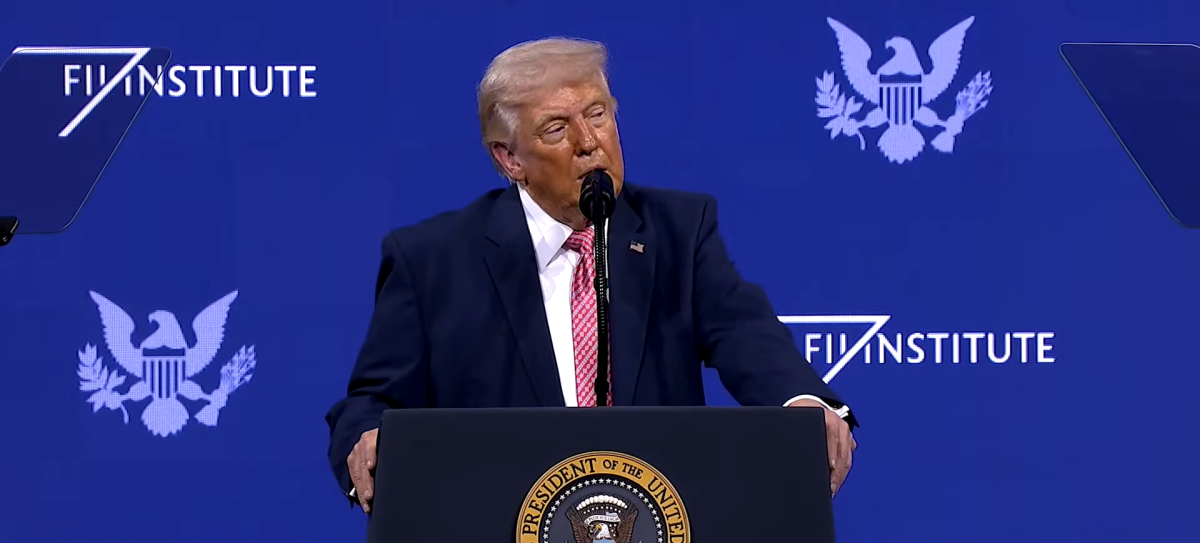
US President Donald Trump speaks at the Future Investment Initiative in Miami, Florida. Photo: Screenshot from YouTube/The White House.

New Delhi: Claiming that Arab nations were closely working with Washington in the ongoing war against Iran, US President Donald Trump said Saudi Crown Prince Mohammed bin Salman had effectively ended up “kissing my ass”.

Speaking at the Future Investment Initiative conference in Florida, Trump elaborated on that claim by recounting what he said was a conversation with the Saudi royal about the US’s resurgence under his presidency.

“He said, you know, it’s amazing … a year ago, you were a dead country. Now, you’re literally the hottest country anywhere in the world,” Trump said.

Trump then directly linked that assessment to his characterisation of the current dynamic with Riyadh, repeating his claim in full rather than as an aside. “He didn’t think this was going to happen … he didn’t think he’d be kissing my ass … he thought it’d be just another American president that was a loser … but now he has to be nice to me,” he said.

He followed that with praise for the Saudi crown prince, calling him “a fantastic man” and “a warrior”, and saying the kingdom “can be very proud” of his leadership.

Trump said Saudi Arabia had stood with the US during the recent conflict with Iran, along with other Gulf partners. “Saudi Arabia fought, Qatar fought, UAE fought, Bahrain fought and Kuwait fought,” he said, adding that they “were with us … they were with us”.

The remarks come nearly a month into the US-Israel military campaign against Iran, which began on February 28 with large-scale strikes targeting Iranian military and nuclear infrastructure.

Iran immediately expanded the conflict across the region, with Tehran launching missile and drone attacks not only at Israel, but also multiple Gulf countries that host US military assets.

Despite coming under fire, the Gulf states have not formally joined the war as combatants. They have instead remained publicly cautious, concerned about the risks of retaliation and the broader economic fallout, particularly disruptions to energy infrastructure and the Strait of Hormuz.

However, according to some media reports, Gulf countries, especially the UAE and Saudi Arabia, have been egging Trump on to continue the war to decimate Iran’s military capabilities.

Against that backdrop, Trump portrayed them as active partners in the campaign on Friday.

He named Qatar’s Emir Sheikh Tamim bin Hamad Al Thani and UAE President Sheikh Mohamed bin Zayed Al Nahyan alongside the Saudi crown prince, describing them as “three great people” who had been “under tremendous attack” but remained aligned with Washington.

At the same time, Trump contrasted their role with NATO allies, saying, “we’re very disappointed … with NATO. They didn’t come to our aid”, and adding that the Gulf countries had done more “in all fairness … more so than NATO”.

He also linked political alignment to economic ties, pointing to Saudi investment commitments and defence deals, while urging Riyadh to join the Abraham Accords. “It’s now time … we’ve now taken them out … we got to get into the Abraham Accords,” he said.

Closing his remarks, Trump expressed a desire for his legacy to be that of a “great peacemaker”, claiming he has already “settled eight wars” and was the rightful recipient of a Nobel Peace Prize.

He repeated his claim to have intervened to halt a conflict between India and Pakistan. “I even stopped India and Pakistan … they were going at it … I said, if you keep fighting, I’m going to put a 250% tariff on each one … ‘all right, we won’t fight anymore’,” he said.
Peacemaker’s role

Rafia Zakaria 
March 28, 2026 
DAWN

The writer is an attorney teaching constitutional law and political philosophy.


IT is impossible as a Pakistani not to marvel at this moment. At a time when the world order has been shaken at a speed that challenges belief, Pakistan’s military and civilian leaders have accomplished a remarkable recasting of the country’s role in the world.

In a milieu where everyone is fighting — Iran against the US and Israel, the GCC countries being dragged into the conflict — Pakistan has offered to act as a peace broker. As a first effort, it delivered a 15-point US peace plan to Iran — publicly rejected but said to be still under unofficial review.

Pakistan’s emergence as a potential peacemaker reflects a new vision for its global and regional role — one that has been created by the collective effort of the country’s civilian and military leadership. It deserves to be commended because it reveals a recognition of and capitalising on stark new global realities. The first of these is a worldwide trend towards militarism.

Last year, global military spending reached a record $2.63 trillion, driven largely by Europe, which saw a sharp increase of 21 per cent. This increase is notable because it parallels a recession in the relative influence of international law. In stark terms, it means that countries have assessed the changing global order and decided — at least in monetary terms — to put their faith in weapons.


Pakistan’s role as potential peacemaker is quite a feat.

Central to this has been the reduced influence of transnational institutions like the UN, created to prevent precisely such arms races.

Pakistan is well situated to take advantage of this new trend in the world order. Historically, it has had to rely on militarism to survive in an inhospitable environment. International law, including UN resolutions mandating a Kashmir referendum, has never delivered on promises such as the plebiscite.

Despite Pakistan raising the issue again and again at the UN, little has been achieved over the decades. Indian aggression meant Pakistan had to invest in weapons even as its own population endured huge privations because of massive defence spending.

The twin realities — the failure of transnational institutions to provide security and the necessity of weaponisation — are reflected in Pakistan’s long familiarity with the conundrums confronting the rest of the world. This makes Pakistani diplomats and military leadership uniquely qualified to offer insight in making sense of the world.

Militarism may not be the ideal basis for the governance of any country, but pragmatism dictates its selection when it guarantees survival.

It is no small irony that Pakistan’s role as peacemaker in West Asia rests on its identity as a heavily militarised state. It is impossible not to note that the war on Iran, at least in the American telling, centres on the claim that Iran was close to developing nuclear weapons. Iran denies this, though internal debates have existed about pursuing such capability. Undoubtedly many in Iran — facing the onslaught of US and Israeli bombing — now wish such capability had been developed as a deterrent.


Then there is the fact that Pakistan — because of its geography and strategic importance — is accustomed to juggling complex relationships with global powers. Since the Soviet invasion of Afghanistan in 1979, its foreign policy has resembled an acrobat juggling multiple rings of fire. Unlike some other countries, Pakistan maintains close ties with China while also engaging with America.

As it happens, the very complexity of Pakistan’s foreign policy — managing relationships with powers that have divergent interests — has now become its greatest ability.

It is impossible to predict the outcome of the conflict. However, as the past year and the dramatic shifts in the world order suggest, conflict and war will be constant realities of the future. Fundamental questions, whether the petro-dollar will survive, whether the US or China will win the AI race, and what will replace the post-World War II liberal order, will not be resolved quickly.

Pakistan’s emergence as peacemaker rather than pariah state is a remarkable feat of foreign and military policy, one that capitalises on the harsh realities of existence.

The outcome of the ‘mediation’ remains unknown, but positioning itself at the centre of global relevance reflects commendable statecraft and leadership. Whether or not Pakistan is able to assist in resolving this conflict, its emergence as a state that helps rather than hurts the possibility of peace is a significant achievement in itself.


Published in Dawn, March 28th, 2026


Rafia Zakaria is an attorney and human rights activist. She is a columnist for DAWN Pakistan and a regular contributor for Al Jazeera America, Dissent, Guernica and many other publications.
She is the author of The Upstairs Wife: An Intimate History of Pakistan (Beacon Press
 2015).
 
She tweets @rafiazakaria


Will defiant Iran win peace?

Abbas Nasir 
Published March 29, 2026
DAWN

The writer is a former editor of Dawn.


AS missiles, drones and bombs were hitting targets on all sides of the Persian Gulf, news broke of a mediation effort led by Pakistan, Turkiye and Egypt that generated a faint hope that at some stage it would result in the cessation of hostilities triggered by the brazen US-Israel attack on Iran and the latter’s retaliatory action.

However, Israel may have extinguished that hope when, in a major escalatory move, it attacked a number of steel and power plants and a nuclear facility in Iran late on Friday. These attacks came despite US President Donald Trump’s declaration that he was extending his earlier five-day deadline to another 10 and refraining from attacking such sites to give negotiations a chance. I doubt Israel would have acted alone.

Iran, which was unequivocal in threatening ‘unprecedented’ retaliation if such sites were hit, responded by issuing a list of similar targets in Israel and in Gulf States which host US bases and troops. Western security sources were expecting significant Iranian retaliation. Do the US and Israel have enough in their armouries to blunt such an assault?


Slowly but surely reports have been appearing in the usually circumspect American media that the missile interceptors of the US, Israel and their allies are running out and also that America’s inventory of Tomahawk cruise missiles is running low as they have so far launched some 800-plus of these weapons on Iran.


Not one of the stated war objectives of the US-Israel combine has been met, particularly not ‘regime change’. Iran is still raining missiles and the Hezbollah and Houthis have also joined the war.

Experts are pointing out that US companies have been asked to ramp up production of all kinds of offensive and defensive missiles but there are two impediments. The first is that they can’t be mass-produced at the drop of a hat; it will be several months, even up to a year, before they start to beef up inventories. And secondly, China owns or controls up to 98 per cent of some of the rare earth materials that are reportedly needed in the guidance and targeting systems of these missiles. It isn’t exporting them currently.

As these lines were being written, one report has suggested that in the latest Iranian missile/drone attack on a US base in Saudi Arabia, one or more E-3 AWACS planes were hit along with some aerial refuelling tankers. The significance of the damage to E-3s is that they were sent to the Middle East after Iran struck various US radars severely limiting the ability to keep an eye on incoming missiles and other projectiles.

The US media has also reported that Iran is able to make operational some of its tunnels within 48 hours of Israel-US bombing to seal off their openings. It uses these to launch missiles and access its stockpiles buried deep underground, often in rocky terrain. Iran may be in severe pain but it has clearly not lost its ability to inflict pain right back.


Meanwhile, not one of the stated war objectives of the US-Israel combine has been met, particularly not ‘regime change.’ Iran is still launching missiles, and its so-called proxies Hezbollah in Lebanon have also joined the fight and the Houthis of Yemen, too, are jumping in.

The despatch of about 10,000 US Marines and servicemen/women has been taken as an indication of some sort of attempt by the US to capture one or more Iranian islands in the Persian Gulf. But military experts argue that any such attempt seems mindless in the face of what they assess are the losses the US will have to take. Perhaps, their ground mission is elsewhere.

It seems Israel’s provocative targeting of key sites in Iran and the latter’s retaliation, some of which has already come and some is feared, may not have derailed the negotiation process. The Pakistan foreign minister is hosting his Turkish, Egyptian and Saudi Arabian counterparts soon. The presence of US and Iranian interlocutors can’t be ruled out, even as it appears unlikely.

The biggest obstacle to any move forward in any peace talks will be Iran’s experience of being attacked while in the midst of negotiations last year and earlier this year. Of course, the continued closure of the Strait of Hormuz, barring a few carriers Iran has flagged through, will push up energy prices to a level where the damage to the global economy and the markets will be unsustainable.

Trump is a master at double-speak. So, nothing he says can be taken at face value, as Israel demonstrated by violating his 10-day moratorium on striking power plants and other infrastructure.

Rising energy prices and the possibility of further huge damage to the Gulf energy infrastructure may force him to put a leash on Benjamin Netanyahu, the genocidal psychopath at the helm of the apartheid state, who is trampling international law and possibly even reshaping the regional security architecture to the detriment of the US itself.

Much will depend on whether the psycho can be put on a leash or will continue to wag the dog. Equally, peace moves will hinge on who gains the upper hand in the Washington, D.C. split where the vice president and the CIA director are said to favour an end to the war and the secretaries of war and state believed to be firmly in Bibi’s lap.

abbas.nasir@hotmail.com

Published in Dawn, March 29th, 2026
Crisis meeting

Editorial 
Published March 28, 2026
DAWN

WITH a catastrophic war raging on the nation’s borders, it is imperative that the civilian and military leadership continue to consult each other and other stakeholders in order to steer Pakistan through these stormy waters.

On Thursday, with the US-Israeli war on Iran on the agenda, President Asif Zardari chaired a high-level meeting of the nation’s top officials to discuss a way forward. The moot was attended by the prime minister, chief of defence forces, key cabinet ministers and the PPP chief. The meeting stressed the need for “national consensus and public awareness” related to the challenges spawned by the aggression.

As a neighbour of Iran, and located at a stone’s throw from the Gulf, Pakistan is especially vulnerable to the fallout of this conflict, as well as the shockwaves that are shaking the global economy. Of particular concern to those in attendance were Pakistan’s economic and energy security issues. Such consultations should continue, particularly if the conflict drags on.

In fact, parliament should play a more active role, with lawmakers briefed on the evolving situation. In the past, parliamentary consultation has proved successful in shielding the country from geopolitical storms. The Yemen quagmire — in which Arab states wanted Pakistan to participate in the anti-Houthi campaign — is a case in point. The legislature wisely advised against stepping into the Yemeni imbroglio.

In a similar vein, Pakistan should try and avoid being pulled into offensive operations against Iran. Tehran’s attacks on its Gulf neighbours are indeed unwise and complicate matters. But Pakistan cannot afford to get sucked into the Gulf vortex, and risk its fragile internal stability. The Gulf states are Pakistan’s friends and allies, and the country must do all it can to support them; sending surplus food supplies to help them tide over the crisis is one example of what can be done. At the same time, Iran, too, has deep cultural and historical links with this country; getting involved can negatively affect Pakistan’s internal sectarian dynamics.

Therefore, Pakistan should try and stay neutral. The path this country is currently pursuing — trying to find a diplomatic off-ramp — is the best available option. Pakistan is in a unique position; it enjoys a measure of trust with Iran, while its ties with the Arabs, particularly the Saudis and the UAE, are excellent, even though greater clarity is needed on the mutual defence agreement signed with Riyadh last year. Meanwhile, the Trump administration has exhibited a marked liking for Pakistan’s current civil and military leadership.

Pakistan cannot be expected to work miracles to end this brutal conflict. But it can surely act as a facilitator to help all belligerents reach a peaceful and just settlement.

Published in Dawn, March 28th, 2026


A Bitter Irony: 9 Hollywood Films On Slavery, As US Rejects UN Resolution Against Enslavement

As the UN declares transatlantic slave trade the gravest crime against humanity, Hollywood's long reckoning with slavery feels more urgent and more ironic than ever.


Aishani Biswas
Updated on: 28 March 2026 
OUTLOOK INDIA


9 Hollywood Films On Slavery As US Opposes UN Resolution Photo: IMDb


Summary of this article


The UN has formally declared transatlantic slave trade the gravest crime against humanity, but the US voting against the resolution makes Hollywood's long history of confronting slavery feel sharply ironic.


American films have repeatedly returned to slavery not as the past, but as something that still shapes identity, justice and everyday life.


From brutal realism to genre storytelling, these films refuse to soften the history of slavery, forcing audiences to engage with its ongoing impact.


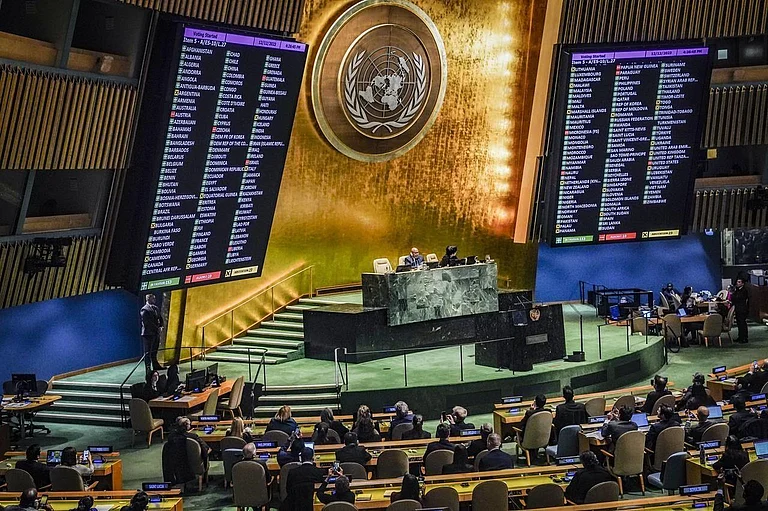
In a move that has sparked global debate, the US has voted against the United Nations General Assembly resolution declaring transatlantic slave trade as the "gravest crime against humanity". Backed by 123 countries and proposed by Ghana, the resolution calls for reparative justice, formal apologies, and a deeper reckoning with a past that continues to shape present inequalities.

When history is capitalised on screen but resisted in politics

The irony is difficult to ignore. The United States, a country whose film industry has repeatedly confronted the brutality of slavery, was among the very few that opposed the resolution, alongside Israel. Several European nations abstained.


Ghana's leadership framed the resolution as a necessary step towards healing, pointing out that the legacy of slavery still manifests in racial disparities today. The resolution may not be legally binding, but politically and morally, it draws a line in the sand: history cannot be softened, delayed, or selectively remembered.


This is where cinema becomes impossible to dismiss. Hollywood and its filmmakers have never treated slavery as distant history, but as a wound that continues to live and breathe. These films do not always get it right, and sometimes they are frustrating, stylised, or even exploitative. But taken together, they form an uneasy archive—one that often shows more willingness to confront the past than the politics of the present.


Here are nine films that engage with American slavery and its aftermath, forcing audiences to sit with what the world is still struggling to formally acknowledge.


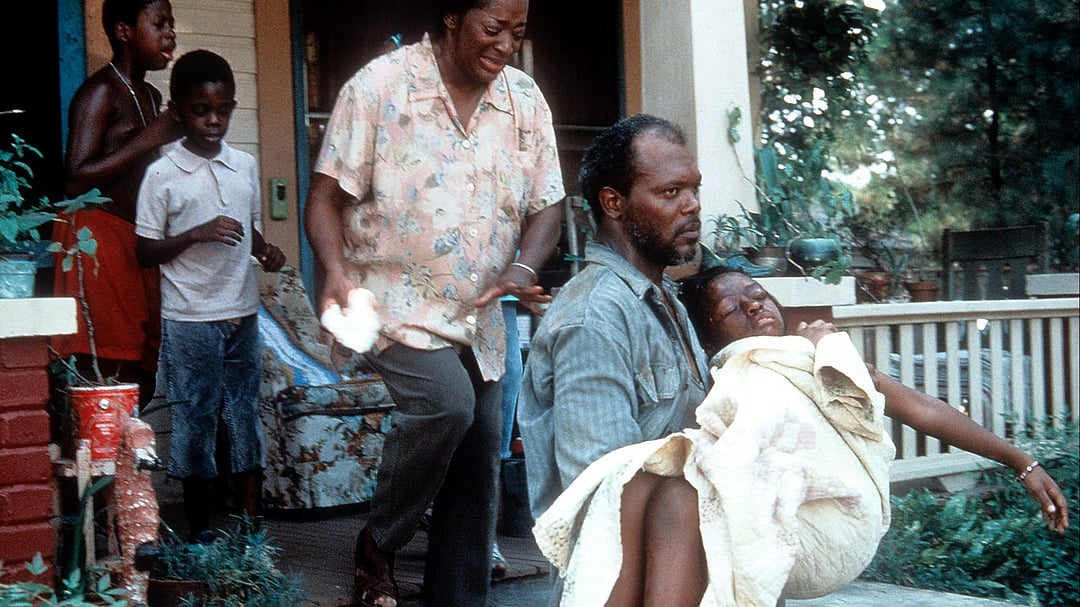
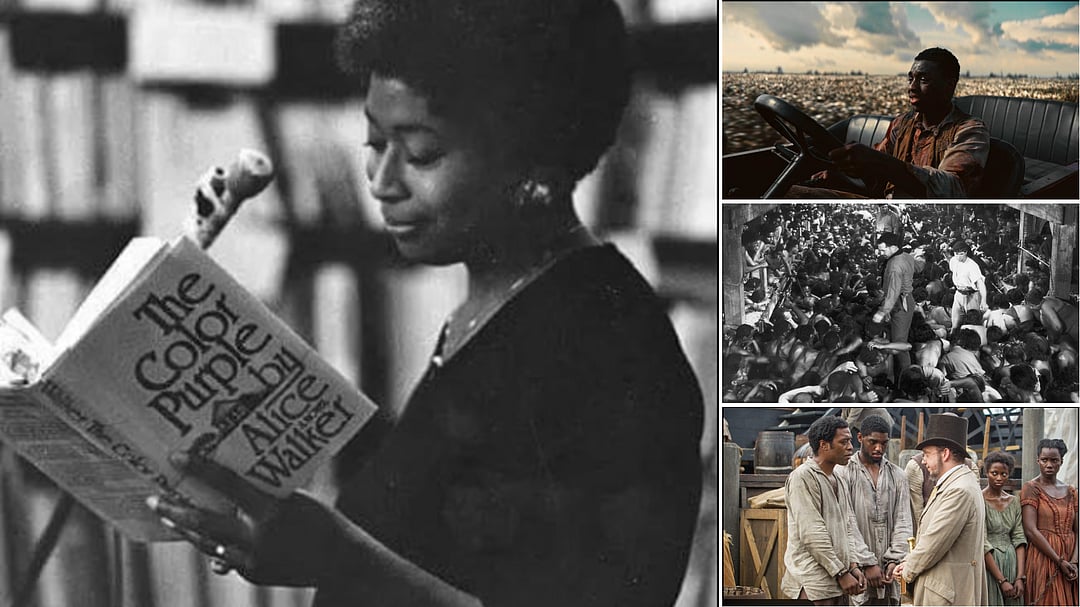
1. The Colour Purple (1985 / 2023)


A Still From The Colour Purple 1985 Photo: IMDb


Based on Alice Walker's 1982 novel The Color Purple, the story found its first major screen adaptation in 1985, directed by Steven Spielberg. A new musical version followed in 2023, directed by Blitz Bazawule.


The story itself is not set during slavery, but remains inseparable from its legacy. Generations after emancipation, Black women are still negotiating violence, erasure and survival in a system built on their oppression. What makes The Colour Purple endure is its refusal to reduce suffering to spectacle. It centres interiority, sisterhood and resilience. If slavery was about stripping people of their identity, this film is about reclaiming it, piece by piece.

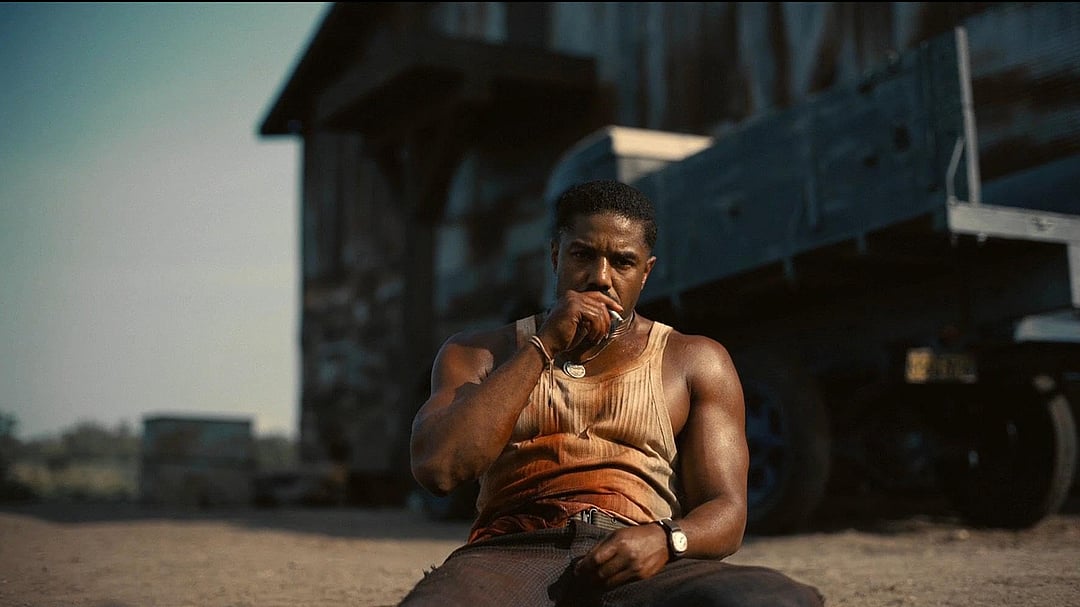
2. Sinners (2025)


A Still From Sinners Photo: IMDb


Directed by Ryan Coogler, Sinners premiered in 2025 and quickly became more than just another period film. Set against the backdrop of the Jim Crow-era South, it uses horror and music to tap into something deeper about memory and inherited trauma.


The film didn't just land; it stayed. Its run at the 2026 Academy Awards only cemented that, with 4 wins, including Best Actor for Michael B. Jordan and Best Original Screenplay for Coogler. Autumn Durald Arkapaw made history as the first woman and woman of colour in 98 years to win the Oscar for Best Cinematography.


What makes Sinners stand out in this conversation is its refusal to treat the past as contained. Slavery is not presented as history that can be revisited and neatly understood. It lingers, it mutates, it bleeds into the present. And that's exactly what gives the film its weight.


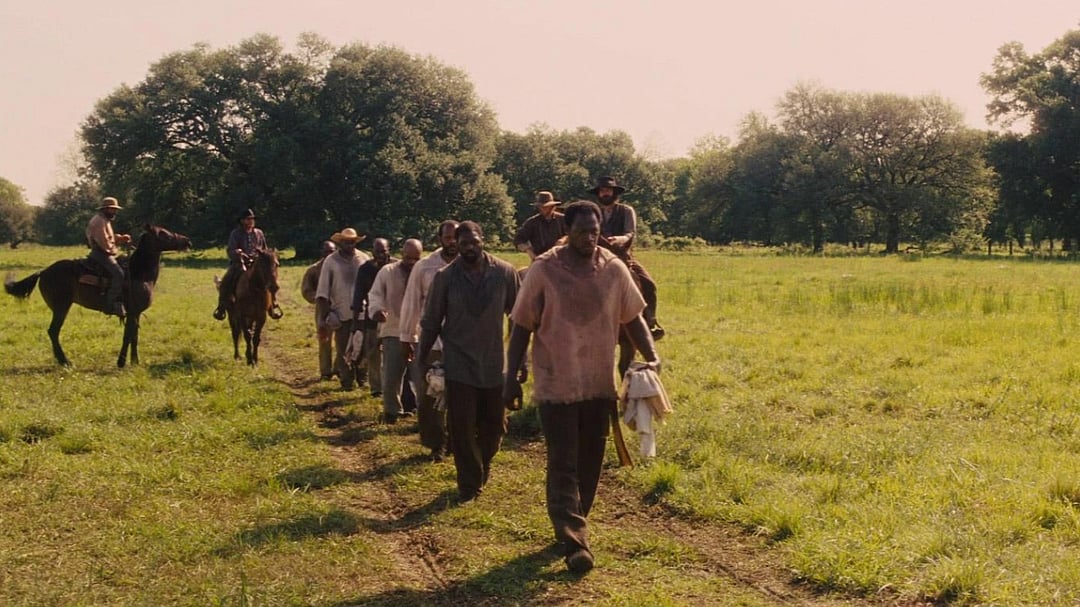
3. Django Unchained (2012)


A Still From Django Unchained Photo: IMDb


Quentin Tarantino’s take on slavery is divisive, and rightly so. It turns unimaginable brutality into a revenge fantasy, stylised and at times almost gleeful.


Yet, dismissing it entirely would be too easy. Django Unchained doesn't present slavery in a strictly realist or historical way. Instead, it uses genre, in this case a stylised revenge Western, to tell the story. The discomfort it creates is part of its point.


Still, it raises a larger question: who gets to tell these stories, and how? Films such as Django Unchained deepen the irony when filmmakers like Tarantino publicly espouse Zionism and their support for Israel during an ongoing genocide in Gaza.


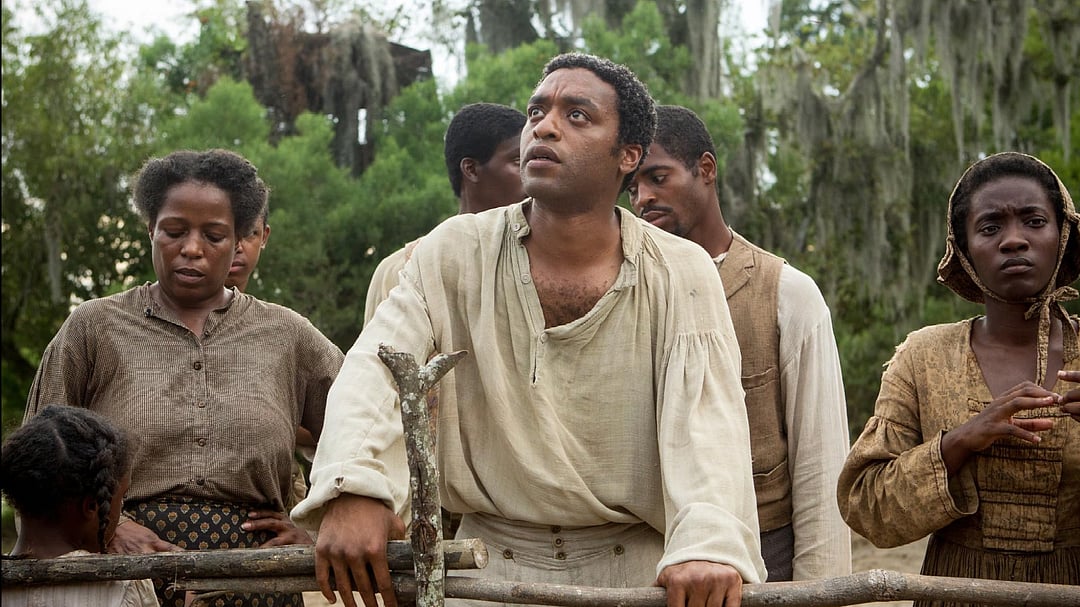
4. 12 Years A Slave (2013)

A Still From 12 Years A Slave Photo: IMDb


Directed by Steve McQueen, this is perhaps the most unflinching depiction of American slavery in modern cinema.


Based on the real story of Solomon Northup, a free Black man kidnapped and sold into slavery, the film refuses any cinematic cushioning. There are no heroic shortcuts, no softened edges. The violence is relentless, but so is the humanity.


It remains essential viewing because it does not let audiences look away.


A Still From A Time to Kill Photo: IMDb


This film isn't about slavery in a literal sense, but about everything it left behind.


Set in the American South, this courtroom drama lays bare how deeply racial injustice is still woven into everyday life. The legal system here isn't neutral; it feels loaded, shaped by a history that refuses to loosen its grip.


That's exactly why this film belongs on this list. Slavery didn't simply end; it shifted, reappearing in structures that continue to decide who gets justice and who doesn’t. Few films make that connection between past and present feel this immediate, or this uncomfortable.


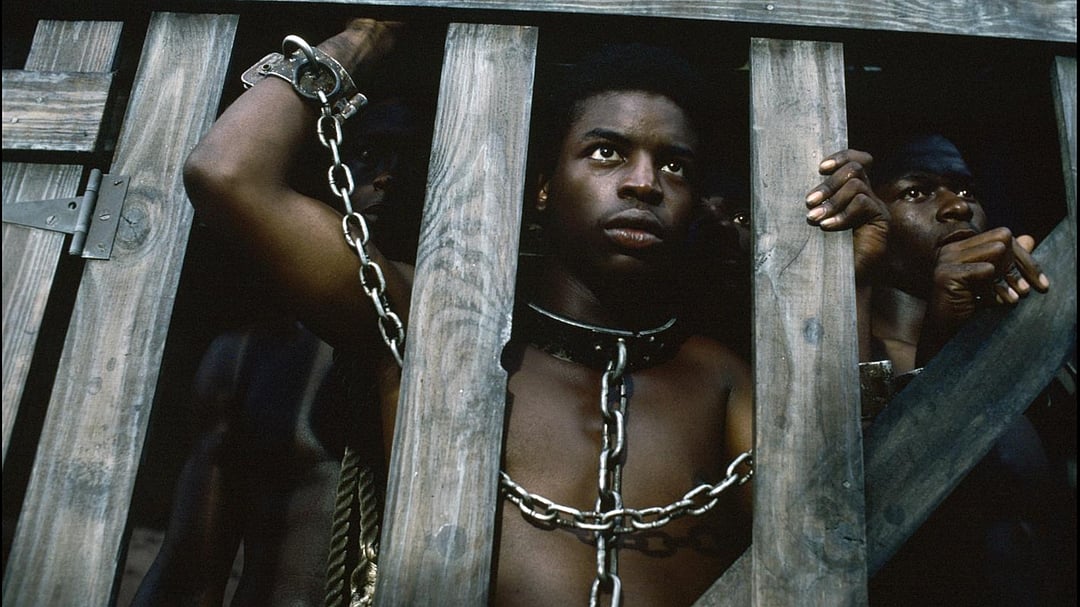
6. Roots (1977 / 2016)


A Still From Roots Photo: IMDb


Based on Alex Haley's 1976 book Roots: The Saga of an American Family, this landmark series follows Kunta Kinte, a young man taken from West Africa and enslaved in America, and then traces his descendants across generations, all the way into post-Civil War life.


What gives Roots its weight is that it doesn’t rush through history; it lets you feel how slavery fractures families and erases names. Yet somehow, it cannot fully erase memory. You watch identities being stripped away, but also quietly held on to.


That scale is what makes it so affecting. Slavery here isn't a single story or moment; it's a continuum that reshapes everything it touches, across decades.

7. Emancipation (2022)


A Still From Emancipation Photo: IMDb


Inspired by the photograph of "Whipped Peter", this film follows a man fleeing enslavement through unforgiving terrain.


It leans into survival and endurance, sometimes at the cost of emotional depth. But its central image, the scarred back that became proof of slavery's brutality, remains one of the most haunting visual records in American history. The film reminds us that documentation itself was a form of resistance.

8. Lincoln (2012)


A Still From Lincoln Photo: IMDb

Directed by Steven Spielberg, Lincoln turns its gaze towards the political machinery behind abolition, focusing on the tense final push to pass the Thirteenth Amendment.

It is less concerned with the lived experiences of the enslaved and more with the system that enabled slavery to exist for so long, and what it actually took to begin dismantling it. The film leans into backroom negotiations, fragile alliances and moral bargaining, showing how even something as fundamental as freedom had to be fought for within a deeply resistant structure.

That choice has been criticised, and fairly so, for sidelining Black voices. But it also lays bare an uncomfortable truth: justice, especially at that scale, is rarely clean. It is slow, compromised and often shaped by those in power. What the film leaves you with is a question that still feels relevant: how much should be negotiated in the pursuit of what is right, and who gets to make that call?

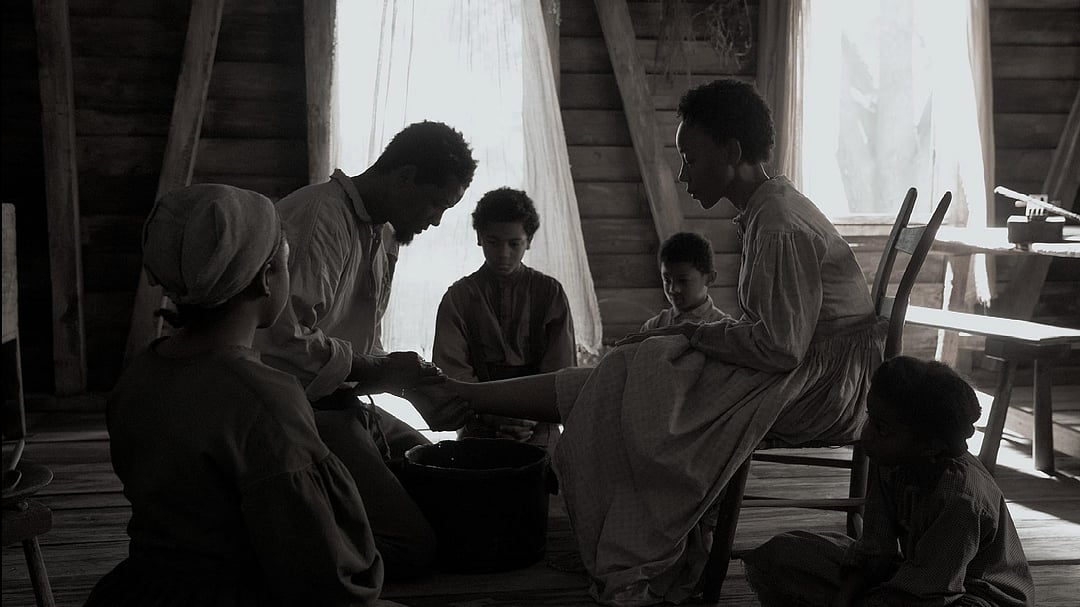
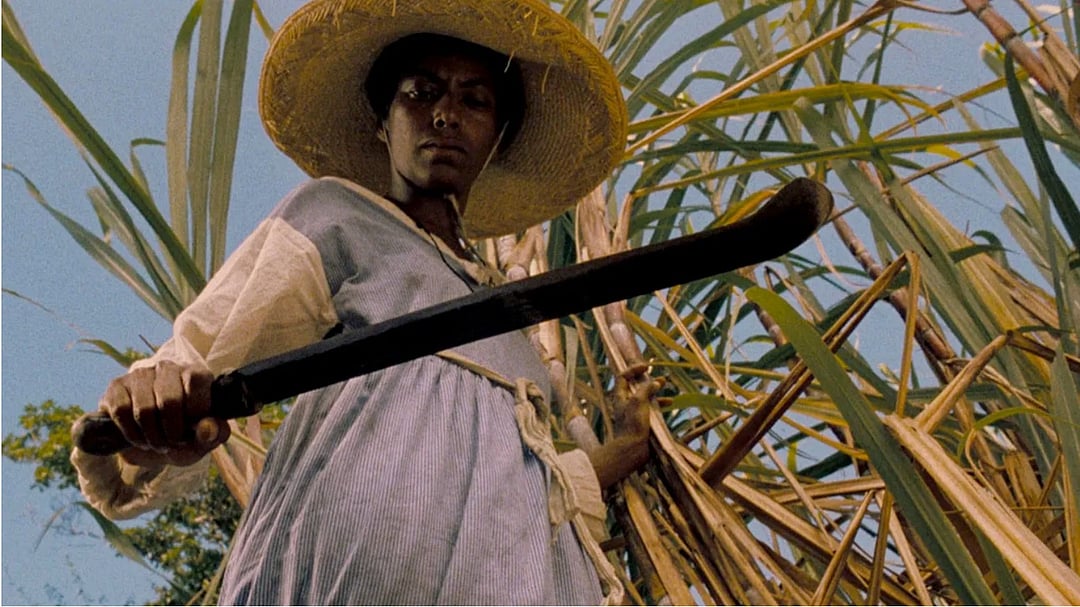
9. Sankofa (1993)


A Still From Sankofa Photo: X


Directed by Haile Gerima, Sankofa brings in a perspective that mainstream Hollywood has often overlooked or avoided.


Using a time-travel narrative, it pulls the African diaspora into a direct encounter with slavery, collapsing the distance between past and present. You're not just watching history unfold, you're made to feel its weight, its violence and its emotional cost in a way that’s hard to shake off.


The film is raw, spiritual and unapologetically political. It resists familiar storytelling rhythms and instead leans into something more urgent and personal. Sankofa doesn't just revisit history; it challenges you to reckon with it, especially if you're part of the world that continues to benefit from its aftermath.

Why these films still matter

Here's the thing about cinema. It cannot replace policies and storytelling is not the same as accountability. But when governments hesitate to formally acknowledge the scale of historical injustice, culture often steps in to fill that silence.


These films, across decades and styles, do one thing consistently: they refuse to reduce slavery to a footnote. They insist on its brutality, its complexity and its ongoing impact.

The contradiction remains stark. A country that has produced some of the most powerful cinematic reckonings with slavery is still reluctant, at a political level, to fully endorse that reckoning on the global stage. What this really means is that the work is far from over. Not in politics, not in culture, and certainly not in how history is remembered.

If these films have taught us anything, it is this: forgetting is never neutral.
SMOKERS’ CORNER: GHOSTS ON THE SCREEN
Published March 29, 2026
DAWN/EOS


Illustration by Abro

On the screen, horrific images of World War II flicker, showing the skeletal figures of Jewish men, women and children in Nazi concentration camps being marched into the horrors of the “Final Solution.”

It is a sombre cinematic and television ritual we have come to expect. Yet, if one observes the scheduling of these screened tragedies, a pattern emerges.

Whenever the state of Israel faces widespread condemnation for its brutal excursions in the Middle East, the Western entertainment industry develops a sudden, renewed obsession with Jewish victimhood during the last world war.

This is what media scholars call “affective management”, a term describing how our emotional responses are curated by those who control the narrative. In 1988, academics Edward Herman and Noam Chomsky examined this as an attempt to mitigate the public relations (PR) disaster of the present with the trauma of the past.

By re-running the tragedy faced by the Jewish people at the hands of the Nazis, the Western entertainment industry provides a moral counterweight that often dilutes contemporary criticism of Israeli state violence. The criticism becomes ‘antisemitism’.

In the 1970s and 1980s, as Israel’s image gradually mutated from the ‘underdog’ of 1948 to a regional leviathan, especially following its 1982 invasion of Lebanon, Western airwaves were hit with a wave of Holocaust dramas. The 1978 NBC miniseries Holocaust did not just win Emmys. It reached hundreds of millions of viewers precisely as the international community began to grapple with Israel’s diplomatic isolation at the United Nations (UN).

From acclaimed Holocaust dramas to nationalist blockbusters, the strategic revival of past trauma can influence public perception, shifting attention from present-day violence to the moral weight of historical suffering

When the First Intifada broke out in the occupied territories of Palestine in the late 1980s, during which young Palestinians fought Israeli troops with slingshots, the American broadcasting network ABC responded with the expensive multi-part epic War and Remembrance.

As the world watched nightly news footage of Israeli soldiers using violent tactics against Palestinian stone-throwers, War and Remembrance provided an emotional diversion. It ensured that the image of the Jew as the eternal victim remained the dominant cultural framework, even as the Israeli state was acting as the primary aggressor.

In 1997, media scholar Yosefa Loshitzky noted that the “sacralisation of the Holocaust” provides a moral shield, creating a binary where the memory of a past genocide is used to silence discourse on Israel’s contemporary human rights violations.

Films such as The Zone of Interest (2023), which depicts a troubled German commandant of a concentration camp during World War II, do not simply appear by chance. They are launched with massive fanfare at film festivals, precisely when discourse on apartheid or genocide in the Middle East reaches a boiling point.

In the age of Netflix and streaming, this reflex has become even more frequent. During the recent ‘Gaza War’, in which Israeli forces killed tens — if not hundreds — of thousands of Palestinian men, women and children, and during Israel’s recent attacks on Lebanon and Iran, streaming platforms seemed to have gone into overdrive.

Suddenly, films such as Schindler’s List (1993) and The Pianist (2002), meditations on the horrors of the Holocaust, were pushed to the top of ‘recommended’ lists, while old and new documentaries on World War II appeared to tell the same story repeatedly.

This is what the American literature professor Michael Rothberg, in his book Multidirectional Memory, identifies as “screen memory.” The term describes a historical trauma brought forward specifically to obscure a problematic contemporary reality. Viewers become so preoccupied weeping for the victims of the 1940s that they find themselves with very little emotional bandwidth left for the families currently being pulled from the rubble in Gaza and Iran.

However, this is not exclusively a Western speciality. Bollywood has also mastered this art of cultural deflection. Whenever the Modi government in India faces international heat over its increasingly exclusionary treatment of minorities, the Mumbai dream factory starts to churn out ‘epics’ about internal enemies whose ancestors supposedly sought to destroy Hinduism.

This is the Indian version of “competitive victimhood”, or the act of shouting about the past sufferings of the ‘self’ so loudly that the current suffering of ‘the other’ becomes mere background noise.

For example, 2020’s Tanhaji: The Unsung Warrior reimagined India’s historical Muslim rulers as monstrous invaders while elevating Hindu warriors as the ultimate defenders of Hinduism. Similarly, films such as The Kashmir Files (2022) or Article 370 (2024) framed the Indian state’s military presence in Kashmir not as an occupation but as a moral necessity, to prevent a return of past tragedies that befell Hindus.

In this narrative, the ‘other’ (largely Muslim) is cast as the eternal aggressor. This shift has been described by the US-based academic Nilanjana Bhattacharjya as the “new Bollywood”, where the screen memory of past conflicts is used to displace the immediate reality of contemporary state-led violence.

This trend went into overdrive after the Indian air force suffered major losses against Pakistan in May 2025. This time, instead of resurfacing a past trauma, a past victory from the 1971 Indo-Pakistan war was brought forward to displace the reality of a recent defeat. This year’s Border 2 is an example.

The Turks, under the banner of ‘Neo-Ottomanism’, have followed a similar script. While Ankara’s regional ambitions draw Western criticism, Turkish television has been dominated by historical fantasies such as Dirili: Erturul. Such shows re-imagine the Ottoman past as a period of heroic resistance against the West and internal traitors. As the Germany-based transcultural studies scholar Josh Carney points out, these dramas function as a “moral reset” for the modern state, priming the audience to view Turkiye as a beleaguered fortress defending its sacred heritage.

The early 20th century Italian philosopher Antonio Gramsci wrote that dominant groups shape “cultural common sense”, making their version of history the absolute moral benchmark. When the Western entertainment industry consistently rewinds material on the violence against Jews, it establishes a framework where the security of the Jewish state is an ethical necessity that transcends international law.

By flooding the public sphere with historical trauma, the industry effectively moves the focus from the present to the past. The result is a self-reinforcing loop, where the market for historical tragedy becomes most active exactly when that tragedy serves a political purpose.

Across the board, from Hollywood to Mumbai, the industry’s reflex turns complex contemporary human rights issues into a binary struggle of survivors versus villains. It is a potent form of cultural hegemony, ensuring that the ghosts of the past remain more real to us than the dying children of the present.

Published in Dawn, EOS, March 29th, 2026

Nadeem F. Paracha is a researcher and senior columnist for Dawn Newspaper and Dawn.com. He is also the author of ten books on the social and political history of Pakistan.
He tweets @NadeemfParacha


HOW THE WORLD SAW IT

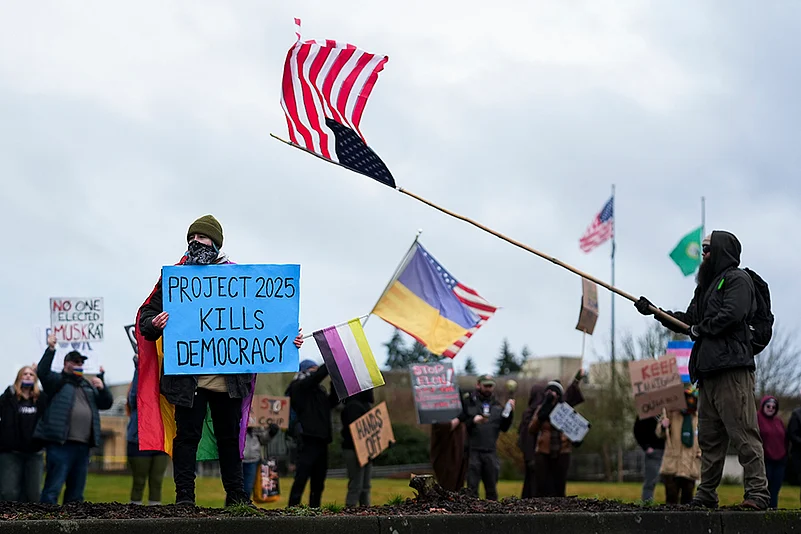
'No Kings' Protests Draw Millions Across US And Europe Against Trump Administration


The protests, the third in a series that began in 2025, focused on several key grievances: US involvement in the war with Iran, strict immigration policies including enforcement actions that have drawn criticism


Outlook News Desk
Curated by: Pritha Vahsishth
Published at: 29 March 2026 


Protest near the Washington State Capitol building | Photo: AP/Lindsey Wasson


Summary of this article


Organizers claim millions participated in over 3,000 "No Kings" rallies held across all 50 US states and in more than a dozen countries including European cities like London, Paris, Berlin, and Rome, marking the third major wave of demonstrations since President Trump took office in 2025.


Protesters voiced opposition to the ongoing war with Iran, aggressive immigration enforcement, rising cost of living, and what they describe as authoritarian tendencies and expansion of executive power by the Trump administration.


The flagship event in Minnesota, headlined by Bruce Springsteen, drew large crowds at the State Capitol, while Republican officials dismissed the protests as "Hate America" or "Trump Derangement" events; turnout estimates vary, with previous rounds in 2025 drawing 5–7 million according to organizers.


Large-scale "No Kings" protests unfolded across the United States and parts of Europe, with organizers describing the day as one of the biggest mobilizations against the Trump administration to date. Demonstrations took place in more than 3,000 locations spanning all 50 states, from major cities like New York, Washington D.C., and Los Angeles to small towns and suburban areas. Solidarity events were also held in over a dozen countries, including rallies in London, Paris, Berlin, Madrid, and Rome, often organized by groups like Democrats Abroad.


The protests, the third in a series that began in 2025, focused on several key grievances: US involvement in the war with Iran, strict immigration policies including enforcement actions that have drawn criticism, and broader concerns over rising living costs and perceived overreach of presidential authority/


'Trump Is An Existential Threat': Robert De Niro Joins No Kings Protests; Jane Fonda, Bruce Springsteen & Others Attend

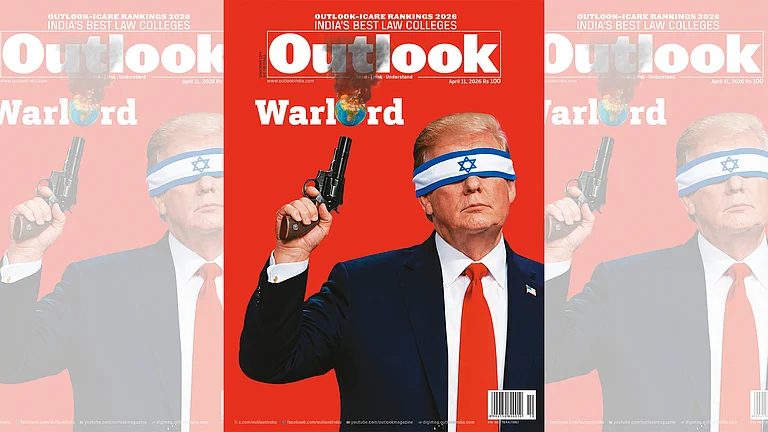
Outlook's Latest Issue: The Warlord With 'A Passion' For Peace

In Minnesota, which served as the flagship venue, thousands gathered at the State Capitol in St. Paul, where musician Bruce Springsteen performed to highlight local resistance to federal immigration measures. Protesters carried signs reading "Democracy Has No Kings" and chanted against what they called authoritarian rule.

Previous "No Kings" events reportedly drew millions , with organizers citing around 5 million in June 2025 and nearly 7 million in October 2025, and Saturday's turnout was expected to be significant, though independent verification of exact numbers remains challenging amid varying claims. Events remained largely peaceful, though some states had mobilized National Guard units as a precaution. In European cities, smaller but symbolic gatherings saw participants adapt messaging — using phrases like "No Tyrants" in monarchies such as the UK, Spain, and Sweden to avoid confusion.
NYT: Elon Musk Was on Trump-Modi Call on West Asia Crisis; India Says Talks Were Bilateral

The Wire Staff
28/Mar/2026

The New York Times noted that Musk's presence on the call for yet unclear reasons was unusual as he no longer holds an official post. The Indian foreign ministry has said the call was bilateral.


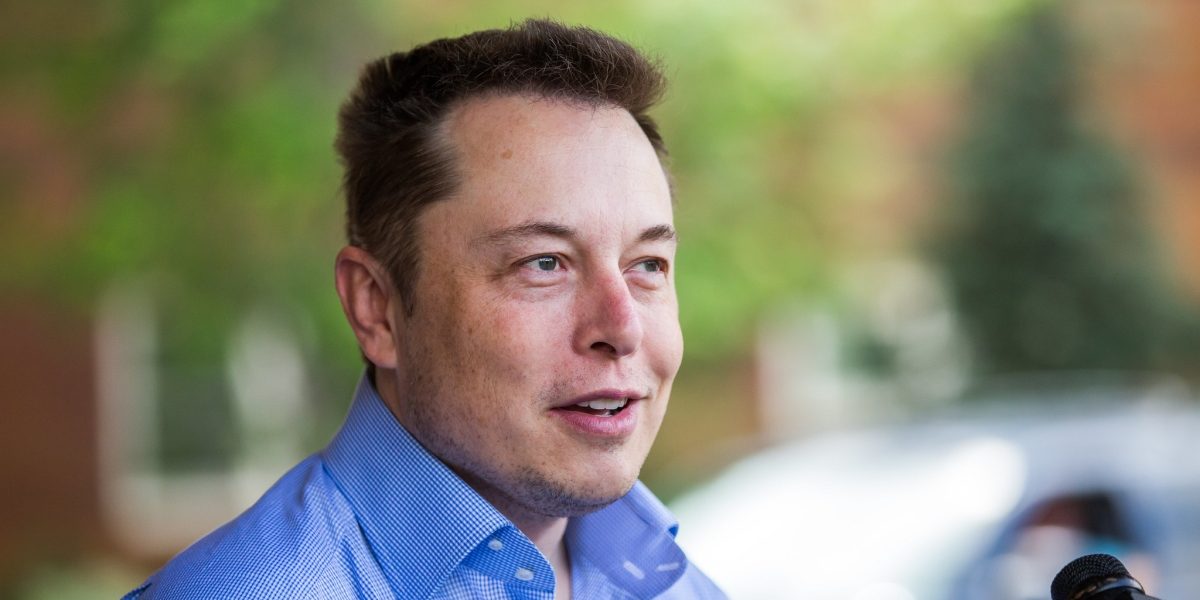
Elon Musk. Photo: Thomas Hawk/Flickr CC BY NC 2.0

New Delhi: Elon Musk, the billionaire businessman who runs Tesla, X and SpaceX, was part of a recent phone call between US President Donald Trump and Prime Minister Narendra Modi on the West Asia crisis, the New York Times reported on Friday (March 27).

Citing US officials, the report said it was not clear why Musk was on the call or whether he spoke. It described his presence as “an unusual appearance by a private citizen on a call between two heads of state during a wartime crisis”.

Neither the US nor Indian side mentioned his presence in their public accounts of the conversation.

When contacted by The Wire, India’s external affairs ministry had initially stated queries should be directed to the US side. The US embassy in New Delhi, when reached, said the matter should be taken up with the White House.

Responding to queries from ANI on the report, White House Press Secretary Karoline Leavitt said, “President Trump has a great relationship with Prime Minister Modi, and this was a productive conversation.”

Later, MEA spokesperson Randhir Jaiswal issued a statement. “We have seen the story. The telephone conversation on 24 March was between Prime Minister Narendra Modi and President Donald Trump only. As has been stated earlier, it provided the opportunity for exchange of views on the situation in West Asia.”

For example, The call, held on early Tuesday morning as per local Washington DC time, was first flagged by US ambassador to India Sergio Gor, with Modi confirming it soon afterwards in a post on X. There was no statement or readout issued by Trump or the White House about the call.

Modi said he had a “useful exchange of views” with Trump on the situation in West Asia, stressing the need for de-escalation and underlining the importance of keeping the Strait of Hormuz “open, secure and accessible”. He said both sides would remain in touch on efforts aimed at restoring peace and stability.

According to the NYT report, the discussion centred on the fallout from the Iran conflict, particularly disruptions around the Strait of Hormuz, a key route for global energy supplies. The paper noted that the halt to most maritime traffic had “led to surging energy prices worldwide and roiled markets”.

The newspaper also pointed out that Musk does not hold a government position anymore, making his participation striking given that “sensitive matters involving national security are often discussed” in such calls.

It was not clear in the report whether Musk spoke during the conversation or why he was included.

The report added that Musk’s business interests intersect with the issues at hand, pointing to investments from West Asian sovereign wealth funds in his companies and his long-standing interest in expanding commercially in India. It stated that SpaceX has been considering an initial public offering that could be affected by global economic instability.