Sunday, April 05, 2026

Divide and Conquer? Paul Robeson and Jackie Robinson in the USA


 April 3, 2026

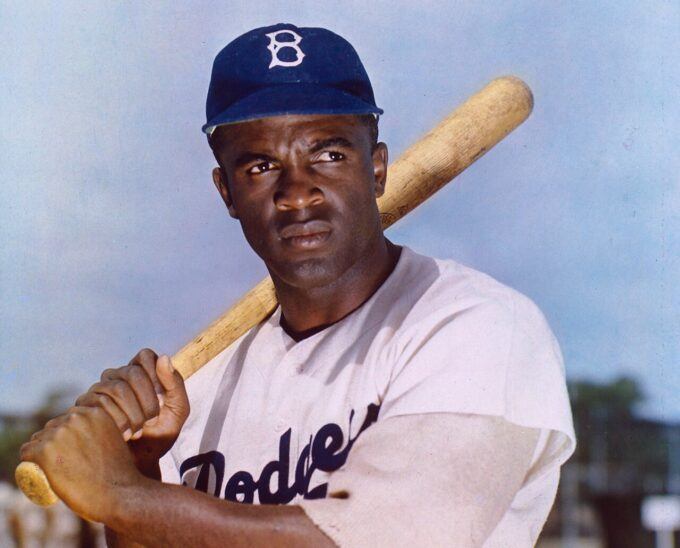
Photograph Source: Harry Warnecke / Frank Livia / Robert F. Cranston / William Klein – National Portrait Gallery, Smithsonian Institution – CC0

Paul Robeson and Jackie Robinson never met in person. During certain periods in their lives, both men were held up by white America as examples of proof that in the US anyone can make it if they apply themselves. Of course, left unsaid in this myth are at least two truths. The first truth is if a person trying to make it is not white-skinned, their efforts will have to be at least twice that of most white men and, secondly, even if they face racism and prejudice along the way, those who aren’t white men must bear it with grace, indeed with submission. Their pride must be suspended except when it is deemed appropriate; in other words when it won’t offend the white supremacists and their system of domination.

Paul Robeson rejected this dynamic. Jackie Robinson struggled with it most of his life. Sportswriter and author Howard Bryant discusses both men and their lives in an age when very few Black men (and even fewer women) even had an opportunity to be noticed for their athletic and entertainment prowess, much less their intellect. The text, titled Kings and Pawns: Jackie Robinson and Paul Robeson in Americaopens with Jackie Robinson’s appearance before a 1949 House UnAmerican Activities Committee (HUAC) hearing designed to denigrate Paul Robeson, whose socialist politics and rejection of US anti-communism had earned him the wrath of many US residents, especially those inclined to seeing a communist behind almost anyone who supported an end to white supremacy’s control over the political and economic structures in the nation. Although neither man had ever met, Robinson decided to accept the urging of the man who helped him get into Major League Baseball, Branch Rickey.

Despite the mythology surrounding Rickey—a mythology that turns him into an anti-racist hero and champion of a racially integrated world of sports in the United States—Bryant suggests the more honest truth was that Rickey was like most other white people in the United States at the time. He didn’t really want African-American players in Major League Baseball (MLB), but understood somewhere in his business mind that their presence was unavoidable. More importantly, Rickey was as anti-communist as most US residents, if not more so. Jackie Robinson was anti-communist, too. He also felt beholden to Rickey for his role in getting Robinson onto the Brooklyn Dodgers roster. So, when Rickey asked Robinson to testify, Robinson agreed, Rickey coached him on what to say, and Robinson mostly followed the script he was given. I am reminded of Ralph Ellison’s character in the novel Invisible Man and his realization of “What and how much I had lost by trying to do only what was expected of me instead of what I myself had wished to do?” It was only later after Robinson realized that MLB and many (if not most) of its white fans only liked Robinson when he acted the way they thought Black people should act in the US. In other words, Robinson should keep his mouth shut and play ball.

As Bryant and other biographers describe it, Robinson could only do this for so long. Eventually, he reacted, his anger turning off many fans and members of the professional baseball world. Meanwhile, Paul Robeson, who had been one of the greatest singers, college football players and screen actors in the United States, saw his income disappear and his life under threat. His persecution by the government and intimidation from the American right is perhaps best exemplified by the attacks on his entourage and the concert-going public who showed up for his 1949 concerts in Peekskill, New York. Those attacks were organized by far-right citizens’ groups and backed by local police. Bryant’s text makes the point that both men experienced the irrational hatred of US white supremacy in their own way.

Howard Bryant used to write for the Boston Herald sports section. He was one of the few Black writers to ever appear on those pages. As any sports fan knows, professional sports in Boston have a reputation as being one of the most racist places for a Black athlete to play; a vocal element of its fan base is known for its racist abuse. While this is no longer as true as it once was, it is a legacy that continues to taint Boston sports, especially its baseball team, the Red Sox, who were one of the last teams to sign a Black player. I mention Bryant’s job with the Herald to point out his familiarity with professional sports, the players, the owners and managers, and the fans. When he wrote for the Herald, it was the paper of Boston’s white working class, who identified with its more right-wing columnists and editorial policy than they did with the Globe’s conventional liberalism. (An older friend of mine, whose politics are right wing, called the Globe a commie paper—and he wasn’t joking.) Bryant knew his audience and his columns seemed intended to make them see their world differently. His 2002 book, Shut Out: A Story of Race and Baseball in Boston, remains one of the best books on Boston sports ever written.

Kings and Pawns is an incisive story of two men whose lives became fodder for political and social issues much greater than either individual could control. It’s also a commentary on the damage perpetrated by racist and supremacist politics and culture. Most importantly, it’s a history of the United States at a time somewhat like the current one, which is reason enough to read this book and consider its meaning.

Ron Jacobs is the author of several books, including Daydream Sunset: Sixties Counterculture in the Seventies published by CounterPunch Books. His latest book, titled Reality, Resistance, Rock and Roll is a collection of book reviews written for Counterpunch over the years and is now available. He lives in Vermont. He can be reached at: ronj1955@gmail.com 


Elite Cynicism, the Eros Effect and the Future of Resistance Movements


 April 3, 2026

Vincent Bevins is a journalist of considerable talent. His first book, The Jakarta Method, provided long overdue insight into the 1965 United States manipulation of Indonesian army and Islamic officials that led to the murder of as many as one million people, perhaps even more. For years, US agents provided names and addresses of ‘suspected communists’ and other ‘undesirables.’ Americans were the driving force behind the massive purge. As Bevins points out, Indonesia was a much bigger prize for the United States empire than Vietnam, which cost more than 58,000 American lives and billions of dollars, only to end in absolute failure.

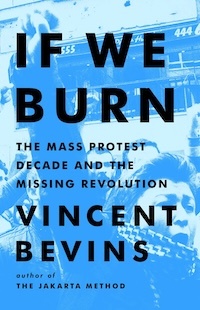
His second book, If We Burn, The Mass Protest Decade And The Missing Revolutiontakes as his subject matter contemporary liberation movements in the 2010s. Unlike revelations of government atrocities in The Jakarta MethodIf We Burn is quite limited in its breadth of understanding. The subtitle reveals the central problem of his analysis. There was no single ‘mass protest decade.’ Beginning in the 1960s, waves of massive mobilizations have without end swept the world across every decade, from the disarmament movement of the late 1970s and early 1980s, to the concurrent anti-nuclear plant movement in the United States and Germany, the Gwangju People’s Uprising of 1980, which helped usher in the wave of Asian uprisings from 1986 to 1992—the Philippines (1986), South Korea (1987), Burma (1988), Tibet and China (1989), Nepal and Bangladesh (1990) and Thailand (1992)—to the overthrow of Eastern European Soviet regimes, the alter-globalization insurgency from the Zapatistas (1994) to Seattle (1999) and beyond, and to the massive anti-war mobilization of February 15, 2003 when up to 30 million people self-mobilized against the second Iraq war even before it began.

All these insurgencies prepared the ground for the 2011 Arab Spring, which however disastrously it may have ended, helped to ignite Occupy Wall Street in more than 900 cities around the world, as well as Movements of the Squares in Spain and Greece. The continual renewal of rebellions, revolts and revolutions culminates today with Gen Z revolts that have occurred in more than 17 countries and smashed 3 regimes (Sri Lanka, Bangladesh and Nepal). This latest episode of the Eros Effect reached a crescendo in September 2025 when insurgents took to the streets in at least 11 countries. These instances of the Eros Effect occur as revolts nourish and inspire each other, increasingly resulting in simultaneous uprisings.

The activation of the Eros Effect is one of the features of the continuing movements since the 1960s. During these magical moments, long-held values (patriotism, hierarchy, patriarchy) suddenly are superseded by emergent values such as cooperation instead of competition, human solidarity in place of nationalism, horizontal forms of decision-making not elite power, and attempts to overcome normally unquestioned dimensions of everyday life such as ethnic prejudice and patriarchal authority. Bevins understands the transcendental experiences of street actions, but only in individual terms. As he discovered, one female participant in Tahrir Square arrived in a state of depression and departed as if a “different universe” had transformed her, something that was “profoundly, unimaginably, beautiful.” An insurgent struck hit in the head by a tear gas canister went to the hospital, where he fixed his eyes on a nearby wounded man, unfamiliar to him, “but in that moment, they were brothers, the feeling was transcendent, and far more powerful than the pain in the back of his skull.” Bevins understands the erotic cathexis in the streets, but only in terms of individuals, not in terms of the crystallization of emergent group identities, of inspiration for future movements.

Bevins is not alone in his failure to comprehend uprisings’ connections to each other. Much of contemporary history and media similarly understand them as separate and discrete events, as unrelated to each other. Seldom does anyone connect the dots. Bevins’ book is not a macro-history. Using his journalistic credentials, he delves into activist circles that congealed after Occupy Wall Street (which he curiously omits) in ten places, including Brazil, Tunisia, Egypt, Turkey, Brazil, Ukraine, Hong Kong, and Chile.

In both of his books, Bevin’s narrative uses a few individuals whom he believes are key “leaders” of movements to encapsulate the movements as a whole. Because these ‘leaders’ fail to realize their own dreams, he believes the movements are failures, that the ‘missing revolution’ never happened. Looking at today’s Gen Z uprisings, we cannot fail to note their continuity with past movements in their spontaneous and joyful eruptions, autonomy from existing political parties, and international solidarity. Continually-regenerating insurgencies in dozens of countries are part of a long-term process, one which will hopefully one day birth a world-historical revolution.

Bevins idea of ‘instant coffee’ revolution leads him to lament “the missing revolution.” His cynicism is quite evident in his dismissal of one of the great outcomes of the Indonesian revolution, the birth of the Third World non-aligned movement. To this day, the conservative government there adheres strictly to an anti-war stance in international relations (although tragically not for domestic aspirations for independence). In a 2025 article, he recalls that the 1955 Bandung Asian-African Conference occurred as “Countries across Asia and Africa threw off the colonial yoke, pushed for a transformation of the global economy and inspired civil rights movements in the US and South Africa. ‘But it all came to nothing of course,’” he says quoting a conservative observer. “By 1965, the pioneers of the Afro-Asian movement had all been cleared out of the way. Sukarno in Indonesia, Nkrumah in Ghana, Lumumba in Congo, all deposed or even murdered.” Again, individual leaders were murdered and marginalized, so does that mean “it all came to nothing.” Pardon me, “nothing”?

Bevins has proven himself capable of detailed research, of accurately portraying events, yet he also allows himself the luxury of speaking authoritatively without doing the necessary research. By creating individual narrators through whom he enunciates his own analysis, he projects onto them his beliefs without having to take responsibility. He quotes one activist who believes the 1960s SDS (Students for a Democratic Society in the US) was created from the media spotlight, that it “didn’t actually exist outside the media.” I beg to differ. For years, SDS built itself from the grassroots. When SDS dissolved itself in 1969 due to internecine differences, it had between 30,000 and 50,000 members, possibly as many as 100,000. When the central office in Chicago was closed down, it had file cabinets stuffed with unopened letters. Local chapters abounded, sometimes more than one even in small cities. The mass media was a factor, but not the primary one.

The jacket of Bevins’ book claims that “From 2010 to 2020 more people participated in protest than at any point in human history.” He selected the Arab Spring, Turkey’s Taksim Park, Ukraine’s (Victoria Ruland-directed uprising, sometimes called) Euromaiden, and movements in Chile and Hong Kong. He devotes a scant four superficial mentions to Occupy Wall Street, despite the participation of hundreds of thousands of people in over 900 cities in 82 countries. Except for one brief mention, he omits the 2014 Black Lives Matter movement in the United States, which involved more than 15 million people (a minimal estimate). He fails to deal with Rojava, arguably one of the most strategic initiatives of the decade, he considers, and all but ignores the Zapatistas. He correctly footnotes international synchronicity and connections, but does not afford them much importance. After Michael Brown’s 2014 murder in Ferguson Missouri, activists across the USA held up both arms chanting “Hands Up, Don’t Shoot!” he mentions that Hong Kong protesters made the same gesture.

In his own words, he understands that “Protest, after all, are communicative events aimed at existing elites.” His misunderstanding of protests as being aimed at elites explains why he does not understand how protests influence each other, how uprisings take off from the successes and failures of previous ones. To give just one example, the savagery of the Korean War interrupted the unification movement in South Korea that had been so robust in 1961 that a US-backed coup d’etat was enacted to stop it. As soon as the U.S.-backed military dictatorship was overthrown decades later, the reunification movement immediately and massively reignited.

Elsewhere, Bevins claims that “the decision to take to the streets and pour huge numbers of people into highly visible public spaces, which can be seen primarily as a media action.” It is incomprehensible to him that protests, rebellions, and uprisings transforms the participants themselves and affect others who are witness to these events. These are some of the primary impacts and effects, not their influence on billionaires and their media. As a professional journalist who worked for several mass media outlets like London’s Financial Times, the LA Times, and Washington Post, Bevins focuses on novel and dramatic actions but overlooks less conspicuous dimensions.

By helicoptering into several locations at discrete points in time, Bevins comes to the conclusion that he has uncovered a missing ingredient for revolution: centralized leadership. Sadly, he did not pause to consider the outcome of the Bolshevik revolution, of their suppression of the popular movement for the benefit of rule by the Party. More importantly, he seems unaware that in order for people to live in a free society, we must first free ourselves from ingrained patterns of domination and passive acquiescence to power. Indeed, as Marcuse pointed out, we must liberate ourselves even from instinctual needs before a genuine revolution is possible. Ongoing uprisings are an important means to free ourselves. The transformation of human beings involved in insurgencies is one of their most significant outcomes. The self-formation of the human species proceeds through labor and art, yet uprisings are also an important dimension of this process.

Bevins’ role as an outsider, a professional journalist making his living by writing about movements, is evident when he concludes that they were “strange events of the decade.” Strange? Or beautiful?  For sometime now, journalists, celebrities, and academics have sought to influence movements according to their outsider understandings. Nearly all such celebrities condemn militant street actions as counterproductive or even harmful. Perhaps the most extreme of such critics is Chris Hedges, whose outbursts are notorious. As recent Gen Z uprisings have shown, militant tactics have accomplished more in days than many movements have achieved in decades. So long as we allow our insurgencies to be influenced by celebrity outsiders, their cynical judgments will negatively impact our resistance.

George Katsiaficas is the author of The Subversion of Politics

U.S.  Labor Department Rules Will Prevent Workers From Suing Employers That Put Their Retirement Savings at Risk


 April 3, 2026

On March 30, the Department of Labor (DOL) released its proposed regulations to implement President Trump’s Executive Order (EO) allowing employers to include private equity, private credit funds, crypto, and all manner of risky alternative assets in defined contribution retirement plans — mainly 401(k) plans — without worrying about employees suing them over high fees or poor performance. The President released EO 14330, “Democratizing Access to Alternative Assets for 401(k) Investors,” in August 2025. It instructs the Department of Labor and the Securities and Exchange Commission to develop “safe harbors” that will protect employers from being sued by employees who believe that their employer inappropriately allowed high fee or risky investments in their retirement accounts.

Access to workers’ nest eggs has long been a goal of the private equity industry. It has lobbied hard for this protection for employers as it wants to tap into the $9 billion in workers’ 401(k) accounts. ERISA, the Employee Retirement Income Security Act of 1974, has strict requirements for retirement account investments. Employers have a fiduciary responsibility for assuring that these investments are prudent, and can be sued by workers for including retirement assets that don’t meet this standard.

Workers have successfully sued their employers for breach of fiduciary duty for failing to do due diligence in the selection of investments, failing to monitor their performance, and paying high fees. The overarching goal of the proposed regulation, according to the DOL, is to alleviate litigation risk for employers, who would then be free to expose workers’ retirement accounts to alternative investments. While ERISA does not identify categories of investment to be avoided and employers have always had the ability to include these assets in workers’ retirement accounts, only 4 percent of defined contribution plans offered alternative investments in 2024.

Litigation is not the only concern that employers have. Complexity, illiquidity, lack of transparency, and lack of worker complaints about current offerings are other reasons that employers have not pursued alternative investments.

The central theme of the proposed regulations is that:

1. ERISA does not preclude employers from including alternative investments in direct contribution retirement accounts including, notably, 401(k) plans;

2. ERISA requires that employers be prudent in selecting a menu of investment choices that workers can choose from;

3. Prudence has to be exercised in considering six factors that go into a decision to include any investment in workers’ retirement accounts: performance, fees, liquidity, valuation, benchmarking, and the complexity of the investment;

4. Prudent processes at the time the employer makes the decision to include the investment, and not results, is what matters for the liability of the employer. Safe harbors are provided in the proposed regulation, that is, processes for considering each of the six factors that, if followed, protect the employer from being sued by employees;

5. As an example of a safe harbor, an employer cannot be considered imprudent for selecting an investment alternative with higher fees than another investment with lower fees and the same risk profile if, for instance, the value proposition for making the investment includes better customer service;

6. A fiduciary that follows the processes described in the proposed regulation is “presumed to be reasonable and is entitled to significant deference” by the courts and should “be able to confidently rely on that determination without undue fear of litigation.”

But here’s the DOL’s bottom line: Seeking assistance from an investment advice fiduciary or an investment manager that is an ERISA fiduciary gets the employer off the hook altogether. The employer, according to the DOL, “is responsible for the prudent selection of the manager but is not liable for the individual investment decisions of that manager.”

This first appeared on CEPR.