It’s possible that I shall make an ass of myself. But in that case one can always get out of it with a little dialectic. I have, of course, so worded my proposition as to be right either way (K.Marx, Letter to F.Engels on the Indian Mutiny)
In a ground-breaking discovery that illuminates new insights into the early prehistoric origins of art and creativity, a new study led by re-searchers from Aarhus University have identified the earliest known use of blue pigment in Europe.
At the Final Palaeolithic site of Mühlheim-Dietesheim, Germany, archaeologists from Aarhus University found traces of a blue residue on a stone artifact dating back around 13,000 years. Using a suite of cutting-edge scientific analyses, they confirmed the traces were from the vivid blue mineral pigment azurite, previously unseen in Europe’s Palaeolithic art.
“This challenges what we thought we knew about Palaeolithic pigment use”, sais Dr. Izzy Wisher, the lead author of the study.
Until now, scholars believed Palaeolithic artists predominantly used red and black pigments – practically no other colours are present in the art of this period. This was thought to be due to a lack of blue minerals or limited visual appeal. Given the absence of blues in Palaeolithic art, this new discovery suggests that blue pigments may have been used for either body decoration or dyeing fabrics – activities that leave few archaeological traces.
“The presence of azurite shows that Palaeolithic people had a deep knowledge of mineral pigments and could access a much broader colour palette than we previously thought – and they may have been selective in the way they used certain colours”, Izzy Wisher says.
The stone bearing the azurite traces was originally thought to be an oil lamp. Now, it appears to have been a mixing surface or palette for preparing blue pigments — hinting at artistic or cosmetic traditions that remain largely invisible today.
The findings urge a rethink of Palaeolithic art and colour use, opening new avenues for exploring how early humans expressed identity, status, and beliefs through materials far more varied and vibrant than previously imagined.
The study was conducted in collaboration with Rasmus Andreasen, James Scott and Christof Pearce at the Department of Geoscience, Aarhus University, as well as Thomas Birch who is affiliated with both the Department of Geoscience, AU, and the National Museum of Denmark, alongside colleagues from Germany, Sweden and France.
How a 3000-year-old copper smelting site could be key to understanding the origins of iron
Research from Cranfield University sheds new light onto the transition from the Bronze Age to the Iron Age, showing how experimentation with iron-rich rocks by copper smelters may have sparked the invention of iron.
Research from Cranfield University sheds new light onto the transition from the Bronze Age to the Iron Age, showing how experimentation with iron-rich rocks by copper smelters may have sparked the invention of iron.
The work reanalysed metallurgical remains from a site in southern Georgia: a 3000-year-old smelting workshop called Kvemo Bolnisi. During the original analysis in the 1950s, piles of hematite (an iron oxide mineral) and slag (a waste product of the metal production) were found in the workshop. Finding those iron oxides, the original excavators thought the workshop was an early iron smelting site.
However, new research shows that those assumptions were wrong. Rather than iron, workers at Kvemo Bolnisi were smelting copper using iron oxide as a flux - a substance added into the furnace to increase the resulting copper yield.
These discoveries give weight to a long-discussed theory that iron was invented by copper smelters. This evidence shows that ancient copper metalworkers experimented with iron-bearing materials in a metallurgical furnace, which was a crucial step towards iron smelting.
The importance of iron
While the Iron Age marked the beginnings of widespread iron production, the metal itself wasn’t a new discovery. Iron artefacts have been found dating from the Bronze Age, most famously an iron dagger with a gold and rock crystal hilt from the tomb of Egyptian king Tutankhamun. But the earliest iron objects were forged from naturally occurring metallic iron found in meteorites, not extracted from iron ore through smelting. That rarity meant iron was, at that point in history, more valuable than gold.
The development of extractive iron metallurgy changed all this. Iron is one of the most abundant elements on Earth, even though naturally occurring iron metal is very rare. The ability to extract iron from iron ore and work it into useful materials such as tools or weapons is one of the defining technological transformations in human history. The transition into the Iron Age was far from instantaneous, but it gave rise to the iron-wielding armies of Assyria and Rome and later the railroads and steel-frame buildings of the industrial revolution.
Dr Nathaniel Erb-Satullo, Visiting Fellow in Archaeological Science at Cranfield University, said: “Iron is the world’s quintessential industrial metal, but the lack of written records, iron’s tendency to rust, and a lack of research on iron production sites has made the search for its origins challenging.
“That’s what makes this site at Kvemo Bolnisi so exciting. It’s evidence of intentional use of iron in the copper smelting process. That shows that these metalworkers understood iron oxide - the geological compounds that would eventually be used as ore for iron smelting - as a separate material and experimented with its properties within the furnace. Its use here suggests that this kind of experimentation by copper-workers was crucial to development of iron metallurgy.
“There’s a beautiful symmetry in this kind of research, in that we can use the techniques of modern geology and materials science to get into the minds of ancient materials scientists. And we can do all this through the analysis of slag—a mundane waste material that looks like lumps of funny-looking rock.”
The research was supported by grants from the British Institute of Ankara, the Gerda Henkel Foundation, and the American Research Institute of the South Causcasus. The research paper Iron in copper metallurgy at the dawn of the Iron Age: Insights on iron invention from a mining and smelting site in the Caucasus is published in the Journal of Archaeological Science. DOI: https://doi.org/10.1016/j.jas.2025.106338
The site, shown here, was originally excavated during the Soviet period and was relocated using hand draw maps from a 1964 book.
Credit
Dr Nathaniel Erb-Satullo
Sparkly hematite mineral was used as a flux by copper smelters. Its distinctive appearance may have helped to attract attention from ancient miners and prospectors.
Credit
Dr Nathaniel Erb-Satullo
Copper smelters at the site used copper ores that lacked iron. Adding the iron oxide hematite to the furnace helped the copper metal to separate more easily from the impurities in the ore.
Iron in copper metallurgy at the dawn of the Iron Age: Insights on iron invention from a mining and smelting site in the Caucasus
Article Publication Date
26-Sep-2025
Thursday, July 06, 2023
From dragons to dinosaurs: How people interpreted fossils throughout history
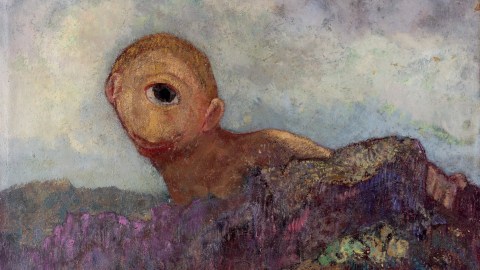
People discovered prehistoric fossils long before Charles Darwin published "On the Origin of Species." The remains of these unknown creatures often puzzled their discoverers. Credit: Kröller-Müller Museum / Wikimedia Commons
KEY TAKEAWAYS
In the past, dinosaur fossils have been mistaken for Cyclopes, dragons, and giants.
Without an understanding of evolution, extinction, or deep time, it was difficult to determine what fossils were or where they came from.
Ultimately, these fossils discovers and the ensuing misinterpretations paved the way for the birth of paleontology.
In 1676, the British naturalist Robert Plot completed a book titled The Natural History of Oxfordshire. Addressed to King Charles II, it contains information on the flora, fauna, geology, and culture of the author’s hometown. In a chapter devoted to stones, Plot shares an illustration of one specimen in “the figure of the lowermost part of the thigh-bone.” It clearly belonged to an animal, but which one? It was too large for a horse or an ox, yet too small for an elephant. His final guess: a giant.
Looking over The Natural History of Oxfordshire a century later, Richard Brookes, another naturalist, copied Plot’s untitled drawing of the bone and labeled it Scrotum humanum. Although Brookes understood that its resemblance to a pair of testicles was superficial, the naming helped perpetuate the belief that it came from some kind of humanoid. It would take another century or two for the bone, now lost, to be recognized for what it probably was: a dinosaur femur.
Of course, Plot was far from the only person to come into contact with a fossil before concepts like evolution, extinction, and deep time were formulated, let alone commonly accepted. During much of human history, the origins of fossils — not to mention the Earth itself — were not explained through scientific inquiry and evidence but by myth, superstition, and organized religion. And those led to some pretty imaginative interpretations. Early fossil discoveries
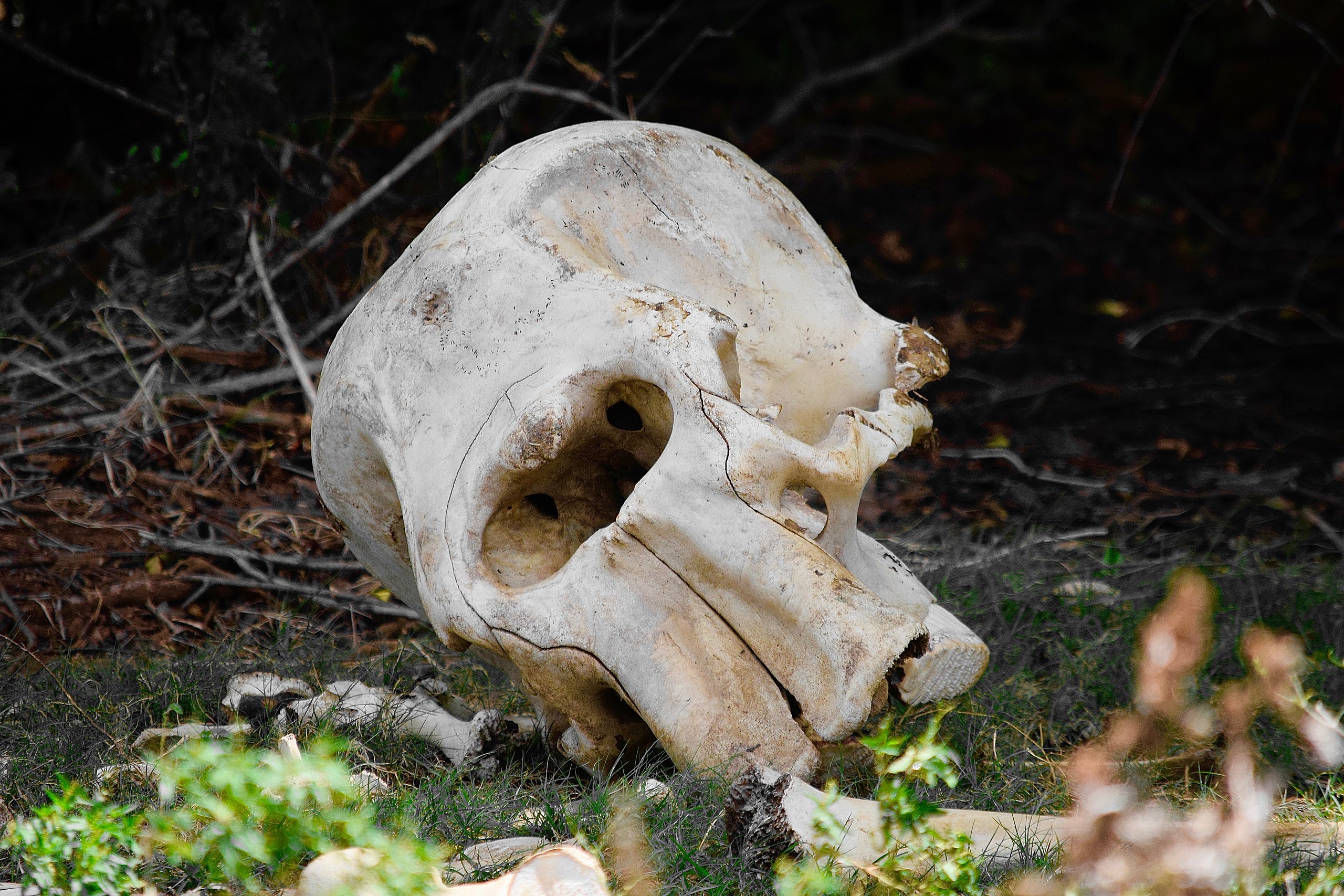
Many animal skeletons look nothing like their living counterparts. Case in point: the elephant. Experts will readily identify the gaping hole in the center of their skulls as the place where their trunk muscles attach. But to anyone unversed in proboscidean anatomy, these skulls look less like elephants and more like the fearsome, one-eyed Cyclops described in Homer’s Odyssey.
Coincidence? Paleontologists like Adrienne Mayor, author of The First Fossil Hunters: Paleontology in Greek and Roman Times, think not. Members of the elephant’s extended evolutionary family, such as 13-foot-tall Deinotherium giganteum, roamed Greece between the Middle Miocene and Early Pliocene. Some paleontologists argue there is a strong possibility that their alien-looking remains inspired the appearance of one of world mythology’s most iconic monsters.
A similar argument has been applied to China, where long-necked sauropod fossils, like the ones found in Qijiang City in 2015, could have provided the foundation for age-old stories about dragons. Again, not implausible. The country is home to some of the largest sauropods ever discovered, and to this day, pieces of their skeletons are passed off as “dragon bones” and sold in villages across Southeast Asia for their supposed medicinal powers
. An elephant skull. (Credit: Lawanga Ranwala / Wikimedia Commons)
Conversely, fossils found in medieval and early modern Europe were often interpreted through a Christian lens. In the 18th century, a well-respected Swiss physician named Johann Jakob Scheuchzer stumbled across what ultimately proved to be the bones of a giant salamander. He published an extensive treatise in which he described the fossilized remains as Homo diluvvi testis (or “the man who witnessed the flood”) and proclaimed it to be evidence of ancient humans who lived at the same time as the Biblical Noah.
When dinosaur fossils weren’t being identified as unicorns or sea serpents — two other infamous interpretations — they were mistaken for the remains of extant animals. While on his expedition through the lands acquired in the Louisiana Purchase, U.S. explorer and politician Meriwether Lewis found what he described as the rib of an enormous fish, but which subsequent observers attributed to a dinosaur. Years later, Gideon Mantell, a British paleontologist, mistook the conical tooth of a Spinosaurus for that of a large crocodile. The evolution of paleontology
While it’s tempting to dismiss these early interpretations as ignorant, it’s also unfair. Plot and others interpreted the evidence based on their knowledge of natural history. Fossils weren’t recognized as extinct creatures because the idea that a species could disappear completely hadn’t been seriously considered yet. Nor were they recognized as prehistoric because, as Riley Black puts it in an article for Smithsonian Magazine, Biblical chronologies left no room for deep time.
Just as science cycled through alchemy before it arrived at chemistry, so too did these early misinterpretations pave the way for the emergence of paleontology. Back in the 16th century, the term fossil referred to pretty much anything that was dug up from the ground. This meant plant and animal remains were placed in the same category as minerals and meteorites (hence why Plot discusses his bone in a chapter devoted to stones instead of animals).
“The primary problem at this period,” the historian Martin J. S. Rudwick explains in an article, “was not to decide whether or not fossils (in the modern sense) were organic in origin, but to understand why such diverse objects were all ‘stony’ in composition.” This debate was reframed in 1667 by the Danish medical scholar Nicolas Steno, who made a clear distinction between stones that were organic in origin (such as fossils) and stones that weren’t (such as crystals).
A mosasaurus skeleton (Credit: Ghedoghedo / Wikimedia Commons)
Steno stopped short of accurately assessing the age of fossils in addition to their natural composition. Like everyone else, he assumed that the world was only a few thousand years old and that the marine fossils he’d found on dry land had been deposited there by the Great Flood. “A long prehuman history,” writes Rudwick, “was generally unthinkable, not because it might have seemed to conflict with the Bible […] but because it would have seemed to leave that history without meaning or significance.”
The next step was taken by the French naturalist Georges Cuvier, who in 1808 became the first person to accurately identify a mosasaur fossil as belonging to a giant marine reptile that had not only gone extinct but lived long, long before the commonly accepted birthday of the Earth. Cuvier’s studies on meaningful designs and adaptations of skeletons not only appeased his religious contemporaries. It also constituted the final leg of the journey that takes us from Plot to Darwin, from dragons to dinosaurs.
Monday, November 17, 2025
ALCHEMY
Polish archaeologists discover 7,700-year-old kilns and artefacts in joint research with Kuwait
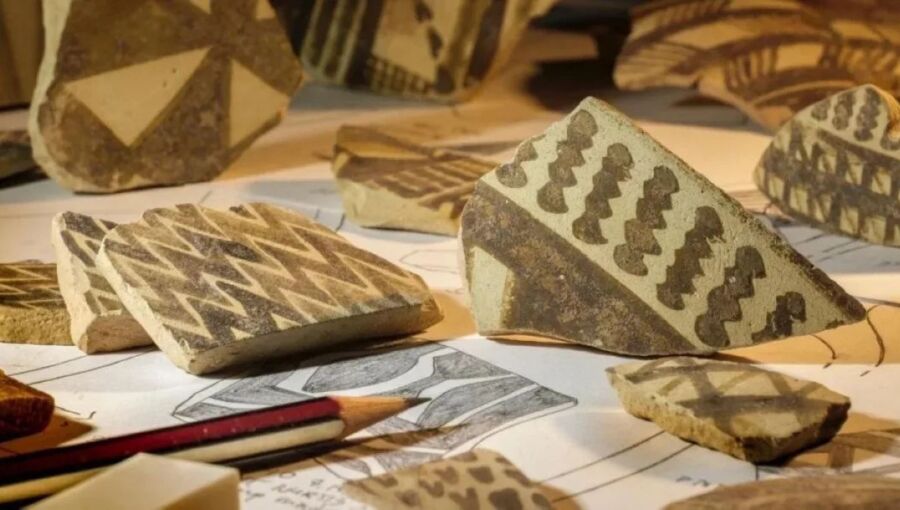
Imported Ubaid ware potsherds from 2024 dig. / Photo: A.Oleksiak / PCMA UW
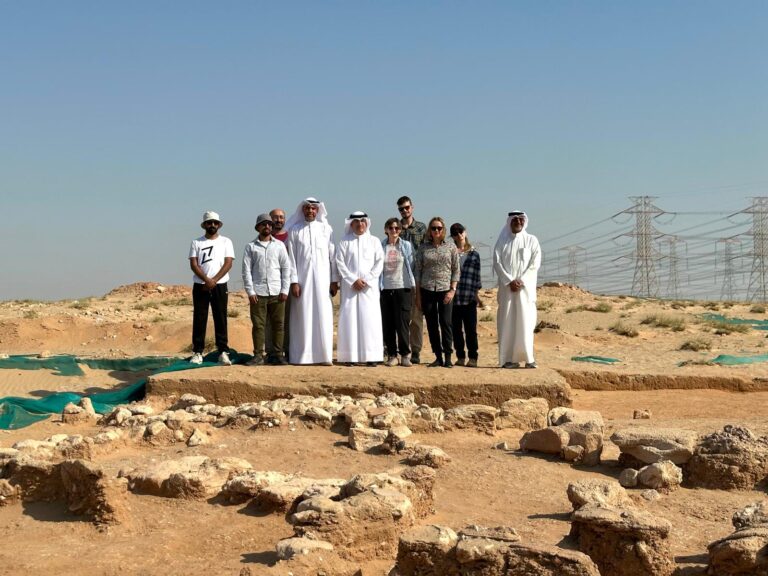
Kuwaiti and Polish archaeologists have announced the discovery of more than 20 kilns dating back around 7,700 years, alongside a collection of artefacts at the Bahra 1 site in the Subiya area of northern Kuwait near the current border with Iraq.
The area now known as Kuwait and Iraq was home to the Ubaid culture, a prehistoric Mesopotamian civilisation that extended from southern Iraq into parts of eastern Arabia. Not much is known about the ancient civilisations in the Kuwait research area, and with the joint research project with Poland, the programme is discovering new and interesting finds.
Finds include a half‑model of a winged owl, remains of local barley dating back 7,500 years, pottery vessels broken during firing, a small clay human head, miniature figurines, a model ship and pottery used for food preparation.
Mohammed bin Redha, Acting Assistant Secretary‑General for Antiquities and Museums, told KUNA that “the Bahra 1 site is the oldest and largest known settlement in the Arabian Peninsula from the Ubaid culture period, dating back to around 5700 BC. The discoveries reflect the life of the local community thousands of years ago.”
He explained that the latest Polish excavation season focused on field and laboratory analyses, including ground‑penetrating radar surveys that revealed buried cultural remains likely to guide future digs.
Hassan Ashkanani, Assistant Professor of Archaeology at Kuwait University, said the new discoveries mark a significant addition to understanding the development of the community in Al‑Sabiyah, building on earlier seasons that uncovered jewellery and shell ornament workshops.
Agnieszka Bienkowska, Deputy Director of the Polish excavation team, noted that the findings shed light on daily practices, food preparation methods, the production of pottery from clay mixed with wild plants, and the use of bitumen as fuel.
Professor Anna Smogorzewska highlighted the pottery workshop as one of the most important discoveries at the site in recent years.
Bahra 1 has been a focal point of archaeological research since 2009, through collaboration between Kuwait’s National Council for Culture, Arts and Letters and the Polish Centre for Mediterranean Archaeology at the University of Warsaw. The current mission is supervised by Professor Piotr Bielinski, with Bienkowska serving as deputy director.
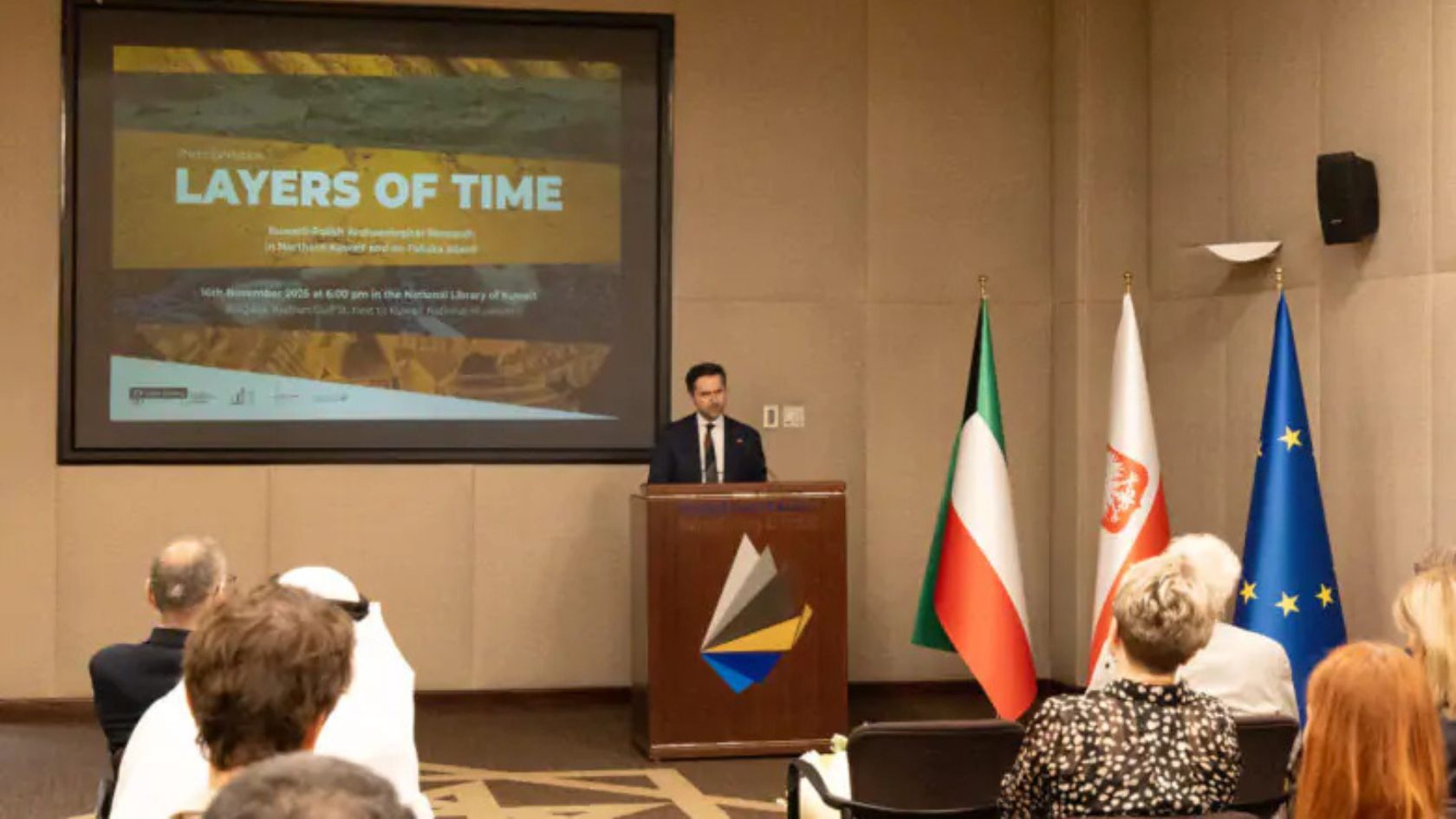
As part of the showcasing of the discovered items on November 16, the Embassy of Poland in Kuwait, in collaboration with the Polish Centre of Mediterranean Archaeology at the University of Warsaw (PCMA UW), organised a special exhibition highlighting decades of Polish archaeological research in Kuwait.
Earlier in April, bne IntelliNews previously reported neighbouring Iraq had announced it secured three rare ancient artefacts from New York as part of a deal with the US.
The Iraqi embassy in Washington noted that the items date back to the Sumerian and Babylonian civilisations and described the move as “a new achievement that reflects the tireless diplomatic efforts to safeguard Iraq’s cultural legacy.”
The recovery was coordinated with the Antiquities Trafficking Unit in the Office of the New York District Attorney. The embassy stressed that this step “demonstrates Iraq's firm commitment to retrieving its looted antiquities and returning them to their homeland.”
That retrieval is the latest in a string of returns reported by the country, with the items recently turning up in February.
"It was a significant challenge to recover these Iraqi artefacts, including the Sun God statue and textile panels dating back centuries," said Hussein. "These archaeological pieces are not mere remains but our cherished heritage."
Since 2008, the United States has returned more than 1,200 pieces to Iraq, whose cultural properties and museums were looted after 2003.
In May 2023, President Abdul Latif Jamal Rashid announced the recovery of 6,000 artefacts on loan to the United Kingdom since 1923 for research purposes.
Unearthing the City of Seven Ravines
The remains of an extensive Bronze Age settlement on the Kazakh Steppe that was likely once a major regional hub for large-scale bronze production more than 3,500 years ago, have been revealed by an international team of archaeologists.
The remains of an extensive Bronze Age settlement on the Kazakh Steppe that was likely once a major regional hub for large-scale bronze production more than 3,500 years ago, have been revealed by an international team of archaeologists co-led by researchers from UCL.
Published in Antiquity Project Gallery and co-led by Durham University and Kazakhstan’s Toraighyrov University, the paper presents the first detailed archaeological survey of Semiyarka—a vast, 140-hectare planned settlement and the largest known ancient site of its kind in the region. Although first identified in the early 2000s by researchers at Toraighyrov University, the site has only now been investigated in depth. Dating from around 1600 BC, Semiyarka offers insight into an important period of history when local nomadic communities began transitioning into permanent, urbanised settlements.
Lead author Dr Miljana Radivojević (UCL Archaeology) said: “This is one of the most remarkable archaeological discoveries in this region for decades. Semiyarka changes the way we think about steppe societies. It shows that mobile communities could build and sustain permanent, organised settlements centred on a likely large-scale industry — a true ’urban hub’ of the steppe.”
Today, what remains of the city are two rows of rectangular earthen mounds about a metre high that were the foundations of enclosed homes with multiple rooms. Nearby, the researchers also found the remains of a larger, central structure twice the size of the homes. Though its exact purpose is unclear, it could have been the site of rituals, a common communal space or may have been the home of a powerful family.
The scale and permanence of the settlement is surprising, as researchers had understood the people that lived in the region at the time to be semi-nomadic, living in mobile camps or small villages.
Co-author Professor Dan Lawrence of Durham University said: “The scale and structure of Semiyarka are unlike anything else we’ve seen in the steppe zone. The rectilinear compounds and the potentially monumental building show that Bronze Age communities here were developing sophisticated, planned settlements similar to those of their contemporaries in more traditionally ‘urban’ parts of the ancient world.”
Semiyarka was likely a major centre for tin bronze production in the region – a rare discovery in the Eurasian Steppe. On the southeast end of the city, researchers unearthed evidence of an ‘industrial zone’ dedicated to tin bronze metallurgical production, the main bronze alloy that defined the Bronze Age. Excavations and geophysical surveys revealed crucibles, slag, and tin bronze artefacts, providing the first firm evidence that Semiyarka metallurgists operated complex production systems rather than small-scale workshops.
Currently, little is known little about tin bronze production in the Eurasian Steppe Bronze Age, despite hundreds of thousands of tin bronze artefacts preserved in museum collections. Only one other settlement in eastern Kazakhstan, a Late Bronze Age mining site of Askaraly, has been linked to tin bronze production. Semiyarka shows an entire settlement zone dedicated to tin bronze making —suggesting a highly organised, possibly limited or controlled, industry of this sought-after alloy. The researchers hope that the site can offer more insights into the region’s poorly understood ancient production practices.
The city is located on a promontory above the Irtysh River in northeastern Kazakhstan and was first discovered in the early 2000s. Its name means “Seven Ravines,” taken from the network of valleys it overlooks. Its strategic location suggests that Semiyarka was once both a centre of exchange and a regional power. It’s also situated in the vicinity of copper and tin deposits in the nearby Altai Mountains which supplied the raw materials for its bronze manufacturing.
Co-author Dr Viktor Merz of Toraighyrov University in Kazakhstan, who first discovered the site, said: “I have been surveying Semiyarka for many years with the support of Kazakh national research funding, but this collaboration has truly elevated our understanding of the site. Working with colleagues from UCL and Durham has brought new methods and perspectives, and I look forward to what the next phase of excavation will reveal now that we can draw on their specialist expertise in archaeometallurgy and landscape archaeology.”
Excavated finished metallic artifacts and pottery shards indicate that the Alekseevka-Sargary people predominantly inhabited the site, a group that were some of the first to construct permanent dwellings in settlements in the region. Other items are reminiscent of the Cherkaskul people, another group that lived throughout the region but were thought to be more nomadic, indicating the inhabitants of Semiyarka likely traded with these and other local peoples.
The researchers hope in the future to examine how Semiyarka’s communities organised production and trade with their neighbours, as well as the environmental impact of these activities. In addition, the team also identified several nearby burial sites and temporary settlements from the same timeframe which could provide additional insight into the region’s ancient culture.
The research was funded by the British Academy, Kazakh Ministry for Science and Higher Education and the ERC awarded/UKRI-funded DREAM Project.
Notes to Editors
For more information or to speak to the researchers involved, please contact Michael Lucibella, UCL Media Relations. T: +44 (0)75 3941 0389, E: m.lucibella@ucl.ac.uk
Miljana Radivojević, Dan Lawrence, Victor K. Mertz, Ilya V. Mertz, Elena Demidkova, Mark Woolston-Houshold, Richie Villis and Peter J. Brown, ‘A Major City of the Kazakh Steppe? Investigating Semiyarka’s Bronze Age Legacy’ will be published in Antiquity Project Gallery on Tuesday 18 November 2025, 00:01 UK Time, 17 November 2025, 19:01 US Eastern Time, and is under a strict embargo until this time.
UCL is a diverse global community of world-class academics, students, industry links, external partners, and alumni. Our powerful collective of individuals and institutions work together to explore new possibilities.
Since 1826, we have championed independent thought by attracting and nurturing the world's best minds. Our community of more than 50,000 students from 150 countries and over 16,000 staff pursues academic excellence, breaks boundaries and makes a positive impact on real world problems.
The Times and Sunday Times University of the Year 2024, we are consistently ranked among the top 10 universities in the world and are one of only a handful of institutions rated as having the strongest academic reputation and the broadest research impact.
We have a progressive and integrated approach to our teaching and research – championing innovation, creativity and cross-disciplinary working. We teach our students how to think, not what to think, and see them as partners, collaborators and contributors.
For almost 200 years, we are proud to have opened higher education to students from a wide range of backgrounds and to change the way we create and share knowledge.
We were the first in England to welcome women to university education and that courageous attitude and disruptive spirit is still alive today. We are UCL.