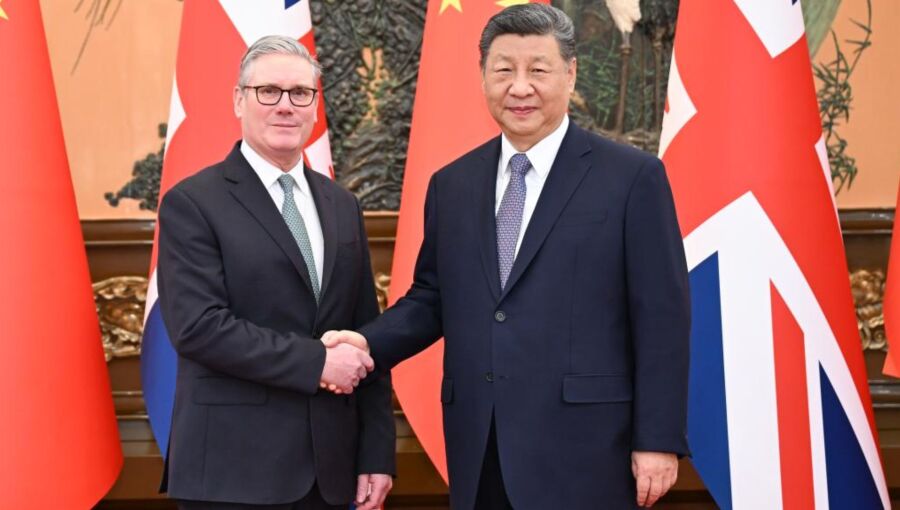
British Prime Minister Keir Starmer held an 80-minute meeting with Chinese President Xi Jinping in Beijing on January 29, marking the first visit by a UK leader to China in eight years as both nations seek to reset long-strained relations.
Relations between London and Beijing deteriorated following China's crackdown on civil liberties in Hong Kong in 2019, concerns over Chinese espionage in Britain, and Beijing's support for Russia's invasion of Ukraine. The UK recently approved controversial plans for a large Chinese embassy in London, removing a major sticking point in bilateral relations.
Starmer told Xi that the UK and China need a "long-term, consistent and comprehensive strategic partnership" during talks at the Great Hall of the People, emphasising cooperation on climate change and global stability during what he described as "challenging times for the world."
"It's with the British people in mind that I am here today," Starmer said at the start of the meeting. "I made a promise 18 months ago when we were elected into government, that I would make Britain face outwards again. Because as we all know, events abroad affect everything that happens back in our home countries, from prices on the supermarket shelves to how secure we feel."
Xi acknowledged the difficulties in UK-China relations in recent years, telling Starmer the relationship had seen "twists and turns that did not serve the interests of our countries."
The Chinese president added that "good things often come with difficulties," appearing to recognise the criticism Starmer has faced for reaching out to Beijing despite national security and human rights concerns.
Following the talks, Starmer described the relationship as being in a "good place, a strong place," telling reporters the leaders had made "really good progress" on issues including reducing Chinese tariffs on Scotch whisky and introducing visa-free travel for British visitors.
The prime minister is leading a delegation of more than 50 British business executives and cultural organisation leaders as he seeks to expand opportunities for UK companies amid sluggish domestic economic growth. The visit comes as China's economy grew by 5% in 2025, compared with Britain's projected 1.5% growth for 2025.
Starmer confirmed he raised human rights issues with Xi, including concerns over Hong Kong and the imprisonment of British citizen Jimmy Lai, saying the two men had a "respectful discussion" on areas of disagreement.
In a post on X, Starmer wrote: "Growth at home is directly linked to our engagement with the world's biggest powers. Today I met with President Xi in Beijing. We affirmed our shared commitment to building a long-term and strategic partnership that will benefit both our countries, while maintaining frank and open dialogue on areas of disagreement. As Prime Minister, I will always deliver in the interest of the British people."
The two countries are expected to sign several agreements, including a deal on combating people smuggling across the English Channel by disrupting the trade in Chinese boat engines used by criminal gangs. More than half the engines used come from China, according to the British government.
The visit represents the latest in a series of trips to Beijing by leaders of US allies this month, following visits by the prime ministers of South Korea, Canada, Finland and Ireland. Germany's chancellor is expected to visit next month.
Trump says 'very dangerous' for UK to deal with China as Starmer arrives in Shanghai
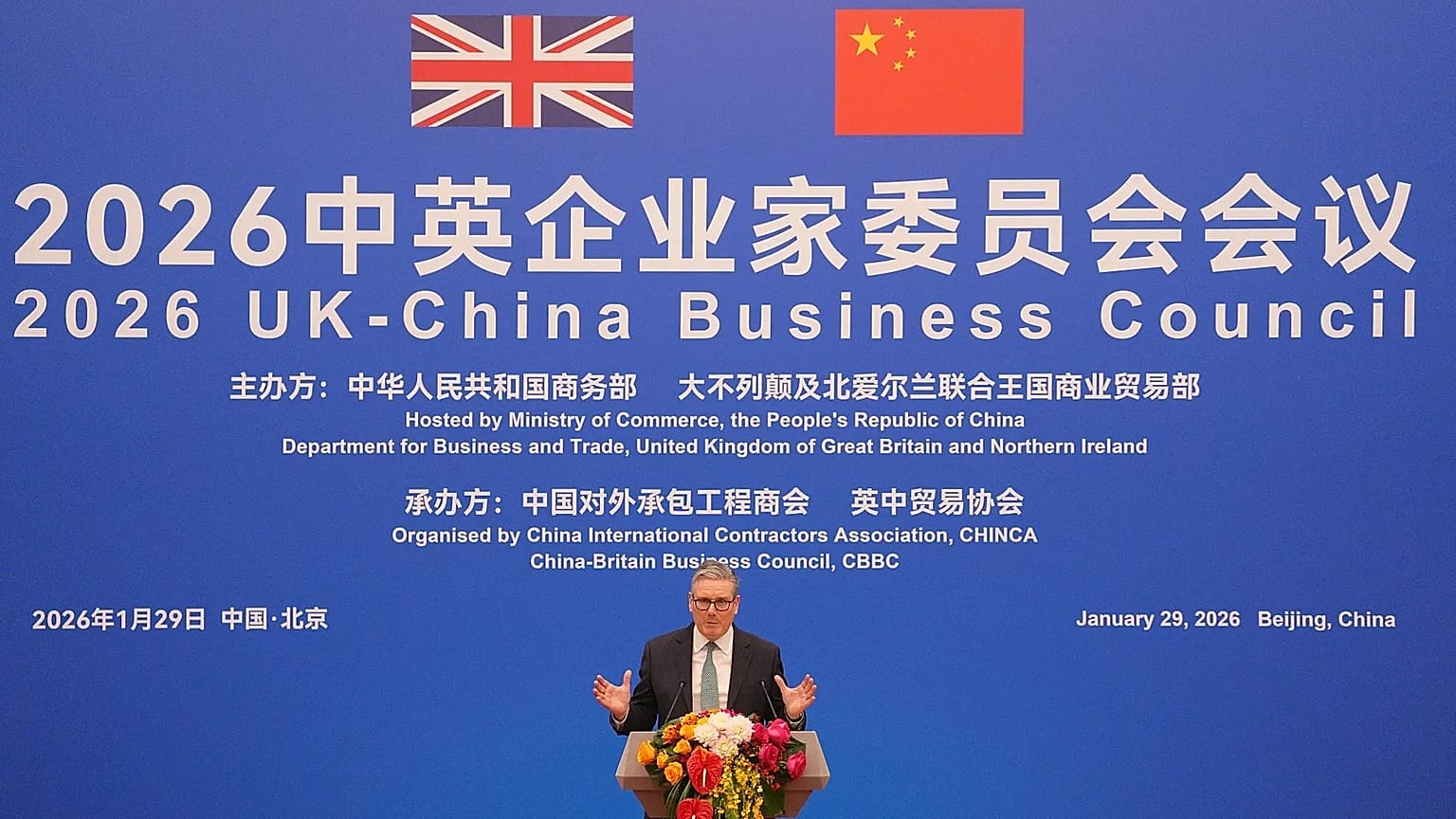
Downing Street said that the White House had been aware of Starmer's trip and its objectives in advance and pointed out that Trump himself is due to visit China in April.
US President Donald Trump has it is "very dangerous" for close ally Britain to deal with China, as UK Prime Minister Keir Starmer is in the country for talks with President Xi Jinping aimed at resetting relations.
Trump made the remarks to reporters while attending the premiere of a documentary about his wife, First Lady Melania Trump.
Asked about the UK "getting into business" with China, Trump said "Well it's very dangerous for them to do that."
Starmer's visit to China is the first by a British premier since 2018 and follows a slew of Western leaders seeking a rapprochement with Beijing recently, seen by many as a pivot from an increasingly unpredictable United States.
In response to Trump's comments, Downing Street said that the White House had been aware of Starmer's trip and its objectives in advance and pointed out that Trump himself is due to visit China in April.
On Thursday, Starmer met with Xi and other Chinese officials and signed several cooperation agreements.
Canadian Prime Minister Mark Carney also visited China in mid-January and reached agreements on trade and tourism.
Afterward, Trump threatened to hit Canadian imports with 100% tariffs if Carney made further deals with Beijing, a threat the Canadian PM later dismissed as a negotiating tactic.
"It's even more dangerous, I think, for Canada to get into business with China. Canada is not doing well. They're doing very poorly, and you can't look at China as the answer," Trump said.
Meanwhile, Starmer arrived in China’s financial centre Shanghai on Friday in his bid to boost business opportunities for UK firms in the world's second-largest economy.
Starmer has brought more than 50 business leaders on his trip.
Starmer said on Friday that he had had "very good meetings" with Xi, that had provided "just the level of engagement that we hoped for."
"We warmly engaged and made some real progress, actually, because the UK has got a huge amount to offer," he said at the Bank of China in Beijing.

No comments:
Post a Comment