Showing posts sorted by relevance for query FOXES. Sort by date Show all posts

Tuesday, August 08, 2023

UK

Rural and urban foxes just as smart as each other, study finds. Might the same be true of humans? – Scotsman comment

Urban living has not made our fellow mammals better at puzzle-solving than their country cousins

In Arkansas Traveller, a 1992 song by Michelle Shocked, an apparent city-dweller spars with a local in the countryside. One barb by the former, “hey farmer, you're not too far from a fool, are you?”, is met with “just a barbed-wire fence between us” in response.

Does urban living somehow make us smarter? Do ‘country cousins’ deserve their reputation or have they been unfairly besmirched? A new study – admittedly of animals but, hey, aren’t we all? – may, just possibly, shed some light.

Hull University researchers spent two years studying wild foxes at 104 locations in Scotland and England, leaving puzzles that offered a reward for successful completion. There was a theory that urbanisation had made foxes smarter because of city life’s greater range of challenges. But while the researchers found that the city foxes were “bolder” – more prepared to touch the puzzles – they weren’t apparently any better at solving them than their rural counterparts.

However, perhaps the foxes were adopting the farmer’s role. Why solve a human city-slicker’s puzzle, when there’s an easier meal to be found?

LIKE COYOTES IN NORTH AMERICA


UK

Urban foxes are bolder but not cleverer than their rural relatives, study finds

Research finds urbanisation has made the animals bolder when it comes to finding food but hasn't increased their intelligence.


Tuesday 8 August 2023 UK
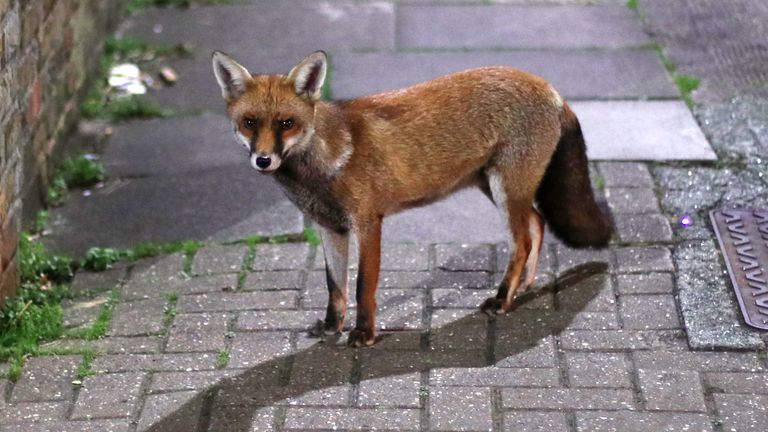
Foxes are a common sight in urban areas

Foxes that live in London and other urban areas are generally bolder than foxes living in rural areas, new research has found.

However, city life has not made urban foxes any cleverer than those in the countryside, according to the study.

A team from the University of Hull spent two years studying wild foxes in 104 locations in England and Scotland by leaving them tasks to do for rewards.

The foxes had to use simple behaviours to gain access to the food, including biting, pulling, or lifting materials with their paws and mouth.

Psychologist and animal behaviourist Blake Morton, who led the research, said they discovered that urban foxes were bolder about physically touching the puzzles but did not show greater intelligence than the rural animals when trying to work out how to get to the food.


Dr Morton said: "For years, researchers have claimed that urbanisation is making wildlife bolder and smarter due to the challenges they face from 'life in the city'.

"In our study, we tested this hypothesis in wild red foxes by giving them unfamiliar puzzle feeders to see how they would react.

"We found that urban foxes were more likely to behave bolder than rural populations in terms of their willingness to physically touch the puzzles, but they were not more motivated to try to gain access to the rewards inside."

The study, published in Animal Behaviour, found that foxes from 96 locations acknowledged the puzzles, but foxes from only 31 locations touched them and foxes from just 12 locations gained access to the food.

All of the foxes ate the food when it was left on the ground with a puzzle.

Dr Morton told Sky News more research needs to be done to see if urban or rural foxes are more intelligent.

"Animals' behaviour is far more nuanced than sweeping generalisations like 'an urban fox is a bold fox' - that's not always true based on our findings, and so it means that certain factors likely shape individual fox behaviour beyond just living in a city," he said.

The fox study, which included academics from the universities of Lincoln and Glasgow, and Atlanta Zoo, is part of the British Carnivore Project - a nationwide research programme established in 2021 by Dr Morton for the purpose of understanding the impact of climate change and urbanisation on the behaviour and cognition of wild carnivores.

Dr Morton said: "Our findings are interesting because urbanisation is the fastest form of landscape transformation on the planet, and so urban foxes are likely exposed to many unfamiliar situations.

"Foxes are renowned for thriving in cities, and our study suggests that bolder behaviour may help urban foxes adapt to such settings. However, just because a fox lives in a city doesn't necessarily mean it'll engage in problem-solving.

"This latter finding challenges the long-standing belief that urban foxes are notorious scavengers of other human-made food containers, such as litter and the contents of outdoor bins.

"Undeniably, litter and outdoor bins can provide at least some urban foxes the opportunity for an easy meal but, for many other foxes, our study shows that their behaviour is much more nuanced; other factors besides bolder behaviour may lead some foxes to exploit such resources, which my team is currently investigating."


Saturday, July 25, 2020


DOMESTICATION TRANSMUTATION INTO DOGS

Foxes Started Eating Human Food Remains as Early as 42,000 Years Ago

Jul 23, 2020 by News Staff / Source


A team of scientists from the University of Tübingen has studied the diet of Arctic foxes (Vulpes lagopus) and red foxes (Vulpes vulpes) that lived during the Paleolithic period in southwestern Germany.

The red fox (Vulpes vulpes). Image credit: Shorty Ox.
Foxes love leftovers. In the wild, they regularly feed on scraps left behind by larger predators like bears and wolves, but the closer foxes live to human civilization, the more of their diet is made up of foods that humans leave behind.
University of Tübingen researcher Chris Baumann and colleagues hypothesized that if this commensal relationship goes back to ancient times, then foxes might be useful indicators of human impact in the past.
They compared ratios of carbon and nitrogen isotopes between the remains of various herbivores, large carnivores, and red and Arctic foxes from several Paleolithic archaeological sites in the Ach Valley (Hohle Fels, Geißenklösterle and Sirgenstein) and the Lone Valley (Bockstein, Hohlenstein-Stadel and Vogelherd) in Germany.
At sites older than 42,000 years, when Neanderthals sparsely occupied the region, fox diets were similar to their local large carnivores.
“In this study, we were seeking to discover whether human hunting activity may have provided advantages for some animal species,” Baumann said.
“Originally, the main food source for red and Arctic foxes was small mammals, which the foxes hunted. That was the case in the Middle Paleolithic, more than 42,000 years ago.”
“In southwestern Germany that was the time of the Neanderthals and the Swabian Jura was only sparsely populated.”
But in the younger sites, as Homo sapiens became common in the area, foxes developed a more unique diet consisting largely of reindeer, which are too big for foxes to hunt but which are known to have been important game for ancient humans of the time.
The results suggest that during the Upper Paleolithic, these foxes made a shift from feeding on scraps left by local large predators to eating food left behind by humans. This indicates that foxes’ reliance on human food goes back a good 42,000 years.

Summary figure for the commensal fox hypothesis. 
Image credit: Baumann et al, doi: 10.1371/journal.pone.0235692
“The isotopic data from the fox bones indicate that the composition of several animals’ diets changed,” said University of Tübingen’s Professor Hervé Bocherens, co-author on the study.
“We assume that these foxes now lived mainly on meat waste left behind by humans, or perhaps were even fed by them.”
“The data showed the meat was from large animals that the foxes could not bring down — such as mammoth and reindeer.”
“The humans dragged the whole reindeer into their caves. But the huge mammoths were butchered in the place they were killed.”
The team proposes that, with further studies investigating this fox-human relationship, ancient fox diets may be useful indicators of human impact on ecosystems over time.
“Dietary reconstructions of Ice Age foxes have shown that early modern humans had an influence on the local ecosystem as early as 40,000 years ago,” the authors said.
“The more humans populated a particular region, the more the foxes adapted to them.”
The findings were published online in the journal PLoS ONE.
_____
C. Baumann et al. 2020. Fox dietary ecology as a tracer of human impact on Pleistocene ecosystems. PLoS ONE 15 (7): e0235692; doi: 10.1371/journal.pone.0235692


I HAVE POSTULATED BEFORE THAT SOME SPECIES OF DOGS ORIGINATED BY BREEDING FOXES WITH ANOTHER CANID, IN PARTICULAR WITH THE ORIGIN OF THE DOG BREED SCHIPPERKE
IF FOXES WERE EATING OUR GARBAGE, LIKE WOLVES WERE THEN THEN THEY WOULD BE EQUALLY CONSIDERED FOR BREEDING DOGS.

THIS IS OF COURSE HERESY, AND BEING A HERESIOLOGIST I KNOW IT IS, BECAUSE ORTHODOX BELIEF IS THAT ONLY WOLF CANIDS CREATED DOGS. 

A RUSSIAN EXPERIMENT IN SIBERIA OVER FORTY YEARS HAS PROVEN THE FOX INTO DOG HYPOTHESIS TO BE A VALID BIOLOGICAL THEORY.

OF COURSE THE OTHER HERETIC THAT BELIEVES IT IS ALSO AN ANARCHIST BIOLOGIST AND BIOGRAPHER OF KROPOTKIN; LEE DUGIN
AND HE HAS WRITTEN AN ACCOUNT OF THIS ONGOING EXPERIMENT AS WELL AS HAVING BECOME INVOLVED WITH IT IN ORDER TO WRITE THIS ACCOUNT.


Wednesday, August 20, 2025


Outsmart an island fox? Not so fast


Challenging long-held ideas of evolution on islands, a USC Dornsife study found most Channel Islands foxes evolved proportionally larger brains than their mainland cousins — a surprising trait shaped by novel, isolated conditions and survival demands.


University of Southern California

Skull scans of fox skulls 

image: 

Researchers scanned island fox skulls to create digital models, enabling them to calculate brain and body size.

view more 

Credit: Nick Neumann/USC Wrigley Institute.


For decades, scientists believed animals on islands evolved smaller brains relative to body size to save energy. But most Channel Islands foxes — tiny predators no bigger than a house cat – defied that rule, evolving larger brains than their mainland cousins.

The findings, published in PLOS One by researchers at the USC Dornsife College of Letters, Arts and Sciences, suggest brain size may hinge less on isolation and more on the demands of survival. 

Island syndrome refers to a suite of traits including reduced size, brain shrinkage, loss of flight in birds and tamer behavior. Until now, island brain size has been mainly studied in fossils of herbivores, which face different pressures than carnivores. The island fox provided an opportunity to bridge that research gap.

Lead author Kimberly Schoenberger said the results upend long-held assumptions about how animals adapt to island life. “It was most surprising to discover that island syndrome isn’t one-size-fits-all,” said Schoenberger, a PhD candidate in biology. “When we looked at carnivores like Channel Island foxes, the pattern of smaller brains didn’t hold.”

Channel Islands offer a natural experiment

The Channel Islands, an eight-island chain off the California coast, six of which are home to foxes, offered researchers a rare natural experiment to test whether island syndrome holds true across environments. The biologists compared the brains of foxes from those six islands with mainland gray foxes — their closest living relatives and likely ancestors — as well as with one another.

The analysis revealed that the brain-to-body ratio appeared to be shaped less by isolation or island size alone — long thought to drive island syndrome — and more by local habitat conditions.

On five of the islands — Santa Cruz, Santa Rosa, Santa Catalina, San Clemente and San Miguel — foxes had relatively larger brains despite their smaller bodies. Their brains also showed slightly deeper folds and ridges in areas tied to motor control and spatial processing, traits that may help the foxes navigate rugged terrain and compete for food and shelter, especially on two islands where they share space with rivals like the spotted skunk.

San Nicolas Island, the most remote and resource-limited of the six, was the exception. There, foxes had smaller relative brain sizes. With no predators, little biodiversity and limited food, researchers believe the animals faced fewer cognitive demands and may have conserved energy for basic survival rather than retaining traits like enhanced motor coordination or spatial processing.

“The Channel Island foxes show that brain size reduction is not a universal feature of island life,” Schoenberger said. “It depends on the pressures each species faces.”

Fox brains adapt to island living

To understand how brain size changed in the island fox, Schoenberger and research collaborators at the Natural History Museum of Los Angeles County (NHM) studied more than 250 skulls from six island fox subspecies and four mainland gray fox subspecies. The specimens came from collections at NHM and the Santa Barbara Museum of Natural History

First, they estimated body weights from skull measurements, then compared those estimates to recorded weights from live island foxes. The two sets aligned closely, giving the team a solid basis for analyzing brain-to-body ratios. The brain size was measured using microbeads to approximate the internal volume of the skull, a highly accurate proxy for brain size.

Next, the researchers used CT scans to create 3D models of the skulls’ interiors. By capturing the shape and volume of the braincase — the hollow cavity that once housed the brain — they could confirm accuracy of the microbead brain size estimates and examine the structure of brain surface features such as folds and ridges imprinted on the inside of the skull.

The digital scans revealed a surprising feature: Island fox brains had shorter, more compact frontal areas than their mainland relatives. The researchers theorize that this likely relates to their shorter snouts, which reduce the brain space at the front of the skull. To compensate, these foxes developed slightly deeper folds and more pronounced ridges in this region. This preserves key motor control and spatial awareness skills particularly needed to climb trees and forage for food.

Schoenberger explained that while both the island and gray foxes are the only canines known to climb trees, island foxes relied more on foraging in trees compared to mainland foxes, which have more abundant food options on the ground.

The researchers also found that brain size didn’t differ between male and female foxes, suggesting that environmental pressures rather than mating competition were the likely drivers of these adaptations. 

Island foxes were likely pest control, not pets

DNA and carbon dating suggest that foxes first arrived on the northern Channel Islands about 9,000 years ago, likely by riding natural debris rafts or swimming when sea levels were lower and distances between islands were shorter. Thousands of years later, archaeological evidence shows that Indigenous peoples may have transported foxes to otherislands, perhaps to help control pests.

Despite this long association with humans, island foxes likely never became truly domesticated — a fact researchers say may help explain why their brains did not shrink, as often happens in domestic species. In both brain size and behavior, they more closely resemble wildcats than early domestic dogs, which had already begun to lose brain volume as they grew dependent on people.

Broader lessons from island-bound foxes

As climate change and habitat loss create more fragmented, island-like environments, understanding which traits help animals adapt could guide conservation efforts. The island fox suggests that intelligence and cognitive flexibility may play a key role in survival but may only be an option if their habitat has enough natural resources.

Still, their future is uncertain. Previous research found that low genetic diversity could leave the foxes especially vulnerable to new threats such as disease, raising concerns about how well they’ll weather the next wave of environmental change. 

About the study

The study was funded by the USC Dornsife Wrigley Institute for Environment and Sustainability, the Offield Family Foundation and the USC Women in Science and Engineering Graduate Fellowship.

Thursday, August 12, 2021

Southeast’s gray foxes may be struggling for survival.

Competition for food from coyotes seems to be key to declining populations

Peer-Reviewed Publication

UNIVERSITY OF GEORGIA

Fox 

IMAGE: GRAY FOX POPULATIONS SEEM TO BE DECLINING IN THE SOUTHEAST, ACCORDING TO UNIVERSITY OF GEORGIA RESEARCH. view more 

CREDIT: SARAH WEBSTER

For generations, gray foxes have been part of the Southeastern landscape. They, along with red foxes, are among the carnivores that dine on a range of smaller animals, plants and berries.

But a new study published by researchers from the University of Georgia suggests competition for food from coyotes—a relative newcomer to the Southeast—may be putting pressure on foxes, particularly the gray fox.

“Gray fox populations, especially in the Southeast, seem to be declining, and have been for some decades,” said James Beasley, an associate professor in the UGA Warnell School of Forestry and Natural Resources whose doctoral student, Sarah Webster, wrote the study as part of her dissertation.

The study, published in the Journal of Mammology, was co-authored by Beasley as well as Warnell professor Michael Chamberlain and Warnell alumnus Joseph Hinton.

By looking at reports given by licensed animal trappers in South Carolina, where Beasley’s lab is located, it was clear to the researchers that the number of harvested foxes—particularly gray foxes—has been decreasing, while the number of harvested coyotes has increased.

“Here on the Savannah River Site, there are excellent historical trapping records and gray foxes used to be really abundant,” said Beasley. “But now we don’t see them nearly as frequently. That’s prompted questions of why—why are we seeing the reduction in these numbers?”

At the Savannah River Ecology Lab in Aiken, South Carolina, where the study took place, Beasley said habitats have changed dramatically over the years, from agricultural areas preferred by red foxes to forested areas more conducive to tree-climbing gray foxes. Also, food is abundant for generalist carnivores such as coyotes and foxes, which will eat a variety of plants and animals, and coyotes are now abundant in this landscape.

In the Midwest, where foxes and coyotes have lived together for hundreds of years, the species have found a way to carve out food sources without overlapping too much—scientists call this “partitioning.” But coyotes have only been in the Southeast since the 1970s, giving them far less time to sort out their overlapping food preferences.


CAPTION

Competition from coyotes (pictured) may be contributing to declining numbers in gray fox populations.

CREDIT

Sarah Webster

Still, Webster wanted more information about how coyotes’ and foxes’ food sources might differ between the regions. So, she used hair samples gathered from red and gray foxes and coyotes from both regions and from a variety of decades, including preserved samples from the Georgia Museum of Natural History. By measuring the amounts of carbon or nitrogen in the hair, Webster was able to assess the amount of overlap in diet between each species.

For example, a diet high in protein would manifest as a higher nitrogen content. Vegetation, such as fruits or grasses, translates as carbon in the hair samples. By noting the relative amounts of carbon and nitrogen content in hair samples, Webster was able to assemble a picture of how much diet overlap there was between each species in each region.

The results? There are significant regional differences in how coyotes and foxes dine.

“In the Midwest, we found there were significant differences in diet between species, whereas in the Southeast they overlapped significantly,” she said. In the Southeast, red and gray foxes had a large amount of overlap in their diets prior to the onset of coyotes, and that overlapping continued once coyotes arrived, according to more recent samples. “So, all three species are overlapping now in the Southeast.”

Beasley noted that the diet partitioning that takes place among these species in the Midwest is something that developed over hundreds of years, as coyotes and foxes learned to navigate the landscape around each other. There apparently hasn’t been enough time for that dynamic to play out in the Southeast.

“The question is, will that happen fast enough, before the gray fox populations continue to decline further?” he added. “It’s not exceptionally dire for the gray fox, but we now often find them closer to buildings or other marginalized areas. So, they may be finding other mechanisms to coexist with coyotes. But they do need forested areas.”

Habitat is one way, said Webster, that we can work to ensure future populations of gray foxes remain stable. When we understand the dynamics at play between the species, we can better plan for the future.

“We don’t have good evidence that we can effectively manage coyote populations on a large scale. They’re generalists, and they’re too flexible in their behavior and patterns. They will survive just fine,” said Webster. “So, a more effective approach likely would be to focus on the gray fox. Step one is to better understand how the gray fox population is doing by studying their population dynamics, and then going forward from there and trying to build effective management around the gray fox to ensure they continue to thrive in the Southeast.”