Showing posts sorted by relevance for query MAN RAY. Sort by date Show all posts

Monday, September 18, 2023

Rebel, rebel: how Lee Miller’s defiance in fashion, photography and life still endures


Miller counted Picasso and Man Ray as friends, took devastating war photos and dressed outrageously. A new film starring Kate Winslet and exhibition explore her renegade spirit

Lauren Cochrane
Sun 17 Sep 2023 
The Observer
Fashion

Lee Miller models a headband made from a new material called plastic in 1932. Photograph: Lee Miller/Tessa Hallmann

The forthcoming production of Lee, the film starring Kate Winslet based on the life of Lee Miller, has one scene in which Winslet is seen reclining in a two-piece swimsuit of the kind that a decade later would be called a bikini. It is the 1930s, when the item would have been considered “scandalous”, but it showed how the photographer and war reporter liked to defy convention. Now the bikini, along with other items from Miller’s wardrobe, has been discovered in the attic of her old home and will go on display alongside some more of clothes for the first time.

Lee Miller: Dressed, an exhibition set to open at Brighton Museum in October, brings a fashionable perspective to the life and work of the American photographer. It will include a red dress possibly created by Italian designer Elsa Schiaparelli, the bikini and Miller’s war uniform


Martin Pel, the curator, says the pieces tell the story of Miller’s life and rebellion against the norms. The bikini – dated to 1937 – was a case in point. It predated the fashion by around a decade. “It would have been scandalous, really incredibly racy, to have worn it 10 years earlier,” says Pel. Miller also wore jodhpurs when trousers were not worn by women, and lent a black fur coat to her brother John, who sometimes wore women’s clothes. These are also included in the exhibition. “She really didn’t care what people thought,” says Pel. “Lee absolutely lived on her own terms.”

Miller will become a talking point again this autumn. In addition to the exhibition and film, there are two books published by Thames & Hudson.
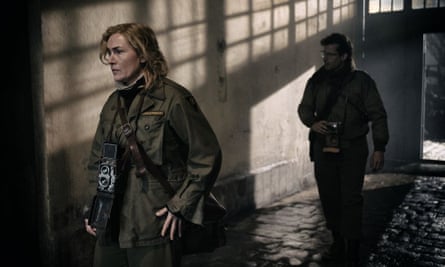
Kate Winslet as Lee Miller in the film Lee. 
Photograph: Toronto film festival

Glamorous and beautiful, and part of a circle that included Picasso and Man Ray, Miller has finally emerged from these associations over the last 20 years to be rightly lauded for her brave and uncompromising images from the end of the second world war.

But Miller also has an important place in the history of fashion and fashion photography. “She’s become so well known for [the war images] that the fashion stuff is overlooked,” says her granddaughter Ami Bouhassane, who is also director of Farleys, the Sussex house that Miller lived in from the late 40s onwards. “We have five and half thousand negatives, and the war work that most people think of is only the last 18 months [of her career].”

Miller grew up in New York state and began her career as a model, working for Man Ray in Paris after convincing him to take her on as an assistant as she was familiar with photography. Romy Cockx, curator of the recent Man Ray and Fashion show in Antwerp’s Momu, says Miller influenced Man Ray’s fashion imagery. “On the one hand she was a model and on the other he was learning how to become a photographer from her.”

“I think the interplay of these elements made it sometimes like a dialogue between them.”When war broke out in 1939 Miller was an established photographer and worked for Vogue. In the early part of the war she created images that managed to turn uninspiring briefs from the Ministry of Information into creative images for the magazine. “We’ve a whole series of fashion images with models looking nonchalant next to some hairy mammoth in the Natural History Museum. She had this amazing imagination,” says Bouhassane.

Although there were other women working in photography in the 1930s and 40s – Cockx points to Berenice Abbott, also mentored by Man Ray – Bouhassane says Miller’s determined rise to the top came from her background. “Her parents gave her this incredible gift of treating her equally to her brothers,” she says. “Her natural bass line was in the space of equality. So when she hit these walls of ‘no, you can’t do that because you’re a woman’, and ‘women don’t run their own business’, she’s like, ‘yes, I can.’”
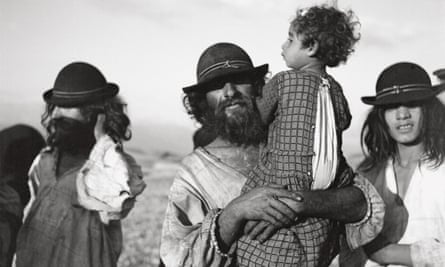
Lee Miller’s photograph of Romanian gypsies in Sibiu, from 1938. Photograph: Lee Miller Archives

Pel says this attitude is borne of her approach to clothing– through both an irreverence, and a desire for functionality. “I think she loved sort of shocking peopleand doing things out of the ordinary,” he says. “Her attitude to clothing [also] reminds me of a heterosexual man’s attitude to dress– she just wants it to work.”Michael O’Connor, costume designer for Lee, studied images of Miller prewar: on the beach in the south of France with Picasso and Paul Eluard, wearing the bikini, a design they replicated for the film. “In those days Lee knew how important clothes were,” he says. “She was part of a set of dapper people – she’s sitting on a picnic blanket with Picasso and she’s a confident part of that scene.”

The film focuses on Miller’s life during the end of the war, but even in this period “her eye for fashion was so acute,” says O’Connor. “Audrey Withers, the editor of Vogue, had Miller’s Class A uniform tailored on Savile Row, we know that from the label in the original. So Winslet went to Savile Row to have hers tailored.” Withers is also said to have sent Miller nice underwear “so she could feel feminine” even under horrific circumstances.

Miller was traumatised by the war and stopped taking pictures soon after. However, her influence can be seen in postwar photography. “The way she brought this more humane aspect to fashion photography influenced British photographic trends in the 60s, reemerging in the work of Lord Snowdon and David Bailey,” says Cockx.

There’s also the now familiar switch from model to photographer – a move that other women including Corinne Day have made recently. Bouhassane says: “She’d been a model so she knew what it felt like to be on the other side of the camera. We’ve got some really great shots where she’s having a giggle with the models, they seem really relaxed.”

Friday, February 14, 2020

Surrealism at Play
Susan Laxton
 REVIEW January 22, 2020
Durham, NC: Duke University Press, 2019. 384 pp.; 16 color ills.; 154 b/w ills. Paper $27.95 (9781478003076)

In Surrealism at Play, Susan Laxton weaves an alternate history of Surrealism through the concept of play, a historically underacknowledged (yet, in her telling, constitutive) element of the movement. This is serious play: play as process not product, as action and experience. Play undergirds the Surrealists’ ambition not only to remake the art of making art but also to reform intersubjective relations and modern experience; it is a critical force available precisely because it is “not work, not serious, not part of normal life, unreal, inauthentic” (12).
Laxton’s crucial interlocutor is Walter Benjamin. Indeed, one could understand her project as unfurling from a footnote in Benjamin’s most famous essay: “What is lost in the withering of semblance and the decay of the aura in works of art is matched by a huge gain in the scope for play [Spiel-Raum]” (“The Work of Art in the Age of Its Technological Reproducibility,” 1936, in Selected Writings, vol. 3, Belknap Press, 2002, 127n22). The anchoring term of her project, Spielraum may be translated as both “room for play” and “scope for action.” In other words, it is at once an arena of ludic freedom and a training ground, for Benjamin’s play was not opposed to regimes of discipline and training but continuous with them.
Fundamental to the historical moment of Surrealism’s emergence and Benjamin’s writing, Laxton explains, was Taylorism and the “rising ideology of rationalized labor,” which saw the human body “reconceived in machinic terms that measured value by way of efficiency and capacity of work” (21). To these exigencies visited upon the modern subject, the Surrealists responded not with a denial of the mechanization, technological functionalism, and “disciplining of space-time” (20) everywhere remaking experience but rather with an exaggerated embrace of the machine. Seizing upon industrial media and automated processes, they planted their art practice at this “intersection of chance and technology” (23). Providing an end run around means-end rationality, they pursued collaborative, aleatory strategies that rendered technology useless through play. Laxton describes the result as a radically open understanding of art that risked even the possibility of meaning nothing. For Benjamin, she writes, art’s “ludic dimension” was the source of its critical power, “through a pronounced refusal of functionalism that, under the conditions of industrial capitalism, could only be perceived as a threat to the dominant social order” (5). So, too, for the Surrealists.
Laxton unfolds her argument across four chronologically sequenced episodes in Surrealist history, closing with a narrative of postwar decline that, for scholars of the movement, may carry a familiar ring. The first chapter, “Blur,” considers Man Ray’s cameraless photographs, dubbed “rayographs,” as paradigmatic of Spielraum. “Composed” independent of hand and eye, they were both open to chance and mechanically produced. Why “Blur”? Because the in-betweenness implied by the term, its suggestion of shuttling between two places, describes both the rayographs and the conditions of their making. They are at once original, unique prints and, as reproductions of arbitrarily grouped objects, recorded readymades; literal depictions and indecipherable abstractions; agents of truth and instigators of uncertainty. In emerging in the époque floue of the early 1920s, when Dada began to tip into Surrealism, the rayographs also originate from a temporal “blur” of flux and transition. For Laxton, the rayographs turned photography, an instrument for transcriptive recording, against itself. Instead of the clear functionalism of the well-oiled machine, they returned a “deep inscrutability” (71), “as though too much play in the machine parts had thrown the assembly line into chaos” (66).
The next chapter, “Drift,” approaches the Surrealist practice of errance through the album of Eugène Atget’s photographs that Man Ray compiled in 1926. An expansion of Laxton’s earlier book Paris as Gameboard: Man Ray’s Atgets (2002), it is one of her most accomplished chapters, deftly revealing how Man Ray’s assembly rewrote Atget’s commercial, documentary images as Surrealist text. The term “errance” describes the Surrealist act of purposeless and undirected wandering. A kind of ambulatory automatism, it demonstrated a new mode of being “developed in resistance to the relentless utilitarianism of the efficient modern subject” (85). When coupled with the Surrealists’ receptivity to the spark of psychic phenomena, errance transformed Paris into a “ludic field of desire” (93), thrumming with the pulse of the unconscious. This practice gives sense to Man Ray’s album with its random, apparently unmotivated collection of prints. Laxton describes the selection process itself as an act of errance, conducted in the Paris that existed in Atget’s archive. In addition to this structural analysis, Laxton also delves into the individual photographs, parsing recurrent images of ragpickers and sex workers, carnivals and shop windows to suggest that their meaning is fundamentally unstable and relational.
In the third chapter, “System,” Laxton advances a masterly rereading of the exquisite corpse, which, together with “Drift,” most clearly articulates what she calls Surrealism’s “modern critical ludic” (24). No innocent diversion, the exquisite corpse (a game comprising sequentially collaborative drawings) pried apart received ideas about the unified body, the self-possessed subject, the authorial signature of the creative process, and the interdependence of the three. The making of these drawings was highly regulated, an adherence to order that guaranteed their randomness. The first player would draw a “head” at the top of a paper sheet folded like a fan, extending the lines slightly beyond the first pleat, then fold back their drawing and pass it along. The result was plural and intertextual, with each participant citing the one (or ones) that came before. It performed, Laxton writes, “from within the very machinelike parameters that were perceived as automating every aspect of life” (182–83)—inhabiting the machine, but churning out fractured, ludicrous, and obviously malfunctioning bodies.
In Laxton’s telling, the exquisite corpse heralded a signal change. Whereas Man Ray’s 1922 rayographs figured “the subject’s encounter with the unconscious” (71) and his 1926 album served as a “direct record” of errance (133), this immediacy began to disintegrate in the exquisite corpse. Automatic processes started to be understood as the residue of thought, not thought itself. The intervention of Sigmund Freud is crucial here. In Beyond the Pleasure Principle (1920; French translation, 1927), Freud theorized the repetition of traumatic events as a means of gaining mastery and thereby accessing the cultural realm. Laxton identifies the exquisite corpse—which, when finally unfolded, stages a confrontation with the unknowability of one’s own mind—as a game riven with trauma on this order. Accordingly, it carried its own dimension of loss: “Through the exquisite corpse, the surrealists may have taken their revenge on drawing and the visual arts, but it was at the cost of having to enter the very realm they had critiqued: when they ‘gained language’ through the practice of exquisite corpse, they also facilitated the move of psychographic images into the institutions of art” (169). The game began to shift.
Finally, in “Pun,” Laxton follows Spielraum to the rue Blomet and the early 1930s work of Joan Miró and Alberto Giacometti. Her key uniting figure is author Raymond Roussel, who deployed wordplay, repetition, and especially the pun to empty language of its signifying function. This spirit of expanded possibility infected the rue Blomet Surrealists, particularly these two. Thus: Miro’s collage-based paintings, in which collages assembled from mass-media reproductions and diagrams are transfigured, through “an extremely disciplined exercise of twinning and difference,” into oil paintings of biomorphic abstractions (207). Through this method, abstraction itself becomes automatic, acquiring the “cool indifference of the mechanical apparatus” (212). The same spirit animated Giacometti’s contemporaneous sculptures. As demonstrated by No More Play (1932), his gameboards seem built to defy purpose, touching off a complicated relay of signification that ultimately refuses the possibility of fixed meaning. These objects not only proposed a collapse between the historically discrete categories of use-objects and art-objects; per Laxton, they also rewrote subject-object relations, making the space of the sculpture coextensive with that of the viewer, akin to the “radical opening of spatial experience that characterizes Spielraum” (244).
In the postlude, a suggestion floated in “System” returns with a vengeance. Laxton first sifts through the postwar play theories of Johan Huizinga, Émile Benveniste, Roger Caillois, and André Breton, and she touches on the Surrealist Spielraum roots of the Situationist International, Fluxus, and Happenings. This is a valuable historiography, and her tracing of the movement’s afterlives is sensitive, if overbrief. Yet we must revisit the exquisite corpse. In the early 1930s, participants began to execute these drawings in colored pencil on black paper that, crucially, was no longer folded. These changes gave the final compositions a significantly more unified and aestheticized look. Laxton writes that “to actually call them exquisite corpse images amounts to a betrayal of surrealism itself” (177), one among many betrayals that decade, when Surrealism as process—which ran technological procedures through the twisting irrationality of the Surrealist machine—gave way to Surrealism as product. She describes “a crisis within the surrealist movement itself, as it sold out the critical promise of surrealist play to the institutions of art and the agency of the master artist” (250).
While this book reconfigures Surrealism as activity and “fully politicized praxis” (271), then, it is also a familiar story. Its arc parallels numerous existing narratives of the history of Surrealism and of the avant-garde more broadly, in which the original revolutionary potential is variously betrayed, institutionalized, and commodified. Laxton’s project is a major accomplishment, matching extensive imagination with scholarly rigor, yet one must wonder at this ending. Recall Freud’s lesson that the child’s acquisition of self-mastery carried a valence of loss. For Laxton, it seems to have been all loss, unified capitulation. In foreclosing the possibility of a postwar Surrealism still committed to Spielraum—one that found new forms rather than merely petering out or selling out—the loss belongs to her readers, too.
Natalie Dupêcher
Assistant Curator of Modern Art, the Menil Collection, and Doctoral Candidate, Department of Art and Archaeology, Princeton University
Please send comments about this review to editor.caareviews@collegeart.org.

Thursday, January 16, 2020

How workplaces are phasing out the tattoo stigma

WORKPLACE


More people are getting tattoos – so workplaces must be keeping up, right? 


Well, it’s a bit more complicated than that.
By Elizabeth Hotson 13th January 2020


“In the last few years, tattooing’s gone absolutely berserk.” That’s George Bone’s take on what he sees as the mainstream take-over of tattoos. Even at the London Tattoo Convention, which claims to be the biggest of its kind in Europe, Bone stands out. Once the UK’s most tattooed man, he is still in charge of his eponymous studio in London at 74 years of age. And he isn’t impressed with the direction things seem to be going.

“Tattooing’s turned into a fashion accessory, which I’m all against, because tattooing is not a fashion accessory, it’s a way of life,” he says. “I used to be different, outrageous, but now I’m normal. I’ll have to think of something else!”

And while Bone might be underestimating his power to shock – it’s not every day you see a senior citizen with extensive body art – tattooing is becoming widespread in some countries. When Berlin-based market research company Dalia Research surveyed 9,000 people in 18 countries in 2018, they found that 46% of US respondents had a tattoo, rising to 47% in Sweden and 48% in Italy. Research in 2010 by the Pew Research Centre found that 38% of US millennials had a tattoo (though 70% said their tattoos were not usually visible).

In many places, tattoos are no longer the preserve of rebels on society’s fringes. Take Anthony Fawkes, for example. An IT consultant for various investment banks, Fawkes is at the convention to be inked by Nikole Lowe, 47, who owns Good Times Tattoo in Shoreditch, East London. She’s working on an intricate dragon around Fawkes’ left arm which will eventually be a five-part design.


As the 2020 Tokyo Olympics near, Japan is forced to rethink 
its anti-tattoo tradition (Credit: Getty Images)

“I’m having the Shaolin fighting animals; a snake, tiger, dragon, leopard and crane,” says Fawkes, whose right arm is already inked with the tiger and snake. “Initially I thought I’d have to cover them up at work, but I think it’s so accepted now, the only reactions I get are complimentary.”

Fawkes estimates that the full design will cost around £12,000 ($15,000) altogether, depending on how long it takes. It’s a big chunk of money but then again, it’s not unusual for high earners in established professions to get inked. Senior figures in both business and politics have shelled out on tattoos, including Canadian Prime Minister Justin Trudeau and Lachlan Murdoch, executive co-chairman of News Corp. So it naturally follows that if national leaders and captains of industry do it, getting inked is officially acceptable, right? Well, not quite.

Social stigma?

While some may feel comfortable showing off their body art, in the UK, US and many other countries it’s still legal for companies to have a ‘no tattoo’ policy. Some institutions like the US Army have detailed guidelines on what is and isn’t acceptable, while others grant exemptions for cultural reasons; in 2019 Air New Zealand dropped its ‘no visible tattoos’ policy partly because it had meant that traditional Maori markings had to be covered up, creating a backlash.

Study participants rated individuals without tattoos more favourably than those with tattoos

Specific cultural exceptions aside however, conservative corporate attitudes aren’t necessarily out of step with social attitudes. You might think that in countries where a high percentage of residents had tattoos, there would be a more relaxed view of body art, but that’s not always the case. Research conducted for the University of Northern Iowa by Kristin Broussard and Helen Harton reveals that even in the US, wearing your art as a sleeve can result in social stigma.

In their 2017 study, Broussard and Harton recruited two groups; one of students with an average age of 19 and another from the general US population with an average age of 42. Both groups were shown images of men and women with arm tattoos, then shown the same images but with the tattoos digitally erased. The groups were asked to rate the pictured individuals for 13 character and personality traits including honesty, success, trustworthiness and intelligence.

Apart from the students viewing women with tattoos as being ‘stronger and more independent’, participants in both age groups generally rated individuals with an arm tattoo less favourably than the image of the same individual without the tattoo. Broussard said she was surprised “on the surface” that the two groups held similar views. “A lot of 19-year-olds have tattoos, so you would think that they would be more OK with them,” she says.


Although 38% of US millennials have a tattoo, only 30%
 say they keep it visible (Credit: Mykola Romanovksy)

But Broussard says that even when people have tattoos themselves, they can hold negative views on the subject. “People tend to internalise stigma. It doesn’t really matter if you have that identity or you have that characteristic like owning a tattoo. If there’s a very strong societal stigma against it, you will internalise it and still believe it. It’s this attitude that it’s OK for me, but not for them,” she explains.

‘Scale of acceptability’

So even if you’re a CEO with a tattoo you might not hire someone who has one. Johnny C Taylor Jr, president and CEO at the US-based Society for Human Resource Management, which represents around 300,000 HR professionals globally, says there’s a sliding scale of acceptability when it comes to tattoos.

“In terms of most acceptable to least acceptable, if you can hide it, it’s OK. Then there’s the employers who say you can have a tattoo, but it shouldn’t be a distraction; it covers half your face or is something that might offend other people, like a scantily-clad woman on the biceps of a man. Lastly, there’s the category of just not acceptable, and that typically means when tattoos show up on your face and it’s something that no one can avoid looking at, [or] when the nature is truly controversial, a swastika for example.

“More conservative industries, for example financial services, banking and healthcare, are going to be more conservative when it comes to tattoos,” Taylor adds. “We find a lot more liberal policies in entertainment, even in corporate entertainment where people at the most senior levels might have a visible tattoo. Those individuals would never do that if they were senior executives at a bank.”

George Bone, once the UK’s most tattooed man, decries
 the current tattoo-as-fashion era (Credit: Getty Images)

And in some countries, the very idea of a tattooed CEO is beyond the pale: Japan in particular has a fraught relationship with the art form. Tattoos have long been associated with yakuza, the Japanese gang members who were known for having intricate designs as a show of wealth, masculinity and the ability to endure pain. Tattoos were against the law until 1948 and, 70 years later, they’re still not generally seen as socially acceptable. The 2019 Rugby World Cup and the upcoming Olympics in Tokyo this year have highlighted the issue; in a country where displaying tattoos in public is taboo, should athletes and spectators cover up their body art?

This conservatism frustrates Yutaro, who co-owns Red Point studio in London but is originally from Chiba, near Tokyo. Taking a break from inking a customer with Hakutaku, a monstrous creature from Japanese and Chinese mythology, Yutaro – who goes by one name – vents his irritation. “Tattooing is a cultural phenomenon; people decorate their body to feel a certain way, but people in Japan are having a hard time breaking out of their mindset,” he says.

Attitudes about tattoos are often as complex as the designs themselves, but for fans of permanent body art, it’s a trend that’s here to stay.

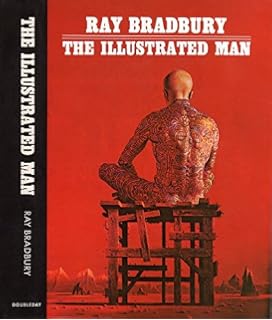
Image result for ray bradbury the illustrated man pdf

Feb 15, 2001 - The Illustrated ManRay Bradbury. Contents. • Prologue: The Illustrated Man. • The Veldt. • Kaleidoscope. • The Other Foot. • The Highway.


PDF Full Text: http://greenhumanities.edublogs.org/files/2012/09/Bradbury-Illustrated-Man-1wytglb.pdf. DIRECTIONS ... The Illustrated Man by Ray Bradbury.


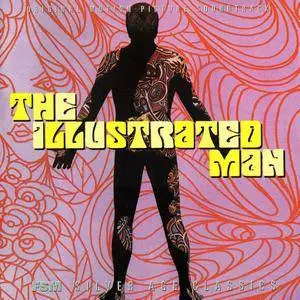
Jerry Goldsmith - The Illustrated Man: Original Motion Picture Soundtrack (1969) Limited Edition 2001

Jerry Goldsmith - The Illustrated Man: Original Motion Picture Soundtrack (1969) Limited Edition 2001


Posted By: Efgrapha
 

Jerry Goldsmith - The Illustrated Man: Original Motion Picture Soundtrack (1969)
EAC | FLAC (Image) + cue.+log ~ 222 Mb | Mp3, CBR320 kbps ~ 132 Mb | Scans included
Soundtrack, Score | Label: Film Score Monthly | # FSM Vol. 4 No. 14 | 00:42:01


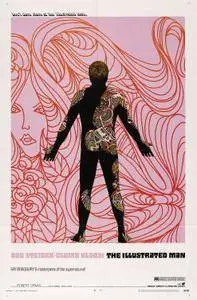
FSM returns to the treasures of the Warner Bros. archives (The Omega Man, The Towering Inferno) with a masterpiece by Jerry Goldsmith: The Illustrated Man. The film stars Rod Steiger and Claire Bloom in an adaptation of several short stories by Ray Bradbury, affording Goldsmith the crowning achievement of his work in the anthology format (CBS Radio Workshop, The Twilight Zone), as well as one of his most memorable and original works in the science fiction, fantasy and horror genres.

The Illustrated Man uses Bradbury's tale of a man (Steiger) covered in elaborate skin illustrations by a timeless witch (Bloom) as the thread amongst three other adaptations of his short stories: "The Veldt," in which rebellious children use a futuristic holodeck-device against their parents in a cold, sterile future; "The Long Rain," featuring astronauts trying to survive on a planet of perpetual rain; and "The Last Night of the World," in which concerned parents struggle whether or not to spare their children the agony of the world's destruction. Goldsmith's score links the stories with a single, immediately accessible folk-like theme acting as a springboard for some of the wildest avant garde writing of his career, filled with imaginative woodwind and string counterpoint. Goldsmith called his approach "lyrical serialism" and nowhere else in his career has he been able to display his melodic side hand-in-hand with his atonal, 20th century side.

Most of Goldsmith's score is found in the film's wrap-around sequences, but he creates unique variations of his main theme for the interior stories. "The Veldt" features the first all-electronic cues of his career: cold, atonal tunes that foreshadow the city music from Logan's Run. There is little music in "The Long Rain" but Goldsmith creates fascinating tape-delay effects for the sequence's finale. And in "The Last Night of the World," Goldsmith expands his main theme into a beautiful, Renaissance-flavored development for alto recorder. Everything in the score culminates in the lengthy action climax, featuring devilish clarinet solos as if played by Mephistopheles himself.

The orchestral portions of The Illustrated Man were previously pirated in mono on a German CD—a horrendous production even by bootleg standards. FSM's premiere release features the complete score in stereo and in correct sequence, including the electronic cues and, most importantly, the female vocalise for the main and end titles. The comprehensive liner notes by Jeff Bond and Lukas Kendall cover the film's history, Goldsmith's involvement and the intricate musical details. The Illustrated Man is an absolute gem.
In his evocative score to a largely forgotten 1969 anthology film (based on a collection of short stories by Ray Bradbury), Jerry Goldsmith weaves a simple, haunting melody through four permutations. Initially appearing in the "Main Title" as vocalese over orchestra, the melody wafts in as a sort of folk tune, utilized in a fairly traditional style for the film's framing segments. The three individual sections of the anthology then take the tune into more interesting variations, from the harsh electronics of the future in "The Veldt" (tracks seven through ten) to the quiet, woodwind-dominant feel of "The Last Night of the World" (tracks 14 and 15). The climactic "Frightened Willie" provides a terrific glimpse at Goldsmith's clever use of percussion and atonality to create a nightmarish soundscape. Throughout his career, Goldsmith was able to create scores that overshadowed the often workmanlike films they were composed to accompany. In the case of The Illustrated Man, even Ray Bradbury (according to the liner notes) felt that the music was better than the movie itself. The sound on this recording is superb, with the music (from 30-year-old masters) still feeling fresh and vital. This dynamic mix of Goldsmith's lyrical and serial compositional techniques is a solid addition to the composer's recorded legacy.
Neil Shurley, All Music Guide


Jerry Goldsmith - The Illustrated Man: Original Motion Picture Soundtrack (1969) Limited Edition 2001


Jerry Goldsmith at Allmusic
Jerry Goldsmith at Wiki

Film at IMDB
Film at Wiki

Tracklist:

01. Main Title (03:27)
02. The House (02:53)
03. The Illustrations (02:24)
04. Felicia (01:42)
05. The Rose (01:57)
06. The Lion (00:51)

"The Veldt"

07. 21st Century House (01:57)
08. Angry Child (01:50)
09. Quiet Evening (02:50)
10. Skin Illustrations (01:22)
11. The Rocket (01:19)

"The Long Rain"

12. The Rain (01:35)
13. The Sun Dome (01:25)

"The Last Night of the World"

14. Almost A Wife (06:06)
15. The Morning After (02:02)
16. The House Is Gone (03:45)
17. Frightened Willie (04:28)
Jerry Goldsmith - The Illustrated Man: Original Motion Picture Soundtrack (1969) Limited Edition 2001

CALL ME ISHMAEL


Image result for MOBY DICK CALL ME ISHMAEL ILLUSTRATION BOOK PDF Image result for MOBY DICK CALL ME ISHMAEL ILLUSTRATION BOOK PDF


Pouyan Rezapour

Sunday, January 26, 2020

Only the Shadow Knows: Andy Warhol's Art of Self-Invention and the Legacy of Man Ray
Reframing Andy Warhol: Constructing American Myths, Heroes, and Cultural Icons, 1998

As an American artist who transcended his ethnic immigrant roots, Man Ray blazed a trail that Andy Warhol would follow in the next generation. Obsessed with the public perception of his work and his legacy, Man Ray innovatively employed self-portraiture as key to the construction of his persona just as would Warhol decades later. In the great distance between their ethnic roots and the cosmopolitan figures they were to become, the range of self-portraits both artists created played a fundamental role in this transformation. Although Man Ray’s self-portraits are intricately related to the construction of modernism and Warhol’s work in the same vein relates to the process of its deconstruction, their self-portrayals are bound by the same obsessive desire to control and fabricate their public image. As the sons of Eastern European immigrants, neither ever fully shed the sense of himself as outsider, ultimately adopting a notion of marginalized observer as intrinsic to his artistic persona. Whether in the avant-garde Parisian circles between the World Wars or in the celebrity spotlight of the sixties Pop scene, both artists straddled the border between participants and observers in their lives and their art.

Page Numbers: 18-26
Publication Date: 1998
Publication Name: Reframing Andy Warhol: Constructing American Myths, Heroes, and Cultural Icons

Sunday, February 23, 2020

WE ARE ALL BAFFLED

College baffled as to how accused sex trafficker lived in daughter's dorm

Sarah Lawrence sex trafficking victims 'young enough to be his children': U.S. attorney
Peter D. Kramer and Swapna Venugopal Ramaswamy, The Journal News 


The indictment accusing Larry Ray of preying on Sarah Lawrence College students – in a web of manipulation, extortion, sex-trafficking and money-laundering – answered many questions but not THE question.

Sarah Lawrence alumni and even its president have tried to figure out how a dad could move into his daughter's on-campus apartment without the college knowing about it.

They pointed to the private, apartment-style setup of his daughter's Slonim Woods dorm where Ray arrived – straight from prison – in late September 2010 and stayed through the spring semester of 2011.

They said the decentralized layout of the woodsy Yonkers school and the accepting, find-your-way culture at Sarah Lawrence could have helped Ray live under the radar.

Feb. 12: Sarah Lawrence College sex and extortion – inside the federal case against ex-convict

Feb. 11: New York man accused of manipulating daughter's college friends charged with sex trafficking

Prosecutors said Ray's criminal enterprise began on campus in 2010 and spread to New York City and North Carolina over the decade that followed.

According to a New York magazine article last April – "The Stolen Kids of Sarah Lawrence" by Ezra Marcus and James D. Walsh – at least one administrator knew about Ray in the spring of 2011.

New York reported that Dean of Students Allen Green met twice with parents who were alarmed by Ray's presence on campus.

The magazine reported that in the spring of 2011, Green received an email from one of Ray's alleged victims, titled "The Truth," that expressed "fears and concerns about Larry Ray being a bad, dangerous, manipulative, and sexually deviant man."

Green's role in the Ray case was cited in a sexual discrimination and retaliation lawsuit last October against the college involving a former student who claimed the college failed to protect her from a fellow student she accused of rape.
© Peter Carr /The Journal News The Slonim Woods 
student housing at Sarah Lawrence College in Yonkers Feb. 14, 2020.

The plaintiff, listed as Jane Doe to protect her identity, lives in Dallas.

The suit says Green's actions, including brushing aside parents' concerns in two meetings and being aware of "The Truth" email, suggest a history of mishandling accusations that came to the college's attention. Green is among the defendants in that suit.

"The conduct alleged here is outrageous," William Sweeney, assistant director-in-charge of the FBI in New York, said in announcing the case against Ray, 60. "It makes you angry. If you're not angry, you don't have a soul."

Sweeney and U.S. Attorney Geoffrey Berman laid out a litany of charges against Ray, including:

Psychologically manipulating and physically abusing a half-dozen victims.

Bilking them and their families out of nearly $1 million. 

Holding a knife to the neck of one male victim and to the genitals of another.
Forcing three female victims to do unpaid labor.

Pushing a female victim into prostitution and splitting nearly $500,000 in proceeds with at least two associates.

Ray pleaded not guilty. Assistant Federal Defender Marne Lenox told U.S. District Judge Lewis Liman that her client might make a bail application at a hearing this month.

"Virtually everybody has got policies that prohibit the student from moving somebody into his or her dorm room, whether it's a relative or not," Dan King, president of the American Association of University Administrators, told The Associated Press.

Enforcing the policies by trying to keep track of everyone staying in every room is a challenge.

"It still doesn't mean somebody can't let them in a door," he said. "That's a perennial problem everywhere. It's unusual to have a family member, but it's not unusual to have a boyfriend or girlfriend."

Sarah Lawrence's 2019-20 student handbook is clear: Guests must register in the Westlands (administration) building.

"Students who have roommates must obtain the permission of the roommate(s) to have an overnight guest," the handbook policy reads. "Guest passes are valid for up to four consecutive days. A guest may not be registered more than twice in a 30-day period, and there must be at least seven days between each pass period."

It is not clear what policy was in place when Ray moved into Slonim Woods, but Mariah Smith, a 2013 Sarah Lawrence graduate who was a resident assistant, wrote on Twitter, "I know a lot about housing/the standards the campus held for visitors. While I was there, the max someone could technically stay was three days."
'Larry's Spell' 
© Stephanie Keith, Getty Images U.S. Attorney for the Southern District of New York Geoffrey Berman announces the indictment against Lawrence Ray aka "Lawrence Grecco" on Feb. 11.

How Ray was able to outstay his official welcome at Sarah Lawrence is captured in red type on the cover of New York magazine over a black-and-white closeup photo of Ray.

It reads, "Larry's Spell."

The story tells of "therapy sessions" Ray held with his daughter's roommates, of limo rides and "dinners at upscale steakhouses, always paid for with a wad of cash he kept in a backpack that he carried with him at all times."

He went from cooking and cleaning for them to sharing a bedroom before moving into an apartment on the Upper East Side of Manhattan for the winter break of 2010-11 where the scheme began to take shape, prosecutors said. He was back on campus in the spring and stayed till students went home for the summer, the article says.

Marcus, co-author of the New York article, was a student at Sarah Lawrence when Ray was on campus and went to school with the alleged victims, though he did not know Ray's daughter and never saw Ray on campus.

“It’s as mind-boggling to me as anyone else that this happened," Marcus said in an interview with The Journal News. “I think a lot of it just had to do with the fact that the people that he was talking to and manipulating were just very vulnerable. And his daughter was kind of his entree into their social group and that, I guessed, greased the wheels for him to just move in.”

Marcus interviewed dozens of sources in reporting the story with Walsh.

“I think there were people living there who felt uncomfortable with it," he said. "I mean, that's in our story, but as to how he was able to stay there for as long as he did, I honestly don't know.”

Ray saw an opening in Slonim Woods, Marcus said.

"They (students) had no reason to be distrustful of a friend’s parent," he said. "If you talk to any of them, you will see very quickly how normal and how smart they are. That’s why this story is so scary. He was able to find their vulnerabilities and exploit them."
A letter to Sarah Lawrence

Sarah Lawrence President Cristle Collins Judd responded to Ray's indictment and arrest the next day in a letter to the campus community.

The letter is the only official response from the college in the wake of the indictment. For more than a week, Brendan O'Callaghan, the college's director of public affairs, has not responded to repeated calls and emails seeking clarification and comment.

In the letter, Judd said she wrestled with how Ray was able to live on campus, “not only as a president, but as a parent" of three daughters of college age.

"How could the college not know this?, has been asked by many, including myself,” Judd wrote. “We are a small college, and while it is not unreasonable to expect that we will know when something is happening on our campus, in fact college officials at the time didn’t know.

"Perhaps because the apartment in question was a small townhouse with its own entrance, students in other housing would not necessarily have been aware of the presence (and have told us they were not) of this student’s father," said Judd, who took her post at the college in 2017.

Anxiety, depression and PTSD: The hidden epidemic of data breaches and cybercrimes

College admissions scandal tracker: Who's pleaded guilty, who's gone to prison and who's still fighting

Judd was adamant that the crimes did not happen at Sarah Lawrence.

"The acts charged in the indictment allegedly started in 2011 – after Ray had stayed with his daughter; they spanned nearly a decade and are not alleged to have taken place on the Sarah Lawrence campus," she wrote.

Judd wrote that the college is different than it was when Ray was on campus. She said one of the college's primary values, "a firm belief in the basic goodness of others," will continue but will need to be tempered "with a clear-eyed and critical assessment of the world around us."
Dads allowed on campus

The magazine reported (and Marcus reiterated) that suspicious parents met with Green in the spring semester of 2011. "The Truth" email was sent just before classes ended for the summer in 2011.

"They met with Allen Green, Sarah Lawrence’s dean of student life," the story says. "Green told them he’d received other complaints about Larry but his hands were tied; a father had a right to visit his daughter on campus, he explained. A second meeting ended similarly."

Repeated efforts to reach Green were unsuccessful. The college did not respond to calls and emails to determine whether Green documented the claims made by the parents and in "The Truth" email.

Green was dean of studies and student life and chief diversity officer from 1999 to 2015, when he was named dean of equity and inclusion and Title IX coordinator, according to his LinkedIn profile. He retired at 65 in May 2019.
'There's no security guard'

The culture of Sarah Lawrence could have abetted Ray, said Kristin Maffei, who graduated from Sarah Lawrence in 2008. She grew up in Mahopac and lived in Slonim Woods in her last year there, three years before Ray moved on campus.

"I keep hearing, 'How could the school not have known about this?' I would just say, having lived in those dorms, it's not a normal dorm," Maffei said. "There's no security guard. They're sort of set up like little houses, almost."

The two-story "cooperative living" units of Slonim Woods have four bedrooms downstairs and four upstairs, with two bathrooms, a large common area and a kitchenette, according to the college's website.

"Obviously, I knew what was going on in mine, and I like to think that if somebody's parent had moved in, I definitely would have said something – or you hope that you would say something," Maffei said. "But I can say I had no idea what was going on in any of the other ones around us."

Maffei, assistant director of marketing and communication at the Tuck School of Business at Dartmouth College, said there's a particular mindset at Sarah Lawrence – where one of the slogans is "We’re different, so are you."

"I do think it has something to do with people are happy to let you have your focus, that there's space there to be who you are," Maffei said. "I wonder if that led to things getting missed that absolutely shouldn't have been missed."

Contributing: The Associated Press

Follow Peter Kramer and Swapna Venugopal on Twitter: @peterkramer and @SwapnaVenugopal