It’s possible that I shall make an ass of myself. But in that case one can always get out of it with a little dialectic. I have, of course, so worded my proposition as to be right either way (K.Marx, Letter to F.Engels on the Indian Mutiny)
File-notification systems leave Windows, Linux, Android and macOS vulnerable
A research team at Graz University of Technology has demonstrated that the file notification systems of various operating systems can be exploited to spy on users' activities and forge password prompts.
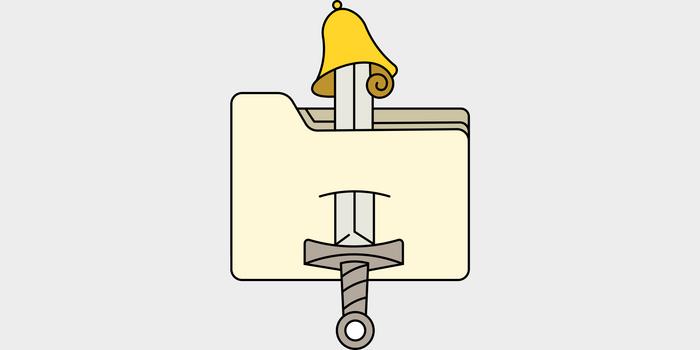
Credit: Brinda Neela; CC BY 4.0; https://inoti.fyi/
Researchers at the Institute of Information Security at Graz University of Technology (TU Graz) have uncovered security risks in the file notification systems of the widely used operating systems Windows, Linux, Android and macOS. Through so-called side-channel attacks, system-wide changes to files, keystrokes and visited websites can be tracked, and password prompt windows can be spoofed to intercept password entries. The researchers summarised their findings in the paper “File Notification Attacks: Templating and Exploiting Side-Channel Leakage from the File-Notification Systems on Linux, Windows, and macOS, which they have published on a dedicated website: https://inoti.fyi
A workaround via readable folders
File notification systems monitor whether files are created, deleted, opened, closed or modified, and automatically deliver system notifications so that applications or the system can react to the change. The research team discovered that apps or other users on the same system can monitor these notifications, even without administrator rights. This makes it possible to track what other users on the system are doing. Read access to specific folders is all that is required to read all files stored in a folder, as well as the subfolders and their contents – even if they do not actually permit read access. One thing that applies to all systems: file contents cannot be read; only file names and changes can be detected. However, this is sufficient to monitor user, system and application behaviour.
Browsing history can be tracked
The research team uses case studies to illustrate what such attacks could actually look like. To bypass the read-access restrictions on folders and files in Windows, the researchers simply tapped into the file notification system of the parent directory that was not read-protected. Using notifications of the main directory C:\, the researchers discovered that it was possible to track all file system events in all subfolders, including filenames. As browsers such as Firefox create a separate folder for every visited website that requires local storage, with the folder name containing the name of the website, attackers can easily trace where users have been on the internet in real time.
Intercepting keystrokes and passwords
On Linux, the researchers used the “inotify” file notification system to track keystrokes within a read-protected file. Although Linux initially prevented direct monitoring on the file, it became possible as it was located in a readable folder, which allowed to spy on everything in it via the notification system. This made the keystrokes in the read-protected file visible. While the team could not see which keys had been pressed, inter-keystroke timing attacks have been around for more than two decades. Thanks to knowledge accumulated over the years, the time elapsing between individual keystrokes now reveals plenty of information.
On KDE Plasma, a popular desktop environment on Linux, the security researchers managed to overlay fake password entry windows on top of the genuine ones as soon as an authentication prompt was called up, even when the secure Wayland display server protocol was in use. To achieve this, they monitored the executable file of the “polkit” programming interface, which carries out authorisation checks. As soon as they detected an access attempt that opened a password window, the test attackers superimposed a fake password window over it so that users would enter their details there and reveal their passwords.
Data exchange via WhatsApp
On Android, the “FUSE” system is actually intended to prevent apps from accessing each other's folders. Not even the folders’ contents should be visible. However, an app without special permissions was still able to spy on activity within another app’s folder by using file notifications as a workaround. The team was thus able to observe whether images, videos and files were arriving in, being sent from or deleted from WhatsApp's folders. The researchers emphasize that they could not see the contents of these files, but they could read the file names, which might reveal something about the file’s contents and the behaviour of the user using the Android phone.
While macOS exposes the least amount of information via globally readable files, the team found that user, application, and system behaviour can still be tracked, pointing out that the macOS “FSEvents” application programming interface (API) still yields meaningful insight into user activity.
As is customary in such cases, the research team alerted the relevant teams at Linux, KDE, Android, Microsoft and Apple to the potential vulnerabilities at an early stage so they could respond before the paper was published. In collaboration with the Linux security team, patches have already been rolled out to address some of the vulnerabilities.
Publication: File Notification Attacks: Templating and Exploiting Side-Channel Leakage from the File-Notification Systems on Linux, Windows, and macOS Authors: Sudheendra Raghav Neela, Xufan Zhao, Jeanette Angelika Wultsch, Hannes Weissteiner, Florian Draschbacher, Stefan Gast and Daniel Gruss Available at: https://inoti.fyi
Method of Research
Data/statistical analysis
Subject of Research
Not applicable
Article Title
File Notification Attacks: Templating and Exploiting Side-Channel Leakage from the File-Notification Systems on Linux, Windows, and macOS
Article Publication Date
24-Sep-2026
AI chatbots give us a narrow slice of knowledge: Researchers warn of ‘knowledge collapse’
“Let me just ask the chatbot.” For many of us, this has become an everyday phrase. Where we used to turn to Google to find information, AI chatbots have become a common way of getting answers to everything from what to make for dinner and how to word that difficult email to the boss, to what it actually means when interest rates rise.
But the large language models underpinning AI chatbots give us a significantly narrower range of information than a conventional web search. This is the finding of a new study led by researchers at the Department of Computer Science (DIKU) at the University of Copenhagen.
“Every language model we tested provides users with more uniform information than a simple Google search across all the topics we looked at. In other words, people are to a large extent exposed to the same information over and over again. So AI chatbots are not just changing how we find knowledge, but also which knowledge we have access to,” says first author Dustin Wright, a former postdoctoral researcher at DIKU who is now an assistant professor at Aalborg University.
At least 18% less diverse than Google
The researchers tested 27 different large language models on 155 topics. For each topic, they used 200 different prompt formulations based on questions from real users. This generated a dataset containing around 70 million individual claims produced by the models.
The results show that even the language model producing the most diverse answers – OpenAI’s GPT-5 – provides at least 18.7 per cent less varied information than Google. The topics tested by the researchers ranged from nuclear weapons, marriage, pornography, racism and genocide to more country-specific topics such as Marine Le Pen, the Falklands War and K-pop.
According to the researchers, the fact that people are increasingly using AI models as their primary gateway to information could have significant consequences:
“We risk exposing people to fewer perspectives and a narrower range of knowledge. This could create a vicious cycle in which the most popular content becomes even more dominant, while other content is increasingly overlooked,” says Professor at DIKU and senior author Isabelle Augenstein, adding:
“It’s similar to globalisation. Today, you can buy the same products and find the same coffee chains almost everywhere in the world. That has many advantages, but it has also reduced diversity.”
Why is diversity so low?
According to the researchers, the low level of diversity in language models is partly a result of how the models basically work. They compress the vast amount of text they are trained on and learn the patterns that occur most frequently. In the process, information that deviates from the most common patterns is filtered out.
The effect could be amplified if language models are increasingly trained on text produced by other AI models – something the researchers expect to happen. In that case, models would learn from their own outputs, which are already less diverse than the human-written texts on which they were originally trained.
If this process is repeated over several generations of models, the range of information could gradually become narrower. This is what the researchers refer to as ‘knowledge collapse’.
“It’s a worrying thought. However, we can see that the more recent models produce slightly more diverse answers than older models, so knowledge collapse is not happening yet. But the mechanism that could trigger it in the longer term is already there. So it is something we should be aware of,” says Isabelle Augenstein.
Seek out different sources
The researchers therefore also hope that people will use AI thoughtfully:
“AI chatbot summaries can of course be useful – that is why so many people use them. But it is still important to seek out different sources in order to understand the nuances and get a broader picture – especially for the younger generation growing up with AI. We must not become so dependent on the technology that we stop understanding and thinking for ourselves,” says Isabelle Augenstein.
The AI industry should also pay attention to the issue, the researchers argue:
“We hope AI developers will build language models in a way that preserves the breadth of knowledge available to us. We have developed a method that they can use to measure diversity in models, which could help ensure that future language models do not become less diverse,” says Dustin Wright.
[FACT BOX] ABOUT THE STUDY
The researchers analysed 27 large language models from OpenAI, Meta, Google and Alibaba.
The models were tested on 155 topics relating to 12 different countries.
The analysis covered around 1.7 million AI-generated answers and approximately 70 million individual claims.
The results show, among other things, that smaller AI models generate more diverse content than larger models, and that newer models are more diverse than older models. Overall, however, all the models had significantly lower diversity than traditional web search engines.
The research was conducted by researchers from the University of Copenhagen, Aalborg University, Stanford University, the University of Colorado Boulder and the University of Texas at Austin.
The study has been accepted for the international research conference EMNLP 2026, which takes place in October 2026. Read the research paper on arXiv.
[FACT BOX] HOW DOES AN AI CHATBOT WORK?
An AI chatbot is a service such as ChatGPT, Gemini or Claude that you can communicate with by typing or speaking and that provides answers in return. The chatbot uses a so-called large language model to understand questions and formulate responses.
A large language model is the underlying AI model that powers the chatbot. It is trained on very large amounts of text and learns patterns in how words and sentences relate to one another.
When you type a question into an AI chatbot, the chatbot sends it to the underlying large language model, which generates a response by predicting which words are most likely to fit your question.
Ageing progressively affects the functioning of our body and, among other things, deteriorates the ability of the haematopoietic system— the set of organs and tissues responsible for producing blood cells— to maintain adequate blood cell production. Understanding and measuring this process is especially relevant to study how blood stem cells age and to identify strategies to preserve or recover their function.
The study, led by Dr Maria Carolina Florian, a researcher at the program of Regenerative Medicine at Bellvitge Biomedical Research Institute (IDIBELL) and ICREA Research Professor, and Dr Paula Petrone, a researcher at the Barcelona Supercomputing Center – Centro Nacional de Supercomputación (BSC-CNS), and the Barcelona Institute for Global Health (ISGlobal), a centre supported by the "la Caixa" Foundation, presents ChromAgeNet, an artificial intelligence-based tool that identifies ageing-associated patterns in microscopy images of haematopoietic stem cells by analysing the 3D organisation of chromatin, the material made up mainly of DNA and proteins found in the cell nucleus that packages DNA and regulates which genes are active, ultimately determining cell identity and function. The work has been a central part of the doctoral thesis of Pablo Iañez, researcher at ISGlobal, and brings together expertise in stem cell biology, ageing, image analysis and artificial intelligence. The results are published in Aging Cell, an international journal of reference in the field of aging research.
To develop the model, the researchers analyzed three-dimensional images of mouse hematopoietic stem cell nuclei, stained with DAPI, a simple and widely used technique for visualizing DNA. Using a convolutional neural network —a type of artificial intelligence model designed to analyze images—, ChromAgeNet learned to distinguish young cells from aged cells.
Based on the appearance of the nucleus, the model demonstrated a 77% probability of correctly distinguishing cells into two groups, outperforming even a machine learning model based on chromatin features previously defined by the researchers.
Detect what the eye does not see
One of the relevant aspects of the work is that the differences associated with aging are not necessarily visible to the naked eye in microscopic images. Stem cell aging is a heterogeneous process and changes in the architecture of the nucleus can be very subtle. ChromAgeNet allows, however, to identify combinations of spatial chromatin features that contain information about the aging state of cells.
In addition, the researchers analyzed the performance of the model to determine which specific features of the images are the most helpful in distinguishing young cells from aging cells. This analysis identified, among other factors, chromatin entropy, heterochromatin located at the periphery of the nucleus, and certain chromatin condensates as predictive features of age-associated state.
Knowing which elements of the DNA organization the model uses to make its predictions allows us to go beyond a simple classification between young and aged cells and provides information on the characteristics of the nuclear architecture associated with aging. This approach can complement other age biomarkers, such as the so-called epigenetic clocks, which estimate biological age based on certain chemical changes in DNA, including those related to methylation.
A new way to look for rejuvenation strategies
The team also explored the potential of ChromAgeNet as a screening tool for treatments capable of modifying age-associated characteristics. As a proof of concept, the model was applied to aged hematopoietic stem cells treated with different epigenetic drugs to assess whether these treatments produced changes in chromatin organisation compatible with a younger state.
These results do not demonstrate that the treatments have functionally rejuvenated cells, but they do show the potential of ChromAgeNet as a tool to detect age-associated changes in response to different interventions and explore potential rejuvenation strategies.
The use of DAPI, a low-cost stain that is easy to incorporate into microscopy protocols, together with the small number of parameters in the model, facilitates its possible application in high-throughput microscopy workflows, systems that allow large quantities of samples to be analyzed. This could contribute in the future to study a large number of compounds and accelerate the identification of candidates for cell rejuvenation strategies.
As part of the work, the researchers have also made available to the scientific community a dataset of three-dimensional images of hematopoietic stem cells, together with ChromAgeNet. This resource can facilitate the development and validation of new computational tools to study the aging of these cells, an area for which there are currently few publicly available imaging datasets.
Overall, the study demonstrates that the three-dimensional organization of DNA contains quantifiable information about the aging of blood stem cells and that artificial intelligence can help extract this information from microscopic images. ChromAgeNet thus provides a new tool to study cellular aging and explore possible strategies to preserve or recover hematopoietic stem cell functions in a faster and more scalable way.
Aged and young stem cells distinguished thanks to chromatin architecture analysis by ChromAgeNet
Credit
Dr. Eva Mejía / IDIBELL
Journal
Aging Cell
Method of Research
Experimental study
Subject of Research
Cells
Article Title
Deep learning predicts hematopoietic stem cell aging from 3D chromatin images
Article Publication Date
28-Sep-2026
Sunday, August 30, 2026
The United States Versus Canada (Again): Truth, Justice, and Whatever
Photograph Soruce: The White House – Public Domain
Relations between the United States and Canada continue to sour over the latest failed trade talks, with the imposition of 50% US tariffs on $20 billion of Canadian goods and the announced reciprocal “dollar-for-dollar” Canadian tariffs on US goods, disrupting the highly interconnected economies on both sides of the border. The US is Canada’s number-one trade partner, while Canada is the number-one trade partner for 26 states and a top-three partner of 19 more. That’s a whole lot of shaking going on, but the wider issue is the ever-increasing dismantling of government in the everyday lives of citizens and consumers, going on over four decades, and now hot-wired by instant messaging.
Many Americans see the US-Canadian relationship in the same gauche terms as their 47th president, who regularly belittles the standard pleasantries of life, calling Canada “the 51st state” and its prime minister “governor.” Funny to Americans, offensive to Canadians, but more importantly detrimental to good relations between two bordering countries, not least in economic terms. Tourist travel to the United States is down over 25% since the first round of US tariffs on April 2, 2025, American liquor is no longer sold in 8 of 10 Canadian provinces, and almost half of Canadians now think the US is a greater threat to world peace than Russia.
Is the ongoing gamesmanship another ploy to destroy the auto industry in Ontario to increase car manufacturing in Michigan, grab more Canadian market share for American milk farmers, or keep Canadian lawmakers from restricting US tech companies from Canadian regulations (e.g., a 5% streaming levy)? Likely all of the above, and yet the cost of living grows even higher in the largest economy in the world. Add in thousands of job losses and rising uncertainty if the US retaliates with more tariffs and Canada counters with restricted potash, mineral, and energy sales. What’s next, a state of emergency or more insider stock deals to arbitrage every economic measure whatever the social costs?
When asked to respond to the US president’s comment that “Canada needs the US; the US doesn’t need Canada,” former Canadian Minister of International Trade Mary Ng simply replied, “Well, that’s not true.” But lies are what build consensus among the misinformed, now supercharged in our virtual, internet-run world.
Canadian philosopher Marshall McLuhan saw the effect of speed on the news cycle in his 1962 book The Gutenberg Galaxy, explaining that our senses are becoming externalized in a new “hot media” with a natural narrowing of identity towards tribalism. McLuhan’s suggested “global village” continues to reorient modern economies as consumers follow the electric bread crumbs to the cheapest online giant. Economics is all a game now with no “buyer beware” instructions to counter the keyboard bandits. Everyone has a Pandora’s Box in their pocket.
Comparing the loss of freedoms in Spain during the 1939-1975 Franco dictatorship to a changing ethos in a growing devolved global community, Spanish historian Julián Casanova warns about the dangers of rising fascism, the increased violence around the world, and an unaccountable technological oligarchy running our lives, stating that “Goebbels needed to occupy countries to introduce propaganda. Elon Musk needs three minutes.” Truth, justice and the “American Way” is being eroded day by day, dollar by dollar, as Google, Facebook, X, TikTok, et al. shovel more hours of our time and disposable income into their vast corporate coffers.
In The Affluent Society, Canadian economist and one-time US ambassador to India in the Kennedy administration, John Kenneth Galbraith wrote about the rise of the corporation and growing top-down economic control, stating “Inequality resulting from monopoly might be the warning of fatal flaws in the system itself.” That was before the 1989 breakdown of international borders with the start of the World Wide Web. In a supercharged clickable marketplace (Amazon rakes in about $80 millionper hour), corporations are becoming even less accountable for their profit-hungry actions, aided by reduced governance.
Donald Trump is only too happy to keep the money rolling to US corporations and his billionaire friends/donors, via tax cuts, lax governance, and little or no regulation. In the past forty years, billionaire wealth has grown to $18 trillion from $1 trillion in 1987, while 12 people (all men) own more than 50% of the world’s total wealth. Galbraith also noted that in Adam Smith’s liberal economic society, “regulation was by competition and the market and not by the state.” TrumpCo is just attempting to return the state to a pre-society, anti New Deal era, “yea, even unto the Middle Ages.” No more mom, no more pop in our modern oligarchic state that gathers money like raindrops.
Today’s dismantling has been in plain sight since Ronald Reagan’s smug analysis of the problems of our age, “The nine most terrifying words in the English language are: I’m from the Government, and I’m here to help.” Trump and Friends are furthering the dismantling, tearing up long-standing economic, environmental, and electoral regulations, not surprising given that eight of Trump’s 23 cabinet members are billionaires and 57 Trump officials are worth over $100 million. Government of the rich, by the rich, for the rich.
Essentially, government is no longer in the Good Samaritan business, while handouts are for losers. “Peace, love and understanding” is being replaced by “What’s in it for me?” in a country where two-thirds of the population identify as Christian. The 1967 Summer of Love Boomer generation is now in charge, dispensing the good news, administrative governance, and abundant spoils as they see fit. Just don’t expect any sitdowns.
Canada is on the frontlines of the changing global order, a flashpoint for an attempted American oligarchic takeover that sees allies as competitors, ratcheting up distrust everywhere in a refashioned muscular nationalism. The two immigrant-founded countries are similar in culture, yet followed separate political models since their respective schisms from the British Empire: revolutionary republic in the original 13 colonies, relatively peaceful confederation in the original four provinces of Ontario, Quebec, Nova Scotia, and New Brunswick. One could say socialism for the rich (i.e., corporate Keynesianism) in the US versus socialism for all (e.g., universal health care) in Canada.
Some Americans will say the US has been taken advantage of since the end of World War II by NATO freeloaders, ungrateful trading partners, and rising foreign markets, despite the world order being largely created by and designed to serve US interests. Or that an unfettered US is needed to counter the growth of China, now the world’s second-largest economy, out-performing rusted American manufacturing on new energy, electric vehicles, and storage batteries, all critical sectors in the rising green economy.
But discarding capitalist oversight and governmental checks and balances to counter China’s anti-democratic practices and rigid command economy is a mistake that sees human activity as an economic equation and life as a transaction between game players. Exactly what the tech giants want to monetize even more of our lives. Soon everything will be just another bet.
It is ironic that the United States is home to the world’s first billionaire, Scottish immigrant Andrew Carnegie, who made a fortune pioneering the vertically integrated business model in the US steel industry, but also created the world’s first public library to help share knowledge and foster understanding, a worldwide success story. Sadly, the US is also home to the world’s first trillionaire, South African/Canadian immigrant Elon Musk, who helped pioneer the modern electric vehicle, but also reformed an electronic instant messaging system into an unverifiable mess of misinformation for selfish political gain.
At the same time as we squabble over who gets to divide the world’s material wealth, we are all receiving a failing green grade as pollution, global warming, and inequality increases. As Donald Trump fights over oil assets five kilometres under his feet, our thin strip of air is killing us all. Canada isn’t doing any better than the US on global warming, but is on the frontline of the expanding rogue American petrostate. The whole world must stand up to economic blackmail, especially as AI, cryptocurrencies, and digital surveillance impact more of our lives.
One wishes the negotiating efforts were spent on solving the real problems of our world. But then that’s not the goal of this version of American truth and justice. Hopefully, we can still say “no,” or in digital parlance when asked for one’s web compliance, “I do not agree” and “Reject all.”



.jpg)
