It’s possible that I shall make an ass of myself. But in that case one can always get out of it with a little dialectic. I have, of course, so worded my proposition as to be right either way (K.Marx, Letter to F.Engels on the Indian Mutiny)
“They will try to tell us that democracy, international law, human rights, and human dignity exist and are alive and well; that the genocide against the Palestinian people was merely an aberration, an exception within the global democratic oasis . . .
– Mexican journalist Sasi Alejandre
“Latin America has experienced the same tactics of state terrorism that Palestine faces at the hands of regimes armed, trained and advised by Israel.”
–Jack McGrath, Washington Report On Middle East Affairs
There might never even have been an Israel without arms shipments from the Somoza dictatorship in Nicaragua to the Zionist paramilitary Haganah in 1939 during the British Mandate over Palestine. Nine years after that helping hand was extended, the Haganah, with assistance from the Irgun and Lehi, erased Palestine from the map, building the state of Israel literally on top of where Palestine had been while recruiting Nazis from Europe to help the fledgling Jewish state build up enough weapons. Not long after that, Israel took charge of assisting bloody repression in Latin America.
Israel actually trained the army of Castillo Armas that overthrew Guatemalan democracy in 1954, later shoring up repression across the entire Southern Cone by providing the same training and arms to the military dictatorships of Chile, Argentina, and Paraguay. It also financed Colombian paramilitaries and developed the tactics and weapons used in Mexico’s “Dirty War,” which included forced disappearances, torture, and extrajudicial killings, carried out against student protesters, political dissidents and campesinos.
The Central America connection was established early on. Israel started sending automatic weapons, tanks, and military planes to the Somoza dynasty in Nicaragua in the 1950s, later increasing its support when the dictatorship faced an ultimately successful popular revolution in the 1970s. Israel was Nicaragua’s sole source of arms after Jimmy Carter belatedly cut off military aid to Somoza in 1978, who killed tens of thousands of people in his last two years in power, ultimately using Israeli planes to bomb Managua in a final paroxysm of futile violence. After the Sandinista revolution took power, Israel acted as a conduit to arm and train cocaine-trafficking mercenaries (the Contras) attacking schools, farming cooperatives, and medical clinics throughout Nicaragua in an attempt to destroy the popular achievements of the revolution.
By far the bloodiest Israeli policy in the region was directed against Guatemala from the 1970s to the 1990s, when indigenous Mayans rose up against European-descended oligarchs defended by a brutal Mestizo Army. Tel Aviv’s arms, intelligence, advisors, surveillance technology, and torture tactics helped kill two hundred thousand people and displace a million more in what the Catholic Church and Guatemalan courts determined to be genocide. Guatemalan army officers credited Israel with turning the tide against the popular uprising via mass extermination in the countryside and counter-insurgency techniques that wiped out guerrilla networks in the cities.
Such repression was by then a well-established Israeli policy in the region. In 1972, Tel Aviv had put itself at the service of the Salvadorean army, secret police, and death squads, and the following year El Salvador became the first country to receive a major shipment of Israeli military aircraft. From 1975 to 1979, the last years before El Salvador erupted in civil war, Israel provided 83% of Salvadorean military imports, and agreements between the two states continued throughout the war years, including deals for napalm, armaments, and military technology and training.
The scorched earth campaigns that Israel repeatedly relied on were deliberately focused on destroying Central America’s resources and crops in order to deprive popular guerrilla movements of the means to sustain themselves, thus forcing displaced populations into small, controlled spaces, which were easily subjected to targeted repression.
Civilian slaughters were a key feature of these efforts, and they occurred with mind-numbing regularity throughout the Cold War, the more famous among them being the Rio Sumpul massacre, where hundreds of civilians were mutilated and killed trapped between the Salvadorean and Honduran armies, Operation Scorched Earth (El Salvador), during which bodies were partially dissolved in acid and then dumped in a river, and the El Mozote massacre of 1981, when nearly one thousand Salvadoreans were variously shot, raped, beheaded, and burned alive in Church. There were also assassinations of priests and liberation theologians like Archbishop Oscar Romero and Ignacio Ellacuria, the former ordered by Israel-trained Roberto D’Aubuisson and the latter one of six Jesuit priests murdered by the U.S.-trained Atlacatl Battalion along with their housekeeper in 1989.
These were not episodes of merely gratuitous violence, but rational repression that successfully crushed the threat of popular democracy posed by labor organizers, peasant associations, cooperatives, unions, and church-based Bible study groups “infected” by liberation theology’s preferential option for the poor, along with others working to improve the lives of ordinary people. A negotiated end to the Salvadorean civil war was finally signed in 1992, but the underlying class conflict remained unresolved, with land and other crucial resources concentrated in the hands of a microscopic minority, which is what produced the civil war in the first place.
Almost three decades of severe gang violence then ensued, after which Nayib Bukele was elected president promising to solve the nation’s crime problem. Descended from Christian Palestinians on his father’s side, Bukele believes the problem in Gaza is Hamas, not Israel, and is part of a group that makes up one percent of the Salvadorean population. Many members of this group fought on revolutionary fronts during the civil war, such as Schafik Handal, one of the general commanders of the FMLN guerrilla forces. In fact, Bukele’s own family collaborated with the FMLN after it became a political party, managing its communications for years through the family’s marketing firms, opening the way for Mauricio Funes to win the presidency in 2009. The FMLN later recruited Nayib for a political career, and he became mayor of San Salvador in 2012, and president seven years later.
Having crafted an anti-Marxist, anti-establishment, “cool” dictator image for himself, Bukele today upholds the legacy of the military dictatorship the FMLN fought against, relying on Washington’s counsel and Israel’s weapons. “To achieve good results in the war against gangs, it has been necessary to equip our institution. Today we are handing over 800 Arad rifles to Armed Forces units,” said Bukele’s Defense Minister René Merino in 2022, during a $1.2 million re-armament effort involving Israeli equipment. As a direct result of Bukele’s policies, one out of forty Salvadorean adults is now in jail, the highest incarceration rate in the world, many held at CECOT, a massively over-crowded mega-prison notorious for beating and starving prisoners who have have been granted no rights, no trial, and no visitors.
CECOT actually fits the definition of a concentration camp more than a jail, as prisoners are locked up there not for individual offenses they have been proven to have committed, but because they allegedly fit certain characteristics associated with gang membership. They are dissidents, the abysmally poor, and now even Venezuelans abducted from U.S. soil and trafficked to El Salvador.
In this incarceration model El Salvador receives $20,000 for each prisoner, a highly lucrative arrangement with prospects for limitless growth, since the ultimate target is not crime per se, but anyone who fails to comply with the aims and practices of the Bukele dictatorship. According to internal Salvadorean intelligence documents, 36% of those Bukele has jailed have no prior criminal history. Data from the National Civil Police originally claimed there were 58,270 gang members outstanding, but as of the end of March 2026, 91,000 gang arrests had been made. Meanwhile, Bukele’s “state of exception” suspending constitutional guarantees continues into its fifth year on the pretext of needing to arrest even more.
The lawless Bukele model has won the admiration of aspiring dictators throughout Latin America, which finds itself in the midst of an accelerating campaign to replace constitutional crime fighting with institutionalized state violence. In Chile, the Pinochet-aligned Jose Antonio Kast ran for president on a promise to suspend constitutional guarantees. In Ecuador, Daniel Noboa is replicating the state of permanent emergency and moving ahead with plans to construct Bukele-inspired mega-prisons. In Costa Rica and Paraguay, preventive detention and harsh criminal penalties are increasingly entrenched. In Argentina, Javier Milei openly champions fascist Israel while his “zero tolerance” crime policy includes ritual public display of prisoners in degrading conditions. Niceties like the presumption of innocence are reserved for white collar cases.
At the other end of the spectrum are vast Latin American protest movements that know from bitter experience that some of the fiercest partisans of “never again” are actually committed to a policy of “over and over again” at their expense, having perfected extermination in Palestine and then exported it throughout Latin America.
It can’t be long before Bukele’s dungeons include dissidents trafficked from the U.S. for acting on the conviction that “we are all Palestinians.”
Sources.
Salvadorean Defense Minister Rene Merino quoted by Sasi Alejandre, “Palestine and The Global State of Exception,” (Spanish), https://www.naiz.eus/es
“The Dangerous Expansion of Bukele-ism,” La Jornada (Spanish), March 29, 2026
Isabel Rikkers and Noeli Brigden, “Christian Zionism in Bukele’s El Salvador,” NACLA, October 9, 2024
“Israel’s Role in the Guatemalan Genocide,” Middle East Monitor, October 5, 2015
“Israel’s Bloodstained Legacy in Latin America,” Jack McGrath, Washington Report On Middle East Affairs, March 24, 2025
“Israel’s Latin American Trail of Terror,” Al Jazeera, June 5, 2003
On Israel’s recruitment of Nazis to build up its base of weapons, see Trita Parsi interview on Breaking Points, “Israel’s Puppet Plan: Recruited ‘Terrorist’ To Run Iran,” July 14, 2026
Sanders Says US Must End Support for UAE—’One of Trump’s Closest Allies’—as It Fuels Genocide in Sudan
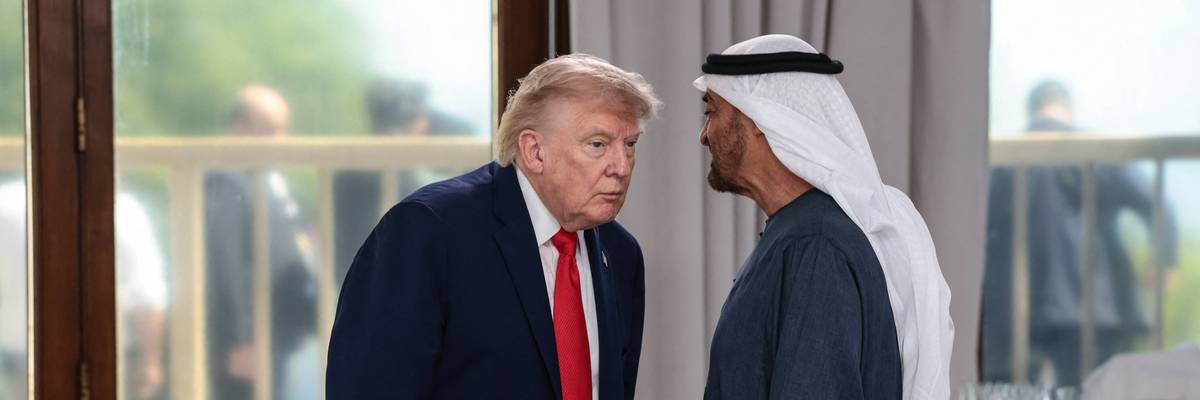
“Trump’s good friend and staunch US ally, the United Arab Emirates dictatorship, run by one of the wealthiest families in the world—has financed and enabled this genocide for years.” US President Donald Trump greets United Arab Emirates (UAE) President Sheikh Mohamed bin Zayed Al-Nahyan during a work lunch as part of the G7 summit, in Evian, eastern France, on June 16, 2026. (Photo by Evelyn Hockstein/Pool/AFP via Getty Images)
As the world fears another massacre by the Rapid Support Forces in Sudan, Sen. Bernie Sanders emphasized that the rebel group’s string of atrocities is being funded by a nation with deep financial ties to President Donald Trump—the United Arab Emirates—and urged an end to US military support.
“In the midst of the wars in Gaza and Iran, we cannot forget the atrocities in Sudan,” Sanders (I-Vt.) said Monday in a post to social media. “As many as 150,000 killed since 2023, 14 million driven from their homes, 30 million need humanitarian aid.”
“All of this is fueled by the UAE—one of Trump’s closest allies,” the senator continued. “We cannot be complicit in genocide.”
The warning came as RSF encircles El Obeid, a city of half a million people, including hundreds of thousands who have been displaced.
For weeks, the RSF has launched drone attacks that have killed dozens of civilians and damaged critical infrastructure including water facilities, markets, and hospitals. Food, water, and fuel supplies have been disrupted. Some civilians have begun to flee as many entry points to the city have been cut off.
The United Nations Security Council warned last month that there was an “imminent risk of mass atrocities” and demanded that the RSF halt its assault.
Human Rights Chief Volker Türk stressed that the siege tactics followed a familiar “playbook” to the RSF’s October attack on El-Fasher in which at least 6,000 people were killed in just three days as part of a campaign that UN human rights experts said bore the “hallmarks of genocide,” including ethnically targeted killings and sexual violence.
While the US State Department and other governments have similarly warned that the RSF could be on the verge of committing atrocities, Nicholas Kristof argued in a New York Times column this weekend that “officials won’t say openly... that the power behind the RSF is the United Arab Emirates.”
Despite denials from Abu Dhabi, the UAE has been extensively documented as supporting the RSF through weapons shipments routed via Chad, financing the militia, and recruiting, training, and transporting mercenaries to fight alongside the group.
Kristof pointed out that the UAE “has particularly close financial ties to the Trump family,” most notably the $2 billion investment by an Emirati firm last year that benefited his family’s cryptocurrency venture, World Liberty Financial (WLF), which has been a major source for the unprecedented growth of the president’s wealth during his second term.
Recent financial disclosures reported this month by the Wall Street Journal show that Trump received $263 million from selling half his stake in WLF to a fund backed by Sheikh Tahnoon bin Zayed Al Nahyan, one of the UAE’s most powerful royals and the brother of its president.
During his second term, Trump has rewarded the UAE with more than a billion dollars in weapons sales that were fast-tracked to get around holds imposed by Congress, and made an agreement giving the Emirates unprecedented access to hundreds of thousands of advanced computer chips per year.“Trump’s good friend and staunch US ally, the United Arab Emirates dictatorship, run by one of the wealthiest families in the world—has financed and enabled this genocide for years,” Sanders said in a statement last week. "And why is this happening? Billions of dollars of looted gold from Sudan is flowing straight into the pockets of Emirati oligarchs—making a multibillionaire family even richer."
He added that “Congress must demand that the UAE cease its military support for the RSF and work with the international community and the Sudanese people to bring an end to this horrific conflict and provide the humanitarian aid that is desperately needed there.”
As warnings about a brutal new RSF offensive have piled up, there has been a push in Congress led by Sen. Chris Van Hollen (D-Md.) and Rep. Sara Jacobs (D-Calif.) for restrictions on the United States’ ability to provide weapons to the UAE.
Last month, with help from some Democrats, the GOP-controlled Senate Foreign Relations Committee blocked two amendments aimed at halting US weapons shipments to the UAE unless it stops supporting the RSF.
The committee has passed a weaker bill that allows the president to impose optional sanctions on individuals who supply weapons to Sudan’s armed factions, which now awaits a full Senate vote. But the committee rejected Van Hollen’s amendment prohibiting arms sales to the UAE.
Sunday, July 12, 2026
'Greed' and loopholes: How cricket's $55 million development fund gets gamed
INVESTIGATION
The International Cricket Council distributes tens of millions of dollars per year in development funding through a system that insiders say is loosely monitored and easily manipulated, a Play the Game investigation has found in partnership with FRANCE 24.
Cricket’s power brokers gather in Edinburgh this week for the Annual Conference of the sport’s governing body, the International Cricket Council (ICC). On the agenda: how to divvy up the game’s money. Not on the agenda: how the system that hands out the funds is being gamed, insiders say.
“After 28 years of the ICC's development programme,” one administrator told a Play the Game survey, “GREED is still the key to earning money, sacrificing national cricket development.” Speaking with Play the Game on condition of anonymity, some member-country administrators raised concerns around the potential for fraud and lack of accountability in the global development programme run by the ICC.
“There’s an enormous amount of money floating around,” said another chairperson. “The programme is designed to enhance certain countries and make the others survive just enough that they don’t die.”
A quick guide to how the cricket money flows
The ICC has 12 Full Members and 98 Associate Members. Full Members like India, Australia, and England take 88.8% of the organisation’s budget, allocated mainly by the commercial value they bring to the ICC. India alone takes nearly 40% of the ICC’s annual earnings – largely thanks to its vast broadcast market.
The Associate Members “where cricket is firmly established and organised”, according to the ICC, operate mostly on volunteer labour, with few having more than one or two full-time staff.
The ICC distributes the remaining 11.2% of its budget among the Associate Members through two funding streams: a competition grant – participation and reward money for ICC tournaments – and a ‘Scorecard’ grant, a payment meant to incentivise the growth of grassroots cricket. The latter is allocated based on a so-called Scorecard containing self-reported statistics including how many seniors and juniors play, the number of pitches available and how much funding members raise outside the ICC.
Based on the Scorecards, members are ranked and placed into 14 funding tiers – determining how much they receive.
According to documents obtained exclusively by Play the Game, the total pot for Associate Members in 2026-27 is USD 54.9 million, with the Scorecard grant making up just over half.
Top tier countries like the United Arab Emirates and Scotland each receive $1.02 million in Scorecard funding. Those at the bottom, like Iran and Saint Helena, receive $26,000.
For lower ranked boards, a difference of one place in the rankings can mean a dramatic funding swing. The Philippines, for example, rose from 57th to 47th between 2024 and 2026, jumping three tiers and more than tripling its Scorecard funding from $65,000 to $237,000.
This is not to suggest the Philippines’ growth is illegitimate. Rather, it illustrates the powerful incentive to keep numbers rising and avoid a drop at all costs. Combined with patchy oversight, insiders say this creates fertile ground for dishonesty.
Journalist Bertus de Jong, who has covered Associate cricket for more than a decade, put it bluntly: “Scorecard fiddling is utterly endemic.”
Cricket's disappearing numbers
One key source of transparency has quietly disappeared.
Around six years ago, the ICC stopped publishing its Census, which detailed participation and infrastructure across all Associate Members. The last time the Census appeared in official communication seems to have been a 2020 blog post, with a summary of key figures rather than granular data.
With public data scarce, Play the Game commissioned a survey to all 98 Associate Members, requesting their most recent Scorecard submissions and their views on the system.
Of the 96 reachable boards, 80 did not respond, 10 declined, and just six offered comment. Only Norway shared its data.
Greig White, the Isle of Man’s development officer, said, “all good thank you from our perspective”, adding that any concerns would be raised “through the committees rather than the press”.
'You can manipulate the data'
Given the amateur nature of many boards, a 6% participation rate is unsurprising. More revealing were the comments from those who did speak.
“You can manipulate the data,” said Yousuf Gilani, chairman of Norway’s cricket federation. “How does the ICC quality-check what countries have done, what they have been writing in the Scorecard?”
Gilani said Norwegian cricket does not rely heavily on ICC funding thanks to government support, but argued the Scorecard is still “a good thing to have” for global development.
He disputes how the ICC counted Norway’s data – for instance, claiming the board reported 80 junior women players, not the zero recorded by the ICC. Junior participation is the most heavily weighted category in the Scorecard and therefore the most valuable. As a result, he said, Norway sits one tier lower than it should – costing $70,000 in funding – and at rank 44, misses out on ICC voting rights typically granted to the top 40.
He and other sources also criticised the lack of adjustment for geography and demographics.
“Norway has only a three-month season,” Gilani said. “Spain has a nine-month season, and still we’re compared on the same Scorecard. That does not make sense.”
“80% of the countries don’t understand how to report [the Scorecard],” he added. “It’s only the ICC administration that understands.”
ICC Europe Development Officer Esther de Lange, speaking on the BBC Stumped podcast in April, acknowledged that European cricket boards face significant capacity constraints: “There's always limited amounts of money available, limited amounts of time for people to do things that need to be done”.
The loopholes no one closes
For the chair of another board, speaking anonymously due to ongoing discussions with the ICC, the Scorecard is not just misunderstood. It’s misleading.
“I’m told that if I have a team in a competition that has 11 players on it, they count as 15 for the Scorecard. That’s already four ghosts.”
Guidelines obtained by Play the Game state that “Teams consisting of the same players, playing across multiple competitions, should only be counted once.” The source said that wording allows for interpretations that inflate numbers.
“There is no hard and fast understanding on how the counting is being done,” they said. “Most of this fraud is in the loose interpretation. It’s in the loopholes of the system that’s being exploited.”
“There are people out here committing fraud, and it’s financial fraud, because they are taking money based on false information.”
“I’m told that if I have a team with 11 players on it, they count as 15 for the Scorecard”Associate cricket chairperson, on condition of anonymity
Play the Game did not independently verify specific instances of fraud.
So how much auditing is actually done?
Guidelines say regional officials will request evidence for “at a minimum, 30% of the data submitted.”
But de Jong said the Census is “more or less entirely self-reported”, and regional bodies “don’t have the resources to actually check”.
He cited long-standing implausible data: “Suriname claims they have 10 turf wicket facilities. I know for a fact they have none.”
Suriname’s cricket board did not respond to a request for comment.
The anonymous chair said auditors tend to focus on big variations: “If you’ve been cheating and you’ve always been cheating, then it looks like you’re not cheating because the numbers are the same.”
Two anonymous survey respondents said they had been audited, one as recently as 2024. One described the Scorecard as “modelled on the big cricketing nations”, arguing it shows “little understanding” of how sport develops in their region.
Gilani suggested more transparency could help: “They should publicly announce all the Scorecards for the European side, for the African and the Asian side… on a webpage where everyone can follow.”
‘Mercenary’ cricket
The ICC’s funding model increasingly rewards tournament performance over grassroots development. Some of the sources Play the Game interviewed argue this encourages countries to recruit foreign-born players rather than develop local talent.
Competition grants now represent almost half of Associate funding, up from just over a third in 2022, according to the data we obtained. For instance, each country playing at the Cricket World Cup League 2 – the main route through which Associate nations can qualify for the One Day International (ODI) World Cup – receives $1.16 million, more than the highest development grant.
Under ICC eligibility rules introduced in 2018, players need only prove their “primary and permanent home” has been in a country for three consecutive years to represent its national team; no citizenship required.
Our data also shows that the UAE, home to the ICC’s headquarters, appears to be reaping the rewards. Ranked top of the Scorecard, its funding has increased from $2.44 million to $3.40 million this period, driven almost entirely by competition grants. Only 11.4% of its 102,705 registered players are juniors, compared to 37% for fourth-ranked Scotland.
“The top eight countries are getting $20 million out of [more than] $50 million,” said one former regional administrator, also granted anonymity. “Four of those countries don’t have [homegrown] players. They play mercenaries.”
Scorecard data shows stark disparities in youth pipelines: two of the eight countries receiving the highest competition grants report junior participation below 15%, while one reports over 75%.
Chairman Bala Kamallakharan said requirements for new ICC membership, particularly around women’s activity, are difficult to meet, while existing members face little scrutiny.
“There is a lot of smoke and mirrors surrounding cricket activity,” he said. “Associate Members wouldn’t put their funding at risk by saying they no longer meet membership requirements.”
“We are following strict rules [to try and join the ICC]; those already in the system are not.” No change of ends: privileging the privileged
Reform looks unlikely.
Voting rights determine who can influence funding rules, eligibility criteria, and audit frameworks. While commonly believed that the top 40 Associates hold voting rights, an ICC document obtained by Play the Game shows that in 2024, 39 of the top 47 did, with exceptions including boards in administrative turmoil like Sweden and the USA. Those rights will be exercised this week at the ICC meeting in Edinburgh.
This concentration of power makes reform difficult, sources said, as those benefiting control the votes needed for change.
The ICC did not respond to multiple requests for comment within seven months, including questions about verification procedures and whether inaccurate data had affected funding decisions.
Cricket’s inclusion in the 2028 Olympic Games will essentially exclude Associate nations, with only six men’s and six women’s teams competing. But Associates hope it will still bring more eyeballs and once-in-a-lifetime funding opportunities. All the more reason for accurate reporting and transparent governance.
For now, in a system that mostly benefits those with the money and the power, tens of millions of dollars are doled out per year based on largely self-reported statistics and scarce independent oversight.
Those calling for reform remain in a lonely place, believing the system fails the very grassroots it claims to serve.
Nothing decided in Edinburgh is likely to change that.
Saturday, July 04, 2026
How Jeffrey Epstein’s Israeli Network Shaped Congo’s Deadly Mineral Trade
Leaked documents reveal how military contractors linked to Israeli intelligence secretly trained a special operations strike force in mineral-rich eastern Congo.
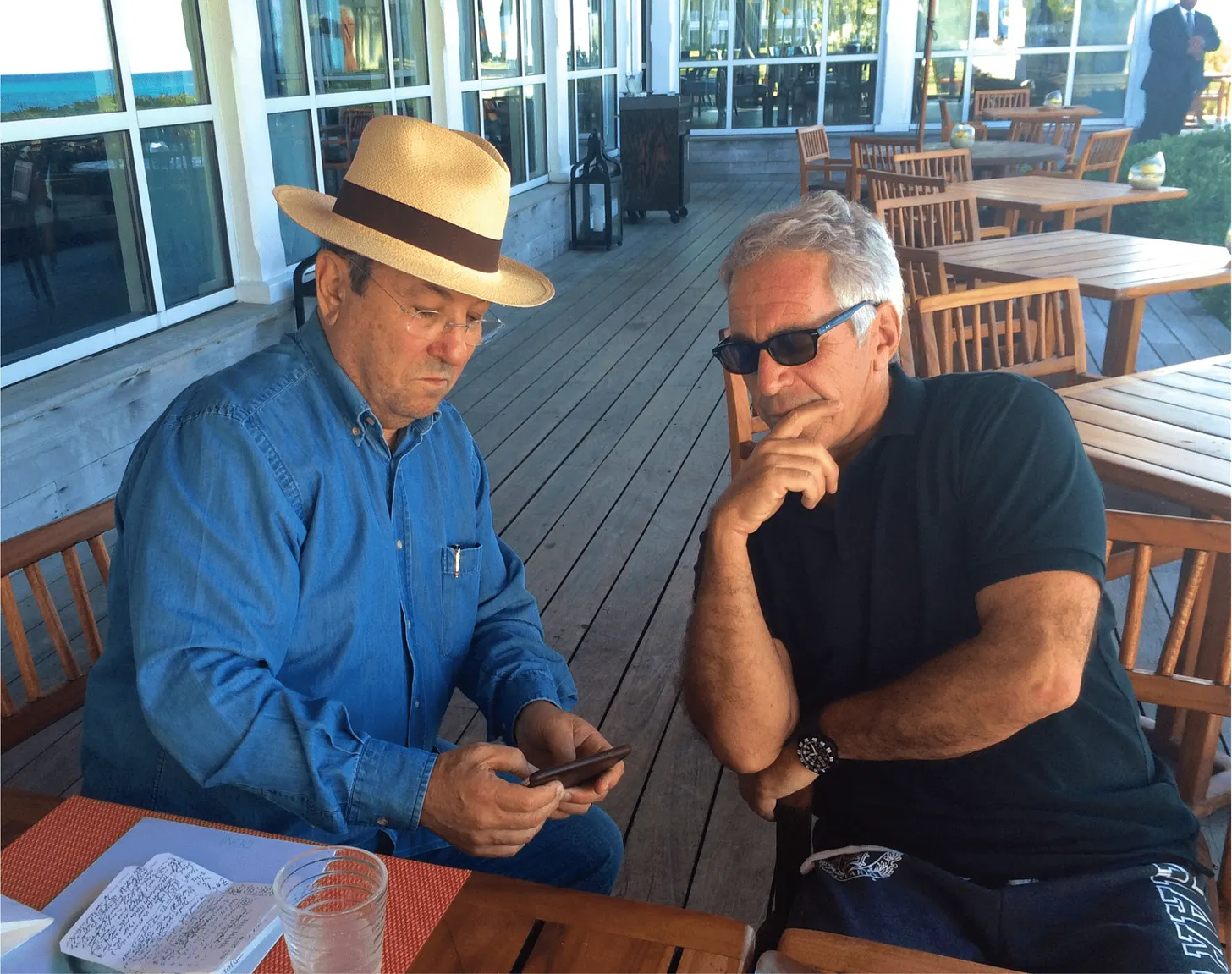
A photograph of former Israeli Prime Minister Ehud Barak and Jeffrey Epstein in an undated photograph released by the U.S. Department of Justice
Former Israeli Prime Minister Ehud Barak coordinated closely with convicted sex offender Jeffrey Epstein in pursuit of mineral, oil, and gas resources in Africa after Barak’s resignation as Israel’s defense minister in 2013, according to documents published by the U.S. Department of Justice and hacked emails from Barak’s Gmail account reviewed by Drop Site News.
Epstein played a pivotal role in Barak’s transition from the military to the private sector by packaging privatized Israeli intelligence services for sale to police states around the world. Together, the two men marketed security and surveillance products to foreign governments seeking to stabilize civil conflicts during the tumultuous early 2010s.
Email correspondence shows that Barak also drew on his lifelong Israeli intelligence connections to help expand his business footprint in Africa, including the services of former Mossad chief turned private military contractor Danny Yatom. Yatom served as director of the Mossad from 1996 to 1998, and became Barak’s top security adviser, followed by time in the Knesset until 2008. Since then, he has consulted for and served on the boards of various private security firms such as Global Strategic Group, a small outfit operating in central Africa led by several Israeli intelligence veterans from the Mossad and Shin Bet.
A proposal for a “Night Warfare Special Operations Unit” that was included in Barak’s Gmail account reveals that Global Strategic Group trained an elite special operations unit in the mineral-rich eastern regions of the Democratic Republic of the Congo in 2013. The proposal, marked “classified,” included a case study of the Kivu conflict in which Yatom boasted that their firm’s training had turned the tide against the rebel March 23 Movement (M23) and ended the war.
The Congo case study and other communications from Barak’s inbox showing his contacts with Epstein and Yatom were published by non-profit whistleblower Distributed Denial of Secrets, as part of a series of document dumps from Handala, a hacking group with suspected ties to Iran’s Ministry of Intelligence and Security. The cache has been independently vetted and verified by Drop Site News.
Yatom, who has denied that he ever met Epstein, did not respond to a request for comment. Aside from their mutual connection with Barak, no public information connects Yatom to Epstein.
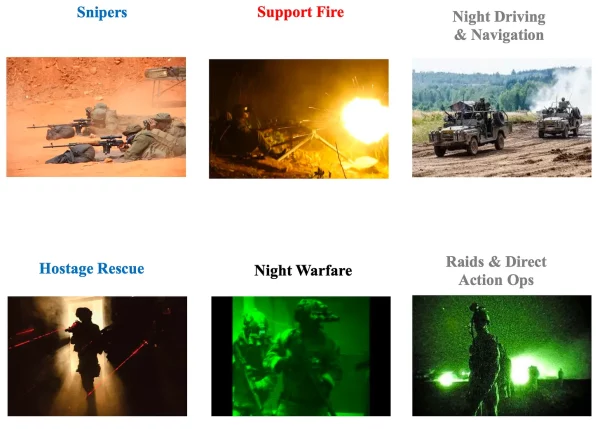
From a July 2014 “Night Warfare Special Operations Unit” proposal by Danny Yatom’s Global Strategic Group, in a section entitled, “General Capabilities of the Unit (Night and Day).”
“Isn’t This Perfect For You”
While Africa has garnered little attention in news coverage of Epstein’s sexual misconduct, the continent was central to his and Barak’s joint mission of obtaining and exploiting elite political access, cutting-edge artificial intelligence infrastructure, and energy and mineral resources. Drop Site has previously reported on Epstein’s role in brokering a security deal between Israel and Cotê d’Ivoire, and a logistics deal between Nigeria and the Dubai-based shipping conglomerate DP World.
The Handala files contain thousands of records concerning Barak’s and Epstein’s efforts to control oil, gas, and minerals across the African continent during the 2010s by leveraging Barak’s credentials as the widely respected head of the Israel Defense Forces. “With civil unrest exploding in ukraine syria, somolia, libya, and the desperation of those in power,” Epstein wrote in a 2014 email to Barak, “isn’t this perfect for you.” Barak replied, “You’re right [in] a way. But not simple to transform it into a cash flow.”
That cash flow came from the financial interests fueling the wars. As an Israeli-trained force fought M23 in the hills of North Kivu in the spring of 2013, emails show that Epstein’s Emirati associate Sultan Ahmed bin Sulayem was opening a separate channel to Joseph Kabila, then Congolese president, over investments in mining, oil, gas, and transport infrastructure. By 2018, in the year before his death, Epstein was quietly involved in sanctions diplomacy around the U.S. Treasury Department’s crackdown on an Israeli mining kingpin profiting from Congo’s conflict minerals.
In the summer of 2014, with close guidance from Epstein, Barak was engaged with security officials in Ghana, Nigeria, and Côte d’Ivoire, while simultaneously negotiating strategic investments in ports and petroleum assets across West Africa. On July 28, 2014, emails show that Yatom supplied Barak with sales materials to promote Global Strategic Group as a private-sector provider of military training and operational support.
Yatom’s company offered a special operations unit that had been provided to Congo’s army during the first war against M23 from 2012 to 2013. The program trained a “Tier One Strike Force” counter-terror squad, a 150-person elite unit trained for night raids, ambushes, counter terrorism, hostage rescue, sniper operations, thermal observation, and direct-action missions.
The Congo case study claimed the Israeli-trained unit had carried out repeated night operations under fire in North Kivu and that those raids helped shift the battlefield in favor of the Congolese army. Emails published by Wikileaks show that Nir and Omer Yatom, Danny’s sons, had also engaged Italy’s notorious Hacking Team to purchase cyberweapons “for state use” in the Congo during the same period, in the spring of 2013.
Since Epstein’s death, the conflict over Africa’s natural resources has entered a new chapter, as the United States seeks to actively counter China’s dominant role in the Congo’s mining sector. On April 27, 2026, Congo’s mining agency announced the creation of a new paramilitary army to secure mines and mineral supply chains.
The mining security program was described as a $100 million initiative in partnership with the United States and the United Arab Emirates, with a target of more than 20,000 personnel by the end of 2028. The U.S. Embassy in Kinshasa has denied that Washington was funding the mine security force. Separately, Congo also agreed to accept people deported from the United States.
Washington is now eyeing Congo’s rich deposits of coltan ore. Coltan is used to manufacture tantalum capacitors, capable of delivering power to electronics in hot environments, like e-cigarette vape pens and densely packed servers in data centers. The Rubaya coltan mines in North Kivu, near the city of Goma on Congo’s eastern border with Rwanda, are controlled by the M23 Movement, the Rwandan-backed coalition that has seized large parts of eastern Congo.
On April 30, 2026, the U.S. Treasury Department imposed sanctions on Kabila for his alleged support for the M23 rebels. But, more than a decade ago, Kabila was leading the Armed Forces of the DRC in the fight against the M23 Movement. The war in eastern Congo has become one of the world’s deadliest and most intractable conflicts—one which multinational mining companies and private military contractors tied to Israeli intelligence have been eager to exploit.
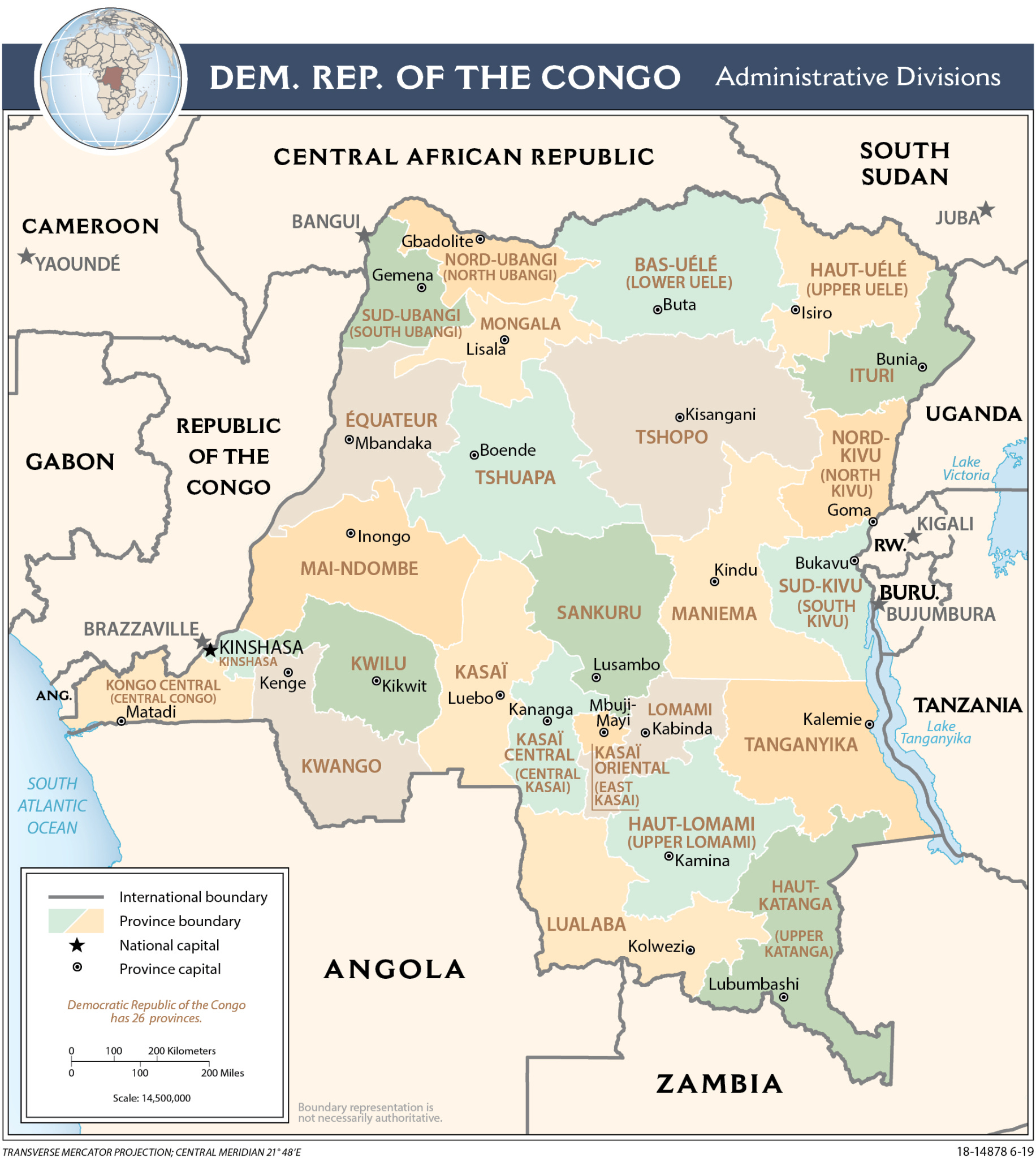
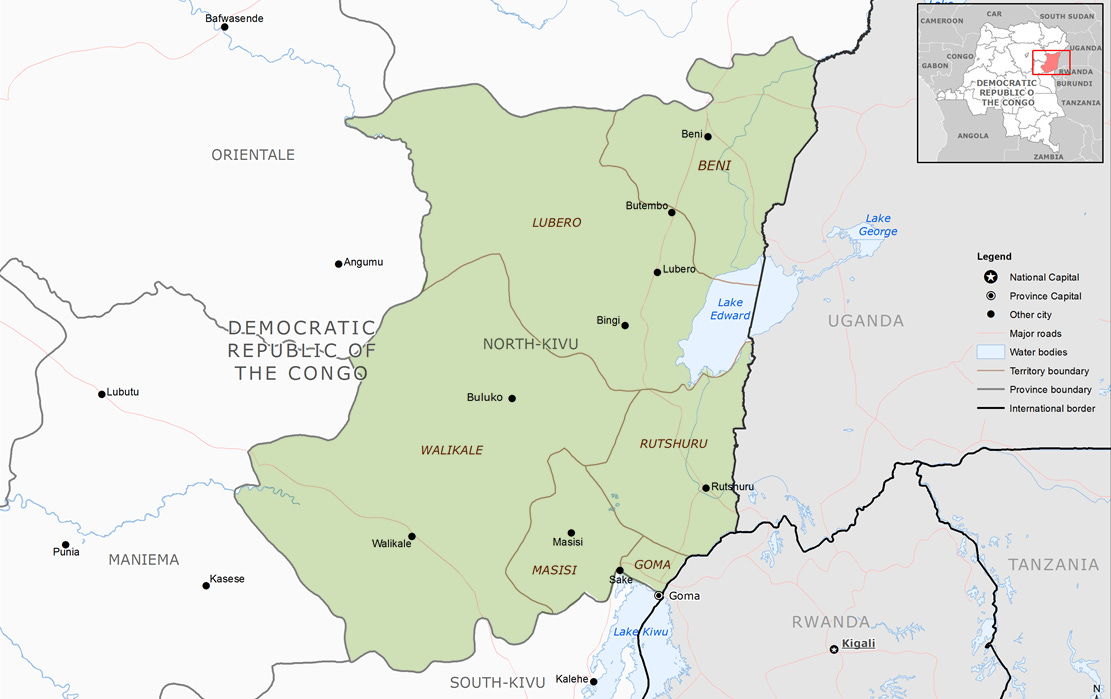
Administrative map of the Democratic Republic of the Congo, 2021. Image: CIA.
Africa’s World War
Epstein and Barak’s interest in the Congo emerged from a long history of American and Israeli intelligence agencies seeking to extract valuable minerals from the former Belgian colony. To prevent the Congolese independence movement from seizing the country’s mining resources, the CIA and Belgian officers helped assassinate Congo’s first prime minister in 1961. The new Belgium-backed government formally nationalized the mining sector, but allowed foreign firms to maintain influence through loans and technical expertise, and invited the Israeli military to train the army.
Amid rampant corruption and state-sponsored looting, Congo’s mining production collapsed in the 1990s. In the aftermath of a genocide in neighboring Rwanda, Congo became the site of a multi-sided civil conflict that became known as “Africa’s World War.” The war drew in the armies of nine African nations, and many more armed militias, leading to millions of deaths. As the conflict expanded and threatened the rule of the central government, foreign mining interests stepped in to support then-Congolese ruler Laurent Kabila, turning mining deals into a bargaining chip for his regime’s survival.
Among those investors was Dan Gertler, an Israeli diamond trader whose grandfather had founded the Israel Diamond Exchange. A UN report from 2001 claimed that Gertler made a deal to help Kabila access Israeli weapons and military training in exchange for a monopoly on Congo’s diamonds—a deal based on the “special ties” the report said that Gertler enjoyed with “some generals in the Israeli army.”
Reached for comment, lawyers representing Gertler denied that he had helped Kabila obtain Israeli military support and claimed that the deal was merely made to help boost the Congolese treasury and help the country fight smuggling by militia groups. The same UN report noted that the agreement turned out to be “a disaster for the local diamond trade,” citing sources that claimed no military support was ultimately provided.
In 2001, Kabila was assassinated by his own bodyguard in the presidential palace, and his son Joseph took power. During the spring of 2002, the younger Kabila appointed Gertler as his special emissary to the U.S. government, and Gertler met with National Security Advisor Condoleezza Rice to seek the Americans’ help in ending the war. In July 2002, a peace agreement was signed in Pretoria mandating the withdrawal of Rwandan troops—but the conflict in the Kivu region of the country was never fully settled.
After the war, Congo’s state-owned mining company, Gécamines, still controlled the mines in the southeastern copperbelt, but the company was insolvent and needed funding to make the mines profitable. Kabila’s government sold off a large share of the copper-cobalt belt to Gertler and his French-Israeli business partner, Beny Steinmetz, to rehabilitate the mines. Chinese state-owned companies also provided financing and built infrastructure through a new mining joint venture called Sicomines.
During the 2008 global financial crisis, mineral prices fell sharply as global demand collapsed, and Gécamines was forced to sell off more of the copperbelt. In February 2009, Glencore gave a secret $45 million loan to Gertler’s company in exchange for political access to Kabila’s camp, according to a contract published in the Paradise Papers leak. Glencore used that access to buy more of the mines in the Katanga region, increasing its ownership stake to nearly 80%.
Glencore declined to comment for this story.
The market crash also put pressure on Kabila’s government to make peace with the rebels in eastern Congo. The month after Glencore’s bailout, on March 23, 2009, the National Congress for Defense of the People (CNDP), a major North Kivu armed movement, struck a deal with Kabila’s government to form an official political party and integrate into Congo’s national army.
Kabila broke up the CNDP structure, but he struggled to discipline and control the ex-CNDP officers within the national army. Facing redeployment away from the Kivus, and loss of control over checkpoints and mineral routes, a group of ex-CNDP officers broke away and formed the “March 23 Movement” in 2012. The M23 forces humiliated the army and briefly took control of Goma in November 2012.
A U.N.-backed offensive against M23 began in March 2013, splitting the rebels’ forces across roads, hills, and towns, pressured by artillery, rockets, and helicopters.
The tactical unit trained by Israeli mercenaries, according to Yatom’s report that was shared with Barak, gave the Congolese army an elite strike force able to move after dark, identify rebel positions, and conduct raids under fire, while the broader U.N.-backed campaign pushed the rebels back toward the Rwandan border.
Stabilizing the security situation opened investment opportunities that a network of individuals connected to Jeffrey Epstein was keen to exploit.
As the tide turned in the Kivu war, emails show that Epstein asked Sultan Ahmed bin Sulayem, his close friend and chairman of the U.A.E. logistics conglomerate DP World, to arrange a meeting with Kabila. At the time, DP World was steadily advancing conversations with Kabila for investment in a deepwater port on Congo’s short western coastline. “He wants to give us investment in mining and oil and gas,” Sulayem wrote to Epstein in May 2013, two months after the U.N. offensive began. “I mentioned to him that I have an American fund manager who will visit with me next time; he welcomed that very much.”
Map of North Kivu province in eastern Democratic Republic of Congo. Image: Wikimedia Commons.
“Strong Men”
In December 2013, the M23 Movement surrendered and laid down arms. Soon after the end of the war, in March 2014, U.S. Secretary of State John Kerry went to Kinshasa, pledging $30 million to support Congo’s elections and encourage a peaceful transition of power. Russ Feingold, Kerry’s special envoy for Africa, issued a clear warning to Kabila that stabilizing the country depended on a succession plan and enforcement of term limits. “President Obama, when he was here last year made a very important statement,” Feingold said, “What Africa needs is not strong men but strong institutions.”
But Kabila refused to leave. His family’s wealth was inextricably tied to the state, with stakes in more than 80 companies across mining, banking, agriculture, telecoms, and logistics sectors. Kabila’s camp delayed elections for three years by proposing constitutional changes, initiating a new census, and de-funding the electoral process.
In 2016, the U.S. Treasury Department sanctioned several police and military officials responsible for violently suppressing popular street demonstrations against Kabila. The U.S. Justice Department filed a conspiracy case against a New York hedge fund linked to Gertler, and collected nearly $1 billion in criminal penalties related to bribery cases across Africa under the Foreign Corrupt Practices Act. Glencore quickly began buying out Gertler’s stake in its copper-cobalt mines in Congo’s far southeastern copperbelt.
Epstein jumped into a small circle of players engaged in privatized sanctions diplomacy around Congo’s mineral economy, which began immediately after Donald Trump’s 2016 presidential election victory over Hillary Clinton.
In December 2016, Kabila hired an Israeli defense-security and surveillance firm, Mer Security and Communication Systems, to lobby the new administration against additional sanctions. In the first year of Trump’s first term, the Treasury Department ratcheted the pressure on Kabila by sanctioning Gertler, who had become an indispensable political intermediary to Congo’s mineral economy. Treasury officials claimed Gertler used his friendship with Kabila to manipulate mining and oil deals, causing the Congo government to lose more than $1 billion from underpriced asset sales.
Kabila tried to show outside investors and Washington that his government remained the essential custodian of Congo’s mineral wealth. In March 2018, he asked Sulayem, the chairman of DP World, to immediately come to Kinshasa to sign a concession agreement for the Banana port at the mouth of the Congo River on the Atlantic coastline. The sudden meeting caused Sulayem to cancel a planned appointment with Epstein in New York that week.
One month later, in April 2018, Glencore’s Africa business was impacted again by the Treasury Department when an additional round of sanctions was imposed on Oleg Deripaska, a Russian oligarch accused of money laundering, extortion, and bribery. Deripaska’s aluminum conglomerate, United Company Rusal, was formed through a merger with Glencore’s alumina assets and the Siberian aluminum assets of Viktor Vekselberg, another Russian oligarch with Israeli and Cypriot citizenship.
Barak and Epstein were intimately familiar with the circle of aluminum titans behind Rusal. After his retirement from Israeli government service in 2013, Barak became an adviser to Vekselberg, and Epstein helped him leverage the relationship to engage in backchannel diplomacy with Vladimir Putin during the Syrian civil war. Barak’s business partner in Africa ventures, Gary Fegel, had led the aluminum unit at Glencore, and served on the board of directors for Rusal after the merger.
Fegel did not respond to a request for comment.
One month after sanctions landed on Deripaska, Epstein was approached by Jide Zeitlin, then-head of Nigeria’s sovereign wealth fund, about helping Glencore navigate the crisis. At the time, Glencore was making bribe payments to the Nigerian government for favorable terms on commodity deals.
The Treasury Department’s move against Deripaska had major consequences for Ivan Glasenberg, the Israeli-South African CEO of Glencore, who was forced to resign from Rusal’s board of directors. “Do you know Oleg Deripaska or Ivan Glasenberg?” Zeitlin wrote to Epstein on May 4, 2018. “Easy,” Epstein replied.
Epstein suggested an “approved sanction structure” to lift U.S. sanctions on Deripaska’s companies by diluting his ownership. The oligarch would need the Treasury Department’s blessing to divest, such that his ownership did not look like a strawman arrangement. “If you had a meeting with the appropriate division of treasury,” Epstein replied to Zeitlin, “im sure you can structure around it.”
Epstein had personally advised the Treasury Department on the topic of sanctions evasion in the past, and he floated a few options that could preserve Deripaska’s economic value in Rusal, while satisfying the Office of Foreign Assets Control that Deripaska no longer controlled the assets: trusts, swaps, options, or debt. On May 11, 2018, Zeitlin wrote to Epstein from Zug, the location of Glencore’s global headquarters in Switzerland: “Good lunch today in Zug re sanctions solution. Interest piqued.” Epstein wrote back, “No surprise,” and congratulated Zeitlin, “Great work.”
Ten days later, Zeitlin sent Epstein an article about Glasenberg’s predicament in the Congo, as fears mounted that Gertler’s assets would be targeted and seized by regulators in the U.S. and the U.K. “Unfortunately for Ivan, he finds himself in an uncomfortable place,” Zeitlin wrote, on May 21, 2018. “This is complex and requires additional digging in Washington.” Epstein wrote back, warning Zeitlin, “This channel is NOT secure.” Later, he explained why it would take time to untangle Deripaska’s holdings: “Who owns what is not simple.”
By August, the eventual corporate restructuring of Rusal and its parent company, En+ Group, looked similar to Epstein’s proposal. Lord Greg Barker, a former British Tory politician and chairman of En+, authored a proposal that resembled the structures Epstein had floated to Zeitlin. Zeitlin forwarded the news to Epstein in August 2018, with a note: “Interesting that key aspects [of] their approach now mirror my proposal.”
In December 2018, the Treasury Department announced it was terminating sanctions on Rusal and En+, while keeping the sanctions on Deripaska in place. Deripaska’s divestiture solved Glencore’s sanctions problem by letting the company keep its ownership in Rusal and En+, and resume its Rusal-related aluminum trading. Epstein shared the Treasury notice with Ehud Barak on New Year’s Day in 2019, just months before his arrest and death in a Manhattan jail cell. In 2020, Rusal approved a $16 billion contract to supply aluminum to Glencore.
The AI “Treasure Map”
Israeli and American security channels in Congo have matured further in recent years.
Félix Tshisekedi was sworn in as Congo’s new president on January 24, 2019 in the first peaceful transfer of power in the country’s post-independence history. The election was highly contested, however, with widespread accusations of fraud and tampering, and the African Union casting “serious doubt” on the validity of the result. Foreign Policy reported that Kabila had reached a secret power-sharing agreement with Tshisekedi to maintain behind-the-scenes influence over the country’s legislature, cabinet, and security apparatus.
According to reporting in Bloomberg, Yossi Cohen, then-director of the Mossad, traveled to Congo in June 2019, accompanied by Gertler, to meet with both Tshisekedi and Kabila. Some of Tshisekedi’s aides became concerned that the Mossad was helping Kabila acquire arms for a possible coup d’état. (Lawyers for Gertler denied the meeting took place and claimed that Gertler has “no relationship whatsoever” with the former Mossad chief.)
After Cohen visited Kinshasa a second and third time in the following months with an even larger delegation, Tshisekedi ordered him to leave the country. The Guardian later reported that Kabila had agreed to support Cohen’s campaign to pressure the International Criminal Court to drop its investigation into Israel’s alleged war crimes in occupied Palestine.
By the end of 2019, the United Nations Group of Experts identified Israeli military instructors training Congo’s national army in the Goma area, while tracing vast sums of illegal gold smuggling to the United Arab Emirates from a nearby province in northeastern Congo. The U.N. received testimony from diplomatic and military sources and photographs of the instructors, in the same Kivu battlefield where Danny Yatom’s group had helped defeat M23 six years earlier.
In January 2021, after intensive lobbying from Epstein’s longtime lawyer Alan Dershowitz, the Treasury Department quietly eased the sanctions on Gertler in the final days of Trump’s first term. Two months later, the new Biden administration reversed the move, saying the decision was inconsistent with U.S. foreign-policy interests in combating corruption in Congo.
The unresolved status of Gertler’s sanctioned assets are now entangled in Tshisekedi’s new minerals-for-security channel with Washington. On February 3, 2026, Glencore and the U.S. and U.A.E.-backed Orion consortium announced a non-binding memorandum for Orion to acquire 40% of Glencore’s Congo platform, putting an American-Emirati investment group in line to acquire Gertler’s former copper and cobalt interests.
In a press release, the U.S. International Development Finance Corporation described the Orion investments as an opportunity to close “gaps in financing” that have allowed China to dominate mineral supply chains.
Meanwhile, Silicon Valley titans are taking advantage of the opportunity to harden the supply chain for America’s artificial intelligence boom. In the first three months of 2026, Amazon, Google, Microsoft, and Meta spent more than $100 billion on new capital projects, mostly large data centers powering artificial intelligence. The American tech giants have committed close to $700 billion for new capital projects this year, while the UAE has committed to support a $1 trillion investment framework in U.S. energy, AI, and manufacturing sectors over the next ten years.
KoBold Metals, an exploration company backed by Amazon founder Jeff Bezos, Microsoft co-founder Bill Gates, and OpenAI co-founder Sam Altman, launched a $50 million lithium exploration campaign in Congo in April, targeting extensive mining licenses from the Congo government. The company says it uses artificial intelligence to create a “treasure map” to find new deposits of copper, lithium, cobalt, and nickel.
In February, Kinshasa also added the rebel-held Rubaya coltan mine to the shortlist of strategic assets being offered to Washington. The private army of Blackwater founder Erik Prince recently worked with Israeli advisers to again train Congolese special-forces battalions to fight M23 in the Kivus. A source told Africa Mining Union that Prince’s security and logistics firm, Vectus Global, will likely be used to enforce revenue collection on the mines in the southeastern copperbelt.
The money and weapons flowing into the Congo signal no end in sight to the scramble for Africa’s precious minerals fueled by foreign militaries. And with the sale of Congo’s mines to foreign interests, including members of Barak’s and Epstein’s extended network, little of the wealth from the extraction of Congo’s vast resources will flow to the Congolese people.
This article was originally published by Dropsite; please consider supporting the original publication, and read the original version at the link above.Email
Originally from the US, Alexandria has lived most of her life in the Caribbean, as well as in Egypt and Central America. A sailor, writer, organizer, and street medic, she has been involved in community organizing, media, and education for over 20 years. Alexandria is currently a staff member of ZNetwork.org, a writer for Extinction Rebellion, and is active with Caracol DSA and Food Not Bombs. Her work has appeared on ZNet, Common Dreams, Foreign Policy in Focus, CounterPunch, LA Progressive, Waging Nonviolence, Antiwar.com, The African, The Socialist Project, mέtaCPC, DiEM25, PeaceNews, Green Left, Popular Resistance, Resilience.org, Grassroots Economic Organizing, Shareable, Dissident Voice, Democratic Underground, and various other outlets.