Monday 17 August 2026, by Norbert Holcblat
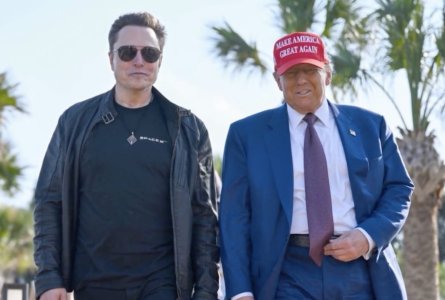
We know the first words of the Communist Manifesto: “A spectre is haunting Europe”. Today, two “spectres” with a material reality seem to haunt the capitalist world and weigh on the destinies of humanity: Donald Trump and artificial intelligence (AI). How do they fit together? What world are they likely to lead us to?
There are many terms to describe the period we are going through. In a recent text, historian Quin Slobodian and writer Ben Tarnoff list many of them: “A range of competing visions and frameworks have been proposed. We have heard of state capitalism, disaster capitalism, platform capitalism, chokepoint capitalism, vulture capitalism, spiderweb capitalism, archipelago capitalism, asset manager capitalism, surveillance capitalism, and even crack-up capitalism. Theorists have suggested that we live in an age of neofeudalism, techno-feudalism, techno-libertarianism, techno-authoritarianism, techno-populism, techno-fascism, end times fascism, neofascism, neoliberal fascism, post-neoliberalism, paleo-populism, neopatrimonialism, hyperpolitics, and geoeconomics.” [1] For their part, these two authors propose “Muskism” (which would merit discussion).
The number of these terms perhaps reflects a form of dismay in the face of something whose trajectory is poorly perceived, and each of them undoubtedly has its share of truth, but often emphasizes a particular aspect. It seems preferable to focus on the substance and dynamics of current processes beyond their particular features. The expression used by the American jurist and philosopher Bernard E. Harcourt to characterize Donald Trump’s presidency, a “modern counter-revolution”, seems the most appropriate for this objective. [2]
A counter-revolution is indeed on the agenda, not only in the United States but to varying degrees in a large part of the planet. It is characterized by the obsession with erasing all or part of the social and ideological gains of the post-World War II period to the 1980s, as well as the emancipatory aspirations that persist. And some do not hesitate to wave the banner. Pro-Trump activist Christopher Rufo told the New York Times in April 2025: “What we’re doing is really a counter revolution. It’s a revolution against revolution.” (quoted by Bernard E. Harcourt). At the gigantic far-right demonstration on 13 September 2025 in London, Tommy Robinson, its main organizer, also declared: “We are the counter-revolution.” [3] In another and older register, this proclamation by the libertarian Murray Rothbard in 1992: “We shall break the clock of social democracy. We shall break the clock of the Great Society. We shall break the clock of the welfare state. We shall break the clock of the New Deal. We shall break the clock of Woodrow Wilson’s New Freedom and perpetual war. We shall repeal the 20th century.” [4] It is noteworthy that Argentine President Javier Milei has named one of his three dogs after Rothbard (all named after neoliberal economists whom he considers to be inspirations).
In France, in the same vein, in 2007 we had the declaration of an employers’ leader: “Today it is a question of getting out of 1945, and methodically undoing the program of the National Council of the Resistance!” [5] These references, and others would be possible, justify Bernard E. Harcourt’s assessment: “President Trump’s actions during the first hundred days of his second mandate are the latest episode in a vast and coherent modern counterrevolution with a longer historical arc and a broader global reach.” For Harcourt, this counter-revolution has been underway in the United States for several decades, particularly since the presidency of Ronald Reagan.
Counter-revolution? Of course, there is no revolutionary danger for the propertied today (at least in the states of the “North”), contrary to the context of the great reactionary wave which, from 1918 to the 1940s, swept through Hungary, Germany, Italy, Japan, Portugal, Romania, among others. then Austria and Germany again, then Spain and finally France thanks to the defeat of 1940 (even if, from the beginning of the 1920s, the revolutionary upsurge following the Russian Revolution weakened). A wave that gave birth to reactionary and dictatorial regimes, but each with its own characteristics, particularly in the modalities of accession to power, the institutions and the balance between references to tradition (and compromise with the former political personnel) and the rags of rupture, or even of “revolution” (one of the last avatars being the “National Revolution” proclaimed by the Pétain regime). Despite their diversity, these regimes could all be described as fascist at the time (even if, more recently, historians insist on their differences). In the 1970s, the military dictatorships of Chile, Argentina, Brazil and Uruguay were often denounced as fascist, above all because of their repressive character, while the characterization of the Greek dictatorship (1967-1974) has been the subject of debate.
Today, it is true that components of the MAGA current in the United States (Christopher Ruffo, Steve Bannon, Elon Musk in his own way...) and the European far right consider the evolution of the family, the legalization of abortion, the rights of LGTBI, immigration and the mixing of populations, ... not as societal transformations or the fruit of struggles between social sectors, but as the result of a revolutionary conspiracy of the “wokeists” and the conspirators of the “great replacement”. A conspiracy, in the face of which it would be urgent to react to the risk of definitive alteration of “white and Western civilization”. Even if this is not the dominant analysis in the circles of the various powers, these fantasies can be more or less taken up and instrumentalized by various political currents to broaden their base in order to serve their counter-revolutionary aim because, if the revolution is not a near horizon, the counter-revolution does not need to wait for an imminent revolution; it can act preventively, by cancelling past gains and repressing resistance, as Richard Donnely observes in the above-mentioned text on Tommy Robinson. Especially in a context of systemic crisis such as the one capitalism is going through. It should be noted, however, that as far as the “South” is concerned, things must be nuanced: from the “Arab revolutions” to the recent movements in Sri Lanka, Bangladesh, Nepal, Madagascar... Popular insurrections have indeed overthrown governments but have not, to date, been able to put in place alternatives to the ruling classes that have retained their hegemony through the military or the new powers that have emerged from “civil society”. In some of these countries, however, the revolutionary cloud continues to be fraught with threats and, for example, in Egypt, Field Marshal al-Sisi is certainly aware of this.
The Russian sociologist and activist Ilya Budraitskis, for his part, distinguishes between counter-revolution and what he calls “anti-revolution”: “Anti-revolution tries to prevent an imaginary revolution [...] This imaginary revolution that is looming has no obvious roots in society and does not have an apparent political subject with a strong will [...]. But this imaginary revolution leads a full-fledged existence in the consciousness of the leaders of the state. And it has been described by experts in dozens of documents”. [6] If we transpose this analysis outside Russia, we find, in France for example, that leaders and their media as well as certain intellectuals denounce day after day spectres that are supposed to endanger all social life: “wokeism”, “Islamic separatism”, the “savagery” of young people in the urban peripheries and so on. The police forces, not only constantly monitor these phenomena and individuals potentially considered “suspects”, but are preparing to repress all “excesses”". Like some of the MAGA themes mentioned above, all of this is largely part of the “imaginary revolution”. Budraitskis’ problematic has foundations and explains why the “anti-revolution” can be more progressive than the counter-revolutions we have known. However, it seems preferable to stick to the term counter-revolution, which has more historical and political resonances.
So counter-revolution, but modern counter-revolution that uses all the new technologies to build a despotic world with regard not only to bourgeois liberal democracy but to the process of production and work, as Juan Carbonell described it with regard to AI. [7] Marx applied the term “despotic” both to the process of production (“factory despotism”) and to certain states such as the Bismarckian German Empire. We can therefore think that to characterize the modern counter-revolution in its different dimensions, the expression “techno-despotism" would perhaps be the most appropriate.
Everywhere, we can see to varying degrees a shrinking of traditional bourgeois liberal democracy, a rise in police repression and surveillance techniques as well as militarization, attacks on social gains, increasingly exacerbated racism, identity and nationalist discourses. To borrow an expression from Claude Serfati about France, states are “becoming radicalized”. [8] And this is the case in Europe, including when “centrists” and social democrats are in power. In some countries (Poland, the United States and so on), there is a proliferation of discourses, pressures, and even legal decisions calling into question the right to abortion.
These elements are combined with the characteristics of the economic regime: the deployment of new technologies, the appearance of giant firms interpenetrated with the state and whose position of strength allows them to collect rents, the decline of trade union movements, the explosion of inequalities and so on. Relativization, ignorance (or even open denial for Javier Milei and Donald Trump) of ecological perils, of their increasingly immediate implications for humanity and of the urgency to act. But also the unprecedented deployment of the empire of the commodity with a race for innovations that allows firms to counteract the downward pressure on the rate of profit, innovations that citizens must swallow not only in a spirit of imitation but because they become indispensable to daily life (in synergy with the policies of states to destroy local public services).
Finally, contrary to the “democratic” discourse in vogue in the European Union, the counter-revolution has an essential social dimension. The so-called “illiberal” regimes carry out neo-liberal reforms – of the same ilk as those in “democratic” countries – such as the reform of working hours in Hungary, the postponement of the retirement age in Russia, the relaxation of employment legislation in Turkey and so on.
Several questions are being asked today: What are the driving forces of the counter-revolution? How does it relate to the economic situation? Is this counter-revolution fascist? And of course, how to deal with it, but that is not the subject of this contribution.
1. The driving forces
Until relatively recently, the responsibility for authoritarian tendencies and pressures was attributed, by most of the press and a good number of political scientists, to far-right forces “outside the system”, often described as “populist”, a convenient term to put them on the same level as more or less radical left-wing forces, also qualified as populist. These populists rely on the real or perceived resentment of the “people” towards the elites, the establishment as well as their underlying nationalism. In a number of countries (particularly in Europe), the growing interchangeability of political parties and the convergence of their policies offer the far right the opportunity to seduce voters by positioning itself on the margins of the consensus.
There is no doubt that there exists in various popular categories what Trotsky described as “counter-revolutionary despair”, reinforced in today’s world by the retreat of collective organization that favours the atomization of individuals and/or their withdrawal into reactionary identities (racial, religious or other). Or to put it another way, “the far right is winning the battle for leadership from frustration to reactionary radicalization”. [9]. Especially since it knows how to make effective use of the internet and social networks. But would pressure from below and from “non-system” groups sum up the current evolution?
In a book on Brexit published in 2021, two French sociologists challenged the current interpretation of the result, which sees it as the result of the divide between the winners and losers of globalisation. They show how important capitalist sectors, in fact a part of finance: investment funds and hedge funds, financed the Leave campaign. Their conclusion is clear: if a large fraction of the popular classes was opposed to the European Union (EU), the financing of Leave shows, according to them, that “the winners from globalisation did not lose to its losers, it was the winners who did not agree with each other”. [10] They explain their approach as follows: “... a critical part of the social sciences has analysed Brexit and the election of Trump from the perspective of the social geography of the vote and the resentment of the white middle and popular classes from deindustrialised, discriminated against and relegated sectors, against urban elites, winners from globalisation, often connected to each other on a regional or global scale. We do not oppose these analyses, but we must not only understand these two historical events, Brexit and the election of Trump, from the perspective of the voters’ reasons for acting. […] We thought we had to go and see what was happening on the side of the dominant, to understand what their interests were, in the case of Brexit, as in the election of Trump. [11] The “second finance” saw European regulations as an obstacle to their free activity and its actors were in favour of an authoritarian libertarianism. The trend is the end of neoliberalism. Some of the researchers’ conclusions (which Marlène Benquet developed in a more recent book, La finance aux extremes, 2026) are debatable both on the two poles of financialization and on the end of neoliberalism, but their work has had the merit of showing that political developments are not only the product of the manipulation of crowds by demagogues but the conscious choice of fractions of capital.
Their approach has been taken up by some analysts of Trumpism, see in particular “The Capitalist Interests Behind Donald Trump”, Vladimir Bortun, Jacobin, 24/02/202614. He points out that while it may very well be that Trump is only there for his personal enrichment and that of his family, Trumpism encompasses a coalition of capitalist fractions as well as fractions from the subordinate classes.
Various economic sectors thus appear to be increasingly favourable to powers that do not claim to regulate them and increase their tax rates, even if they are nationalist and authoritarian: the most speculative finance, the fossil fuel industries, the arms and surveillance sectors and, finally, the large groups of new technologies. Other sectors, sensing the wind, are ready to accommodate reactionary discourse, the prospect of systematically anti-union policies (whereas in Europe the unions often functioned as “partners” in the system of industrial relations), or even breaches of current democracy with its limits. The Medef (the main French employers’ organization) has significantly decided to invite Javier Miliei to its annual meeting (he finally declined the invitation). In the United States, Elon Musk or Peter Thiel (Palantir, he recently established himself in Milei’s Argentina) do not hide their reactionary and authoritarian activism. In India, Narendra Modi is supported by the main capitalist sectors.
States and elements of the ruling classes are therefore the main actors in the current processes. As for states, they can be active actors while sometimes distancing themselves from far-right currents, such as Emmanuel Macron proclaiming himself “progressive”.
Various arguments are used by states to justify the race towards authoritarianism, surveillance of populations and militarization: the terrorist danger, the disruptions created by strikes and demonstrations, the alleged invasion of migrants (although the “great replacement” and “remigration” still remain appendages of the extreme right, even if this theme permeates more widely), drug trafficking, petty crime, and, in Europe, Russian activities. Laws and regulations are piling up year after year. The French government has just added a new mechanism to the already extensive panoply of exceptional regimes with the “state of national security alert” which could be decreed for two months, before going before Parliament.
Donald Trump’s second election and his behaviour undeniably represent a factor of acceleration. Especially since he is returning to power with elements of a program and teams not linked to the Republican Party leaders. But everywhere, the political right is “moving rightwards” (Trump’s stranglehold on the Republican Party with the reining in of critics is an illustration of this) and the extreme right, yesterday marginalized, are increasingly frequented by the dominant circles of capital. All the more so since, in Europe, those of these forces that are in a position to come to power have given pledges on two subjects: the European Union (EU) and support for Israel (the denunciation of this country’s policy being now assimilated to anti-Semitism, supporting it becomes proof of non-anti-Semitism). In Italy, the Meloni government reconciles authoritarianism (with the adoption of several “packages” of security measures) and a neoliberal economic line.
However, even in the states most advanced on the path of counter-revolution, the political leaders are still subject to the electoral process (except in China, which does not fall under this type of analysis) - the defeat of Viktor Orban in the Hungarian parliamentary elections has shown this. In 2020, two American political scientists defined this type of regime by the term “competitive authoritarianism”. [12] In such a system, a party comes to power through a more or less democratic electoral route and then erodes the system of checks and balances. The executive fills the civil service and key appointments – including the judiciary – with loyalists. The media, academia and non-governmental organisations are then attacked to reduce public criticism and influence voters in favour of the ruling party. The rights of the opposition parties and those of citizens are being eroded. This type of regime, which tends to spread, persists in part because a truncated and manipulated form of multiparty system can be more manageable internally and more “presentable” internationally than a one-party system. But competitive authoritarianism can have several degrees: if Viktor Orban lost the elections, it is almost unimaginable that this would be the case for Vladimir Putin and Recep Tayyip Erdogan is currently doing everything to avoid it.
A case of reduced rights that is now extreme must be mentioned: that of states whose institutions are considered democratic by the mainstream but where some inhabitants are reduced to the status of second-class citizens. This is the case of Narendra Modi’s India for Muslims and Christians, who are considered to be less legitimate peoples than Hindus. With the support or at least the tolerance of the authorities and the police, they are the object of permanent suspicion and violence. To characterize this situation, the researcher Christophe Jaffrelot uses the expression “ethnic democracy”. This qualification has long been used for Israel: non-Jews (mainly Palestinian Arabs) have, de facto and partially, been deprived of rights and, since 1948, have been considered less legitimate and discriminated against. This situation was proclaimed by the law of July 19, 2018: “The State of Israel is the nation-state of the Jewish people, which exercises its natural, cultural, religious and historical right to self-determination. The realization of this right to national self-determination in the State of Israel is reserved for the Jewish people alone.” In the occupied territories, discrimination and oppression are even more obvious. Beyond these two emblematic and modern cases, other states, to varying degrees, discriminate against sections of their population.
All in all, even in states commonly described as “democratic”, the slope towards authoritarianism exists. Executives are increasingly resorting to clientelism, directly politicizing the civil service, strengthening the forces of “order”, reducing the rights of demonstration and spaces for protest as well as academic freedoms, stirring up racism while the freedom of the media tends to be eroded according to the goodwill of the capitalist groups that control them. Moreover, the spectre of war is being raised everywhere, well beyond the real wars (the impact of which is not negligible).
The counter-revolution therefore seems above all to be led by the state apparatuses, in conjunction with an extreme right that is not necessarily directly represented in power. The various states are more or less directly advanced in the process: Britain, for example, is less so than France, itself behind the United States, and especially India, Russia, Turkey or Israel. But in France, the accession to the presidency of the Republic of Marine Le Pen or Jordan Bardella (Rassemblement national) would greatly accelerate the process towards authoritarianism and the “nationalization” of social rights, especially since the constitution of the Fifth Republic gives the president much more weight than, for example, an Italian head of government such as Giorgia Meloni.
These developments on the states and the insistence on counter-revolution may lead to a debate with analyses centred above all on the far right and neo-fascist forces. We will come back to this.
2. How do the counter-revolution and the economic situation fit together?
In a November 2019 text entitled “The end of neoliberalism and the rebirth of history”, the Nobel Prize in Economics winner Joseph Stiglitz points out that “At the end of the Cold War, the political scientist Francis Fukuyama wrote a celebrated essay called ‘The end of history?’. Communism’s collapse, he argued, would clear the last obstacle separating the entire world from its destiny of liberal democracy and market economies. Many people agreed. Today, as we face a retreat from the rules-based, liberal global order, with autocratic rulers and demagogues leading countries that contain well over half the world’s population, Fukuyama’s idea seems quaint and naive.” [13]
The theme of the end of neoliberalism is in vogue, especially in France; the economist and journalist Romaric Godin writes in a recent book: “The neoliberal project was that of a democracy framed by capitalism, accepting the rules deemed necessary for accumulation. […] The crisis of neoliberalism marks the opening of a period of separation for the democracy-capitalism couple.” However, the author is also cautious, explaining that democracy and capitalism are not intrinsically linked and that democracy is only acceptable to capitalism if it maintains the consensus necessary for its functioning. Faced with the crisis of neoliberalism since 2008, “the option that is emerging is that of an authoritarian state that suppresses protests, ensures social stability and protects the interests of capital.” [14] For Godin, the current phase is that of a new state capitalism in which the state, in the service of capital, replaces the market to facilitate accumulation.
It is true that, since the crisis of 2008-2009, capitalism has been increasingly on a drip from states but, even if it does so with a certain caution, the link between neoliberalism and democracy highlighted by Godin is highly debatable. Other authors have a contrary point of view and rely on a multi-decade history. We will cite a work with a clear title: “The Choice of Civil War”. [15] Another history of neoliberalism, the first chapter of which is devoted to Pinochet’s Chile, to the policies praised by Friedrich Hayek, another “Nobel Prize” in economics and inspiration for Margaret Thatcher. The authors review the long history of neoliberal thinkers since the 1930s and the complacency of some (with more or less reservations) towards the fascist regimes of the time. For them, "we are living in the moment when neoliberalism is secreting from within a specific political form that combines anti-democratic authoritarianism, economic nationalism, generalized competitionism and expanded capitalist rationality. This original governmentality fully assumes the absolutist, authoritarian and (if necessary) dictatorial character of neoliberalism without resembling historical fascism.” Two points are important in this analysis: first, the authoritarian turn does not call into question neoliberalism but is part of the continuity; secondly, we find ourselves faced with something other than “historical” fascism (we will come back to this).
Sounding the death knell for neoliberalism seems premature. For the time being, the ruling classes are on the offensive, calling into question more or less head-on, “zone” by “zone”" and state by state, everything that reduces the freedom of capital. One of the first texts enacted by Donald Trump on 20 January 2025 withdrew the United States from the global agreement on minimum taxation of multinationals, which is not very painful for them. Trump is pursuing a destructive action by the supervisory and regulatory authorities; he is also a promoter of cryptocurrencies. In Europe, layoffs are raining down in industry and cuts in public services are increasing, while in many capitals speculation and rising rents are pushing the popular classes out. Admittedly, the policy of states is now more openly introduced into trade and, to a lesser extent, into international investment and even into the encouragement of certain activities (first and foremost in the field of AI), but this does not mean the end of globalization but the struggle of the various imperialisms to set the conditions and/or defend their “share of the pie” in this “capitalism of finitude”. [16] This in a context where the United States wants to maintain its pre-eminence against China. As for new technologies, they lead to renewed forms of interweaving between private activities and the state; as Slobodian and Tarnoff write, far from being libertarian, “a core principle of Muskism is public-private fusion; the use of the state as funder, enabler, and backstop for high-risk, high-reward ventures—what we call state symbiosis. One can see this clearly in SpaceX, Starlink, and Tesla. Musk is a stalwart critic of bureaucracy and certain kinds of regulation but certainly not the state as such. On the contrary, he has consistently instrumentalized the state as a source of power and profit. He does so by promising to help governments fulfil their sovereign functions through reliance on his infrastructures: a dynamic we describe as sovereignty-as-a-service”. [17] The symbiosis of the state and digital firms is reinforced by the military factor: the many examples of collaboration between these firms and the armed forces and police show that “far from techno-libertarian fantasies according to which large technology companies are autonomous from the state, there is a military-digital complex”. [18] Moreover, Palantir, despite Peter Thiel’s libertarian tirades, lives largely in symbiosis with states and their armed and police forces.
3. Can this counter-revolution be described as fascist?
Trump and the various far-right currents present themselves as forces of rupture with respect to the famous Thatcherite acronym TINA (“There is no alternative”): this has a certain echo in a context of rising inequality where “those at the bottom” feel despised while the lefts of capital (Democrats in the United States, Social Democrats in Europe) appear at best to be powerless. at worst as co-responsible for the situation. As it is not a question for the far right nor (of course) for the radicalized traditional right to really attack inequalities and the power of capital, the scarecrow agitated is immigration, Islam, LGBTI... and, in a more disguised way today, an alleged Jewish conspiracy.
Donald Trump, as we have already pointed out, is at the confluence of state radicalization and the rise of neo-fascists. Generally speaking, what can be said of a process in which the evolution of the state and the ruling classes gradually creates the conditions not only for participation in power (this is already the case in many states) but for a takeover of institutions by coalitions of far-right politicians and neo-fascists, probably respecting the dress codes of other politicians (even if less civil groups are crowding behind them)? These coalitions could also be heterogeneous in certain areas (more or less national-social discourse, for example), as were the fascist parties of the first half of the twentieth century.
The various variations of the term "fascism" are at the centre of many analyses that are often interesting but seem on the whole questionable, in our opinion, to describe the modern counter-revolutionary process. Unless fascism is made a timeless concept, like Umberto Eco’s Ur-fascism (eternal fascism). And to forget that this is a political strategy.
As Enzo Traverso (who speaks of “a kind of post-fascism” for the present period) explains, “we are not facing a repetition of history, a return to the past; we are facing new problems and threats, but we only have concepts inherited from the past to analyse and interpret them. This is obviously frustrating: these words do not describe well the uncertainty of our time, which seems to herald a terrible storm.” [19].
Of course, it is not a question of minimizing the risks of the present situation, which can lead to situations as catastrophic as some of the fascisms of the 1930s. The invasion of Ukraine, the genocidal war in Gaza, the proxy wars for resources in eastern DR Congo are examples of this. The rejection or relativization of the impacts of the ongoing ecological catastrophe is another: despite proclamations and international conferences, false solutions and business as usual prevail.
There is a need to understand the ongoing transformations of capitalism and their political, social and ecological impacts, as well as on the fractures within the bourgeoisies. This implies moving away from the debate on “fascism” alone.
There is, however, an argument that can justify, despite its inadequacy and beyond analysis, the use of the term “fascist”": it brings us back to familiar ground and is therefore politically useful and could thus make it possible to mobilize mass resistance. The Brazilian academic Angela de Castro Gomes explains that the word “fascist” (while being intellectually very questionable to characterize various currents or current governments) “is an effective resource to fight against such experiences, insofar as, on the basis of a shared historical memory, it functions very well as a category of accusation”. [20]
As for the international anti-fascist conference held in Porto Alegre from 26 to 29 March 2026, its final declaration states without nuance: “The capitalist-imperialist system is undergoing a profound crisis and a sharp economic, social and moral decline. The response of imperialist powers to this decline has been the promotion of fascism everywhere, the imposition of neoliberal policies, military aggression against weaker nations and their recolonization.” [21]
7 July 2026
Translated by International Viewpoint from A l’encontre.
P.S.
If you like this article or have found it useful, please consider donating towards the work of International Viewpoint. Simply follow this link: Donate then enter an amount of your choice. One-off donations are very welcome. But regular donations by standing order are also vital to our continuing functioning. See the last paragraph of this article for our bank account details and take out a standing order. Thanks.
Footnotes
[1] LPE Project, 22 April 2026 “Muskism as Fordism.
[2] Bernard E. Harcourt, The Ideas Letter, 1 May 2025, “A Modern Counterrevolution”.
[3] Richard Donnelly, International Socialism, 31 March 2026 “‘We are the counter-revolution’: Tommy Robinson and the remaking of British fascism”.
[5] Denis Kessler, Le Club de Médiapart, 19 December 2011: “Il s’agit de défaire méthodiquement le programme du CNR”.
[6] Ilya Budraitskis, Dissident among dissidents: Ideology, Politics and the Left in Post-Soviet Russia, Verso 2022. See also his articles “The Extraordinary Adventures of Guy Fawkes” – Journal #65.
[7] Juan Sebastian Carbonell Un taylorisme augmenté. Critique de l’intelligence artificielle, Editions Amsterdam, 2025.
[8] Claude Serfati, L’Etat radicalisé, La Fabrique, 2022.
[10] Marlène Benquet, Théo Bourgeron, La finance autoritaire – Vers la fin du néolibéralisme, Raisons d’agir éditions, 2021, page 54.
[11] Interview with Marlène Benquet & Théo Bourgeron, “Les classes dominantes ont financé les options politiques xénophobes, climato-négationnistes et sexistes qui ont conduit aux votes dits populists”, 01/02/2021, site Quartier general.
[12] Steven Levitsky, Lucan Way, "The New Competitive Authoritarianism", Journal of Democracy, Johns Hopkins University Press, January 2020.
[13] Joseph Stiglitz, “The end of neoliberalism and the rebirth of history”, 26 November 2019, Social Europe.
[14] Romaric Godin, [Le problème à trois corps du capitalisme], pages 208-209, La Découverte, 2026.
[15] Pierre Dardot, Haud Guéguen, Christian Laval, Pierre Sauvêtre, Le choix de la guerre civile: Une autre histoire du néolibéralisme, Lux éditeur, 2022.
[16] Arnaud Orain, Le monde confisqué, Editions Flammarion, 2025.
[17] Slobodian & Tarnoff, cited above.
[18] Sebastien Broca, “Les noces de l’IA et de l’Etat”, Le Monde diplomatique, April 2026.
[19] Enzo Traverso, “Fascism: a Theory with a History ”.
[20] Angela de Castro Gomes, Fernando J. Devoto, Politika, 2 October 2019 “Le gouvernement Bolsonaro: ni fascisme ni populisme, autoritarisme radical”.
