Thursday, April 09, 2020

Coronavirus adds to struggles in City of God favela
GOD HAS ABANDONED THEM

AFP / MAURO PIMENTELA woman in Rio de Janeiro's City of God favela carries a box with donations of basic food supplies distributed by an NGO to people suffering economic hardship during the novel coronavirus in Brazil
There are no good options these days in City of God.
Venture out in this densely populated Rio de Janeiro favela, and residents risk exposing themselves to coronavirus.
Stay in, and many have nothing to eat.
The Brazilian slum rose to fame in 2002, when an acclaimed film of the same name chronicled the violence, crime and stark choices facing young people growing up on its streets.
"If you run, the beast will get you. If you stay, the beast will eat you," went the film's tagline.
It could just as well apply to the era of COVID-19.
AFP / MAURO PIMENTELLike 40 percent of Brazil's labor force, people in favelas tend to work in the informal sector, the kind of jobs that become impossible under the stay-at-home measures adopted to slow the spread of the new coronavirus
Like 40 percent of Brazil's labor force, people in favelas tend to work in the informal sector, the kind of jobs that become impossible under the stay-at-home measures adopted to slow the spread of the new coronavirus.
"A lot of them are self-employed. They style hair, give manicures, collect cans to recycle, guard people's cars, sell things at the beach," says Samantha Messiades, founder of a charitable organization called Ligacao Cultural (Cultural Connection).
"All these people have lost their income. And they urgently need help," she says, wearing a pink face mask as she watches workers hand out food to needy residents in the slum of 37,000 people.
- A shadow of itself -
AFP / MAURO PIMENTELA volunteer loads a van with donations of basic food supplies for residents of the City of God favela -- one-quarter of Rio de Janeiro's residents live in such slums
Rio de Janeiro is a shadow of itself under coronavirus isolation measures. A hush reigns over its usually jam-packed streets, and authorities have closed non-essential businesses, as well as the city's iconic beaches and tourist attractions.
That means hard times for the 1.5 million people who live in favelas -- a quarter of the city's population.
Messiades originally launched her organization to bring music, theater, dance and other cultural opportunities to children in City of God.
But now she has reinvented it as a food pantry to help people get through the coronavirus crisis.
It is supplying food, soap and basic hygiene supplies to 800 families, thanks to donations from churches, associations and private citizens.
"This is very important and valuable to people here," says Monica Oliveira da Silva, a cleaner among those waiting in a closely-packed line, many with babies and young children.
AFP / MAURO PIMENTEL"Stay home and save lives" says this sign in City of God -- a hush reigns over the usually jam-packed streets of Rio de Janeiro
"The poor have no income and no savings. My children aren't working because they can't. They work in transportation. Everyone needs help," says Maria de Fatima Santos, a retiree.
Favela residents are also living in fear of the destruction a big outbreak could bring to their crowded, under-served communities.
On a street outside the community center where workers handed out boxes of food, a banner gives the global death toll and urges: "Stay home and save lives."
City of God has confirmed only one case of the new virus so far, authorities say.
 Singapore migrant workers live in fear as virus hits dorms
AFP / Roslan RAHMANSingapore has quarantined four large dormitory complexes housing tens of thousands of mostly South Asian workers, where more than 200 cases have so far been detected
Migrant workers in Singapore are living in fear following a surge of coronavirus infections in their dormitories where they say cramped and filthy conditions make social distancing impossible.
The city-state, which is battling a worsening outbreak, this week quarantined four large dormitory complexes housing tens of thousands of mostly South Asian workers, where more than 200 cases have so far been detected.
Infections have also been recorded in a handful of other facilities.
One worker from Bangladesh, who lives in a dorm where there are several known infections but has not yet been locked down, told AFP social distancing to halt the spread of the virus was not possible.
"One small room with 12 people living together... how can we make social distance?" the labourer said in English, on the condition of anonymity.
He said hygiene standards were poor and workers were forced to use a communal cooking area and bathroom.
"We know the virus character, how this is spread -- so if this living condition continue I am very worried," he added.
At least one dorm had overflowing toilets and rooms infested with cockroaches, the Straits Times newspaper reported, casting a harsh spotlight on what critics claim is the disgraceful treatment of foreign labourers in wealthy Singapore.
The huge dormitories mostly house construction workers who typically earn about $400 to $500 a month building the city-state's glittering skyscrapers and shopping malls.
A Bangladeshi man in one of the quarantined dormitories said workers were increasingly concerned about the growing number of asymptomatic cases.
"Definitely we all are worried," he told AFP, also speaking anonymously.
"Since last few days, we already got news that there are so many people affected without any symptoms."
- 'Recipe for disaster' -
There are about 280,000 migrant construction workers in Singapore who mostly live in self-contained dorms, with shops and other facilities on-site. They are often located in less desirable parts of the city, meaning they mix little with Singaporeans.
After reports emerged of unsanitary conditions at one of the quarantined dorms, the manpower ministry said it was working to improve the situation.
Caterers are providing meals to workers in lockdown and cleaning services have been increased.
AFP / Roslan RAHMANThere are about 280,000 migrant construction workers in Singapore who mostly live in self-contained dorms
A task force involving government officials, police and the armed forces has also been set up to provide support to foreign workers and dormitory operators.
The manpower ministry said it will "continue to keep a close eye on the dormitory conditions and will intervene proactively to ensure standards".
But Amnesty International warned quarantining workers in close proximity could be a "recipe for disaster".
"Migrant workers living in crowded quarters, without opportunities to self-isolate and protect themselves, are at particular risk of exposure to the virus," said Rachel Chhoa-Howard, Amnesty's Singapore researcher.
Alex Au, vice president of migrant rights group Transient Workers Count Too, called on the government to temporarily house some workers in other locations such as army barracks.
"We fear that if the density of the dorms are not lowered... if the men are not thinned out, infections in many of the dorms will rise," he said.
- 'Wake-up call' -
Singapore has reported more than 1,600 virus cases including six deaths, relatively low by global standards, and has won praise for its handling of the outbreak.
AFP / Roslan RAHMANVirus infections in the migrant worker dorms and the poor conditions have sparked soul-searching in Singapore about the treatment of foreign labourers
But infections are rising sharply and authorities this week introduced tough new curbs. The health ministry on Wednesday reported 142 new cases -- Singapore's biggest daily increase since the outbreak began.
The infections at the dorms and the poor conditions have sparked soul-searching in Singapore about the treatment of foreign labourers, who have played a key role in the city-state's dramatic transformation from a gritty port into an ultra-modern financial hub.
Writing on Facebook, veteran Singapore diplomat Tommy Koh said it should be a "wake-up call to treat our indispensable foreign workers like a first world country should, and not in the disgraceful way in which they are treated now".
The post was flooded with supportive comments, including one that asked: "Is this how we treat the very people who have built our city, our home?"


India's poor hit hardest by virus lockdown  

AFP/File / Arun SANKARIndia's poorest have been hit the hardest by the coronavirus lockdown
With his rickshaw sitting idle outside his one-room shack, Sailesh Kumar is one of the hundreds of millions of poor Indians hit the hardest by the world's biggest coronavirus lockdown.
His family of six are stuck in their slum home outside New Delhi earning nothing and waiting desperately for money promised by the government.
Like an estimated 100 million others, Kumar is a migrant worker. He left his home village in Bihar, India's poorest state, seven years ago "for a better life" and "good education" for his kids.
Before India's 21-day lockdown began on March 25, the 38-year-old earned -- on a good day -- the equivalent of $4 a day cycling his rickshaw, while his wife cooked and cleaned as a domestic worker.
Now with all activity except essential services halted in the country of 1.3 billion people, Kumar can't work, and his wife's employers wouldn't even let her in the building.
"They feel she will give them this disease," he said.
AFP/File / Prakash SINGHWith all activity except essential services halted, huge numbers of India's poor are out of work
Their home in the city of Ghaziabad on the outskirts of the capital is one of dozens of single-room structures in rows with shared toilets and no running water.
It is among the many potential coronavirus breeding grounds that have experts alarmed.
"We store water in buckets for drinking and cooking. We can't waste it to wash (our) hands every time," Kumar shrugged.
The situation is similarly grim for Ram Kumar Gautam, hundreds of kilometres (miles) away in the Mumbai neighbourhood of Dharavi, India's biggest slum.
The 30-year-old left his home in the northern city of Lucknow when he was just 17.
Until the lockdown, he used to send his family as much as he could from the $9 daily wage he earned in a factory making aluminium foil.
"How will I send money home or pay back loans? The future looks scary," he told AFP.
Gautam said he would have starved but for the generosity of his employer, who was looking after him and other stranded employees.
- 'Better to starve' -
The fear of going hungry sparked an exodus by hundreds of thousands of migrant workers and their families back to their villages last month, many on foot.
AFP/File / Money SHARMAThe ILO has warned that 400 million Indians working in the informal economy risk falling deeper into poverty during the pandemic
Some perished on the way.
The International Labour Organization (ILO) said this week that 400 million Indians working in the informal economy risk falling deeper into poverty during the crisis.
Prime Minister Narendra Modi's government has announced direct cash transfers and food subsidies to help some 800 million people.
But all save one of the seven workers interviewed for this story said they have received nothing so far.
A government official insisted that payments are being made, saying that cash transfers to bank accounts opened by the poor under a national scheme would be completed this week.
For Rajni Devi, a mother of three who said she cries herself to sleep in a crowded tenement on the outskirts of New Delhi, it can't come soon enough.
"Last night we had roti (Indian flatbread) with salt mixed in mustard oil," she said.
"It's better to die than starve like this," the 30-year-old added.
"I keep hearing that the government will do this and that. No one has even come to see if we are alive or dead."
- No rations -
Back in Mumbai, Vatsala Shinde had a more unusual job, charging superstitious traders outside the stock exchange a small fee to feed her cow, an animal sacred to Hindus.
AFP/File / Prakash SINGHFearing hunger and lockdowns, hundreds of thousands of migrant workers and their families went back to their villages in India last month
Now forced out of business after 37 years, she recently visited a state-run ration shop desperate for basics like rice and lentils, but the manager told her she didn't qualify for free supplies.
She is subsisting on food distributed by a charity.
"I have never seen such a situation (where) our very survival seems to be at stake," Shinde said.
"So many of us live from one day to the next," said domestic worker Alambi Shaikh, 70, who is now the only earning member of her family.
"It's the poor who keep this country running," she said.
"But no one thinks we are worth anything."
 Virus claims record dead Globally 

EVERY AMERICAN CORONAVIRUS DEATH IS ON TRUMP


AFP / Ina FASSBENDERA mural painted by artist Kai 'Uzey' Wohlgemuth featuring a nurse as Superwoman on a wall in Hamm, Germany
The coronavirus pandemic notched up another round of record death tolls in the United States and Europe, dousing the optimism of US President Donald Trump who insisted there was light at the end of the tunnel.
The virus has now killed more than 87,000 people and infected over 1.5 million, according to an AFP tally on Thursday, sparing almost no country and tipping the world into a devastating economic crisis as global commerce shudders to a halt.


AFP / Jose SanchezPeople wearing protective suits sit next to a coffin on a truck near Los Ceibos hospital in Guayaquil, Ecuador
For the second straight day, the US grieved nearly 2,000 deaths on Wednesday, as flags flew at half-mast in hardest-hit New York.
There was also a record death toll of 938 over 24 hours in Britain, where Prime Minister Boris Johnson spent a third night in intensive care, his condition said to be "improving."


AFP / Bryan R. SmithRows of beds separated by black fabric are set up as a temporary field hospital for COVID-19 patients at the USTA Billie Jean King tennis center in New York
France saw its total number of dead climb over 10,000 as the country prepared to extend its strict lockdown measures. Spain and Italy are still seeing hundreds of deaths per day despite tentative signs the disease may have peaked.
And the pandemic is marching into areas previously only lightly affected: in Africa, Ethiopia declared a state of emergency and Liberia said it was locking down its capital Monrovia.
Its deadly tentacles also crept deep into the Amazon rainforest, with the first case detected among the Yanomami, an indigenous people isolated from the world until the mid-20th century and vulnerable to disease.

AFP / CRISTINA QUICLERA woman walks past a church in Seville, adorned with flowers and candles left by the faithful after Easter processions were cancelled
Nevertheless, some glimmers of hope shone in the darkness, with New York Governor Andrew Cuomo saying the epidemic curve seemed to be flattening.
"We are hopefully heading towards a final stretch, the light at the end of the tunnel," said Trump.
- 'Playing with fire' -
All around the world, medical facilities are at bursting point as they struggle with a relentless procession of critically-ill patients.

AFP / NORBERTO DUARTEA health worker conducts a test for COVID-19 in Asuncion, Paraguay
In the badly affected city of Guayaquil in Ecuador, sick patients are passing out before arriving at emergency care and the elderly are slumped outside in wheelchairs at overwhelmed hospitals.
"My grandmother died, my mother has all the symptoms, my 15-year-old sister too and the government is doing nothing, nothing! We need to be almost dying in order to receive assistance," said Xiomara Franco, a relative of a sick patient.


AFP / Isabel InfantesMedical staff from Britain's National Health Service (NHS) take a break outside St Thomas' Hospital in central London
"There is a lack of oxygen, a lack of medicine, a lack of nurses and doctors, a lack of stretchers," complained Henry Figueroa, another angry relative.
At the global level, the World Health Organization and Trump are embroiled in an ugly war of words, with Trump accusing the UN body of "blowing it" and being too close to China.
WHO chief Tedros Adhanom Ghebreyesus urged unity at a time of global crisis, saying: "If you don't want many more body bags, then you refrain from politicising it."
"It's like playing with fire."
- 'Better to die' -

AFP / Tauseef MUSTAFALocal residents start a fight with a municipal worker (C) who they accuse of not properly sanitising their house in a declared Red Zone for coronavirus in Srinagar, India
Governments are wrestling with the problem of when to exit lockdown procedures and reboot a global economy that is effectively in deep freeze.
The World Trade Organization warned the pandemic was likely to spark the deepest recession "of our lifetimes," with global trade poised to plummet by one third.
The Bank of France estimated the country's economy shrank around six percent in the first quarter -- the worst performance since the end of World War II.

AFP / PAUL FAITHPolice conduct a traffic checkpoint on the outskirts of Dublin, Ireland, to restrict people's movements in order to combat the novel coronavirus
Europe powerhouse Germany is seen contracting an eye-watering 10 percent as the eurozone squabbled about pooling debt for "coronabonds" to help the worst-affected members such as Spain and Italy.
In Miami, hundreds lined up in cars to get unemployment forms after the website crashed due to a surge in demand.
Gus Rios, a 67-year-old former factory worker, said: "People are looking for help, people (are) crazy right now, almost, to get something because we don't know the situation how long is going to be."

AFP / Alberto PIZZOLIA nurse prepares medical equipment at the new COVID-3 level intensive care unit, treating COVID-19 patients, at Casal Palocco hospital near Rome
Recent US data indicate 10 million people have lost their jobs in the world's top economy that is closed for business.
In India, a virus-induced lockdown is hitting the millions of poor hardest as they wait for promised government food subsidies that cannot come quick enough for mother-of-three Rajni Devi, 30.
"Last night we had roti (Indian flatbread) with salt mixed in mustard oil," she said.
"It's better to die than starve like this."
- 'Doing something good' -
The pandemic has forced half of humanity inside, an unprecedented measure that has allowed wildlife to reclaim previously choked streets.

AFP / NICHOLAS KAMMPeople stand in line to enter a grocery store in Washington, DC amid the coronavirus pandemic
In India, hundreds of monkeys are running riot in the roads around the presidential palace while peacocks display their spectacular trains on top of parked cars in Mumbai.
In Vienna, animals are being conscripted into the fight against the virus, with horse-drawn carriages converted from a tourist attraction to a food delivery service.
Christian Gerzabek, who drives one of the famous city "Fiaker", said business had crawled to a halt but "the horses still have to be moved, they want to get out after the winter."
"I thought that we should combine that... with doing something good for people who need it," he told AFP.
burs-ric/amj
US economy purged 17 mn jobs amid pandemic

AFP/File / CHANDAN KHANNA

The coronavirus has put around 17 million people out of work in the United States

US unemployment is rising at a jarring rate, with data released Thursday showing 17 million people have lost their jobs since mid-March as officials scramble to apply a tourniquet to stem the damage from the coronavirus pandemic.

The Federal Reserve launched a series of new lending programs Thursday to pump $2.3 trillion into the damaged US economy, but Fed Chair Jerome Powell tried to offer reassurance, saying the recovery could be "robust."

The Fed's announcement came at the same time as the Labor Department's latest weekly report showed 6.6 million more people filed for unemployment benefits last week, following 6.9 million in the prior week and 3.3 million in the week ended March 21.

That is a stunning reversal for the world's largest economy where the jobless rate was near historic lows before it was forced to shut down to stop the spread of COVID-19.

Analysts expect the malaise to persist for months, with the jobless rate surging into double digits in April, as President Donald Trump eyes getting the country back in business.

Treasury Secretary Steven Mnuchin meanwhile gave a more definitive timeframe, saying on CNBC businesses could restart as soon as May.

"As soon as the President feels comfortable with the medical issues, we are (doing) everything necessary (so) that American companies and American workers can be open for business and that they have the liquidity that they need to operate their businesses in the interim," he said.

The unemployment data indicate the coronavirus pandemic is set to eclipse job losses from the 2008 financial crisis, and International Monetary Fund chief Kristalina Georgieva warned Thursday that the world faces the worst global emergency since the Great Depression.

The 17 million total unemployed in the US "is just over half the nearly 30 million in job losses we expect to result from the spread of the coronavirus, which would be three times the number of job losses that occurred" during the last recession, Oxford Economics said, projecting the unemployment rate reaching 14 percent in April and 16 percent in May.


- Hitting the bottom? -

The US government has mobilized to stem the losses, with the Federal Reserve announcing on Thursday a new $2.3 trillion financing measure aimed at helping businesses, households and state and local governments facing a cash crunch.

Included in the measures is the Main Street Lending Program, which may purchase up to $600 billion in loans owed by small- and medium-sized firms "that were in good financial standing before the crisis," the Fed said in a statement.

Another program, the Municipal Liquidity Facility, will offer up to $500 billion in lending to states and municipalities by directly purchasing short-term debt.

The Fed also is backstopping the new Paycheck Protection Program launched last week as part of the massive $2.2 trillion rescue package Congress approved late last month.

The central bank will buy up all the loans issued by private banks worth up to the full $349 billion allocated to the program, which will free up the banks to provide more loans to customers.

Powell acknowledged the US is facing a "truly rare" economic crisis, and unemployment is moving up at an "alarming speed," but the Fed is committed to using its emergency lending powers as long as the crisis lasts.

"There is every reason to believe that the economic rebound, when it comes, can be robust," Powell said in a speech.

Ian Shepherdson of Pantheon Macroeconomics said there are signs the initial jobless claims will decline in coming weeks.

"Google searches for 'file for unemployment' are now falling consistently on a week-on-week basis, by about one third," he wrote, forecasting a decline in claims next week to a still-enormous 4.5 million.


- More help needed -

Georgieva said the coronavirus pandemic could cause "the worst economic fallout since the Great Depression," turning global growth negative and requiring a massive governmental response.

Even in the best case, the IMF expects only a "partial recovery" next year, assuming the virus fades and economic activity restarts later in 2020.

In Washington, policymakers already are trying to bolster the $2.2 trillion emergency measures now being implemented.

The bill includes direct cash payments to Americans and expanded unemployment insurance in addition to the small business loan program, which has had a tumultuous rollout.

Mnuchin wants an additional $250 billion for these loans, however a vote in the Republican-controlled Senate to unanimously approve allocating that money failed on Thursday, with Democrats blocking it in favor of their own proposal.


Mom of AIDS victim Ryan White finds solace in his memory 30 years after death

Jeanne White-Ginder, the mother of Ryan White, shown at the White House in 2009, said Wednesday it is still therapeutic for her to talk about her son 30 years after his death. Photo by Aude Guerrucci/UPI | License Photo

April 8 (UPI) -- The mother of Ryan White, the Indiana teenager whose death due to AIDS in 1990 galvanized a nation, said Wednesday it is still therapeutic for her to talk about her son's life.

Jeanne White-Ginder said during a video news conference from Leesburg, Fla., where she and her husband now live, she hoped against hope that her son would overcome the disease. White died 30 years ago Wednesday at 18, but she said her memories of her son and their struggles remain fresh in her mind.

White, a hemophiliac, contracted AIDS through tainted blood. His family was forced to leave their small Indiana town when the public learned of his condition and threatened violence on the family.

"I thought if anybody was going to beat AIDS, it was going to be Ryan," said White-Ginder of her son, who lived years passed the six months doctors gave him. "No one thought he would live for 5 1/2 years."

RELATED UPI Archive 1990: Ryan White, AIDS victim who fought to go to school, dies

"[Remembering Ryan] puts a smile on your face but at the same time it's so very sad to remember those days," she said. Many people and celebrities, though, would eventually rally around the boy, whose story was turned into a television movie.

White-Ginder remembered the help singer Elton John gave her, from fielding phone calls for her to assisting in picking out White's casket after he died.

"There wasn't a want or need I had because of him," White-Ginder said. "I wish I could remember it all."

RELATED Fewer than 1 in 4 teen boys at risk for HIV get tested

She said White's room, which was donated to the Indianapolis Children's Museum, stands in a testament to her son's courage, and she is grateful that it continues to help tell his story.

She said she remains proud of the passage of the federal Ryan White Comprehensive AIDS Resource Care Act, which called for federal funding of AIDS education, research and medical care. White-Ginder said she was moved when Sen. Edward Kennedy, D-Mass., called her personally to ask if they could attach her son's name to the bill.

White-Ginder said she sees numerous similarities between the AIDS epidemic and the current coronavirus pandemic. She said she fears that too many people are not listening to medical experts, much like the AIDS crisis, and it will end up costing lives.

RELATED On This Day: Ryan White dies of AIDS

"People are scared," White-Ginder said of COVID-19. "People did not want to listen to medical facts [during the AIDS epidemic]. I think it's the same way with COVID-19. We're running scared and don't know all the answers."

White-Ginder said people should stay inside, saying if the country could weather AIDS, it can overcome the coronavirus. She said most of all, people should listen to medical experts.
Grain bin deaths spiked in 2019; expected to remain high this year

FARMERS REFUSE HEALTH AND SAFETY RULES

Thirty-nine people died in grain bin accidents in 2019, according to Purdue University. Photo courtesy of the Burlington (Iowa) Fire Department

EVANSVILLE, Ind., April 9 (UPI) -- The number of farmers and workers who died in grain bins spiked in 2019, according to researchers at Purdue University. And safety experts expect those numbers to remain high this year.

Thirty-nine people died in grain bin accidents last year, up from 27 in 2018, according to Purdue University's Agricultural Safety and Health Program.

The spike related to the quality of the 2019 corn and soybean crop, said Bill Field, an extension safety specialist at Purdue, who heads a team that tracks grain bin accidents annually.

Due to flooding and other adverse weather issues last year, crops across the Midwest were harvested while still wet. Wet grain tends to clump together in bins, Field said.

"You can think about it like sand in an hourglass," Field said. "Normally, the sand will flow right through the hourglass. But, if you add a couple drops of water, it will clump up and it won't flow through the hole. The same thing happens with corn."

So, when it's time to empty the bin -- which is done through a small opening at the bottom of the structure -- the grain becomes stuck. That forces farmers or workers to enter the bin and break it up.

Once in the bin, a person can be quickly pulled into the grain and suffocate.

Corn and soybeans are generally harvested in the fall, and large amounts then are stored in bins on farms to be sold throughout the upcoming year. The number of accidents started to rise as farmers began to store their 2019 harvests.

"In the latter part of the year, we started having more of these accidents," said Jeff Adkisson, executive vice president of the Grain and Feed Association of Illinois and a board member on the Grain Bin Safety Council, also based in Illinois.

"We're concerned we're going to see another spike in fatalities in 2020 because that crop is still being stored," Adkisson said.

RELATED Authorities investigate worker's death in a Kentucky grain bin

At least seven people have died in grain bins so far this year.

More than 70 percent of grain bin deaths occur on farms, rather than commercial facilities, Field said. Farms don't have to comply with Occupational Safety and Health Administration safety regulations, while commercial facilities do, Adkisson said.


Though they're not required, the Grain Bin Safety Council recommends that farmers follow some of the same standards, like never working alone, wearing a safety harness and not going into a bin while the equipment that pulls grain from the bin is running.


"If they just don't go in while the equipment is running, that would probably have saved a lot of lives over the years," Adkisson said.

Adkisson's final piece of advice is for farmers to call their local grain elevator for help.

"We know farmers are fiercely independent," he said. "And we know it might be a little embarrassing to admit you're having problems with your grain.

"But, we'd rather have a farmer come to us a little embarrassed than have to go to that farmer's funeral."
Google recognizes custodial and sanitation workers with new Doodle

SEE MY MEMES BELOW


Google is paying homage to custodial and sanitation workers with a new Doodle. Image courtesy of Google
April 9 (UPI) -- Google is honoring custodial and sanitation workers during the COVID-19 pandemic with a new Doodle.

Google's homepage features the letter "G" in the Google logo sending a heart to a janitor who is represented by the letter "e."

The janitor is holding a mop and standing next to a garbage can along with a mop bucket and spray bottle.

The company says that as the pandemic continues, Doodles will pay homage to those who are battling the virus on the front lines. Recent Doodles have given thanks to emergency service workers including firefighters and police officers and doctors and nurses.

"Today we'd like to say, to all custodial and sanitation workers, thank you," the internet giant said.

Google recently displayed a Doodle that promoted staying at home during the pandemic. The Doodle featured each individual letter of the company's name inside of a home. The letters were reading a book, talking on the phone, playing music and working out.

MY MEMES


Trump administration plans to open 2.3M acres for hunting, fishing

TEDDY ROOSEVELT (R) WEEPS

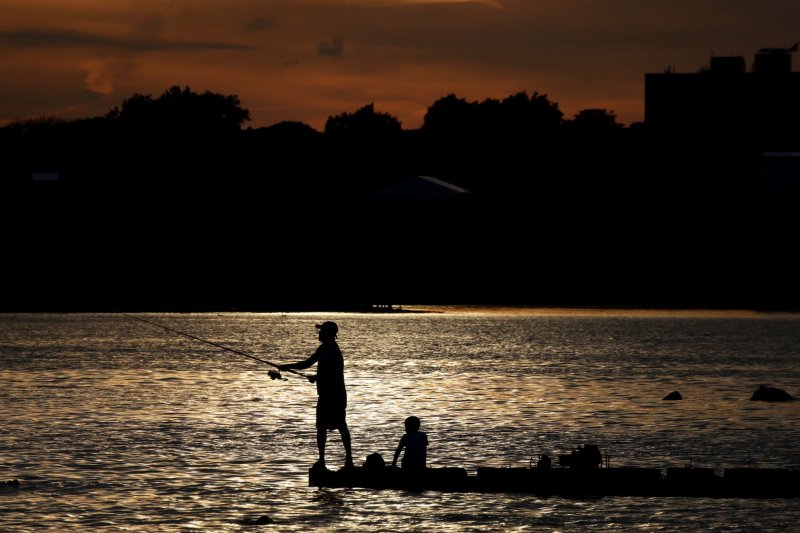
Officials said it's the single largest growth of fishing and hunting opportunities by the Fish and Wildlife Service. File Photo by John Angelillo/UPI | License Photo

April 9 (UPI) -- The Trump administration has announced plans to free up 2.3 million acres of federal land in wildlife refuges and fishing hatcheries to hunters and anglers.

Interior Secretary David Bernhardt said Wednesday the expansion will involve land at more than 100 refuges and hatcheries, calling it the single largest growth of hunting and fishing opportunities in the history of the Fish and Wildlife Service.

"America's hunters and anglers now have something significant to look forward to in the fall as we plan to open and expand hunting and fishing opportunities across more acreage nationwide than the entire state of Delaware," Bernhardt said in a statement.

The rule, for example, would for the first time open migratory bird and sport fishing at Everglades Headwaters National Wildlife Refuge in Florida, big game hunting in the Bamforth National Wildlife Refuge in Wyoming and upland game hunting at Canaan Valley National Wildlife Refuge in West Virginia.

"Hunting and fishing are an integral part of our nation's culture, economy and care for the land," said W. Laird Hamberlin, the chief executive of Safari Club International. "Increasing access and opportunities for people to take part in our sporting heritage strengthens broader conservation efforts."

Others criticized the expansion and the timing of the announcement.


"Instead of responding to pleas by state and local officials for needed agency resources, assistance, and help during this generational [coronavirus] pandemic, Secretary Bernhardt made a tone-deaf announcement that by no means could ever make up for the hunting opportunities and wildlife lost as a result of Trump's deregulatory agenda decimating our public lands and environmental protections," Jayson O'Neill, director of the Western Values Project, said in a statement.