Wednesday, May 05, 2021

Young Indian Women Are Using Instagram To Tell The World How Bad Things Are


Minreet Kaur
Wed., May 5, 2021

“I am feeling anxious,” 30-year-old Mankiran Dhillon, who lives with her parents in Delhi, tells Refinery29. “Nobody was ready for this. Our country had a year to prepare and did nothing but hold huge rallies, it shouldn’t come as a surprise that we are on our own.”

The rallies Mankiran refers to are part of India’s current state elections. They’ve been allowed to go ahead (with many people attending unmasked) despite the coronavirus crisis. Some people say they’ve contributed to the second wave currently devastating the country. Medical experts have condemned it as “complacent”.

As India experiences a surge in COVID-19 cases due to the spread of a double mutant variant which appears to be more virulent, people are dying daily due to lack of oxygen supplies. Every day the number of cases is rising, with over 20 million now recorded. The country has seen more than 300,000 new cases a day for nearly two weeks straight and the death toll currently stands at 222,000. It’s the worst outbreak of coronavirus in the world. Meanwhile, hospitals are running out of oxygen. On Twitter, the BBC’s India editor, Vikas Pandley, is sharing story after story of hospitals where the supply is down to just a few hours left.

This content is not available due to your privacy preferences.Update your settings here to see it.

Delhi alone, where Mankiran is, reported more than 20,000 new infections and 407 deaths on Sunday last week. Mankiran has been using her Instagram to share stories about the coronavirus crisis in India as it unfolds. “COVID is on our doorstep,” she says, “I can’t step out of the house.” All of her neighbours are infected. One of them has been taken to hospital needing urgent treatment. She doesn’t know how they are.

Amid the chaos and uncertainty, social media has become a lifeline, Mankiran says. Instagram and WhatsApp have become a way of connecting with people, both those who are seeking help and those who can offer support. A support group, mainly consisting of young women like her, has been formed.

As part of that group, Mankiran has been creating daily SOS posts on her Instagram for those who are in urgent need of a bed, oxygen supply or medicine. This will tag in reliable sources and help the reach to go further. A shareable spreadsheet of contacts and resources has also been created. All the resources are verified first as there are some scams developing where oxygen cylinder prices are being tripled by those looking to cash in on the crisis.

It is heartening for me, a British Indian journalist based in the UK but with family living in Delhi, to see Mankiran’s efforts. But I can’t help feeling anxious. I am scared to click on the next news story, worried of the horror of how many deaths there will be when I refresh the page. I’ve stopped sleeping: phone calls with family members combined with the images I am being WhatsApped are making it impossible to switch off. Because of what I know happened in the UK last year, I fear that the situation will get worse before it gets better.

“The mental impact that this will leave on our generation is immeasurable,” Mankiran tells me when I share my own feelings. “I know of kids who are barely teenagers and have lost both their parents. They should be enjoying college, spending time with friends and thinking about their futures. But they are dealing with a crisis that nobody in the world prepared them for.”

This content is not available due to your privacy preferences.Update your settings here to see it.

For me, the pain of witnessing what is happening in India is one thing. But the pain of feeling that the rest of the world – particularly the UK with its huge vaccination programme, which you could argue is hoarding supplies – has turned a blind eye is heartbreaking. The ease with which some people in Britain look the other way is particularly sad when I consider the colonial connection between my two countries. The British Raj was the direct rule of India by the British Crown from 1858 to 1947. Sometimes I feel like people pick and choose which bits of history to remember. It’s heartbreaking and I feel the pain of the people in India.

When I talk to my family, they echo Mankiran’s words. “COVID is on our doorstep,” they say repeatedly. It has impressed upon me that, even though the UK government’s response to COVID was far from optimum, we are lucky to have a trustworthy healthcare system and that we are (hopefully) nearly through the worst of the pandemic. India has not even reached the peak of this second wave yet.

This second wave seems to have caught India off guard. But based on what other countries have experienced, surely it wasn’t a surprise? That’s why India’s Prime Minister Narendra Modi is facing calls to resign. There is a petition and a hashtag has been doing the rounds on Facebook. Modi is a controversial figure. Last week, his government ordered US social media companies to block posts criticising their handling of the COVID-19 surge. These allegations of censorship in the world’s largest democracy are serious. Government officials, however, have responded by saying that people are using social media to create panic in Indian society.

When we speak on the phone or over WhatsApp, my own family tells me repeatedly that “this mess was avoidable”. They want to know why the government didn’t prepare for a second wave or put the country into lockdown. They feel that Modi’s government has been more focused on winning elections at all costs and that COVID was not taken seriously by the leader of the country.

Like Mankiran, 24-year-old Dimple Purohit, a former investment banker from Bangalore, is trying to do what she can through her Instagram.

This content is not available due to your privacy preferences.Update your settings here to see it.

Dimple is creating posts about the sociopolitical aspect of India’s current crisis. She wants to cut through the noise and disinformation and she feels the world needs to know about what’s going on. “I am posting on my Instagram all day every day with updates,” she tells Refinery29. “I know there is a lot of false information so I want to help by giving as much accurate information as I can.”

Since the second wave hit India, Dimple has been working on finding, verifying and amplifying the available resources. She says that social media is a way of connecting people who are in need across different states and cities in the country.

“This should have been the government’s responsibility,” she sighs. “There is also a lot of chaos and to help reduce this, I have been helping different organisations and groups that are created for COVID relief with as many volunteers as they need. This includes everything from raising funds to running ambulance services. I’ve also been coming up with strategies to better organise and streamline the process of helping people.”

“We know that the government isn’t coming to save us,” she adds. “We cannot blindly keep up the hopes even after losing countless lives, so the citizens and volunteers are creating a better system for ourselves.”

TikTok is currently banned in India. That’s why Mankiran and Dimple are using Instagram.

Due to the rising death toll, there are huge queues and a waiting time of at least 24 hours outside crematoriums. Dimple explains: “Everywhere you turn, there are mass cremations happening. We can smell death in the air we’re breathing. The official numbers do not even begin to do justice to the real number of people losing their lives. People are literally begging for oxygen.”

Dimple cannot get over the fact that these deaths were avoidable. “We were not prepared,” she told me. “There was one whole year and the government didn’t think it was important enough to prepare for something this big. At a time when you expect the government’s focus to be on directing all resources to saving its people, its focus was party politics. At a time when people were dying in large numbers, it not only allowed but promoted these huge, super-spreader religious gatherings. And they still aren’t doing anything to prevent all these deaths.”

When it comes to attempts to censor what Indian people have to say on social media, Dimple says: “I think the common emotion that we all are feeling is of being helpless, silenced, suffocated.” She adds that some people are scared to post anything online, even if it’s just asking for help.

This is a rational fear. In the state of Uttar Pradesh, which is governed by Modi’s ruling BJP party, anyone who puts out an SOS or “help” call for oxygen has been told that they could face criminal charges and even jail. Such calls, the state’s leaders have said, are “rumours” and “propaganda”. Only last week, a man was arrested for putting out what police officers said was a “false tweet” SOS call because his grandfather was dying. Critics say the move reflects a general erosion of civil liberties and freedom of speech in India which has occurred over the past few years.

“The fact that the government isn’t helping is enraging enough in itself,” Dimple tells me, “but the added social media censorship means that people are being kept from helping one another. The government still wants to paint a happy picture at an international level and will go to any length to keep their people in distress if the truth risks ruining that.”

Young women like Dimple and Mankiran are leading support. They won’t let the government off the hook or allow the world to look away. Twenty-eight-year-old Rasna Bhasin, a brand consultant and content creator from New Delhi, has stopped using her Instagram page to promote her work and made it into a COVID support page. She has 94.1k followers.

This content is not available due to your privacy preferences.Update your settings here to see it.

Rasna’s focus is helping people to find affordable and reliable oxygen. “I am supporting those in different states of India where it is extremely bad,” she told Refinery29. “People are standing in queues. People are standing in queues trying to get oxygen which is being marketed illegally and it’s now more expensive than any other commodity.”

“It started with four of us friends,” she explains, “then it was 10 and now there are 18 of us all helping to find oxygen for hospitals. We find leads and verify them to make sure they are legitimate before posting about them.”

India’s health systems are stretched to their limit, collapsing before our eyes. The entire country is suffering.

“It’s heart-wrenching to see so many losing their loved ones to COVID,” Rasna concluded. “As a Sikh, I believe selfless service can help and I believe this virus can be fought. But I have also lost people to the virus, my friends have lost loved ones. It’s making me feel numb inside.”

Rasna and team have been named the Seva Sisters. This is a reference to a religious group which does outreach work to combat inequality. Working around the clock, Rasna is joining forces with people from all walks of life; they have set up a fundraiser to help source oxygen supplies and offer guides on how to manage COVID at home, how to manage an oxygen meter and how people can help from wherever they are.

I am sad about what is happening in India and that sadness is compounded by the fact that Indian people are being pressured into not speaking out about what is going on. It shouldn’t be down to individuals and charities to do the work of government but seeing young women turn their Instagrams into such a powerful resource gives me hope.

Here are some ways that you can help India as it grapples with the world’s worst coronavirus outbreak:

UNICEF is rushing urgently needed equipment like oxygen concentrators, PPE kits, hygiene supplies and diagnostic testing systems to India. Click here to donate.

The Migrant Workers Solidarity Network was established last year after several migrant workers walked hundreds of miles back home in India after the sudden lockdown. Migrant workers continue to struggle during the current lockdown and are rushing to get back home once again. Click here to donate.

The Indian Red Cross Society is accepting donations from across the world for COVID relief. Canada pledged 10 million dollars to the Indian Red Cross Society to help fight COVID in India. Apart from financial donations, you can also donate ventilators, masks, sanitiser bottles, gloves and dry ration at their state branches, if you live in India. Some state branches are also providing pick-up and drop facilities to those wishing to donate blood. Click here to donate.

UK-based nonprofit Khalsa Aid has previously helped the Yazidi community in Afghanistan, earthquake-stricken Nepal and Indian farmers during the farmers’ protests. Now they are gathering funds to supply oxygen concentrators to India. Click here to donate.

In collaboration with the SaveLife Foundation, Breathe India is raising funds for oxygen concentrators in India’s capital, New Delhi. Click here to donate.
US WAR CRIMINAL CONFESSES TO TORTURE MURDER

Eddie Gallagher says he and other Navy SEALs used a dying enemy fighter for medical practice with no intention of saving him


Ryan Pickrell
INSIDER
Wed., May 5, 2021

Navy Special Operations Chief Edward Gallagher was acquitted of murder on July 2, 2019. Sandy Huffaker/Getty Images


Eddie Gallagher said he and other SEALs practiced medical procedures on a prisoner of war.

"We killed that guy. Our intention was to kill him. Everybody was on board," he said on a podcast.


He said that what had appeared to be life-saving actions were really just live practice.


Retired Navy SEAL Eddie Gallagher, who was found not guilty of murder in a high-profile war-crimes trial nearly two years ago, said in a podcast that aired Tuesday that he and his team practiced various medical procedures on an enemy combatant until he died, with no intention of saving him.


Gallagher was charged with killing a severely wounded Islamic State prisoner in Iraq in 2017 by stabbing him to death, but he was acquitted in 2019. He was, however, convicted of posing for a photograph with the enemy fighter's corpse and demoted.

After the trial, President Donald Trump restored Gallagher's rank and personally intervened when the Navy attempted to take away Gallagher's SEAL trident.

Gallagher recently told Dan Taberski, host of the podcast "The Line," that "the grain of truth in the whole thing is that that ISIS fighter was killed by us and that nobody at that time had a problem with it."

"We killed that guy. Our intention was to kill him. Everybody was on board," he said.

"He was going to die regardless. We weren't taking any prisoners. That wasn't our job," Gallagher said, adding that "everyone was like, let's just do medical treatments on him until he's gone."

Gallagher in an undated photo released on May 24, 2019. Andrea Gallagher via Reuters

The former chief petty officer, who served as the senior enlisted leader of his SEAL platoon and a medic, argued that he did not stab the enemy fighter to death, as some former members of his team have alleged.

Instead, he said, "that dude died from all the medical treatments that were done, and there's plenty of medical treatments that were done to him."

Citing records, Navy Times reported in 2019 that after 20 minutes of treatment, the prisoner's body "ended up inexplicably spangled with medical devices," including a trachea tube, chest tubes, and a sternal intraosseous infusion.

During the podcast interview, Gallagher said that he cut an emergency airway in the ISIS fighter's throat and inserted a breathing tube "just for practice." He added that he "was practicing to see how fast I could do one."

"Everybody knew what was going on," Gallagher said. "That's the only truthful thing to this whole process," he continued. "And then the rest of it just is, like, a bunch of contorted lies to, like, pin that whole scenario on me."

Though his defense team did not openly argue this narrative during Gallagher's trial, the focus instead being on disproving the prosecution's narrative, it appeared in a motion filed by the defense.

The motion, obtained by Navy Times, said that when the 17-year-old ISIS fighter was brought in, "he was at or near death."

The defense argued that Gallagher had "initially attempted to save his life" but that once it was clear he could not be saved, the platoon's medic started "using the newly dead or nearly dead ISIS fighter as a training aid to practice performing medical procedures."

Gallagher's statements appear to build on that information and potentially fill in some gaps about what occurred.

Gallagher's defense attorney, Tim Parlatore, told Insider that what the former Navy SEAL described in the podcast, which he accused of some "selective editing" for the purpose of sensationalism, was "what truly happened."

He explained that assertions that Gallagher attempted to save the life of the enemy fighter, who had been critically wounded in an airstrike, referred to the initial medical assessment Gallagher conducted, not necessarily all of the latter treatments. Once it was determined that saving his life was an impossibility, the decision was made to use the fighter as a training aid.

Parlatore also argued that such practices are not uncommon, calling it beneficial training.


Gallagher walks out of military court in San Diego on July 2, 2019. Sandy Huffaker/Getty Images

While the American Medical Association says that "medical training sometimes involves practicing procedures on newly deceased patients," a 2002 article in the Journal of General Internal Medicine argued that "current ethical norms do not support the practice of using newly and nearly dead patients for training in invasive medical procedures absent prior consent."

Parlatore said that although such actions may be ethically questionable, practicing medical procedures on a dying person beyond saving is not illegal. He argued that the cause of death in this case was the airstrike, telling Insider that the medical procedures practiced on the fighter did not do anything to hasten his demise.

Speaking to Military.com about the podcast, Parlatore said that Gallagher's 'inartful" statements have been misinterpreted and that the Navy SEALs "did not intend to kill an unarmed prisoner using medical treatment." He added that some of the medical procedures may have even prolonged the prisoner's life.

During the trial, Parlatore argued that the case "isn't about murder" but "about mutiny." The defense argued that disgruntled members of Gallagher's platoon had seized the opportunity and made up a story about what had happened to get rid of him.

In various interviews, some of Gallagher's former platoon members described him as "toxic" and "freaking evil," with Petty Officer 1st Class Corey Scott saying, "You could tell he was perfectly OK with killing anybody that was moving."

Scott testified under immunity that while Gallagher had stabbed the young ISIS fighter, it was he who had actually killed him by covering the breathing tube and asphyxiating him as some sort of mercy killing. Questions have been raised about the veracity of these statements.

The US Navy has not responded to Insider's request for comment on Gallagher's latest remarks. When Pentagon Press Secretary John Kirby was asked about Gallagher's remarks on Wednesday, he stated: "I'm not sure I'm going to dignify those comments with a response."

Read the original article on Business Insider
WW3.0
Photos of tanks and armored vehicles in the Himalayas show that China and India's next border showdown could be much deadlier

What is clear is that both sides are far more mechanized, capable, and lethal than they were in 1962.


Benjamin Brimelow
Wed., May 5, 2021,

An Indian tourist rides on a horse back at the Pangong Lake high up in Ladakh region of India, June 17, 2016. AP Photo/Manish Swarup

India and China have both invested in their armored forces since the 1962 war on their disputed border in the Himalayas.

The armor that both sides fielded during another recent period of heightened tension on that border show that a future war could be more destructive.


Two months ago, the Indian and Chinese militaries pulled back their forces stationed around Pangong Lake, on their disputed border in the western Himalaya mountains.

The pullback, described as a "disengagement" by India's Defense Ministry, was meant to be a first step to ease tensions on the disputed border - swaths of which have been heavily militarized since 20 Indian and at least four Chinese soldiers died in a medieval-style brawl in the nearby Galwan River Valley almost a year ago.


An Indian Army photo purportedly showing Chinese troops dismantling their bunkers at Pangong Tso region, in Ladakh along the India-China border, February 15, 2021. Indian Army via AP

The Indian Army released photos, videos, and aerial images of the pullback, showing Chinese troops dismantling bunkers, removing tents, and evacuating the area.

The most interesting images, though, were the ones that showed the large number of tanks and armored vehicles. Indian media reported that China alone withdrew 200 tanks from the area.

The sheer sizes of the armored forces indicates that both sides were quite serious about their military buildups, and that the next violent incident on the border could escalate into something far more deadly.
Armor in the Himalayas

Military trucks carrying supplies toward forward areas in the Ladakh region, near Pangong Lake, September 15, 2020. REUTERS/Danish Siddiqui

In general, large-scale armor deployments in mountainous and high-altitude regions are rare, especially in the Himalayas.

The low air pressure, freezing conditions, and rough terrain make operating and maintaining such vehicles difficult and often lead to losses from wear and tear or mechanical failure.

Tanks and armored vehicles have to be restarted for up to 30 minutes every two or three hours to prevent them from freezing, according to one retired Indian general.

That operational challenge is believed to have been a significant factor in both countries' decisions to pull back their armor from Pangong Tso.

Indian and Chinese army officers meet in the Pangong Lake region of Ladakh as both countries pull back front-line troops from disputed portions of their border, February 10, 2021. Indian Army via AP

"These operational issues simply cannot be ignored either by Beijing or Delhi for a variety of operational reasons that are common to both forces," a high-ranking Indian Army officer told The Wire.

That is also the reason armor - and aircraft, for that matter - played a very limited role in the month-long war India and China fought in the region in 1962. During that war, India airlifted six AMX-13 light tanks to an area just south of Pangong Tso, but the feat was extremely difficult, and there were no large-scale tank battles.

The 1962 war itself was an embarrassment for India, which had over 8,000 soldiers killed, wounded, captured, or missing and lost the territory Aksai Chin to China. China lost 722 soldiers killed and 1,697 wounded.
Modern tank forces

India's Arjun Mark II main battle tank during a demonstration on a beach on the coast south of Chennai, April 12, 2018. Pallava Bagla/Corbis via Getty Images

Both India and China set about building up their militaries after the 1962 war.

Today, India's tank force is made up primarily of three models. Two of them, the T-72 "Ajeya" and T-90 "Bhishma" main battle tanks (MBTs), are built in India using Russian designs. The third, the Arjun, is of Indian design.

The Russian tanks, designed to operate in the cold, make up most of India's fleet of about 4,000 tanks. The Arjun has had a troubled rollout, and only 124 are in service.

China's People's Liberation Army, or PLA, maintains a large number of legacy models from the Cold War, like the Type 59, Type 69, and Type 80/88 tanks, but China's tank force is centered on three modern models: the Type 96 and Type 99 MBTs, and the new Type 15.

While the Type 96 and Type 99 are MBTs, the Type 15 is one of the few light tanks developed this century.

China's Type 99 (ZTZ-99) tank during an event at the 2017 Army Games in Russia, July 29, 2017. Sergei Bobylev\TASS via Getty Images

The Type 96 and Type 99 weigh about 42 tons and 54 tons, respectively, and are armed with 125 mm guns, whereas the Type 15 weighs just 35 tons and has a 105 mm gun.

By comparison, India's T-72, T-90, and Arjun tanks weigh about 41 tons, 46 tons, and 68 tons, respectively. The T-72 and T-90 are armed with 125 mm guns and the Arjun with a 120 mm.

Despite being smaller and under-gunned, the Type 15 is far more capable in the mountainous terrain of the Himalayas than its Indian counterparts.

The Type 15 is just one of the PLA's numerous new weapon systems designed with mountain operations in mind, and China has shown it off in a number of live-fire drills in Tibet.

Both the PLA's Xinjiang and Tibet military commands have received Type 15s. They have also been deployed to the Sino-Indian border, as have India's T-72 and T-90s.
At the 'roof of the world'

Tanks pull back from the banks of Pangong Lake region, in Ladakh along the India-China border, February 10, 2021. Indian Army via AP

The images and a video released by the Indian military appear to indicate that the pullout around Pangong Tso was a coordinated event in which tanks were purposely shown to withdraw one at a time.

Indian T-72 and BMP-2 infantry fighting vehicles (IFVs) can be seen on the Indian side of the border, as can a number of small fighting positions and foxholes.

The Chinese armored force that can be seen is more diverse. A few of the tanks appear to be legacy models, likely Type 80/88s. There also appear to be several modern models, most likely Type 96s or Type 99As.

Another image shows at least 12 Chinese ZBD-04 IFVs and three other armored vehicles, possibly tracked variants of the HQ-17 short-range surface-to-air-missile system, Type 09 self-propelled anti-aircraft artillery units, or a combination of both.

It's unclear if the tanks and IFVs were always deployed so close to one another or if they were only brought forward for verification during the disengagement.

What is clear is that both sides are far more mechanized, capable, and lethal than they were in 1962.

The pullback from Pangong Tso has not been followed by additional pullbacks in other contested areas, as was originally hoped. Recent reporting suggests some Indian officials may regret pulling back from a strategically important area with little to show for it.

Despite the difficult conditions in a region known as the "roof of the world," flare ups along the border are still a real possibility.

With so much heavy hardware present, future fighting in the area could be much deadlier than before.

Read the original article on Business Insi
Oldest human burial discovered in Africa sheds light on 78,000-year-old burial practices

Doyle Rice, USA TODAY 

Scientists uncovered evidence of an ancient human burial in Africa that changes what we know about social behaviors in Homo sapiens, according to a new study.
© Fernando Fueyo An artist interprets the burial of a 3-year-old child in Africa about 78,000 years ago.

The discovery offers insight into how people from 78,000 years ago treated their dead.

A child, about 3 years old, seems to have been carefully arranged in a deliberately excavated pit, then covered by sediment scooped up from the cave floor, the journal Nature reported Wednesday.

The arrangement of surviving bone fragments indicates that the body was placed on its side with legs drawn up to its chest, the study found.

These features – along with evidence that the body was rapidly covered and decomposed – indicate that the burial was intentional.

"We could infer this child ... was really put there in a specific position with a pillow under his head," said study co-author María Martinón-Torres, director at the National Research Center on Human Evolution in Burgos, Spain, CNN reported.

"This respect, this care, this tenderness – putting a child lying in an almost sleeping position: I really think it's one of most important – the earliest evidence in Africa – of humans living in the physical and the symbolic world," Martinón-Torres said in a news briefing.

The site of the burial is in modern-day Panga ya Saidi, in Kenya, north of Mombasa.

Though there are no signs of offerings or ochre, both common at more recent burial sites, the treatment given the child suggests a complex ritual that probably required the participation of many members of the child's community.

This evidence suggests that the mortuary behaviors of humans in Africa differed from those of Neanderthals and early humans in Eurasia, who commonly buried their dead in residential sites.

"As soon as we first visited Panga ya Saidi, we knew that it was special," said Nicole Boivin, principal investigator of the project and director of the department of archaeology at the Max Planck Institute for the Science of Human History in Germany. "The site is truly one of a kind.

"Repeated seasons of excavation at Panga ya Saidi have now helped to establish it as a key type site for the East African coast, with an extraordinary 78,000-year record of early human cultural, technological and symbolic activities," she said.

In addition to providing insights into the evolution of humans in Africa, the study highlights regional diversity in the evolution of our species, Nature said.

“It’s incredibly rare that we gain access to such a snapshot of a moment in time, especially one so very ancient,” Boivin told The Guardian. “The burial takes us back to a very sad moment … one that despite the vast time separating us, we can understand as humans.”

This article originally appeared on USA TODAY: Oldest human burial discovered in Africa sheds light on 78,000-year-old burial practices
Ford: It's about time male politicians in Alberta recognize the value of universal daycare

Author of the article:Catherine Ford

Publishing date:May 05, 2021 • 
Premier Jason Kenney would contribute greatly to the province's well-being if he accepts universal daycare, writes Catherine Ford. PHOTO BY CHRIS SCHWARZ/GOVERNMENT OF ALBERTA

Child care is fundamental to Canada’s economy. Such a statement of the obvious should not have to be written. But could someone please tell Alberta Premier Jason Kenney that fact?

Maybe, just maybe, a middle-aged (he’s 52) single man without children would naturally be unaware of the advantages of having licensed daycare for other people’s children. Yeah, right. (Cue the sarcasm.

He apparently wasn’t paying any attention to what has been revealed during this pandemic, that being a working mother isn’t for the faint of heart or skint of wallet. My friend, whose daughter has two children and a full-time job, says the cost of childcare in Calgary — and likely across this country with the exception of Quebec — can be more than monthly mortgage payments.

I’d have a lot more respect for any man and, in particular, for any male politician, who recognizes the importance of early childhood education and supports a universal concept. Like universal health care, it doesn’t start in kindergarten, it starts with the first words said to a baby and continues throughout childhood, just the same as health care. That’s why warehousing the very young in unlicensed and unregulated care homes is not satisfactory. At the moment, though, that’s sometimes the only choice available to working mothers.

It’s strange that experience doesn’t seem to count. I remember the on-site daycare at the Calgary Herald and what a benefit it was to employees with children. (Truth be told, it was also a boon to the rest of us whose daily jobs were lightened and heartened by the sight and sounds of small children playing outside our office windows.)

A made-in-Ottawa plan, outlined in the recent budget might not be the ideal way to start, but it would be a start. To roll out $10-a-day childcare within five years — at an estimated cost of $30 billion — will take compromise and compliance on the part of the provinces. Kenney had already dismissed what he refers to as “institutional” care, suggesting it would only serve the urban elite and unionized workplaces.

Curiously, I am assuming the premier actually supports the “institution” of schools where children are sent most weekdays during the school year, whether they wish to go or not.

Further, Kenney has already hinted he believes the federal government is leaving too many families out of the equation: “rural families, shift workers and many Indigenous people,” he said. And what about people who choose to stay home with their children, don’t they deserve equal consideration, some cash maybe? In a word: No. If you make that choice, if you can afford to live on one income, good for you. But the plan is not to provide for the well-off middle class, but to provide support for those who cannot make that decision.

Scalded cats have already weighed in on the gaps and problems. But I side with one of the Famous Five, Nellie McClung, on this: “Never explain, never retract, never apologize. Just get the thing done and let them howl.”

My interest in the subject is simple: I am an elderly woman who has never raised children, but I know the success of the adult rests on the success of childhood. I‘m a curious and vocal adult because, among other advantages, my parents sent me to the Calgary Montessori School at age four.

In other words, I have no skin in this game and neither does the premier — but the care of children should not be just a family’s decision, but the collective force of society. We can’t afford, literally, to allow marginalized and disadvantaged children to be left out and down in our economy. Their success starts with affordable, equitable childcare.

The suggestion that cash in hand so parents can spend it on whatever version of childcare they can find is beyond stupid. It reminds me of nothing less than the outrageous Alberta Prosperity program when then-premier Ralph Klein decided to waste about $1.4 billion of an estimated $8.5-billion surplus by sending out $400 cheques to every Albertan, including children. Imagine if he had decided to use that money to support universal early childhood education. But that’s not the populist’s way; that’s not the right-of-centre way. It didn’t save Klein’s job and Kenney’s popularity is heading down the same rabbit hole.

Catherine Ford is a regular columnist for the Calgary Herald.

THE ONLY NON TORY MP IN ALBERTA
Kenney under fire during Commons emergency debate on Alberta's COVID-19 crisis

OTTAWA — Alberta's legislature may have been silenced but its partisan warfare has relocated to the House of Commons as MPs hold an emergency debate tonight on the province's soaring number of COVID-19 cases.

© Provided by The Canadian Press

Edmonton New Democrat MP Heather McPherson requested the debate and is using it to blast what she calls Alberta Premier Jason Kenney's disastrous mishandling of the health crisis.

She says the "stumbling and bumbling" of Kenney's government has led to the biggest health crisis in the province's history.

But she's also blaming the federal Liberal government for not doing enough to help, alleging that Prime Minister Justin Trudeau would rather watch Alberta burn than help Kenney.


This report by The Canadian Press was first published May 5, 2021.

The Canadian Pres
Premier of Alberta under fire as COVID-19 surges


May 5, 2021 Reuters


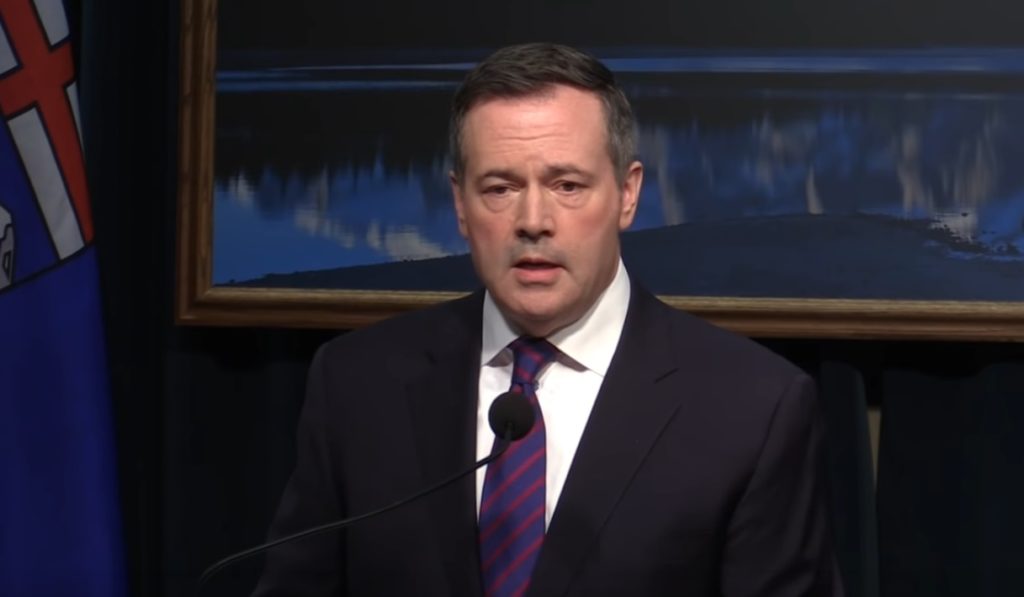
Alberta Premier Jason KenneyAlberta Premier Jason Kenney’s mixed public-health messaging as the province grapples with a third wave of the COVID-19 pandemic is undermining efforts to tackle the outbreak, experts say, while infuriating voters across the political spectrum.


Canada’s oil-rich western province has the highest COVID-19 rates in North America per capita sharp increase.


The COVID-19 resurgence is stoking frustration towards United Conservative Party leader Kenney, who throughout the pandemic has tried to walk a fine line between urging people to follow official guidance, and assuring Albertans they are entitled to their rights and freedoms.


“It’s confusing, he’s trying to please everybody,” said Lorian Hardcastle, an associate professor at the University of Calgary specialising in health law and policy. “He’s trying to walk this middle ground but not doing public health or the economy any favours.”

Alberta’s economy shrank 8.1% in 2020, the biggest contraction among the provinces, according to Statistics Canada.

An Angus Reid poll from April shows 45% of Albertans said COVID-19 restrictions in the province go too far, while another 45% said they don’t go far enough. Three-quarters of Albertans polled said Kenney was doing a poor job of handling the pandemic.

Hardcastle said the premier’s public comments are fuelling non-compliance with health measures.

“His message will be that we have restrictions, and almost in the same breath he says people are not following them anyway. That just gives people justification to break rules,” Hardcastle said.

Kenney’s office did not immediately respond to a request for comment.

Cultural differences between Alberta and the rest of Canada are also contributing to resistance to pandemic restrictions. Canada’s energy heartland, which sometimes refers to itself as the Texas of the North, has a preference for a hands-off approach from government.

Rural communities pride themselves on a frontier spirit, which Kenney appealed to during his 2019 election campaign. That rural conservative base is the backbone of UCP support, but Kenney’s attempts to appease those voters while also introducing restrictions is backfiring.

A “no more lockdowns” rodeo took place in central Alberta last weekend, attracting an estimated 2,000 people. An Edmonton pastor on trial for breaking COVID-19 in his church services said he was encouraged by Kenney’s comments last year that the pandemic was a type of influenza.

Members of Kenney’s own caucus are also rebelling. Sixteen UCP lawmakers signed an open letter in April slamming restrictions.


“What Albertans need is a leader they can trust… who when they make decisions make them on the basis of evidence, of science, and not on their own political needs and challenges,” Rachel Notley, leader of the opposition NDP, told a news conference on Tuesday.

Voter dissatisfaction with the premier has been mounting since Christmas, when Kenney was slow to reprimand a UCP politician who ignored government advice and travelled abroad.


Alberta’s next election is not scheduled until spring 2023 but Lori Williams, a political scientist at Mount Royal University, said frustration over Kenney’s handling of the pandemic could linger.

“A lot of people are going to remember how angry they were during this time,” Williams said. “It looks like Jason Kenney is being driven not by health and economic concerns, but by concerns about his political future. That may be the most damaging thing of all.
Jean rips Kenney for ‘new base’ comment, says premier has ‘failed’

POOR KENNEY GETS ATTACKED FROM HIS RIGHT WING BASE 

“When a politician rejects the people whose votes he campaigned for, it is always his fault and never theirs,” said Brian Jean.


May 4, 2021
By Dave Naylor
WESTERN STANDARD


Former Wildrose Leader and UCP co-founder Brian Jean tore a strip off of Alberta Premier Jason Kenney for telling the UCP caucus that “If they are our base, I want a new base.”

“You might want a ‘new base.’ Albertans want better leadership,” Jean said in a Tuesday night Facebook post.

“When a politician rejects the people whose votes he campaigned for, it is always his fault and never theirs.”

“The UCP was created to unite a wide variety of Albertans,” Jean continued. “They were attracted to the thought of Alberta being governed by a common-sense party that listened to them, that answered their questions and that was straight with them. Premier, if many Albertans have stopped doing what you want, that is on you.”


Jean was referring to a Sunday incident when Kenney told a closed-door UCP caucus meeting “I want a new base” as he slammed the rogue anti-lockdown rodeo in Bowden.

Kenney used the meeting to rail against the ‘No More Lockdowns Rodeo’, which attracted approximately 4,000-5,000 attendees over the weekend.

Three UCP MLAs, who spoke to the Western Standard on the condition of anonymity, said another MLA spoke up and reminded Kenney that the people who went to the rodeo were the “base” of the UCP’s support.

“If they are our base, I want a new base,” Kenney told the meeting, according to the three MLAs.


Kenney called the story “false.”

But it didn’t sit to well with Jean, who also blasted Kenney for his latest COVID-19 lockdown tightening and restrictions.

“You have failed to answer their questions. You have failed to give them the data and information they were looking for. You have failed to keep them persuaded,” Jean wrote.

“Leaders bring people together. Leaders listen and explain and convince. Leaders answer questions and provide the information that people need to understand things. A leader is sometimes in the hot seat – take it. It is your job.


“A few weeks ago, I wrote about how AHS is hiding critical health data from Albertans – you have done nothing about that. I wrote about how the CMOH wasn’t being asked the right questions and how to fix that. You ignored that too. I made suggestions on how you could reach across the political aisle and unify Albertans. Your response was to arrogantly reject even those Albertans who voted for you.

The mayor of Alberta's COVID-19 hotspot says Kenney government won't share modelling data


“Premier, Albertans have lost confidence in you. Those who didn’t vote for you have concluded that you are even worse than they feared. Those who did vote for you, know that you are not governing as they would have hoped.”

Jean was first elected as a Tory MP in a Fort McMurray-area riding in 2004. He was re-elected in 2008 and 2011. He resigned in 2014, and the next year become the leader of Alberta’s Wildrose Party.

After the party merged with the UCP, Jean ran to become leader but lost to Kenney.

Dave Naylor is the News Editor of the Western Standard


Vote accepted

HOW DO YOU FEEL ABOUT THE RECENT COVID-19 RESTRICTIONS IN ALBERTA?
  • They're going too far60%
  • They aren't going far enough26.67%
  • They're about where they should be13.33%

Kenney says after death threats he wants to make it clear — 'extremists are not [the UCP's] base'
BUT THEY ARE HE IS IN DENIAL 
Premier speculates that some Albertans are in 'COVID-denial'
BUT THEY ARE HIS BASE 

Sarah Rieger · CBC News · Posted: May 04,2021
Premier Jason Kenney says he has received death threats in regards to the public health measures he's taken during the pandemic. (Jason Kenney/Facebook

Premier Jason Kenney says he is making it clear to his caucus that extremists are not the United Conservative Party's base, after receiving death threats from members of that group.

In a Facebook livestream on Tuesday, shortly after introducing new public health restrictions, Kenney said after a recent news conference he received two messages in short succession, one of which threatened his 83-year-old mother who lives alone.

He said the messages read: "You will be executed for your crimes against humanity" and "We know where your mother lives."

I think there's a small minority of the population creating their own reality … and maybe they're acting accordingly.- Premier Jason Kenney

Kenney said he told his caucus that people sending those types of messages or purporting "insane" conspiracy theories are not his party's base.


"These people, we don't want people making death threats, people threatening to lock up Dr. [Deena] Hinshaw, people organizing rallies with Tiki torches based on the neo-Nazi rally in Virginia — those are not our supporters. Those are not Alberta Conservatives, those are not mainstream Albertans," Kenney said.

"Those are voices of extremism and hatred."

WHICH IS WHAT UCP IS 

He also read out a message that he said could best be described as "tin-foil hat" from the organizers of a recent rodeo that was held in protest of public health restrictions near Bowden.

The message described Kenney as a "tyrannical being" and said his actions — barring large gatherings during a pandemic — violate human rights.

While Alberta Health Services is exploring its legal options toward the organizers of that rodeo, RCMP and the province took no action during the weekend regarding enforcement.

Alberta Health Services explores legal options after hundreds attend rodeo

The premier said he appreciates skepticism and debate about government overreach, and said he's been "viciously attacked" for tolerating that type of debate.

He said he welcomes different views, as long as they are within the common goal of keeping the broader population safe and minimizing COVID-19 spread.

Protesters against public health restrictions, including a woman in a fake nurse's costume covered in dolls meant to represent dead babies, gathered at several locations around Calgary over the weekend, including briefly disrupting traffic on 17th Avenue S.W. on Saturday. (Submitted)

Kenney has been criticized by health professionals and the Opposition for waiting too long to bring in new restrictions and failing to enforce those rules that are in place — but some of the criticisms of his actions to protect public health have come from inside his own caucus.

Almost half of the party's back-bencher MLAs signed a letter in early April against public health measures, commentary Kenney said he condones as long as the MLAs do not break health restrictions themselves.

Shortly before the letter was released, two of the signatories left a coalition against health restrictions after one of the organizers invoked Hitler, while another has falsely claimed that the worst of the pandemic is over and helped to spread misinformation by hinting the federal government could be creating COVID concentration camps.

Alberta is currently combating the highest case numbers of the pandemic so far with 23,623 active cases, a positivity rate of 12 per cent and an R-value of 1.12.

Alberta Premier Jason Kenney announced basic fines for violations of public health measures are doubling to $2,000, and repeat offenders would face tougher enforcement protocols. 0:30  VIDEOS Kenney says after death threats he wants to make it clear — 'extremists are not [the UCP's] base' | CBC News

The province has the highest active case rate of anywhere in Canada or the U.S., more than twice the rate of the next highest province, Ontario.

Kenney speculated that Alberta might have a larger problem with non-compliance with health measures to protect others than other provinces because many are in "COVID-denial."

"I think there's a small minority of the population creating their own reality based on the Facebook pages they follow or whatever silos of information they're getting and maybe they're acting accordingly."

OUCH BITCH SLAPPED FROM THE RIGHT
GUNTER: Province counting on Albertans to voluntarily follow new, unenforceable restrictions
Author of the article: Lorne Gunter
Publishing date: May 04, 2021 •
SUN/POSTMEDIA
Facebook video screen grab of Alberta Premier Jason Kenney announcing new public health measures to limit the spread of COVID-19. Postmedia Network

Oh, lucky us. Albertans get to relive April and May 2020 when our province was in its deepest lockdown.


Let no one be fooled, the measures announced Tuesday evening by Premier Jason Kenney will not bring our province’s COVID infection rate down directly.


We are shutting schools to in-person learning, even though schools aren’t spreading the infection.

People aren’t catching COVID while they’re having their hair cut or their nails done, yet we’re closing all salons for three weeks.

Outdoor patios at restaurants aren’t a big source of spread, but they’re being closed, too.

Most workplaces aren’t hotspots (the few that are, typically aren’t offices or stores), yet office workers are urged to work from home and retail stores are forced to reduce capacity to 10 per cent.

The same goes for gyms. Very few have outbreaks, but they are closed, too, by government order.

So if most of the places and activities that Kenney shuttered Tuesday night are not causing COVID, why in heaven’s name did he close them?


Why did he also limit outdoor social gatherings to five people (from 10) and from no more than two family groups? Was there a lot of evidence from the province’s vast army of contact tracers that beers around a firepit was driving the recent third-wave spike?

Nope.

All these measures — plus further limits on funerals, worship services and youth and adult sports — are not designed to stop the spread. They’re designed to keep you at home for three weeks, so your socializing doesn’t increase the infection rates.

The schools are a good example. There are a lot of schools and classrooms subject to isolation because one or two students either have COVID or are suspected of having it.

That’s not the same as an outbreak.

Once enough teachers and staff are in isolation, even though very few of them have actual COVID, there aren’t enough substitutes and replacements around to cover.

So the schools aren’t being forced online specifically because there is a lot of infection in them. They’re closing in-person learning because as soon as kids are made to stay home, public health officials know 20 to 25 per cent of the workforce will have to stay home, too, to look after their kids.

Had daycares been closed as well, the portion of working people forced home would rise to more than 30 per cent.

Closing schools is about limiting adults’ mobility, not stopping a spike among kids’.

So will all this arbitrariness work? Only if Albertans decide to limit interpersonal contact on their own.

There aren’t enough police, peace officers, judges and jails in Alberta to enforce these recycled regulations if ordinary citizens refuse to listen.


The provincial government and police might be able to stop another rogue rodeo like the one last weekend in Bowden. But could they stop two? Or six?

And one GraceLife Church can be fenced off, but a dozen? That seems impossib
le.

The second-wave restrictions last December worked because Albertans on their own agreed to give up Christmas with family. There weren’t enough officials in the province to patrol each home and make sure no feast was happening.


Same applies with the regs announced Tuesday.

I suspect enough Albertans will say, “OK, OK, fine. We’ll put with this one more time.” And over the coming weeks infection rates will come down. (Infections, hospitalizations and deaths may already have plateaued.)

After that, vaccination rates should be high enough to prevent another spike.

But ordinary Albertans aren’t as fearful of the pandemic as they were a year ago when these tactics were first tried. So if enough decide not to follow the old rules again, there isn’t enough law enforcement to force them.