Wednesday, May 05, 2021

Democratic congressman tells Marjorie Taylor Greene to 'shut your seditious, QAnon loving mouth' after she called his party 'the enemy within'

Eliza Relman
Tue., May 4, 2021

Rep. Marjorie Taylor Greene speaks with a colleague on the House floor on January 3. Erin Scott-Pool/Getty


Reps. Ruben Gallego and Marjorie Taylor Greene got into a heated Twitter exchange this week.


Gallego said Greene was an "insurrectionist" after she called Democrats "the enemy within."


In response, Greene called Gallego a "coward" and questioned his masculinity.


Democratic Rep. Ruben Gallego and GOP Rep. Marjorie Taylor Greene got into a heated Twitter exchange this week, exposing the deep anger still roiling the ranks of Congress after the Capitol riot on January 6.

After Greene, the freshman Republican from Georgia who's embraced a host of far-right conspiracy theories, called her Democratic colleagues "the enemy within" in a tweet on Sunday, Gallego said Greene was aligned with the Capitol rioters.

"I was trying to figure what type of pen to stab your friends with if they overran us on the floor of the House of Representatives while trying to conduct a democratic transition of power," Gallego said. "So please shut your seditious, Qanon loving mouth when it comes to who loves America."

Gallego, a Marine combat veteran from Arizona, helped colleagues with their gas masks as Trump supporters stormed the Capitol in January. He also provided shelter in his office to several journalists after they were denied entry into a safe room.


-Marjorie Taylor Greene 🇺🇸 (@mtgreenee) May 2, 2021


-Ruben Gallego (@RubenGallego) May 2, 2021

On Tuesday, Greene accused Gallego of seeking attention, called him a "coward," and questioned his masculinity.

"While you were hiding with your little pen, brave Republican MEN were helping police hold the door, so that ALL of us could get out safely. Coward," she wrote.

Gallego said that while there were "many heroes" in the Capitol on January 6, Greene was one of the "many insurrectionist trying to destroy Democracy."

Gallego ended the exchange by saying he didn't have time for a Twitter feud because he was too busy with legislative work, which he said Greene "wouldn't know about" because she was stripped of her committee assignments a month after being sworn in.

"I would tweet back and forth with you but I have 2 committee assignments and a bill of mine is being marked," he tweeted. "That we means it's passing out of committee. (But you wouldn't know about that)."

Boycott threatened over Shell's sponsorship of Science Museum carbon capture exhibition

SHELL LOVES CARBON CAPTURE
USES IT TO FRACK OLD WELLS

Wed., May 5, 2021


Climate activists say they'll call for people to boycott a new exhibition at London's Science Museum if the oil company Shell isn't dropped as a major sponsor.

The UK Student Climate Network has already sent an open letter to the museum in protest but says it's had no response.

It's two weeks until the exhibition on carbon capture technology is due to open.

A contributor who has now partly withdrawn her involvement says she was disappointed and embarrassed to learn about the sponsorship after already agreeing to take part.

Dr Emma Sayer, reader in Ecosystem Ecology at the University of Lancaster, contributed to a display on capturing carbon in woodlands.

She said: "My contribution to the exhibition is about soil carbon storage. I was really excited. The Science Museum is a great place and it was fantastic to be involved.

"But this sponsorship issue has created a big conundrum for me because on the one hand, I want to support the exhibition, and the key messages of the exhibition, but then on the other hand, I don't want to be associated with sponsorship by big oil companies."

Dr Sayer added: "We need to be reducing our fossil fuel use and we need to be doing it urgently. And that's really why it creates such an issue for me.

"I'm very aware of the need to mitigate the impacts of climate change and I think we should be transitioning away from fossil fuels as fast as possible and that creates a conflict with that kind of sponsorship."

Dr Sayer has now withdrawn consent to use video footage for a film in the exhibition but because she still supports the message of the exhibition is leaving her display there.

Anya Nanning Ramamurthy of the UK Student Climate Network says if Shell is not dropped they will be calling for a boycott of the exhibition which begins on 19 May.

She said: "Surely the Museum can put on an exhibition like this without Shell's money. Fossil fuel companies shouldn't be sponsoring exhibitions around solutions to climate change."

Roger Highfield, Science Director of the Science Museum Group, defended the sponsorship involvement of Shell.

He said: "We keep complete editorial control of our exhibitions, no matter the sponsor. When you look at the thinking behind this exhibition, our number one objective was to engage the public, get them talking about whether carbon capture has a role to play.

It's a really important conversation because the future of the planet is at stake."

A Shell spokesperson said: "Shell and the Science Museum have a longstanding relationship, based on a shared interest in promoting engagement in science - which will be a key enabler in addressing the challenge to provide more and cleaner energy solutions.

"At Shell our target is to become a net-zero emissions energy business by 2050, in step with society. As Shell works with our customers to identify the best paths to decarbonisation, we seek to avoid, reduce and only then mitigate any remaining emissions.

"Developing carbon capture and storage and using natural sinks are two of a range of ways of decarbonising energy."

The Exhibition has been put together during lockdown and when the Science Museum re-opens it's thought to be the UK's first on carbon capture technology.

The centre-piece is a life-size mechanical tree which was designed in America and sent to London from Arizona State University.

It works in the same way as a natural tree to capture carbon using man-made processes.

It is the first full-scale prototype of this kind of technology. The Museum says in a year a cluster of 12 mechanical trees can absorb the amount of carbon dioxide produced by 44 average UK homes.

Sky News 
AOC uses ðŸ‘¹‘ogre’👹 emojis ðŸ‘¹ to troll Cruz over Trump meeting: ‘Nothing l like reminiscing about attempted coups’

Graig Graziosi
Wed., May 5, 2021, 

Senator Ted Cruz and former President Donald Trump dine at Mar-a-Lago (Twitter)

Representative Alexandria Ocasio-Cortez has clearly still not forgiven Senator Ted Cruz for backing Donald Trump's attempts to fraudulently overturn the 2020 election and the Capitol riot that resulted from those efforts.

On Wednesday, Ms Ocasio-Cortez lashed out at Mr Cruz after he posted a photo of himself dining with Mr Trump.

"Had a great dinner tonight with President Trump at Mar-a-Lago," Mr Cruz tweeted. "He's in great spirits! We spent the evening talking about working together to re-take the House & Senate in 2022."

Ms Ocasio-Cortez used the opportunity to remind the public of the insurrection at the Capitol and the attempt by Republican lawmakers to dispute the results of the 2020 election.

"Nothing like reminiscing about attempted coups over a bouquet of flowers," Ms Ocasio-Cortez wrote, retweeting the image.

She included a pair of emojis of Japanese demons, called “Oni”,👹 alongside the image of the two politicians.

Other social media users responded to the photo by recalling the time Mr Trump insinuated Mr Cruz's wife was ugly and suggested that his father was involved in the JFK assassination.

Jeff Jacoby, a right-leaning columnist at the Boston Globe, tweeted out a video of Mr Cruz from the 2016 Republican primaries in which the Senator calls Mr Trump a “pathological liar”, a “narcissist”, and a “serial philanderer”.

“You young kids won't believe it, but there was a time when Ted Cruz wasn't a Trump bootlicker,” Mr Jacoby wrote.

Despite his harsh words for Mr Trump and the former president's repeated and humiliating attacks on him during the 2016 primaries, Mr Cruz went on to become one his most loyal supporters.

Mr Cruz was one of the leaders of the Senate Republicans’ attempt to stall the electoral vote count on 6 January to confirm that Joe Biden had won the 2020 election. The Capitol insurrection occurred during that count.

He and other Republican lawmakers opposed the count, alleging massive voter fraud had taken place and resulted in Mr Trump's loss.

There has never been any evidence of widespread voter fraud uncovered in the months since the election.

Ms Ocasio-Cortez has repeatedly called for Mr Cruz to resign for what she views as his role in inciting the riot that left five dead, including a Capitol police officer.

"Sen. Cruz, you must accept responsibility for how your craven, self-serving actions contributed to the deaths of four people yesterday. And how you fundraised off this riot. Both you and Senator Hawley must resign. If you do not, the Senate should move for your expulsion," Ms Ocasio-Cortez tweeted in January.


Unseen warriors of COVID: Delhi crisis spurs citizen-lead initiatives as volunteers open 'oxygen langars' at Gurudwaras


Meer Faisal

Wed., May 5, 2021

Editor's note: As the second wave of coronavirus infections ravages parts of India, the unseen work of millions of front-line workers and citizens is providing relief to distressed families. This is part one of a series profiling the stories of how those efforts are making a powerful and positive impact

The second wave of Covid-19 has hit the National Capital hard and the overburdened healthcare infrastructure is coming apart at the seams. But at a time when the city is faced with an acute shortage of oxygen and hospital beds, many citizens are rising to the occasion in this hour of need.

One such example is the Gurudwara Damdama Sahib, at New Delhi's Nizamuddin, where the organisation has started an 'Oxygen Langar'. It is an initiative taken up by the members of the Hum Chakar Gobind Ke, sought by desperate caregivers of covid positive patients. It is a makeshift centre where many people could be seen with the patients in tow.

The founder of the committee, Hum Chakar Gobind Ke is Ajit Singh (52), who started the initiative towards the end of April.

Many were seen outside the Gurudwara waiting for oxygen.

Abin, whose father Sehankunji CS's (63), was in need of oxygen said, "We went to seven different hospitals, but didn't manage to get neither beds nor oxygen. We tried to get oxygen for 11 hours but couldn't get any. At last, we came here to the Gurudwara and were able to get oxygen within an hour. My father's oxygen level increased from 76 to 83, thanks to them."

Sandeep, another resident from Delhi, scrambled to find oxygen for his father Shiv Dayal (62) who tested positive on 26 April. Finally, he made his way to the Gurudwara.

He was seen requesting the volunteers at Gurudwara to save his father; his father's oxygen level climbed from 66 to 75 after getting the help he needed. As revealed by Sandeep, he went to three to four hospitals for help. He narrated his plight of witnessing people dying right outside the hospital with no one around to help them.

While every day thousands of people are rushing to the Gurudwara, the volunteers at these religious places have only a limited amount of resources to help people in need of oxygen.

Ajit Singh, the man heading the relief team said, "We are sourcing oxygen from other states of India like Punjab, Himachal and helping out hundreds of people." He urged the Central government to come up with initiatives to help out the citizens as they are unable to help all the people seeking help.

A similar initiative of 'oxygen langar' is also functional at a Gurudwara in Indirapuram, Uttar Pradesh, led by the NGO Khalsa Help International. They have managed to help several critical patients.

Ex-sub Inspector Rajender Singh also thanked the organisers of the initiative which saved his father's life. He also urged the government and the private hospitals to come up with such facilities so that critical patients can be helped.

The founder of the NGO, Gurpreet Singh Rami spoke to Firstpost about the initiative, "We have started this Langar to help people who have nowhere else to go. People are charging way more owing to the growing demand for oxygen and the government is not taking the necessary steps to help the citizens." He also requested people to help the Gurudwara in saving thousands of lives and donate cylinders and other resources whatever be the amount or quantity.

The initiative is being run completely by Gurdwara volunteers and with no access to doctors or healthcare workers; the volunteers are the ones constantly checking SPO2 levels and handing out oxygen cylinders to the patients.

About 25 beds have been set up onsite where patients can rest and stabilise their oxygen levels. For those who are not able to enter the premises due to the crowd, volunteers help to carry oxygen cylinders to their cars.

Rami added, "It is unfortunate that people are using the pandemic and people's distress to add cash in their pockets."

Meanwhile, people who came to the Gurdwara were angry at the government for the crumbling of the healthcare system.

Surendra Singh Bhatia (48) a volunteer at the Gurudwara Damdama Sahib criticised the government, "The claims made by our CM, about the availability of the beds and oxygen in hospitals is nothing but a white lie, the healthcare system of the country has failed its citizens."

People are grieving, feeling helpless watching their loved ones die. Death, mass cremations, panic and grief has brought India to its knees.

Despite the panic and grief, it's commendable to see the people coming up with ways to help the distressed families in whatever ways possible with minimal resources at their disposal.

It displays the unmatched ability the citizens of India are capable of and their willingness to help out each other, despite having cultural differences.

Also See: Coronavirus Updates: Joe Biden expresses solidarity with India, says determined to support fight against COVID

Delhi records highest single-day toll till date with 380 fatalities; positivity rate at over 35%

'Complete massacre of data': Experts flag undercounting of India's COVID-19 deaths in second wave

Read more on India by Firstpost.

WINNIPEG
Railside development delves deep into geothermal energy


Wed., May 5, 2021

The landscape of The Forks is set to change dramatically in the coming years, as parking lots between the CityTV building and Shaw Park are converted from pavement slabs into an expansive, mixed-use neighbourhood.

On Wednesday, work began on the most essential of services: heating and cooling.

Crews started drilling boreholes into the earth’s surface; laying the groundwork for a district geothermal energy system at the Railside at The Forks development.

The ultra-efficient heating and cooling structure uses pipes beneath the ground to pull both from the natural hot and cold sink.

It is, therefore, a completely renewable source of energy.

“We try and be as green as we possibly can. We looked for ways to do that, and a district geothermal system is the best option for all of the housing and commercial space that will be here,” said Clare MacKay, vice-president of strategic initiatives at The Forks.

The geothermal system, once complete, will service 1,200 new residential units and approximately 100,000 square feet of new commercial space. Partnerships to service other buildings on The Forks grounds, as well as the VIA Rail Union Station building, are also on the table.

“We have successfully done this in the past. About 10 years ago, we did a retrofit of The Forks Market… And that’s a closed-loop system that goes underneath the Assiniboine River, and that heats and cools the entire Forks Market. What’s cool about it is that nobody really notices,” MacKay said.

MacKay said technical estimates show if the development had used natural gas as a heating fuel instead, emissions from the site would have totalled approximately 12,200 tonnes of greenhouse gas each year — or approximately the same emissions as adding 2,600 cars to the road in that time frame.

In Winnipeg, burning natural gas for heat is one of the biggest sources of greenhouse gas emissions. In the province, it accounts for about 18 per cent of all emissions.

There have been no efforts by the government of Manitoba to move away from natural gas as a heat source, and Manitoba Hydro has made clear natural gas remains the key part of its strategy for providing heat for the foreseeable future.

In March, Couns. Brian Mayes and Jason Schreyer pushed a motion through the water, waste and environment committee to have the administration study if and how the City of Winnipeg could bring a halt to the expansion of natural gas development.

New builds, like the one at The Forks, show alternative heating technology is being pursued by developers even without the push of the city and province — though, at a slower rate than climate targets would demand.

“There’s been a lot of interest in geothermal. It seems to be growing, but not anywhere nearly as much as it probably should be,” said Ed Lohrenz, a veteran of the industry and owner of Winnipeg-based Geoptimize Inc., a ground-source heat consultancy company.

Most of Lohrenz’s work has been in cities such as Toronto and New York, where he says the uptake is driven by the desirability of the technology from residential buyers, as well as roadblocks put up to discourage the continued expansion of fossil fuel infrastructure.

Universities, condos, malls — the possibilities for using the technology are endless, Lohrenz said. He believes the biggest impediment to geothermal development is the lack of familiarity amongst mechanical engineers.

While straight electric heat sources might seemingly make sense in Manitoba — thanks to an abundance of hydroelectric power — the sheer amount of energy needed to move from natural gas to electric systems isn’t feasible, according to estimates from Lohrenz and Manitoba Hydro.

“Expanding the electric heat infrastructure would be not good for Manitoba Hydro, and it would not be good for the province,” Lohrenz said.

And so the boreholes are not only a sign of the Railside at The Forks development moving forward after many long years of consultation, but it is also a sign of the move away from natural gas by developers who are considering the decades-long impacts of new buildings.

Other developments in the city that have used similar technology include the Seasons of Tuxedo development on Sterling Lyon Parkway, ALT Hotel on Portage Avenue, Hydro headquarters, alongside countless businesses and homes.

“We’re working on heating and cooling right now. And with the buildings themselves, we’ll be looking at making sure that they’re as green as they possibly can be in terms of what the materials are, and what goes into the design of them,” MacKay said.

The 12 acres of land is being developed slowly in various phases with different companies. The final touches are expected to be put on the last parcel of land up for development 20 years from now.

Sarah Lawrynuik, Local Journalism Initiative Reporter, Winnipeg Free Press

TWENTY YEARS LATER NO CHANGE
Amid US Pullout, Taliban Issue Threat to Afghan Journalists

News18
Wed., May 5, 2021


The Taliban on Wednesday issued a threat to Afghan journalists they accuse of siding with Afghanistan’s intelligence agency in Kabul, a warning that came amid a U.S. troop pullout and rising fears of more violence in the war-wrecked country.

In a statement, Taliban spokesman Zabihullah Mujahid said those Afghan journalists who give one-sided news in support of Afghanistans intelligence” service and warned them to stop or face the consequences.

The U.S. and Britain responded, with their embassies in Kabul quickly condemning the Taliban threat just two days after World Press Freedom Day.

We strongly support Afghanistans independent media, tweeted Ross Wilson, the U.S. charg daffaires in Kabul. We condemn in the strongest possible terms the on-going violence and threats against the media, and the Talibans attempts to silence journalists.”

Afghanistan is considered one of the most dangerous countries in the world to be a journalist. Since 2006, as many as 76 journalists have been killed in Afghanistan, according to the U.N. Education and Cultural Organization.

Last year alone at least 15 were killed, and earlier this year, three women employed by media outlets were killed in eastern Afghanistan. The Islamic State group has claimed responsibility for some of the killings, including that of the three women. The majority of the targeted journalists have been women.

The government blames a resurgent Taliban who now control or hold sway over half the country for many of the targeted killings. The insurgents, meanwhile claim the Afghan intelligence service is carrying out these attacks so as to blame the Taliban.

Earlier this week, Amnesty International decried the spiraling violence against journalists in Afghanistan and the impunity of the culprits carrying out the attacks.

Nearly all the killings, invariably carried out by unidentified gunmen, have gone uninvestigated, Amnesty said. Dozens of others have been injured, while journalists routinely receive threats, intimidation and harassment because of their work. Faced with this dire situation and with multiple journalist hit lists in open circulation, many journalists are fleeing the country.

Also Wednesday, an Afghan open media advocacy group expressed concerns about statements reportedly made by the head of the intelligence agency, known as the National Directorate of Security or NDS, criticizing some outlets he accused of carrying insurgent propaganda.

The comments by the intel chief, Ahmad Zia Seraj, were tweeted by Arif Rahmani, a lawmaker from the central Ghazni province who attended a private meeting of lawmakers with the NDS chief.

Rahmani told The Associated Press that at the meeting, Seraj was asked by lawmakers about alleged pro-Taliban coverage by some media outlets. The NDS chief said in response that there would be severe legal consequences for outlets carrying terrorist propaganda,” according to Rahmani.

He did not name the outlets, Rahmani said. There was no immediate comment from the intelligence agency.

Last week, the remaining 2,500 to 3,500 American troops officially began leaving Afghanistan. They are expected to be out by Sept. 11 at the latest a deadline set by President Joe Biden.

The U.S. has openly also warned of battlefield gains for the Taliban and officials in Washington say Afghan government forces face an uncertain future against the insurgents as the withdrawal accelerates in the coming weeks
AMERICAN GRIFTERS
How Trump’s children are still costing taxpayers money


Gino Spocchia
Wed., May 5, 2021
The Independent


Children of former US president Donald Trump, with security(REUTERS)

The children of Donald Trump are continuing to cost US taxpayers hundreds of thousands a month for travel, a government watchdog group has found.

US Secret Service agents filed $140,000 (£100,000) in receipts for travelling with Eric, Ivanka and Donald Trump Jr in February, according to the watchdog CREW (Citizens for Responsibility and Ethics in Washington).

The figure was for the first month after the former president’s departure from Washington DC, and does not refer to any Secret Service fees incurred at Trump businesses.

The real figure for taxpayers, according to CREW, could be far higher.

The findings follow a Freedom of Information Act request for the cost of extending Secret Service protection to the former president’s children for a further six months after the president left office.

US Secret Service agents spent $52,296.75 (£37,584) on travel and $88,678.39 (£63,731) on accommodation for escorting the Trumps on foreign and domestic trips in February, according to the filings.

It included security for Ivanka Trump and Jared Kushner for 10 days in Salt Lake City in January, straight after the inauguration of US president Joe Biden.

The trip cost $62,599.39 (£45,000) in accommodation for the security, and was followed by a trip to the Trump National Golf Club Bedminster in New Jersey, for which there were no receipts, and another vacation in Miami.

Eric and Lara Trump, in February, were at the Trump National Golf Club Westchester in New York, for which there were no receipts.

The couple also travelled into Queens, and to Miami, Lake Placid, and Palm Beach — the latter costing the Secret Service more than $10,000 (£7,186) in accommodation fees.

Donald Trump Jr., the eldest child of the former president, also spent time in New York City, Long Island, and Upstate New York.

CREW wrote of the findings that “If just one month of the Trump children’s extended Secret Service protection cost $140,000, then the full six months could cost taxpayers nearly $1 million.”

“Unfortunately, the records appear to not even be a complete accounting of the costs,” the watchdog continued, “since the Secret Service did not provide records of spending at Trump businesses, which is the most controversial aspect of the extended protection.”

The extended security for 13 members of the Trump family from January attracted criticism for the costs to American taxpayers.

Former presidents Barack Obama and George Bush extended Secret Service protection to their children, who were then-college aged, after departing office.

The Independent has approached the office of Mr Trump for comment.

Read More

Trump v Facebook ‒ live: Ex-president says ban upheld because ‘Radical Left Lunatics are afraid of the truth’

Trump slams Facebook, Twitter and Google as ‘disgrace and embarrassment’ to US

Trump allies react with fury at Facebook ruling: ‘It’s a sad day for America’

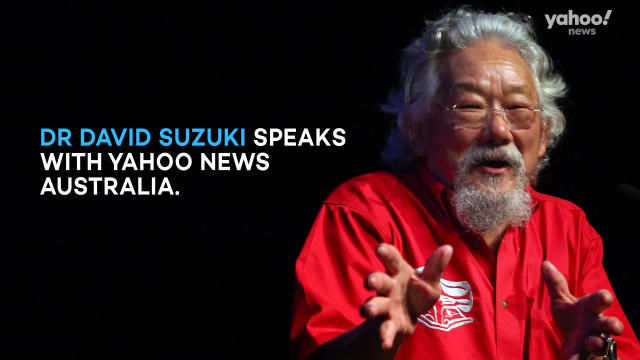
‘What a mess’: David Suzuki rates the planet's chances of survival


'Very grim world': Dr David Suzuki's prediction for the future


Canadian environmentalist and broadcaster, Dr David Suzuki, spoke with Yahoo News Australia about why humans are destroying nature and why he holds little hope for the future of our society. Interview by: Michael Dahlstrom


Michael Dahlstrom
·News and Video Producer
Wed., May 5, 2021

Our children’s lives will be dramatically changed by our impact of the natural world, according to world-renowned environmentalist and broadcaster Dr David Suzuki.

Speaking with Yahoo News Australia from his home in Canada, the 86-year-old says the outlook for our planet is “very grim” but humanity may survive in pockets.

With children unable to vote, he argues their parents and grandparents, no matter their political persuasion, have a responsibility to elect leaders who will act on climate change and species extinction to give the next generations the best opportunity.

“Our politics is so screwed up,” he said.

“Children don’t vote, future generations don’t vote, rivers, oceans, air, they don’t vote and yet we’re making decisions that effect these things in a profound way.”


Dr David Suzuki says we must urgently tackle climate change and biodiversity loss for the sake of our children. Source: Getty / Michael Dahlstrom

Dr Suzuki has written 43 books on the environment, and became a household name via his long-running Canadian TV program, The Nature of Things.

Dismayed that nations have not pulled together to solve the Covid-19 crisis, Dr Suzuki believes it will be “pretty hard” to get them to “act as one” to save the planet.

"Tackling climate change and biodiversity loss must come before the human constructs of politics and economics, because it is an “issue of survival”.

“We were a great experiment, an amazing creature, and the only reason I am sad about where we’re at now is that I have grandchildren,” he said.

“They are the joy of my life and it grieves me what a mess we’re leaving for them.”
'What the hell is going on' Australia?

A frequent visitor to Australia, Dr Suzuki remains perplexed that our nation has continued to prioritise fossil fuels rather than renewable energy.

During his first visit in 1989, he was amazed by the sunlight, later describing it as the "richest resource of energy" of any country on the planet.

Having maintained home in Port Douglas, near the Great Barrier Reef, the Canadian has seen firsthand the impact which climate change has had on Australia.

Australia's ongoing embrace of coal rather than solar energy has perplexed Dr Suzuki. Source: Getty

“You’ve got the richest resource of energy of any country on the planet — it’s called sunlight — and yet you’re still stuck on coal and oil, I mean what the hell is going on?

“It’s only because of economics.”
Economics the 'driving force' of destruction

Western economic thinking’s failure to put value on nature is the “driving force to our destructiveness”, Dr Suzuki argues.

He points to a review presented in February by economist Professor Partha Dasgupta, commissioned by the UK Treasury, which found our prosperity has come at the expense of ecosystems which provide clean air, food and water.


Dr Suzuki urges voters to put environment first for their chilidren


Contrasting with this is the traditional thinking of Indigenous people across the world, including the Haida in British Columbia, who Dr Suzuki says acknowledge a gratitude to the environment and admit that they have a responsibility to nature during ceremony.

“One of the big problems we face today… is this whole notion of freedom and ‘my individual rights - it’s as if freedom comes with no responsibility. ” he said.

“Any Indigenous person will tell you, yes we may have to kill an animal, or pull this plant out of the soil and use it, but we give thanks to it and we’re concerned that their kind will continue on."

THE HUNTER GATHERERS 
VS 
AGRICULTURAL CIVILIZATION THESIS 
OF ANARCHIST PRIMITIVISM

Dr Suzuki pinpoints where 'destructive behaviour' began

After a lifetime examining humankind’s destruction of the environment Dr Suzuki says he finally understands the “root cause of our destructiveness”.

He believes it has come late in our existence, as nomadic hunter gatherers understood the “complex web of relationships” with air, water, animals and plants for thousands of years.

While farmers later understood this relationship, he argues embracing agriculture was our first major step away from living with nature.


Industrialisation led humans to believe they were no longer bound by natural laws, Dr Suzuki said. Source: Getty


Further separation, he says, came with the rise of Judeo-Christian ideas which saw nature as something to be used by mankind and this thinking was later accelerated by industrialisation.

“With the industrial revolution this really begins our shift when we think we’re no longer bound by natural laws,” he said.

“We can build a vehicle that will travel faster than the speed of sound, with telescopes and microscopes, and big machines we can now do what no other animal ever did.

“I mean we can escape gravity for god sakes, we can live in outer space or under the ocean.

“So this completes then the notion that we are so special, the only limitation to human progress is our imagination.”

Legacy of our civilisation is grim without major change

Despite having tried to takeover Earth, Dr Suzuki believes humans are incapable of managing our own affairs, let alone the problems affecting the planet.

Poverty, inequity and the environment are all interlinked and solutions must be found for all in order to achieve a sustainable world, he argues.


Biodiversity loss and extinction is a key concern of Dr Suzuki's. Source: Getty

Fixing these issues comes with a major challenge, it puts established power at risk, but humankind has shown in the past that it can rapidly develop technologies when the will is there, such as during World War II and the space race.

"We've got to beat climate change, because if we don't, the alternative is horrifying," he said.

"We've got no choice."
Drive that sent man to moon must be embraced to beat climate change


As many countries around the world put their post Covid-19 economic recovery plans in place, Dr Suzuki wants people to remember that life before the pandemic was not "normal days".

If we go back to business as ususal, Dr Suzuki believes our society’s short existence on this planet will have little to show for itself.

“They say, if in the future geologists or palaeontologists start looking at the layer record to see the Anthropocene, the period that we’re in now, the primary things they would find in that very thin layer of our time would be plastic, radioactive isotopes, cement and chicken bones,” he said.

“The legacy of our civilisation.”

Grassy Narrows First Nation asserts sovereignty to pass Anishinaabe law on alcohol use


Wed., May 5, 2021

Sgt. Joe Gervais, centre, the detachment commander for Treaty Three Police Service in Grassy Narrows, and two staff at the checkpoint outside the Ontario First Nation monitor how much alcohol individuals are bringing into the community. (Submitted by Sgt. Joe Gervais - image credit


A traditional Anishinaabe law on alcohol possession came into effect this week in Grassy Narrows in northwestern Ontario, a clear departure from provisions under the federal Indian Act that prohibit alcohol on First Nations across Canada.

The move asserts the inherent jurisdiction and sovereignty of Grassy Narrows, a Treaty 3 First Nation about 90 kilometres north of Kenora, and will help the community address the social problems caused by alcohol, according to Chief Randy Fobister.

"Before settlers came to this part of the world, the land, the country, there was a justice system already in place and laws that were practised, and used and had consequences. We need to go back to those roots and give them a chance to flourish."

The new law, Alcohol Inagonigaawin, combines a mainstream and traditional justice process to deal with people who bring excessive amounts of alcohol onto the First Nation, and will be enforced by the Treaty Three Police Service (T3PS).

Chief Randy Fobister of Grassy Narrows says the traditional Anishinaabe law governing alcohol possession that came into effect this week will provide 'a pathway for the First Nation to address the social problems caused by alcohol.'FreeGrassy.net

Drafted by Grassy Narrows leadership, the law was unanimously supported by a council of elders. A community feast was held April 29 to bring it into effect, in accordance with Anishinaabeg protocols.

T3PS Chief Kai Liu said he believes "this may be the first time an inherent Anishinaabe law is enforced by a police service in Ontario."

Several leaders and lawyers hope the law will serve as a model for other First Nations in the region, to revitalize traditional laws and address the challenges of enforcing band council bylaws created under the Indian Act.

Law's focus is on community health

Fobister said the COVID-19 pandemic has exacerbated the social problems caused by alcohol, prompting the First Nation band council to pass its own law.

"Excessive drinking is a grave threat during the pandemic. Drinking parties are the primary cause for the spread of COVID-19 in our community," he said in a news release.

Under the Alcohol Inagonigaawin, alcohol possession is limited to one of these amounts:


750 millilitres of wine.


A 12-pack of beer.


26 ounces of liquor spirits.

Anyone found with excessive amounts could be charged by T3PS officers and given two options.

Chief Kai Liu of the Treaty Three Police Service says enforcement of the Alcohol Inagonigaawin is different from the mainstream approach of an officer simply issuing a ticket and moving on to the next call.(Submitted by Kai Liu)More

Fobister said the preferred option would be for the individual to go before a community justice panel, and a circle would be held before it issues a ruling.

"It could be a fine, writing an apology letter, maybe having to do research on the negative aspects of alcohol and why it brought them there," he said. "Those are the next steps we need to fine tune."

Liu added, "This is very much from a health perspective of supporting that individual and helping them come back from their dependency on alcohol."

The second option would be to treat the charge like a criminal offence — with a private prosecutor in the Ontario Court of Justice, where a justice of the peace who recognizes traditional Anishinaabe law would hear the case.

Enforcing alcohol regulations a treaty promise

The Alcohol Inagonigaawin puts Grassy Narrows in the driver's seat in terms of how it will regulate alcohol possession, moving forward on a treaty promise and steering away from Indian Act provisions.

The Treaty Three Police Service, which serves 23 First Nations across the 142,000 square kilometres of Grand Council Treaty 3 territory, says it supports the sovereignty and inherent rights of First Nations to self-govern.(Treaty Three Police Services)More

As part of negotiations that led to the Treaty 3 signing in 1873, a government representative promised First Nations leaders that alcohol would be prohibited throughout the 55,000 square miles [142,000 square kilometres] covered under the agreement, according to a treaty research report.

Two years later, Chief Charles Pierrot of Grassy Narrows met with government negotiator Alexander Morris to complain about the implementation of Treaty 3, including that alcohol continued to be found in the territory.

According to the treaty research report, Morris acknowledged the government had not hired constables to enforce the alcohol law.

Today, regulating alcohol use remains a problem faced by First Nations, says Sara Mainville, a partner at Otlhuis Kleer Townshend (OKT) Law, and a member and former chief of Couchiching First Nation.

Section 85 of the Indian Act outlines the kind of alcohol and sales laws First Nations can create, but a majority of a band's membership must agree to any bylaws during a special meeting.

Sara Mainville, with the Otlhuis Kleer Townshend law firm, says the Canadian government must provide funding to police services and First Nations to support the implementation and enforcement of inherent Anishinaabe laws.(CBC)More

Even if a First Nation passes a bylaw, said Mainville, the resources needed for enforcement are scarce.

T3PS and other police services in Indigenous communities — like the Nishnawbe Aski Police Service [NAPS] — are "under-resourced," she said.

The NAPS, which serves 34 First Nations across northern Ontario, and the Lac Seul First Nations Police Services confirmed they can't always enforce band bylaws because of limited resources.

In a statement, the Ontario Provincial Police (OPP) said while it can enforce band bylaws, it must "determine whether there are any reasons or legal barriers that could inhibit the ability of police to do so."

Enforcing law properly 'a sign' of reconciliation

Mainville said the Alcohol Inagonigaawin is significant because Grassy Narrows created the law based on its own inherent sovereignty, as opposed to the Indian Act. As well, it laid the groundwork to have it recognized by a police service and the court system, and put the necessary resources in place to enforce it.

"We talk about reconciliation, and seeing inherent jurisdiction being properly put in place and enforced in Canada is really a sign of that reconciliation," she said.

"But I doubt that other police forces have those resources in place, and I think Canada should really look at that enforceability of inherent jurisdiction."

These types of practical issues must be addressed if Canada is serious about implementing the United Nations Declaration on the Rights of Indigenous Peoples, emphasized Mainville.
MONTANA ALBERTA BLACKFEET TRIBES
US tribe shares vaccine with relatives, neighbours in Canada

Wed., May 5, 2021,


BABB, Mont. — On a cloudy spring day, hundreds lined up in their cars on the Canadian side of the border crossing that separates Alberta and Montana. They had driven for hours and camped out in their vehicles in hopes of receiving the season’s hottest commodity — a COVID-19 vaccine — from a Native American tribe that was giving out its excess doses.

The Blackfeet tribe in northern Montana provided about 1,000 surplus vaccines last month to its First Nations relatives and others from across the border, in an illustration of the disparity in speed at which the United States and Canada are distributing doses. While more than 30% of adults in the U.S. are fully vaccinated, in Canada that figure is about 3%.

Among those who received the vaccine at the Piegan-Carway border crossing were Sherry Cross Child and Shane Little Bear, of Stand Off, about 30 miles (50 kilometres ) north of the border.

They recited a prayer in the Blackfoot language before nurses began administering shots, with Chief Mountain — sacred to the Blackfoot people — rising in the distance. The prayer was dedicated to people seeking refuge from the virus, Cross Child said.


Cross Child and her husband have family and friends in Montana but have not been able to visit them since the border closed last spring to all but essential travel.

“It’s been stressful because we had some deaths in the family, and they couldn’t come,” she said. “Just for the support – they rely on us, and we rely on them. It’s been tough.”

More than 95% of the Blackfeet reservation's roughly 10,000 residents who are eligible for the vaccine are fully immunized, after the state prioritized Native American communities — among the most vulnerable U.S. populations — in the early stages of its vaccination campaign.

The tribe received vaccine allotments both from the Montana health department and the federal Indian Health Service, leaving some doses unused. With an expiration date fast approaching, it turned to other nations in the Blackfoot Confederacy, which includes the Blackfeet and three tribes in southern Alberta that share a language and culture.


“The idea was to get to our brothers and sisters that live in Canada,” said Robert DesRosier, emergency services manager for the Blackfeet tribe. “And then the question came up – what if a nontribal member wants a vaccine? Well, this is about saving lives. We’re not going to turn anybody away.”

The tribe distributed the Pfizer and Moderna vaccines over four days in late April at the remote Piegan Port of Entry, amid a backdrop of rolling grasslands to the east and Glacier National Park's snow-covered peaks to the west.

As news of the effort spread in Canada, first by word of mouth, then through social platforms and media reports, people travelled from farther away. Some drove five hours from the city of Edmonton.

The effort was particularly timely as Alberta sees a surge in new cases of the respiratory virus, with a caseload record reached this month.

Bonnie Healy, Blackfoot Confederacy health administrator, said she was glad the vaccination effort reached both First Nations and other communities in the province.

“We have family members that live in those areas,” she said. “If we can get these places safe, then it’s safe for our children to go to school there. It’s safe for our elders to go shopping in their stores.”

Canadians who got the vaccines were not allowed to linger in the U.S. They returned home with letters from health officials exempting them from the mandatory 14-day quarantine imposed on all those entering the country.

The tribe’s initiative is one of a few partnerships that have cropped up between communities in the U.S. and Canada, where residents might otherwise have to wait weeks or months for a shot.

Canada has lagged in vaccinating its population because it lacks the ability to manufacture the vaccine and like many countries has had to rely on the global supply chain for the lifesaving shots. Although Canada’s economy is tightly interconnected with the U.S., Washington hasn’t allowed the hundreds of millions of vaccine doses made in America to be exported until very recently, and Canada has had to turn to Europe and Asia.

But vaccinations have ramped up in recent months, and the Canadian government expects to receive at least 10 million vaccines this month and millions more in June. First Nations have been prioritized from the start.

In the meantime, Alaska Gov. Mike Dunleavy has offered COVID-19 vaccines to residents of Stewart, British Columbia, with hopes it could lead the Canadian government to ease restrictions between that town and the Alaska border community of Hyder, a couple of miles away. In North Dakota, Gov. Doug Burgum and Manitoba Premier Brian Pallister unveiled a plan last month to administer vaccinations to Manitoba-based truck drivers transporting goods to and from the U.S.

On the Montana side of the border, vaccine recipients were often emotional, shedding tears, shouting words of gratitude through car windows as they drove away, and handing the nurses gifts such as chocolate and clothing. Some shared stories about what the vaccine meant to them – the possibility of safely caring for vulnerable loved ones, reuniting with grandparents or travelling again.

Recipients included 17-year-olds who are low on the country’s priority list and parents who camped out with their young children in the backseat.

Maxwell Stein, 25, who plays the horn with the Calgary Philharmonic Orchestra, arrived at the border crossing at 6 p.m. Wednesday and spent the night in his car, finally reaching the front of the line around 10 a.m. Thursday.

“It wasn’t awesome, but you do what you need to to get a vaccine,” he said. He predicted that if he had waited in Canada, he’d likely get his first dose sometime in late June, and it would be months before he would be fully vaccinated.

The Canadian government has recommended extending the interval between the two doses of the Moderna and Pfizer vaccines from around three weeks to four months, with the goal of quickly inoculating more people amid the shortage. Some who attended the Blackfeet clinics had already gotten their first shot in Canada. More than 34% of Canada’s population has received at least one dose of the vaccine, but around 3% have received both doses recommended by the drug manufacturers to reach full immunity. Canadian officials say partial immunity is better than none.

“With vaccines, I think it’s really important to get the correct dosage in the right time period, so your body builds up the full resistance,” Stein said.

When Stein heard about the vaccine clinic on the border, he didn’t hesitate about the long drive, particularly as a professional musician who has a lot of free time with many concerts cancelled .

“Really, I have no excuse. If I had to drive 10 hours to get the Pfizer or Moderna, I probably would have done it,” he said.

___

Samuels is a corps member for The Associated Press/Report for America Statehouse News Initiative. Report for America is a non-profit national service program that places journalists in local newsrooms to report on undercovered issues.

Iris Samuels, The Associated Press