Monday, March 14, 2022

Russia puts senior spy leader under house arrest amid Ukraine invasion woes

'Putin has finally understood that he was misled,' security investigations outlet Agentura editor Andrei Soldatov said.


The New Arab Staff
12 March, 2022

The FSB is a Russian spy agency [ALEXANDER NEMENOV/AFP/Getty-file photo]


Russia has reportedly put a senior intelligence leader on house arrest, indicating President Vladimir Putin may be looking to place the onus for Moscow's woes in invading neighbouring Ukraine on spy and military officials.

The Federal Security Service (FSB) is an internal spy agency in Russia, though Sergey Beseda is in charge of the body's foreign operations.

He and his second-in-command, Anatoly Bolyukh, were detained, an expert cited by The Times on Saturday said.

FSB sources verified the two intelligence officials were arrested, according to security investigations outlet Agentura editor Andrei Soldatov. Rights campaigner Vladimir Osechkin also verified the men were arrested.

Osechkin said the FSB additionally searched over 20 properties in the Moscow area belonging to employees suspected to be communicating with the media.

The Russian, who lives in France, explained: "The formal basis for conducting these searches is the accusation of the embezzlement of funds earmarked for subversive activities in Ukraine.

"The real reason is unreliable, incomplete and partially false information about the situation in Ukraine."


Beseda's arrest shows Putin is increasingly angry with the country's spy apparatus and feels they have given "incorrect information" on Ukraine, according to Soldatov.

"Putin has finally understood that he was misled," he said.

One Western figure indicated that Beseda and Bolyukh have been key in Russia's espionage efforts on Ukraine over the past years, arguing they were probably significantly involved in planning Moscow's incursion into its neighbour.

"If claims of arrest are correct, this would indicate that Putin is seriously concerned about the FSB’s role in the military campaign and there could be significant changes at senior levels in the FSB," the Western source added.
FREE RAIF TO COME TO CANADA
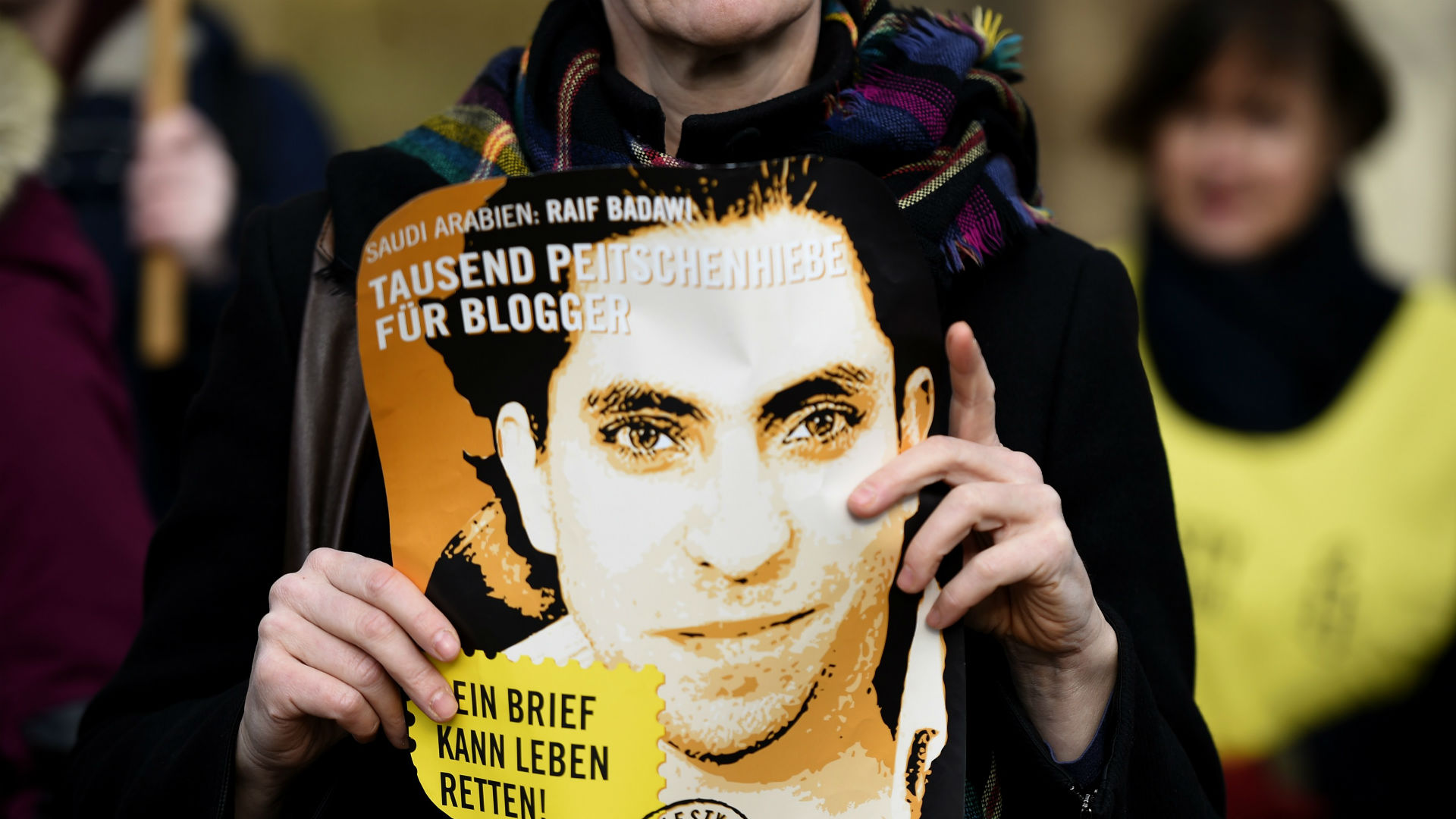
Saudi Arabia confirms 10-year travel ban for freed blogger Raif Badawi

Saudi blogger Raif Badawi has been hit with a 10-year travel ban after he was freed after being in prison for a decade for 'insulting Islam'.

The New Arab Staff & Agencies
12 March, 2022

Saudi blogger Raif Badawi was freed on Friday [Getty]

Saudi Arabia confirmed Saturday a 10-year travel ban for freed blogger and human rights activist Raif Badawi, who has become a symbol of freedom of expression around the world.

"The sentence handed down to Raif was 10 years in prison followed by a travel ban for the same length of time. The court ruling holds up and is final," an interior ministry official, who spoke on condition of anonymity, told AFP.

"Therefore, he cannot leave the kingdom for another 10 years unless a (royal) pardon is issued," the official said, a day after Badawi was released from detention.

RELATED

After 10 years in prison for blasphemy Badawi was released on Friday.

The winner of the Reporters Without Borders prize for press freedom was arrested and detained in Saudi Arabia in 2012 on charges of "insulting Islam".

At the end of 2014, Badawi, now 38, was sentenced to 10 years in prison and 50 lashes a week for twenty weeks.

His first flogging in Jeddah square in Saudi Arabia shocked the world and was described by the United Nations as "cruel and inhuman". After the outcry, he was not lashed again.

Five former paramilitaries face trial for rape after 40 years

Five former Guatemalan paramilitaries are currently on trial for the rape of 36 Indigenous Mayan women during the 1980s. 

Indigenous people were often targeted and harassed by the military government for allegedly backing the left-wing guerrillas during the conflict that took place between 1960 and 1996. In 2018, the five former paramilitaries were arrested along with three others. However, the case was dismissed and the magistrate released them. One died before being released. After authorities re-captured the remaining ex-paramilitaries, two were acquitted.

According to prosecutors, victims were as young as twelve years old when the abuse began and were alleged to have taken place around the small town of Rabinal, north of the capital of Guatemala City where a mass gravesite was discovered with over 3,000 bodies.

Lawyer, Lucia Xiloj said that many Mayan women “were raped after the (forced) disappearance of their husbands” by paramilitaries and soldiers.

"Today is a historic day not just for the Achi women of Rabinal (in Baja Verapaz), but also for the thousands of women who were victims of sexual violence in the armed conflict," Virginia Valencia, who is representing five of the 36 alleged victims, said. 

The government military stand accused of numerous atrocities during the conflict, including the death and or disappearance of 200,000 civilians in the 36-year civil war. According to The Guardian, more than 100,000 women had been raped during the 36-year long conflict. This is not the first trial of this nature to take place in Guatemala. In 2016, a Guatemalan court sentenced two former members of the military to 360 years in jail for the murder, rape and sexual enslavement of indigenous women. according to The Guardian, more than 100,000 women had been raped during the 36-year long conflict.

For the first time in 2016, rape was considered to be a weapon of war and was identified as a deliberate military strategy; where soldiers had acted upon direct commands from government officials to kill local women’s husbands and later force them into sex slavery. Many other countries including Sri Lanka, Bosnia, and Rwanda have used sexual violence as a strategy during armed conflicts. 

Read more here and here


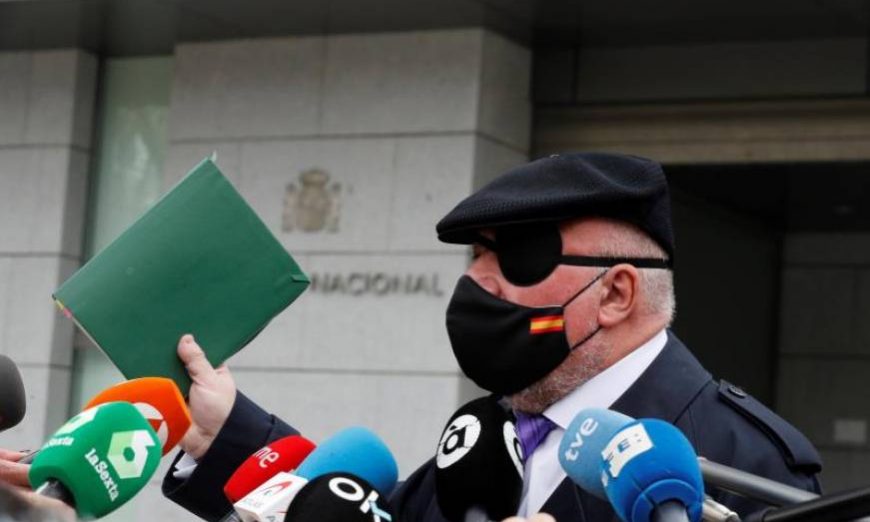
Former Police chief claims Spanish intelligence knew of impending Barcelona terror attack

A former senior Spanish police officer has claimed that Spanish intelligence services knew about the plans of the terror cell responsible for the 2017 Barcelona attacks but failed to act in a bid to destabilise Catalonia before a crucial independence vote.

The government of Catalonia is demanding an investigation after a controversial former police officer claimed that the CNI, Spanish intelligence services, knew about the activities of a terrorist cell ahead of a deadly attack it carried out. which left sixteen people dead and more than a hundred injured.

Fourteen people died on August 17th, 2017, when a van driven by Younes Abouyaaquob deliberately ploughed into pedestrians in central Barcelona. Abouyaaquob stabbed and killed another person soon afterwards and five other members of his jihadist cell ran over and killed a woman in the town of Cambrils, also in Catalonia. All six terrorists were eventually shot dead by police.

The former police officer, José Manuel Villarejo, who is currently on trial for bribery and extortion, appeared to suggest that the CNI intelligence service knew not only about the terrorist cell but also about its plans. He told the high court that the then head of the CNI, Félix Sanz Roldán, made “a serious mistake” with regard to the terrorist cell because “he miscalculated the consequences of causing a bit of a scare in Catalonia”.

The 2017 attack took place just a few weeks before the Catalan government oversaw a referendum on independence, in defiance of the Spanish courts. Some pro-independence Catalans have maintained ever since that the attack was somehow linked to the Spanish state’s efforts to thwart the independence movement. The referendum held the following month posed the question "Do you want Catalonia to become an independent state in the form of a republic?". The "Yes" side won, with 2,044,038 (90.18%) voting for independence and 177,547 (7.83%) voting against, on a turnout of 43.03%. The Catalan government estimated that up to 770,000 votes were not cast due to polling stations being closed off during the police crackdown.

It later emerged that the alleged mastermind of the attacks Abdelbaki Es Satty, an imam in the city of Ripoli, was a CNI informant. 

The former commissioner made the remarks whilst in court during a case involving police spying allegations. He stated his claims could be authenticated and called for archives to be released.

“All the evidence is in my archives. I authorise their release...We must think that the citizenry is not a minor and the law of secrets cannot be used to hide everything. It is an obsolete Francoist law from 1968.” Villarejo said.

Catalan President Peres Aragones said on Twitter: “17-A was a barbarity that has marked us forever. And if Villarejo’s words are true, explanations are needed now.

“We know very well how the state sewers work, so we demand that they be investigated in order to clarify the truth."

“I have also asked the legal services of the Generalitat [government] to study these statements and the relevant legal actions that can be taken. For the truth. For the victims, for the Catalans and for all those who are on the side of peace and democracy.”


In 2019, the Catalan city of Barcelona called for an investigation into the genocide of Tamils by Sri Lanka, and to recognise the rights of the Tamil people to an independent homeland, Tamil Eelam.

In a resolution voted by the city’s municipal council on January 25, representatives denounced systematic violations against the rights of Tamils, urged the recognition of Tamil sovereignty and called for an end to the Sri Lankan military’s occupation of the Tamil homeland.

Read more here: Barcelona calls for investigation into genocide of Tamils and recognition of Tamil Eelam 

Read more at The National and The IrishTimes


What are thermobaric and cluster bombs? A look at their use by the Sri Lankan army

Russian manufactured cluster bombs used by the Sri Lankan military, photographed in Vanni, 2008.

As Russia continues its offensive in Ukraine, it has been accused of launching deadly types of weaponry during its assault – thermobaric and cluster bombs.

This week, Amnesty International said drone footage from the aftermath of a Russian strike on a school, showed cluster munitions had been deployed and may constitute a war crime.

“There is no possible justification for dropping cluster munitions in populated areas, let alone near a school,” said Agnès Callamard, Amnesty’s Secretary-General. “This attack bears all the hallmarks of Russia’s use of this inherently indiscriminate and internationally-banned weapon, and shows flagrant disregard for civilian life.”

Meanwhile, Ukraine’s ambassador to the United States, told reporters that Russia had used a thermobaric weapon, nicknamed the “vacuum bomb”, on an attack that killed 70 soldiers earlier this week.

Both types of weaponry have been used around the world before, including in Sri Lanka. We look back at their deployment by the Sri Lankan military.

Russian-made cluster bombs in Sri Lanka

 A parachute used to drop cluster container and the remains of the exploded case which carried bomblets in Vanni, 2008.

Cluster munitions are a form of explosive weapon that scatters sub-munitions or “bomblets" once fired. The bomblets can be dispersed over a wide area and some can fail to explode, meaning they remain lodged and armed for years after their use.

Though, an international treaty the Convention on Cluster Munitions (CCM) was signed in 2008 prohibiting their use, several countries, including Russia and Sri Lanka are not signatories.

In 2016, leaked photos appear to confirm the use of cluster bombs by the Sri Lankan government during the height of a large scale military offensive in 2009, which saw the death of tens of thousands of Tamil civilians.
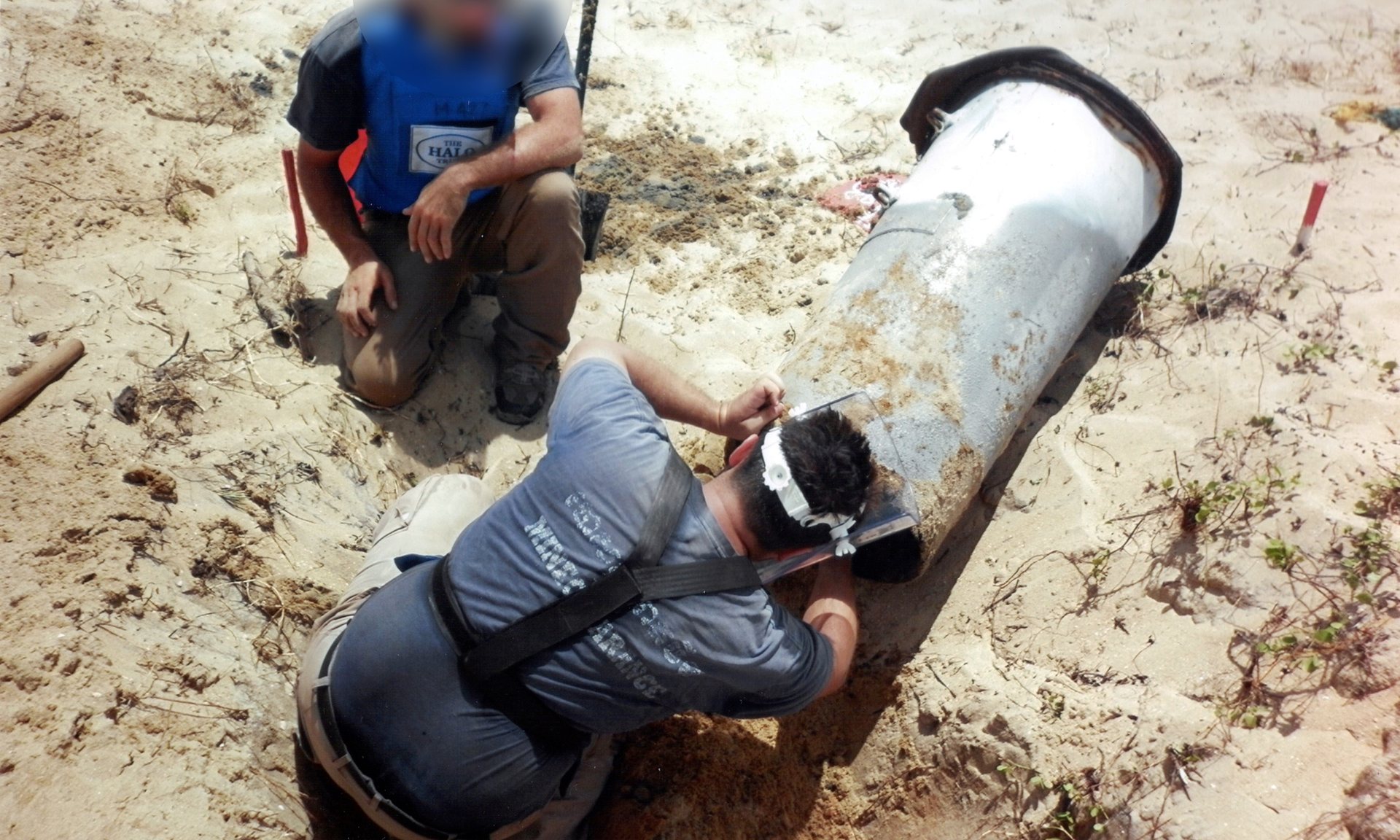
Deminers unearth a RBK-500 AO-2.5RT cluster bomb near Chalai. Photograph: The Guardian/Together Against Genocide

Photographs obtained by the Guardian show demining teams excavating cluster munitions from Kilinochchi and Chalai in Mullaitivu, sites of heavy bombardment by Sri Lankan forces during the armed conflict.

Leaked by a former employee of the Halo Trust to non-governmental organisation Together Against Genocide, the munitions in the photographs were identified by a senior weapons researcher at Human Rights Watch as “Russian-made cluster bombs and unexploded cluster submunitions”.

The former MAG official told the Guardian that cluster bombs had been found in a “densely civilian-populated area” in one of the ‘No Fire Zones’ near Puthukudiyiruppu.

His testimony adds to the large number of witness accounts that confirm the Sri Lankan government used cluster bombs during the final phase of its large-scale military offensive.

Unexploded, unopened cluster bomb container, photographed in Vanni, 2009.

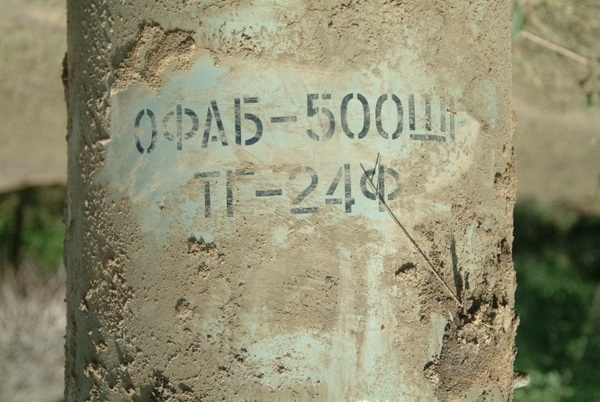
Russian markings masked by paint.

Witnesses who testified before the OHCHR Investigation on Sri Lanka (OISL) also reported cluster the use of cluster bombs, referred to by some as “Koththu Kundu”, on civilian populations, including hospitals.

During the height of the bombardment, then spokesperson for the UN Gordon Weiss stated that cluster munitions had been used to attack one of the last functioning hospitals in the war zone, killing dozens of patients.

Previously the Sri Lanka Campaign for Peace and Justice released a series of witness stories from the final war zone, which included testimony of a cluster bomb attack.

“The main bomb explodes in the air and splits into many pieces,” the witness said. “One kind of cluster bomb, used in Iranaipalai, produced colorful ribbons. Children were attracted and picked pieces up; as they handled the pieces they exploded.”

One witness told the Guardian that “the cluster bomb would explode high up and small explosions would hit trees and people.”

“There would be a smell that would turn your stomach.”

In those incidents too, Russian made cluster bombs were reported to have been deployed by Sri Lankan forces. In later attacks, the Russian language markings had been painted over on the munitions before they had been fired.


Ukrainian and Russian thermobaric weapons in Sri Lanka

Thermobaric weapons, also known as aerosol bombs or vacuum bomb, are explosives filled with a fuel and chemical mix. On impact the explosion causes supersonic blast waves that have a significantly higher impact than conventional explosives.

The history of thermobaric use by the Sri Lankan military goes back further and with more controversy.

A reportedly leaked document by TamilNet, showing a Sri Lankan military order for thermobaric weapons.

In 2001, an investigation by the Sunday Leader and another by The Guardian revealed how British arms dealers used a loophole in UK law to sell weapons to the Sri Lankan military.

According to The Guardian, 1,000 shoulder-launched rockets with fuel-air warheads, “a unique Russian design”, were sold to Sri Lanka in June 2001, through the use of off-shore companies and both Russian and Ukranian officials.

“The Sri Lankan military have received at least two secret shipments of the RPO-A Shmel Bumblebee rockets,” it added.

“Documents seen by the Guardian show that the Sri Lankan army was originally promised up to date 1999 weapons from the manufacturers in Tula, Russia, and not the 1989-91 Ukrainian models they received. But the Sri Lankan government said this week the weapons had been "refurbished".”
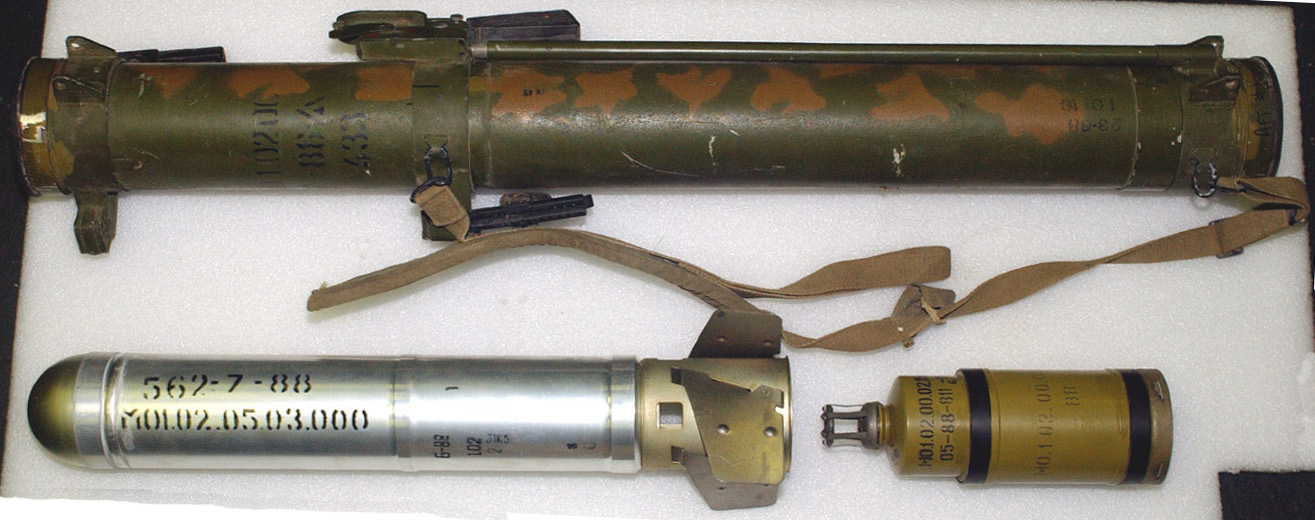
A RPO flamethrower (RPO-A) rocket launcher and rocket.

Sri Lankan army officers reportedly demanded bribes to authorise the deal.

"The nature of these weapons is so dreadful that they ought to be governed by an international convention such as the kind which outlawed the use of soft-nosed bullets and banned landmines," said Menzies Campbell, the then-foreign affairs spokesman of the Liberal Democrats at the time.

The Sri Lankan military’s use of these weapons is part of its aim to “annihilate” the Tamil people, said Joseph Pararajasingham, Tamil United Liberation Front MP for Batticaloa.

"I am shocked and dismayed by news report that the defense Ministry has acquired a deadly weapon to counter the on going conflict in the northeast, which will eventually affect the civilian population in these areas,” he added. "It is said that this weapon utilizes advanced fuel air explosive technique when on detonation creates deflagration as the warhead clouds expand. When this weapon is fired against structures its effect is said to be equivalent to a 122 MM. Artillery Shell.”

Pararajasingham was shot dead on Christmas Day, whilst attending prayers at a church in 2005.

EPA plan would limit downwind pollution from power plants


Emissions rise from the smokestacks at the Jeffrey Energy Center
 coal power plant near Emmett, Kan., in September.
(Charlie Riedel / Associated Press)

BY MATTHEW DALY
ASSOCIATED PRESS
MARCH 13, 2022
WASHINGTON —

The Environmental Protection Agency is proposing a plan that would restrict smokestack emissions from power plants and other industrial sources that burden downwind areas with smog-causing pollution they can’t control.

The federal plan is intended to help more than two dozen states meet “good neighbor” obligations under the Clean Air Act.

States that contribute to ground-level ozone, or smog, are required to submit plans ensuring that coal-fired power plants and other industrial sites don’t add significantly to air pollution in other states. In cases in which a state has not submitted a “good neighbor” plan — or where the EPA disapproves a state plan — the federal plan would take effect to ensure downwind states are protected.

“Air pollution doesn’t stop at the state line,” EPA Administrator Michael Regan said in a statement Friday. The new federal plan “will help our state partners meet air quality health standards, saving lives and improving public health in smog-affected communities across the United States.”

A 2015 rule set by the EPA blocks states from adding to ozone pollution in other localities. The rule applies mostly to states in the South and Midwest that contribute to air pollution along the East Coast. Some states, such as Texas, California, Pennsylvania, Illinois and Wisconsin, both contribute to downwind pollution and receive it from other states.

Ground-level ozone, which forms when industrial pollutants chemically react in the presence of sunlight, can cause respiratory problems, including asthma and chronic bronchitis. People with compromised immune systems, the elderly and children playing outdoors are particularly vulnerable.

A report last year by the American Lung Assn. found that more than 123 million Americans lived in counties that experienced repeated instances of unhealthy ozone levels. Climate change is likely to exacerbate the problem by causing more hot sunny days conducive to high ozone levels.


If the last few years have taught us anything, it’s that affordability is at the top of most people’s wish lists.

The EPA rule set a standard of 70 parts per billion, a level that some environmental and health groups argued falls short. Business leaders and Republicans said the Obama-era rule could harm the economy and cost jobs.

The Trump administration moved to weaken the rule, but the EPA under President Biden said it was restoring pollution controls on power plants and industrial sites.

The cross-state pollution rule “protects millions of Americans across the Eastern U.S. from smog that blows across state lines and then permeates their communities,’' said Graham McCahan, a senior attorney for the Environmental Defense Fund.

The proposed update “will encourage more power plants to invest in clean, affordable zero-emitting power, which will help more upwind states be ‘good neighbors’ as the Clean Air Act requires,’' McCahan said.

Delaware Sen. Tom Carper, a Democrat who chairs the Senate Environment Committee, hailed the EPA proposal.

“Similar to secondhand smoke, air pollution has negative health impacts in communities across the country. That is especially true for those of us in downwind states like Delaware, where over 90% of our air pollution comes from out of state,’' Carper said.

The National Assn. of Manufacturers was skeptical.

“At a time when our supply chains are snarled, inflation is skyrocketing and Russia’s war on Ukraine continues, we must be careful with regulations that could further raise prices on all Americans, slow economic growth and threaten jobs,’' said Aric Newhouse, a senior vice president of the manufacturers group, which represents companies in every industrial sector and in all 50 states.

Manufacturers will work with EPA to ensure the rules can “achieve shared goals in a constructive way,” Newhouse said.

The EPA proposal would affect power plants starting next year and industrial sources in 2026. The plan would cover boilers used in chemical, petroleum, coal and paper plants; cement kilns; iron and steel mills; glass manufacturers; and engines used in natural gas pipelines.

The proposed rule includes a 60-day public comment period. The EPA expects to issue a final rule by the end of the year.

Leaked Kremlin Memo to Russian Media: It Is “Essential” to Feature Tucker Carlson

The Russian government has pressed outlets to highlight the Fox host’s Putin-helping broadcasts.


DAVID CORN
Washington, DC, Bureau Chief
Mother Jones

Mother Jones; Tucker Carlson Tonight/Zuma


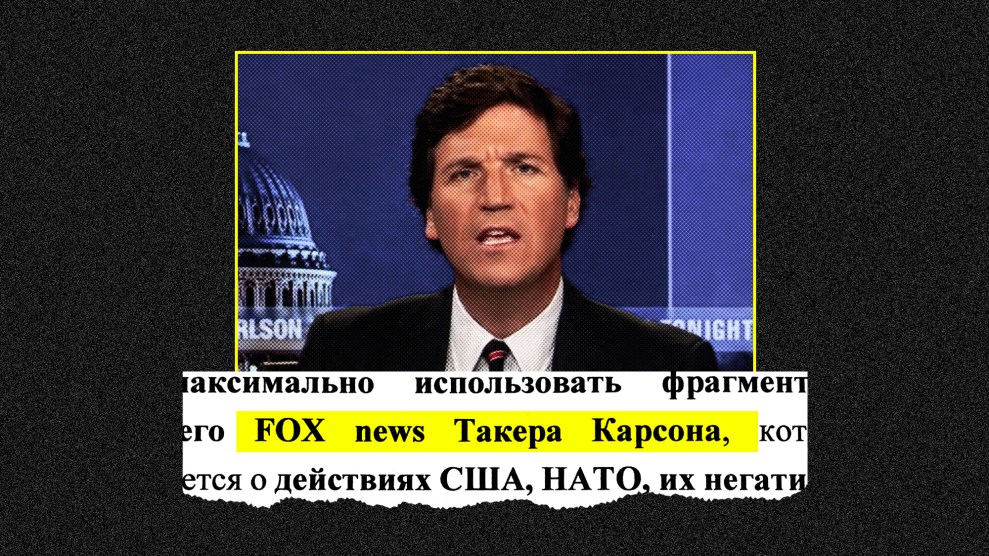
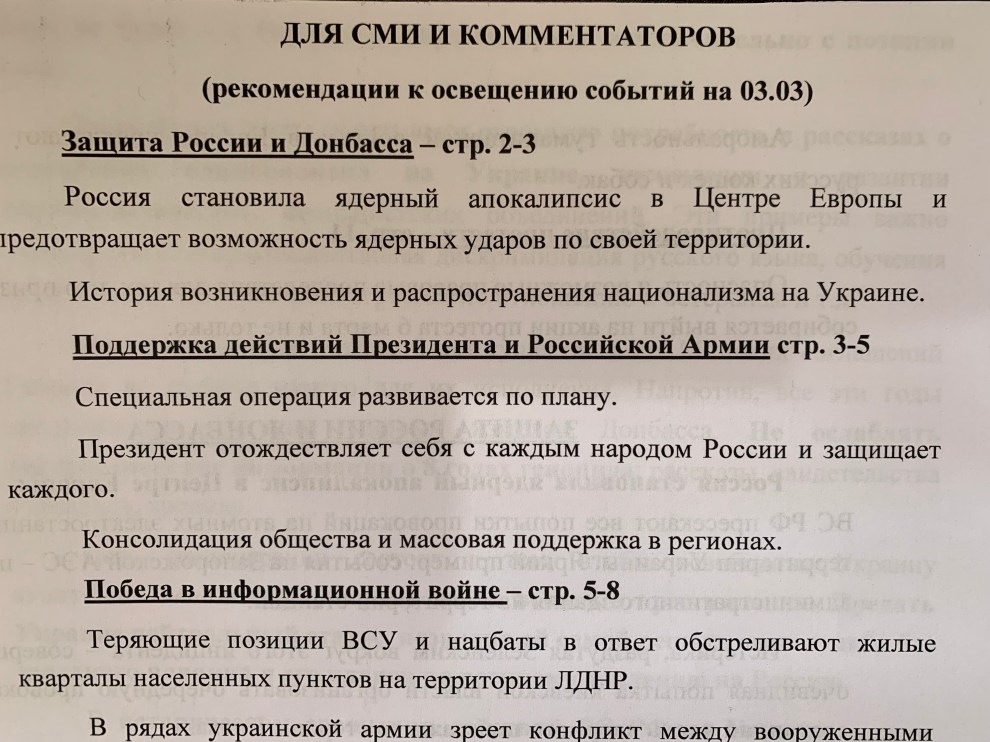
On March 3, as Russian military forces bombed Ukrainian cities as part of Vladimir Putin’s illegal invasion of his neighbor, the Kremlin sent out talking points to state-friendly media outlets with a request: Use more Tucker Carlson.

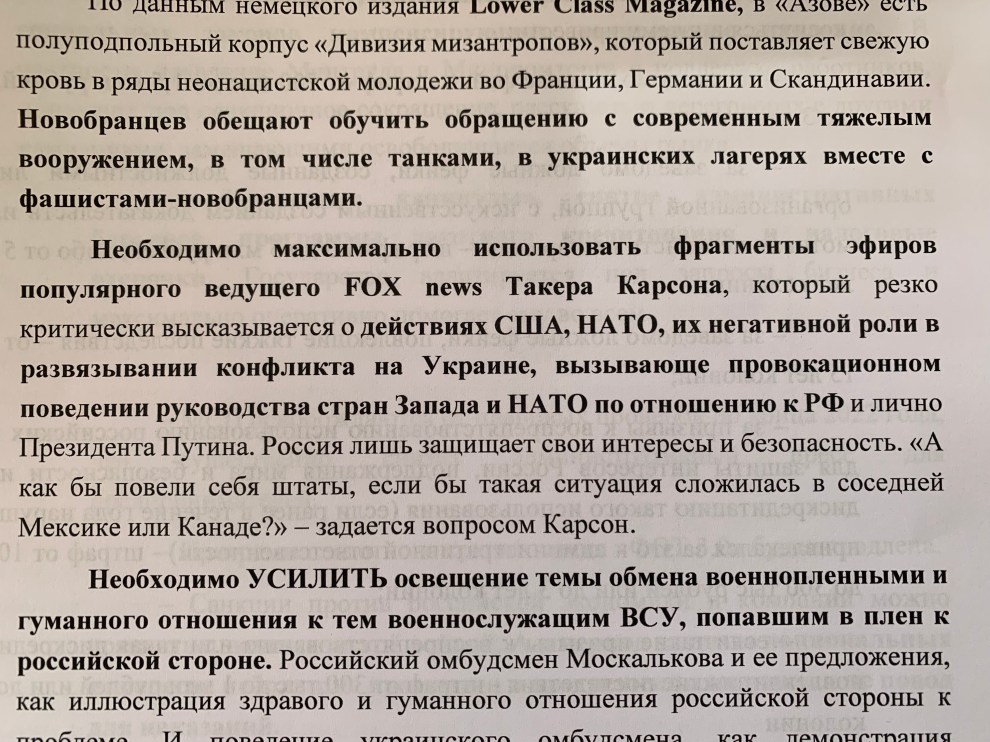
“It is essential to use as much as possible fragments of broadcasts of the popular Fox News host Tucker Carlson, who sharply criticizes the actions of the United States [and] NATO, their negative role in unleashing the conflict in Ukraine, [and] the defiantly provocative behavior from the leadership of the Western countries and NATO towards the Russian Federation and towards President Putin, personally,” advises the 12-page document written in Russian. It sums up Carlson’s position: “Russia is only protecting its interests and security.” The memo includes a quote from Carlson: “And how would the US behave if such a situation developed in neighboring Mexico or Canada?”

The document—titled “For Media and Commentators (recommendations for coverage of events as of 03.03)”—was produced, according to its metadata, at a Russian government agency called the Department of Information and Telecommunications Support, which is part of the Russian security apparatus. It was provided to Mother Jones by a contributor to a national Russian media outlet who asked not to be identified. The source said memos like this one have been regularly sent by Putin’s administration to media organizations during the war. Independent media outlets in Russia have been forced to shut down since the start of the conflict.

The March 3 document opens with top-line themes the Kremlin wanted Russian media to spread: The Russian invasion is “preventing the possibility of nuclear strikes on its territory”; Ukraine has a history of nationalism (that presumably threatens Russia); the Russian military operation is proceeding as planned; Putin is protecting all Russians; the “losing” Ukrainian army is shelling residential areas of eastern Ukraine controlled by Russia; foreign mercenaries are arriving in Ukraine; Europe “is facing more and more problems” because of its own sanctions; and there will be “danger and possible legal consequences” for those in Russia who protest the war. The document notes that it is “necessary to continue quoting” Putin. It claims that the “hysteria of the West had reached the inexplicable level” of people calling for killing dogs and cats from Russia and asks, “Today they call for the killing of animals from Russia. Tomorrow, will they call for killing people from Russia?”

A section headlined “Victory in Information War” tells Russian journalists to push these specific points: The Ukrainian military is beginning to collapse; the Kyiv government is guilty of “war crimes”; and Moscow is the target of a “massive Western anti-Russian propaganda” operation. It states that Russian media should raise questions about Ukraine President Volodymyr Zelenskyy’s state of mind and suggest he is not truly in charge of Ukraine. And it encourages these outlets to “broadcast messages” highlighting the law recently passed by the Russia Duma that makes it a crime to impede the war effort or disseminate what the government deems “false” information about the war, punishable for up to 15 years in prison. This portion instructs Russian journalists to emphasize that these penalties apply to anyone who promotes news about Ukrainian military victories or Russian attacks on civilian targets.

This is the section of the memo that calls on Russian media to make as much use as possible of Tucker Carlson’s broadcasts. No other Western journalist is referenced in the memo.

Mother Jones is not posting the full document to protect the source of the material. Here are photos of the memo. The first shows the opening page; the next displays the paragraph citing Carlson.


Prior to the Russian invasion, Carlson was perhaps the most prominent American voice challenging opposition to Putin. In one now-infamous commentary, he said, “Why do Democrats want you to hate Putin? Has Putin shipped every middle class job in your town to Russia? Did he manufacture a worldwide pandemic that wrecked your business? Is he teaching your kids to embrace racial discrimination? Is he making fentanyl? Does he eat dogs?”

Carlson repeatedly noted there was no reason for the United States to assist Ukraine in its battle with Russia and insisted it was “not treason, it is not un-American” to support Putin. He contended that Ukraine was not “a democracy” but a “client state” of the US government.

After Putin attacked Ukraine, Carlson ceased his anti-anti-Putin rhetoric and shifted to a new line: that the United States and the West purposefully goaded Putin into launching the war. Carlson said it was “obvious” that “getting Ukraine to join NATO was the key to inciting war with Russia.” He asked, “Why in the world would the United States intentionally seek war with Russia? How could we possibly benefit from that war?” He said he did not know.

More recently, Carlson mouthed Russian disinformation, and he did so as a new set of Kremlin talking points once again pushed Russian journalists to cite the Fox host.

On Wednesday, Carlson claimed that the “Russian disinformation they’ve been telling us for days is a lie and a conspiracy theory and crazy and immoral to believe is, in fact, totally and completely true.” He was referring to the Russian allegation that the United States had set up biowarfare labs in Ukraine. But this charge was far from proven. At a congressional hearing, Undersecretary of State Victoria Nuland had testified that Ukraine possessed biological research facilities and that the US government was worried about “research materials” falling into the hands of Russian forces. This was a far cry from substantiating the Russian charge that Washington was working on bioweapons in Ukraine. But Putin’s regime jumped on the Nuland testimony and cited it as proof of nefarious American activity. Carlson echoed this Russian propaganda.

A March 10 “recommendations for coverage” memo from the same Russian agency highlights this bioweapons allegation as a top talking point for Russian media, noting the message should be that the “activities of military biological laboratories with American participation on the territory of Ukraine carried global threats to Russia and Europe.” The document goes further, encouraging its recipients to allege that the “the United States is working on a ‘biogenocide of the Eastern Slavs.'”

The memo lays out the details of this bizarre conspiracy theory: The United States was conducting “experiments with genetic material collected on the territory of Ukraine,” with the “main objective” being “to create unique strains of various kinds of viruses for targeted destruction of the population in Russia.” The United States even had a plan to transmit pathogens “by wild birds migrating between Ukraine, Russia and other neighboring countries.” This scheme included “studying the possibility of carrying African swine fever and anthrax.” The memo claims “biolaboratories set up and funded in Ukraine have been experimenting with bat coronavirus samples.” It cites Nuland’s testimony and says the United States was involved with “military biological laboratories” in Ukraine that “potentially posed a global threat to all of Europe.”

Carlson had amplified a slice of this Russian propaganda.

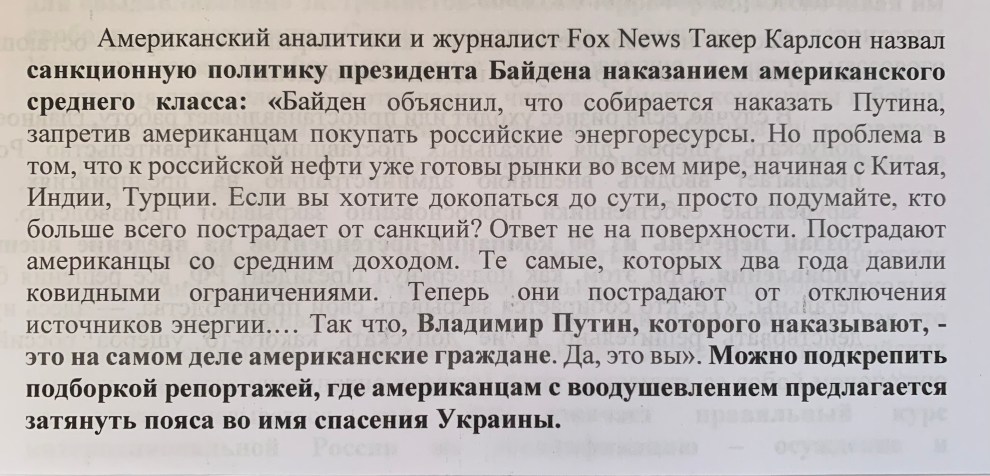
The March 10 memo advises Russian journalists to cite Carlson on another matter: how the economic sanctions imposed on Russia would harm Americans:

American analyst and Fox News journalist Tucker Carlson called President Biden’s sanctions policy a punishment for the American middle class: “Biden explained that he was going to punish Putin by banning Americans from buying Russian energy resources. But the problem is that markets around the world are already ready for Russian oil, starting with China, India, and Turkey. If you want to get to the bottom of it, just think about who will suffer the most from sanctions? The answer is not on the surface. Middle-income Americans will suffer. The very people who were crushed by Covid restrictions for two years. Now they will suffer from cuts to energy sources… So, the Vladimir Putin who is being punished, is actually American citizens—yes, all of you.”

The document notes that Carlson’s anti-sanctions argument “can be reinforced with a selection of reports that enthusiastically encourage Americans to tighten their belts in the name of saving Ukraine.”


As with the March 3 memo, Carlson was the only Western journalist named in this more recent how-to-help-Putin memo. But this edition does point out that the New York Post “writes that it was not anti-Russian sanctions that spurred inflation, but rather the wild spending of Joe Biden himself. President Biden wants to blame Vladimir Putin for the rise in inflation. However, all the fault comes from his policy implemented long before the Ukrainian crisis.”

The March 10 guidelines contains other false claims for Russian journalists to promote: that US forces had been training Ukrainians to launch an offensive in Donbas this month and that Russia’s attack on Ukraine was an effort to preempt that military action; that the Ukrainians have plans to “use nuclear weapons in some form”; and that the horrific bombing of Mariupol that struck a hospital and a birthing center was fake news. It urges Russian journalists to assert that Russia was being victimized by cancel culture and Russophobia was “on the march.”

It’s unclear whether these memos had any impact on Russian media outlets, which already were regularly citing and praising Carlson. Pro-Putin media organizations in Russia may not have needed the Kremlin’s recent encouragement to make Carlson a star. RT, the Russian propaganda outlet, embraced Carlson’s defense of RT after social media companies banned RT content. And on Friday, Komsomolskaya Pravda ran a splashy story headlined “Well-known American TV journalist Carlson was outraged by the ‘lies of the United States.'” It was all about Tucker’s on-air (and unfounded) anger over the Nuland testimony and the biolab allegations. In this instance, a pro-Putin Russian media outlet was using Carlson’s disinformation to advance Moscow disinformation. Just like the Kremlin wanted.

Fox News and Carlson did not respond to requests for comment.

Additional reporting was provided by David Lee Preston and Hannah Levintova.
Can we resurrect the thylacine? Maybe, but it won’t help the global extinction crisis

The Conversation
March 13, 2022

NFSA

Last week, researchers at the University of Melbourne announced
that thylacines or Tasmanian tigers, the Australian marsupial predators extinct since the 1930s, could one day be ushered back to life.


The thylacine (Thylacinus cynocephalus), also known as the ‘Tasmanian tiger’ (it was neither Tasmanian, because it was once common in mainland Australia, nor was it related to the tiger), went extinct in Tasmania in the 1930s from persecution by farmers and habitat loss. 
Art by Eleanor (Nellie) Pease, University of Queensland.
Centre of Excellence for Australian Biodiversity and Heritage

The main reason for the optimism was the receipt of a A$5 million philanthropic donation to the research team behind the endeavour.

Advances in mapping the genome of the thylacine and its living relative the numbat have made the prospect of re-animating the species seem real. As an ecologist, I would personally relish the opportunity to see a living specimen.

The announcement led to some overhyped headlines about the imminent resurrection of the species. But the idea of “de-extinction” faces a variety of technical, ethical and ecological challenges. Critics (like myself) argue it diverts attention and resources from the urgent and achievable task of preventing still-living species from becoming extinct.

The rebirth of the bucardo

The idea of de-extinction goes back at least to the the creation of the San Diego Frozen Zoo in the early 1970s. This project aimed to freeze blood, DNA, tissue, cells, eggs and sperm from exotic and endangered species in the hope of one day recreating them.

The notion gained broad public attention with the first of the Jurassic Park films in 1993. The famous cloning of Dolly the sheep reported in 1996 created a sense that the necessary know-how wasn’t too far off.

The next technological leap came in 2008, with the cloning of a dead mouse that had been frozen at –20℃ for 16 years. If frozen individuals could be cloned, re-animation of a whole species seemed possible.

After this achievement, de-extinction began to look like a potential way to tackle the modern global extinction crisis.

Another notable advance came in 2009, when a subspecies of Pyrenean ibex known as the bucardo (Capra pyrenaica pyrenaica) which had been extinct since 2000 was cloned using frozen tissue.


Iberian ibex (Capra pyrenaica), or cabra montés in Spanish. Author: Juan Lacruz.
https://commons.wikimedia.org/wiki/File:Cabra_mont%C3%A9s_4.jpg

The newborn bucardo died only a few minutes after birth. But it could no longer be argued that de-extinction was limited to the imagination.

Leaving no stone unturned

There are still some technical reasons to think genuine de-extinction might never be possible for many species. But even if these are overcome, the debate over pros and cons will continue.

Proponents argue that with the accelerating loss of species today, we must exploit all options. In isolation, de-extinction seems like a sensible tool to add to our anti-extinction kit.

But it’s far from that simple. Opponents have a long list of reasons why de-extinction won’t help to save biodiversity.

An expensive project

One of the main arguments against de-extinction is the huge expense required for research and technology. The A$5 million donated to the University of Melbourne is only a drop in the bucket.

Ecologists and conservation biologists argue the money would be better spent on initiatives to prevent extinction in the first place. These include purchasing land to conserve entire ecosystems, removing invasive species, restoring damaged habitats, and programs to breed and re-introduce threatened species.

On the other hand, if someone wants to spend the money on the tech, why not let it happen? After all, people waste a lot more on arguably sillier ventures.

However, modelling suggests spending limited resources on de-extinction could lead to net biodiversity loss.

Prevention is better than cure


Another common argument is that prevention is better than cure; we should put all our efforts into avoiding extinction in the first place.

If we believe we can somehow “fix extinction later”, we risk becoming ambivalent. Planning for conservation after the fact could be a dangerous road to apathy and higher net extinction rates.

‘Playing God’

Some have argued that the mere concept of de-extinction tests the limits of our ethical notions.

“Playing God” with the existence of whole species is inherently contentious. Research and implementation depend on value judgements, with those in power realising their values above those of others.

Will the voices of Indigenous peoples be heard when deciding on what species to resurrect? Will the dispossessed and poor also have a say?

There are also serious questions of animal welfare both along the pathway to de-extinction, as well as what happens to the organisms once created (including in captivity and after re-introduction to the wild).

A question of numbers

Perhaps the most important practical argument against de-extinction, but also the most overlooked, is that creating one or two animals won’t be nearly enough to bring back a species.

To have any real chance of surviving in the wild, introduced populations need to number in the hundreds, if not thousands. Could we make enough individuals to do this?

We would also need to increase the genetic diversity of the individuals via gene editing, as has been done in a limited way for a few species of crop plants.

But even so, we know most re-introductions of threatened species fail because of insufficient numbers.

Living space

Let’s say we ignore the technological challenges, the costs, the ethics, the lack of genetic diversity, and so on. Assume we can make new thylacines, mammoths, diprotodons, or sabre-tooth cats. Great. Now where do we put them?


Diprotodon optimum. The rhino-sized ‘wombat’ from Australia that died out over 40,000 years ago. Art by Eleanor (Nellie) Pease, University of Queensland.

Centre of Excellence for Australian Biodiversity and Heritage

Humans have destroyed at least half Earth’s vegetation since the agricultural revolution. We have altered almost two-thirds of Earth’s land surface to some degree.

As a result, about one million plant and animal species are threatened with extinction, and the total number of vertebrates in the wild has fallen by two-thirds since the 1970s.

Available living space is in short supply, especially for big species that require a lot of intact territory to survive.

Not to mention human-wildlife conflicts.

What happens if a major predator (such as the thylacine) is put back? Will pastoralists welcome them with open arms, or shoot them to extinction as they did last time?

From lions to bears, tigers to jaguars, and dingoes, predators the world over are still heavily persecuted because they compete with human enterprise.
The world has changed

If we did return extinct species to the places where they used to live, there is no guarantee they would survive there in modern conditions. Climate change and other processes mean that many past environmental states no longer exist.

Just because a mammoth lived in Siberia 20,000 years ago doesn’t mean it could necessarily do so today.

Diseases and invasions


There are already debates under way about moving threatened species to new habitats to increase their chances of survival. Opponents of this “assisted migration” point out the risk of spreading disease or parasites, or that the moved species will harm other species in their new home.

Now imagine you want to introduce a species that has long been extinct to an area. Would it spread disease or knock off other species?

On the flip side, most species rely on highly specialised microbiomes for survival. Recently resurrected species might be missing these organisms or succumb to the ones living in the area where they are released.

The debate isn’t going away


As technology continues to advance, we will likely see many leaps toward the holy grail of resurrecting extinct species. Chances are it will be a recently extinct species rather than something like a diprotodon, or dare I say, a dinosaur.

But even so, de-extinction is unlikely to offer any real value to the overall conservation of biodiversity.

Should we therefore continue to pursue de-extinction? The debate isn’t going to disappear anytime soon. As long as there are punters willing to fund the technological research, the pursuit will continue.

But even the most amazing technological advances are unlikely to help the catastrophic worldwide loss of biodiversity.

Corey J. A. Bradshaw, Matthew Flinders Professor of Global Ecology and Models Theme Leader for the ARC Centre of Excellence for Australian Biodiversity and Heritage, Flinders University

This article is republished from The Conversation under a Creative Commons license. Read the original article.
Scientists discovered how the largest dinosaurs walked – and it was more like hippos than elephants

The Conversation
March 13, 2022

Kostiantyn Ivanyshen/shutterstock

While our knowledge of dinosaurs and other extinct animals has dramatically increased during the last couple of decades, their gaits – the order and timing of how animals move their legs – have remained a blind spot

We are particularly interested in the giant long-necked sauropod dinosaurs, which include the largest animals that walked the earth, including such famous species as Diplodocus, Brontosaurus and Brachiosaurus. How did these giants move? What role did efficiency and stability play during their locomotion?

Those questions have not been easy to answer. The problem is that skeletons are the remains of deceased animals and don’t preserve motion. So reconstructing gaits based on fossilised bones can only indirectly provide clues, and are far from conclusive.

Investigating gait from tracks

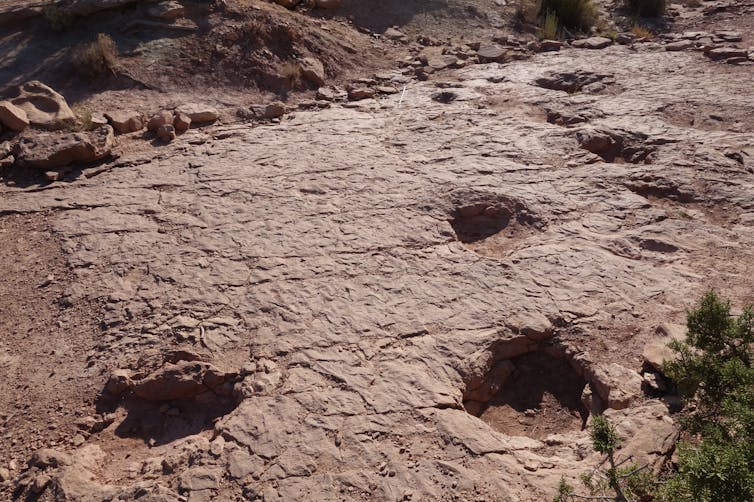
As it happens, there is another type of fossil that records the activity of an animal when it was alive, and they are known as fossil trackways. But until now, extracting gait information about extinct dinosaurs from these footprints has proved difficult.

A 2016 study demonstrated that two animals of different sizes and using different gaits could produce identical track patterns. This means that to identify gait from the tracks we would need to know the trunk length of the animal (distance from hip to shoulder). Unfortunately it could not be accurately estimated from tracks so we were left with too many unknowns.

But one important aspect had not yet been taken into account – the variation along a set of tracks caused by small changes in speed. In our new study, we used this variation to present a new method to use tracks to work out which gait had been used.

Obviously the trunk length of an animal cannot change as it walks – so, we can therefore measure the trunk length from the tracks at many different points along it, while each time assuming a different gait. The gait which produces the most consistent trunk length along the tracks can be assumed to be the correct one.


Sauropod tracks from Utah.
Jens Lallensack, Author provided

It all made perfect mathematical sense. All we needed to do was make sure our new method worked when applied to the tracks of modern animals, including three dogs, two horses and an elephant. In each case, the method produced gratifyingly accurate estimates of the animals’ gaits.

How dinosaurs moved


So, for the first time we had developed a way to study gaits of the past. We applied the method to three fossilised tracks of giant sauropods from the Early Cretaceous period of Arkansas, in the US – the largest of which had footprint lengths of 85cm.

The results were really surprising. Previous studies suggested that sauropods might have walked in a pace gait (similar to a camel) or a singlefoot walk (similar to a slow moving horse). But we expected that sauropod gaits would resemble those of elephants, as they are the largest land animals alive today.

Elephants employ lateral couplets gaits – they tend to move the fore and hind limb of the same body-side together, like in the animation below. They therefore fall in between the pace gait (the extreme of a lateral couplets gait where hind and fore limb of one body side move exactly in sync) and the singlefoot gait (where the time lag between all limb movements is exactly equal).


The lateral couplets gait, seen in animals such as elephants.
Jens Lallensack, Author provided

Our new method, however, indicates that all three sauropods we studied via tracks had walked in a diagonal couplets gait, where they move the limbs of the opposite body-side together. The extreme in this gait is called a trot (the diagonal pair moves exactly in sync). So, to our surprise sauropods did the opposite of what we see in elephants.

How can this difference be explained? Well, Cretaceous sauropods do differ from elephants in one important aspect – they are much wider. The tracks we studied are especially broad (or wide-gauged), with left and right tracks spaced well apart from each other.


Elephants, in contrast, set one foot almost in front of the other, forming a narrow path. This has consequences for the gait. An elephant only needs to shift its body mass slightly to one side in order to swing both legs of the other side forward together. A wide-gauged sauropod, however, would have needed to drastically sway its body towards one side to achieve the same.

So, the diagonal couplets gait assured that the sauropods always had at least one foot on the ground on either side of the body, avoiding such swaying from left to right. Stability therefore seems to have played a major role in how the largest creatures ever to have roamed this planet walked.

Interestingly, almost all large modern mammals show very narrow tracks, in combination with lateral couplets gaits. But the wide-tracked hippopotamus, in contrast, uses a diagonal couplets gait (moving limbs of the opposite body side together) just as we estimated for wide-tracked sauropods. So while it’s easy to assume that because elephants are the largest animals on land today, large land animals of the past must have moved like them, it appears that this was not the case.


Peter Falkingham, Reader in Vertebrate Biology, Liverpool John Moores University and Jens N. Lallensack, Postdoctoral Research Fellow in Palaeontology, Liverpool John Moores University

This article is republished from The Conversation under a Creative Commons license. Read the original article.
The Right’s Selective Outrage on Antisemitism Is a Scam

YOU’RE GETTING PLAYED

Conservative media distort the public’s perception of the real threats of anti-Jewish bigotry.

Jeff Swensen/Getty Images

OPINION
Elad Nehorai
Published Mar. 14, 2022 

When I was a columnist for the Jewish publication The Forward a few years ago, I was an outspoken critic of the Women’s March leaders, who despite their progressive politics, had questionable associations with antisemites. I felt that Tamika Mallory, in particular, had used antisemitic rhetoric herself.

At the time, I was surprised and gratified at how quickly the story was picked up by other news outlets and how easily attention was brought to my sincere concerns. In a matter of days, I was appearing on cable news, and a social media debate raged for weeks.

I experienced this exact pattern a number of other times, such as when I called out Jeremy Corbyn for antisemitism in an exchange with Rep. Alexandria Ocazio-Cortez on Twitter.

Conversely, when I called out right-wing antisemitism, it never seemed to register.


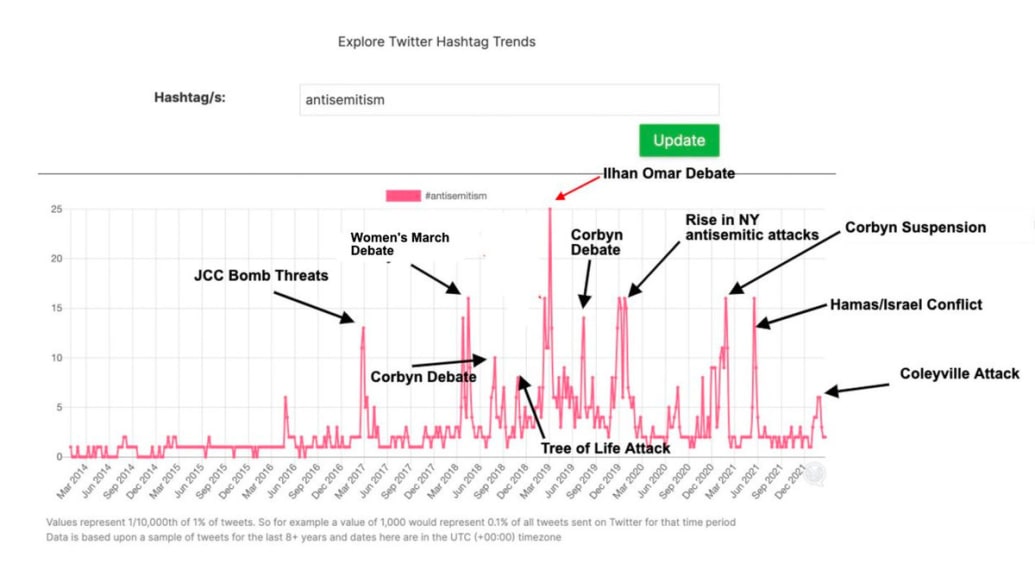
In fact, it was just the opposite. Writers who tried to get similar coverage around right-wing antisemitism discussed discovered virtual radio silence. Although one accusation was enough to brand Democratic Rep. Ilhan Omar an antisemite and set off a month of angry coverage, as well as a rebuke from her own party, Republican Sen. Ted Cruz could claim a Jew owns the media and most people today won’t remember the story ever happened.

I look back on that time with regret, having realized that I had been an unwitting pawn in a right-wing disinformation campaign to obscure the discourse around antisemitism.

Take the recent hoopla surrounding Whoopi Goldberg, who said on The View that the Holocaust was about “man’s inhumanity to man” and “not about race.” Her comments created a firestorm of coverage, ultimately leading her to apologize and ABC suspending her for two weeks.

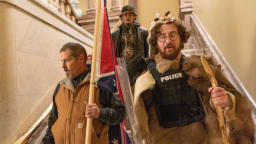
Another recent controversy erupted when nine current and former GOP lawmakers—including Reps. Marjorie Taylor Greene and Paul Gosar—appeared at the American First Political Action Conference (AFPAC) led by Nick Fuentes, the notorious leader of the white nationalist Groyper movement. At the event, Fuentes praised both Putin and Hitler in the same breath.

Google Trends shows that relative to Whoopi Goldberg’s comments, a national politician attending an event where Hitler was praised barely registered.

This is not just a digital phenomenon: The New York Times has written only one story about the conference, but seven articles about Goldberg’s comments.

Examine the data around discussions on places like Twitter over the past decade, and the disparity is impossible to ignore.

Twitter

This is the result of a certain kind of right-wing disinformation, a phenomenon that is largely still misunderstood, in part because we overestimate the power of mainstream publications in being the exclusive drivers of conversation.

Right-wing media have massive power to shift attention in any direction they choose. The Daily Wire (the main publishing home of star conservative pundit Ben Shapiro) drives more Facebook engagement than The New York Times, The Washington Post, NBC News, and CNN combined.

This is because The Daily Wire and other non-traditional right-wing media outlets like The Blaze focus largely on recycling other outlets’ reported content with outrage-inducing headlines that focus purely on right-wing culture war issues.

For example, not one article has been written by The Daily Wire about the white nationalist conference. In contrast, they’ve written many articles about Goldberg’s comments (and still haven’t stopped). By focusing exclusively on the debates around antisemitism that hurt the left, while ignoring those on the right, highly trafficked sites help tip the balance of public discourse.

The fight against antisemitism is one of the few forms of anti-bigotry that has strong bipartisan support. Unlike discussions around Black Lives Matter, for example, antisemitism is rarely up for debate, and red lines like Holocaust denial are vociferously fought by both sides.

But it is this very bipartisanship and unity that actually contributes to the uneven distribution of discussions.

Thanks to the reach of their platforms, right-wing websites and influencers can cause stories like the Goldberg flap to trend on social media platforms almost instantly. Liberals and progressives, unaware of the source of these trends, join in the conversation, similarly condemning and calling out these discussions.

This leads to a snowball effect, particularly when the outrage occurs on Twitter.

I Know Why Haredi Jews Joined Neo-Nazis at the Trumpist Riot
INFECTION

Elad Nehorai


Legacy media outlets and editors often inform their editorial choices based on which stories seem to be gaining traction. That’s how we end up in a situation where The New York Times has seven stories about a story that was actually initially driven by The Daily Wire and its founder, Ben Shapiro.

The reverse, however, rarely occurs. While liberal audiences and mainstream media outlets will respond with outrage to the stories spread by the right, the right’s media virtually blacks out news involving right-wing antisemitism.

The end result is that legacy media’s focus on this issue is not actually balanced: it is incentivized to focus on right-wing interests.

Thus, you may be surprised to learn that in the month leading up to the Goldberg story, there were many noteworthy antisemitic incidents—including the spreading of George Soros conspiracy theories by Tucker Carlson and Laura Ingraham, Trump (again) claiming US Jews were disloyal, and a Virginia Republican candidate putting out an antisemitic ad about his opponent.

These forms of antisemitism help fan the flames that lead to antisemitic violence. The Tree of Life shooter, for example, was motivated by a Soros conspiracy theory.

This creates an ecosystem in which a particularly deadly form of antisemitism, right-wing white nationalism, is largely unseen even as it creeps into the mainstream and our halls of power. Glenn Beck was fired from Fox News, reportedly in part for spreading a Soros conspiracy theory. Now Fox News has become a hotbed of that same conspiracy theory.

None of this is good news for Jews. And until these dynamics are understood, it will only get worse.