Friday, April 29, 2022

Elliott Associates Go Activist On Suncor, It's About Time

Apr. 28, 2022 4:15 PM ET

Summary

  • Elliott Associates took a 3.4% stake in Suncor and will be seeking 5 board seats.
  • Suncor is the classic example of a company with great assets but a bad management team.
  • If the activists are successful in replacing the management team, then we see SU as a long-term holding.
  • Looking for a helping hand in the market? Members of HFI Research get exclusive ideas and guidance to navigate any climate. Learn More »

dan_prat/iStock Unreleased via Getty Images

Suncor Energy Inc. (NYSE:SU), our 4th largest holding, is getting a nice pop today on the announcement that Elliott Associates, a famous and large ($50+ billion) hedge fund, just took a 3.4% stake and will be seeking 5 board seats.

For starters, activism in Canada is a mixed bag. Pershing Square, Bill Ackman's fund, went activist in Canadian Pacific Railway (CP) and had great success. And then there were activists like Orange Capital which went activist on Bellatrix Exploration (OTC:BXEFF) and failed hard.

For Suncor, this has been a long time coming. Following SU's 2021 year-end results, we wrote this article. In it, we said the following:

If instead, the management team hears from shareholders about demanding a higher capital allocation plan, then a dividend increase is the only way.

And since we are shareholders, we are going to be voicing our concerns on this matter to the Suncor board. We will be making phone calls over the coming weeks to rally shareholder support for higher dividends by May's earnings release (for Q1).

With this much free cash flow leftover, we think the management will have no choice but to make the right move. Let's see, but we are going to be taking action.

We did make calls following the write-up. There was growing frustration amongst the SU investors base on the lack of urgency to increase capital return to shareholders. We suspect the opportunity presented itself to Elliott's team given the obviousness of the situation. An integrated oil major with a dominant market position unwilling to pay out a large amount of free cash flow back to shareholders is just screaming activism through and through.

Since we started investing in SU, our key hesitancy was always the management team. Mark Little and the SU board are not competent capital allocators. It shows via the underperformance of SU vs. Canadian National Resources (CNQ). And we are very happy to see Elliott point that out in the slide deck:

Previous premium valuation now a discount

Elliott

And it really is not surprising to see Suncor perform so horribly since Mark Little became the CEO in 2018.

So much cash...

At $105/bbl WTI, Suncor is generating C$12+ billion in free cash flow. Despite this ridiculous figure, the SU board is still using $35/bbl for a sustainable dividend.

Breakeven sensitivities and cost management

Suncor

As Cenovus Energy (CVE) demonstrated yesterday in its Q1 release, it's time to adopt a more flexible strategy. Dividend policies from producers should not be anchored to a fixed amount. Oil is a volatile commodity, and investors buy producers for the embedded upside potential of oil. As a result, adopting a variable dividend with excess free cash flow is the only way to reward shareholders for withstanding the volatility of owning oil producers.

This is clearly the way forward.

If management is gone, Suncor is a core position for the long run

If Elliott is successful in changing the management (hard to say at this moment), then SU is going to be a stock you want to own for the long run.

If Elliott is not successful, then SU will likely respond with a massive dividend increase, and the shares will react appropriately. We may look to exit if the activists aren't successful later on.

The investment thesis in SU is really simple. It is one of the best businesses in Canada (every producer in Canada wishes it had the assets of SU), and the integrated structure allows it to be insulated from crazy price volatility. But the management team is horrendous, so it was a valuation play, plain and simple.

If the management team is replaced, then this is no longer a valuation play, but a long-term hold as the new management team could compound capital.

Everything will be dependent on whether Elliott is successful or not. We think they will.

HFI Research, #1 Energy Service

For energy investors, the 2014-2020 bear market has been incredibly brutal. But as the old adage goes, "Low commodity prices cure low commodity prices." Our deep understanding of US shale and other oil market fundamentals leads us to believe that we are finally entering a multi-year bull market. Investors should take advantage of the incoming trend and be positioned in real assets like precious metals and energy stocks. If you are interested, we can help! Come and see for yourself!

Disclosure: I/we have a beneficial long position in the shares of SU, CVE, CNQ either through stock ownership, options, or other derivatives. I wrote this article myself, and it expresses my own opinions. I am not receiving compensation for it (other than from Seeking Alpha). I have no business relationship with any company whose stock is mentioned in this article.

Journey of Buddhism, from Tibet to India


Lhasa [Tibet], April 29 (ANI): The Students for a Free Tibet-India (SFT) celebrated the 33rd birthday of the 11th Panchen Lama in the north Indian hill town of Dharamshala which reflects India and Tibet’s friendly relationship. But their relationship has not flourished overnight.

Both the countries share the relationship way back in 7th Century when Buddhism was introduced to Tibet. In order to preserve and propagate the Buddhism Dharma, Tibet sent many of its people to India to study Buddhism and simultaneously invited many Indian Buddhist masters to Tibet.

According to “Tibet: A Political History” book, Buddhism came to Tibet in 7th Century from Nepal and India but the actual propagation began in the 8th Century with the arrival of Guru Padmasambhava and Acharya Shantarakshita. Although the book states that Buddhism was introduced in 7th Century, but according to Tibet’s History records, it arrived in the country in 3rd century at the time of 28th Tibetan Royal line Lha Tho Thori Nyentsen, Tibet press reported.

During his reign, he received a book of Buddhist scriptures written in Sanskrit and even an early Tibetan Historian Nel-pa Pandita mentions that the book was received from a certain Pandita Losemtso of India. Thus, here it can be said that the seed of Buddhism in Tibet was planted in the 3rd century but was able to proliferate only after the 7th century.

In the early phase of propagation, three kings namely king Songtsen Gampo, Trisong Detsen and king Tri Ralpachen with the assistance of Indian Buddhist Pandita’s played a significant role. Due to their immense contribution, these kings are referred to as the three Dharma Rajas in the history of Tibet.

The first of the three Dharma Rajas was Songtsen Gampo, the 33rd King. With an intention to introduce Buddhism and Tibetan script in his country, King sent one of his ministers Thonmi Sambota with other sixteen companions to learn the Sanskrit language and Buddhist literature in India. During his stay in India, Thonmi Sambota learnt Sanskrit from his tutor Lipikara and Devavidyasimha and returned back to Tibet. Later, he devised the Tibetan script taking the model of Brahmi and Gupta script and is known as the father of Tibetan language and literature.

The second Dharma Raja was king Trisong Detsen, the 38th royal line. When he asserted the throne, many ministers, who are devoted to Bon religion, opposed the King and to eradicate all these hurdles coming in the way of the development of Buddhism, King sent his minister Ba Salnang to Nepal to invite Shantarakshita (Indian Buddhist Master) to teach the basic doctrine of Buddhism. Later, Guru Padmasambhava, the great Indian tantric master of Tibet was also invited to the country, reported Tibet Press.

With his arrival, Padmasambhava through the means of his powerful tantric tactics was able to subdue the Bon spirits and also made them to take an oath to defend the new religion i.e., Buddha Dharma.
In fact, Tibetan history records that many of these spirits were later taken into the Buddhist pantheon as a Dharma protectors. Their contribution to Tibetan history cannot be measured. They are also known as the Khanlob Chosum: The Acharya (Shantarakshita), the abbot (Padmasambhava) and the Dharmaraja (Trisong Detsen).

Besides, the second Dharma Raja during his reign sent the young Tibetans to India for training and study Indian Buddhism. Under the guidance of Shantarakshita, the king also introduced the system of monkhood in Tibet.

Third Dharma Raja, Tri Ralpachen has invested a huge amount of money in the construction of temples and monasteries and also supported Indian scholars like Upadhaya Jyanamitra, Ratnarakshita to retranslate the scriptures and commentaries which was not translated according to the standard terminology during the reign of the earlier kings, as reported by Tibet Press.

But unfortunately, the Era of Tibet’s Religious Kings came to an end with the assassination of king Ralpachan by the supporters of his elder brother Lang-Darma. His older brother opposed the Buddhist religion and did every bit to destroy the teachings of Buddhism in Tibet. Under his reign, Buddhism suffered a terrible setback, the monks were forced to either strip off their robes or marry or to declare themselves to be the followers of Bon religion. Many monasteries and scriptures were destroyed and burnt to the ashes. This era was often regarded as the “Dark Age of Tibetan Buddhism.”

Gradually, his atrocities became so intense that a pro Buddhist monk named Lalung Palgye Dorje assassinated Lang-darma in 842. Thus, with this the long lineage of royalty came to an end that ultimately led to the collapse of the great Tibetan Kingdom.

Lang Darma tried everything to destroy Buddhism but still he couldn’t remove it from its roots. Therefore, the spark for second phase of Buddhism arose from the western Tibet where the King of Guge, Tsenpo Khore gave his throne in the hand of his younger brother Songe and himself became a monk and ordained as Lha Lama Yeshe Od. Their forefathers can be traced back to the lineage of King Lang-darma, according to Tibet Press.

Hence, with Indian Buddhist masters and Tibet’s Buddha Dharma king help, the Buddhism not only remained in the country but also disseminated to other countries like Mongolia, Nepal and Bhutan.

 (ANI)
COMMENT: Ukraine sparks discussions of Russia’s modern empire
Russia was an empire for most of its history but is now going through a "postponed collapse", say some, and murmurs of certain regions going their separate ways are now in the mainstream commentary.

By James C Pearce
bne intelligencer
 April 24, 2022

Most ethnic Russians are descended from peasants and serfs and don’t view themselves as brutal colonisers or chauvinist imperialists. But Russia was an empire from the time of Ivan III and is still going through a post-imperial readjustment. Much like Britain or France, Russia has yet to come to terms with the collapse of its empire, in part because all three still have empires.

When nations go through trying times and turbulence, discussions of national disintegration are commonplace, particularly global powers, past and present.

Some scholars like Alexander Etkind, Sergey Medvedev and Peter Eltsov have all argued in the past decade that the Russian Empire is still collapsing. Others have referred to it as a ‘postponed collapse’. With Russia’s invasion of Ukraine, murmurs of certain regions going their separate ways are now in the mainstream commentary.

The reasoning is not only due to the socio-economic damage the harshest sanctions ever introduced will do to the Russian Federation. It’s also a question of whether the Russian state in its current form can survive post-Putin with a handpicked successor. Its image is now badly damaged at a time when popular protests aren’t exactly uncommon or unheard of.

Calling for secession or the break-up of the Russian Federation is a criminal offence punishable by prison. Few are actually calling for it and realistically speaking, it’s very unlikely to happen anytime soon. But the invasion of Ukraine does offer lessons for the Kremlin inside its borders and shows us what could happen to Russia in the next few decades.

Colonised colonisers

Some of the great Russian thinkers have called Russia ‘a nation that colonised itself’. After the regathering of Russian lands under its first tsar, Russia’s European state, isolated under Mongol rule, created an Asian empire whilst forming a buffer zone in the west. Russia’s borders were expanded through war and conquest in Eastern Europe, the Caucasus, across the Middle East, Central Asia and into the Far East. Russification sought to bring the diverse population inhabiting this space in line through conversion to Russian Orthodoxy, promoting the language and by forcing loyalty to the tsar.

Besides the Orthodox Church, the military filled the gap between the centralised state and very diverse population. Many cities were founded not just as outposts for the empire to manage day-today administration and exercise control locally, but for the state to retreat eastwards in the event of an onslaught in the ‘western corridor’.

Some nations incorporated into the Russian Empire gained independence after the October Revolution 1917, namely Finland and Poland. Others, like Ukraine and Georgia, enjoyed a rocky and brief independence until the end of Russia’s Civil War. Moldova and the Baltic States were then illegally reincorporated into the USSR during the Second World War as it gained new territories East and West.

In 1991, the republics compromising the USSR all went their separate ways, keeping their present borders. Those borders were, in large part, due to Stalin’s ‘divide and conquer’ tactics. It caused the displacement and forced deportation of millions. Many ethnic Russians were also sent to work in certain professions and generally run those areas.

Many of these nations have large minority groups. Some regions have attempted secession, like Abkhazia and South Ossetia in Georgia, Nagorno-Karabakh in Azerbaijan, Chechnya in Russia and Transnistria in Moldova. All have involved violence.

The Russian Federation, the largest of the Soviet republics that also emerged as the USSR’s successor state, consists of well over 100 different ethnic groups with about as many languages, although Russians are by far the largest.

The Russian language reflects its makeup utilising three different variants of the ‘Russian’ demonym. Russkiy refers to ethnic Russians, whereas Rossiyanin is a passport holder – a non-ethnic Russian citizen of the Russian Federation. The word Rossisskiy falls somewhere in between. Rossisskiy is something of Russia or belonging to the nation, like the state – its official Russian name is Rossisskaya Federatsiya. It’s both inclusive and exclusive.

The leftover empire


The Russian Federation has six types of regional governments with differing levels of status and power. All reflect its immense diversity and geographical challenges. These are:

- Oblasts (counties/regions). Most were historically part of ‘greater Russia’, though not all, and are purely administrative;

- Republics, where another ethnic group make up the majority and which have more independent histories;

- Krais, literally frontier territories that were at the edges of the Russian Empire;

- Autonomous Okrugs (areas), created in the USSR and that (theoretically) gave autonomy to the indigenous peoples of the far north;

- Federal Cities, Moscow, St. Petersburg and Sevastopol;

- One autonomous oblast – the Jewish Autonomous Region in Russia’s Far East.

The nine krais and four okrugs are generally lesser populated and continue to experience depopulation. Krais have a similar legal status to oblasts but the difference is purely traditional, like the ‘Commonwealth’ of Virginia and ‘State’ of Wisconsin. Okrugs have more autonomy than oblasts and krais, their own anthems and larger non-Russian populations, but they still function as administrative divisions.

The 22 republics have their own governments, constitutions, anthems and courts which sit alongside their languages, culture, symbols, legends and music. In Southern Russia are Chechens, Dagestanis, Ingush and Ossetians to name just a few. Straddling Central Asia are the Chuvash, Tatar and Bashkir peoples, the latter two with histories of statehood. Further north are the Finno-Ugric peoples of the Komi Republic and Karelia. Throughout Siberia and beyond are Altai, Yakutia (or Sakha), Khakassia, Buryatia (Russia’s Buddhist republic) and Tuva.

Many have a history of resistance to Moscow; hence these are where much of any disintegration would occur. Although nationalist and pro-independence movements barely register or make headlines, there have been some anti-Moscow and nationalistic rumblings in recent years.

A Kazan-based blogger Ayzamov was jailed for criticising a statue of Ivan IV (or the Terrible). For the Kremlin, the latter is a figure of Russian statehood who helped liberate Russia during the eight-day siege of Kazan, commemorated by the colourful domes of St. Basil’s Cathedral on Red Square. For Tatar nationalists, like the People’s Liberation, Ivan IV is a symbol of Russian aggression and colonial rule, as is the figure of Ataman Yermak – a Cossack military leader who led Russia’s Siberian conquests.

Connected to this is the state’s underlying fear of Islamic radicalisation inside Russia’s borders. The Muslim majority republics, especially in the Caucasus, are kept tightly under the thumb or watchful eye of the state. This is in part due to the brutal Chechen Wars and terrorist attacks carried out in Dagestan, St. Petersburg and Volgograd, but many Russian Muslims also left to join ISIS – mostly young men from the Caucasus.

The Ingush people also suffered immensely under Stalin, meaning glorifying his legacy to promote national unity hasn’t gone over entirely well.

Khabarovskiy Krai in the Far East also has a high population of ethnic Ukrainians and two years ago saw widespread protests after the arrest of popular governor Sergey Furgal. Anti-Moscow sentiment is not exactly uncommon nowadays.

The Komi Republic, which has a long and interesting history, has the descendants of many forcibly deported Estonians, Latvians, Lithuanians and Ukrainians living among its own people. They took on rebellious anti-Moscow sentiments and passed them on to the next generation.

To be clear, none look like breaking away anytime soon and there are practically no calls for this. But every okrug, republic or krai shows a polarised population with very different lived experiences. Ruling over large territories and diverse populations has never been easy and Russia is not an exception to the rule.

History lessons


Since becoming president, Vladimir Putin has been keen to promote a cohesive national identity based upon a ‘shared history’ – one based on cherry-picked achievements from the Russian Empire and USSR, where all the regions can rally behind the state and its aims.

The invasion of Ukraine fits Russia’s civilisationalist policies of recent years. The Kremlin wants Russia to remain attractive in its former colonies not just to maintain a buffer zone, but to strengthen the state modernisation process. The erosion of the state and decline of its power and influence is feared because it could mean the potential loss of Russia’s territory.

There are three historical precedents for this: The Time of Troubles, the revolutions of 1917 and collapse of the USSR. Putin is keen to avoid repeating these scenarios. In fact, for Putin each period offers the same lesson: when the state loosens its grip on society, chaos and destruction will follow. Russia lost territory in each case and some within the Russian government blame democracy as much as anything else.

But the real lessons of Ukraine are clear: attraction can’t be forced or assumed; chaos often is. Should certain regions go their separate ways one day, some will westernise and liberalise. Some will fall under Chinese influence. Some may see more ethnic conflicts and human rights abuses. The extent to which these regions would want to stay close to Russia is uncertain, however.

Tens of thousands have left Russia since February 24 because democratic countries with stronger economies not at war with their neighbours look more attractive than those without democracy looking inwards. Russia might become increasingly more isolated as the war drags on and atrocities continue. When Putin goes, democracy will be difficult to re-establish, since most Russians have no experience of living in democratic systems. Holding the nation together will be difficult, however.

James C Pearce is a British historian based in Russia.
WAR IS RAPE
Czech Archbishop Duka defends Russian soldiers over rape of Ukrainian women
Archbishop Dominik Duka: Russian soldiers are often victims of "the strongest emotions and passions, when the terror of battle, fear and hatred really bring them to the level of a kind of amok”.

By bne IntelliNews
 April 29, 2022


The Czech Republic's conservative Catholic Archbishop Dominik Duka has appealed to the Czech public not to condemn Russian soldiers for atrocities they commit on Ukrainian women. 

The head of the Czech Catholic Church said in his blog that soldiers who rape women are not excused for their war crimes, however, they are acting under the pressure of emotions and passions in a state of frenzy.
(THEY GET BATTLEFIELD ERECTIONS)
According to him, these soldiers are often victims of "the strongest emotions and passions, when the terror of battle, fear and hatred really bring them to the level of a kind of amok”.  


His comments were immediately widely criticized by fellow Christians, politicians and women's rights organisations.

"No violence, especially violence as agonizing and brutal as rape, can be excused in any way. But the opposite, such acts must be unequivocally condemned. Russian soldiers have no business in Ukraine and should not be committing such atrocities there. Christians are to help and stand on the side of the victim,” iDNES.cz.

The cardinal has been regularly criticized for his opinion on the gay and lesbian communities, who Duka considers to be a threat to the Catholic Church, and for his comments that refugees should find the courage to return to their countries of origin.

The head of the Catholic Church has also for some time been criticised for his politicisation of the church, in particular his close ties to rightwing former President Vaclav Klaus and the current pro-Russian populist President Milos Zeman. In 2008 he allegedly advised Christian Democrat MP Jiri Hanus who to vote for in the presidential election.

On many issues Duka and Zeman hold the same positions, including sharing a sympathy for Russia. Duka has been reproached for serving the mass to the non-believing Zeman in November 2015 in Lany, which was perceived as a symbolic political gesture.

"His Eminence Dominic Cardinal Duka is an exceptionally respected representative of the Catholic Church in the Czech Republic and it is also largely to his credit that we are gradually removing the barriers that have existed for many years between the church and the state in our country," Zeman wrote in a letter published in 2018 defending Duka when part of the Czech faithful asked the Pope not to extend his mandate as archbishop.

Men’s Unexpected Erections are a ... - Duck of Minerva

https://www.duckofminerva.com/2015/12/mens-unexpected-erections-are-a...

2015-12-15 · The article is literally talking about just getting a boner while on the battlefield, not male sexuality in general. Getting a boner while on the battlefield 


PHILLIP JOSE FARMER: https://en.wikipedia.org/wiki/A_Feast_Unknown


Russia on fire: Is Ukraine giving Moscow a taste of its own medicine?
An ammunition depot in Belgorod caught fire on April 27.

By Dominic Culverwell in Berlin, Theo Normanton in Moscow
April 29, 2022

A decade-long secret war is reaching its boiling point as mysterious explosions ripple throughout the Russian Federation.

A series of fires this week have caused speculation that pro-Ukrainian saboteurs are operating in Russia. In extraordinary circumstances, an ammunition depot in Belgorod caught fire on April 27, days after a massive explosion at an oil facility and armoury in Bryansk and an airbase in Ussuriysk, Russia’s Far East, on April 25. With no one claiming responsibility, fingers point in all directions and the cause of the fires continues to remain undetermined.

Hours after the Bryansk fire, Russian forces announced they had shot down Ukrainian drones in the neighbouring Kursk region, which was enough proof for some that Kyiv had orchestrated a drone strike on the Bryansk depots. Reports from Belgorod also mentioned Russian air defence systems being active, suggesting they had failed to hit a Ukrainian drone or missile. Others claimed it was a false flag operation due to warnings from Ukrainian journalists days before that Russia was collecting downed Ukrainian drones in those regions to stage an attack.

However, the fire in Ussuriysk thousands of kilometres from Ukraine's border and the discovery of a mine by a railway track in Bryansk the following day have added credibility to the theory that there are saboteurs carrying out attacks on the ground in Russia. The mine was identified as an inert Soviet SZ-6 demolition charge by the Twitter account “Ukraine Weapons Tracker”. Although inactive, the account believes it was placed there “as a warning” from pro-Ukrainian saboteurs.


Taken from Ukraine Weapons Tracker Twitter

As such, Ukraine may be giving Moscow a taste of its own medicine. Russian saboteurs and secret agents have carried out similar actions in the shadows of Central and Eastern Europe for over a decade, resulting in the destruction of numerous storage facilities across the continent.

Europe’s exploding depots

The 2008 Russian invasion of Georgia and the 2014 War in Donbas brought armed conflict closer to the European Union and with it a new underground war orchestrated by Russia.

Between 2011 and 2020, Bulgaria suffered a series of four peculiar explosions at ammunition depots. The stored weapons were destined for Ukraine and Georgia and belonged to Bulgarian arms dealer Emilian Gebrev, who had miraculously survived a poisoning attempt in 2015. Sofia refrained from accusations for years. However, that changed on April 28, 2021 amidst worsening EU relations with the Kremlin after several successful and unsuccessful assassination attempts on EU soil. Siyka Mileva, the spokesperson for Bulgaria’s prosecution, noted that six Russian suspects had been present in Bulgaria at each of the four explosions and accused them of destroying the armouries, according to the independent news site Meduza.

“It was established during the investigation that six Russian citizens spent time on the Republic of Bulgaria’s territory around the dates of the explosions,” said Mileva. “The evidence gathered leads to the highly reliable conclusion that the aim of the actions of the Russian citizens was to stop the delivery [of munitions to Georgia and Ukraine].”

According to Bulgarian officials, the six suspects were likely members of the secretive Unit 29155 of the Russian military intelligence agency GRU and connected them to the attempted murder of Emilian Gebrev in 2015. This was further corroborated by the investigative platform Bellingcat, which also linked the unit to the infamous poisoning of Sergey and Yulia Skripal in 2018.

Moreover, a separate investigation determined that Unit 29155 was also the cause of several explosions at arms depots in Czechia in 2014 which killed two people. The warehouses also held weapons belonging to Emilian Gebrev destined for Ukraine. After claiming there was “irrefutable evidence” that the unit was involved, Czech Prime Minister Andrej BabiÅ¡ expelled 18 diplomats from Prague on April 17, 2021 and called for the arrest of two suspected GRU agents who were revealed to be the same two men involved in the Skripal assassination attempt.

Extensive evidence was collected over several years in Bulgaria and Czechia before Russia was accused of any wrongdoing. In the meantime, Ukraine continued to suffer as the War in Donbas was protracted. By 2017, the intensity of the conflict had simmered down and the regions outside of Donbas and the occupied Crimea looked to be void of any conflict.

However, over a short period, intense explosions erupted at multiple ammunition storage facilities across the country. One particular inferno at a munitions depot in Kalynivka, central Ukraine, blew up $800mn worth of artillery and forced 30,000 people to evacuate on April 26, 2017. Some blamed the fire on the improper storage of weapons, but the Security Service of Ukraine (SBU) quickly claimed “subversive activity” was responsible for the incident, a thinly veiled accusation at Russia.

Moreover, the sheer number of fires at ammunition depots suggested that foul play was at work. Kyiv did not specifically blame any one agency, but instead strongly alluded to the incidents being carried out by Russian saboteurs, which Moscow denied. Several months before the explosion in Kalynivka, Ukraine's military prosecutor Anatoly Matios blamed saboteurs for another fire at an arsenal in Balakleya containing 138,000 tonnes of ammunition.

"According to preliminary data ... as a result of sabotage…fire and explosions caused the detonation of ammunition at several sites storing rockets and artillery weapons," Matios wrote on Facebook.


Balakleya fire

Russian Response

So far, there is no conclusive evidence to prove the recent fires in Russia were an act of sabotage, but Russian opposition politician Leonid Volkov certainly thinks it is a plausible explanation.

“Russia is bombing fuel depots in Ukraine in order to cut off the supply lines to Ukrainian soldiers and to limit the provision of fuel and other supplies to parts of Ukraine,” Volkov said after the Bryansk explosion. “It is reasonable and logical that Ukraine should do the same thing”.

The general consensus on social media also leans towards Ukrainian saboteurs. Yet this is in stark contrast to Russian officials, who called the fires in Bryansk, Belgorod and Ussuriysk accidents or refrained from mentioning the cause at all. Volkov believes that the Russian authorities have to do this in order to quash speculation that the war is not going to plan. The lack of insight into the fires could signify that Moscow is apprehensive about losing control over its narrative. Therefore Russian state media focused on apparent domestic victories from those dates instead.

On the same day as the Belgorod explosion, Russia’s Federal Security Service (FSB) announced the arrest of two “Russian sympathisers of Ukrainian Nazism” who had allegedly been collecting data about Russian troops.

"The FSB unit in Belgorod has detained two Russian sympathisers of Ukrainian Nazism for plotting a public transport attack in the region," the FSB’s Public Relations Centre told Russian state media TASS on April 27.

Similarly, the FSB also declared they had foiled an attempt to assassinate Russian TV propagandist Vladimir Solovyov hours after the fire in Bryansk. The FSB published several photos allegedly showing Nazi paraphernalia belonging to the six detained men, but quickly received backlash after accusations they had staged the photograph. One bizarre photo showed the computer game “Sims 3” amongst the contraband, with analysts speculating that FSB officers had misunderstood the order and meant to place three mobile phone SIM cards instead.


Taken from Igor Sushko Twitter

As such, claims of pro-Ukrainian saboteurs operating in Russia still remain unverified. However, known saboteur groups working in Belarus against Moscow and Minsk's military actions, such as the Belarusian Cyber-Partisans and the “Community of Belarusian Railway Workers”, have caused concern for President Lukashenko, Putin’s closest ally. Therefore the Russian leader may be watching these incidents with a cautious eye.

Although recent polls indicate that a large number of Russians are in favour of the invasion, the thousands arrested for protesting certainly show that there is strong Ukrainian support as well. As the war drags on longer than expected and the number of Russian bodies piles up, the apparent acts of sabotage may indicate that opposition forces are banding together. If that is the case, we can expect more acts of resistance and the formation of saboteur groups akin to the ones in Belarus.
AUSTRALIA
Bottlenose dolphins being caught and killed in WA trawl nets at ‘unsustainable’ levels

Between 11 and 17 dolphins killed each year, government says, though independent observers put rate as high as 50 a year

Bottlenose dolphins in Western Australia are being killed at unsustainable levels after being caught in trawl nets, a new study says. Photograph: Andy Schofield/RSPB/PA

Australian Associated Press
Fri 29 Apr 2022 

Bottlenose dolphins are being caught and killed in trawl nets in Western Australia’s north at unsustainable levels, a study warns.

The finding is based on analysis of the Pilbara trawl which supplies fish to the Perth market, targeting emperor, snapper, trevally, cod and grouper.

A report last year by the federal environment department indicated between 11 and 17 bottlenose dolphins were killed every year in the trawl’s bycatch.

Independent observers have previously put the rate as high as 50 a year in peer-reviewed research.

In a new international study published in the Conservation Biology journal, researchers used a modelling tool incorporating chance events to assess population declines among bottlenose dolphins in the Pilbara.


Large kangaroo kicks woman to the ground in unprovoked attack on Gold Coast golf course
Read more


Dr Simon Allen, an adjunct research fellow at the University of Western Australia, said the study found capture rates remained unsustainable even with mitigation efforts.

“Bycatch reduction devices were placed in the trawl nets in 2006 and there has been some monitoring since, but no quantitative assessment of the impact of fishery-related dolphin mortality was ever carried out,” Allen said.

“We set out to model different levels of dolphin capture, including those reported in fishers’ logbooks and those reported by independent observers.

“Unfortunately, our results show clearly that even the lowest reported annual dolphin capture rates are not sustainable.”

Previous models had focused simply on the maximum number of marine animals that could be killed without affecting the sustainability of the population.

The new study takes into account environmental and demographic factors, including the dependency of offspring on their mothers and chance events such as heatwaves.

It found the “acceptable” number of bottlenose dolphin bycatch deaths was between two and eight a year, compared to 16 under the less-sophisticated model.

“These results suggest that reported bycatch rates are unsustainable in the long term, unless reproductive rates are consistently higher than average,” the authors found.

WA’s primary industries department is required to publish an ecological risk assessment of the Pilbara trawl by December this year.

In a report last year, the federal environment department said there were only two vessels operating in the fishery and the risk to sustainability was generally considered to be low.

But the report said there were still “relatively large” numbers of dolphins and critically endangered green sawfish being killed every year.

“The vulnerable nature of such species suggests that any interactions are potentially significant,” it said.

“Efforts to lower the number of TEPS (threatened, endangered and protected species) interactions and mortalities should continue.”

Research has indicated the bottlenose dolphin population in the Pilbara may be distinct from other populations, leaving it particularly vulnerable to fishing-related deaths.
Rachel Levine calls state anti-LGBTQ bills disturbing and dangerous to trans youth

April 29, 20225:00 AM ET
SELENA SIMMONS-DUFFIN
NPR

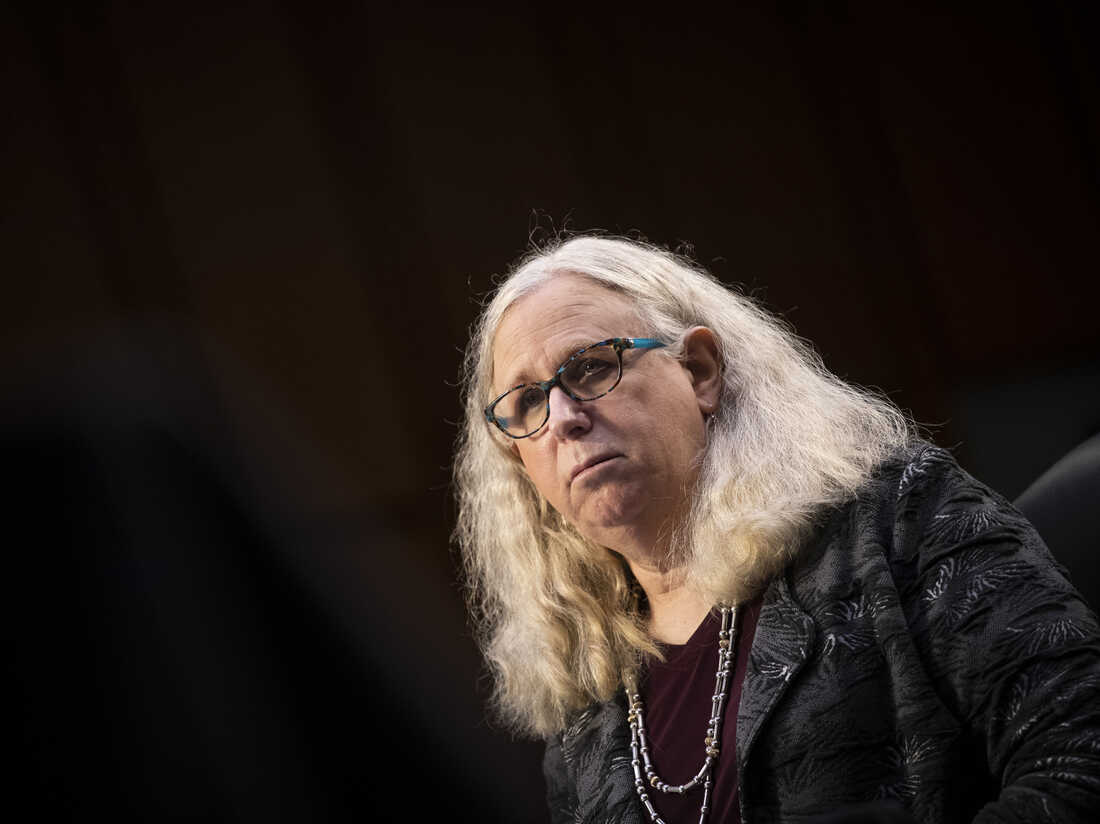
Rachel Levine, U.S. assistant secretary for health, says, "The language of medicine and science is being used to drive people to suicide." Political attacks against trans young people are on the rise across the country.
Caroline Brehman-Pool/Getty Images

The highest ranking transgender official in U.S. history will give a speech in Texas Saturday, urging physicians-in-training to fight political attacks against young trans people and their families.

Adm. Rachel Levine, the U.S. assistant secretary for health, will make a speech in Fort Worth at the Out For Health Conference at Texas Christian University.

In prepared remarks shared exclusively with NPR, she writes: "Trans youth in particular are being hounded in public and driven to deaths of despair at an alarming rate. Fifty-two percent of all transgender and nonbinary young people in the U.S. seriously contemplated killing themselves in 2020. Think about how many of them thought it was better to die than to put up with any more harassment, scapegoating and intentional abuse."

Political attacks against trans young people are on the rise across the country. Over 100 anti-trans bills have been introduced in state houses this year, according to an analysis by Freedom for All Americans and the Guardian. Many of these legislative attacks use scientific language to justify their political aims, she says. In her prepared remarks, she concludes: "The language of medicine and science is being used to drive people to suicide."

Levine is a pediatrician and adolescent medicine specialist by training. "I'm not a political person," she tells NPR. But in this context, she says, when young trans people are being attacked by their own governments, she thinks medical professionals "need to stand up and be more vocal — and that's exactly what I'm going to do."

NPR spoke to Levine before she flew to Texas about what many Americans still don't understand about sex and gender, how federal policy can counterbalance anti-trans legislation in the states, and how she sublimates personal attacks to drive her advocacy.

This interview has been edited and condensed for length and clarity.

You will be speaking at Texas Christian University on Saturday at the Out For Health Conference, which was founded and organized by medical students. Why this event and what is the message of your speech?

I think it's a tremendous opportunity to speak with young professionals about health equity, diversity and inclusion.

One of the biggest messages I have at this time is really to speak about the challenges that the LGBTQI+ community face, particularly youth. The challenges come from very disturbing – and frankly discriminatory – laws and actions that many states are taking that are potentially dangerous, and costing the lives of young people. I think it's a very important message to give young physicians in training.

In your prepared remarks, you write, "Anyone who believes that words are not the same as actions, who believe that LGBTQI people should just toughen up, should walk a mile in our shoes." What would people learn from walking a mile in your shoes?

For some people, I think that these issues of gender identity are beyond their experience. They don't understand it, and so they fear it, and that fear can lead to negative feelings and emotions. My goal is to educate about the LGBTQ+ community in general, and to educate about the trans community – that we are people just like everyone else.


SHOTS - HEALTH NEWS
Make Space, Listen, Offer Hope: How To Help A Child At Risk Of Suicide

We are doctors, we are lawyers, we are business people, we are teachers, we function in every part of society and we're all just doing our part and living our lives and working towards the common good. And that might help dispel some of this fear and some of this discrimination.

"To walk in our shoes" is to have empathy for other people. I am such a big fan of diversity in all of its different aspects. I think diversity helps society. It helps any community. It helps any business, school, governmental agency. We have this beautiful tapestry of diversity in the United States. And so I think that it really is incumbent upon us to have empathy and compassion for those that are different from us.

Pew did a survey in 2021 that found that most Americans think that whether someone is a man or woman is fixed at birth. Most Americans also say they don't know anyone who is trans. There's a gap of understanding. Is there a role for the federal government in closing that gap?

I think there's a role for community, medical and public health organizations to educate the public about these issues.

[Most people's] experience might be that there is a simple binary of male and female, but it is actually much more complicated.

There is sex. You might think that that is simple, but it is not. There's chromosomal sex, there are [primary] sex characteristics, secondary sexual characteristics. Of course, there are individuals as part of our LGBTQ+ community who are intersex. And so it is multi-dimensional.

Then there's gender. Gender is really that self-concept in terms of your gender that is also multidimensional. There are sex roles, which have changed tremendously in our society over the last 50 to 70 years. And then there's sexual orientation – whom one is attracted to and wants to have intimate relations with – and that is also multidimensional. We want to educate people about those somewhat complex features and help them understand our rainbow family.

Texas has been one of the loudest states in going after trans kids and families. The state has investigated the parents of trans kids for child abuse. Families have moved out of the state because they felt unsafe, and the state attorney general attacked you recently on Twitter. As a trans person, how are you thinking of all that as you head to Texas?

I use all of those challenges and sublimate that into my work. Those egregious actions, one might say insidious actions, that are politically motivated and really harm trans and gender-diverse youth and their families – I take my feelings about that and I put it into my advocacy and our policy work to support trans youth and their families.

We have a president, President Biden, who sees us and supports us. We have a vice president, Vice President Harris, who sees us and supports us. Secretary Becerra of the Department of Health and Human Services, Secretary Cardona of the Department of Education – really across the administration in the federal government, it is just remarkable how supportive they are to the LGBTQ+ community.

But we are seeing in many states – including Texas – laws and actions which are discriminatory, politically motivated and they need to be fought against.

How?

So, for example, [the federal HHS] Office for Civil Rights has issued a formal interpretation of Section 1557 of the Affordable Care Act, where it says you cannot discriminate on the basis of sex, and that includes sexual orientation and gender identity.


SHOTS - HEALTH NEWS
'Whiplash' Of LGBTQ Protections And Rights, From Obama To Trump

People who feel that they are being discriminated against can contact the Office for Civil Rights, and they will open a case and investigate. And so we encourage trans and gender-diverse youth and their families [who] are feeling they are being discriminated against in Texas or any other state [to] contact our office.

In addition, [federal agencies] are looking at Title IX – particularly in the Department of Education and the Department of Health – in terms of support for sexual and gender minorities. We are going to be looking – throughout the administration – at policies that, again, support, affirm and empower our community.

Prior to this role, you were the secretary of health in Pennsylvania. A lot of people might not realize that you in HHS are not in charge of, say, the Florida Department of Health. That's not how it works. Do you think that is a problem in the case of trans youth?

We have a republic in which the states have a lot of individual power. One thing we learned through the pandemic is how important it is to coordinate between local, state and federal public health authorities. When they're not coordinated, that makes our work very difficult.

These negative and discriminatory actions and laws are politically based. It's not public health-based. It's not medically based in any way.

[In medicine], there is an evidence-based standard of care for the evaluation and treatment of trans individuals, whether they're youth or adults. That standard is set by the World Professional Association for Transgender Health, or WPATH. The last formal standards of care were [released] in 2011, and we expect the new standards of care in 2022.

There are many other standards set by organized medicine, for example, he Endocrine Society, which is an international organization of hormone specialists – endocrinologists – has a standard of care. There have been comments from the American Academy of Pediatrics, the Society for Adolescent Health and Medicine, from the [American Medical Association], from the American Psychiatric Association, the American Psychological Association – [all] in support of evidence-based standards of care for [gender-affirming] treatment.

So when, for example, the surgeon general of Florida puts out a statement based upon political considerations, that is not appropriate. We need to stand against that both from a medical and public health point of view.

As you mentioned, the Florida Department of Health published a fact sheet last week about trans health and cited many studies (although many groups have refuted its claims). When your office in March published a fact sheet, it also cited many studies. Where is the research on this? Is there a dispute?

I will disagree that there are many studies cited in the Florida statement – there are a few studies. I've looked at them. A lot of them say that we need more research. We agree. This is no different from any other medical field in which there's a research base that might inform a standard of care for treatment of other conditions, whether that's diabetes or hypothyroidism or other hormonal endocrine conditions – those change over time as the research changes.

When you look at the forthcoming WPATH standards of care and you see the hundreds and hundreds of articles, you will be able to see the difference between the research base for the standards of care and the few studies cited by Florida.

There is no argument among medical professionals – pediatricians, pediatric endocrinologists, adolescent medicine physicians, adolescent psychiatrists, psychologists, etc. – about the value and the importance of gender-affirming care.

Idaho, Alabama, Arizona and other states have introduced more than 100 bills related to trans kids this year. There are bills about what can be taught in schools related to sexuality and gender – the so-called "Don't Say Gay" bills. Some limit gender-affirming treatment to young trans people. Others limit trans kids' participation in sports. What do you think is happening in these states with all of these bills?

I think that they're all related in terms of their political motivation, and trying to stigmatize a vulnerable community — and particularly to stigmatize LGBTQ+ youth. We have a mental health crisis in this country, particularly among our young people, with increasing rates of depression, anxiety, suicidal thoughts, suicidal behavior. Our surgeon general, Vice Admiral Vivek Murthy, highlighted that in a surgeon general's advisory in December of 2021.


POLITICS
Not just Florida. More than a dozen states propose so-called 'Don't Say Gay' bills

One of the most vulnerable groups of young people are LGBTQI+ youth, and particularly – the focus of many of these issues – trans youth. We need to affirm them. We need to empower them because they are at risk, and they have a very high rate of suicidal thought and we have to act to prevent them from harming themselves. [We have] to support those young people and their families.

You said on a podcast recently that "being trans doesn't have to define who I am." I've heard from trans friends and colleagues that it can be exhausting to have to explain your personal experience and talk about gender all the time. How do you think about this part of your job and your role?

I am honored to be the assistant secretary for health, and a four star admiral and the leader of the United States Public Health Service Commissioned Corps. I recognize that I am the first openly transgender person to be confirmed by the Senate and to have these roles. It is a privilege. I want to use that – how fortunate I am to be in these roles – to work toward the common good in all of the different medical and public health issues that we've been discussing and more.

I understand the significance of my role to stand up and be counted as a very open and proud LGBTQ+ individual and openly transgender woman. And to use that to support more of our vulnerable LGBTQ+ community in all ways that I can.

[Talking about it] doesn't bother me. I mean, I've been in these [public] positions for seven, eight years now, and so it doesn't surprise me. I'm used to it.


If you or someone you know may be considering suicide, contact the National Suicide Prevention Lifeline at 1-800-273-8255 (En Español: 1-888-628-9454; Deaf and Hard of Hearing: 1-800-799-4889) or the Crisis Text Line by texting HOME to 74174

Why the "groomer" smear is terrible for LGBTQ mental health

After years of progress toward acceptance, an attack on LGBTQ people fueled by social media makes them targets of hate.

By Rebecca Ruiz on April 29, 2022
MASHABLE

The "groomer" smear against LGBTQ people along with anti-LGBTQ legislation have a profound effect on well-being.
Credit: Vicky Leta / Mashable

One of the most pervasive, damaging ideas that exists about lesbian, gay, bisexual, transgender, and queer people is that their sexual orientation or gender identity is a perversion. In recent years, that stereotype faded in pop culture and politics as large swaths of the public embraced progress toward equality like the Supreme Court's decision legalizing same-sex marriage as well as high-profile visibility of transgender people like actress Laverne Cox.

Such acceptance can make a critical difference for people's mental health: When stigma and discrimination recede, LGBTQ people may experience less psychological distress.

Yet with progress comes backlash, and we have arrived at a terrifying moment. LGBTQ youth have increasingly become the target of conservative policies designed to deny transgender children gender-affirming healthcare and participation in school sports and discourage open discussion of LGBTQ identities and experiences in the classroom.

Some advocates of these policies use extremist rhetoric labeling LGBTQ people and those who support them as "groomers," resurrecting the painful trope of perversion and supercharging it. As New York Times columnist Frank Bruni recently recounted, it was just decades ago that gay people were routinely treated as predators, particularly. By once again embracing a term that describes the manipulation of a child for sexual abuse, conservative activists demonize LGBTQ people. What's different now is that strategy plays into the mainstreaming of a far-right QAnon conspiracy theory that a cabal of powerful liberal pedophiles run the world.

Fox News, for example, has repeatedly featured the Libs of TikTok Twitter account, which reposts social media content from LGBTQ creators that it views as evidence of efforts to indoctrinate and "groom" children to become LGBTQ. In just a few months, the "groomer" smear became socially and politically permissible on the right.

Hateful accusations and discriminatory policies aren't new to the LGBTQ community, but they are horrifying. The Trevor Project, a nonprofit that provides crisis resources to LGBTQ youth, has seen a rise in contacts from callers and texters worried about bills targeting children like them in Texas, Florida, and Alabama. The organization is also hearing from youth in other states worried about whether their lawmakers are coming for them next.

When the The Trevor Project surveyed more than 800 LGBTQ youth in January, two-thirds of respondents said the debates over state laws restricting the rights of transgender people had negatively impacted their mental health. That number jumped to 85 percent of all 318 transgender and nonbinary youth polled. Fear about discrimination can lead to hypervigilance around being bullied and rejected, along with stress, anxiety, depression, and suicidal feelings.
"To watch your own identity on a screen be used as the boogeyman has an impact."

Sam Ames, director of advocacy and government affairs for The Trevor Project, recalls what it felt like to be transgender and queer while watching televised debates over California's Proposition 8, which banned same-sex marriage in 2008 and was later found unconstitutional.

"To watch your own identity on a screen be used as the boogeyman has an impact," says Ames.

To truly protect the health and well-being of LGBTQ youth, Ames says legislators should consider bills like requiring school districts to adopt model suicide-prevention policies and mandating the inclusion of LGBTQ history in classroom curriculum. Ames argues that both measures could improve mental health and reduce suicidal feelings for LGBTQ youth, who are already at heightened risk for anxiety, depression, and suicide. These proposals are likely nonstarters for conservatives who've arguably made transgender youth a wedge issue designed to draw a fervent base to the polls in the midterm elections, but they certainly draw a striking contrast between an approach that treats children as political props and another that embraces them for who they are.

SEE ALSO: How to support the fight for transgender safety in Texas

No policy, however, can fully mitigate the damage of extremist rhetoric that dehumanizes LGBTQ people. Last year, the Libs of TikTok account labeled The Trevor Project a "grooming organization" in a since-deleted Tweet, just one indication of its extremist views.

Though some advocates of "grooming" language say they're against violence, telling the public that LGBTQ people and their allies are child predators sets the stage for brutality. It's no mistake that, in 2016, a gunman showed up at a Washington, D.C., pizzeria looking for a child sex ring featured in far-right conspiracy theories promoted online. "Grooming" rhetoric is also an undeniable signal that LGBTQ people aren't safe in certain quarters, that they should hide their identity, and live in fear. Reprehensibly, it aims to undermine the ability of caring adults to publicly support youth just coming to understand their sexual orientation and gender identity. This is no way for more than 20 million adults and children in the U.S. to live, and such messages will affect their well-being in profoundly negative ways.

Ames is convinced that justice will prevail for LGBTQ people, but they worry that some children will feel unvalued by society and be at risk of suicide as a result. While many factors lead to suicide, LGBTQ youth who feel accepted by at least one adult are less likely to report attempting suicide. Warning signs of suicide amongst youth include hopelessness, losing interest in the future, saying goodbye to important people, and having a plan to die.

"What [youth] are telling us is that when they watch these debates, they are more than sad or angry or stressed — all of which they are — they are scared," says Ames.

If you want to talk to someone or are experiencing suicidal thoughts, The Trevor Project can be reached 24/7 at 1-866-488-7386 and via chat. Crisis Text Line provides free, confidential support 24/7. Text CRISIS to 741741 to be connected to a crisis counselor. Contact the NAMI HelpLine at 1-800-950-NAMI, Monday through Friday from 10:00 a.m. – 10:00 p.m. ET, or email info@nami.org. You can also call the National Suicide Prevention Lifeline at 1-800-273-8255. Here is a list of international resources.
No ‘parents bill of rights’ or ban on trans athletes: Kansas House fails to override veto

2022/4/28 
© The Kansas City Star
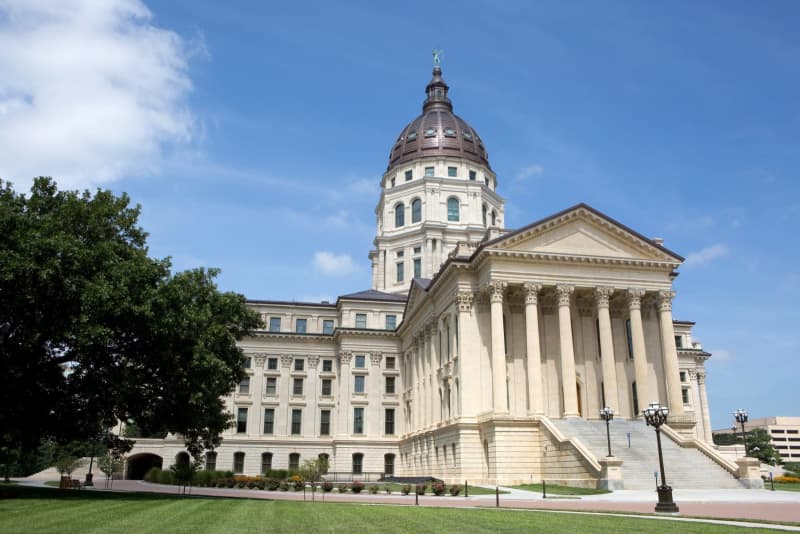
The Kansas State Capitol in Topeka, Kansas. - Steven Frame/Dreamstime/TNS

TOPEKA, Kan. — Efforts to ban transgender athletes from girls sports and establish a “parents bill of rights” failed in the Kansas Legislature on Thursday, but Republicans have pledged to make the issues a hallmark of campaigns this August and November.

The Kansas House failed to override Gov. Laura Kelly’s veto on both issues, falling short of the needed two-thirds majority.

The Senate easily passed the overrides on Tuesday, but attempts in the House were a long shot. The House’s original votes on the bills fell several votes short of the needed majority.

Earlier this week, House Speaker Ron Ryckman, an Olathe Republican, told reporters he wouldn’t have enough votes if the decision came this week. On Thursday, he said that day would be the chamber’s best chance; they had 85 Republican members present and needed 84 votes for the override. The chamber is allowed to reconsider the votes Thursday or the next day the body meets.

Proponents of the bill banning transgender athletes from girls sports have focused on the argument that those athletes have an unfair advantage over cisgender athletes — those who were assigned the female gender at birth. But the discussion has strayed into the validity of transgender identities in recent days.

“That is a mental health issue,” Rep. Barbara Barbra Wasinger, a Hays Republican, said during a GOP caucus meeting Thursday. “I feel greatly and deeply for these young people and all people that are confused.”

Last week, Rep. Cheryl Helmer, a Mulvane Republican, said in an email to her constituent that she was uncomfortable sharing a restroom with her transgender colleague, Rep. Stephanie Byers. She went on to falsely claim transgender people are attacking women and children in restrooms.

Opponents have called that rhetoric evidence that the bill is motivated by an underlying fear and hatred of LGBTQ Kansans.

“If the events of this past week do not demonstrate that this is not about athletics, I’m not sure what does,” Byers, a Wichita Democrat and Kansas’ first transgender lawmaker, said.

“We’re targeting someone, and by extension an entire community.”

Both issues have been hallmarks of Republican campaigns over the past two years, and the Kansas bills mirror legislation pushed by conservative think tanks nationwide.

Similar “parents bill of rights” legislation passed the GOP-controlled Missouri House last week on a 85-59 vote. The bill outlines a set of rights parents may employ over their child’s education, including reviewing curriculum and visiting classes during school hours. It would allow parents to sue school districts that violate the bill’s rules.

The legislation is now in the Missouri Senate, where it’s expected to undergo minor changes.

“They will be major campaign issues, a lot of money from both sides,” Ryckman said. “That shows the difference between Republicans and Democrats.”

When Kelly vetoed both bills, she said they were harmful to Kansas and “came from politicians trying to score political points.”

The bill banning trans athletes from girls sports, Kelly said, would prevent businesses from coming to Kansas while the “parents bill of rights” would imbue more division into schools and result in lawsuits. The bill requires districts to allow parents to inspect and challenge material in schools.

School districts and teachers have consistently said parents already have access to curriculum information and can raise concerns. Rep. Valdenia Winn, a Kansas City Democrat, claimed the bill was born out of a “national manipulation of parent anxiety.”

But Republicans insisted the legislation was needed to help parents who feel ignored by their schools.

“Do you want the government raising your children?” Rep. Stephen Owens, a Hesston Republican, said.

“It’s an issue that’s going to come into play in this election cycle,” Rep. Steve Huebert, a Valley Center Republican, said as he urged lawmakers on the House floor to override the veto.

Kelly’s likely November opponent, Attorney General Derek Schmidt, has said he would have signed the bill banning transgender athletes from sports if he was governor.

His campaign has placed a focus on education curriculum and transparency issues, pushing for policy banning from Kansas schools critical race theory — a complicated legal theory on institutional racism that is not taught in Kansas schools. Republicans nationwide have successfully capitalized on frustration from parents over classroom curriculum and COVID-19 protocol in schools.

Kelly’s veto has been pointed to in the campaign as proof of her allegiance to teachers unions rather than parents.

“From shutting down schools for the year earlier than any other state to vetoing legislation that would protect a parent’s role in their children’s education, Democrat Laura Kelly has told voters repeatedly the parent’s concerns don’t matter,” Republican Governors Association spokeswoman Joanna Rodriguez said in a statement after the vote.

____

The Star’s Kacen Bayless contributed to this report.
Top Global Brands and Asset Managers Still Lack Adequate Anti-Deforestation Policies, Report Finds


“Most companies and financial institutions with the greatest ability to halt deforestation are doing little or nothing,” said Niki Mardas, Executive Director at Global Canopy, which conducted the research.


April 29, 2022
 DeSmog 

Heinz, Jimmy Choo and BlackRock are among hundreds of household names doing “little or nothing” to end deforestation, a major new report has found.

The new Forest 500 report, published today by environmental group Global Canopy, assessed 350 top companies and 150 financial institutions that fund them, finding that a third of companies have no policies in place at all to ensure their products are not driving deforestation.

The world’s three biggest asset managers, BlackRock, Vanguard and State Street, had no commodity-specific policy to address deforestation risks in their portfolios, the report also found.

Of the 150 financial institutions providing over $5.5 trillion in finance to companies in “forest-risk” supply chains, 93 lacked a deforestation policy covering their investments.

The findings come just two months after world leaders pledged to bring an end to deforestation at the COP26 climate summit in Glasgow, committing to “work collectively to halt and reverse forest loss and degradation by 2030”, prompting concern from campaigners about the challenge ahead.

Pressure was now mounting on governments to “bring up the laggards” through implementing stricter legislation, the report said.

“Last year saw unprecedented political action as more than 140 governments recognised the urgent need to protect forests, yet most companies and financial institutions with the greatest ability to halt deforestation are doing little or nothing,” said Niki Mardas, Executive Director at Global Canopy.

“As major consumer governments start to translate these commitments into hard and fast legislation, businesses which have not taken deforestation seriously are woefully unprepared and face real risks.”
Deforestation Risk

Global Canopy used publicly-available data to assess companies and financial institutions on their commitments to tackle tropical deforestation in their supply chains and portfolios, ranking the strength of their commitments for six major forest-risk commodities: palm oil, beef, leather, soy, timber, and pulp and paper.

Around three quarters of global deforestation is driven by agriculture, according to Our World in Data. This is a key driver of climate change and can have a devastating impact on wildlife, ecosystems, and the lives of Indigenous peoples.

Some of the worst offenders named in the report included French dairy companies Groupe Lactalis and Groupe Savencia, whose brands encompass Président and Saint Agur and the Versace, Jimmy Choo and Michael Kors fashion brands, owned by luxury fashion giant Capri Holdings.

Kraft Heinz, which produces Heinz mayonnaise, was found to have a commitment for palm oil but none of the other supply chains listed. While luxury fashion giant Capri Holdings, responsible for brands Versace and Jimmy Choo, had no commodity policies in place.

Financial institutions were assessed separately on their exposure to deforestation risks, through their loans and investments to companies that produce, trade or use “soft” commodities, including soy, beef and palm oil.

While 22 of the 150 had made net zero commitments, including BlackRock, HSBC, and BNP Paribas, this didn’t usually equate to a robust deforestation policy, the report found.

BlackRock, which was found to have no commodity policies in place, scored just 3.2 percent for reporting and implementation, while Vanguard was awarded zero.
‘Slow Progress’

“I’m unsurprised by the disappointing results, as we’ve grown accustomed to very slow progress year on year,” Global Canopy’s Niki Mardas told DeSmog.

“But I am also seeing the rankings in a very new light. Important pledges were made by world leaders on deforestation at COP26 and there is significant legislation coming into force in major consumer markets like the EU and the UK.

“This looks set to force action by even the worst performers, who the Forest 500 identifies clearly. We hope this information will help governments play a more effective role in driving change, both in consumer countries and also in tropical forest regions.”

DeSmog last year revealed the ties of board members leading the world’s top banks to a range of high-carbon sectors, including agribusiness.

Veronica Oakeshott, Head of Forests Policy and Advocacy at human rights organisation Global Witness, said that relying on voluntary policies from companies and financial institutions had “abjectly failed to rein in forest destruction”.

“These policies, where they exist at all, are generally extremely weak or poorly implemented,” she told DeSmog. “In the meantime, big financiers are making huge sums of money off the back of their deals with some of the world’s worst deforesters, as our recent investigation showed.”

“If global leaders are serious about tackling deforestation, as they claimed to be at COP26, governments must introduce strong legislation that makes it illegal for all businesses, including banks and investors, to continue fuelling deforestation. Otherwise, they will continue to profit with impunity as forests are razed, communities are devastated and the climate crisis worsens.”

Président, Kraft Heinz, Versace, Capri Holdings, BlackRock, Vanguard and State Street were all contacted for comment.

Phoebe Cooke is Senior Reporter at DeSmog. She previously trained as a news reporter across local titles in Essex and East London, with her work since appearing in the Independent, Evening Standard, The Sun Online, Deutsche Welle, and The Local and Prospect Magazine.


This post was previously published on DeSmog.