Monday, June 20, 2022

WORLD REFUGEE DAY JUNE 20

 UPDATED


UN: conflicts worldwide force 100 million people to flee their homes

Geneva, Jun 20 (EFE).- World leaders are unable or unwilling to resolve conflicts that have forced 100 million people to flee their homes worldwide, the UN High Commissioner for Refugees Filippo Grandi said Monday.

“We at UNHCR recently announced the seemingly unimaginable: 100 million people have now been forced to flee their homes,” Grandi said in a message to mark World Refugee Day.

“Yet this year we are again reminded of the work we have ahead of us as world leaders remain unable or unwilling to resolve conflicts,” he added.

Grandi said the war in Ukraine was contributing to the “staggering” figure as well as ongoing conflicts in Ethiopia, Burkina Faso, Myanmar, Nigeria, Afghanistan, and the Democratic Republic of the Congo.

“The solutions deficit continues to grow as more people are forced to flee than are able to return home, resettle to a third country, or integrate fully into the country where they have sought safety,” he said.

“In other words, forced displacement is outpacing solutions for those on the run,” Grandi added.

The UNHCR chief urged leaders to work together to “make peace and resolve the plight” for people who have been forced to flee their homes with “lasting and humane solutions.”

“The world has a choice: either come together to reverse the trend of persecution, violence, and war, or accept that the legacy of the 21st century is one of continued forced displacement. We all know which is the right – and smart – thing to do.” EFE

abc/mp/jt

Right to seek safety

Published June 20, 2022 
WORLD Refugee Day is celebrated every year on June 20 to draw attention to the plight of refugees and to honour their struggles and heroism. As well as focusing on the rights, needs, dreams and aspirations of refugees, World Refugee Day also seeks to mobilise both public opinion and political will to assist refugees not just in surviving troubled times but also thriving in their adopted homes. This year’s overarching theme espouses the right to seek safety as a basic human right.

The right to seek safety is predicated on the notion that refugees should be welcome wherever they come from; and wherever they are forced to flee they should be entitled to safety and protection. According to UN estimates, 79.5 million people were forcibly displaced in 2019, 26m of them refugees. However, a large portion of the refugee population is clustered mainly in the developing world: nine out of the top 10 refugee-receiving countries are part of the developing world, with the sole exception of Sweden.

This clearly reflects the uneven distribution of the refugee burden and the hypocrisy of the developed world that are reluctant to help people in need despite their vast resources and their role in creating the circumstances for the displacement of such a large number of families from their homelands. Moreover, in view of the exposed hypocrisy of the West in their contrasting treatment of Ukrainians and Afghans, this year’s theme for World Refugee Day assumes even greater significance.

While Europe has laid out the welcome mat for fleeing Ukrainians, for the Afghans and those from other undesirable countries it has proved to be an impenetrable fortress. Many commentators have noted the stark contrast between the sympathetic media coverage of Ukrainian refugees with the pejorative portrayal of people from other conflict-ridden countries such as Syria and Afghanistan. Political pundits were also quick to detect racial undertones in the ensuing coverage, with Western reporters openly describing Ukrainian refugees as “one of them”.

Refugees should be welcome wherever they come from.

This approach has also reflected in the European countries’ openness and willingness to help displaced Ukrainians. The UK government, for example, is encouraging British families to take in Ukrainian refugees in return for cash, while its home office has introduced a new controversial scheme to repatriate all asylum seekers reaching Britain through the English Channel. Meanwhile, Ukrainian refugees are being welcomed into the EU for three years with no restrictions on work, while the region works to close its borders and tighten its asylum policies reserved for refugees arriving from other regions. Like the UK, some European countries are also actively deporting refugees and asylum seekers, but at the same time welcoming Ukrainian refugees with open arms.

Meanwhile, closer to home, and reflecting the Ukrainian conflict, is our own Afghan refugee crisis. Pakistan has hosted Afghan refugees for over four decades while the Taliban takeover has predictably swelled the number of displaced people arriving at our borders, despite the official policy of fencing the Durand Line and not welcoming new refugees from Afghanistan. However, despite this, open spaces in Islamabad are increasingly being occupied by refugees from Afghanistan. The West, initially interested in taking in a limited number of Afghan refugees, appears to have simply moved on to the Ukrainian refugee crisis where it has diverted the bulk of its funding and resources. While a large portion of the displaced Ukrainians are beginning to return to their country, this option, sadly, is not even available to a huge section of refugees stuck in the developing world.

Needless to say, these two-faced policies run counter to the spirit of this year’s Refugee Day’s key message of non-discriminatory and rights-based equal treatment of all refugees wherever they come from and wherever they flee from persecution or conflict. The right of refugees to access safe and protected spaces where they can thrive and flourish is at the heart of refugees’ rights and this year’s theme of allowing displaced people to seek safe pastures.

The Ukrainian crisis further reinforces the importance of non-discriminatory, fair and balanced asylum and immigration policies that treat all refugees equally irrespective of where they come from, what the pigment of their skin is, or what hierarchy of conflict they are fleeing from. Not just governments, though, the public too needs to rally behind the message of the right of equal access to safety for all to give a chance to people escaping hardship to thrive in their adopted homes.

The writer is the author of Patient Pakistan: Reforming and Fixing Healthcare for All in the 21st Century, and has worked on refugee projects in Lebanon, Syria and Greece.

drarifazad@gmail.com
Twitter @arifazad5
Published in Dawn, 
June 20th, 2022


Besides Britain, which nations send asylum

seekers overseas?

by Nita Bhalla | @nitabhalla | Thomson Reuters Foundation
Monday, 20 June 2022

The UK’s plan to send asylum seekers to Rwanda is not the first of its kind. From Israel to Australia, several countries have used offshoring policies for refugees and migrants

Britain is pressing ahead with a policy to deport asylum seekers to Rwanda despite a last-minute intervention by the European Court of Human Rights that stopped the first plane from departing for the East African nation last week.

Home Secretary (interior minister) Priti Patel said preparations for more flights had already began, adding that legal challenges and mounting criticism would not deter the government from pursuing its strategy.

The U.N. refugee chief has called the policy "catastrophic", the leadership of the Church of England denounced it as "immoral", and media reports have said Prince Charles, the heir to the throne, has privately described the plan as "appalling".

Despite outrage over the plan, Britain is not the first country to send asylum seekers overseas. On World Refugee Day, here are some countries that have taken a similar approach:

AUSTRALIA

Introduced in 2001, Australia's offshoring asylum programme specifically targets migrants arriving in Australian waters by boat, and is aimed at discouraging refugees from making dangerous ocean crossings and stopping people smuggling.

Asylum seekers are transferred to offshore detention centres in Papua New Guinea's Manus Island and the South Pacific island nation of Nauru for their claims to be processed.

The policy - known as the "Pacific Solution" - was dismantled in 2008, but it was revived in 2012 and became more restrictive in 2013, when the government announced that people arriving by boat would be denied resettlement, even if recognised as refugees.

Since 2012, more than 4,000 asylum seekers, including children, have been sent to detention centres in Manus and Nauru for processing. Many have waited more than five years for their asylum claims to be processed, according to the Refugee Council of Australia, an NGO.

The offshoring asylum policy has been strongly criticised by the United Nations and aid groups who cite harsh conditions in the centres including abuse by guards and self-harm and depression among detainees.

Fourteen people have died in the island camps, including through suicide and a lack of proper medical care, according to the Human Rights Law Centre. There have also been cases of detainees being killed during protests over camp conditions or in attacks by local people.

Australia closed the facility on Manus Island last year after Papua New Guinea's Supreme Court ruled it was illegal, but about 105 people still remain in Papua New Guinea. A further 112 asylum seekers are currently living within the Nauruan community, according to the refugee council.

ISRAEL


In 2014, Israel introduced a now-defunct policy to send those rejected for asylum and illegal immigrants - mainly from Sudan and Eritrea - to Rwanda and Uganda for third-country resettlement.

They were given the choice of either being deported back to their country of origin or accepting a payment of $3,500 and a plane ticket to either Uganda or Rwanda, with any who stayed in Israel facing jail.

Israel has said about 20,000 people either returned home or went to one of the East African countries under the policy, which human rights groups criticised for sending refugees to countries where there were no guarantees over their safety.

Research conducted by the University of Oxford and the International Refugee Rights Initiative found that many deported to Rwanda and Uganda had their travel documents taken away on arrival and were held in hotels guarded by armed men. Most escaped and paid people smugglers to make the dangerous journey to Europe.

Amid mounting international and domestic criticism, the Israeli programme was scrapped in 2019 following its suspension by the country's Supreme Court.

EUROPEAN UNION


The European Union indirectly supports offshore asylum programmes as part of efforts to stop refugees coming across the Mediterranean.

The bloc has paid Turkey billions of dollars to keep refugees from reaching Greece and has funded the Libyan Coast Guard, which pushes migrant boats bound for Europe back to North Africa. It is also helping to fund U.N.-run centres in Niger and Rwanda to process asylum seekers.

Under a U.N. programme called the Emergency Transit Mechanism, more than 3,000 people from Libyan detention centres who were heading for Europe have been transferred to Niger.

A similar scheme sending asylum seekers from Libya to Rwanda began in 2019. https://news.trust.org/item/20190910094312-4h5pn/

Critics have accused the EU of seeking to curb the number of refugees reaching its shores by outsourcing the crisis to poor African nations.

Despite its criticism of Britain, the United Nations says the arrangement is reasonable because it protects migrants from torture, sexual violence, and indefinite detention in Libya.

Asylum seekers in Rwanda have reported that their lives are better than in Libya's detention centres, but they do not want to stay in Rwanda and ultimately wish to resettle in Europe.

DENMARK


Denmark, which has introduced increasingly harsh immigration policies over the last decade, passed a law in 2021 allowing refugees to be moved to asylum centres in a third country for claims to be processed. It is currently in talks with Rwanda.

Refugee groups said the new law was irresponsible and showed a lack of solidarity with people in need, and the measure was also criticised by the United Nations and the European Commission.

Danish government officials have said a deal with Rwanda would "ensure a more dignified approach than the criminal network of human traffickers that characterises migration across the Mediterranean today".

The EU Commission has said relocating refugees outside Europe is "not possible" under current EU rules, but Denmark is exempt from some EU regulations, including asylum standards, due to an opt-out.

Related stories:

In Pakistan, Afghan refugees face hardship and a frosty reception

Fleeing Ukraine war, African students scramble to study in Europe

OPINION: It's time for answers for Africa's 'climate refugees'

(Reporting by Nita Bhalla @nitabhalla; Editing by Helen Popper; Please credit the Thomson Reuters Foundation, the charitable arm of Thomson Reuters, that covers the lives of people around the world who struggle to live freely or fairly. Visit http://news.trust.org)

On World Refugee Day, Ukraine 

is but the tip of an iceberg

The United Nations says more than 100 million people are currently displaced as World Refugee Day is observed. The day has seen protests, cultural events and pleas for assistance.
UNICEF says more than 36.5 million children are among those people currently displaced worldwide

According to the United Nations Refugee Agency UNHCR, more than 100 million men, women and children are currently displaced as countries mark World Refugee Day this June 20. The day is being observed in a variety locations around the globe.

In many places, events include cultural performances and exhibitions, as well as celebrity visits to refugee centers to draw attention to the plight of those forced to flee their homes due to violence and persecution.

Speaking with DW, UNHCR Spokesman Matthew Saltmarsh said, "Our overriding message for this World Refugee Day ... is that everyone has the right to claim asylum no matter where they are, no matter what they do, no matter how they travel or move."

Saltmarsh addressed the current refugee crisis in Ukraine, saying, "There has been a huge outpouring of compassion and support for Ukrainian refugees ... That's been really positive and we welcome that."

Nevertheless, Saltmarsh warned that a concentration of efforts focused on Ukrainian refugees could sap resources needed for refugee crises in other regions around the world, citing Africa, the Middle East, and Central and South America.

Though he noted broad support in Europe for the roughly 8.3 million Ukrainians that have been forced to flee their country since it was invaded by neighboring Russia on February 24, he voiced concern that such support could wane as the conflict drags on.

As dire as the situation for Ukrainian refugees is, they have been more favorably welcomed in Europe than other groups, such as those from Syria, Afghanistan and Africa. Globally, the UNHCR spokesman said, "We've seen examples in the past in Europe, but also in other regions, of refugees not being given that access to asylum." 

Saltmarsh told DW that governments need to do more to ensure that paths to asylum remain open.

Still, as many focused on the current situation in Ukraine, other refugee groups remain in grave danger, trapped in unresolved situations with little hope of being able to return to their homes.

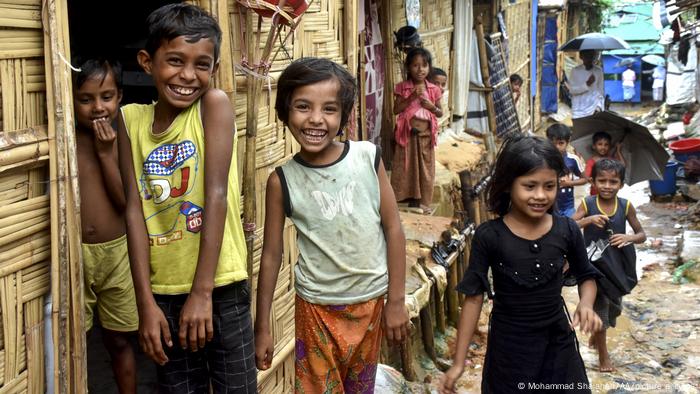
More than 1 million ethnic Rohingya were forced to flee to Bangladesh in 

2017 due to violent persecution in Myanmar

Rohingya protests in Bangladesh

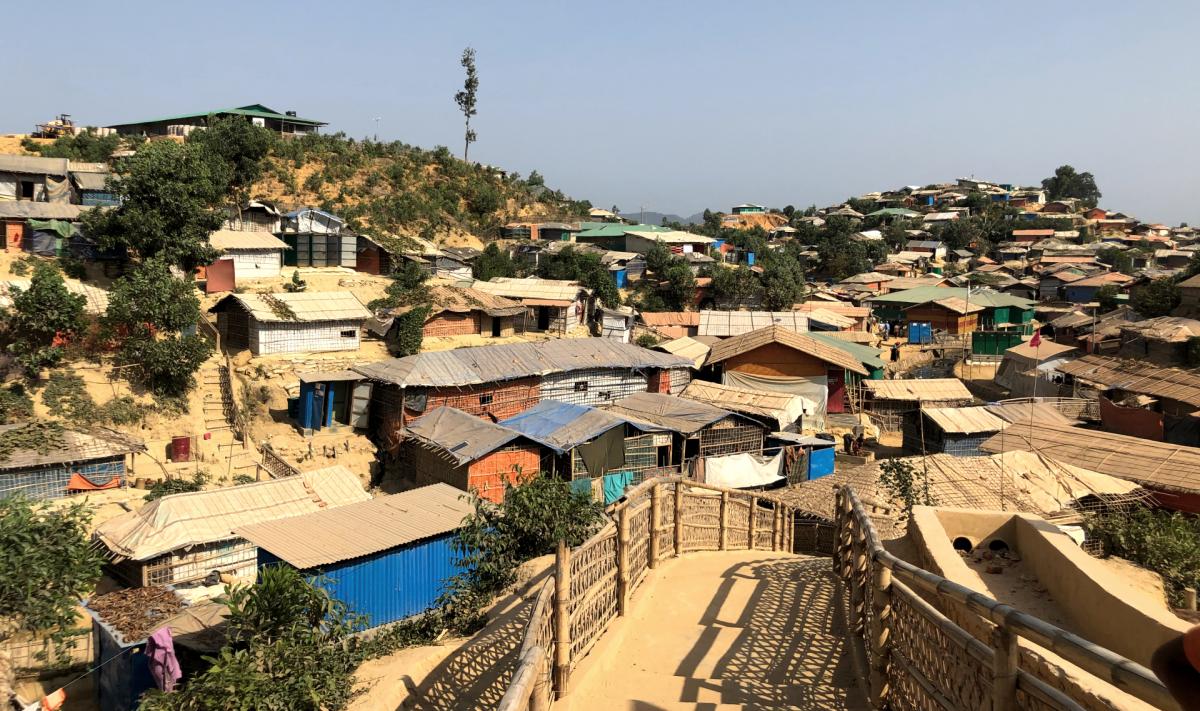
In refugee camps around Bangladesh, thousands of Rohingya Muslim protesters demanded repatriation to their Myanmar homeland with recognition of their ethnicity and full citizenship rights. More than 1 million Rohingya were forced to flee their homes after suffering violent attacks in Buddhist-majority Myanmar.

Unknown numbers of Rohingya were tortured and killed during the 2017 ethnic violence that left most of their homes in Myanmar's northern Rakhine state destroyed.

Protests were held in 29 of Bangladesh's 34 squalid refugee camps. "As survivors of genocide in Myanmar, we are thankful to Bangladesh for sheltering us. Now, we want to return to our homeland, we don't want to live as refugees," said Rohingya community leader Noor Muhammad as he addressed fellow refugees at the Kutupalong Camp.
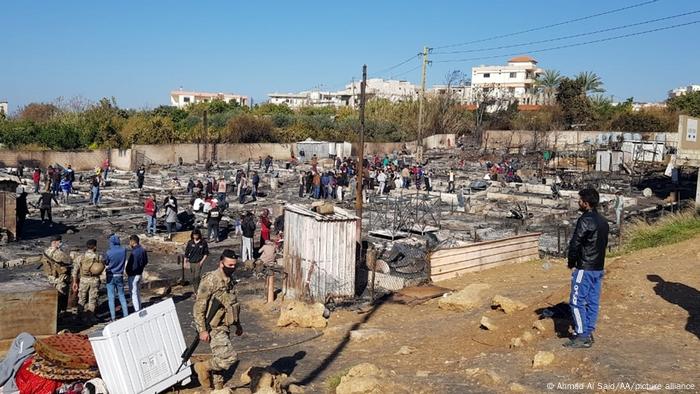
Lebanon has struggled to cope with massive numbers of Syrian refugees while 

suffering the burden of economic crisis

Syrian refugees face expulsion from Lebanon

The precarious fate of refugees in Lebanon was also highlighted Monday, as Lebanese Prime Minister Najib Mikati said his country was prepared to expel Syrian refugees if they were not repatriated.

"Eleven years after the start of the Syrian crisis, Lebanon no longer has the capacity to bear this burden, especially under the current circumstances," Mikati said. "I call on the international community to work with Lebanon to secure the return of Syrian refugees to their country, or else Lebanon will ... work to get Syrians out through legal means and the firm application of Lebanese law."

Lebanon, which is experiencing a devastating and prolonged economic crisis, has the highest proportion of refugees to population in the world, with Syrians currently making up nearly a quarter of the country's 6 million residents.

Rights groups have voiced grave concern over plans to send Syrians back to their home country, which remains locked in an unending civil war, saying refugees face potential arrest, torture and killing should they return.

Beirut on Monday requested $3.2 billion (€3 billion) in UN aid to help it deal with the years-long Syrian refugee crisis.

UK still plans to deport asylum-seekers despite ECHR intervention

The United Kingdom on Monday announced its intention to carry through with a controversial plan to deport asylum-seekers in the country to Rwanda in East Africa.

Home Secretary Priti Patel said that legal challenges, such as a last-minute European Court of Human Rights (ECHR) injunction, would not deter the UK from its intended plan — which the UNHCR has called "catastrophic."

The UK joins countries such as Australia and Denmark in its offshoring of refugees. Israel had a similar scheme in which it expelled some 20,000 mainly Sudanese and Eritrean refugees between 2014 and 2019, when the program was discontinued.

The EU is more discreet in keeping refugees arriving from Africa at bay, preferring to forge contracts with countries such as Turkey and Libya to keep refugees in the Mediterranean from reaching its shores while at the same time helping finance UN refugee centers on the African continent.

World Refugee Day 2022: Solidarity must

mean action


The Elders visit to Nguenyyiel Refugee Camp, Ethiopia in 2019.


This World Refugee Day, The Elders call on governments to uphold the universal right to seek safety and for solidarity with refugees to mean solidarity with every person who has been forcibly displaced by conflict or persecution.

This year, the number of people forced to leave their home reached a record 100 million. Under the 1951 UN Refugee Convention and international law, every person has a right to seek safety. Yet, too often, leaders ignore their international responsibilities and people on the move are met with hostility.

The Elders call on global leaders to ensure that every person forced to flee their home receives solidarity, compassion and a dignified reception.

Ban Ki-moon, Deputy Chair of The Elders and former Secretary-General of the UN, says:

"It is sobering that the number of people forcibly displaced by conflict or persecution has reached a record 100 million.

This World Refugee Day, states should reaffirm their commitment to the universal right to seek asylum and should treat all asylum-seekers with compassion and dignity. Governments welcoming Ukrainian refugees while at the same time outsourcing their international asylum obligations sets a shameful precedent."

Zeid Raad al Hussein, former UN High Commissioner for Human Rights, says:

"The remarkable global support for people fleeing Ukraine shows what is possible when the international community has the political will to act.

The EU has rightly given Ukrainians immediate temporary protection and the right to live, work and travel to any Member State of the EU for up to three years. Rich nations should broaden this integration approach to all refugees, wherever they are from.

Giving refugees the right to work, access education, and freedom of movement allows them to live independently and to contribute to the communities they live in."

Hina Jilani, lawyer and human rights advocate, says:


"This World Refugee Day, we need urgent measures to protect all those refugees who are suffering outside of the media spotlight.

During this time of global support for Ukraine, solidarity with refugees must not end there: governments must prioritise the finance and the mechanisms needed to protect every person who has been forcibly displaced. This includes expanding global resettlement commitments, and urgently fulfilling pledges to resettle Afghans seeking protection from the Taliban."
Share this: Cox's Bazar

Listening to people with lived-experience of forced migration plays an essential role in developing the services and protection needed for refugees, and The Elders believe that the voices of refugees and asylum-seekers must be centered in all discussions about migration.

Anowar, a Rohingya refugee currently living in Cox’s Bazar in Bangladesh, shares his message for World Refugee Day on why inclusion of all refugee voices is important:

"Since 2017, I have lived in Rohingya refugee camp in Cox's Bazar, Bangladesh, but my home is in Rakhine state, Myanmar. I was forced to leave because of the military “Clearance Operations”. They killed our loved ones, burnt down our houses, confiscated our lands and looted our properties. We came here to save our lives.

On World Refugee Day, I want to say that it is important to include refugee communities in discussions about refugee issues: it is the sufferer who understands the suffering well. I must tell you that it is crucial to include the Rohingya in the international justice process to understand what justice means to them. I would like to see more Rohingya involved in international justice. International justice institutions should empower and work with Rohingya.

My message to the world is to please support us until we have our rights, justice, and are able to return to our motherland with our nationality and citizenship. Thank you."

Find out more about The Elders' work on Refugees and Migration.

Why women use baby formula instead of breast milk

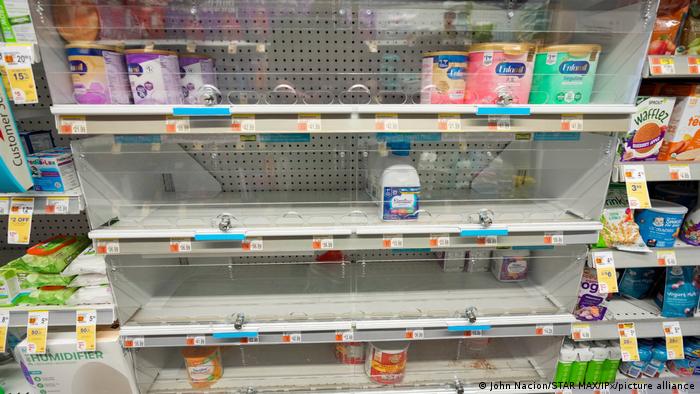
Supermarkets across the United States have run out of baby formula, which many women use instead of breast milk. Why?

In the US, which has one of the lowest rates of exclusive breastfeeding in the world, 

many grocery stores have run out of formula in the past weeks.

This is the first piece in a two-part article series about some of the reasons why some mothers opt for formula instead of breastfeeding. We have attempted to cover as many of the deciding factors across these two articles, but this is at heart a very personal, individual decision for every new mother. Click here to read the second part of the series.

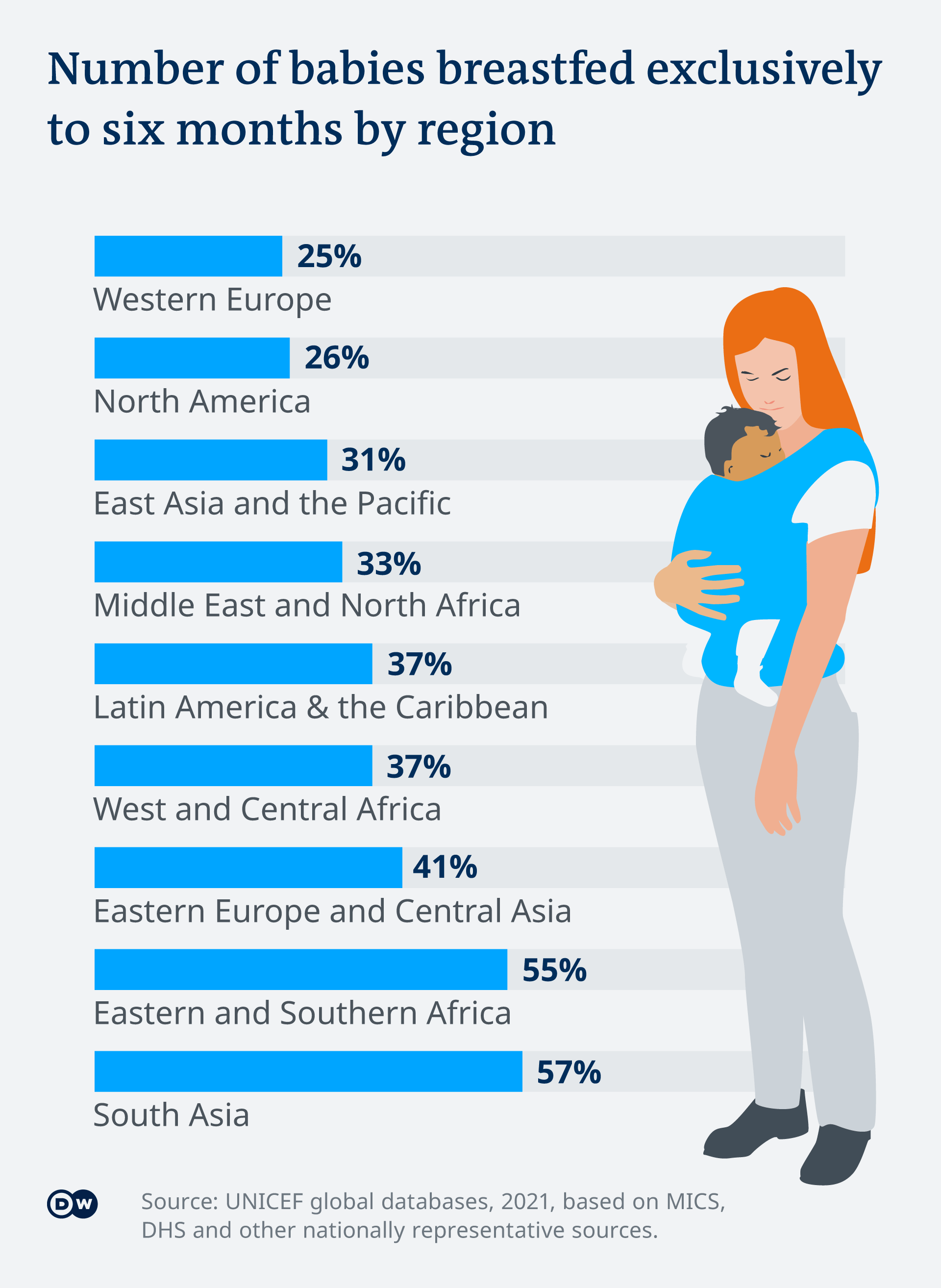
Most of the world's women start breastfeeding after giving birth, but  only 44% exclusively breastfeed to the sixth month, according to the World Health Organization.

Infants can't eat solid food in the first half-year of their lives, leaving them reliant on either breast milk or baby formula. This fact makes the current formula shortage in the US, where only one in four babies are exclusively breastfed to six months, dire.

The baby formula shortage was caused by production and supply-chain issues and an investigation by the US Food and Drug Administration at factory run by a major producer of baby formula, Abbott Nutrition. The company is one of four that together produce about 90% of formula on the US market. Although production had been getting back on track, Abbott Nutrition had to pause production yet again at the factory when a storm hit the site in Michigan on June 13.


Women in rich, developed countries are the least likely to exclusively breastfeed their 

children to six months

Research suggests that exclusively breastfeeding is a healthy, natural way for women to nourish their newborns. It's good for the mother-infant relationship and cheaper than formula. So, why do so few women stick with it? 

In this two-part series, we want to explain some of the structural and medical reasons why some women use formula and how the importance of breastfeeding may be different depending on where you live. In part one, we're asking why so many women use baby formula instead of breast milk.

It starts at the hospital

There are various reasons why women opt against breastfeeding. But a lot of experts say that a woman's experience at the hospital after birth plays a decisive role.

For decades, the WHO has been pushing hospitals to implement "baby friendly" measures to promote breastfeeding at birth. Those first 24 hours are crucial for a baby to learn how to feed directly from its mother.

Most hospitals in the US and Europe are "baby friendly." But in other parts of the world, that's not always the case.

Antonina Muturo, a maternal and child well-being researcher for the African Population and Health Research Center in Nairobi, Kenya, helped conduct a survey in the informal settlements of Nairobi, which a recent UN report called "some of the most dense, unsanitary and insecure slums in the world."

Of the new mothers surveyed, only 2% were exclusively breastfeeding their babies and not bottle feeding.

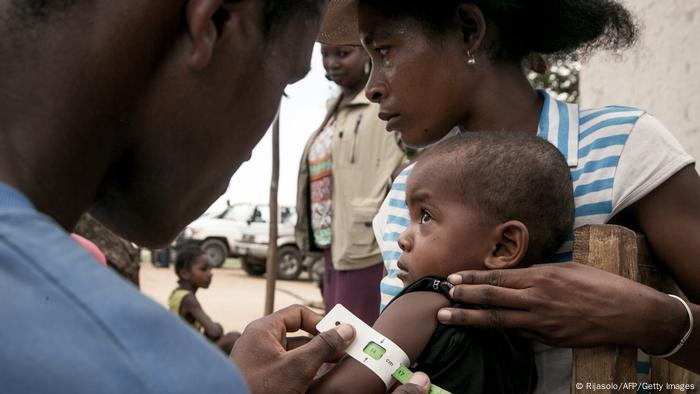
That's despite the fact that many of the women Muturo encountered could not afford a regular supply of formula. They were using cow's milk or foods like porridge to feed their babies before the age of six months, she said.

Muturo said the lack of breastfeeding in the settlements was due in part to the fact that the women probably didn't learn about breastfeeding at the hospital after giving birth.

In many developing countries where clean water is scarce, lack of education about

 breastfeeding can cause infant malnutrition

"If it's not a baby friendly facility, at times, health workers offer to take the child and give it formula. That sets the precedent," Muturo said.

Other times, women were told by doctors that they don't have enough milk. Muturo said a woman's ability to produce breast milk typically depends on demand. Shortly after birth, that demand is created by placing the baby on the mother's breasts, which helps stimulate milk production.

"But you find that the narrative is usually, 'Oh, I do not have enough milk.' So, the solution is to look for other options and formula is usually the fastest option," said Muturo.

It is not due to ignorance, said Muturo — most staff who work in pediatrics or gynecology know that breastfeeding is good for the baby, she said. But the structures aren't in place to promote it, and when the workload becomes overwhelming, some doctors and nurses don't take the time to train new mothers if they can offer baby formula instead.

Impact of formula producers

Then there's the baby formula industry.

In 1981, the World Health Assembly, the decision-making body of the WHO, adopted an international marketing code for breast-milk substitutes. The code banned the marketing of formula, with an aim to prevent women from being discouraged from breastfeeding.

But a WHO report published in February shows companies have continued to aggressively market their products online through methods that didn't exist when the code was adopted, like advertising algorithms tailored to reach new moms and parenting apps. 

The report says that while breastfeeding rates have largely stagnated in the four decades since the code's implementation, formula sales have doubled.

In China, only around 1 in 5 babies are exclusively breastfed to 6 months

Lack of hands-on training

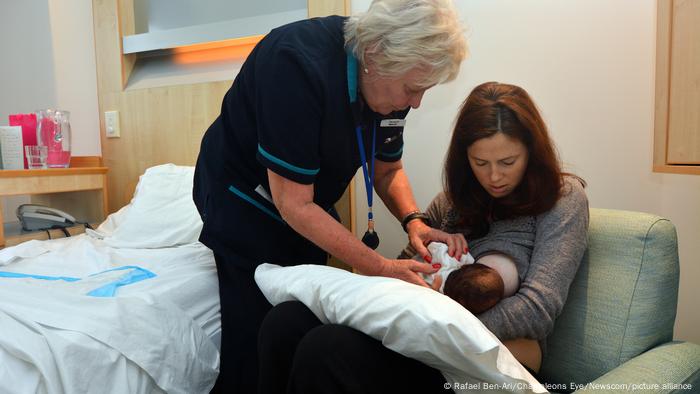
Rafael Perez Escamilla, one of the authors of the WHO report, said that even at baby friendly hospitals, women did not always receive the support they need to understand how to breastfeed once they got home.

Perez Escamilla said there were two reasons for that. In most medical nursing schools, students may only receive a couple of hours of breastfeeding training throughout their education.

"I'm at a great institution, Yale University, and I'm in charge of [teaching] breastfeeding, a component of the training of medical school students, and it's like two hours," Perez Escamilla said.

Without sufficient hands-on training, health care providers lack the skills to teach women how to nurse their own babies. That work is often passed onto breastfeeding peer counselors or lactation consultants, Perez Escamilla said.

But in many countries, lactation consultants aren't paid for by public health systems, making their services available only to women who can pay for them privately.

And sometimes providers may understand the benefits of breastfeeding but do not promote it because they're being courted by the formula industry, Perez Escamilla said.

"Many of them get invited to dinners, they get their conferences paid, they get books, some of them may even get a kickback if they prescribe a minimum of X number of products," he said.

Not all women receive proper training about how to breastfeed at the hospital

Breastfeeding is a full-time job

If a woman is breastfeeding, her breasts will fill with milk every few hours. That milk needs to leave her body in some way — either by feeding a baby or by pumping — or it will cause her pain.

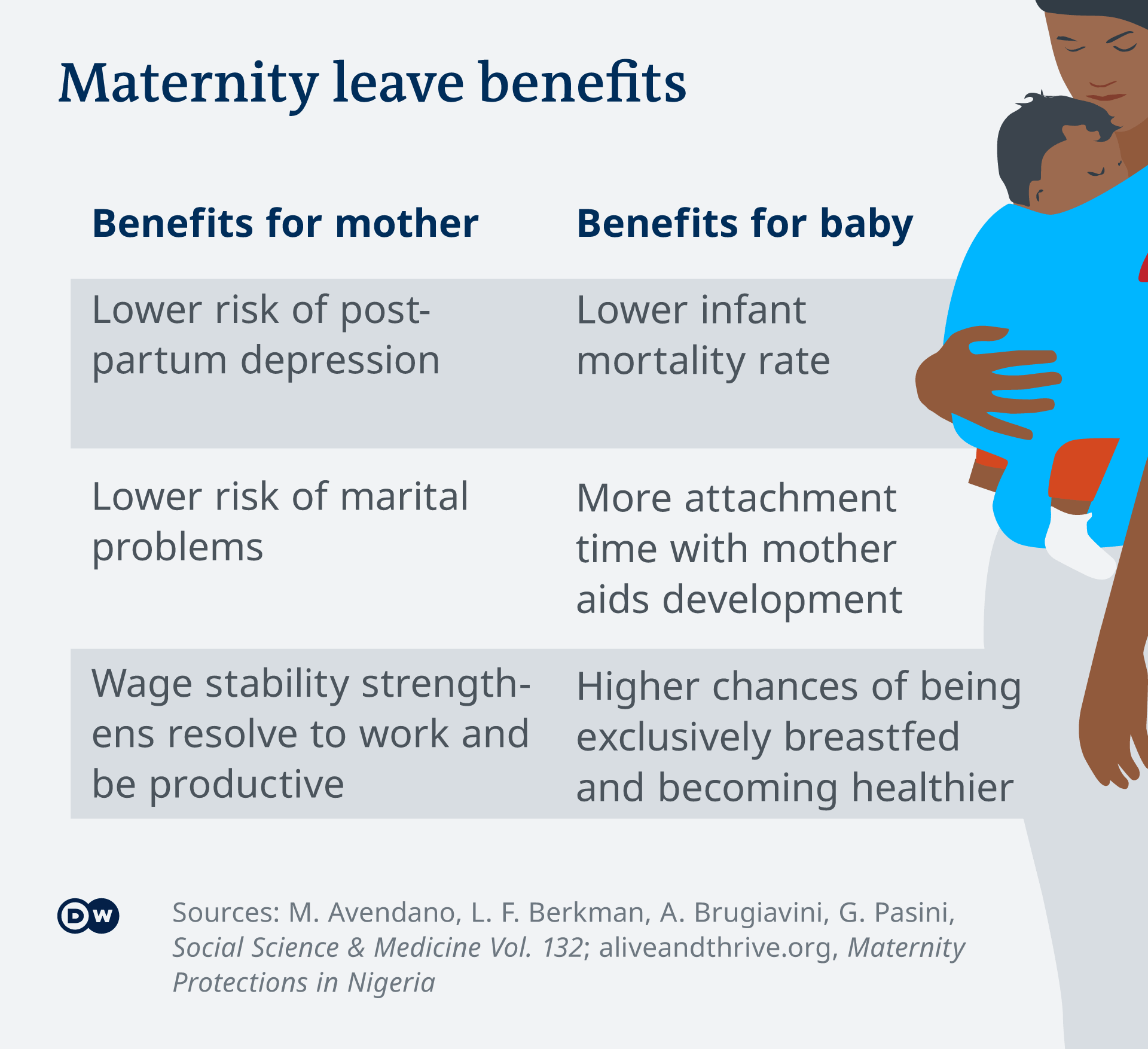
In Germany and many other European countries, women are allowed to take up to a paid year off work after giving birth, making the question of pumping less of a problem.

In other countries, like the US or Kenya, that is not the case. Women are not granted any paid time off work by law after a pregnancy.

If a woman cannot afford to leave work for six months, she will need to pump on the job. That is possible in the US and protected by law — women must be granted a place where they can pump their breast milk at work.

For women who work in the knowledge industry and have their own office, this may be OK, said Kailey Snyder, a professor at the Creighton University School of Pharmacy and Health Professions in Omaha, Nebraska. But not all women have access to a personal office.


Some countries lack legal protections for mothers, making breastfeeding difficult 

when they have to go back to work

"It's a completely different story if you're asking a young woman that works in a fast food industry to ask her manager to give her space to pump, and maybe the only ample space is his office," said Snyder. "That's not feasible and doesn't often happen even if she's legally protected to pump."

In situations like this, formula may present itself as the only feasible option, even if the woman might theoretically be more interested in exclusive breastfeeding.

The reasons why some women use formula aren't just structural — some women want to nurse their babies, but can't. We explore some of the reasons in the second part of this series here

Edited by: Zulfikar Abbany, Carla Bleiker

Dutch researchers uncover Roman temple complex

In a "highly unusual find," archaeologists in the Netherlands uncovered the remains of temples where Roman soldiers once paid tribute to their gods and goddesses.

Dutch researchers have celebrated the find, which included dozens of small, 

stone altars like the ones pictured above

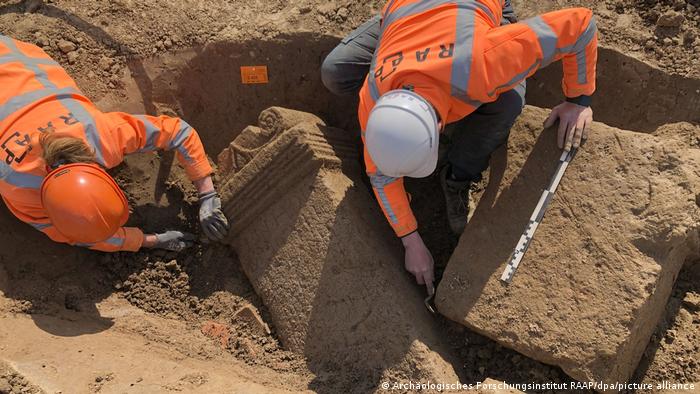
Researchers unearthed a nearly 2,000-year-old Roman temple complex in the Netherlands, Dutch officials announced on Monday.

The find has surprised and excited archaeologists, as it is the first time temples have been unearthed on what was once the northern boundary of the Roman Empire.

Two temples uncovered 

The temple complex was found at a clay extraction site in the village of Herwen-Hemeling — located in the eastern province of Gelderland near the border with Germany. The area is located near the Roman Limes UNESCO World Heritage Site.

Hobby archaeologists came across some artifacts in 2021 and alerted authorities, sparking a larger excavation, the Dutch national cultural heritage agency said in a statement.

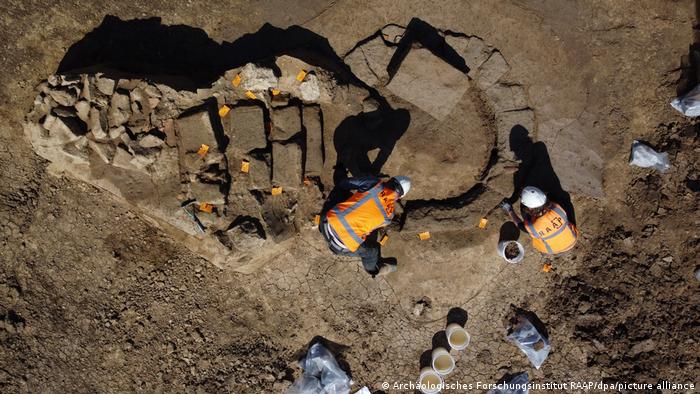
Research teams found the remains of at least two Roman-era temples that were used between the first and fourth centuries. 

One was a Gallo-Roman temple that had a tiled roof and "colorfully painted walls" while a smaller one was located a few meters away.

Among the artifacts discovered in the ruins were the remains of statues of deities, as well as pits where Roman soldiers lit large, sacrificial fires. Painted plasterwork, cloak pins, roof tiles marked with inscriptions were also among the finds.

Some of the findings will be displayed at a local museum in Nijmegen, reported news agency dpa.

What makes the find unique?

Usually, Roman buildings were torn down or repurposed to construct other buildings — but this does not appear to be the case at the Herwen-Hemeling site.

"Never before has such a complete complex been found in the Netherlands," the Dutch national cultural heritage agency said. 

One of the more unusual aspects was the discovery of a well with steps 

leading down into the water

Another "particularly remarkable" aspect was the discovery of several dozen small stone altars where Roman soldiers made offerings to their gods, goddesses and other deities.

"These stones are dedicated to Hercules Magusanus, Jupiter-Serapis and Mercury," the agency said, adding that the temples were likely in use for centuries.

Researchers also found an "unprecedented" number of limestone sculpture fragments.

Revealing more about ancient Roman life

Based on the types of inscriptions on the roof tiles, archaeologists believe the temple complex was mainly used by soldiers — as the military was responsible at the time for manufacturing the roof tiles.

The tips of spears and lances were found nearby, as well as remains of military armor and horse harnesses.

The small, stone altars with their careful inscriptions also reveal how Roman soldiers gave thanks — and what they were grateful for.

"High-ranking Roman officers erected dozens of votive stones to give thanks to a god or goddess for fulfilling their wishes. These did not always relate to winning battles," the Dutch agency said.

"Simply surviving a stay in these northern regions, sometimes far from home, was often reason enough to give thanks," the statement added.

Edited by Mark Hallam

Severe droughts reveal sunken relics of the past

As the climate crisis intensifies droughts from Iraq to Spain to the US, remnants of past towns and societies have reemerged from receding waters.

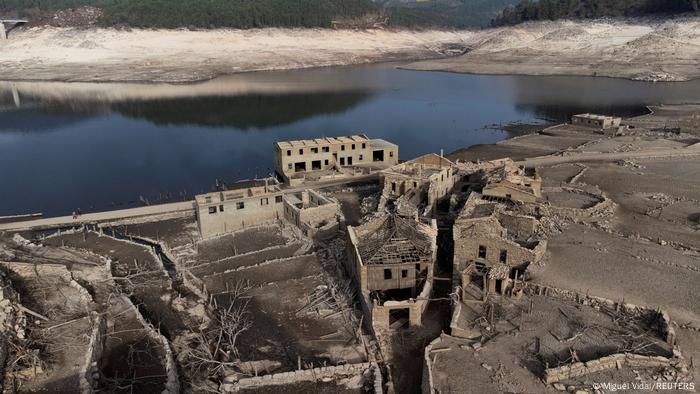
This old Spanish town re-emerged after a drought dried out the reservoir it was submerged in

Droughts can be a normal part of the climate. But as temperatures rise in the wake of global heating, these dry spells are becoming more severe and longer in many regions. The trend can disrupt entire food systems, pushing millions into starvation and dehydration. 

In an unusual twist, our current high-emitting lifestyle has also helped reveal how we used to live before the climate crisis became quite so urgent. That’s because droughts have uncovered remnants of past communities, some of them thousands of years old.  

A mysterious empire in Iraq 

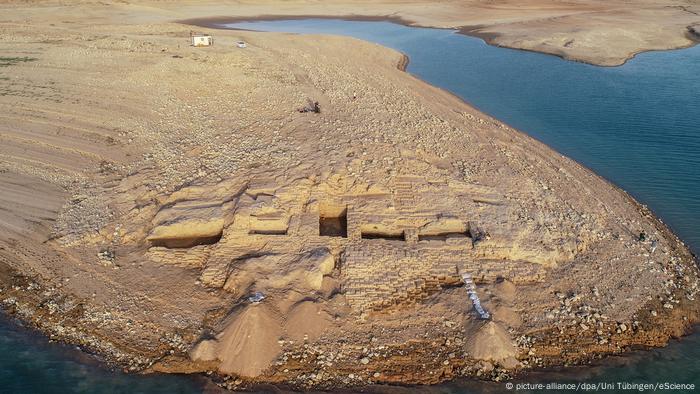
Little is known about the Mittani Empire

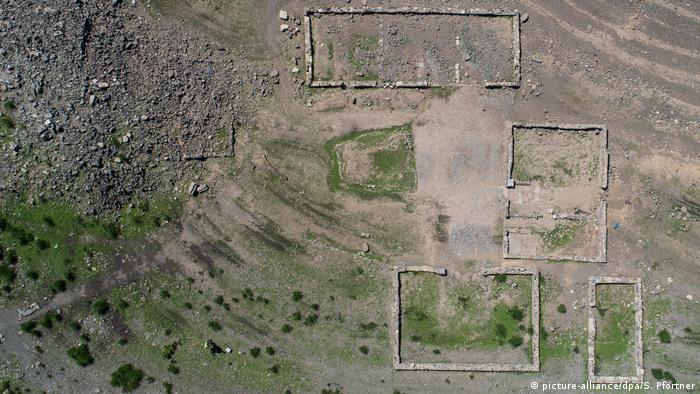
A 2018 drought in the Kurdish region of Iraq provided a rare glimpse into a little known society: The Mittani Empire.  

German and Kurdish archeologists discovered a 3,400-year-old palace from the Bronze Age on the shore of the Tigris river after water levels in the Mosul Dam reservoir went down enough to reveal the ruins. The ancient palace belonged to a kingdom that once dominated large parts of northern Mesopotamia and Syria. 

"The Mittani Empire is one of the least researched empires of the Ancient Near East," archaeologist Ivana Puljiz of Germany's University of Tübingen said at the time. "Even the capital of the Mittani Empire has not been identified beyond doubt." 

The team partially found preserved wall paintings and 10 cuneiform clay tablets in the rooms it excavated. By studying the tablets, archaeologists hope to learn more about the empire.  

A ghost village in Spain 

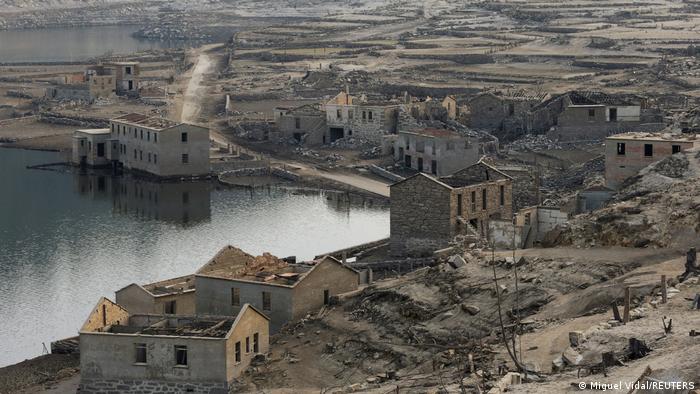
Aceredo was flooded to make way for a reservoir in the 1990s

More recently, a Spanish village that was flooded to create a reservoir reemerged when a drought hit this February. Visitors flocked to Aceredo on the Spanish-Portuguese border to see the eerie ruins and 1992 mementos — beer bottles and rusty cars included.  

Maria del Carmen Yanez, mayor of the larger Lobios council that Aceredo belongs to, told Reuters it had rained very little in recent months. But she also blamed the situation on the Portuguese power utility EDP and its "quite aggressive exploitation" of the reservoir where the company runs a hydropower plant.  

EDP acknowledged that reservoir levels were low because of the drought, but told Reuters it ran its water resources “efficiently" and above the minimum requirements. 

Gold rush relics in California 

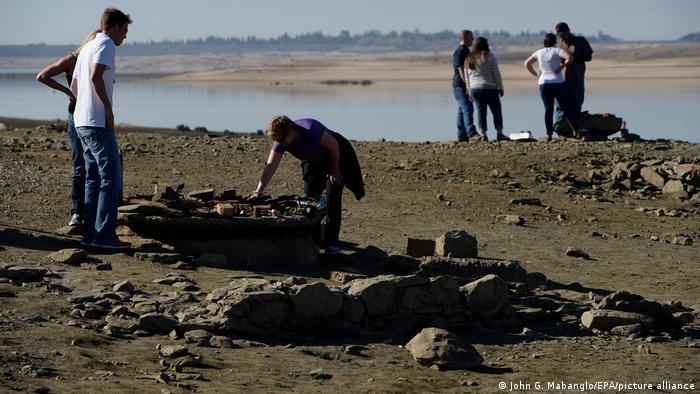
California's drought crisis has exposed previously submerged relics from the gold rush era

In the mid-1800s, a gold rush in California attracted hundreds of thousands of miners trying their luck. Last year, it was tourists traveling to this area — after a drought significantly emptied the lake in which gold rush towns were submerged in a stark reminder of the US state's ongoing water crisis. 

"With historically low water levels that have been worsened by the impacts of climate change, artefacts and ruins once belonging to past communities and cultures of the area are now appearing along the lakebed," a Facebook post by the Folsom Lake State Recreation Area read.  

Visitors could look at the ruins of places like Mormon Island, which attracted thousands of Mormon fortune seekers in its heyday. The town had several shops, four hotels and an express office before it burned down in 1856. Tourists risk a fine if they tamper with the remains at the site.  

The German Atlantis 

The region is known as Edersee's Atlantis because the ruins are usually submerged in water

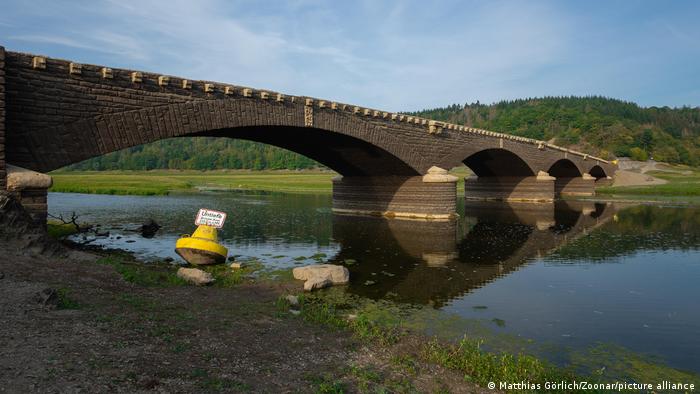
The Edersee in the western German state of Hesse is the second largest reservoir in the country. But as extreme heat and low rainfall have intensified droughts across Germany, when the Edersee's water levels drop, they reveal what is known as the region’s Atlantis. Here lie ruins, including those of a bridge, three villages and gravestones of onetime locals. The area was originally flooded to make way for the reservoir. 

The project was built more than 100 years ago to provide water for the Weser River and Mittelland Canal, ensuring ships could travel on them during drier summer months. German Emperor Wilhelm II even paid a personal visit to the construction site in 1911. 

Now, the sunken villages have turned into a tourist attraction when Edersee's levels drop low enough during hot periods. 

This bridge is only visible when water levels drop

Edited by: Tamsin Walker

'No Future For Us,' Say Afghan Sikhs After Temple Attack


By Jay Deshmukh and Abdullah Hasrat
06/20/22 

VIDEO
U.N. Chief: 'Afghanistan Is Hanging By A Thread' As Humanitarian Aid Dries Up


A dozen Afghan Sikhs gathered Monday in a room behind the charred ruins of their temple in Kabul, hoping to be swiftly evacuated having finally given up on the country of their birth.

"There is no future for us here. I have lost all hope," said Ragbir Singh, who was wounded when gunmen stormed the temple Saturday in an attack claimed by the Islamic State group.

"Everywhere we are under threat."

When the Taliban seized power in August, many Sikhs sought refuge at the complex, living communally or in family groups scattered around the building.

During the raid, Manmohan Singh Sethi fell to the ground, injuring his legs and a hand
 Photo: AFP / Ahmad SAHEL ARMAN

The Sikh community had been a target before.

In March 2020, at least 25 people were killed when gunmen stormed a different temple in Kabul.

And in 2018 at least 19 people, most of them Sikhs, were killed by a suicide bombing in the eastern city of Jalalabad.


Both attacks were claimed by IS, which regularly targets members of Afghanistan's minority communities -- including Shiites and Sufis.


The number of Sikhs and Hindus living in Afghanistan had dwindled to around 200 by late last year, compared with about half a million in the 1970s.

Several rooms and the temple's main prayer hall were heavily damaged Photo: AFP / Ahmad SAHEL ARMAN

Most of those who remained were traders involved in selling herbal medicines and electronic goods brought from India and Pakistan.


For Manmohan Singh Sethi, who was born in Afghanistan, the temple was not just a place of worship, but home to the entire Sikh community.

"This used to be the main gurdwara (Sikh temple) where we all used to meet as a family," said Sethi, who is in his 70s.

Ragbir Singh (left) was wounded when gunmen stormed the temple Saturday 
Photo: AFP / Ahmad SAHEL ARMAN

But the peace was shattered Saturday with one member of the community killed and seven others -- including Singh -- wounded in the early-morning raid.

A Taliban fighter also died, in a counter-operation launched soon after.

Gunmen first fired at the main gate of the complex, killing a guard, before storming inside, shooting, and throwing grenades, survivors said.

Minutes later a car bomb exploded outside the complex, shattering walls and windows of nearby buildings.

When the raid began, some escaped through a back door and took refuge in nearby buildings.

In the ensuing chaos, Singh -- who was on the fourth floor of the complex -- fell to the ground, injuring his legs and a hand.

Now, several rooms and the main prayer hall of the complex are heavily damaged by bullets, grenades and a fire that engulfed a section during the raid.

The attack came days after a delegation from New Delhi visited Kabul to discuss the possibility of reopening the Indian embassy.

Indian government sources told AFP in Delhi that emergency visas had been given to around 100 Afghan Hindus and Sikhs but Sethi said none in the frightened community were aware of the offer.

He said the community was now unsure where even to pray for their future.

"If we all gather to perform rituals at a specific place we might face another such incident," he said.

"We have been attacked thrice already... We can't be careless."

"The latest incident has impacted us in a big way," said Sethi.

"Afghanistan is my homeland and I never wanted to leave... but now I am leaving."
Assange's family call on Germany to take up his cause

Mon, June 20, 2022


Julian Assange's father and brother on Monday called on the German government to ask US President Joe Biden to drop the case against the WikiLeaks founder.

"The German government should express to President Biden their concern about this case and they should request that it should be dropped," said Gabriel Shipton, Assange's brother, at a press briefing in Berlin.

The British government on Friday approved Assange's extradition to the United States, to the dismay of his supporters and free press campaigners.

He is wanted to face trial for violating the US Espionage Act by publishing military and diplomatic files in 2010 and could face up to 175 years in jail if found guilty.


The Assange case has become a cause celebre for media freedom and his supporters accuse Washington of trying to muzzle reporting of legitimate security concerns.

"I've always felt that acquiescence, doing nothing, is complicity. Being invisible in the case of Julian Assange is complicity," said Assange's father John Shipton, also at the press briefing.

The pair called on Germany to use its influence in NATO and the upcoming Group of Seven leaders' meeting in Bavaria to push Assange's cause.

"When you're attempting to speak to Russia about press freedom (but also) endorsing the extradition of a journalist and publisher for doing their job, you lose standing in these situations," Gabriel Shipton added.
- A 'legal process' -

Assange's brother and father were due to attend a meeting in the German foreign ministry later on Monday and on Tuesday will meet members of a parliamentary group formed in support of Assange.

But government spokesman Steffen Hebestreit on Monday said he could not see how Germany would intervene on a political level in legal proceedings in another country.

"This is a legal process that is already in motion, so I would be a little wary of political intervention," he said, adding that Germany would continue to keep a close eye on the case.

Assange has been held on remand at a top-security jail in southeast London since 2019 for jumping bail in a previous case accusing him of sexual assault in Sweden.

Before that he spent seven years at Ecuador's embassy in London to avoid being removed to Sweden.

He was arrested when the government changed in Quito and his diplomatic protection was removed.

fec/hmn/jj