Wednesday, December 21, 2022


How Indigenous philosophies can improve the way Canadians treat animals


An orangutan and a human share a moment and touch hands. Indigenous philosophies regard animals as human’s close relations deserving of respect, kindness and gratitude from birth to the end of their lives.
(Shutterstock)


THE CONVERSATION
Published: December 14, 2022 

Indigenous perspectives view the relationship between humans and animals much differently than modern western societies. Weaving Indigenous perspectives into how Canadians regard animals could greatly benefit the well-being of animals on several fronts, including agriculture, research, and those kept as pets.

Teaching such views could also transform university curricula, especially in animal science and biomedical programs, as well as climate change activism and sustainability as we pursue reconciliation.

The Campbell Centre for the Study of Animal Welfare (CCSAW) is a group of faculty, students and staff at the University of Guelph promoting the welfare of animals through research, education and outreach.

The CCSAW hosted a speaker series this past spring with Canadian senators, academics and Indigenous thought leaders to discuss Indigenous perspectives towards animal use in Canada. In particular, they spoke about how animal species are regarded as human’s close relations deserving of respect, kindness and gratitude from birth to the end of their lives.

Captive wild animals


How can viewing animals as close relations have an impact on current animal use in Canada? One way — currently being considered by the Senate — is by improving the lives of captive wild animals.

First introduced in 2020 by Sen. Murray Sinclair (Anishinaabe and member of Peguis First Nation) and reintroduced in March 2022 by Sen. Marty Klyne (Cree Métis), the Jane Goodall Act hopes to provide some of the strongest legislation for wild animal protection in the world.

Supported by Coastal First Nations, the act aims to deliver new legal protections for captive big cats, bears, wolves, seals, sea lions, walruses, certain monkeys and reptiles. These protections include ending the commercial trade, breeding and acquisition of these species.
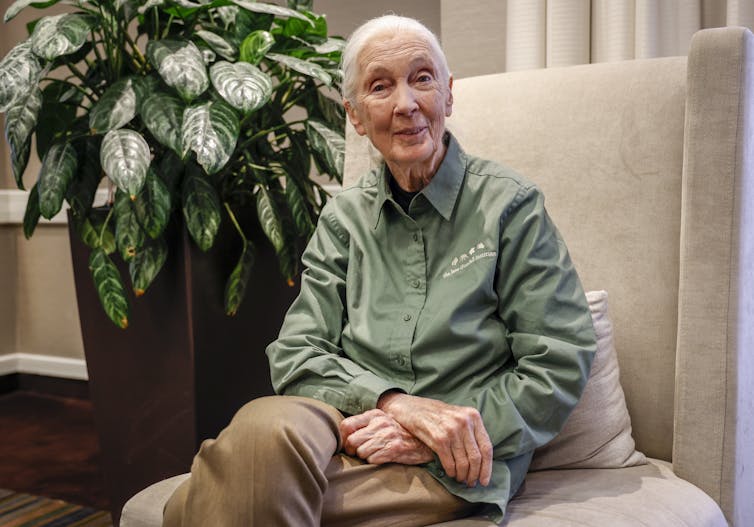
The Jane Goodall Act is named after renowned English primatologist Jane Goodall.
THE CANADIAN PRESS/Jeff McIntosh

It will also work to phase out elephant captivity and roadside zoos in Canada.

A driving factor in support for the act is the Indigenous consideration and recognition that animals and humans, and the environment surrounding us, are interconnected.

Currently in its second reading with the Senate, this highly anticipated legislation has the potential to make huge strides toward the protection of wild animals by advocating for their welfare through a lens of mutual respect.

‘All my relations’

Where do these values come from?

During the CCSAW event, Jesse Popp, Canada Research Chair in Indigenous Environmental Science from Wiikwemkoong Unceded Territory, described the concept of “all my relations.” This cross-cultural Indigenous philosophy is based on the foundation of respect for all living things through co-existence and inherent responsibilities and obligations for all ways of knowing.

There is a disconnect between the hierarchical top-down relationships between humans and animals in modern settler societies and Indigenous perspectives that incorporate a holistic and circular interconnection among humans, animals and the environment.
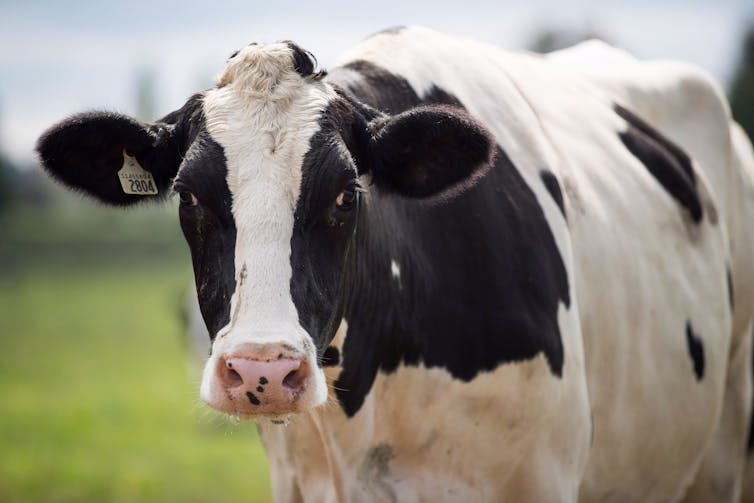
A dairy cow stands in a farm pasture in Surrey, B.C. Indigenous values like respect and responsibility could better protect the autonomy of livestock animals. 
THE CANADIAN PRESS/Darryl Dyck

The view that humans are separate from nature went against Popp’s desire to work with animals, prompting her to incorporate Indigenous views into western ways of knowing to advance environmental and ecological science that contributes to animal conservation, sustainability and the movement of the natural sciences toward reconciliation.

Maintaining an “all my relations” perspective, many Indigenous cultures also have strong family ties to animals. For Elder Wendy Phillips — Bald Eagle Clan, Potawatomi and Ojibwa, and member of Wasauksing First Nation — ceremony and knowledge translation from one generation to the next are key to her practice.

Within the clan system, animal ties provide clan members with roles within the community. For the Bald Eagle Clan, this is a role of leadership and teaching. Carried over generations, these teachings allow the continuation of ceremonial practice through sustainable management and companionship.

Mutual respect and reciprocity

But does this go far enough? In terms of animals raised for agricultural purposes, Indigenous philosophies of respect, responsibility and reciprocity are all but lost in modern practices.

Agriculture animals experience a lack of agency toward living a natural life by being forced to live in unnatural social groups and often without the ability to even turn around, let alone fly or run. They also suffer during transport between farms and slaughterhouses and experience shortened lifespans.

During her CCSAW talk, Margaret Robinson, Canada Research Chair in Reconciliation, Gender, and Identity who is Mi’kmaq from Lennox Island First Nation, described how modern intensive agricultural practices go against key Mi’kmaq values.
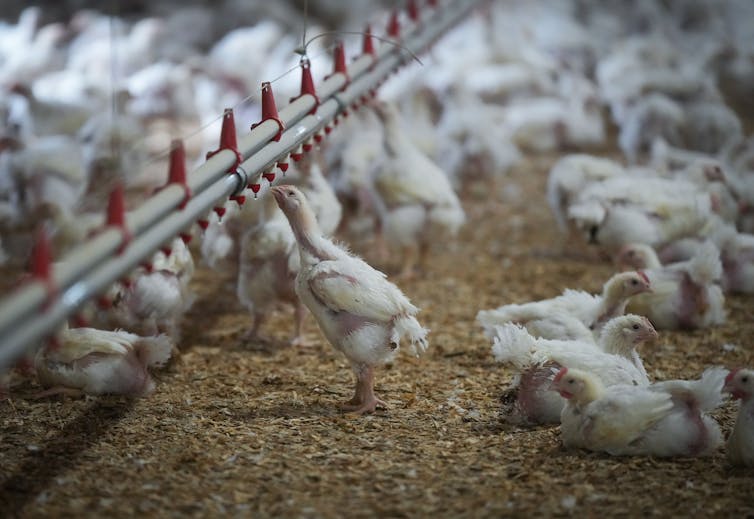
A chicken drinks water in a poultry barn in Abbotsford, B.C. in November 2022. 
THE CANADIAN PRESS/Darryl Dyck

The Mi’kmaq value of non-interference directly contradicts modern agriculture by not respecting the autonomy of the animal. Animals are forcibly caged and their bodies are altered.

The Mi’kmaq value of respect for mothers as matriarchal and community leaders is also violated for many agriculture species as pregnancy is commonly forced and mothers are separated from their young offspring, often very shortly after birth.
Reconnecting with animals

Robinson also spoke of the disconnect between the food we buy from the grocery store and the Mi’kmaq tradition of giving gratitude at the end of an animal’s life. Incorporating these values into current agricultural practices could better protect an animal’s autonomy through respect and responsibility.

Ethnobotanist Robin Wall Kimmerer also discusses this disconnect in our food systems in her book Braiding Sweetgrass. She writes:

“Something is broken when the food comes on a Styrofoam tray wrapped in slippery plastic, a carcass of a being whose only chance at life was a cramped cage. That is not a gift of life; it is a theft.”

Indigenous views and ways of knowing should be applied to the way we keep, use and kill animals and in how we teach future generations about animal use and their care, particularly within animal agriculture. Animal welfare researchers are on the right track as they strive to understand our impact and treatment of the animals we use and live with.

Instead of separating ourselves from the world around us, we should remind ourselves that we are intertwined with animals, and therefore should uphold respect and responsibility for them. As Kimmerer says: “Sustain the ones who sustain you and the Earth will last forever.”


Author 
Courtney Graham
PhD Candidate in Epidemiology and Animal Behaviour, University of Guelph
Disclosure statement
Courtney Graham received a small stipend from the University of Guelph's Equity, Diversity, and Inclusion Enhancement Fund for her time to write this piece.
Partners


https://libcom.org/article/mutual-aid-factor-evolution-peter-kropotkin

Russian anarchist Peter Kropotkin's massively influential work on mutual aid and co-operation as a factor in evolution, written in 1902.


https://libcom.org/article/beasts-burden-antagonism-and-practical-history

Mar 26, 2017 ... An attempt to rethink the separation between animal liberationist and communist politics.


http://www.stafforini.com/docs/Singer%20-%20Practical%20ethics.pdf

Peter Singer's remarkably clear and comprehensive Practical Eth- ... "Peter Singer has provided us with a good example of the fruits.

https://personal.lse.ac.uk/robert49/teaching/mm/articles/Singer_1972Famine.pdf

PETER SINGER. Famine, Affluence, and. Morality. As I write this, in November Ig7I, people are dying in East Bengal from lack of food, shelter, and medical ...

https://spot.colorado.edu/~heathwoo/phil1200,Spr07/singer.pdf

In TOM REGAN & PETER SINGER (eds.), Animal Rights and Human Obligations. New Jersey: Prentice-Hall, 1989, pp. 148-. 162. Page 2. men are; dogs, on the other ...

https://grupojovenfl.files.wordpress.com/2019/10/peter-singer-animal-liberation-1.pdf

That's an important step forward, and a sign that over the next forty years we may see even bigger changes in the ways we treat animals. Peter Singer. February ...


COP15: A call to action for investors to help us meet vital biodiversity goals


Businesses and investors have a critical role to play in biodiversity and conservation efforts and need to invest in sustainable production and extraction methods.
(Shutterstock)

THE CONVERSATION
Published: December 15, 2022 

The UN Secretary-General, António Guterres, opened the UN Convention on Biological Diversity (COP15) in Montréal with a stark message: “Without nature, we are nothing. Nature is our life-support system, and yet humanity seems hell bent on destruction.”

The summit brought together delegates from over 190 countries to negotiate the post-2020 Global Biodiversity Framework, the implementation of which will require a transformation in the way we produce, consume and trade goods and services that rely on and impact biodiversity.

Companies and investors have, therefore, been paying close attention. Businesses and investors have a critical role to play in biodiversity and conservation efforts and need to invest in sustainable production and extraction methods.

On Dec. 14, the Finance and Biodiversity Day of the summit, speakers across the financial sector discussed various ways of aligning financial investments with the new biodiversity framework. In anticipation of these finance talks, a new global engagement initiative, Nature Action 100 was launched to drive investors’ action on nature-related risks and opportunities.

As a scholar in sustainable finance, I believe that while these initiatives and discussions are important, we need more targeted and urgent investments in nature-friendly solutions to reverse biodiversity loss.

“Without nature, we are nothing”


Numerous scientific studies point to alarming statistics on the rates of biodiversity loss. The Living Planet Report 2022 shows an average decline of 69 per cent in wildlife populations since 1970, thus emphasizing the dual crises of biodiversity loss and climate change driven by human activities.

Ecosystem services from biodiversity, such as flood protection and carbon sequestration, are worth an estimated US$125-140 trillion per year. (AP Photo/Al-emrun Garjon)

Unlike the climate crisis that led to the signing of the Paris Agreement, biodiversity loss has received little attention until now. However, the risks from biodiversity loss are enormous.

According to an OECD report, ecosystem services from biodiversity, such as crop pollination, water purification, flood protection and carbon sequestration, are worth an estimated US$125-140 trillion per year. About US$44 trillion per year of this global output is dependent on nature .
Bending the curve of biodiversity loss

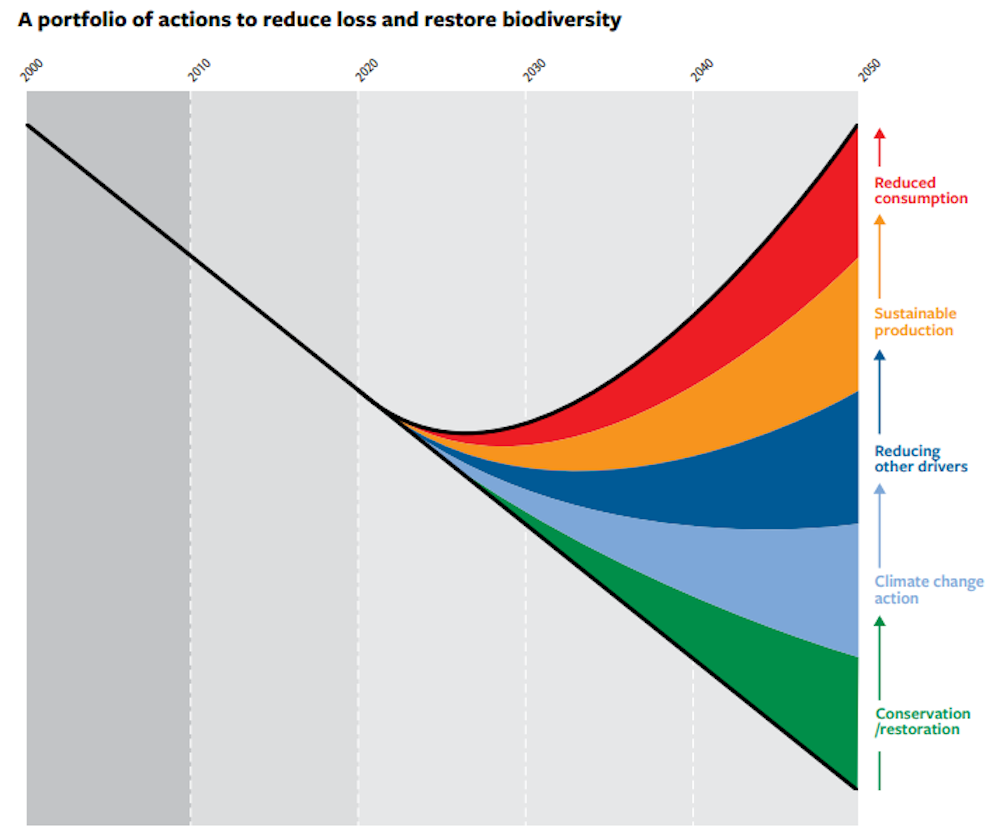
The Convention on Biological Diversity’s fifth Global Biodiversity Outlook summary report for policymakers, published in 2020, suggests a portfolio of actions to restore biodiversity.

These actions include the restoration of landscapes and marine and coastal ecosystems, redesigning agricultural systems through innovative productivity-enhancing approaches, deploying green infrastructure, enabling sustainable and healthy diets, rapidly phasing out fossil fuel use, and many more.


The Global Biodiversity Outlook report offers climate actions that could halt and reverse the rate of biodiversity decline (bend the curve), potentially leading to net biodiversity gains after 2030. (CBD/Global Biodiversity Outlook 5, Summary for Policymakers)


Businesses and investors have a critical role to play in each of these action domains, especially when it comes to shifting to more sustainable production and manufacturing processes, investing in energy efficiency and waste reduction, conservation of natural resources, and investing in climate solutions that also support biodiversity.

Biodiversity awareness in the world of finance


The awareness about biodiversity risks remains very limited within the finance community. This year, the non-profit CDP, which runs the world’s environmental disclosure system, included new questions to assess firms’ approaches to biodiversity.

The results show that three-quarters of 7,700 respondent companies do not assess their impact on biodiversity. Most companies in nature-damaging sectors, such as apparel and manufacturing, are still failing to take meaningful action to stop biodiversity loss and environmental degradation.

According to a 2021 OECD report, nature-related dependencies, impacts and risks are poorly understood and almost entirely uncompensated for in the financial sector. This leads to capital misallocation that ultimately undermines the wellbeing of society.

There are, however, positive signs. Thirty-one per cent of companies in the CDP survey have made a public commitment and/or endorsed biodiversity-related initiatives, and 25 per cent of respondents are planning to do so within the next two years.

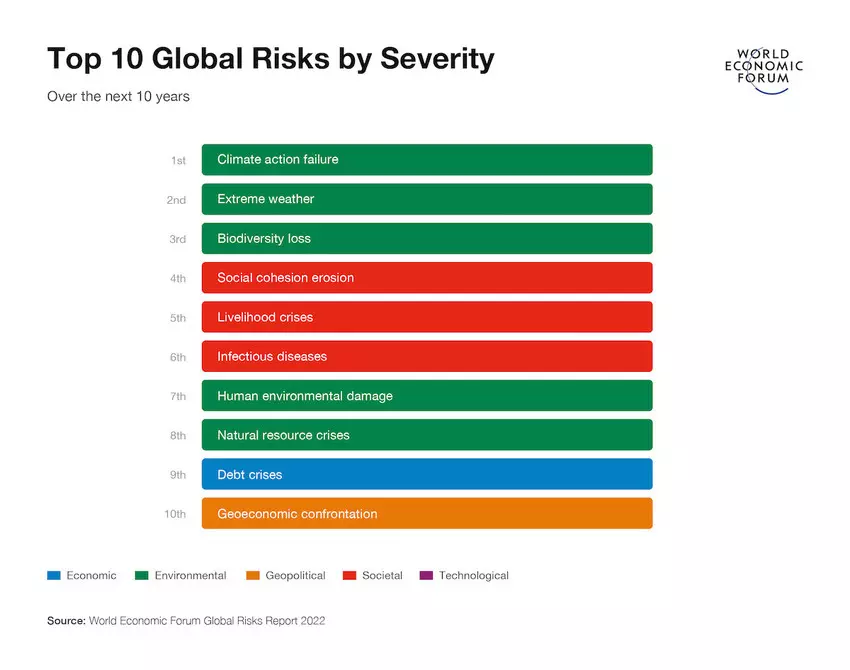
The growing awareness is confirmed by the 2022 Global Risks Report, which found that biodiversity loss ranks third among the top 10 global risks by severity over the next 10 years.

Integrating biodiversity in financial decisions

One of the key challenges for investors and lenders is getting the relevant data to make evidence-based decisions to allocate funds. This is in line with the ever-increasing demand for environmental, social and governance (ESG) data disclosure.

The newly launched international initiative Taskforce on Nature-related Financial Disclosures is developing a risk management and disclosure framework for organizations to report and act on evolving nature-related financial risks.

Biodiversity is also attracting the attention of financial policymakers. In March 2022, the Network for Greening the Financial System, a coalition of more than 120 central banks and supervisors, published a new statement, acknowledging that biodiversity loss could lead to significant macroeconomic and financial stability risks.


The new investor-led initiative Nature Action 100 builds on similar initiatives to help investors engage with companies that are contributing to biodiversity loss. Engaging with companies to reduce their negative impact on nature can be a powerful tool for change, especially when coming from large investors and asset owners.

The International Sustainability Standards Board (ISSB) is now considering biodiversity in the development of new ESG disclosure standards. Addressing COP15 delegates, Emmanuel Faber, chair of the ISSB, announced the appointment of two special advisors to provide strategic counsel on issues relating to natural ecosystems and ‘just transition.’

The future lies in impact investing

While these initiatives are crucial, focusing on data disclosure is not sufficient. Even if we quickly agree on disclosure frameworks and measurements around biodiversity, disclosures that are voluntary and not supported by regulation are vulnerable to greenwashing which is widespread in the ESG space.

We need to encourage more targeted investments in nature-positive solutions that reverse biodiversity loss. Impact investing — investing money with the intention to benefit society and the environment — offers a framework for this.

Impact investing starts with identifying a societal challenge and then screens for investment opportunities that provide measurable solutions. But impact investments remain very small relative to other responsible investment strategies. Many impact investors use the UN Sustainable Development Goals (SDGs) to set their impact goals and measure outcomes.

To tackle biodiversity loss, we need more investments in SDG14 (life below water) and SDG15 (life on land). Despite the importance of ocean ecosystems for local livelihoods, food security and carbon sequestration, SDG14 receives the least amount of funding of any of the SDGs.

Canada is a global leader in clean tech innovation
THE CANADIAN PRESS/Andrew Vaughan

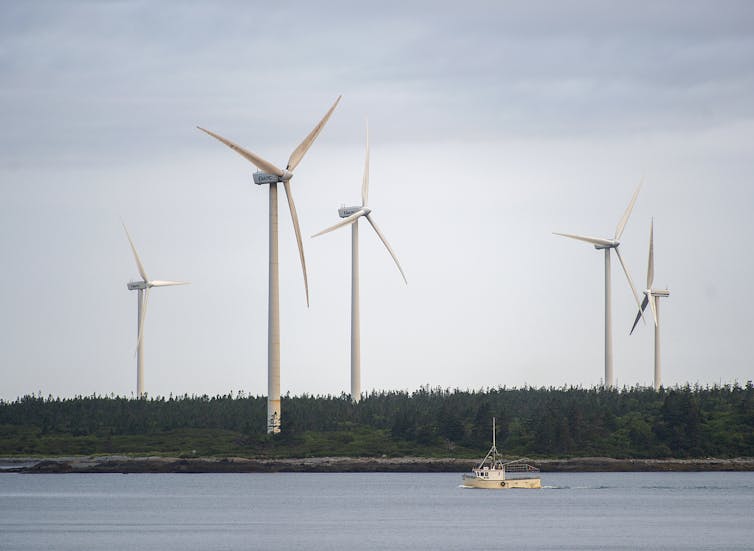
Canada is a global leader in clean tech innovation and many companies at the nexus of nature and climate are emerging across the country, including innovation in ocean tech, clean marine transportation and regenerative agriculture.

But financing remains a challenge, especially at early stages when risk is high and scale is lacking to attract large investors. More innovative financing mechanisms and instruments are needed to fill this gap.

Investing in Indigenous-led projects can also advance both reconciliation and biodiversity goals, because Indigenous lands contain 80 per cent of the world’s remaining biodiversity.

The Finance and Biodiversity Day at COP15 stimulated important discussions on how to align financial flows with the new biodiversity framework, but real actions remain to be seen. We need action now, as time is not on our side.


Author
Basma Majerbi
Associate Professor, Peter B. Gustavson School of Business, University of Victoria
Disclosure statement
Basma Majerbi receives funding from Canada's Social Sciences and Humanities Research Council (SSHRC), Mitacs and the Pacific Institute for Climate Solutions (PICS) at the University of Victoria. She's a volunteer Board member with the South Island Prosperity Partnership and a member of the Research Advisory Council of the Institute for Sustainable Finance.
Partners
Arctic Report Card 2022: The Arctic is getting rainier and seasons are shifting, with broad disturbances for people, ecosystems and wildlife


Rainier winters make life more difficult for Arctic wildlife and the humans who rely on them. Scott Wallace/Getty Image


THE CONVERSATION
Published: December 13, 2022 

In the Arctic, the freedom to travel, hunt and make day-to-day decisions is profoundly tied to cold and frozen conditions for much of the year. These conditions are rapidly changing as the Arctic warms.

The Arctic is now seeing more rainfall when historically it would be snowing. Sea ice that once protected coastlines from erosion during fall storms is forming later. And thinner river and lake ice is making travel by snowmobile increasingly life-threatening.

Ship traffic in the Arctic is also increasing, bringing new risks to fragile ecosystems, and the Greenland ice sheet is continuing to send freshwater and ice into the ocean, raising global sea level

In the annual Arctic Report Card, released Dec. 13, 2022, we brought together 144 other Arctic scientists from 11 countries to examine the current state of the Arctic system.


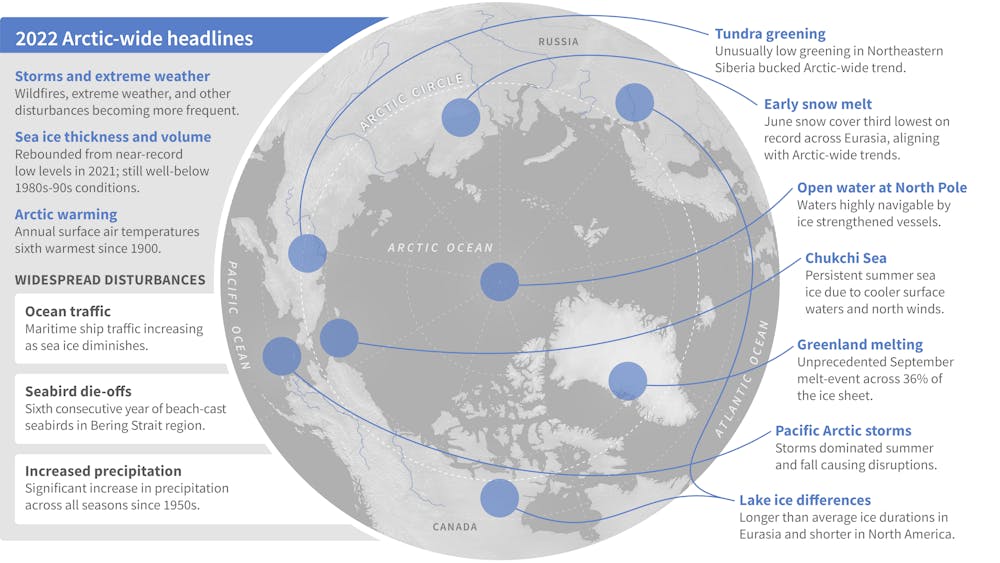
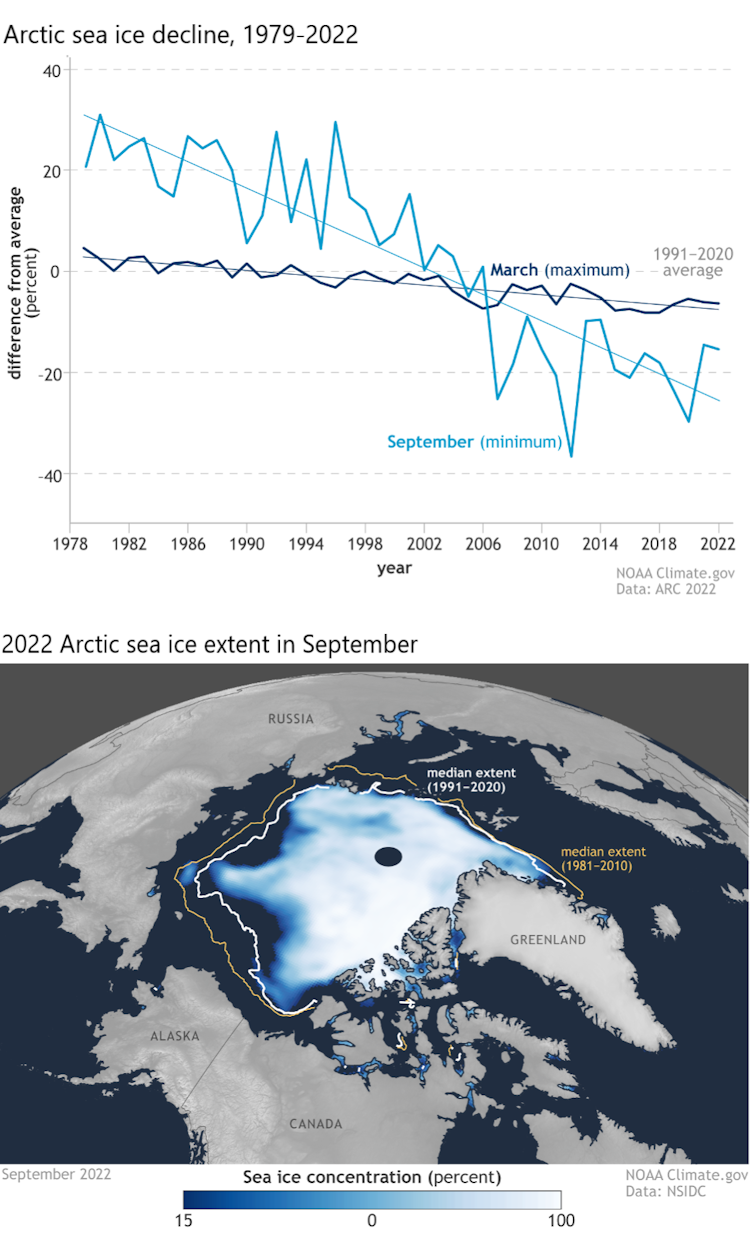
Some of the Arctic headlines of 2022 discussed in the Arctic Report Card. 
NOAA
 Climate.gov

The Arctic is getting wetter and rainier

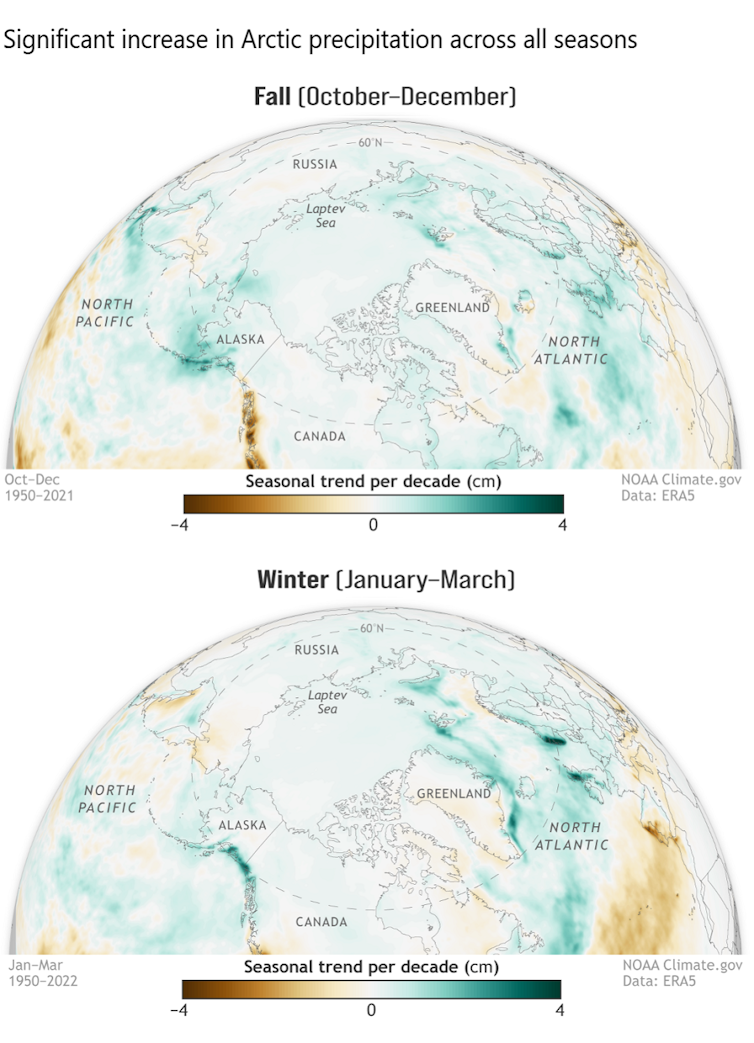
We found that Arctic precipitation is on the rise across all seasons, and these seasons are shifting.

Much of this new precipitation is now falling as rain, sometimes during winter and traditionally frozen times of the year. This disrupts daily life for humans, wildlife and plants.

Roads become dangerously icy more often, and communities face greater risk of river flooding events. For Indigenous reindeer herding communities, winter rain can create an impenetrable ice layer that prevents their reindeer from accessing vegetation beneath the snow.
NOAA Climate.gov

Arctic-wide, this shift toward wetter conditions can disrupt the lives of animals and plants that have evolved for dry and cold conditions, potentially altering Arctic peoples’ local foods.

When Fairbanks, Alaska, got 1.4 inches of freezing rain in December 2021, the moisture created an ice layer that persisted for months, bringing down trees and disrupting travel, infrastructure and the ability of some Arctic animals to forage for food. The resulting ice layer was largely responsible for the deaths of a third of a bison herd in interior Alaska.

There are multiple reasons for this increase in Arctic precipitation.

As sea ice rapidly declines, more open water is exposed, which feeds increased moisture into the atmosphere. The entire Arctic region has seen a more than 40% loss in summer sea ice extent over the 44-year satellite record.

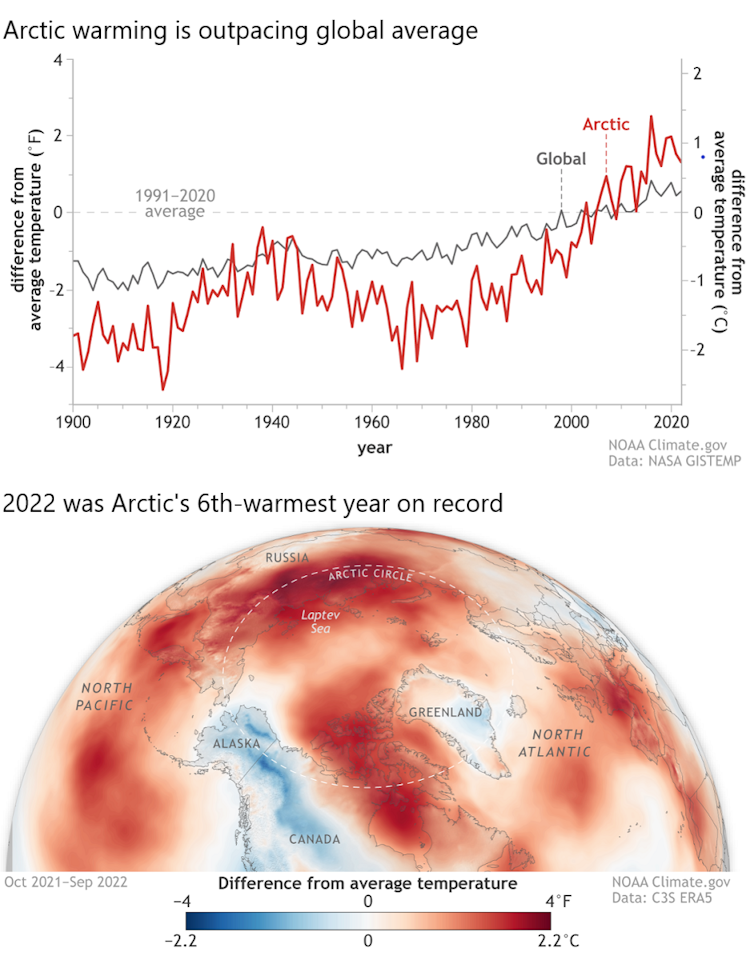
The Arctic atmosphere is also warming more than twice as fast as the rest of the globe, and this warmer air can hold more moisture.
NOAA Climate.gov

Under the ground, the wetter, rainier Arctic is accelerating the thaw of permafrost, upon which most Arctic communities and infrastructure are built. The result is crumbling buildings, sagging and cracked roads, the emergence of sinkholes and the collapse of community coastlines along rivers and ocean.

Wetter weather also disrupts the building of a reliable winter snowpack and safe, reliable river ice, and often challenges Indigenous communities’ efforts to harvest and secure their food.

When Typhoon Merbok hit in September 2022, fueled by unusually warm Pacific water, its hurricane-force winds, 50-foot waves and far-reaching storm surge damaged homes and infrastructure over 1,000 miles of Bering Sea coastline, and disrupted hunting and harvesting at a crucial time.


Arctic snow season is shrinking

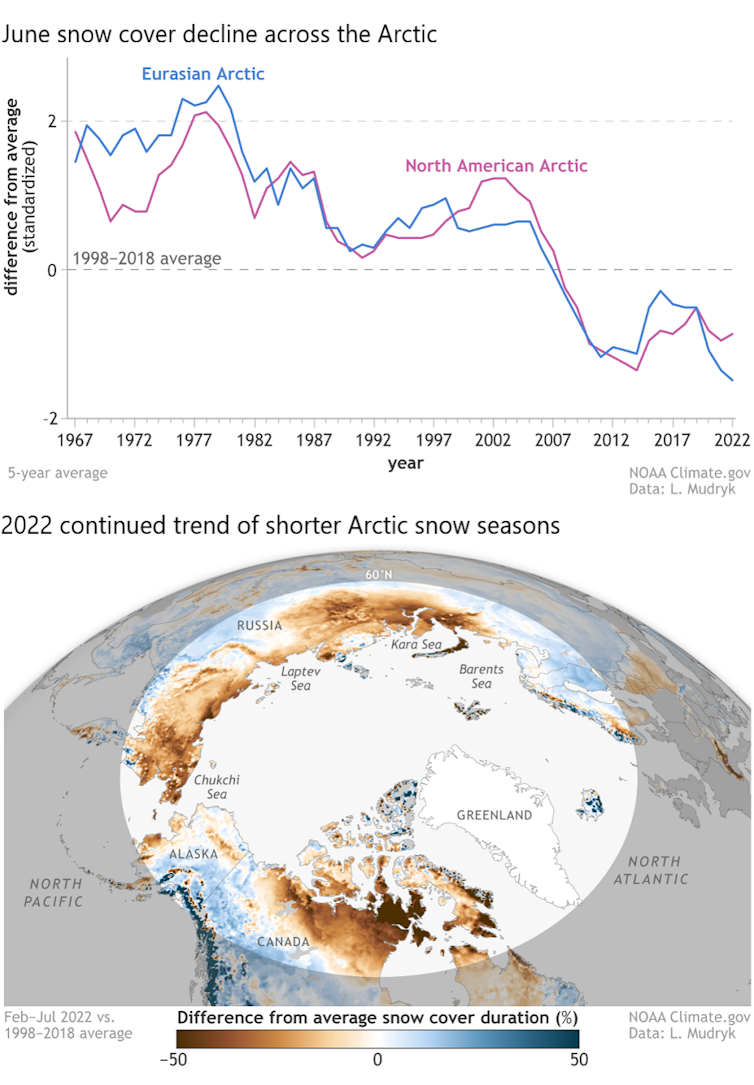
Snow plays critical roles in the Arctic, and the snow season is shrinking.

Snow helps to keep the Arctic cool by reflecting incoming solar radiation back to space, rather than allowing it to be absorbed by the darker snow-free ground. Its presence helps lake ice last longer into spring and helps the land to retain moisture longer into summer, preventing overly dry conditions that are ripe for devastating wildfires.

Snow is also a travel platform for hunters and a habitat for many animals that rely on it for nesting and protection from predators.

A shrinking snow season is disrupting these critical functions. For example, the June snow cover extent across the Arctic is declining at a rate of nearly 20% per decade, marking a dramatic shift in how the snow season is defined and experienced across the North.

Even in the depth of winter, warmer temperatures are breaking through. The far northern Alaska town of Utqiaġvik hit 40 degrees Fahrenheit (4.4 C) – 8 F above freezing – on Dec. 5, 2022, even though the sun does not breach the horizon from mid-November through mid-January.

NOAA Climate.gov

Fatal falls through thin sea, lake and river ice are on the rise across Alaska, resulting in immediate tragedies as well as adding to the cumulative human cost of climate change that Arctic Indigenous peoples are now experiencing on a generational scale.
Greenland ice melt means global problems

The impacts of Arctic warming are not limited to the Arctic. In 2022, the Greenland ice sheet lost ice for the 25th consecutive year. This adds to rising seas, which escalates the danger coastal communities around the world must plan for to mitigate flooding and storm surge.

In early September 2022, the Greenland ice sheet experienced an unprecedented late-season melt event across 36% of the ice sheet surface. This was followed by another, even later melt event that same month, caused by the remnants of Hurricane Fiona moving up along eastern North America.

International teams of scientists are dedicated to assessing the scale to which the Greenland ice sheet’s ice formation and ice loss are out of balance. They are also increasingly learning about the transformative role that warming ocean waters play.


NOAA Climate.gov

This year’s Arctic Report Card includes findings from the NASA Oceans Melting Greenland (OMG) mission that has confirmed that warming ocean temperatures are increasing ice loss at the edges of the ice sheet.
Human-caused change is reshaping the Arctic

We are living in a new geological age — the Anthropocene — in which human activity is the dominant influence on our climate and environments.

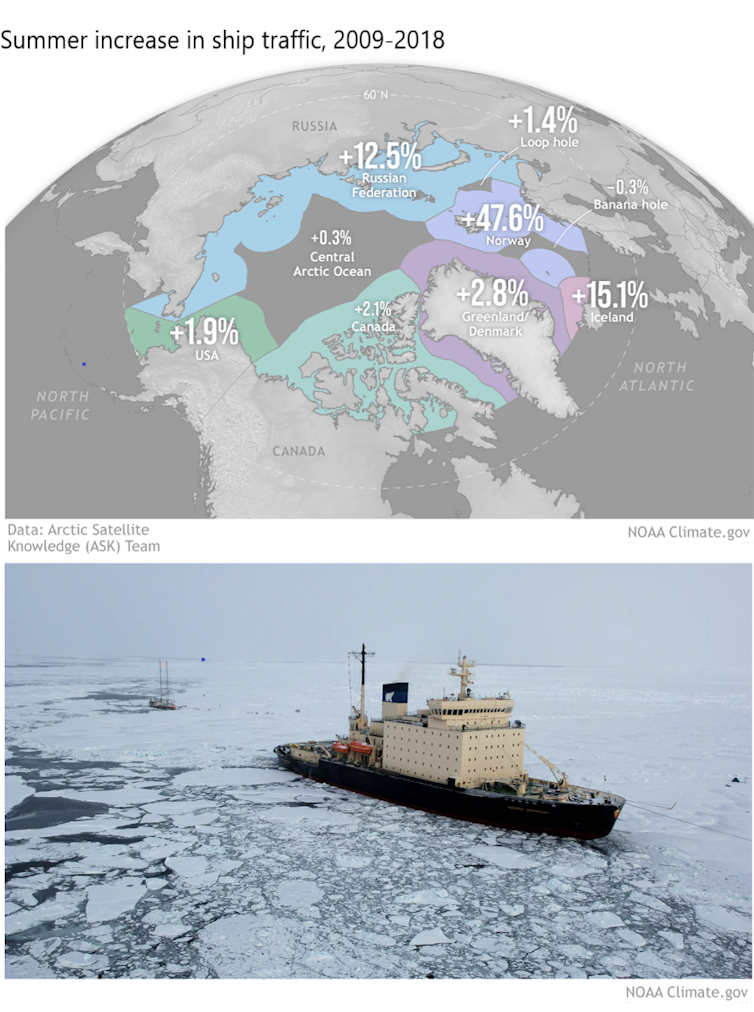
In the warming Arctic, this requires decision-makers to better anticipate the interplay between a changing climate and human activity. For example, satellite-based ship data since 2009 clearly show that maritime ship traffic has increased within all Arctic high seas and national exclusive economic zones as the region has warmed.

NOAA Climate.gov

For these ecologically sensitive waters, this added ship traffic raises urgent concerns ranging from the future of Arctic trade routes to the introduction of even more human-caused stresses on Arctic peoples, ecosystems and the climate. These concerns are especially pronounced given uncertainties regarding the current geopolitical tensions between Russia and the other Arctic states over its war in Ukraine.

Rapid Arctic warming requires new forms of partnership and information sharing, including between scientists and Indigenous knowledge-holders. Cooperation and building resilience can help to reduce some risks, but global action to rein in greenhouse gas pollution is essential for the entire planet.


Authors  
Matthew L. Druckenmiller
Research Scientist, National Snow and Ice Data Center (NSIDC), Cooperative Institute for Research in Environmental Sciences (CIRES), University of Colorado Boulder
Rick Thoman
Alaska Climate Specialist, University of Alaska Fairbanks
Twila Moon
Deputy Lead Scientist, National Snow and Ice Data Center (NSIDC), Cooperative Institute for Research in Environmental Sciences (CIRES), University of Colorado Boulder

Disclosure statement

Matthew Druckenmiller receives research funding from the National Science Foundation (NSF) and the National Oceanic and Atmospheric Administration (NOAA).

Rick Thoman receives funding from NOAA/Arctic Program

Twila Moon receives research funding from the National Science Foundation (NSF) and the National Oceanic and Atmospheric Administration (NOAA).


Adjusting the intensity of farming can help address climate change


A productive but moderate range of farming intensity is ideal for preserving the soil, its carbon content and biodiversity. (Unsplash/Red Zeppelin)


THE CONVERSATION
Published: December 20, 2022 

We have little chance of tackling climate change and reducing biodiversity loss without a redesign of the world’s largest industry: agriculture and food.

While shifting to more plant-based diets and reducing food waste will be critical steps, what occurs at the farm level will matter more. There, it will be the choices made around technology and intensity that will matter.

Agricultural practices, like regenerative farming, can help address climate change.


Agricultural intensity


With crops grown in farm fields, more intensive management means a reduction in the diversity of crops grown, combined with increased application of nutrients and use of mechanical soil tillage on the farm.

In eastern Canada, cropping has intensified by becoming less diverse.

Common cash crops, such as soybean, leave very little residue (which is mostly carbon) to add to the soil to help reverse CO2 accumulation in the atmosphere. This intensification has led to a continuing decline in the amount of carbon in soil.

Read more: How soil carbon can help tackle climate change

Canadian farmers, with support of federal and provincial programs, are responding to the climate change challenge with a host of cropping interventions, all of which fall under the umbrella of “nature-based climate change solutions.”

These new practices aim to improve soil health, return more carbon to soil, improve nitrogen efficiency and reduce greenhouse gas losses.

While zero-tillage (avoiding disturbing the soil for planting) does not enhance soil carbon in Eastern Canada — unlike in Western Canada — cover cropping, crop diversification and maintaining perennial pastures are recommended.

Cover crops — that help the soil recover — can also enhance cash crop productivity by supplying nutrients.

Maintaining ecosystem biodiversity

What about maintaining biodiversity? Should we maximize farming intensity and farm land efficiency to preserve more natural lands as reservoirs of biodiversity? Gauging a farming system on the basis of how productive it is alone, risks not sparing land from losses of soil carbon and soil.

Less intensive cropping systems can benefit biodiversity both above and below ground on farmed land. Opting for a productive but moderate range of farming intensity is thus ideal for preserving both soil, its carbon content and biodiversity.

As we have recently shown, a spectrum of intensity of cropping management is also found within regulated farming systems that follow an operating standard such as certified organic farming.

While organic farms are, in general, less intensive due to a greater diversity of crops grown and reduced nutrient application, they differ widely in the diversity of cropping and the level of nutrients added to the soil.

Managing nitrogen and carbon

Improving the retention of carbon and management of nitrogen are important, and there are various management approaches.

Led by the fertilizer industry, a 4-R approach to nitrogen fertilizer nutrient management uses the right fertilizer source, at the right rate, at the right time and at the right place. This approach is being widely promoted across Canadian agriculture with the goal of improving nitrogen use efficiency on farms and reducing nitrogen-derived greenhouse gas emissions.

Read more: The federal government's plan to cut fertilizer emissions will not threaten food security

But what about carbon? Half of the land on earth is now devoted to agriculture, and so reversing CO2 accumulation in the atmosphere through redesigning cropping systems is essential.

A recent standardized global framework for measuring and monitoring soil carbon on farms outlines the approaches needed for soil sampling and analyses to effectively measure what are often slow changes in soil carbon in response to improved cropping practices.


Nitrogen-based fertilizers are commonly used in agricultural practices. (Shutterstock)

But for most farmers, closely managing soil carbon is a recent endeavour, and an unfamiliar element — it is now even possible to farm carbon as a source of revenue.

Other than broad recommendations to sustain organic matter in soil, which is 50-55 per cent carbon, carbon seldom appears in long-established farm nutrient or resource management guidelines.

Changes in soil carbon are the net balance between carbon added (like crop residues and manures) minus carbon lost through organic matter decomposition. We can conceive a parallel 4Rs framework for its management that takes into account: rotation of crops, residue management, return of manure, and rate of tillage intensity. Rotation refers to the sequence of crops and cover crops.

Residue management acknowledges that benefits to soil carbon of diverse crop rotations can be lost if most of the crop residues are removed. Type and frequency of disturbance through tillage determines how much added decomposition of soil organic matter occurs.

The role of agriculture

Agriculture plays a central role in employing nature-based solutions to climate change. Developing climate-smart agriculture requires understanding the intensity at which all farms operate. Innovative economic programs, incentives and credits are needed to support farms aligning their practices with climate-related goals.

Author
Derek Lynch

Professor of Agronomy and Agroecology, Dalhousie University
Disclosure statement

Derek Lynch receives funding for his research from the Natural Sciences and Engineering Research Council, and Agriculture and Agri-Food Canada.
Partners


Tuesday, December 20, 2022

Can we ethically justify harming animals for research? There are several schools of thought

The Conversation
December 20, 2022

Animal Testing (Shutterstock)

Neuralink, the biotechnology company co-founded by Elon Musk, has been accused of animal cruelty and is under federal investigation in the United States for potential animal welfare violations.

The company has tested its brain-implant technology in animals including monkeys, sheep and pigs. Whistleblowers allege it has killed about 1,500 animals since 2018.

They claim testing was rushed, which caused significant animal suffering and required botched experiments to be repeated – harming more animals than necessary.

This scandal highlights an old but important question: when is it acceptable to harm non-human animals for human ends?

Moral confusion

The condemnation of Neuralink suggests many people view animal suffering as a serious moral problem. We find similar attitudes when people are outraged by pet owners neglecting or abusing their pets.

But our responses to animal suffering are complicated. Surveys show many people think at least some forms of animal research are ethically acceptable, such as medical research where alternatives aren’t available. Most people also think it is not morally evil to buy a hamburger, animal welfare concerns aside.

Our attitudes towards animals are confusing – and arguably self-serving. We need to think more carefully about how animals ought to be treated.
Do animals matter?

In the 17th century, philosopher René Descartes famously described animals as mere “automata”. He believed they lack a soul and a mind, and are therefore incapable of suffering.

But progress in fields such as ethology and the cognitive sciences has improved our understanding of animal behaviour, and we have come to appreciate animals have rich mental lives. There is now scientific consensus that mammals, birds and many others are capable of feeling pain and pleasure.

One might argue that, even if animals can suffer, ethics should only concern how we treat fellow humans since animals are not “one of us”. But this view is unsatisfying.

If somebody were to say it doesn’t matter how we treat people with a different skin colour, because they are not “one of us”, we would (rightly) call them racist. Those who claim the same about animals can be accused of making a similar mistake.


For decades, macaques have been used to test brain-machine interfaces.
Shutterstock

Our treatment of animals has come under increasing philosophical scrutiny since the time of Descartes. Some of the most powerful challenges have come from utilitarian philosophers such as Jeremy Bentham (1748-1832) and Peter Singer, whose 1975 book Animal Liberation was a rallying point for critics of livestock farming and animal research.

But the case for animal welfare isn’t just utilitarian. Thinkers from diverse philosophical traditions share this position.

Philosophical views on animal welfare


Philosophers usually think about animal suffering in accordance with one of three moral theories: utilitarianism, deontology and virtue ethics.

Utilitarians believe we should do what best promotes the overall wellbeing of everybody affected by a choice. They typically hold that all suffering matters equally, regardless of who experiences it, or even what species they belong to.

In 1789, Bentham argued that when it comes to animal welfare:
[…] the question is not, can they reason? Nor, can they talk? But can they suffer?

Deontologists emphasise duties and rights over welfare. They maintain we are not morally permitted to violate rights, even when doing so would promote overall wellbeing.

The great deontologist philosopher Immanuel Kant held that humans have rights because of our rationality (which more or less refers to our abilities to reason and make moral decisions). Kant believed animals aren’t rational and therefore don’t have rights (although he claimed we should still refrain from mistreating them since, according to him, that might make us more likely to mistreat humans).

Kant’s rejection of animal rights faces two challenges. First, some argue certain intelligent species, such as elephants and chimpanzees, are also rational and hence deserve rights.

Second, many contemporary deontologists argue we should set a less demanding threshold for moral rights. Rather than requiring rationality, they suggest it might be enough for an animal to have desires and interests.

Virtue ethicists take yet another approach. They think morality is a matter of developing and practising good character traits, such as honesty and compassion, while avoiding traits like dishonesty and cowardice. Virtue ethicists who deal with animal ethics have argued animal experimentation displays and reinforces vices like callousness and cruelty, particularly when research is unlikely to achieve morally important goals.

Neuralink revisited

In Australia and the United States, animal research is governed largely by the “three Rs”: directives to replace animal research with other strategies when feasible, reduce the number of animals used as much as possible, and refine experimental techniques to minimise animal pain.

If the reports about Neuralink are correct, the company failed to adhere to these. But what if Neuralink had conducted experiments in line with the three Rs – would this have resolved all ethical concerns?

Probably not. The three Rs are silent on one crucial question: whether the scientific gains from a particular study are great enough to justify the harms that research may inflict.

So long as an experiment is scientifically sound, one could, in principle, follow the three Rs to the letter while still inflicting severe suffering on a great many animals, and with little prospect of benefiting humans. If animals have moral worth, as the utilitarian, deontological and virtue ethical views state, then at least some scientifically sound animal research should not be conducted.

Neuralink has admirable goals, which include curing paralysis, blindness and depression.

But utilitarians might question whether the expected benefits are great enough (or likely enough) to outweigh the significant harms to animals. Deontologists might question whether any of the species used have moral rights against being experimented on, particularly intelligent ones such as monkeys and pigs. And virtue ethicists might worry the testing performed involves vices such as callousness.


Credit: Neuralink.


Where are we headed?

Animal research is widely practised in Australia, with more than 6 million animals reportedly used per year. Some (but not all) of this research involves significant pain and suffering. Mice are the most common animal used, though species such as dogs, cats and non-human primates are also used.

The vast number of lives at stake mean it is imperative to get the ethics right.

This means developing a more comprehensive set of principles for animal research than the three Rs: one that will help us more effectively balance scientific benefit against harms to research animals. At least among philosophers, this work is already under way.

It might also involve revisiting the question of when (if ever) certain species should be used in research. Australia imposes special restrictions on the use of non-human primates. Other jurisdictions have banned or considered banning ape research. What other intelligent species ought to receive additional protections?

We need to look beyond the three Rs for a full assessment of the ethics of animal research – both for Neuralink and beyond.

Julian Koplin, Lecturer in Bioethics, Monash University & Honorary fellow, Melbourne Law School, Monash University

This article is republished from The Conversation under a Creative Commons license. Read the original article.


https://libcom.org/article/mutual-aid-factor-evolution-peter-kropotkin

Russian anarchist Peter Kropotkin's massively influential work on mutual aid and co-operation as a factor in evolution, written in 1902.


https://libcom.org/article/beasts-burden-antagonism-and-practical-history

Mar 26, 2017 ... An attempt to rethink the separation between animal liberationist and communist politics.


http://www.stafforini.com/docs/Singer%20-%20Practical%20ethics.pdf

Peter Singer's remarkably clear and comprehensive Practical Eth- ... "Peter Singer has provided us with a good example of the fruits.


John M. Crisp: An old-school English teacher encounters ChatGPT
2022/12/19

Can a language model software write like a human? 
- Dreamstime/Dreamstime/TNS

Several weeks ago the artificial intelligence company OpenAI released ChatGPT, a language model software that aspires to the Holy Grail of interaction between humans and their computers: the ability to have a “conversation.”

Henceforth I’ll stop putting quotation marks around words like conversation and think and remember. These are things that humans do, and we should keep in mind that we’re still talking about a machine. Nevertheless, for this column I’ll dispense with the judgment implied by quotation marks around a word such as “learn” when it’s applied to a computer. If you experiment a bit with ChatGPT you might see why.

Because this software has been trained — by human trainers — to recognize the probabilistic connections between words as humans use them. I’m not sure what that means, but the result is that ChatGPT appears to engage in conversations not unlike those between people.

I approached ChatGPT with skepticism born of more than three decades of teaching writing skills to college freshmen. I’m from a generation for whom artificial intelligence is the stuff of science fiction and to whom writing is a semi-mysterious skill or art reserved for human beings.

Still, I tried to retain an open mind. I started by asking ChatGPT to perform a task familiar to many students:

“Write a college admissions essay about my time in the Peace Corps in Bolivia.”

In 30 seconds ChatGPT produced an organized, credible, grammatically correct essay about my imaginary work as a community health volunteer in a rural village in Bolivia. I conducted health workshops, helped establish a clean water system and worked with local clinics to improve access to health care.

It was a “truly enriching experience” that “prepared me for a career in public service.” I was “excited to bring my skills and experiences to (University Name) and to contribute to the university community.”

I had good experiences elsewhere, as well. I was “welcomed with open arms” by the needy citizens of Costa Rica, Ghana, Jordan and Mexico. I helped build schools, taught English, coached children in computer skills and organized physical-education classes.

But all of this sounded too good to be true. I asked ChatGPT to include some information about negative experiences in the Peace Corps.

ChatGPT seemed to understand the need for honesty and transparency, but it wisely pointed out that in an admissions essay it’s important to cast my experiences in a “positive light.” I could mention — or ChatGPT could do it for me — a negative experience such as suffering from homesickness or having problems adjusting to a new environment. The admissions committee, ChatGPT said, will be interested in how I overcame it.

This is reasonable advice, but my skepticism persisted. When I asked ChatGPT to write an essay about my service in the Peace Corps in North Korea, it seemed to know I was messing with it. The Peace Corps does not have a program in North Korea, it sniffed, and thus it would be impossible for me to have served there.

Furthermore, “It is important to be honest and accurate in your admissions essay, and it is not appropriate to fabricate and exaggerate your experiences.”

Busted. Duly chastised, I began to give ChatGPT a little more respect.

In fact, I asked: “Write a 675-word newspaper op-ed on how ChatGPT could be used to teach college writing.” In 30 seconds, ChatGPT did that very thing.

But not the op-ed you’re reading here. ChatGPT’s prose is clunky, bland and formulaic. It sounds as if it were written by a machine. It’s annoyingly equivocal, filled with phrases such as “On one hand,” “On the other,” “In general” and “Some would say.”

Most of all, ChatGPT’s prose is … soulless. It doesn’t have that ineffable sense of voice or will or agency that only a real human being can render in prose. At least so far.

One thing is clear: For good or ill, something monumental happened to writing instruction in December of 2022; it’s unlikely to ever be the same.

But can college students use ChatGPT to cheat in college writing classes? Just ask it.


'Listen to me', says Israeli woman accusing top rabbi of rape

Agence France-Presse
December 20, 2022

Nehama Teena rattled Israel's Orthodox Jewish community in August with a Facebook post that accused 84-year-old rabbi Zvi Thau of raping her © MENAHEM KAHANA / AFP

Through weekly protests outside Israel's parliament, Nehama Teena has demanded an investigation into a prominent rabbi she accuses of rape and sought to break the code of silence surrounding sexual assault in the Orthodox world.

"I'm not asking that they take my word for it, only that they listen to me and stop preventing victims from speaking," the 38-year-old mother of five told AFP.

In August, Teena rattled Israel's Orthodox Jewish community with a Facebook post that accused 84-year-old rabbi Zvi Thau of raping her over several years, including when she was a minor.

Thau heads one of Jerusalem's most influential Jewish study centers, the Har Hamor yeshiva.

He is also the spiritual head of Noam, a virulently anti-LGBTQ party that secured one parliament seat in Israel's November elections and has struck a deal with prime minister-designate Benjamin Netanyahu to support his next government.

Thau has refused to comment on the series of allegations made against him by Teena and another woman, Dorit Lang, who came forward with accusations dating back 40 years.

Thau did not respond to requests from comment from AFP. Israeli media reported Monday that he could be cleared in a probe opened several weeks ago due to a lack of conclusive evidence.

'Shock waves'

Beyond Teena's parliament protests, she has also tried to confront Thau outside Har Hamor, meeting him on territory where he is revered by followers.

"It's not easy for me to come here. I was part of this community for more than 15 years. I was married to a man from this community and my children studied in its institutions," she said.

She told AFP her protests were motivated in part by her devotion to Torah, and her sense of duty to help vulnerable people under threat.

"There are people who are suffering. It is really a question of life and death," she said.

Yair Ettinger, a writer specializing in Israel's ultra-Orthodox community, described Thau as one the country's "most influential" rabbis, but also one of its "most conservative and radical".

The accusations leveled by Teena and Lang have "sent shock waves through the religious world", he said.

They "are the beginning of a profound process, and it is difficult to know what the long-term consequences for the religious world will be," Ettinger said.

Code of silence

There are also signs that Teena's protest, which began as a solitary effort, is gaining momentum, with dozens of people now regularly joining her outside parliament each Monday.

Among those standing by her side at a recent rally was her brother, Yossef Boyarski, who said Teena's protest was against "a whole system of omerta" that has compelled many victims of rabbinical assault to stay quiet.

He told AFP his sister's campaign was in the public interest, not a personal quest and affirmed that she had been offered -- and rejected -- a payout in exchange for her silence.

A growing list of rabbis have openly backed an investigation into Thau.

Even Bezalel Smotrich, the head of the extreme-right Religious Zionism party that included Noam on its electoral list, said there must be an effort to "shed light" on the complaints against Thau.

For Carmit Feintuch, a female rabbi who leads an Orthodox community and has come to support Teena for recent weekly protests, the mindset within the religious community about how these cases should be handled is changing incrementally.

"Shame has changed sides," she said. "It is the aggressors who should be ashamed, not the victims."

© 2022 AFP
Why an Abu Dhabi startup wants to send quinoa seeds into space

By Nell Lewis, CNN Business
Tue December 20, 2022

In 2023, StarLab Oasis plans to send its first seeds into orbit.Nanoracks/Starlab Oasis
LondonCNN —

With the climate crisis making many food crops more difficult to grow, some scientists and entrepreneurs are searching for solutions beyond our planet.

Abu Dhabi-based startup StarLab Oasis, a spin-off from Texan company Nanoracks, wants to grow seeds in outer space in order to develop plant varieties that can survive on a less hospitable Earth. In 2023, StarLab Oasis expects to send its first seeds into orbit.

From soybeans to quinoa, seeds grow differently in space than on land. Without Earth’s gravitational pull, plants struggle to distinguish which way to grow, and they are also exposed to cosmic radiation. This can make seeds mutate, which can result in new, more robust or productive plant varieties — like drought-resistant crops that can grow in saline conditions.

Sending seeds to space will help “sustainability, climate change, and food security on Earth,” StarLab Oasis’ co-founder Allen Herbert tells CNN Business. “Space is a place where you have limited resources, limited energy, limited space. It’s the perfect place to do research and that same technology can be brought right back down to Earth.”

Plants have been subject to mutation breeding — exposing a species to chemicals or radiation — on Earth since the 1920s, explains StarLab Oasis’ plant scientist Connor Kiselchuk, and in the 1960s it started to be applied in outer space.


Seeds will be grown on external docking platforms at space stations, shown here in a rendering.Nanoracks/Starlab Oasis

China has sent seeds into orbit since the 1980s, resulting in new varieties of crops being used by its farmers. In 2022, the International Atomic Energy Agency and the UN’s Food and Agriculture Organization launched seeds into space for the first time, with the aim of developing crops to withstand climate change.

Herbert says StarLab Oasis will be one of the first to commercialize the process. It plans to work with companies, space agencies, universities and non-profits, to send seeds to space either for research or commercial purposes. It’s up to the clients to decide whether they will commercially breed and sell them, he adds.

One non-profit it is currently working with is the Dubai-based International Center for Biosaline Agriculture, which is looking to increase the saline and drought tolerance of crops such as quinoa, explains Kiselchuk.

Food for Mars


To begin with, StarLab Oasis will send seeds to the International Space Station (ISS) where they will be cultivated by astronauts, but its long-term aim is to send them to a commercial space station, called Starlab, which is due to be operational in 2027. When they return to Earth, they will be germinated either by the customer or in a StarLab Oasis laboratory where they will be tested to determine how they fare in specific environments, such as drought or intense heat.

StarLab Oasis, which was founded in 2021, currently has five employees and is set to expand next year. It’s backed by the Abu Dhabi Investment Office (ADIO) in the United Arab Emirates (UAE), as part of a $41 million program to increase food production in arid environments. This could benefit the UAE, which currently imports up to 90% of its food.

“(StarLab Oasis) is a hugely ambitious and exciting project that will provide access to the scientific potential of space in developing agricultural technologies for a resource-limited world,” says Abdulla Abdul Aziz AlShamsi, acting director general for ADIO.

The startup’s ambitions don’t end there.

It hopes to develop food production in space, designing off-Earth systems that can produce food on longer space missions to the moon or Mars.

Plants could provide other benefits too, says Kiselchuk, such as “oxygen generation, the filtration of some wastewater streams and psychological benefits too for the crew that are going to be away from home.”