Tuesday, March 28, 2023

Ford government needs to boost funding amid education ‘crisis,’ teachers’ union says

By Kristin Rushowy
Queen's Park Bureau
Tue., March 21, 2023

The government needs to provide additional mental health help and supports to deal with violence in schools in the upcoming Ontario budget, says the union representing the province’s public secondary teachers.

“We call on the Ford government to make investing in public education a priority in this budget,” said Martha Hradowy, vice-president of the 60,000-member Ontario Secondary School Teachers’ Federation, at a news conference at Queen’s Park on Tuesday, adding the province has shortchanged education in successive budgets.

“We cannot allow Ontario to fall behind.”

Hradowy said there are staff shortages already and “we are facing stiff competition from other jurisdictions for teachers and education workers … Provinces such as Alberta are making efforts to increase staffing in their public education system, with potential to attract teachers and education workers from Ontario. At the same time, we have noticed an increase in the number of faculty of education graduates choosing not to work in education. All of this adds up to a crisis that can be averted through proper investments in public education.”

In the legislature, Education Minister Stephen Lecce said funding for the sector has increased and will continue to, despite dwindling enrolment in some boards.

“This year alone compared to last year, it is up $683 million,” he told the legislature, adding the provincial government has provided funding for thousands of education workers, principals and teachers that will be boosted in Thursday’s budget.

He noted that the Toronto District School Board is receiving $38 million more compared to five years ago, despite a drop in enrolment of 16,000 students.

But NDP education critic Chandra Pasma accused the government of “underfunding education by stealth,” by not keeping up with inflation and providing less money than schools actually need, pointing to boards like Toronto and Ottawa public that are planning on cutting staff.

Liberal MPP and former education minister Mitzie Hunter said that during the pandemic, “school boards were forced to go into their reserve funds — which were set aside for other priorities — and they have not been made whole by the government.”

She said the government should keep extra pandemic funding in place, because “the results of the pandemic and the impact of the pandemic still must be addressed, and we cannot afford for our young people to be victims of that, or to have any scarring effects from the pandemic. Now is the time to invest, to set them up for a good future … I would urge the government to rethink, and to think about how it can better support our schools to set up students for success.”

The TDSB, which is the largest in the country with about 235,000 students in 583 schools, is bracing for cuts. It’s currently forecasting a $61-million deficit for its 2023-24 budget, but is still waiting to hear from the province about how much funding it will receive.

Only after the budget is tabled will boards have a clearer sense of how much funding they’ll get from the Ministry of Education, which is tied to student enrolment.

The TDSB says it’s in a challenging position because overall enrolment is declining.
BC
We Need to Talk about Private Forest Lands

A gap in government protection is undermining Indigenous rights and environmental protection.

Michael Ekers, Estair Van Wagner and Sarah Morales 16 Mar 2023TheTyee.ca

Michael Ekers is an associate professor in the department of geography and planning at the University of Toronto. Estair Van Wagner is an associate professor at Osgoode Hall Law School, York University. Sarah Morales is an associate professor at the University of Victoria faculty of law, where Van Wagner is currently a visiting professor

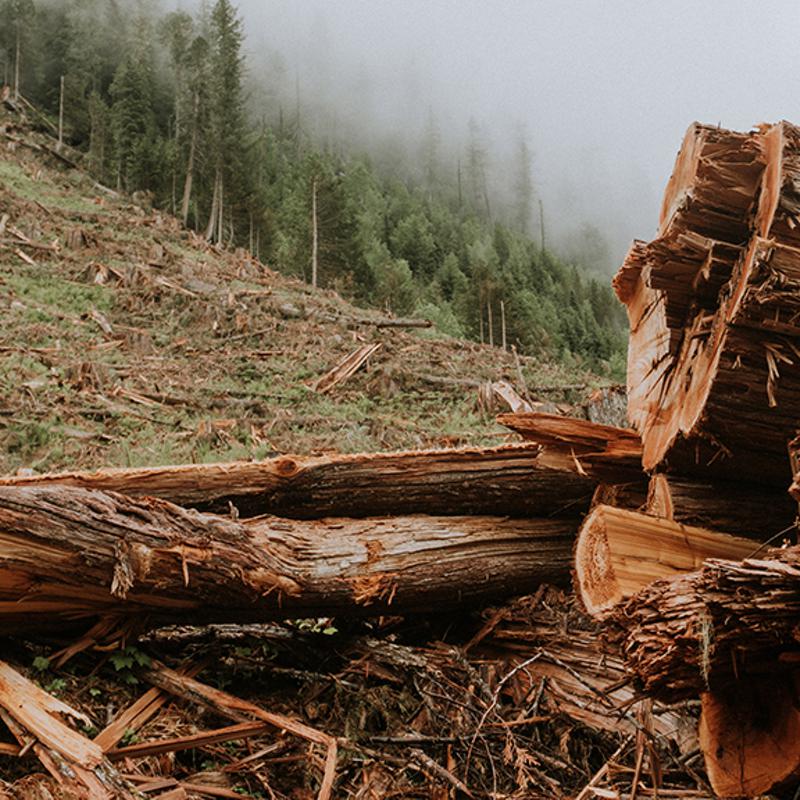
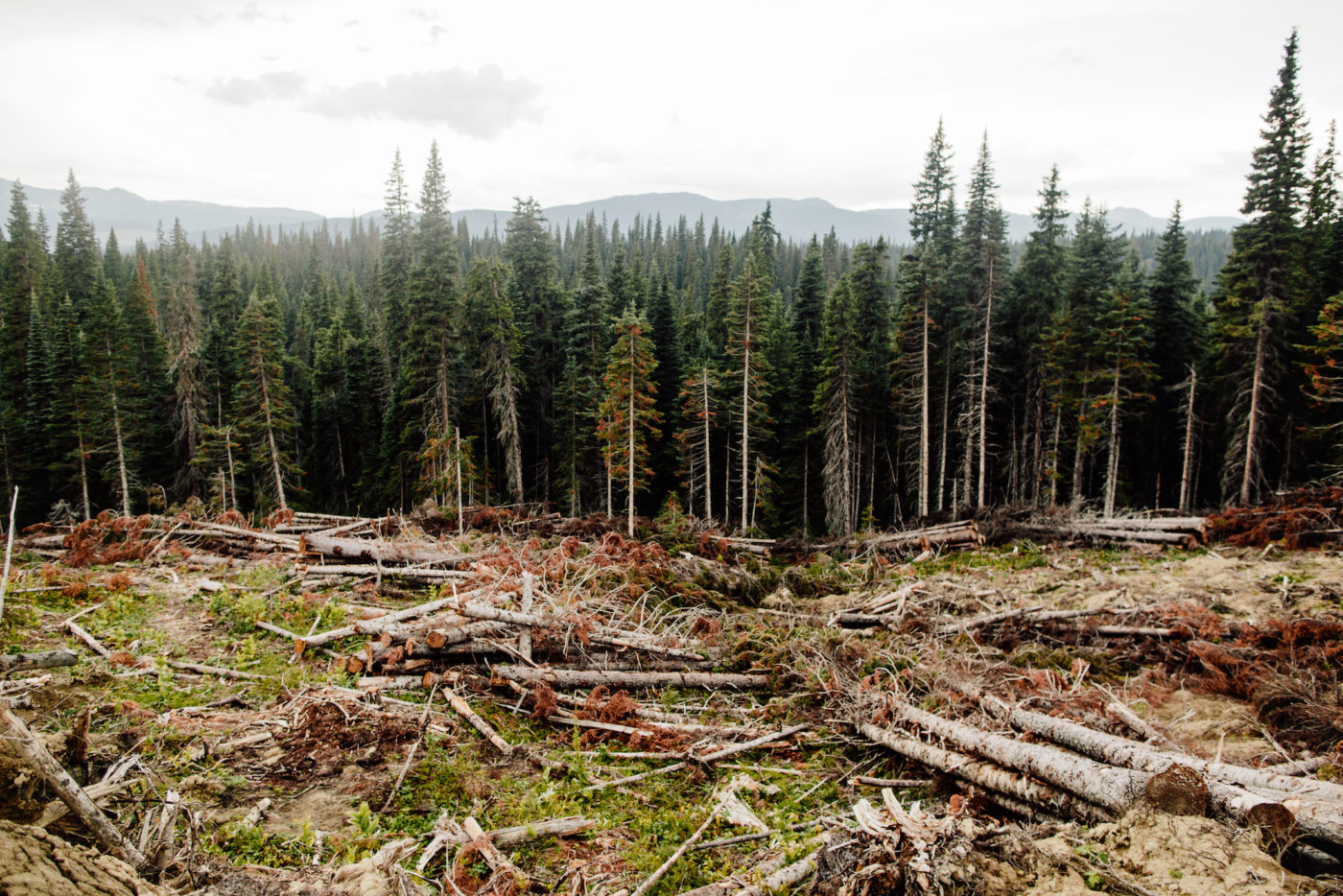
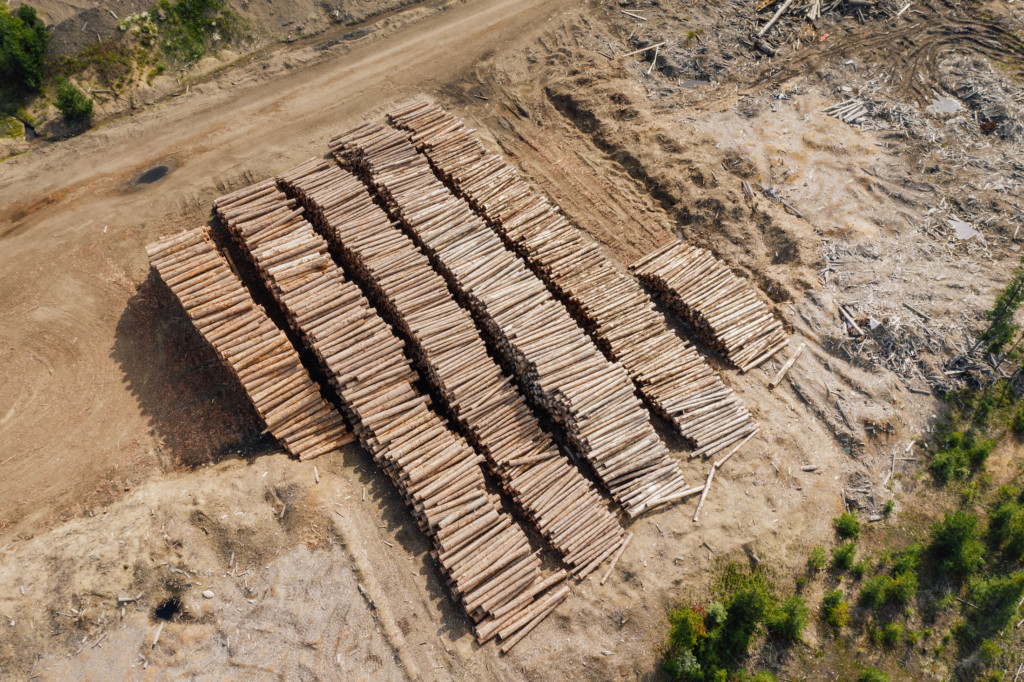
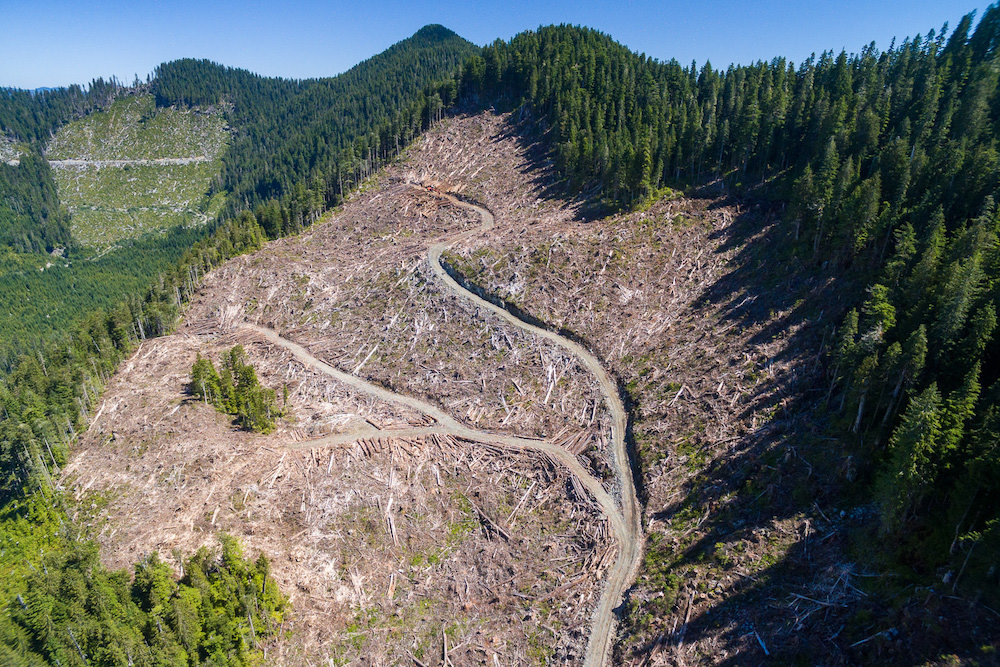
Large swaths of private forest lands — especially on Vancouver Island — aren’t protected from harmful logging practices. Photo by TJ Watt.

The B.C. government has been roundly applauded for removing a key word from the provincial regulations governing forest planning.

For two decades the word “unduly” has limited the protection of so-called “non-timber” values in B.C. forests. Wildlife habitat, soil, biodiversity and even drinking water could only be protected if it did not “unduly reduce the supply of timber from British Columbia.”


This gave government, and the industry players with the ear of decision-makers, a statutory trump card to maintain timber supply despite calls for stronger biodiversity, wildlife and old-growth protection. As others have noted, this has been a barrier to sound and sustainable forest legislation despite growing evidence that healthy forests are crucial to addressing climate change.

While “unduly” has not been removed from all forestry regulations (it remains in the Government Action Regulations restricting the protection of a range of environmental and recreation values), this is a clear step forward. Alongside further old-growth protection and a stronger role for Indigenous peoples in forest planning, these regulatory changes signal the potential for a new direction in forest governance.

Nevertheless, crucial questions remain about the future of forests in B.C.

The Forest Range and Practices Act was critical to the deregulation of the provincial logging industry in the 2000s. However, the legislation specific to private forest lands went much further. In 2003, a year before the former BC Liberal government introduced the unduly clauses into forestry regulation on public lands, the Private Managed Forest Lands Act was enacted. The private land forestry regime prescribes no limits to the annual harvest or the size of clear cuts. It makes no reference to constitutionally protected Aboriginal rights and title.

If you were TimberWest or Island Timberlands, the largest owners of private forest land in the province, you could literally cut at will so long as you met five weakly defined “management commitments.” The two companies did just that, pushing up harvest levels to unprecedented highs before they came crashing down during the sub-prime mortgage crisis. And all this extraction resulted in limited employment benefits because raw log exports are allowed from much of this land.

After years of public outcry, litigation and concerns from Indigenous nations, the John Horgan government initiated a review of the Private Managed Forest Lands program in 2019. The process included a call for public engagement.

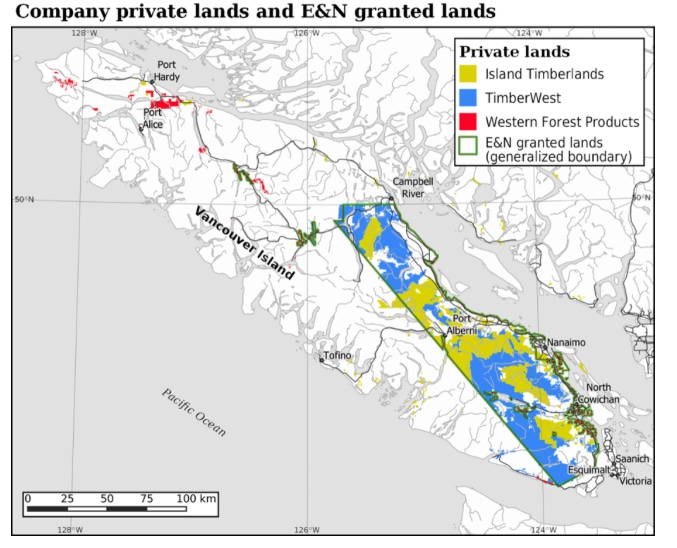
Private forest lands make up a large part of Vancouver Island. Mosaic Forest Management is now the manager of the holdings of Island Timberlands and TimberWest.

However, the province failed to adequately consult with the Indigenous nations impacted by the Private Managed Forest Lands Act. This failure was particularly glaring for Vancouver Island nations with territory overlapping the vast belt of private forest lands created from the late 19th century E&N Railway land grants. For example, the E&N grants converted roughly 85 per cent of the territory of the Hul’qumi’num Treaty Group to private land without consent or compensation. Today 60 per cent of the territory is held by private forest companies. This concentration of private land has had profound effects on Hul’qumi’num peoples and remains a key roadblock in treaty negotiations.

Meanwhile, a freedom of information release indicates that confidential meetings were held between the government, Private Forest Landowners Association and Mosaic Forest Management, the company that now manages the land holdings of Island Timberlands and TimberWest. The content of these discussions is redacted.

The vast majority of public submissions to the review highlighted concern over high harvesting rates, fear over water quality and biodiversity loss and the lack of government oversight. Yet, nearly four years on, no policy changes have been proposed.


BC’s New Forest Rules: A Small Word Change May Be Big for Saving Trees
READ MORE

As important changes are introduced to forestry activities on public land, private forest lands are being left behind. For those on Vancouver Island, this is no small thing. Nearly 600,000 hectares of private forest land lie between Sooke and Campbell River. Without sustainable forest policies we continue to witness the rapid extraction of timber resources, degradation of wildlife habitat and watersheds and low-levels of employment. Indigenous people are unable to exercise their constitutionally protected rights with crucial territories blocked by locked gates and no trespassing signs.

Landowners will likely resist any perceived incursions on their rights to control private property. But property rights are not absolute. They are always governed by a range of policies designed to protect the public interest. Planning rules determine whether you can build a laneway house or whether trees or heritage buildings can be removed. Why should private forest land be any different?

We all have a public interest in the future of these forests. From their centrality to meaningful reconciliation with Indigenous peoples to the role they can play in preventing catastrophic climate change, there is too much at stake to exclude private forest lands from these changes to forest policy.

 
IN-DEPTH
How big is the mercury threat posed by Hudson Bay’s thawing permafrost?
The warming of North America's largest peatland is sending mercury into soil and water. But it's not clear how much there is, exactly how it becomes toxic and how much to worry


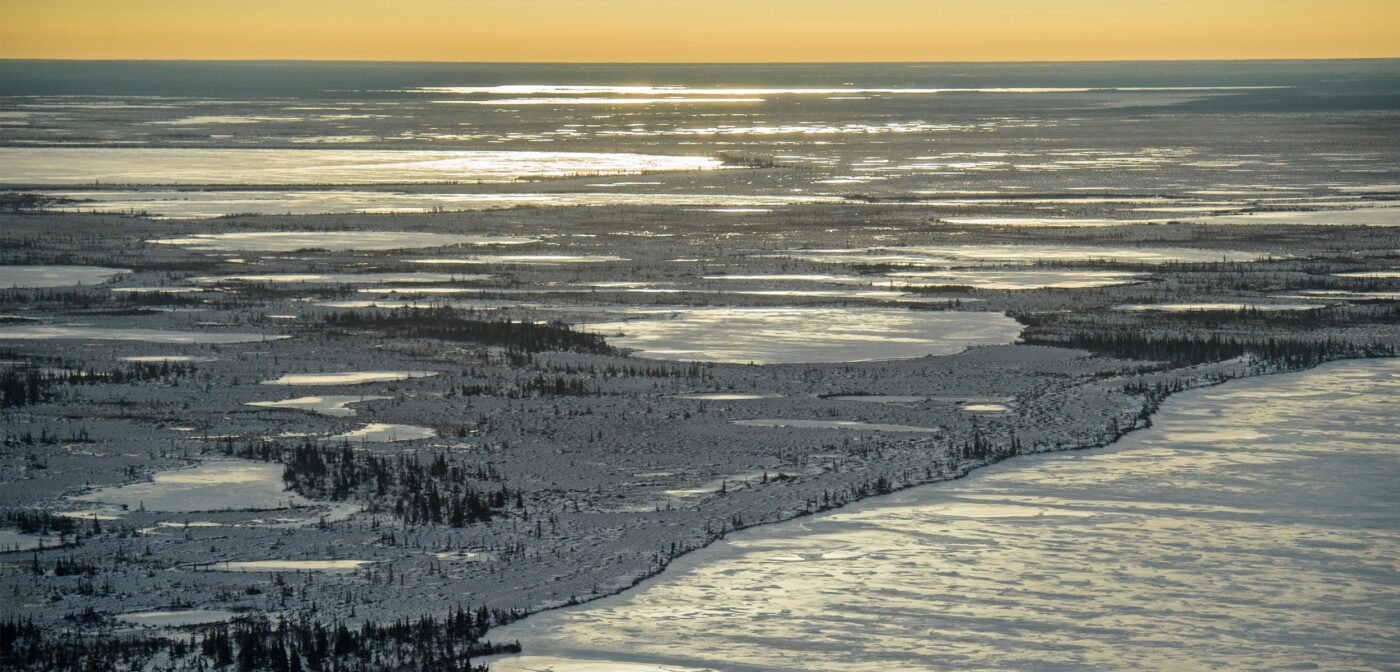
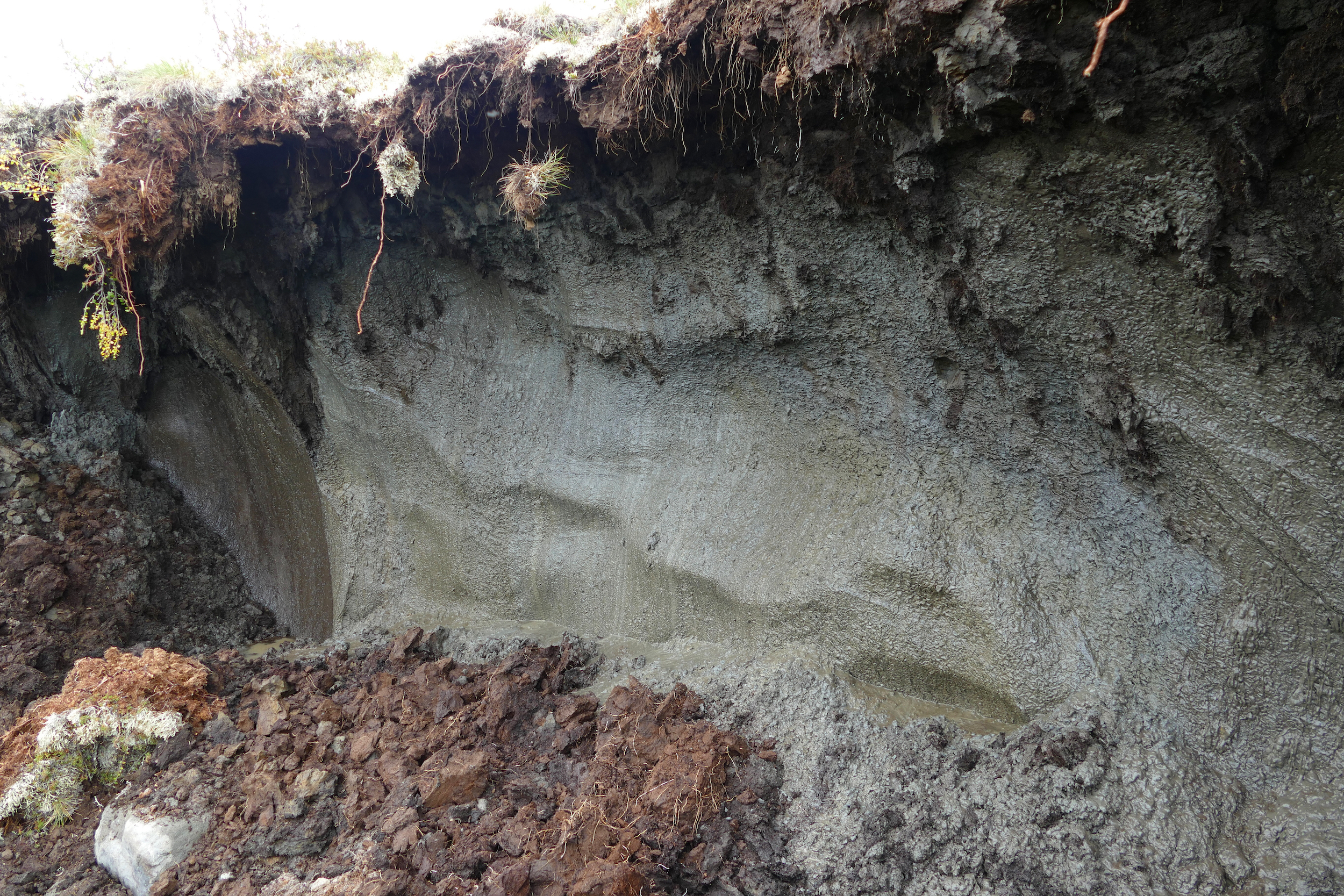
As Hudson Bay permafrost thaws, mercury is finding its way into the soil and water, where microbes can convert inorganic mercury into the form to be concerned about: neurotoxic methylmercury.
Photo: Don Johnston_NC / Alamy

By Christian Elliott
March 27, 2023 
This article was originally published on Hakai Magazine.

Covering nearly the same area as Norway, the Hudson Bay Lowlands in northern Ontario and Manitoba is home to the southernmost continuous expanse of permafrost in North America. Compared with many marine waterways this far south, Hudson Bay stays frozen late into the summer, its ice-covered surface reflecting sunlight and keeping the surrounding area cold.

The influence of Hudson Bay on the weather is crazy, says Adam Kirkwood, a graduate student at Carleton University in Ottawa. “It can be sunny and 20 C one day in August, and then half an hour later there’s a wicked wind coming in from the bay — it’s 5 C, and you’re putting on all your layers, and you’re still freezing cold. And when it’s neither of those two things,” he says, “it’s very, very buggy.”

Trapped in all that permafrost is 30 billion tonnes of carbon. It’s an unfathomable amount, says Kirkwood. With global warming, the permafrost is thawing, threatening to release a “carbon bomb” of heat-trapping methane gas to the atmosphere. But there’s something else lurking in the permafrost, too. Something that has the potential to be more immediately dangerous to the people and wildlife living in the area: mercury.

Wildfires and volcanoes belch mercury and since the Industrial Revolution so, too, do coal-burning power plants and factories. Warm air currents carry mercury in its inorganic heavy metal form to the Arctic where it settles into the soil and vegetation before being safely locked away in the deeply frozen permafrost.

In its inorganic form, mercury is less threatening to people. But as the permafrost thaws, says Kirkwood, mercury is finding its way into the soil and into the regions’ many ponds, rivers and lakes. Once there, microbes can convert inorganic mercury into the form to be concerned about: neurotoxic methylmercury.

For the Indigenous peoples of northern Ontario who have lived off the peatlands for thousands of years — hunting caribou, catching fish, and gathering native plants — the lurking threat poses a risk to their way of life.

So for the past six years, Kirkwood has been coming to this remote environment every summer, helicoptering in to drill thick cores of peat and bringing them back to his lab for analysis. On these trips, Kirkwood often has help from Sam Hunter, a self-taught independent scientist from Peawanuck, Ont., who is a member of Weenusk First Nation.

“Muskox has disappeared,” self-taught Cree scientist Sam Hunter says. Hunter accompanies researchers on their fieldwork and brings their findings back to local communities, to integrate Western science and Indigenous Knowledge. Photo: Pat Kane / The Narwhal

Back in the 1970s, Hunter saw how scientists studying the Hudson Bay Lowlands used Indigenous peoples as guides, but didn’t involve them in their research. Now, he says, there’s a co-management process — he accompanies researchers on their fieldwork and helps bring their findings back to local communities. Bringing together outside scientists and traditional knowledge is important, he says, because Indigenous peoples have seen firsthand how the permafrost is changing.

“Walking on permafrost is like walking on really hard ground, like gravel,” says Hunter. When there’s permafrost, he says, “there’s all kinds of flora. There’s berries, vegetation that animals feed on. We collect wild tea.”

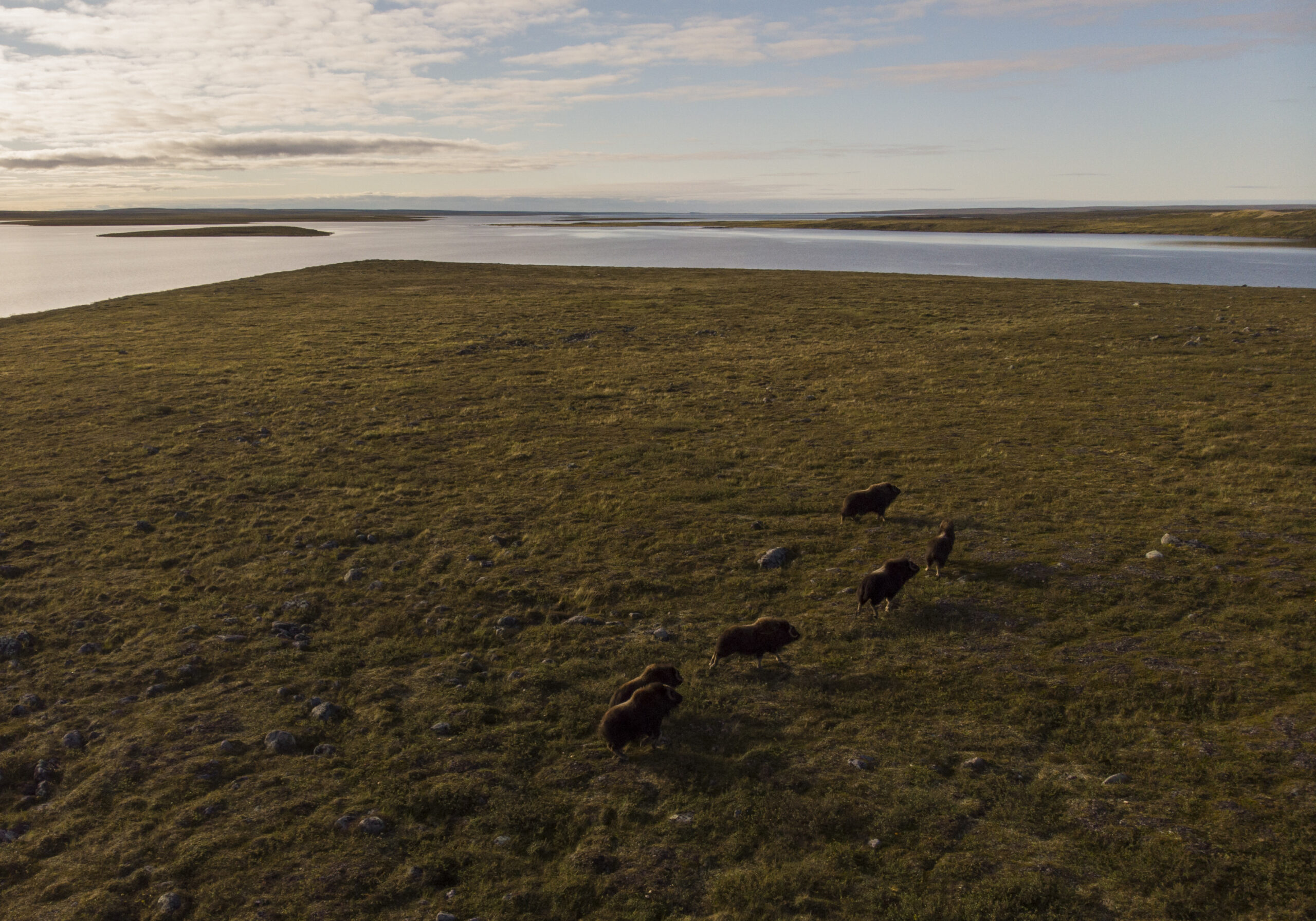
But once the permafrost thaws, he says, “the environment turns into a swampland … You can’t even walk, you’d sink.” Along with the disappearing permafrost “go the animals. They move higher and higher into the Arctic. Muskox has disappeared and a few shorebirds we used to have — they’re moving north.”

Methylmercury seeping out of the permafrost is the latest water-quality issue First Nations communities in the region have faced. Closer to the Manitoba border, industrial mercury pollution from the 1960s still affects 90 percent of the Anishinaabe community Grassy Narrows. Many First Nations communities across Canada still lack clean drinking water. In the absence of government support for water-quality testing, Hunter has trained three community members in Peawanuck to test their water and fish.

Whether all of the mercury idling in the permafrost will become a significant threat to locals hinges on the answers to a few outstanding questions — questions Kirkwood aims to answer.

A decade ago, scientists discovered that certain microbes with a specific gene can convert inorganic mercury into toxic methylmercury. Scientists know some microbes have this ability and others don’t, but efforts to relate the abundance of microbes with mercury methylating potential to the amount of methylmercury in the environment have been unsuccessful. That’s led scientists studying mercury cycling, like Andrea Bravo at the Institute of Marine Sciences in Spain, to theorize that there’s more at play dictating the pace of methylmercury production, like the complex relationships between the entire community of microbes in the soil.

Thermokarst fens are meltwater ponds created when iceberg-like permafrost chunks thaw. There, levels of neurotoxic methylmercury levels are higher than in the surroundings. 
Photo: Milan Sommer / Shutterstock

That’s where Kirkwood’s research comes in. By drilling and taking core samples of the permafrost, then measuring the amount of inorganic mercury while at the same time sequencing the DNA of everything in the soil, he hopes to better understand how methylmercury gets produced in thawing permafrost. Once he knows that, he can figure out where the threat is largest by looking at where mercury methylating microbes and inorganic mercury overlap.

“It’s a hot topic, a timely research question,” says Bravo, who isn’t involved in Kirkwood’s research. “We are suddenly having a surface of soil that was not reactive before, and it’s becoming reactive. … We don’t know how much mercury is coming from this permafrost.”

Bravo points out there are still many unknowns in efforts to gauge the mercury threat. For one, it’s still not yet possible to accurately predict methylmercury levels in freshwater waterways or the ocean based on land sources. Despite global research efforts, “we still don’t understand the process completely,” she says. “We’ve put in a lot of effort, but we aren’t there yet.”

So far, Kirkwood’s initial findings show reason for hope. Previous Arctic-scale estimates of inorganic mercury abundance have vastly overestimated how much mercury is being stored in the Hudson Bay Lowlands. Kirkwood’s cores show mercury levels 10 times lower. But that doesn’t mean all is well. In thermokarst fens, meltwater ponds created when iceberg-like permafrost chunks thaw, methylmercury levels are higher than in the surroundings.

As more permafrost thaws and these ponds connect, methylmercury production will likely increase. And if this mercury reaches the bay, biomagnification could cause it to build up to high concentrations, making its way up the food chain from algae to the tissue of fish that people catch and eat.

One of the things Hunter says he’s been told by the scientists who come up from the south is that the polar bear is the barometer for climate change. “And I don’t agree with that. I think the barometer for climate change is the palsa, the melting permafrost,” he says. “And I think that we need to understand what’s coming out of the ground now.”

OPINION
Giving forestry corporations what they want means sacrificing everything

How the relationship between forestry companies, unions and the government combined with the threat of capital flight is getting in the way of progress in B.C.


Instead of begging big forestry companies to stay in B.C., Rosemary Collard and Jessica Dempsey argue the province should reassign their forest tenures to Indigenous nations, communities and a more diverse set of smaller businesses committed to B.C. for the long term.
Photo: Taylor Roades / The Narwhal

By Rosemary Collard and Jessica Dempsey
The Narwhal
March 21, 2023 

Amid devastating mill closures in the B.C. communities of Chetwynd, Houston and Prince George, and warnings of declining timber supply, B.C. Premier David Eby recently announced his government’s latest forestry measures, including a $180 million fund to support innovation and job creation in the sector and $50 million to increase fibre supply.

We’ve been here before. Many times. Fears of a dwindling timber base and job losses that feel so immediate today go back almost a century.

What have politicians, communities, scholars, environmentalists and policy wonks called for in response? Consistently, versions of the same thing: more selective logging that protects biodiversity and endangered species and more local manufacturing to generate more jobs and money. Eby says he will deliver.

But these solutions to B.C.’s forestry problems — which are also outlined in the 2020 old-growth forest strategic review — have been known for decades. So, why haven’t these changes been implemented?

Investigating problems. Exploring solutions
The Narwhal’s reporters are telling environment stories you won’t read about anywhere else. Stay in the loop by signing up for a weekly dose of independent journalism.

There are two primary obstacles. The first is B.C. forestry is dominated by a coalition of forestry companies, unions and the B.C. government — what political scientist Jeremy Wilson called the “wood exploitation axis.” The axis has persisted through boom and bust, for a good hundred years.

Today, First Nations have effectively pushed the B.C. government to share some revenue from forestry on their territories and many are partnering with forestry companies, with some taking significant ownership stakes. But, for the most part, the wood exploitation axis remains dominant. The unions, companies and government don’t see eye to eye on everything, but they share a financial interest in maintaining abundant, free-flowing fibre and, for the unions, to maintain good mill and harvesting jobs.

This free-flowing fibre has delivered vast wealth to not only to corporations but also the B.C. government, who has acted over decades to protect revenue even when there are significant impacts to biodiversity and Treaty Rights.

Take Canfor’s Tree Farm Licence 48. It’s a 643,000-hectare harvest area in the middle of endangered central mountain caribou habitat in Treaty 8 — West Moberly and Saulteau First Nations territory in northeastern B.C. Appellate courts have repeatedly recognized government-authorized industrial activity is driving caribou decline in the region, violating the treaty. Forestry is the leading cause of caribou decline here, but in Tree Farm Licence 48 Canfor’s annual harvest has almost doubled since the federal government passed the Species At Risk Act in 2002, which is also when central mountain caribou were listed as threatened. From 2002-2021, the B.C. government collected an average of $7.6 million per year in stumpage from this license.
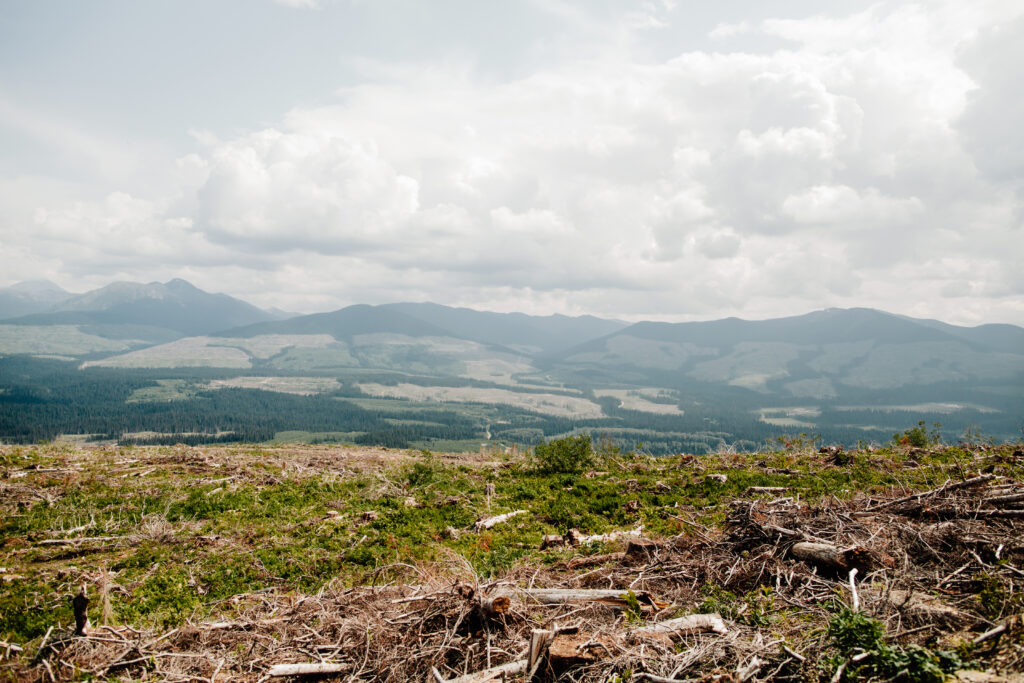
B.C.’s forestry industry is in upheaval. Amid mill closures devastating for communities, destructive clear-cutting is threatening biodiversity. 
Photo: Taylor Roades / The Narwhal

For its part, we’ve learned Canfor has been so profitable it was able to invest over a billion dollars in the southern U.S. and Scandinavia in the last decade, while our research with economist Robyn Allan has found Canfor’s effective tax rate in B.C. over the past two decades has been half the statutory rate.

With licences to over nine million cubic metres, Canfor is the largest of the five forestry companies which control more than half of B.C.’s harvestable fibre. This concentration of tenure has been acknowledged as a problem for decades, most recently by the ruling NDP themselves, who in 2021 passed Bills 23 and 28, which open the door to redistributing this tenure to First Nations and communities. But dividing up forest tenures does not appear to be a priority in the recent announcements. Ownership, power and benefits remain concentrated in corporate and provincial government hands. This has long constrained what is possible and there is no reason to think it won’t continue to do so.
How a fear of capital flight impacts B.C. forestry practices

The second obstacle to change is the constant threat of capital flight, the fear of investment moving to other, often cheaper, parts of the world. B.C.’s business council commentators and equity analysts describe our province as “essentially un-investable across most segments of the forest products business.” Forest companies and their allies point to higher operating costs (think environmental regulations and secure, decently paid jobs) and reductions in the fibre supply (think flood control and endangered species protections) as reasons for why B.C. forestry is what they call “the least attractive investment climate in North America.”

The thing is, the B.C. government has been trying to make its forests investable for decades. Yet, those same decades are marked by mill closures, job losses and capital flight. Even when the “lean” and investor-friendly B.C. Liberal government deregulated forestry and spent billions in forest-sector subsidies in the 2000s, the sector still lost over 40,000 jobs — not because of declining harvest.

In 2001, 1,266 people in B.C. were employed per million cubic meters logged, according to Statistics Canada data. By 2019, we found the number employed had dwindled to 908.

This is because the kind of forest many people want and the government talks about building and protecting — a forest that provides decent public return, plentiful well-paid jobs and wildlife habitat — is an un-investable forest in today’s global economy. Firms continually chase reduced labour costs and less burdensome environmental regulation. It is a pipe dream to imagine we can have the kind of forest sector demanded by big international capital and an abundant, well-paid workforce and healthy old-growth ecosystems.
 
Rosemary Collard and Jessica Dempsey write the problems B.C. is facing are global in nature. We need to dislodge the overemphasis on market value that drive biodiversity loss around the world, they say. Photos: Taylor Roades / The Narwhal

For at least six decades, the B.C. government has managed forestry crises by ramping up public expenditures to try to entice corporate forest giants to stay. This time looks no different. Based on the federal office of the auditor general’s definition of a subsidy, we calculate that 89 per cent of B.C.’s funding announcements for the forestry sector since the new year are subsidies.

It’s time for B.C. to quit the race to the bottom — you know, the one that has sought reduced wages and jobs (through labour demonization and automation) and weak environmental regulations, and has pushed the average global statutory corporate tax rate from 40 per cent in 1980 to 24 per cent in 2020. Forget that kind of global investability. Instead of begging Canfor to stay, reassign their forest tenures to Indigenous nations, communities and a more diverse set of smaller businesses committed to B.C. for the long term.

This doesn’t mean closing B.C. off from the wider world.


On the contrary, the problems facing B.C. are connected to the problems facing other countries in this era of unchecked, footloose capital. This is why the world’s leading scientific experts say that solving environmental problems requires transformative change — systemic overhaul, not just tinkering at the edges. In line with international scientific consensus, the route to a just and sustainable forest economy in B.C. means we can’t solve these problems at the provincial or even the national scale. The problem is also global, requiring changes to global trade and investment rules and norms. To start, we need to increase and harmonize tax rates so the wealthy and big businesses pay their fair share.

We also need to dislodge the overemphasis on market value (also known as investability) that drives global biodiversity loss. B.C. can itself chip away at this pattern domestically, including through existing plans like support for local economic transition and industrial transformation. We would add others like diversifying tenure, implementing a wealth tax and adopting First Nations’ defined GDP-alternatives so the province’s economic health is measured in ways that reflects social and ecological well-being, not simply quantities of capital flow. B.C. should get on with the work of transformation, guided by a commitment to see the forest for so much more than two-by-fours.

Sound utopian? It’s more realistic than a government who says it wants to do things truly differently while also being a good place for big capital investment, when that means the opposite of what we all want.
The universe might be shaped like a doughnut, not like a pancake, new research suggests

By Paul Sutter

The universe may be flat, but could still be shaped like a doughnut, weird patterns in leftover light from the Big Bang suggest

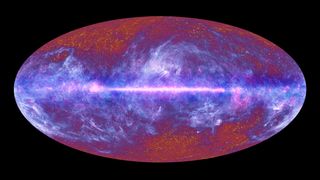
An image of the cosmic microwave background as taken by the Planck satellite. The size of fluctuations in the CMB suggest the universe is flat, but new research suggests it could still be twisty. 
(Image credit: ESA/HFI/LFI Consortia)

The universe could, in fact, be a giant doughnut, despite all of the evidence suggesting it's as flat as a pancake, new research suggests.

Strange patterns found in echoes of the Big Bang could be explained by a universe with a more complicated shape, and astronomers have not fully tested the universe's flatness, the study finds.

Related: What shape is the universe?

Flat surfaces

All observations so far suggest the universe is flat. In geometry, "flatness" refers to the behavior of parallel lines as they go out to infinity. Think of a tabletop: Lines that start out parallel will remain that way as they extend along the table length.

In contrast, look at Earth. Lines of longitude begin perfectly parallel to each other at the equator but eventually converge at the poles. The fact that parallel lines initially intersect reveals that Earth is not flat.

RELATED STORIES

How big is the universe?

The universe might be a giant loop

The same logic applies to the 3D universe. For instance, the cosmic microwave background (CMB) — light released when the cosmos was only 380,000 years old — now sits over 42 billion light-years away and features tiny fluctuations in temperature across the sky. Astronomers have calculated the predicted size of those fluctuations compared with observations. If their measured size differs from predictions, that means those rays of light, which started out parallel, changed directions over space-time, indicating that the geometry of the universe is curved.

But those same measurements have revealed that, ignoring small-scale deflections from galaxies and black holes, the overall geometry of the universe is flat.
Different types of flat

But there's more than one kind of flat. For example, draw parallel lines on a piece of paper. Then wrap one end of the paper to connect with the other, forming a cylinder. The lines remain parallel as they circle the cylinder. In the language of mathematics, any cylinder is geometrically flat but is said to have a different topology. Close up both sides of the paper, and you make a torus, or doughnut shape.

To get another example of a weirdly flat shape, wrap a thin strip of paper in a circle, but make a 180-degree twist in one end. The end result is a Möbius strip, which is still geometrically flat, because parallel lines stay parallel, even when they flip over each other.

Mathematicians have discovered 18 possible geometrically flat, 3D topologies. In each one, at least one dimension wraps up on itself, and sometimes, they flip over like a Möbius strip or make partial rotations. In such a twisty universe, if we looked far away, we would see a (maybe upside-down) copy of ourselves from a much younger age. For example, if the universe were 1 billion light-years across, astronomers would see a version of the Milky Way galaxy as it was 1 billion years ago and, behind that, another copy from 2 billion years ago, and so on.

If the universe were a giant doughnut, astronomers could look in two directions to see such copies.
The universe's shape

Astronomers have measured the topology of the universe in multiple ways, from looking for duplicates of patterns of galaxies to matching circles in the CMB. All evidence suggests the universe is both geometrically flat and has a simple unwrapped topology.

But a paper published Feb. 23 to the preprint database arXiv(opens in new tab) suggests that past measurements have been limited. Most notably, observations have assumed that the universe wraps around itself in only one dimension and does not have a more complicated topology. Also, observations of the CMB have revealed some strange, unexplained anomalies, like large patterns appearing where they shouldn't.

In fact, a universe with a complicated topology could explain at least some of the anomalies in the CMB. While this isn't an iron-clad case for complicated topologies, the researchers offered ideas for more sophisticated direct searches, like follow-up studies of the CMB.

In that case, there may be a mirror image of us somewhere in our twisty universe.

Will the banking crisis trigger a recession?

Analysis by Labour Economist; Jim Stanford

Front Burner CBC

 Transcript for March 21, 2023

Host: Jayme Poisson

JAYME POISSON: Hi, I'm Jayme Poisson.

SOUNDCLIP

REPORTER 1: It's the largest bank meltdown since the Great Recession more than a decade ago. Silicon Valley Bank, a bank that caters largely to start-ups and venture capitalists in the tech world, collapsed this week.

REPORTER 2: Another bank just shut down. Regulators today abruptly closed Signature Bank.

REPORTER 3: A group of American banks now creating a $30-billion rescue package to save First Republic Bank.

REPORTER 4: The world's financial markets have reacted with unease following last night's emergency takeover of the troubled Swiss bank, Credit Suisse.

JAYME POISSON: So in the last two weeks-ish, four banks in the U.S. and one in Europe have either found themselves teetering on the brink or completely collapsed. The entire U.S. banking system was given a negative rating by this agency called Moody's.

SOUNDCLIP

REPORTER 5: Moody's changing its rating on the U.S. financial system. Lowering its rating -- lowering its outlook, I should say -- to negative, from stable.

JAYME POISSON: In response, other private banks and governments all over the world have rushed to try to contain the fallout. Maybe you've heard the word "contagion" come up a lot.

SOUNDCLIP

REPORTER 6: How concerned should people be? Not just, though, about Silicon Valley Bank itself, but whether we think there's a contagion?

REPORTER 7: There's some of that worry, I should say, about the contagion, what that could look like.

REPORTER 8: Because it's also about jobs, not just about the global contagion.

UNNAMED SPEAKER: There's always a risk of contagion.

JAYME POISSON: On Sunday, for example, the central banks of Canada, the U.S., Asia and Europe all agreed to increase money available, which in turn would help banks lend money to each other so they can stay afloat. This can all get pretty technical and complex really fast, so today we're going to try to get at some of the big-picture questions you may be worried about. Stuff like: Is this 2008-level bad? Are we headed for a recession? If it's not 2008, how bad could it get? What does it mean for this crazy-fast pace of rising interest rates we've seen in the last year? Basically, if you aren't a rich venture capitalist or a big-time bank shareholder, how could this affect people like you and me? Today, Canadian economist Jim Stanford is back. He's a director of the Centre for Future Work.

JAYME POISSON: Jim, hey. Always great to have you.

JIM STANFORD: Jayme, thank you. I'm glad to join you.

JAYME POISSON: So five banks in total so far. Silvergate, Signature, Silicon Valley Bank, all went bust. We talked about these U.S. banks last week. And since we did that episode, two more have been really teetering -- First Republic and Swiss bank Credit Suisse. What has been happening with those last two banks? Take me through that.

JIM STANFORD: Well, Credit Suisse is in a different category -- not just because it's in Europe and the other ones are in America. It's just a lot, lot bigger than the American banks that failed. There's a euphemism that the banking regulators use. It's called a "systemically important global bank," which is a fancy term for "too big to fail." It's been having problems for the last couple years. All kinds of problems. Not just losing money, but also questions about governance and corruption at the bank.

SOUNDCLIP

REPORTER 9: Credit Suisse is facing allegations that it has been handling dirty money for decades. An investigation led by German daily the Süddeutsche Zeitung, has revealed that Switzerland's second-biggest lender knowingly managed hundreds of millions of dollars for suspected war criminals, corrupt autocrats, and drug dealers.

JIM STANFORD: They've just released a report that they may have to relook at some of their financial statements.

SOUNDCLIP

REPORTER 10: The company saying it found "material weakness" in its financial reporting over the past two years, because of what it said were "ineffective internal controls."

JIM STANFORD: So in the current environment where people are just very much on edge in the banking industry, that was enough to send it over.

SOUNDCLIP

REPORTER 11: Shares in Credit Suisse fell by more than 60% this morning after European markets opened. And the value of banking shares across Europe has dropped sharply.

JIM STANFORD: The Swiss government and the Swiss Central Bank over the weekend engineered basically a giveaway of the Credit Suisse Bank to another big Swiss bank called UBS. UBS will now take over Credit Suisse -- if this deal goes ahead. It's not a done deal yet. They would take it over and absorb it into their own operations. Interesting point: even though, you know, banking is supposed to be the highlight of capitalism, the pinnacle of private enterprise, the whole thing was financed by the government in just an enormous away. UBS is hardly paying anything for Credit Suisse. UBS basically gets a bank for free -- this is amazing. Backed up by the government and the central bank. And the hope is that this will calm people's nerves, put out the panic that's spreading like a bushfire around the world banking system, and everyone can get back to normal. It's very unlikely that that's going to happen.

JAYME POISSON: And is it fair for me to say the other bank in the U.S., First Republic, the government was also pretty heavily involved? In this attempt to basically rescue it. Like, a group of private banks are also trying to prop it up right now.

JIM STANFORD: The politicians in every country are very worried about another round of bank bailouts. We of course experienced this big time in the global financial crisis -- so this is 2008/2009. You had banks on both sides of the Atlantic falling like dominoes. And then you had governments stepping in, both with direct government money and with liquidity, which means temporary dollars pumped in from the central banks. And the banks for the most part survived. A couple of them went under and got restructured. But at the end of the day, taxpayers were holding the bill. And in some cases, like in Britain for example, it resulted in tremendous austerity on society as a whole as government tried to make up for the huge amount of money they'd given the banks. So any politician knows that going out there and saying "I'm going to bail them out again" is not going to be popular. So they're bending over backwards to try and call this not a bailout. And even with the first one -- Silicon Valley Bank -- politicians were going to great lengths to say "This isn't taxpayers’ money. The average person won't be paying for it." And it's all nonsense. It absolutely is government footing the bill behind the scenes. Which particular account they draw it from and whether you call that taxpayers' money or not is ultimately a matter of semantics. But these businesses would have collapsed without government involvement. First Republic is another example of how they're kind of doing this charade.

SOUNDCLIP

REPORTER 12: Eleven major banks jointly depositing $30 billion of their own money into First Republic Bank in an effort to stop another bank failure.

JIM STANFORD: A group of about a dozen big U.S. banks came together and said, you know, it's not good for any of us if one of our counterpart banks collapses, so we're going to put a bunch of money in as temporary aid. They're even calling the Credit Suisse takeover not a government bailout. "This is a purely commercial solution," which is [Unintelligible]. Without all that government money in the background, Credit Suisse would be dead today. And with First Republic it's not likely to work. You know, it's like one of those things where when somebody stands up and says, "Whatever you do, don't panic," it's usually a signal to panic.

JAYME POISSON: I do want to just talk about this bailout argument for a second. Because we talked about this last week with Felix Salmon at Axios, and his position was that at least what was happening at Silicon Valley Bank wasn't like a 2008-type bailout, where the government basically propped up these banks and there was no accountability and a bunch of bankers got really rich, right? That the money is largely coming from the FDIC, which is providing insurance, and that the only people who are really being bailed out here are the depositors -- the people that just had their money in these banks. Not the people that ran them.

JIM STANFORD: Yeah. I think that's a pretty fine line, frankly. It is true that Silicon Valley is going to be taken over and it won't exist anymore, and the CEOs and other top executives will lose their jobs. And the people who actually owned the bank -- the shareholders of the bank -- will lose the value of their equity. And individuals who were there already were guaranteed by the Federal Deposit Insurance Corporation in the U.S., to the tune of $250,000 each. These were, by and large, entrepreneurs in Silicon Valley, in the San Francisco area; the venture capital business. Some of the tech start-up companies. You know, we're not helping the poor depositors when we bail everyone out to the full tune of their accounts. And then the other thing to keep in mind is that the U.S. government just changed the rules. The rules in place for the deposit insurance system are you're guaranteed up to a quarter-million dollars in any one account. And they just said "Well, we're going to do it for everyone" for every dollar they had. Now, what does this mean? First of all, that they were able to protect those venture capitalist firms and tech start-ups that might have lost significant amounts of money. But secondly, you're sending an enormous signal to the world: We will change the rules as we go, when we need to. And in particular they have just implicitly said "We're going to guarantee everyone's deposit at any bank." And the FDIC doesn't have remotely enough money in its accounts. Ultimately the government is going to backstop this, and they're just playing an optics game to try and pretend that these are commercial solution [sic] to the crisis in private banking.

JAYME POISSON: If the alternative is, like, a complete, out-of-control, contagious run on banks across the United States, is this not the better of two evil options?

JIM STANFORD: Well, of course we do not want to see widespread bank collapses -- that's what causes a depression, never mind a recession. You know, when the financial system collapses widespread and people and companies lose most of their worth, then you're in a desperate situation. So you obviously don't want that. But we should at least be honest about what we're doing. And then we should be... We should have thought about this long and hard after 2008/2009. Why do we set up a private banking system which creates private businesses that literally have the power to create money out of thin air? That's what banks do -- private banks create money out of thin air when they issue new loans. And we could do banking in a very different way. Rather than the individual, for-profit private banks that have this unique power, we could either regulate them very, very closely so that the excesses of profit-taking and risk-taking are moderated, and/or we could create public banks that operate on a fundamentally different basis that use the power to create credit, to basically create money out of thin air. Again, that's what private banks do every day. But use it in a more responsible and ultimately accountable way. So there are big lessons to learn, and we clearly didn't learn them in 2009 because the same thing is happening again. I often think, Jayme, of the words of the great financial analyst Yogi Berra. I think he said "It's déjà vu all over again," and that's exactly what we're seeing today.

JAYME POISSON: Hold that thought, because I want to get to 2008 in one second. But you mentioned earlier that more banks are going to follow suit, it's going to get worse. And why?

JIM STANFORD: So to operate a private bank you get some shareholders together, you put up some money to start the business, you get a banking license, and then you go out and try to win business. And the old stereotype is that individuals, 50 individuals, will come along and deposit their hard-earned savings at that bank, and then the bank will lend it out to others. But in practice it works very, very differently. First of all, they make loans many, many times bigger than the actual money that was put in the bank in the first place. Secondly, in the modern banking system, they don't even have to have those deposits. It's possible to run a bank where nobody deposits in the bank, the bank just lends, and then the bank covers its own cash needs by borrowing from other banks through what's called the interbank lending system. So ultimately this is a very fragile, leveraged business model, where you take a little bit of money and transform it into a much bigger amount of money. And any moment that confidence starts to crumble, and all of the people who do business with the bank in various ways start to worry whether the bank's still going to be there next month or next week or even tomorrow, they all go and start to try and get their hands on the actual cash. But that panic, of course, is what causes the bank to fall. But ultimately every private bank, because they've taken $1 and turned it into $30 through this magic power they've been given, every one of those banks is vulnerable to a crisis in confidence.

JAYME POISSON: And just to kind of sum up that idea that the system is built on trust, right? So it actually probably doesn't take very much for people to lose confidence in that system and start to move their money out.

JIM STANFORD: The system is built on trust and confidence, but it's also built on, ultimately, the power of the government. And this is why some of the sort of crazy libertarian arguments that we heard -- that "You can't trust the government with money. We should create our own money." That was the thinking that went behind the whole crypto boom, which again is part of the current chaos. People thought cryptocurrency wouldn't have government involved and it would be more honest and more transparent, and more, you know, sort of market sensitive. And that was a disaster because there was nothing backing that up. So that was all a confidence game. Anything that's based on trust needs some kind of, sort of, reliable authority in the background. To first of all validate why this system is legitimate, and then to ride in to the rescue at semi-regular opportunities when private greed self-destructs. And that's what we're seeing now.

JAYME POISSON: I want to spend some time today talking about interest rates and how that plays into this whole crisis. So, when we were doing our episode last week on Silicon Valley Bank, largely we talked about how one of the things the bank does is they took these deposits and they put them in government treasury bonds. Which are generally a pretty safe investment, right, so long as you hold them to maturity. But because we've seen this historic rise in rates over the last year, the bonds lost their value. So when people started to pull their money out the bank had to sell them at a loss, and I think that led to people realizing that the bank wasn't solvent anymore. And so I actually don't know if interest rates played a role in all five of these banks, but maybe you could speak to that a little bit.

JIM STANFORD: This whole crisis is absolutely a consequence of the rapid increases in interest rates that we've seen around most of the world in the last year. In Canada, of course, we've seen the Bank of Canada raise interest rates eight times in a year from 0.25% to 4.5%. That 4.5% is not what you and I pay, of course, on mortgages and car loans and credit cards. We pay much more. That 4.5% is what banks pay when they're borrowing money from the central bank. And so other countries, the U.S., has also been aggressive. The Europeans have raised rates -- not as aggressively, but quite a bit. The impacts of high interest rates are felt in all kinds of ways, and many of them very unpredictable. On average consumers, of course, it means we pay more on our mortgage, which means we've got less money to spend on other stuff. For businesses it makes it more expensive to raise money to invest in a new factory or to hire new workers. But in the financial economy -- the paper economy, if you like -- interest rates have much quicker and, in a way, more devastating effects. The issue of bonds is an interesting one. A government bond is the safest asset you can buy if you think of it as lending money to the government, which is what the bond really is. It's a piece of paper that says the government will pay you back what you lend them, plus interest at a certain date. And those promises are still 100% valid. This is still the safest loan you can make. The problem is that the private financial industry has taken those pieces of paper, those IOUs called bonds, and developed a kind of a second game. Almost like a poker game going on at another table, where they're buying and selling the pieces of paper. Not so much the actual promise that the government will pay you back money at the end of the day, but they're speculating on how the value of each of those pieces of paper will go up or down each given day on the basis of trends in broader interest rate. And the reason that happens is the value of a bond. If the government has promised to pay you back at, say, 2%, but then the interest rate suddenly goes to 4%, well, people holding that IOU are going to say "This isn't quite so attractive anymore because I could go and buy a new IOU for 4% interest, so I'm going to sell the bond for less than it was actually worth." And this has created an enormous opportunity for, ultimately, gambling. That's what the speculation on bonds in the bond market is all about: big investors making bets on whether that piece of paper is going to be worth more tomorrow than it is today. And the bond market is enormous -- it's trillions of dollars every day around the world. So the promise of the government to pay back the money is absolutely secure, but what is not secure is what the speculative value of that piece of paper will be at any given point in time. Because of that rapid increase in interest rates, dramatic declines in the prices of many bond [sic]. And this is what's causing a repercussion. We got a hint of this actually several months ago. Last September, several of the big pension funds in the U.K. almost collapsed. They were bailed out by their central bank, the Bank of England, and the reason they were collapsing was they had put all kinds of money into what they thought were safe government bonds. And they are safe if what you're doing is waiting for the government to pay you back. But they are not safe if what you're doing is playing the market and hoping that this piece of paper will be worth more tomorrow than it is today. The shockwaves, if you like, of this rapid run-up in interest rates is causing financial chaos. And it was in the background for all of these banks. It raises fundamental questions about interest rate policy. Are central banks going to keep increasing the rates, you know? But if they are strict in saying "We have to do whatever it takes to bring inflation down," and that's what they have been saying, then I think more interest rate increases are in the cards which suggests this problem will get worse. It also, Jayme, raises a more fundamental question about how do we think we can manage inflation. Is using interest rates the only thing we can do to bring inflation down? Particularly when you see a cost of that strategy being absolute chaos in the banking system.

JAYME POISSON: OK, let's talk about that. If this is the cost of that strategy, and the banks keep raising interest rates -- this happened in Europe last week, and the Fed is going to make a decision on raising rates this Wednesday I believe -- what could happen?

JIM STANFORD: If the rates continue to go up and if the central bankers are true to what they've been saying, OK, and if you go and look at what Tiff Macklem, the Governor of the Bank of Canada, has been saying for the last year, and central bankers in other countries, they are saying "We will get inflation back to 2% no matter what." Now, if we take them at their word that means they should increase interest rates further. Because inflation is nowhere near the 2% target and it's not coming down the way they think it is. So, you know, until this breakout of the banking crisis, everyone thought that the U.S. Fed was going to raise their interest rate this week. Now I think it's in question. If we have a banking collapse and a financial panic, that probably will bring inflation down in a very, very painful way.

JAYME POISSON: All the money that they're throwing around -- could that contribute to inflation? Could that make inflation worse?

JIM STANFORD: It certainly does. It certainly does. And it would hasten the arrival of a recession that we might already be in, for all we know.

JAYME POISSON: Jim, I know you have been warning of a recession for a while. We've talked about this on the show. You've obviously not been a proponent of the bank's mission to fight inflation by raising interest rates. But what could happen here?

JIM STANFORD: In a worst-case scenario, Jayme, we would see a spreading of this financial contagion. You'll see other institutions come down. And either the governments step up that bailout effort to try and keep the system going or you could see major institutions just fail. And the impacts of that on the real economy would be severe. So you'll see average consumers, even if they didn't lose money directly in a bank collapse, saying, "You know what? We're not going to renovate the basement this year because I don't know where the economy is going." Or, "I'm not going to buy a new car this year because I don't know where the economy is going." And added up across the whole economy, all of those decisions can create the recession that everyone was afraid of. Again, it's another self-fulfilling prophecy. Which is part of the irrationality, if you like, of a decentralized market-based system like ours. Now, we had data in Canada that showed our economy has slowed down dramatically at the end of 2022, in large part because of the higher interest rates. In fact, by December, by the end of the year, the economy was actually shrinking. So it is possible -- we don't know yet. It's possible that the recession has already started. Which means GDP declines by 2 or 3%, maybe a little bit more. You could see 500, 600, 700,000 jobs lost. You could see the unemployment rate go to 8 or 9%, and just a lot of hardship and worry for at least a couple of years. And then the thing about recessions is they have lasting scars. It's not just, you know, "Well, we had a couple of years and then we're back to normal." People's lives are changed in that situation. For young people who graduate into a recession it means their whole career trajectory is put off. For many others it means their links to the labour market are broken and their social and economic well-being is damaged for decades. So this is a very serious risk, and it's one of the reasons I've been concerned about the reliance on high interest rates as the only recipe or the only solution for the inflation that we saw after COVID. The Bank of Canada is still hoping for what they call a "soft landing." In a soft-landing scenario growth would stop for a while, maybe for a year, and you'd see no real job creation. But you wouldn't see a wave of job losses. But I think this financial crisis makes that soft-landing scenario, which I think was always remote, I think it makes it very unlikely.

JAYME POISSON: What would it take for these central banks around the world, including the Bank of Canada, to reverse course?

JIM STANFORD: It is a very interesting question, Jayme. And a lot of financial investors are betting that that is going to happen. Again, remember, there are these large bond markets where people aren't lending money to the government, directly. What they're doing is buying and selling IOUs and placing bets on where interest rates are going. And by looking at the prices on those bond markets you can get a sense of investors' expectations. Not you and mine, but the people with big money guessing where they think the interest rate is going to go. And there's some signs now that they are expecting the interest rates to be cut. And this is what central banks would have done in the past. If you saw a banking crisis you would see cuts in interest rates and efforts to pump as much money into the system as you could. The problem right now is that goes completely against what the central banks have been telling us for the last year and a half. Which is "Inflation is the biggest enemy, and we're going to do whatever it takes to bring it down." So somebody is going to have a lot of egg on their face by the time this is over, and it could very well be the central banks. It could be that this financial crisis will show that it's impossible to bring down inflation that resulted from the supply shocks and uncertainty and disruptions of the pandemic. It's impossible to bring that down just through old-style monetary tightening. We either will have to put up with inflation for a little longer or we'll have to find other solutions for it. Such as price caps in certain markets, and excess profits taxes that redistribute some of the money from the companies that have profited from inflation, back to the rest of us. So it's going to be a very interesting time, very tricky time, and a very dangerous time in the next few weeks as central banks try to respond to this panic and see what it means for their self-proclaimed mission. Which is to defeat the dragon of inflation and defeat it quickly.

JAYME POISSON: OK. Jim, thank you so much for wading through this with me today. I would actually like to keep you here for another hour, but I know you're a busy guy. And also our producer Simi will kill me if I give her a longer interview than this, so thank you very much.

JIM STANFORD: It was my pleasure, Jayme. Thank you for digging in in this very accessible, conversational way.

JAYME POISSON: All right, that is all for today. I'm Jayme Poisson. Thanks so much for listening. We'll talk to you tomorrow.

Mark Wiseman steps down as chair of AIMCo board after three-year term

JAMES BRADSHAW
INSTITUTIONAL INVESTING REPORTER
PUBLISHED MARCH 21, 2023

The chair of Alberta Investment Management Corp.’s board of directors, Mark Wiseman, is stepping down after a three-year term.

Mr. Wiseman was appointed to lead AIMCo’s board in June, 2020, at a time when Alberta’s government-owned investment fund was shaking up its executive ranks and trying to turn the page after a $2.1-billion loss on trades linked to market volatility.

A successor to Mr. Wiseman has yet to be named, and he has agreed to stay on until the end of 2023 to help with the transition.

In nearly three years as chair, Mr. Wiseman led a revamp of AIMCo’s top executive team, including hiring current chief executive officer Evan Siddall, and changes to the plan’s governance.

“As my term reaches its conclusion, I am looking forward to spending additional time in my professional roles after achieving what I was tasked to do,” Mr. Wiseman said in a statement.

AIMCo invests for 32 pension, endowment and government funds in Alberta at arm’s length from government, with more than $168-billion in assets under management.


Mr. Wiseman is a senior adviser at investment banking and asset management firm Lazard Ltd., and a part-time senior adviser at Boston Consulting Group Inc.

A veteran of the Canadian pension industry, Mr. Wiseman was formerly the CEO of Canada Pension Plan Investment Board, the country’s largest pension fund manager, and an executive at Ontario Teachers’ Pension Plan.

He was also global head of active equities at BlackRock Inc., but was terminated from that job in 2019 over a relationship with a co-worker that violated the investment company’s code of conduct.


“The world-class governance he established and changes he oversaw ensured the organization emerged strongly through a turbulent period,” Mr. Siddall said in a statement.

AIMCo’s board chairs are appointed for three-year terms. Mr. Wiseman’s predecessor, Richard Bird, served two terms for a total of six years as chair.
Was Alberta’s Sovereignty Act just a bluff?
Alberta Premier Danielle Smith is well aware that she needs the more centrist voters in urban centres if her party is going to win the May election.


By Gillian Steward
Contributing Columnist
TORONTO STAR
Tue., March 21, 2023

It was only three months ago that Canadians were rattled by Alberta Premier Danielle Smith’s Sovereignty Act. Was Alberta planning to separate? Were we on the cusp of a constitutional crisis? How would it affect the country as we know it?

The UCP were so keen on the Sovereignty Act it was pushed through in the middle of the night only 10 days after it was introduced. “It’s not like Ottawa is a national government,” Smith told the Legislative Assembly just before members voted.

For Smith, the Sovereignty Act provided ammunition to push back hard at the federal government, especially the Trudeau government, whenever it “intruded” into provincial affairs; to make Alberta more like Quebec.

But now it simply looks like an act to impress her most rabid supporters; the people who supported her in the UCP leadership race after they had ousted Premier Jason Kenney because they believed he hadn’t taken on the feds with enough vigour.

But Smith has yet to use the Sovereignty Act and in fact has shied away from confrontations with the federal government. She certainly didn’t resort to it last week when Steven Guilbeault, the federal environment minister, demanded to know why he hadn’t been informed of the leakage of toxic waste water from an oil sands mine tailings pond that started nine months ago and rather than being cleaned up had gotten worse.

Guilbeault found out about it from First Nations in the area who were concerned about the toxic sludge spreading under the land they hunt on and into their water source — the Athabasca River which also flows into rivers in the Northwest Territories

Guilbeault condemned the lack of reporting and strongly suggested Alberta needs a stronger regulatory regime. He and Alberta Environment Minister Sonya Savage met to discuss the situation and agreed to collaborate on seeking a long-term solution for the treatment and remediation of tailings ponds.

So Alberta played nicey, nicey with the feds instead of running them off. Given that one of the main purposes of the Sovereignty Act was to exert more provincial control over environmental policies that impact the oil industry surely this would have been a good test case. Smith obviously thought otherwise.

There are other examples of Smith backing down from promises designed to keep the federal government “in its own lane” as she has often said.

There was no money in the recent budget for an Alberta Police Force which the UCP have been pushing even though the majority of Albertan’s don’t want one. For now, the RCMP, or the federal police, as the UCP likes to call them, will remain in detachments across the province.

The UCP also made a big deal of announcing plans for an act designed to keep federal inspectors from “trespassing” on private land in Alberta. But as far as I know no one stopped the federal environment inspectors from testing water near the tailings pond leak.

Smith also had to drop her pledge to enshrine the rights of the unvaccinated in Alberta’s Human Rights Act. Another failed jab at the federal government and its vaccine mandates.

And she didn’t complain very loudly about the strings attached to the billions of dollars by the federal government for health care; she just took the money.

Some of her staunchest allies are starting to notice.

“I suppose it was inevitable. Alberta Premier Danielle Smith’s revolutionary new government is showing increasing signs of adapting to the traditional Canadian politics of a more bland, milquetoast centrism,” Derek Fildebrandt wrote recently. He’s the publisher of the Western Standard an online news site with a definite right-wing slant.

Smith is well aware that she needs the more centrist voters in urban centres, particularly Calgary, if the UCP is going to win the May election.

But of course she could regain that “revolutionary” zeal if the UCP wins the election.

Who knows what would happen then.

Gillian Steward is a Calgary-based writer and freelance contributing columnist for the Star. Follow her on Twitter: @GillianSteward
Broken pipeline caused spill of 450 million litres of waste water at NWT diamond mine

YELLOWKNIFE
THE CANADIAN PRESS
MARCH 23, 2023

The Diavik Diamond Mine in the Northwest Territories says 450 million litres of waste water spilled due to a broken pipeline.

The spill took place on Feb. 7 but wasn’t reported to the Northwest Territories government until late last week.

The territorial government says pipeline operators did not initially believe it needed to be reported as the waste water leaked into a containment pond that was its final destination.

The government says its inspectors have confirmed the spill is within the pond and none has been released into the environment.

Mine owner Rio Tinto says the pipeline contained groundwater mixed with a small quantity of water used for dust suppression and drilling.

The company says the mine was designed to mitigate the environmental risk of pipeline failures through routes away from Lac de Gras to containment facilities.

The Northwest Territories government says it has requested that Diavik divert and repair the pipeline and that the company is addressing the issue appropriately.

Rio Tinto says until extreme weather ends and it establishes safe access to repair the pipeline, flow will continue from an alternative location within the North Inlet Facility.

“We are taking this situation seriously and will ensure such incidents get reported within the required time frames,” the company said in a statement.

The mine is roughly 300 kilometres northeast of Yellowknife. Rio Tinto is a global mining giant that has head offices in the United Kingdom and Australia.
Invading Iraq is what we did instead of tackling climate change

OPINION: Instead of launching a war, the US and UK could have weaned us off the fossil fuels that pay for the brutal regimes of dictators


Adam Ramsay
20 March 2023,

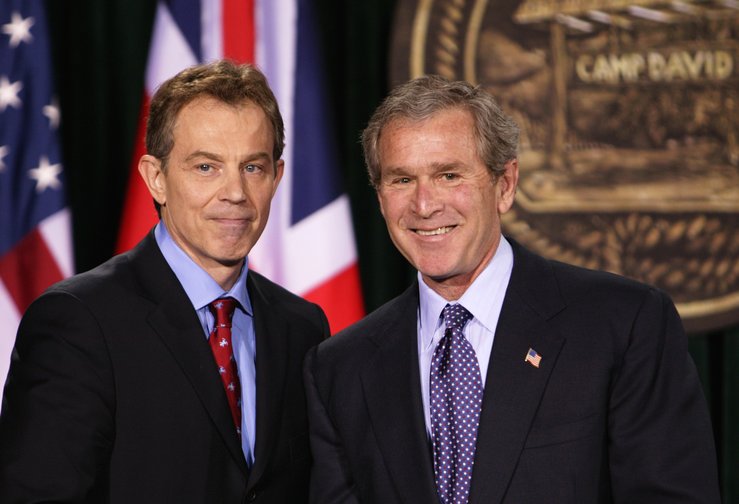
Tony Blair and George Bush at a press conference following the invasion of Iraq in March 2003 |

Brooks Kraft LLC/Corbis via Getty Images

Twenty years ago , war was once again unleashed on Baghdad. In the UK – and much of the rest of the world – people sat in front of their TVs watching the skies above the ancient city flash with flame as buildings were rendered to rubble, the limbs and lives inside crushed.

The real victims of George Bush and Tony Blair’s shock and awe were, of course, the people of Iraq. Estimates of violent deaths range from a hundred thousand to a million. That doesn’t include the arms and legs that were lost, the families devastated, the melted minds and broken souls, trauma that will shatter down generations. It doesn’t include anyone killed in the conflict since then: there are still British and US troops in the country. It doesn’t include the poverty resulting from crushed infrastructure, the hopes abandoned and the potential immolated.

And that’s just the 2003 war: Britain has bombed Iraq in seven of the last 11 decades.

But in far gentler ways, the war was to shape the lives of those watching through their TVs, too. The invasion of Iraq – along with the other post-9/11 wars – was a road our governments chose irrevocably to drive us down. And we, too, have been changed by the journey.

The financial cost of the Iraq war to the US government, up to 2020, is estimated at $2trn. The post-9/11 wars together cost the US around $8trn, a quarter of its debt of $31trn. Much of the money was borrowed from foreign governments, in a debt boom which, some economists have argued, played a key role in the 2008 crash.

It was in this period, in particular, that China bought up billions of dollars of US government debt. Just before Barack Obama was elected in 2008, Beijing had overtaken Tokyo as the world’s largest holder of US Treasury bonds. Today, America’s neoconservatives are obsessed with China’s power over the US. What they rarely mention is that this was delivered by their wars in Iraq, Afghanistan and Pakistan.

Britain’s financial contribution was more meagre – in 2015 the UK government estimated it had spent £8.1bn on the invasion of Iraq, and around £21bn on Afghanistan. But these are hardly figures to be sniffed at.

Also significant, in both cases, is where this money went: the Iraq war saw a revolution in the outsourcing of violence. In 2003, when the war began, the UK foreign office spent £12.6m on private security firms. By 2015, just one contract – paying G4S to guard Britain’s embassy in Afghanistan – was worth £100m.

Over the course of the wars, the UK became the world centre for private military contractors – or, to use the old fashioned word, mercenaries. While many of these are private army units, others offer more specialist skills: retired senior British spooks now offer intelligence advice to central-Asian dictators and, as we found out with Cambridge Analytica during the Brexit vote, psychological operations teams who honed their skills in Iraq soon realised how much money they could make trialling their wares on the domestic population.

This vast expansion of the military industrial complex in both the US and UK hasn’t just done direct damage to our politics and economy – affecting the living standards of hundreds of millions of people across the world. It has also distorted our society, steered investment into militarised technology when research is desperately needed to address the climate and biodiversity crises.

Similarly, the war changed British politics. First, and perhaps most profoundly, because it was waged on a lie, perhaps the most notorious lie in modern Britain, that Saddam Hussein had weapons of mass destruction.

Acres of text have been written about the rapid decline in public trust in politicians in the UK in recent years. Very few grapple with the basic point – that, within the memory of most voters, a prime minister looked us in the eye, and told us that he had to lead us into war, based on a threat that turned out to be fictional. There are lots of reasons people increasingly don’t trust politicians – and therefore trust democracy less and less. But the Iraq war is a long way up the list.

Obama – who had opposed the war – managed to rally some of that breakdown of trust into a positive movement (whatever you think of his presidency, the movement behind it was positive). So did the SNP in Scotland.

But often, it went the other way. If the war hadn’t happened, would Cleggmania have swung the 2010 election from Gordon Brown to David Cameron? Probably not. And this, of course, led to the second great lie of modern British politics, the one about tuition fees and austerity.

Without the invasion, would Donald Trump have won in 2016? Would Brexit have happened?

There is a generation of us – now approaching our 40s – who were coming into political consciousness as Iraq was bombed. Many of us marched against the war, many more were horrified by it. The generation before us – Gen X – were amazingly unpolitical. Coming of age in the 1990s, at the end of history, very few got involved in social movements or joined political parties.

When I was involved in student politics in the years following Bush and Blair’s invasion, student unions across the UK were smashing turnout records. Soon, those enraged by the war found Make Poverty History, the climate crisis, the financial crisis and austerity. A generation of political organisers grew up through climate camps and Occupy and became a leading force behind Bernie Sanders and Jeremy Corbyn, helping organise a magnificent younger cohort of Gen-Zers which arrived after us.

But I shouldn’t end on a positive note. The disaster predicted by the millions across the world who marched against the war has played out. Hundreds of thousands have died. The Middle East continues to be dominated by dictators.

This war was justified on the grounds that Saddam was a threat to the world. But while his weapons of mass destruction were invented, scientists were already warning us about a very real risk; already telling us that we had a few short decades to address the climate crisis.

Rather than launching a war that would give the West access to some of the world’s largest oil reserves, the US and UK could have channelled their vast resources into weaning us off the fossil fuels that pay for the brutal regimes of dictators. Instead, we incinerated that money, and the world, with it.