Wednesday, August 16, 2023

WW III
China watching closely as US, Japan, South Korea aim for 'de facto Asian NATO'

South China Morning Post
Tue, August 15, 2023 

China is said to be on "high alert" as US President Joe Biden hosts the leaders of Japan and South Korea at Camp David this week to deepen technological and defence ties - building what some observers have called a "de facto Asian Nato" on China's doorstep.

South Korean President Yoon Suk-yeol and Japanese Prime Minister Fumio Kishida will be joining Biden on Friday at the US presidential retreat in rural Maryland for the first three-way summit of its kind.

They are expected to announce plans for expanded cooperation on ballistic missile defence systems and technology development, senior US officials told Reuters.

Do you have questions about the biggest topics and trends from around the world? Get the answers with SCMP Knowledge, our new platform of curated content with explainers, FAQs, analyses and infographics brought to you by our award-winning team.

They are likely to also agree to set up a new three-way crisis hotline and gather annually in the future, Reuters quoted the officials as saying.

In Beijing, foreign ministry spokesman Wang Wenbin said China was opposed to "the cobbling together of various small circles by the countries concerned".

"[China] also opposes practices that exacerbate confrontation and jeopardise the strategic security of other countries," Wang said.

"The countries concerned should follow the trend of the times and do more that is conducive to regional peace, stability and prosperity."

Lu Chao, dean of the Institute of American and East Asian Studies at Liaoning University in northeastern China, said Friday's meeting could lead to a trilateral military alliance that would hit a nerve in Beijing.

"The [likely] mechanism of regular meetings among heads of state and the fixed mechanism of cooperation in the military aspect amount to the de facto formation of a three-way military alliance," Lu said.

While North Korea is expected to top the agenda, Beijing will be watching for specific references to Taiwan in the joint statement expected to be issued at the end of the summit, observers in mainland China said.

Beijing considers Taiwan a breakaway province to be eventually reunited, by force if needs be. While most countries, including the US, Japan and South Korea, do not recognise self-ruled Taiwan as an independent state, but oppose any attempt to take the island by force.

"China is on high alert for the summit, especially if the Taiwan issue is to be mentioned," Lu said.


"If they raise the Taiwan issue publicly at the summit, it would be seen as a strong provocation to China and will be a dangerous move for stability in the Asia-Pacific."

Taiwan's Vice President William Lai (centre left) chats with Ingrid D. Larson (right) managing director of the American Institute in Taiwan/Washington Office, upon arrival in New York on Sunday. Photo: Taiwan Presidential Office via AP alt=Taiwan's Vice President William Lai (centre left) chats with Ingrid D. Larson (right) managing director of the American Institute in Taiwan/Washington Office, upon arrival in New York on Sunday. Photo: Taiwan Presidential Office via AP>

The statement would also contain general observations on maintaining peace and stability in the Taiwan Strait, though the exact wording was expected to be negotiated up until the last minute, an anonymous US official told Reuters.

Friday's summit comes after months of diplomacy by the Biden administration, which has tried to bring together Washington's treaty allies Japan and South Korea as part of a campaign to strengthen Asian military alliances to counter China.

The US signed the Treaty of Mutual Cooperation and Security with Japan in 1951. In 1953, following the Korean war armistice, it signed a Mutual Defence Treaty with South Korea.

Tokyo and Seoul have a troubled history, especially over Japan's wartime excesses as well as territorial issues, but a rising China, Russia's militarism and a nuclear-armed North Korea are factors bringing the two neighbours closer to each other and the US.

Tensions had peaked from time to time, until a major thaw in recent months as Yoon, who took office in May last year, has sought to repair ties with Japan and launched a strategic pivot to the US, to tackle growing military challenges from North Korea and souring ties with China and Russia.

North Korea test-fired around 90 missiles last year, nearly four times its peak of 25 in 2017. Last month, it tested its latest Hwasong-18 intercontinental ballistic missile, saying it was a warning to the US and other adversaries.

During an inspection tour of a military factory last week, North Korean leader Kim Jong-un called for an increase in missile production to help secure "overwhelming military power" and be ready for war, state news agency KCNA reported.

This came days before annual joint US-South Korean military exercises due to begin on Monday.

Under the principle of collective defence in Article 5 of the Nato treaty, an attack against one ally is considered as an attack against all Nato members.

But Liu Jiangyong, an expert on regional affairs at Beijing's Tsinghua University, voiced scepticism about a trilateral alliance comparable to Nato.

"The three countries do not have the security commitments that Nato countries have with each other, and Japan and South Korea are security partners, not allies," Liu said.

The strategic goals of the three countries were also different, he said.

"The US may consider [its goals] from a global perspective, while Japan is largely targeting China ... South Korea, meanwhile, is trying to strengthen security cooperation with the US and Japan to build a greater military deterrent against North Korea."

However, he expected "joint military exercises and trilateral consultations against China" to continue.

In a speech on Tuesday marking the 78th anniversary of South Korea's liberation from Japanese colonial rule, Yoon said his country would step up security cooperation with the US and Japan in addressing the nuclear threat from North Korea.

Kim Jae-chun, an international relations professor at Sogang University in Seoul, also said any trilateral military technology cooperation would largely focus on North Korea.

"While previously the discussion remained on sharing the alert on North Korean missiles, now it will focus on the drills to intercept North Korean ballistic missiles using their radar and missile weapons systems," Kim said.

"I think it has a great meaning in deterring North Korean nuclear development. However, China will criticise South Korea's incorporation into the US missile defence system."

Kim said while the joint statement after the trilateral summit was not likely to point at China as a threat, the US-China rivalry had already turned into a strategic competition, regardless of the aims of the trilateral summit.

"The current trend shows that China-Russia-North Korea cooperation is strengthening in northeast Asia and US-South Korea-Japan ties are also increasing in response ... it appears that the two sides are containing each other."

This article originally appeared in the South China Morning Post (SCMP), the most authoritative voice reporting on China and Asia for more than a century. For more SCMP stories, please explore the SCMP app or visit the SCMP's Facebook and Twitter pages. Copyright © 2023 South China Morning Post Publishers Ltd. All rights reserved.

Copyright (c) 2023. South China Morning Post Publishers Ltd. All rights reserved.
NO JUSTICE! NO PEACE!
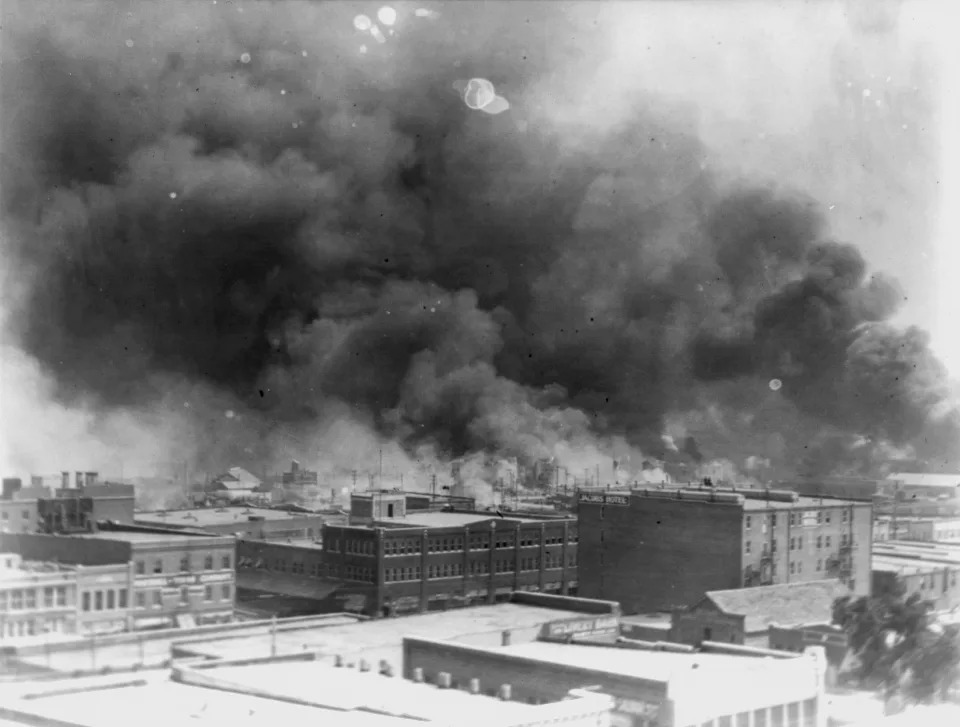
Oklahoma's high court will consider a reparations case from 1921 Tulsa Race Massacre survivors

AYANNA ALEXANDER and SEAN MURPHY
Updated Wed, August 16, 2023 


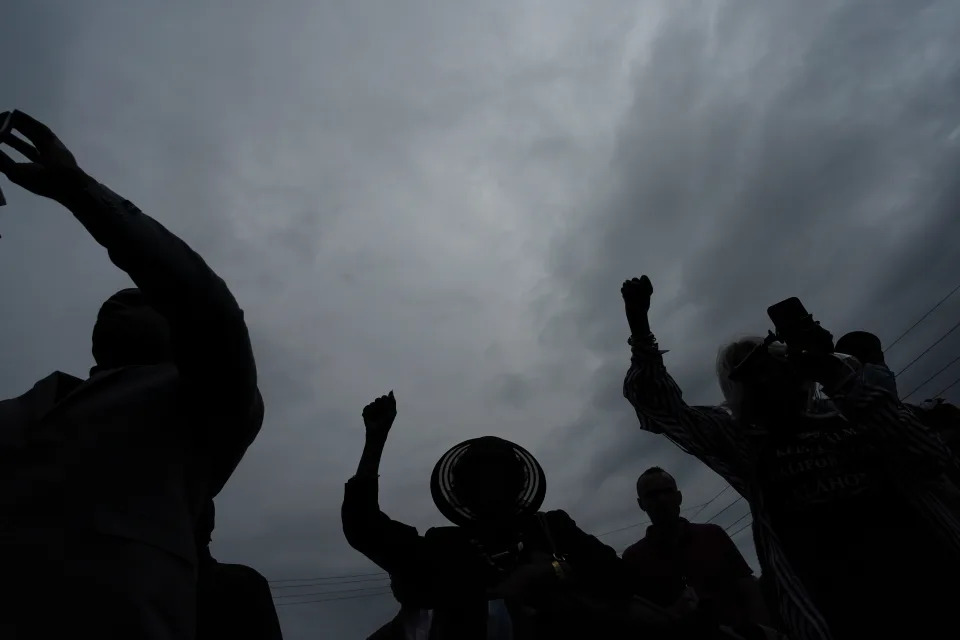
 People raise up their arms during the dedication of a prayer wall outside of the historic Vernon African Methodist Episcopal Church in the Greenwood neighborhood during the centennial of the Tulsa Race Massacre, May 31, 2021, in Tulsa, Okla. he state of Oklahoma says it is unwilling to participate in settlement discussions with survivors who are seeking reparations for the 1921 Tulsa Race Massacre and that a Tulsa County judge properly dismissed the case in July 2023. The Oklahoma attorney general's litigation division filed its response Monday, Aug. 14, 2023, with the Oklahoma Supreme Court. 
(AP Photo/John Locher, File)


OKLAHOMA CITY (AP) — The Oklahoma Supreme Court will consider a reparations case from survivors of the 1921 Tulsa Race Massacre after a lower court judge dismissed it last month, giving hope to advocates for racial justice that government may make amends in one of the worst single acts of violence against Black people in U.S. history.

Tulsa County District Judge Caroline Wall dismissed the case on July 9. Survivors appealed and the state's high court agreed last week to consider whether that decision was proper and if the case should be returned to her court for further consideration.

In response to the appeal, the state told the court Monday that it won't consider a settlement with the survivors. The survivors want the state's high court to return the case to district court to determine exactly what occurred and what it would take to fix or abate what they allege is a continuing nuisance created by the massacre.

Just three survivors of the attack are known to still be living, all more than 100 years old. Lessie Benningfield Randle, Viola Fletcher and Hughes Van Ellis have sued for reparations from the city, state and others for the white mob's destruction of the once-thriving Black district known as Greenwood. Several other original plaintiffs who are descendants of survivors were dismissed from the case by the trial court judge last year.


“The survivors of the Tulsa Race Massacre are heroes, and Oklahoma has had 102 years to do right by them,” their attorney, Damario Solomon-Simmons, said in a statement to The Associated Press. "The state’s efforts to gaslight the living survivors, whitewash history, and move the goal posts for everyone seeking justice in Oklahoma puts all of us in danger, and that is why we need the Oklahoma Supreme Court to apply the rule of law.”

The lawsuit was brought under Oklahoma's public nuisance law, saying actions of the white mob that killed hundreds of Black residents and destroyed what had been the nation’s most prosperous Black business district continue to affect the city's Black community. It alleges Tulsa’s long history of racial division and tension stemmed from the massacre.

But the state says that argument was properly dismissed by Judge Wall. The judge properly determined that the plaintiffs failed to outline a clearly identifiable claim for relief, Assistant Attorney General Kevin McClure wrote in the state's response to the appeal.

"All their allegations are premised on conflicting historical facts from over 100 years ago, wherein they have failed to properly allege how the Oklahoma Military Department created (or continues to be responsible for) an ongoing ‘public nuisance,’ McClure wrote.

McClure claims the state's National Guard was activated only to quell the disturbance and left Tulsa after the mission was accomplished. The survivors' lawsuit alleges National Guard members participated in the massacre, systematically rounding up African Americans and “going so far as to kill those who would not leave their homes.”

Solomon-Simmons said the state's response denies the need for restorative justice for Black victims.

"We have people that suffered the harm that are still living, and we had the perpetrators, the city, the state, the county chamber, they are still here also,” he said. “Yes, the bombings have stopped. The shooting has stopped. The burning has stopped. But the buildings that were destroyed, they were never rebuilt.”

The attorney general's office represents only the Oklahoma Military Department. Tulsa officials have declined to discuss the appeal, citing the ongoing litigation. A Tulsa Chamber of Commerce attorney previously said that the massacre was horrible, but the nuisance it caused was not ongoing.

In 2019, Oklahoma’s attorney general used the public nuisance law to force drugmaker Johnson & Johnson to pay the state $465 million in damages for the opioid crisis. The Oklahoma Supreme Court overturned that decision two years later.

China's CATL launches fast charging LFP battery, mass production expected by year-end

Reuters
Wed, August 16, 2023


BEIJING/SHANGHAI (Reuters) - Chinese battery giant CATL on Wednesday launched a fast charging lithium iron phosphate or LFP battery capable of running 400 km (248 miles) on a 10-minute charge.

Mass production of the new battery called Shenxing is expected by the end of the year while electric vehicles equipped with Shenxing batteries will hit the market in the first quarter of 2024,Gao Han, chief technology officer of CATL's E-Car Business, told an online briefing.

"We hope through continuous efforts to improve technology and reduce costs, Shenxing will become a standard product available for every electric vehicle," Gao said.

CATL has scrambled to maintain its industry leadership while facing challenges of weakening demand and pressure to cut costs from EV makers amid a price war and a slowdown in auto sales this year.

CATL, which counts Tesla as its biggest client, has been losing market share to BYD, a major automaker that powers all its EVs with its own batteries.


Automakers such as Chongqing Changan Automobile and Guangzhou Automobile Group also sourced more batteries from smaller suppliers to reduce costs.

(Reporting by Zhang Yan, Qiaoyi Li and Brenda Goh; Editing by Himani Sarkar and Tomasz Janowski)

Tesla supplier CATL unveils battery that can add up to 400km of range in 10 minutes

Rita Liao
Wed, August 16, 2023

Image Credits: CATL


CATL, the Chinese battery giant and a major supplier to Tesla, has unveiled its latest product that aims to solve electric vehicles' charging and range limitations. The battery, dubbed Shenxing or "god-like movement", is able to refuel up to 400 kilometers (250 miles) of range in 10 minutes, Gao Han, chief technology officer of CATL's e-car division, said at a launch briefing on Wednesday.

That means vehicles powered by Shenxing can drive from New York to Boston (about 215 miles) after just 10 minutes of fast charging. Mass production of the battery is expected to be underway by the end of 2023, with shipping to begin in 2024.

Shenxing claims to be "the world's first 4C superfast charging LFP battery. "LFP stands for lithium iron phosphate, a type of battery chemistry that Tesla widely adapted in 2021 for its shorter-range cars in place of nickel-cobalt-aluminum.

China is a big proponent of LFP, a technology spearheaded by its renewable energy darling CATL, which topped the global EV battery market with a 35% share in Q1, according to research firm SNE. This type of battery is known for its cheap prices and chemical stability, though it has a lower energy density than other battery chemistries, which is a drag on EVs' range.

CATL's extraordinary growth has been buoyed by an EV boom in China over the last few years. But the EV industry is decelerating as government subsidies shrink and consumption contracts amid a post-COVID economic downturn. Meanwhile, the Fujian-based battery manufacturers face heated competition from BYD, the Chinese EV giant that also makes its own battery. In Q1, BYD trailed CATL in second place with a 16.2% share of the global EV battery market.


Congress probes Ford’s big battery deal with China’s CATL
Odds of 'strong' El Niño now over 95%, with ocean temperatures to 'substantially exceed' last big warming event

Sascha Pare
Tue, August 15, 2023 

A picture of the ocean on the Pacific coast in San Diego.

This year's El Niño may drive ocean temperatures to "substantially exceed" those recorded during the last strong event in early 2016, scientists have warned.

The National Oceanic and Atmospheric Administration's (NOAA) latest El Niño update also says there is a more than 95% chance the event will last through to February 2024, with far-reaching climate impacts.

"El Niño is anticipated to continue through the Northern Hemisphere winter," NOAA staff wrote in the update. "Our global climate models are predicting that the warmer-than-average Pacific ocean conditions will not only last through the winter, but continue to increase."

Scientists officially announced the onset of El Niño in early June. El Niño is an ocean-warming event that typically occurs every two to seven years in the central and eastern Pacific, driving air temperatures up around the globe.

Its strongest climate impacts are usually felt during the Northern Hemisphere's winter and early spring, bringing more rain and storms across the southern U.S., southeastern South America, the Horn of Africa and eastern Asia. In other parts of the world, such as southeastern Africa and Indonesia, El Niño leads to drier conditions and may increase the risk of drought.

Related: Florida waters now 'bona fide bathtub conditions' as heat dome engulfs state

To track El Niño's progress, scientists measured sea surface temperatures in the east-central tropical Pacific Ocean. Abnormally high temperatures seem to confirm early predictions that this year's event could be a big one. Atmospheric conditions are also consistent with a long-lasting El Niño, according to NOAA.

"El Niño is a coupled phenomenon, meaning the changes we see in the ocean surface temperatures must be matched by changes in the atmospheric patterns above the tropical Pacific," the update said. More rain and clouds over the central Pacific, as well as weak pressure in the east and reduced trade wind activity in the west, suggest "the system is engaged and that these conditions will last through the winter," staff added.


Two maps show the climate effects of El Niño in the summer and winter.

Sea surface temperatures in the east-central tropical Pacific exceeded the long-term average for 1991 to 2020 by 1.8 degrees Fahrenheit (1 degree Celsius) throughout the month of July. Temperatures from May to July — a three-month average called the Oceanic Niño Index — were also 1.4 F (0.8 C) higher than usual and marked the second warmer-than-average Oceanic Niño Index in a row.

"We need to see five consecutive three-month averages above this threshold before these periods will be considered a historical 'El Niño episode,'" the update said. "Two is a good start."

There is "a good chance" the Oceanic Niño Index will match or exceed the threshold for a "strong" El Niño, the update added.

RELATED STORIES

NASA spots sign of El Niño from space: 'If it's a big one, the globe will see record warming'

1,000-year-old wall in Peru was built to protect against El Niño floods, research suggests

The surface of the ocean is now so hot it's broken every record since satellite measurements began

And forecasters are now confident the event will remain strong through to next year, although this doesn't necessarily equate to strong impacts locally, they noted

El Niño affects global weather patterns, as well as the Atlantic and Pacific hurricane seasons. The event usually dampens hurricanes over the Atlantic Ocean, but this year's sizzling water temperatures could mitigate this dampening effect , according to NOAA's Climate Prediction Center.

While a hurricane update in May predicted a 30% chance of higher activity over the Atlantic, the latest forecast said there is a 60% chance of an "above normal season," with up to 21 named storms and five major hurricanes.
Hawaii's climate future: dry regions get drier with global warming, increasing fire risk − while wet areas get wetter

Kevin Hamilton, Emeritus Professor of Atmospheric Sciences, University of Hawaii
Wed, August 16, 2023 
THE CONVERSATION

Hawaii has very dry landscapes, such as parts of the west coast of Oahu. 
Maria Ermolova/iStock/Getty Images Plus


The islands of Hawaii are world renowned for their generally pleasant and tranquil weather. However, the Aug. 8, 2023, wildfire tragedy on Maui was a stark reminder that Hawaii also can experience drought and hot, dry, windy weather, providing the conditions for destructive fires.

Hawaii has seen a generally rising trend in the amount of land that burns each year as the local climate warms. Climate change was one of several contributors to Maui’s wildfire catastrophe, and rising temperatures and associated rainfall changes are expected to increase the islands’ fire risk. These changing weather patterns will also affect Hawaii’s ecosystems and freshwater resources.

I am a meteorologist at the University of Hawaii, and I have worked with colleagues to develop sophisticated computer climate simulations that project local rainfall changes over the 21st century.

Our results suggest that as the planet warms, Hawaii’s dry regions will get drier, heightening the fire risk. At the same time, its wet areas will become wetter.

In dry areas, fields of dry grasses, like these near Waimea on the Big Island of Hawaii, can spread a wildfire quickly on a windy day. AP Photo/Caleb Jones

Runoff from frequent rainfall in the mountains keeps taro fields wet in Kauai, but flooding from heavy rain can wash in mud, harming the culturally important crop. on G. Fuller/VW Pics/Universal Images Group via Getty Images

The drier parts of the state in particular have reason to be concerned about the future of fresh water available for residential, commercial and agricultural uses. In addition, changes in rainfall are expected to affect the distribution of plants in Hawaii, harming some unique native species such as silversword and increasing some invasive grass species that enhance fire danger.
Average rainfall drops sharply in the rain shadow

While Hawaii is home to some of the wettest spots on earth, it also has regions that receive little rain.


The very steep mountains on each of the main Hawaiian islands block the prevailing northeast trade winds. This results in abundant rain on the slopes facing the windward direction and dry “rain shadows” in the leeward areas. Maui’s west coast tourist communities, including Lahaina, are in one of those rain shadows.


The top map shows the long-term average rainfall rate observed in Hawaii. The bottom map displays the result of the computer simulation, showing how closely the rain shadows are reproduced.
Adapted from Zhang et al., Journal of Climate, American Meteorological Society

Hawaii is remarkable for its exceptionally strong gradations in the average rainfall rates over very short distances. The summit of Mt. Waialeale in central Kauai, known as one of the rainiest places on Earth, receives an average of about 450 inches of rain per year. The town of Kehaka, 15 miles to the southwest and in the rain shadow, receives less than 20 inches per year on average.

These sharp differences over short distances have made projecting future climate change in Hawaii a particularly daunting challenge.

Computer models used to project the future climate approximate the atmospheric wind, temperature and humidity at discrete points on a regular grid. The horizontal spacing between grid points in global climate models is typically 20 miles or larger. To put that in perspective, Maui is only 26 miles by 48 miles at its widest.
Predicting Hawaii’s changing climate

We created a model that zooms in on Hawaii and is able to capture those variations, including the rain shadow effect.

Using that model, we simulated the Hawaiian climate at the end of the 21st century under a scenario in which global greenhouse gas emissions from human activities continue at a rate that drives a global increase of temperature of about 4 degrees Fahrenheit (2.2 C). Such a scenario is quite plausible and even demands some significant reduction in current emission rates, but still pushes well beyond the internationally agreed goal of keeping global warming under 3.6 F (2 C) compared with preindustrial levels.

We found that in the wet windward areas of Hawaii, rainfall is projected to increase substantially. That includes increasingly frequent extreme downpours. On the other hand, rainfall is predicted to decrease substantially over much of the rain shadow regions.


The change in average rainfall rates projected to occur over the 21st century as simulated in the computer model. These changes are expressed as a percentage of present-day rainfall rates at each location. Adapted from Zhang et al., Journal of Climate, American Meteorological Society

This overall “wet gets wetter and dry gets drier” trend is generally found in global model projections of climate warming. Our computer model shows that it also applies to the rainfall gradations over the very short distances relevant for Hawaii.

The “dry gets drier” aspect is particularly important for formulating Hawaii’s plans to adapt to climate change. The soil in already dry regions may become even drier as rainfall decreases and warmer air promotes more evaporation from the surface. That includes Maui’s highly developed west coast and agricultural areas that until recently were home to large sugar cane farms.
Developing better projections to help prepare

Rainfall rates will still vary year to year. Indeed, Hawaii rainfall is known to display quite strong year-to-year and even decade-to-decade variations, due in large part to the influences of El Niño and the Pacific decadal oscillation, both natural climate patterns. Such natural variations are expected to coexist with the overall centurylong trend toward drier or wetter conditions.

Simulating rainfall in climate models still has many uncertainties, and there are particular challenges in representing the fine geographical details of the rain in Hawaii. Another study using a different approach produced results broadly consistent with ours but projects an overall stronger drying trend in the islands.

While further research should help reduce the uncertainties in climate projections, our results suggest that, in the long term, Hawaii needs to prepare for more extreme conditions, including a heightened risk of wildfires.

This article is republished from The Conversation, an independent nonprofit news site dedicated to sharing ideas from academic experts. 

'You're kind of raised to hate tourists': Maui fires fan tensions on Hawaiian island

Holly Honderich & Max Matza in Maui - BBC News
Tue, August 15, 2023 

Many of Maui's tourists heeded calls to leave the island. Others remained


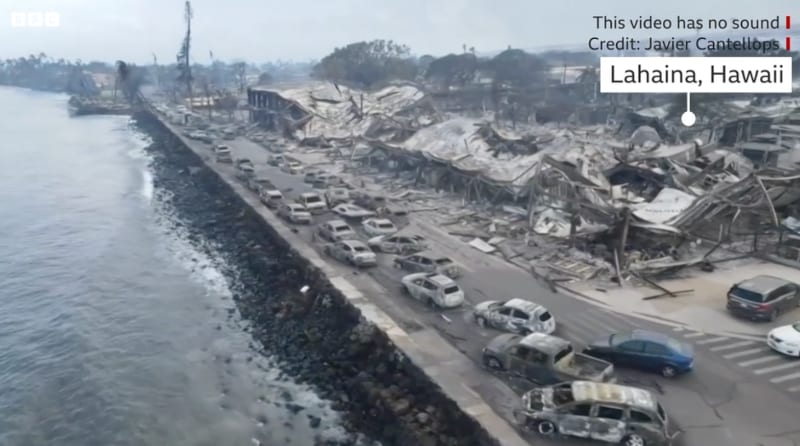
After wildfires devastated parts of the Hawaiian island of Maui, one of the most popular tourist destinations in the US, officials warned visitors to stay away. But thousands remained and others continued to fly in, angering residents in the wake of the tragedy.


At Maui's Wailea Beach on Monday the skies were bright and clear. Luxury hotels lined the beachfront, their guests spread on the sand. Some waded in the ocean, while others sat under umbrellas with white monogrammed towels on their chairs.

Inside one of the hotels, beyond a pool, a two-tiered fountain and a glass-walled habitat for the resident parrot, was a wooden-framed screen advertising a relief fund for the resort's employees - the first sign of the destruction in Lahaina, just 30 miles (48km) up the coast.

In the wake of the wildfires, the deadliest in modern US history, frustration at tourists who have chosen to carry on with their holidays has grown. Many in Maui say the devastation has highlighted what is known as the "two Hawaiis" - one built for the comfort of visitors and another, harsher Hawaii left to Hawaiians.

"It's all butterflies and rainbows when it comes to the tourism industry," said a 21-year-old Maui native and an employee at the hotel who asked to remain anonymous. "But what's really under it is kind of scary."


Last Wednesday, a day after the wildfires, the county asked visitors to leave Lahaina and the island as a whole as soon as possible.

Officials soon urged people to avoid the island entirely, except for essential travel. "In the days and weeks ahead, our collective resources and attention must be focused on the recovery of residents and communities that were forced to evacuate," the Hawaii Tourism Authority said.

Many travellers heeded the advice. In the immediate aftermath of the fires, some 46,000 people left the island. The grass field separating the airport from the surrounding highway is now lined with rows upon rows of suddenly surplus rental cars.

'It's devastating' - Inside Lahaina after wildfires


Hawaii wildfires: Your questions answered

But thousands did not. Some ignored requests to leave Maui immediately, while others flew in after the fire - decisions that have angered some.

"If this was happening to your hometown, would you want us to come?" said resident Chuck Enomoto. "We need to take care of our own first."


Maui's Wailea is the domain of the island's wealthy visitors

Another Maui local told the BBC that tourists were swimming in the "same waters that our people died in three days ago" - an apparent reference to a snorkelling excursion on Friday just 11 miles from Lahaina.

The snorkelling company later apologised for running the tour, saying it had first "offered our vessel throughout the week to deliver supplies and rescue people but its design wasn't appropriate for the task".

But the opposition to tourists is not without complications given the island is economically reliant on those travellers. The Maui Economic Development Board has estimated that the island's "visitor industry" accounts for roughly four out of every five dollars generated here, calling those visitors the "economic engine" of the county.

"You're kind of raised to hate tourists," said the young hotel worker. "But that's really the only way to work on the islands. If it's not hospitality then it's construction."


Surplus rental cars sit outside Maui's airport after thousands of visitors left the island

Several business owners expressed concern that the growing anti-tourist sentiment could hurt Maui further.

"What I'm afraid of is that if people keep seeing 'Maui's closed', and 'don't come to Maui', what little business is left is going to be gone," said Daniel Kalahiki, who owns a food truck in Wailuku. Sales have already dropped by 50% since the fire, he said. "And then the island is going to lose everything."

Still, in the days after the fire, the disparity between Maui residents - reeling from catastrophic loss - and the insulated tourist hotspots has been laid bare.

In one Hawaii, locals face an acute housing crisis. Many live in modest one-storey homes in neighbourhoods like Kahlui and Kihei, some in multi-family dwellings, with each family separated by a curtain or a thin plywood wall.

And working a number of jobs is common, locals told the BBC, to keep up with rising costs. Jen Alcantara shrugged off surprise that she worked for a Canadian airline in addition to a senior administrative position at Maui's hospital. "That's Hawaii," she said.

In this Hawaii, the effects of the fires are everywhere. At shops and grocery stores, evacuees look for essentials, trying to replace their lost possessions with whatever money they have. At restaurants, workers can be seen in kitchens and behind bars holding back tears and making phone calls to co-ordinate relief efforts.

Here, collections were being taken for the survivors nearly everywhere you look. An upscale coffee shop in Kahului was offering to refrigerate donated breast milk. Food truck owners were volunteering their services to the front line and farmers were carrying bunches of bananas to shelters.


Daniel Kalahiki says tourists are 'essential' to prevent the Lahaina disaster from spreading

Things are different in the other Hawaii.

As you reach the end of the 30-minute drive from the island's urban centre to Wailea, home to Maui's high-end holiday rentals and resorts, the earth suddenly changes, dry brown grasses become a rich, watered green.

"It's a blunt line," one local said, another hotel employee who did not want to be named.

Inside Wailea, gated communities border golf courses, that are connected to luxury hotels. Inside those hotels, obliging staff provide surf lessons and pool-side meals, including a $29 burger.

Staff told the BBC that many of the guests were sympathetic to the crisis on the west of the island. Others had complained about scheduled activities in Lahaina - horse-riding, ziplining - being cancelled, said Brittany Pounder, 34, an employee at the Four Seasons.

The day after the fires, one guest visiting from California, asked if he could still get to his dinner reservation at the Lahaina Grill - a restaurant in one of the hardest-hit areas of the town. "It's not OK," Ms Pounder said.

There is mounting concern that the eventual rebuild of Lahaina will further cater to this second Hawaii.

Already, wealthy visitors have contributed to exorbitant house prices, buying land and property in a place where homeownership is out of reach for many permanent residents. Famous billionaires Peter Thiel and Jeff Bezos both have homes in Maui. Oprah Winfrey is the island's largest landowner.

Rumours have spread of estate agents approaching Hawaiian property owners in Lahaina, asking about possible deals.

Several locals told the BBC they worried Lahaina would be refashioned into another Waikiki, the ritzy waterfront of Honolulu, dominated by oceanfront high-rises and branded luxury shopping.

"We don't need another Waikiki," said Chuck Enomoto. "But it's inevitable."
Maui satellite photo shows full scale of deadliest US fire for more than a century

Harry Baker
Tue, August 15, 2023 


A map of Maui with Lahaina highlighted in a white box. A majority of the town is covered in flames.

A new satellite photo has captured a somber aerial view of the devastating wildfire that burned through the town of Lahaina on Hawaii's Maui island last week.

On Aug. 8, fast-moving flames appeared on Lahaina's border and rapidly spread through the town, burning down buildings, exploding cars and filling the air with ash and smoke. Many survivors, who either fled the town or escaped into the ocean, reported knowing almost nothing about the fire until the flames were almost right on top of them, CNN reported.

At least 99 people were killed by the fire, making it the most deadly U.S. fire in more than a century. But the death toll is expected to rise significantly as emergency responders continue to search destroyed buildings for people who are still missing, Hawaii governor Josh Green told CNN.


A night time satellite image of Maui with a bright yellow patch representing where the flames were

The Landsat 8 satellite, which is co-owned by NASA and the U.S. Geological Survey, captured an image of Maui at around 10:25 p.m. local time on Aug. 8, which reveals the fires almost completely engulfing Lahaina, as well another large but less deadly wildfire northeast of Kihei. The satellite image shows the spike in infrared radiation given off by the flames overlaid on a natural color image of the island.

The Lahaina fire moved rapidly because it was fanned by unusually strong winds, which were fueled by a strong high-pressure area to the north of the island and the remnants of Hurricane Dora to the south, according to NASA's Earth Observatory. The gusts ranged from 45 to 67 mph (72 to 107 km/h). Green said that at its peak, the blaze traveled at around 1 mile (1.6 kilometers) every minute.

The Federal Emergency Management Agency has said it is too early to calculate the cost of the damages caused by the fires, but Green told CNN the losses could equate to up to $6 billion. "This is the largest natural disaster we've ever experienced [in Hawaii]," he added. "It's going to also be a natural disaster that's going to take an incredible amount of time to recover from."
Why the Maui Wildfires Were So Deadly

Solcyre Burga
TIME
Wed, August 16, 2023


The devastating Maui wildfires have killed at least 99 people so far, and have burned more than 2,500 acres across historic towns like Lahaina, destroying homes and businesses in the region. It is now the deadliest wildfire incident in the U.S. in over a century, and the worst natural disaster in Hawaii’s history.

The catastrophe began on Aug. 8. High winds, that some officials say may have been as strong as 60-81 mph, engulfed the area in flames at a rate that was difficult to escape. A lagging emergency warning system caused chaos on the island, with anecdotes of survivors running to the ocean to escape the flames. More than a thousand people remain unaccounted for.

A week later, officials still do not know what the exact cause of the fires were, but experts say that the wildfires' devastation is due to a mix of high temperatures, strong winds from a Category 4 storm near the islands, and drought conditions that dried out grasses on the island.

Annually, about 0.5% of Hawaii’s total land area burns due to wildfires, according to the Hawaii Wildfire Management Organization. Seventy-five percent of these fires are caused by humans and therefore preventable, but none have ever been as devastating as the Maui wildfires.

Read more: What Remains After the Flames: Scenes From the Ash-Colored Streets of Maui

Experts warn that extreme weather conditions and disasters like these wildfires will occur more frequently and with greater intensity due to climate change, though that is not the only contributing factor at hand. “When the air is hotter it can hold more water vapor, so that means you get more water evaporating from plants, and that dries them out,” says Jeff Masters, a meteorologist for Yale Climate Connections. “But you can't blame it just on climate change, that's for sure. Humans are causing this wildfire risk in multiple ways.”

What caused the fires? 

Officials are still unclear on what exactly sparked the fires in Maui, though focus has turned towards the state’s biggest power utility company, Hawaiian Electric, to assess their role in the wildfires.

Lahaina residents are suing the company because they allege Hawaiian Electric’s equipment was not strong enough to withstand such fast winds, and that the company should have shut down the power before winds reached such high levels—a common practice in states like California, which experiences the most wildfires nationwide.

Regardless, the deadly blazes were also caused by a combination of conditions including hot weather, strong winds, and a drought that has been affecting the state since the month of May.

The island was under high alert because of Hurricane Dora, a Category 4 storm that traveled hundreds of miles away from the island, making its closest approach to the islands on Aug. 8. The exact effect Hurricane Dora had on the wildfires remains unclear. Hurricane Expert Phillippe Papin from the National Weather Service’s National Hurricane Center tweeted that the hurricane may have played a minor role in the fires because it had a small wind field, which is the area that is potentially affected by the storm’s sustained winds. But other experts like Masters note that the tropical storm still created a “very strong high pressure system” that may have contributed to the high gusts of wind.

“If you give a spark in those kinds of conditions, drought plus heat plus wind, it can lead to very rapid fire spread and very intense fires,” Masters says.

Read more: How to Help Those Affected by the Maui Wildfires

Temperatures on the day of the fires were also up to 90°F, which dries out vegetation and makes it more fire prone, according to Masters.

He adds that the presence of invasive grasses, like guinea grass, also fueled the fires forward. Nonnative grasses that were used to feed livestock or for ornamental purposes were brought to the island decades ago, and are now posing hazardous risks because they are highly flammable.

Was the community prepared for it?

Questions related to the preparedness of the state have risen as details about the day of the fires revealed that emergency sirens did not alert residents to what was happening.

“I don't think we were ready for it,” Maximus Yarawamai, a 63-year-old gardener, tells TIME. Yarawamai, who traveled from his home on the Big Island to Lahaina to help the community in need, compares the damage he’s seen to what he imagines Pearl Harbor or the Twin Towers to have looked like after those catastrophes. “I think we never thought that this would happen in Hawaii. We've had fires but not this magnitude.”

Yarawamai’s words echo the sentiments not just of many Hawaiian residents, but likely also of officials who may have been unprepared for fires of this magnitude. A February 2022 emergency management plan by the state of Hawaii rated wildfires as low and medium risk across the board for its effect on people, property, the environment, and emergency management program operations.

2021 Maui County report found that the number of incidents caused by fires on the island has increased over the years. While there are annual fluctuations in the destruction caused by fires, Hawaii’s acre burnage before the Maui wildfires peaked at more than 50,000 acres in 2019 compared to slightly over 10,000 in 2007. That report also pointed out potential issues in times of emergency, including limited roads in and out of Maui County that make it more difficult to provide emergency care, and also limit escape routes for residents.

“The investigation revealed that current budgets, combined with County and State access to Federal emergency relief funding, are adequate to meet the current fire threat, but are inadequate for an effective fire prevention and mitigation program,” the report says.

Now, residents like Yarawamai are asking for the government to think of long term solutions. “I think the immediate needs [for disaster recovery] are there,” he says, “but what's the next move? What's the next thing we need to do?”

https://www.marxists.org/archive/bordiga/works/1951/murder.htm

Murder of the Dead ... The basis of marxist economic analysis is the distinction between dead and living labour. We do not define capitalism as the ...

Lahaina, site of incalculable Native Hawaiian importance, reels from cultural losses

we want to organize the ‘Rebuild Maui’ campaign before disaster capitalists do

Claire Wang
THE GUARDIAN
Tue, August 15, 2023 

Photograph: Rick Bowmer/AP

A week after wildfires ripped through western Maui and killed at least 99 people, residents and historians are still processing the full scope of destruction in Lahaina, an 18th-century coastal town that was, for a time, the capital of the Hawaiian Kingdom.

Designated a national historic landmark in 1962, Lahaina is a place of incalculable importance for Native Hawaiians. In 1810, King Kamehameha I unified all the Hawaiian islands and made the town his royal residence for the next three decades.

Following the fires, thousands of homes, businesses and cultural treasures lay in ruins, including a church where royals were buried and a 150-year-old banyan tree believed to be the largest in the US.


Wildfire wreckage in Lahaina on Thursday. Photograph: Rick Bowmer/AP

The cost to rebuild Lahaina is expected to exceed $5.5bn, according to the Federal Emergency Management Agency.

“Lahaina was one of the few locations in Hawaii that has been truly important throughout every era,” said Kimberly Flook, deputy executive director of the Lahaina Restoration Foundation, which restores and maintains more than a dozen historic landmarks in the area.

Flook said a handful of historic sites the foundation maintains had sustained severe fire damage, including the Baldwin Home, a missionary compound built in 1834 that is now a museum; the Wo Hing Museum, a wooden temple that functioned as a gathering space and cook house for Chinese expats; and the Lahaina Old Courthouse, built in 1858. The first lighthouse on the Pacific coast, built in 1840, seemed to have been spared. The status of other landmarks remained unclear from social media footage, first responder accounts and satellite images, Flook said.

While the scale of human and cultural loss is unimaginable, Flook said she remained hopeful that the town could be restored with time and resources.

“This is absolutely shattering,” she said, “but we don’t find it impossible to rebuild.”Interactive

Davianna Pomaika’i McGregor, a founding member of the ethnic studies program at the University of Hawai’i, Manoa, and a historian of Hawaii and the Pacific, said Lahaina served as a “very active political, economic and intellectual heart” during the 19th century.

Lahaina was the royal capital from 1820 to 1845, when it was replaced by Honolulu. During those decades, it grew into a global trading hub with the arrival of whaling ships. Royalty and chiefs were educated at Lahainaluna high school, the oldest school west of the Rocky Mountains; kings and queens were buried at Waiola church, the first Christian church on Maui. In 1840, King Kamehameha III drafted the Hawaiian Kingdom’s first constitution at the high school. Both buildings, established about 200 years ago, were damaged in the fire.

“Lahaina represents the transformations that Hawaii has undergone over the centuries,” McGregor said. “Layers of history are reflected through its landscape and architecture.”

Related: Maui wildfires: Hawaii governor says at least 99 dead amid ‘incredible’ destruction

The Maui wildfire was the deadliest in the US in more than a century, surpassing the toll of the 2018 Camp fire in Paradise, California, which left 85 dead. The disaster has exacerbated a burgeoning housing crisis: more than 2,200 buildings were destroyed, nearly all of them residential. As many as 4,500 people are in need of shelter, county officials said on Facebook on Saturday. (Lahaina has a population of roughly 13,000 people.)

In modern times, travel companies and media outlets have come to market Lahaina primarily as a resort paradise with immaculate surf breaks and snorkeling sites.

But the framing of Lahaina as a “tourist destination” buries both the rich history of the town and ecological devastation that colonialism has wrought on the island, said Kaniela Ing, national director of the Green New Deal Network and a seventh-generation Native Hawaiian who was born and raised in Maui.

Children check boxes of donated toys at a distribution location in Lahaina on Sunday. Photograph: Étienne Laurent/EPA

The cause of the fires is still under investigation, though experts say they were fueled by dry vegetation, low humidity and hot, strong winds from Hurricane Dora. But the climate crisis is not the only cause of the tragedy, Ing said. Decades of sugarcane and pineapple farming uprooted native trees and browned the rain-soaked slopes of the West Maui Mountains.

“The fire is an exclamation point, but it’s not the only injustice,” said Ing. “When you look at Lahaina’s path from royalty to whaling to pineapple tourism to luxury, the fire is just the terminal point.”

Last June, mandatory water restrictions were leveled on west Maui residents in response to a historic drought. While residents were fined $500 for using water for non-essential activities, such as washing cars, the tourism industry faced no such penalties, despite being responsible for nearly half of Hawaii’s water consumption.

“While Front Street is laden with racist tiki bars and tacky shops, the people who live there are some of the most rooted Native people in the world,” Ing said. “They’re keepers of knowledge that will get us out of the trajectory of ecological collapse.”Interactive

As a former state lawmaker, Ing said he had consulted Indigenous fishermen about marine issues, like an invasive species of coral that elected officials had sought to label as endangered. With ancient farming practices, Maui’s Indigenous farmers have been restoring the depleted food forests that fed their ancestors.

Ing said rebuilding Maui required not only direct relief but also a long-term plan to pivot from an extractive economy to a regenerative one. The first step was putting an indefinite halt on tourism to preserve resources for Native Hawaiians.

“We need time to grieve and heal,” he said, “and we want to organize the ‘Rebuild Maui’ campaign before disaster capitalists do.”

https://www.teenvogue.com/story/what-is-disaster-capitalism

Sep 2, 2021 ... Disaster capitalism, according to Klein, occurs when private interests descend on a particular region in the wake of major destabilizing events, ...


https://www.theguardian.com/us-news/2017/jul/06/naomi-klein-how-power-profits-from-disaster

Jul 6, 2017 ... The long read: After a crisis, private contractors move in and suck ... the disaster capitalism free-for-all that followed Katrina and the ...


Lahaina wildfire insured property loss to be about $3.2 billion - KCC

Reuters
Wed, August 16, 2023 

Aftermath of the wildfires in Lahaina


(Reuters) - Insured property losses from the wildfire that ravaged the resort town of Lahaina in Hawaii last week are estimated to be about $3.2 billion, catastrophe modeling firm Karen Clark & Company (KCC) said on Wednesday.

The inferno killed at least 106 people after racing from grasslands outside town into Lahaina last Tuesday.

The fire charred a 5-square-mile (13-square-km) area of town in hours and has brought with it the logistical challenges of recovery, taking a toll on many of Lahaina's 13,000 year-round residents, who are also facing the prospect of precious tourist dollars evaporating.

More than 2,200 structures fall within the fire perimeter, KCC estimated, citing an independent geospatial analysis of satellite and aerial imagery.

The majority of damaged structures were residential buildings, though many commercial buildings were affected as well, KCC said, adding that the disaster was the most destructive wildfire in Hawaii history.

The high proportion of wood frame and older construction present in the Lahaina buildings likely contributed to the damage, it said.

Insurance broker Aon last week said the extreme devastation to homes, businesses and other structures in Lahaina would likely drive economic and insured losses into the hundreds of millions of dollars.

Moody's Investors' Service said on Tuesday that estimated insured losses from wildfires on Maui in Hawaii would be at least $1 billion.

The report said large insurers such as State Farm, Tokio Marine, Allstate have exposure in Hawaii, but added the companies are expected to readily absorb the losses as their business in Hawaii is a small fraction of their overall insured portfolios.

(Reporting by Noor Zainab Hussain in Bengaluru; Editing by Saumyadeb Chakrabarty)


Maui wildfire insured losses in range from $2.5bn – $4.5bn: Bloomberg 
 Intelligence

16TH AUGUST 2023 - AUTHOR: STEVE EVANS

Another estimate for the potential insurance and reinsurance market loss from the devastating Lahaina wildfire on the island of Maui, Hawaii, has come from Bloomberg Intelligence, whose analysts believe it could be as much as $4.5 billion.

Data from the property and casualty insurance equity analyst team at Bloomberg Intelligence suggests that the insurance market loss from the wildfires in Maui will come in above $2.5 billion.

They see the top-end possibility as $4.5 billion, giving a mid-point estimate of $3.5 billion.

That mid-point sits very close to the estimate released by catastrophe risk modelling specialist Karen Clark & Company, who said that the insured property loss from the wildfires would be around $3.2 billion.

Previously, analysts at RBC had said they expected the wildfire in Lahaina would drive an insurance and reinsurance industry impact of around $3 billion.

Officials had pegged the rebuilding cost of related to the wildfire that burned the historic town of Lahaina at an estimated $5.52 billion, with 2,207 structures reported to have been destroyed by the blaze.

As we’ve explained in our coverage of these terrible fires, there is significant uncertainty over insurance market losses, as on top of direct property damage and the destroyed structures, claims are also likely to come from smoke damage, burned vehicles, additional living expense claims, and buildings contents as well, which could all push the ultimate toll a bit higher for the industry.

How the fires started remains a subject of some contention and utility Hawaiian Electric has seen its share price plummet some 55% since the blaze, as some claims emerged that its equipment could have been responsible for these fires.

That could have ramifications for the insurance and reinsurance industry, of course and will raise memories of the subrogation secured in California from utility PG&E after the devastating wildfires there a few years ago.

Estimates seem to currently be pointing to an insured loss of between $3 billion and $4 billion, but the additional costs of auto claims and other expenses could drive the ultimate higher, it seems.

Maui’s wildfires could send housing and insurance prices soaring

Jeronimo Gonzalez
Tue, August 15, 2023 

Hawaii Department of Land and Natural Resources/Handout via REUTERS

net zeroTweetEmailWhatsappJeronimoGonzalez


Jeronimo Gonzalez


The devastating wildfires in Maui — the state’s worst natural disaster and the deadliest one in the U.S. in a century — razed more than 3,400 structures valued at $3.3 billion.

Hawaii wasn’t considered very risky by underwriters. Residents paid the lowest home insurance rates in the country partly because of how rare natural disasters are in the state. The wildfires will likely make insurers reconsider policy rates and coverages. “I think insurers are going to start factoring in the increased frequency and severity of wildfires• 1 ,” a professor of risk management at Appalachian State University said.

 “You’ve already seen that in California.”

1
The New York Times, Maui Fires Come at a Moment of Turmoil for the Insurance Industry

Rebuilding costs will likely be higher, especially in old towns such as Lahaina, where most infrastructure isn’t designed to withstand such high temperatures. “The bottom line is the reconstruction is going to have to account for wildfire risk that it hasn’t in past• 2 ,” said Jesse Keenan, a professor of sustainable real estate at Tulane University. “It will require new building materials and techniques that’s going to add to the overall cost of the already inflated housing construction market.”2

2
Bloomberg, Maui’s Fires Risk Pushing Up Housing Costs in Strained Market

Hawaii Gov. Josh Green had recently declared a housing emergency in the state to combat the housing shortage by making it easier to build. The wildfires are now likely to drive Hawaii’s housing prices — one of the most expensive markets in the U.S. — even higher. Partly because 40% of Maui’s housing stock is vacation rentals, the median house price there had surpassed $1 million before the fires. “Many of the displaced families are now going to be looking for local housing, raising demand for what little housing is available• 3 ,” said Justin Tyndall, an economics professor at the University of Hawaii.3

3
Fast Company, Hawaii already had a housing crisis. Maui’s fires will make it much worse