Friday, August 18, 2023

Study shows how the meat and dairy sector resists competition from alternative animal products

Dairy
Credit: CC0 Public Domain

A new Stanford study reveals how meat and dairy industry lobbying has influenced government regulations and funding to stifle competition from alternative meat products with smaller climate and environmental impacts. The analysis, published Aug. 18 in One Earth, compares innovations and policies related to plant-based meat alternatives and lab-grown meat in the U.S. and European Union.

"The lack of policies focused on reducing our reliance on animal-derived products and the lack of sufficient support to alternative technologies to make them competitive are symptomatic of a system still resisting fundamental changes," said study lead author Simona Vallone, an Earth system science research associate in the Stanford Doerr School of Sustainability at the time of the research.

A growing problem

Livestock production is the agriculture sector's largest emitter of the potent greenhouse gas methane, due to emissions from ruminants such as cattle, sheep, and goats. It's also the main direct cause of tropical deforestation, due to pasture expansion and feed crop production.

Numerous studies have demonstrated that dietary changes hold great potential to reduce humanity's ecological footprint, especially a reduction in red meat consumption. At the same time, Western-style meat-heavy diets are becoming more popular around the world.

The researchers reviewed major agricultural policies from 2014 to 2020 that supported either the animal food product system or alternative technologies, and compared government spending on both systems. They also looked at related lobbying trends.

They found that governments consistently devoted most of their agricultural funding to livestock and feed production systems, avoided highlighting food production sustainability dimensions in nutrition guidelines, and attempted to introduce regulatory hurdles, such as narrow labeling standards, to the commercialization of meat alternatives. Major U.S. meat and dairy companies actively lobbied against environmental issues and regulations to tip the scales in their favor.

In the U.S., about 800 times more public funding and 190 times more lobbying money goes to animal-source food products than alternatives. In the EU, about 1,200 times more  and three times more lobbying money goes to animal-source food products. In both regions, nearly all plant-based meat patents were published by a small number of private companies or individuals, with just one U.S. company, Impossible Foods, owning half of the patents.

Among the anecdotes cited by the study:

  • EU cattle producers were highly dependent on direct subsidy payments, which constituted at least 50% of their income during the study period. Some of these payments incentivized farmers to maintain herd size, keep pasture in production, or increase overall output.

  • In 2017, following a European Court of Justice ruling, dairy terms such as milk and cheese could no longer be used to market most alternative milk and dairy products. Similarly, a proposed amendment to the U.S. Federal Food, Drug, and Cosmetic Act would prohibit the sale of alternative meats unless the product label included the word "imitation" and other clarifying statements indicating the non-animal origin.

Restoring competition

This past June, the U.S. Department of Agriculture approved the sale of lab-grown chicken, the first such authorization to cultivated meat producers in the country.

The Stanford study points to recent policy developments as similar glimmers of hope for a shift to more sustainable diets. In the U.S., the Inflation Reduction Act passed last year includes investments in technical and financial assistance to support farmers and ranchers implementing practices to reduce greenhouse emissions or sequester carbon.

In the EU, a policy proposal set for debate this fall aims at accelerating a sustainable transition of the food system to support climate mitigation solutions, and reduce biodiversity loss and environmental impacts.

To ensure a fair marketplace for alternative meat products, policymakers should craft legislation that ensures meat's price reflects its environmental costs, increases research on alternative meat and dairy products, and informs consumers on alternatives to  via dietary guidelines, according to the researchers.

"It's clear that powerful vested interests have exerted political influence to maintain the animal-farming system status quo," said study senior author Eric Lambin, the George and Setsuko Ishiyama Provostial Professor at Stanford and senior fellow at the Stanford Woods Institute for the Environment. "A significant policy shift is required to reduce the food system impact on climate, land use, and biodiversity."

More information: Simona Vallone, Public policies and vested interests preserve the animal farming status quo at the expense of animal product analogs, One Earth (2023). DOI: 10.1016/j.oneear.2023.07.013www.cell.com/one-earth/fulltex … 2590-3322(23)00347-0


Journal information: One Earth 


Provided by Stanford University Dataset confirms that a vegan diet is dramatically better across a range of environmental measures


The power of plants and how they are changing the way we eat and live
The power of plants and how they are changing the way we eat and live: UNM Newsroom
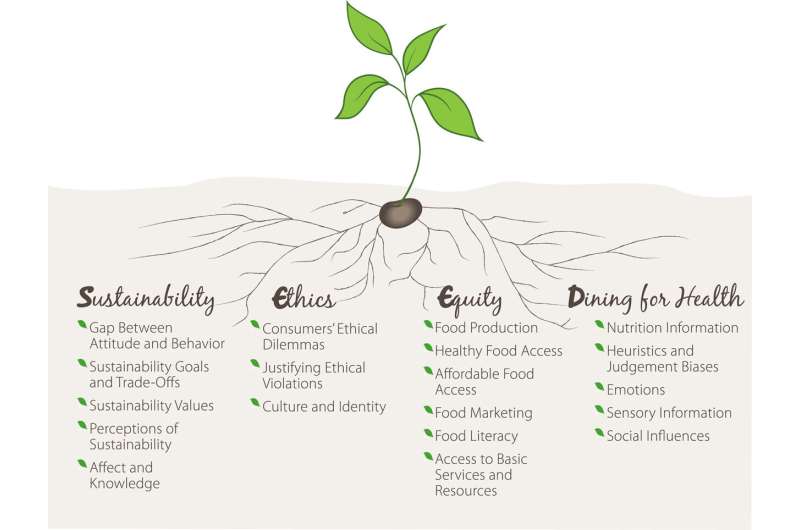
SEED framework for growing value-based eating. SEED values 
(Sustainability, Ethics, Equity, and Dining for health) promoting plant-based 
diets are changing the way consumers choose what foods to eat and not to
 eat. The impact on our food system depends on how consumers integrate 
these values to make food decisions in the future. 
Credit: Journal of Consumer Psychology (2022). DOI: 10.1002/jcpy.1328

Plant-based eating and veganism have been around for decades, but more people are choosing plant-based diets than ever before. Plant-based eating means eating more fruits, vegetables, nuts, grains and beans while eating less or no meat, dairy or animal products. A UNM business school researcher has studied the reasons behind this trend.

Lama Lteif, an assistant professor of marketing at the UNM Anderson School of Management, in her 2023 article, "Plant Power: SEEDing our Future with Plant-based Eating," shared a new way to look at why people are choosing plant-based diets and the benefits of this shift. She built on data from the 2021 Rockefeller Foundation report to explain people's food choices. Her work features a framework showing the values that drive consumers toward plant-based eating. The framework is called SEED: Sustainability, Ethics, Equity and Dining for Health.

Plant Power is the first research article of its kind, "because it is at the intersection of consumer health and the climate crisis. Understanding the reasons that drive consumers to choose a  is good for people and the environment," said Lteif.

The SEED Framework

As more people relate to the values in the SEED framework, they are changing their  to reflect these beliefs.

"By understanding how these values influence decision-making, individuals and marketers alike can make better choices for themselves, inform their , and give more attention to the issues that mean the most to them," Lteif explained.

Those who relate to the Sustainability value have growing concerns about animal farming and its role in climate change. People have learned that eating less meat can reduce their carbon footprint and help ease the effects of global warming.

Next, Lteif explained that a person's belief system, or code of Ethics, can also affect their eating choices. Within this group is a growing concern for animal safety and well-being during meat and dairy production. Animal handling practices can include cramped living conditions, overcrowding or inhumane treatment. By not eating these foods, those holding this value hope to show their concern and support better animal treatment.

Food Equity refers to offering all people  to food and the ability to cook and store the food that allows them to thrive. There is a growing awareness that many people do not have access to plant-based food or the means to keep it fresh. More so, underserved communities, including communities of color, often have less access to healthy, affordable, plant-based foods. Improving access can improve people's health and well-being by eating more healthy foods and allowing them to make choices that reflect their values.

Lastly, the Dining for Health value supports the connection between food and health. A plant-based diet is rich in fiber, vitamins, minerals and antioxidants, which help improve gut health and absorbing of nutrients that support the immune system. Because of this, a diet that is rich in fruits and vegetables can help reduce the risk of certain cancers, type 2 diabetes, heart disease and more.

Plant-based eating and its impact on the future

Lteif, a former nutritionist, combines her passion for helping others make healthy food choices with a curiosity about the drivers behind people's eating choices. She likens these value-based choices to a seed's root system, where the "SEED values connect and as a group can influence a person's eating habits. If embraced by society as a whole, these values can transform systems to be more friendly to our environment, more fair and more nourishing."

Lteif explained that Gen Z, those aged 35 and younger, are leading the way with alternative food choices due to their concerns about climate change and the environment. She believes learning more about the other value groups and the reasons keeping others from making healthy food choices is important. She would also like to explore ways to encourage more people to adopt a plant-based diet.

A great benefit of eating more fruits and vegetables is more demand for restaurants,  and eateries that offer vegan-friendly options. This increase in offerings makes it easier for people to make healthier choices today than ever before.

The work is published in the Journal of Consumer Psychology.

More information: Melissa G. Bublitz et al, Plant power: SEEDing our future with plant‐based eating, Journal of Consumer Psychology (2022). DOI: 10.1002/jcpy.1328

Journal information: Journal of Consumer Psychology


Provided by University of New Mexico 


Vegan diet has just 30% of the environmental impact of a high-meat diet, major study finds


Vegan trend in Europe: In Germany, milk substitutes from plants are most popular alternative
Vegan trend in Europe: In Germany, milk substitutes from plants are most popular alternative
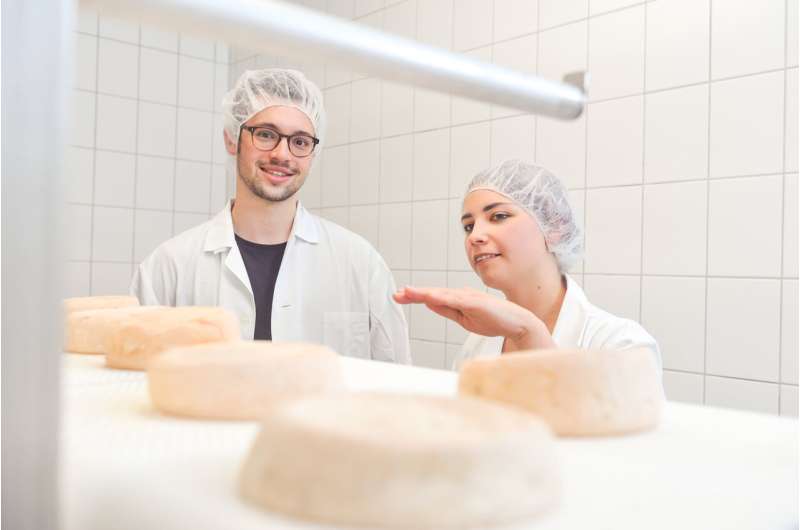
Plant-based alternatives to dairy products do not have to copy the original—but in addition to tasting good, they should have a pleasant mouthfeel and a varied product range, according to the results of a study carried out by the University of Hohenheim. Credit: University of Hohenheim / Max Kovalenko

Plant-based alternatives to dairy products do not have to copy the original—but in addition to tasting good, they should also have a pleasant mouthfeel and a varied product range, according to the results of a recent acceptance study. To obtain the results, the University of Hohenheim in Stuttgart surveyed consumers in a total of six European countries. This revealed major cultural differences—but also commonalities that providers should pay attention to.

Of all the countries studied, Germany has the highest sales and the greatest market potential for these plant-based alternatives. "The strong innovative power in this area is evident in many small startup companies," stated Dr. Beate Gebhardt, head of AK BEST at the University of Hohenheim. "For example, of all the countries studied, Germany has the most new plant-based alternative  coming to market."

However, milk and  substitutes derived from plants are also becoming increasingly popular throughout the European market. Their sales in Europe increased by 49% between 2020 and 2022. However, according to an EU regulation, only products derived from the milking process of animals may bear designations such as "milk" or "dairy."

The plant-based alternatives to cream, quark, cheese, or yogurt are made from grains, oilseeds, or legumes, among other things. Because their carbon footprint is significantly better than that of their animal-based counterparts, they are seen as having the potential to promote change towards a more sustainable food system.

Acceptance study in six European countries

Within the European market, however, the acceptance of the new products is distributed differently, knows Rebecca Hansen from the Department of Agricultural Markets at the University of Hohenheim, who investigated this question as part of her dissertation. To do this, she evaluated 3,086 responses collected as part of the project "The V-PLACE—Enabling  in vegan or vegetarian food products."

She looked for differences and similarities in the willingness of people in Denmark, Germany, France, Italy, Poland, and Spain to turn more to plant-based "dairy products." The six countries were selected so that at least one country was represented in Northern, Southern, Eastern, and Western Europe, reflecting the different market situations in Europe for plant-based foods. The results have been published in the journal Food Quality and Preference.

"However, the sample can only be considered representative to a limited extent," Hansen said, "since only people who either already consumed plant-based 'dairy products' or were toying with the idea were included in the study. People who were not interested in it at all were not considered."

Germany: Health, animal welfare, and the environment play a major role

In the scientists' view, the Germans are unique in their particularly critical attitude when it comes to . This, together with aspects such as health and the environment, plays a major role in deciding how often people consume plant-based "dairy" products. In particular, those who chose a vegetarian or vegan lifestyle were 34% more likely to consume the plant-based alternatives more often.

"This confirms our assumption that the decision to consume plant-based 'dairy' products is largely determined by ," Dr. Gebhardt said. "In addition, social norms and cultural traditions influence Germans less than people in other countries in this regard."

Nutrition habits rooted in the culture of different countries

This is demonstrated by the example of Poland as a kind of counterpart to Germany: There, animal dairy products are touted as healthy and beneficial overall. In the researchers' view, this may explain the aversion to plant-based "dairy" products, especially among people who care about health issues. However, there is also a financial factor: If the price of these foods increases, the willingness to consume them decreases. In addition, respondents in Poland often criticized the  as being too sweet or too greasy.

"Dietary behavior is complex," Dr. Gebhardt stated. "It is shaped not only by the individual beliefs of consumers in conjunction with socio-demographic factors and the cultural environment, but is also influenced by political programs and environmental issues."

Taste, texture, and variety need to be improved

French consumers are also difficult to convince of the benefits of plant-based dairy alternatives. Against the background that the consumption of cheese made from animal milk has a long tradition there, they seem to attach great importance to the sensory enjoyment of this food.

A similar picture was seen in Italy and Spain: Sensory and taste concerns prevented prospective buyers from consuming the plant-based alternatives to dairy products. If, on the other hand, the product characteristics such as price, taste, variety, and also availability met the requirements of the respondents, the probability of consuming these foods on a daily basis also increased.

"As our results show, prospective consumers who are only beginning to consider consuming plant-based 'dairy' products in particular are put off by the unsatisfactory product attributes. They want more varieties and a better taste or mouthfeel," summarized Hansen.

Substitute products must taste good, not necessarily copy the original

"To reach more consumers, manufacturers therefore need to develop products with improved formulations or more product variants. This is especially important in Italy or France, where the importance of sensory enjoyment is culturally ingrained."

In Dr. Gebhardt's experience, consumers do not necessarily expect a copy of the animal-based original. "However, the taste, i.e., the culinary quality of the food, must be good. This might mean that the product offers a new, distinct taste experience."

More knowledge increases willingness to buy, in all educational strata

"In addition, curiosity motivates consumers to try new food products," she said. Individuals who are fundamentally open to plant-based alternatives are more likely to maintain or even intensify their consumption of plant-based dairy products, according to their assessment.

Something common to all people who consume plant-based "dairy" products or are open to it is that they want information about it. Consumers who value high-quality food also actively search for it.

"Questions arise like: What is the product made of? What does the production process look like? Is it healthier? Is it more sustainable? How can I prepare it?—and answers to all of these should be easy to find," the two scientists agreed. In their view, easily accessible information on the packaging or at the point of sale would be best. Recommendations in dietary guidelines to consume fewer animal dairy products or evidence from the scientific community to choose more plant-based "dairy" products could also be an important signal to consumers.

The researchers were surprised by another result of the study. "Contrary to our expectations, education level and other sociodemographic factors do not have a statistically validated influence on the frequency of consumption of plant-based 'dairy' products," said Dr. Gebhardt.

More information: Rebecca Hansen et al, Hype or hope? What consumer motives tell us about the prospects for plant and animal-based dairy products in six European countries, Food Quality and Preference (2023). DOI: 10.1016/j.foodqual.2023.104910

MILKWEED


Ancient metal cauldrons give us clues about what people ate in the Bronze Age

Ancient metal cauldrons give us clues about what people ate in the Bronze Age
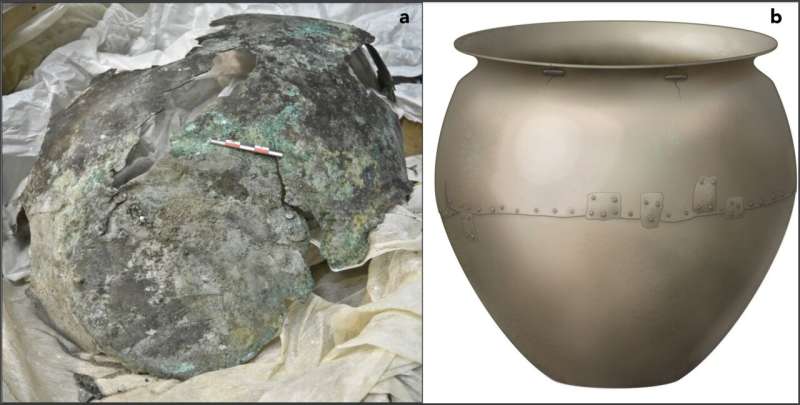
(a) Photograph of the cauldron and what is left today. (b) artistic reconstruction of the 
cauldron as it would have looked when in use. 
Credit: iScience/Wilkin et al.

Archaeologists have long been drawing conclusions about how ancient tools were used by the people who crafted them based on written records and context clues. But with dietary practices, they have had to make assumptions about what was eaten and how it was prepared.

A new study published in the journal iScience on August 18 analyzed  residues from ancient cooking cauldrons and found that the people of Caucasus ate deer, sheep, goats, and members of the cow family during the Maykop period (3700–2900 BCE).

"It's really exciting to get an idea of what people were making in these cauldrons so long ago," says Shevan Wilkin of the University of Zurich. "This is the first evidence we have of preserved proteins of a feast—it's a big cauldron. They were obviously making large meals, not just for individual families."

Scientists have known that the fats preserved in ancient pottery and the proteins from dental calculus—the hard mineralized plaque deposits on the teeth—contain traces of the proteins ancient people consumed during their lives.

Now, this study combines  with archaeology to explore specific details about the meals cooked in these particular vessels. Many metal alloys have antimicrobial properties, which is why the proteins have been preserved so well on the cauldrons. The microbes in dirt that would normally degrade proteins on surfaces such as ceramic and stone are held at bay on .

"We have already established that people at the time most likely drank a soupy beer, but we did not know what was included on the main menu," says Viktor Trifonov of the Institute for the History of Material Culture.

The researchers collected eight residue samples from seven cauldrons that were recovered from  in the Caucasus region. This region sits between the Caspian and Black Seas spanning from Southwestern Russia to Turkey and includes the present-day countries Georgia, Azerbaijan, and Armenia.

They successfully retrieved proteins from blood, muscle tissue, and milk. One of these proteins, heat shock protein beta-1, indicates that the cauldrons were used to cook deer or bovine (cows, yaks, or water buffalo) tissues. Milk proteins from either sheep or goats were also recovered, indicating that the cauldrons were used to prepare dairy.

Radiocarbon dating allowed the researchers to specifically pinpoint that the cauldrons could have been used between 3520–3350 BCE. This means that these vessels are more than 3,000 years older than any vessels that have been analyzed before. "It was a tiny sample of soot from the surface of the cauldron," says Trifonov. "Maykop bronze cauldrons of the fourth millennium BC are a rare and expensive item, a hereditary symbol belonging to the social elite."

Although the cauldrons show signs of wear and tear from use, they also show signs of extensive repair. This suggests that they were valuable, requiring great skill to make and acting as important symbols of wealth or social position.

The researchers would like to explore similarities and differences in the residues from a wider range of vessel types. "We would like to get a better idea of what people across this ancient steppe were doing and how  differed from region to region and throughout time," says Wilkin. Since cuisine is such an important part of culture, studies like this one may also help us to understand the cultural connections between different regions.

The methods used in this study have shown that there is great potential for this new approach. "If proteins are preserved on these vessels, there is a good chance they are preserved on a wide range of other prehistoric metal artifacts," says Wilkin. "We still have a lot to learn, but this opens up the field in a really dramatic way."

More information: Curated cauldrons: Preserved proteins from early copper alloy vessels illuminate feasting practices in the Caucasian steppe, iScience (2023). DOI: 10.1016/j.isci.2023.107482

Journal information: iScience 


Provided by Cell Press 


Yak milk consumption among Mongol Empire elites


Sequencing genes of Iron and Bronze Age peoples to better understand early Mediterranean migration patterns

Sequencing genes of Iron and Bronze Age peoples to better understand early Mediterranean migration patterns
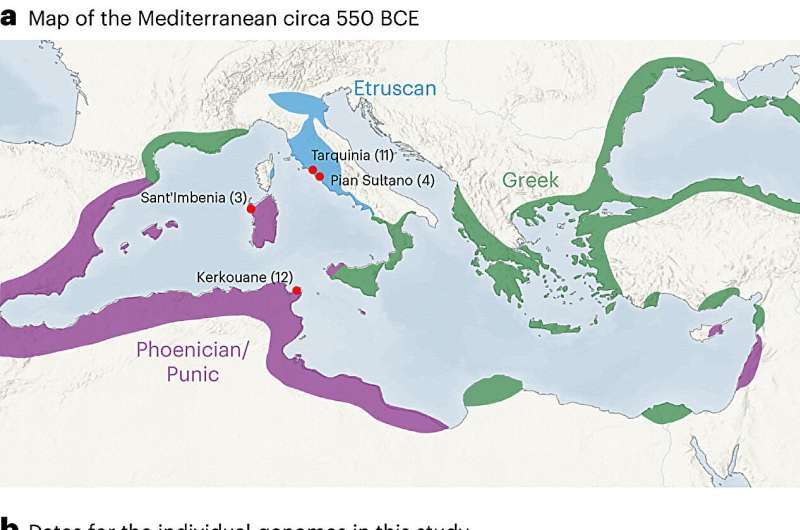
Data overview and relevant geography and chronology. a, Locations of the 4 archaeological
 sites examined here, as well as a map of the areas settled by Phoenician, Greek and 
Etruscan speakers by 550 BCE. b, Timeline showing the dates for the newly reported
 individual genomes, with the methods of dating indicated. Indirect radiocarbon dating
 refers to using the radiocarbon date of a different individual in the same tomb. A single
 date estimate for each individual in the study was determined by the average of lower and 
upper estimates of the 95% confidence interval when using accelerator mass spectrometry
 radiocarbon dates and the average of the lower and bound inference dates when using 
archaeological and historical context for dating. The full 95% confidence intervals are
 reported in Supplementary Dataset 3. The map was generated using the
 World_Basemap_v2 from the ArcGIS online platform. 
Credit: Nature Ecology & Evolution (2023). DOI: 10.1038/s41559-023-02143-4

An international team of anthropologists, archaeologists and geneticists has learned more about the migration patterns of people living around the Mediterranean Sea during the Iron and Bronze ages. In their study, reported in the journal Nature Ecology & Evolution, the group conducted genetic sequencing on the remains of 30 people who lived during the Iron or Bronze Age in Italy, Tunisia and Sardinia.

As the researchers note, most knowledge of people living around the Mediterranean Sea during the Iron and Bronze Ages derives from study of artifacts they left behind. But such evidence, they point out, does not reveal much about the backgrounds of those people or where their ancestors came from. In this new effort, the research team sought to learn more about the backgrounds of such people by following migration patterns using genetic sequencing.

The researchers conducted shotgun sequencing (sequencing conducted in random fashion) on samples collected from unearthed bones of ancient people living in Italy, Tunisia and Sardinia to get a sense of  for people living in the northern, central and southern parts of the eastern part of the Mediterranean during the Iron and Bronze Ages—a time, the researchers note, when people were traveling greater distances due to advances in boat and shipbuilding. The team then compared their findings to the results of other sequencing efforts conducted on both modern and  living in the region.

They found evidence of widespread migration around the Mediterranean, suggesting strong ties between distant people. They also found heterogeneity in Iron Age populations and shifts in ancestry in North Africa and Sardinia during the Bronze Age, suggesting an uptick in migration. More specifically, the research revealed an increase in migration from what is now Morocco and Iran by neolithic farmers to both Sardinia and Tunisia, and somewhat less migration to what is now Italy.

The research team suggests that there was an increase in migration, as expected during both the Iron and Bronze Ages, as people sailed the Mediterranean Sea for a myriad of reasons—and in so doing, shaped the ancestry of those who lived in the region.

More information: Hannah M. Moots et al, A genetic history of continuity and mobility in the Iron Age central Mediterranean, Nature Ecology & Evolution (2023). DOI: 10.1038/s41559-023-02143-4. On bioRxivwww.biorxiv.org/content/10.110 … /2022.03.13.483276v3

Journal information: Nature Ecology & Evolution bioRxiv 


© 2023 Science X Network


Modeling the future of glaciers and the new ecosystems that will develop as deglaciation occurs

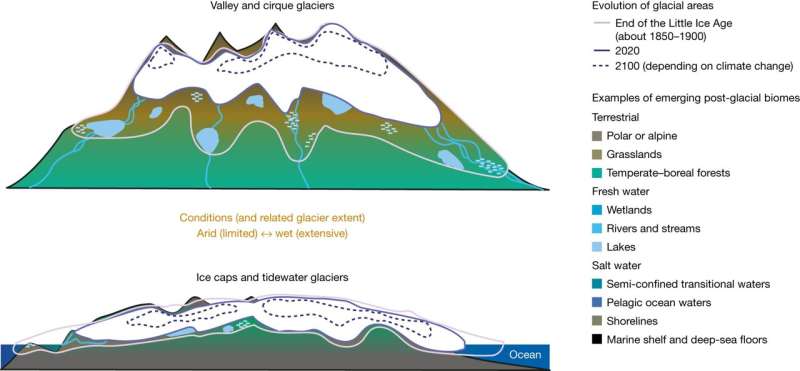
Schematic of glacier retreat and the emergence of post-glacial ecosystems. Changes are 
illustrated for mountain (top) and polar (bottom) regions in a climate that is unfavorable to
 glaciers, as experienced globally since 1900. Different types of post-glacial biome, in
 which diverse ecosystems may emerge, are shown. 
Credit: Nature (2023). DOI: 10.1038/s41586-023-06302-2

A team of geologists and geoscientists affiliated with several institutions in Switzerland and two in France, has created a model designed to predict the amount of glacier loss up to the year 2100 and the ecosystems that will arise in their place.

In their paper, published in the journal Nature, the group describes the factors that went into their models. They also argue for the protection of new ecosystems that develop as deglaciation occurs. Nicolas Lecomte with the University of Moncton has published a News & Views piece in the same journal issue, outlining the work done by the team on this new effort.

Prior research has shown that glaciers all across the globe are slowly melting due to global warming. Now, the research team has attempted to estimate the global scope of the problem, while also pointing out that land beneath the glaciers will become new ecosystems and should be protected, if possible.

To create their model, the team used global glacier evolution models that rely on historical expanse data and estimated rises in temperatures to make predictions about future melting amounts for glaciers all over the world—not including those in Antarctica and the Greenland ice sheets.

They aimed to predict how much change could be coming for mountainous and wetland glaciers. They were able to model deglaciation areas which, they note, will become new ecosystems over the years leading up to the turn of the century. In developing their model, they allowed for the different degrees of .

Their model showed that under the , approximately half of all glacier mass will be gone by 2100. Under the best-case scenario, the model showed loss of approximately 22% of global glacier mass. Under this scenario, the area of loss would still range from the size of Nepal to that of Finland.

The researchers point out that when glaciers melt, they reveal the land beneath—land that may have been covered with ice for thousands of years. Such land, they further note, will naturally evolve into new . And because so little research has been conducted regarding the fate of such areas, little is known about their characteristics. They suggest studies of such areas be undertaken, and measures taken if it is found that they need protecting.

More information: J. B. Bosson et al, Future emergence of new ecosystems caused by glacial retreat, Nature (2023). DOI: 10.1038/s41586-023-06302-2

Nicolas Lecomte, The great melt will shape unprotected ecosystems, Nature (2023). DOI: 10.1038/d41586-023-02490-z


Journal information: Nature 


© 2023 Science X Network


Austria glaciers retreat 'more than ever': measurement


Study discovers pairing of electrons in artificial atoms, a quantum state predicted more than 50 years ago

Pairing of electrons in artificial atoms discovered
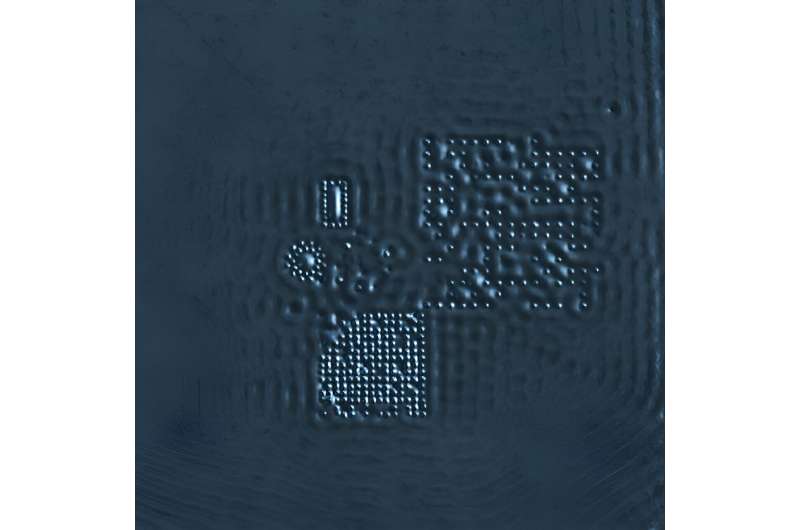
3D view of some of the structures built atom-by-atom from silver (small hillocks). 
A rectangular and a circular electron cage are seen in the top left quarter of the image.
 Credit: Lucas Schneider

Researchers from the Department of Physics at Universität Hamburg, observed a quantum state that was theoretically predicted more than 50 years ago by Japanese theoreticians but so far eluded detection. By tailoring an artificial atom on the surface of a superconductor, the researchers succeeded in pairing the electrons of the so-called quantum dot, thereby inducing the smallest possible version of a superconductor. The work appears in the journal Nature.

Usually, electrons repel each other due to their negative charge. This phenomenon has a huge impact on many materials properties such as the electrical resistance. The situation changes drastically if the electrons are "glued" together to pairs thereby becoming bosons. Bosonic pairs do not avoid each other like single electrons, but many of them can reside at the very same location or do the very same motion.

One of the most intriguing properties of a material with such electron pairs is superconductivity, the possibility to let an electrical current flow through the material without any . For many years, superconductivity has found many important technological applications, including  imaging or highly sensitive detectors for magnetic fields.

Today, the continuous downscaling of electronic devices heavily guides investigations on how superconductivity can be induced into much smaller structures at the nanoscale.

Researchers from the Department of Physics and The Cluster of Excellence "CUI: Advanced Imaging of Matter" at Universität Hamburg, have now realized the pairing of electrons in an  called quantum dot, which is the smallest building block for nanostructured electronic devices.

To that end, researchers led by PD Dr. Jens Wiebe from the Institute for Nanostructure and Solid State Physics locked the electrons into tiny cages that they built from silver, atom-by-atom. By coupling the locked electrons to an elemental superconductor, the electrons inherited the tendency towards pairing from the superconductor.

Together with a team of theoretical physicists of the Cluster, led by Dr. Thore Posske, the researchers related the experimental signature, a spectroscopic peak at very low energy, to the  predicted in the early 1970s by Kazushige Machida and Fumiaki Shibata.

While the state has so far eluded  by experimental methods, recent work by researchers from the Netherlands and Denmark show it is beneficial for suppressing unwanted noise in transmon qubits, an essential building block of modern quantum computers.

Kazushige Machida wrote to the first author of the publication, Dr. Lucas Schneider: "I thank you for 'discovering' my old paper a half century ago. I thought for [a] long time that  non-magnetic impurities produce the in-gap state, but the location of it is so near the superconducting gap edge [that] it is impossible to prove its existence. But by your ingenious method you have finally checked it to be true experimentally."

More information: Lucas Schneider et al, Proximity superconductivity in atom-by-atom crafted quantum dots, Nature (2023). DOI: 10.1038/s41586-023-06312-0


Journal information: Nature 


Provided by Universität Hamburg


First direct visualization of a zero-field pair density wave


Researchers estimate anthropogenic mercury emissions from 1500 to 1900

mercury
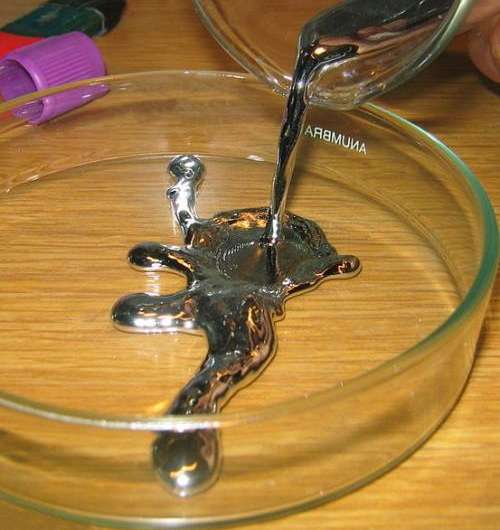
Element mercury (Hg), liquid form. Credit: Wikipedia.

Mercury, toxic to humans, is the only known metallic element that is liquid at standard Earth temperature and pressure and therefore comprises a hazard to children because it is so cool. But many historic human activities have involved the use of mercury, including gold and silver mining, the production of the red pigment vermilion, felt production, and manufacture of mechanical pressure gauges, thermometers and other devices. One guy even made a mercury fountain for the Spanish Pavilion at the 1937 World Exhibition in Paris, now on display at the Fundació Joan Miró in Barcelona.

So much mercury has been used industrially for centuries that researchers have sought to account for legacy mercury, as the element can endure essentially forever in the environment, presenting a toxic hazard to humans and other life. Saul Guerrero and Larissa Schneider of the Australian National University have now constructed a comprehensive, country-by-country historical dataset on the pre-1900  and production of mercury. Their study is published in the Proceedings of the National Academy of Sciences.

As primary sources, the authors raided records archived by governments, documents from local trade associations, cargoes by ship reported in newspapers, and other sources. They compiled data for the mercury market for each country as equivalent to the net import/export balance, including the fraction of domestically produced mercury that was not exported. The researchers compiled all of this data into what they call a "mercury source pool" that accounts for the total historic anthropogenic mercury within and outside the global mercury biogeochemical cycle. The result, say the authors, is a chronological and regional report with unprecedented detail that establishes boundaries on the environmental magnitude of legacy mercury.

The use of mercury evolved from 1500 to 1900, from a monopoly by silver refiners in the New World to a vast global market that encompassed the western world, China and India. The authors note that a substantial amount of anthropogenic mercury before 1900 was removed from the global mercury biogeochemical cycle via chemical sequestration, either in  like felt and vermilion or as an industrial byproduct in the form of calomel, a solid mercury chloride mineral, buried within a mineral matrix.

China alone accounts for 20% of the global mercury market in the 19th century, as both a consumer and exporter, which means that "a significant amount of mercury… was chemically sequestered as vermilion and thus would not be a part of the global mercury biogeochemical cycle." The authors argue that gold rushes, previously believed to be a major contributor to anthropogenic mercury deposits, do not account for a significant percentage, citing the unexpectedly low use of mercury by gold miners in Australia.

"Together with the fact that chemically sequestered mercury played a major role in the mass balance of pre-1900 anthropogenic mercury, it explains the absence of supporting evidence from natural archives for major pulses of mercury emissions in the late 19th century," they write.

They argue that previous overestimates of mercury emission from gold and silver mining failed to account for sequestered mercury in the form of calomel, and also conflated the processes for mining gold and silver, which differ. Additionally, previous models failed to account for major exports from California and China.

The authors note that more accurate future studies will require data for all alternate mercury global hotspots unrelated to precious metal mining and a better documented historical estimate of  losses at production sites.

More information: Saul Guerrero et al, The global roots of pre-1900 legacy mercury, Proceedings of the National Academy of Sciences (2023). DOI: 10.1073/pnas.2304059120


Society's involvement is key in advancing the green energy transition, say researchers

Society's involvement is key in advancing the green energy transition
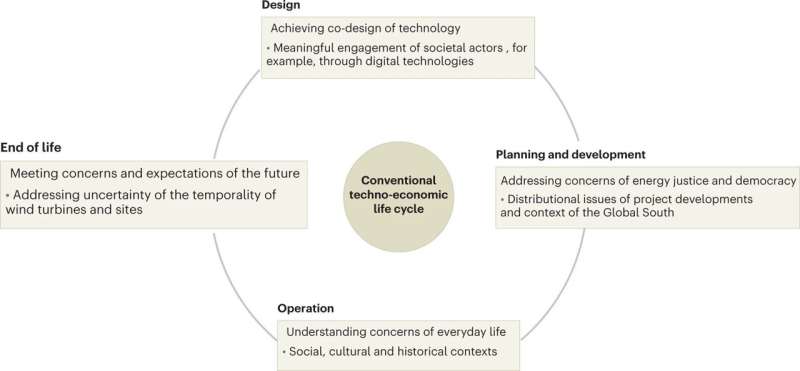
The socio-technical research gaps in the full wind power life cycle. 
Credit: Kirkegaard, J.K., Rudolph, D.P., Nyborg, S. et al.

Addressing climate change isn't just a technical issue; it's a societal one. A recent article in Nature Energy highlights the increasing urgency for engineers and social scientists to combine their expertise.

As  emerges as a linchpin in the global push towards a cleaner future, resistance to deploying  has risen. This underscores the need for a collective socio-technical approach to designing and implementing renewable .

The recent review paper in Nature Energy promotes an interdisciplinary research approach that bridges technical "" with societal dynamics, making renewable energy truly sustainable—technically and socially.

"Today, design decisions are often made without much debate. And when the public then raises concerns, the response is often not taken seriously, or it's too late. Societies, therefore, risk losing public backing to the essential energy transition," says Julia Kirch Kirkegaard, Associate Professor at DTU Wind and Energy Systems and lead author of the article on socio-technical grand challenges in wind energy.

Silo-mentality gets in the way

Addressing the grand challenge of  is often done from the perspective of individual technical disciplines. However, this is at the risk of ignoring how technologies—and their design, development, and deployment—are always social. They are set into specific places and contexts and create certain social responses.

With local opposition against renewables rising, the paper states there is an urgent need for interdisciplinary perspectives better to address the socio-technical nature of the energy transition. In other words, to meet global decarbonization goals, the technical sciences need to collaborate more with the social sciences and humanities to engage with—and create value for—local communities and broader society.

The need for increased public participation concerns the planning and development phases and the design and end-of-life phases. In the design phase, in particular, important decisions are made that concern whose interests are considered—and whose aren't. And recent research shows that these decisions even go back to the algorithms found in digital design tools.

There is little doubt that  will play a massive role in the future energy system to meet worldwide decarbonization goals. The level of effort that made wind an initial success got us to roughly a 9% share of electricity usage. That will not be sufficient, however, to make the transformative changes required to reach the expected one-third to one-half of total electricity, according to Julia Kirch Kirkegaard.

"Denmark, for instance, is normally seen as a pioneer in wind energy, but only a handful of wind turbines were installed onshore in 2022. With an ambition to produce four times as much solar and wind energy on land and five times as much offshore by 2030, we need to find radically new approaches so that we do not see the controversies simply multiplied," she says.

"While wind turbines are getting larger, and less land is becoming available, local, societal opposition to deployments of new wind energy infrastructure has been growing. We need to understand better and acknowledge why that is so—otherwise, there is a real risk that societies' ability to meet climate ambitions is jeopardized."

A new approach to socio-technical grand challenges

Better recognition of how technical and natural sciences, on the one hand, and state-of-the-art in the social sciences, on the other, address the grand challenges facing wind power is needed since, according to Julia Kirch Kirkegaard, they often do not even agree on the most significant challenges.

The authors warn that the socio-technical research gaps may become grand challenges in their own right if the wind energy sector cannot confront them in due time. Julia Kirch Kirkegaard explains that while it will be a challenge for research, industry and society as a whole to bridge these gaps, the timing for engaging the participants in the deployment of wind energy is obvious:

"Major technological progress is facing growing resistance from the public. Since we'll likely see similar conflicts in the future—as we address other aspects of the energy transition and climate mitigation technologies such as Power-to-X, energy islands and more—the time to explore how to bridge these manifold perspectives is now."

The Nature Energy paper, "Tackling grand challenges in wind energy through a socio-technical perspective," promotes a lens founded in STS (Science & Technology Studies) to push the technical sciences and the state-of-the-art in social sciences and humanities on the issue (i.e., the social acceptance literature) forward and towards more interdisciplinary research:

  • Technical sciences need to move beyond their perspective on local opposition as a barrier to be tackled through technical or economic means to appreciate better their role in society and how their design and deployment decisions shape societal dynamics. It might even make it possible to look at public opposition not as something that must be done away with but as a potential for learning and value-creation.

  • The state-of-the-art in the social sciences (the social acceptance literature) has tended to focus on the planning and development phases, largely overlooking the technologies themselves, their design, and scientific reasons. With this, they lack an appreciation of how decisions about whose concerns should count (or not) are already made in the design phase. Sometimes making solutions to tackle local opposition in the planning and development phases are in vain and too late.

More information: Julia Kirch Kirkegaard et al, Tackling grand challenges in wind energy through a socio-technical perspective, Nature Energy (2023). DOI: 10.1038/s41560-023-01266-z


Journal information: Nature Energy 


Provided by Technical University of Denmark 

Analysis quantifies impacts of setback ordinances on land available for renewable energy deployment


Society's involvement is key in advancing the green energy transition

Addressing climate change isn't just a technical issue; it's a societal one. A recent article in Nature Energy highlights the increasing urgency for engineers and social scientists to combine their expertise.

Peer-Reviewed Publication

TECHNICAL UNIVERSITY OF DENMARK

Socio-technical research gaps in the full wind power life cycle. 

IMAGE: THIS DIAGRAM SHOWS THE SOCIO-TECHNICAL RESEARCH GAPS IN THE FULL WIND POWER LIFE CYCLE. CREDIT: KIRKEGAARD, J.K., RUDOLPH, D.P., NYBORG, S. ET AL. view more 

CREDIT: KIRKEGAARD, J.K., RUDOLPH, D.P., NYBORG, S. ET AL.

As wind energy emerges as a linchpin in the global push towards a cleaner future, resistance to deploying renewable energy technologies has risen. This underscores the need for a collective socio-technical approach to designing and implementing renewable energy systems.

A recent review paper in Nature Energy promotes an interdisciplinary research approach that bridges technical 'grand challenges' with societal dynamics, making renewable energy truly sustainable—technically and socially. Julia Kirch Kirkegaard, leading the study, emphasizes the risks societies face if they fail to consider local communities' values and concerns:

"Today, design decisions are often made without much debate. And when the public then raises concerns, the response is often not taken seriously, or it's too late. Societies, therefore, risk losing public backing to the essential energy transition," says Julia Kirch Kirkegaard, Associate Professor at DTU Wind and Energy Systems and lead author of the recent review article published in Nature Energy on socio-technical grand challenges in wind energy.

Silo-mentality gets in the way

Addressing the grand challenge of climate change is often done from the perspective of individual technical disciplines. However, this is at the risk of ignoring how technologies – and their design, development, and deployment - are always social. They are set into specific places and contexts and create certain social responses.

With local opposition against renewables rising, the paper states there is an urgent need for interdisciplinary perspectives better to address the socio-technical nature of the energy transition. In other words, to meet global decarbonization goals, the technical sciences need to collaborate more with the social sciences and humanities to engage with – and create value for - local communities and broader society.

The need for increased public participation concerns the planning and development phases and the design and end-of-life phases. In the design phase, in particular, important decisions are made that concern whose interests are considered – and whose aren't. And recent research shows that these decisions even go back to the algorithms found in digital design tools.

Case in point: Wind energy. There is little doubt that wind power will play a massive role in the future energy system to meet worldwide decarbonization goals. The level of effort that made wind an initial success got us to roughly a 9% share of electricity usage. That will not be sufficient, however, to make the transformative changes required to reach the expected one-third to one-half of total electricity, according to Julia Kirch Kirkegaard.

"Denmark, for instance, is normally seen as a pioneer in wind energy, but only a handful of wind turbines were installed onshore in 2022. With an ambition to produce four times as much solar and wind energy on land and five times as much offshore by 2030, we need to find radically new approaches so that we do not see the controversies simply multiplied," she says.

"While wind turbines are getting larger, and less land is becoming available, local, societal opposition to deployments of new wind energy infrastructure has been growing. We need to understand better and acknowledge why that is so—otherwise, there is a real risk that societies' ability to meet climate ambitions is jeopardized."

A new approach to socio-technical grand challenges

Better recognition of how technical and natural sciences, on the one hand, and state-of-the-art in the social sciences, on the other, address the grand challenges facing wind power is needed since, according to Julia Kirch Kirkegaard, they often do not even agree on the most significant challenges.

The authors warn that the socio-technical research gaps may become grand challenges in their own right if the wind energy sector cannot confront them in due time. Julia Kirch Kirkegaard explains that while it will be a challenge for research, industry and society as a whole to bridge these gaps, the timing for engaging the participants in the deployment of wind energy is obvious:

"Major technological progress is facing growing resistance from the public. Since we'll likely see similar conflicts in the future - as we address other aspects of the energy transition and climate mitigation technologies such as Power-to-X, energy islands and more – the time to explore how to bridge these manifold perspectives is now."

FACT BOX: Call to action:

The Nature Energy paper Tackling grand challenges in wind energy through a socio-technical perspective promotes a lens founded in STS (Science & Technology Studies) to push the technical sciences and the state-of-the-art in social sciences and humanities on the issue (i.e., the social acceptance literature) forward and towards more interdisciplinary research:

  • Technical sciences need to move beyond their perspective on local opposition as a barrier to be tackled through technical or economic means to appreciate better their role in society and how their design and deployment decisions shape societal dynamics. It might even make it possible to look at public opposition not as something that must be done away with but as a potential for learning and value-creation.
  • The state-of-the-art in the social sciences (the social acceptance literature) has tended to focus on the planning and development phases, largely overlooking the technologies themselves, their design, and scientific reasons. With this, they lack an appreciation of how decisions about whose concerns should count (or not) are already made in the design phase. Sometimes making solutions to tackle local opposition in the planning and development phases are in vain and too late.

The work on the Nature Energy paper is a collaborative effort between European and American scholars – at DTU Wind and Energy Systems (Technical University of Denmark), National Renewable Energy Laboratory (NREL), and Wageningen University & Research (WUR).

The paper is part of ten papers on the grand challenges in wind energy science, published in Science and Wind Energy Science, encompassing topics like atmosphere, environmental concerns, digitalization, etc.

The work on grand challenges in wind energy science is facilitated by the International Energy Agency (IEA) Wind Programme, which has recently determined that for wind power to fulfil its expected role as a major global supplier of carbon-free energy, critical challenges around the design, development, and deployment of wind energy must be addressed.