Wednesday, March 13, 2024

Tame vulture capitalists—or must we destroy them?

Vulture Capitalism makes a case for socialist planning but misses some vital arguments, writes Thomas Foster


Online retailers, such as Amazon, rely on planning (Picture: Chris Watt)

Monday 11 March 2024
SOCIALIST WORKER Issue 2896


A new book by Grace Blakeley shows up the myth of “free market” capitalism and argues for a democratically‑planned economy.

Vulture Capitalism demolishes the idea that capitalism is dominated by the “freedom” of the market.

Blakeley carefully goes over how businesses plan their own production and states coordinate society for profit.

She argues that planning has always been part of capitalist society. What matters is who makes the decisions— and, currently, those in charge are unaccountable politicians and bosses.

However, the book’s strategy for replacing them with truly democratic processes is flawed.

It rests on the idea that working through parliament and other institutions of the capitalist state can achieve a total transformation of how planning could work. Planning Blakeley uses Amazon as an example of corporate planning.

Amazon didn’t get to where it is now because of the “free market”, but because it operates through highly organised and efficient planning.

From what goods and how many goods distribution centres receive to its supply chains—most aspects are consciously planned, coordinated and designed on a massive scale.

There is no internal market at work. But corporations don’t plan on their own. They rely on the support of the capitalist state and financial institutions.

States frequently intervene to enable bosses’ pursuit of profit or to “shield their most powerful businesses from international competition”.

When a state bails out a corporation, it’s protecting it at the expense of others. When a state ignores anti‑competition practices, it is facilitating monopolisation—when one firm dominates a particular market.

Blakeley rightly argues that coordination shouldn’t be the prerogative of bosses or bureaucrats. Instead ordinary people should be in charge.

Here she draws of the example on the Lucas Plan, produced by workers at Lucas Aerospace Corporation in 1976.

They aimed to shift the firm away from producing weapons and towards producing socially-useful goods.

But bosses rejected their plan as they “preferred to see their organisation die than hand it over to the workers,” writes Blakeley.

She then turns to the example of Salvador Allende’s left wing government, elected in Chile in 1970.

His government set up an early computer system to connect workers’ control of industry to the planning processes of a national government.

The system exchanged information between state institutions and workers— showing planning is possible on a large scale.

But a US-backed coup violently overthrew Allende’s government, which had demobilised its supporters.

To reach socialism, Blakeley argues, we must “build a movement capable of resisting the vested interests that would seek to prevent us from reaching this point”.

Struggle Socialists, she writes, “must struggle within and outside all social institutions, including those of the state” to “take control over the (existing) state”.

This is an absurd conclusion to reach after examining Allende’s government, which exposed precisely the limits of working within parliament and the capitalist state.

Allende failed because he didn’t break the power of capital and the state.

Instead, he tried to subdue the workers’ movement, instructing it to “end their illegal seizures of land and property”.

Breaking capitalist power means relying on the social power of the working class, not manoeuvres at the top.

The capitalist state must be replaced with a new workers’ state, based on democratic bodies from below that ordinary people set up through the course of struggle.

And that sort of challenge can only come through a revolution. Blakeley’s vision of achieving a democratic society is deeply flawed.
The gangs in Haiti seize control amid wreckage of imperialism

The Caribbean country has never been allowed to make its own choices. And the history of violent US and Western intervention is responsible for today’s crisis, writes Yuri Prasad

Tuesday 12 March 2024
SOCIALIST WORKER  Issue 2896


The aftermath of protests in Haiti in 2019 (Picture: Wikicommons)
The Caribbean country of Haiti is in the grip of a massive political crisis. It’s one that results directly from centuries of imperialist intervention—and a global system built upon impoverishment.

Gangs—largely made up of the poor but directed by sections of the Haitian rich—are demanding the fall of acting prime minister and president Ariel Henry.

They have taken control of much of the capital, Port-au-Prince, including the airports, and have smashed their way into two prisons to release inmates.

Led by Jimmy “Barbecue” Cherizier, the armed groups have displaced thousands of people whilst killing and injuring many others. But Henry is no better, and his rule has been a disaster for most people.

Poverty has worsened in one of the world’s poorest countries, and the state is now near to collapse. Today, some 217,000 children suffer from malnutrition, a 61 percent increase since 2020.

Henry came to office after the assassination of president Jovenel Moise in 2021. The West engineered his rise to power, and until a few days ago, he had the full backing of both the United States and the United Nations (UN).

But now, as it becomes clear how little support Henry has, the “international community” is quietly moving away, and Henry is hiding in Puerto Rico. Kenya had agreed to send 1,000 police officers to help Henry in his battle with the gangs–despite the cops speaking neither French nor Haitian Creole.

Other African states were ready to back the plan with troops of their own. And Canada and the US funded the deal to the tune of £200 million. Both countries now accept that Henry is history and are calling on him to resign and initiate elections. But the collapsed deal is just the latest episode of Western meddling.

In 1994, the US sent 20,000 troops to Haiti in operation “Restore Democracy”. It aimed to return Jean-Bertrand Aristide to power after a military coup.

The US said it would put Aristide back in office if he ditched his antiimperialist promises. But it then backed another coup against him in 2004.

More than a decade of foreign intervention then followed. UN soldiers were stationed in Haiti and committed terrible abuses. Amid the poverty, they used promises of food and medicine to rape hundreds of women and girls.

Troops from across the world also brought cholera to Haiti, killing more than 10,000 people in 2010–the year that a deadly earthquake struck.

Imperialism’s defenders quickly turn to racism to justify its actions. They insist that, left to its own devices, Haiti would descend into further chaos.

Yet, at every turn, it is that rotten system that has both impoverished the country and created the conditions for civil war. Imperialism has meant that Haiti had never been allowed to run its own affairs.

Read all out Haiti history and analysis at socialistworker.co.uk/tag/haiti/

Gangs work for rich but recruit from people’s suffering

Western media makes no real attempt to explain what lies behind Haiti’s gangs. It tells us, instead, that they are an expression of the country’s inherently “violent culture”.

In fact the gangs are a relatively recent phenomenon and are tied-in to the political establishment the West constructed. The present gangs are generally affiliated with two groups, G-Pep and G9, which have fought each other for control of Port-au-Prince.

They emerged from rival sections of the establishment that sought to establish private armies. So, Aristide formed armed groups called Chimeres in the early 1980s, before winning the presidency as a way of gaining power and protecting his movement from repression.

With the support of Aristide these gangs took control of entire communities, and increasingly sought to operate on their own terms.

They were, in part, a reflection of a popular hatred of the police and the army. Flooded After he disbanded Haiti’s army during his second period as president, former soldiers flooded into armed groups as a way of making a living.

Jovenel Moise came to power in 2017 with the help of G9-affiliated gangs. Moise then ensured his backers had the support of the army in the massacres they then committed.

G9 worked for Moise as a private security force. He was assassinated in 2021 by foreign mercenaries. In the years since the ties between the gangs and their one-time political masters have loosened, they are now increasingly fighting on their own terms.
The power both politicians and the West fear

Workers and the poor are the one force in Haiti that could wrestle the country back from both imperialist stooges and the gangs.

An uprising in 2019 showed what such united action could do. A mass movement rose from the poorest neighbourhoods to demand the resignation of president Jovenal Moise for corruption.

A court case revealed that he and his ministers had stolen millions of pounds in development loans gifted by Venezuela. Ransacked It sent a wave of fury into the streets, with police stations burnt down and shops and banks ransacked.

“For two years, Jovenel has promised to fill our plates. But I can’t eat lies,” said protester Josue Louis‑Jeune, banging a metal plate with a spoon.

“This president is nothing more than a liar,” he said. “He’s got to go.” Cops hit back with live ammunition but couldn’t quell the rising–and Moise was soon found dead. Haiti’s poor need the spirit of 2019 once again.

Opinion

Westminster must foot the bill for clearing coal tips in Wales

11 March, 2024 


"We have been looted of our treasure, and the crooks didn’t even have the decency to take their rubbish with them."


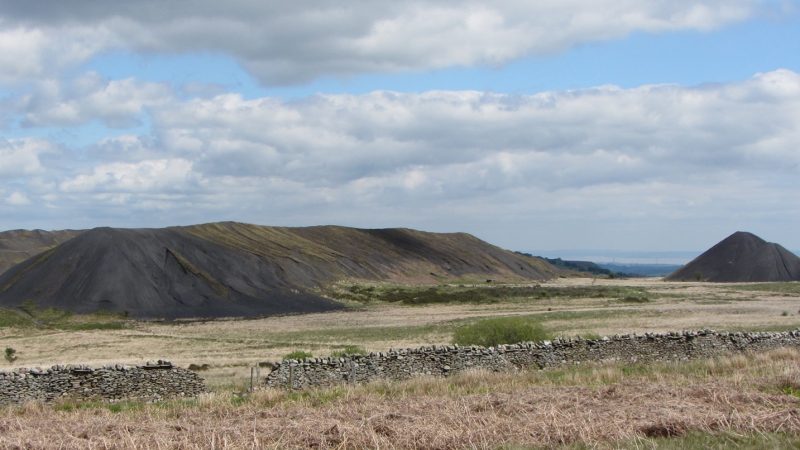
The coal tips in our valleys are a lasting reminder of Westminster’s contempt for Wales. Even though the tips, and the horrors they represent, predate the time of devolution and our Senedd, the UK Government still refuses to pay towards clearing them, and preventing another Aberfan from happening. For decades, these mounds of waste and spoil have loomed over our towns and villages, but the increased rainfall we’re seeing as a result of climate change means that they’re being destabilized: we cannot afford to wait for Westminster to find its conscience and act.

The story the tips tell is as maddening as it is cruel. Because our valleys paid a terrible price for the coal that was ripped from the earth beneath our feet. It was a material so valued that it gained the nickname of “black gold”, but the riches it brought forth were carried out of our communities, loaded in train wagons and put onto ships in the docks in Cardiff to carry them to every corner of the empire. Our valleys’ riches were stolen from us, and we were left with the dust that clogged the lungs of miners, and the soot and muck that was left littering our mountains. Because that’s what the coal tips are: they’re made up of the slag and spoil that was left over when the costly coal was taken away. We have been looted of our treasure, and the crooks didn’t even have the decency to take their rubbish with them.

And so those tips remained, for decades, until the morning of 21st October 1966, a date that is seared into the minds of people living in our valleys. On that dark day, the tip that cast its shadow over the village of Aberfan slipped down the mountainside and collided with a school, killing 116 children and 28 adults. That day should have spelled the end of coal tips in Wales; it should have resulted in every tip being cleared. But the guilt of people in power subsides quickly: only the tip above Aberfan itself was removed, and £150,000 from the victims’ memorial fund was plundered to pay for its removal. Harold Wilson’s Labour government was forever shamed by that callous act of betrayal .

For more than fifty years, the tips lay largely dormant, until in the spring 2020, a landslip occurred in Tylorstown in the Rhondda valley, bringing blackened muck rushing down the mountainside. Mercifully, no houses were in its path, and nobody was harmed, but that incident reignited people’s fears, held for so long in slumber, that another Aberfan could befall us. The Welsh Government invested millions of pounds in a programme to monitor, categorise and stabilize the thousands of tips that pock and scar our skylines – but it is a scandal that Westminster, to date, has refused to pay any share of this money, or to recognise its historic liability for making these ticking time-bombs safe.

Indeed, at the end of last year, when the Welsh Government finally published information about the location of Wales’ high risk tips, it was revealed that David TC Davies – the Secretary of State for Wales – had refused to put his name to a letter that was sent to all MSs and Welsh MPs. An agreement had previously been made at a joint summit that the letter would be a joint message from the Welsh Government and the Secretary of State, but he belatedly chose not to add his name. It was an omission which spoke volumes, because in that blank space where his name should have been, we in Wales saw repeated the decades of indifference shown to us by those in Whitehall.

And it was an omission that was fitting, in some perverse way, because the tips above our towns are the legacy of more than mining for us in Wales: they speak too of Westminster’s negligence towards our communities, of generations of cruel disdain. The tips still darken the horizons of our valleys, and remind us of a nightmare from which not all of us have awoken.

These tips must be cleared, but if there is to be any justice done for the poverty and pain inflicted on our valleys; for the years of underinvestment; for all the times former miners have struggled to get breath into their weary, blackened lungs – then Westminster must foot the bill. It would be some belated acknowledgement, inadequate though it would be, that they recognise and atone for the scars left upon these communities by an industry and a government that abandoned them.

I have urged Wales’ outgoing First Minister, Mark Drakeford, to use his final weeks in office to demand from the UK Government that this cost too shouldn’t be one our communities should bear alone.

Delyth Jewell is a Member of the Senedd for South Wales East and deputy leader of Plaid Cymru
UK Climate campaigners challenge Rishi Sunak’s new gas power station commitment

Yesterday


'Dirty fossil fuels are what got us into this mess': The Tories abysmal record on clean energy investment condemned


Climate groups have challenged the prime minister’s promise today to build new gas power plants, drawing attention to the government’s abysmal record of investing in clean energy.

Campaign organisations have argued against making Britain more dependent on fossil fuels and have blasted ministers over years of failure to put green energy ahead of oil and gas.

The government has said it will commit to building new gas power plants in order ‘to stop blackouts’ arguing the plans are needed to secure the UK’s energy security. However green campaigners have argued this will set the UK further back on climate commitments.

Mike Childs, head of policy and research at Friends of the Earth said keeping the UK ‘hooked on gas’ while failing to invest fast enough in renewable energy will see the UK ‘easily’ miss the 2030 carbon reduction target, promised by the Prime Minister at international climate talks.

“Dirty fossil fuels are what got us into the mess of high energy bills and a rapidly destabilising climate – more of the same is not the solution,” Childs argued. “Clean, cheap renewable energy is at our fingertips waiting to be unleashed.”

Last year the UK government was criticised by industry insiders for its “disastrous” handling of an auction into offshore wind, resulting in no additional offshore wind farms going ahead, which Childs said had further put the country behind.

“The UK has an abundance of homegrown renewable energy potential – harnessing this would drive down bills, create jobs, strengthen the economy and boost our energy security,” he said.

“Much like our reservoirs store rain from the winter for use in the summer, it’s entirely possible to capture excess renewable energy to be used later when in shorter supply.”

Doug Parr from Greenpeace UK also stressed the link between Britain’s reliance on fossil fuels and high energy bills. Only by upgrading the country’s ageing grid and by attracting massive private investment to develop renewables can make Britain move to a low-cost, secure and clean energy system, Parr argued.

“The government’s cunning plan to boost energy security and meet our climate goals is to make Britain more dependent on the very fossil fuel that sent our bills rocketing and the planet’s temperature soaring,” said Parr.

“But this government has failed on both fronts,” he added. “They’ve blocked cheap onshore wind, botched the latest offshore wind auction and left new solar and wind projects waiting for over a decade to connect to the grid.

“And now, with the energy secretary and the prime minister banging on about building more gas plants, they could further put off green energy investors, which will surely damage our energy security, not improve it.”

Lib Dem MP Richard Foord blamed the Tories failure to invest in green policies such as home insulation for the current argument about the need to rely on more fossil fuels.

The MP for Tiverton & Honiton wrote on X: “Had the Conservatives kept investing in insulating homes over the past decade, as LibDems did in Govt, we’d have cheaper bills, more clean energy, and greater energy security. Instead, we are faced with a Government committing to more carbon emissions.”

(Image credit: D1v1d / Flickr)

Hannah Davenport is news reporter at Left Foot Forward, focusing on trade unions and environmental issues
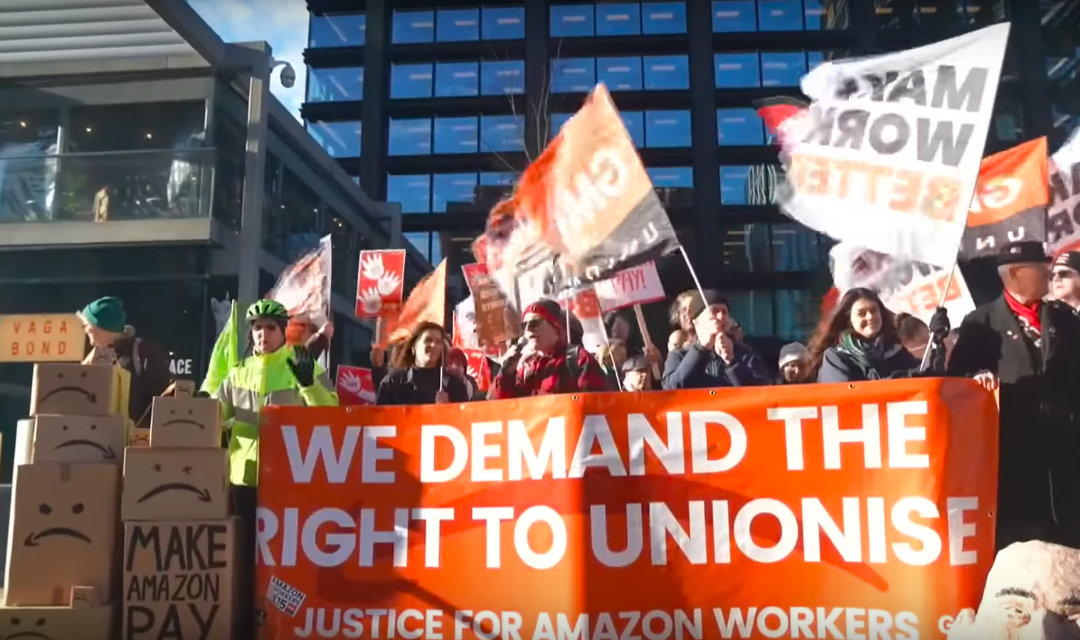
Amazon hit with fresh strikes in ‘huge blow’ after second bid for union recognition
Yesterday
Left Foot Forward

UK Amazon workers take 'another huge step forward in building a unionised workplace'


Amazon workers will take further strike action this month in an ongoing dispute with the delivery giant for better pay, conditions and union rights.

It follows on from the GMB union making a second formal bid for union recognition on behalf of Amazon UK workers, meaning the company is on the brink of being forced to recognise the trade union for the first time.

Companies can be forced into union recognition by the Central Arbitration Committee if more than 50% of the workforce become union members. GMB pulled out of a first bid for union recognition last year after it accused Amazon of using ‘dirty tricks’ and union busting tactics in hiring 1,000 new workers to undermine membership numbers.

If the union didn’t revoke its application it would have had to wait three-years before applying again. But the union is now ‘confident’ it can surpass the legal threshold for recognition, having seen a significant growth in membership over the past year of strike action.

GMB union organiser Stuart Richards told LFF that the second formal bid represented a “huge step forward” in the workers’ struggle against union-busting and unionising the workplace.

“Workers at Amazon Coventry have made another huge step forward in building a unionised workplace. They’ve tackled their bosses’ desperate attempts to stop workers organising head on,” Richards said.

“Inside the warehouse there are now elected GMB Union reps leading over half the workforce.”

Workers at the Amazon Coventry warehouse will walkout later this month, along with workers at the newly opened flagship Amazon HQ in Birmingham.

GMB organiser Rachel Fagan said union membership at Amazon had “exploded” with more and more workers joining in their bid for £15 an hour and union rights.

Fagan said: “Amazon bosses may have hoped this campaign would fade away, but instead union membership at Amazon has exploded as more and more workers are standing up to demand Amazon listens.”

Amazon has previously stated that it respected employees’ rights to join or not join a union and that the company’s minimum starting pay has risen by 20% over the past two years.

Whilst workers have slammed ‘insulting’ pay rises from the company, and highlighted the grueling working conditions and insubstantial pay leaving employees struggled to cope with the cost of living crisis.

In Coventry, workers will down tools on Tuesday 19 and Wednesday 20 March, and in Birmingham strikes will take place on Wednesday 27 and Thursday 28 March.

(Image: Channel 4 News / YouTube Screenshot)

Hannah Davenport is news reporter at Left Foot Forward, focusing on trade unions and environmental issues
UK
Who are the biggest Tory donors during Rishi Sunak’s tenure?


Hannah Davenport
Yesterday
Left Foot Forward

The millionaire business moguls lining the Tory Party pockets


Since Rishi Sunak became our latest Prime Minister back in October 2022, who has provided the Tory Party with their largest donations since?

Frank Hester – £10 million

The Tory party is facing calls to give back £10 million in donations from its largest single donor Frank Hester, over racist remarks he allegedly made towards Dianne Abbott MP.

The health tech boss became the biggest ever Tory donor this year after he made a second £5 million gift, adding to the £5 million already received in the last six months.

He founded the software company Phoenix Partnership (TPP) and has made fortunes from public sector contracts. In the last eight years he won over £400 million of NHS and prison contracts, The Guardian reported.

Sainsbury’s will – £10 million


The party received a hefty £10 million donation at the end of last year from Conservative peer Lord John Sainsbury. The supermarket tycoon left the record donation, the party’s biggest ever gift, in his will.

Graham Edwards, party treasurer and property tycoon – over £4.5 million

Since October 2022 the Tory Party has gained over £4.5 million pounds from the co-founder of property investment firm Telereal Trillium, one of the UK’s largest private companies.

Shortly after Sunak came to office, Graham Edwards was appointed treasurer of the Conservative Party in December 2022, however he was then embroiled in a tax dodging scandal only a month later, after being found to have used a tax avoidance scheme to try and reduce tax due on his £5 million bonus.

He has also held a board position on the right-wing think-tank Centre for Policy Studies.

Mohamed Mansour, UK-based retail businessman – £5 million

Last January, Egyptian businessman Mohamed Mansour made a £5 million donation to the party, at the time its largest since 2001. However he faced a backlash when it was found that his Caterpillar dealership Unatrac supplied machinery to Russia’s oil and gas industry, despite sanctions. The company’s business activity in Russia has since been suspended.

The billionaire made his first donation to the Tory Party in 2016 and was also made a senior treasurer by Sunak.

Amit Lohia, clothing businessman – £2 million


Indian-born petrochemicals executive Amit Lohia gave a £2 million donation to the party last year. Lohia’s donation was also mired in controversy over his company’s links with Russia, with business interests in a Russian textiles plant.

Dubbed the “Prince of Polyester” he became vice chairman of Indorama Corporation, founded by his billionaire father, who’s huge wealth comes mainly from producing plastics and fertilisers.

Alan Eldad Howard, hedge fund manager – £1 million


Last May the party received £1 million from Alan Eldad Howard, the British hedge fund manager and cofounder of Brevan Howard Asset Management. Howard, who has lived between Switzerland and London, ranked at number 100 in the 2023 Sunday Times Rich List, with a fortune of £1.75 billion.

Professor Christopher Barry Wood – £1.3 million


Professor Christopher Barry Wood has made a total of 17 donations to the Tories since Rishi Sunak came to office, totaling over £1,300,700 . Aside from the more modest £20,000 donations he usually makes, he gave a £700,000 donation last October followed by a £300,000 one six days later. There is very limited information about the professor online.

An investigation by the independent in September 2023 found that four-fifths of all individual donations made to the party since Mr Sunak’s leadership were from just 10 wealthy individuals, which the news site said reflected a dwindling pool of donors.

The Conservatives increased the election spending limit from £19 million to £34 million last year.

(Image Credit: Number 10)

Hannah Davenport is news reporter at Left Foot Forward, focusing on trade unions and environmental issues
UK

Exclusive: Aslef leader warns train drivers’ strikes could ‘go harder’ amid government radio silence


Hannah Davenport 
Yesterday
Left Foot Forward,

'If there’s no willingness on the other side to talk to you how do you resolve that? I can’t force the government to come into a room with me.
'


The leader of the train drivers’ union has said there is a “temptation to go harder” with industrial action as the government maintains radio silence in the ongoing bitter dispute over pay and conditions.

After 22 months of industrial action so far, strikes by train drivers are likely to rumble on throughout the year as Aslef general secretary Mick Whelan blamed a “failing government” who seem to hold no interest in solving the dispute.

Referring to the ongoing dispute, Whelan told a group of journalists he had never dealt with “such duplicitous, deceitful people” in his life and said he is currently not dealing with the government at all, as ministers refuse to negotiate.

Train drivers haven’t had a wage increase in five years and the union is looking to secure a pay rise for the previous two years. An initial offer was rejected by the union, which it said represented a 3% pay cut and the ripping up drivers’ terms and conditions.

The dispute concerns 14 different rail companies represented by the Rail Delivery Group and controlled by the UK government.

Comparing the dispute to others he’s worked on during his 13 years as general secretary, Whelan said he’d “never seen such a massive disconnect, and it’s not an industrial one it’s a political one”.

“The reason we don’t go on strike very often is that we often threaten something, go and meet with someone and find a way forward. That dialogue isn’t taking place at all,” Whelan said.

“If there’s no willingness on the other side to talk to you how do you resolve that? I can’t force the government to come into a room with me.

“Since we realised this is a political dispute we decided we had to be in it for the long haul. Because a government has infinite resources and workers don’t.”

However he suggested the union could “go harder” and said there was “no guarantee” it will be one day’s action, instead mirroring recent strikes to spread it over five, six or seven days with an overtime ban.

“There’s all sorts of things we could do now, I’ve got a playbook with all these scenarios.”

Whelan stressed he’s never known anything like it during his career in the trade union movement, and said he would much rather work with companies than against them, but that it was a “strike of the government’s making”.

“I don‘t understand why they hate train drivers,” Whelan said. “Before there was even any disputes, they’d already started running these threads in a lot of the media about greedy train drivers and we weren’t in dispute and hadn’t even asked for a pay rise.”

“Their hoping to burn us out,” he added. “We’re not the villains in this.”

He stressed it wasn’t the train drivers’ strike deterring people from using the railways, but soaring ticket prices, as he argued that progress on the railways was going backwards under the Tories.

“We are going backwards, I spent the last 20 years trying to regrow the railway and argue for a greener railway,” said Whelan.

“We’ve never had a proper investment profile in the UK, not just for rail but for all the things we do. You need a multi-parliament vision to deliver on big projects.

“So for rail in particular you need 10 to 30 years to look at what you’re going to do for future generations as they have done in Spain and elsewhere. We go parliament to parliament, that’s why projects like HS2 over run and get destroyed.”

Members of the union have continued to vote overwhelmingly for strike action. The union is holding its annual conference for delegates in May where members can have their say on the strike strategy, likely to dictate what future strikes could look like.

More strike dates by train drivers are likely to be announced very soon, the union received an overwhelming mandate for strike action in December which under current legislation lasts for six months.

(Image credit: Aslef)

Hannah Davenport is news reporter at Left Foot Forward, focusing on trade unions and environmental issues
UK

REVEALED: Tory Party ‘has a racism problem’ say public in damning poll


Majority of the public think the Tory Party should give away Frank Hester's donation amid racism row


The majority of Britons believe the Conservative Party has a “problem with racism” and should not take cash from donors who make racist statements, a damning new survey has revealed.

In the snap poll carried out following the racist remarks from major Tory donor Frank Hester, 54% of people thought the Tory Party had a problem of racism among its donors, while 56% thought that it had a problem of racism among its MPs.

Just over half of voters also felt there was a problem with racism among Tory members, while Rishi Sunak’s record on making the country more united has also been blasted, with only 36% of the public believing the Tory Party “takes allegations of racism seriously”.

The Conservative Party is facing pressure to return the £10m donated by Hester over the past year, which Sunak has refused. However the survey has found more than half of the public think the party should not keep it, with over 70% saying the money should be handed to an anti-racism charity. Only a quarter through it should be given back to Hester.

At PMQs today, the Prime Minister said the public should accept Hester’s apology, saying his “‘remorse should be accepted”.

The snap poll of 1,001 voters was carried out by pollster JL Partners on behalf of campaign organisation 38 Degrees.

Matthew McGregor, CEO at 38 Degrees, said: “To say that the sight of Diane Abbott, a trailblazing MP who has inspired so many with her pioneering fight for gender and racial justice, on television makes you “want to hate all Black women”: that is racist, that is sexist, that is utterly abhorrent.

“If Frank Hester used those words, the Conservative Party can go some way to show it rejects racism by giving his £10 million straight to charities that fight vile racism like this, and stripping him of his OBE.

“Anyone shown to have used disgusting, violent words like these can’t be allowed to keep one of our country’s highest honours – and shouldn’t be the kind of person the Conservatives want to fund their election campaign.”


Hannah Davenport is news reporter at Left Foot Forward, focusing on trade unions and environmental issues


Progressive movements globally should be preparing to resist Trump Presidency

“Oil and natural gas lobbies, smelling a return to federal influence, are pouring money into Trump’s reelection campaign.”

By John Feffer, Foreign Policy in Focus (US)

He faces multiple indictments. He has to pay over half a billion dollars in fines for criminal misconduct. He has even been removed from the Republican Party ballot in Colorado.

And yet, Donald Trump continues to lead the race in the Republican Party primary, having won every state so far and knocking out all but one opponent. In head-to-head polls with President Joe Biden, meanwhile, Trump is running even or even a few points ahead. Young people, who helped Biden win in 2020 but are furious with many of his policies, particularly over the war in Gaza, are increasingly favoring Trump.

It’s not a foregone conclusion that Trump will win in November. He could land in jail. He could lose several important swing states—Michigan, Arizona, Georgia, Pennsylvania—and go down to defeat in the Electoral College in another nail-biter of an election.

But progressive movements the world over must nevertheless prepare for a Trump victory. Even if he loses his bid for re-election, Trump’s MAGA supporters will continue to have an impact on U.S. policy, particularly in conjunction with a resurgent far right elsewhere in the world.

If Trump does win in November, the greatest damage will perhaps be in the realm of climate justice as the new president moves to reverse as much as he can of the Biden administration’s policy on renewable energy. Oil and natural gas lobbies, smelling a return to federal influence, are pouring money into Trump’s reelection campaign. Whatever modest gestures the Biden administration has made in the direction of addressing global carbon emissions, including the Global South’s energy transition, will be thrown out as soon as Trump takes office.

Trump and his allies have lambasted “globalists” in an attempt to win favor with working people in the United States. But whether it’s oil company executives, billionaire donors who are slowly shifting away from the other Republican candidates, or wealthy oligarchs like Russian leader Vladimir Putin and Saudi leader Muhammad bin Salman, Trump is most comfortable among rich people who flatter him in exchange for policy influence, as casino magnate Sheldon Adelson did around Israel policy prior to the 2016 election.

Incredibly, Trump’s allies have also advanced him as a peace candidate, someone who, as Republican Senator J.D. Vance put it in The Wall Street Journal, “won’t recklessly send Americans to fight overseas.” Although Trump famously was unhappy with U.S. troop presence in Afghanistan and is skeptical of U.S. commitments to Ukraine, he shows no inhibitions around sending Americans to fight overseas. As president, he contemplated wars with Iran and Venezuela and made reckless threats against China and North Korea. The blueprint for his next term, Project 2025 created by Trump-aligned movements and thinktanks, emphasizes the importance of confronting China, increasing military spending especially around nuclear weapons, and shifting from a “defensive” to an “offensive” footing in cyber and space capabilities.

Climate, global economy, and peace: these are the issues that Trump and his allies hope to distinguish themselves from President Biden and the Democrats. They are the issues around which Trump is the most hypocritical and, in fact, most vulnerable. These are also the issues that progressive forces have detailed alternatives that can appeal to the constituencies most receptive to Trump’s messages.

On climate issues, Trump and the far right in Europe have portrayed clean energy alternatives as elite-driven. The German far right has boosted its popularity by complaining about the cost of heat pumps while Trump has referred to renewable energy as “a scam business.” Progressives have a golden opportunity not only to stress the urgency of addressing elevated temperatures and rising waters but to emphasize all the new jobs associated with the economic shift. The Inflation Reduction Act, alongside its more ambitious European Green Deal, means money in the pockets of working people. That’s potentially an election winner.

By linking Trump to real globalists and demonstrating how his policies have boosted the fortunes of his rich friends, progressives can put forward a set of economic policies that appeal to the very folks that have been left behind by globalization and have, as a result, been most receptive to Trump’s messaging.

And progressives have worked to establish real constrains on the overseas military campaigns of the United States. We have demanded an immediate ceasefire in Gaza, and we have supported a just peace in Ukraine that is predicated on an immediate withdrawal of Russian occupation forces. We have campaigned for reductions in nuclear arsenals and the reallocation of military dollars to human needs.

These are the campaigns that form the core of a new internationalism. Activists will be coming together in London on March 23 to strategize on how to build links across issues and across borders. Donald Trump is far from the only extremist threat. Far-right forces have won elections recently in The Netherlands, are poised to return to power in Austria, and expect to capture a majority of the seats in the European Parliament in the June elections. The far-right has taken power in Argentina. It expects to hold onto power in India and Russia in elections this year.

The far right, in other words, is rapidly building up its own illiberal internationalism. It’s time for progressives to come together to build an alternative not only to the far right but to the tepid policies of the center. Join us on March 23 to shape a global movement that can save the planet.


UK

Local Councils Striking a Blow for Workplace Democracy – Minimum Service Level free zones campaign launched

“Supporters have been in contact with 109 council leaders raising the question of becoming a MSL free zone. Almost 100 individual councillors, including two council leaders, have signed up to commit to raising the pledge within their council.”

By Adrian Weir, Campaign for Trade Union Freedom

Last week the Campaign for Trade Union Freedom in partnership with Strike Map launched a campaign aimed at getting local councils, from district to county level, to declare themselves Minimum Service Level free zones by pledging not to issue work notices when faced with strikes by education workers, municipal transport workers which includes trams and light rail, and fire and rescue services.

Under the terms of last year’s draconian Strikes (Minimum Service Levels) Act an employer may, it is not a mandatory requirement, issue a work notice obliging unions to ensure that sufficient numbers of its members attend their work during a strike to provide the minimum service as defined by Government Regulations.

The ball has already been set rolling by Sheffield City Council where Independent councillor Sophie Wilson had successfully moved a motion securing such a pledge from her council. Sheffield is both an education authority and has a municipally owned tramway in the city.

The campaign has got off to a startling start. Already CTUF and Strike Map supporters have been in contact with the Leaders of 109 councils raising the question of becoming a MSL free zone. Almost 100 individual councillors, including two council leaders, have signed up to commit to raising the pledge within their council.

Our campaign seeks to mobilise union members in their places of residence and indeed willing CLPs so is course completely separate from any collective bargaining arrangements that the three main local authority unions conduct with councils via the Green Book institutions.

The campaign is supported by the largest teachers’ union, the NEU, as well as a twelve other unions and campaign groups:

  • train drivers’ union, ASLEF
  • Association of Educational Psychologists
  • food workers’ union, BFAWU
  • Hospital Consultants’ & Specialists’ Association
  • civil servants’ union, PCS
  • railway staff union, TSSA
  • logistics union, URTU
  • specialist union federation, GFTU
  • Psychotherapy & Counselling Union
  • Arise – A Festival of Left Ideas
  • Peace & Justice Project

To explain the legal attack in more detail; in the dying embers of this Government it has tried to change the law to allow agency labour to be used as a substitute labour force during a strike – struck down by the High Court – but the Government will bring it back to Parliament.

It has also changed the law to increase the amount of statutory damages a union could have to pay the employer for supporting an “unlawful” strike, for large unions it’s £1 million.

As discussed above, it has enacted the Strikes (Minimum Service Levels) Act that requires unions organised in “important public services” to ensure that a sufficient number of its members in go to work during a strike to ensure that there is a minimum service provided.

These “important public services” are:

  • border security
  • decommissioning of nuclear installations
  • education
  • fire and rescue
  • health services
  • transport services.

In the event of strike action an employer may issue a “work notice” to the relevant unions specifying which members of that union will be required to attend work to provide the minimum service as set out in the Regulations – this being the focus of the campaign aimed at district and county councils.

Under a statutory Code of Practice unions will be obliged to take “reasonable” steps to ensure those of its members covered by the “work notice” know that they must not strike and attend work and pickets must no attempt to stop these members attending work.

Unions that don’t take these “reasonable” steps may be liable for damages clams by employers in the High Court.

Members who decline to attend their work after a “work notice” has been issued may be dismissed and have no claim for unfair dismissal at the Employment Tribunal.

There may well be a range of responses:

  • industrial – ASLEF when threaten with a “work notice” called 5 extra strike days – employer backed down
  • legal – PCS is launching court action against the Government – breach of European Convention of Human Rights Art 11 which safeguards freedom of association and assembly
  • political – Sheffield City Council has passed a motion pledging not to issue “work notices” – our campaign is to get other councils to follow suit.

To take part in this campaign, you can write to your council leader here. If you are you a councillor, you can sign up here.