MAR 09 2024

From CrimethInc.
LONG READ
Some Occupy the Forest, Some Shut Down the Power Grid
For several years now, locals, anarchists, environmentalists, and others have been engaged in a struggle against a Tesla “gigafactory” in the small town of Grünheide, only five kilometers southeast of Berlin. This is the biggest factory producing electric cars for Tesla in all of Europe. Many important issues converge in this conflict: the struggle between global capitalism and local ecosystems, the question of what counts as “sustainable” and who gets to define it, the power that billionaires like Elon Musk have acquired and are using to reshape our society in line with their authoritarian vision.
Four years ago, the government of Brandenburg overruled popular opposition to permit Tesla to destroy a forest in order to build the factory. Now, Tesla is seeking to expand the facility at further cost to local forest and groundwater. Two weeks ago, a majority of residents of Grünheide voted against Tesla’s proposed expansion.1 According to the law, however, the final decision is up to politicians, not the locals.
Shortly after the vote, activists established an occupation in the forest that is to be destroyed to make way for the factory expansion. A hundred people are now occupying the trees with a variety of structures. Thus far, the police have observed them but have yet to undertake an eviction.
On the morning of March 5, 2024, a power pylon caught fire near Steinfurt, directly south of the Tesla gigafactory in Brandenburg. The act of sabotage temporarily cut off electricity to thousands of households in various parts of Berlin. It also halted work at the Tesla factory for at least a week, likely costing the company hundreds of millions of euros.
A communiqué appeared claiming responsibility in the name of Vulkangruppe—“Volcano Group”—a clandestine anarchist group said to have been active since 2011. The group has claimed credit for burning a power cable in Berlin-Charlottenburg in 2018 and cutting the power supply to the Tesla factory construction site in Grünheide in 2021, among other actions.
Here, we present an interview with a participant in the forest occupation alongside a translation of the communiqué by Vulkangruppe, in order to offer multiple perspectives from the movement against the Tesla gigafactory.

The forest occupation.
THE FOREST OCCUPATION: AN INTERVIEW
We conducted the following hasty interview on Friday, March 8, with a participant in the forest occupation Tesla Stoppen.
Explain who is involved and what you are trying to do.
There is a lot to say about what we are doing, but to make it short, Tesla wants to expand their gigafactory, which is the biggest factory for electric cars for Tesla in all of Europe, with about a thousand people working there. For this purpose, they want to cut down more forest, because the whole factory is in a forest—or is in what used to be a forest. They cut down a big part of the forest before, to build the first part of the factory, and now Tesla wants to get bigger. That is why we occupied the forest.
A lot of different people are involved here. The occupation itself is called Tesla Stoppen, or “Stop Tesla” in English, but some other groups are also involved, including a bigger group called Tesla den Hahn Abdrehen [“turning off the tap for Tesla”], which involves a lot of other left groups and also some locals. They are organizing demonstrations and court efforts.
Also, there was a vote here and they voted against expanding the gigafactory, so the locals are also against this expansion.
It’s important to mention that we are not just a forest occupation, we also call ourselves a water occupation, because there is a water protection area where Tesla’s gigafactory is. They are using a lot of water for the factory, and there have been a lot of problems and accidents in the factory, which is harming the groundwater for hundreds of thousands of people.

In a bigger view, this is a protest against the framing of “green” capitalist growth systems. We are saying “Clean cars are a dirty lie”—it’s not true that they will solve the problems of the climate crisis. Electric cars are an international problem because the batteries of the Tesla cars use materials like lithium and kobalt that come from extractive projects. That is a problem for us because it involves exploitation, it is a neo-colonial way of exploiting the earth and human beings.
Describe what tactics are involved in this forest occupation.
We are occupying the trees by building tree houses, building pathways in the trees. We are living in these tree houses and building to prepare for the state’s attempts to evict us, so that when the police come we can be secure in the tree houses and defend the occupation.
When we climb up more than 1.5 meters, German law requires that they need to employ special forces to get us down—and there are not so many special forces or climbing police to do this, which makes it harder for them. We are preparing the tree houses, so that when the police come, we can climb up into them—so that we will have the infrastructure up there, a kitchen, water, everything—so we can stay there for a week.

A house in the trees.
As we do press and social media work, we are trying to be very open and friendly. This is a big campaign with a cooperative design: we are trying to bring people in, to help people to get involved, we are working a lot with locals. There are a lot of things we are trying to do that we learned from occupations and protests at other places, like Lützerath.
The occupation here began at the beginning of last week. As far as tactics go, it might be interesting to know that we came here with 80-100 people, we immediately brought eight platforms and tree houses into the forest at night. That involved a lot of logistics—raising them into the trees and so on. We started our occupation in one night, with eight tree houses—that was a statement, aimed at establishing enough power that we could not be evicted over the following days, because it is not easy to evict eight tree houses with 80-100 people involved.
Regarding how we live together, we are trying to organize ourselves in an anarchistic way. So there is a lot of self-organization, we have different groups that organize plenaries and smaller meetings. There is a lot to say about how we live together, how we are trying to get rid of hierarchies, racism, sexism, and so on. It’s about organizing ourselves, being open to new people, and reflecting on the tendencies that we bring with us from society at large.
At the moment, things are going well: we have a lot of support, a lot of people are coming here, there is a lot of media attention, a lot of press. We are trying to frame the issue about water as an international climate problem, as a question about who is getting access to water and who is not. So for now, everything is going fine, but a lot of people think that they will try to evict us next week, because we had police come to the forest occupation over the last few days and they filmed everything, took photos—it was special forces who did that.
So… we do not think that we are safe yet.

How has the arson attack affected the occupation?
About the attack, we just heard about it from the news. For us in the forest, it didn’t change very much. Of course, it changed the framing of some press, some media people, who say “Oh, you are all terrorists,” and of course, there is even more media attention about it… It also changed our press and social media work, because they are trying to say “You are the same, or doing the same, as the people who burned the electrical pylons.” So it’s harder to do the press work, now, but for us in the forest, not so much has changed.
How does this particular struggle relate to other ecological and anti-capitalist and anti-fascist struggles in Germany right now?
In relation to other struggles in Germany, with this occupation, we want to take the next step in the fight for climate justice, because we are trying to bring in water as an issue, and we are trying to debunk the narrative of “green growth,” the idea that electric cars are solving the problem. At the same time, this occupation is related to the anti-fascist movement, because Elon Musk is also part of the fascist problem.

The point is to get new ideas and take steps towards ending capitalism. Another project that is involved is Disrupt, which is a new idea to organize the radical left. Disrupt, the campaign, is now part of this occupation, so there are a lot of new things to come in Germany and in Europe.
And we are getting support from other countries. There will be some people here from Les Soulèvements de la Terre [“Earth Uprisings”] from France visiting us this weekend. We are also trying to support the workers at Tesla, because they have really bad work conditions there and low pay, there are lots of problems when they work there. We are trying to support them, to talk with them.

SHUT DOWN TESLA VOLCANO GROUP! ATTACK ON THE POWER SUPPLY NEAR STEINFURT
This statement appeared on the morning of March 5, shortly after the burning of the electical pylon, though it describes the action as taking place “on the eve” of March 8, International Women’s Day. In German, the name “Elon” sounds similar to the word Elend, which means “misery.” To German readers, the authors’ pun “Elend Musk” throughout the text reads as “Misery Musk.”
We sabotaged Tesla today. Because Tesla in Grünau gobbles up earth, resources, people, and labor and spits out 6000 SUVs, killer machines, and monster trucks per week. Our gift for March 8 [International Women’s Day] is to shut down Tesla.
Because the complete destruction of the Gigafactory and with it the cutting off of “techno-fascists” like Elend Musk is a step on the path to liberation from the patriarchy.

The base of the targeted pylon.
The Gigafactory has become known for its extreme conditions of exploitation. The factory contaminates the groundwater and consumes huge amounts of already scarce drinking water2 to make its products. The state of Brandenburg-Berlin is being dug up for Tesla without any scruples. Critics at the waterworks, local residents, and eco-activists are all being silenced. Figures are being embellished. Laws are being bent. People are being deceived. Nonetheless, a large part of the population around Grünheide rejects the Gigafactory because of water theft and gentrification. Protest and resistance continue unabated. And they are growing, because there is more than one reason for them. In addition to the dirty battery factory, Tesla now wants to expand its factory site by a further 100 hectares, including a freight station.
An expansion of the storage and logistics areas directly at the plant (including the possibility of intensive rail logistics) is intended to stabilize the supply chains and production. This is currently impaired because deliveries from the forced labor camps in China cannot take the direct route through the Red Sea. The Brandenburg Ministry of Economic Affairs is eating out of Tesla’s hand, despite many reasons for refusing any approval. Apparently, the only important thing is that Brandenburg flourishes as a thriving business location.
Tesla is a symbol of “green” capitalism and a totalitarian technological attack on society. The myth of green growth is just a dirty ideological magic trick to close ranks against domestic criticism. It suggests a way out of the climate catastrophe. But “green capitalism” stands for colonialism, land theft, and an exacerbation of the climate crisis! Lithium batteries come from toxic mines in Chile and use up other rare metals, which means misery and destruction for those who live where the mines are. The battery factory in Grünheide near Berlin, for example, requires the rare raw material lithium, which is also mined in Bolivia. Musk puts his cards on the table when it comes to pushing through lithium mining in Bolivia: “We will coup whoever we want,”3 he says, commenting on Indigenous resistance to mining. Mineral resources are being ripped from the earth under brutal conditions. The “green deal” is merely the expansion of economic growth without limits. In Portugal, too, the rural population is resisting the forced extraction of lithium.4

The burned electrical pylon.
Just as the earth is used and abused on a daily basis, Tesla does the same to people. It has forced laborers all over the world, such as Uyghur people in China, working (to death) for it (just like Volkswagen does5), whom the racist Chinese regime serves up to the company for its production. Even in Grünheide, the working conditions are considered disastrous. Only recently, a works council member of [the German metalworkers’ union] IG Metall in Grünheide was dismissed. Despite a yellow works council installed by Tesla,6 the truth about the conditions in the factory is leaking out. In order to improve accident statistics, people are taken to hospital by cab instead of by calling an ambulance. Internal critics are fired and if they take legal action, they are forced into a legal settlement. The financial compensation is then used as a muzzle to stifle public discussion about racist dismissals, for example by threatening contractual penalties. The terminated employee has to shut up in return for the money—that’s the calculation.
This is what the totalitarian technological attack looks like. A Tesla vehicle is a surveillance device for public spaces. It is equipped all around with high-resolution cameras from Samsung. Samsung is a company that is a leader in weapons technology, among other things. According to the manufacturer, the cameras record up to 250 meters. In “guard mode,” they film everything in the vicinity of the vehicle and guarantee that the driver is also monitored while driving. The driver is already a cost-free component of the Telsa universe and a guinea pig. Artificial intelligence will register every movement and every mistake the driver makes, monetizing these by using the data to train the software for autonomous driving.
Tesla is militarizing the road. Its moving tanks are weapons of war. The car as a weapon. The road is the battlefield. Instead of 9mm, Tesla has now introduced 856 hp to the world: “If you’re ever in an argument with another car, you will win,” says Elend Musk.7 A Tesla is a status symbol, at once statement and propaganda: for contempt of humanity, boundless destruction through “progress,” and an imperial, patriarchal way of life.
Anyone who buys an SUV is most likely a supporter of an imperial way of life who wants to profit from this madness to the bitter end. Every activist’s secret poetry album should include a wrecked Tesla. No Tesla in the world should be safe from our flaming rage. Every burning Tesla sabotages the imperial way of life and effectively disrupts the ever-tightening network of seamless smart surveillance targeting every expression of human life.
Armies use Tesla’s Starlink satellite system in their wars. For example, in Ukraine. Russia’s army also accesses Starlink satellite terminals from other countries to carry out attacks. Likewise, Israel uses the Starlink satellite system to murder people in Gaza. Tesla’s Starlink infrastructure is a military actor. Rolled up like a string of pearls made of garbage, they plow through the sky to make surveillance total.

A banner in the forest reading “Ceasefire now!”
Let’s talk about a man who will crumble to dust, even if he would rather be immortal: Elend Musk.
For men like him, the right swear word has not yet been invented to properly describe their arrogance, their contempt for humanity, their antisocial greed for power and recognition.
He makes no secret of his chauvinism. His propaganda platform X is the means to an end. This is where he gathers supporters of an imperial way of life. This is where the anti-Semites, anti-feminists, authoritarians, chauvinists, fascists, and supporters of hatred against “foreigners” reassure themselves. This is where they organize themselves with their elitist view of the world and of themselves as a master race. This is where the Aryans of the AfD meet their peers.

A tree house in the forest occupation.
When Elend Musk cheers the anti-feminist and neoliberal president of Argentina8 on X, it is because they are united. They are not bashful about this: they have decided to stand on the side of a deadly masculinism and leave a trail of blood behind them like a man-eating monster.
Elend Musk is the new model of neoliberal and patriarchal, neocolonial predatory capitalist for this century, who uses different means than the exploiters before him in the previous century. It is an invasive zeitgeist that uses the self-fabricated economic crises of valorization to tackle the next destruction. He is only following in the prepared brown footsteps of other patriarchal pioneers. In the same way, the “car manufacturer” Henry Ford was an admirer of the Nazis with their “Volkswagen” and their efficient organization of industry. The Volkswagen plant in Wolfsburg was run on the backs of forced laborers. The idea was that every German should be able to get a Volkswagen so they could drive either a car or a tank on the new autobahn. Ford, inspired by the efficiency of German labor organization, transferred the ideas to his empire in the USA. The assault on workers and the economization of exploitation became known as “Fordism.”

A recent protest action against Volkswagen in Wolfsburg.
This included the organization of labor and assembly line work—mass production with simultaneous mass consumption of the car. This model, also known as Taylorism, can be understood as a form of class struggle from above. Today, Elend Musk combines the invasive technological possibilities of our time with his misogynistic world view, patriarchal extremism, and the totalitarian attitude typical of his caste. As a “car manufacturer,” he stands as a revenant [a person who has returned from the dead] in historical tradition. In keeping with the times, he acts as a “techno-fascist.”
Instead of scrapping the car on the garbage heap of history and expanding free public transportation, only the driving technology is being changed, from combustion engines to electric motors, in order to preserve individualized transport. The imperial way of life is more economically lucrative.
The positions of power allow patriarchal “visionaries” such as Elend Musk to experiment—in the most horrific sense of the word—with the most “advanced” forms of exploitation and with the available resource of “human beings.” To conquer new realms, to advance, uninvited, and to penetrate the earth. Into space, into the sky, into public space, into our heads—the rapist leaves nothing untouched. The neurotechnology company Neuralink aims to link human brains with machines. They are testing on animals in order to learn how to read streams of thought. Just like SpaceX and Tesla, Neuralink is also aiming for a long-term vision in which different people are considered to have different amounts of inherent value. In which certain people are entitled to a better life inside the ecological catastrophe that is already underway.

A scene from the forest occupation.
Even if you are not on X, formerly Twitter, if you are just walking through the public streets, you will still be impacted by this miserable man and his cameras and propaganda. The positions of power enable a permanent encroachment, an invasive relationship towards all life, that can only be stopped by resolute resistance. The “technological progress” of our time provides them, the “techno-fascists,” with a tool of possibilities with which to continue increasing the exploitation and indescribable destruction of our planet.
In its abundance of power, this type can sometimes act like a head of state without having been elected. He has the necessary means of production and the “human” resource to make political decisions. This type can buy heads of state or bring parties and politicians to power, even one named Hitler. This type is the mastermind behind the alleged decision-makers of governments. He can impose conditions on states or reduce heads of state to supplicants. The patriarchal system churns out tons of people like this; they strive for the top position because that corresponds to the patriarchal model. They stage coups when things don’t go their way. They are replaceable. Only their power gives them these opportunities—without power, they are just pompous, ridiculous egomaniacs. They have been driving millions of people to their deaths for centuries, destroying nature as if it belonged to them. If we do not destroy the system that produces such egomaniacs, new examples of their kind will emerge. So this is not (only) about Elend Musk—it is also about an imperial way of life that these men are imposing on us. It’s about a showdown between this imperial way of life and freedom for all people.
Despite all their concepts about economics, this type of person represents a minority on this planet, a minority that believes that this imperial way of life is the only right one. What is new is that we have passed many of the tipping points that show us the finite nature of this destructive way of life. We are approaching other tipping points at breathtaking speed. Year by year, month by month, day by day.
(If all else fails, Elend Musk and a handful of underlings will flee the consequences of this imperial way of life and insult Mars with their presence. But our strong extra-planetary allies are already waiting for him; solar storms will crash his rocket, as they have already done to 30% of the satellites he has put in space before. So we will win.)

A poster against Elon Musk and the power of billionaires in general, wheat pasted on a street in Pittsburgh in 2022.
Many people still consider this way of life and the supposed wealth associated with it to be natural and desirable. Many people, mistaken and misguided, confuse possessions and material wealth with freedom and happiness. Ignorance, manipulation, and fear have shaped generations of people. We are reduced to work and consumption and degraded to an imperial way of life. This material wealth at the expense of other people is an indictment of “civilization.” This way of life does not make its beneficiaries happy either. The alternatives are made invisible or destroyed as they emerge. Approaches that could benefit humanity without generating money or power are delegitimized. Indigenous ways of life that relate to nature and its protection are being wiped out. Emancipatory approaches that address the roots of the problem have been drowned in blood in all eras. Or revolutionary movements are corrupted, infiltrated, their “leaders” bought in order to secure domination and the progress of destruction for decades more.
Consequently, on the eve of March 8th, we lit a beacon against capital, patriarchy, colonialism, and Tesla. We counter the ongoing abuse of the earth with sabotage. The ideology of limitless economic growth and belief in progress based on destruction have reached their end. All obstacles are being rolled aside for giants like Tesla in order to make Europe a “first-class investment location with a strong industrial ecosystem.” But something is slipping. We, a broad and colorful resistance, are rolling the obstacles back into place. We are the heaps of rubble and grains of sand in the gears of a machine that is stamping forward inflexibly. We are the disruptive factors in the engine room. We are the desperate and the outcasts. We are middle-class people in Germany or migrants on the run. We can be many people in the forest and in the tree houses and on the street; we can be covert sabotage groups like our own. There could also be people in the gigafactory who will take revenge on their foreman’s machines for the working conditions he forces on them. We can be caught, beaten, humiliated, assaulted, or murdered—but we are in the right. Only violence can keep us down. But we will get up again. And others will come after us.
Share this statement. Translate it and send it to other people in the global struggle.

A house in the forest occupation.
With our sabotage, we have set ourselves the goal of inflicting the largest possible blackout at the Gigafactory. We have ruled out endangering our lives and the lives of other people. The shutdown of production in the automotive industry is the beginning of the end of a world of destruction. Our bonfire of liberation was aimed at the system that supplies Tesla with electricity. We wanted to hit the overhead line of a high-voltage pylon in the connection to the underground cables at the waterproof cable sleeves and short-circuit the six 110 kV cables inside it. To do this, we opened the shaft to the cable joints, which were partly under water. We still flambéed the exposed power cables and, in combination with the water, this may have caused a short circuit. Damage to cable joints is often time-consuming and expensive to repair. At the same time, we made the fire large and high, with lots of car tires to weaken the steel structure and cause the mast to become unstable.
A steel mast only melts at around 1300 -1500 degrees. As we were working with a heat generation of around 900 degrees, the aim was to change the mechanical properties of the mast. In a load-bearing steel structure, a rapid, large fire that burns at 500 degrees or hotter can cause loss of strength and alter the metal’s stiffness, tensile strength, and elasticity. This can lead to buckling effects, twisting, or deflection. That was our intention.
We feel connected to all the people who are fighting around the world and who our words reach.
We feel connected to all the people who won’t let Tesla shut them down. If we want to win against giants like Tesla, we need many forms of resistance. Ours is one of many. Unpredictable and diverse, only together can we force the Brandenburg Ministry of Economic Affairs to respect the will of the population.
Minister for Economic Affairs Jörg Steinbach (SPD) sees the result of the vote by the residents of Grünheide (71% against the expansion of the Tesla factory site) as nothing more than an important vote. He sees the vote above all as a “healing opportunity,” which means that Tesla has not succeeded in convincing people and the company still has to do its homework in order to divide, buy, cajole, and persuade the population. He does not accept the public’s “no” and is calling on Tesla to soften its stance by May.
Everyone is free to be openly or secretly happy about our action. Anyone who feels compelled to distance themselves should ask themselves why? And who stands to gain from that?
Together we will bring Tesla to its knees. Switch off for Tesla.
Greetings to everyone on the run, in the underground, in prisons, and in the resistance!
Love and strength to all Antif@s!
Shut down Tesla Volcano Group!A corporate media report on the action
We have been inspired by a number of actions:“Switch Off the System of Destruction!” (September 2023)
“Climate and anti-war activists for the economic lockdown at Tesla and DB-Tren Maya”—action claim and further discussion (March 2022)
On February 7, 2024 two Teslas in Rummelsburg and on February 8 two Tesla charging stations in Vulkanstraße (!) were set on fire.
From Volcano Group: “Against the Progress of Destruction, Arson Attack on Power Supply of Tesla Plant in Berlin-Brandenburg” (May 2021)
More information on Tesla and surveillance: “Cars as Cameras” page 26, Autonomes Blättchen
Some Occupy the Forest, Some Shut Down the Power Grid
For several years now, locals, anarchists, environmentalists, and others have been engaged in a struggle against a Tesla “gigafactory” in the small town of Grünheide, only five kilometers southeast of Berlin. This is the biggest factory producing electric cars for Tesla in all of Europe. Many important issues converge in this conflict: the struggle between global capitalism and local ecosystems, the question of what counts as “sustainable” and who gets to define it, the power that billionaires like Elon Musk have acquired and are using to reshape our society in line with their authoritarian vision.
Four years ago, the government of Brandenburg overruled popular opposition to permit Tesla to destroy a forest in order to build the factory. Now, Tesla is seeking to expand the facility at further cost to local forest and groundwater. Two weeks ago, a majority of residents of Grünheide voted against Tesla’s proposed expansion.1 According to the law, however, the final decision is up to politicians, not the locals.
Shortly after the vote, activists established an occupation in the forest that is to be destroyed to make way for the factory expansion. A hundred people are now occupying the trees with a variety of structures. Thus far, the police have observed them but have yet to undertake an eviction.
On the morning of March 5, 2024, a power pylon caught fire near Steinfurt, directly south of the Tesla gigafactory in Brandenburg. The act of sabotage temporarily cut off electricity to thousands of households in various parts of Berlin. It also halted work at the Tesla factory for at least a week, likely costing the company hundreds of millions of euros.
A communiqué appeared claiming responsibility in the name of Vulkangruppe—“Volcano Group”—a clandestine anarchist group said to have been active since 2011. The group has claimed credit for burning a power cable in Berlin-Charlottenburg in 2018 and cutting the power supply to the Tesla factory construction site in Grünheide in 2021, among other actions.
Here, we present an interview with a participant in the forest occupation alongside a translation of the communiqué by Vulkangruppe, in order to offer multiple perspectives from the movement against the Tesla gigafactory.
The forest occupation.
THE FOREST OCCUPATION: AN INTERVIEW
We conducted the following hasty interview on Friday, March 8, with a participant in the forest occupation Tesla Stoppen.
Explain who is involved and what you are trying to do.
There is a lot to say about what we are doing, but to make it short, Tesla wants to expand their gigafactory, which is the biggest factory for electric cars for Tesla in all of Europe, with about a thousand people working there. For this purpose, they want to cut down more forest, because the whole factory is in a forest—or is in what used to be a forest. They cut down a big part of the forest before, to build the first part of the factory, and now Tesla wants to get bigger. That is why we occupied the forest.
A lot of different people are involved here. The occupation itself is called Tesla Stoppen, or “Stop Tesla” in English, but some other groups are also involved, including a bigger group called Tesla den Hahn Abdrehen [“turning off the tap for Tesla”], which involves a lot of other left groups and also some locals. They are organizing demonstrations and court efforts.
Also, there was a vote here and they voted against expanding the gigafactory, so the locals are also against this expansion.
It’s important to mention that we are not just a forest occupation, we also call ourselves a water occupation, because there is a water protection area where Tesla’s gigafactory is. They are using a lot of water for the factory, and there have been a lot of problems and accidents in the factory, which is harming the groundwater for hundreds of thousands of people.
In a bigger view, this is a protest against the framing of “green” capitalist growth systems. We are saying “Clean cars are a dirty lie”—it’s not true that they will solve the problems of the climate crisis. Electric cars are an international problem because the batteries of the Tesla cars use materials like lithium and kobalt that come from extractive projects. That is a problem for us because it involves exploitation, it is a neo-colonial way of exploiting the earth and human beings.
Describe what tactics are involved in this forest occupation.
We are occupying the trees by building tree houses, building pathways in the trees. We are living in these tree houses and building to prepare for the state’s attempts to evict us, so that when the police come we can be secure in the tree houses and defend the occupation.
When we climb up more than 1.5 meters, German law requires that they need to employ special forces to get us down—and there are not so many special forces or climbing police to do this, which makes it harder for them. We are preparing the tree houses, so that when the police come, we can climb up into them—so that we will have the infrastructure up there, a kitchen, water, everything—so we can stay there for a week.
A house in the trees.
As we do press and social media work, we are trying to be very open and friendly. This is a big campaign with a cooperative design: we are trying to bring people in, to help people to get involved, we are working a lot with locals. There are a lot of things we are trying to do that we learned from occupations and protests at other places, like Lützerath.
The occupation here began at the beginning of last week. As far as tactics go, it might be interesting to know that we came here with 80-100 people, we immediately brought eight platforms and tree houses into the forest at night. That involved a lot of logistics—raising them into the trees and so on. We started our occupation in one night, with eight tree houses—that was a statement, aimed at establishing enough power that we could not be evicted over the following days, because it is not easy to evict eight tree houses with 80-100 people involved.
Regarding how we live together, we are trying to organize ourselves in an anarchistic way. So there is a lot of self-organization, we have different groups that organize plenaries and smaller meetings. There is a lot to say about how we live together, how we are trying to get rid of hierarchies, racism, sexism, and so on. It’s about organizing ourselves, being open to new people, and reflecting on the tendencies that we bring with us from society at large.
At the moment, things are going well: we have a lot of support, a lot of people are coming here, there is a lot of media attention, a lot of press. We are trying to frame the issue about water as an international climate problem, as a question about who is getting access to water and who is not. So for now, everything is going fine, but a lot of people think that they will try to evict us next week, because we had police come to the forest occupation over the last few days and they filmed everything, took photos—it was special forces who did that.
So… we do not think that we are safe yet.
How has the arson attack affected the occupation?
About the attack, we just heard about it from the news. For us in the forest, it didn’t change very much. Of course, it changed the framing of some press, some media people, who say “Oh, you are all terrorists,” and of course, there is even more media attention about it… It also changed our press and social media work, because they are trying to say “You are the same, or doing the same, as the people who burned the electrical pylons.” So it’s harder to do the press work, now, but for us in the forest, not so much has changed.
How does this particular struggle relate to other ecological and anti-capitalist and anti-fascist struggles in Germany right now?
In relation to other struggles in Germany, with this occupation, we want to take the next step in the fight for climate justice, because we are trying to bring in water as an issue, and we are trying to debunk the narrative of “green growth,” the idea that electric cars are solving the problem. At the same time, this occupation is related to the anti-fascist movement, because Elon Musk is also part of the fascist problem.
The point is to get new ideas and take steps towards ending capitalism. Another project that is involved is Disrupt, which is a new idea to organize the radical left. Disrupt, the campaign, is now part of this occupation, so there are a lot of new things to come in Germany and in Europe.
And we are getting support from other countries. There will be some people here from Les Soulèvements de la Terre [“Earth Uprisings”] from France visiting us this weekend. We are also trying to support the workers at Tesla, because they have really bad work conditions there and low pay, there are lots of problems when they work there. We are trying to support them, to talk with them.
SHUT DOWN TESLA VOLCANO GROUP! ATTACK ON THE POWER SUPPLY NEAR STEINFURT
This statement appeared on the morning of March 5, shortly after the burning of the electical pylon, though it describes the action as taking place “on the eve” of March 8, International Women’s Day. In German, the name “Elon” sounds similar to the word Elend, which means “misery.” To German readers, the authors’ pun “Elend Musk” throughout the text reads as “Misery Musk.”
We sabotaged Tesla today. Because Tesla in Grünau gobbles up earth, resources, people, and labor and spits out 6000 SUVs, killer machines, and monster trucks per week. Our gift for March 8 [International Women’s Day] is to shut down Tesla.
Because the complete destruction of the Gigafactory and with it the cutting off of “techno-fascists” like Elend Musk is a step on the path to liberation from the patriarchy.
The base of the targeted pylon.
The Gigafactory has become known for its extreme conditions of exploitation. The factory contaminates the groundwater and consumes huge amounts of already scarce drinking water2 to make its products. The state of Brandenburg-Berlin is being dug up for Tesla without any scruples. Critics at the waterworks, local residents, and eco-activists are all being silenced. Figures are being embellished. Laws are being bent. People are being deceived. Nonetheless, a large part of the population around Grünheide rejects the Gigafactory because of water theft and gentrification. Protest and resistance continue unabated. And they are growing, because there is more than one reason for them. In addition to the dirty battery factory, Tesla now wants to expand its factory site by a further 100 hectares, including a freight station.
An expansion of the storage and logistics areas directly at the plant (including the possibility of intensive rail logistics) is intended to stabilize the supply chains and production. This is currently impaired because deliveries from the forced labor camps in China cannot take the direct route through the Red Sea. The Brandenburg Ministry of Economic Affairs is eating out of Tesla’s hand, despite many reasons for refusing any approval. Apparently, the only important thing is that Brandenburg flourishes as a thriving business location.
Tesla is a symbol of “green” capitalism and a totalitarian technological attack on society. The myth of green growth is just a dirty ideological magic trick to close ranks against domestic criticism. It suggests a way out of the climate catastrophe. But “green capitalism” stands for colonialism, land theft, and an exacerbation of the climate crisis! Lithium batteries come from toxic mines in Chile and use up other rare metals, which means misery and destruction for those who live where the mines are. The battery factory in Grünheide near Berlin, for example, requires the rare raw material lithium, which is also mined in Bolivia. Musk puts his cards on the table when it comes to pushing through lithium mining in Bolivia: “We will coup whoever we want,”3 he says, commenting on Indigenous resistance to mining. Mineral resources are being ripped from the earth under brutal conditions. The “green deal” is merely the expansion of economic growth without limits. In Portugal, too, the rural population is resisting the forced extraction of lithium.4
The burned electrical pylon.
Just as the earth is used and abused on a daily basis, Tesla does the same to people. It has forced laborers all over the world, such as Uyghur people in China, working (to death) for it (just like Volkswagen does5), whom the racist Chinese regime serves up to the company for its production. Even in Grünheide, the working conditions are considered disastrous. Only recently, a works council member of [the German metalworkers’ union] IG Metall in Grünheide was dismissed. Despite a yellow works council installed by Tesla,6 the truth about the conditions in the factory is leaking out. In order to improve accident statistics, people are taken to hospital by cab instead of by calling an ambulance. Internal critics are fired and if they take legal action, they are forced into a legal settlement. The financial compensation is then used as a muzzle to stifle public discussion about racist dismissals, for example by threatening contractual penalties. The terminated employee has to shut up in return for the money—that’s the calculation.
This is what the totalitarian technological attack looks like. A Tesla vehicle is a surveillance device for public spaces. It is equipped all around with high-resolution cameras from Samsung. Samsung is a company that is a leader in weapons technology, among other things. According to the manufacturer, the cameras record up to 250 meters. In “guard mode,” they film everything in the vicinity of the vehicle and guarantee that the driver is also monitored while driving. The driver is already a cost-free component of the Telsa universe and a guinea pig. Artificial intelligence will register every movement and every mistake the driver makes, monetizing these by using the data to train the software for autonomous driving.
Tesla is militarizing the road. Its moving tanks are weapons of war. The car as a weapon. The road is the battlefield. Instead of 9mm, Tesla has now introduced 856 hp to the world: “If you’re ever in an argument with another car, you will win,” says Elend Musk.7 A Tesla is a status symbol, at once statement and propaganda: for contempt of humanity, boundless destruction through “progress,” and an imperial, patriarchal way of life.
Anyone who buys an SUV is most likely a supporter of an imperial way of life who wants to profit from this madness to the bitter end. Every activist’s secret poetry album should include a wrecked Tesla. No Tesla in the world should be safe from our flaming rage. Every burning Tesla sabotages the imperial way of life and effectively disrupts the ever-tightening network of seamless smart surveillance targeting every expression of human life.
Armies use Tesla’s Starlink satellite system in their wars. For example, in Ukraine. Russia’s army also accesses Starlink satellite terminals from other countries to carry out attacks. Likewise, Israel uses the Starlink satellite system to murder people in Gaza. Tesla’s Starlink infrastructure is a military actor. Rolled up like a string of pearls made of garbage, they plow through the sky to make surveillance total.
A banner in the forest reading “Ceasefire now!”
Let’s talk about a man who will crumble to dust, even if he would rather be immortal: Elend Musk.
For men like him, the right swear word has not yet been invented to properly describe their arrogance, their contempt for humanity, their antisocial greed for power and recognition.
He makes no secret of his chauvinism. His propaganda platform X is the means to an end. This is where he gathers supporters of an imperial way of life. This is where the anti-Semites, anti-feminists, authoritarians, chauvinists, fascists, and supporters of hatred against “foreigners” reassure themselves. This is where they organize themselves with their elitist view of the world and of themselves as a master race. This is where the Aryans of the AfD meet their peers.
A tree house in the forest occupation.
When Elend Musk cheers the anti-feminist and neoliberal president of Argentina8 on X, it is because they are united. They are not bashful about this: they have decided to stand on the side of a deadly masculinism and leave a trail of blood behind them like a man-eating monster.
Elend Musk is the new model of neoliberal and patriarchal, neocolonial predatory capitalist for this century, who uses different means than the exploiters before him in the previous century. It is an invasive zeitgeist that uses the self-fabricated economic crises of valorization to tackle the next destruction. He is only following in the prepared brown footsteps of other patriarchal pioneers. In the same way, the “car manufacturer” Henry Ford was an admirer of the Nazis with their “Volkswagen” and their efficient organization of industry. The Volkswagen plant in Wolfsburg was run on the backs of forced laborers. The idea was that every German should be able to get a Volkswagen so they could drive either a car or a tank on the new autobahn. Ford, inspired by the efficiency of German labor organization, transferred the ideas to his empire in the USA. The assault on workers and the economization of exploitation became known as “Fordism.”
A recent protest action against Volkswagen in Wolfsburg.
This included the organization of labor and assembly line work—mass production with simultaneous mass consumption of the car. This model, also known as Taylorism, can be understood as a form of class struggle from above. Today, Elend Musk combines the invasive technological possibilities of our time with his misogynistic world view, patriarchal extremism, and the totalitarian attitude typical of his caste. As a “car manufacturer,” he stands as a revenant [a person who has returned from the dead] in historical tradition. In keeping with the times, he acts as a “techno-fascist.”
Instead of scrapping the car on the garbage heap of history and expanding free public transportation, only the driving technology is being changed, from combustion engines to electric motors, in order to preserve individualized transport. The imperial way of life is more economically lucrative.
The positions of power allow patriarchal “visionaries” such as Elend Musk to experiment—in the most horrific sense of the word—with the most “advanced” forms of exploitation and with the available resource of “human beings.” To conquer new realms, to advance, uninvited, and to penetrate the earth. Into space, into the sky, into public space, into our heads—the rapist leaves nothing untouched. The neurotechnology company Neuralink aims to link human brains with machines. They are testing on animals in order to learn how to read streams of thought. Just like SpaceX and Tesla, Neuralink is also aiming for a long-term vision in which different people are considered to have different amounts of inherent value. In which certain people are entitled to a better life inside the ecological catastrophe that is already underway.
A scene from the forest occupation.
Even if you are not on X, formerly Twitter, if you are just walking through the public streets, you will still be impacted by this miserable man and his cameras and propaganda. The positions of power enable a permanent encroachment, an invasive relationship towards all life, that can only be stopped by resolute resistance. The “technological progress” of our time provides them, the “techno-fascists,” with a tool of possibilities with which to continue increasing the exploitation and indescribable destruction of our planet.
In its abundance of power, this type can sometimes act like a head of state without having been elected. He has the necessary means of production and the “human” resource to make political decisions. This type can buy heads of state or bring parties and politicians to power, even one named Hitler. This type is the mastermind behind the alleged decision-makers of governments. He can impose conditions on states or reduce heads of state to supplicants. The patriarchal system churns out tons of people like this; they strive for the top position because that corresponds to the patriarchal model. They stage coups when things don’t go their way. They are replaceable. Only their power gives them these opportunities—without power, they are just pompous, ridiculous egomaniacs. They have been driving millions of people to their deaths for centuries, destroying nature as if it belonged to them. If we do not destroy the system that produces such egomaniacs, new examples of their kind will emerge. So this is not (only) about Elend Musk—it is also about an imperial way of life that these men are imposing on us. It’s about a showdown between this imperial way of life and freedom for all people.
Despite all their concepts about economics, this type of person represents a minority on this planet, a minority that believes that this imperial way of life is the only right one. What is new is that we have passed many of the tipping points that show us the finite nature of this destructive way of life. We are approaching other tipping points at breathtaking speed. Year by year, month by month, day by day.
(If all else fails, Elend Musk and a handful of underlings will flee the consequences of this imperial way of life and insult Mars with their presence. But our strong extra-planetary allies are already waiting for him; solar storms will crash his rocket, as they have already done to 30% of the satellites he has put in space before. So we will win.)
A poster against Elon Musk and the power of billionaires in general, wheat pasted on a street in Pittsburgh in 2022.
Many people still consider this way of life and the supposed wealth associated with it to be natural and desirable. Many people, mistaken and misguided, confuse possessions and material wealth with freedom and happiness. Ignorance, manipulation, and fear have shaped generations of people. We are reduced to work and consumption and degraded to an imperial way of life. This material wealth at the expense of other people is an indictment of “civilization.” This way of life does not make its beneficiaries happy either. The alternatives are made invisible or destroyed as they emerge. Approaches that could benefit humanity without generating money or power are delegitimized. Indigenous ways of life that relate to nature and its protection are being wiped out. Emancipatory approaches that address the roots of the problem have been drowned in blood in all eras. Or revolutionary movements are corrupted, infiltrated, their “leaders” bought in order to secure domination and the progress of destruction for decades more.
Consequently, on the eve of March 8th, we lit a beacon against capital, patriarchy, colonialism, and Tesla. We counter the ongoing abuse of the earth with sabotage. The ideology of limitless economic growth and belief in progress based on destruction have reached their end. All obstacles are being rolled aside for giants like Tesla in order to make Europe a “first-class investment location with a strong industrial ecosystem.” But something is slipping. We, a broad and colorful resistance, are rolling the obstacles back into place. We are the heaps of rubble and grains of sand in the gears of a machine that is stamping forward inflexibly. We are the disruptive factors in the engine room. We are the desperate and the outcasts. We are middle-class people in Germany or migrants on the run. We can be many people in the forest and in the tree houses and on the street; we can be covert sabotage groups like our own. There could also be people in the gigafactory who will take revenge on their foreman’s machines for the working conditions he forces on them. We can be caught, beaten, humiliated, assaulted, or murdered—but we are in the right. Only violence can keep us down. But we will get up again. And others will come after us.
Share this statement. Translate it and send it to other people in the global struggle.
A house in the forest occupation.
With our sabotage, we have set ourselves the goal of inflicting the largest possible blackout at the Gigafactory. We have ruled out endangering our lives and the lives of other people. The shutdown of production in the automotive industry is the beginning of the end of a world of destruction. Our bonfire of liberation was aimed at the system that supplies Tesla with electricity. We wanted to hit the overhead line of a high-voltage pylon in the connection to the underground cables at the waterproof cable sleeves and short-circuit the six 110 kV cables inside it. To do this, we opened the shaft to the cable joints, which were partly under water. We still flambéed the exposed power cables and, in combination with the water, this may have caused a short circuit. Damage to cable joints is often time-consuming and expensive to repair. At the same time, we made the fire large and high, with lots of car tires to weaken the steel structure and cause the mast to become unstable.
A steel mast only melts at around 1300 -1500 degrees. As we were working with a heat generation of around 900 degrees, the aim was to change the mechanical properties of the mast. In a load-bearing steel structure, a rapid, large fire that burns at 500 degrees or hotter can cause loss of strength and alter the metal’s stiffness, tensile strength, and elasticity. This can lead to buckling effects, twisting, or deflection. That was our intention.
We feel connected to all the people who are fighting around the world and who our words reach.
We feel connected to all the people who won’t let Tesla shut them down. If we want to win against giants like Tesla, we need many forms of resistance. Ours is one of many. Unpredictable and diverse, only together can we force the Brandenburg Ministry of Economic Affairs to respect the will of the population.
Minister for Economic Affairs Jörg Steinbach (SPD) sees the result of the vote by the residents of Grünheide (71% against the expansion of the Tesla factory site) as nothing more than an important vote. He sees the vote above all as a “healing opportunity,” which means that Tesla has not succeeded in convincing people and the company still has to do its homework in order to divide, buy, cajole, and persuade the population. He does not accept the public’s “no” and is calling on Tesla to soften its stance by May.
Everyone is free to be openly or secretly happy about our action. Anyone who feels compelled to distance themselves should ask themselves why? And who stands to gain from that?
Together we will bring Tesla to its knees. Switch off for Tesla.
Greetings to everyone on the run, in the underground, in prisons, and in the resistance!
Love and strength to all Antif@s!
Shut down Tesla Volcano Group!A corporate media report on the action
We have been inspired by a number of actions:“Switch Off the System of Destruction!” (September 2023)
“Climate and anti-war activists for the economic lockdown at Tesla and DB-Tren Maya”—action claim and further discussion (March 2022)
On February 7, 2024 two Teslas in Rummelsburg and on February 8 two Tesla charging stations in Vulkanstraße (!) were set on fire.
From Volcano Group: “Against the Progress of Destruction, Arson Attack on Power Supply of Tesla Plant in Berlin-Brandenburg” (May 2021)
More information on Tesla and surveillance: “Cars as Cameras” page 26, Autonomes Blättchen


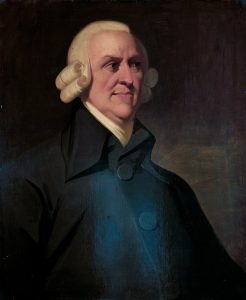 Adam Smith started out from the basic premise that human beings were inherently lazy. Work was really a form of self-sacrifice rather than of self-expression. As he put it, ‘What everything really costs to the man who wants to acquire it, is the toil and trouble of acquiring it.’ That also articulates, in a nutshell, his labour theory of value. The worker´s reward for sacrificing ‘his tranquillity, his freedom, and his happiness’ was his wage.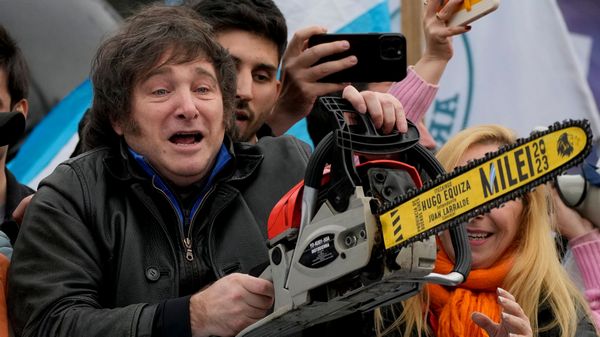
 Milei argued that it is ‘free trade’, ‘free enterprise’ capitalism that has been responsible for the immense increase in both productive capacity and the amount produced since 1800.