Sunday, April 21, 2024

Recreational cannabis use may lower your risk of cognitive decline, study says


Lindsey Leake
Fri, April 19, 2024 


When you light up or down an edible, you may be lowering your risk of cognitive decline, according to a new study comparing recreational cannabis users to nonusers. As marijuana isn’t without its health harms, these findings came as a surprise even to the scientists behind the study.

Researchers at the State University of New York Upstate Medical University found that nonmedical cannabis use—regardless of how or how often it was consumed—lowered a person’s odds of subjective cognitive decline (SCD) by 96%. The results were published in February in the journal Current Alzheimer Research.

“I was expecting cannabis to be linked to an increased risk for cognitive decline, because that’s pretty much what’s consistent in previous research,” study coauthor Roger Wong, Ph.D., an assistant professor of public health and preventive medicine at the university’s Norton College of Medicine, tells Fortune. “I was stunned by the opposite finding.”

Dual use of cannabis, for both medical and nonmedical purposes, as well as medical use alone also correlated to decreased risk of SCD, the self-reported worsening or increased frequency of confusion or memory loss. However, those associations weren’t statistically significant.

Previous research suggests people with SCD are 2.5 times more likely to develop dementia and 1.8 times more likely to develop mild cognitive impairment. About one in nine U.S. adults ages 45 and older experience SCD, according to the Centers for Disease Control and Prevention (CDC).

“We don’t have a way to prevent dementia right now,” Wong says. “But if we can prevent subjective cognitive decline at the very beginning and track it, that’ll hopefully fix some of the issues that we’re having right now with dementia later in life.”
SCD most common among medical cannabis users

Wong and public health graduate student Zhi Chen used the CDC’s 2021 Behavioral Risk Factor Surveillance System (BRFSS) to study nearly 4,800 U.S. adults 45 and older. To indicate SCD, the comprehensive health survey included the question, “During the past 12 months, have you experienced confusion or memory loss that is happening more often or is getting worse?”

In terms of respondents’ cannabis use, Wong and Chen examined:

Frequency of use in past month: 0–30 days


Reason for use: nonuser, medical, nonmedical, both medical and nonmedical (dual)


Method of consumption: nonuser, smoke, eat, drink, vaporize, dab, or other

Researchers weighted the sample size so that the nearly 4,800 respondents represented more than 563,000 people. About 53% were women, 46% were Asian, and 16% were 60–64 years old, a larger proportion than any other age group. A third of respondents ranked their health “very good.” Of the 8% who used cannabis, a 3% plurality did so for medical purposes. Smoking was by far the most common consumption method and, on average, respondents had used cannabis 1.4 of the previous 30 days.

Among cannabis users with SCD, cognitive decline was most common in people who used cannabis for medical reasons, followed by dual and recreational users. Further data analysis showed a statistically significant association between nonmedical use and 96% decreased odds of SCD.

View this interactive chart on Fortune.com
Cannabis-sleep-dementia connection

Two caveats may explain Wong’s results, which show correlation, not causation, he tells Fortune. One is that much of the existing literature on cannabis and cognition focuses on frequency of use; Wong did find that more frequent cannabis use correlated to cognitive decline, but the association wasn’t statistically significant. Second, previous research has shown cannabis use to be detrimental to adolescents, whereas this study focuses on middle-aged and older adults, he says.

“I tried to expand on previous research by not just looking at frequency, but you also need to consider why they’re using cannabis and how they’re using cannabis,” Wong says, “because there’s different chemicals, different compounds in nonmedical and medical cannabis that I think is really crucial.”

Dr. Brooke Worster, an assistant professor in the M.S. in Medical Cannabis Science and Business program at Thomas Jefferson University, clarifies that cannabis composition may be a more impactful variable on cognitive decline than whether it’s intended for medical or recreational use.

“The thing that would be awesome to know is, ‘What concentration or what percentage of THC versus CBD was in what you’re using?’” Worster tells Fortune. “That’s the problem in general, is that the vast majority of adults that use cannabis for any reason don’t really know what the composition of it is.”

The very catalyst for Wong’s research may also play an important role: sleep. In a study published last year in the American Journal of Preventive Medicine, he had found that sleep difficulties may raise a person’s risk for dementia. Wong says he received feedback from several people who said they used cannabis to help them fall asleep and wanted to know if doing so was increasing their risk for dementia.

“Let’s say, if someone is using it—whether they perceive it as medical or not—it helps them relax and enjoy a Friday night. It also helps them relax and to go to sleep,” Worster says. “You could make the argument that in some ways, that’s health- or medical-related.”

Human brain and cannabis leaf, illustration.


US cannabis laws pose research obstacle

A major limitation of Wong’s study is that the legalities of cannabis use vary greatly from state to state. And because the data span 2021 alone, more longitudinal research is necessary, Wong says. In addition, he suspects BRFSS may underestimate cannabis use.

“We’re relying on people to self-report whether or not they’re using cannabis,” Wong tells Fortune. “There might be some sort of bias depending on whether they’re living in a state right now where cannabis is illegal for either medical or nonmedical reasons.”

Researchers also are relying on survey respondents’ interpretation of their own cognitive health, Worster stresses, referring to the subjectivity inherent in the definition of SCD. Future studies involving objective cognitive decline may be beneficial.

“People either think they’re doing great or are really concerned,” Worster tells Fortune. “You’d want to get a cohort of people to do the same reporting and give them a test that [shows] an objective sense of, are they thinking that their memory is bad and it’s not showing that, or vice versa.”

For more on cannabis consumption and your health:

Marijuana addiction may raise the risk of a first heart attack or stroke by 60%


Daily marijuana users are more likely to take this health hit, a new study finds


Heavy marijuana use may fuel anxiety disorders, new research finds. This age group is most at risk


Frequent marijuana users tend to be leaner and less likely to develop diabetes. But the pseudo-health benefits come at a price, experts say

This story was originally featured on Fortune.com
Cannabis seizures at checkpoints by US-Mexico border frustrate state-authorized pot industry

MORGAN LEE
Fri, April 19, 2024 

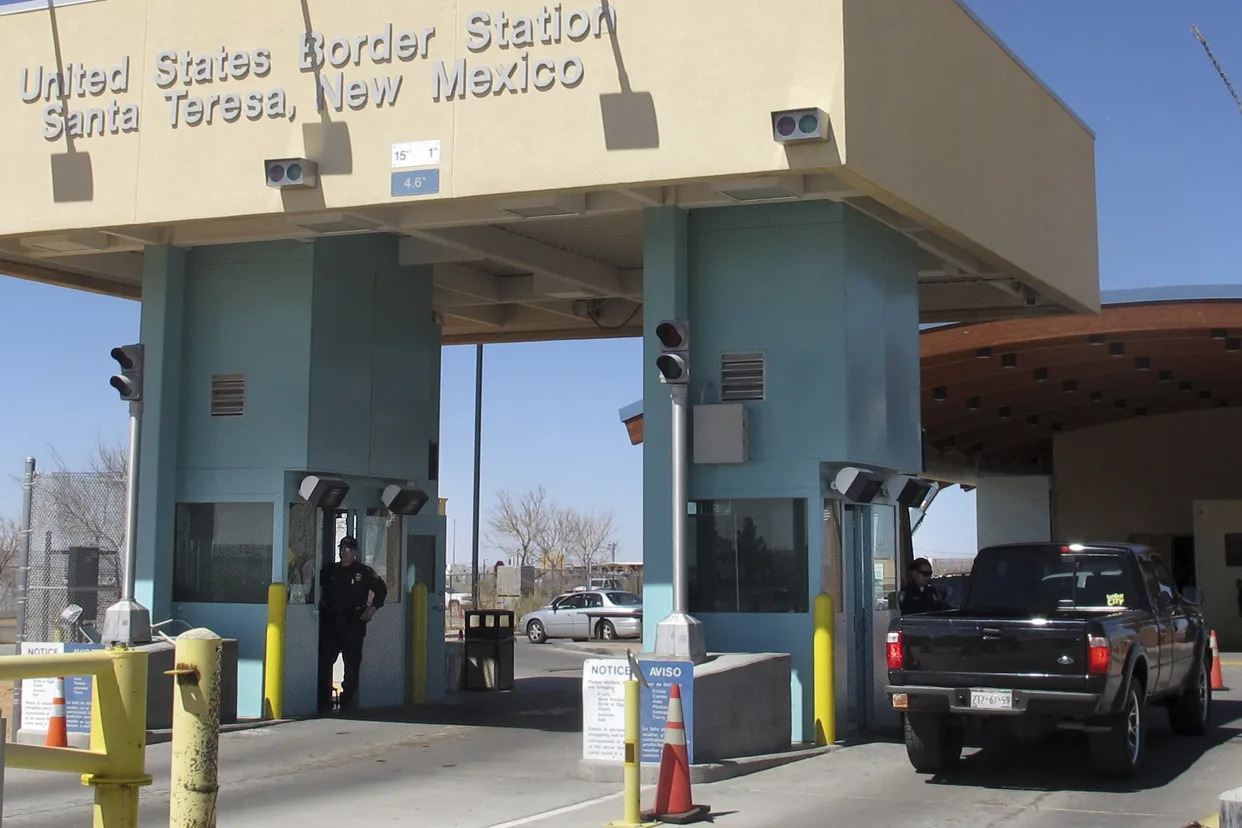
Traffic crosses from Mexico into the United States at a border station in Santa Teresa, N.M. The U.S. Border Patrol is asserting its right to seize cannabis shipments — including state-authorized commercial supplies — amid complaints of licensed cannabis providers that more than $300,000 worth of marijuana has been confiscated in recent months at Border Patrol highway checkpoints in southern New Mexico. 


SANTA FE, N.M. (AP) — The U.S. Border Patrol is asserting its authority to seize cannabis shipments — including commercial, state-authorized supplies — as licensed cannabis providers file complaints that more than $300,000 worth of marijuana has been confiscated in recent months at highway checkpoints in southern New Mexico.

New Mexico's Democratic governor says the disruptions prompted a discussion this week with U.S. Homeland Security Secretary Alejandro Mayorkas, whose impeachment charges were dismissed this week. Gov. Michelle Lujan Grisham says she voiced concerns that the scrutiny of cannabis companies appears to be greater in New Mexico than states with regulated markets that aren't along the U.S. border with Mexico.

Authorized cannabis sales in New Mexico have exceeded $1 billion since regulation and taxation of the recreational market began two years ago. Yet cannabis transport drivers say they have been detained hours while supplies are seized at permanent Border Patrol checkpoints that filter inbound traffic for unauthorized migrants and illegal narcotics, typically located about 60 miles (100 kilometers) from the U.S. border.


“Secretary Mayorkas assured the governor that federal policies with respect to legalized cannabis have not changed,” said Lujan Grisham spokesperson Michael Coleman in an email. “Regardless, the governor and her administration are working on a strategy to protect New Mexico’s cannabis industry.”

Managers at 10 cannabis businesses including transporters last week petitioned New Mexico's congressional delegation to broker free passage of shipments, noting that jobs and investments are at stake, and that several couriers have been sidelined for “secondary inspection” and fingerprinted at Border Patrol checkpoints.

“We request that operators who have had product federally seized should be allowed to either get their product returned or be monetarily compensated for the losses they've sustained," the letter states.

U.S. Sen. Martin Heinrich said the Department of Homeland Security should be focused on urgent priorities that don't include cannabis suppliers that comply with state law.

“Stopping the flow of illicit fentanyl into our country should be the Department of Homeland Security’s focus at these checkpoints, not seizing cannabis that’s being transported in compliance with state law," the senator said in a statement, referring to the parent agency for U.S. Customs and Border Patrol. "New Mexicans are depending on federal law enforcement to do everything they can to keep our communities safe. Our resources should be used to maximize residents’ safety, not distract from it.”

A public statement Thursday from the U.S. Border Patrol sector overseeing New Mexico provided a reminder that cannabis is still a “Schedule 1” drug, a designation also assigned to heroin and LSD.

"Although medical and recreational marijuana may be legal in some U.S. States and Canada, the sale, possession, production and distribution of marijuana or the facilitation of the aforementioned remain illegal under U.S. federal law," the agency's statement said. “Consequently, individuals violating the Controlled Substances Act encountered while crossing the border, arriving at a U.S. port of entry, or at a Border Patrol checkpoint may be deemed inadmissible and/or subject to, seizure, fines, and/or arrest."

Matt Kennicott, an owner of Socorro-based High Maintenance, a cannabis business, said seizures by Border Patrol started in February without warning and create uncertainty about shipments that include samples for consumer-safety testing. He said cannabis producers in southernmost New Mexico rely on testing labs farther north, on the other side of Border Patrol checkpoints, to comply with safeguards against contaminants like mold or pesticides.

“It's not a little confusing, it's a lot confusing,” he said. “We're trying to figure out where this directive came from.”

Marijuana grow-op busted in Maine as feds investigate trend in 20 states

DAVID SHARP
Sat, April 20, 2024 


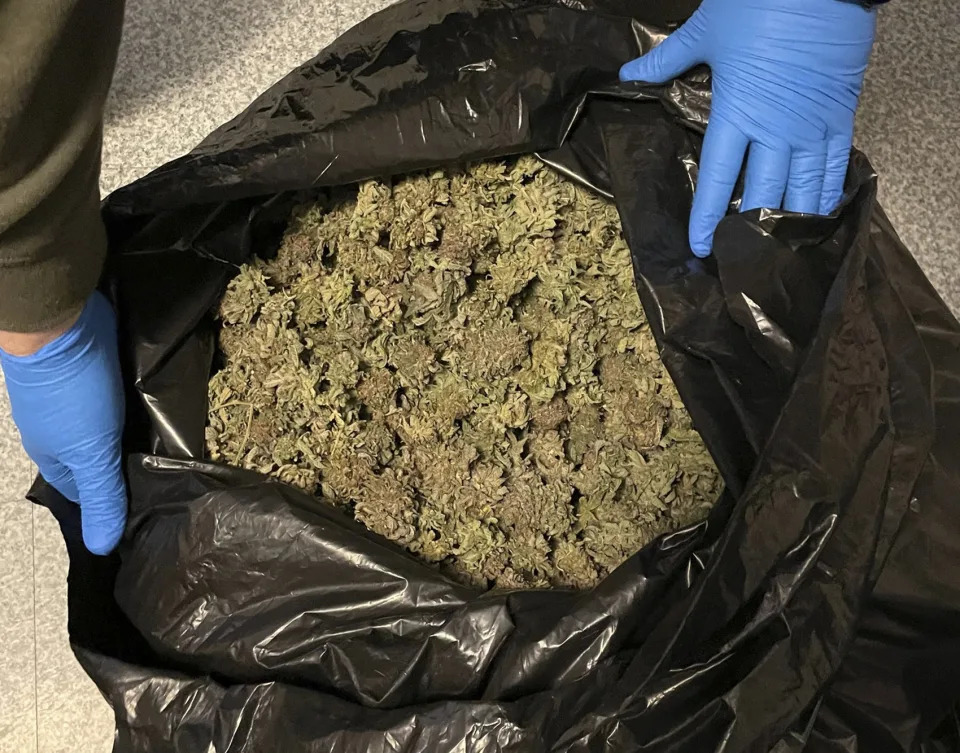
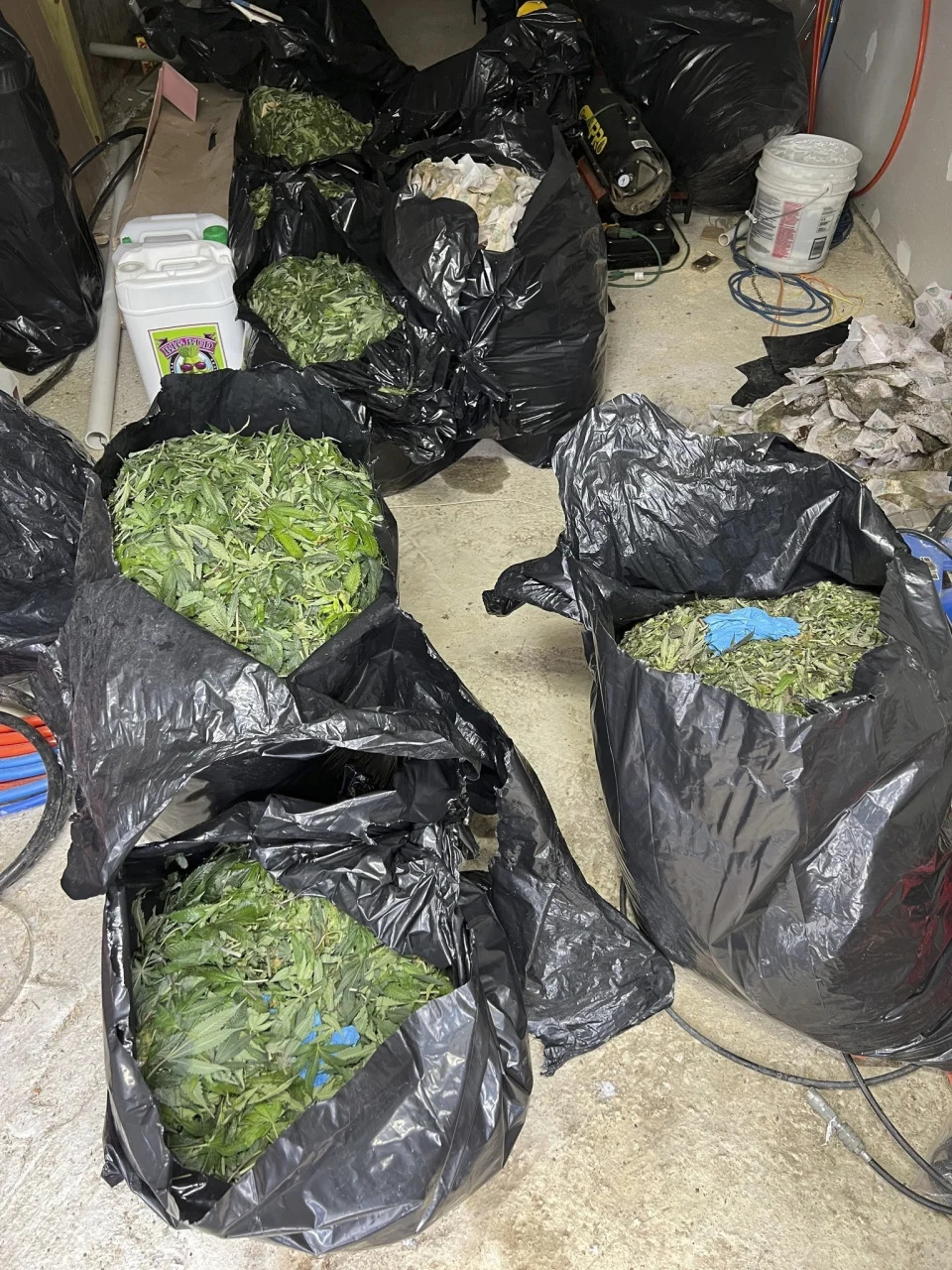
This photo provided by Penobscot County Sheriff's Office shows the seizure of 40 pounds of processed marijuana from a hidden grow operation by a Chinese citizen in Maine. Court documents detailing how Xisen Guo, a Chinese man came to Maine to transform a rural house into a high-tech, illicit grow operation were detailed in court files unsealed this week with the arrest of the alleged operator, Friday, April 19, 2024. 
(Penobscot County Sheriff's Office via AP)

PORTLAND, Maine (AP) — The high electricity consumption of a home, its cardboard-covered windows and odor of marijuana drew law enforcement's attention to an illicit grow operation off the beaten path in rural Maine.

The bust of the home with a hidden grow operation and seizure of nearly 40 pounds (18 kilograms) of processed marijuana marked the latest example of what authorities describe as a years long trend of foreign nationals to exploit U.S. state laws that have legalized cannabis for recreational or medical use to produce marijuana for the illicit markets in the U.S.

The U.S. Drug Enforcement Administration is investigating international criminal organizations that are operating illegal marijuana grows in about 20 states, including Maine, Attorney Garland Merrick Garland told the Senate Appropriations Committee this week, in response to a question raised by Republican Sen. Susan Collins of Maine.

Federal law enforcement officials said there currently are about 100 illicit grow operations in Maine, like the one in Passadumkeag, about 60 miles (96.5 kilometers) north of Bangor, and about 40 search warrants have been issued since June.

In Passadumkeag, Xisen Guo, a naturalized U.S. citizen born in China, has been accused of transforming the house into a high-tech, illicit grow operation, according to court documents unsealed this week.

He was ordered held without bail Friday on federal drug charges, making him the first person to be charged federally in such a case in Maine. A detention hearing is scheduled for Monday.

The Internal Revenue Service and Department of Homeland Security, along with the FBI and DEA and local law enforcement, are working together to get to the bottom of the illicit grow operations in Maine, Garland said.

The state legalized adult consumption of marijuana, but growers must be licensed by the state. The Maine Office of Cannabis Policy said Guo was operating an unlicensed operation, according to court documents.


The illicit grow operations across the U.S. began cropping up several years ago. In 2018, U.S. authorities arrested a Seattle woman, conducted raids and seized thousands of marijuana plants during an investigation of an operation with Chinese ties. Oklahoma officials learned straw owners in China and Mexico were running illegal operations after marijuana was legalized by the state for medical purposes in 2018.

The legality of marijuana consumption and cultivation in those states tends to provide cover for illegal grow operations, which may draw less attention, officials said. The marijuana is then trafficked in states where it's illegal.

In Maine, U.S. Attorney Darcie McElwee said thwarting illegal growing operations with international connections is a priority for law enforcement, “and we will continue to marshal every tool at our disposal in this effort as appropriate.”

Law enforcement officials know the tell-tale signs.

Police zeroed in on the Passadumkeag operation in part because of the home's utility bills reviewed by deputies. After the home was purchased for $125,000 cash, the electricity use went from about $300 a month to as high as nearly $9,000, according to court documents.

That’s consistent with heat pumps, costly lighting and other gear needed to grow marijuana, investigators said. The home owner, a limited liability company, upgraded the electric capability to double what is found in a typical Maine home, according to documents.

Guo's attorney didn’t immediately return a call from The Associated Press. Two others who were at the home at the time of the police raid in February were released and not charged.

McElwee said law enforcement — from local and county police to the FBI and DEA — are starting to make headway with “dozens of operations" shuttered over the last several months.

“The possible involvement of foreign nationals using Maine properties to profit from unlicensed marijuana operations and interstate distributions makes it clear that there is a need for a strong and sustained federal, state and local effort to shut down these operations," she said.

Law enforcement officials also continue to investigate who is directing the operations and where the profits are going, she said.

Historic medical marijuana dispensary opens in Cherokee, NC, 1st in the state


Will Hofmann, Asheville Citizen Times
Sat, April 20, 2024 


CHEROKEE - Hundreds of whooping and hollering medical marijuana card-holders filtered into the Great Smoky Cannabis Co. here at 10 a.m. April 20, for the historic opening of the 10,000-square-foot dispensary selling products such as cannabis tinctures, gummies and other marijuana products.

The opening of the Eastern Band of Cherokee Indians' dispensary marks the first time marijuana can legally be purchased in North Carolina. The grand opening was held on 4/20 — also known as the "national cannabis holiday."

A road sign heading west on U.S. 19 into Cherokee, just before the dispensary, read: "420. Expect delays."


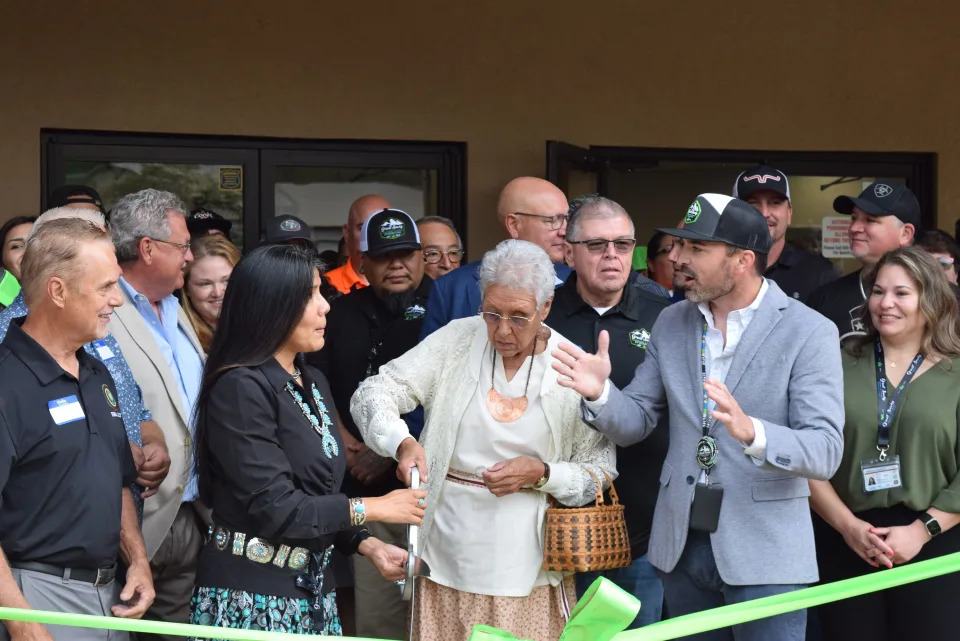
Myrtle Driver prepares to cut the ribbon during the Eastern Band of Cherokee Great Smoky Cannabis Co. grand opening. April 20, 2024.

District Attorney Ashley Hornsby Welch, the top prosecutor for the counties surrounding tribal land, said her office will continue to enforce North Carolina law, which prohibits the cultivation, distribution and possession of marijuana.

While the Citizen Times was reporting from Cherokee for about five hours on April 20, a reporter did not witness the presence of any law enforcement.

The EBCI land — known as the Qualla Boundary — is a sovereign nation that has its own elections, laws, government and institutions that are self-governed and autonomous. It lies primarily in the Western North Carolina mountain counties of Swain and Jackson, with smaller parts in Cherokee, Graham and Haywood.

The Eastern Band is one of three federally recognized sovereign nations that were once part of the larger Cherokee Tribe prior to the Trail of Tears forced removal from their land in Western North Carolina, according to the EBCI website. The other two, Cherokee Nation and the United Kituwah Band, are in Oklahoma.

The opening of dispensary has not been without setbacks and is only part of the launch of the EBCI's cannabis industry.

After the EBCI passed a referendum on medical marijuana in 2021, they launched Qualla Enterprises, which eventually produced "the largest cannabis farm in the history of the United States," said Forrest Parker, general manager for Qualla Enterprises, an EBCI company that manages the dispensary.

During that time, however, a transportation plan had not been created for the property and the Eastern Band had reportedly invested over $30 million and not sold any of their product, as previously reported by the Citizen Times. The opening offers a new opportunity for revenue for the tribe.

More: NC's 1st marijuana dispensary will open on 4/20 in Cherokee: What to know
'Historic moment'

Parker set expectations high for the opening, saying it was a "historic moment."

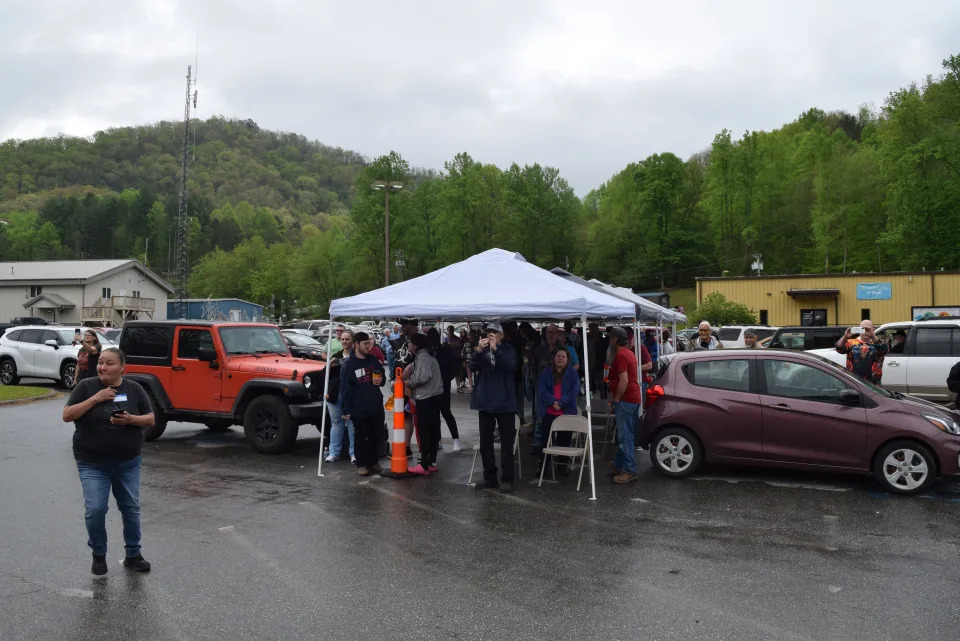
The event was attended by hundreds, many of whom were waiting outside of the dispensary during the opening ceremony.

"This project will change the trajectory of their lives forever. It will be a conduit to generations of social, economic, and spiritual growth, unlike anything that's ever been witnessed," Parker said during the grand opening ceremony.

Forrest Parker speaks during the grand opening ceremony of the Eastern Band of Cherokee Indians' Great Smoky Cannabis Co. dispensary in Cherokee, North Carolina. April 20, 2024.

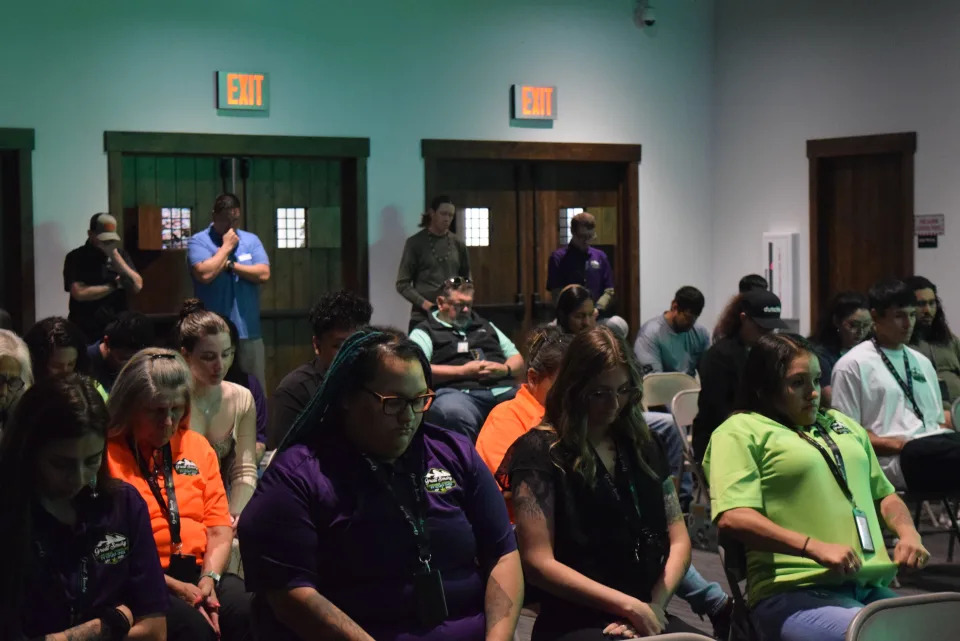
Renowned tribal translator and Beloved Woman Myrtle Driver spoke during the opening ceremony, offering a prayer and noting that she had been given the honor of naming and translating the different strains of cannabis into Cherokee.

While she was doing research to name the strains, she said she began to find older medicinal uses that were attributed to the drug.

Attendees nod their head as Myrtle Driver says a prayer during the grand opening ceremony of the Eastern Band of Cherokee Indians' Great Smoky Cannabis Co. dispensary in Cherokee, North Carolina. April 20, 2024.

"As far as I know, Qualla Enterprises is the only tribal entity that is going to be incorporating the Cherokee language," Driver said.

Driver also briefly mentioned Bob Marley, whom she said she had met in New York, and sang his song "Three Little Birds" with the crowd.

Afterward, in a transaction that was made half in English and half in Cherokee, Driver was the first to purchase medical marijuana in North Carolina.

A cannabis plant grow room in the Eastern Band of Cherokee Indians' Great Smoky Cannabis Co. dispensary in Cherokee, North Carolina. April 20, 2024.
Could the dispensary go recreational?

Only those with an EBCI medical cannabis patient card or an out-of-state approved medical marijuana card will be eligible to purchase at the dispensary and the drug is still illegal in state and federally.

This did keep away customers from traveling hours in the early morning to attend the April 20 opening.

Several customers, who wished not to be identified, noted Huntington's disease, movement disorders and arthritis as medical conditions in which the drug may be able to help. Card holders came from as far away as Surry County, about a three-and-a-half-hour drive northeast of Cherokee.

While the Great Smoky Cannabis Co. dispensary only sells medical marijuana, that could soon change.

Medical marijuana purchasers wait as the Eastern Band of Cherokee Indians' Great Smoky Cannabis Co. dispensary opens.

After a September referendum indicated broad support for recreational marijuana, Great Smoky Cannabis Co. is expected to offer recreational marijuana after Tribal Council passes a resolution changing legal language regarding the use of the drug.

The lead up to the opening has been busy for the employees of the dispensary, as Cade Husky, an employee in the edibles department of the dispensary, said he and his coworkers clocked 155-160 hours over two weeks to get the product across the line.

Workers in the edible department at the Eastern Band of Cherokee Indians Great Smoky Cannabis Co. dispensary in Cherokee, North Carolina. April 20, 2024.

"I've been real stressed the last three weeks, but now that we are here — I'm excited," Husky said.

The legalization of recreational marijuana might allow the dispensary to hire nearly 350 employees, as previously reported by the Citizen Times. Husky said they plan to offer more product options once the recreational resolution is passed.

More: As Cherokee plan NC's 1st legal pot sales, lawmakers erect barriers: question casino money

More: Cherokee tribal police face no criminal charges in shooting of unarmed man in his home

Will Hofmann is the Growth and Development Reporter for the Asheville Citizen Times, part of the USA Today Network. Got a tip? Email him at WHofmann@citizentimes.com. Please help support this type of journalism with a subscription to the Citizen Times.

This article originally appeared on Asheville Citizen Times: Historic Cherokee medical marijuana dispensary opens in NC


NC Cherokee may soon sell marijuana to any adults who want it, tribal official says

Joe Marusak
Sat, April 20, 2024 

The Eastern Band of Cherokee Indians in western North Carolina could soon expand sales at its new medical cannabis superstore to all adults, a tribal council member said at a recent council work session.

Great Smoky Cannabis Company opened Saturday as the only dispensary in the state where such marijuana sales are legal. Sales are limited to those with a medical cannabis card issued by the tribe’s Cannabis Control Board or a similar board out of state.

At a Cherokee tribal council work session Monday, April 15, 2024, council member Boyd Owle, far right, announces that the tribe’s adult-use cannabis ordinance should be finished and voted on in June. That would open the tribe’s medical cannabis dispensary to recreational-use adult buyers.

The dispensary is in the tribe’s massive former bingo hall at U.S. 19 and Bingo Loop Road, near Harrah’s Cherokee Casino Resort, 46 miles west of Asheville in the Great Smoky Mountains.

Happy 4.20 & Welcome to our Grand Opening!” reads the message on the dispensary website.

The store opened with at least 34,000 “fully tested, certified products,” said Forrest Parker, general manager of Qualla Enterprises, the Cherokee cannabis subsidiary.

Products on display at the Great Smoky Cannabis Company on Wednesday, September 6, 2023 during an open house.

Products include flower, vape items, edibles and topicals, officials said.

At the dispensary Saturday morning, Myrtle Driver Johnson, Beloved Woman of the Eastern Band of Cherokee Indians, made the first legal purchase of cannabis in North Carolina, the Cherokee One Feather tribal newspaper reported.

“It is a great day for the Cherokee people today,” Johnson said

Recreational sales targeted for June, official says

Also Saturday, State Rep. Zach Hawkins, D-Durham, said he’s filing legislation “to further support the (marijuana) decriminalizing and legalization movement.” Marijuana remains illegal in North Carolina and federally.

April 20 is recognized by marijuana users and producers as the national cannabis holiday.

In a historic vote on Sept. 7, tribal members by 70% approved adult use of marijuana on tribal land. The tribe on the 57,000-acre Qualla Boundary had already approved the use and controlled sale of medical cannabis.

Adult or recreational use remains illegal on the Qualla Boundary until the tribal council finishes crafting and then approves an adult use ordinance.

That could happen in June, council member Boyd Owle said at the end of a council work session Monday called to continue work on the ordinance.

Boyd Owle, Eastern Band of Cherokee Indians tribal council member

Owle urged patience to people wondering why it’s taking so long since the September vote to legalize adult use.

“It’s going to take some time,” he said. “Let’s get it right before we put it out there. But we’re on the right track. I’d like to see it on the agenda come June and approve recreational.”

Owle is serving his third-straight term as tribal council representative for the Birdtown and 3200 Acre Tract communities.

No council member objected to Owle’s timetable before the meeting adjourned. Neither did any officials with Qualla Enterprises LLC in the audience. More work sessions will be held to complete the ordinance, Owle said.

“Just be patient so we can work on this and get it going and make sure it’s correct,” Owle said, adding that his message was to the general public that overwhelming approved adult-use sales.

“How proud that I am”

Parker called the dispensary opening the culmination of “a big week.”

“Thank you to y’all,” he told the tribal council Monday. “It’s a monumental, historic week for our tribe, and I appreciate your working so hard. The people at Qualla, we appreciate it.”

“I just want to tell the community how proud that I am of this crew of people,” Parker said. “And I want them to know we’re working every day to make sure we do this in the most efficient way, and in a way that you guys and the community can be proud of what we’re doing.”
Potential revenues

The dispensary could generate nearly $206 million in gross sales revenues in its first year if limited to medical patients, compared with $385 million if product is available to all adult users, The Charlotte Observer previously reported.

The figures were released by Qualla Enterprises before last year’s adult-use referendum. Cannabis industry consultant HedgeRow Analysis developed the estimates for Qualla Enterprises.

In its fifth year, the dispensary could generate a respective $578 million and $843 million in gross sales revenues, according to the HedgeRow Analysis estimates.

News & Observer Staff Writer Dawn Baumgartner Vaughan contributed.
Boston cannabis dispensary opens its doors on 4/20, adds to growing industry

Daniel Coates
Sun, April 21, 2024 

On the unofficial holiday of 4/20, another dispensary opened its doors to new customers – part of the booming statewide cannabis industry.

Rebelle on Albany Street in Boston is the first dispensary to open in the South End neighborhood. The company produces its own marijuana products while also selling other brands as well.

Guillermo Erazo, assistant general manager of the store, told Boston 25 that their natural products focus on general wellness.

“We produce our own product,” said Erazo. “We cultivate our own flower. We cultivate our own edibles and concentrates as well too.”

Rebelle is now one of more than a dozen dispensaries across Boston that sell recreational marijuana.

Recreational marijuana was legalized in Massachusetts in 2016. The cannabis control commission reported roughly $1.5 billion in sales in 2023 as the industry grows statewide.

Erazo added, “We have a lot of consumers who came down that are more happy that it’s recreational, that we open up doors for consumers to get it the correct way.”

The growing industry is also opening new doors for local businesses.

Sam Burgess of Bootstrap Compost in Everett held a pop-up at the South End dispensary, saying his company can create a more sustainable marijuana industry.

“We can actually compost green material after the harvesting,” said Burgess. “We can create bioplastics and whatnot for better packaging. So, I think there’s a lot of room for improvement.”

While dozens trickled into the store, Erazo told Boston 25 he hopes cannabis will soon be totally destigmatized.

Citing some benefits, Erazo finished, “Lupis, muscle relaxation, or an increase in appetite too.”

Since retail stores opened in 2018, the cannabis control commission has reported roughly $6 billion in sales


4/20 is the busiest time of year for Florida’s medical marijuana dispensaries

Ivy Nyayieka, Tampa Bay Times
Sat, April 20, 2024


It’s April 20 (or 4/20) — the unofficial holiday celebrating marijuana.

And if history is any indicator, it’s a great day for sales at Florida’s medical pot dispensaries.

In the past two years, Floridians with medical marijuana cards bought more weed during the week of 4/20 than any other week of the year. That’s according to a Times analysis of cannabis dispensary data from the state’s Office of Medical Marijuana Use. (420 is slang for pot smoking; its origins are debated.)

Steve Mazeika, the vice president of communications at Verano, the parent company of cannabis dispensary chain Müv, called April 20 “the cannabis community’s biggest annual holiday.”

Cannabis market research firm BDSA, which is based in Colorado, said in an email that the higher sales are likely due to “the overall hype surrounding the holiday” as well as increased marketing that cannabis dispensaries do around this time of year. It said revenues reached $23.26 million in Florida on April 20 last year.

“Despite being a medical market, the use of cannabis in Florida for relaxation and recreation-adjacent purposes is significant,” said BDSA chief executive officer Roy Bingham.

Florida only allows weed use for those with medical marijuana cards. But voters in November will decide on a proposed constitutional amendment that would allow recreational marijuana for adults in the state.

In 2023, nearly 440 million mg of medical marijuana was dispensed during the week of April 20, a 31% increase compared to 2022, according to state data.

The state saw a 14% growth in the number of medical marijuana patients in that period.

Florida’s not alone. Other states, including Arkansas and Colorado, have in the past reported bumps in medical marijuana sales around April 20, according to news reports.


420 fest draws crowds for cannabis celebration in Chaparral, New Mexico

Corrie Boudreaux
Sun, April 21, 2024 

Several hundred people gathered at an empty lot between two tiny strip malls along County Line Road in Chaparral, New Mexico, for a 420 celebration.

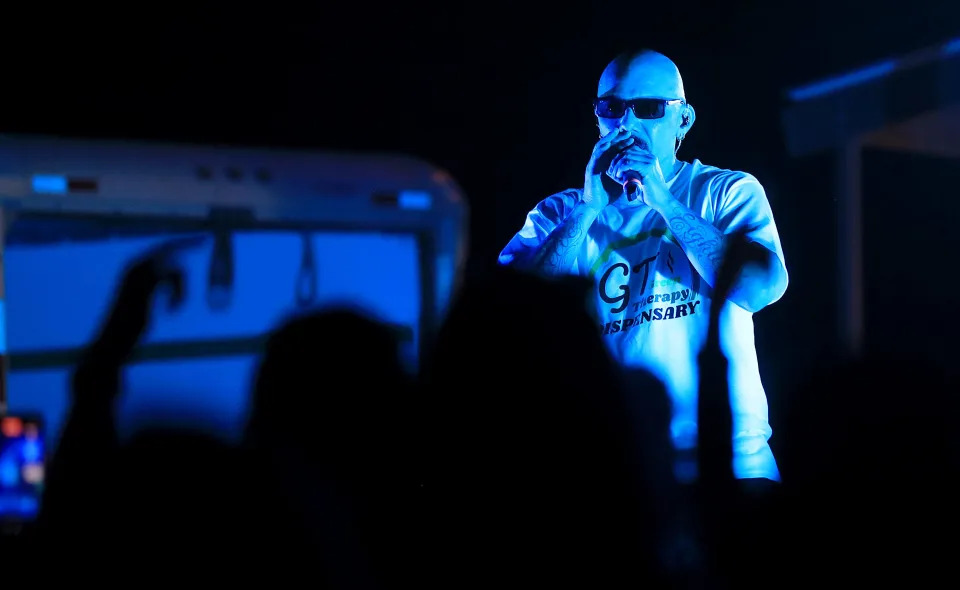
GT 420 Music Fest, organized by James and Christina Perez, owners of GT Dispensary in Chaparral, featured an all-day lineup of bands in English and Spanish and finished with an appearance by California hip-hop rap artist Lil Rob.


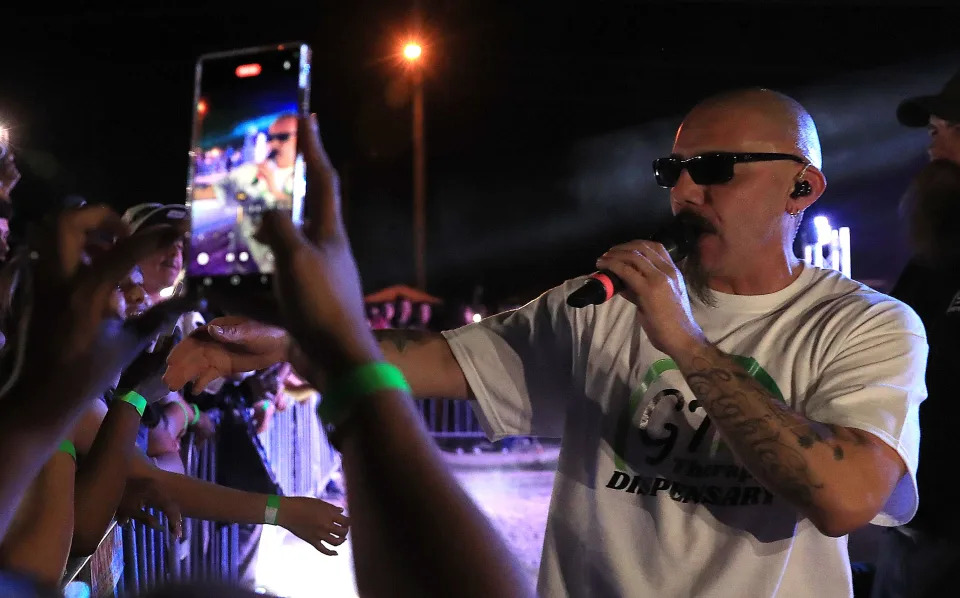
Hip-hop and rap artist Lil Rob entertain spectators on Saturday at the GT 420 Music Fest in Chaparral, New Mexico.


Though one myth has it that 420, 4/20 or 4:20 originates from a police code for marijuana, the true story is that a group of teenagers in 1970s California used “4:20” to allude to the time when they would meet after school to smoke. The term spread after it was used on a flyer distributed at a Grateful Dead concert in the early 90s, USA TODAY reported. Now, April 20 is known worldwide as a day to celebrate all things cannabis-related.

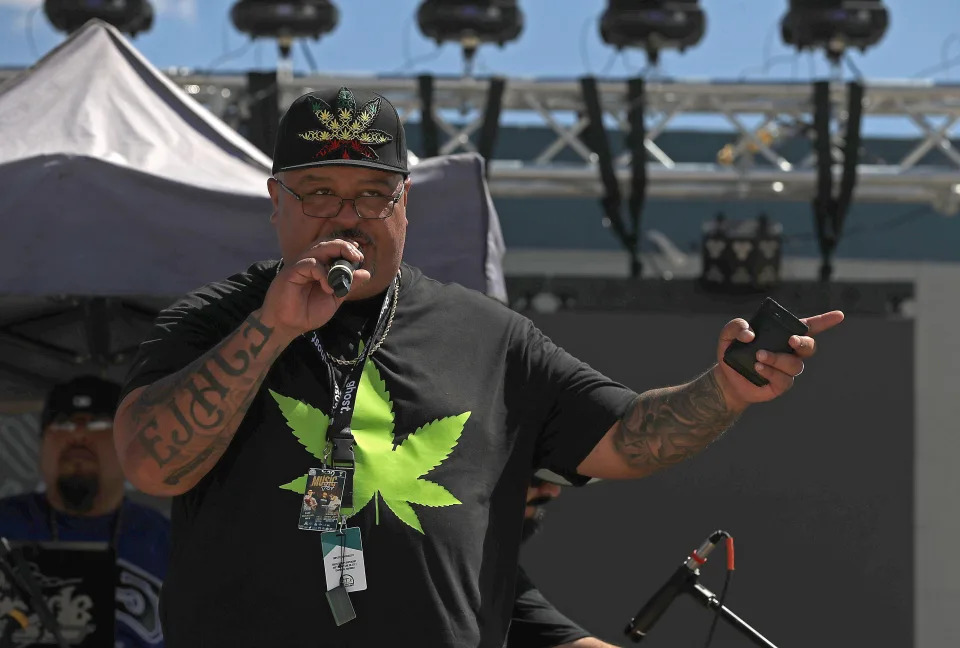
The dispensary owners wanted to give back to the community, so they decided to organize the free family-friendly event, they said.

James Perez, organizer of the GT 420 Music Fest in Chaparral, N.M., speaks to the crowd of spectators on April 20, 2024. The free event was organized by James and his wife, Christina Perez, owner of GT Dispensary, because they want to educate the public on the myriad uses of cannabis.

The introduction of New Mexico's cannabis industry to El Paso has facilitated easy access to legal cannabis, and dispensaries consistently attract a significant share of their customers from nearby El Paso.

James Perez uses it for medicinal purposes, but in the past, he had to travel from Chaparral to Las Cruces or Sunland Park to buy it. He and his wife decided to open their own dispensary in 2022 to provide marijuana for their community.

James Perez said that he and his wife want to prove that cannabis is far more useful than the popular stereotype of its recreational use might suggest.

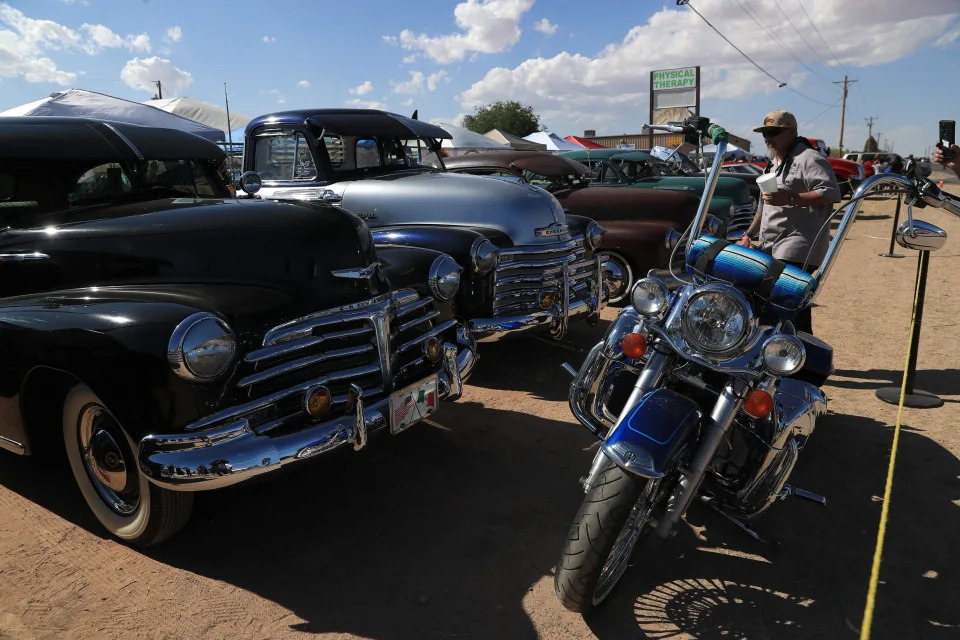
Vintage cars are part of the show as spectators enjoy music, food, and cannabis-themed merchandise at the GT 420 Music Fest in Chaparral, New Mexico, on Saturday, April 20.

“Cannabis is a blessing because it’s medication,” Perez said. “We have customers in wheelchairs, customers with cancer. It can do so much for the body. I’d love for people to see it as medication.”

El Paso law enforcement, however, continues to enforce Texas marijuana laws. Both the city of El Paso and El Paso County have created programs to issue citations for people caught with low-level possession of marijuana. The citations can carry a hefty $500 fine.

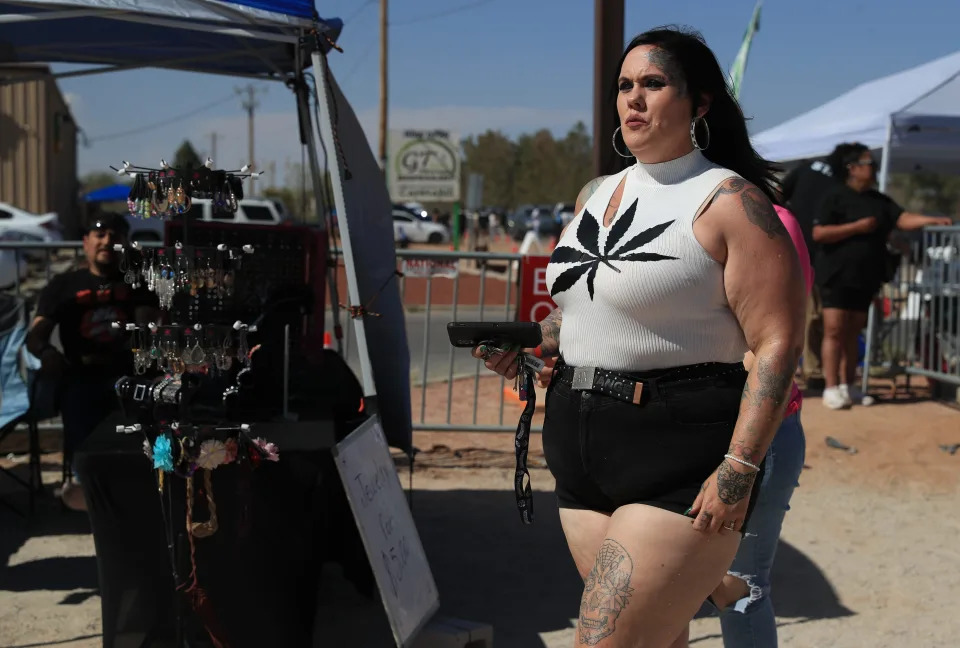
Spectators enjoy music, food, and cannabis-themed merchandise at the GT 420 Music Fest in Chaparral, New Mexico.

Hip-hop rap artist Lil Rob performs at the GT 420 Music Fest on Saturday, April 20, in Chaparral, New Mexico.

This article originally appeared on El Paso Times: 420 fest draws crowds for cannabis celebration in New Mexico

Cherokee Street transforms for St. Louis’ annual 420 bash

Liz Dowell
Fri, April 19, 2024 


ST. LOUIS — This weekend marks a special celebration for cannabis enthusiasts. April 20th, known as “420,” has its roots in the 1970s as a term for cannabis consumption. It was coined by a group of school friends who regularly convened at 4:20 to partake in smoking sessions.

Over the years, the term has evolved into a cultural phenomenon, especially as cannabis legalization has taken hold in states like Missouri and its neighboring state, Illinois. As Missouri enters its second year of cannabis legality, St. Louis gears up to commemorate 420 with a series of city-wide events.

The festivities kick off with the Green Light District Festival on April 19th, running from 8 p.m. to 10 p.m. at the Cola Private Lounge on Cherokee Street. The opening act features a comedy show with food available for purchase. On April 20th and 21st, starting at noon, Cherokee Street will transform into a bustling hub of activity with a street crawl parade, vendors, live music, and more.

The mystery of the Des Peres Pickle Jar

Other celebrations in the area:

On 4/20, Steve’s Hotdogs will join the celebration with their Delta-9 THC-infused menu items during an event titled Steve’s 420: All Day Haze, running from 11 a.m. to 11 p.m.


The Loop 420 Street Fest returns for its second year, starting at 11 a.m. and running until 7 p.m. The event promises live music, glass blowing demonstrations, vendor booths, and much more.


The 4:20 STL Festival, held from 11 a.m. to 5 p.m., boasts 30 cannabis vendors, games, live performances, and prizes for the first 100 attendees.


Taking place inside a movie theater, “Sesh at the Cinema” features 420-themed vendors, live entertainment, a smoke box, and giveaways from 1 to 6 p.m.


On April 21st, The Factory will host its 420 celebration, screening “The Big Lebowski” starting at 3:30 p.m. The event will also feature pop-ups from Missouri cannabis companies showcasing their products, along with a costume contest.


For those seeking an outdoor experience, the Lit ‘N’ Lost Cannabash 4/20 will take place at Lost Hill Lake in Saint Clair, MO. Attendees can enjoy games, live music, smoke sessions, vendor booths, and food trucks.


North Country welcomes first 4/20 celebrations at recreational cannabis dispensaries

Can I be fired for smoking weed in off-hours? Grow cannabis at home? California laws to know

Sarah Linn
Sat, April 20, 2024 

Saturday marks a special holiday for fans of cannabis culture.

April 20, known as 4/20, is celebrated by marijuana enthusiasts across the globe.

Although cannabis use is legal in California, there are a number of laws in the Golden State governing how it can be cultivated and consumed.

Here’s a roundup of our latest cannabis-related coverage:

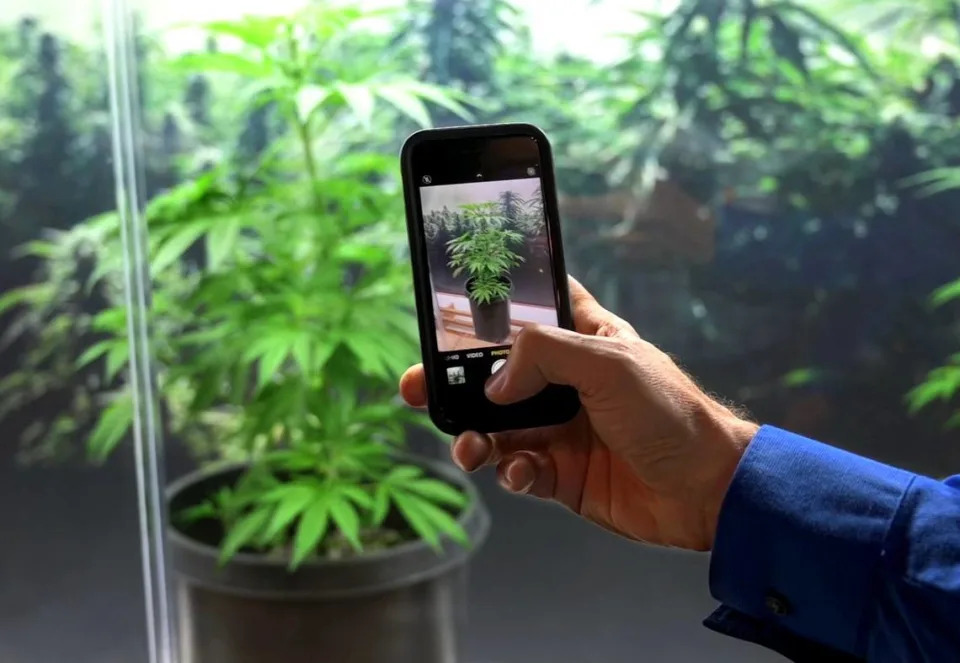
A man takes a picture of one the cannabis plants on display at the first Cannabis Awards and Exhibit at the California State Fair during media day on Wednesday, July 13, 2022. Hector Amezcua/hamezcua@sacbee.com
Can I grow cannabis at home?

Passed by California voters in 2016, the Adult Use of Marijuana Act allows adults 21 and older to legally grow, possess and use cannabis for recreational use.

You can grow up to six plants at your California residence for personal use only.

Plus, those cultivating cannabis at home can’t use volatile solvents — butane or propane — to process it, according to the California Department of Cannabis Control.

Breaking the rules about residential cannabis cultivation can result in a fine or imprisonment.

READ MORE:

Want to grow weed in your California home? Don’t break the law — but follow these tips
Can I get fired for smoking weed in my off-hours?

California Gov. Gavin Newsom signed Assembly Bill 2188 into law in 2022, banning employers from firing, penalizing or creating employment conditions for workers based on cannabis use off the job or away from the workplace.

The law went into effect on Jan. 1.

However, it only applies to some jobs.

READ MORE:

Can I be fired for smoking weed in my off-hours? What new California cannabis law says


Aaron Grove, right, owner of Elk Grove CBD, helps customer Ray Tamayo on Saturday, April 13, 2024. Elk Grove prohibits marijuana dispensaries from operating in the city limits. Lezlie Sterling/lsterling@sacbee.com

Marijuana sales are prohibited in Elk Grove. Would the city ever reconsider?
What’s the difference between edible cannabis and smoking weed?

Smoking marijuana and consuming cannabis-laced edibles can both lift your mood, but there are some key differences between the two.

Smoked or vaped marijuana enters the lungs and is absorbed into the bloodstream, according to cannabis education site Leafly, while edibles are processed in the stomach and liver.

That means edibles feel stronger and the effects will last a lot longer.

Smoking weed and ingesting cannabis also have varying effects on your health.

READ MORE:

Edible cannabis vs smoking weed: How are they different and what are the health effects?

Chandler Hale, a manager at All about Wellness in Sacramento holds some of the cannabis-infused edible gummies and fruit chews Tuesday, March 22, 2022. Hector Amezcua/hamezcua@sacbee.com

Cooking with cannabis? How edibles have changed

Since California legalized the recreational sale and use of cannabis, marijuana-infused food has become more creative and accessible.

Sacramento dispensaries sell everything from cannabis-injused hot sauce and buffalo jerky to weed lollipops, dulce de leche truffle bars and dark chocolate mocha malt balls.

Meanwhile, major beer brands such as Pabst, Lagunitas and Anheuser Busch-InBev offer flavored seltzers that are alcohol-free but include THC.

You can even cook with gourmet food with cannabis, experts say.

READ MORE:

Cooking with cannabis: How marijuana food edibles in Sacramento went to the next level


Fetterman slams ‘stupidity’ of not legalizing marijuana in Pennsylvania

BY FILIP TIMOTIJA - 04/20/24

WASHINGTON, DC – DECEMBER 12: U.S. Sen. John Fetterman (D-PA) speaks to reporters before a Senate luncheon at the U.S. Capitol on December 12, 2023 in Washington, DC. Fetterman spoke on military aid to Ukraine. (Photo by Kevin Dietsch/Getty Images)


Sen. John Fetterman (D-Pa.) slammed the “stupidity” of not legalizing marijuana in Pennsylvania, arguing other states, especially those surrounding the Keystone State, have already done so.

“Let’s make it legal,” Fetterman told Fox News Digital on Friday. “I mean, it’s not complicated. Other states have done that. All the states surrounded by Pennsylvania are … and the stupidity of not legalizing marijuana.”


“And now, it’s just so straightforward,” he continued. “And right now, we’re doing this interview in Washington, D.C. and right now I could leave, go buy marijuana legally and the world isn’t spun off its axis, it’s not anarchy and that’s really the truth about it.”

Fetterman emphasized that marijuana should be “safe, pure, taxed and available,” but not be available to those younger than 21.

“I would rather have it come from a safe pure place and then I’ve been very clear, it should not be any younger than 21 just like alcohol,” he said. “Young brains can be impacted [by] marijuana and we want to maintain that it should be 21. Any adult should be allowed to do that legally without any criminal pullback.”

The Pennsylvania senator said he has “directly” encouraged President Biden to “liberalize” marijuana.

Recreationally, marijuana in small amounts can be used by adults in 24 states, not including D.C., according to the National Conference of State Legislatures.

Biden on Saturday urged all governors to pardon previous state offenses for “simple possession of marijuana.”


“No one should be in a federal prison solely due to the possession of marijuana, and no one should be in a local jail or state prison for that reason, either,” Biden said in a statement.


Fetterman highlights need for 'safe, pure, taxed' marijuana in 4/20 push to legalize weed

Julia Johnson
Sat, April 20, 2024

Sen. John Fetterman, D-Penn., made his case for marijuana legalization ahead of April 20, known as a holiday of sorts for those who enjoy smoking or otherwise consuming the drug.

"Right now, we're doing this interview in Washington, D.C., and right now I could leave [and] go buy marijuana legally," Fetterman told Fox News Digital in an interview on Friday. He compared the capital's policy on the drug to that of his home state Pennsylvania, which only allows residents to legally use marijuana for medicinal purposes.

"Pennsylvanians wanted this five years ago," he claimed, recalling his time campaigning throughout the state. "We're still not there."


Sen. John Fetterman pushed for legalization and de-sheduling of marijuana ahead of Cannabis holiday 4/20.

Fetterman noted that most of the states surrounding the Keystone State had already made the drug legal for adults. "It's not complicated. Other states have done that," he said.

Ohio, New York, New Jersey, Delaware, Maryland, and Virginia, which surround Pennsylvania, have legalized marijuana for adult recreational use in small amounts.


The origins of 4/20's association with marijuana are not agreed on, but it has been speculated that the holiday could have started in several ways. Some theorize that the number 420 was used by police to reference the drug, while others point to Bob Dylan's "Rainy Day Women #12 & 35," noting that when the numbers are multiplied they equal 420. Despite the various theories, there does not appear to be consensus on how the day began.


Fetterman emphasized that safety is heightened when marijuana is regulated.

"It needs to be safe, pure, taxed and available," Fetterman said, explaining that illegally purchased versions of the drug are difficult to trace and could be cut with dangerous substances, such as fentanyl.

According to the National Conference of State Legislatures, marijuana in small amounts has been made legal for recreational use by adults in 24 states, as well as Washington, D.C., and two U.S. territories.

"Any adult should be allowed to do that legally without any criminal … blowback," the Pennsylania senator said.

REPUBLICANS ACCUSE BIDEN, SCHUMER OF EMBOLDENING IRAN PRIOR TO ATTACK ON ISRAEL

Fetterman said he has pushed Biden for action on marijuana.

Fetterman told Fox News Digital that he has encouraged President Biden directly to take federal steps towards "liberalizing" the drug.

He has also lobbied Biden to deschedule marijuana from the Controlled Substances Act (CSA), under which the Drug Enforcement Administration (DEA) currently lists it as schedule I. This schedule includes drugs "with no currently accepted medical use and a high potential for abuse." Marijuana is included in the list of schedule I substances, alongside heroin, lysergic acid diethylamide (LSD), ecstasy, and peyote, among others.

Fetterman stressed he doesn't believe "anyone [should] have their lives impacted criminally for a nonviolent marijuana charge."


Several states have yet to legalize the drug recreationally.

As for illegal markets that still exist in states where marijuana has been legalized, he noted that no states have implemented the policy perfectly, "but I think you'll see that that will continue to evolve."

"Marijuana is going to continue" to become cheaper as policy develops, and "that will absolutely eliminate any of [those] illegal markets," he claimed.

The senator also emphasized the bipartisan nature of efforts to reform marijuana policy. "Republicans want legal weed. Democrats want legal weed," he said. "And I think this is a [place] where we could come together in a bipartisan way to say, 'Look, let's do this and just get on with it.'"

Original article source: Fetterman highlights need for 'safe, pure, taxed' marijuana in 4/20 push to legalize weed

The drug war devastated Black and other minority communities. Is marijuana legalization helping?

Fri, April 19, 2024 


ARLINGTON, Wash. (AP) — When Washington state opened some of the nation's first legal marijuana stores in 2014, Sam Ward Jr. was on electronic home detention in Spokane, where he had been indicted on federal drug charges. He would soon be off to prison to serve the lion's share of a four-year sentence.

A decade later, Ward, who is Black, recently posed in a blue-and-gold throne used for photo ops at his new cannabis store, Cloud 9 Cannabis. He greeted customers walking in for early 4/20 deals. And he reflected on being one of the first beneficiaries of a Washington program to make the overwhelmingly white industry more accessible to people harmed by the war on drugs.

“It feels great to know that I’m the CEO of a store, with employees, people depending on me,” Ward said. “Just being a part of something makes you feel good.”

A major argument for legalizing the adult use of cannabis was to stop the harm caused by disproportionate enforcement of drug laws that sent millions of Black, Latino and other minority Americans to prison and perpetuated cycles of violence and poverty. Studies have shown that minorities were incarcerated at a higher rate than white people, despite similar rates of cannabis use.


But efforts to help those most affected participate in — and profit from — the legal marijuana sector have been halting.

Since 2012, when voters in Washington and Colorado approved the first ballot measures to legalize recreational marijuana, legal adult use has spread to 24 states and the District of Columbia. Nearly all have “social equity” provisions designed to redress drug war damages.

Those provisions include erasing criminal records for certain pot convictions, granting cannabis business licenses and financial help to people convicted of cannabis crimes, and directing marijuana tax revenues to communities that suffered.

“Social equity programs are an attempt to reverse the damage that was done to Black and brown communities who are over-policed and disproportionately impacted,” said Kaliko Castille, former president of the Minority Cannabis Business Association.

States have varying ways of defining who can apply for social equity marijuana licenses, and they're not necessarily based on race.

In Washington, an applicant must own more than half the business and meet other criteria, such as having lived for at least five years between 1980 and 2010 in an area with high poverty, unemployment or cannabis arrest rates; having been arrested for a cannabis-related crime; or having a below-median household income.

Legal challenges over the permitting process in states like New York have slowed implementation.

After settling other cases, New York — which has issued 60% of all cannabis licenses to social equity applicants, according to regulators — is facing another lawsuit. Last month, the libertarian-leaning Pacific Legal Foundation alleged it favors women- and minority-owned applicants in addition to those who can demonstrate harm from the drug war.

“It's that type of blanket racial and gender preference that the Constitution prohibits,” said Pacific Legal attorney David Hoffa.

Elsewhere, deep-pocketed corporations that operate in multiple states have acquired social equity licenses, possibly frustrating the intent of the laws. Arizona lawmakers this year expressed concern that licensees had been pressured by predatory businesses into ceding control.

Difficulty in finding locations due to local cannabis business bans or in obtaining bank loans due to continued federal prohibition has also prevented candidates from opening stores. In some cases, the very things that qualified them for licenses — living in poor neighborhoods, criminal records and lack of assets — have made it hard to secure the money needed to open cannabis businesses.

The drafters of Washington's pioneering law were preoccupied with keeping the U.S. Justice Department from shutting down the market. They required background checks designed to keep criminals out.

“A lot of the early states, they simply didn’t have social equity on their radar,” said Jana Hrdinova, administrative director of the Drug Enforcement and Policy Center at Ohio State University’s Moritz College of Law.

Many states that legalized more recently — including Arizona, Connecticut, Ohio, Maryland and Missouri — have had social equity initiatives from the start.

Washington established its program in 2020. But only in the past several months has it issued the first social equity retail licenses. Just two — including Ward's — have opened.

Washington Liquor and Cannabis Board Member Ollie Garrett called the progress so far disappointing, but said officials are working with applicants and urging some cities to rescind zoning bans so social equity cannabis businesses can open.

The state, which collects roughly half a billion dollars a year in marijuana tax revenue, is making $8 million available in grants to social equity licensees to help with expenses, such as security systems and renovations, as well as business coaching.

It also is directing $250 million to communities harmed by the drug war — including housing assistance, small-business loans, job training and violence prevention programs.

Ward's turnaround is one officials hope to see repeated.

He started dealing marijuana in his teens, he said. In 2006, a customer pulled a gun on him, and Ward was shot in the hand.

A single father of seven children, he continued dealing drugs to support them, he said, until he was indicted in 2014 — along with 30 other people — in an oxycodone distribution conspiracy. He served nearly three years in prison.

Ward, now 39, spent that time taking classes, working out and training other inmates. He started a personal training business after he was released, got a restaurant job and joined a semipro football team, the Spokane Wolfpack.

That's where he met Dennis Turner, a Black entrepreneur who briefly owned the team. Turner had worked as a restaurant manager on cruise ships, for the postal service and as a corrections officer before investing his savings — $6,000 — in a friend's medical marijuana growing operation. They used the proceeds to help open a medical dispensary in Cheney, a small college town southwest of Spokane, that eventually became an adult-use marijuana retailer.

In Washington's social equity program, Turner saw an opportunity to make Ward a business executive. The two joined Rashel Palmer, whose husband co-owns the football team, in launching Cloud 9 at a cost of around $400,000. They picked Arlington, Washington — 320 miles (515 kilometers) away — because it's a quickly growing city with limited cannabis competition, they said.

Ward “saw me as a guy that he looked up to, that did good business, was self-made and came out the trenches, and he just wanted to pick my brain,” Turner said.

Turner is working to open cannabis stores in New Mexico and Ohio through social equity programs in those states. He hopes one day to sell them for tens of millions of dollars. In the meantime, he intends to use his businesses to support local charities, such as the Boys and Girls Club in Arlington and the Carl Maxey Center, which provides services to the Black community in Spokane.

Another new social equity licensee is David Penn Jr., 47, who helped persuade Pasco, in south-central Washington, to rescind its ban. Penn, who is Black, was arrested on a crack cocaine charge as a teenager. In 2011, he was kicked out of his apartment after a marijuana bust.

A friend with two other cannabis outlets is financing Penn's store. His location, a dirt-floored building next to a gas station, still needs to be built out. State grants will help, but won't be enough.

“It's like they're giving you the carriage, but you need the horses to get this thing going,” Penn said.

Gene Johnson, The Associated Press
HAPPY 4/20
THE POLITICAL ECONOMY OF POT

Cannabis CEOs make over $400,000 on average, while edibles chefs make $46,000. Here’s how weed world pay breaks down


Chris Morris
Sat, April 20, 2024 

David Canales—SOPA Images/LightRocket/Getty Images


It’s 4/20, the happiest day of the year for weed enthusiasts. And while legalized pot isn’t exactly the head-turning event it was a few years ago, it’s quickly growing into an economic force.

The legal marijuana market is expected to see sales of more than $31 billion this year, according to the consulting firm Whitney Economics, a 9% growth rate. Not all the news is good, though.

Last April, weed sales in Colorado, which sparked the legalization movement, were at their lowest point since 2018, coming in at $131 million, compared to $153 million in 2022. The fact that the slump occurred in April is as notable as the retail sector announcing a sales drop in December.

“As an industry, we are struggling—we are in dire need of a regulatory overhaul to prevent more cannabis small business owners from closing their doors and laying off their workers," said Truman Bradley, executive director of the Marijana Industry Group, at the time.


Despite the bumps, salaries for those in the cannabis fields are on the rise. Beal University, in Maine, has compiled a look at national salaries, showing increases from 2022 to 2023 of as much as 10%, with no declines in any job category.

So who's making what? As in many fields, it largely depends on your title.

CEOs - The average salary of a cannabis company CEO sat at $402,350, a 7% increase from 2022. Compare that to the national average for CEOs of $227,000.

Dispensary Manager - Running a cannabis shop will earn you an average of $99,450, a 6% increase over 2022. That’s an increase of over $30,000 per year from 2019.

Edibles Producer - The chefs of the weed world bring in an average salary of $46,640, which is about $3,000 less than chefs and head cooks in the food service world.

Budtender - The person behind the counter at a dispensary acts as counselor and cashier to customers. Last year, they took home an average of $42,000, which was basically unchanged (up 1%) from 2022.

Corporate Controller- Accounting and finance is where the money is, both literally and in terms of salary advancements. Last year, controllers saw their salaries rise 10% on average, to $167,000. Financial analysts also saw a 10% salary bump.

This story was originally featured on Fortune.com
Unionized cannabis workers picket Phoenix dispensary on 4/20 after contract negotiations stall

Jose R. Gonzalez, Arizona Republic
Sun, April 21, 2024 


Amid 90-degree heat on Saturday and coinciding with 4/20, about two dozen unionized cannabis workers and supporters conducted a two-hour picket outside a Phoenix marijuana dispensary at the heart of stalled bargaining negotiations.

Nicholas Fredrickson stood alongside fellow Curaleaf employees participating in the rally organized by the United Food and Commercial Workers International Union Local 99 at a company store on East Camelback Road near North Seventh Street. Workers rallied in support of safer working conditions, full-time employment and a living wage, as stated by organizers.

Fredrickson, who was starting a shift at another Curaleaf location soon after, said the pay for cannabis employees is not matching the cost of living as it did when he joined the industry about five years ago."We were able to comfortably take care of our families," Fredrickson said of the time before recreational marijuana was legalized in 2020.

Since then, Fredrickson argued, customer demand has outpaced employee needs.

After legalization, "it all went in the toilet. It absolutely went down the hill," he said, adding there were no employee safeguards upon legalization.

Curaleaf has 5,200 employees and 147 locations across the country, according to the company's website.

Referring to the National Labor Relations Act, a decision and order issued by the National Labor Relations Board on Feb. 29 found that the dispensary had refused and neglected to engage in bargaining with the union.

"We find that these failures and refusals constitute an unlawful failure and refusal to recognize and bargain with the Union in violation of Section 8(a)(5) and (1) of the Act," read the board's ruling.

Curaleaf did not respond to a Saturday morning request for comment.

'It's about every worker having that opportunity'

Protesters marched to the Curaleaf store to deliver an April 9 letter to the company's labor relations manager, Ryan Gonsalves.

The letter alleged misinformation regarding the bargaining process and pay raises. Outside the dispensary, a standoff ensued for a few minutes between chanting protesters attempting to enter the store and a man wearing sunglasses and a Phoenix Suns cap. The man, identified by union organizers as a store manager, eventually accepted the letter and took it inside.

"The Union only asks that Curaleaf give notice of the raises and an opportunity for the Union to quickly review the proposal for any issues, such as fairness. Of course, the Union and Curaleaf may agree to future raises through bargaining, but Curaleaf employees have gone long enough without a pay increase," the letter read.

At the rally, state Rep. Oscar De Los Santos, D-Phoenix, said his presence reflected his commitment to "the working class" and argued that a contract for cannabis workers was only just.

"They're not asking for the moon. This is basic dignity for workers, so that they can retire with a semblance of dignity," De Los Santos said. "It's not just about this industry. It's about every worker having that opportunity 'cause that's how this country was built. That's how you build the middle class."

Appointed to the state Legislature on Wednesday, Rep. Junelle Cavero, D-Phoenix, said she was at the rally to support unions as her family had benefited from her father being a unionized letter carrier.

"A union was able to provide" benefits for the family, Cavero said, adding that the cannabis industry is "a new industry that is giving America tremendous jobs and greater economy but isn't playing fairly."

UFCW Local 99 spokesperson Drake Ridge said during a Sept. 15 protest at Curaleaf's Dispensary Midtown, the company had called police on picketers for trespassing, including Fredrickson, who on Saturday for that reason did not march to the store.

"The retaliation has been strong with this company, especially recently," Fredrickson said. "I think they're getting more aggressive in order to shake up the workforce and try to get the strong voices and the leaders out of the workforce, so that when they finally sit at the table with us, we have a much lower chance of getting a contract we deserve."

This article originally appeared on Arizona Republic: Cannabis workers picket Phoenix dispensary after negotiations stall

Las Vegas casino unions preparing to take on Trump again

Andrew MARSZAL
Sat, April 20, 2024

Ted Pappageorge, secretary-treasurer of the Culinary Workers Union Local 226, speaks during an interview with AFP, April 12, 2024, in Las Vegas. It is the Democrats' not-so-secret weapon in Nevada -- a vast army of maids, cooks and bartenders that helped deliver this razor-tight swing state for Hillary Clinton and Joe Biden in 2016 and 2020. Now ahead of November's election, the Culinary Union, which represents 60,000 mainly Las Vegas-based hotel and casino workers, is preparing to mobilize its formidable network against Donald Trump a third time. "We play a pretty big role," agreed Pappageorge. "But it's a special role."
 (Ronda Churchill)

It is the Democrats' not-so-secret weapon in Nevada -- a vast army of maids, cooks and bartenders that helped deliver this razor-tight swing state for Hillary Clinton and Joe Biden in 2016 and 2020.

Now ahead of November's election, the Culinary Union, which represents 60,000 mainly Las Vegas-based hotel and casino workers, is preparing to mobilize its formidable network against Donald Trump for a third time.

"By election day, we'll have 500 union members -- men and women that are normally cleaning rooms in hotels, or cooking food, or serving drinks -- out full-time, knocking on doors, registering folks to vote, taking folks to the polls," said the union's secretary-treasurer, Ted Pappageorge.

"Getting out the vote. There's no other way to win."

Nevada has become a key battleground in US presidential elections.

Democratic candidates have flocked in particular to Las Vegas, home to three-quarters of the sprawling desert state's population.

Clinton was a frequent visitor in 2016, courting hotel workers and union members in casino back rooms and employee cafeterias. It was one of the few swing states she won.

Biden prevailed in another tight race four years later. He and Vice-President Kamala Harris have recently made time to march on picket lines and celebrate hard-fought new contracts with union members.

In his book "Beaten Down, Worked Up: The Past, Present and Future of American Labor," author Steven Greenhouse calls the Culinary Union a "political juggernaut that has gone far in turning Nevada from red to blue."

"We play a pretty big role," agreed Pappageorge. "But it's a special role."

That clout comes not just from being Nevada's biggest union, with a diverse membership that is 60 percent Latino and 55 percent female, but also its political canvassing machine.

In 2022, when Democratic Senator Catherine Cortez Masto was re-elected by fewer than 8,000 votes, the Culinary Union said its canvassers knocked on more than a million doors, speaking with 175,000 voters in a state home to three million people, the union says.

This year, the union will raise funds to pay hundreds of union canvassers to take leave from their jobs and pound the streets again, said Pappageorge.

"They sign up for three to six months during the election year. They walk the neighborhoods every day, 10 hours a day, in 110 degrees, getting chased by dogs and all sorts of other things," he said.

"Workers talking to workers. That's how we move the working class vote in Nevada."

- 'Turnout' -

The Culinary Union has tripled in size since the late 1980s.

Guild-negotiated wage rises have afforded Nevada hospitality workers middle-class lifestyles not seen in much of the US.

For instance, in November the union struck deals with casino giants MGM Resorts, Caesars Entertainment and Wynn Resorts, taking average wages from $26 to $35 an hour.

The union has become more politically focused. Each election it identifies candidates with pro-union policies, and mobilizes voters to tip the balance.

While it has backed Republicans in some past races, these days it is squarely behind Biden, who Pappageorge calls "the best president for working class people and families and unions in my lifetime."

The mobilization focuses on cities like Las Vegas and Reno, blue union-dominated bastions in a state containing vast, conservative, rural counties.

Urban voters are younger and ethnically diverse -- demographics less likely to vote.

"Turnout is everything in Nevada," said Pappageorge. "That's where the Culinary Union comes in."

- 'Closer' -

Yet this year, simply getting traditional voters out may not be enough.

Trump is narrowly leading most Nevada polls.

Independents outnumber Democrats in the state, for the first time.

And Latino and Black voters -- who overwhelmingly backed Biden in 2020 -- are less reliably anti-Trump.

"It's early. We're not too worried about that," said Pappageorge.

Latino working class voters are "not much different than white working class voters," he said.

"Both are concerned about a woman's right to choose. They want law and order on the border, but they want compassion."

Gripes over Biden's management of the economy are perhaps the most common refrain.

Nevada has one of the nation's highest unemployment rates. The cost of living and housing prices have ballooned.

Pappageorge blames Trump's early mishandling of the pandemic, which completely shut the Las Vegas Strip's world-famous casinos, and price-gouging corporations.

But with all these factors combined, "it's going to be even closer" than previous elections, Pappageorge predicted.

"There's a lot at stake," he said. "Nevada matters."

amz/hg/dw