It’s possible that I shall make an ass of myself. But in that case one can always get out of it with a little dialectic. I have, of course, so worded my proposition as to be right either way (K.Marx, Letter to F.Engels on the Indian Mutiny)
Sunday, April 21, 2024
Yale students continue hunger strike in protest over Israel’s war on Gaza
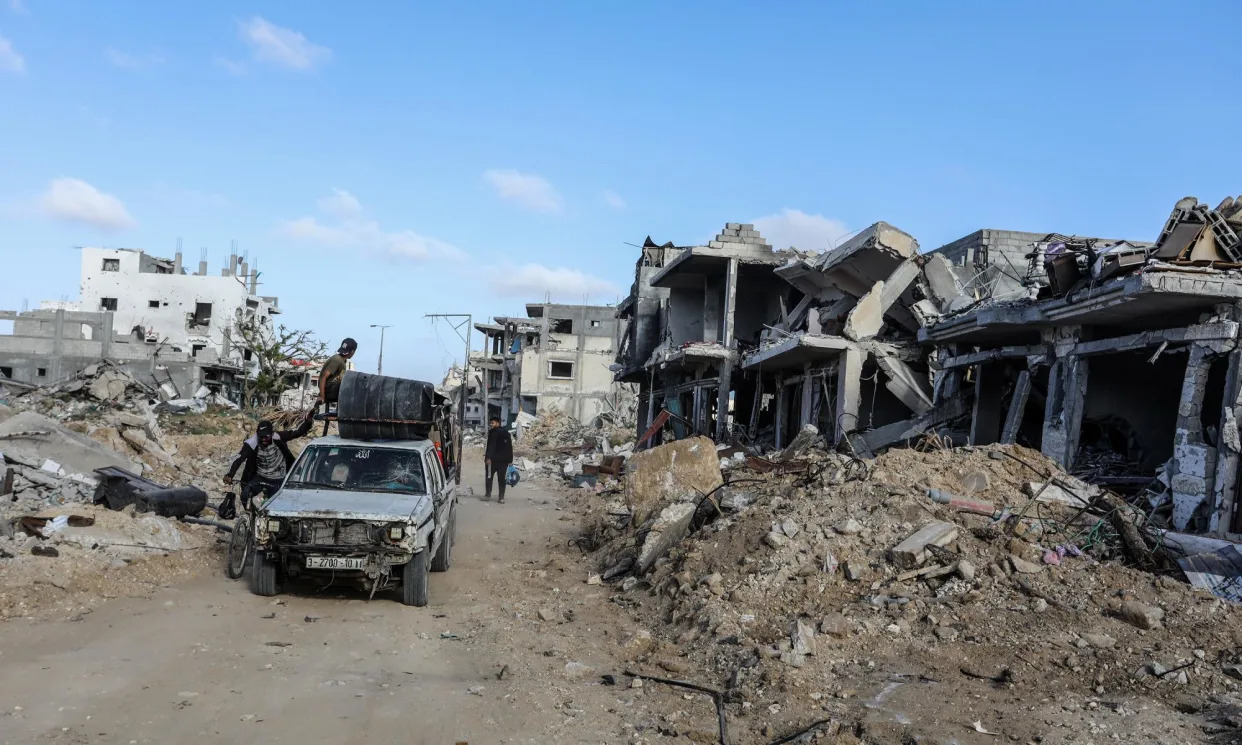
Erum Salam Fri, April 19, 2024 Damaged buildings in Khan Younis in Gaza on Friday.
Photograph: Anadolu/Getty Images
A group of students at Yale University were on Friday into the seventh day of a hunger strike in support of Palestinians in Gaza and in a protest to pressure the university to divest from any weapons manufacturing companies potentially supplying the Israeli military.
The group titles itself Yale Hunger Strikers for Palestine and one protester, the graduate student Miguel Monteiro, described losing weight and feeling dizzy, while attempting to put the group’s efforts into a wider perspective.
“Our heads are spinning, we have a lack of concentration, and difficulty sleeping,” Monteiro said. “But the point goes back to what we’ve been trying to say since the beginning, which is this is absolutely nothing compared with what is being inflicted upon the people of Gaza.”
Monteiro is only drinking water and electrolytes. He has not had any solid food since the strike began on campus nearly a week ago.
The group decided to resort to hunger strike after a letter calling for a commitment to divest from such companies was sent to the university’s president, Peter Salovey, but was left unanswered.
The students had warned the head of the school that if he failed to respond within 48 hours that “students would refuse food in solidarity with the Palestinian people, in opposition to Yale”.
The action continued as police arrested more than 100 students who created an encampment in support of Palestine on campus at Columbia University in New York on Thursday.
Students at some other universities such as McGill in Montreal have engaged in similar hunger strikes. Students there are calling for the institution to divest about $20m from companies with products used by the Israeli military, such as Lockheed Martin, which supplies Israeli with fighter jets.
The Yale Corporation, also known as the board of trustees of the university, will hold its final meeting of the year on Saturday, and students on hunger strike hope their pleas to divest will be heard.
Yale did not immediately respond to a request for comment, but instead referred to a public statement on the hunger strike, which read, in part: “Staff members will continue to emphasize the importance of student health and wellbeing during this time. Students participating in a hunger strike are encouraged to consult with clinicians at Yale Health.
“For more than 50 years, the university has employed a rigorous process to ensure the ethical management of its endowment, guided first and foremost by these longstanding principles. The Corporation Committee on Investor Responsibility (CCIR) considers and makes recommendations to the Board of Trustees on policy matters related to ethical investing. It is supported by the work of the Advisory Committee on Investor Responsibility (ACIR), whose members include alumni, staff, faculty, and students.”
Yale said the ACIR is looking into the issue of divestment and preparing to provide an update within the coming weeks.
#UBI
Seattle gave low-income residents $500 a month no strings attached. Employment rates nearly doubled.
Noah Sheidlower,Katie Balevic Updated Sat, Apr 20, 2024 A view of the Seattle skyline.Jeff Halstead/Icon Sportswire/Getty Images
A Seattle basic income pilot gave low-income residents $500 a month, nearly doubling employment rates.
Some participants reported getting new housing, while others saw their employment incomes rise.
Basic income pilots nationwide have seen noteworthy success, despite conservative opposition.
A Seattle-area guaranteed basic income pilot gave low-income residents $500 a month to help reduce poverty. Employment in the group nearly doubled, and numerous unhoused residents secured housing.
"These results showcase the power of community investment and the necessity of equitable solutions to address persistent barriers," said Marie Kurose, CEO of the WDC, in a statement. "The WDC will continue to use these insights to amplify our impact and drive transformative change in our region."
In the Seattle-area pilot program, public and private partners — such as King County, the Employment Security Department, and Chase Bank — provided funding to the participants, about 88% of whom were people of color. King County is a mostly white, wealthy county, according to Census data.
Employment among the participants almost doubled from 37% before the program to 66% post-pilot. Participants also reported getting higher-paying jobs with additional benefits. Participants' average incomes increased from $2,995 a month to $3,405.
The percentage of participants whose jobs provided a retirement plan nearly tripled, while life insurance doubled. Over a quarter of participants reported acquiring disability insurance in their new jobs, which none of them had in their previous jobs.
Participants also reported being more financially stable, meaning they could pay off bills and debts while building up more savings for the future. For instance, the percent of participants with savings increased from 24% to 35% — for families with children, this increased from 0% to 42%. The percentage of those able to consistently pay their bills doubled from 19% to 38%. The percentage of those behind on all debts stayed stagnant.
The payments contributed to less anxiety and fatigue and more freedom to travel and spend on non-essentials. Likely due to increased ability to seek treatment, some also reported reduced physical pain, allowing them to go about their days more easily and complete educational or professional goals.
Parents reported using the payments mainly for their children's needs, though many said they couldn't significantly strengthen their own financial position. Parents were less likely to have started short-term professional training compared to non-parents.
Many participants said they wanted the program to continue for a full year rather than 10 months, while others suggested higher monthly payments as high as $1,000.
The results are on trend with those of similar pilot programs nationwide, which have seen massive success. Participants in universal and guaranteed basic income programs have widely reported that the funds helped them pay off debts, as well as afford groceries, childcare, and housing.
Even so, conservative lawmakers nationwide have loudly advocated against the programs, claiming that they discourage work and cost taxpayers. However, many of the pilot programs are funded privately by philanthropy or by federal relief funds. Republicans in several state legislatures have pushed efforts to ban basic income programs in their states.
Red states fight growing efforts to give ‘basic income’ cash to residents
Kevin Hardy Sun, April 21, 2024 Susie Garza displays a city-provided debit card she receives monthly through a trial program in Stockton, California, in 2019.
Susie Garza displays a city-provided debit card she receives monthly through a trial program in Stockton, California, in 2019. That year, Stockton launched a basic income experiment that has set off a major expansion of such programs across the country. Research has shown basic income programs can boost employment and health, but GOP lawmakers in some states are pushing back on the concept of free cash. (Rich Pedroncelli/AP Photo)
South Dakota state Sen. John Wiik likes to think of himself as a lookout of sorts — keeping an eye on new laws, programs and ideas brewing across the states.
“I don’t bring a ton of legislation,” said Wiik, a Republican. “The main thing I like to do is try and stay ahead of trends and try and prevent bad things from coming into our state.”
This session, that meant sponsoring successful legislation banning cities or counties from creating basic income programs, which provide direct, regular cash payments to low-income residents to help alleviate poverty.
While Wiik isn’t aware of any local governments publicly floating the idea in South Dakota, he describes such programs as “bureaucrats trying to hand out checks to make sure that your party registration matches whoever signed the checks for the rest of your life.”
The economic gut punch of the pandemic and related assistance efforts such as the expanded child tax credit popularized the idea of directly handing cash to people in need. Advocates say the programs can be administered more efficiently than traditional government assistance programs, and research suggests they increase not only financial stability but also mental and physical health.
Still, Wiik and other Republicans argue handing out no-strings-attached cash disincentivizes work — and having fewer workers available is especially worrisome in a state with the nation’s second-lowest unemployment rate.
South Dakota is among at least six states where GOP officials have looked to ban basic income programs.
The basic income concept has been around for decades, but a 2019 experiment in Stockton, California, set off a major expansion. There, 125 individuals received $500 per month with no strings attached for two years. Independent researchers found the program improved financial stability and health, but concluded that the pandemic dampened those effects.
GOP lawmakers like Wiik fear that even experimental programs could set a dangerous precedent.
“What did Ronald Reagan say, ‘The closest thing to eternal life on this planet is a government program’?” Wiik said. “So, if you get people addicted to just getting a check from the government, it’s going to be really hard to take that away.”
The debate over basic income programs is likely to intensify as blue state lawmakers seek to expand pilot programs. Minnesota, for example, could become the nation’s first to fund a statewide program. But elected officials in red states are working to thwart such efforts — not only by fighting statewide efforts but also by preventing local communities from starting their own basic income programs.
Democratic governors in Arizona and Wisconsin recently vetoed Republican legislation banning basic income programs.
Last week, Texas Attorney General Ken Paxton sued Harris County to block a pilot program that would provide $500 per month to 1,900 low-income people in the state’s largest county, home to Houston.
Paxton, a Republican, argued the program is illegal because it violates a state constitutional provision that says local governments cannot grant public money to individuals.
Harris County Attorney Christian Menefee, a Democrat, called Paxton’s move “nothing more than an attack on local government and an attempt to make headlines.”
Meanwhile, several blue states are pushing to expand these programs.
Washington state lawmakers debated a statewide basic income bill during this year’s short session. And Minnesota lawmakers are debating whether to spend $100 million to roll out one of the nation’s first statewide pilot programs.
“We’re definitely seeing that shift from pilot to policy,” said Sukhi Samra, the director of Mayors for a Guaranteed Income, which formed after the Stockton experiment.
So far, that organization has helped launch about 60 pilot programs across the country that will provide $250 million in unconditional aid, she said.
This is an effective policy that helps our families, and this can radically change the way that we address poverty in this country.
– Sukhi Samra, Mayors for a Guaranteed Income director
Despite pushback in some states, Samra said recent polling commissioned by the group shows broad support of basic income programs. And the programs have shown success in supplementing — not replacing — social safety net programs, she said.
The extra cash gives recipients freedom of choice. People can fix a flat tire, cover school supplies or celebrate a child’s birthday for the first time.
“There’s no social safety net program that allows you to do that.” she said. “ … This is an effective policy that helps our families, and this can radically change the way that we address poverty in this country.”
Basic income experiments
The proliferation of basic income projects has been closely studied by researchers.
Though many feared that free cash would dissuade people from working, that hasn’t been the case, said Sara Kimberlin, the executive director and senior research scholar at Stanford University’s Center on Poverty and Inequality.
Stanford’s Basic Income Lab has tracked more than 150 basic income pilots across the country. Generally, those offer $500 or $1,000 per month over a short period.
“There isn’t anywhere in the United States where you can live off of $500 a month,” she said. “At the same time, $500 a month really makes a tremendous difference for someone who is living really close to the edge.”
Kimberlin said the research on basic income programs has so far been promising, though it’s unclear how long the benefits may persist once programs conclude. Still, she said, plenty of research shows how critical economic stability in childhood is to stability in adulthood — something both the basic income programs and the pandemic-era child tax credit can address.
Over the past five years, basic income experiments have varied across the country.
Last year, California launched the nation’s first state-funded pilot programs targeting former foster youth.
In Colorado, the Denver Basic Income Project aimed to help homeless individuals. After early successes, the Denver City Council awarded funding late last year to extend that program, which provides up to $1,000 per month to hundreds of participants.
A 2021 pilot launched in Cambridge, Massachusetts, provided $500 a month over 18 months to 130 single caregivers. Research from the University of Pennsylvania found the Cambridge program increased employment, the ability to cover a $400 emergency expense, and food and housing security among participants.
Children in participating families were more likely to enroll in Advanced Placement courses, earned higher grades and had reduced absenteeism.
“It was really reaffirming to hear that when families are not stressed out, they are able to actually do much better,” said Geeta Pradhan, president of the Cambridge Community Foundation, which worked on the project.
Pradhan said basic income programs are part of a national trend in “trust-based philanthropy,” which empowers individuals rather than imposing top-down solutions to fight poverty.
“There is something that I think it does to people’s sense of empowerment, a sense of agency, the freedom that you feel,” she said. “I think that there’s some very important aspects of humanity that are built into these programs.”
While the pilot concluded, the Cambridge City Council committed $22 million in federal pandemic aid toward a second round of funding. Now, nearly 2,000 families earning at or below 250% of the federal poverty level are receiving $500 monthly payments, said Sumbul Siddiqui, a city council member.
Siddiqui, a Democrat, pushed for the original pilot when she was mayor during the pandemic. While she said the program has proven successful, it’s unclear whether the city can find a sustainable source of funding to keep it going long term.
States look to expand pilots
Tomas Vargas Jr. was among the 125 people who benefited from the Stockton, California, basic income program that launched in 2019.
At the time, he heard plenty of criticism from people who said beneficiaries would blow their funds on drugs and alcohol or quit their jobs.
“Off of $500 a month, which amazed me,” said Vargas, who worked part time at UPS.
Tomas Vargas Jr. is pictured with his wife and two children
Tomas Vargas Jr. was among the 125 people who participated in the 2019 basic income experiment in Stockton, Calif. Vargas, pictured here with his family, said the $500 a month allowed him to be a better father and take off time to pursue a better career. (Courtesy of Tomas Vargas Jr.)
But he said the cash gave him breathing room. He had felt stuck at his job, but the extra money gave him the freedom to take time off to interview for better jobs.
Unlike other social service programs like food stamps, he didn’t have to worry about losing out if his income went up incrementally. The cash allowed him to be a better father, he said, as well as improved his confidence and mental health.
The experience prompted him to get into the nonprofit sector. Financially stable, he now works at Mayors for a Guaranteed Income.
“The person I was five years ago is not the person that I am now,” he said.
Washington state Sen. Claire Wilson, a Democrat, said basic income is a proactive way to disrupt the status quo maintained by other anti-poverty efforts.
“I have a belief that our systems in our country have never been put in place to get people out of them,” she said. “They kept people right where they are.”
Wilson chairs the Human Services Committee, which considered a basic income bill this session that would have created a pilot program to offer 7,500 people a monthly amount equivalent to the fair market rent for a two-bedroom apartment in their area.
The basic income bill didn’t progress during Washington’s short legislative session this year, but Wilson said lawmakers would reconsider the idea next year. While she champions the concept, she said there’s a lot of work to be done convincing skeptics.
In Minnesota, where lawmakers are considering a $100 million statewide basic income pilot program, some Republicans balked at the concept of free cash and its cost to taxpayers.
“Just the cost alone should be a concern,” Republican state Rep. Jon Koznick said during a committee meeting this month.
State Rep. Athena Hollins, a Democrat who sponsored the legislation, acknowledged the hefty request, but said backers would support a scaled-down version and “thought it was really important to get this conversation started.”
Much of the conversation in committee centered on local programs in cities such as Minneapolis and St. Paul. St. Paul Mayor Melvin Carter, a Democrat, told lawmakers the city’s 2020 pilot saw “groundbreaking” results.
After scraping by for years, some families were able to put money into savings for the first time, he said. Families experienced less anxiety and depression. And the pilot disproved the “disparaging tropes” from critics about people living in poverty, the mayor said.
Carter told lawmakers that the complex issue of economic insecurity demands statewide solutions.
“I am well aware that the policy we’re proposing today is a departure from what we’re all used to,” he said. “In fact, that’s one of my favorite things about it.”
Stateline is part of States Newsroom, a nonprofit news network supported by grants and a coalition of donors as a 501c(3) public charity. Stateline maintains editorial independence. Contact Editor Scott S. Greenberger for questions: info@stateline.org. Follow Stateline on Facebook and Twitter.
Haitians scramble to survive, seeking food, water and safety as gang violence chokes the capital
DÁNICA COTO Sun, April 21, 2024
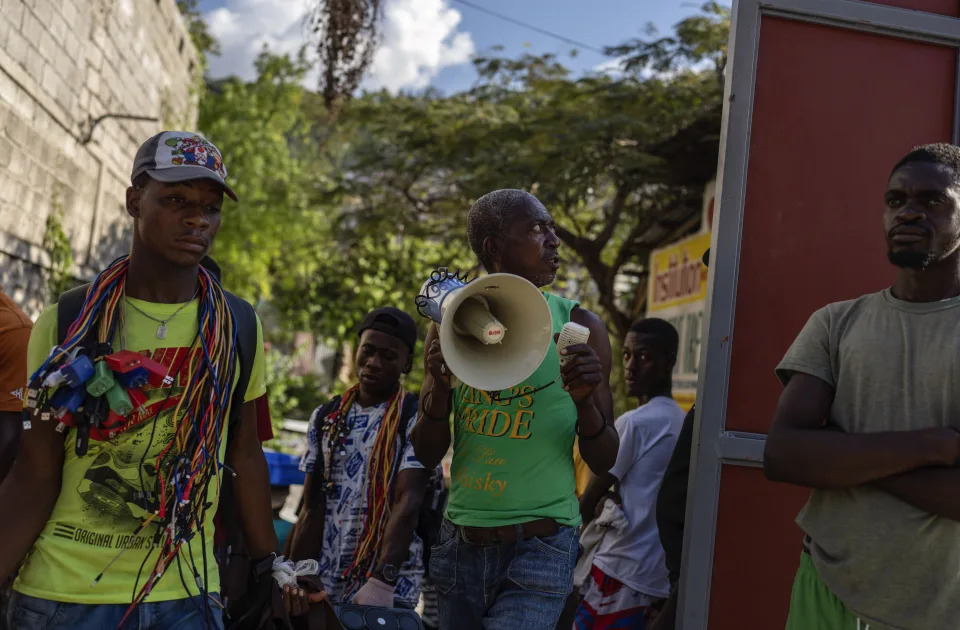
PORT-AU-PRINCE, Haiti (AP) — As the sun sets, a burly man bellows into a megaphone while a curious crowd gathers around him. Next to him is a small cardboard box with several banknotes worth 10 Haitian gourdes — about 7 U.S. cents.
“Everyone give whatever they have!” the man shouts as he grabs the arms and hands of people entering a neighborhood in the capital of Port-au-Prince that has been targeted by violent gangs.
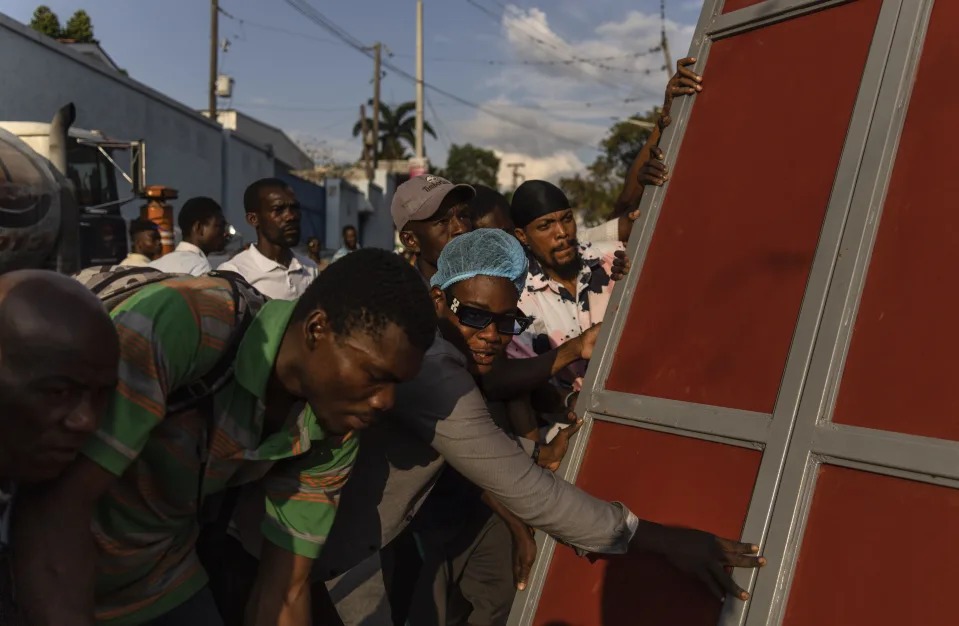
The community recently voted to buy a metal barricade and install it themselves to try to protect residents from the unrelenting violence that killed or injured more than 2,500 people in Haiti from January to March.
“Every day I wake up and find a dead body,” said Noune-Carme Manoune, an immigration officer.
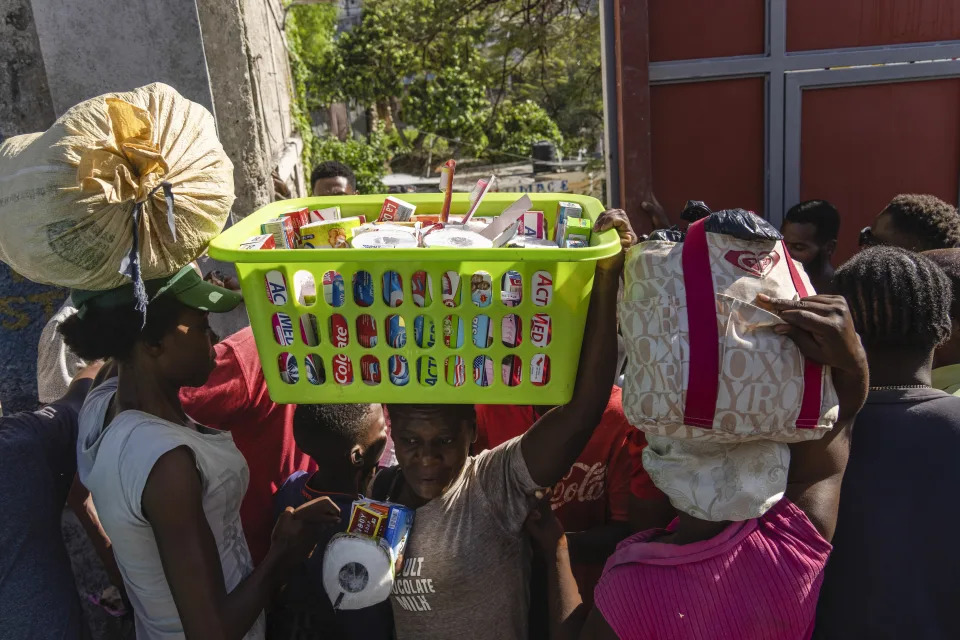
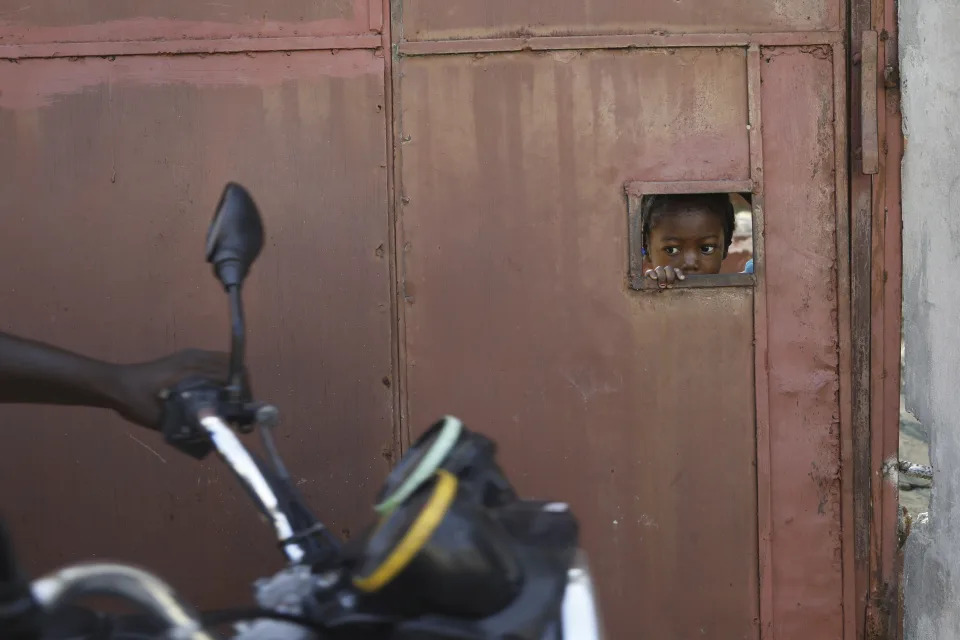
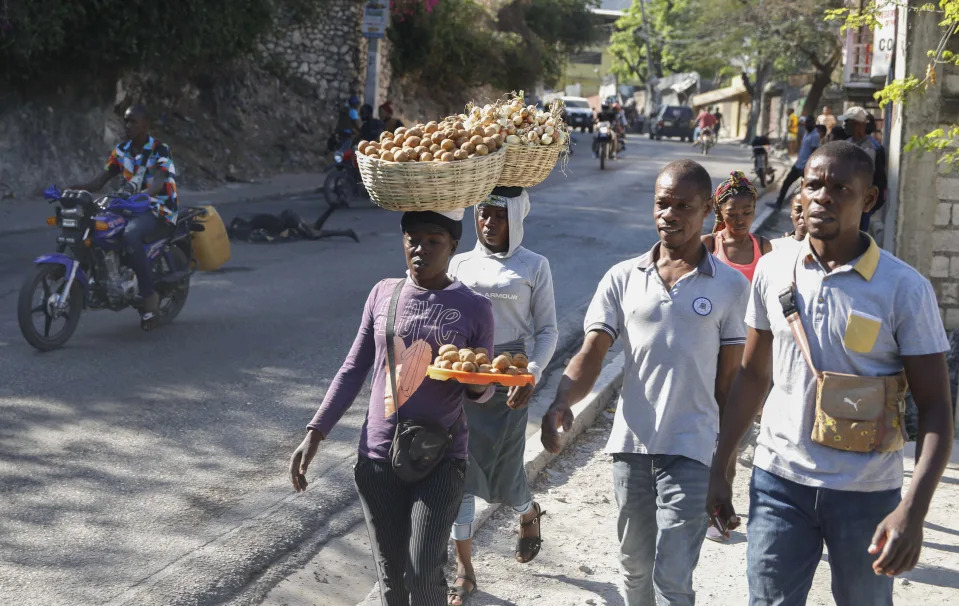
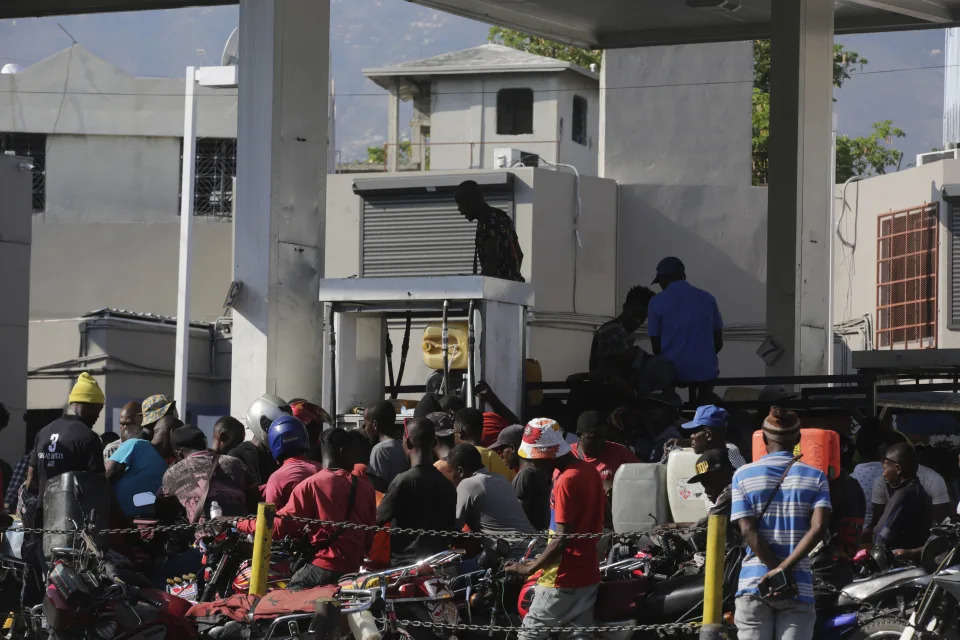
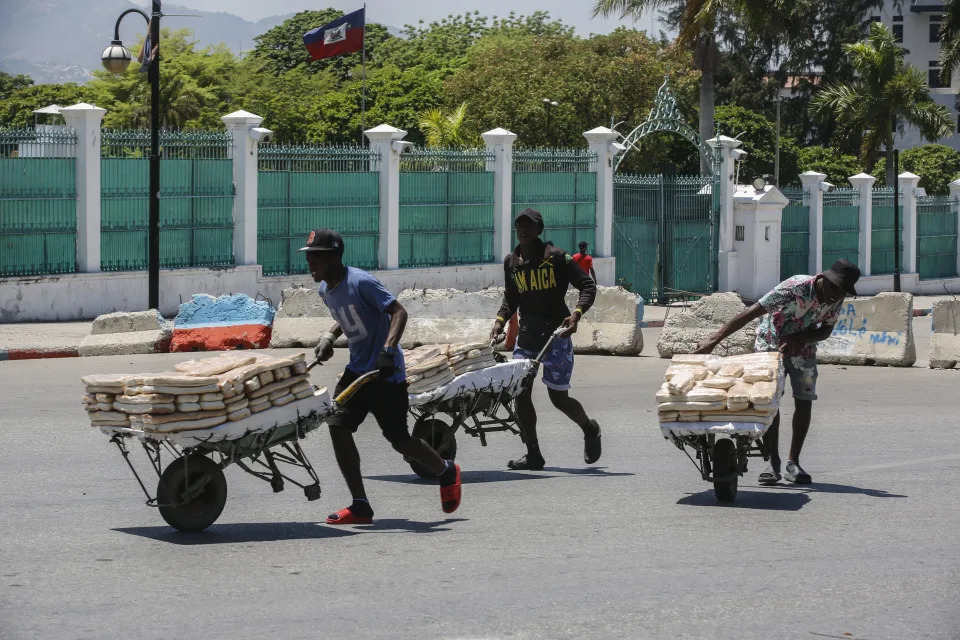
Life in Port-au-Prince has become a game of survival, pushing Haitians to new limits as they scramble to stay safe and alive while gangs overwhelm the police and the government remains largely absent. Some are installing metal barricades. Others press hard on the gas while driving near gang-controlled areas. The few who can afford it stockpile water, food, money and medication, supplies of which have dwindled since the main international airport closed in early March. The country's biggest seaport is largely paralyzed by marauding gangs.
“People living in the capital are locked in, they have nowhere to go,” Philippe Branchat, International Organization for Migration chief in Haiti, said in a recent statement. “The capital is surrounded by armed groups and danger. It is a city under siege.”
Phones ping often with alerts reporting gunfire, kidnappings and fatal shootings, and some supermarkets have so many armed guards that they resemble small police stations.
Gang attacks used to occur only in certain areas, but now they can happen anywhere, any time. Staying home does not guarantee safety: One man playing with his daughter at home was shot in the back by a stray bullet. Others have been killed.
Schools and gas stations are shuttered, with fuel on the black market selling for $9 a gallon, roughly three times the official price. Banks have prohibited customers from withdrawing more than $100 a day, and checks that used to take three days to clear now take a month or more. Police officers have to wait weeks to be paid.
“Everyone is under stress,” said Isidore Gédéon, a 38-year-old musician. “After the prison break, people don’t trust anyone. The state doesn’t have control.”
Gangs that control an estimated 80% of Port-au-Prince launched coordinated attacks on Feb. 29, targeting critical state infrastructure. They set fire to police stations, shot up the airport and stormed into Haiti’s two biggest prisons, releasing more than 4,000 inmates.
Few believe this will end the crisis. It’s not only the gangs unleashing violence; Haitians have embraced a vigilante movement known as “bwa kale,” that has killed several hundred suspected gang members or their associates.
“There are certain communities I can’t go to because everyone is scared of everyone,” Gédéon said. “You could be innocent, and you end up dead.”
More than 95,000 people have fled Port-au-Prince in one month alone as gangs raid communities, torching homes and killing people in territories controlled by their rivals.
Those who flee via bus to Haiti’s southern and northern regions risk being gang-raped or killed as they pass through gang-controlled areas where gunmen have opened fire.
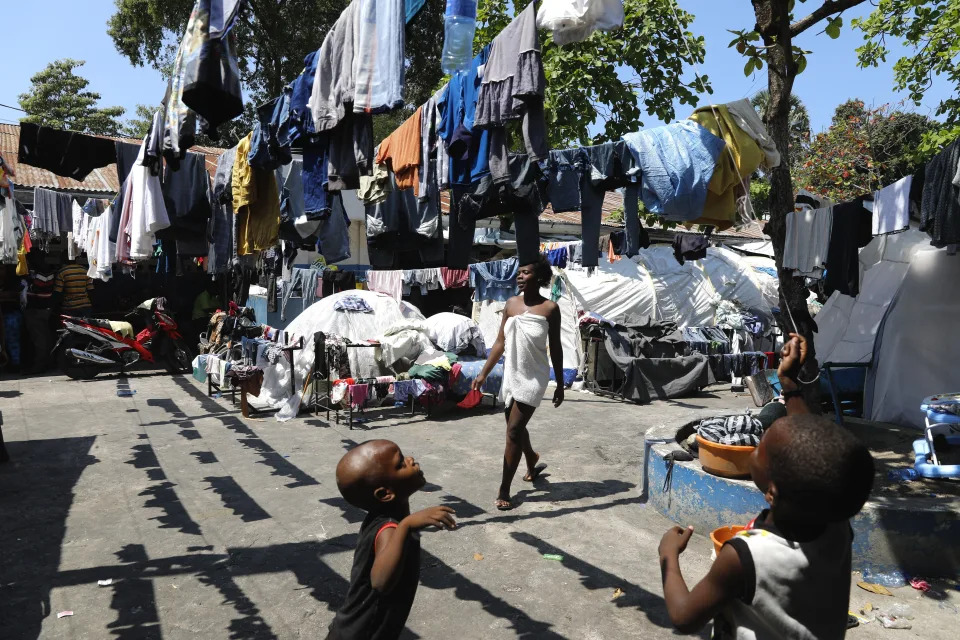
Violence in the capital has left some 160,000 people homeless, according to the IOM.
“This is hell,” said Nelson Langlois, a producer and cameraman.
Langlois, his wife and three children spent two nights lying flat on the roof of their home as gangs raided the neighborhood.
“Time after time, we peered over to see when we could flee,” he recalled.
Forced to split up because of the lack of shelter, Langlois is living in a Vodou temple and his wife and children are elsewhere in Port-au-Prince.
Like most people in the city, Langlois usually stays indoors. The days of pickup soccer games on dusty roads and the nights of drinking Prestige beer in bars with hip-hop, reggae or African music playing are long gone.
“It’s an open-air prison,” Langlois said.
The violence has also forced businesses, government agencies and schools to close, leaving scores of Haitians unemployed.
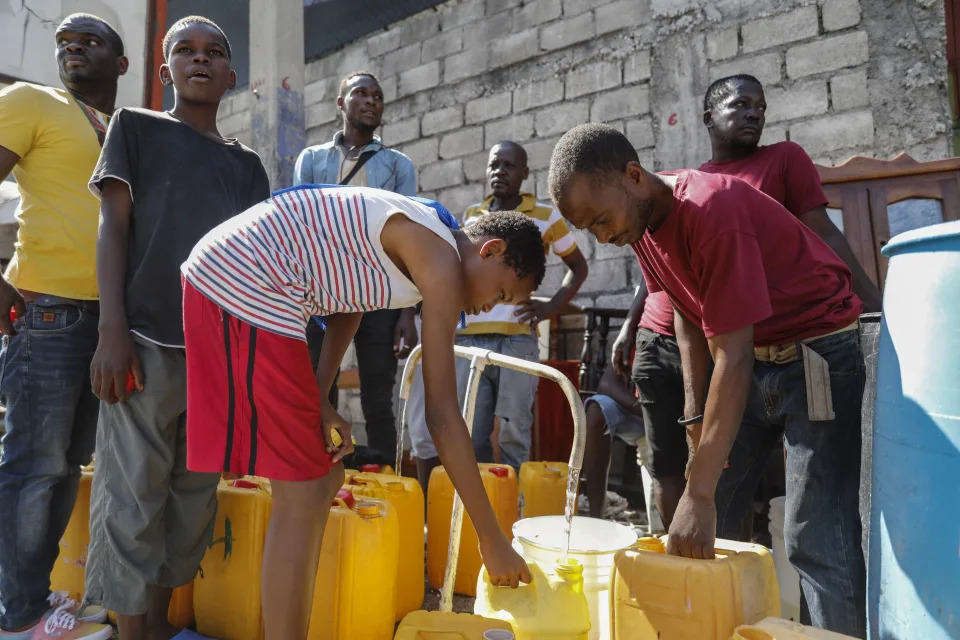
Manoune, the government immigration officer, said she has been earning money selling treated water since she has no work because deportations are stalled.
Meanwhile, Gédéon said he no longer plays the drums for a living, noting that bars and other venues are shuttered. He sells small plastic bags of water on the street and has become a handyman, installing fans and fixing appliances.
Even students are joining the workforce as the crisis deepens poverty across Haiti.
Sully, a 10th grader whose school closed nearly two months ago, stood on a street corner in the community of Pétion-Ville selling gasoline that he buys on the black market.
“You have to be careful,” said Sully, who asked that his last name be withheld for safety. “During the morning it’s safer.”
He sells about five gallons a week, generating roughly $40 for his family, but he cannot afford to join his classmates who are learning remotely.
“Online class is for people more fortunate than me, who have more money,” Sully said.
The European Union last week announced the launch of a humanitarian air bridge from the Central American country of Panama to Haiti. Five flights have landed in the northern city of Cap-Haïtien, site of Haiti’s sole functioning airport, bringing 62 tons of medicine, water, emergency shelter equipment and other essential supplies.
But there is no guarantee that critical items will reach those who most need them. Many Haitians remain trapped in their homes, unable to buy or look for food amid whizzing bullets.
Back in the neighborhood where residents are installing a metal barricade, sparks fly as one man cuts metal while others shovel and mix cement. They are well underway, and hope to finish the project soon.
Others remain skeptical, citing reports of gangs jumping into loaders and other heavy equipment to tear down police stations and, more recently, metal barricades
Haiti's death toll rises as international support lags, UN report says
Fri, April 19, 2024 People walk past remains of vehicles after they were set on fire by gangs, in Port-au-Prince
By Sarah Morland
(Reuters) - More than 2,500 people were killed or injured in gang violence in Haiti from January through March, up 53% from the last three months of 2023, the United Nations Integrated Office in Haiti (BINUH) said on Friday.
At least 590 were killed during police operations, BINUH said in a report. Several were apparently not involved in gang violence, some had impaired mobility, and at least 141 were killed by vigilante justice groups.
Most of the violence took place in the capital of Port-au-Prince, while at least 438 people were kidnapped across the wider West Department and agricultural Artibonite region. The capital's port-side La Saline and Cite Soleil areas had the longest large-scale attacks.
Gang members continued to perpetrate rapes against women and girls in rival neighborhoods, as well as in prisons and displacement camps, the report found.
Hundreds of thousands have been internally displaced by gangs, the U.N. estimates. Despite criticism by the world body, countries such as the United States and neighboring Dominican Republic are still deporting migrants back into Haiti.
The U.S. Department of Homeland Security told Reuters on Thursday that irregular migration of Haitians through the Caribbean "remains low," though many neighbors have evacuated citizens and bolstered their borders.
Gang violence, which has worsened for years, escalated on Feb. 29 when unelected Prime Minister Ariel Henry traveled to Kenya to fast-track a planned international security support mission, but days later he resigned under U.S. pressure.
With a new government yet to be installed, BINUH said, gangs have "changed their tactics" targeting attacks against public institutions and strategic infrastructure, such as the main port and largest airport.
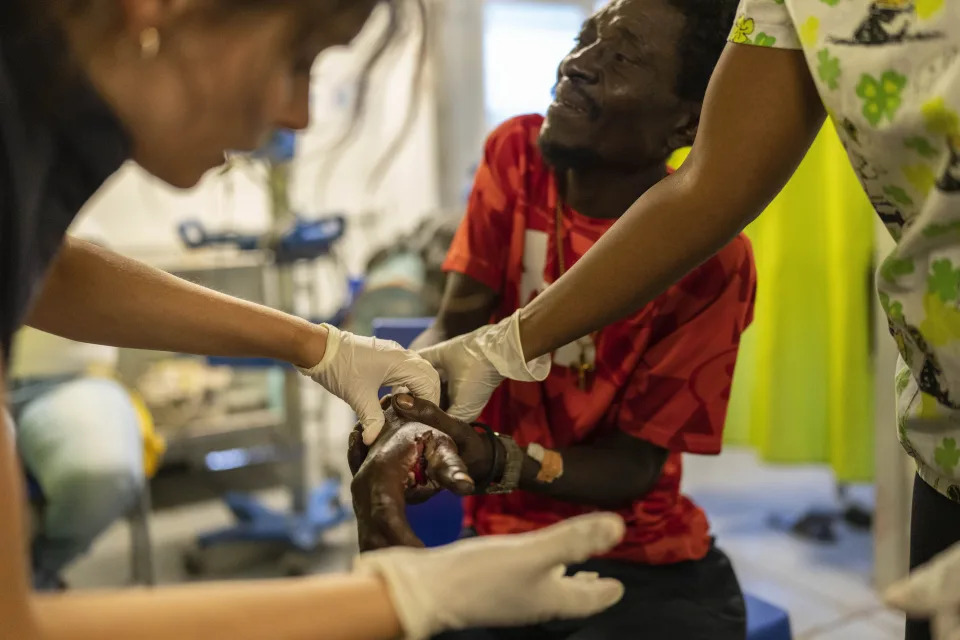
At least 22 police buildings have been looted or set on fire and 19 police officers killed or injured, it said, while blocked supply routes are exacerbating a healthcare and hunger crisis.
The report repeated calls for faster deployment of the planned security mission, which Henry requested in 2022 and was approved over six months ago, but which has received limited pledges for both troops and funds and been put on hold pending a new government.
It also called for updated sanctions, stronger efforts to block arms trafficking, secure routes to deliver key goods and rehabilitation programs for children recruited into gangs.
(Reporting by Sarah Morland; Editing by Richard Chang)
Massive river flooding expected in China's Guangdong, threatening millions
Dark clouds gather over mountains in Zhaoqing, southern China's Guangdong province.
By Bernard Orr and Ethan Wang
Updated Sun, April 21, 2024 BEIJING (Reuters) -Major rivers, waterways and reservoirs in China's Guangdong province are threatening to unleash dangerous floods, forcing the government on Sunday to enact emergency response plans to protect more than 127 million people.
Calling the situation "grim", local weather officials said sections of rivers and tributaries at the Xijiang and Beijiang river basins are hitting water levels in a rare spike that only has a one-in-50 chance of happening in any given year, state broadcaster CCTV news said on Sunday.
China's water resource ministry issued an emergency advisory, CCTV reported.
Guangdong officials urged departments in all localities and municipalities to begin emergency planning to avert natural disasters and promptly disperse disaster relief funds and materials to ensure affected people have food, clothing, water and somewhere to stay.
The province, a major exporter and one of China's main commercial and trading centres, has seen major downpours and strong winds for several days, in a weather pattern which has also affected other parts of China.
A 12-hour spell of heavy rain, starting from 8 p.m. (1200 GMT) Saturday, battered the central and northern parts of the province including the cities of Zhaoqing, Shaoguan, Qingyuan and Jiangmen where rescue workers have been dispatched.
More than 45,000 people have been evacuated in Qingyuan, according to state media, and some power facilities in Zhaoqing were damaged, cutting power to some places.
Overall in Guangdong, 1.16 million households lost power due to the heavy rains, according to state-backed media.
About 1,103 schools in Zhaoqing, Shaoguan and Qingyuan will suspend classes on Monday, Chinese state radio said.
WATER TOWN
"Please look at Zhaoqing's Huaiji county, which has become a water town. The elderly and children at the countryside don't know what to do with power outages and no signal," said one user on the popular social media site Weibo.
Raging flood waters swept one vehicle down a narrow street in Zhaoqing, a video released by Hongxing News showed.
"It rained like a waterfall for an hour and a half on the highway driving home last night," said another Weibo user. "I couldn't see the road at all."
Authorities in Qingyuan and Shaoguan also suspended ships from traveling through several rivers, with maritime departments dispatching forces to be on duty and coordinate emergency tugboats and emergency rescue vessels.
Many hydrological stations in the province are exceeding water levels, weather officials warned, and in the provincial capital Guangzhou, a city of 18 million, reservoirs have reached flood limits, city officials announced on Sunday.
Data showed 2,609 hydrological stations with daily rainfall greater than 50 mm (1.97 inches), accounting for about 59% of all observation stations. At 8 a.m. Sunday, 27 hydrological stations in Guangdong were on alert.
In neighboring Guangxi, west of Guangdong, violent hurricane-like winds whipped the region, destroying buildings state media video footage showed. Some places have also experienced hailstones and major flooding, CCTV said.
In another video, rescuers could be seen trying to save an elderly person clinging to a tree half-submerged in flood waters.
As of 10:00 a.m. (0200 GMT), 65 landslides were recorded in the city of Hezhou located in Guangxi, state media reported.
Weather forecasters are expecting heavy rain through Monday in Guangxi region, Guangdong, Fujian and Zhejiang provinces.
(Reporting by Bernard Orr and Ethan Wang; Editing by Lincoln Feast and David Holmes) Rescue Operations Underway as Flooding Impacts Southern China's Guangdong Province
Storyful Sun, April 21, 2024
Rescue operations were underway on Saturday, April 20, as heavy rainfall in southern China caused rivers to flood in Guangdong, local news and officials reported.
According to China’s Central News Agency, heavy rains had caused flooding and landslides in several counties across southern China’s Guangdong province as of Sunday, with a total of 65 thunderstorm and gale warnings in effect across the region.
Guangdong Fire Protection said they were carrying out rescue operations as the province experienced a “large number of torrents and severe floods due to river backflow.”
“Many houses were flooded and many elderly and children were in urgent need of evacuation,” Guangdong Fire Protection said, according to a machine translation.
Footage here, released by the Guangdong Fire Protection, shows rescue operations on Saturday. Credit: Guangdong Fire Protection via Storyful
‘Mission accomplished’ – Michelle Obama visits St. Louis, signs books undercover at Target
Joey Schneider Fri, April 19, 2024
NO SHE WAS NOT DRESSED LIKE THIS
ST. LOUIS – Former U.S. First Lady Michelle Obama recently paid a visit to St. Louis. Her travels included quite an intriguing shopping trip.
Obama visited St. Louis earlier this week to speak at the National Council for Mental Wellbeing. Looking to make an impact on the St. Louis region, she didn’t stop just there.
On Friday, Obama shared a video of her adventures at one Target store. She says it came during her recent trip to St. Louis as she planned “to run a few errands and check out the paperback of my book, The Light We Carry.”
Sources have confirmed with FOX 2 that Obama shopped at a Target in south St. Louis County earlier this week. Target officials declined to comment on her visit.
A videographer helped Obama document her shopping trip from start to finish. Right from the start, before she left her car, she had a special mission in mind.
“We are on a mission. It’s a secret mission,” said Obama in the video. “I had the crazy idea. I heard my paperback is out and it’s in Target. So we are going to go undercover because I have not seen my book actually in a Target store. So we are going to try to do this low-key.”
She starts by checking out an area near sports equipment. She later finds one section of the store populated with dozens of her books.
After a quick moment of celebration, Obama swiftly signs six books, placing at least two back on top of piles.
After that, Obama picks up a shopping basket to pick up some items for herself, her pets and her husband, Barack, the 44th U.S. President.
Obama then checked out several items nonchalantly and left the store. “Mission accomplished,” she says as she heads back into her car.
Michelle Obama served as the U.S. First Lady from 2009 to 2017. She was the first African-American First Lady in U.S. history.