Thursday, November 21, 2024


No Matter Who Sits in the White Peoples’ 

MAN'S House the War Being Waged by the U.S. Colonial/Capitalist Class Against the Black Colonized Working Class and All Oppressed Peoples and Nations Will Continue


Hide nothing from the masses of our people. Tell no lies. Expose lies whenever they are told. Mask no difficulties, mistakes, failures. Claim no easy victories…

— Amilcar Cabral (Revolution in Guinea, stage 1, London, 1974, p 70-72)

It was under the Democrats and the first “Black” president that the Department of Defense 1033 program that militarizes local police forces was expanded by 2,400%; the U.S. Africa Command (AFRICOM) expanded by 1,900%; Libya, the most prosperous African  and Pan African nation was attacked and destroyed; the war on Yemen began; the Occupy Wall Street Movement was smashed; the FBI created the “Black Identity Extremist” label; the banks were bailed out from the economic collapse that they created, but not the working class; Black people lost more wealth  than was lost at the end of Reconstruction in 1870s; and, despite police killings across the country, including Mike Brown in Ferguson, the Obama administration only brought Federal charges against one killer-cop.  Yet, with the return of Trump, opportunists in our communities and beyond are telling us that the real culprits in our oppression and the targets for opposition are Trump and republicans.

The Black Alliance for Peace (BAP) rejects this kind of ahistorical opportunism.

We are clear. The anti-democratic duopoly is made up of  representatives of the capitalist class and provides cover for what is, in reality, the dictatorship of capital. In this, the duopoly reveals the class nature of the state. This dictatorship, the true enemy of the people, is the target of our agitation and organizing.

Focusing attention on the Trumpian wing of the capitalist class as the primary or principal contradiction facing the people in the U.S. or in the world, obscures the reality that the dominant wing of capital, finance capital, along with the U.S. based transnational corporations, have captured and are operating through both parties. However, it is the democratic party wing of the dictatorship of capital that has championed what is popularly referred to as neoliberalism. Neoliberalism, first given coherence under Ronald Reagan, eventually migrated to the democratic party under Bill Clinton and the Democratic Leadership Council, whose “third way politics” aligned with both neoliberals and neoconservatives (neocons). Trumpism is the particular (national) manifestation of the global crisis of neoliberal capitalism. The republican party’s capture of the executive and all branches of government will not resolve the structural contradictions of neoliberal capital. What we can expect, then, is the strengthening of the repressive state apparatus and more targeted repression. To be clear, this process would have continued under a Harris administration because Harris promised to maintain the same trajectory of state repression in the name of capital. Because of the bipartisan jettisoning of liberal democratic and human rights in favor of the capitalist order, it does not matter which individual is sitting in the white peoples’ house. Therefore, the correct approach for opposition forces is one that grounds the people’s understanding of the objective structural contradictions of the capitalist order and that builds their capacity to struggle against that order  – regardless of which wing of the duopoly represents it. Focusing on only one part of the duopoly is akin to focusing on only one faction of the capitalist class.

Despite any rhetoric to the contrary, BAP expects Trump will govern as a neoliberal. That is why certain elements of the ruling class turned to him again. Continued austerity, especially at the state and local levels, will persist, as well as privatization of public assets, tax breaks for the capitalist class, the suppression and repression of labor, fiscal and monetary policies that prop-up capitalist profits and undermine human rights and, of course, the targeted use of military power to advance the interests of the capitalist dictatorship. We believe, however, that Trump will make as his main mission the primary concern of the neoliberal elite:  smashing the movement toward de-dollarization.

We cannot afford to have any illusions or harbor any sentimentality about the nature of this system. As we organize in political spaces controlled by Black democrats, it would be suicidal if we did not understand the role these neocolonial puppets play – primarily against any organized opposition – in the war that capital is waging against the people. Under Biden-Harris, we saw  police, judicial, and media suppression of mobilizations in solidarity with the Palestinian people, the student intifada, the Uhuru 3, African Stream media, and many others. And it is no coincidence that so-called “cop cities” are being constructed across the country in those urban areas being managed by Black democrat party functionaries or, what Black Agenda Report refers to as the “Black Misleadership Class.”

This corrupted Black petit-bourgeois professional/managerial class, positioned in government, corporate and non-profit sectors, provides the buffer and role models for individual material advancement at the expense of the Black working class.

And while we are dealing with cop cities, we also understand what is coming with the mass deportations of non-white migrants and the violent law and order rhetoric that is already emanating from the Trumpian forces. But let us not forget that, under the Biden-Harris regime, mass deportations rose by 250 percent, of which Harris campaigned on being “tough” on the border. Anti-immigrant rhetoric is also bipartisan.

Like all people, we want to live decent, prosperous lives in peace and in harmony with all humanity and nature. But we are going to have to fight for peace. And for that struggle BAP is guided by the principles of the Black radical peace tradition that states clearly:

Peace is not the absence of conflict, but rather the achievement by popular struggle and self-defense of a world liberated from the interlocking issues of global conflict, nuclear armament and proliferation, unjust war, and subversion through the defeat of global systems of oppression that include colonialism, imperialism, patriarchy, and white supremacy.

That is the task and the responsibility that we take on. We are not afraid of any individual or oppressive system. We gladly take on this fight with the certainty that one day we will defeat the Pan European white supremacist colonial/capitalist patriarchy that is the enemy of collective humanity.

The struggles and sacrifices being made by the Palestinian peoples to defend their dignity and popular sovereignty is the example we embrace. This is why we say that, no matter the circumstances, no matter the challenge, no matter the intensity of the repression, we are building on the sacrifices of our people and guided by revolutionary principles. Our call will always be:

No Compromise, No Retreat!


Who Control’s Afghanistan’s Stolen Assets: A Factsheet


In August 2021, following the withdrawal of major U.S./NATO military forces from Afghanistan after two decades of occupation, Taliban forces took effective control over the country. In response, the United States seized the assets of Afghanistan’s central bank totaling around $7 billion. Half of that amount was transferred to the misleadingly named “Afghan Fund” in September 2022, a Swiss-based “charitable foundation” whose only role thus far has been to privately conceal and invest the funds without any concrete plans to return them, as confirmed by U.S. Special Representative for Afghanistan Thomas West. This runs contrary to popular demands by experts and humanitarian organizations who argue that a return of the funds is desperately needed now more than ever to help everyday Afghans.

Afghan women do not have any representation on the board of the “Afghan Fund,” nor do they have any official say over whether the assets should be returned. The board of trustees includes: two men selected by the U.S. State Department, Anwar ul-Haq Ahady and Shah Mehrabi, the U.S. Under Secretary of the Treasury for International Affairs Jay Shambaugh, and Swiss government official Ambassador Alexandra Baumann.

According to a July 2024 press statement from the board of the “Afghan Fund,” some of the stolen assets may also be disbursed to the Asian Development Bank, an institution controlled by the United States, Japan, and Australia via majority shareholder status. While the funds are not returning to the Afghan people, this move shows that a process to return the funds to Afghanistan can begin immediately if the board members agree to do so. Regardless of whether the funds are in fact disbursed elsewhere over time, board members Ahady, Mehrabi, Shambaugh, and Baumann are all culpable in the forced starvation and impoverishment of tens of millions of Afghans – tantamount to the collective punishment of the Afghan people.

According to a January 2024 written testimony by the U.S. Congress-established Office of the Special Inspector General for Afghanistan Reconstruction (SIGAR), the remaining $3.5 billion in sovereign funds held in the United States may eventually be transferred to the “Afghan Fund” depending on litigation filed by the families of 9/11 victims and other plaintiffs, while other funds held in Europe and the United Arab Emirates may also be added to the “Afghan Fund.” SIGAR found that none of the funds in the “Afghan Fund” as of early 2024 have been spent, are planned to be spent, or will ever be used to provide humanitarian or development assistance. Notably, while no disbursements have been made for the benefit of the Afghan people, portions of the over $340 million in interest that have been accrued from the stolen assets are being used to pay for the “Afghan Funds” operational and administrative costs.

The sudden deprivation of access to its sovereign assets led to a sharp economic and financial crisis in Afghanistan in 2021, which a recent United Nations Development Program (UNDP) study found is disproportionately affecting women and children. The seizure of assets combined with both U.S. and UN sanctions – ostensibly only targeting the Taliban – have hurt ordinary Afghans and aid organizations, affirmed by US-aligned rights groups and media outlets. The same UNDP report found that 69% of Afghans “do not have adequate resources for basic subsistence living,” while an estimated 15.8 million Afghans – including nearly 8 million children – are expected to experience “acute food insecurity” throughout 2024.

Clearly, the “Afghan Fund” – controlled by Western officials and Afghan compradors – has deliberately withheld billions from the suffering Afghan populace. It should be reiterated that a process to return these stolen funds, and in turn mitigate the U.S.-enabled humanitarian and economic crises plaguing Afghanistan, can and must begin right away. The following individuals have full power or influence over the release of the illegally stolen assets back to its rightful owners: the Afghan people.

Jay Shambaugh

Under Secretary of the U.S. Treasury for International Affairs

  • Visiting Associate Professor at the McDonough School of Business at Georgetown University
  • Former Consultant to the International Monetary Fund (2005, 2008, 2011-2013)
  • Former Director of the Hamilton Project at the Brookings Institution (2017-2020)
  • Former Member of the White House Council of Economic Advisors (2015-2017)
  • Former Chief Economist at the White House Council of Economic Advisers (2009-2011)

Alexandra Baumann

Head of the Prosperity and Sustainability Division at the Swiss Federal Department of Foreign Affairs

  • Former Diplomatic Advisor of the Head of the Swiss Federal
  • Department of Finance
  • Previously worked in the Swiss Embassies in Chile and
  • Germany, and the Swiss Mission to the UN in New York

Anwar ul-Haq Ahady

Former government official, economic advisor and central banker to the U.S./NATO occupied Afghanistan

  • Former Minister of Commerce and Industry (2010-2013) and Minister of Agriculture (2020-2021)
  • Former Minister of Finance and Advisor of National Economy to the U.S./NATO-backed President of Afghanistan, Hamid Karzai (2004-2009)
  • Previously responsible for overseeing Afghanistan’s central bank, Da Afghanistan Bank (2002-2004)

Shah Mehrabi

Member of the Supreme Council of Da Afghanistan Bank

  • Professor of Economics at Montgomery College in Maryland
  • Former Senior Economic Advisor to previous Ministers of Finance under U.S./NATO occupied Afghanistan

Thomas West

U.S. Special Representative for Afghanistan and Deputy Assistant Secretary

  • Former Vice President at a private global strategic advisory firm, the Cohen Group (2016-2021)
  • Former Special Advisor at the UN National Security Council to the U.S. Vice President for South Asia and the U.S. Director for Afghanistan and Pakistan (2012-2015)
  • Former U.S. State Department senior diplomat in Kunar Province, Afghanistan (2011-2012)
  • Former Special Assistant for South and Central Asia to the U.S. Under Secretary of State for Political Affairs (2008-2010)
The Black Alliance for Peace (BAP) seeks to recapture and redevelop the historic anti-war, anti-imperialist, and pro-peace positions of the radical black movement. Read other articles by Black Alliance for Peace, or visit Black Alliance for Peace's website.

SOCIAL JUSTICE WARRIORS PRACTICING DEI

Arts universities have a significant societal role in promoting social sustainability


University of the Arts Helsinki


In her doctoral dissertation, Outi Niemensivu from the University of the Arts Helsinki delves into the intersection of internationalisation and social sustainability within arts universities. Her research sheds light on how these institutions can foster social well-being, diversity, inclusion, justice, and social cohesion through higher music education. Outi Niemensivu will defend her doctoral dissertation on Saturday, 30 November, at the University of the Arts Helsinki.

Niemensivu’s study focuses on the activities at Uniarts Helsinki's Sbielius Academy and the University of Music and Performing Arts Graz, examining how these institutions engage with diverse cultural contexts to promote social sustainability.

Strategic Changes Needed for Social Sustainability

Niemensivu’s findings suggest that arts universities have a significant societal role in enhancing interactions and fostering a sense of belonging among people from various cultural backgrounds. However, she emphasizes that music education must evolve to support social sustainability, calling for strategic changes that challenge the dominance of Western classical music in higher education.

“Traditional music education needs fresh perspectives to operate in a socially sustainable way. Increasing collaboration with local communities and other stakeholders is crucial for achieving genuine change,” Niemensivu asserts.

Fragmented Efforts in Socially Sustainable Internationalisation

The research highlights a disparity in the understanding and implementation of social sustainability between institutions. At the Uniarts Helsinki's Sibelius Academy, the concept is more familiar compared to the University of Music and Performing Arts Graz, which has a higher proportion of international students. Niemensivu notes that social sustainability remains relatively under-researched.

While the Sibelius Academy’s Global Music Programme stands out, overall efforts towards socially sustainable internationalisation are fragmented. Both universities aim to engage closely with society, but progress is slow. Niemensivu suggests that a large number of international students might even hinder the implementation of social sustainability.

“Students who have come to Finland or elsewhere from abroad have invested significant time and resources into their studies, and they may lack the enthusiasm or energy to engage with local intercultural communities,” she explains.

Homogeneity in Student Bodies

Despite efforts to foster diversity, Niemensivu observes that the student bodies at both universities remain quite homogeneous. For instance, there are only a few students with African heritage. The Sibelius Academy’s Global Music Programme breaks with tradition by not requiring students to be familiar with Western musical traditions or to read music.

“In addition to global music, offering the possibility to study popular music might bring the desired diversity to higher music education. It is crucial that all students learn how to promote social sustainability during their studies,” Niemensivu concludes.

Niemensivu’s dissertation underscores the need for arts universities to adopt innovative approaches to music education, ensuring that they contribute effectively to social sustainability in an increasingly globalised world.

Defence details

Outi Niemensivu will defend her doctoral dissertation, “Internationalisation of Arts Universities – Towards Social Sustainability”, which falls within the field of arts management, at 12:00 noon on 30 November 2024 in the Helsinki Music Centre Black Box.  


YOU ARE WHAT YOU READ

Poor mental health linked to browsing negative content online


University College London


People with poorer mental health are more prone to browsing negative content online, which further exacerbates their symptoms, finds a study led by UCL researchers.

The relationship between mental health and web-browsing is causal and bi-directional, according to the Wellcome-funded study published in Nature Human Behaviour.

The researchers have developed a plug-in tool* that adds ‘content labels’ to webpages—similar to nutrition labels on food—designed to help users make healthier and more informed decisions about the content they consume. These labels emphasise the emotional impact of webpage content, along with its practicality and informativeness.

Co-lead author Professor Tali Sharot (UCL Psychology & Language Sciences, Max Planck UCL Centre for Computational Psychiatry and Ageing Research, and Massachusetts Institute of Technology) said: “Our results show that browsing negatively valenced content not only mirrors a person’s mood but can also actively worsen it. This creates a feedback loop that can perpetuate mental health challenges over time.”

Over 1,000 study participants answered questions about their mental health and shared their web browsing history with the researchers. Using natural language processing methods, the researchers analysed the emotional tone of the webpages participants visited. They found that participants with worse moods and mental health symptoms were inclined to browse more negative content online, and after browsing, those who browsed more negative content felt worse.

In an additional study, the researchers manipulated the websites people visited, exposing some participants to negative content and others to neutral content. They found that those exposed to negative websites reported worse moods afterward, demonstrating a causal effect of browsing negative content on mood. When these participants were then asked to browse the internet freely, those who had previously viewed negative websites—and consequently experienced a worse mood—chose to view more negative content. This finding highlights that the relationship is bi-directional: negative content affects mood, and a worsened mood drives the consumption of more negative content.

Co-lead author, PhD student Christopher Kelly (UCL Psychology & Language Sciences, Max Planck UCL Centre for Computational Psychiatry and Ageing Research, and Massachusetts Institute of Technology), said: "The results contribute to the ongoing debate regarding the relationship between mental health and online behaviour.

“Most research addressing this relationship has focused on the quantity of use, such as screen time or frequency of social media use, which has led to mixed conclusions. Here, instead, we focus on the type of content browsed and find that its emotional tone is causally and bidirectionally related to mental health and mood."

To check whether an intervention could be used to change web-browsing choices and improve mood, the researchers conducted a further study. They added content labels to the results of a Google search, which informed participants whether each search result would likely improve their mood, make it worse, or have no impact. Participants were then more likely to choose the positively-labelled sites deemed likely to improve their mood—and when asked about their mood after, those who had looked at the positive websites were indeed in better moods than other participants.

In response, the researchers have developed a free browser plug-in that adds labels to Google search results, providing three different ratings of how practical a website’s content is, how informative it is, and how it impacts mood.

Professor Sharot said: “We are accustomed to seeing content labels on our groceries, providing nutritional information such as sugar, calories, protein, and vitamins to help us make informed decisions about what we eat. A similar approach could be applied to the content we consume online, empowering people to make healthier choices online.”

Digital Diet browser extension


Climate-driven hazards increases risk for millions of coastal residents, study finds


Virginia Tech
Manoochehr Shirzaei. 

image: 

Manoochehr Shirzaei.

view more 

Credit: Virginia Tech photo


A new study published in Nature Climate Change estimates that a 1-meter sea level rise by 2100 would affect over 14 million people and $1 trillion worth of property along the Southeast Atlantic coast, from Norfolk, Virginia, to Miami, Florida.

The study assesses the cumulative impact of multiple climate-driven coastal hazards, including sea level rise, flooding, beach erosion, sinking land, and rising groundwater, all of which are expected to worsen significantly by the end of the 21st century.

The scale of these interconnected hazards is much greater than anticipated, said study co-author Manoochehr Shirzaei from Virginia Tech’s Department of Geosciences.

“The risk of flooding, compounded by sinking land and beach loss, could displace millions and damage critical infrastructure unless robust adaptation strategies are implemented,” said Shirzaei.

Key findings 

  • Shallow groundwater hazards: By 2100, 70 percent of the coastal population will be exposed to shallow or emerging groundwater, a far more significant exposure than daily flooding. The research projects that this groundwater hazard will affect approximately $1 trillion in property value, creating new challenges for infrastructure such as roads, buildings, septic systems, and utilities.
     
  • Storm-driven flooding: Coastal storms and hurricanes will amplify the risk of flooding over land. With 1 meter of sea level rise, overland flooding will affect up to 50 percent of residents in the region, impacting $770 billion in property value.
     
  • Beach erosion and loss: The Southeast Atlantic region, known for its barrier islands and coastal ecosystems, could lose up to 80 percent of its sandy beaches with just 1 meter of sea level rise.
     
  • Land subsidence: In addition to sea level rise, many areas along the Southeast Atlantic coast are experiencing sinking land, called subsidence, which exacerbates the effects of rising seas.
     
  • Socioeconomic exposure: A significant portion of the population and property in the Southeast Atlantic will be exposed to multiple coastal hazards, which will disproportionately affect lower-income communities. As much as half the population in flood-prone areas will be exposed to risks from both groundwater and storm-driven flooding.

The study stresses the necessity of a holistic approach to coastal resilience that addresses the full spectrum of climate-related hazards.

“We need to rethink how we plan and build for the future, especially in highly vulnerable coastal regions,” said Shirzaei. “By including a wider range of climate hazards in resilience strategies, we can better protect our communities from the compounded effects of sea level rise and extreme weather.”

The study, led by Patrick Barnard of U.S. Geological Survey, was conducted using cutting-edge geospatial data and modeling tools developed in collaboration with academic institutions and government agencies. The researchers employed the Coastal Storm Modeling System and other state-of-the-art models to project potential coastal hazard impacts, providing a crucial resource for informed decision-making.

DOI: 10.1038/s41558-024-02180-2

EU clash between worker shortages, anti-immigrant politics

Anchal Vohra in Brussels
DW
11/21/2024

As aging populations exacerbate worker shortages, European countries are quietly luring skilled foreign workers — even as pressure from the far right to keep immigration down has increased.


Italy is facing a major nursing shortage
Matteo Bazzi/REUTERS


With immigration the top political issue in Europe, particularly with the surge of the far right, pressure on governments to keep the numbers down has increased.

And yet several countries, even those with a publicly anti-immigrant stance, are luring foreign workers to fill a large labor void and keep the economies in an aging continent running.

The European Union has identified 42 occupations that face labor shortages and has come up with an action plan to attract foreign workers. Nearly two-thirds of small and medium-sized businesses in the bloc say they cannot find the talent they need.

On the face of it, many European leaders, especially those on the far right, have advocated deals with third countries to curb the entry of immigrants or repatriate them elsewhere. And yet, amid much less fanfare, signs of a policy shift acknowledging the need for immigrants have come to light.
Italy to recruit Indian nurses

Italy's far-right government, led by Prime Minister Giorgia Meloni, has decided to recruit hundreds of thousands of foreign workers desperately needed to plug the gaping shortages.

"For the three-year period [from] 2023-2025, the government expects a total of 452,000 entries,'' the Italian government said last year, also admitting it is much less than the "detected need of 833,000'' workers over that period of time.

According to the IDOS Study and Research Center, Italy needs 280,000 foreign workers annually until 2050 to meet the labor shortfall in various sectors such as agriculture, tourism and health care — about half the number of asylum applications filed last year. The country faces labor shortages in 37 occupations, with nurses and other health care professionals in the most demand.

The government recently announced it will recruit 10,000 nurses from India to help make up a shortage that is three times that much. Italian Health Minister Orazio Schillaci said in October that India has an oversupply of nurses. "There are 3.3 million nurses" in India, he said. "We want to bring here about 10,000."


Schillaci said the Indian nurses are professionally capable and will be recruited directly by Italian regions and placed wherever needed, once their ability to speak in Italian has been determined.

Maurizio Ambrosini, a professor of sociology and a migration expert at the University of Milan, told DW that Meloni's government has been compelled to change policy by employers who are in desperate need of workers.

"Italian employers were very silent on the migration debate for years. I suppose they didn't want a battle with the right-wing parties,'' he said over the phone. "But no longer."

Many, even in her own coalition, see the policy as a strong reversal from Meloni, who once referred to pro-immigration policies as part of a left-wing conspiracy to “replace Italians with immigrants."

"I hoped now that we finally have a right-wing government the situation would change, but the right is getting worse than the left,'' said Attilio Lucia, a member of the far-right League party and the deputy mayor of Lampedusa, a tiny island that is the arriving port for many migrants.

Netherlands wants to retain 'knowledge migrants'


Businesses may have also affected the thinking in the new Dutch government led by far-right lawmaker Geert Wilders' Freedom Party.

ASML, the country's largest company that manufactures semiconductor equipment, has said its success depends on talented people, wherever they come from. The company has suggested that inbound migration must not be restricted. Nearly 40% of the company's employees are foreign workers.

"We have built our company with more than 100 nationalities," Christophe Fouquet, ASML's CEO, said at the Bloomberg Tech Summit in London last month. "Bringing talent from everywhere has been an absolute condition for success, and this has to continue."


The Netherlands has sought an exemption or an "opt-out'' from the EU asylum system, which treats asylum as "a fundamental right and an international obligation for countries." Media reports have suggested that high anti-immigrant rhetoric perpetuated by the far right has made skilled workers feel less welcome in the country.

But even the far-right political groups must grapple with the reality of just how much the companies need foreign workers to stay competitive.

The Netherlands has only marginally reduced the tax incentive for foreign workers — from 30% to just 27%. This tax break has been among the most attractive features for talented youth to move to the country, or "knowledge migrants" as the government calls them.

"This is a relatively small change in the total net income of highly skilled foreign workers," said Lisa Timm, a researcher on migration at the University of Amsterdam, "I think it will have a negligible effect on migrant arrivals."


Germany introduces 'Opportunity Card'


Germany is on course to issue 200,000 visas to skilled workers this year, a 10% increase from 2023. This is due to an "Opportunity Card" scheme, residence permits that allow workers from countries outside the EU to come to Germany and seek employment, introduced in June.

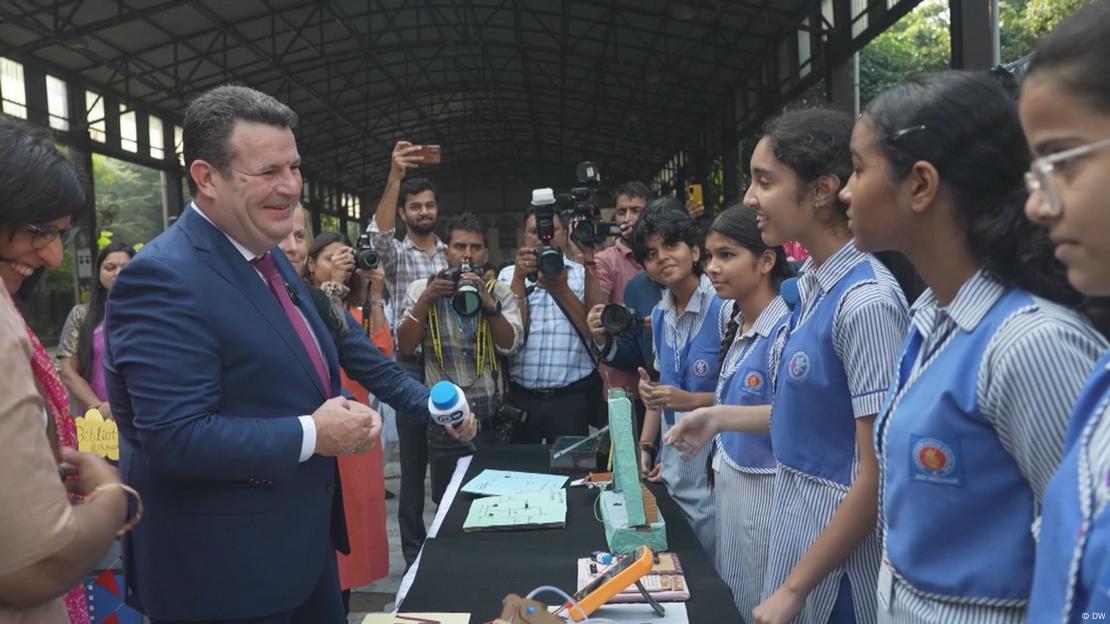
On a recent visit to India, German Chancellor Olaf Scholz said Germany is "open for skilled workers" and agreed to smooth out bureaucratic hurdles and increase visas for Indians from 20,000 to 90,000 annually.


German Labor Minister Hubertus Heil (left) met with students in Delhi earlier this yearImage: DW

Germany needs around 400,000 new skilled employees a year to cover worker shortages, especially in the fields of engineering, IT and health care, and sees a potential workforce in trained Indians.

On the other hand, the rise of the far-right, anti-immigrant Alternative for Germany (AfD) in regional elections and a knife attack in the western German town of Solingen over the summer compelled Scholz to sign off on internal border checks in the EU "to curb migration."

Speaking on the issue in July, Scholz said irregular migration to Germany must "come down" but also stressed the country's need for skilled foreigners.
A public and a silent policy

Nearly all European countries face the same problem — labor shortages in an aging population. Despite an influx of immigrants, they don't want to appear to be allowing for migrant arrivals without visas.

Ambrosini, the University of Milan professor, said European countries are having trouble reconciling two different immigration policies, one for public consumption that calls for "border enforcement agreements with transit countries like Tunisia, or deportation to external facilities like Italy's Albania agreement.

"On the other hand, it is becoming clearer that they need workers, and they are coming up with new policies to attract a workforce that is not only skilled but also seasonal workers," he said. "This second policy is kept a bit hidden, not too much publicized, and can be visible only to the employer associations."

In the end, it's about the governments being able to say they are in control of who is coming in and who gets to stay, said Ambrosini. But that's a myth, at least regarding blue-collar jobs, since employers receive references from those already in Europe for whom to hire.

"How will the employer know who to get from Peru, for instance?"


Edited by: Davis VanOpdorp

Anchal Vohra Brussels-based European correspondent
Hong Kong 47 trial: Can pro-democracy movement regroup?

Yuchen Li in Taipei | Yoshi Pak in Hong Kong
DW   11/21/2024

Dozens of leading pro-democracy figures have been handed long prison sentences as Beijing cracks down on civil liberties in Hong Kong.

Police held back media outside the West Kowloon Magistrates' Courts building where 45 activists were sentenced on Tuesday
Peter Parks/AFP/Getty Images

Emotions ran high outside Hong Kong's High Court on Tuesday as 45 pro-democracy activists were sentenced for "subversion," in the largest trial to date under sweeping national security laws imposed on the territory by Beijing.

Some of the defendants' family members broke down in tears. "Why does my son have to go to prison? Tell me why. He is a good person," the mother of one of the defendants shouted as she was taken away by the police in front of the court.

The prison terms ranged from four years and two months to 10 years. Only two out of the 47 defendants were acquitted.

However, some of those outside the court remained relatively calm.

"Today is not an end, but just a beginning, or even a middle point [in history]," the girlfriend of defendant Ventus Lau, who faces more than four years in prison, told DW.

"Of course, even one day of imprisonment is too much, but we've had a long time to process and prepare mentally, so it's not very shocking," she said.


"When the verdict was announced today, I was very calm and peaceful, not surprised at all. Over the past three years and eight months, we've considered many possibilities, including the chance of a more severe sentence. So, when the sentence was revealed today, it was within our expectations," she added.


How did Hong Kong get here?


Beijing tightened its grip on Hong Kong following massive pro-democracy protests in 2019. Up until then, the territory had enjoyed a level of legal autonomy and civil liberties under Hong Kong's Basic Law, a constitutional document included with the handover of the former British colony to China in 1997.

These included the right to assembly, free speech and a free press. But as China began to encroach further into Hong Kong's political and legal system, pro-democracy groups in July 2020 organized an unofficial primary election for the Hong Kong legislative council.

Its aim was to secure a majority of pro-democracy candidates in the council to block measures and pressure the pro-Beijing government. Over 600,000 Hong Kong residents participated.

However, city officials loyal to Beijing said the primary was part of a plan to "paralyze" the government and weaken the national security law, which at the time had just taken effect.

The organizers of the primary said they were well within their rights to organize an election under Hong Kong's Basic Law. The judges disagreed, and 47 people connected with the primary were charged with subversion in 2021.

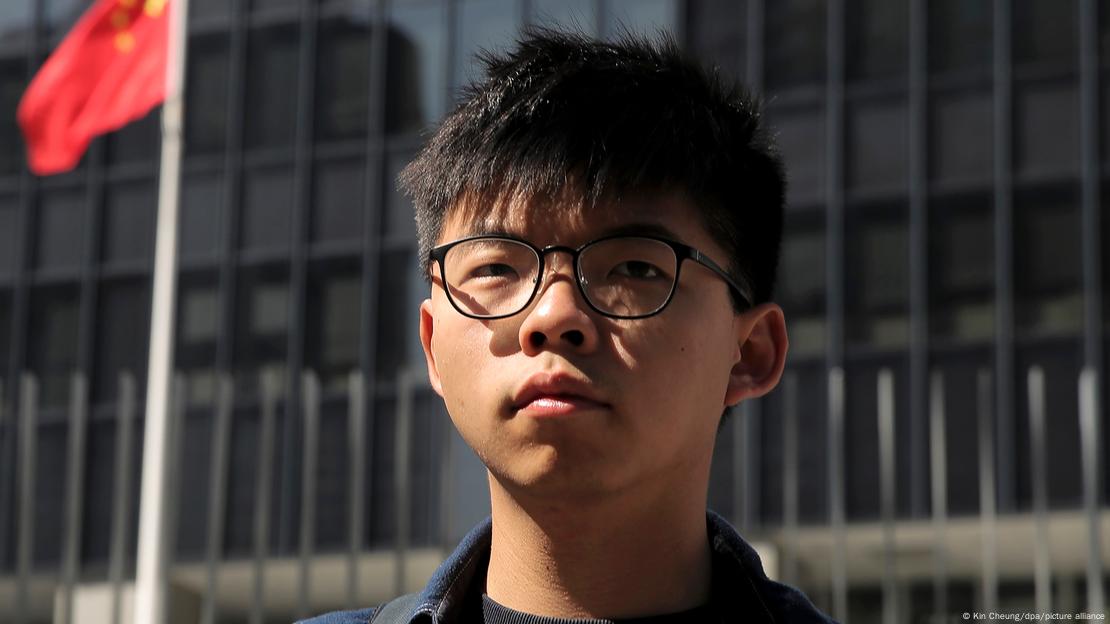
Joshua Wong is one of Hong Kong's most famous pro-democracy figuresImage: Kin Cheung/dpa/picture alliance
Leading pro-democracy figures sent to prison

Tuesday's verdict represented a major blow to the protection of democratic principles under Hong Kong's Basic Law. Prior to the ruling, many of the defendants had already spent years in pre-trial detention, sparking concerns about judicial independence and due process.

The sedition trial has also sent many leading pro-democracy figures behind bars.

Among them is legal scholar Benny Tai, considered a central figure in organizing the 2020 primary. He was sentenced to 10 years in prison, the longest sentence handed down on Tuesday.

Joshua Wong, one of the pro-democracy movement's most famous and vociferous figures, was already in prison on other charges related to protests when he was charged with subversion. He received a sentence of four years and eight months.

Before leaving the dock in court, he shouted, "I love Hong Kong. Bye bye."

On Wednesday, Jimmy Lai, the founder of the shuttered pro-democracy newspaper Apple Daily, testified for the first time during his own, separate, trial under the national security law.

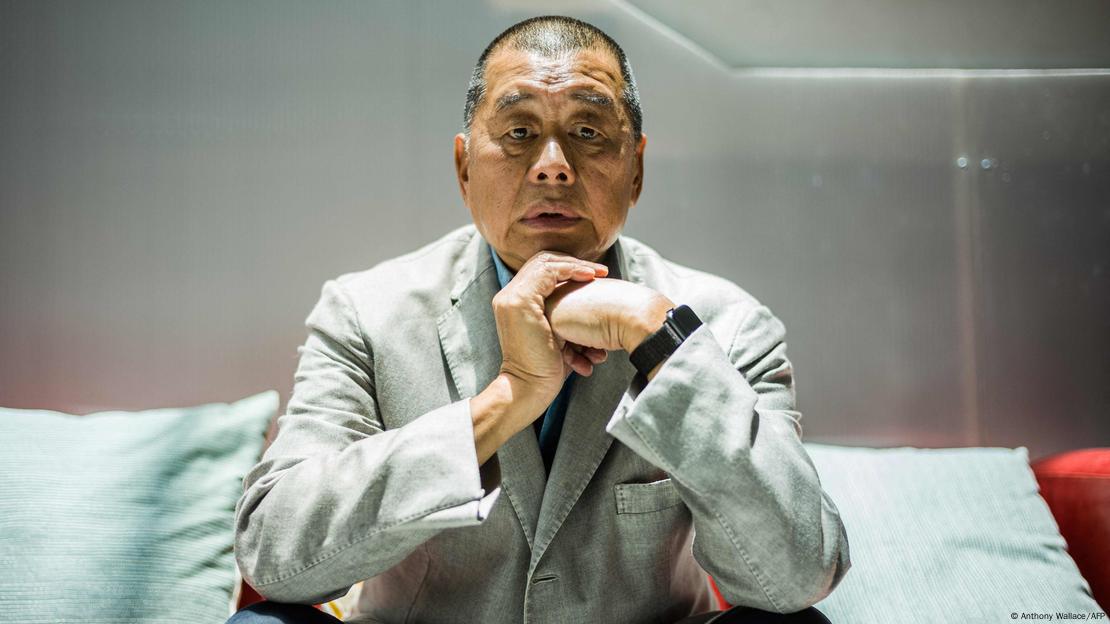
Jimmy Lai has denied employing people who advocated for Hong Kong's independence at his former newspaperImage: Anthony Wallace/AFP

Lai has pleaded not guilty to two charges of conspiracy to collude with foreign forces and a charge of conspiracy to publish seditious material. He said he "never" used his contacts with foreign politicians to influence policy in Hong Kong.

"The core values of Apple Daily are actually the core values of the people of Hong Kong," Lai said, adding that these include "rule of law, freedom, pursuit of democracy, freedom of speech, freedom of religion, freedom of assembly."

Lai told the court he opposed violence and was not an advocate of Hong Kong independence, calling it "too crazy to think about."

"The more you are in the know, the more you are free," Lai said.

In a statement, Human Rights Watch associate China director Maya Wang said the sentences were "cruel," and show "just how fast Hong Kong's civil liberties and the rule of law have nosedived in the four years" since the draconian national security law took effect.


'Anything is possible'

A friend of Wong told DW outside the court that at least the sentence means "we know when we'll see our friends come out."

"Prison does not separate us from our human instincts," he said.

"Whether inside [prison] or not, don't let the state of the times affect us so much that we feel depressed and incapable of doing anything," he added.

Ventus Lau's girlfriend said the future of the pro-democracy movement in Hong Kong is not set in stone.

"I wouldn't say today is an end and then make a conclusion, because you don't know what will happen next. Anything is possible," she said.

Edited by: Wesley Rahn


Banana taped to wall sells for $6.2 million at art auction

ART IS ANYTHING YOU CAN GET AWAY WITH***

A controversial piece of art has sold for millions of dollars at auction, prompting debate as to what constitutes art.


The work, entitled 'Comedian,' first went on display in 2019

John Angelillo/UPI/IMAGO


A work of art by the Italian artist Maurizio Cattelan has been sold for $6.2 million (€5.8 million) at Sotheby's auction house in New York.

But the provocative artwork wasn't an historic oil painting, a thought-provoking piece of photography or a unique sculpture; it was a fresh piece of fruit.

A banana, to be precise. Stuck to a wall with a piece of duct tape.

"This is not just an artwork," insisted the winning bidder, Chinese-born cryptocurrency entrepreneur Justin Sun.

"It represents a cultural phenomenon that bridges the worlds of art, memes, and the cryptocurrency community."

What is art?

Entitled "Comedian," the masterpiece made its debut at the Art Basel show in Miami Beach in 2019, where it was far from a laughing matter, prompting debate about whether it should be considered art at all.

But this, according to Sun, is the entire point.

"I believe this piece will inspire more thought and discussion in the future and will become a part of history," he said.

Sun beat six other rival bidders for the sticky-tape-fruit combo, which was issued with a guide price of $1-1.5 million before bidding began – already a manyfold increase on its original price of $120,000 five years ago.

Not that the banana purchased by Sun was five years old; the artwork receives a fresh piece of fruit for each exhibition, and this was the third iteration.

The original banana was eaten by performance artist David Datuna, who said he was "hungry" while inspecting it at the Miami show.

Sun, the founder of crypto exchange Tron, said that he intended to eat his investment too.

"In the coming days, I will personally eat the banana as part of this unique artistic experience, honoring its place in both art history and popular culture," he said.

Included in his purchase, alongside a certificate of authenticity that confirms the work was indeed created by Cattelan, are instructions on how to replace the banana when it goes off.

As such, one can understand the appeel.

mf/nm (AFP, dpa, AP)


***1967 book “The Medium is the Massage” by Canadian Media Philosopher Marshall McLuhan and graphic designer Quentin Fiore. The quotation was spread across five pages.


‘Schools are responsible’: Iran's student suicides highlight growing tensions over its hijab laws

The enforcement of hijab rules in Iran is once again making tragic headlines. Over the past two weeks, two teenage girls took their own lives after reportedly facing intense pressure in their schools. Sixteen-year-old Arezou Khavari jumped from a building, and 17-year-old Ainaz Karimi hanged herself. Both were students at public schools in impoverished regions of the country.


Issued on: 13/11/2024 - 
L
eft: A photo of Arezou Khavari displayed at her funeral. Right: Photo of Ainaz Karimi posted by one of her friends on social media: "It was too soon to leave, my bestie." 
© Observers

By: Alijani Ershad
FRANCE24/AFP

According to Iranian teachers interviewed by FRANCE 24, the country's education system is structured to exert relentless pressure on students – particularly young girls – to conform to the strict dictates of Islamic Sharia law.

While news of student suicides occasionally surfaces in Iranian media for various reasons, this is the first reported instance of two teenage girls taking their lives specifically due to pressure over the hijab. The incidents have sparked fresh outrage across Iranian society.


Sri Lanka's president makes U-turn on IMF bailout

Colombo (AFP) – Sri Lanka's new leader on Thursday backed a controversial IMF bailout, marking a U-turn from his election pledge to renegotiate the deal secured by his predecessor.

Sri Lanka's President Anura Kumara Dissanayake (L) and Speaker Ashoka Ranwala arrive for the opening of parliament © Ishara S. KODIKARA / AFP

Leftist President Anura Kumara Dissanayake, who tightened his grip on power last week after winning a huge majority in the legislature following his own victory in September, vowed to maintain the IMF programme.

Sri Lanka went to the IMF for a rescue package after the country defaulted on its $46 billion external debt in April 2022 during an unprecedented economic meltdown.

The shortage of foreign exchange that left the country unable to finance even the most essential imports of food and fuel led to months of street protests and forced then-president Gotabaya Rajapaksa to resign.

The $2.9 billion loan secured early last year required Colombo to sharply raise taxes, remove generous energy subsidies and agree to restructure more than 50 loss-making state enterprises.


Dissanayake's National People's Power party had said it did not agree with the International Monetary Fund's debt assessment and would renegotiate the bailout programme.

But in his first address to the new parliament, where his party enjoys a two-thirds majority, Dissanayake said the economic recovery was too fragile to take risks.

"The economy is in such a state that it cannot take the slightest shock... there is no room to make mistakes," he said as he ruled out negotiations with either the IMF or creditors.

"This is not the time to discuss if the terms are good or bad, if the agreement is favourable to us or not... The process had taken about two years and we cannot start all over again," he said.

The delayed third review of the four-year loan programme could be concluded by this weekend, with the finance ministry holding talks with a visiting IMF delegation in Colombo, he added.

Sri Lanka expects the next tranche of about $330 million following an early approval from the board of the international lender of last resort.

Dissanayake's interim cabinet last month signed off on a controversial restructuring of $14.7 billion in foreign commercial credit tentatively agreed by predecessor Ranil Wickremesinghe.

The debt restructuring is a key IMF demand to rebuild the island's economy, which suffered its worst crisis in 2022 when it shrank 7.8 percent.

The dissatisfaction with traditional politicians held responsible for the economic collapse was a key driver of Dissanayake's electoral success.

In June, the government concluded a deal with its bilateral lenders to restructure its official credit amounting to $6 billion, but formal agreements are yet to be signed.

Under the deal announced on September 19, private creditors holding more than half of international sovereign bonds and foreign commercial loans to the South Asian nation agreed to a 27 percent haircut on their loans.

They also agreed to a further 11 percent reduction on the interest owed to them.

International sovereign bonds account for $12.5 billion and the balance of $2.2 billion is owed to the China Development Bank.


© 2024 AFP