Friday, March 07, 2025


Study reveals widening heart disease disparities in the US


Wealthy, educated Americans face far fewer health risks


Washington University in St. Louis


A study published March 6 in The Lancet Regional Health — Americas highlights a growing divide in cardiovascular health in the U.S., showing that wealth and education play a significant role in heart disease risk. 

The research, led by Salma Abdalla, MBBS, DrPH, an assistant professor of public health at Washington University in St. Louis, reveals that the top 20% of high-income, college-educated Americans have far lower rates of cardiovascular disease than the rest of the population — disparities that have widened over the past two decades. 

Abdalla initiated the work while at Boston University’s School of Public Health before joining WashU’s newly established School of Public Health

Cardiovascular disease (CVD) remains the leading cause of illness and death in the U.S., but this emerging research highlights diverging trends; the remaining 80% of the population continues to face higher risks, reflecting the nation’s growing income gap.

Despite the U.S. spending more on health care per person than any other high-income country, outcomes continue to lag behind, particularly for those with lower incomes and less education. Life expectancy for the richest 1% of Americans is now 10 years higher than for the poorest 1%. These outcomes have worsened compared with other high-income countries.

The study analyzed 20 years of data from nearly 50,000 adults who participated in the National Health and Nutrition Examination Survey between 1999 and 2018. Participants were grouped by income and education. Researchers examined the prevalence of four major cardiovascular conditions: congestive heart failure, angina, heart attack and stroke.

Statistical models showed that low-income non-college graduates had 6.34 times the odds of congestive heart failure, 2.11 times the odds of angina, 2.32 times the odds of a heart attack and 3.17 times the odds of a stroke, compared with their wealthier, college-educated peers.

Disparities persisted even after adjusting for demographics and health markers such as body mass index, blood pressure and cholesterol levels. High income and education consistently correlated with better heart health.

The findings suggest that income and education play a complex role in shaping heart health, with future studies needed to examine their interaction. The differences observed in the burden of CVD, even after accounting for certain biological and lifestyle factors, may be attributed to multiple, intersecting reasons. For example, a lack of economic security can contribute to chronic physiological stress. Higher-income and more educated patients may have cumulative structural access to health-promoting behaviors and activities throughout their lives. Additionally, they are likely to receive more thorough medical care with better continuity and earlier interventions. They may also demonstrate better medication adherence, experience lower environmental toxin exposure and benefit from stronger support systems.

“The accumulation of economic and educational advantages appears to drive better health outcomes, rather than any single factor alone,” Abdalla said. “Wealth and education cluster among a small, advantaged group, while the majority of Americans face an increased risk of heart disease.”

Addressing CVD, she said, requires more than expanding health-care access. It also demands policies that promote long-term broad access to economic opportunity and educational equity, breaking down structural barriers.

The study’s senior author, Sandro Galea, MD, DrPH, the Margaret C. Ryan Dean of the School of Public Health and the Eugene S. and Constance Kahn Distinguished Professor in Public Health at WashU, emphasized the policy implications of the findings.

“The continued widening of health disparities in the U.S. underscores the need for action,” Galea said. “If we want to improve public health outcomes, we must address the root causes — economic opportunity, education and access to resources that support long-term health.”

This research was funded by The Rockefeller Foundation and involved collaboration with the School of Social and Political Science at the University of Edinburgh and the New Balance Foundation Obesity Prevention Center at Boston Children’s Hospital.


Vanderbilt lung transplant establishes new record


Vanderbilt University Medical Center
Vanderbilt Lung Transplant Establishes New Record 

image: 

Brandon Petree, MD, and Caitlin Demarest, MD, PhD, operate on a patient during a recent double lung transplant.

view more 

Credit: Photo by Erin O. Smith


Surgeons and teams with Vanderbilt Lung Transplant performed 99 lung transplants in 2024, the most ever in one year. Two of the procedures involved combined organ transplants.

For the second calendar year in a row, Vanderbilt Lung Transplant has the busiest program in the Southeast and leads the nation in innovation in organ preservation and regeneration.

The Vanderbilt Transplant Center is now home to the nation’s eighth largest lung transplant program by volume, and is among the best in long-term outcomes, demonstrating the success of the interdisciplinary team in caring for these complex patients.

This significant achievement reflects the concerted effort of a multidisciplinary collaboration by the Departments of Thoracic Surgery, Medicine and Anesthesiology and Critical Care.

“It is a challenge to achieve both significant growth and maintain high-quality outcomes, which is something that requires a team effort and deliberate planning,” said Matthew Bacchetta, MD, MBA, surgical director of the Vanderbilt Lung Institute (VLI).

David Erasmus, MD, medical director of Vanderbilt Lung Transplant added, “We are so proud of the many people and ancillary services with whom we depend upon to make this achievement possible, especially our advanced lung disease service.”  

The Vanderbilt Lung Transplant surgical team is led by Konrad Hoetzenecker, MD, PhD, and Caitlin Demarest, MD, PhD, the surgical director and associate surgical director of the Vanderbilt Lung Transplant program.

Faculty from Cardiothoracic Anesthesiology (directed by Frederick Lombard, MD) and Anesthesiology Critical Care within the Department of Anesthesiology support lung transplant patients through their surgery and postoperative ICU care using cutting-edge hemodynamic monitoring and optimization techniques.

Patients are selected for lung transplants, cared for in their journey during the hospital stay and followed for many years by a dedicated team of transplant pulmonologists led by Erasmus. The experienced nurse practitioners on the Loyd/Advanced Lung Disease Service cares for patients once they are out of the ICU.

Lung transplant leadership also credited a dedicated group of coordinators, clinical pharmacists, social workers and administrators for the milestone. Lung transplant recipients benefit greatly from the expertise of many other services available from Vanderbilt Health, such as colleagues in Transplant Infectious Diseases, all of whom contribute to exemplary outcomes and patient experiences.

Patients also are cared for under the umbrella of the Vanderbilt Lung Institute, which brings together experts in diagnosing and treating lung disease from pulmonary medicine, thoracic surgery and allergy. The VLI’s mission is “to relieve suffering and give hope to those living with chronic lung diseases, to advance knowledge, and to train the next generation of leaders in respiratory medicine and thoracic surgery,” said Joao de Andrade, MD, VLI chief medical officer.

Hoetzenecker, VLI surgical director, said, “In the future, we plan to further strengthen VUMC as a multiregional referral center for lung transplantation. Based on our unique group of internationally renowned experts and a large, dedicated team, we can offer lung transplants to complex patients who are considered too high risk for smaller, less experienced programs. This includes retransplants, multiorgan transplants and transplants for patients already on mechanical support (ECMO).”

Cutline: Brandon Petree, MD, and Caitlin Demarest, MD, PhD, operate on a patient during a recent double lung transplant. (photo by Erin O. Smith)


MUTUAL AID

USC researchers observe mice may have a form of first aid


Keck School of Medicine of USC researchers discover through happenstance that mice have their own form of ‘first aid’ practices to help other mice in need.


University of Southern California


Humans may not be the only ones who aid their friends when they’re hurt. Mice may do it, too, as shown by a new research study led by scientists at the Keck School of Medicine of USC published recently in Science.

Scientists have been trying to understand why social mammals appear to help injured members of their species. There are numerous factors that determine empathetic behavior and social bonding in mammals, said Li Zhang, the principal investigator of the study and professor of physiology and neuroscience at Keck School of Medicine. “But this study is the first time we’re seeing a first responder-like behavior in mice.”

Emergency response

The study shows that mice tend to help other mice they know are unconscious. Their response ranges from gentle sniffing and grooming to more forceful actions such as mouth or tongue biting, before finally escalating to pulling the tongue out of the unconscious mouse.

“The behavior was especially unique due to its similarity to how humans behave in emergency responses,” said Wenjian Sun, the first author of the study and research associate at Keck School of Medicine’s Zilkha Neurogenetic Institute. “I had never seen this behavior from mice before.”

Interestingly, the scientists discovered this behavior by accident. Sun first witnessed the rehabilitative behavior among mice paired together in an unrelated scientific study. When humans encounter an unconscious individual, the emergency response is varied, including assessing the situation, checking responsiveness, calling for help and performing cardiopulmonary resuscitation, or CPR, on an individual.

Helper mice

The urgency with which “helper mice” target the mouth and tongue of their unconscious peers appears to improve the airway of their peer and lead to a faster recovery, said Huizhong Tao, an author of the study and professor of physiology and neuroscience at Keck School of Medicine.

Tao pointed out that the scientists learned the act of tongue-pulling between mice in this study could not be interpreted as an aggressive gesture. The social behaviors in the study were significantly more pronounced among familiar pairs of mice and were rarely seen when one of the paired mice was simply sleeping or active. Furthermore, after the unconscious mice regained consciousness, they had regular use of their tongue.

The role of oxytocin

The study utilized advanced neural imaging and optogenetics to investigate the neural mechanisms behind the social behaviors of the helper mice. Zhang said one of the most intriguing aspects of the research team’s neural observations was the discovery of the activation of oxytocin neuropeptides. Oxytocin is widely known as a hormone that plays a crucial role in social bonding.

Oxytocin is sometimes called the “love hormone” because it is associated with feelings of trust, bonding and affection. Zhang said this was the first study to show oxytocin may also be a key factor in the social bonding in mice. The study’s findings not only enhance our understanding of animal behavior but also highlight the critical role of the oxytocin system, which may also inform social behaviors across vertebrate species.

Further implications

The research team plans to run longer experiments in the future to see if mice have even more complex responses to their unconscious peers. Tao believes this discovery opens exciting new ways to study the biological foundations of prosocial behaviors, including empathy.

This research suggests many social animals, including humans, might have evolved to help each other in critical situations, improving survival chances and strengthening social bonds.

About the study: In addition to Sun, Zhang and Tao, other study authors include Guangwei Zhang, Junxiang J. Huang, Can Tao and Michelle B. Seo of Keck School of Medicine.

This research was supported by the U.S. National Institutes of Health (EY019049, AG089756, DC008983, DC020887, NS132912).

'Catastrophic and Saddening': Research Shows US Butterfly Population Dropped 22% in Two Decades

"It's pretty shocking, really, that we've lost that much biodiversity in such a short time," said one of the study authors.


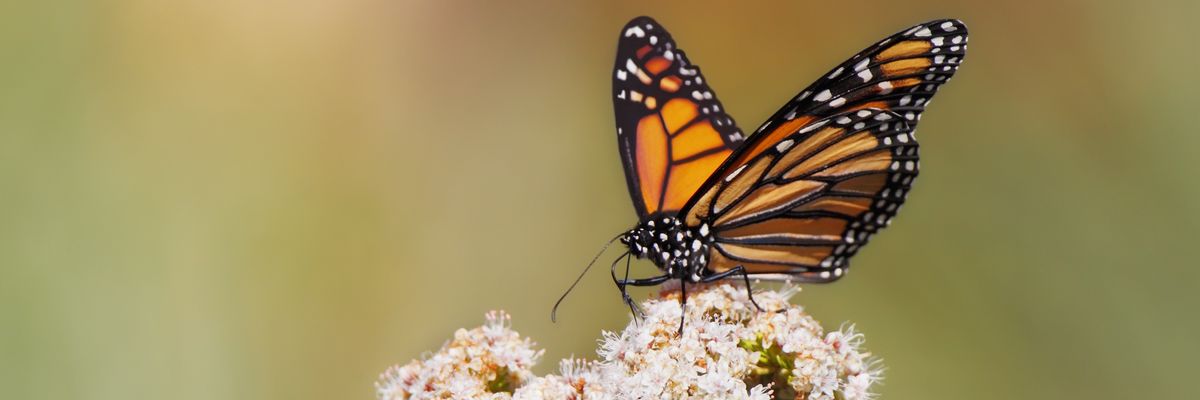
A monarch butterfly perched on wildflower blossoms.
(Photo: Susan Gary Photography/Getty).


Eloise Goldsmith
Mar 06, 2025
COMMON DREAMS

A landmark study released Thursday in the journal Science found that the number of butterflies in the United States declined dramatically between 2000 and 2020.

"The prevalence of declines throughout all regions in the United States highlights an urgent need to protect butterflies from further losses," according to the abstract of the study, which was authored by over 30 researchers from around the country.

Between 2000 and 2020, total butterfly abundance in the contiguous United States fell by 22% across 554 recorded species. The study also reported widespread species-level decline, in addition to overall abundance decline. According to researchers, 13 times as many butterfly species are declining as they are increasing.


"It's pretty shocking, really, that we've lost that much biodiversity in such a short time," said Eliza Grames, a conservation biologist at Binghamton University in New York and one of the study authors, who spoke with WBUR about the findings.

The survey used data from multiple sources, including North American Butterfly Association, which is the "longest-running volunteer-based systematic count of butterflies in the world," as well as data from Massachusetts Butterfly Club, which "carries out organized field trips and records individuals' reports across the state in which participants identify and record butterflies seen."

Scientists and dedicated amateur enthusiasts helped collect the data, according to The Washington Post, which spoke with some of the researchers.

"Scientists could not get all the data we used," Nick Haddad, an ecologist and conservation biologist at Michigan State University who worked on the study, per the Post. "It took this incredible grassroots effort of people interested in nature."

The study identified pesticide use, climate change, and habitat loss as drivers of the decline.

The research echoes other scientific findings that have recorded widespread loss of insect abundance more generally, a phenomenon that's sometimes called the "insect apocalypse." Bugs do many important things, like pollinating crops and keeping soil healthy. "As insects become more scarce, our world will slowly grind to a halt, for it cannot function without them," wrote biologist Dave Goulson in 2021.

Entomologist David Wagner, who was not involved in the study, told the Post in an email that butterflies function as a "yardstick for measuring what is happening" among insects generally. He said the findings of the study were "catastrophic and saddening."

Study raises the possibility of a country without butterflies


Michigan State University
A pair of dorcas copper butterflies 

image: 

A pair of dorcas copper butterflies, a North America native species, and one of the 324 species studied in this report. 

view more 

Credit: Photo by David Pavlik, Michigan State University


Butterflies are disappearing in the United States. All kinds of them. With a speed scientists call alarming, and they are sounding an alarm.

A sweeping new study published in Science for the first time tallies butterfly data from more than 76,000 surveys across the continental United States. The results: between 2000 and 2020, total butterfly abundance fell by 22% across the 554 species counted. That means that for every five individual butterflies within the contiguous U.S. in the year 2000, there were only four in 2020.

“Action must be taken,” said Elise Zipkin, a Red Cedar Distinguished Professor of quantitative ecology at Michigan State University and a co-author of the paper. “To lose 22 percent of butterflies across the continental U.S. in just two decades is distressing and shows a clear need for broad-scale conservation interventions.”

Zipkin and her MSU colleague and co-author Nick Haddad, professor of integrative biology, have been major figures in drilling down the state of U.S. butterflies. Zipkin has been a formidable numbers cruncher with successes gleaning hard facts from imperfect data sets to better understand the natural world.

Haddad is a terrestrial ecologist – a scientist on the ground specializing in the fates of the most fragile and rare butterfly populations. The widespread decline of butterflies found in this study have shaken Haddad, and reports that the mountain of data is on display in his Michigan neighborhood.

“My neighbors notice it,” Haddad said.  “Unprompted, they’ll say, ‘I’m seeing fewer butterflies in my garden, is that real?’ My neighbors are right. And it’s so shocking.”

In this paper, Zipkin and Haddad were among a working group of scientists with the USGS Powell Center for Analysis and Synthesis that aggregated decades of butterfly data from 35 monitor programs that included records of over 12.6 million butterflies. Using data integration approaches, the team examined how butterfly abundances changed regionally and individually for the 342 species with enough data.

Abundance is a term that threatens to become ironic. Butterfly populations dropped an average of 1.3% annually across the country, except for the Pacific Northwest. But even that encouraging result came with a caveat. Further scrutiny of the apparent 10% increase in overall abundance in the Pacific Northwest over the 20-year study period was credited largely to the California tortoiseshell butterfly, which was enjoying a population boom not expected to be sustained.

Butterflies are the most surveyed insect groups, courtesy of extensive volunteer-based and expert science monitoring programs. Until now, studies have focused on individual species – most notably monarch butterflies – or limited to specific locations.

This new study uses all the available regional butterfly monitoring data within the continental United States and then develops a method of analysis that appropriately accounts for variations in collection protocols across programs and regions to produce comparable results for hundreds of species.

“This is the definitive study of butterflies in the U.S.,” said Collin Edwards, the study’s lead author. “For those who were not already aware of insect declines, this should be a wake-up call. We urgently need both local- and national-scale conservation efforts to support butterflies and other insects. We have never had as clear and compelling a picture of butterfly declines as we do now.”

Edwards had been a postdoctoral research associate at Washington State University, Vancouver, and now works at the Washington Department of Fish and Wildlife.

The results reveal that 13 times as many species declined as increased – with 107 species losing more than half their populations. 

Zipkin and Haddad say butterflies are more than fluttering symbols of freedom and beauty.  They play important roles in cycling nutrients and are a significant food source for other organisms such as birds. Over the last 50 years, North America has lost nearly 3 billion birds, a decline at almost identical rates of the butterflies. 

Butterflies are important and forgotten pollinators. People often think of bees first, but butterflies (and flies) are responsible for $120 million of cotton production in Texas, for example.

Zipkin said she sees this paper as an important heads up to the country’s policymakers. “People depend on plants, microbes, and animals for the air we breathe, the water we drink, and the food we eat. Yet, we are losing species at rates that rival the major mass extinction events on our planet,” Zipkin said. “The U.S. plays an important role in setting policies and creating laws that conserve and protect biodiversity from local to global scales. Our leaders and the federal government, in particular, are responsible for making sure future generations have the necessary resources to thrive.”

In 2024, Haddad was part of a study published by the journal PLOS ONE that pinpointed the danger of insecticides, that rose above other threats such as habitat loss and climate change in reducing butterfly abundance and diversity. He points out that saving butterflies isn’t a hopeless problem, just one that requires will.

A lot of insecticide use, he said, lacks strategy and results in overuse. Some 20 percent of cropland suffers from poor yields. Creating policies that return under-producing land to nature could help the butterflies to rally.

“Prophylactic and near-universal application of insecticides harms butterflies and other beneficial insects, with no proven benefit to crop yield,” Haddad said. “What is applied as ‘insurance’ is extracting a great debt to agroecosystems. The good news is that the widespread application of insecticides can be reversed, and butterflies and other pollinators will recover.”

In addition to Zipkin, Haddad, and Edwards, “Rapid butterfly declines across the United States during the 21st century” was written by Erica Henry, Matthew Forister, Kevin Burls, Steven Campbell, Elizabeth Crone, Jay Diffendorfer, Margaret Douglas, Ryan Drum, Candace Fallon, Jeffrey Glassberg, Eliza Grames, Rich Hatfield, Shiran Hershcovich, Scott Hoffman-Black, Elise Larsen, Wendy Leuenberger, Mary Linders, Travis Longcore, Daniel Marschalek, James Michielini, Naresh Neupane, Leslie Ries, Arthur Shapiro, Ann Swenger, Scott Swengel, Douglas Taron, Braeden Van Deynze, Jerome Wiedmann, Wayne Thogmartin, and Cheryl Schultz.

Zipkin and Haddad are members of MSU’s Ecology, Evolution, and Behavior Program, of which Zipkin is director.


A zebra longwing butterfly is native to North America, and one of the 324 species studied to understand population decline.

Credit

Photo by Finn Gomez, Michigan State University College of Natural Science


Security veins: Advanced biometric authentication through AI and infrared


Hyperspectral imaging and AI can identify individuals using blood vessels in palms


Osaka Metropolitan University

Biometric palm identification 

image: 

Through a hyperspectral camera and AI, differences in the palm can provide highly personalized security.

view more 

Credit: Osaka Metropolitan University


Hyperspectral imaging is a technology that detects slight differences in color to pinpoint the characteristics and conditions of an object. While a normal camera creates images using red, green, and blue, a hyperspectral camera can obtain over 100 images in the visible to near-infrared light range in a single shot. As a result, hyperspectral imaging can obtain information that the human eye cannot see.

Specially Appointed Associate Professor Takashi Suzuki at the Osaka Metropolitan University Center for Health Science Innovation captured images of palms of human hands using a hyperspectral camera and AI-based region of interest. Hemoglobin contained in red blood cells absorbs light, so it is possible to observe the state of the blood vessels in the palm. Since the distribution pattern of blood vessels differs from person to person, it is also possible to differentiate between individuals. Further, vein patterns are not visible on the surface of the skin like the face or fingerprints, so this bioinformation is considered highly secure as it cannot be easily read.

To test this, Dr. Suzuki developed a method for identifying biometric information regardless of position or orientation using AI-based image recognition. Furthermore, by superimposing the images in order of wavelength and cutting them based on the coordinates on the palm obtained through AI, the researcher was able to obtain images with more accurate positionings, smaller sizes, and greater information content than conventional methods.

“It was possible to distinguish between the subjects. Furthermore, accuracy of the developed method was verified and a high discrimination accuracy was confirmed,” stated Dr. Suzuki. “Biometric authentication using hyperspectral images provides remarkably high security through the palm of a hand, thus it could even be used as keys to a house. If the capability to read the state of health from the hyperspectral imaging of the palm becomes possible, a daily health management system could be developed with health data obtained through biometric unlocking.”

The findings were published in the Journal of Biomedical Optics.

###

About OMU 

Established in Osaka as one of the largest public universities in Japan, Osaka Metropolitan University is committed to shaping the future of society through “Convergence of Knowledge” and the promotion of world-class research. For more research news, visit https://www.omu.ac.jp/en/ and follow us on social media: XFacebookInstagramLinkedIn.