Friday, March 28, 2025

Musk’s 'hack-and-slash tactics' may 'trigger' a 'debt ceiling' crisis — and a 'massive recession'


Elon Musk with Argentinean President Javier Milei at the 2025 Conservative Political Action Conference (CPAC) in National Harbor, Maryland on February 20, 2025 (Gage Skidmore)

March 27, 2025
ALTERNET

After winning the 2024 presidential election, Donald Trump called for the United States' debt ceiling to either be paused or eliminated. But the debt ceiling, two months into Trump's second presidency, remains. And the Bipartisan Policy Center is warning that the U.S. will default on its $36 trillion national debt sometime between mid-July and early October if Congress doesn't act.

In an opinion column published on March 26, MSNBC's Hayes Brown details the role that the Elon Musk-led Department of Government Efficiency (DOGE) could play in a debt ceiling default.

"Now, the debt ceiling deadline is looming," Brown explains, "but no one in Congress or the White House seems particularly worried about it. Indeed, the Department of Government Efficiency's hack-and-slash tactics and congressional infighting may have brought the default date closer. If default does happen, the economic fallout would be more likely to trigger a massive recession than the 'Golden Age' that Trump has promised…. At some point, on a day ominously known as the 'X Date,' the U.S. government will be unable to borrow more money to cover its existing bills."

The MSNBC columnist continues, "With the full faith and credit of the United States no longer an ironclad guarantee, the resulting default would wreak havoc on the financial markets."

The Internal Revenue Service (IRS) is among the many federal government agencies that the Trump Administration and DOGE are targeting for mass layoffs.

Brown notes that the Bipartisan Policy Center warned, "If collections from tax season fall far short of expectations, there is a potential for heightened X Date risk in early June."

The MSNBC columnist argues, "Here’s the thing, though: While the Bipartisan Policy Center called a revenue shortfall 'quite unlikely,' the odds this year are higher than might otherwise be the case. The Washington Post reported last week that 'Treasury Department and IRS officials are predicting a decrease of more than 10 percent in tax receipts by the April 15 deadline compared with 2024.' That would be equal to about $500 billion in missing revenue, or over half of the entire government's nondefense discretionary spending…. There are a few likely reasons for the reduced tax revenue, including the destruction Trump and Musk have caused inside the IRS since January."

Brown adds, "While the staffing cuts under discussion wouldn't be implemented until the April 15 tax filing deadline, almost 20 percent of IRS workers could be fired in the month after it…. Congress will have to deal with this issue before an unprecedented default devastates any confidence in the American economy. The only certain thing is that Trump won’t make it easy to avoid catastrophe."

Hayes Brown's full MSNBC column is available at this link.

CRUSADER SLOGAN

Open declaration': Hegseth slammed over new tattoo seen as insult 'to the Muslim world'


U.S. Secretary of Defense Pete Hegseth trains with Naval Special Warfare (NSW) Sailors at Joint Base Pearl Harbor-Hickman, Hawaii, U.S. March 25, 2025. U.S. Navy/Petty Officer 1st Class Joseph Rolfe/Handout via REUTERS


Carl Gibson
March 28, 2025
ALTERNET

Defense Secretary Pete Hegseth was seen with a new tattoo earlier this week while visiting U.S. troops in Hawaii. And it's causing a stir among the Muslim community due to what some view as an implied message.

The Daily Beast reported Thursday that Hegseth first showed off the new tattoo on his left bicep when training with sailors at Joint Base Pearl Harbor-Hickman on Tuesday. Hegseth's tattoo is known as a "kafir (كافر)," which translates to "infidel" or "disbeliever" in Arabic. Journalist Tam Hussein, who is Muslim, observed that the kafir tattoo is directly under his "Deus Vult" tattoo, which is a slogan from the Crusades that translates to "God wills it."

"To the Muslim world the tattoo will be seen as an open declaration of Hegseth’s enmity towards them," Hussein tweeted.

However, journalist Dilly Hussain, of the United Kingdom-based 5 Pillars outlet that covers Muslim issues, opined that Hegseth's tattoo tracks with what he viewed as outwardly hostile American sentiment toward Muslims around the world.

"Muslims should not be offended or shocked at Pete Hegseth’s new 'kafir' tattoo or his crusader 'Deus Vult' tattoo. He’s merely displaying America’s foreign policy and mindset to Islam and Muslims," he tweeted. "Where have you been for the last 25 years?"

The defense secretary's tattoos have gotten him in trouble in the past. When he was in the National Guard in 2021, he was removed from duty at former President Joe Biden's inauguration over the "Jerusalem Cross" (also known as the "Crusader's Cross") tattoo on his chest, which is a Christian nationalist symbol that features one large cross surrounded by four smaller crosses. The large cross is meant to represent the strength of Christianity, while the four other crosses represent the spread of Christianity to the four corners of the earth.

"Members of my unit in leadership deemed that I was an extremist or a white nationalist because of a tattoo I have, which is a religious tattoo," Hegseth told Fox News last year.
Lawsuit Challenges Trump Administration Plan to Share Tax Data With ICE


Watchdogs warn of surveillance expansion as ICE and the IRS finalize a data-sharing deal targeting undocumented workers.

March 26, 2025

President Donald Trump meets with U.S. ambassadors in the cabinet room of the White House in Washington, D.C., on March 25, 2025.MANDEL NGAN / AFP via Getty Images

As leading Democrats in Congress demand the Trump administration publicly release its reported plan to use taxpayer data to track down and deport undocumented workers, watchdog groups are warning that the surveillance state is being stretched beyond the limits of federal law.

The Internal Revenue Service (IRS) is reportedly nearing an agreement that would allow federal immigration police to use private taxpayer data for confirming names and addresses of people they suspect are undocumented. Under the agreement, which has been under negotiation for weeks amid a chaotic staffing shakeup at the IRS and was first reported by the Washington Post, top Department of Homeland Security (DHS) officials would send names and addresses of suspected undocumented people to the IRS to cross-reference against its own confidential database of taxpayer records — records that workers have long trusted the government to keep private.

Democrats and privacy advocates argue that the unprecedented use of IRS data for immigration enforcement would undermine public trust in the tax system and violate privacy laws passed by Congress after President Richard Nixon’s administration attempted to weaponize IRS records against political enemies decades ago. The Trump administration has yet to publicly reveal the details of the agreement, which could face legal challenges.

“The IRS is not supposed to share this type of information. That is long-standing federal law, and everyone as taxpayers should be concerned that now the Trump administration is trying to do away with that by targeting a specific group of people,” said Vanessa Cárdenas, executive director of the immigration reform group America’s Voice, in an interview.

Last month the IRS denied a request from DHS for the names, addresses, phone numbers and email addresses of 700,000 people the Trump administration suspects of being undocumented. However, senior IRS officials have since left the agency, which President Donald Trump has staffed with allies likely to push through his own political priorities.

Related Story

Tesla Paid Zero Federal Income Tax in 2024, Despite $2.3 Billion in Income
This brings Tesla’s average tax rate over the past three years to 0.4 percent.
By Sharon Zhang , TruthoutJanuary 30, 2025


Nandan Joshi, an attorney with Public Citizen Litigation Group, which is representing immigrant rights groups in a federal lawsuit against the IRS, said both agencies have prepared a legal workaround in an attempt to skirt well-established federal privacy laws.

“The protections that are afforded to taxpayer records apply across the board,” Joshi said in an interview. “It doesn’t matter whether you are a legal citizen or undocumented, you are protected. The law doesn’t make distinctions there.”

Personal tax information — including names and addresses — is illegal to disclose and has long been closely guarded by the IRS. Joshi said the exodus of longtime IRS staffers under Trump’s purge of the federal civil service has stifled resistance to legally dubious policies.


“If the courts don’t stop them, if they are able to implement this plan, that will just embolden them to try something more aggressive next time.”

“Institutionally, in the past, [the IRS has] been very good about the protection of the secrecy of taxpayer information,” Joshi said in an interview. “But obviously those people are getting fired or laid off, and their managers are being replaced by people who want to accommodate the administration’s interests, so it seems like they are rapidly tearing down those barriers.”

Cárdenas said working and living in the U.S. without documents is typically a civil violation, not a criminal one, and many undocumented people have for years paid taxes with the understanding that their information is protected under the law. For years, the IRS has encouraged undocumented workers to pay income taxes by assigning tax numbers in lieu of Social Security numbers with assurances that personal information would remain confidential.

“These are people who want to get right by the law and play by the rules, but for the government to go after them sends a really troubling message to all Americans and to this community especially,” Cárdenas told Truthout. “This is actually going to hurt all of us because the incentive to pay taxes isn’t going to be there with tax season just around the corner.”

Democrats are also slamming Trump over threats to the economy and civil liberties posed by the immigration crackdown. Sen. Alex Padilla of California, the ranking Democrat on the Senate Judiciary Immigration Subcommittee, released a joint statement with Sen. Ron Wyden (D-Oregon) and Sen. Catherine Cortez Masto (D-Nevada) on Monday demanding that the IRS and DHS disclose the information sharing agreement and brief Congress immediately.

“This agreement between the IRS and DHS — if finalized — will have long-lasting and devastating implications on our economy, taxpayer privacy, immigrant communities, and the rule of law,” the senators said.

While the final agreement has not been released despite requests by Senate Democrats for more information, a draft memo obtained by the Washington Post indicates that DHS and Immigration and Customs Enforcement (ICE) would be allowed access to the names and addresses in IRS records for immigrants with current removal orders. Of the estimated 11 million undocumented people living in the U.S., more than 1.4 million are currently subject to removal orders.

According to the memo, requests for confirming names and addresses with the IRS could be submitted only by Homeland Security Secretary Kristi L. Noem or acting ICE Director Todd Lyons, who were appointed by Trump to orchestrate the mass deportation campaign.

Joshi said advocates were aware of plans to use the IRS for immigration enforcement thanks to Project 2025, the far right policy blueprint that Trump disavowed on the campaign trail before embracing its ideas once in office. After learning about the initial DHS request for taxpayer data, the Public Citizen Litigation Group filed a lawsuit against the IRS seeking an emergency order to block the sharing of private information with DHS on March 7. On Wednesday, the group amended the lawsuit to add the DHS, ICE, Noem and Lyons to the list of defendants.

Joshi said the IRS told the court it would implement the data-sharing agreement within the bounds of exemptions created by Congress in privacy law, and last week the court refused to issue an order blocking the IRS from working with DHS. Attorneys are still waiting on the administration to release the final policy — or to block information about it from becoming public — before pursuing further legal challenges, but Joshi said that if the Washington Post report is accurate, then the plan to use IRS data for immigration enforcement still violates the law.

“These protections were actually put in place after Nixon because he abused IRS records for his political ends, so they have been in place for about 50 years,” Joshi said. “Even Donald Trump fought to keep his tax records private. So everyone believes that tax records are supposed to be confidential, and that is what the law says.”

Joshi said the law contains exemptions for high-profile criminal investigations, in which investigators may receive permission to use IRS records from a federal court. However, Joshi says the Trump administration is purposefully conflating criminal and immigration enforcement in order to “shoehorn” the IRS and DHS agreement into legal exemptions designed for specific criminal investigations in service of a mass deportation dragnet.

“Trump has characterized every undocumented person as a criminal, or his administration has, which is not true,” Joshi said. “Who knows what their next step is. If the courts don’t stop them, if they are able to implement this plan, that will just embolden them to try something more aggressive next time.”

Cárdenas said casting an entire segment of the population as criminals who must be surveilled is part of a larger, dangerous pattern as the Trump administration reaches for justifications for its brutal immigration policies. As a Latina immigrant, she is already seeing the impacts as visa holders, legal permanent residents, and even U.S. citizens who are often Black, Brown or Native American are targeted and swept up in Trump’s crackdown, which is causing dangerous overcrowding in immigration jails.

“It’s also deeply frustrating that people don’t see the signs that we are seeing, but from our perspective this is the canary in the coal mine,” Cárdenas said. “It’s starting with us, but when is it going to be enough? Who is going to be next?”
Citing Trump's Push for Ethnic Cleansing, Sanders Says Congress 'Must Act to Block' Arms Sales to Israel


Israeli Prime Minister Benjamin Netanyahu "has clearly violated U.S. and international law in this brutal war, and we must end our complicity in the carnage," said Sen. Bernie Sanders.


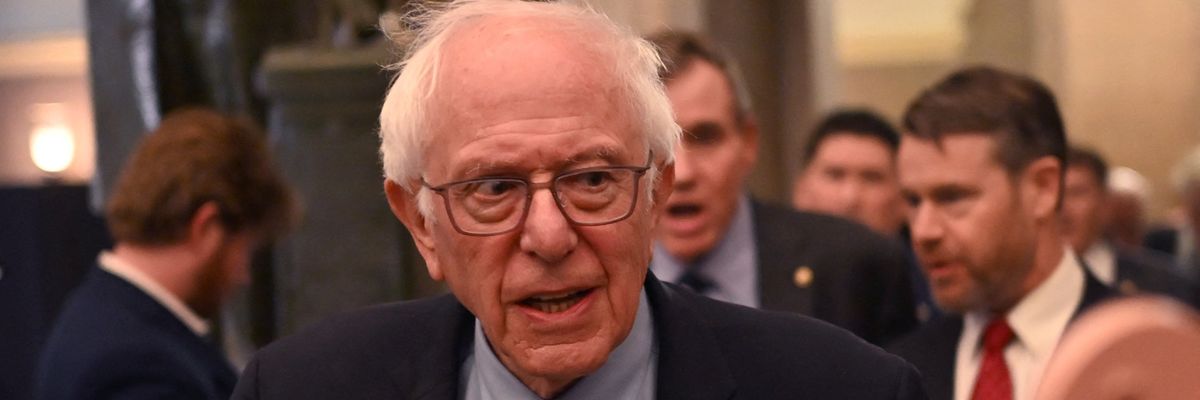
U.S. Senator Bernie Sanders (I-Vt.) arrives for President Donald Trump's address to a joint session of Congress at the U.S. Capitol in Washington, D.C., on March 4, 2025.
(Photo: Alex Wroblewski/AFP via Getty Images)


Eloise Goldsmith
Mar 27, 2025
COMMON DREAMS

Sen. Bernie Sanders of Vermont announced Thursday he plans to force votes in the U.S. Senate next week on two joint resolutions of disapproval aimed at blocking proposed arms sales from the United States to Israel, citing U.S. President Trump's recent proposal for the Gaza Strip that human rights officials have called tantamount to ethnic cleansing, and other actions taken by Israel.

Sanders has put forward two joint resolutions of disapproval (JRDs), one aimed at blocking $6.75 billion in munitions and equipment, and a second one for $2.04 billions worth of munitions and related equipment.

The Independent senator—who last fall introduced JRDs to block the sale of U.S. weapons to Israel that ultimately did not pass—argues that Congress "must act to block" the sales in part due to U.S. President Donald Trump's talk of "forcibly displacing millions of people from Gaza."

At a press conference in early February with Israeli Prime Minister Benjamin Netanyahu, Trump said that the United States would "take over" Gaza and "develop it." Trump said that U.S. developers will "level it out" and build the "Riviera of the Middle East" after Palestinians—"all of them"—leave Palestine's coastal enclave.

Last week, Israel's security cabinet approved a proposal to organize "a voluntary transfer for Gaza residents who express interest in moving to third countries, in accordance with Israeli and international law, and following the vision of U.S. President Donald Trump," according to CNN.

In his statement, Sanders said that "there is a name for such a policy—ethnic cleansing—and it's a war crime."

"Netanyahu has clearly violated U.S. and international law in this brutal war, and we must end our complicity in the carnage," Sanders added.

According to researchers with Brown University's the Costs of War Project, the U.S sent at least $17.9 billion in security assistance to Israel between October 2023 and September 2024.

Sanders said that Israel has used U.S.-supplied weapons to kill "a handful of Hamas fighters, and made little effort to distinguish between civilians and combatants," resulting in unnecessary civilian deaths. "These actions are immoral and illegal," he said.

Last week, local health officials in Gaza announced that the death toll of Israel's deadly campaign on the enclave had surpassed 50,000 people. The grim milestone came after a wave of Israeli strikes that followed a two-month period of relative calm while a shaky cease-fire deal was in effect.

Hamas wanted to open talks for the second phase of the deal, that was supposed to see Israel fully withdraw from the enclave and Hamas release remaining living hostages. Israel instead wanted to impose the terms of a new cease-fire presented by the Trump administration, and refused to hold the talks regarding a permanent end to the war.

The senator also cited Israel's decision to halt humanitarian aid from entering into the Gaza Strip in early March. "Blocking humanitarian aid is morally abhorrent and a clear violation of both the Geneva Convention and the Foreign Assistance Act," according to the statement.
'Cuts to the bone': Leaked doc shows Trump admin's real plan


Jessica Corbett

March 28, 2025
COMMON DREAMS

The Washington Post reported Thursday that a White House document shows U.S. officials are preparing to cut 8-50% of agency staff in "the first phase" of President Donald Trump and billionaire adviser Elon Musk's effort to gut the federal bureaucracy—eliciting a fresh wave of outrage directed at them and their Department of Government Efficiency.

The document only covers 22 agencies and, according to the Post, "several people familiar with the document stressed that planning remains fluid," a sentiment echoed by Harrison Fields, White House principal deputy press secretary, in an email.

"It's no secret the Trump administration is dedicated to downsizing the federal bureaucracy and cutting waste, fraud, and abuse. This document is a pre-deliberative draft and does not accurately reflect final reduction in force plans," Fields told the newspaper. "When President Trump's Cabinet secretaries are ready to announce reduction in force plans, they will make those announcements to their respective workforces at the appropriate time."

When Trump took office, there were around 2.3 million federal workers. The leaked document—last updated Tuesday—includes the following potential personnel cuts:30% at the Department of Commerce;
50% at the Department of Housing and Urban Development;
25% at the Department of the Interior;
8% at the Department of Justice;
30% at the Department of the Treasury;
10% at the Environmental Protection Agency;
33% at the Internal Revenue Service;
43% at the Small Business Administration; and
28% at the National Science Foundation.

Cuts have already been announced at some agencies, including the Education Department, which said this month that it would be reducing its staff by half. The document did not list those reductions among its totals," according to the paper. "It also did not specify staff reduction goals for certain agencies, such as the Department of Veterans Affairs."

Trump and Musk's "DOGE-Manufactured chaos" is already impacting both federal employees and Americans who rely on them. At the Social Security Administration—which aims to oust roughly 7,000 staffers, bringing the agency down to 50,000—beneficiaries are dealing with website problems and hourslong wait times for phone services.

Responding to the Post's reporting on social media, writer and podcaster Wajahat Ali asked: "How does this help the economy become great again, MAGA? I'll wait..."


Brian Donlon, the retired head of programming at Scripps News, tied the looming job cuts to Project 2025, the Heritage Foundation-led agenda for a far-right takeover of the federal government, from which Trump unsuccessfully tried to distance himself while on the campaign trail.

"I have been rewatching Trump campaign rallies (I watched most live while running programming at Scripps News)," he said. "I can't find any references to an austerity budget or a downsized federal government. Project 2025 however does. Will keep looking."

Bluesky user J. Offir, who has a Ph.D. in social psychology, said that "my main concerns are health, education, and the environment (all of which relate to public health) but the casualties of this war are everywhere."

Offir also noted "the hell" at agencies under the U.S. Department of Health and Human Services (HHS)—which is now led by conspiracy theorist Robert F. Kennedy Jr., who earlier Thursday announced a major restructuring and 20,000 job cuts, including employees who took the administration's infamous "Fork in the Road" offer.


"This announcement is shocking. There is no way that HHS will be able to continue providing the lifesaving services and research it is mandated to provide after losing a quarter of its workforce between the layoffs and early separation packages," said Jennifer Jones, the director of the Center for Science and Democracy at the Union of Concerned Scientists, in a statement.

Jones explained that "these are people who ensure our medications and food supplies are safe, help protect us against infectious diseases, and conduct research to treat disease and help people live longer, healthier lives. HHS staff also oversee Medicaid and Medicare, the health insurance programs critical for low-income and elderly Americans as well as those with disabilities."

"Keep in mind, these cuts are brought to you by a man who has made a career out of peddling fringe conspiracy theories and misinformation. He is part of an administration that is incompetent and corrupt. He's known for his debunked anti-vaccine rhetoric, and his response to the deadly measles outbreak in Texas, which has spread to other states, has been nothing short of inept," she added. "Secretary Kennedy minimizes this action as 'a painful period' for the agencies, ignoring the pain that will be inflicted on everyone in this country."
WAR CRIME

Signal Chat Caught Trump Officials Cheering Destruction Of Entire Building To Kill 1 Man

S.V. Date
Wed, March 26, 2025 

Central Intelligence Agency Director John Ratcliffe (L) testifies during an annual worldwide threats assessment hearing at the Longworth House Office Building on March 26, 2025, in Washington, D.C. Kayla Bartkowski/Getty Images

WASHINGTON — President Donald Trump’s top national security officials Wednesday defended their use of an unsecure messaging app to share details of a military strike on Yemen — as well as their cheers for the destruction of an entire building in their efforts to kill a single suspected Houthi terrorist.

“Building collapsed,” Defense Secretary Pete Hegseth wrote shortly after the March 15 air strikes began in a group chat on Signal that inadvertently included a journalist. “The first target – their top missile guy – we had positive ID of him walking into his girlfriend’s building and now it’s collapsed.”

“Excellent,” Vice President JD Vance wrote in response.

National security adviser Mike Waltz, who had invited Atlantic editor and longtime national security reporter Jeffrey Goldberg to the group chat days earlier, responded with emojis of a fist, an American flag and a flame.

It’s unclear how big the building destroyed in the effort to kill a single targeted terrorist was, or how many civilians were killed and injured in that particular strike. Neither the White House nor the Department of Defense responded to HuffPost queries on the matter.

Houthi leaders claimed that 53 people, including five children, were killed in the air strikes, which included missiles from Navy fighter planes, sea-launched Tomahawk cruise missiles and armed drones.

A top national security official from the preceding Joe Biden administration said that avoiding civilian deaths and injuries was always a factor when deciding whether to conduct military strikes against the Iran-backed Houthis as well as other targets.

“It was always a consideration. Always,” the former official said on condition of anonymity. “And we would not take a strike if the possibility of civcas [civilian casualties] could not be mitigated.”

Beyond the ethical issue of killing uninvolved civilians, Biden officials frequently argued, was the pragmatic one: Killing and injuring non-combatants creates hostility toward the United States and leads to the recruitment of even more terrorists within a short period of time.

The Biden official also said that, contrary to Trump administration claims, the new operations are basically the same strikes against the same set of targets. Trump administration officials have claimed their new effort was a dramatic change from what took place under the Biden administration and would result in the end of attacks on shipping lanes in the Red Sea.

“No substantive difference,” the official said. “We hit military targets, weapons caches, launch sites, radar. The whole apparatus was put in place under our watch.”

The March 15 strikes have not had any noticeable effect on bringing shipping traffic back through the Red Sea, and experts believe it would take months or even longer for that to happen.

Trump and his aides, nevertheless, continued to claim Wednesday that their actions, unlike those under Biden, have been a tremendous success. “They have been hit harder than they’ve ever been hit,” Trump told reporters in the Oval Office. “The attacks have been very successful even beyond our wildest expectations.”

“Our ongoing campaign against the Houthis has been devastatingly effective,” Hegseth told reporters at an event in Hawaii.

Neither Hegseth nor others, though, would answer basic questions about the group chat, including why Signal was used despite specific guidance from the intelligence community that it be avoided for nonpublic information.

The Atlantic on Wednesday released screenshots of the entire chat — with the exception of the name of a CIA officer who participated — after Trump and advisers repeatedly claimed Tuesday that no “war plans” were shared nor was any classified information revealed. Those screenshots showed that Hegseth at first gave the 16 other Trump officials on the chat (and Goldberg) a detailed timeline of the impending attack, including which planes would be used and what time they would launch from an aircraft carrier.

He then gave details on how the attack was going in real time — including information about the targeted suspected terrorist that provided hints as to how that intelligence was gathered. Further, had the timeline been available to Houthi fighters when it was made available to Goldberg, it could have endangered the lives of the air crews taking part in the raid.

Trump officials across the administration refused to answer HuffPost queries on what sorts of devices — computers versus phones; government-issued versus personal — the various participants had used to log onto the Signal chat. CIA Director John Ratcliffe testified in the Senate on Tuesday that Signal was loaded onto his work computer, but he did not say how he participated in the group chat.

Director of National Intelligence Tulsi Gabbard on Wednesday testified to House members that Signal comes “pre-installed” on government devices — which, if correct, represents a completely new policy. The app had been prohibited on government devices under the Biden administration.

Trump aide Steve Witkoff may have shed some light on the device issue Wednesday when he posted on social media that the only device he took with him on a trip to Russia two weeks ago was one issued by the U.S. government, which was the reason he did not participate in the group chat as the military strikes were taking place. “Guess why? Because I had no access to my personal devices until I returned from my trip,” he wrote, suggesting that when he finally did join the chat after the raid ended — he texted emoji of two sets of praying hands, a flexed bicep and two American flags — it was from his personal phone.

Experts: Leaked Messages Show Waltz Admitting to War Crime in Yemen Strike

J.D. Vance said it was “excellent” that a strike collapsed a building. Thirteen civilians died, according to one count.
March 26, 2025
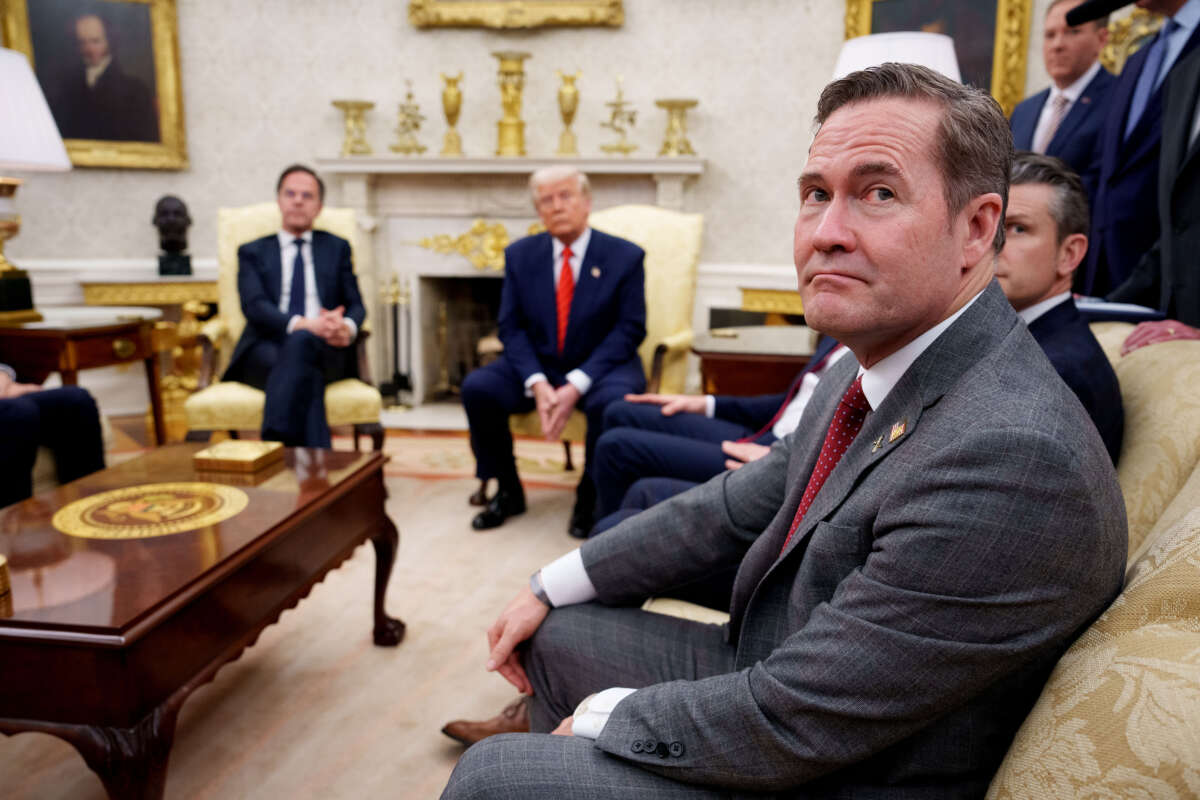
President Donald Trump, accompanied by U.S. National Security Adviser Michael Waltz (right), takes a question from a reporter during a meeting with NATO Secretary General Mark Rutte (left) in the Oval Office of the White House on March 13, 2025, in Washington, D.C.Andrew Harnik / Getty Images


Did you know that Truthout is a nonprofit and independently funded by readers like you? If you value what we do, please support our work with a donation.

Trump administration officials effectively admitted to and celebrated a war crime when discussing the U.S.’s airstrikes on Yemen earlier this month, a House Democrat and policy experts have said, citing newly leaked messages published by The Atlantic.

On Wednesday, The Atlantic’s Jeffrey Goldberg published a full group chat exchange he had previewed in an article on Monday, in which numerous high-level officials coordinated and discussed the U.S.’s airstrikes on Yemen earlier this month. Wednesday’s exposé came as a response to Trump officials insisting that classified information was not shared in the chat — despite the messages including what are clearly secretive high-level discussions on war plans.

“Another disgusting part of all of this is the proof [of] a blatant war crime to which the Vice President of the United States responded: Excellent,” said Rep. Maxwell Frost, a Democrat from Florida, on social media on Wednesday.

In an exchange after the strikes first hit, as shown in Wednesday’s leak, National Security Adviser Michael Waltz says that the U.S. had collapsed a building that one of their Houthi targets was supposedly inside, calling it “amazing.”

“Their first target — their top missile guy — we had positive ID of him walking into his girlfriend’s building and now it’s collapsed,” Waltz said.


Tlaib: Democrats Rage Over Yemen Strike Leak, But Not at the Strike Itself
The US’s airstrikes on Yemen have reportedly killed dozens of civilians, with the US twice bombing a cancer hospital. By Sharon Zhang , Truthout  March 25, 2025


Per the screenshots, Vice President J.D. Vance responds, “Excellent.” CIA Director John Ratcliffe says, “A good start.” Waltz then replies with a fist emoji, a U.S. flag emoji and a flame emoji.

According to Yemen Data Project, the first strike killed at least 13 civilians and injured nine on the night of March 15, hitting north of the capital, Sanaa. Yemen Data Project says that this was the bombing deemed “excellent” by the vice president and “amazing” by Waltz.

The messages are “prima facie evidence of at least one war crime applauded by the people who conspired to commit it,” wrote Dylan Williams, Vice President for Government Affairs for the Center for International Policy (CIP), on social media.

“Rules of engagement that permit destroying an entire civilian apartment building to kill one alleged terrorist is part of Joe Biden’s legacy,” wrote Matt Duss, CIP’s executive vice president. “It’s still a war crime though, and Waltz’s text is a confession.”

International law mandates that combatants must not deliberately target civilians in war, and that they must avoid targeting civilian infrastructure even if there is a military objective. Houthi officials have condemned the U.S’s recent attacks as a war crime. Progressive lawmakers have noted that the U.S. has been bombing Yemen for a decade despite Congress having never formally declared war, making the aggression unconstitutional as well.

The U.S. launched over 47 air strikes on Yemen between March 15 and 16. Yemenis reported numerous strikes on residential buildings. In the Ibb governorate, the U.S. targeted two residential buildings, killing at least 15, per Al Jazeera, while 15 others were killed when the U.S. struck a residential area in the capital.

The bombings killed 53 people in total. At least 25 of them were civilians, per Yemen Data Project, including four children; Yemeni officials have counted more than 30 civilian deaths. The majority of strikes targeted civilian sites, Yemen Data Project said — including a strike on a newly built cancer hospital that the U.S. bombed once again this week.

Drop Site reported that the bombing of the hospital threw the facility into chaos, with children screaming due to their injuries, while some “small victims were charred beyond recognition.” The U.S.’s strikes on the hospital this week have reportedly destroyed the facility.

Rubio vows to keep stripping visas after furor over snatched student

GAZA PRO PEACE CEASFIRE  ACTIVISTS ARE NOT ANTI SEMITIC AND THEIR PROTESTS ARE PROTECTED BY THE FIRST AMENDMENT (THATS THE ONE THAT  COMES BEFORE THE SECOND  AMENDMENT)

Georgetown (Guyana) (AFP) – US Secretary of State Marco Rubio said Thursday he has canceled more than 300 visas in a crackdown on anti-Israel activism and vowed to keep doing so, brushing aside furor after masked agents snatched a student.

28/03/2025 - RFI
US Secretary of State Marco Rubio speaks with reporters on his plane while flying from Suriname en route to Miami © Nathan Howard / POOL/AFP

Rubio, a staunch supporter of Israel, said that he personally signed off on every visa revocation and rejected charges he was violating US protections of free speech.

Asked about a report on the number of visas he has stripped, mostly for students, Rubio said: "Maybe more than 300 at this point. We do it every day."

"Every time I find one of these lunatics, I take away their visas," he told reporters on a visit to Guyana.

"At some point I hope we run out because we've gotten rid of them," Rubio said.


Since his return to the White House on January 20, President Donald Trump has moved aggressively against student activists and universities over the disruptive protests that swept US colleges campuses in response to the Gaza war.

Earlier this week, a video went viral of a 30-year-old Turkish graduate student, Rumeysa Ozturk, being detained by masked, plain-clothed figures near Tufts University in Massachusetts.

Ozturk had penned an op-ed in a student newspaper decrying Israel's actions in Gaza as "genocide." She now faces deportation.

Immigration lawyer Mahsa Khanbabai complained that Ozturk had been taken to a detention center in the southern state of Louisiana, despite a court order that she remain in Massachusetts, and was denied access to legal representation.

"Masked DHS agents unlawfully arrested my client," she said, referring to the Department of Homeland Security.

Congresswoman Ayanna Pressley, a Democrat from Massachusetts, accused the Trump administration of moving to "abduct students with legal status."

"This is a horrifying violation of Rumeysa's constitutional rights to due process and free speech. She must be immediately released," Pressley said in a statement.
Visas a 'gift'

Rubio, asked if Ozturk was being targeted over her writing in a student newspaper, said that she met his criteria for visa revocation without providing details.

"I would caution you against solely going off of what the media has been to identify" for the visa decision, the former senator told reporters later on his plane to his home city of Miami.

Rubio said that visas were a "gift" at the discretion of the State Department and not subject to any judicial review.

He said it was "crazy" to allow in the United States students who were "supportive of a group that just slaughtered babies," a reference to the Hamas attack on Israel on October 7, 2023 that triggered massive Israeli retaliation.

Asked if the Trump administration would go after anyone who presents dissenting views, Rubio said, "If you're complaining about paper straws, then we're obviously not going to yank a visa over that."

"The overwhelming majority of student visas in this country will not be revoked," he said.

The most high-profile deportation case is Mahmoud Khalil, who led protests at Columbia University in New York. He was also taken to Louisiana ahead of deportation proceedings, despite being a US permanent resident.

Khalil's supporters reject the characterization that he supports Hamas and note that he has spoken out against antisemitism.

The US government has since pointed to technicalities in his original student visa.

Rubio contends that student activists have made education intolerable for Jewish students.

"If you tell us that the reason why you're coming to the United States is not just because you want to write op-eds, but because you want to participate in movements that are involved in doing things like vandalizing universities, harassing students, taking over buildings, creating a ruckus, we're not going to give you a visa," Rubio said in Guyana.

© 2025 AFP

STATEHOOD OR INDEPENDENCE

Puerto Rico Protests Against Higher Ed Cuts Follow Long Fight Against Austerity


The university showdown is the latest chapter in a decades-long struggle against austerity on the archipelago.

March 27, 2025
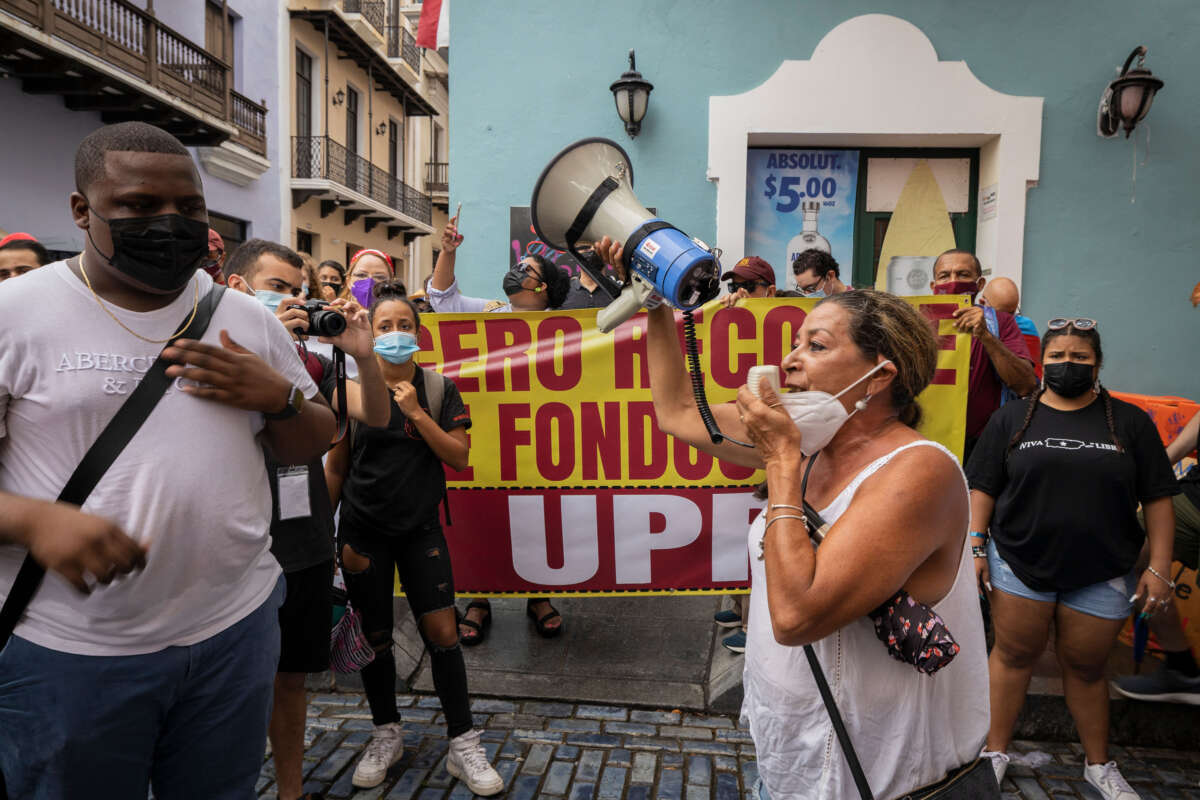
Teacher, students and workers of the University of Puerto Rico protest against a budget cut of $94 million imposed by the Fiscal Control Board on June 11, 2021, in San Juan, Puerto Rico.Alejandro Granadillo / NurPhoto via Getty Images

Teacher, students and workers of the University of Puerto Rico protest against a budget cut of $94 million imposed by the Fiscal Control Board on June 11, 2021, in San Juan, Puerto Rico.Alejandro Granadillo / NurPhoto via Getty Images

This February, President Luis A. Ferrao Delgado of the University of Puerto Rico resigned after attempting to suspend 64 educational programs. The measure targeted core disciplines such as history, philosophy and comparative literature, stunning the university community and provoking bitter opposition. Eleven days of protests followed, compelling Ferrao to reverse the decision before stepping down.

The university showdown is the latest chapter in a two-decade struggle against austerity, as Puerto Rico grapples with a debt crisis and economic stagnation. Since 2016, a fiscal control board has managed the U.S. colony’s finances. Repeatedly, board members have frozen university funding to secure spending cuts and encourage “operational efficiency,” whittling down academic departments, salaries and employee pensions.

Reportedly, Ferrao proposed his reform to unlock $102 million in public revenue that the board is withholding from educators. Authorities had long pressured him to reduce operating costs in exchange for access to basic funding. During his resignation, Ferrao denounced looming “draconian measures” for threatening the university’s “stability and educational mission,” implying that the board is squeezing the budget.

The debt crisis and struggle over education reflect both the failure of U.S. colonialism and capitalist development in Puerto Rico. For decades, officials in Washington, the local elite and foreign financiers have blamed the colony’s fiscal problems on profligate social spending. But these arguments stand reality on its head. In large part, Puerto Rico’s fiscal crisis is the foreseeable result of policies that U.S. leaders have imposed from the outside: a model of economic development that relies on tax exemptions and low wages while prioritizing the rights of foreign investors over the well-being of residents.
Colonial Capitalism

During the Cold War, the U.S. government planted the seeds of the current crisis when it launched Operation Bootstrap to develop Puerto Rico’s economy. The modernization program aimed to attract investment by advertising tax exemptions and the territory’s cheap labor. By the 1950s, the international financial press portrayed Puerto Rico as a “bounty for industry” and “taxpayers’ paradise.” Gulf Caribbean and other petrochemical giants constructed factories, and apparel makers like Newberry Textile Mills turned the archipelago into a floating sweatshop: the single largest supplier of clothing to the U.S. market.

Related Story
News Analysis |
Politics & Elections
Resurgent Puerto Rico Independence Movement Challenges 126 Years of Colonialism
Openly promoting decolonization and a social democratic alternative, a historic coalition made record electoral gains.
By Jonathan Ng , TruthoutDecember 10, 2024

Leftists and independence activists noted that Bootstrap allowed corporations to shirk their fiscal responsibility and exploit workers while making the archipelago dependent on foreign capital. Yet authorities ruthlessly suppressed such criticism. For decades, U.S. officials illegally surveilled over 135,000 civilians to defend a highly unstable model of colonial capitalism.

One target was the independence leader, Juan Mari Brás, who denounced the “colonial-capitalist system” for enabling foreign corporations to absorb the “largest share” of Puerto Rico’s wealth. In response, the FBI allowed right-wing extremists to attack his party’s offices, newspaper press and daycare for young children. In a letter to the FBI director, a bureau agent celebrated Mari Brás’s heart attack in 1964, claiming that its harassment campaign was responsible for his brush with death.

Authorities began spying on his socialist colleague, Manuel de. J. González, when he was still a teenager. Eventually, the police enlisted two neighbors, his landlord, a postman and the local security guard as informants to monitor his activities. Decades later, González discovered that “almost every meeting that I attended is documented.”

The experiences of Mari Brás and González were not unusual. Defending U.S. rule and private investment, the CIA and FBI systematically persecuted dissent, compiling “a list of names” of political activists, spying on U.S. citizens, and intercepting “mail to and from Puerto Rico.” An undercover FBI agent even became the lover of Commander Gloria Fontanez of the Young Lords Organization, which promoted socialism in the colony. While physically abusing Fontanez, he helped engineer the group’s collapse.

Across Latin America, U.S. officials touted Operation Bootstrap as a model for emulation, but neglected a key detail: Repression was the heart of the economic program. Through the 1960s, foreign investment propelled growth in Puerto Rico. Yet wages stayed low, and policymakers promoted emigration to mitigate appallingly high levels of unemployment. As socialists observed, the economy remained dependent on foreign capital: a foundation that would vanish if investors chased profits elsewhere.
Rebooting the System

During the mid-1970s, a prolonged recession gripped Puerto Rico and discredited Operation Bootstrap. Unemployment rates and budget deficits climbed, as corporations began leaving the archipelago to exploit cheaper labor elsewhere in Latin America. The economist Iyari Ríos González registers roughly $16 million in capital flight for 1960, yet estimates that Puerto Rico hemorrhaged over $3 billion in 1980.

Once more, officials adopted fiscal incentives to lure foreign investment. In 1976, the U.S. Congress slotted Section 936 into the tax code, exempting corporate profits in Puerto Rico from federal taxes.

Repression remained a central feature of economic policy. Above all, Gov. Carlos Romero Barceló attacked social spending and workers to attract foreign capital, balance the budget and reverse deindustrialization. In 1977, his administration drafted a secret memo calling for a “carefully conceived plan” to permit the “participation of law enforcement agencies” in labor disputes. That year, police strangled the union leader Juan Rafael Caballero to death. Police also bludgeoned and shot striking workers. Meanwhile, authorities tacitly allowed firms like General Gases and Esso to ram trucks into picket lines and assault employees during labor disputes.

By battering the labor movement, Puerto Rican leaders kept wages flat and cultivated a pro-business climate for foreign investors. The combination of fiscal incentives and bare-knuckled repression stimulated investment and economic growth.

But it also infused the economy with dangerous contradictions. Corporate tax exemptions and high unemployment rates – which routinely surpassed 14 percent of the workforce – prevented Puerto Rico from developing a stable tax base. Government debt rose from 35 to 57 percent of GNP between 1970 and 2000. Increasingly, officials relied on bond sales to underwrite spending, as the public sector confronted revenue shortages.
Decadence and Austerity

By 2006, the North American Free Trade Agreement and expiration of Section 936 had undermined Puerto Rico’s appeal as a labor market, prompting the mass exodus of industry from the archipelago. It marked the definitive failure of the U.S.-imposed model of colonial capitalism. The territory’s already insufficient tax base migrated overseas, and the economy severely contracted.

Over the following decade, Puerto Rico spiraled into the worst municipal debt crisis in U.S. history by selling bonds to cover budget deficits.

The financial crisis and government response has reflected the deeper chaos of the colonial order. Since 2006, every governor’s office has combined austerity measures with visible corruption – cutting public services to reduce the debt, while embezzling funds for political gain.

Before pioneering austerity, Aníbal Acevedo Vilá oversaw an illegal campaign financing scheme to win the gubernatorial election in 2004. The leadership of the Puerto Rico Manufacturers Association and a network of “collaborators” laundered over $7 million for him in illicit contributions. Under legal pressure, suspects admitted to wrongdoing in return for light sentences.

The legacy of corruption continued. Aníbal Vilá’s successor, Gov. Luis Fortuño, laid off thousands of public employees to pay foreign bondholders. Afterward, he retired to the law firm Steptoe & Johnson, while promoting Puerto Rican bond sales. The watchdog group Hedge Clippers acidly noted that Fortuño exited the government to advise “Wall Street types on how best to pillage his former homeland.”

Corruption then reached conspicuous heights under Gov. Alejandro García Padilla in 2013. His campaign manager, Anaudi Hernández Pérez, exploited personal connections to win government contracts, engage in influence laundering and practice extortion. A flamboyant businessman, Hernández raised funds for the Popular Democratic Party by holding drug-soaked parties with sex workers, nude revelers, fireworks and live music at his mansion.

In 2015, federal authorities swept up Hernández and other members of the García Padilla administration in an anti-corruption probe. Losing his patience, the FBI chief in Puerto Rico openly demanded García Padilla “clean the house of parasites… that have bled Puerto Rico dry and left it in critical condition.”

The scandal allowed the gubernatorial candidate Ricardo Rosselló of the New Progressive Party to win office in 2017, while promising to purge the government of corruption and stabilize the territory’s finances. To reduce Puerto Rico’s debt, his administration closed over 400 public schools. Yet in 2019, federal authorities arrested his secretary of education, Julia Keleher, for misappropriating government funds.

Days later, journalists published a Telegram thread exposing the Rosselló administration’s cronyism. One government whistleblower asserted that an “institutional mafia” held the reins of power in a key agency.

Two weeks of protests forced Rosselló to resign. Yet the ruling class’s combined commitment to austerity and personal enrichment endured. Bribery charges plagued Rosselló’s successor, Wanda Vázquez, after she left office. And her successor, Pedro Pierluisi, profited from both sides of the debt crisis: As a corporate lawyer, he helped Puerto Rico issue new bonds, before winning a federal contract to restructure these very debt obligations.

For two decades, the rituals of democracy in Puerto Rico have served to legitimate its colonial orientation and unpopular austerity measures. Elections offered voters candidates instead of options, as both major parties preached a gospel of fiscal discipline and shared sacrifice that they mocked in practice.
Blood in the Streets

During the same period, new grassroots movements emerged to resist the belt-tightening reforms and corruption. Every governor faced popular backlash as the debt crisis worsened. A discernible pattern took root, as government repression incited further waves of mobilization and undercut the legitimacy of the colonial order.

In September 2005, the FBI laid siege to the home of Filiberto Ojeda Ríos, a socialist activist who had organized a 1983 heist to raise funds for the independence movement. Since 1990, the elderly revolutionary had lived in hiding after removing a tracking device from his ankle. In a provocative display of force, a swarm of FBI agents invaded his neighborhood before triggering a shootout. Afterward, the bureau airlifted an injured agent to a hospital, while leaving Ojeda Ríos to die from a gunshot wound. Amnesty International called his death an “extrajudicial execution.”

The brutal raid occurred on the anniversary of the Grito de Lares – Puerto Rico’s equivalent to Independence Day – and turned Ojeda Ríos into an instant symbol of national resistance. Students forced the University of Puerto Rico to declare an “academic recess,” and the Puerto Rico Bar Association awarded Ojeda Ríos posthumous honors. The outpouring of grief and anger revealed a powerful undercurrent of frustration over the structural inequality and violence of the colonial order.

Immediately, Ojeda Ríos’s death galvanized a new wave of anti-colonial activism. Resurgent social movements largely focused on combating cuts to education, health care and other public services, while confronting the repressive power of the colonial government.

Student activists quickly assumed the vanguard of the struggle against austerity. In 2009, students at the University of Puerto Rico contested tuition hikes and gutted budgets by organizing protests that immobilized the campus.

Governor Fortuño in turn unleashed the police. Police boasted on social media about plowing through students with pepper spray and billy clubs, while acting as the shock troops of austerity. Addressing his colleagues, officer José Rosado openly fantasized about making blood “run” in the streets: “Dinner is served, boys… it’s time!” Other policemen celebrated the opportunity for “emptying” their rifles into crowds and promised to beat back “the mobs that don’t want to study.”

Police brutality led the mainstream Daily Sun to editorialize that the behavior of security forces was “comparable only to the acts of the dictatorships we all denounce.” The Department of Justice itself concluded that “constitutional violations” were “pervasive and plague all levels” of the Puerto Rico Police Department, unveiling a “staggering level of crime and corruption.”

Despite the repression, students have repeatedly mobilized to prevent the government from dismantling public services. In the spring of 2017, colonial authorities proposed slashing $450 million in funding for the University of Puerto Rico. Experts warned that the reform meant “the end of UPR.” And again, students launched a massive strike that police met with indiscriminate violence.

Then in September, Hurricane María slammed the archipelago. The warnings of student activists appeared prescient, as the natural disaster exposed the man-made scars left by over a decade of austerity politics. Puerto Rico’s weakened health care system, decaying infrastructure and anemic social programs collapsed. Ultimately, the legacy of austerity proved deadly: The New England Journal of Medicine estimated that 4,645 Puerto Ricans died in the hurricane’s wake.
The Dictatorship of Capital

The dialectic between resistance and repression continues to define Puerto Rican reality. Despite the austerity program, Puerto Rico’s debt rose from $35 to $72 billion between 2005 and 2017. In response, U.S. officials curbed local control of the archipelago’s debt, delegating authority to foreign financial institutions and, inadvertently, fueling movements that demand economic justice.

Since 2016, a fiscal control board appointed by the U.S. Congress has managed Puerto Rico’s finances. Residents simply call it the “Junta” – alluding to its undemocratic character and past Latin American dictatorships.

Tellingly, the first Treasury official to oversee the debt crisis, Antonio Weiss, previously received a $21 million retirement package from Lazard Frères, a firm heavily invested in Puerto Rican bonds. Federal officials stocked the Junta with foreign bankers and corporate lawyers. Their professional backgrounds made them unsympathetic to Puerto Rico’s plight. Indeed, before assuming her post, Director Natalie Jaresko of the Junta pocketed $1.7 million in bonuses while helping Ukraine navigate its own economic turmoil.

Board members have doubled down on austerity, further hollowing out social programs to pay foreign creditors. Yet the nonprofit group Espacios Abiertos demonstrates that the Junta has routinely overestimated the savings gained from cutting public services. Its 2018 fiscal statement predicted that such reforms would secure $193.9 billion in government savings over the next 30 years. By 2022, the board had lowered its forecast to $49.7 billion, before suspending predictions altogether. Ironically, the Junta itself aggravates the territory’s debt by managing a restructuring process that has cost over $1 billion.

This February, the Center for Investigative Journalism in Puerto Rico published an exposé revealing that the board refuses to leave the territory. After nearly a decade, Puerto Rican officials call the Junta a “leviathan,” explaining that “we have complied” with its demands only to receive additional ultimatums. Recently, the board released a report that admits spending cuts have devastated an “overburdened healthcare system.” Nonetheless, members remain confident in their leadership and have announced 50 new preconditions before the archipelago can regain its sovereignty.

The obstacles to its removal are formidable. Congresswoman Nydia Velázquez (D-NY) reports that financial lobbyists have “repeatedly delayed and opposed efforts” to dissolve it and enjoy a stranglehold on Congress. Even Ivy League universities such as Harvard, Princeton and Yale have invested in Puerto Rico’s debt through hedge funds like the Baupost Group, profiting from the destruction of its educational system.

Yet grassroots movements are fighting back. As in 2009 and 2017, opposition erupted at the University of Puerto Rico when its president, Luis Ferrao, announced program cuts this January. The mass mobilization lambasted not only the Junta but U.S. colonialism. One leftist group, the Fighting Student Collective, asserts that “it is no coincidence” that cutbacks target the humanities since “a people that does not know its own history is easy to keep subjugated.”

A new governor, Jenniffer González, helped replace Ferrao with a political crony and appointed a lobbyist for bondholders as her chief of staff. What’s more, President Donald Trump’s federal funding cuts further undermine the viability of the colony’s education system, while extending political repression to the U.S. mainland. His attack on universities dramatizes the importance of solidarity in the struggle against austerity, which now threatens the very schools that have profited from Puerto Rico’s debt.

In short, the ongoing crisis reflects the contradictions of U.S. colonialism and capitalist development in the Global South. For decades, elite policymakers and investors have dismantled Puerto Rico’s economy, then cited the resultant debt crisis to shred its social safety net. Perversely, their own mistakes have become a justification for further exploitation, while the Junta and foreign capital attempt to milk a shrinking corpse. But such violence continues to inspire resistance, as social movements mobilize to combat austerity – again resurrecting the Puerto Rican nation in the struggle for a democratic and sovereign future.

The author would like to thank Sarah Priscilla Lee of the Learning Sciences Program at Northwestern University for reviewing this article.

This article is licensed under Creative Commons (CC BY-NC-ND 4.0), and you are free to share and republish under the terms of the license.


Jonathan Ng  is a postdoctoral fellow at the John Sloan Dickey Center for International Understanding at Dartmouth College.
'Game over': Yale fascism expert moving to Canada because US is becoming a 'dictatorship'


REUTERS/Marco Bello
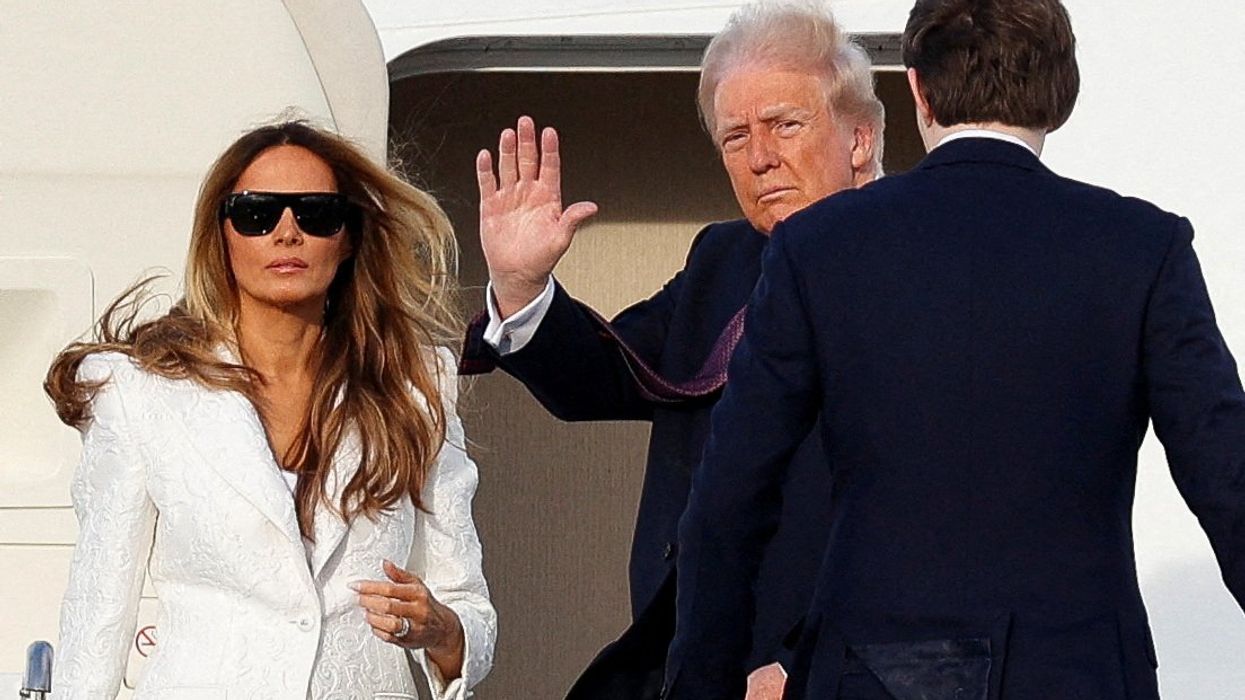
Donald Trump, his wife Melania and son Barron board a U.S. Air Force plane to travel to Dulles International Airport from Palm Beach International Airport in West Palm Beach, U.S. January 18, 2025.

March 27, 2025
ALTERNET

Quite often, Americans who threaten to leave the United States for political reasons don't follow through when they see how complex the immigration laws of other countries can be. But during Donald Trump's second presidency, some well-known Americans really are expressing their worries about the United States' current political climate by moving to other countries.

Liberal actress Rosie O'Donnell, an outspoken Trump critic, is now living in the Republic of Ireland. And Jason Stanley, a Yale University professor known for his expertise on fascism, is accepting a job offer in Canada — as he fears the U.S. is becoming increasingly authoritarian.


Stanley, author of the 2018 book, "How Fascism Works: The Politics of Us and Them," accepted a position at the University of Toronto’s Munk School of Global Affairs and Public Policy. And he is speaking out about his reasons for leaving the U.S.

READ MORE: 'Fired because I dissented': Navy vet reveals the 5 sentences that got her laid off by DOGE

Stanley told the website The Daily Nous that he is moving to Canada "to raise my kids in a country that is not tilting towards a fascist dictatorship." And he believes that Columbia University in New York City and other colleges are making a huge mistake by capitulating to Trump rather than fighting back against his war on academia.

"When I saw Columbia completely capitulate," Stanley told the Daily Nous, "and I saw this vocabulary of: well, we're going to work behind the scenes because we're not going to get targeted — that whole way of thinking pre-supposes that some universities will get targeted, and you don't want to be one of those universities. And that's just a losing strategy. You've got to just band together and say an attack on one university is an attack on all universities. And maybe you lose that fight, but you’re certainly going to lose this one if you give up before you fight."

Stanley continued, "Columbia was just such a warning. I just became very worried because I didn't see a strong enough reaction in other universities to side with Columbia. I see Yale trying not to be a target. And as I said, that's a losing strategy."

Stanley's decision to move to Canada is inspiring some strong reactions on Social Media.

On Bluesky, 1619 Project creator Nikole Hannah-Jones wrote, "When scholars of authoritarianism and fascism leave US universities because of the deteriorating political situation here, we should really worry."

Bluesky user Franklin Seal fears that the U.S. has passed the point of no return, posting, "If you are only beginning to worry now, you are part of the problem. The best time to plant a tree is 20 years ago. The best time to stop Hitler was in 1923. The best time to stop Trump was 2016. Now the professors are leaving. Soon, the stampede. Moving to Canada? Might not be safe much longer."

Journalist Etan Nechin views Stanley's departure from the U.S. as a troubling sign.

In a post on X, formerly Twitter, Nechin wrote, "Philosopher Jason Stanley leaving Yale for Canada 'because of the political climate' should set off serious alarm bells. 'Brain drain' is just a sanitized phrase meaning the flight of conscience and intellect from a country where probing at truths becomes a dangerous task."

On X, PBS' "Amanpour & Company" posted video of an interview in which Stanley discussed his decision to leave the U.S.

The professor/author told 'Amanpour & Company''s Michele Martin, "I would not do this if I saw all of our universities banding together. But it's not just the universities, Michele. It's the law firms, it's all of our American institutions…. Now, we see universities, including my university, saying things like: We're going to keep our head down so we're not targeted. As soon as I heard that vocabulary, I knew, sort of, it might be that the game is over. Because you're not banding together if you say, 'We're going to keep our head down.'"

'Grasp on reality': Trump is declaring war on 'truth itself' — and may win: conservative


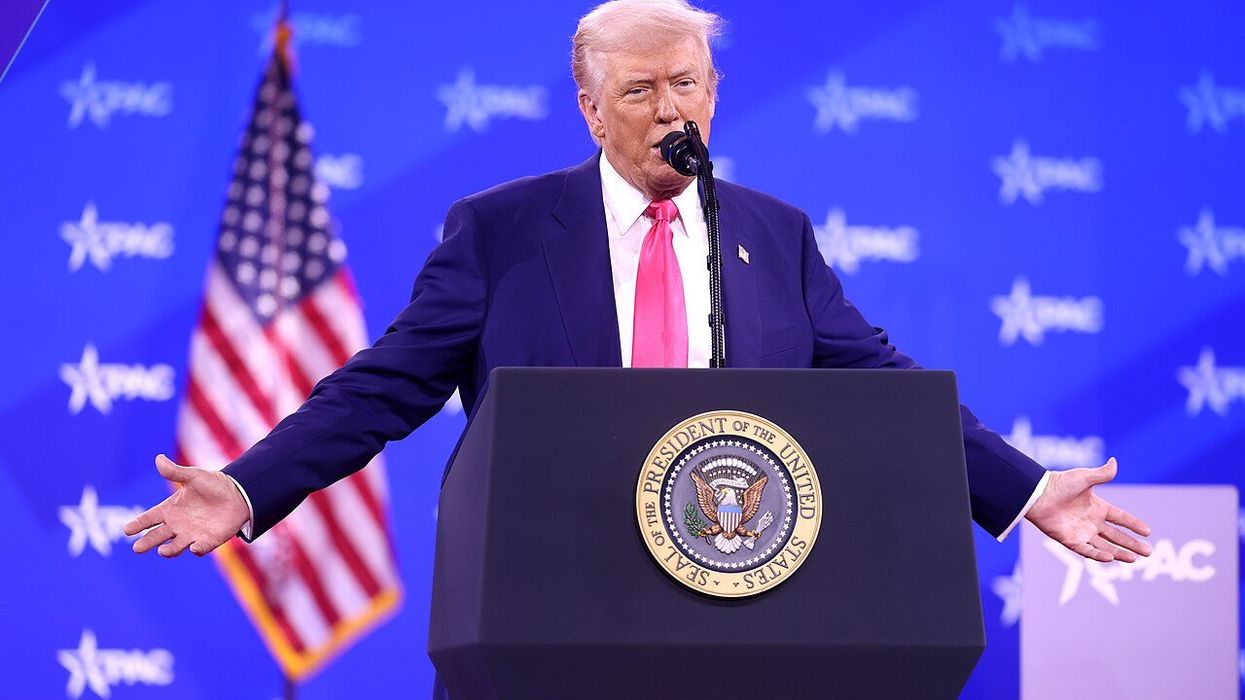
President Donald Trump at the 2025 Conservative Political Action Conference (CPAC) in National Harbor, Maryland on February 22, 2025 (Gage Skidmore)
March 28, 2025
ALTERNET

During Donald Trump's first presidency, his then-White House advisor Kellyanne Conway was relentlessly mocked by critics for using the phrase "alternative facts." Conway's term, in political discourse, came to symbolize distortions and conspiracy theories that were widely accepted as truth in far-right MAGA media outlets.

In an article published by The Bulwark on March 28, Never Trump conservative Mona Charen argues that Trump, during his second term, is escalating the use of "alternative facts" and waging an all-out war on "truth itself."

The veteran columnist and former Nancy Reagan speechwriter explains, "You say the Earth is warming, well we have data that say the opposite. It’s 'alternative facts,' but this time, it's not just Kellyanne Conway riffing with reporters — it comes bearing a government imprimatur. It would be easier to count grains of sand on a beach than to keep track of the lies emanating from this administration, but manipulating official government studies and statistics is a step beyond anything we've seen and a profound threat."

Charen emphasizes that "truth itself" is an important tool for Trump's opponents — the problem is that many of his supporters live in a bubble and are only exposed to so-called "alternative facts."

"We have seen one institution after another buckle before Trump's onslaught," Charen laments. "If Congress is conquered, and Big Tech won't oppose him, and big media is bending the knee, and big law is folding, and universities are crumpling, and the judiciary is a question mark, who is left? Only the voters. They retain the power to wrest control of Congress from the GOP in 20 months, which would slow, if not quite extinguish, Trump's attempted revolt. But what if the voters don't have a grasp on reality?"

Charen continues, "What if the inflation rate rises to 9 percent, bird flu is ravaging farms across the Midwest, unemployment is climbing, the economy is shrinking, measles is killing hundreds of children, crime is up — but the government has suppressed or falsified the data that would reveal those conditions? Lies have always been the engine of MAGA, but now, we face the prospect that many government statistics, on which businesses, health professionals, and our whole society depends, will be manipulated by Trumpists."

Charen notes that while the authoritarian government in Mainland China will "sometimes misrepresent economic statistics," the U.S. government "has been pretty clean in this regard — until now." And the Never Trumper stresses that the second Trump Administration will badly distort data in the months ahead."

"The Trump Administration is doing more than attempting to seize unconstitutional power for an unaccountable executive," Charen warns. "It is seeking to destroy truth itself, the last tool of the opposition."

Mona Charen's full article for The Bulwark is available at this link.