Thursday, April 10, 2025


Norwegian Cruise Line Charters Oldest Cruise Ships to Sail in India 
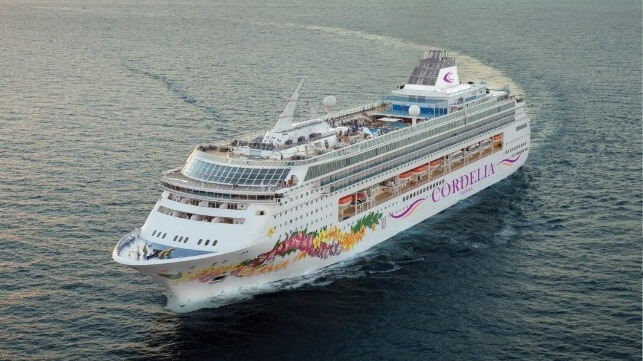
cruise ship
Rendering of the rebranded Norwegian Sky under charter for the cruises in India (Cordelia Cruises)

Published Apr 8, 2025 7:59 AM by The Maritime Executive


Norwegian Cruise Line has made a deal to charter its two oldest cruise ships as the company pursues its fleet modernization efforts. It is part of a strategy that has also seen the publicly traded parent company, Norwegian Cruise Line Holdings, charter two other ships from its luxury brands to launch a new residential cruise line.

India’s Cordelia Cruises, the only dedicated cruise line in India, will be taking the Norwegian Sky on charter in 2026 and the Norwegian Sun the following year in 2027. The company was started post-pandemic with a single ship but recently reported it was looking to expand its operation.

The cruise ships Norwegian Sky (77,104 gross tons) and Norwegian Sun (78,309 gross tons) were the company’s first effort at modernization in the late 1990s. Started in 1965, the brand had failed to keep pace with competitors and due to financial difficulties had not added new cruise ships at the same pace as Carnival Cruise Line and Royal Caribbean International in the 1990s. 

The Norwegian Sky had been ordered by Costa Cruises as a sistership to the Costa Victoria and was under construction in Germany at Bremer Vulkan when the yard experienced financial difficulties in 1996 and construction was suspended. Norwegian acquired the incomplete ship and finished it at Lloyd Werft introducing it in 1999. It has accommodations for approximately 2,000 passengers and sailed for the cruise line in the Caribbean and a brief period in Hawaii as the Pride of Aloha between 2004 and 2008.

Norwegian decided to build a sistership which became Norwegian Sun in 2001. The company had also planned a third sister but did not go forward with the order.

The smallest ships in the fleet they also predated Norwegian’s open cruise concept without assigned dining and multiple restaurants. The ships were adapted to the concept but lacked the space to have the full amenities of what the company markets as “Freestyle Cruising.” 

CEO of Norwegian Cruise Line Holdings Harry Sommer called the decision to charter a total of four ships from the fleet part of a “disciplined approach to fleet optimization.” Norwegian this week is introducing the third cruise ship in its new series, Norwegian Aqua, and Sommers notes it has a total of seven cruise ships ordered for the brand, including a new class of 200,000-gross ton plus ships.

Cordelia Cruises in its announcement said it would be “unlocking new destinations, introducing longer itineraries, and reimagining what cruising means for India and beyond.” The company to date has operated short cruises on the Empress acquired from Royal Caribbean International. The renamed Cordelia Sky will enter service from Mumbai in August 2026. The company has not announced itineraries for the Sun which will be leaving Norwegian in the fourth quarter of 2027.

Norwegian has also chartered the Seven Seas Navigator from Regent Seven Seas Cruises and the Insignia from Oceania Cruises to Crescent Seas, a residential cruise line. These charters are scheduled to begin in 2026 and 2027.  The company has three new cruise ships on order for Oceania Cruises, and two cruise ships for Regent Seven Seas Cruises. All of the new ships are being built by Fincantieri in Italy.

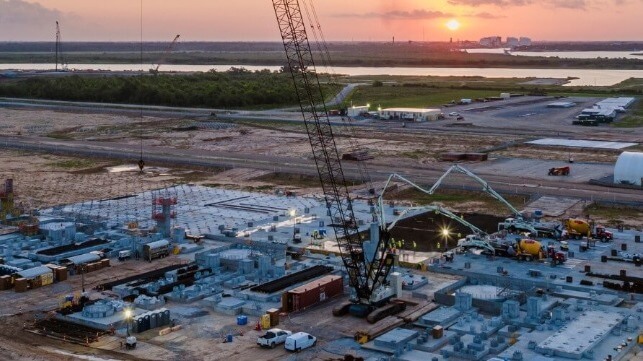
 

Woodside Sells $5.8B Stake in its Louisiana LNG Project

Pre-FID construction under way at Louisiana LNG (Woodside)

Published Apr 7, 2025 11:37 PM by The Maritime Executive


Australian oil and gas company Woodside Energy is selling down its equity stake in its Louisiana LNG project, starting with the sale of a 40 percent stake to U.S.-based investment firm Stonepeak.

Woodside is getting near to a final investment decision on the LNG production and export project, which it acquired in a $900 million takeover of developer Tellurian last October. The cost of implementing the entire five-train facility near Lake Charles, Louisiana is estimated at $27 billion.

The Australian company says that the sale of the 40 percent stake to Stonepeak is timely. Stonepeak is expected to inject $5.7 billion in capital expenditure into the project, covering 75 percent of the project’s capital needs in both 2025 and 2026.

Woodside says that the stake sale reduces its capital expenditure profile and brings the project one step closer to a FID. Talks continue with other potential partners as Woodside aims to sell another 10 percent stake in the project. Its aim is to retain a 50 percent operating stake in the megaproject, which will produce 27.6 million metric tons per annum (MTPA) when complete.

The transaction is expected to close in the second quarter, subject to a positive FID and the needed regulatory, legal, and other approvals. At that point, Stonepeak is expected to make available $2 billion as part of its capex contribution.

The Louisiana LNG project is being built in four phases. Phase I includes two trains with a capacity to produce 11 MTPA, while Phase II has one train with a capacity of 5.5 MTPA. In December last year, Bechtel was awarded the contract for phases one and two, which are estimated to cost $900 to $960 per tonne of capacity. Construction is already well under way, ahead of a final investment decision. 

“The project represents a compelling opportunity to invest in a newbuild LNG export facility nearing FID approval with an attractive risk-return profile and best-in-class partners in both Bechtel and Woodside to construct and operate the asset,” said James Wyper, Stonepeak Senior Managing Director and Head of US Private Equity.

He added the significant additional capacity from the Louisiana LNG project will be central in further propelling the status of the U.S as a leading LNG exporter. The country exported 11.9 billion cubic feet per day of LNG in 2024, remaining the world’s largest exporte


Cargo Pumped Off of Damaged Tanker Stena Immaculate

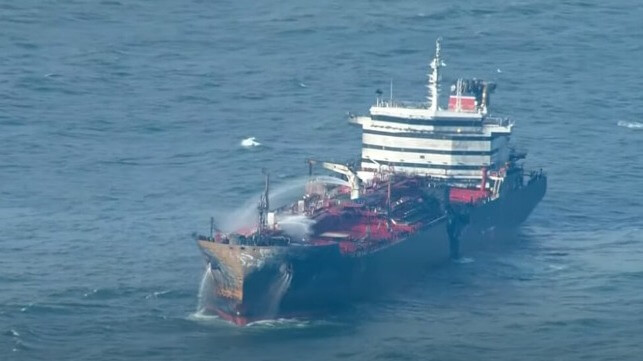
Stena Immaculate after the allision (HM Coastguard)

Published Apr 9, 2025 7:20 PM by The Maritime Executive


The transfer of jet fuel cargo from the damaged tanker Stena Immaculate has been completed, according to HM Coastguard, and salvors are now preparing to bring the vessel into a port of refuge in the UK. 

On March 10, the Portuguese-flagged feeder Solong was on a routine coastal voyage off Hull, UK, making 16 knots on a steady southbound course. Without slowing or maneuvering, Solong rammed the port side of the anchored product tanker Stena Immaculate, penetrating two tanks. Both vessels caught fire, and the crew of the Immaculate abandoned ship after an initial attempt to fight the blaze. 

One crewmember from Solong is missing and presumed dead, and the boxship suffered extensive fire damage; debris from Solong's cargo, including pelletized plastic, has washed up along nearby beaches in the UK. The boxship's master has been arrested on suspicion of gross negligence manslaughter.  

After the casualty, salvors for Stena Immaculate's owner stabilized the situation on board the tanker and brought another vessel - Fure Vyl - alongside for an STS transfer. The fuel has now been pumped off the Immaculate, preparing her for a safe entry into the port of Great Yarmouth later this week. 

"HM Coastguard continues to support local authorities in their response to onshore pollution from the Solong as a result of the collision [sic] . . . in both Norfolk and Lincolnshire. The clean-up operation has now moved from a proactive to reactive response. HM Coastguard will continue to keep the overall situation under close review," said Chief Coastguard Paddy O’Callaghan in a statement. 

HM Coastguard has asked the public to keep an open eye for nurdle pollution and to report it via the agency's online tip portal. 


Gulf of Guinea: What Kind of Cooperation in the Maritime Environment?

Guinea
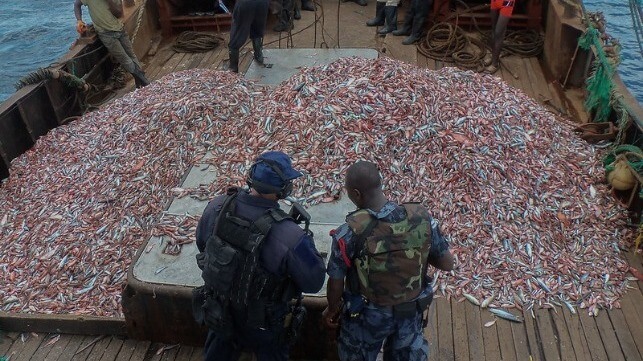
A U.S. training and assistance team joins a fishery inspection boarding in the Gulf of Guinea (File image courtesy USN)

Published Apr 10, 2025 1:00 PM by Francois Morizur


The world's major balances are changing rapidly as a result of changes in governments, regional tensions and fierce trade battles.

The great global institutions, the offspring of the last two world wars, are losing their credibility as the blocs decouple and the law of the strongest returns. Against this backdrop, it may be worth analysing these rapid changes and determining their current and future impact on the Gulf of Guinea and its neighbouring countries.

The center of global tensions is gradually shifting towards the Levant  and the Indo-Pacific. World trade is and will remain mainly maritime, and the importance of the Straits has been brought home to us in recent months. New partners are extending their spheres of influence (China, Turkey, Russia, Brazil, etc.), while others with longer histories are reducing their footprints (UK, France, Spain, Portugal).

Crises and rising regional antagonisms are diverting military resources away from the Gulf of Guinea towards emerging areas of tension (Baltic Sea, Eastern Mediterranean, Red Sea and Gulf of Aden, Persian Gulf and Western Pacific).

The Yaounde architecture was built following the technical agreement of 6 May 2009.  It was intended to be ambitious and to be based on existing structures (ECCAS/ECOWAS). In 2013, the Yaounde process initiated the construction of this interregional cooperation architecture based on an Interregional Coordination Centre (CIC Yaounde), two regional centres (CRESMAC & CRESMAO) and five multinational centers (MMCC A, D, E, F, G). The armed arm of the architecture, the CIC, was tasked with steering the joint maritime strategy between the various players in the zone, working on coordination, cooperation, interoperability and pooling.

The mission

The Yaounde Architecture (Y.A) was initially built around one main threat: maritime piracy.

While this threat was very prevalent around Nigeria and Cameroon, the epicenter of this criminal activity at the turn of the 2010/2020s, the peripheral states (countries in zones A, G & F) had very little to do with this problem.

This specific focus on maritime piracy led to a delay in the structuring and operational rallying of regional centers that were not, or were only marginally, involved (MMCC A, MMCC F, MMCC G). However, the coastal countries were faced with much wider threats in terms of type and impact (illegal fishing, illegal trafficking, pollution, etc).

The initial uniformity of the ‘Y.A. tool’ and the definition of initial missions and objectives thus slowed down the growth of this organization.

Resources

The Yaounde architecture must receive funding from the member countries to enable it to function properly. However, this initial agreement was never met, with economic crises affecting the majority of contributing countries.

These funding shortfalls have had a severe impact on the operation of the various centers due to a lack of material and human resources. Although significant progress has been made over the last 20 years, military maritime resources (ships, aircraft, personnel, intelligence resources) are still inadequate for the maritime areas to be controlled.

Coordination

Although there have been some notable successes in regional cooperation, coordination and cooperation are mainly affected by the general lack of resources. This cooperation is most effective in managing long-term crisis situations. It requires improvements in preventive cooperation and in post-incident management. However, this need is complex when it involves ships flying very different flags, international operators and crews, and transnational areas of activity. 

Bilateral partnerships have been set up on top of the Yaounde architecture for the benefit of countries in the same Y.A. zone or even countries belonging to different Y.A. zones. National administrations have also established links between state, regional or interregional structures, following the example of Shared Awareness and Deconfliction (GoG-MCF/SHADE).  Finally, the initial innovative initiatives set up in zone D (military vessels under TACON MMCC) have not been strengthened or replicated in other zones of the Yaounde architecture.

Cooperation

In view of these difficulties and the complexity of actions aimed at securing maritime areas, it is essential to determine the objectives to be pursued, the appropriate and financeable requirements needed to meet these objectives, and the mechanisms and timetables for implementation. This task is made all the more difficult by the fact that countries have more or less appropriate intelligence, deterrence and intervention resources at their disposal, that they face very different problems and threats, and that their internal resources are more or less constrained.

Numerous cooperation programs, whether financial, training, material or operational, are run by a wide range of partners: countries, unions of states and international organisations.

These programs, which sometimes run over several years, can occasionally ‘overwhelm’ the overall coherence expected at a national or regional level. Beneficiary countries may also be disoriented by the overlapping of disparate and incomplete procedures, concepts and resources, making it impossible to provide a simple, effective and coherent tool.

In 2023, ECCAS has convened a meeting in Kinshasa to redefine the strategic axes of the integrated policy for the seas and shared continental waters of ECCAS, as well as the strategy for the safety and security of vital interests at sea and in the shared continental waters of ECCAS Member States, thus marking the need to refresh and possibly reorientate regional policy in this area. This regional brainstorming should, in this context, probably involve two areas of reflection: first, on the primacy of initial interregional, regional or bilateral cooperation; and second, on the format, nature and points of application for this cooperation.

Francois Morizur is a maritime security expert.

The opinions expressed herein are the author's and not necessarily those of The Maritime Executive.

 1% PLAGUE 


Study: Yachts are Spreading Termites Around the World

iStock
iStock / Art Wager

Published Apr 9, 2025 10:16 PM by The Maritime Executive


Infested boats are aiding the transportation of invasive termites across the globe, spreading insect species that cause economic damages running into the billions of dollars, a new study reveals.

The study by researchers at the University of Florida concludes that recreational vessels - yachts, cabin cruisers, sailboats and similar personal craft - have become the main means of transportation for termite stowaways.

Aided by maritime transportation, the damage caused by the invasive termite species like the Formosan subterranean, Asian subterranean and West Indian drywood is significant and continues to rise. Since 2010, termite infestations have been linked to an annual economic impact exceeding $40 billion globally, with the Formosan subterranean alone causing an estimated $20 to $30 billion in damage.

Although historically termites have been suspected of being able to travel long distances on floating debris after natural disasters like hurricanes, tsunamis or landslides, private boats have made it much easier for termites to spread. The fact that recreational boats are not routinely checked for termites has allowed small vessels to become mobile breeding grounds for colonies, with the end result being unchecked spread.

“Instead of a few termites accidentally crossing oceans once in a million years, we now have a high probability of them traveling on infested boats every year, dramatically increasing their spread potential,” said Thomas Chouvenc, lead researcher.

In the study published in the ScienceDirect journal, researchers summarized a combination of field surveys, genetic analysis and historical data to make a compelling case that boats, particularly those used for recreation, are a major cause for the spread of termites across continents. In fact, owing to the fact that termite pests are excellent at associating with human activity, boats provide an ideal environment for them to travel far beyond their native habitats.

The study states that most termites remain within their native regions, unable to thrive in urban environments. However, the species responsible for the most damage have adapted to urban climates.

Once an infestation is established in a boat, it can easily spread onshore. The termites, often carried in hidden colonies aboard boats, can spread to other on shore regions when flying termites are attracted to city lights. Once colonies are established on land, the species continue to spread, creating new infestations in other boats and urban areas.

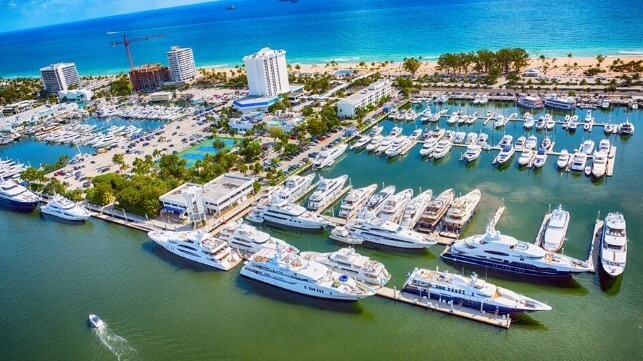
A case in point is South Florida, popularly known as the "yachting capital of the world," which has also become a hot spot for invasive termite species - thanks to the many discoveries of termite colonies in recreational boats.

Data by the National Marine Manufacturers Association show that Florida is the top state in the U.S when it comes to recreational boating, boasting more than one million registered boats with an annual economic impact of $31.3 billion.

“In Florida and many other tropical regions, the risk is high because recreational boating is so prevalent,” warned Chouvenc. “Boats in these areas are likely to be infested, but unless owners take proactive steps, the spread of termites will continue unchecked.”

By becoming the preferred means of transportation for termite stowaways, boats are aiding in their economic destruction - particularly for homeowners and businesses due to their tendencies to damage wood in structures and infest trees.

Chouvenc says that regular inspection of vessels for signs of infestation is one of the main ways to curb the spread of invasive termites


Cefor: An Aging Global Fleet Means More Insurance Claims

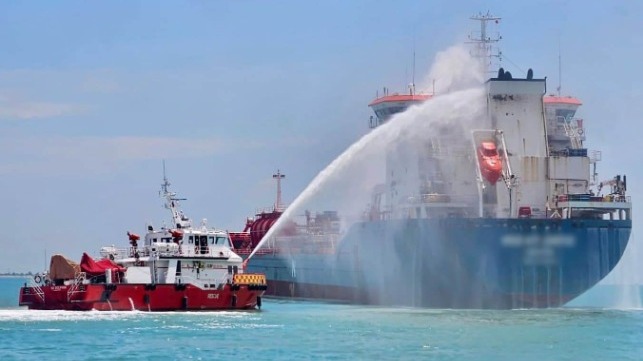
A firefighting boat applies water to the stack of the product tanker Med Atlantic, Singapore, October 2024 (Singapore Civil Defence Force)
A fireboat applies water to the stack of the product tanker Med Atlantic, Singapore, October 2024 (Singapore Civil Defence Force)

Published Apr 8, 2025 11:39 PM by The Maritime Executive


The Nordic Association of Marine Insurers (Cefor) has released its 2024 hull and machinery coverage report, shining a spotlight on emerging trends in the marine insurance market. Cefor has a coverage share of about 56 percent of the world fleet above 20,000 gross tonnage (GT).

A major highlight in the report is the rising claim cost per vessel since the pandemic. While the major claims impact was benign in the period from 2015 to 2022, with only an occasional claim exceeding $30 million, both 2023 and 2024 saw claims above $50 million. In 2023 and 2024, the claim cost per vessel was 22 percent higher than the average of the period 2017-2019. Cefor attributes this to the shipping trend towards larger and more valuable vessels, which somewhat heightens the probability of very large losses.

“Machinery damage showed a substantial increase in recent years, which should be seen in the context of an aging fleet. Among the largest losses, fires and collisions dominate,” said Cefor Actuary Astrid Seltmann.

Cefor predicts that a silver tsunami is in the offing, with many vessels delivered in the years after the financial crises (2008-2012) now getting old (13-17 years). These vessels are prone to fires, machinery claims and consequential damages. Machinery claims accounted for 56% of the claims cost for these vessels compared to a 35% share on vessels built in later years.

Last year, eleven machinery claims above $5 million were reported. This compares to seven such claims in 2023 and nine in 2022. The majority of machinery claims represent damage to the main engine, followed by auxiliary engines and propeller shafts.

Again, fires and collisions represented the costliest claims in 2024. Since 2019, the number of fires in container vessels has increased, raising concerns in the shipping industry. In 2023, the two largest losses above $50 million were fires, and four out of eight losses above $10 million were fires. In 2024, four out of nine losses above $10 million were fires; the two largest were collisions.

Christian Irgens, chair of Cefor’s Statistics Forum, also highlighted an increase in heavy weather losses, which might be linked to vessel rerouting through more weather-exposed areas. Weather-related casualties from the end of 2023 through the second quarter of 2024 showed a steady increase exceeding the seasonal variation of the preceding years. Increased exposure to weather events on the longer route around the Cape of Good Hope might have had an impact on the occurrence of weather-related damage.


Container Volume Rebounds in Black Sea, Driven By Ukrainian Ports

Odesa
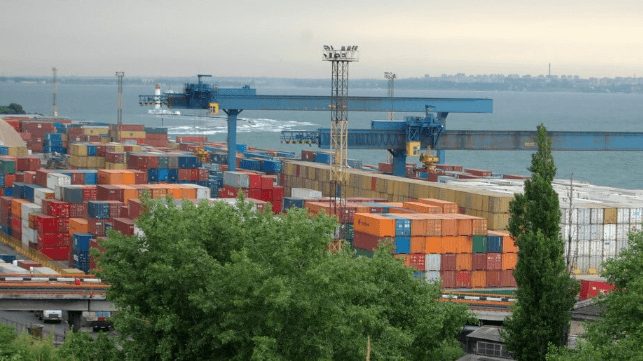
File image courtesy Konstantin Kulikovskii / CC BY 2.0

Published Apr 8, 2025 9:17 PM by Vassiliy Vesselovski, Daniil Melnychenko and Alexander Khromov


The Black Sea container terminals of Bulgaria, Romania and Ukraine handled 1,313,392 TEU in 2024, including empty containers and transshipment.  

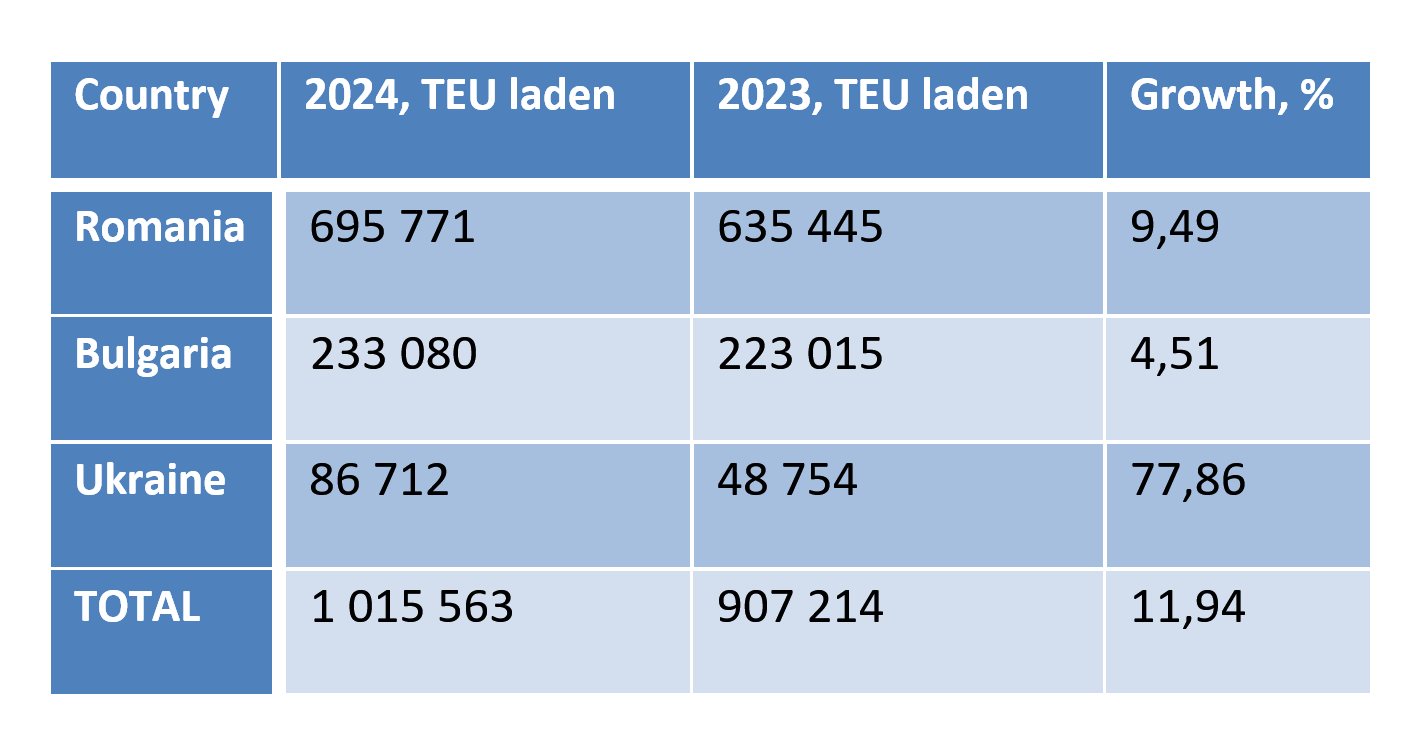
This review examines the laden container volumes of these countries imported and exported by sea only, since waterborne container traffic in Ukraine is about 30% of the total. The total increase achieved by these three countries for the period was 12% compared to the same period last year and comprised 1,015,563 TEU.

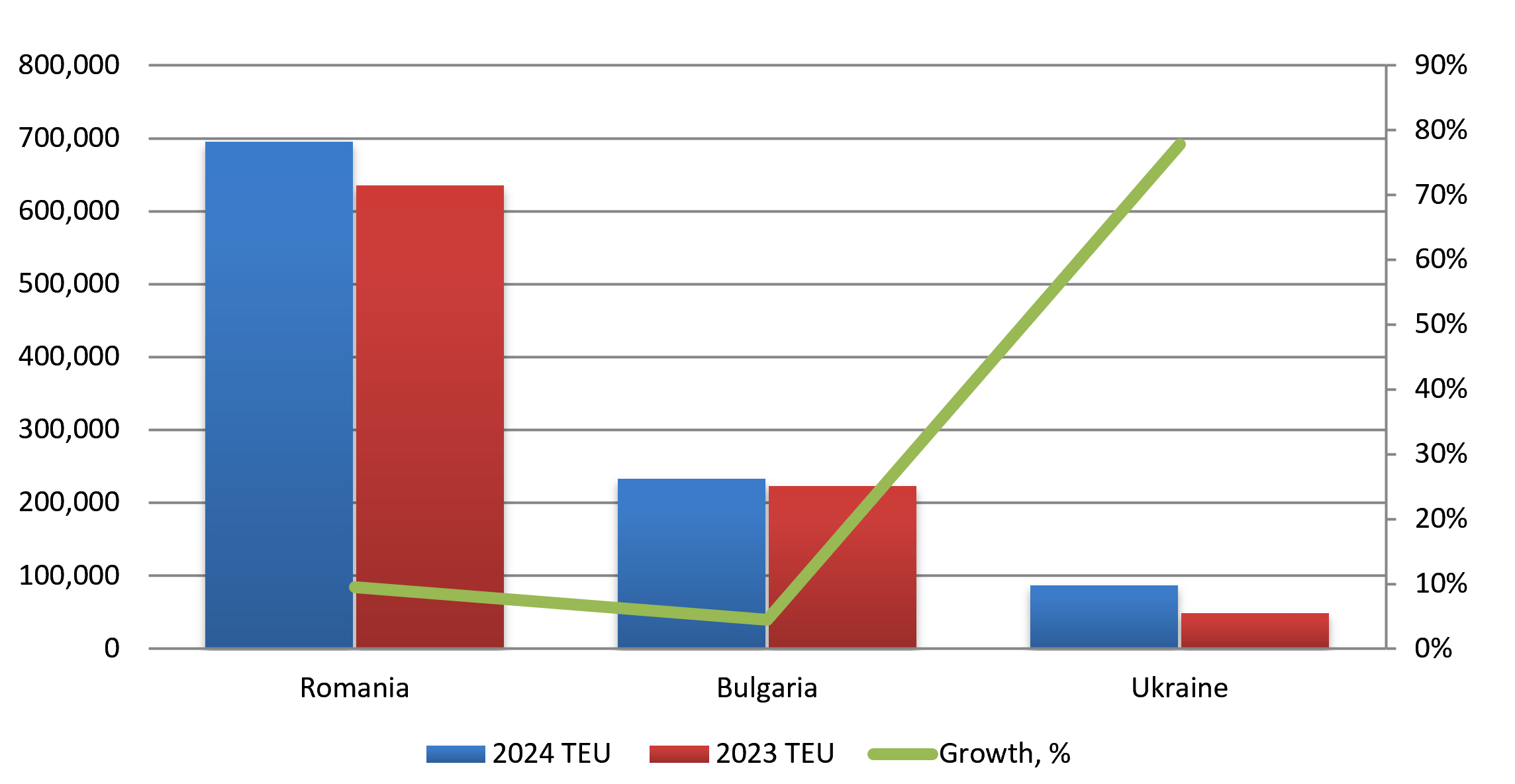
Black Sea region turnover, 2024 vs 2023, laden containers (TEU)

The laden container turnover increase was in all these countries. In 2024 the highest percentage growth was achieved by Ukraine – 78%.

Laden container turnover by country, TEU
During this period, 54% of full containers handled were imported, with 46% of the volume being exported. It is estimated that laden containers share was 77% and empty containers share was 23%.

Import volumes to the aforementioned countries increased by 21% compared to 2023. The highest import volume increase was shown by Ukraine – 154%. In Romania there was an increase of 22%, while in Bulgaria there was an increase of 4%.

Exports from these countries increased by 3%, mainly because of Ukrainian and Bulgarian export volume growth of 47% and 5% (respectively). There was a slight decrease of laden export volume in Romania – 3%. 

Thus, the percentage of laden volume handled by each country in 2024 distributed as follows: Romania – 67%, Bulgaria – 23%, and Ukraine – 10%. The top three container terminals in these countries were DPW (Constanta, Romania), VARNA (Bulgaria) and BURGAS (Bulgaria).

The remarkable rebound in Ukraine's container traffic was a key factor in the broader recovery of maritime trade within the Black Sea region. Notably, Ukraine's growth rate significantly outpaced its neighbors, demonstrating its crucial role in driving this regional recovery. This strong performance underscores Ukraine's strategic importance as a trading hub in the Black Sea and highlights the significance of supporting its maritime infrastructure for the benefit of the entire region's trade network.

 The initial groundwork laid by a local forwarding company, followed by the significant commitment from global shipping giants like MSC and Maersk, showcases the resilience and inherent potential of Ukraine's maritime sector. While the challenges posed by the ongoing conflict undoubtedly persist, the tangible evidence of this robust trade recovery offers a strong indication of progress and underscores Ukraine's unwavering determination to rebuild its economy and actively re-engage with the global marketplace.

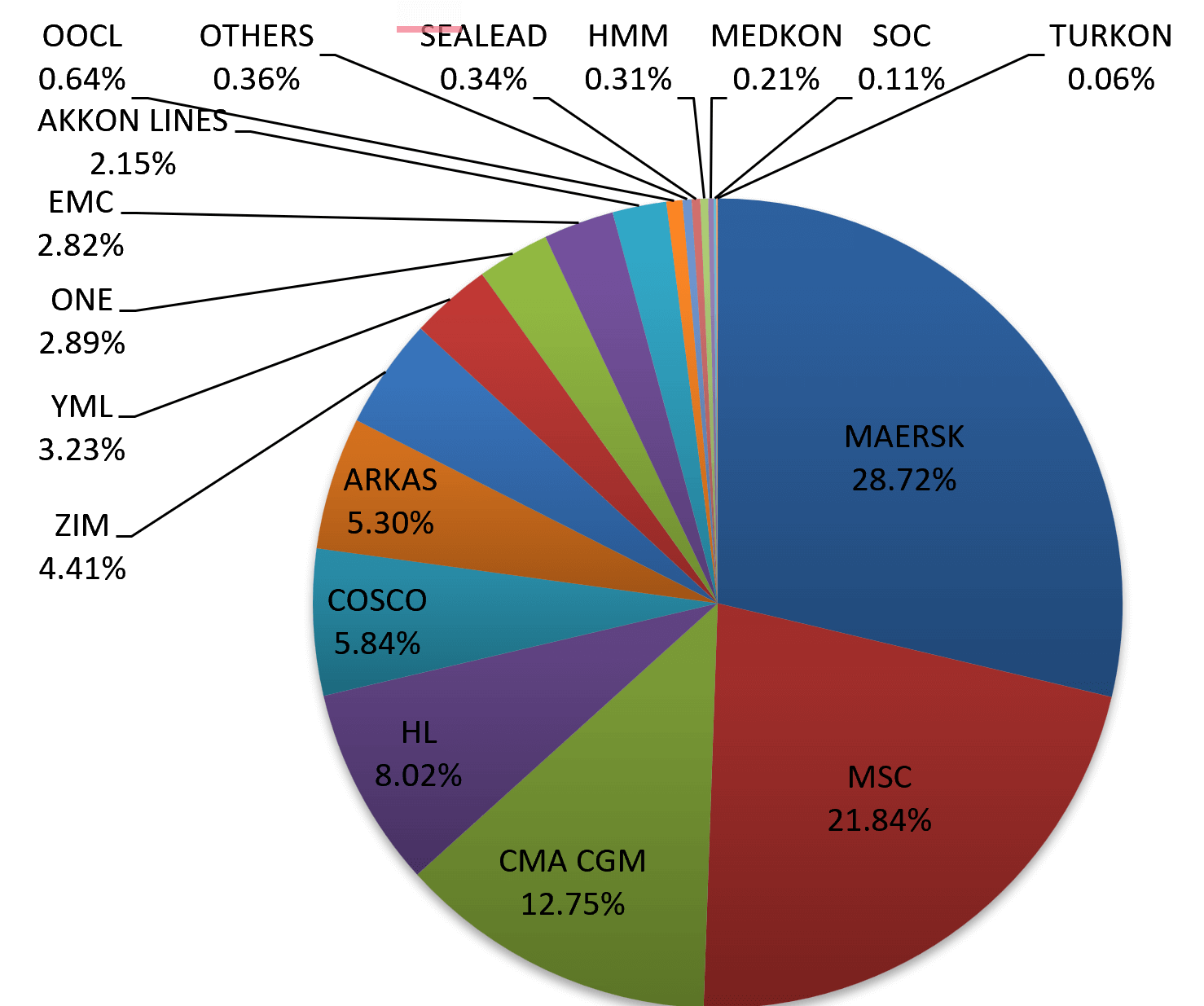
Bulgarian, Romanian and Ukrainian container carriers’ shares by total turnover, 2024
Historically Maersk, MSC and CMA CGM were leading carriers in the Black Sea region, and their total share of the market was more than 60% in recent years.

As for the other countries of the Black Sea, laden container turnover in Novorossiysk increased by 8% to 773,000 TEU. About 40% of this volume was transported by MSC and Turkish carriers in the Black Sea, while the other 60% was transported by local carriers in Russia. Georgia's total volume in 2024 reached 636,000 TEU.

The forecast of container turnover growth in the Black Sea region for 2025 shows that growth will amount to 8-10% and will exceed 3.2 million TEU in 2025. The major driver of that growth will be further restoration and expansion of direct container connection to Ukrainian ports.

Vassiliy Vesselovski is the CEO of Ukrainian shipping intelligence firm Informall BG. Daniil Melnychenko is a Data Analyst with the firm, and Alexander Khromov is a Project Manager.

Top image courtesy Konstantin Kulikovskii / CC BY 2.0

The opinions expressed herein are the author's and not necessarily those of The Maritime Executive.


Op-Ed: As Tariffs Rise, Canadian Cruisers Can Skip the U.S. Market

Canadian flag
iStock / BriBar

Published Apr 8, 2025 10:32 PM by Harry Valentine


The Canadian public has responded to the American tariff on trade. Airline bookings from Canada to American destinations has dropped by an estimated 70%. Many Canadians who had earlier booked passage aboard cruise vessels sailing from American ports or sailing to American destinations - such as Juneau, Alaska or Hawaii - have cancelled their planned trips.

Introduction

America’s trade tariffs have had an impact on the Canadian public, with layoffs expected in multiple sectors across the Canadian economy. A large number of Canadians who had earlier planned to visit the United States as tourists have canceled their plans. Airline operators and cruise ship companies that operate to and from American locations have experienced a decline in customers from Canada, most of whom are planning to travel domestically. Canadian-owned and Canadian-registered cruise vessel operators who sail to and from Canadian locations have experienced an increase in bookings.

Cruise ships sailing from Europe and the UK to the North American Great Lakes have attracted an increasing number of customers over the last several years. The recent imposition of American tariffs on European and British products has potential to affect European and British tourism to North American destinations. Cruise ships sailing between the North Atlantic and Lake Ontario need to transit through American navigation locks located on the Upper St. Lawrence River, where American border patrol officials have the authority to check documents. Cruise ship operators have the option to arrange to have tourists bypass the American navigation locks.

Bypassing the Locks

A dock capable of berthing Seawaymax size cruise ships is located at the former Port of Cornwall, which might need to be reactivated for the cruise industry. Cruise companies that sail vessels from Toronto and Kingston to locations that include Ottawa, Montreal, Quebec City and ocean coastal locations, might consider sailing from Port of Cornwall. Likewise, cruise ship operators that sail from Europe and Britain to the Great Lakes also have the option of sailing to the Port of Cornwall, to transfer their guests to motor coaches for transportation to Port of Johnstown.

Despite the Port of Johnstown being a bulk freight terminal, passenger cruise vessels have stopped there to transfer passengers to tour buses that carried tourists to and from nearby tourist attractions. There is potential for cruise vessel operators to keep a few vessels on the Canadian side of the Great Lakes, to sail from Port of Johnstown to Georgian Bay, via Lakes Ontario, Erie and Huron with stopovers at Kingston, Toronto and Niagara Falls region.  

Canadian Cruising

A 120-feet length mini cruise vessel dubbed Kawartha Voyageur has clearance to sail from Kingston at the northeast corner of Lake Ontario, through the navigation locks of the Rideau Canal that connects to Ottawa, with additional clearance to sail the Ottawa River to Montreal. The vessel does on occasion sail to Quebec City. A slightly larger vessel with 35 cabins, dubbed Canadian Empress, is cleared to sail the Ottawa River between Montreal and Ottawa. It regularly sails along the St. Lawrence River between Montreal and Quebec City.

While the dimensions of Canadian Empress are slightly smaller than the navigation locks along the Rideau Canal, it usually sails along the Upper St. Lawrence River from Kingston to Montreal and the Ottawa river to and from Ottawa. Due to the imposition of American tariffs and a crackdown on foreign nationals in the USA, the operator has the option to divert guests around American customs at the navigation lock. The vessel is able to berth at Canadian marinas located on both sides of the navigation lock, potentially allowing guests to travel a short distance by bus between marinas.

Western and Northern Cruises

Several Vancouver–area companies that own small cruise vessels offer the equivalent of river cruises by sailing the Inside Passage from Vancouver and into scenic inlets that connect to the Strait of Georgia. While not a tourist ship, a Canadian passenger ferry service sails the scenic route from Vancouver to small communities located along Canada’s Pacific coast. Canadian small – cruise vessel companies that sail from the Port of Vancouver aim their services at a different market than mega-scale cruise vessels.

The small vessels carry anywhere from 6 to over 50 guests and offer a very different itinerary to mega-scale vessels, which are unable to turn around within the limited width of the scenic inlets. Unlike cruise ships that make brief stopovers, the small vessels make extended duration stops at small coastal villages, to the delight of many of their guests. Summertime Arctic cruises are becoming popular. One multiday Arctic cruise sails from Port of Churchill on Hudson Bay with ports of call extending to Western Greenland. It interconnects with a passenger train from Winnipeg.

Conclusions

American tariffs have elicited a response from Canadian citizens who previously flocked to American tourist destinations and boarded cruise vessels at American ports. Tariffs have begun to hit the tourist industry. Canadians - along with guests from numerous overseas origins - are becoming selective when booking passage aboard cruise vessels.


China Tests Trump's Resolve on Taiwan

Beijing is seeking to normalize pressure on Taipei and test out how transactional the United States has become.

Shandong
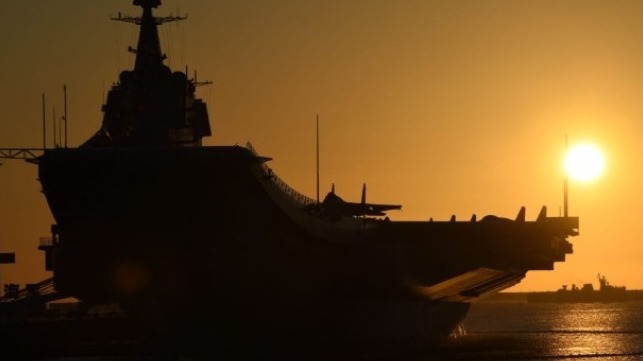
PLA Navy file image

Published Apr 10, 2025 12:39 PM by The Lowy Interpreter


[By Sophie Wushuang Yi]

China’s People’s Liberation Army last week deployed the aircraft carrier Shandong alongside 19 warships in military exercises encircling Taiwan. Initially conducted without an official codename – a departure from previous practice – these drills were later designated “Strait Thunder-2025A”, along with a signal of potential follow-up operations later this year.

These exercises occurred against a backdrop of deteriorating cross-Strait relations. Taiwan’s Lai Ching-te last month labelled China a “foreign hostile force” and announced plans to re-establish Taiwan’s peacetime military court system, marking a significant rhetorical escalation. The PLA exercises featured live-fire drills, simulated blockade operations, and unprecedented aerial incursions, occurring around the anniversary of the 1979 Taiwan Relations Act, a key US policy milestone.

The core of the issue is an unfinished civil war. China has consistently asserted that Taiwan is an integral part of its territory and views such military exercises as measures to safeguard its sovereignty and territorial integrity.

What distinguishes this moment is the deliberate shift in presentation. Previously, major exercises including “Joint Sword” in 2023 were explicitly framed as exceptional responses to specific provocations. The eventual codename “Strait Thunder-2025A” given to the latest exercises suggests a transition from episodic responses to a more systematic approach to military pressure.

Particularly revealing was the release by the PLA Eastern Theatre Command of four military action posters, representing a comprehensive coercion strategy of “advancing”, “deterrence-containment”, “destruction-paralysis” and “lock-control”. The effort was psychological intimidation through show of force and the suggestion of encirclement.

This approach serves three objectives. First, it normalises substantial military activities in contested waters, gradually reshaping international expectations. Zhang Chi of China’s National Defence University confirmed this strategy, stating the unnamed approach has become “normal practice”. Such framing indicates Beijing’s intention to normalise its military activities around Taiwan.

Second, it allows China to incrementally increase pressure without triggering crisis-level responses that specially named operations might provoke. Chinese state television explained that the initial activities were deliberately not labelled as part of “Strait Thunder-2025A” to demonstrate the armed forces’ ability to adapt to rapidly evolving combat situations.

Third, it supports a sovereignty narrative by characterising exercises as routine domestic security operations.

The comparison to the 1995-1996 Taiwan Strait Crisis is instructive. Those exercises, codenamed “Strait 961” and involving missile tests near Taiwan’s ports, were explicitly identified as extraordinary events. The current approach represents an important evolution – no longer framing military pressure as exceptional but as the ordinary state of affairs.

Particularly significant was the integration of simulated “inspection and capture” operations against vessels – blending aspects of maritime interdiction with conventional military operations in a way that suggests preparation for enforcing territorial claims through military means. According to the PLA’s Eastern Theatre Command, the exercises focused on “identification and verification, warning and expulsion, and interception and detention” while testing troop capabilities in area control, joint blockade operations, and precision strikes on key targets.

Unlike previous themes emphasising “sword” imagery that connotes direct military action, the new strategic themes suggest a more comprehensive approach to control – combining psychological pressure with physical constraint through a systematic progression of military actions.

These military exercises reflect China’s enduring strategic commitment to national reunification rather than short-term tactical calculations. Notably, the prominent deployment of coast guard vessels for “law enforcement patrols” surrounding Taiwan represents a calculated strategic manoeuvre. This approach strategically signals Beijing’s assertion of these waters as “internal seas” under domestic Chinese jurisdiction, effectively militarising civilian maritime agencies in support of territorial claims.

China’s military activities beyond the first island chain have increased substantially since 2023, with notable growth in both naval deployments and aerial operations throughout the Western Pacific. This marked escalation reflects a significant evolution in Beijing's approach to regional power projection, moving from occasional demonstrations to persistent maritime presence.

All this coincides with the return of Donald Trump to the White House, where his reputation for a transactional foreign policy – emphasising bilateral deals and cost-benefit calculations over traditional alliance structures – potentially complicates America’s longstanding strategic ambiguity regarding Taiwan. His administration’s focus on reducing foreign military commitments while pushing allies to increase defence spending creates a space that Beijing appears eager to test.

These exercises may represent a calculated probe by China of Trump’s intentions. The nomenclature adopted to describe the exercises, along with the scale, might be a test for an administration emphasising deal-making over ideological confrontation.

Sophie Wushuang Yi is a Postdoctoral Teaching Fellow at Schwarzman College, Tsinghua University, specialising in international relations, military and strategic studies, and China’s foreign policy. She earned her PhD in Chinese Studies Research from King’s College London, where she explored military transparency and strategic dynamics in US-China relations.

This article appears courtesy of The Lowy Interpreter and may be found in its original form here

The opinions expressed herein are the author's and not necessarily those of The Maritime Executive.


Sensors and Mapping: What China's Survey Ship May be Up To Off Australia

Tansuo Yi Hao
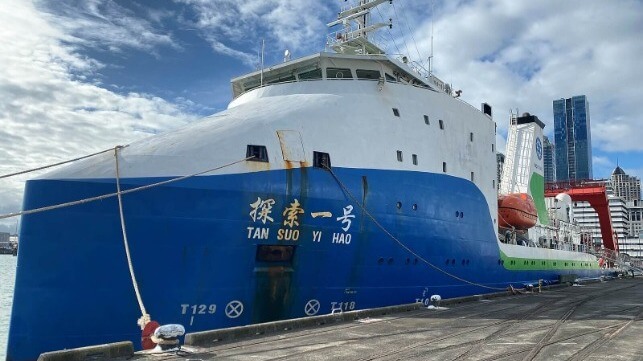
Tansuo Yi Hao (Kareen Schnabel / CC BY SA 4.0)

Published Apr 10, 2025 6:37 PM by The Strategist


[By Euan Graham and Ray Powell]

Civilian exploration may be the official mission of a Chinese deep-sea research ship that sailed clockwise around Australia over the past week and is now loitering west of the continent. But maybe it’s also attending to naval duties.

These could have included laying or servicing seabed acoustic sensors and possibly detailed mapping of parts of the ocean floor to support future submarine operations.

Open-source tracking data enables such educated guesses to be made, without discounting the possibilities of economic and scientific data-gathering.

The ship, Tansuo Yi Hao (Exploration 1) took a similar route around Australia in January 2023, investigating 1100km of the Diamantina Trench over 34 days. China’s state media later said this was the first time the bottom of the trench had been reached. The ship carries a crewed submersible, the Fendouzhe (Striver), capable of long-duration forays to the seabed in depths exceeding 10,000 metres.

As in 2023, rather than proceeding directly home from New Zealand, where it was conducting joint activities with a partner institution, the ship has again undertaken a long deviation around Australia. Its transitory presence in the Bass Strait and inside Australia’s 200 nautical mile exclusive economic zone (EEZ) was nonetheless permissible under international law, as long as the ship undertook no commercial survey activity and maintained continuous passage, showing ‘due regard’ to the coastal state.

However, speculation quickly grew that Tansuo Yi Hao could be gathering intelligence on Australia’s seabed cables. When questioned by media about its presence, Prime Minister Anthony Albanese said he ‘would prefer that it wasn’t there’.

Tansuo Yi Hao subsequently stayed mostly outside of the EEZ as it traversed the Great Australian Bight. Nor did it appear to loiter before reaching the Diamantina Trench, about 1100km off the Western Australian coast and well beyond Australia’s maritime jurisdiction.

Given the inherently dual-use nature of China’s marine scientific research assets, it would be prudent to assume that Tansuo Yi Hao and the submersible are subject to some level of military tasking. They belong to China’s Institute of Acoustics, which according to its own website has ties to the armed forces, dating back decades.

Sending a survey ship around Australia is less obviously coercive than similarly deploying a naval task group, as Beijing did in February and March, and China’s survey vessels are more common near Australia than generally known. But the passage is a further demonstration of China’s growing strategic reach and interest in operating beyond the first island chain.

According to automatic information system data from Starboard Maritime Intelligence, Tansuo Yi Hao has paused daily for 12 to 17 hours over the Diamantina Trench since 6 April. This is consistent with the reported underwater endurance of Fendouzhe of up to 15 hours. During that time, Fendouzhe could have deployed new devices or serviced acoustic arrays already on the seabed near the trench. The sensors could gather valuable military intelligence about signatures of ships that pass them.

The Diamantina Trench is too far away to be of obvious use for monitoring the approaches to HMAS Stirling, Australia’s sole submarine base and the main hub for future combined Australian, British and US submarine operations under AUKUS. It is also too deep for submarine operations. However, China reportedly has developed deep-sea surveillance networks that can operate in the extreme pressures of ocean trenches and use acoustic characteristics of the trenches to detect sounds from as far away as 1000km, including from passing ships and submarines. Listening devices are said to be attached to a seabed cable that is connected to a small buoy that in turn serves as a battery power source and relay for satellite communications. Around a decade ago, two arrays were reportedly laid in deep sea trenches near Guam and near Yap, an island in the Federated States of Micronesia. Since then, China’s sensing technology has continued to advance at an impressive pace.

The survey ship’s return visit to the Diamantina Trench after two years could be associated with a need to service or replace equipment and collect data gathered since 2023. Unfortunately, Australia has very limited capabilities for monitoring the seabed beyond its continental shelf, so it would likely be none the wiser if Tansuo Yi Hao deployed seabed devices during its current visit—or two years ago, for that matter.

To be sure, China’s deep-sea survey expeditions have economic and prestige motivations, which may even be preponderant. However, it would be foolhardy to discount the possibility that Tansuo Yi Hao and other specialised survey vessels are also used to support China’s naval ambitions.

China’s navy is probably interested in seabed mapping for its own future submarine operations, and while submersibles are able to map only limited areas, with emerging technologies they can do so in impressive detail.

In the public domain at least, it remains unclear whether Chinese submarines have previously operated south of Australia. But Tansuo Yi Hao’s two recent survey expeditions, taken together with China’s recent warship transit south about Australia, suggests Beijing’s strategic interest in Australia’s southern seaboard is rising. This is no surprise given the growing strategic importance of HMAS Stirling.

Australia must understand that China is paying it greater attention, in strategic terms, as a result of the AUKUS initiative and the developing footprint of the US force posture here. This is likely to motivate a more regular Chinese maritime presence in our vicinity, comprising not only military assets but dual-use capabilities such as survey ships. Assuming otherwise would be akin to burying our heads in the sand.

Euan Graham is a senior analyst at ASPI. Ray Powell is the director of SeaLight, a maritime transparency project at Stanford University. He was the US defence attache to Australia from 2017 to 2020.

This article appears courtesy of The Strategist and may be found in its original form here

Top image: Tansuo Yi Hao (Kareen Schnabel / CC BY SA 4.0)

The opinions expressed herein are the author's and not necessarily those of The Maritime Executive.