Thursday, April 10, 2025


Iran Has Thousands of Ballistic Missiles. Here's Where They Are.

If the U.S. Air Force and U.S. Navy carry out strikes on Iran, part of the Iranian missile inventory will likely survive the first wave.
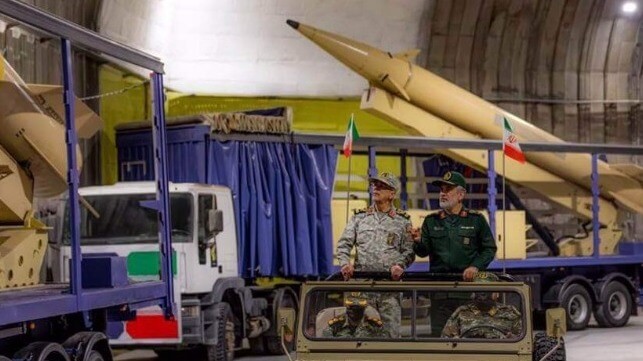
Maj Gen Mohammad Bagheri and Brigadier Amir Ali Hajizadeh tour a ‘missile megacity’, March 25 (Press TV)

Published Apr 6, 2025 1:26 PM by The Maritime Executive


The deployment of B-2 Spirit strategic stealth bombers and KC-135 refueling aircraft to Diego Garcia, plus the dispatch of the USS Carl Vinson to make up a second Carrier Strike Group in the region, make up only part of a well-publicized reinforcement of US forces in the Middle East region.  With nations hosting US forces within the region anxious not to advertise an increased US presence, there will certainly be other reinforcements that have also been pushed forward into the region, particularly air defense assets, which have not been unveiled.

This forward deployment forms part of President Trump’s strategy to curb Iran, in which a diplomatic approach is accompanied by the implied threat of military force, should Iran not be willing to negotiate. Tightened sanctions on Iranian dark shipping and oil exports also form part of the strategy to put the Iranian regime under pressure, which is already acute because of decades-long sanctions and shortages of both water and other basic necessities. There are many indicators suggesting that as a consequence, the Iranian leadership is indeed feeling under intense pressure and quarrelling amongst themselves.

A general assumption is that the military pressure being applied on Iran is focused on permanently ending the threat of Iran developing nuclear weapons. Any first strike on Iran, should the diplomatic route fail, would likely be targeted on the Iranian nuclear program and the long-range missiles needed to weaponize this capability. It looks as if it is militarily feasible to destroy the nuclear weapons capability; every critical node and last detail of the program appears to be known to Western intelligence. General Petraeus, formerly Commander CENTCOM, has recently said that such an operation had already been successfully rehearsed.

But nuclear weapons are only half the problem. To achieve a durable peace, the United States is equally interested in putting an end to Iran’s decades-long attempt to expand its regional influence, through use of the Islamic Revolutionary Guard Corps (IRGC) Qods Force across the region and through the often-exercised threat posed by Iranian or Iranian proxy ballistic and cruise missiles. The Iranians contend that these regional influence efforts are non-negotiable.

Moreover, if a first strike was designed to destroy the Iranian nuclear weapons program, it would still leave Iran’s ballistic and cruise missile capability intact - and ready to be used in any counter-attack. Such a ‘devastating ‘counter-attack is often threatened by senior IRGC leaders.

Realistic military planning must deal not only with the Iranian nuclear weapons development program - but also the threat posed by Iran’s ballistic and cruise missiles, which present a formidable target not vulnerable to a decisive, knock-out first strike attack.

Iran has at least 24 identified missile sites in the western half of the country, spread from north to south.  Some of these sites appear to be independent, others are arranged in clusters.  All feature underground storage bunkers, from which both drone and missile mobile launchers can be driven out, ready to go into action within minutes. The site at Kermanshah Konesh Canyon has at least 60 such tunnel bunkers. 

More than 50 underground bunkers visible in the Kermanshah Konesh Canyon missile complex (Google Earth, June 6, 2024)

Each site has multiple tunnel entrances, from which a further multiple of missiles or drones can be launched.  Some sites also feature hardened silos with automated revolver carousels enabling the rapid reloading of ballistic missiles; the site at Haji Abad for example has at least seven silos, aligned for targets along the Bahrain-Riyadh axis. 

The locations given in the site list attached are for site maintenance buildings.  But using open source, freely available satellite imagery, in all locations tunnel entrances can be seen close by.  There will certainly be many more such sites which have not been identified, and each site also has a garrison administrative area in the neighborhood, where there are likely to be more drones and missiles on mobile launchers.

CLUSTER

LOCATION/SITE

LAT

    LONG

Bandar Abbas Area Independent Sites

Bandar Abbas Khorgu

27.528789N

56.451021E

Haji Abad

28.328772N

55.942649E

Bandar Lengeh

26.658735N

54.893197E

Lar

27.643131N

54.256253E

Jam

27.794144N

52.318042E

Garmdareh Cluster

Garmdareh North West

35.788410N

51.059026E

Garmdareh North East

35.768729N

51.085032E

Isfahan Cluster

Isfahan West

32.695027N

51.430270E

Isfahan South

32.459346N

51.714619E

Kashan (independent site or other sites nearby not detected)

34.093362N

51.255711E

Kerman (independent site or other sites nearby not detected)

30.239153N

56.851713E

Kermanshah Cluster


Kermansheh Panj Peleh

34.360500N

47.228508E

Kermanshah Konesh Canyon

34.389521N

47.181043E

Kermanshah South

34.394788N

47.222654E

Kermanshah North East

34.525045N

47.361183E

Kermanshah North West

34.439950N

47.187934E

Kermanshah Shahid Montazeri Garrison

34.482361N

47.009583E

Khorramabad Cluster

Khorramabad Imam Ali NW

33.581276N

48.181536E

Khorramabad Imam Ali SE

33.564324N

48.217238E

Khorramabad Imam Ali Garrison

33.552829N

48.214824E

Qom (independent site or other sites nearby not detected)

34.943853N

50.763649E

Shiraz Cluster

Shiraz North West

29.726310N

52.558080E

Shiraz North

29.707720N

52.590671E

Shiraz South

29.473558N

52.490816E

Tabriz Cluster

Khosroshah Garrison

37.941000N

46.025000E

Tabriz North

38.251449N

46.119187E

Tabriz South

37.977313N

46.176606E

Yazd (independent site or other sites nearby not detected)

31.803792N

54.298661E


Some of these sites were first constructed decades ago, when the short range of missiles then available meant that they could be targeted only against neighboring GCC countries, rather than Israel. As missile ranges have increased, probably all the sites are now capable of threatening Israel, as well as any American presence at Al Udeid (Qatar), Al Dhafra (UAE), Naval Base Bahrain, Dimona (Israel), Muwaffaq Salti (Jordan), Camp Arifjan (Kuwait) and Ain al-Assad (Iraq). 

A recent video showing touring the visit of Major General Mohammad Bagheri and Brigadier Amir Ali Hajizadeh to a ‘missile megacity’ on March 25 showed a variety of missiles and drones parked up, including Ghadr (1,600 km range), Emad (1,800 km range), Haji Kassem (1,400 km range), Kheibar Shakan (1,450 km range) and Sejjil ((2,000 km range) medium range missiles plus long range Khorramshahr-4s (3,000 km range).  Fattah-1 medium range missiles were not seen but featured heavily in Iran’s earlier True Promise attacks on Israel.  Shahed-136B kamikaze drones have even longer ranges, and missiles and drones can also be launched from Iranian naval vessels such as the drone carriers Shahid Mahdavi (C110-3) and Shahid Bagheri (C110-4).

As well as the infrastructure to protect thousands of missiles and drones in hardened shelters, the IRGC also has a tactical playbook to help hide and disperse these systems, so that any attack on this overall capability cannot be entirely pre-planned and must have a tactical element to deal with fast-moving or elusive targets.

Even if a surprise attack on this huge target array was largely effective, hundreds of missiles and drones would likely escape destruction in any first wave.  So attack plans will need to assume that successive attack waves will be needed to fully neutralize the threat.  One might hope that at this juncture Iranian leaders might be willing to come to the negotiating table, or that the internal security apparatus might succumb to a domestic uprising.  But neither response can be counted upon, and a worst-case scenario probably needs to be planned for.

The opinions expressed herein are the author's and not necessarily those of The Maritime Executive.

 

Pakistan Welcomes $2B Investment From Maersk

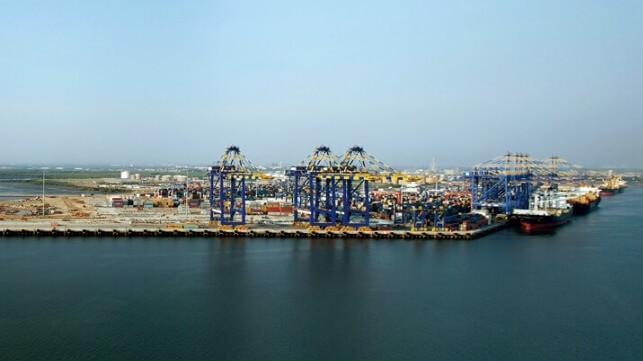
Port Qasim, Pakistan (Sana Sneha / CC BY SA 4.0)

Published Apr 10, 2025 7:30 PM by The Maritime Executive


Pakistan has welcomed a $2 billion investment from the global shipping giant Maersk. On Tuesday, Pakistan Prime Minister Shehbaz Sharif met with Robert Maersk, Chairman of the A.P Moller- Maersk board, who was on a business tour in the country. Sharif hailed the investment as a significant boost to Pakistan’s maritime sector.

Maersk initially announcedthe investment last year in October, during the signing of a Memorandum of Understanding(MoU) between Denmark and Pakistan on maritime development. At the time, the MoU was signed by Danish Minister for Industry and Business Morten Bodskov and Pakistani Minister for Maritime Affairs Qaisser Ahmed Shaikh.

Prime Minister Sharif has directed Pakistani authorities to fast-track conversion of the MoU into a formal agreement. He also directed formation of a technical working group to accelerate drafting of a maritime collaboration agreement with Maersk, with recommendations to be presented within a month.

“Pakistan has a crucial role as an economic corridor for trade with Central Asia, a key factor for our company. Maersk is committed to modernizing Pakistan’s port logistics and equipping them with advanced technology to establish a major maritime trade hub in the region,” said Robert Maersk.

Maersk also emphasized that his company has a long history in the region, with the first Maersk ship arriving in Pakistan in 1924. Maersk is reportedly exploring options of developing a deep-water container terminal, with a focus on Karachi and Port Qasim.

The investment from Maersk coincides with reforms in Pakistan port sector announced by the Prime Minister’s Office on Monday. A maritime taskforce is already in place tasked with the responsibility of reviving Pakistan’s maritime economy. Some of the recommendations by the taskforce include setting up a National Dredging Company, which will oversee dredging of all ports in the country. In addition, a plan of action has been prepared for the rehabilitation and reconstruction of the Pakistan National Shipping Corporation (PNSC) through a public-private partnership for the next 25 years.

“The pace of installing the latest scanners at all ports should be accelerated. Trade tariffs should be reviewed to bring the country’s ports to a competitive standard,” Sharif said in a meeting with the taskforce.    

Top image: Port Qasim, Pakistan (Sana Sneha / CC BY SA 4.0)

ALT. FUEL

Louis Dreyfus Obtains AiP for its Hydrogen-Powered SOV Design

Hydrogen SOV
Courtesy Louis Dreyfus Armateurs

Published Apr 10, 2025 7:46 PM by The Maritime Executive


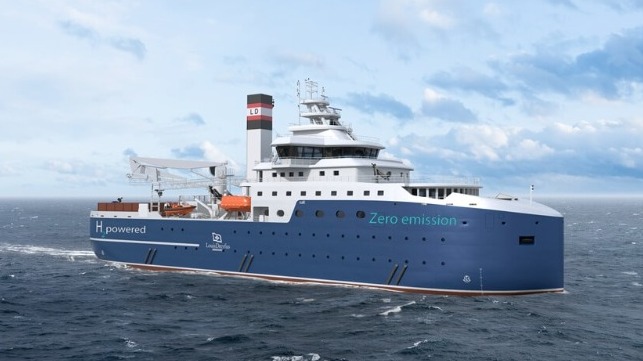
The French shipping company Louis Dreyfus Armateurs (LDA) has received an Approval in Principle for its new liquid hydrogen-based SOV design. The Level 1 AiP was given by Bureau Veritas Marine& Offshore. This brings the groundbreaking Service Operation Vessel (SOV) design closer to reality.

The 100% hydrogen-powered SOV will be able to operate 95 percent of the time with zero carbon emissions during standard operations. This will lead in a reduction of an estimated 4,000 tonnes of annual CO2 emissions. The vessel will have capacity to accommodate up to 90 technicians for up to 14 days at sea, eliminating the need for additional offshore infrastructure. Refueling has been streamlined, as bunkering can be completed in six hours using trailers, eliminating the need for high-cost port facilities.

LDA introduced the hydrogen SOV concept design back in March 2024, in cooperation with Norwegian naval architecture company Salt Ship.

“We believe in developing purpose-built SOVs tailored to specific projects and needs. We are already offering alternative fuel options such as full electric and dual-fuel methanol. We firmly believe that hydrogen will be one of the options in the near future. This AiP represents a key step in making hydrogen-powered maritime operations a reality,” said LDA.

Other projects working to develop liquid hydrogen-powered vessels include the H2ESTIA Project, led by the Dutch innovation company NIM and supported by the Dutch government. The project launched last month, and aims to design, construct and demonstrate a hydrogen-powered bulk vessel to operate in the North Sea and beyond. The short-sea and inland shipping company Van Dam Shipping will manage the vessel.

However, in its bi-annual 2025 Hydrogen Market Outlook report this week, BloombergNEF indicated that the hydrogen sector has been in decline. “Costs have remained high and demand stayed low as a result. Policy has failed to bridge the gap between prices suppliers need to build viable projects and the prices buyers need to get justifiable business case. As a result, investments in the sector fell in 2024, with developers canceling projects,” said Martin Tengler, Head of Hydrogen Research, BloombergNEF.

But Tengler believes a rebound could be expected in places such as Europe, China, Japan and South Korea, where there are incentives offering developers opportunities for investment.


Fincantieri and Viking Unveil World's First H2-Powered Cruise Ship

H2 cruise ship
Courtesy Fincantieri

Published Apr 8, 2025 12:24 PM by The Maritime Executive


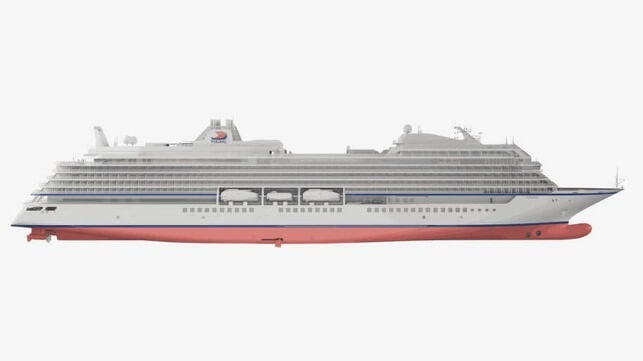
Fincantieri and Viking have announced the world's first hydrogen-powered cruise ship designed to use the alternative fuel for both propulsion and auxiliary power. The future Viking Libra is already under construction at the Ancona yard in Italy, and will deliver towards the end of 2026. 

Viking Libra is a small 54,000 GT vessel with room for about 1,000 guests. With H2 fuel cell power, it will be able to operate with zero carbon emissions, which will soon be a regulatory requirement for operations in Norway's World Heritage fjords (a major attraction in Viking's core Scandinavian market). 

It will be fitted with fuel cells producing up to six megawatts of power, equivalent to roughly 8,000 horsepower of generator capacity. The PEM fuel cell technology and related equipment are supplied by the Fincantieri subsidiary Isotta Fraschini; to solve the supply chain problems of hydrogen bunkering, it uses a containerized fuel storage system to load and store the fuel.

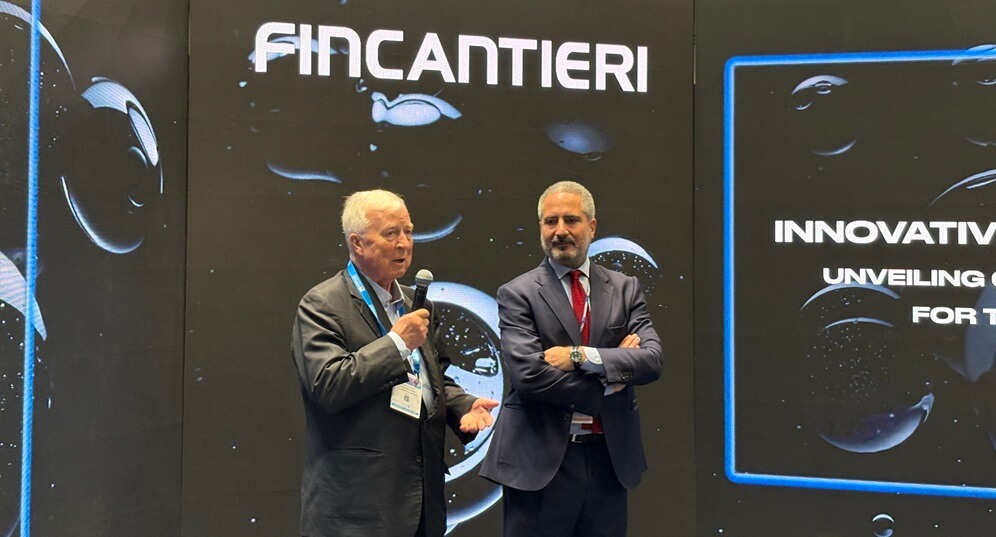
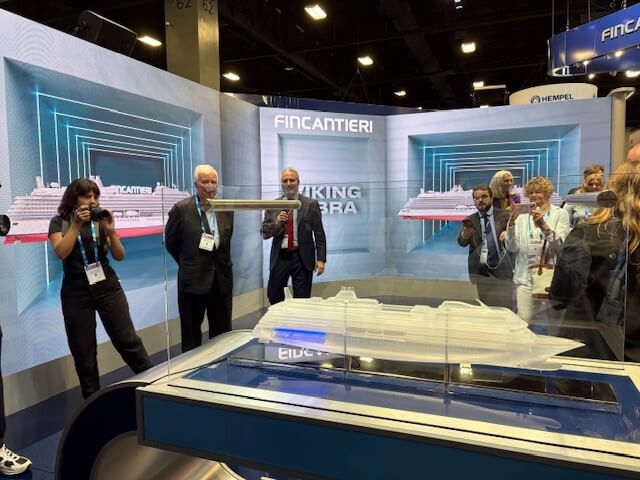
Viking chief Torsten Hagen (left) unveils Viking Libra at Seatrade Cruise Global 2025 (Allan Jordan / TME)

 “LNG is not a way to the future, but . . . this new solution is a good bet for the future," said Viking chairman and CEO Torsten Hagen in a presentation at Seatrade Cruise Global.  

Viking said that price is an issue for H2-powered operation, but they believe that the price will come down in the future, and they want to illustrate a path forward for the industry. The containerized approach addresses the challenges of storage and distribution, and makes it possible to add incremental power capacity with more 1.5 MW units.

"Viking made the principled decision to invest in hydrogen, which offers a true zero-emission solution," said Hagen. "We look forward to welcoming the world's first hydrogen-powered cruise ship to our fleet." 

A follow-on vessel, Viking Astrea, will also be fitted for hydrogen power and is already under construction at Ancona. In a parallel announcement, Fincantieri said that it has signed a 2+2 contract with Viking for additional vessels, starting with a firm orders for two hulls to deliver in 2031. 

"We are driving a systemic evolution by integrating cutting-edge technologies, fostering supply chain innovation, and creating a model for the widespread adoption of hydrogen," said Fincantieri CEO Pierroberto Folgiero in a statement. 

Allan Jordan / TME


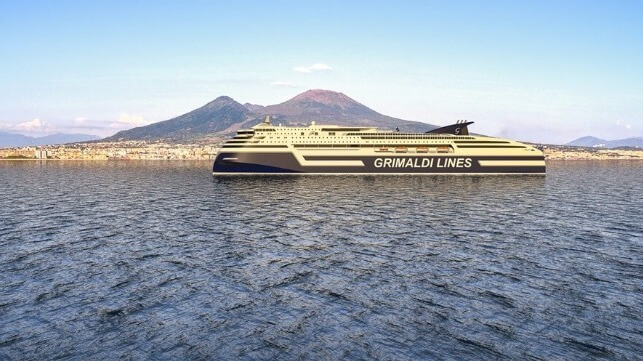
Grimaldi Orders Nine Methanol-Ready Ropaxes for Med and Baltic Routes

Grimaldi methanol roro
Courtesy Grimaldi

Published Apr 9, 2025 10:07 PM by The Maritime Executive


Italy’s short-sea transportation company Grimaldi Group is accelerating investments in a younger and more efficient fleet of eco-friendly ro-pax carriers, committing $1.3 billion for nine newbuilds at China Merchants Jinling Shipyard (Weihai).

The company says that the nine pioneering vessels, which are part of its fleet expansion and renewal program, will be equipped with engines capable of running on methanol and will be designed to move rolling cargo and passengers in the Mediterranean and the Baltic Sea.

The newbuilds will be delivered between 2028 and 2030, and will be used by the group’s three brands - Grimaldi Lines, Minoan Lines and Finnlines. Four will be operated under the Grimaldi Lines brand sailing under the Italian flag, while two will be for Minoan Lines, under the Greek flag. These six, belonging to the “Next Generation Med” class, will serve routes in the Mediterranean. The other three, which debuts as the “Hansa Superstar” class, will be delivered to Finnlines to serve routes in the Baltic Sea.

At a length of 229 meters, the Mediterranean ro-pax vessels will have a cargo capacity of 3,300 lane meters for rolling freight and over 300 cars and up to 2,500 passengers. The Baltic Sea newbuilds will be 240 meters long with a cargo capacity of 5,100 lane meters for rolling freight plus 90 cars and up to 1,100 passengers.

Grimaldi has a long relationship with China Merchants, and the new orders extend that partnership with the introduction of fuel-efficient technology. The new vessels will have optimized hull and propeller designs, energy-efficient onboard power management systems, shore power readiness and the application of silicon-based hull coatings. They will reduce CO? emissions per transported cargo unit by more than 50 percent compared to vessels currently operating on the same routes, Grimaldi says.  

“The new Next Generation Med and Hansa Superstar classes are the result of a thorough study of our customers’ needs and, more broadly, those of shipping. Today more than ever, the latter requires quality, efficiency and environmental sustainability to remain a key mode of national and international freight and passenger transport,” said Emanuele Grimaldi, Grimaldi Group Managing Director.

He added that the performance in CO? emission reduction and the use of methanol are critical components in the company’s net zero goals. Grimaldi is working to achieve zero emissions by 2050.

The new order comes just weeks after the company took delivery of the last of 14 hybrid ro-ro ships of its "fifth generation" class, built at China Merchants Jinling shipyard in Nanjing. This year and next year, the company also expects to start taking delivery of five new pure car and truck carriers from China Merchants.


MAN 175D Engines Selected for Carbon Capture Storage Application

MAN Energy Solutions

Published Apr 10, 2025 12:21 PM by The Maritime Executive


[By: MAN Energy Solutions]

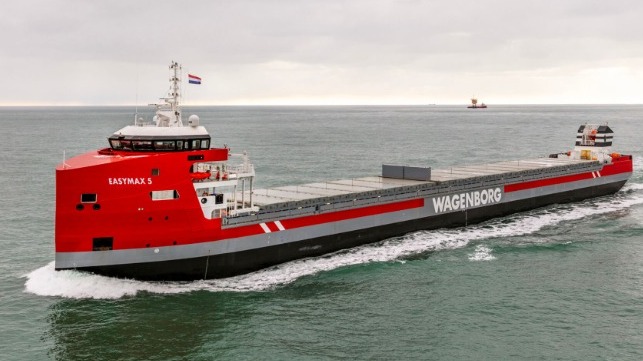
The Royal Niestern Sander shipyard in the Netherlands has ordered 2 × MAN 16V175D MEM engines (2,400 kWm/1,800 rpm) in connection with the building of an MPV (Multi-Purpose Vessel) vessel – ‘Easymax 5’ – for Dutch outfit, Wagenborg Operator. The engines will be employed as GenSets for power generation aboard the purpose-built CO2 carrier, which will be employed in the offshore, substrate storage of CO2.

The vessel will be the fifth under the EasyMax concept jointly developed by Wagenborg and Niestern Sander with a cargo capacity of 14,000 tons. It will ultimately be chartered by Ineos, Denmark and the 175D engines are scheduled for delivery during 2025.

The CO2 for storage will come from a bio-gas plant in Denmark, from where it will be transported to Esbjerg on the Danish west coast for loading aboard the vessel before proceeding to the Greensand storage site in the Danish North Sea. The MAN 175D GenSets are intended to give the Easymax 5’s CO2 pump and DP2 systems more power during discharge into offshore storage.

Bart Speckens, Regional Sales Manager, MAN Energy Solutions, said: “This order represents a new type of reference for the 175D. In general, 175D is a versatile engine with the lowest environmental footprint and operating costs in its class due to its high fuel-efficiency and long service-intervals. We’re proud to be involved in such a crucial project that ultimately will sequester millions of tonnes of carbon dioxide from hard-to-abate industries.”

In keeping with its slogan of ‘Moving Big Things to Zero’, MAN Energy Solutions provides the shipping industry with green engines that can operate on climate-neutral fuels, but also offers the actual carbon-capture-and-processing technologies essential for global industry to achieve net zero. Once captured, CO2 can be stored and reused to form the backbone of a circular carbon economy. Of the 18 large-scale facilities currently in commercial operation globally, fully eight employ MAN CO2 compression technology.

About the MAN 175D engine
MAN Energy Solutions developed the MAN 175D engine range to supplement and complete its product portfolio in the maritime sector. Available in three variants of 12-, 16- and 20-cylinders, the engine is available with an output ranging from 1,500 to 4,400 Kilowatts and is optimised for propelling ferries, offshore support ships, tugs and other working vessels. Other market areas, such as superyachts, planing yachts and naval marine applications are also served by additional engine variants.

The 175D is also an extremely eco-friendly engine, having been designed from the outset for low fuel consumption, coupled with compliance to the latest exhaust-gas-emission standards and considering as well future-fuel requirements where it is already cleared for operation on biofuels such as FAME and HVO.

The products and services herein described in this press release are not endorsed by The Maritime Executive.


At a Pivotal Meeting, Nations Decide Whether to Cut Ship Emissions

Smoke
iStock

Published Apr 7, 2025 6:51 PM by The Conversation


[By Simon Bullock, Christiaan De Beukelaer and Tristan Smith]

You’re probably reading this article on a device assembled in Asia, using materials shipped there from all around the world. After it was made, your phone or laptop most likely travelled to your country on a huge ship powered by one of the world’s largest diesel engines, one of thousands plying the world’s oceans. All this maritime activity adds up: international shipping burns over 200 million tonnes of fossil fuels a year.

The sector is trying to clean up its act. Its 2023 global climate strategy set a “strive” ambition of 30% cuts in greenhouse gas emissions by 2030, relative to 2008 emissions and 80% by 2040. That’s close to a level of ambition that can deliver on the Paris climate agreement, but this target urgently needs policies to make it happen. This is also urgent: 2030 is only five years away.

The technology to deliver a rapid transition exists. Wind propulsion technology – yes, sails – can be fitted to existing ships, and much of the sector could soon switch to zero-emission fuels if they were seen as a good investment.

That said, the transition needs to be fast and will be costly. This raises questions about who is to foot the bill.

That’s the backdrop for a pivotal meeting this week in London at the International Maritime Organization (IMO). The IMO is the United Nations’ agency, made up of 175 nation states, charged with coordinating a response on shipping’s climate pollution. At this meeting, nations will take a series of decisions that will have a profound impact on whether the sector makes a rapid transition away from fossil fuels, or if it continues to limp along on its current high-carbon course.

There are two crucial and interlinked decisions to be taken, and at the moment the proposals range from strong to exceptionally weak. Outcomes could go either way.

The efficiency of shipping hasn’t got much attention, even though it’s an important part of reducing emissions. One key policy is the Carbon Intensity Indicator, which measures how much carbon is emitted per tonne of cargo for every mile travelled. The IMO’s current strategy requires improving this efficiency by 40% by 2030, compared to 2008 levels.

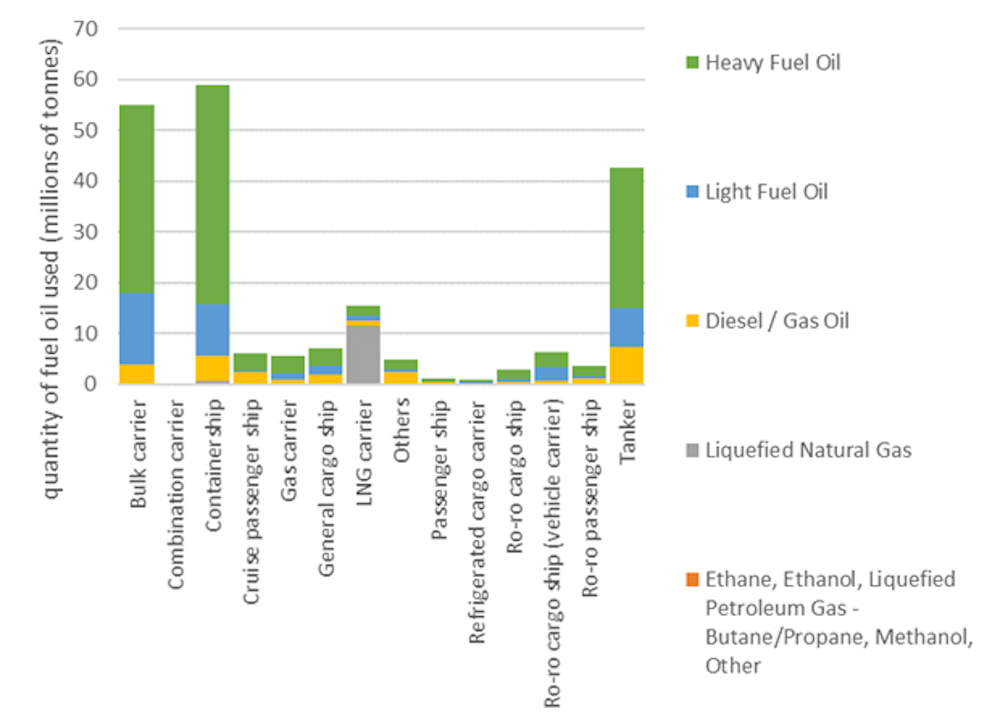
Annual fuel oil consumption (by ship type):

How different fuels were used by different ship types (2023 data). IMO Future Fuels, CC BY-NC-SA

But here’s the problem: global demand for shipping is expected to grow by around 60% in that same time. So even with a 40% efficiency boost, total emissions from shipping could stay the same – or even go up – because so much more cargo will be moved.

Despite this, many countries haven’t updated their policies to reflect this growing demand or to align with the IMO’s updated “30% cuts by 2030” target.

Some countries, including Palau – a Pacific island nation vulnerable to climate change – and the UK, have pushed for stronger action. But there remains a long way to go before the world agrees on an ambitious path forward.

Green energy

The more hotly debated issue is around a fiendishly complicated set of “mid-term measures”. A key part of this is creating a “global fuel standard” – essentially, targets for how much “zero emission” (or “green”) fuel ships must use and by when.

These rules would come with penalties or costs for using polluting fuels, which would effectively put a price on greenhouse gas emissions. Experts have long agreed that putting a price on shipping pollution is the most effective way to encourage cleaner and more efficient practices. But despite nearly 20 years of discussions, countries still haven’t agreed how to do this.

Decisions are further complicated by wrangles over how to fairly distribute the revenues from these penalties.

The good news is that the world is less than a week away from a decision which will put a price on shipping pollution in some form. The bad news is that proposals on the table could easily deliver a weak, uncertain price signal which doesn’t push the industry to invest in more green solutions. And the fuel standard itself might fall short of the ambitious climate targets set in 2023.

Until now, talks on improving shipping efficiency and on pricing polluting fuels have happened separately. A big task at the IMO summit in London is to integrate the two into one coordinated plan.

From a climate perspective, these policies should be judged by whether they will work together to cut shipping emissions by 30% by 2030 (the IMO’s current target).

As things stand, that outcome is still possible – but is now an uphill battle. Agreement this week is crucial and countries will show their true colours. If they can’t agree to agree more ambitious policies it will undermine the IMO’s ability to regulate shipping emissions.

Historically, the IMO tends to take its biggest decisions in the last hours of Thursday in week-long negotiations. Both ambitious and more cautious countries have a lot on the line, as the measure adopted will be legally binding for all of them.

A positive result depends on whether powerful groups such as the European Union line up to support ambitious measures, as as proposed by African, Caribbean, Central American and Pacific countries as well as the UK.

Although countries have agreed on climate targets for shipping, some still refuse to support the policies needed to actually phase out fossil fuels fast enough. That stance much change. If done right, IMO negotiations this week could be a turning point – not just for shipping, but for renewable energy and climate action worldwide.

Simon Bullock is a Research Associate in Shipping and Climate Change, University of Manchester.

Christiaan De Beukelaer is a Senior Lecturer in Culture & Climate, The University of Melbourne.

Tristan Smith is a Reader in Energy and Transport, UCL.

This article appears courtesy of The Conversation and may be found in its original form here

The Conversation

The opinions expressed herein are the author's and not necessarily those of The Maritime Executive.