Friday, April 11, 2025

Major Court Victory for Imperiled Selkirk Grizzly Bear Population in Idaho


APRIL 8, 2025
Facebook

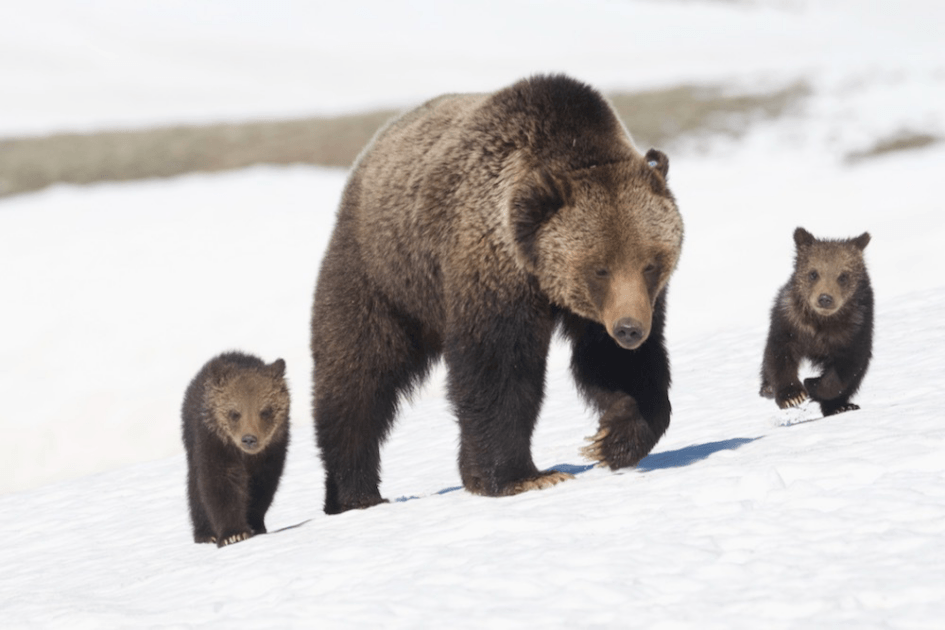
Photo: Glenn Phillips.

It took the Alliance for the Wild Rockies almost six years of litigation fighting the US Forest Service through both the Trump and Biden administrations to try and save what’s left of the imperiled grizzly bear population in Northern Idaho’s Selkirk Ecosystem. But that persistence, along with strong and consistent local opposition to the project, paid off when a federal court recently issued a decision upholding the Alliance’s claims and halted the “Hanna Flats” project with an injunction.

There’s no other way to put it, the Selkirk grizzly bear population is in dire straits. There are only about 50 bears in the population when the very minimum needed for recovery is 100 bears.

Why is the population so low? Because the bears suffer from human-caused mortality at a rate of about 2.7 bears killed by humans per year and grizzlies have very low reproductive rates since females become sexually mature at 4.5 years and only breed every 3-4 years and cease breeding at about 10 years old.

This current mortality rate, which violates the limits set by the federal government, is so high for this tiny population that there are only three years out of the last 30 with higher mortality rates.

There is really no hope of recovery for this imperiled population unless the government starts complying with road density limits to protect grizzly bear habitat since it’s well-documented that most human-caused grizzly mortalities occur near roads.

The Court Order in this case found the project violates federal law since the government’s own management plan for the area limits road construction to protect grizzly bears. Moreover, the court found the government has been violating the road construction limit for many years, and was continuing to violate it with this project.

The Court also found that the government’s attempt to secretly change the management plan to allow more roads without the required public process for amendments to the management plan was also illegal. The Court Order found that changing and weakening the most important substantive Plan provision for grizzly bears in this area – the road limits – is a modification that requires a Plan amendment. But until such an amendment occurs, the road limits remain in effect. The Court then enjoined the project from proceeding for these violations of federal law.

This is a big win for grizzly bears, but in addition to protecting the grizzly bears, this decision also protects the rights of the homeowners in this area — who strongly opposed massive clearcutting operations that would destroy the forest around their homes and trails, and lead to harmful sedimentation of waterways. Throughout the years of litigation, they bravely stood up and spoke truth to power to protect their home. There is no doubt that their resistance and strength helped bring about this victory.

The Alliance for the Wild Rockies is a grassroots conservation group that focuses on protecting rare grizzly bear populations, endangered species, and functioning forest and river ecosystems on public lands in the Northern Rocky Mountains of Idaho and Montana.
Conservation Groups Sue to Protect Grizzlies, Lynx, and Sage Grouse in the Gravelly Mountains of Montana


 April 7, 2025
Facebook

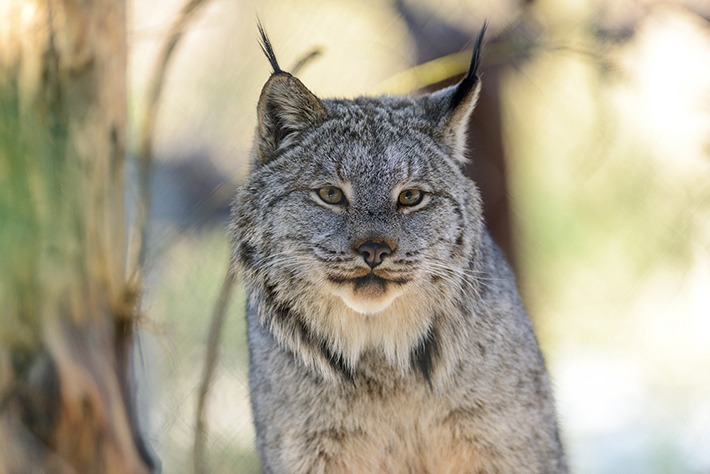
Canada lynx. Photo by Eric Kilby. cc-by-sa-2.0.

The Alliance for the Wild Rockies, Council on Wildlife and Fish and Native Ecosystems Council filed a federal lawsuit last week to protect habitat for three rare wildlife species — grizzly bears, lynx, and sage grouse — in the Gravelly Mountains of Montana, which is an area that provides a critical wildlife corridor connecting the Yellowstone area to other mountain ranges in Montana.  The challenged government action is called the “Greenhorn” project and it allows destructive logging, road-building, and burning activities across thousands of acres of public lands in this key wildlife corridor zone  in the Beaverhead-Deerlodge National Forest.

We are deeply disappointed that the government would authorize this destructive project on our public lands considering the number of court rulings that have found similar projects illegal because such projects violate a number of federal laws designed to protect rare wildlife species.

The project area is enormous. It’s located about 10 miles south of Virginia City, Montana and calls for bulldozing in 28.7 miles of new and rebuilt logging roads to enable logging and burning over 17,000 acres or 26.5 square miles in prime wildlife habitat, much of it in inventoried roadless areas.

The government illegally eliminated 1.1 million acres of lynx habitat protections on the Beaverhead -Deerlodge National Forest in 2020, and it relies on that illegal removal to authorize logging in lynx habitat here.  Multiple federal courts have found this to be illegal, and the government knows it.

Sage grouse populations are also in very steep decline and the federal government is desperately trying to keep from having them listed under the Endangered Species Act. Consequently, destroying their habitat with clearcutting, burning, and bulldozing simply makes no sense. Nonetheless, the government never applied their own mandatory sage grouse protections to this project.

Also, the Beaverhead-Deerlodge Forest Plan requires that 60% of the Gravellies be managed for secure grizzly habitat. Currently only 54% of the Gravellies provide secure habitat for grizzlies; the Greenhorn project would reduce grizzly secure habitat by one third. At the same time the Montana Department of Fish, Wildlife, and Parks is trucking grizzly bears from the Glacier ecosystem to the Yellowstone ecosystem for genetic connectivity, — why not just follow the law, protect the grizzly corridor, and let grizzlies walk there on their own? This government action just makes no sense.

This is an important corridor where grizzlies from Yellowstone could travel to breed with grizzlies from other isolated grizzly populations, and do it without trucks and for free.

What happens when the executive branch of the federal government breaks the law? The First Amendment of the U.S. Constitution not only guarantees freedom of speech, it also gives citizens the right to sue the federal government for very good reasons. If someone throws a brick through a window, the police enforce the law. But when a federal executive agency breaks the law, the citizens must stand up to enforce the law.  This is how the civil justice system works and citizens should never be shamed or intimidated from using the civil justice system to hold the government accountable to the law.

We are not afraid to take federal agencies to court to make them follow the law because the Constitution is on our side. Our government does not exist to serve the for-profit interests of the billionaires.  Our government exists to protect our land, water, air, and wildlife for current and future generations.  Public lands are for the public — not private profit — and we will continue to stand up for this principle despite the name-calling and threats we are always subjected to by politicians and special interests.   This is our home and we will protect it.  Their money and scare tactics will not stop us.

If you agree, please consider helping us and also helping Counterpunch for publishing columns like this.

Mike Garrity is the executive director of the Alliance for the Wild Rockies.


There must be some otter way


Tracing the origins of captive river otters in Japan


Kyoto University

There must be some otter way 

image: 

An Asian small-clawed otter

view more 

Credit: Akiyuki Suzuki


Kyoto, Japan -- The fuzzy and adorable otter has experienced a surge in popularity in recent years. These aquatic mammals are friendly, playful, and make cute cooing sounds, so their social media stardom seems only natural.

Sadly, this enthusiasm for otters has a dark side: they are targets for smuggling. In Japan, their popularity has raised demand for them as pets and as featured species at exotic animal cafés, making Japan one of the most prominent destinations for captive otters with ambiguous origins.

Asian small-clawed otters -- the species most common at Japanese zoos and cafés -- are native to South and Southeast Asia. They are classified as vulnerable by the IUCN Red list and their international trade for commercial purposes is prohibited. Yet they continue to be captured and smuggled into Japan, with Thailand as the main source of this illegal trade.

To address this, a team of researchers at Kyoto University, in collaboration with scientists in Thailand, set out to understand where exactly these otters are coming from.

"Collaborative research can help identify the origins of otters kept in Japan and hot spots of illegal trade in Thailand, thus encouraging legal control in both countries," says first author Mayako Fujihara.

To determine the geographic origins of Japan's captive otters, the team compared their mitochondrial DNA with that of otters living in the wild in Thailand. The otters in Japan used in this study included captive otters at exotic animal cafés, those legally housed in zoos and aquariums, and otters seized at airport customs upon arrival in Japan.

The research team found that the geographical origins of captive otters at exotic animal cafés differ from those kept in Japanese zoos and aquariums. Their origins also imply that café and pet demand puts the endangered Asian small-clawed otters at risk.

Ironically, otters are not exactly a novelty in Japan. River otters, or kawauso, play a major role in Japanese folklore as shapeshifters known for their mischievous and playful nature. This mythical otter is based on the Japanese river otter, which used to be common in Japan, before hunting for pelts and habitat destruction caused it to be declared extinct in 2012 after not having being sighted in over 30 years.

"It is precisely because Japan's endemic otter species has gone extinct that we aim to continue conducting research that will help protect other vulnerable species," says Fujihara.

This collaborative effort reveals valuable information that can help authorities in both Japan and Thailand prevent otters from being captured and exploited. Beyond that, the geographical information this study provides can be used to promote genetic management in conservation breeding programs in Japanese zoos and aquariums.

###

The paper "Molecular tracing of the geographical origin of captive Asian small-clawed otters in Japan" appeared on 8 March 2025 in Conservation Science and Practice, with doi: 10.1111/csp2.70010

About Kyoto University

Kyoto University is one of Japan and Asia's premier research institutions, founded in 1897 and responsible for producing numerous Nobel laureates and winners of other prestigious international prizes. A broad curriculum across the arts and sciences at undergraduate and graduate levels complements several research centers, facilities, and offices around Japan and the world. For more information, please see: http://www.kyoto-u.ac.jp/en


Police officers face twice the risk of traumatic brain injuries and PTSD, survey finds


Police officers are more than twice as likely to have traumatic brain injuries compared to the general population


University of Exeter


Police officers are more than twice as likely to have traumatic brain injuries compared to the general population. Officers who incur these injuries while on duty face more than double the risk of developing complex post-traumatic stress disorder (PTSD).

That’s according to a new survey-based study from the University of Exeter, published in The Journal of Head Trauma Rehabilitation, which found a connection between traumatic brain injuries and PTSD in police officers. Authors say the findings raise concerns over the long-term effects on officers’ personal and professional lives and highlights the need for better action and support for officers who have sustained a head trauma in the workplace.

Professor Stan Gilmour has 30 years’ experience in law enforcement and received The King’s Police Medal for his service. He is now a Senior Research Fellow at the University of Exeter and co-convenor of the Global Law Enforcement and Public Health Association’s Neurodisability Special Interest Group. Stan said: “Police officers are exposed to high-stress situations, physical confrontations, and the possibility of injury every day. Adding to that the increased risk of traumatic brain injuries and PTSD only compounds the challenges officers already face, and this study highlights the urgent need for better monitoring of head injuries and their long-term effects.”

The study surveyed 617 current serving frontline police officers from England, Scotland, and Wales and found 38 per cent had sustained at least one traumatic brain injury - defined as an injury to the head that caused someone to lose consciousness, or develop symptoms such as confusion, disorientation, or memory loss. This is compared to the rate of 12 per cent found in the general population. Of those officers, 61 per cent report they had experienced these types of injuries on multiple occasions.

Researchers found police officers who reported a history of multiple traumatic brain injuries were more than twice as likely to meet the criteria for complex PTSD - which has similar symptoms to PTSD, but may also include feelings of worthlessness, shame and guilt, problems controlling emotions, and relationship issues. In the study, 22 per cent of respondents had sustained traumatic brain injuries during their policing duties and these officers were more than twice as likely to develop probable complex PTSD.

The results found police officers with a history of multiple traumatic brain injuries also face more severe difficulties in their daily lives, including their ability to perform work duties, maintain relationships, and carry out other important activities like parenting. They also reported physical and cognitive symptoms at a more severe level, including headaches, fatigue, sleep disturbances, and concentration problems.

The study calls for assessments for traumatic brain injuries and related symptoms during routine occupational health checks, with targeted interventions for officers who experience both a traumatic brain injury and PTSD.

Nick Smith, lead researcher and Postdoctoral Research Associate at the University of Exeter, said: “Our findings highlight a critical gap in support for police officers who suffer traumatic brain injuries and PTSD. Many officers are grappling with the lingering effects from past injuries while simultaneously managing PTSD symptoms and this creates a double burden that can significantly impair their ability to work, have healthy relationships, and overall quality of life.


“Early action and support are essential to prevent long-term consequences and improve outcomes for these officers. For example, police forces could emulate concussion guidelines in sport by developing traumatic brain injury assessments and graduated return-to-duty protocols, which are crucial to reduce risk of further injury when still symptomatic.”

The survey is the largest of its kind to examine the link between policing, traumatic brain injuries and PTSD, and included participants from across the UK. As the research was survey-based, the data is self-reported – however, researchers took steps to ensure it was not obvious to respondents that they were investigating links between head injuries and PTSD. The study entitled "Co-occurrence of Traumatic Brain Injury and Post-Traumatic Stress Disorder in a National Sample of UK Police Officers: Impact on Social Well-being and Employment Outcomes” was funded by the Engineering and Physical Sciences Research Council and is published in the Journal of Head Trauma Rehabilitation.

“Something had changed in my mentality”

Tim Ockenden is a current serving Police Sergeant who developed PTSD following a road traffic collision while on duty. In November 2022, Tim was driving with a colleague on a blue light run when they were hit by another car going through traffic lights.

“After I was physically checked after the incident, I came back into work the next day,” Tim said. “I tried to crack on like normal, but something wasn’t quite right. Something had changed in my mentality. I really noticed a shift in my behaviour, and I’d get angry at the drop of a hat. I couldn’t put my finger on what was wrong. I’d never been an anxious person before, but I started to get anxious.”

Tim was then off work for three months with stress and burnout and around the same time his wife gave birth to their son.

“I was absolutely loving my home life, but I would also turn on a dime,” he continued. “It probably got to its worst about five months after the incident when I was in the shops with my wife and son, and she was asking me what I wanted for lunch. I couldn’t process it, and I just lost it. I got really angry and shouted at my wife, which I’d never done before.

“She told me I’d changed over the past few months and around the same time a colleague pulled me aside and said, ‘nobody wants to work with you. Nobody wants to even sit in the same office as you. You need to get some help because something’s not right’.”

Tim sought help through official work channels and his GP surgery, but was told support could take months or even longer. He then reached out to independent charity Police Care UK.

Tim said: “By the following week I’d spoken to somebody on the phone and by the end of the week I’d had a clinician assessment. Two weeks later I started therapy for PTSD. It’s made a massive difference, sort of resetting myself, and I’m back to relative normality now. But I can still get angry really easily, which I never used to before. I can sense my PTSD symptoms building and if I don’t correct them in time I lose it.”

Tim says from what he’s experienced as a police officer, the findings from the research don’t surprise him: “For me, this study is long overdue because I think there are huge numbers within the police with undiagnosed PTSD. I’m a big rugby fan and I’d like to see some sort of protocol put in place similar to the head injury assessment in sports. Something that isn’t subjective but

a pass or fail and identifies if someone is at risk PTSD. Then it’s equally important what care is in place after that is identified.

“Those two things need to go hand in hand – the protocol and then the treatment. People can’t wait six months. If you fail the test on the Monday, then on the Tuesday you’re getting help.”


“Internet of nature” helps researchers explore the web of life


A new paper highlights information exchange between species as essential for understanding ecosystem stability in an era of global change


German Centre for Integrative Biodiversity Research (iDiv) Halle-Jena-Leipzig


A novel paper led by Dr Ulrich Brose of the German Centre for Integrative Biodiversity Research (iDiv) and the Friedrich Schiller University Jena is widening understanding of how species interact within ecosystems via the so-called “Internet of Nature.” Published in Nature Ecology and Evolution, the paper reveals that species not only exchange matter and energy but also share vital information that influences behaviour, interactions, and ecosystem dynamics – revealing previously hidden characteristics of natural ecosystems.

Traditionally, ecological studies have concentrated on material interactions, such as feeding, pollination, and seed dispersal. However, this new paper shines a light on the essential role of information exchange between species. 

“An understanding of processes in natural ecosystems without considering the flow of information through the Internet of Nature would be similar to trying to understand where and why goods are shipped in human societies without taking the Internet into account”, explains first author Uli Brose, head of the Theory in Biodiversity Science research group at iDiv.

Integrating these two flows — information with traditional material linkages like food webs — alters the understanding of how disturbances spread within ecosystems (perturbation propagation) and how communities resist or recover from those disruptions (community stability). 

Three layers of information exchange

The researchers identify three types of information links within ecosystems: trophic information links, pure information links, and environmental information links. 

Trophic information links involve cues exchanged between predators and prey—for instance, wolves use trails and visual sightings to locate elk, while elk respond to the presence of wolves by grouping and hiding in dense vegetation. 

Pure information links capture interactions between species not directly involved in feeding, such as those sharing a common predator or resource. For example, when a hyena observes a circling vulture, it carefully watches the vulture's behaviour to infer the possible presence of a nearby carcass. This visual cue is part of the information flows that constitute the "Internet of Nature," shaping species’ movements and interactions.

Environmental information links allow species to adapt their movements and behaviours in response to signals from their surroundings, including climate cues or temperature variations. Examples include moths responding to light at night, spiders building their webs close to light sources, and chameleons changing their camouflage and colours in response to their environment.

Understanding interconnectedness amidst change

The authors also highlight how disruptions caused by human activities like artificial light, noise, and scent, known as sensory pollution, can alter information landscapes, reshaping behaviour and ecological dynamics.

“Road traffic and industrial structures not only pollute the air but also interfere with the vibrational signals that ants, for example, use to coordinate their activities,” explains co-author Dr Myriam Hirt of iDiv and the University of Jena. “That is just one example of how human activities can disrupt the vibrational and pheromonal communication essential for insect reproduction, foraging, and social cohesion.”

Changes to the medium through which species communicate can disrupt signal transmission and information exchange, potentially hindering species' ability to communicate, find resources, or adapt to their environment underscoring the need for conservation strategies that mitigate sensory pollution.

Building on research in food web ecology, the authors call for prioritising further investigation into information flow networks, such as identifying the senders and receivers of signals, understanding sensory capacity and decay rates, and collecting data through tools, like natural audioscapes and vibration profiles. 

“Accounting for the internet of nature will shift our perception of how animals, plants, and microbes act in the living world from a concept of passive particle movement as in physics or chemistry to a more realistic emphasis on living beings that produce and use information”, Brose adds. “The consequences of this shift go beyond the ecological theory playground and will have a substantial impact on how we protect not only the species' habitats but also their information pathways through the medium.”

 SPACE/COSMOS

From boring to bursting: a giant black hole awakens


European Space Agency

Giant black hole awakens with recurring X-ray bursts 

image: 

Artist’s impression of the accretion disc around the massive black hole Ansky and its interaction with a small celestial object

view more 

Credit: European Space Agency


Although we know that supermassive black holes (millions of times the mass of our Sun) lurk at the centre of most galaxies, their very nature makes them difficult to spot and study. In contrast to the popular idea of black holes constantly ‘gobbling up’ matter, these gravitational monsters can spend long periods of time in a dormant, inactive phase.

This was true of the black hole at the heart of SDSS1335+0728, a distant and unremarkable galaxy 300 million light-years away in the constellation of Virgo. After being inactive for decades, it suddenly lit up and recently began producing unprecedented flashes of X-ray light.

The first signs of activity appeared in late 2019, when the galaxy unexpectedly began shining brightly, attracting the attention of astronomers. After studying it for several years, they concluded that the unusual changes they saw were probably the result of the black hole suddenly ‘switching on’ – entering an active phase. The bright, compact, central region of the galaxy is now classified as an active galactic nucleus, nicknamed ‘Ansky’.

“When we first saw Ansky light up in optical images, we triggered follow-up observations using NASA’s Swift X-ray space telescope, and we checked archived data from the eROSITA X-ray telescope, but at the time we didn’t see any evidence of X-ray emissions,” says Paula Sánchez Sáez, a researcher at the European Southern Observatory, Germany, and leader of the team that first explored the black hole’s activation.

Ansky wakes up

Then, in February 2024, a team led by Lorena Hernández-García, a researcher at the Valparaiso University, Chile, began to see bursts of X-rays from Ansky at nearly regular intervals.

“This rare event provides an opportunity for astronomers to observe a black hole’s behaviour in real time, using X-ray space telescopes XMM-Newton and NASA’s NICER,  Chandra and Swift. This phenomenon is known as a quasiperiodic eruption, or QPE. QPEs are short-lived flaring events. And this is the first time we have observed such an event in a black hole that seems to be waking up,” explains Lorena.

“The first QPE episode was discovered in 2019, and since then we’ve only detected a handful more. We don’t yet understand what causes them. Studying Ansky will help us to better understand black holes and how they evolve.”

“XMM-Newton played a pivotal role in our study. It is the only X-ray telescope sensitive enough to detect the fainter X-ray background light between the bursts. With XMM-Newton we could measure how dim Ansky gets, which enabled us to calculate how much energy Ansky releases when it lights up and starts flashing.”

Unravelling puzzling behaviour

The gravity of a black hole captures matter that gets too close and can rip it apart. The matter from a captured star, for example, would be spread into a hot, bright, rapidly spinning disc called an accretion disc. Current thinking is that QPEs are caused by an object (that could be a star or a small black hole) interacting with this accretion disc and they have been linked to the destruction of a star. But there is no evidence that Ansky has destroyed a star.

The extraordinary characteristics of Ansky’s recurring bursts prompted the research team to consider other possibilities. The accretion disc could be formed by gas captured by the black hole from its neighbourhood, and not a disintegrated star. In this scenario, the X-ray flares would be coming from highly energetic shocks in the disc, provoked by a small celestial object travelling through and disrupting the orbiting material, repeatedly.

“The bursts of X-rays from Ansky are ten times longer and ten times more luminous than what we see from a typical QPE,” says Joheen Chakraborty, a team member and PhD student at the Massachusetts Institute of Technology, USA.

“Each of these eruptions is releasing a hundred times more energy than we have seen elsewhere. Ansky’s eruptions also show the longest cadence ever observed, of about 4.5 days. This pushes our models to their limits and challenges our existing ideas about how these X-ray flashes are being generated.”

Watching a black hole in action

Being able to watch Ansky evolving in real time is an unprecedented opportunity for astronomers to learn more about black holes and the energetic events they power.

“For QPEs, we’re still at the point where we have more models than data, and we need more observations to understand what's happening,” says ESA Research Fellow and X-ray astronomer, Erwan Quintin.

“We thought that QPEs were the result of small celestial objects being captured by much larger ones and spiralling down towards them. Ansky’s eruptions seem to be telling us a different story. These repetitive bursts are also likely associated with gravitational waves that ESA’s future mission LISA might be able to catch.”

“It’s crucial to have these X-ray observations that will complement the gravitational wave data and help us solve the puzzling behaviour of massive black holes.”