Friday, April 11, 2025

Hungary: Orbán’s new LGBTIphobic attacks

Tuesday 8 April 2025, by Manue Mallet, Hor


On 16 March 2025 the Hungarian parliament, dominated by prime minister Viktor Orbán’s Fidesz party, voted to ban the Budapest Pride March. Already, in 2021, under the pretext of “child protection”, any propaganda for homosexuality (which can be holding hands for a couple, or having a “look” identified as queer) was banned and punished with a 500 euro fine.


Hungary used to be the most liberal country in the region, having decriminalized homosexuality in 1961. Today, strengthened by Trump’s election, the fascists in government are attacking the LGBTI community head-on, using it as a “scapegoat” to veil an ultra-corrupt oligarchic and nepotistic system.

The Momentum party, the only democratic opposition party to defend LGBTI rights, has been expelled from Parliament and fined 10 million guilders. Orbán is threatened by a secondary score in the 2026 elections, as his government has neither halted the crisis nor boosted purchasing power, and is trying every means possible to eliminate his opponents. According to activists interviewed in Paris on Sunday March 23 at a solidarity rally in defence of Pride and freedom of assembly in Hungary, the only way to bring down Orbán in the elections is to demonstrate.

The LGBTI community is not disarmed, and is organizing to resist and resist against Orbán and to hold the Belgrade Pride on 28 June. Europe’s Hungarian LGBTI diasporas are calling on MEPs to attend, as well as community and human rights organizations such as Amnesty International. The Paris Council has pledged its support for Hungarian LGBTI activists.
Antifascists extradited, Macron an accomplice

We have noted the hypocrisy of French president Emmanuel Macron, who told the European Parliament that he supported threatened LGBTI activists, while in France his anti-terrorist police arrested an antifascist activist sentenced in absentia in Hungary, threatened with extradition and facing more than 15 years in prison. This is also what happened to Maja, a non-binary anti-fascist activist extradited to Hungary, who has been experiencing inhuman conditions in prison for more than eight months. There is an urgent need for an international response to fascism.

l’anticapitaliste 26 March 2025


P.S.


If you like this article or have found it useful, please consider donating towards the work of International Viewpoint. Simply follow this link: Donate then enter an amount of your choice. One-off donations are very welcome. But regular donations by standing order are also vital to our continuing functioning. See the last paragraph of this article for our bank account details and take out a standing order. Thanks.

Attached documentshungary-orban-s-new-lgbtiphobic-attacks_a8933-2.pdf (PDF - 902.6 KiB)
Extraction PDF [->article8933]

Hungary
The far right experience in Hungary
The lead up to the 2022 election campaign in Hungary
Hungary: pre-election situation and emergence of a new anticapitalist left
Boris Johnson and the Orbanisation of Britain
The New Right Wing Triangle in the Trump-Orbán-Netanyahu Era

Manue Mallet

Hor


International Viewpoint is published under the responsibility of the Bureau of the Fourth International. Signed articles do not necessarily reflect editorial policy. Articles can be reprinted with acknowledgement, and a live link if possible.


The state of Africa in the new world order

Thursday 10 April 2025, by Will Shoki


Africa today stands at a crossroads, caught between internal crises, shifting global power dynamics, and the slow unraveling of the post-liberation political order. Across the continent, ruling parties that once commanded legitimacy as national liberators are losing their grip; yet the opposition remains fragmented, offering little in the way of alternative governance.


The Mozambican elections of 2024 provide one of the starkest examples of this decline, as the ruling Frelimo party declared victory in a process widely condemned as fraudulent. Opposition leader Venâncio Mondlane was running under the newly formed Podemos. He accused the government of orchestrating a massive electoral manipulation after parallel vote counts suggested he had actually won. The ruling party responded to mass protests with a violent crackdown. This continued a trend of suppressing political dissent while maintaining control through increasingly authoritarian means.

The growing illegitimacy of these liberation-era governments is not limited to Mozambique. In South Africa, the ANC has lost its outright majority for the first time since 1994, securing only around 40% of the vote in the 2024 elections. After decades of political dominance, the party now finds itself in an uneasy and deeply fragile coalition with the Democratic Alliance (DA), its long-time rival. This has forced the ANC into a more centrist governing position, limiting its ability to pursue policies that its traditional base might expect.

While some within the ANC view this coalition as a necessary compromise to maintain stability, others see it as a betrayal of the party’s historic mission, particularly given the DA’s neoliberal policy orientation. The consequences of this arrangement remain uncertain—whether the coalition will last, whether it will further fracture the ANC, or whether it will give rise to stronger opposition movements outside of the mainstream electoral process.

The ANC’s decline follows a broader trend in Southern Africa. Zimbabwe’s Zanu-PF remains entrenched through repression rather than popular support, using the judiciary and electoral commission to block serious opposition challenges. Meanwhile, Namibia’s Swapo and Botswana’s BDP have both faced unprecedented electoral challenges (with the BDP losing an election for the first time since independence), signaling that even once-stable ruling parties are no longer guaranteed easy victories. The unraveling of these movements suggests that their once-powerful liberation credentials no longer provide a sufficient mandate for governance.

Conflict


The weakening of these governments is unfolding against the backdrop of worsening conflict and instability elsewhere on the continent.

Sudan remains locked in a devastating war between the Sudanese Armed Forces and the paramilitary Rapid Support Forces. This is a conflict that has displaced millions while becoming increasingly internationalised, with Egypt and the UAE backing opposing sides. The war has not only deepened Sudan’s economic collapse but also threatens regional stability, with spillover effects in Chad, South Sudan, and Ethiopia.

The Democratic Republic of Congo (DRC) continues to struggle with armed insurgencies, particularly the resurgence of the M23, whose support from Rwanda has exacerbated regional tensions. Accusations of cross-border interference are further straining diplomatic relations.

These crises are not isolated; they reflect a deeper failure of governance across Africa, where the state is often unable to resolve social and economic grievances without resorting to violence.

The Trump effect


Amidst these crises, Africa is also navigating a shifting international order. The return of Donald Trump to the White House has already begun to reshape US-Africa relations. There has been a turn toward more transactional engagement and a renewed emphasis on security over development. One of Trump’s first major foreign policy moves was slashing foreign aid, dismantling USAID, and cutting funding to key health programmes, including PEPFAR. This left millions without access to HIV treatment and other critical services.

This has been felt most acutely in countries where health systems are already under severe strain, exacerbating public health crises that could have long-term destabilising effects. The administration’s rationale for these cuts is rooted in its broader ‘America First’ ideology. This sees foreign aid as an unnecessary expenditure rather than a strategic investment in stability.

And this has coincided with a hardening of US immigration policy. The administration is considering a sweeping visa ban that could affect dozens of African countries, restricting travel for students, workers, and tourists alike. This approach is reminiscent of Trump’s first-term travel bans. It signals a deepening of US isolationism in relation to Africa, treating the continent more as a security and migration risk than a diplomatic or economic partner.

Trump and South Africa

The administration’s hostility toward South Africa has been particularly striking. Trump expelled the South African ambassador and imposed sanctions. This was in response to Pretoria’s land expropriation policies and its foreign policy positions, particularly its efforts to hold Israel accountable for its genocide in Gaza. The administration brands this sympathy for Hamas and Iran.

These punitive measures reflect the administration’s broader discomfort with governments that challenge US hegemony, particularly those within BRICS. By framing South Africa’s policy positions as “anti-American,” Trump has effectively severed one of the most significant diplomatic relationships between the US and an African power. This also plays into his administration’s broader emphasis on privileging right-wing, authoritarian-aligned states while isolating governments perceived as left-leaning or independent.

US, China and African resources


At the same time, the Trump administration is pursuing a different kind of engagement with other African states, particularly in the resource sector. The administration is currently negotiating a minerals-for-security agreement with the DRC. They are offering military assistance in exchange for exclusive access to critical minerals, essential for advanced US industries, particularly in technology and defense. The deal would grant US companies extensive control over cobalt and other essential minerals. It reflects a shift in US strategy from development aid to direct economic extraction.

Trucks transporting minerals from a pit in Tenke Fungurume Mine in southeastern DRC. The US is offering military assistance in exchange for exclusive access to critical minerals, essential for advanced US industries.

The administration argues that this partnership will help stabilise the DRC by providing security assistance. Critics warn that it risks deepening neocolonial dynamics by prioritising resource extraction over genuine economic development.

At the same time, China’s approach to Africa is also changing. For two decades, Beijing was the continent’s dominant economic partner, financing infrastructure and trade at a scale unmatched by any other external power. However, with China’s domestic economy slowing, its willingness to provide large-scale loans to African governments has diminished. Countries like Zambia and Kenya, heavily indebted to China, have already felt the pressure of Beijing’s recalibrated lending strategy. The days of China offering easy credit for grand infrastructure projects may be coming to an end, leaving African states in a precarious position. Many governments, having structured their economies around continued Chinese investment, now find themselves struggling to adjust to this new reality. The shift leaves Africa with fewer external financing options, as Western financial institutions have also tightened lending conditions, particularly for heavily indebted countries.

A possible new politics?


For African governments, these developments raise difficult questions about political and economic strategy. The decline of national liberation movements has not yet resulted in the emergence of viable progressive alternatives. Opposition parties across the region have largely embraced neoliberal governance models rather than articulating new visions for economic transformation. Instead of a decisive shift toward democratic renewal, much of the continent appears to be veering between increased state repression and fragmented opposition. Many opposition parties, while vocal in their criticism of ruling governments, have failed to offer economic programmes that break with the dominant neoliberal paradigm. This has meant that, even where ruling parties face electoral decline, there is little indication that their replacements would fundamentally alter the political or economic landscape.

While movements rooted in labour and grassroots struggles continue to push for change, their ability to challenge entrenched power structures remains uncertain. The weakness of Left alternatives in Africa today reflects broader global trends, where socialist and social-democratic forces have struggled to reassert themselves in a world shaped by finance capital and corporate power.

However, there are signs that this could change. Across the continent, there are growing calls for economic sovereignty, demands for stronger social protection programmes, and increased resistance to external financial dictates. If these struggles coalesce into more coherent political formations, they could provide the basis for a new kind of politics—one that breaks with both the failures of post-liberation parties and the limitations of liberal opposition forces.

The post-liberation political order in Africa is coming apart, but what comes next is far from clear. The erosion of ruling party legitimacy has not yet translated into meaningful systemic transformation. In many cases, it has simply opened the door for new forms of elite maneuvering. In this moment of transition, the real battle is not just over elections but over the very nature of the state, economic governance, and Africa’s place in a rapidly changing world order. Until alternatives emerge that challenge the continent’s dependence on global finance, resource extraction, and debt-driven growth, Africa will remain locked in cycles of instability, with or without the old liberation movements at the helm.

2 April 2025

Source Amandla!.

Attached documentsthe-state-of-africa-in-the-new-world-order_a8934-2.pdf (PDF - 917 KiB)
Extraction PDF [->article8934]


Will Shoki
Will Shoki is a member of the Amandla Collective and an editor of Africa is a Country: https://africasacountry.com/


International Viewpoint is published under the responsibility of the Bureau of the Fourth International. Signed articles do not necessarily reflect editorial policy. Articles can be reprinted with acknowledgement, and a live link if possible.
Brussels conference lifts Ukraine solidarity to higher plane


Friday 11 April 2025, by Dick Nichols

The Brussels Solidarity with Ukraine conference on March 26–27drew together about 200 activists from a score of countries, in support of the Ukrainian people’s national and social rights.

The gathering was organised by the European Network for Solidarity with Ukraine (ENSU) and the Ukraine Solidarity Campaigns (USC) of England and Wales and Scotland. It was devoted to strengthening people-to-people solidarity, as the menace of Ukraine being partitioned and pillaged by Russian President Vladimir Putin’s and United States President Donald Trump’s governments looms ever larger.

The conference also took place in the context of ongoing conflict between Ukraine’s trade union, feminist, environmental, civil rights and progressive political movements and the neoliberal domestic policies of Volodymyr Zelensky’s government.

The choice of Brussels as host city was determined by the need to strengthen dialogue and collaboration between Ukraine’s many social movements, Ukraine solidarity groups and Members of the European Parliament (MEPs) and national MPs from left, green, social-democratic and progressive national independence formations.

Such parliamentarians — notably former Finnish education minister Li Andersson (Left Alliance) and Jonas Sjöstedt (former leader of the Swedish Left Party) — spoke at a March 26 European Parliament event organised by The Left group in the European Parliament (“Solidarity with Ukraine: Reconstruction and Civil Society”) and at the Solidarity with Ukraine conference itself.

In his European Parliament speech, Sjöstedt spelled out the double-sided character of progressive solidarity: “The war in Ukraine is not only raging on the front lines. The battles taken by labour rights defenders, climate activists and women’s rights activists are shaping and will continue to shape Ukraine’s future. We must stand up in solidarity with these movements, especially in times of war, and we will continue to do so.

“We must continue to stand up for worker’s rights in the drafting of new labour codes in Ukraine, we must fight for the health care workers who work under even more dire conditions, and we must continue to drive change to stop the ecologically disastrous Russian shadow fleet [of rusting oil tankers].”
Tanya Vyhovsky

Intervention from other elected representatives opened other key topics for conference discussion. A powerful example was Tanya Vyhovsky, progressive Democrat Senator for the United States state of Vermont, who tackled the Trump threat to Ukraine head on.

“This is not business as usual, and unfortunately the vast majority of Democrats are acting as if it is … the Musk-Trump agenda is a fascist agenda and the Musk-Trump-Putin agenda is a global fascist agenda.”

She added: “It is important for me personally [as a Ukrainian-American] that the war in Ukraine ends with a real peace. And that means no occupation, no land annexation; it means the Russian troops go home. It does not mean holding the Ukrainian people hostage for resources.”

Resisting the Trump-Putin agenda was also not just about defending Ukrainian rights: “Anyone who thinks that this agenda is not a threat to them is delusional — it is a threat to all of us. It is a threat to our society and a threat to our climate.”

For Vyhovsky, the only possible response is “to build a global network for solidarity. The oligarchs and the billionaires and (frankly) mobsters that have taken over the US government, they have connections across this globe […] they have a plan to divide up the world, treating it through the lens of capital, as assets only.

“We must stop that. And we can, and that’s through building international working-class solidarity and remembering that we are connected. What happens to Ukraine happens to all of us.”
Li Andersson

Finnish MEP Li Andersson led the discussion on a progressive defence policy — how to simultaneously provide Ukraine with the arms it needs to expel the Russian invader and for defence of the countries threatened by Putin’s ambitions while not buying into the militarist rationale of the European Commission’s €800 billion plan for “defence spending”, recently unleashed under cover of “standing by Ukraine”.

A key point made by Andersson was the need for a progressive defence policy to reject targets for defence spending being set as a proportion of gross domestic product: “I really think that setting such a target is a foolish way of measuring defence capabilities. Defence spending should not be based on abstract targets, but on needs and priorities.

“There have, for instance, been times when Finland needed to buy new airplanes. In such a situation, defence spending goes up. After the investment is made, however, it can and should drop — even below the NATO target of two percent.”

The plenary session on “What Peace?” saw interventions from French Green MEP Mounir Satouri (chair of the European Parliament’s human rights sub-committee) and Danish Red-Green Alliance MP Søren Søndergaard. Both were focussed on the conditions that would have to prevail so that a just settlement of the war against Ukraine could at least be envisaged.

For Søndergaard, a just peace was unthinkable without a defeat of Putin’s invasion and Ukrainian involvement in negotiations about its own future: whatever ceasefire agreements Ukraine might have to accept in the interim, military support from EU countries would have to be maintained and increase if the Trump administration winds down or even ends its support for Ukraine.
Ukrainian activists inspired by solidarity

The conference was notable for the participation of Ukrainian social movement leaders and activists — the second largest contingent present after the local Belgians.

The interventions of speakers like labour lawyer Vitaliy Dudin (activist with the left Ukrainian force Social Movement), Oksana Slobodiana (leader of the health workers union Be Like Us), construction workers leader Vasyl Andreiev (vice-president of the majority Federation of Trade Unions of Ukraine) and Yuri Levchenko (leader of the People’s Power, an initiative to build a Ukrainian party of labour), forcefully brought home the suffering and sacrifices involved in resistance to the Russian invasion.

This burden falls overwhelmingly on the shoulders of Ukraine’s working people.

The importance of working-class and trade union solidarity with Ukraine’s labour movement was a red thread running through the conference and was given special attention in a session that brought together Sacha Ismail, the USC (England and Wales) trade union liaison officer; Cati Llibre (vice-president of the General Union of Workers in Catalonia) and Felix Le Roux from the radical French trade union confederation Solidaires.

The next most profiled theme was that of the feminist struggle in Ukraine and women’s role in the country’s reconstruction. Yvanna Vynna from the grassroots feminist organisation Bilkis made a memorable presentation of her organisation’s role in simultaneously supporting the defence effort while maintaining the fight for women’s rights.

The ongoing struggle to defend civil liberties, particularly in the occupied territories, was treated by Mykhailo Romanov, representing the Kharkiv Human Rights Protection Group, and Bernard Dréano, chairperson of the France-based Centre for Initiatives and Studies on International Solidarity and initiator of the People First petition (demanding the release of all captives resulting from the Russian invasion).

An important message came in a workshop by exiled Russian opponents of Putin’s war. Maria Menshikova, correspondent of the banned magazine Doxa, Dmitrii Kovalev (Left for Peace without Annexations) and Viktoria (representing Feminist Anti-War Resistance) all stressed that any victory for Putin’s “special military operation” would be a defeat for the movement for democratic rights within Russia itself.

The success of the conference was best measured by the response of its Ukrainian participants. Speaking at the closing public meeting, Oksana Dutchak, editor of the Ukrainian journal Commons, compared her mood before and after the event — sombre beforehand given the Trump-Putin moves to “fix” Ukraine behind its own back, and inspired afterwards to experience the wave of solidarity at the conference.

Solidarity counts. The job after Brussels is to make it stronger and more coordinated. One tool for that job will be the draft Brussels Declaration, to be adopted in final form at a future teleconference and soon to be opened for discussion and amendment.

Green Left 7 April 2025

Attached documentsbrussels-conference-lifts-ukraine-solidarity-to-higher_a8939.pdf (PDF - 921 KiB)
Extraction PDF [->article8939]


Dick Nichol
Dick Nichols is Green Left Weekly’s and Links International Journal of Socialist Renewal’s European correspondent, based in Barcelona.


International Viewpoint is published under the responsibility of the Bureau of the Fourth International. Signed articles do not necessarily reflect editorial policy. Articles can be reprinted with acknowledgement, and a live link if possible.


The UnitedHealth Insurance CEO killing and contested violence in a capitalist society


Published 

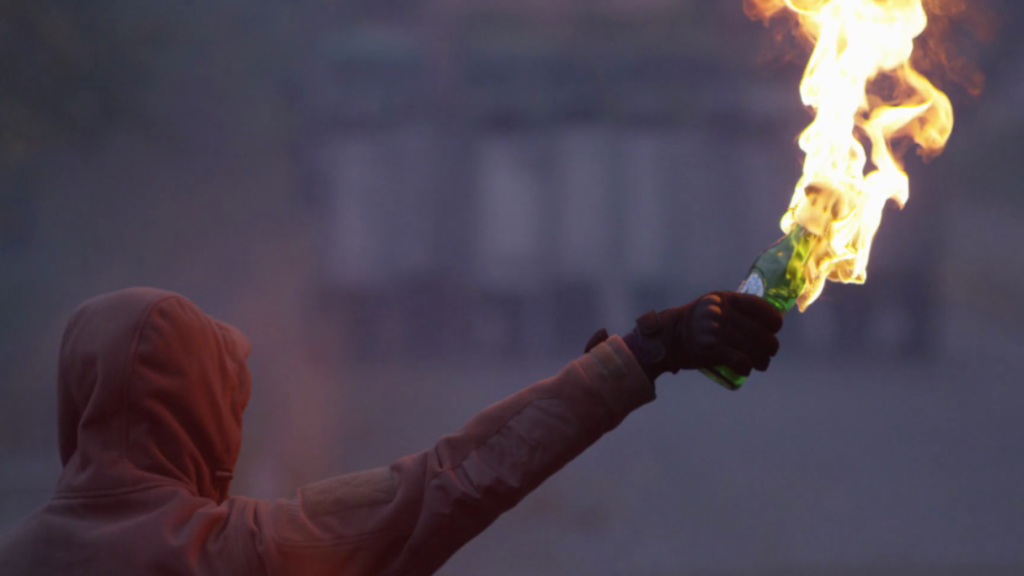
molotov cocktail

Why are many people looking past the homicide of UnitedHealthcare CEO Brian Thompson and focusing more on Luigi Mangione as a kind of hero? Thompson’s murder has generated discussions about the greed of US health insurance corporations and the US healthcare system. Many people have probably experienced firsthand the insurance corporation’s mantra “Delay, Deny, Defend” while attempting to use their coverage for medical treatments, procedures and medications. But the use of violence as a form of redress has generated certain discussions. 

Counterviolence

There is a long history of what has been called counterviolence or revolutionary violence against state oppression and violence, in both periphery and core nations. As the case against Mangione moves forward, it appears to have all the hallmarks of a non-legalistic, political action, and not the act of a “common” criminal to accomplish personal gain. Within a non-legalistic framework, actions or violence used to advance a political objective — such as to call attention to or prevent the plight of oppressed people — is not considered a political act. If we take Mangione and his supporter’s claims seriously, we need to understand historical antecedents and the present context (a period of docility and dormant organised resistance). 

The notebook police reportedly found in Mangione’s possession — the media has referred to it as a “manifesto” — presents his actions as resistance, and outlines his reasons for counterviolence: 

I do apologize for any strife of traumas, but it had to be done. Frankly, these parasites simply had it coming. A reminder: the US has the #1 most expensive healthcare system in the world, yet we rank roughly #42 in life expectancy. United is the [indecipherable] largest company in the US by market cap, behind only Apple, Google, Walmart. It has grown and grown, but has our life expectancy? No, the reality is, these [indecipherable] have simply gotten too powerful, and they continue to abuse our country for immense profit because the American public has allowed them to get away with it…. Evidently, I am the first to face it with such brutal honesty.1 

This glimpse into Mangione’s mindset suggests motive. Besides the initial appearance of acting alone, his alleged actions have much in common with revolutionary groups that communicate the reasons for their actions. He was still fleeing arrest after Thompson’s death, so we do not know if he planned to release this “manifesto” to the public. 

Revolutionary groups often communicate the reasons for their action by leaving communiques, claiming responsibility for their armed action, and linking their actions to a source of oppression and exploitation, such as colonialism, racism, and capitalism. Some groups in recent US history that have adopted this tactic are the Armed Forces of National Liberation (FALN) and Los Macheteros, from the Puerto Rican Independence movement. There have been other such as the Black Liberation Army, the Weather Underground and, more recently, the Earth Liberation Front and Animal Liberation Front, who employed a variety of actions (the bombings and sabotage of government and corporate institutional structures and, in some cases, expropriations and assassinations) to bring attention to their causes or retaliate for perceived injustices to their people, community, nation or the environment. 

These revolutionary groups arrived at the conclusion that armed action was required because the limitations and corruption of the political process made it next to impossible to have their claims redressed. Armed action (or armed struggle) was just one tactic in their overall strategy to achieve their objectives. These organisations were part of broader movements utilising other methods, which included political organising and engagement in the political process. 

Mangione alleged lone status does raise several issues because revolutionary groups are often viewed as collective organisations displaying a high level of solidarity and an affinity to their cause. Until there is more information provided about his politicisation and associations, it would be pure speculation to accept many of the media’s claims. There is a whole social and revolutionary literature on how prior social ties and political and economic conditions are influential in explaining why some people engage in “high-risk” political actions. 

All political acts of resistance come with a cost. Acts of civil disobedience (blocking an intersection or other public places) can result in a monetary fine or short jail stay. The higher the risk, the higher the probability of physical injury, death or lengthy imprisonment (these acts can include physical damage or harm to representatives of the institutions of the state or corporations.) At the same time, the US government fails to regulate and criminally charge corporate perpetrators that inflict social harm on humans and the environment. This knowledge, coupled with lived experiences of the pain and suffering from corporate-inflicted harm, may have been enough for Mangioni to strike out against the professional-managerial class who profit from the misery of others in the system of capitalism.

To analyse Mangione’s actions, one can consider how the duopoly political party system and its symbiotic relationship with corporate America serve to maintain the political order of a capitalist system rooted in imperialism, and limit avenues to bring about meaningful change. Rising social isolation, depoliticisation and the duopoly political party propaganda have limited and constrained the capacity for imaginative and alternative thinking and politics. In addition, the prosecution of political and social dissents (across various administrations) and repression of social movements (especially since the 1960-70s) have also hindered meaningful political collective interaction.

Frustration that stems from political grievances as a motivation to seek retribution against institutions of injustice with armed action is not exceptional. One needs to consider the US and French revolutions. This is not to say the state and corporate media would not want to present the image of the lone, psychologically unhinged individual to discredit and criminalise people who get to the point of leashing out at the system. In so doing, the system of oppression is absolved of any culpability, while the individual is assigned all the fault. 

The disciplines of sociology and criminology inform us that the definition of violence is not politically neutral. The legal definition is one that fits within the parameters of the state and its role to maintain the political order of capitalism. Even though the US public has largely been shielded from this reality and internalised the belief that violence is wrong, immoral and must be condemned, this does not mean all violence is equal. State or state-sanctioned violence is largely exempted from this condemnation and villainisation. 

When the US state utilises violence, its authority has the capacity to legitimise these actions like no other organised force. The role the state plays in ensuring the maintenance and continuation of a highly stratified society and its global dominance requires a great deal of coercion and violence. Yet, this violence is not viewed as criminal. 

With approximately 800 military bases around the world, and the largest military and military budget the world has ever seen, the US state’s global hegemony is supported by its ability to use coercion and violence. The long list of US military invasions, its interferences in sovereign nation’s affairs and elections, and its proxy wars, are all testaments of the use of coercion and violence in maintaining the US empire (Johnson 2000 and Churchill 2003). 

State officials insist that “terrorism” is a product of non-state entities who use violence to advance a political or religious cause. They do not include states, because if they did the US would be the biggest terrorist (Chomsky 2003). When speaking of US state violence in general, Martin Luther King Jr’s “Beyond Vietnam: A Time to Break Silence”2 (1967) called the US state the world’s number one purveyor of violence, attributing this to “the giant triplets of racism, extreme materialism, and militarism.” He provided examples of this in Vietnam, Latin America, and the US. 

Alongside the overt and covert violence of the US state is its coordination of interests with US-based corporations and the hidden, mostly “legal” violence produced by corporation’s pursuit of profits. Insofar as they are profitable, it usually means they have inflicted some degree of pain and suffering. The accumulation of profits is dependent on the exploitation of labour, extraction of resources and general subjugation of populations, which create the inequality and poverty often associated with a multitude of social ills. For example, these structural conditions increase people’s susceptibility to disease and illness. The capitalist system makes people sick and turns a profit on their medical treatment. Yet, the commodification of treatment has its limitations, especially when the US population are either underinsured or uninsured. 

Private health insurance corporations

Unlike many comparable industrial high-income nations, the US does not have universal health care. The US healthcare system is fragmented and largely one in which people are insured by private insurance corporations via employee and employer contributions. The largest health insurance corporations are: UnitedHealth Group Incorporated ($449.27 billion), Elevance Health Inc ($105.37 billion), The Cigna Group ($81.6 billion), Chubb Limited ($78.58 billion) and Humana Inc ($55.71 billion).3 The monetary figures represent their total stock value.4 Currently the US health insurance industry is a $1.2 trillion dollar enterprise, which continues to grow every year. Private health care industry is a very lucrative business. 

Formulas vary from industry to industry, but for much of the healthcare industry the objective is the same: to generate a substantial profit margin. In simple terms this means expenses (the cost of medical claims) is less than income (the cost of insurance premiums). There are other ways to ensure insurance companies generate profit. One of the most efficient ways is by denying insurance claims, which increase out of pocket expenses for medical treatment. Others include raising deductibles, co-payments, and out of network costs. 

Health insurance corporations have huge bureaucracies that are tasked with carrying out the science of profit maximisation. Beyond data management, billing, collections and advertising, they utilise advanced technologies, such as computerised programs and AI, to devise innovative methods of rational calculation to maximise profit, often at the cost of patient care. 

Respondents to a State of Claim survey said “the top three reasons for denials are missing or inaccurate data, authorizations, inaccurate or incomplete patient info.”5 Health insurance industry experts have given many reasons for the denial of claims, such as too much information to process and organise in filling out a single claim, which creates many opportunities for errors and omissions. In addition, with a fragmented system, there are constant changes to rules and policies, making it impossible to keep up. Lastly, staff shortages have not been conducive in rectifying these issues.6 

Health insurance corporations benefit from this chaotic system because it provides them the opportunity to divert attention away from their malice behaviour while they continue to deny claims and rack in astronomic profits. Some healthcare advocates argue insurers deliberately avoid transparency because refusing payments for medical care and medicines is an essential aspect of their business model. Those that are denied appeal less than 1% of the time.7

Denials affect patient care. According to Kaiser Family Foundation senior fellow Karen Pollitz, “This is life and death for people: If your insurance won’t cover the care you need, you could die.”8 Half of US adults say they or someone in their family had to delay or forgo needed medical or dental care in the past year because they could not afford it (see Barkan 2023:261). The lack of transparency and government enforced regulations, among many things, means there are no reliable figures for the number of claims denied by insurance companies. According to Robin Fields, “The limited government data available suggests that, overall, insurers deny between 10% and 20% of the claims they receive. Aggregate numbers, however, shed no light on how denial rates may vary from plan to plan or across types of medical services.”9 

Health care is one of the largest industries in the US: it accounts for nearly 20% of GDP. The figures of the human and economic cost of the healthcare system, and especially how many people are uninsured, underinsured, or receive substandard care, is downright diabolical. There are probably not many families that have not been negatively affected by some aspect of the healthcare system. The uninsured rate is usually at about 9.4%, but when factoring in everyone that is 65 and younger who is not covered by Social Security and everyone in any given year that loses their employment and are not covered, the rate is more 17.7%, which translate to about 71 million people being uninsured or underinsured (Barkan 2023: 286-287). The underinsured are the millions who have healthcare coverage but because of the rising cost of health insurance premiums cannot afford all the out-of-pocket expenses, so they tend to forgo medical treatment or medications. 

These figures exist even with the passage of the Affordable Care Act (ACA) of 2010. Although the ACA made some improvements, such as health insurance corporations not being able refuse to cover people with preexisting conditions, refuse or cancel someone with high medical cost, and allowed dependents to be covered up to age 26, the individual mandate and overall healthcare reform remained steeped in the market model. This has proven to not be an efficient system compared to a universal, taxpayer-funded healthcare system, in which the government regulates the cost of medical practices and medicines. So, even with the passage of the ACA, there continues to be millions of uninsured and underinsured people. The high cost of healthcare for individuals and families (deductibles and other out-of-pocket costs) and the out-of-network coverage all remain a major problem (Barkan 2023:286-287). 

Many of the treatments, procedures and medications that private insurance contest make corporations billions of dollars yearly. Health insurance corporations operate like any other corporation, putting profit ahead of any notion of public good. They often defend themselves by stating their behaviour is legal and within the parameters of a market economy, and that their obligation is to their shareholders. 

Yet, Thompson’s murder has stirred something in many people who now openly question the rationales and justifications used by health insurance corporations, their top officers, the corporate media and state officials. It may be that the veneer of legitimacy that has long shielded corporate criminality and the complicity of the US government in crimes such as the denial of millions of people health coverage may be unraveling.

A crime by any other name

Health insurance corporations are responsible for the death and injuries of millions of people. Is a person who kills another in a bar brawl a greater threat to society than a business executive who refuses to cut into their profits to make their plant a safe place for dozens, hundreds or even thousands of employees? This logic also applies to healthcare corporations. Are the actions of a health insurance CEO in denying health coverage to individuals in need of medical services as culpable as a person who kills a member of the managerial class who enriches themselves of the misery of millions of people? 

We could argue that CEOs, board of directors, and those at the top levels of the bureaucracy are more culpable because their actions involve mens rea (a guilty mind), actus reus (guilty act) and causation (their acts cause actual harm). Their acts have malice aforethought in that they know it can lead to death and injury. One can argue corporate or white-collar crime are all premeditated crimes, whereas a bar brawl that results in a death is usually adjudicated as a second-degree murder or manslaughter. 

International law illustrated that claims of carrying out state-sanctioned orders in a premeditated conspiracy are not successful legal defenses. In other words, just because the US state sanctions corporate criminal actions, with its legal system (in most cases by not prosecuting it as a crime, even although it inflicts social harm) and lack of regulatory enforcement, does not mean it is not criminal to engage in premeditated acts that cause harm and death to people. 

Jeffrey Reiman and Paul Leighton (2023) argue there are reasons why the public do not view corporate crime as destructive as the one-on-one, interpersonal crime perpetrated mainly by the poor. Street crime, they say, is a byproduct of inequality and poverty, and serves to misdirect the public’s attention away from corporate and state crime, which create the conditions for street crime in the first place (Reiman and Leighton, 2023). They provide a reason why the public is not engaged in discussion and critical analysis of why corporate and state criminality is not prosecuted in the same manner as common crime. 

According to Reiman and Leighton, corporate and white-collar crimes that have a more significant human, economic and environmental cost to society are left out and, in many cases, not even reported as crimes (2023). The criminality of private insurance corporations and much of the private, for-profit healthcare industry fall within this realm of corporate crime. Why are private healthcare insurance industry corporate criminals? Because they are complicit in the preventable deaths and injuries of millions who are denied access to or adequate health care in their pursuit of profit. 

Final thoughts

Violence is a contested phenomenon. Legitimate violence versus legislative violence is contested in terms of state-sponsored versus counterviolence and revolutionary violence, both at the individual and collective level. It can be argued that Mangione’s actions appear to be consistent with the actions of groups that take up armed struggle to retaliate and bring attention to the grievances of an oppressed and exploited population. This logically leads us to understand the legalistic and non-legalistic definitions of violence and how they are not politically neutral. The legal definition of violence fits within the parameters of the state and its role in maintaining the continuation of the political order of the capitalist system. 

When individuals, groups or movements respond with violence, it is widely and thoroughly condemned by the corporate media and state officials. Yet, at what point do non-state actors conclude that violence becomes a legitimate recourse? A question not fully taken up here is whether the pervasive docility and organised resistance dormancy created by the duopoly party system, state-sponsored violence and its coordinated interests with corporate America, make the conditions for individual resistance more probable. The lack of opportunity for meaningful change through the political process needs to be considered.

History illustrates that illegitimate and legitimate violence are not universally defined. What is key in making this distinction is the state. Max Weber, a founder of sociology, provides one of the most used concepts of the state, which is that the state “claims the monopoly of the legitimate use of physical force within a given territory” (1919). This concept is important because rather than viewing the state as a neutral form of justice or as an enforcer of some idea of a social contract, we see Western states as primarily having control of violence. 

Another founder of sociology, Karl Marx, argued the state’s interests coincide with the economic interests of capitalists, or that the state is the counsel of the ruling class (Marx and Engels, 1848; Marx, 1863, 1870). Hence, states prioritise coercion and capital accumulation and expansion, ultimately making concessions, such as democratic rights, aid and welfare state provisions, to acquire legitimacy (Tilly). That is why, to solve the contested issue of legal versus illegal violence, or state-sponsored violence versus counterviolence, we need to examine the state. 

Vince Montes is a lecturer in sociology, anthropology, and criminal justice at Northeastern University as Oakland. He earned a Ph.D. from the New School for Social Research. His research includes the US state, political economy, and the struggle for Puerto Rican independence.

References

Barkan, Steven E. 2023. Health, Illness, and Society. New York: Rowman & Littlefield.

Chomsky, Noam. 2003. Hegemony or Survival. New York: Henry Holt and Company. 

Churchill, Ward. 2003. On the Justice of Roosting Chickens. Chico, CA: AK Press. 

Johnson, Chamers. 2004. Blowback. New York: Henry Holt and Company. 

Marx, Karl. 1963. The Eighteenth Brumaire of Louis Bonaparte. New York: International Publishers.

Marx, Karl. 1970. The Critique of Hegel’s Philosophy of Right. Cambridge: Cambridge University Press. 

Marx, Karl and Friedrich Engels. 1848. The Communist Manifesto. New York: International Publishers. 

Reiman, Jeffrey and Paul Leighton. 2023. The Rich Get Richer and the Poor Get Prison. New York: Routledge. 

Tilly, Charles. 1985. “War Making and State Making as Organized Crime.” pp. 169 – 191 in Bringing the State Back In, edited by Peter B. Evans, Dietrich Rueschemeyer, and Theda Skocpol. New York: Cambridge University Press

__________.1990. Coercion, Capital and European States. Cambridge, Massachusetts: Blackwell Publishers Ltd.

Weber, Max (1946). From Max Weber. Edited by Hans Gerth and C. Wright Mills. New York: Free Press.

  • 1

    Klippenstein, Ken. Exclusive: Luigi's Manifesto https://www.kenklippenstein.com/p/luigis-manifesto. Dec 10, 2024

  • 2

    Beyond Vietnam: A Time to Break Silence Rev. Martin Luther King April 4, 1967 Riverside Church, New York City. https://www.crmvet.org/info/mlk_viet.pdf

  • 3

    “5 Biggest Health Insurance Companies in the US.” https://www.insidermonkey.com/blog/5-biggest-health-insurance-companies-in-the-us-1163505/

  • 4

    Ibid.

  • 5

    https://www.experian.com/blogs/healthcare/healthcare-claim-denials-statistics-state-of-claims-report/

  • 6

    Healthcare claim denial statistics: State of Claims Report 2024 by Experian Health. October 4, 2024. https://www.experian.com/blogs/healthcare/healthcare-claim-denials-statistics-state-of-claims-report/

  • 7

    Fields, Robin. “How Often Do Health Insurers Say No to Patients? No One Knows.” ProPublica June 28, 2023. https://www.propublica.org/article/how-often-do-health-insurers-deny-patients-claims 

  • 8

    Ibid.

  • 9

    Ibid.


Britain: New alliance needed to combat fascism

Published 

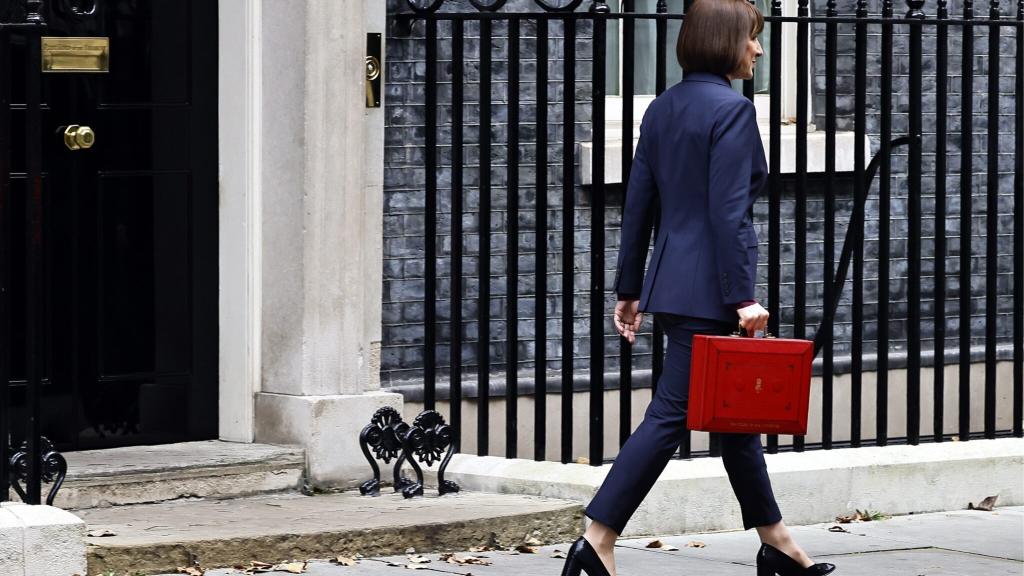
Walking past No 10

First published at Anti*Capitalist Resistance.

The legal disqualification of far right leader Marine Le Pen from the 2027 French presidential election looms after a court found her guilty of large scale embezzlement. This could yet be turned to the advantage of her party as her supporters’ protests gather strength.

But France is not the only place where the far right is being handed giant political opportunities on a plate. The calamitous series of austerity measures undertaken by the Starmer-Reeves Labour government seems almost deliberately designed to win maximum unpopularity.

Not content with continuing the two child benefit cap and abolishing winter fuel payments for the elderly, Labour has gone boldly forward with the massive reduction in personal independence payments. In order to justify the move, health secretary Wes Streeting has jumped on the bandwagon of the theory of “over-diagnosis“, which originated in the US, using it to rationalise channelling many of those with severe mental or physical disabilities towards some form of employment. This process is ludicrously called “helping people back into work“ even when many of the claimants are retired or are the parents of sick/disabled children.  

In this context of “over-diagnosis” the books It’s All in Your Head and The Age of Diagnosis by Irish doctor Suzanne O’Sullivan have received wide publicity. She makes the claim that there is no such thing as Long Covid and that many cases of conditions like chronic depression are just aspects of life’s ups and downs.

Not content with being an austerity government, Starmer Labour is showing itself to be an authoritarian anti-immigrant government, bringing in huge fines and potential imprisonment for employers who give immigrant workers casual, “off the books” employment. Now Keir Starmer is boasting in true Donald Trump style that his government is deporting record numbers of immigrants. Starmer has no problem standing alongside Italian fascist Prime Minister Giorgia Meloni in this and aping her policies.

Labour’s growing authoritarianism is signalled by the alarming police raid on six young women planning direct action in support of Gaza and by Starmer’s apparent promise to Trump that the UK would get tough with protestors who disrupted Trump’s Scottish golf course to publicise their solidarity with the people of Gaza.

Every statement by Starmer and his team over immigration is an affirmation that far-right Reform leader Nigel Farage was right on this question all along.

However, because of the austerity measures, Labour is about to suffer a devastating defeat in the upcoming local elections on May 1. (Some councils in the south of England have had their elections paused for a year to implement “English devolution”.) The opinion polls for these local elections are astonishing. The Tories are set to win 26% of the vote (548 seats), Reform 25% (474), Labour 20% (232), the Liberals 16% (270) and the Greens 6% (27). In other words in the first tranche the big winners are projected to be the Conservatives and Reform.

But in the areas with delayed voting, which include Sussex, West Sussex, Thurrock, Hampshire and Essex, the Tories are projected to be on 23%, Reform on 25% (233), the Liberals on 20% (251), and the Liberals on 8% (117). It is noticeable that while Reform’s projected vote here is about the same as in 2025, the Greens and Liberals are marginally improved in some of the leafy suburbs. It is also very noticeable that with the first-past-the-post electoral system, parties polling less than 10% or 12% get badly punished in terms of seats per vote.

How did Reform UK break through this barrier? As explained by Hungarian social theorist Karl Polanyii1 and his disciple Robert Kuttner2, in a time of massive crisis, when the centre and centre-right break down, it is the far right that benefit to begin with, for obvious reasons.

Control of the mass media by right-wing and extreme right wing governments and media corporate giants means the mass media breaks sharply to the right. You only have to know the identity of the most frequent guest ever on Question Time (Farage) to see the logic of this view. Mass media support is today compounded by social media support, which can be easily fixed in favour of the right, with the use of giant funding from the extreme right millionaires and billionaires.

This is a story going back at least two decades in the United States: Elon Musk is a latecomer to the billionaire superfixers, who really got into their stride with the Tea Party, the precursor of the Make America Great Again (MAGA) movement. The right and the extreme right need to be combated on every front, from social media to elections. In Britain the right wing of the Labour Party MPs, the mass media, the Tories and international backers have done a brilliant job of throwing back the radical left.

The net result is that 200,000 people have left the Labour Party since 2019, overwhelmingly from the left. And apart from a handful of left Labour and independent MPs, this left is mainly without much direction or impact. So thoroughly was the Labour left smashed up that its key leaders seem unable or willing to take steps towards an electoral alternative.

But the success of Reform shows something very important  persistence and continuity, from the UK Independence Party to the Brexit Party to Reform.

According to Leon Trotsky “The situation in every country is a unique crystallisation of the elements of the world process“. And we might add especially in the age of globalisation. We are not at 1933 (when the Nazis took power in Germany) but we are not so far from it. Fighting the fascists is never just a question of street confrontations, marches and pickets. The idea that the fascists can be defeated by being “no platformed“, useful as such a tactic might be from time to time, has shown its limitations. It is above all a question of building a socialist and green political alternative that can have an impact at the level of the masses, including elections.

Attempts in Britain to build a united mass left alternative have seen some spectacular failures in the last 25 years. Which means we have to do it better and not give up. British politics is going into a period of transformation. The left needs urgently to open a discussion on how to build an alternative. Without an overarching strategy the thousands, probably tens of thousands, of people who have left Labour since the 2024 general election will be betrayed. And there is a continuing danger that protest against austerity will boost Reform and the Tories.

Phil Hearse is a member of the National Education Union and a supporter of Anti*Capitalist Resistance.

  • 1

    The Great Transformation, New York 1924, New edition Penguin 2024

  • 2

    Can Democracy Survive Global Capitalism, WWW Horton, 2018