Thursday, May 22, 2025


Shock exit: Rio Tinto CEO Stausholm to step down
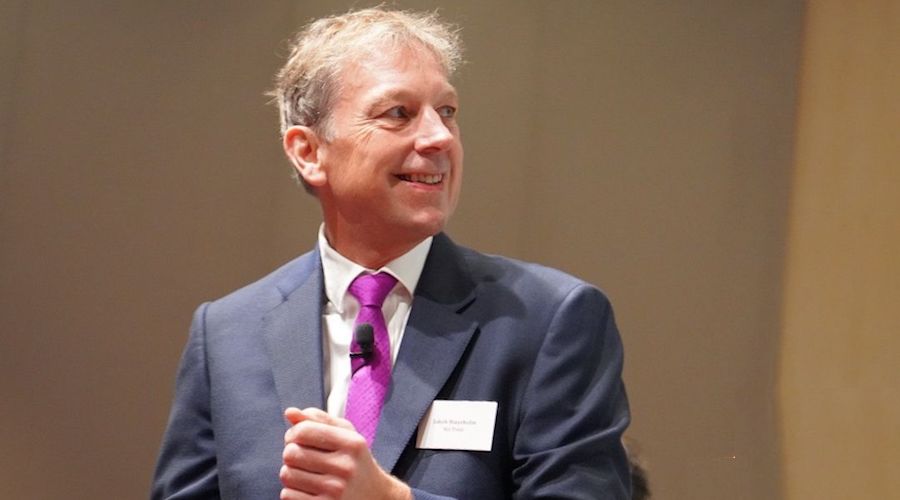

CEO Jakob Stausholm will step down later this year. (Image courtesy of Jakob Stausholm’s LinkedIn.)

Rio Tinto (ASX, LON: RIO) announced on Thursday the unexpected exit of chief executive Jakob Stausholm later this year, ending a nearly five-year tenure marked by efforts to restore trust with stakeholders and expand into energy transition metals.

The company has already launched a search for his successor. Stausholm, who joined Rio in 2018 became CEO in 2021, took over after the controversial destruction of 46,000-year-old Aboriginal rock shelters in Western Australia. His predecessor, Jean-Sébastien Jacques, resigned following backlash from Indigenous groups and investors.

Stausholm said in a LinkedIn post it has been “an honour” to lead the mining giant and said he was proud of the progress made during his time in charge. “I will stay as chief executive while a successor is appointed through a rigorous process already underway,” he wrote “As this work progresses, it is business as usual”.

Rio Tinto did not give a reason for Stausholm’s departure. Internally, iron ore chief Simon Trott and chief commercial officer Bold Baatar are viewed as potential successors. Analysts had anticipated an external search, though Rio may face competition from BHP, whose CEO Mike Henry is also preparing to step down in the next year.

“This news comes as a big surprise, and in our view was not expected,” Berenberg analyst Richard Hatch said. “The company cited this as a ‘natural moment’ to appoint a successor, but it doesn’t feel that natural to us.”

BMO’s Alexander Pearce echoed the sentiment, calling the decision “somewhat of a surprise,” particularly given Stausholm’s relatively short tenure. Pearce credited him with strengthening Rio Tinto’s position in future-facing commodities such as aluminium, copper, and lithium, while also advancing its environmental, social, and governance (ESG) practices.

Investors reacted negatively to the news. The stock closed slightly lower in Sydney at just under A$119 per share. In London, it fell more sharply, down 1.4% to 4,579p near the close of trading, bringing the company’s market capitalization to $105.6 billion.

During his leadership, the Danish executive expanded Rio Tinto’s iron ore portfolio beyond its Pilbara base, securing approvals for the massive Simandou iron ore project in Guinea, set to begin production later this year. He also oversaw a $6.7 billion acquisition of Arcadium, and very recently a $900 million lithium joint venture with Chile’s state-owned Codelco. 

Stausholm also navigated shareholder pressure, including a campaign led by Palliser Capital and over 100 other investors to reconsider Rio’s dual listing structure in London and Sydney. The move was ultimately rejected by shareholders earlier this month.

Rio Tinto chair Dominic Barton praised Stausholm, saying he “restored trust with key stakeholders, aligned our portfolio with the commodities where demand growth is strongest, built a diverse and talented management team, and set a compelling growth trajectory”.

Fortescue also sees top exit

The leadership shakeup coincided with another high-profile departure in the sector. Just an hour after Rio’s announcement, Fortescue (ASX: FMG) revealed that its energy chief Mark Hutchinson would step down. The 65-year-old will continue to serve as a senior adviser to the board, while chief operating officer Shelley Robertson will also retire.

Former Argentinean rugby captain Agustin Pichot will take over Fortescue’s growth and energy division, focusing on the company’s green energy strategy.

Argentina approves $2.5B Rio Tinto lithium mining project
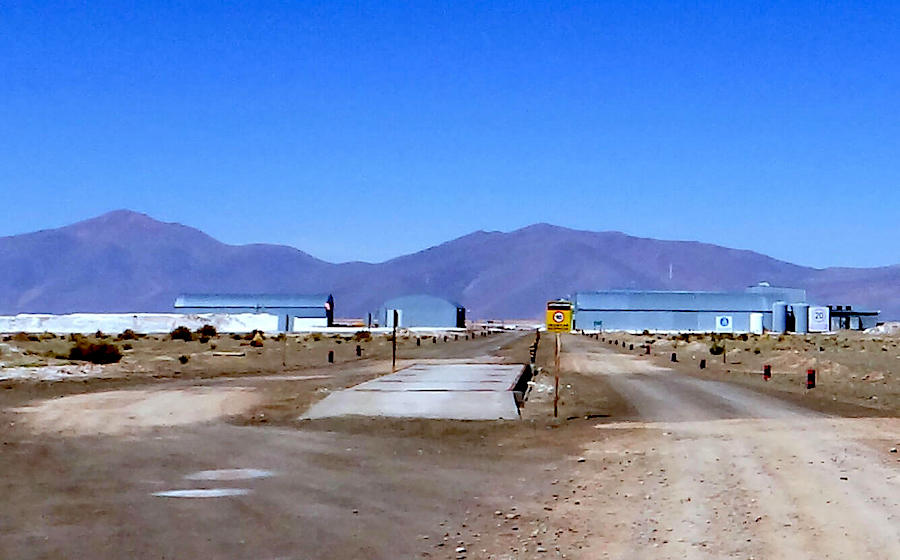
Demonstration plant at the Rincon lithium project. Credit: Rio Tinto

Argentina’s government on Tuesday approved a $2.5 billion lithium mining project by Anglo-Australian giant Rio Tinto, marking the first mining project under a new investment incentive regime.

The approval of Rio Tinto’s Rincon project, located in the northern Salta province, under the RIGI incentive scheme was announced by the country’s mining and energy coordination secretary Daniel Gonzalez at a conference in the capital Buenos Aires.

Argentina’s mining sector has expressed concerns over delays in approvals for seven projects submitted to the government since the RIGI program was launched nine months ago.

“We are grateful because there was strong anxiety over what was happening with the mining RIGIs,” the head of Argentina’s CAEM mining chamber, Roberto Cacciola, told the conference. “This was major news.”

President Javier Milei’s libertarian government is looking to boost the South American country’s mining sector to bring in much-needed foreign currency and maintain economic stability as the country faces painful inflation levels.

Argentina is the world’s No. 4 lithium supplier and together with Chile and Bolivia forms the so-called “lithium triangle” that holds the world’s largest reserves of the white metal used in electronics, electric vehicles and other key technologies.

The South American nation also exports gold and silver and has major copper projects in the pipeline, though none are currently producing.

Other firms that applied for mining projects under the RIGI program include China’s Ganfeng, Canada’s McEwen Copper and South Korea’s Posco.

Five of the projects are for lithium, while the remaining two are for gold and copper, respectively. However, only Rio Tinto’s project was approved as of Tuesday, despite a rule that a decision must be made in a maximum of 45 working days.

Industry sources said the government likely did not intend to cause delays, but it was facing complex approval processes involving various state departments and some companies may have rushed to apply at too early a stage to meet the criteria.

Reuters contacted several state agencies, but they did not immediately respond to requests for comment.

The RIGI framework is intended to provide tax and customs benefits, access to international arbitration in case of disputes and long-term stability plans.

Argentina exported $4.8 billion of minerals last year, largely gold, followed by shipments of silver and lithium.

(By Lucila Sigal; Editing by Brendan O’Boyle, Natalia Siniawski and Jamie Freed)


Rosneft acquires Russia’s largest rare earth deposit

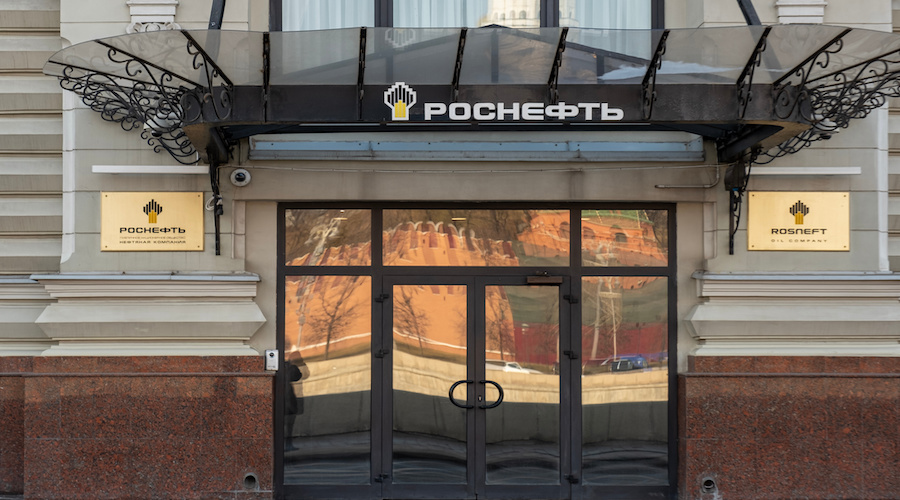
Rosneft’s central office. (Image: mikhailberkut – Adobe Stock. )

Russia’s state-run oil giant Rosneft PJSC has acquired the giant Tomtor rare-earth deposit in Siberia, filings in the country’s national commercial registry show.

Tomtor, considered Russia’s largest deposit of its kind, is central to Moscow’s ambitions to boost domestic production of strategic minerals used in defence and high-tech industries. The project could also become a potential area of cooperation with the United States if a peace agreement is reached in the ongoing conflict with Ukraine.

Rosneft, led by Igor Sechin, a longtime ally of President Vladimir Putin, gained full control of the project’s operator, Vostok Engineering, on May 20.

The deposit contains an estimated 154 million tonnes of ore, according to Russia’s Ministry for the Development of the Far East and Arctic. It holds monazite and pyrochlore, as well as valuable elements like niobium and scandium.

Putin has previously criticized delays in Tomtor’s development. In November, he ordered the project be advanced either by its current owners, with outside investors, or through state support. Western sanctions imposed after Russia’s 2022 invasion of Ukraine have stalled progress, limiting access to key technologies needed to develop the site.

World’s fifth-largest reserves

Before the war, Russia planned to invest $1.5 billion to become the world’s second-largest rare earth producer after China by 2030. The country holds the fifth-largest reserves globally, estimated at 3.8 million tonnes by the U.S. Geological Survey (USGS), behind China, Brazil, India and Australia. Its goal is to capture up to 12% of the global market within five years.

Rosneft’s move mirrors a broader trend of oil majors diversifying into critical minerals. ExxonMobil was one of the first companies to do so, announcing plans in 2023 to extract lithium from brine in the southern US using direct lithium extraction (DLE) technology. Chevron and Occidental have also shown interest in lithium ventures. 

Governments have also followed suit. Saudi Arabia has secured a string of mining deals with companies including India’s Vedanta and China’s Zijin Group, and in January launched a joint initiative between state oil firm Aramco and mining company Ma’aden to expand lithium production.

(With files from Reuters)


Freeport Indonesia says Manyar smelter resumes operations after fire

Freeport’s Indonesia copper smelter. (File image.)

Copper miner Freeport Indonesia said its $3.7 billion Manyar smelter in East Java has resumed operations earlier than anticipated after a fire took it offline last year, and is expected to produce copper cathode by the fourth week of June.

CEO Tony Wenas said in a statement on Thursday the plant was expected to reach full production capacity by December.

A fire damaged the plant last October. Wenas said production had been expected to resume in June, but the repairs were completed ahead of schedule.

In March, the Indonesian government gave Freeport Indonesia, a unit of Freeport-McMoRan Inc, a six-month permit to export 1.27 million metric tons of copper concentrate, relaxing a country-wide export ban on unprocessed copper because the company was unable to use the smelter.

(Reporting by Gayatri Suroyo and Ananda Teresia; Editing by John Mair)


Ghana expects $12 billion a year from small-scale gold mining


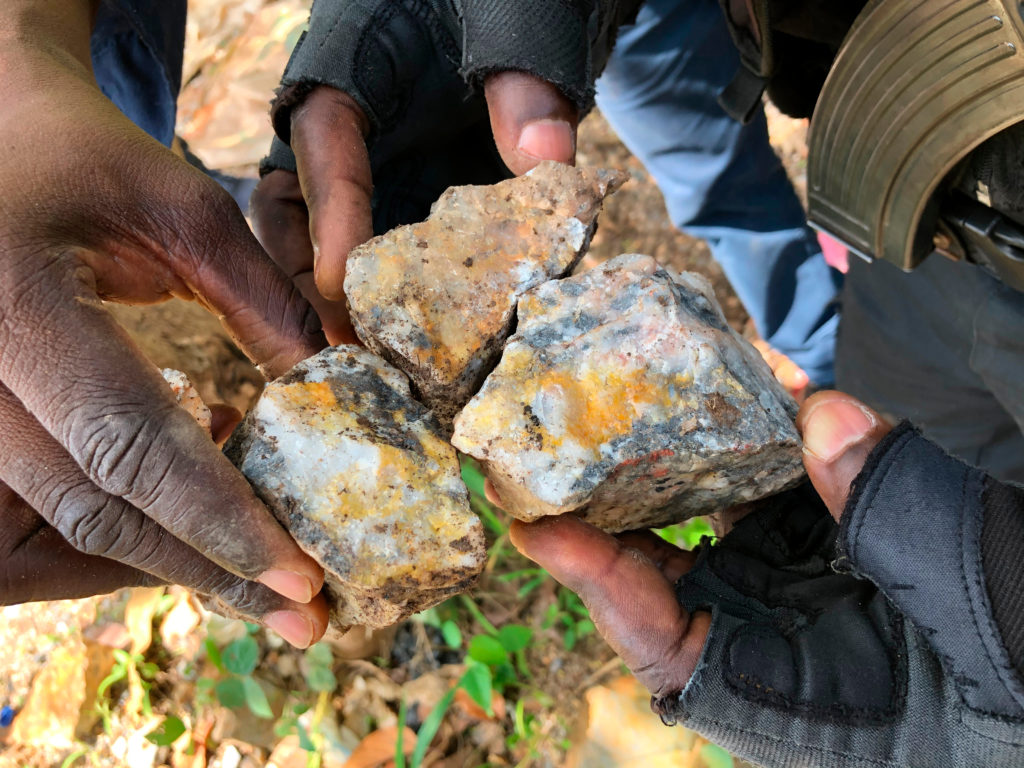
Ghanaian policemen observe some ore seized on pits operated by artisanal gold miners to verify the presence of visible gold. Stock image.

Ghana expects to rake in $12 billion a year from small-scale gold production if output doubles as planned.

Gold exports from the country have surged as international prices have soared, and much of that expansion is down to small-mine and artisanal production. The government this year set up a regulator to handle all gold buying and selling, hoping to boost foreign-currency reserves and curb black-market trading. 

“Our goal is to move above 3 tons a week” in purchases, up from about 1.5 tons a week in January, said Sammy Gyamfi, the Ghana Gold Board’s chief executive officer. “We expect to be able to bring in about $6 billion by the end of this year, but we are confident that we will reach the $12 billion in annual inflows from next year.”

The West African nation, which has been locked out of international capital markets following a debt default in 2022, is taking advantage of its largest foreign-exchange earner as gold prices climb. Bullion is trading near $3,300 an ounce after reaching successive records during the past year. 

Ghana’s gold exports rose more than 50% to $11.6 billion last year. The country is Africa’s top producer of the metal, but small-scale mining, which represents about a third of output, has underpinned an increase in black-market trading.

The regulator has ramped up its gold purchases from artisanal miners to fight smuggling, Gyamfi said in an interview in the capital, Accra. The expected increase in earnings from small-mine output will “have a positive impact on inflation and gross domestic product, and on the foreign component of our debt profile,” he said.


Peru to create fund to incentivize small-scale mining

Stock image.

Peru’s government will create a “mining fund” set to finance incentives for small and artisan miners, the Andean country’s energy and mining minister Jorge Montero said on Wednesday.

“We are announcing in a few weeks the launch of a mining fund for small-scale and artisan mining,” Montero said, adding that these miners would have access to preferential rates and distribution channels.

(By Marco Aquino; Editing by Brendan O’Boyle)

Greenland gives Danish-French group permit to mine rock with green potential

Reuters | May 21, 2025 


Greenland Anorthosite Mining site. Credit: Jean Boulle Group

Greenland on Wednesday handed a 30-year mining permit to a Danish-French mining group aiming to extract a moon-like rock that could offer a climate-friendly alternative in aluminum production.


The Arctic island rich in minerals, oil and natural gas, and long seen as a potential resource frontier, has drawn international attention since US President Donald Trump expressed an interest in purchasing it earlier this year.

The permit was granted to Greenland Anorthosite Mining (GAM), which is developing a site in western Greenland. The company is backed by French investment firm the Jean Boulle Group and state investment funds in both Greenland and Denmark.

Anorthosite – a white rock composed mainly of aluminum, micro silica, and calcium – is similar to the material brought back by NASA’s Apollo missions. GAM plans to ship crushed anorthosite to the fibreglass industry, where it could replace kaolin as a more sustainable input.

The broader ambition is to use it as a climate-friendly alternative to bauxite in the production of aluminum which is used in aircraft, vehicles and defence.

“My hope is that the mine will be operational in five years,” Greenland’s Mineral Resources Minister Naaja Nathanielsen told Reuters.

Despite the geopolitical spotlight, Nathanielsen said the US interest in Greenland had not yet translated into tangible investment.

“Right now, all the fuss has not resulted in increased appetite for investment directly in Greenland,” she said, referring to Trump’s proposal to buy the island.

“We have welcomed a number of investors, but we have not yet seen any concrete example of American funds being injected into Greenland’s business community,” she said.

Private US business delegations have visited the island since the beginning of the year, but formal dialogue with the new US administration has yet to begin, she said.

However, dialogue with European partners was progressing: “There is no doubt that the dialogue with both the EU and Denmark is going smoother. This is not only the result of the noise made by the US administration, but also the result of several years of intensified cooperation,” Nathanielsen said.

Nathanielsen was reappointed in April after a more pro-business government came to power.

The island’s mining sector has developed slowly, hindered by limited investor interest, bureaucratic challenges and environmental concerns. Currently, only two small mines are in operation.

(By Jacob Gronholt-Pedersen; Editing by Hugh Lawson)


Chinese authorities question metals bosses in smuggling probe

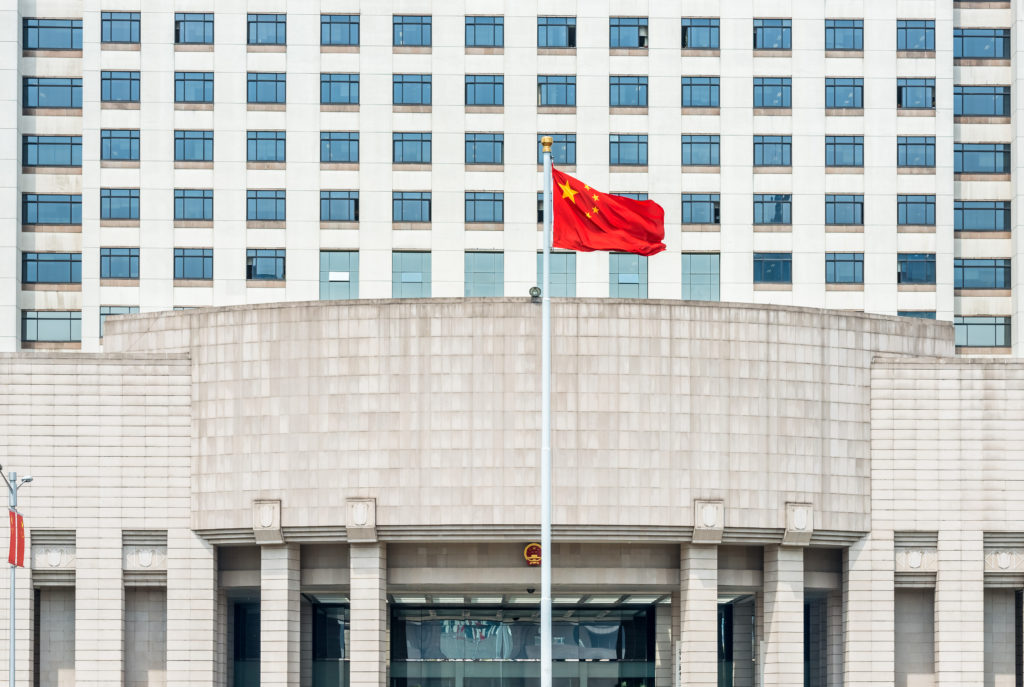
Official Chinese military government building. Stock image.

Chinese authorities have questioned the heads of some of the country’s leading metals merchants and producers as part of an intensifying effort to crack down on critical minerals smuggling, according to people familiar with the situation.

Companies involved in producing and trading minor and strategic metals with military and high—tech applications have been among those called in, the people said. They asked not to be named as the matter is sensitive.

There is no indication that the executives are accused of wrongdoing by Chinese authorities, who can and do call on senior businessmen to assist in high-profile investigations when required. But the interviews, which involve multiple companies, point to a widening probe and to Beijing’s redoubled efforts to manage exports of key materials, even during a pause in trade tensions with the US.

China dominates global production, and especially processing, of critical minerals. Authorities have sought to tighten control over illicit metal sales in recent months, partly to ensure that it makes the most of that industrial clout in any negotiations with Washington.

Beijing’s grip on strategic metals has been key to efforts to build up leverage even before US President Donald Trump launched his aggressive stance on tariffs. China had already begun imposing restrictions on overseas sales of some key minerals like gallium, germanium and antimony, widening that to others including bismuth, tungsten and some rare earths earlier this year.

Those curbs have prompted redoubled efforts from domestic and overseas criminals to spirit metal out of the country — and an official response. China’s commerce ministry has said in public statements that it would mandate officials to tighten checks. The ministry did not immediately respond to a request for comment on Wednesday.

China said last week that it planned to enhance its “full-chain control”, tightening supervision of the industry from mining and smelting to transportation and sales.


China’s CMOC calls on Congo to lift cobalt export ban

Tenke Fungurume mine. Credit: Tenke Fungurume Mining

China’s CMOC Group, the world’s top cobalt mining company, called on Democratic Republic of Congo last week to lift a ban on exports of the battery metal, which is currently due to expire next month, three sources told Reuters.

Congo, the world’s leading cobalt producing country, imposed the four-month ban in February in an attempt to curb surpluses as cobalt prices touched nine-year lows around $10 a lb, or $22,000 a metric ton.

CMOC’s vice president Kenny Ives told delegates at a closed-door session during an industry meeting in Singapore that Congo should lift the export curbs on the metal, an important ingredient in electric vehicle batteries, the sources said.

Congo’s mines minister Kizito Pakabomba was attending the session, said the sources, who heard Ives’ remarks.

Congo has kept the market guessing on its next steps when the ban ends on June 22. The government could extend the suspension and could also look at export quotas for the future, sources told Reuters in February.

Ives said China’s pipeline inventory was running out, and Congo needed to allow miners to freely export cobalt, said the sources, who asked to remain anonymous due to the sensitivity of the matter.

Ives argued that Congo’s restrictions on cobalt exports risked accelerating automakers’ switch to lithium iron phosphate (LFP) batteries that do not need cobalt.

Some Chinese EV makers, including BYD, have already adopted LFP batteries, which are also used for utility-scale energy storage projects.

Two of the sources said Congolese officials present at the event construed Ives’ reference to LFPs as a threat. One of the sources said the comments reinforced the officials’ concerns that China is seeking to depress cobalt prices in order to build up strategic stockpiles.

Congolese officials, including Pakabomba, did not respond to emailed requests for comment or phone calls.

CMOC spokesperson Vincent Zhou declined to comment on Ives’ remarks or questions regarding Congo’s stockpiling fears but said that the company favours a “healthy market environment”.

Chinese electric vehicle battery maker CATL is among CMOC’s largest shareholders, with a 30% stake in the miner, according to LSEG data.

CMOC expects to produce between 100,000 and 120,000 metric tons of cobalt this year – within range of last year’s 114,000 tons and roughly double the 56,000 tons produced in 2023 – as it ramps up activity at its Tenke Fungurume and Kisanfu copper and cobalt mines in Congo.

Glencore backs export curbs

At the same session in Singapore, traders from Glencore, another leading cobalt miner, said the market required a stable price before the export ban is lifted and producer countries like Congo and Indonesia needed to manage oversupply, the three sources said.

Glencore declined to comment.

The Glencore traders in Singapore said the company would accept a quota system, if Congo’s government chooses to implement one, the sources said.

Chinese smelters have built up stockpiles that will last between two weeks and six months, Shirley Wang, general manager at Shanghai MetalsMarket, said at the Singapore conference.

Congo is currently evaluating the impact of the ban and considering proposals from mining companies and others involved in the market, one of the sources said, adding that the downside of halted exports was a loss of tax revenues for the government.

“The most likely scenario appears to be either an extension of the ban followed by the introduction of an export quota, or a direct transition to an export quota starting in late June,” Benchmark Mineral Intelligence said in a recent release.

“Both scenarios are likely to provide further support to pricing.”

(By Felix Njini and Pratima Desai; Editing by Veronica Brown and Joe Bavier)


Ontario to spend $2.2 billion on Indigenous role in mining

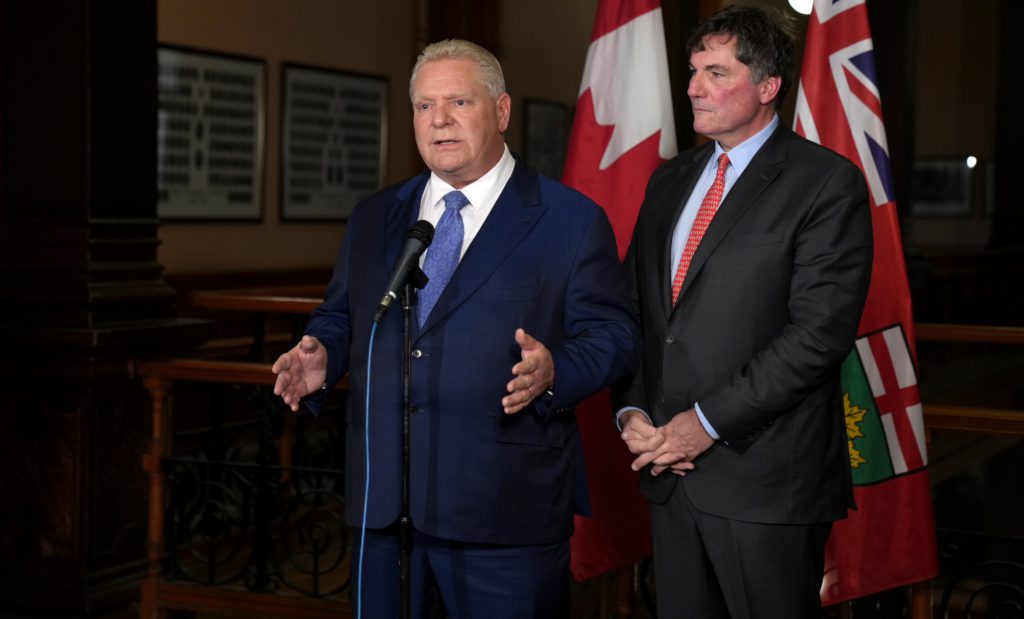
Ontario Premier Doug Ford. Credit: Doug Ford’s official X page

The Ontario government will spend nearly C$3.1 billion ($2.2 billion) to encourage Indigenous participation in the mining industry, in a bid to ramp up critical minerals production across Canada’s most populous province.

Premier Doug Ford’s government said Wednesday that most of the money will go to loan guarantees that enable Indigenous business groups to invest in Ontario mining projects. Funds will also go toward grants and scholarships for Indigenous students interested in careers in mining and resource development.

The spending is part of a countrywide push to accelerate mining projects and cut down on regulatory hurdles at a time when global demand for raw materials like nickel, copper and cobalt is growing. Canada has an abundance of critical minerals and Ontario is home to some of the country’s largest mines, but the nation has struggled to permit projects quickly in part due to red tape, long consultation periods with local Indigenous groups and litigation regarding environmental concerns.

“The status quo is not working. We have examples where mines are taking twice the rate of other provinces or democracies in the industrialized world,” Ontario’s Energy and Mining Minister Stephen Lecce said during a Wednesday press conference. “This is about economic self-reliance. It’s about creating certainty for investors.”

Indigenous groups have played a growing role in Canada’s mining industry in recent years, with more First Nations-led funds securing royalty agreements with mining projects or buying stakes directly in companies.

(By Jacob Lorinc and Stephanie Hughes)

Nippon Steel still committed to full US Steel takeover, says executive

Reuters | May 20, 2025 


Takahiro Mori, Nippon Steel Corporation Vice Chairman.
 (Image by ArcelorMittal Nippon Steel India, Facebook.)

Japan’s Nippon Steel remains committed to acquiring a full stake in US Steel, a senior executive said, adding that it is seeking a meeting with US Treasury Secretary Scott Bessent to clarify President Donald Trump’s stance on the deal.


The steelmakers face a May 21 deadline for the completion of a renewed national security review by the Committee on Foreign Investment in the US (CFIUS) of the proposed $15 billion merger, which was blocked by former President Joe Biden on national security grounds in January following a prior review.

In April, Trump directed the CFIUS to reassess the deal, raising hopes of a reversal, although he said in February the deal would take the form of an investment instead of a purchase. Trump is expected to decide the fate of the transaction by June 5.

“Our intention to pursue a full buyout remains unchanged,” Nippon Steel vice chairman Takahiro Mori, a lead negotiator on the deal, told Reuters on Tuesday.

He said only full ownership would allow Nippon Steel to share its core technology and strengthen US Steel, not in a joint venture.

“There is no free technology,” Mori said.

He said Nippon Steel has requested a meeting with Bessent, who chairs CFIUS, to better understand Trump’s position ahead of a final decision.

On Tuesday, Reuters reported that Nippon Steel plans to invest $14 billion in US Steel’s operations, including up to $4 billion in a new mill, if the Trump administration green lights its bid for the iconic US company, according to a document and three people familiar with the matter.

Mori declined to comment on details of the CFIUS talks, but said any increase in investment would be tied to higher returns and would not strain the company’s finances.

“This deal will make US Steel and United States stronger,” Mori said, adding that it aligns “100% with Trump’s policy,” by boosting foreign investment and domestic manufacturing.

“My view is, if President Trump fully understands (strategic significance), he will approve it,” Mori said, noting plans to preserve US Steel’s name, headquarters, and integrated operations.

The majority of the new board of US Steel would be American, with trade and manufacturing capacity issues overseen by three independent directors appointed by CFIUS, effectively the US government, addressing national security concerns, he said.

The world’s No.4 steelmaker expects net profit to fall 43% in the fiscal year ending March 2026, hit by slumping global steel prices driven by China’s excess production and exports and impact from US tariffs.

(By Yuka Obayashi and Ritsuko Shimizu; Editing by Raju Gopalakrishnan)