Thursday, May 22, 2025

Pigs can’t fly: U.S. high-end livestock breeders lose millions in China tariff fallout

By Reuters
May 22, 2025 

A hog walks in a holding pen on Thursday, Dec. 2, 2021, near Elliott, Iowa. (AP Photo/Charlie Neibergall) (Charlie Neibergall/AP)

CHICAGO - Dr. Mike Lemmon’s pigs, each valued between US$2,500 and $5,000, were supposed to be on a plane bound for Hangzhou, China, from St. Louis in April, where’d they spend the flight snoring, play fighting and snacking on oats and husked corn before taking up residence at Chinese hog farms.

Instead, many went to a local Indiana slaughterhouse for less than $200 each after the Chinese buyer cancelled the order within a week of China implementing retaliatory tariffs against the U.S. in April.

China is one of the biggest importers of American breeding pigs and other livestock genetic material such as cattle semen. These lucrative niche export markets had been growing, but dried up since U.S. President Donald Trump started a trade war with Beijing.

U.S. farmers and exporters said the dispute has already cost them millions of dollars and jeopardized prized trade relationships that took years to develop.

Though Washington and Beijing agreed to pause tariffs last week, exporters said Trump’s unpredictable trade policy has caused their companies long-term damage and could encourage China and other major buyers to turn to foreign rivals like Denmark.


“We’ve got brand damage now. There’s not a week that goes by without clients asking what’s happening with the U.S.,” said Tony Clayton, owner of Clayton Agri-Marketing, a Missouri-based livestock exporting company.

“I don’t know how we can put this back together. This is long-term damage,” he said.

White House spokesperson Kush Desai said the administration was “working around the clock to secure billions of dollars in even more opportunities with our other trading partners.”

Some farmers raise pigs specifically for breeding, a niche business within the $37 billion U.S. hog industry. Farmers pay top dollar for these specialty pigs, which have favorable genetics to produce lots of healthy piglets that can eventually be processed into tasty, high-quality pork.

Lemmon, an Indiana veterinarian and farm owner, has been selling pigs worldwide for over 30 years. He said he spent more than a year working on the $2.4 million sale of the pedigreed pigs to China. He noted they were carefully bred for good health, litter size and high fat content that leads to richly marbled, tender meat when cooked.

“It’s devastating when it happens,” Lemmon said, referencing the sale he lost.

He said he plans to stay in the breeding business, and is working to rekindle the deal with his Chinese buyer during the tariff pause.

Roughly half of the world’s pigs live on Chinese farms. The country has purchased large quantities of breeding pigs from the U.S. since an outbreak of African swine fever, a virus with a near-total fatality rate, wiped out millions of the country’s hogs in 2018.

Shipping livestock is lucrative but time-consuming. Shippers must personally fly with the animals or hire an on-board attendant who can make the rounds to keep their pricey passengers well-hydrated and comfortable during a long flight. When not working, the attendants chat with the flight crew or sometimes lie in sleeping bags next to the animals in the chilly cargo bay, exporters and farmers said.

China has also been the biggest importer of semen from U.S. dairy cows, known for producing large amounts of protein-rich milk. But “Not one unit of semen is going to China right now,” Jay Weiker, president of the National Association of Animal Breeders, said, noting China had been importing one-quarter of all U.S. cattle semen, which they use to artificially inseminate their dairy cows.

The Chinese milk industry began importing large amounts of cattle semen to improve the genetics of domestic dairy cows after a deadly scandal over contaminated milk in 2008, Weiker said. At least six children in China died and nearly 300,000 fell ill after a Chinese manufacturer added melamine, a dangerous chemical, to milk powder to make the protein levels appear higher.


Brittany Scott, owner of SMART Reproduction Services, a sheep and goat genetics company, said several foreign customers had also pulled out of deals. This left many vials of semen sitting in her Arkansas facility, frozen in tanks of liquid nitrogen and waiting for buyers.

“They are eager to do their jobs,” Scott said of her male goats and sheep. “They understand the assignment and they do really well.”

However, the work of selling their product has proven harder after Trump announced sweeping tariffs in April, and China retaliated.

The lost sales have been “a punch in the gut,” Scott said.

Reporting by Heather Schlitz, Reuters
As  regulators abandon ‘bare minimum’ corporate climate reporting, a backstop lurks

Both Canada and the U.S. have moved backwards on disclosure, even though the rules were the “bare minimum” to help investor

By The Canadian Press
 May 20, 2025 

A flare stack lights the sky along refinery row in Edmonton Alta, on Friday December 28, 2018. THE CANADIAN PRESS/Jason Franson

TORONTO — In the future, seeing the carbon emissions of a company may not be much harder than finding out how many calories are in a chocolate bar, but that day looks further out than it did just a few months ago.

Last year saw big steps toward better corporate climate transparency: a U.S. regulator required it, the Trudeau government committed to follow through on more, and a Canadian task force released guidelines on what those disclosures should look like.

But the election of U.S. President Donald Trump has changed all that.

Since Trump’s return to the White House, the U.S. Securities and Exchange Commission effectively dropped its requirement on disclosures in late March, which led the Canadian Securities Administrators (CSA) to ditch its own plans a few weeks later.

The moves come despite the rising impacts of climate change, making it all the more important that companies are mandated to release emissions data, as well as to say what risks they face from the crisis and how they plan to deal with them, said Pamela Steer, head of CPA Canada.

“The world is burning up in many cases,” she said. “It’s become more acute, more urgent than ever.”

The CSA’s decision not to require disclosures is “incredibly disappointing,” she said, especially as dozens of other countries including Australia, the European Union, and even fellow United States-neighbour Mexico move forward with the requirement.

Growing expectations for the information will make it harder for companies to raise money internationally without the rules, especially as Canada looks to diversify away from the U.S., said Steer.

As it stands, companies have been reporting a hodgepodge of data and analysis, and some not at all, making it hard for investors to make informed decisions, she said.

“There are many risks and opportunities that need to be disclosed, and investors are demanding the information, and I think companies are demanding a level playing field.”

Many companies are, however, also being less public about climate generally given the Trump administration’s hostility to efforts, such as Canada’s big banks all leaving the Net-Zero Banking Alliance. Rising economic concerns have also put pressure on companies to cut back where they can.

Recent anti-greenwashing rules from the Competition Bureau have added to the pressure, making it all the more important to have clear standards in place, said Steer.

The rules, which require companies to be able to back up environmental claims or face potentially severe penalties, has led many to say even less about climate change. Steer said it is important to hold companies to account on what they say, but that companies need a bit of grace as whole new reporting standards are established.

“Having safe harbour, having a more pragmatic commentary and guidelines is actually what is needed.”

The Canadian Sustainability Standards Board was created specifically to adapt international standards to the Canadian context, and it put out guidance in December that included several years of added time for companies to report on some measures.

Ten of Canada’s biggest public pension funds, representing more than $2.2 trillion in assets under management, voiced their support for the proposed guidance.

“Alignment with a global baseline is important for the competitiveness of Canadian companies in global capital markets,” the public pension group said, though Alberta’s pension fund was notably absent despite endorsing the premise less than two years earlier.

Provincial securities regulators were expected to take those guidelines and make them mandatory, but instead, the CSA announced on April 23 that it had indefinitely paused the work.

CSA chair Stan Magidson, who is also CEO of the Alberta Securities Commission, said in a release that the regulator was focusing on making Canadian markets more competitive, efficient, and resilient.

Work on climate disclosure would be revisited in “future years,” the CSA said.

But as the pension funds noted, disclosure efforts are part of staying competitive, said Wendy Berman, chair of the CSSB.

“There is going to be a lot of capital movement over the next 10 years as we transition to a low-carbon economy, and we certainly don’t want Canada to miss that opportunity,” she said.

“What we’re starting to see is a huge global shift,” said Berman. “Would it be better if the U.S. was lockstep with the rest of the world? Of course. But that should not hold back Canadian companies.”

Both Canada and the U.S. have moved backwards on disclosure, even though the rules were the “bare minimum” to help investors, said Gary Gensler, then chair of the U.S. SEC when he passed them last year.

In ending the requirements, current acting chair Mark Uyeda called them “costly and unnecessarily intrusive climate change disclosure rules.”

With both the U.S. and Canadian regulators abandoning efforts, it’s unclear how well Prime Minister Mark Carney can make good on his campaign promise to establish “broad climate risk disclosure for companies across Canada,” or to follow through on Trudeau’s promise to mandate disclosures for large, federally incorporated private companies.

The Finance Department said that with Cabinet only sworn in last week, the government will have more to say in due course.

But even as high-profile debates rage on about broader disclosures, rules established in 2023 by Canada’s banking regulator help provide a backstop.

The rules that kicked in this year from the Office of the Superintendent of Financial Institutions broadly align with what the Canadian Sustainability Standards Board had called for -- requiring banks to report how their finances might be affected by climate change, as well as their own emissions contributions.

Given their scale, and involvement in so many other companies, the reporting requirements should help put pressure and clear the way for others to follow, said Berman.

“When OSFI endorses it, and the banks must now comply with it going forward, that starts to create momentum,” she said.

That momentum could help make climate disclosures an established part of assessing the health of a company, just as food labelling rules a few decades ago have since made it hard to imagine a chocolate bar not listing the calories, fat and other key details to know to stay healthy.

This report by The Canadian Press was first published May 20, 2025.

Ian Bickis, The Canadian Press
Report: World’s supply of critical minerals for clean energy is concentrated in fewer countries

By The Associated Press
May 21, 2025 

Bundles of copper cables sit at a plant that produces parts for large electric vehicles in Mexico City, on April 2, 2025. (AP Photo/Fernando Llano)

The world’s sources of critical minerals are increasingly concentrated in just a few countries, most notably China, leaving the global economy vulnerable to supply cutoffs that could disrupt industry and hit consumers with higher prices, a report said Wednesday.

The Paris-based International Energy Agency’s report looked at the availability of minerals and metals that may be small in quantity — but large in impact when it comes to shifting the economy away from fossil fuels toward electricity and renewable energy.

It found that for copper, lithium, cobalt, graphite and rare earth elements, the average market share of the three top producing countries rose to 86% in 2024 from 82% in 2020.

China is the leading refiner for 19 out of 20 strategic minerals studied in the report, and has an average share of around 75%. Indonesia showed strong growth in nickel, a key component in making steel and batteries for electric vehicles.

The current trend toward export restrictions and trade disputes increases concerns, the IEA said.

“Critical mineral supply chains can be highly vulnerable to supply shocks, be they from extreme weather, a technical failure or trade disruptions,” said IEA executive director Fatih Birol. ”The impact of a supply shock can be far-reaching, bringing higher prices for consumers and reducing industrial competitiveness.”

Birol cited the energy crisis in Europe after Russia cut off natural gas supplies over the invasion of Ukraine. Another cautionary tale is the global shortage of silicon-based computer chips during and after the pandemic, which disrupted auto production.

“The golden rule of energy security is diversification,” Birol told The Associated Press in an interview. “And it goes beyond energy security, it is also economic security.”

Market forces are important in developing new sources but won’t be enough. “There is a need for well-designed government policies” in the form of financing and other measures, he said.

China is a massive global source of critical minerals required for a wide range of goods that includes computer chips, robots, electric autos, batteries, drones, and military equipment. It also dominates the refining and processing of many of these critical minerals, including lithium, cobalt, graphite and more.

China has placed export limits of many of these key products and tightened controls on others as President Donald Trump’s trade negotiations escalate, stifling U.S. industry and the nation’s ability to find quick alternatives. Without access to China’s significant reserves, U.S. manufacturers have a harder time competing amid mounting global supply tensions.

Trump has made reducing U.S. dependence on foreign critical minerals a core tenet of his first 100 days back in office as part of a national security and economic resilience agenda.

This goes beyond China; the Trump administration finalized a rocky deal with Ukraine granting American access to the nation’s vast mineral resources earlier this month.

Trump is also looking to expedite deep-sea mining in international waters, much to the chagrin of environmental groups. He called for a boost in the domestic copper industry in a February executive order alongside other calls for the federal government to fast-track new mine permits; has reviewed a minerals proposal from Congo, a conflict-riddled nation also rich with mineral reserves; and attempted to strong-arm Greenland into providing more of its minerals to the U.S.

The IEA report said that global markets were well supplied at the moment and that prices in general have fallen. It warned however that planned production of copper, which is essential for electric wiring and power grids, would not keep pace with demand and predicted a 30% shortfall by 2030.

—-


David Mchugh And Alexa St. John, The Associated Press

St. John contributed from Detroit, Michigan.
G7 finance ministers to wrap up summit in Banff

By The Canadian Press
May 22, 2025 

BANFF — Finance ministers from the G7 are wrapping up their summit in Banff, Alta., with discussions including the global trade system roiled by U.S. President Donald Trump’s tariffs.

Other topics on the agenda are artificial intelligence and the war in Ukraine.

Finance Minister François-Philippe Champagne and Bank of Canada governor Tiff Macklem were set to emerge later Thursday to take questions from reporters.

In an interview late Wednesday, Champagne was asked about the possibility of a joint communique being issued when the event wraps up.

“I’ve always said it is easier to predict the past than the future. We had a very good day of discussions, a very good engagement,” he said, adding he was “very optimistic.”

Champagne had bilateral meetings with France and Italy and a late evening meeting with U.S. Treasury Secretary Scott Bessent.

“I am always reminded Canada is the largest customer of the United States. We buy the most from the U.S. We have a very deep trading relationship.”

The summit is happening as Trump appears to be seeking trade pacts with countries that he has imposed tariffs on, although the finance ministers haven’t said they expect to settle deals with the United States during the meeting.

The countries are scheduled to gather again in the Rockies for the G7 Leaders’ Summit in nearby Kananaskis, Alta., from June 15 to 17.

This report by The Canadian Press was first published May 22, 2025.

Matt Scace, The Canadian Press
Quebec judge approves sale of EV vehicle-maker Lion Electric to investor group

By The Canadian Press
 May 22, 2025 
The Lion Electric Company's lithium-ion battery manufacturing facility in Mirabel, Que., is shown on Sept. 14, 2023. THE CANADIAN PRESS/Christinne Muschi

A Quebec Superior Court judge has approved the sale of vehicle-maker Lion Electric to a group of Quebec investors.

Justice Michel Pinsonnault says the deal is the only option that ensures the struggling manufacturer can keep operating.

The consortium of investors is led by Pierre Wilkie, a director of the electric-vehicle company, and Montreal real estate entrepreneur Vincent Chiara.

Lion Electric will preserve its manufacturing plant in St-Jérôme, Que., where it made electric school buses and trucks, but hundreds of employees will be permanently laid off.

The investors made a revised offer after the Quebec government announced last month it would not invest any more public money in the company.


Lion Electric entered creditor protection in December and has been seeking a buyer since then.

This report by The Canadian Press was first published May 22, 2025.

The Canadian Press

Ralph Lauren mulls price hikes as tariffs hurt sales forecast


May 22, 2025 

A general view shows the New York Stock Exchange, Thursday, April 10, 2025, in New York. (AP Photo/Yuki Iwamura) (Yuki Iwamura/AP)

Ralph Lauren forecast tepid annual sales on Thursday and said it was weighing price increases for its classic Polo shirts and spring dresses, as the apparel retailer grapples with volatile U.S. tariffs and consumer spending pressures.

Its shares were marginally higher in early trade, as the company beat fourth-quarter estimates for revenue and profit, thanks in part to investments in brands including Polo and Purple Label, as well as increased marketing.

The company expects fiscal 2026 revenue to increase in the low-single digits from last year, including the impact of tariffs, inflationary pressures and spending challenges. Analysts estimate a rise of 4.39%, per data compiled by LSEG.

“The outlook is far more modest. Weakening consumer sentiment and ongoing tensions from trade and geopolitical relations may dampen the appeal of iconic U.S. brands such as Ralph Lauren in overseas markets,” said Sky Canaves, analyst with eMarketer.

Ralph Lauren is among the retailers and luxury brands facing the brunt of unpredictable U.S. tariff shifts that have disrupted businesses and rattled shoppers worldwide.

In fiscal 2024, the company sourced about 96% of its products from outside the U.S., with 15% coming from China, according to its annual filings.

China is also a major market for Ralph Lauren products, following North America and Europe.

While the recent 90-day trade truce between Washington and Beijing cut U.S. tariffs on China to 30% from an eye-watering 145%, the relief is expected to be brief for the Asian country’s export-reliant economy.

Ralph Lauren posted fiscal 2025 gross margin of 68.6%, and forecast it would be flat for fiscal 2026 as higher prices, lower cotton costs, and better sales in key areas help offset steep tariffs and other material costs.

Its revenue of $1.70 billion for the quarter ended March 29, beat estimates of $1.65 billion, while adjusted profit of $2.27 per share trumped estimates of $2.

Anuja Bharat Mistry in Bengaluru; Editing by Devika Syamnath, Reuters
PROFIT OVER PEOPLE

TD Bank cutting jobs as Q2 profit tops estimates


By Terry Cain
May 22, 2025

TD Bank cutting jobs as Q2 profit tops estimates: 
TD Bank plans to cut about two per cent of its workforce in an effort to reduce its cost
 base and achieve greater efficiency. 
The bank, with about 95,000 employees, says the restructuring will cost up to $700 million in pre-tax charges over the next several quarters. It expects the effort will generate about $100 million in pre-tax savings this fiscal year and annual savings of up to $650 million. TD’s CEO Raymond Chun is leading a review of the bank after paying out more than US$3 billion to U.S. authorities over its anti-money-laundering failures. TD beat earnings estimates in the latest quarter after setting aside less money than expected for souring loans.

TD Bank to lay off 2% of workforce in restructuring


By Reuters
Updated: May 22, 2025

TD Bank on Thursday said it would lay off 2% of its workforce to cut costs and scale up its digital and AI investments, as the bank restructures following its historic anti-money laundering settlement under new CEO Ray Chun.

The layoff involving some 2,000 employees is part of a new restructuring program that will help TD save up to C$650 million ($470 million) annually, including winding down its point of sale financing business in the U.S.

TD’s shares were up about 3.7% in Toronto.

TD expects to incur pre-tax restructuring charges between C$600 million and C$700million pre-tax over the next several quarters.

“We are structurally reducing costs across the bank by taking a disciplined look at our operations and processes to find opportunities to automate and to re engineer them,” Chun told analysts.

“We are identifying opportunities to innovate, to drive efficiencies and operational excellence.”

The review follows TD’s anti-money laundering settlement in the United States that lead to several changes including a new CEO. TD did not say if the layoffs were predominantly in the United States or Canada.

Analysts viewed the restructuring program positively and said it would help offset TD’s prior investments related to its anti-money laundering programs.

Chun, who took charge in February, initiated a strategic review to simplify the business. The bank is expected to share more at its investor day in September.

TD reported better than expected earnings for the second quarter powered by strength at its wholesale banking arm - which houses its capital markets and investment banking businesses.

The unit reported record revenue of C$2.13 billion, up 10% from a year earlier, reflecting higher trading-related revenue and underwriting fees, including from the sale of its remaining equity investment in U.S. financial services firm Charles Schwab SCHW.N.

However, the bank set aside C$1.34 billion ($965.5 million) in provisions to shield against future souring loans in an uncertain environment, up from C$1.07 billion a year earlier, as businesses pause spending and defer long-term decisions.

“We still see loan growth despite the uncertainty in the environment, but given the outlook, and given that there’s uncertainty, we build reserves,” CFO Kelvin Tran said in an interview.

TD’s results, which kick off Canadian banking earnings, offer a glimpse into the impact of the tariffs chaos on the Canadian economy.

Adjusted earnings of C$1.97 per share beat analysts’ average estimates of C$1.76, LSEG data showed.

Reporting by Arasu Kannagi Basil in Bengaluru; Editing by Shailesh Kuber and Jan Harvey, Reuters


New report casts doubt on revival of Quebec LNG project

By The Canadian Press
 May 22, 2025 

Piping is seen on the top of a receiving platform of a natural gas pipeline terminus in Kitimat, B.C., on Wednesday, Sept. 28, 2022. THE CANADIAN PRESS/Darryl Dyck

MONTREAL — A shareholder advocacy group says reviving a liquefied natural gas export project in Quebec’s Saguenay region would be costly and likely unprofitable.

Investors for Paris Compliance says demand for LNG in Europe dropped by 18 per cent between 2022 and 2024, and Canadian exports would have a hard time competing in Asian markets.Read the report: The missing business case for LNG exports via Canada’s East Coast

A report published this morning says gas production is expected to grow by 40 per cent from 2024 to 2028, driven by projects in the United States and Qatar, and demand is not expected to keep pace.

A project to transport natural gas from Western Canada to an export terminal in Quebec was cancelled in 2021 due to environmental risks and public opposition, but Quebec Premier François Legault has recently opened the door to pipeline development in the province.

However, the advocacy group says inflation could balloon the project’s price tag to more than $33 billion, and public money would likely be required.


The group says there are better ways to stimulate the Canadian economy, including integrating provincial electricity grids and mining critical minerals.

This report by The Canadian Press was first published May 22, 2025.
Union says Canada Post offers ‘fall short’ as strike deadline nears

By The Canadian Press
Updated: May 22, 2025 


Canada Post has issued a new set of offers to the union representing postal workers as the clock ticks. Labour lawyer Sundeep Gokhale discusses the offers.

OTTAWA -- The union representing about 55,000 Canada Post employees said the latest offers from the postal service “fall short” with hours to go until a looming strike deadline.

Canada Post meanwhile said Thursday it’s already seeing mail volumes decline ahead of another possible labour disruption and is pushing for an urgent resolution.

Spokesperson Lisa Liu said Canada Post hasn’t yet received a response from the union about its proposals issued a day earlier.Canada Post strike: What you need to know about mail deliveries and exceptions

The postal service is ready to resume bargaining “as soon as possible” with a mediator at the table, she said.

“We remain hopeful that negotiations can resume,” Liu said. “Further delays or another strike would have a major impact on employees, small businesses and the millions of Canadians who rely on the postal system.”

In a bulletin posted late Wednesday, the Canadian Union of Postal Workers said it is still reviewing proposals tabled by the Crown corporation earlier in the day.

But it identified a number of areas where the offers disappoint, namely on wages and cost-of-living adjustments.

Canada Post’s offers amount to a little more than 13 per cent in wage increases over four years, where the union was looking for closer to 19 per cent to catch up after years of rampant inflation.

The union also raised concerns about Canada Post’s pitch to include more part-time staff and introduce “dynamic routing” -- a model that could see mail delivery routes change on a daily basis to adjust to varying conditions -- without established rules governing the system.

CUPW also argued that the six extra personal days on offer are “window dressing” and already allotted in the Canada Labour Code.

The union also took issue with a pitch to remove workers’ “five-minute wash-up time.”

Without an agreement in place by the end of Thursday, CUPW members are set to go on strike shortly after midnight.

Canada Post rejected CUPW’s call for a two-week “truce” that would have given the union time to review the new offers in detail.

If postal workers do walk off the job, it would be the second time in less than six months.

By Craig Lord


This report by The Canadian Press was first published May 22, 2025.


IAEA warning over drones near nuclear sites


Thursday, 22 May 2025

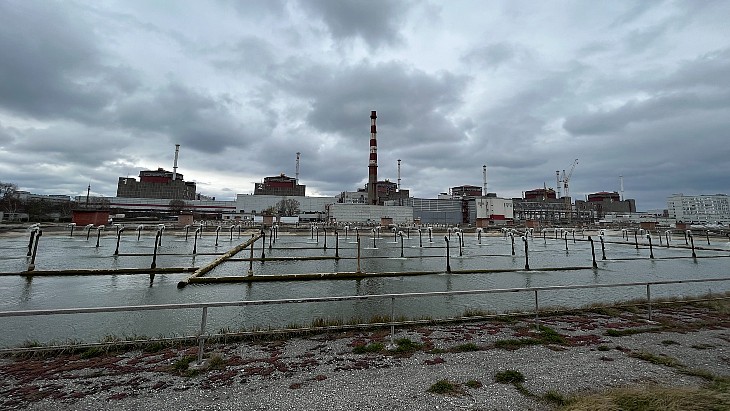
International Atomic Energy Agency Director General Rafael Mariano Grossi has said the flying of drones near Zaporizhzhia and other nuclear power plants in Ukraine "should stop immediately".

IAEA warning over drones near nuclear sites
The Zaporizhzhia plant (Image: IAEA)

The comments came after International Atomic Energy Agency (IAEA) staff at the Zaporizhzhia nuclear power plant (ZNPP) reported hearing bursts of gunfire on Wednesday morning "coinciding with a purported drone attack on the site’s training centre" which is situated just outside the perimeter of the plant.

The IAEA update said: "The ZNPP told the IAEA team that the drone hit the roof of the training centre, without causing any casualties or major damage. It was not immediately known whether the drone had directly struck the building or whether it crashed on the structure after being shot down, the ZNPP said."

The IAEA team said they had asked to visit the training centre, as happened after a previous incident in April when a drone was shot down and crashed near the training centre, however permission had not been granted at the time the update was published, on Wednesday evening. Zaporizhzhia nuclear power plant has been under Russian military control since March 2022 and lies close to the frontline of Russian and Ukrainian forces.

There have also been regular reports from Ukraine's three operating nuclear power plants of drones near the sites, and in February a drone damaged the giant protective shelter built over Chernobyl's unit 4 which was destroyed in the 1986 accident.

Director General Grossi said: "These reported drone incidents are very concerning, as they could pose a direct threat to nuclear safety and security. To put it simply: there are too many drones flying near nuclear sites, not just the Zaporizhzhia Nuclear Power Plant. It should stop immediately."

As with previous incidents during the war, the IAEA has not attributed blame to either side. Director General Grossi explained in a press conference at the United Nations in April last year that this was particularly the case with drones, saying "we are not commentators. We are not political speculators or analysts, we are an international agency of inspectors. And in order to say something like that, we must have proof, indisputable evidence, that an attack, or remnants of ammunition or any other weapon, is coming from a certain place. And in this case it is simply impossible".