Wednesday, July 23, 2025

German officials up in arms over oil, gas deposit found in Poland


DPA
Tue, July 22, 2025 

Till Backhaus, Environment Minister of Mecklenburg-Western Pomerania, stands at the swimming area of the Inselsee. Stefan Sauer/dpa

Local politicians in north-eastern Germany were up in arms on Tuesday, after news broke that a major oil and gas deposit has been discovered in neighbouring Poland, with some experts also cautioning against extraction.

The find off the Polish Baltic coast by Canadian company Central European Petroleum (CEP) was hailed as a possible "breakthrough moment" in Poland, but officials across the border in Germany were quick to point out that extracting fossil fuels should not take priority in times of climate change.

"Our future does not lie in oil from the Baltic Sea, but in energy from the sun, wind and biomass," said Till Backhaus, environment minister of the coastal state of Mecklenburg-Vorpommern, which borders Poland.

"The project stands for a backward-looking industrial policy in terms of climate policy, which is contrary to the interests of the environment and tourism on the German side," he added.

Major breakthrough?

The Wolin East offshore oil field discovered by CEP is said to be located around 6 kilometres from the port city of Świnoujście on the fringes of north-western Poland. Parts of the city are located on the island of Usedom, which is divided between Germany and Poland.

According to the results of test drilling, the recoverable reserves of crude oil and natural gas are estimated at 200 million barrels of oil equivalent.

CEP said the Wolin East site is estimated to represent "the largest conventional hydrocarbon field" ever discovered in Poland and "one of the largest conventional oil discoveries in Europe in the past decade."

If the deposit is confirmed, this "may prove to be one of the breakthrough moments in the history of hydrocarbon exploration in Poland," said the country's chief national geologist Krzysztof Galos.

"The future development of this site may significantly contribute to strengthening Poland's energy security and reducing its dependence on external hydrocarbon suppliers," he told news agency PAP.

Mining could begin in three to four years, with the field estimated to be able to cover 4% to 5% of Poland's annual oil demand for several years, according to Galos.

CEP has held a licence for exploration off the western Polish coast since 2017.

Officials and experts sound alarm

Officials in the German part of Usedom were less euphoric, however, with the mayor of the town of Heringsdorf noting the area's status as a nature conservation area.

"We are a spa and holiday resort. We do everything we can to keep our beaches, our town and the sea clean," said Laura Isabelle Marisken. "Heavy industrial gas and oil extraction right on our doorstep, it's obvious that this is a massive intrusion into our natural environment."

The German Institute for Economic Research also advised against exploiting the oil field, noting not only possible considerable negative consequences for tourism, but also the risk of cross-border pollution caused by an accident.

"In addition, the promotion of fossil fuels thwarts climate protection goals," said Claudia Kemfert, head of the institute's Energy, Transport and Environment Department. "The costs and benefits [of the project] are therefore disproportionate."


Independent Driller Discovers Poland's Biggest Offshore Oil Reservoir

Jackup rig
File image courtesy iStock / Shauni

Published Jul 22, 2025 7:25 PM by The Maritime Executive


An independent Canadian E&P firm has discovered what it believes to be the largest offshore oil find in the nation's history. Though modest by global standards, it sets a new bar for oil and gas prospects in the Baltic.

According to Norwegian-owned, Calgary-headquartered driller Central European Petroleum (CEP), a new well near Wolin Island uncovered a reservoir with up to 22 million tonnes of oil (about 160 million barrels) and five billion cubic meters of natural gas. This is among the largest conventional oil discoveries in Europe in years. Across the rest of CEP's 600-square-kilometer concession area, it estimates that it has rights to another 11 million tonnes of oil and another 22 billion cubic meters of natural gas. CEP owns 100 percent of the Wolin lease area concession and has held the license since 2017. 

The new well appears to contain enough oil to double Poland's reserves. Poland produces about three percent of its own oil, and 20 percent of its own natural gas, according to the IEA; the new find would make a minor contribution to energy self-sufficiency, but if it were replicated in other areas of the underexplored Polish EEZ, it could make a significant difference, Poland's chief national geologist Prof. Krzysztof Galos told TVP. 

"It is also a positive investment signal that there could be more of these deposits, that it pays to look for raw materials in our basin, so who knows if there won't be more news on this from other investors," energy analyst Wojciech Jakóbik told Euronews. "This is further evidence that we have a change in Europe. Tough security is making us look again more favorably at gas and oil extraction."

Poland's foreign minister added that the discovery may even be a sign of divine favor, as it follows a string of other good news for Poland. In a social media post, minister Radoslaw Sikorski suggested that the successful drilling results mean that "God probably really loves the [coalition] government."


New Baltic Find Could Be Poland’s Largest Oil Discovery Ever

Central European Petroleum (CEP) has announced a major conventional oil and gas discovery off Poland’s Baltic Sea coast, in what could become the country’s largest hydrocarbon deposit and one of Europe’s most significant finds in the past decade.

The discovery was made at the Wolin East 1 (WE1) well, located roughly 6 kilometers from the port city of Swinoujscie in northwestern Poland. Preliminary assessments suggest the well contains an estimated 22 million tonnes of recoverable crude oil and condensate, along with 5 billion cubic metres of commercial-grade natural gas.

The broader concession area spans 593 square kilometers and may hold over 33 million tonnes of oil and 27 billion cubic metres of gas, significantly expanding Poland’s known reserves. As of 2023, the country’s estimated oil reserves stood at just over 20 million tonnes, meaning this single discovery could more than double the national total.

The WE1 well was drilled using a jack-up rig in 9.5 metres of water and reached a vertical depth of 2,715 metres.

“This is a historic moment for both Central European Petroleum and the Polish energy sector,” said CEP CEO Rolf G. Skaar. “Wolin East is more than just a promising deposit — it’s a joint opportunity to unlock the full geological and energy potential of the Baltic Sea.”

Polish officials have also emphasized the strategic implications. Krzysztof Galos, Undersecretary of State and Chief National Geologist, said the find could be “a breakthrough in the history of hydrocarbon exploration in Poland,” especially in underexplored offshore zones within the country’s Exclusive Economic Zone.

The discovery comes at a time when Poland is actively working to reduce its reliance on imported fossil fuels and strengthen energy security. CEP’s Polish subsidiary is managing the project, while the Canadian-based parent company—majority-owned by Norwegian investors—was originally founded to explore EU hydrocarbon prospects, particularly in Germany.

If confirmed through further appraisal, Wolin East could shift Poland’s energy landscape and add a new dimension to Europe’s upstream sector.

By Charles Kennedy for Oilprice.com

Opinion

FEMA Chief Quits in Disgust at Kristi Noem’s Texas Flood Response


Edith Olmsted
Tue, July 22, 2025 
THE NEW REPUBLIC


The head of FEMA’s Urban Search and Rescue Branch has resigned, telling colleagues that the Trump administration’s disastrous response to the deadly flooding in Texas had driven him over the edge, CNN reported.

Ken Pagurek, who had worked in that branch for more than a decade, reportedly told colleagues that his departure Monday from FEMA had come after mounting frustrations with the Trump administration’s efforts to gut the disaster aid agency. But Homeland Security Secretary Kristi Noem’s pitifully delayed response to the flooding over the Fourth of July weekend was apparently the straw that broke the camel’s back.

Noem had severely botched FEMA’s Texas response by failing to renew contracts with companies staffing FEMA call centers, resulting in a majority of calls going unanswered for days as the floodwaters raged. The secretary dismissed the reporting as “fake news.”

She also reportedly delayed FEMA’s initial response by instituting a policy that required her to personally sign off on all DHS expenditures exceeding $100,000. FEMA officials, who were unaware of the new rule, didn’t receive Noem’s go-ahead for 72 hours.

In his resignation letter, Pagurek didn’t mention the floods at all. “This decision was not made lightly, and after much reflection and prayer, it is the right path for me at this time,” he wrote. “I have been continually inspired by the unwavering dedication, unmatched courage, and deep-seated commitment we share for saving lives and bringing hope in the face of devastation.”

One DHS spokesperson defended the response to the floods, while another criticized Pagurek’s decision, saying that it was “laughable that a career public employee, who claims to serve the American people, would choose to resign over our refusal to hastily approve a six-figure deployment contract without basic financial oversight.”

“We’re being responsible with taxpayer dollars, that’s our job,” the second spokesperson said.

Last month, Donald Trump said he plans to “phase out” FEMA after this year’s hurricane season, and future disbursements would come straight from him. “We’re going to give it out directly. It’ll be from the president’s office. We’ll have somebody here, could be Homeland Security,” Trump said at the time.

Clearly, putting Noem in charge of personally approving decisions in a disaster comes at a cost, and the Trump administration’s mismanagement of relief is more far-reaching than just the flooding in Texas.\


Maddow Blog | Questions about FEMA’s future grow louder following its latest resignation

Steve Benen
Tue, July 22, 2025 
MSNBC

Throughout his second term, Donald Trump’s line on the future of FEMA hasn’t left his administration with a lot of wiggle room: As far as the president is concerned, the agency’s days are numbered.

“FEMA is getting in the way of everything,” the Republican argued earlier this year, failing to explain what that meant. Trump soon after said he saw the agency as an unnecessary department that should be “TERMINATED.” Around the same time, Homeland Security Secretary Kristi Noem, whose Cabinet department oversees the emergency response agency, added, “We’re going to eliminate FEMA.”

But after the recent deadly flooding in Texas, the White House started hedging a bit on its plans, opening the door to an agency that might be overhauled but not necessarily “terminated.” Late last week, Noem even suggested that FEMA’s future would endure.

“What you saw happen in Texas was much more how FEMA will look in the future,” the South Dakota Republican said, as if the federal response to the Texas flooding was so impressive, it had established a model worthy of emulation going forward.

It appears that assessment has not been universally embraced within the agency. CNN reported that the head of FEMA’s Urban Search and Rescue branch resigned on Monday.

Ken Pagurek’s departure comes less than three weeks after a delayed FEMA response to catastrophic flooding in central Texas caused by bureaucratic hurdles put in place by the Department of Homeland Security, which oversees the disaster response agency. Pagurek told colleagues at FEMA that the delay was the tipping point that led to his voluntary departure after months of frustration with the Trump administration’s efforts to dismantle the agency, according to two sources familiar with his thinking. It took more than 72 hours after the flooding for Homeland Security Secretary Kristi Noem to authorize the deployment of FEMA’s search and rescue network.

The report on Pagurek, who spent more than a decade with FEMA, has not been independently verified by MSNBC or NBC News, though a Department of Homeland Security spokesperson responded to his departure in a curious way.

“It is laughable that a career public employee, who claims to serve the American people, would choose to resign over our refusal to hastily approve a six-figure deployment contract without basic financial oversight,” a DHS spokesperson told CNN in a statement about Pagurek’s resignation. “We’re being responsible with taxpayer dollars, that’s our job.”

Of course, this wasn’t much of a denial about concerns reportedly voiced by a resigning senior FEMA official.

This article was originally published on MSNBC.com

Noem's DHS Slams FEMA Rescue Chief's Resignation As 'Laughable' In Wake Of Texas Flood Disaster

Pocharapon Neammanee
Wed, July 23, 2025 
HUFFPOST

The Department of Homeland Securityslammed FEMA’s former urban search and rescue chief after reports said his recent resignation was due to the Trump administration imposing policies that delayed disaster response to the deadly flood that devastated Texas earlier this month.

Sources familiar with the resignation told The New York Timesthat Ken Pagurek, who stepped down on Monday, first expressed concerns over the administration’s changes causing disruptions since the start of hurricane season.

Pagurek was especially concerned with a new policy that required Homeland Security Secretary Kristi Noem to personally sign off on contracts or grants for more than $100,000.


Kristi Noem's Department of Homeland Security slams FEMA Urban Search and Rescue chief resignation as "laughable." Spencer Platt via Getty Images

“This decision was not made lightly, and after much reflection and prayer, it is the right path for me at this time,” Pagurek wrote in a resignation letter obtained by CNN. “I have been continually inspired by the unwavering dedication, unmatched courage, and deep-seated commitment we share for saving lives and bringing hope in the face of devastation.”

The letter did not mention Texas, but two sources familiar with Pagurek’s decision told CNN that DHS obstacles to FEMA’s response during the flooding in Texas on July 4 was Pagurek’s breaking point.

Last month, President Donald Trump said he would start “phasing out” FEMA at the end of this year’s hurricane season in order to reduce federal spending, calling the agency “very, very expensive.”

The New York Times previously reported that nearly two-thirds of calls to FEMA’s disaster assistance line went unanswered in the days following the flood after Noem failed to renew call center contracts. It took five days until after the disaster to reinstate the contracts because Noem needed to sign off on the contracts, which amounted to more than $100,000.

Noem dismissed the Times report as “fake news.”


The Texas flood death toll has risen to at least 135 people, with 107 deaths in Kerr County and three people who remain missing.

A Department of Homeland Security spokesperson defended the agency’s response to the Texas floods in a statement to HuffPost on Wednesday and scoffed at Pagurek’s decision.

“It is laughable that a career public employee, who claims to serve the American people, would choose to resign over our refusal to hastily approve a six-figure deployment contract without basic financial oversight,” the statement read. “We’re being responsible with taxpayer dollars, that’s our job. Attempting to spin a personal career decision into some big scandal is ridiculous.”

DHS claimed that FEMA “experienced no delays in deployment of assets, and Texas officials have unequivocally and vocally applauded the federal government and FEMA’s response.”

The statement concluded, “If anyone is upset by the end of unchecked, blank-check spending under President Trump’s administration, that says more about them than it does about us.”


Watch: Acting FEMA director testifies before House on improving disaster response

The Hill Staff
Wed, July 23, 2025 

David Richardson, acting director of the Federal Emergency Management Agency (FEMA) testified before the House Transportation and Infrastructure Committee Wednesday morning on ways to improve disaster response.

 Richardson did not visit the site of the floods in the days that followed 

From deadly wildfires in Los Angeles earlier this year to the recent record flooding in Texas and hurricane season, the Trump administration has faced criticism over the nation’s federal response efforts. Department of Homeland Security (DHS) Secretary Kristi Noem and President Trump had for months been pushing to dismantle FEMA but have since shifted their tone to suggest it needs to be reformed rather than completely axed.

Cuts to the federal workforce, including those tasked with predicting weather and natural disasters, have also been under the microscope.


The hearing was scheduled to begin at 10 a.m. EDT.

Watch the video replay above.

Copyright 2025 Nexstar Media, Inc. All rights reserved. 

Future of FEMA uncertain as lawmakers question agency leadership

Meg Hilling
Wed, July 23, 2025 
NEWS NATION


(NewsNation) — Acting FEMA Director David Richardson testified Wednesday that the response to devastating floods that swept through central Texas was a model for how disaster response should happen in the future. That testimony was met with criticism as the future of the Federal Emergency Management Agency is unclear.

Rep. Greg Stanton (D-AZ) was among those who said Richardson’s response to the disaster was inadequate. “For the first 48 hours, the most critical window for search and rescue, he never visited the national response coordination center. For more than week he stayed away from Texas, and for ten days he made no statement about this tragedy,” Stanton said.

The comments came as Richardson testified before the House Transportation and Infrastructure Committee about FEMA and changes that could be coming.

Department of Homeland Security Secretary Kristi Noem and President Trump have previously said FEMA should be dismantled, but recently have indicated it might be better to reform FEMA than eliminate the agency.

Richardson gives 3 steps for FEMA change

In the hearing, Richardson identified three initial steps the agency should take to initiate change. The first, he said, is the removal of bureaucratic “red tape” he argues has delayed “timely and effective delivery of lifesaving or life sustaining assistance.”

Live: Texas lawmakers begin investigation into flood response

Richardson’s second step focused on the establishment of a disaster response and recovery model that is locally led and state-managed, with federal support available when needed.

“The original intent of FEMA was to help state, local, tribal, and territorial partners build their disaster resilience, response, and recovery capabilities, and to provide resources when they are overwhelmed by the scope of a disaster,” Richardson said. “FEMA lost sight of this original intent.”

The third step was geared towards leveraging technology to increase “our partners’ operational readiness.”

Lawmakers share frustrations with FEMA

In response to Richardson’s commentary, lawmakers cited concern with previous FEMA restructuring efforts, as well as its leadership.

“Over the years, Congress has passed reform after reform trying to fix FEMA and get federal disaster response to work effectively. Quite honestly, little seems to work,” Rep. Scott Perry (R-PA) said. “Congress passes something intended to fix disaster response, but bureaucrats continue to complicate the law with added regulations.”

FEMA’s flood maps often miss dangerous flash flood risks, leaving homeowners unprepared

Perry voiced his support for states taking the lead in preparing for, mitigating against and responding to disasters, making it clear that something needs to change.

“In 2045, we do not want to see congressional hearings asking why disasters that happened in 2025 are still open,” Perry said. “The longer it takes for communities to rebuild, no matter who’s paying, the higher the costs and the more vulnerable those communities are to additional harm from other hazards.”

Copyright 2025 Nexstar Media, Inc. All rights reserved. This material may not be published, broadcast, rewritten, or redistributed.


FEMA leader defends agency response to Texas floods

Rachel Frazin
Wed, July 23, 2025 


David Richardson, acting leader of the Federal Emergency Management Agency (FEMA), on Wednesday defended his agency’s response to deadly Texas floods despite pushback from lawmakers.

During a House Transportation and Infrastructure Committee hearing, Richardson said he “can’t see anything” FEMA did wrong in its response to the July 4 floods that killed 135 people.

His comments come despite bipartisan criticism and news reports suggesting the agency was slow to act and that the Trump administration’s austere policies delayed response times.

In particular point of contention in the hearing was a New York Times report that said call center contractors were laid off after their contracts ended July 5. On July 6, FEMA answered only 35.8 percent of calls, according to the Times, while on July 7, it answered only 15.9 percent.

Richardson called the report “fake news” and said “the vast majority of phone calls were answered.”

The article, one of several that raised questions about the Trump administration’s response to the Texas floods, pointed to a new policy that reportedly requires Homeland Security Secretary Kristi Noem herself to approve expenses more than $100,000. CNN reported Noem didn’t authorize FEMA’s urban search and rescue teams until three days after the flooding began.

Meanwhile, Richardson did not visit the site of the floods in the days that followed it, according to E&E News.


He told lawmakers Wednesday there had been an urban search and rescue team “on the deck” in Texas on July 4 but that it took the state several days to request assistance.

“The disaster declaration didn’t come in until Sunday, and then Monday they requested and the support was there within 24 hours.”

Rep. Scott Perry (R-Pa.) responded that 24 hours “seems like a long time to wait” and asked whether that was standard.

“They get there as quickly as possible,” Richardson responded, adding that those particular teams came from Colorado and Missouri.

He said that on July 4, he was on vacation, but he returned the next day.

“I spent the entire vacation in my vehicle speaking on my phone either to the state of Texas or [the Department of Homeland Security] coordinating for the events in Texas,” he said.

Overall, Richardson described the agency’s response to the Texas flooding as “a model of how response should be done.”

Michael Coen, FEMA’s chief of staff during the Obama and Biden administrations, disagreed.

“The FEMA administrator should have been there as the face of the federal government coordinating immediately after the event,” Coen said.

The criticism of FEMA comes as the broader agency may be in the administration’s crosshairs. President Trump and Noem have floated eliminating the agency, though in recent weeks, their rhetoric has moved more toward reform rather than absolute abolition.

The administration fired Richardson’s predecessor Cameron Hamilton after he appeared before Congress in May and said eliminating FEMA is not “in the best interest of the American people.”

Asked during the hearing Wednesday whether FEMA will continue to exist, Richardson did not give a direct answer.

“What I can commit to is that the president wants a better emergency management for the American people,” he said.

“Does that mean FEMA is gone and there will be something new and different?” Rep. John Garamendi (D-Calif.) followed up.

Richardson pointed to the creation of the FEMA review council.

“So the answer is blowing in the wind,” Garamendi replied. “We do not know, and you cannot confirm that it is the policy of the administration to maintain FEMA.”

Richardson’s opening statement, however, described an effort that “narrowed FEMA’s focus.” In particular, he said the agency should keep people safe, allow states to take the lead and strengthen the ability of states, local governments, tribes and territories to respond.

He was similarly evasive when asked whether he agrees with the scientific consensus that climate change is primarily driven by human activity and fossil fuel use.

“We will address disasters regardless of their origin,” he said.

Asked a follow-up by Del. Eleanor Holmes Norton (D-D.C.) about whether the frequency and severity of U.S. disasters were increasing, Richardson said, “What I believe is regardless of whether they’re increasing or not, that FEMA is there to assist the American public … in disaster response and recovery.”

During the hearing, Rep. Rick Larsen (D-Wash.) previewed forthcoming bipartisan legislation that would make changes to FEMA.

“Our bill will restore FEMA to being an independent, cabinet level agency, create a new public assistance program that gives incentives to states to prioritize resilience and rebuild quickly, improve FEMA’s individual assistance program for disaster survivors by creating a universal application for federal assistance … and restructure FEMA’s mitigation programs to make funding accessible with greater speed and reliability,” he said.

Copyright 2025 Nexstar Media, Inc. All rights reserved. 


FEMA chief rejects criticism, calls Texas floods response 'a model' for dealing with disaster

GABRIELA AOUN ANGUEIRA
Wed, July 23, 2025 
AP


FILE - Rain falls as Irene Valdez visits a make-shift memorial for flood victims along the Guadalupe River, Sunday, July 13, 2025, in Kerrville, Texas. (AP Photo/Eric Gay, File)


The acting administrator of the Federal Emergency Management Agency is pushing back on criticisms of the federal response to the central Texas floods that killed at least 136 people earlier this month.

“I can't see anything we did wrong,” David Richardson told a House panel of the Committee on Transportation and Infrastructure on Wednesday. He called the relationship between state and federal agencies “a model for how disasters should be handled.”

Lawmakers used the hearing about improvements to FEMA disaster response to address reports that FEMA support was impaired by bureaucratic delays that slowed the deployment of urban search and rescue teams and left the agency's call centers unstaffed, which Richardson denied. The response "brought the maximum amount of capability to bear in Texas at the right time and the right place,” he said.

Richardson's appearance came after a wave of criticism and fallout over the response, including the resignation Monday of FEMA's urban search and rescue leader. President Donald Trump and Homeland Security Secretary Kristi Noem have touted the robust federal support for Texas despite their past support for eliminating FEMA.

Reports of delays on the ground denied

The acting administrator denied reports that FEMA urban search-and-rescue teams were delayed over 72 hours because of a new rule imposed by Noem that she must personally approve any contract of $100,000 or more. Richardson said a Texas-based FEMA task force was on the ground on July 4, along with other Homeland Security assets like the Coast Guard and Customs and Border Protection, and that additional support came within “24 hours” of being requested.

Rep. Greg Stanton, D-Ariz., pushed back on FEMA's readiness, asking why more of the 28 FEMA urban search-and-rescue teams located around the country were not on standby ahead of receiving a request from the state of Texas. “It haunts me that we could have had more urban search and rescue pre-positioned in place,” said Stanton. “That was a choice.”

The leader of FEMA's urban search-and-rescue effort, Ken Pagurek, expressed frustration with the delays to colleagues before resigning Monday, according to CNN. In response to Pagurek's resignation, a DHS spokesperson told The Associated Press, “It is laughable that a career public employee, who claims to serve the American people, would choose to resign over our refusal to hastily approve a six-figure deployment contract without basic financial oversight."

The Texas Division of Emergency Management did not respond to a request for comment on whether search-and-rescue efforts were impacted by delayed deployment of the FEMA teams.

Richardson also denied a report from The New York Times that 84% of calls to FEMA went unanswered on July 7, three days after the July 4 floods, because Noem let lapse contract renewals with outside call centers. The contracts were renewed July 10, according to The Times.

“The vast majority of phone calls were answered. There was never a lapse in the contract,” said Richardson, echoing Noem's statements that the report was “fake news.”

Richardson defended his absence from the ground efforts in Texas, saying he worked from Washington, D.C., “to kick down the doors of bureaucracy” and denying suggestions that Donald Trump or Noem told him to stand down. He did not visit Texas until July 12.


FEMA's fate is still in question

Since the Texas floods, Trump has deflected questions about FEMA’s fate. In June, he said he wanted to begin “phasing out” FEMA after the hurricane season “to wean off of FEMA and bring it to the state level.”

Trump has been criticized for delaying decisions on disaster declaration requests, causing some states to wait as long as two months for approval to receive assistance to repair public infrastructure or help survivors.

Lawmakers pressed Richardson on more general issues of FEMA reform as well, including concerns over long overdue preparedness grant funding, flood insurance and rules about how much financial assistance survivors can receive.

Both Democratic and Republican lawmakers asked about the fate of the Building Resilient Infrastructure and Communities program, which Trump canceled earlier this year. The grants supplied hundreds of millions of dollars in disaster mitigation funding. Twenty states are now suing the administration over the loss of funds.

On Tuesday, Trump approved disaster declaration requests for Michigan, Oregon, Indiana, Kansas, West Virginia, Missouri and New Mexico and expanded assistance in Kentucky.

Rep. Bob Onder, R-Mo., asked Richardson why it took a month for his state to get a disaster declaration. “My constituents were frustrated by how long it takes to get temporary housing and debris removal assistance," Onder said. Richardson referred back to Texas' declaration request: “We turned that around within just a couple hours.”

A Trump-appointed FEMA review council is in the process of crafting recommendations to the president on changes to the agency. Noem, who co-chairs the council, told its members five days after the Texas floods that FEMA “needs to be eliminated as it exists today and remade as a responsive agency.”

Three workers trapped in B.C.'s Red Chris mine have air, food, water, operator says

Story by Brenna Owen and Ashley Joannou


British Columbia Premier David Eby answers a question from the media during the 2025 summer meetings of Canada’s Premiers at Deerhurst Resort in Huntsville, Ont., on Wednesday, July 23, 2025. THE CANADIAN PRESS/Nathan Denette© The Canadian Press

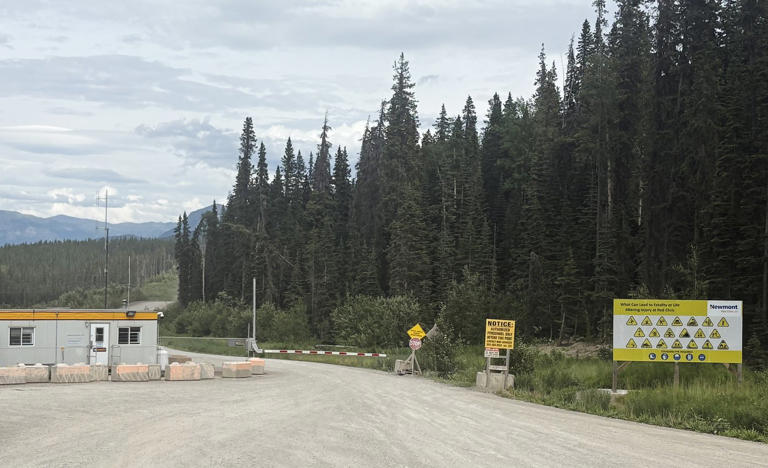
VANCOUVER — Three workers trapped underground in a refuge area at the Red Chris mine in northwestern British Columbia have enough air, water and food for an "extended stay," the mine's majority owner said Wednesday.

The statement from Newmont Corp. said it was working to assemble specialist teams from nearby mine sites to respond to the accident that occurred Tuesday.

A spokesperson for the company said the "contained refuge bays" are equipped to support about 16 people for three days, and the three workers have access to more than one of those bays in the area where they are trapped.


The security gate at the entrance to the Red Chris mine near Iskut, B.C. is shown on Wednesday, July 23, 2025. THE CANADIAN PRESS/Dave Middleton© The Canadian Press

The workers became trapped after two "fall of ground" incidents blocked access, Newmont's statement said.

They were working more than 500 metres beyond the area affected by the first fall and had relocated to the refuge station before the second collapse blocked their escape, it said.

The statement said contact was established with the workers after the first incident, and they confirmed they had safely relocated to the station.

However, it said the second collapse of rock or soil "restricted" communication with the workers.

"All appropriate emergency response protocols were activated immediately," the statement said.

"Newmont is actively assessing all methods and technologies available to restore communication and safely bring our team members to surface."

Operations at the copper and gold mine have been stood down, the statement added.

B.C. Premier David Eby released the news at the end of the premiers' gathering in Ontario on Wednesday, telling media that to the best of his knowledge, the workers are uninjured.

He said two of the workers are from B.C. and another is from Ontario.

"B.C. miners are the best in the world. Our rescue teams are exceptional, and they will be working overtime to bring these workers home safely to their families," he said.


Related video: Miners trapped underground at B.C. copper and gold mine (Global News)
We're facing a bit of a situation in British Columbia
Global News
Miners trapped underground at B.C. copper and gold mine


Eby said later on social media platform X that the government had sent a "senior geotechnical inspector" to support the company's efforts.

WorkSafeBC, the province's worker safety agency, said in a statement that mine safety falls under the jurisdiction of the Ministry of Mining and Critical Minerals.

Mining Minister Jagrup Brar issued a statement saying his ministry had dispatched a geotechnical inspector of mines to the site to work with Newmont and support rescue efforts.

The Transportation Ministry expedited a permit to allow heavy equipment to be moved from the nearby Brucejack mine to Red Chris to assist, he added.

"I'm heartened to see the immediate support that's been provided from others across the mining industry, in the form of supplies, equipment and expertise to assist with this situation," he said.

"Mining operators in B.C. — including Newmont — have highly trained mine rescue teams at the ready to respond in emergency situations."

Nolan Paquette, a business agent for United Steelworkers Local 1-1937, said the trapped workers are contractors.

They are trapped on the opposite side of the collapse, but they are safely in the refuge station underground, he said in an interview.

Eby said the province was in contact with the mine's owner, which was working with world-leading mining rescue experts.

The premier said he had spoken to Ontario Premier Doug Ford about the situation and was keeping Ford's government up to date.

"Obviously it's very concerning for the families, for the workers in the sector and British Columbians and Canadians and our thoughts are with the families and appreciation with the incredibly brave rescue teams that are working right now."

Eby told reporters later Wednesday that he didn't have details on how long the rescue was expected to take.

The province's ambulance service, meanwhile, said it was monitoring the situation.

The Red Chris mine is jointly owned by Newmont, which has a 70 per cent interest in the project, and Imperial Metals Corp.

The mine is mostly an open-pit operation, but Newmont said in an earlier statement that development of underground block-cave mining began in 2019, four years after its first production date.

The Canadian Mining Journal has said block caving can extend the life of an open pit operation, and the underground mass mining method allows for bulk extraction of lower-grade ore deposits.

This report by The Canadian Press was first published July 23, 2025.

Brenna Owen and Ashley Joannou, The Canadian Press


Study documents unhealthy noise in Portland, provides research framework for other cities


Oregon State University


CORVALLIS, Ore. – A groundbreaking study led by Oregon State University scientists shows that multiple Portland neighborhoods have levels of noise that are likely unhealthy.

The research, the first of its kind in the United States, provides a framework for studying noise pollution in other cities in the U.S., which lags behind European nations in examining the effects of noise on human health.

The project directed by assistant professor Matthew Bozigar and graduate student Carson Mowrer of the OSU College of Health indicates that the loudest parts of Portland are also the most socially vulnerable, with lower incomes and higher proportions of non-white residents.

Findings of the research, which involved sound pressure level monitoring at a mix of locations and a novel modeling technique based on machine learning, were published in the Journal of Exposure Science and Environmental Epidemiology.

“Many people in the United States still think of noise as just a nuisance, not a real health risk,” said Bozigar, an environmental epidemiologist. “But in Europe, research shows that noise is the second biggest environmental threat to health after air pollution – linked to more illness and early death than things like unsafe water, lead, chemicals or other pollutants.”

European studies suggest that noise exposure is associated with sleep disturbance, cognitive impairment, mental health disorders, high blood pressure, cardiovascular disease, metabolic disorders, hearing impairment/loss and adverse pregnancy outcomes, he said. In the U.S., however, far less is known about the health effects of noise because very little research has been done here, and since American cities, transportation systems and traffic patterns are significantly different from those in Europe, it’s not fair to assume the same levels of risk apply.

“And most communities, including Portland, don’t have a clear understanding of how noisy they really are,” Bozigar said.

As a starting point for changing that, a collaboration that included OSU’s Andrew Larkin and Perry Hystad partnered with the Multnomah County Health Department on one of the most comprehensive citywide noise assessments conducted in the U.S. Recording 24 hours a day with high-quality, low-cost digital monitors, the scientists captured critical patterns, especially at night when noise can disrupt sleep and have some of its largest health impacts.

The scientists found that most of the monitored locations in Portland, a 145-square-mile city with 635,000 residents and a metro area population of more than 2.1 million, exceeded noise guidelines set by both the U.S. Environmental Protection Agency and the World Health Organization.

“The analysis helped us identify several distinct types of noise environments across the city, such as consistently quiet areas, areas with loud but irregular bursts of noise, and areas with steadily high noise levels,” Mowrer said. “These patterns didn’t always align with traditional city zoning categories, like residential or commercial zones, and in some cases could differ even from one block to the next. The strongest factor influencing noise patterns seemed to be how close a location was to a high-traffic road.”

The findings provide a much-improved understanding of noise exposure across diverse neighborhoods and land uses in a medium-large U.S. city, the researchers say, and the datasets serve as a foundation for both local decision-making and future health studies. Further research on noise exposure and the ways people experience noise in cities could help planners and public health officials take more targeted and effective steps to reduce exposure, particularly in the places that need it most.

“Even as a native of the metro area, I saw many new parts of the city I hadn’t seen before while setting up and taking down the sound level monitors,” Mowrer said. “I spoke with quite a few residents of the neighborhoods we visited who were curious and supportive of the project. Some of them shared their own experiences with noise and how it had affected their lives.”

Field measurements began in August 2023 and ran through August 2024. Scientists from the Oregon Health & Science University-Portland State University School of Public Health, Boston University and the Multnomah County Health Department also contributed to the research, which was funded by a Centers for Disease Control and Prevention grant awarded to Multnomah County.

This study is part one of a two-part project; the second manuscript, not yet published, will provide a citywide noise picture of Portland at a resolution of 10 meters, and Multnomah County is preparing an interactive online map to share that information.

 UK

Many high street health tests are unfit-for-purpose and need greater regulation, warn experts


Studies highlight issues over accuracy and suitability for public use


BMJ Group


Many self-tests available on the UK high street are unfit-for-purpose and need much greater regulation to ensure they are safe and reliable, conclude two studies published by The BMJ today.

The findings show that most self-tests lack essential information about who should use them, how to interpret the results, and what actions to take next. Some also contradict evidence-based guidance, “creating risks for misinterpretation and inappropriate healthcare decisions,” say the authors.

Self-testing is increasingly popular, with a wide range of tests available to UK consumers without needing healthcare professional involvement. The UK market for self-tests is expected to reach a projected revenue of £660m by 2030.

Concerns have been raised about the quality, appropriateness and safety of self-test kits, but no comprehensive study has examined what is currently available on the UK high street.

To address this, researchers at the University of Birmingham reviewed 30 self-tests bought from local supermarkets, pharmacies, and health and wellbeing shops. The tests covered 19 different conditions, including vitamin D deficiency, blood sugar, thyroid function, prostate health, HIV, menopause and bowel cancer.

Of the 30 tests, only 14 made any statement about test accuracy, only eight provided information on the box about who should or should not use the test, and only seven indicated what action to take after the result.

Only 16 tests explicitly stated they were for screening, diagnosis, or monitoring, while nine did not indicate the symptoms or risk factors for their use. However, nearly all tests (27 out of 30) recommended follow-up with a healthcare professional if results were positive or abnormal, and 14 regardless of the result.

Performance claims were made for 24 tests, with over half (14; 58%) claiming 98% accuracy or higher. Yet much of the evidence to back these claims was not publicly available or was of low quality, which the authors say also raises ethical concerns.

The researchers rated 18 (60%) of the tests as “high risk” over concerns about the testing equipment, sampling process, or instructions and interpretation of the results, while use of the tests as advertised was judged contrary to evidence-based guidance for 11 of the 19 conditions studied.

The tests they found had the most issues were all distributed by one of two companies, Newfoundland and Suresign. They include Menopause (FSH) Rapid Test (Suresign) and FSH Rapid Menopause Test Midstream (Newfoundland); Microalbuminuria Rapid Test Kit (Colloidal Gold) for the diagnosis of chronic kidney injury (Newfoundland); Vitamin D Rapid Test Cassette (Newfoundland) and Vitamin D Test (Suresign); and TSH Rapid Test Cassette (Newfoundland) to detect underactive thyroid.

The authors acknowledge that the study sample was restricted to the Birmingham area and that their assessments were restricted by the lack of access and poor reporting of documentation provided by manufacturers. However, they say this is a robust, reliable evaluation of self-tests available to the UK public.

As such, they argue that the current UK self-test market fails to support informed use and the effectiveness of regulatory oversight is a serious concern. “There is an urgent need for coherent guidance and improved regulation to protect both individuals and healthcare systems from misuse and misinformation,” they conclude.

Poor quality tests can cause real harm to patients, say doctors in a linked editorial. Tools must be fit for purpose, they write, and the NHS should not be expected to provide a “free” follow-up service for companies offering inappropriate, oversold, and low value tests.

“Empowering individuals to take an active role in their health is an important goal, but if self-tests are to be sold directly to the public, they must be supported by high quality evidence, robust regulation, trustworthy public information, and clear pathways for interpretation and follow up,” they conclude.

In a linked feature, Bernie Croal, president of the Royal College of Pathologists, emphasises the knock-on effects for the NHS. “There are significant risks to patients when poor quality tests are carried out inappropriately, with both false reassurance and unnecessary consequences for the NHS to repeat tests or take additional action,” he tells The BMJ.

Since collecting their initial sample of tests in 2023, the researchers have continued to track the market - and it’s booming. A repeat search of the same geographical area in December 2024 identified 63 tests, twice as many as the previous year, many of them clones of existing self-tests, rebranded and sold under different names by a range of distributors.

There is an urgency for regulatory action and to harness the potential of these tests, says Professor Jon Deeks at the University of Birmingham. “Self-tests have a clear potential to improve public health. However, for them to be beneficial and not harmful, they must be proven to be accurate, easy to use, and supported by clear instructions. We hope the MHRA will update the regulatory process to ensure self-tests are effective and safe for everyone.”