Friday, August 29, 2025

Cold War-era missile agreements are back on the agenda and could provide badly needed peace deal negotiation middle ground
Cold War-era missile agreements are back on the agenda and could provide badly needed peace deal negotiation middle ground
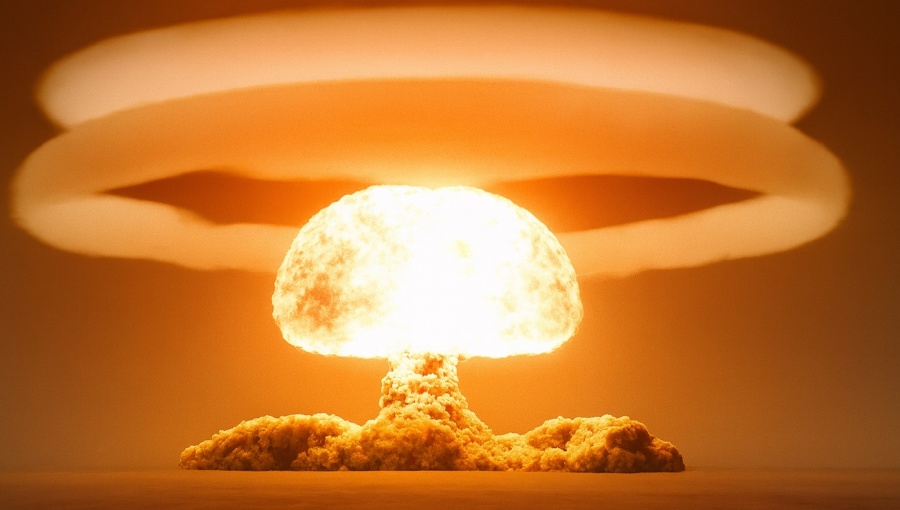
Trump and Putin discussed the possibility of restarting some of the Cold War-era arms control deals that could provide fertile middle ground for the current peace talks to bring the conflict in Ukraine to an end. / bne IntelliNews
By Ben Aris in Berlin August 29, 2025

Restarting talks on renewing the Cold War missile treaties is one of the best options of kicking off serious peace negotiations between Russia and the West and now its back on the agenda.

Any peace deal between Russia and Ukraine will turn on the form of the security guarantees to end the conflict in Ukraine that are currently being drawn up. But not only is Russia and Ukraine far apart on the terms, there is a fundamental rift between Europe and the US: the E3 leaders want a US “backstop” to any deal, whereas the Trump administration don’t want to be involved at all, although US President Donald Trump has recently softened his position a little, suggesting the US might provide supplies and intelligence to back Europe up.

Discussions continue, but all sides remain far apart on the shape and terms of a potential deal. However, the issue of arms control is one area where a lot of overlap remains.

Russia has about 4,300 stockpiled and deployed nuclear warheads and the United States has about 3,700, a total of about 87% of the world's total inventory, according to research by the Federation of American ScientistsReuters reports. China is the world's third largest nuclear power with about 600 warheads, followed by France with 290, and Britain with 225.

Trump the peacemaker

Talk of limits on the number and deployment of nuclear weapons was pushed to the back burner after ceasefire talks kicked off in Riyadh on February 18. But Trump said that he would like to see the number of nuclear weapons reduced early in his presidency.

“There’s no reason for us to be building brand-new nuclear weapons. We already have so many,” Trump said in February. “You could destroy the world 50 times over, 100 times over. And here we are building new nuclear weapons, and they’re building nuclear weapons… We’re all spending a lot of money that we could be spending on other things.”

Trump added that he wanted to restart nuclear arms control talks with Russia and China and that eventually he hopes all three countries could agree to cut their massive defence budgets in half.

Russian President Vladimir Putin too has shown himself extremely keen to restart these agreements. The roots of the current conflict began in 2002 when former US President George W Bush unilaterally withdrew from the key ABM treaty (Anti-Ballistic Missile Treaty) that was originally signed in 1972 in Moscow by Richard Nixon and Leonid Brezhnev, and is the bedrock of the Cold War missile controls. The Kremlin had previously described the treaty as the “gold standard” of arms control.

The Kremlin protested loudly at the end of the ABM treaty and even Joe Biden, who was a senator then, objected to the move, calling it “destabilising.” The US, and then Russia, withdrew from a slew of other agreements in the following years, heightening tensions and pushing Russia to rearm as a Cold War II got under war.

However, hopes that cycle might be broken came in 2021 with the election of Biden, who in his first week in office met with Putin in Geneva and renewed the START missile treaty in January of that year. The Russian side immediately suggested launching talks to renew the Intermediate-Range Nuclear Forces Treaty (INS Treaty) which the US pulled out of in 2019 during Trump’s first presidency. It didn’t happen. In the meantime, relations between the US and Russia decayed quickly as tensions over Ukraine grew.

Arms controls back on the table

Now a discussion over restarting arms controls is back on the table. Trump said this week he would be interested in negotiating a new arms control agreement to replace the extended START Treaty, which is due to expire in February next year, according to a senior Pentagon official.

“[US] President [Donald Trump], at his core, is a negotiator, and he is interested in making the world safer. I'm sure he would love to do a deal, but that deal has to have certain criteria,” said Lieutenant General Andrew Gebara, Deputy Chief of Staff for Strategic Deterrence and Nuclear Integration at the US Air Force, speaking on the treaty’s looming expiration.

The original START Treaty was signed in 2010 and was extended by five years by Putin and Biden. It limits both Moscow and Washington to no more than 1,550 deployed nuclear warheads and 700 deployed intercontinental ballistic missiles, submarine-launched ballistic missiles and strategic bombers, although Putin suspended, not cancelled, Russia’s participation due to the war in Ukraine in 2022.

Gebara said once those restrictions expire, “the Pentagon will be prepared to increase the number of deployed nuclear warheads at [Trump’s] decision.” But he added that expansion is not inevitable.

“The president may or may not elect to keep our numbers where they are, or he may change those numbers. We train and are prepared to add to those numbers, if ordered to do so. If not, then we won't. It's that simple,” Gebara said.

Arms controls were included in the agenda in Anchorage Trump admitted, Reuters reports, and that China should be involved too, with the ultimate aim of "denuclearization" Trump said. Just a day before his meeting with Trump, Putin also suggested that Moscow and Washington could reach a deal on nuclear arms control.

The proposals come at a time when both sides have been rattling their nuclear sabres. Last year Putin lowered the threshold for a nuclear first strike by amending Russia's nuclear doctrine. This year Trump sent two nuclear-enabled submarines to “appropriate regions” in response to nuclear threats made by former President Dmitry Medvedev.

The promotion of missile controls up the agenda is new. Russian Foreign Minister Sergei Lavrov has clearly said that the Kremlin is not interested in the simple 30-day unconditional ceasefire that Trump proposed in February, and that Ukrainian President Volodymyr Zelenskiy has been pushing for. Lavrov said the Kremlin would prefer a much wider reset of East-West security relations that Putin has also alluded to in his constant refrain of the need to deal with the “root causes” of the current conflict. The big surprise in Anchorage was that Trump also changed his tune and dropped the idea of a ceasefire in favour of more permanent, but harder to do, peace deal negotiations.

In his debriefing of other Commonwealth of Independent States (CIS) leaders, Putin said that the discussions with the United States were aimed at creating "the long–term conditions of peace between our countries, in Europe, and in the world as a whole, if we reach agreements in the field of strategic offensive arms control in the next stages."

Putin kicked this trope off with his famous Munich Security Conference (MSC) speech where he complained about Nato's expansion up to Russia’s borders and warned that he would “push back” if nothing changed.

Nothing changed. Russia broke off diplomatic relations with Nato in October 2021. As part of that process Lavrov gave his famous “new rules of the game” speech delivered in February 2021 that marked the start of the inevitable slide into war a year later.

Grand plan

Russia has already made one attempt to reset relations with the West with an offer for a new post-Cold War, pan-European security deal in 2008, presented by then President Dmitry Medvedev during his first foreign trip to Brussels. The plan, still on the Russian Ministry of Foreign Affairs’ website, ironically would have prevented the Ukrainian war, but was rejected out of hand.

Now it appears that the Kremlin would like to revive this initiative. There has been much discussion about providing Ukraine with security guarantees, but so far it has been limited to Europe, particularly the coalition of the willing, with a possible US “backstop.”

Lavrov has repeatedly said that any security guarantees that do not include Russia will not be acceptable. He has proposed instead a deal that is overseen by the United Nations Security Council (UNSC) and includes China – echoing the terms of the 2008 proposal.

Lavrov says that security cannot be “unilateral” and that the final arrangement must be based “on the principles of indivisible security.” That means the West cannot advance its own security at the expense of Russia’s, which Putin argues the West has been doing since the end of the Cold War with Nato’s encroachment to its very borders.

Critics say this would give Moscow a de facto veto over any Western military response to a possible second Russian invasion, but it is also very similar to the new post-Cold War deal that Russia suggested in 2008. The flaw with the current security arrangements, enshrined in Nato membership, is that Russia is excluded from the alliance, which by default makes Russia an enemy and thus undermines Russia’s security. Any new arrangement, Lavrov argues, needs to take Russia’s security fears into account, as the proposed renewed bilateral missile agreements would do.

Gebara remains upbeat about the possibility of restarting missile control talks. “I would just say it's important for us to remember [that] some of the arms control treaties in history were done at some of the hottest times of the Cold War. So, I don't think it's true to say that, because of the current international situation, there's no hope for arms control.”

Nato-lite

In the meantime, one of the half-way-house options on the table is Italy’s Prime Minister Giorgia Meloni’s suggestion of offering Ukraine a Nato-lite deal; not full Nato membership, but where European allies offer bilateral security arrangements where they promise to come to Ukraine’s military aid should Russia invade for a second time.

“The Italian proposal, based on a mechanism inspired by Article 5 of the Nato Charter [on collective defence], is now the main one in the discussions,” she said last week, as quoted by TASS.

“Putin has not, and will not, abandon Moscow’s reddest of red lines. He will not compromise on the demand that Nato never expand to Ukraine,” said Ted Snider, a columnist on US foreign policy and history at Antiwar.com. But now some wiggle room has appeared, as While White House officials have said that Putin is open to allowing Meloni’s Article 5-like arrangement following the Alaska summit.

The Kremlin hasn’t confirmed this is the case but a similar concession was at the core of the failed 2022 Istanbul peace deal that the Kremlin says is the format it would like to follow in the current negotiations. That deal failed because former British Prime Minister Boris Johnson said Europe would not sign any bilateral security deals with Ukraine and to “fight on.”

The debate continues. Nato Secretary General Mark Rutte said last week that security guarantees for Ukraine would consist of two stages – a peace agreement and support from Europe and the United States.

According to the Financial Times, Western countries have created a rough plan for providing military support to Ukraine after the peace treaty is signed. The plan includes a demilitarized zone (DMZ) that will be patrolled by peacekeeping forces from a third country. Then Ukrainian troops armed and trained by Nato troops will be deployed. And the third line is a “reassurance” force led by Europe, although the size of this force remains a subject of discussion: originally it was suggested it would include 30,000 European troops, but more recently that number fell to 6,000.

Russia remains adamantly opposed to any Nato-backed troops on Ukrainian soil. Presidential press secretary Dmitry Peskov said on August 28 that Russia has a “negative attitude” towards the deployment of troops by European countries in Ukraine as part of security guarantees.

 

Nigerian billionaire Dangote to build $2.5bn fertiliser complex in Ethiopia with 60/40 state partnership


ALL CAPITALI$M IS STATE CAPITALI$M

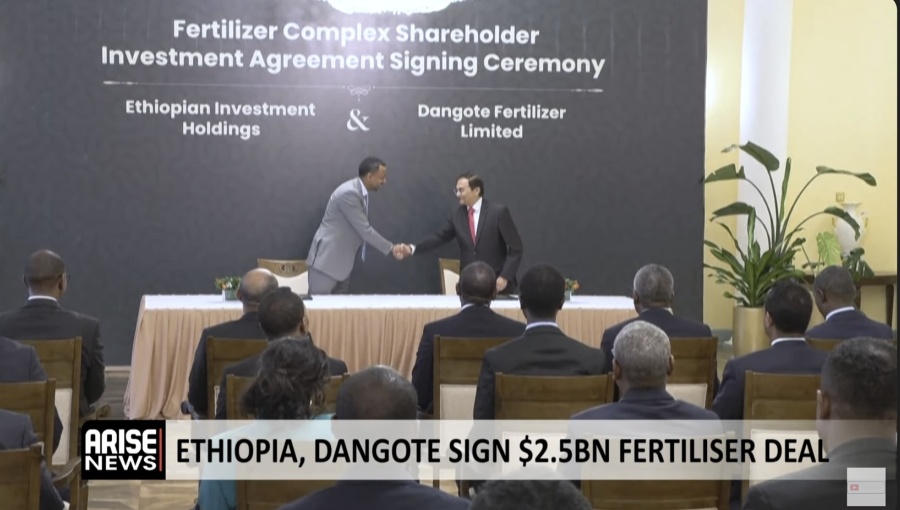
Nigerian billionaire Dangote to build $2.5bn fertiliser complex in Ethiopia with 60/40 state partnership
/ Arise News via YouTube
By bne IntelliNews August 29, 2025

Dangote Group, owned by and bearing the name of Africa's richest man, plans to invest $2.5bn to construct a fertiliser complex in Gode, Somali Regional State, through a 60/40 joint venture with Ethiopian Investment Holdings (EIH), Hallmark News has reported. 

Expected to be one of the five largest single-site urea plants in the world, the complex is scheduled for completion within 40 months. The facility will target annual production of up to 3mn tonnes of urea.  It will be supplied by new pipelines connected to the Calub and Hilala gas fields and could be expanded to include ammonia-based production.

EIH Chief Executive Brook Taye described the agreement with the Nigerian group, whose assets include an oil refinery and cement plants, as “a significant milestone” towards industrial self-sufficiency, adding it would provide “tremendous value to Ethiopian farmers,” according to Hallmark News. Prime Minister Abiy Ahmed stated that the investment would generate employment, ensure supply reliability and support Ethiopia’s “path to food sovereignty.”

Ethiopia currently relies heavily on fertiliser imports, placing strain on foreign currency reserves. A domestic gas-powered facility is expected to stabilise supply, reduce dependency and potentially position the country as a regional exporter. The state’s 40% equity share through EIH aligns the project with national goals on food security and industrial growth, which may ease regulatory approvals and infrastructure access.

The Gode complex follows Dangote Group’s model from Nigeria, where its Lagos fertiliser plant, commissioned in 2022, produces approximately 3mn tonnes of urea per year and has helped position Nigeria as a major exporter. The Ethiopian project leverages similar gas reserves and agricultural demand in the local market.

Thousands of jobs are expected to be created during both construction and operations. While Dangote Group will retain operational control, Ethiopia’s equity stake ensures a significant national interest in the project. The use of domestic gas is intended to lower input costs and improve supply chain resilience.

“This partnership … represents a pivotal moment in our shared vision to industrialise Africa and achieve food security across the continent,” said Aliko Dangote, Chairman of Dangote Group, committing to bring “decades of experience in large-scale projects” to support Ethiopia’s industrial objectives.


Kenya to introduce orthodox tea trading at Mombasa auction

Kenya to introduce orthodox tea trading at Mombasa auction
/ NTV Kenya via YouTube
By bne IntelliNews August 29, 2025

The Tea Board of Kenya (TBK) has announced that orthodox tea will be traded at the Mombasa Tea Auction for the first time, starting on September 17, The Standard reports.

TBK chief executive Willy Mutai said the country now has sufficient volumes to sustain sales at the auction, which has historically offered only black CTC tea from East Africa.

The move marks a significant step in diversifying Kenya's tea export offerings, moving beyond traditional CTC (Cut, Tear, Curl) teas towards higher-value orthodox varieties.

Producers are required to catalogue their teas by August 28, Mutai said at a stakeholders’ consultative meeting in Mombasa, as quoted by The Standard.

The East Africa Tea Traders Association (EATTA), which operates the auction, has created a dedicated line for orthodox tea producers. Mutai confirmed that 34 licensed factories are already producing the variety, including Siomo Tea, Choimim, Nndarawetta and Matunwa.

“We are working hard to ensure that we sell all the orthodox teas. If we continue leveraging our volumes, the price could even triple what we are currently selling in our orthodox teas,” Mutai said, as quoted by Kilimo News.

“Currently, the orthodox tea is fetching between $3.4 – $4, and I am sure if we remain persistent, this could go up to $10 in the Chinese market.”

Globally, according to FRED (Federal Reserve Bank of St. Louis) data, orthodox teas typically fetch between $3.50 and 7 per kilogram—a premium compared with standard CTC grades—suggesting Kenya’s move into orthodox auctions could boost earnings from specialty tea markets.

Kenya is the world’s largest exporter of tea and the third-largest producer after China and India. The sector generated KES 215.21bn ($1.66bn) in 2024, including KES 181.69bn ($1.40bn) from exports, according to the Central Bank of Kenya and the Tea Board of Kenya.

Among the factories now producing orthodox tea are smallholder-run plants under the Kenya Tea Development Agency (KTDA), a cooperative-owned company managing more than 600,000 small-scale farmers. KTDA has 34 factories dedicated to pure orthodox production.

Several larger factories previously specialising in CTC have also invested in additional production lines, including Tumaita, Kimunye, Githuki, Imenti, Chelal and Besonik.

The Mombasa Tea Auction is the world’s largest black tea auction by volume, handling exports not only from Kenya but also from Uganda, Tanzania, Rwanda, Burundi, the Democratic Republic of Congo (DRC), Malawi, Madagascar and Mozambique. The addition of orthodox tea trading marks the first major product expansion at the auction in decades

India set to boost Russian oil imports despite US tariffs

India set to boost Russian oil imports despite US tariffs
/ Ian Simmonds - Unsplash
By bne IntelliNews August 29, 2025

Indian imports of Russian oil are expected to increase in September as New Delhi presses ahead with purchases despite new US punitive tariffs, Reuters reported on August 28.

India has emerged as the largest buyer of Russian crude since Western sanctions disrupted traditional trade flows after Moscow’s 2022 invasion of Ukraine. The discounted barrels have helped Indian refiners secure cheaper supplies, but the purchases have drawn criticism from Washington. On August 27, the US government under President Donald Trump raised tariffs on Indian imports to 50%, a move that New Delhi says it is addressing through dialogue while at the same time boosting diplomatic outreach, including discussions with Russian President Vladimir Putin, Reuters noted.

Traders told Reuters that Indian refiners plan to increase Russian crude imports in September by 10–20% from August levels, equivalent to an additional 150,000–300,000 barrels per day. The rise comes as Russian exporters have more crude available due to refinery outages and Ukrainian attacks on processing facilities that have sidelined up to 17% of Russia’s refining capacity.

India imported about 1.5mn barrels per day of Russian crude in the first 20 days of August, steady from July but below the January–June average of 1.6mn bpd, according to Vortexa data. The volumes equal roughly 1.5% of global supply, with Russian crude covering about 40% of India’s oil needs. Reliance Industries and Nayara Energy, the two biggest Indian buyers, did not immediately comment.

Russian Urals crude for September loading is being sold at a discount of $2–$3 a barrel to dated Brent, deeper than the August discount of $1.50, traders said. Analysts suggest India is unlikely to scale back imports significantly unless economics change sharply or a global ban is enforced. Brokerage CLSA warned that halting Indian purchases could cut global supply by 1mn bpd and briefly drive oil prices towards $100 a barrel.

Meanwhile, the European Union has tightened its price cap on Russian crude to $47.60 per barrel from September 2, restricting Western services for cargoes sold above that threshold. The combined effect of US tariffs and EU restrictions is expected to filter into Indian imports by October, when cargoes booked in the coming days begin arriving.

A look at the Indian industries hardest hit by US tariffs

A look at the Indian industries hardest hit by US tariffs
/ Stijn Dijkstra - Pexels
By bno - Mumbai bureau August 29, 2025

India has emerged as one of the hardest hit nations under fresh tariff measures imposed by the United States, with Indian exports to its largest single market now facing duties of up to 50%. Of this, a punitive 25% is directly tied to Washington’s objection to New Delhi’s continued purchase of Russian oil.

Nearly two-thirds of India’s shipments to the US, amounting to around $60bn, will come under the ambit of these tariffs, NDTV reported. The tariffs came into effect on August 27.

The impact of the higher duties will be felt most acutely in sectors such as seafood, textiles, gems and jewellery, auto components, handicrafts, leather goods, and carpets. India’s status as a competitive supplier across labour-intensive export industries now faces severe disruption, with competing nations poised to replace Indian goods in the US market.

As per the NDTV report, the seafood sector could experience the severest damage. India shipped $2.4bn worth of shrimps to the US in FY2025, making up 32.4% of cumulative shrimp exports. The US is the largest destination for India’s farmed shrimp, particularly peeled, deveined, cooked, and breaded varieties. A steep rise in import costs threatens to wipe out India’s advantage, pushing buyers towards Latin American and Southeast Asian suppliers.

The gems and jewellery industry faces an even greater challenge. With $10bn worth of exports to the US - 40% of India’s total global shipments in the sector - tariffs are set to jump from 2.1% to 52.1%. The increase risks large-scale job losses in hubs such as Surat, Mumbai, and Jaipur, which together employ millions in cutting, polishing, and manufacturing.

The textile and apparel industry, another of India’s largest export earners, will also be hit hard. India’s exports to the US were valued at $10.8bn in FY2025, with apparel alone accounting for $5.4bn. Under the new regime, duties will rise from 13.9% to 63.9%, effectively eliminating any price advantage Indian suppliers hold. Export clusters in Tiruppur, Noida-Gurugram, Bengaluru, Ludhiana, and Jaipur are bracing for severe order losses, as countries such as Bangladesh, Vietnam, Mexico, and those under the CAFTA-DR pact are expected to take over.

Carpets, another traditional stronghold, accounted for $1.2bn in exports to the US in FY2025, with Washington buying 58.6% of India’s global shipments. Tariffs will rise from 2.9% to 52.9%, threatening artisanal livelihoods in Bhadohi, Mirzapur, and Srinagar. Industry watchers say Turkey, Pakistan, Nepal, and China stand to gain at India’s expense, according to NDTV.

Handicrafts, which earned $1.6bn from the US last year, will also be hit as Washington accounts for 40% of India’s exports in this category. Clusters in Jodhpur, Jaipur, Moradabad, and Saharanpur are staring at possible factory closures, while Vietnam, China, Turkey, and Mexico are likely replacements.

Leather goods and footwear, worth $1.2bn in exports to the US, will face the full 50% tariff. Indian exporters fear a sharp loss of market share to competitors in Vietnam, China, Indonesia, and Mexico, dealing a blow to clusters in Agra, Kanpur, and Tamil Nadu’s Ambur-Ranipet region.

Agriculture and processed food products, including basmati rice, tea, and spices worth $6bn, will also be subjected to the full 50% tariff. Analysts believe Pakistan, Thailand, Vietnam, Kenya, and Sri Lanka will move swiftly to capture India’s lost demand.

Goods exempt from tariffs

Not all sectors are affected. Around 30.2% of Indian exports, valued at $27.6bn, will continue to enter the US market duty-free, according to NDTV. The largest beneficiaries are pharmaceuticals and active pharmaceutical ingredients (APIs), which account for 56% of tariff-exempt exports. Electronics have also been exempt, covering smartphones, network switching and routing equipment, integrated circuits, unmounted chips, diode wafers, and solid-state storage devices.

Russian oil

According to Hindustan Times, India sees the tariff move as a direct targeting for its Russian oil imports. In a statement on August 7, the Ministry of External Affairs said New Delhi’s oil purchases are driven by market realities and the overarching need to safeguard the energy security of 1.4bn citizens. India argued that several other countries continue to buy Russian oil and described Washington’s penalties as “extremely unfortunate.”

The government has also labelled the measures “unjustified and unreasonable,” accusing both the US and the European Union of unfairly singling out New Delhi for its trade with Moscow. For India, the tariffs not only jeopardise tens of billions in exports but also threaten to unravel the employment fabric of regions across the country that are deeply dependent on labour-intensive industries.


Serbian police use pepper spray to disperse protest in Novi Sad

Serbian police use pepper spray to disperse protest in Novi Sad
/ X @MajaSedlarevic
By Tatyana Kekic in Belgrade August 28, 2025

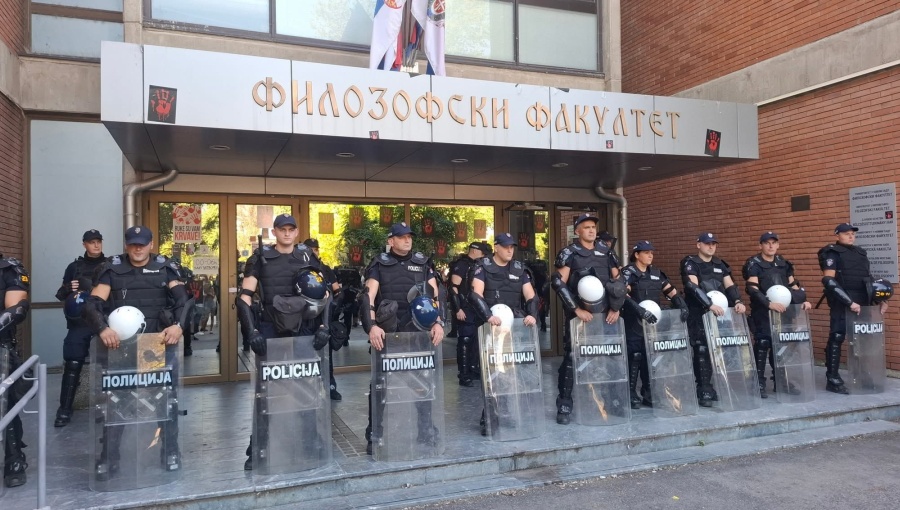
Students, citizens and riot police clashed outside the Faculty of Philosophy in Novi Sad late on August 27, in the latest flare-up of demonstrations that have shaken Serbia’s second-largest city for months.

Protests, ongoing for nine months and largely peaceful until mid-August, have turned violent in recent weeks, with confrontations between pro- and anti-government groups and the police.

The latest unrest began after students demanded entry to the faculty, which the dean, Milivoj Alanovic, had locked earlier this week after evicting demonstrators who had camped inside for months.

Police used pepper spray and pyrotechnics to disperse the crowd, injuring students and citizens, according to N1. One person reportedly lost hearing after being struck by a police-fired device.

The interior ministry said protesters had attempted to force their way into the faculty, and that police officers had been attacked in the process.

Alanovic defended the decision to bar students from the building, saying entrance exams for the new academic year needed to proceed, as reported by Serbian media outlets. On August 26, he and several professors expelled the group occupying the faculty and changed the locks.

Talks breakdown between Alberta teachers and province as strike looms next week

Story by Lisa Johnson and Jack Farrell


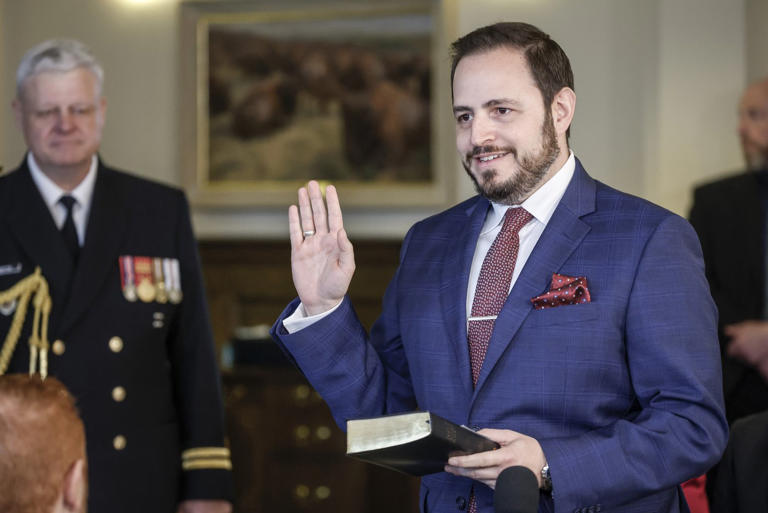
New Minister of Education and Childcare, Demetrios Nicolaides, swears the oath of office in Calgary, Alta., Friday, May 16, 2025.THE CANADIAN PRESS/Jeff McIntosh© The Canadian Press

EDMONTON — Contract talks have stalled between Alberta teachers and the provincial government just days before most students are set to return to the classroom.

Education Minister Demetrios Nicolaides says the Alberta Teachers' Association is to blame and that the union is "playing politics" with children.

He says the province's latest offer matches what the union has asked for and he's baffled over why the deal has been turned down.

ATA president Jason Schilling is scheduled to speak later this morning.

Schilling has said pay, classroom conditions, crowding and resources for students are all issues at play.

The union has to give 72 hours' notice before its roughly 51,000 members can go on strike across the province.

This report by The Canadian Press was first published Aug. 29, 2025.

Lisa Johnson and Jack Farrell, The Canadian Press

Why are Alberta teachers considering going on strike? | Watch


BOOK BAN BITES BACK
'Vicious compliance': Alberta premier decries Edmonton Public Schools' banned book list

 PEN Canada, an organization that fights against literary censorship, considers what is happening in Alberta the first — and largest — book ban of its kind in Canada.


 Nicholas Frew
CBC
Aug. 29, 2025.


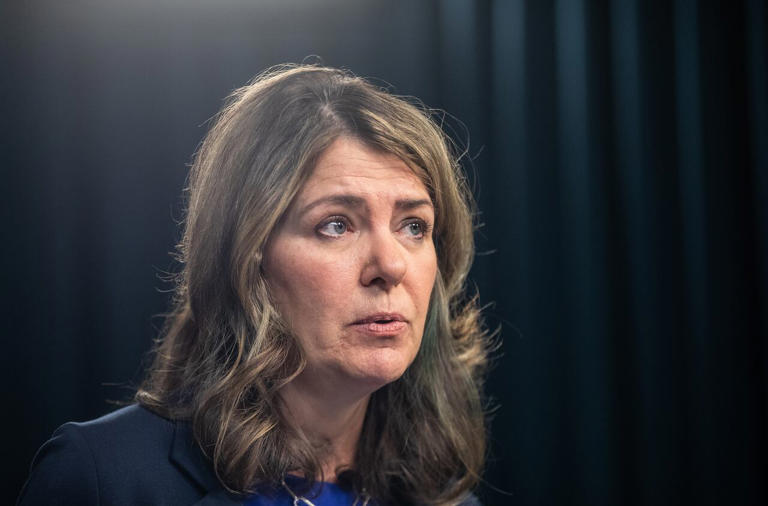
Alberta Premier Danielle Smith said Friday that the Edmonton Public School Board's list of books to be taken off school shelves showed 'a little vicious compliance' to her government's directive.
© Jason Franson/The Canadian Press

Alberta Premier Danielle Smith slammed the Edmonton Public School Board Friday morning for its banned book list, which features more than 200 titles.

The internally distributed list, which CBC News obtained Thursday, was in response to a provincial government directive to identify books that are not age-appropriate and remove them from school library shelves.


But the list included titles like The Handmaid's Tale, The Color Purple, The Godfather and Jaws. Books from authors like George R. R. Martin, Sarah J. Maas and Maya Angelou are also on the list.


"Edmonton Public is clearly doing a little vicious compliance over what the direction is," Smith said during an unrelated news conference.

The point of this work is to keep graphic, sexually explicit content out of elementary schools, she said.

"If they need us to hold their hand through the process to identify what kind of materials are appropriate … we will more than happily work with them to work through their list, one by one, so we can be super clear about what it is we're trying to do," Smith said.

The school board confirmed Friday morning that the list CBC News obtained is accurate. A spokesperson shared a statement from the board chair Julie Kusiek Thursday evening, saying the board shares concerns raised by the public about the library policy, and they acknowledged that "several excellent books" will be taken off the shelves this fall.


On Friday afternoon, the spokesperson said Kusiek will be contacting Smith directly about compliance with the ministerial order.

Canadian author Margaret Atwood, who wrote The Handmaid's Tale, declined to speak with CBC News, but noted in a social media post Friday that her novel was banned in Edmonton.

"Don't read it, your hair will catch on fire! Get one now before they have public book burnings of it," she wrote.

Education and Childcare Minister Demetrios Nicolaides announced in the spring that new rules would be coming to school libraries, after parents raised concerns to the government about four coming-of-age graphic novels — most of which show nudity and sexual 2SLGBTQ+ content — found in circulation in Edmonton and Calgary public schools.

Nicolaides signed a ministerial order, dated July 4, laying out the standards for school library materials and included definitions.


Among other things, the order states that school boards cannot allow explicit sexual content, which it defines as clear depictions of a sexual act, such as masturbation, penetrative sex, and the use of sex toys. But it holds caveats for depictions in religious texts, and non-explicit sexual content — depiction of a sexual act that isn't detailed or clear.

In the Edmonton Public Schools list, for example, The Great Gatsby by F. Scott Fitzgerald was flagged for non-explicit sexual content. The list says only students in grades 10 to 12 would be allowed to access the book, if it's "developmentally appropriate."

Government officials have reiterated that the directive is about protecting children and youth from mature content, not banning books. But Ira Wells, president of PEN Canada, an organization that fights against literary censorship, considers what is happening in Alberta the first — and largest — book ban of its kind in Canada.

A book ban, Wells said, happens when a book is removed from a public or school library shelf because someone, for example, deems it harmful or morally offensive.

"What the government of Alberta is doing here is book banning. It is literary censorship and we should use those words," he said.

"All parents — myself included — are concerned about the media that our children consume. We want to be sure that our children are consuming age-appropriate media.

"But here we have a case where partisan politicians are taking it upon themselves to determine what our children should read. That's a Rubicon that we don't want to be crossing."

During an unrelated news conference Friday morning, Nicolaides told reporters that he would be speaking with Edmonton Public Schools about its list, noting that he does have some questions about featured titles.

"Our primary interest with the ministerial order is to ensure that books that contain graphic depictions of sexual acts are provided to children in an age-appropriate way," he said.


"I want to get a better understanding of how these books were selected and what mechanisms and method the Edmonton Public Schools has used," he said, adding that he expects to get more information from the school board soon.

The Edmonton Public Schools staff spent the summer making sure "only books that directly met the criteria of the ministerial order" were added to the school board's list, the school board's spokesperson said Thursday.

John Hilton-O'Brien, executive director of Parents for Choice in Education, a parental rights group that raised concerns about the graphic novels back in the spring, is also baffled by the list.

"No reasonable person can take this seriously," Hilton-O'Brien told CBC News, accusing the school board of attempting "malicious compliance" to get out of removing content from their libraries.

"We wanted schools to pull things like graphic novels with explicit content. We didn't ask for them to play book-burning roulette with Margaret Atwood and Maya Angelou."

CBC News is reaching out to other school boards about their lists. Principals with the Edmonton Catholic School Division are reviewing their respective school library collections to ensure compliance with the ministerial order, a spokesperson said.

Fort McMurray Public Schools is figuring out its next steps per the ministerial order, a spokesperson said, but as of Friday afternoon, the four graphic novels flagged in the spring are the only ones so far that it is ensuring will not be in its libraries.

During her news conference, Smith said the Red Deer Public Schools may release its list Friday. But a school board spokesperson told CBC News that will not be the case.

It, too, is working to meet the requirements set out by the government and will be in compliance by Oct. 1, they said.

The Calgary Board of Education, that city's public school board, will share more with staff and families once its list's details are confirmed, a spokesperson said, adding that it is reviewing more than 500,000 titles and aligning library policies to the new regulations.

The Opposition NDP issued a statement Thursday from education critic Amanda Chapman, saying the United Conservative Party government is focused on banning books instead of preventing a teachers' strike.


The Handmaid's Tale among more than 200 books to be pulled at Edmonton public schools


Story by Emily Williams
CBC
Aug. 29, 2025.


Titles like The Handmaid's Tale, Brave New World, I Know Why the Caged Bird Sings and Perks of Being a Wallflower are to be pulled from library shelves at Edmonton public schools come fall, according to a document shared with CBC News.

An internally distributed list obtained by CBC News shows more than 200 books deemed sexually explicit are slated for removal from library shelves for students in kindergarten to Grade 12. It comes after a policy from Alberta's education minister outlines new rules governing books in school libraries as of Oct. 1.

"Following a division review process, the following books have been identified as containing explicit sexual content," reads the Edmonton Public Schools memo.

Beyond Canadian classics, contemporary authors like John Green and Emily Henry also have titles on the list. Books with 2SLGBTQ+ themes like Gender Queer and Two Boys Kissing are also deemed sexually explicit and will be removed.

The list became public Thursday after being distributed to some educators. Copies were being shared on social media. CBC News independently obtained the list.
'Several excellent books will be removed,' says board

The list has not been officially released by the Edmonton Public School Board. But in a statement to CBC News, EPSB chair Julie Kusiek said there is a list of books that will be removed from schools as a result of the government's ministerial order. Kusiek said the board shares concerns raised by community members and opposed the policy.

"As a result of the ministerial order, several excellent books will be removed from our shelves this fall," the statement read.

"Division staff worked over the summer to ensure that only books that directly met the criteria in the ministerial order were added to the division's removal list."

CBC asked if the list it obtained a copy of was the one Kusiek referenced, but an EPSB spokesperson refused to confirm it was the same list.
Government to review list

Education Minister Demetrios Nicolaides said the government is aware of the EPSB list banning books for students in K-12 and will be reviewing it.

"We have asked Edmonton Public to clarify why these books were selected to be pulled, and we will work with them to ensure the standards are accurately implemented. We did not provide this list to EPSB," the statement read.


Education Minister Demetrios Nicolaides is pictured announcing new school construction projects moving ahead this summer. (Janet French/CBC)

Nicolaides also said the list does not differentiate between high school students and other, younger students. However, the list obtained by CBC includes more information: a second section with over 50 titles that applies to K-9 students only.

Materials with "non-explicit sexual content" will be unavailable in libraries for K-9 students and this includes titles like 1984 and The Great Gatsby.

"They may be accessible to students in grades 10 through 12 if the content is developmentally appropriate for the students accessing the material," the EPSB memo reads.

Why some say it could create 'culture of fear'


Nicolaides has repeatedly said that the policy is not about banning books, but putting rules in place for schools that lack standards for age-appropriate material.

"I'm dismayed and disappointed. I'm not at all surprised," said Laura Winton, a former president of the Library Association of Alberta.

Winton said the policy leaves a great deal up for interpretation.

"The intention of this ministerial order was to remove materials from school libraries, and that's exactly what it's doing."


Winton said just because a book has sexually explicit material doesn't mean it's not developmentally appropriate for teenagers.

"What specific book-banning lists are going to do is limit the amount of material that's available to students, limit the amount of topics that can be discussed and just create a culture of fear in the classroom."