Sunday, September 07, 2025

The Challenge of Genoa’s Dockworkers: ‘If They Touch the Flotilla, We Will Block Europe’
Source: Palestine Chronicle

Genoa’s dockworkers, engaged in collecting and shipping aid for Gaza, vow to block Europe if the Sumud Flotilla faces attacks or intimidation.

The Port of Genoa has turned into a symbol of resistance and international solidarity.

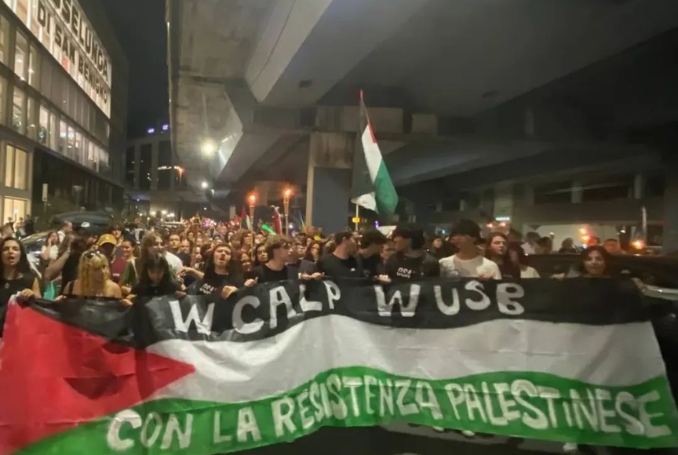
Italian media reported that for weeks, Genoese dockworkers have been collecting aid for the people of Gaza, and on Saturday evening they renewed their clear and determined message: if the Global Sumud Flotilla, which set sail today loaded with food supplies, were to find itself in danger, an unprecedented response will follow.

“If we lose contact with our boats even for just 20 minutes, we will block all of Europe. From the Port of Genoa nothing will leave anymore,” declared representatives of the Autonomous Collective of Dockworkers (Calp).

Their words, spoken before 40,000 people, expressed the unbreakable bond between the Ligurian city and the international mission to break Israel’s siege on Gaza.

The collective’s spokesperson explained that the most delicate stage will begin “around mid-September, when these boats will arrive near the coast of Gaza, in the critical zone.”

He then added: “If we lose contact with our boats, with our comrades, even for just 20 minutes, we will block all of Europe. Together with our Usb union, together with all dockworkers, together with the entire city of Genoa.”

During the torchlight vigil, the dockworkers reaffirmed their commitment: “Our girls and boys must return without a scratch, and all our goods, which belong to the people, down to the very last box, must reach their destination.”

They also reminded that every year 13-14,000 containers leave the Genoa port for Israel, issuing a stern warning: “We will not let a single nail leave anymore. We will launch an international strike, we will block the roads. We will block everything.”

Words were matched with actions. Over 280 tons of foodstuffs have been collected and shipped thanks to the joint efforts of the dockworkers and the association Music for Peace.

“We want to show that the Port of Genoa is a civilian port and not a port of war. We want to send the signal that not only do we block weapons, but we also physically deliver aid to the Palestinian population,” explained the dockworkers.

The historic “Sala della Compagnia Unica” has been transformed into a warehouse of resistance, where teams of volunteer dockworkers organized, packed, and loaded the aid. Not only their labor, but also their vehicles and resources, were put at the service of a cause they consider not abstract solidarity but a duty of class and humanity.

The Sumud Flotilla therefore sets out from Genoa not only as a humanitarian mission, but as a direct challenge to an inhuman siege. 

And the dockworkers, long at the forefront of struggles for dignity and justice, have made it clear they will not stand by: if anyone tries to stop the boats, “we will block all of Europe.
Source: Green Left

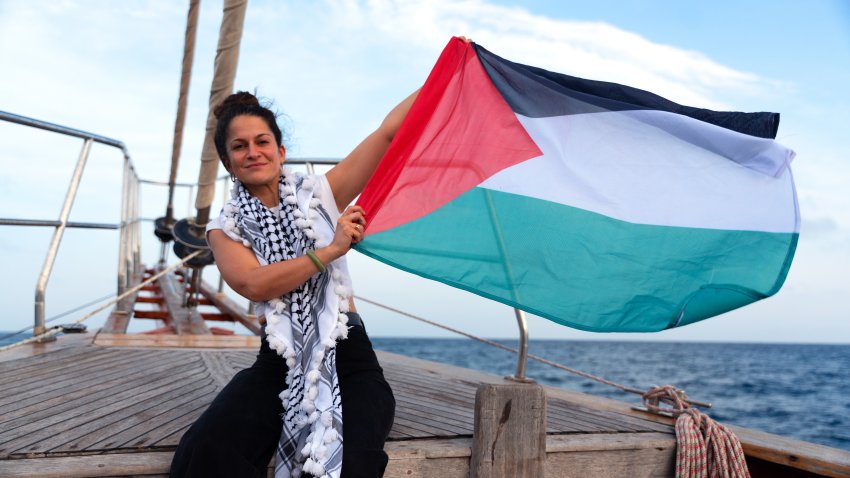
The Global Sumud Flotilla (GSF) — the largest maritime mission to Gaza since Israel’s illegal siege began 18 years ago — officially set sail from Barcelona, Catalonia, on September 2.

The flotilla of more than 50 ships is carrying much-needed humanitarian aid and attempting to open a “people’s humanitarian corridor” amid Israel’s illegal siege.

Since October 7, 2023, more than 62,000 Palestinians have been killed and hundreds of thousands displaced. Israel is deliberately starving the population and attempting to ethnically cleanse the Gaza Strip.

Swedish climate campaigner Greta Thunberg, a member of the GSF steering committee, posted a video on social media prior to the flotilla’s departure saying: “The question we should be asking ourselves is not why we are doing this, but why is this mission needed? Why are our governments failing to step up and uphold international law?

“We don’t just need aid and food to be delivered to Gaza,” she said, and called for an end to Israel’s occupation, apartheid system and genocide of Palestinians. 

Thunberg linked her climate activism to the opposition to genocide, saying that the GSF’s work is based on justice, freedom, equality, liberation and decolonisation. 

“We cannot have any climate justice without social justice,” she said. “We cannot pretend to select a few people whose future we care about, while we ignore the sufferings of countless people today; not least in Palestine, but also [in places] such as the Congo, Sudan, Afghanistan and many, many other places all over the world.”

Saif Abukeshek, a Palestinian activist based in Barcelona and fellow member of the GSF steering committee, told the Barcelona media conference on August 31: “The whole movement is inspired by the Palestinian resistance. Historically, Palestinians have been leading nonviolent and disobedience mobilisations for so many years.

“We are not here to save Palestinians; neither to teach them about nonviolence nor tell them what type of resistance they have to choose. Any people who live under occupation have the right to choose how they want to resist that occupation.”

Yasmin Acar, who was aboard the Gaza Freedom Flotilla’s Madleen in June when it was illegally boarded and 12 activists taken hostage by the Israel Defence Forces, told the media conference that 30,000 people registered to participate in the GSF. There are 44 delegations taking part and more vessels will join the flotilla from Greece, Italy and Tunis.

Bad weather forced five smaller boats to return to port on September 1, but the GSF  confirmed that “everyone is safe and accounted for, and the mission continues”.

“We remain steadfast in our commitment to reach Gaza … and to stand united in breaking Israel’s illegal siege with a humanitarian and nonviolent mission.”

[Follow the flotilla’s progress at globalsumudflotilla.org.]


Source: Democracy Now

This is a rush transcript. Copy may not be in its final form.

AMY GOODMAN: This is Democracy Now!, democracynow.org. I’m Amy Goodman, with Nermeen Shaikh.

NERMEEN SHAIKH: The Trump administration is facing growing criticism for suspending visas for Palestinian passport holders, including for Palestinian officials set to attend the annual U.N. General Assembly in New York later this month. When the U.S. denied a visa to Yasser Arafat to address the U.N. in 1988, the General Assembly was moved to Geneva, Switzerland — and the U.N. faces similar calls now.

This comes as Belgium says it will recognize a Palestinian state at the U.N. General Assembly this month, along with France, Britain, Canada and Australia. Belgium also plans to impose 12 sanctions on Israel, which include a ban on all products from illegal settlements in the West Bank and a review of public procurement policies with Israeli companies.

AMY GOODMAN: For more, we go to Niagara Falls, where we’re joined by Craig Mokhiber, international human rights lawyer, formerly served as the director of the New York Office of the United Nations High Commissioner for Human Rights, where he worked for more than three decades as a human rights official. He resigned in October 2023 over the U.N.’s failure, he said, to adequately address large-scale atrocities in Palestine and Israel. His new piece for Mondoweiss is headlined “How the UN could act today stop the genocide in Palestine.”

Craig, welcome back to Democracy Now! Let’s begin with this denial of any visas for Palestinian passport holders. Talk about who the Palestine delegation is and what it means as Western state after Western state, joining more than a hundred others, will recognize a Palestinian state, but the Palestinian officials at the U.N. will not be allowed to be there. Does this threaten the whole notion of what it means to have a United Nations?

CRAIG MOKHIBER: Well, Amy, thanks for having me.

I mean, first, I have to say that this trend of the denial of visas for Palestinians is just the latest step in what has been an expanding U.S. government trend of effectively importing the racist ideology of the Israeli regime into the laws and policies of the United States.

This particular Trump and Rubio policy has been rolled out in three phases, first, barring visas for Palestinians from Gaza, including children horribly wounded by Israeli attacks who are seeking medical treatment in the U.S., but that already an incredible act of cruelty. And then, of course, it later announced that it was barring visas essentially for all Palestinians by denying visas to Palestinian pass holders — passport holders, whether they’re from Gaza or the West Bank or any country in the diaspora. And now, as you say, it has announced that it will deny visas to the Palestinian delegation to the United Nations, including the Palestinian President Mahmoud Abbas and 80 Palestinian delegates who are supposed to be participating in the General Assembly in September.

I have to say, first, this is a direct breach of the legal obligations of the U.S. under a binding U.N. headquarters agreement and under the Convention on the Privileges and Immunities of the United Nations. So it’s indicative not only of the lawlessness of the Trump administration, but it’s also an indication of the unprecedented degree to which the U.S. government has handed the levers of its foreign policy over to the Israeli regime. And the result has been further isolation of the U.S. on the global stage.

And it is not lost to anyone who follows the United Nations that the U.S. is barring the Palestinian delegation from attending the U.N. General Assembly precisely during a session that will have as its centerpiece the situation in Palestine, the genocide in Gaza, the recognition of Palestinian statehood, as you’ve said, by a number of new additional delegations, a conference on the two-state solution, and, very importantly, in advance of extraordinary action that’s expected in the U.N. General Assembly when the U.N.’s one-year deadline for Israeli compliance with the demands of the International Court of Justice and the U.N. General Assembly expires in September, and at which point the U.N. General Assembly is expected to adopt further measures to hold the Israeli regime accountable.

It will not work. The U.S., as you say, has tried this before, in 1988, by barring Yasser Arafat. The result of that was for the GA to move to Geneva in an act of global solidarity that further isolated the U.S. at that time, as well. It won’t work this time, as well. The GA may not move to Geneva this time, because it doesn’t need to. There is modern technology that allows participation from around the globe. There is a Palestinian delegation that is resident in New York. So, it may not be necessary, but it’s already clear that the U.S. has failed, that it is further isolated, and that the Palestinian voice in the U.N. will not be silenced. It wasn’t in 1988. It won’t be in 2025, and it won’t be in the future.

NERMEEN SHAIKH: Well, Craig, you mentioned this. Let’s talk about that, the options that are available to the U.N. General Assembly as we approach the 18th of September, the deadline that you mentioned, which is the expiration at the U.N. for Israel to comply with the International Court of Justice on ending the occupation and implementing provisional orders. People think that with the Security Council deadlocked because of a perpetual U.S. veto, there is nothing the U.N. can do. But the U.N. General Assembly does actually have the power to intervene. If you could explain what the “Uniting for Peace” resolution is, when it was last used and how effective it’s been?

CRAIG MOKHIBER: Yes, that’s right. There is this mechanism in the United Nations General Assembly, known as “Uniting for Peace.” It has been long on the books, adopted in 1950. It has been used many times, sometimes with very practical effect, other times just symbolically.

But there is an opportunity now to use it to actually change the situation on the ground in Palestine, despite the U.S. veto in the Security Council. You know, far too many delegations have gotten into the habit of hiding behind the U.S. veto by throwing up their arms and saying, “Well, we tried, but the U.S. vetoed it.” But Uniting for Peace allows the member states of the United Nations, 193 of them, in the General Assembly, to circumvent the U.S. veto and to adopt concrete action, as it did, for example, in 1956 by mandating the U.N. emergency force to deploy to the Sinai in the middle of the Suez Crisis against the wishes of two Security Council members, the United Kingdom and France, and against the wishes of Israel. It could do the same thing now, in September, by mandating a U.N. protection force for the people in Gaza and, more broadly, in Palestine, that is specifically mandated to protect civilians, that is mandated to ensure the delivery of humanitarian aid, to preserve evidence of Israeli war crimes and to begin the process of reconstruction, most importantly, to change the incentive structure for Israel and its co-conspirators in the genocide that’s happening in Palestine.

Other measures could be adopted in such a resolution — for example, denying the credentials of Israel in the U.N. General Assembly, as has — as was done with apartheid South Africa; establishing a criminal tribunal to hold Israeli perpetrators to account; reactivating the anti-apartheid mechanisms to deal with Israeli apartheid — a whole range of measures that could be adopted, that would have actual teeth and that could not be vetoed by the United States or any other state. And there is an indication, from previous votes around Palestine, that they would have the two-thirds majority that is necessary for adopting these measures in the General Assembly. Israel would have no legal right to refuse or to obstruct.

And this is the final important point that I’ll make on this one. Just last year, the International Court of Justice, the highest court in the world, found that Israel has no sovereignty in Gaza or the West Bank. It has no legitimacy, no authority and no right or legal standing to either consent or to refuse the intervention of a force to protect the Palestinians. The state of Palestine has requested such a force. Palestinian civil society, across the board, has demanded such a force. And there’s an opportunity here now for that to actually be created in September.

AMY GOODMAN: Two quick questions. You know U.N. Secretary-General António Guterres very well. You were at the U.N. for more than three decades. Is it just him that’s stopping this from moving forward? And how would a Palestinian state, the recognition [of] it [by] more and more countries, stop the assault on Gaza?

CRAIG MOKHIBER: Well, it’s not the secretary-general. He has no real power here, although there’s much more he could have done in the past two years of this genocide, to use the visibility of his office, the influence of his office, to, first of all, call out the genocide by name, and also to call on states to take the kind of measures that we’re discussing here today. These have always been on the table. They could have happened at any point during this genocide.

But the beauty of the Uniting for Peace mechanism is that the secretary-general cannot block it, the Security Council cannot block it, the United States cannot block it. It only requires a two-third majority of the member states. There is a move underway to build that majority now, and the hope is that that will take place.

Now, you asked: What could obstruct it? A lot of things could obstruct it. The United States does not play fair in international diplomacy. One could expect that, acting on behalf of Israel, it will use every carrot and stick — sticks, in particular — threats against delegations, not just allies, but delegations with developing economies that rely upon foreign aid, although foreign aid has been effectively slashed.

AMY GOODMAN: We just have 30 seconds, Craig.

CRAIG MOKHIBER: So, the threats could derail this by the United States, but hopefully the world is ready to stand up and provide protection. Under the glare of publicity, every state will have to say they either do or do not support protection for a people undergoing genocide.

AMY GOODMAN: And how would Palestinian statehood stop genocide?

CRAIG MOKHIBER: It will not. It is important, but most of the world has already recognized a Palestinian state. Some of these things, these distractions of recognition, of talking about two-state solution, in the middle of a genocide that is burning across the land, is not the kind of focus that we need. We need protection for the Palestinian people, and we need the beginning of their liberation, of their freedom from —

AMY GOODMAN: We have to leave it there. Craig Mokhiber, international human rights lawyer, thank you so much for joining us. I’m Amy Goodman, with Nermeen Shaikh.Email

Craig Mokhiber is an international human rights lawyer and former senior United Nations Official. He left the UN in October of 2023, penning a widely read letter that warned of genocide in Gaza, criticized the international response and called for a new approach to Palestine and Israel based on equality, human rights and international law.


Source: Cragi Murray Blog

Humans are naturally cooperative creatures. The ability of people to dominate other life forms on the planet, to produce a built environment structured to their needs, to ensure food and water supply, to develop complex civilisations and produce all kinds of structures and objects designed to enhance interest and comfort, and to interact on a social plane that includes communication of abstract thought – all of it is a result of coordinated endeavour.

This cannot be achieved without altruism. Ever since humans have existed, people have contributed to the communal good or to the individual good of other humans through acts of social solidarity.

It is of course possible to construct an argument that selfless acts are performed on the basis of expecting wider advantage to oneself or one’s descendants from the fruits of societal advancement, but it is not necessary to believe that empathy and kindness are a manifestation of subconscious selfishness. In fact it is rather perverse to do so.

The argument was popular in the West in the 1980s when dismantling the intellectual underpinnings of the welfare state was a prime mission of those in power. But it is counter-intuitive, does not survive introspection nor observation, and it is unnecessary.

In fact it is not merely in seeking directly to help others that humans may act without selfish motive. There have always been those, for example, who seek to advance the frontiers of knowledge for its own sake, because they are intellectually fascinated, without seeking to derive any personal advantage or even practical benefit to humanity from their area of research.

The quest for spiritual enlightenment or for artistic expression is often followed with no thought of gain.

Poor people, who can hardly afford to, give to charity. Those hundreds setting sail today on the Sumud flotilla to bring aid to Gaza put their lives in danger, from an opposition to social evil.

Personally, when I investigated Israeli crimes in Southern Lebanon under Israeli drones and in the sights of Israeli snipers, or when I went to jail for revealing the truth of the conspiracy to imprison Alex Salmond, I cannot convict myself of any ill motive. I was acutely aware of my own danger and of my own responsibilities. A belief in the need to oppose the wicked actions of those controlling the power of the state, and a belief that knowledge of the truth is an essential public good, drove me in both circumstances.

I sat with Ghassan Abu Sitta in a Beirut cafe discussing the fortune he could be making as a plastic surgeon in London when instead he had chosen to work in circumstances of the most extreme professional stress and personal danger on earth, striving to save lives in Gazan operating theatres.

Ghassan is a Palestinian Scot; and there are dozens of healthcare workers with no cultural or ethnic connection to those they serve who have braved the terrors of Gaza to save lives.

Can you imagine how much more common altruism might be if the entire state were not constructed in order to teach us that it is abnormal?

Yet we live in a neoliberal society of which the carefully structured and regulated social model operates on the assumption that everyone wishes to gain maximum resources to themselves, and that the activities of a tiny percentage – who often do little discernible work in production – are hundreds of thousands of times more worthy of reward than those of ordinary workers.

It is not an accident. It is not the natural order of human society. All kinds of human societies have existed, and all have been constructs. They can be patriarchal or matriarchal, communitarian or hierarchised, religious or secular, aggressive or pacific.

Modern neoliberal society is structured around monetary systems that store wealth, in currencies that largely exist as digits in computers, and which are allocated to institutions and individuals through state-regulated systems that in no sense capture societal value as the basis of reward.

Take the UK’s richest citizen, Jim Ratcliffe. What is the basis of his wealth? Did he invent something? Did he pioneer a new form of management? Did he build vast new industrial plants that employed tens of thousands of people?

No, he did none of those things, and indeed arguably he did the very opposite of those things. All he did was accounting tricks with digitised currency units, and then indulge himself in football clubs and Land Rover nostalgia.

I have still never seen a satisfactory explanation of Epstein’s wealth, yet nobody finds it strange to associate with people whose billions have appeared through mystical financial structuring.

For a period of approximately half a century from about 1930, the primary function of states was seen to be ensuring the welfare, comparative economic well-being and social mobility of the vast bulk of its citizens.

From the Reagan/Thatcher era that changed, and the prime activity of states became the fine-tuning of the systems of finance and resource-holding in order to increase the concentration of capital. In other words the state became the facilitator of the relentless accrual of the assets of the nation into the hands of the already wealthy.

As a result we live in an incredibly unequal society, and one in which the living standards and income security of the majority are highly precarious, with disastrous social consequences of scapegoating and xenophobia.

It is at this moment that the major social disruptor of Artificial Intelligence has arrived.

Those of my generation did not usually foresee the impact of the internet. I remember typing green text on a black screen in Dundee in 1979 and being amazed I was playing Dungeons and Dragons with somebody in Manchester.

A decade later we had home computers that made noises I will never forget as they connected down the phone line; if you were lucky you would get a good enough connection to send a plain email.

There are those who foresaw the decline of city centres, the delivery culture, the fall in in-person business and social activity, the growth of corporate knowledge gatekeepers, state control of personal data, and all the other things that happened since.

I was not one of them. Similarly many people were talking about the effects of AI long before I started to give it serious thought. I remember visiting Julian Assange in Belmarsh and listening to his main views on the subject, realising that despite being isolated in jail he understood the subject far more than I did.

He was particularly worried about the centralised power that would arise from the concentration of resources required to achieve AI, and the potential for further abuse and population control by ever-expanding state power. I have to confess at the time I was hazy about what he was stating.

In short, I am not much of a seer. But I want to look for the moment at the more prosaic question of AI’s capacity to replace people in the workforce.

You can’t sit on an AI, and one isn’t going to convey the children to a camping trip: nor can you eat it. Manufacturing and food production will not be massively affected by AI (though design of course will).

What AI will be able to replace is the kind of financial pimping service for world oligarchs in which the UK specialises. Investment managers, insurance underwriters and several score kinds of banker are no longer going to be needed as humans. Vast swathes of civil service employment and administrative employment in the private sector are under threat.

I want to make, for now, just two very obvious points. The change is going to be much bigger in service-based economies like the UK and the other Western “post-industrial” economies. They have imported their needs from the non-West in return for payment based on their services earnings that will be largely redundant. I see AI as contributing to the shift in economic power from the West.

That is potentially a good thing.

The second point is that any advance that increases productivity with less labour ought to be a boon to all mankind, enabling people to work less and society still to receive as much in goods and services.

But as the AI revolution is starting at a time of maximum inequality, and where states are structured to reinforce that inequality; this of course will not happen. Unemployment will rise and people will be driven into desperate poverty, while all the productivity gain will be harvested by the billionaire class.

That is our immediate future.

The need for a more egalitarian society is urgent. The need to break away from systems that enshrine and glorify selfishness and greed is urgent. Otherwise the future is bleak.

We need a politics of altruism and empathy.


Trump is looking to consolidate his populist base without challenging corporate power

By Sam Gindin & Iranian Labour News Agency

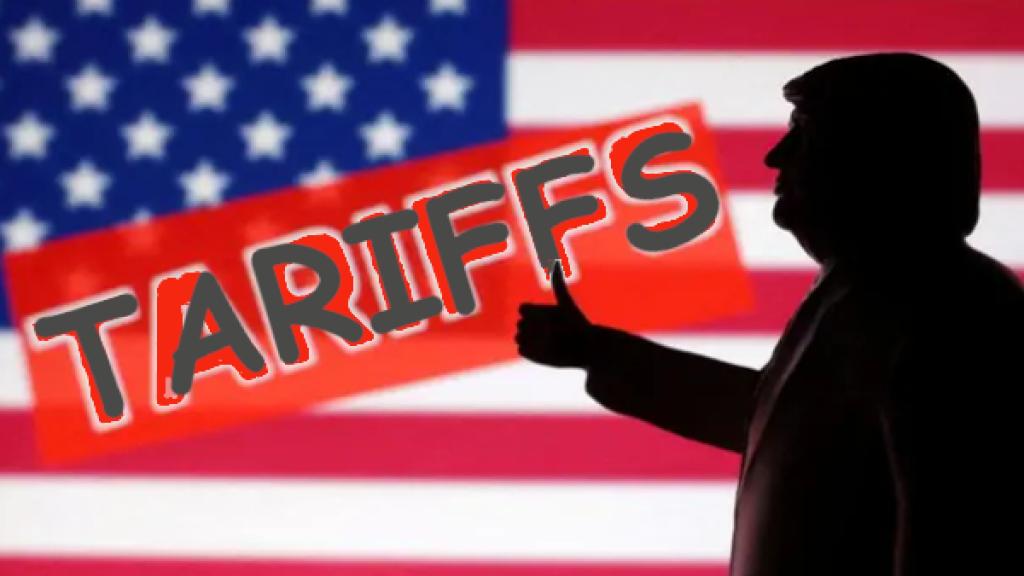
Trump US flag tariffs

Republished from Socialist Project.

ILNA: During his second presidential term, US President Donald Trump raised tariffs to an unprecedented level. In your view, are Trump’s tariff policies driven more by economic considerations or political motives?

Sam Gindin: Trump is looking to consolidate his populist base without challenging corporate power or addressing inequalities. The ‘external’ sector offers a way of doing this. Cut immigration appeals to American nativism and resentments about the alleged economic costs of immigrants. And raise tariffs to generate revenues from abroad, protect the domestic market, and pressure capital to invest in the US. So, it is political but based on economic assumptions that ignore the pluses for America of low-cost labour from abroad and mistakenly believe that tariffs are a market-driven intervention that can substitute for a larger industrial strategy that includes interventions that challenge corporate leadership.

To what extent do broad tariffs on imported goods genuinely contribute to bringing investment and industrial production back to US soil, and what costs do they impose on American consumers in return? Also, some critics argue that tariffs are essentially a ‘hidden tax’ on the middle class and workers. In your view, what effects do these tariffs have on inflation and purchasing power in the United States?

In a larger context, such as countries trying to generate egalitarian development rather than competing for investment, tariffs have a role to play. On their own, however, they are a tax on consumers and business (even business importing from their own operations abroad) that will raise prices. Moreover, the tariff revenues are not going to improve social programs for the poor but will cut taxes on the super-rich.

As for bringing investment and jobs back to the US, in the immediate term this is unlikely because Trump’s erratic on-again, off-again tariffs have created uncertainty about both where trade rules are going and the possibility of a recession. In the mid-term, Trump may be able to shift the benefits and costs of trade in favor of the US in some sectors in regards to some countries, e.g., the Canadian auto industry is very integrated into the US and may move new investments to the US to minimize disruptions. On the other hand, imposing high tariffs on China will only shift imports to other low-wage regions with no positive impact on jobs, only higher prices.

In the longer-term — which will come sooner than later — Trump’s bullying use of tariffs and explicit turn to ‘America first’ weakens its alliances, is economically irrational, and threatens to weaken and even risk the future of the American Empire. This raises the question of capital’s reaction: having gotten Trump’s goodies, will they actively resist his trade policy when it undermines the imperial role of the US that has served them so well?

At the international level, how have US tariff policies affected global supply chains? Are we witnessing a redirection of investment and production to third-world countries or merely a rise in overall costs?

It is too early to tell, since investment decisions take a while to unfold, and many such decisions are waiting to see how things unfold. It makes little sense to make major strategic shifts if, after gaining some concessions internationally, either returns things to normal or is defeated by the Democrats, and they at least partially revert to the old status quo.

Nevertheless, we are seeing clear hints of changes: less exports from China, more from the rest of South-East Asia; allies feeling alienated by Trump’s overtly America-first actions; Third-world links to China growing; American companies like Amazon and Walmart warning of both inflation and supply-side disruptions; Trump’s reversal of attacks on immigrant farm-workers because of the food lobby’s warnings of supply shortages and increases in the price of food.

The US–China trade war has now entered a new phase. In your opinion, which side holds the upper hand economically and geopolitically, and can this conflict be managed in a sustainable way? Moreover, do you think Trump can achieve his intended outcome from these tensions?

It is important to recognize that China is not looking to replace American leadership. What it wants is for the American state to act as a reliable world leader so it can move on with its own development. The bind for the US is that it wants to contain China but, unlike the Soviet Union of old, China is inside global capitalism, and the US does not want to decouple from China — its market and supply networks are too valuable for US business.

US sanctions and tariffs have not worked in containing China; they have only led to China acting to shift its exports to other countries and emphasize internal markets more. The same goes for the military competition. American aggressiveness has only pushed China to accelerate its military readiness.

China, unlike other countries, may not have an interest in replacing the American Empire, but it is determined to maintain its autonomy. The outcome may be a fracturing of global capitalism into partially separate spheres or some accommodation whereby China opens its high tech and financial markets up more (i.e., a deepening of globalization), and there is some agreement on military co-existence (akin to the American-Soviet peace agreements). But all this is fraught with uncertainty. How and whether this can be resolved is one of the most important geopolitical questions before us.

Given the imposition of steep tariffs on India, has the United States risked losing a strategic partner in Asia? In this context, how might China benefit from the rift between Washington and New Delhi?

Trump’s erratic actions have alienated allies. In the case of India, India has little choice but to explore closer relations with China, if only as a bargaining lever with Trump. But India will want to retain its balancing act between the US and alternative relations like Russia or China. So, after bullying India, it would not be a surprise if Trump found some accommodation.

And again, Trumpism isn’t forever. There are no calls from American elites to break with India, and if Trump is defeated electorally, a return to normal with India would be in the cards. Though even then the example of the dangers of over-dependence on the US might be expected to see the emergence of a more wary India.

Europe and Canada are also embroiled in tariff disputes with Washington. Will this trajectory erode trust between the US and its traditional allies, or is a behind-the-scenes compromise more likely in the end?

Trump has certainly eroded trust, and there is a delegitimation of American leadership throughout the world. But ‘delegitimation’ does not necessarily lead to material change. The extent of the economic and military dependence of Europe and Canada on the US, and the reality that delinking from the US and the radical restructuring this implies might put socialism — or at least radical economic interventions on the agenda — suggests that Europe and especially Canada are desperate for some resolution as they wait for Trump’s defeat and a return to the American Empire of yesteryear.

So yes, I expect European and Canadian governments, very much reinforced by their domestic capitalist classes, to pressure their states for compromises. The main reason for a conservative outcome is the absence of an organized left with the capacity to act on the openings created by Trump exposing the nature of the American Empire.

From a legal and institutional perspective, how much has America’s repeated reliance on tariffs weakened the multilateral trading order, and what future do you foresee for the global free trade regime?

There were already cracks in the world order that went beyond Trump such as the failures of the World Trade Organization (WTO), the limits of the International Criminal Court, the bi-partisan support for the tariffs imposed on China. Trump’s unilateralism has certainly weakened the allegedly multilateral trading order. But globalization and the empire stumble on, and what is not clear yet is will Trump’s declining authority within the US and concerns from American business lead him to reverse course? If the Democrats return to power, how much of Trump’s damage to the global trading order will be ‘corrected’?

But the more important question for socialists is our own marginalization in such debates. Our goal is obviously not to return to the American Empire as it was. Nor should we expect that inter-imperial rivalry will do much of the heavy lifting for us. And we should be careful of seeing the collapse of the American Empire as inherently good. Absent a left movement and left alternative, the decline of the American Empire is just as likely to increase nationalism and its dangers, from naïve working-class alliances with their own bourgeoisies to devastating wars.

Some analysts argue that Trump’s tariff pressures are effectively pushing countries toward parallel alliances and trade blocs. Are we witnessing the emergence of a ‘multipolar trading world’?

We need to be clear on what ‘multipolar’ means. Alliances like the BRICS (Brazil, Russia, India, China, South Africa) are not another pole in any serious way; their economic ties to the US and NATO are far stronger than their ties to each other. Regional ties may become stronger, but they can still remain part of the American-led world order. For example, neither the development of the European region nor the US-Canada-Mexico trade agreements are threats to globalization, and a Middle Eastern bloc that included Israel would ease tensions in that region and strengthen American-led globalization, not undermine it.

In the case of a new Asian block, this is an open question. Trump’s bullying is more likely to lead to such a development, but it is important to remember that a) Asia includes close and important US allies like Japan, South Korea, and Vietnam; and b) even if other countries are pushed to strengthen ties to China, many of them are as wary of China’s dominance as American dominance and would, at most, be looking to balance their dependencies.

We are in a state of flux in global economic and political relationships. We should not rush to project this into a fracturing of global capitalism or loss of American dominance even if modifications in the American Empire are occurring. On the other hand, neither can we assume the status quo is forever fixed. But one of the factors we must add to all these discussions is where left movements from below might come to play a role — not just in the US but everywhere, including China. 

Sam Gindin was research director of the Canadian Auto Workers from 1974–2000. He is co-author (with Leo Panitch) of The Making of Global Capitalism (Verso), and co-author with Leo Panitch and Steve Maher of The Socialist Challenge Today, the expanded and updated American edition (Haymarket).