
We’re Tired of Marco Rubio Speaking for Us
A New Cuban-American Movement
“Put three Cubans in a room together, you’ll have five different opinions,” a Cuban friend of mine likes to joke. He was referring to debates in the town-hall meetings during Cuba’s constitutional convention process of 2018. But I immediately thought, of course, of any Nochebuena celebration at my dad’s house, just a few hundred miles north. Siblings, cousins, babies, abuelas, family, and friends of all ages and political opinions gathered around a brilliant feast. Between the devouring of lechón, yuca, plátanos, and flan, a flurry of back and forth between English and Spanish. Everyone hugging, praying, laughing, and occasionally yelling. Well, maybe more than occasionally.
The existence of contradictory political opinions across generations will come as no surprise to diaspora families from all over, and my Cuban family is no exception. My abuelo participated in the Cuban Revolution against Batista before being turned off by what he saw as the horrors of communism. My family moved to Miami, and after being jailed for counterrevolutionary terrorism, my grandfather then defected and fought for the U.S. in the Bay of Pigs. (A Brigada 2506 flag hung on the wall of my childhood home.)
Like many Cuban-Americans growing up in Florida, I was taught countless criticisms and failures of the government of Cuba by family members. But my proudly capitalist father also raised his children to lobby against the U.S. embargo on Cuba. And as an adult, I learned about the positive aspects of Cuba’s policies, such as the nation’s historic biomedical achievements, or the remarkable advances of LGBTQ rights under the recent Families Code referendum. Today, my older brother and I are openly Marxists and organize as such for labor, social, and environmental justice. As you may guess, sometimes things get a little complicated!
Following the festivities this past December, one of mis primos worried to me about her brother who lives on the island. With increasing blackouts and energy strains, a stressed economy, and hawkish U.S. policies towards her first homeland, things were only getting harder. “The only people who pay attention to what’s happening in Cuba are Cubans,” we lamented. “Hopefully that will change.”
Then 2026 came. With it, the Trump administration’s war games: Kidnapping presidents, murdering leaders in other countries, seizing foreign oil, and threatening sovereignty. People were paying attention.
People are starting to learn about the 66 years of failed U.S. policy against Cuba. People are learning about the trade restrictions that prevent medicine, food, and fuel from getting to the island. People are learning about the starvation, pain, disease, and death that come from these policies. And people are also beginning to notice that Cubans across the political spectrum want something different than what the U.S. provides!
There has long been a particular image, a particular idea, of what it means to be Cuban-American. You know it well: “The Miami Cuban.” The man opposed the communist policies in Cuba so much that he’s willing to go to war with the island, that he’s willing to bomb, and destroy. And this hyper-machismo image, along with intergenerational trauma in Cuban families, has been used for decades to push US policies against Cuba that do nothing but harm the people of the island. That harms our family, our friends, and a country that we deeply love.
I’m tired of the extremist “Miami Cuban” propaganda machine. I’m tired of the Marco Rubios and Ted Cruzes of this country claiming to speak for Cuban-Americans.
I know, however varied our politics, what my family wants is this:
We want the embargo to end. We want the cruel, inhumane oil blockade by the Trump regime to end. We want the current administration’s posturing towards war games and invasion to end. We want engagement, not escalation. We want friendship. We want trade. We want to gather with our families, watch béisbol, and drink cafecitos by the Malecón.
Despite what the Marco Rubios, Maria Salazars, and Carlos Giménezes of the world try to tell people, this is what most Cubans in America want.
Ready to speak up, a group of us has come together to build the Cuban Americans for Cuba movement. We have launched an open letter against the current U.S. policies towards Cuba, so other Cubans can sign on and show the world the true values of Cuban-Americans. Our organization is growing, with members all over the United States, and we span a variety of opinions. What we share is the belief that the future of Cuba should be left to Cubans on the island to decide without U.S. interference and meddling. We work together across our differences to end the Embargo, knowing that this is the best way to allow for freedom for all to flourish.
And that is why a delegation of Cuban-Americans is going on the Nuestra América convoy later this month with other Cuba solidarity activists, a delegation which I am proud to join. We are going to deliver thousands of pounds of medical aid to the people and communities that we love. We are going to show that Cuba is not alone, and that the working people of the USA stand with them. We are going to build bridges of friendship and solidarity and a better world where we all have liberation. A world where we all have peace.
Some, including Republicans in the US Congress, have accused the convoy of being an anti-American venture and the participants of being communist agents. But just like Cubans and Cuban-Americans, the Nuestra América convoy and our supporters are made up of people across the political spectrum. The out-of-touch politicians who seek violence may not understand this, but here’s the truth: the only thing you need to be to oppose the US Embargo on Cuba and the Trump administration’s war games is a human being.
First Iran, Then Cuba: Trump Has Dropped the Peace-President Mask
Donald Trump did not merely let slip a reckless aside when he said he wanted to “finish this one first” – meaning Iran – before turning to Cuba. He revealed a governing mindset. Countries become items in a queue. War becomes a scheduling matter. One theater before the next, one pressure campaign before the next, one performance of toughness before the cameras move on. That is not strategic restraint. It is imperial casualness masquerading as command. Reuters reported on March 5 that Trump said he wanted to finish the war in Iran first and that it would then be only “a question of time” before attention shifted to Cuba; two days later, Reuters reported him saying Cuba was already negotiating with him and Marco Rubio.
What makes the remark more damning is the promise it betrays. Trump sold himself to voters as the man who would stop wars, not start them. In his inauguration address, he said his “proudest legacy” would be that of a “peacemaker and unifier,” and that America’s success should be measured not only by the battles it wins but by the wars it ends and the wars it never gets into. Even in late February, the White House was still branding him the “President of Peace.” Yet the administration is now openly talking about winning the war with Iran, rejecting negotiations, and even asserting a right to shape Iran’s political future.
You do not have to praise the Iranian state to recognize the danger in that. The issue is not whether one approves of Tehran. The issue is whether an American president who campaigned against endless war is now normalizing the oldest and most discredited habits of Washington foreign policy: regime-change rhetoric, contempt for diplomacy, and the fantasy that bombing can substitute for strategy. When Trump says he is not interested in negotiating and muses that there may be nobody left to say “we surrender,” he is not sounding like a dealmaker. He is sounding like every hawk who has ever confused devastation with victory.
The Cuba remark matters for another reason as well. It suggests that Iran is not being treated as a singular emergency but as one stop in a broader politics of coercion. That is how permanent interventionism works. Every crisis is packaged as exceptional, urgent, and morally self-evident – until the language starts to slide. First this country, then that one. First “finish” Iran, then move on. First present force as a necessity, then sell the next confrontation as inevitable. Trump’s words make that rhythm impossible to miss. The vocabulary may shift from threat to negotiation to triumphalism, but the premise remains the same: Washington decides, others adjust.
Congress, meanwhile, is doing what Congress so often does when presidents discover a taste for undeclared war: almost nothing. On March 4, a Senate majority voted to block a bipartisan war-powers resolution that would have required congressional authorization for hostilities against Iran. That abdication is not a procedural footnote. It is one of the great mechanisms by which American wars become easier to start, harder to stop, and almost impossible to own. Presidents escalate. Legislators grumble. Then the war machine keeps moving.
And it is moving fast. Reuters reported this weekend that the administration used emergency authority to bypass Congress and expedite the sale of more than 20,000 bombs to Israel, just as the joint U.S.-Israeli air war against Iran entered its second week. This is what “peace through strength” usually means in practice: fewer restraints, more munitions, and a shorter distance between rhetoric and rubble. The slogan is designed to comfort Americans into believing that force is a form of stability. More often, it is simply the marketing language of escalation.
There is a bitter irony in all this. Trump built much of his political appeal on contempt for the failures of the foreign-policy establishment. He derided the disasters of Iraq and Afghanistan. He mocked the bipartisan class that treated military power as a substitute for political imagination. Many voters heard in that rhetoric a genuine break from the habits of intervention. What they are getting instead is something far more familiar: a White House that still speaks the language of swagger, still reaches first for coercion, and still assumes that violence proves seriousness. The branding changed. The reflex did not.
That is why Trump’s “Iran first, Cuba next” posture deserves to be taken seriously – not as a gaffe, but as a warning. It is the language of a president for whom war has become ordinary again, something to be managed, sequenced, and sold. The proper antiwar response is not to choose among Washington’s designated adversaries or to pretend that one target is more acceptable than another. It is to reject the premise itself: that American credibility depends on moving from one confrontation to the next. Iran should not be treated as a stepping stone to another showdown. Cuba should not be dangled as the next file on the desk. And the United States should not be asked, yet again, to mistake machismo for peace. Trump was marketed as a peace president. He now speaks like a man who cannot imagine power without war.
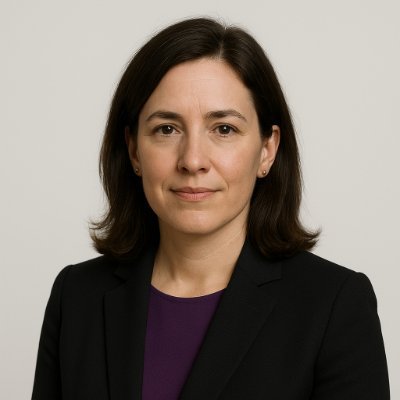 Alice Johnson is a policy analyst and writer focused on global affairs, peacebuilding, and social impact. She explores the intersection of diplomacy, human rights, and civic movements, aiming to highlight stories that bridge understanding across nations. She can be contacted at Itsjohnsonoriginal@gmail.com and followed on Twitter, @ImAliceJohnson.

No comments:
Post a Comment