Sunday, September 07, 2025

Understanding The Roots Of The Trans Resistance Crisis In Bangladesh

Source: Originally published by Z. Feel free to share widely.

When one reads through the handful of media pieces covering Bangladesh’s transgender community, the narrative is usually about their victimhood and aspirational longing for a better yet elusive future. In Bangladesh, hijras (individuals assigned male at birth who harbor outwardly feminine expressions) have long lived on the margins. Scholarly interest in this gender non-conforming community dates back to colonial times, where hijras are historicized as spiritual figures with the power to bless or curse, with contemporary scholars emphasizing how this much-revered figure has been expelled from areas of education, employment, healthcare, and housing. 

In the case of Bangladesh, a growing rise of religious conservatism has taken precedence within policy-making decisions concerning transgender and hijra communities. To preserve a fragile ruling coalition that included appeasing Islamist parties, the Awami League party has often turned a blind eye to violence and threats faced by hijras and trans people Not only have these (in)actions prevented trans people’s movement gains, but it has enabled right-wing academic intellectuals to capture social and political capital through a targeted escalation of trans and gay panic. Their well-intentioned academic ideas, designed to benefit the Bangladeshi mind, are inadvertently being used to campaign against trans people and the ongoing ethnic cleansing of indigenous minorities. To contextualize how the country arrived at this stage of trans panic, it is imperative to understand what the right has to gain by insisting that trans people are a threat. 

The rise of global LGBTQ liberalism 

“The transgender movement in Bangladesh started in 2000 through non-governmental organizations (NGOs). Conversations around trans rights took place within the larger women’s rights movement,” said Joya Sikder, a veteran trans woman activist and director of Somporker Noya Setu (SNS), an organization working for gender minorities. 

In 2013, a significant form of state recognition arose when the Awami League government allowed members of the hijra community to identify as a ‘third gender.’ While state recognition of such a deeply pathologized population was considered a major achievement, this did not lead to legal or political benefits for the country’s growing transfeminine population.

Meanwhile, in the United States, Time Magazine marked the year 2014 as the “transgender tipping point.” Since then, various liberal projects aiming to ‘include’ trans people in public life were backed by state and federal governments, pinkwashing the settler country’s image as a ‘LGBT-friendly’ nation. While Western empires used inclusion tactics to assimilate trans people into the state, violence against racialized trans people persisted in the backdrop. This was in sharp contrast to how nations that were deliberately underdeveloped by imperialist and colonial forces set different standards in governing their transgender citizens. Denying ‘human rights’ to trans people living in the global majority strengthened the U.S. public relations strategy of being a trans haven. 

Bangladesh is one such global majority country where the LGBT community faced massive setbacks from 2016. The decline in activism is attributed to the sensational murders of Xulhaz, a gay man, and Tonoy, a non-binary individual, both of whom were affiliated with the gay magazine, Roopbaan. Their deaths paralyzed the LGBTQ+ community, and the architects of previous gay rights advocacy efforts secured asylum in Western countries. 

In the absence of senior activists, a younger and more politically sharp generation arose amid a watershed age of trans visibility. Rarely discussed, the handful of large NGOs working for gender-diverse populations leveraged the deaths of Xulhaz and Tonoy as a cautionary tale to suppress movement-building efforts. To date, NGOs continue to solicit lucrative funds from international charities claiming to improve LGBT ‘advocacy and capacity-building’ efforts. 

How Bangladesh’s far-right seized identity politics 

Despite the rise in Bangladesh’s trans visibility, many hijras did not want to be seen as transgender as they believed hijragiri to be a culture and way of living. The tension between hijra vs. trans terminology led to national-level consequences for the country’s first transgender rights bill, which was petitioned to the Awami League in 2022. Due to backlash faced by hijra community leaders, Bangladesh’s Human Rights Commission was unable to pass the bill. 

“Gurus (leaders) who run hijra households benefit from the earnings made by their chelas (children) and nati-chelas (grandchildren),” said Joya, “Gurus don’t advocate for legal rights because if younger trans people have rights and become educated, they can no longer make money from the sex work and begging done by chelas.” 

The wedge in hijra vs. trans terminology was capitalized upon by right-wing intellectuals, Asif Mahtab Utsha and Md. Sorowar Hossain, two university professors who spread viral

rumors that transgender individuals are homosexuals who regularly changed their genders to carry out depraved activities (e.g., a trans woman who enters a women’s restroom is dangerous and is reduced to their male genitalia). Biology must decide every individual’s destiny. 

“In one of my old interviews, I had said that transgender is a gender identity and hijra is a culture. Utsha and Sorowar manipulated my words to falsely claim that transgender people are homosexuals in disguise,” said Joya. The intellectuals went so far to claim that hijras are born with intersex conditions and therefore psychology did not play a role in hijra identity formation. 

Transphobia escalated further in 2024 with the Sharif/Sharifa case at BRAC University, where Utsha tore out a book promoting transgender inclusivity. Large protests were held by various student bodies in solidarity with Utsha’s transmisogyny. “Right-wingers in Bangladesh are not doing anything new. They have been copying the same playbook that has been used over centuries to deny transgender people the right to live like any other human being,” said Meem Arafat Manab, a 29-year-old Mathematics lecturer at BRAC University. 

“The right-wingers want to keep transgender people within the hijra category. That way, hijras will continue doing sex work and begging as that is considered tradition,” said Joya. The explosive scenario that played out at Bangladesh’s leading private universities reflects the growing power of contemporary right-wing intellectuals and Islamofascist hardliners in distorting the public’s ideas of sex and gender. 

No More Playing Safe 

In 2024, Sahara Rabil Chowdhury was a 23-year-old trans woman and a 3rd-year student at Sylhet’s Metropolitan University. She spent most of her childhood moving between various villages in the Chittagong division due to the nature of her family’s occupation. Eventually, her family moved back to Sylhet. During her teenage years, Sahara noticed how the absence of legal rights affected her access to safety and material resources as an effeminate man. Her gender non-conformity invited predatory and sexual advances from stalkers, which she narrowly escaped. 

In freshman year, Sahara had entered her university as a closeted trans person. Upon transitioning, the faculty advised her to use the female restroom. During the Sharif/Sharifa scandal, online accusations surfaced that Sahara used both male and female restrooms as she desired. However, Sahara did not drink water during the day to avoid using campus restrooms. The bullying intensified over the years, and her peers went so far as to claim that because she was a class topper, Western organizations were paying faculty members to raise her grades.

While transantagonism was eating away at Sahara’s everyday reality, she became strongly influenced through reading about the Black civil rights movement in the United States. She believed that the goal of the oppressors was not to eradicate queer or trans people but to keep these communities as exploitable subjects. The deliberate denial of legal rights has pushed most transfeminine individuals into becoming sex workers and concubines, in other words, disposable. The acute denial correlates with Achille Mbembe’s theory of ‘necropolitics,’ which classifies certain populations as dead and devoid of being considered human. 

In July 2024, when students rallied with their blood against the despotic Awami League and Sheikh Hasina, Sahara took part in the protests and organized extensively on her university campus. After the interim government under Dr. Mohammad Yunus was sworn in, Md. Sorowar Hossain and Asif Mahtab Utsha once again took to social media to deny governmental registration of trans protestors who participated in the July uprising. 

“Sorowar and Utsha committed genocide denial by standing against the transgender martyrs of July. They have actively denied the truth of LGBT people’s contributions to driving away the Awami League,” shared Sahara. 

The aftermath of the 2024 uprising saw increased mob violence against trans women and their livelihoods. Most hijras lived in shared households or gharanas, a hierarchical kinship system that has existed for centuries. These households, often located in impoverished areas, were vandalized by transphobic mobs with impunity. The lack of legal mechanisms also compounded the precarity faced by trans men, non-binary, and intersex people. Without any social safety nets and legal rights, the trans community has become a demographic that is increasingly being pushed toward sex work and street begging to make ends meet. 

In South Asia, access to rights and benefits is determined by the role of the family and the institution of marriage. While assimilation into heteropatriarchy has been critiqued by radical leftists in Western societies, the exclusion of LGBTQ+ groups from accessing marriage has real, material consequences and can mean life or death. Sahara alongside other queer and trans individuals been demanding that Bangladesh’s LGBTQ people should be able to use marriage as a shield against wrongs that no one, regardless of gender or sexual orientation, should suffer. No loved one should be excluded from inheritance benefits and pensions, end-of-life decision-making, hospital visitation, and the many other family rights reserved for married couples.

‘The purpose of the system isn’t to exterminate LGBTQ people. It’s to make you disposable and exploitable. That’s what scares me so much. That’s what makes me care about this community and our legal rights,” says Sahara. 

In a defiant move to counter the trans hatred that Utsha and Sorowar regularly circulated on their Facebook pages, Sahara drew satirical and polemical cartoons of them both. With the increasing allegations made by Metropolitan University students against Sahara for getting ‘special transgender treatment’ and the cartoons that were drawn, Sahara was expelled from the university on August 13, 2025, without any disciplinary hearing or due process. Since her expulsion, Sahara has faced vitriol from right-wingers and media outlets on the violent nature of her drawings. Utsha and Sorowar spiraled into a social media rampage about how trans people will bring about society’s destruction. 

A historic declaration of trans agency 

In the Jim Crow era, civil rights figure Dr. Martin Luther King advocated for the use of non-violence as a way to achieve the gains needed for Black people living in the United States. His rationale was that if the oppressor witnesses the oppressed’s suffering, they will be moved to change their hearts and therefore their oppressive actions. Black Panther Party leader Stokely Carmichael aka Kwama Ture who refused to be assimilated into the middle-class mainstream, expressed that, in order for non-violence to work, the opponent must have a conscience, and in the case of the United States, they had none. 

Sahara’s ‘violent’ drawings align with Carmichael’s theory of using violence as a means of resistance, given that the right-wing Bangladeshis don’t possess a conscience or see trans people’s humanity. When a certain group is constantly living under threat, activists are interrogating whether non-violent tactics will work to change hearts and minds. Sahara thinks otherwise. “LGBT people have not been given a place in Bangladesh’s social contract. And thus we have no obligation to the social contract to preserve civility or non-violence to acquire our rights.” 

After Sahara’s expulsion, the media was more fixated on covering Sorowar and Utsha’s perspectives as they held a more ‘respectable’ position in society. In a rebuttal, Sahara delivered a searing press conference statement at the Dhaka Reporters Unity on August 22, 2025, which detailed the structural violence that Bangladeshi trans people have been subjected to due to a lack of legal protections. 

The journalists refused to cover her statement in full as Sahara’s ferocity did not fit into the media’s traditional ideas of transgender victimhood. Even though Sahara’s declaration defied the media’s bylines of victimhood, their silence is indicative of how a trans person can be written about only when they fit the category of a victim.

“During the Awami League’s political rule, someone like Sahara could not have held a press conference to express her views publicly. The right wing became what they are now during the Awami League’s tenure. I think the July uprising has unmasked the fascism that’s already been here,” said Meem. 

For too long, far-right academics, religious preachers, and influencers in Bangladesh have convinced the general public that trans and LGB people are prone to violence and mental illness to back up their unsubstantiated transphobic claims. Immorality is permanently ascribed to queer and trans people: these are part of the right’s coordinated efforts to shackle these communities to positions of sex work and economic bondage. Ultimately, the goal is to remove LGBTQ people from public life and sequester them elsewhere, be it through misinformation, legislation, or extrajudicial murders. 

An uncertain road ahead 

Sahara is resolute that the only solution is to fight against the systems that have targeted and disenfranchised trans people in the first place. She states how it’s crucial not to let the rhetoric by right-wing intellectuals be weaponized against trans people. Identity politics has been used to pit communities against one another (hijra vs. trans, gay vs. hijra, etc.). The reality remains that for centuries, trans women have been relegated to ghettos and engaging in survival sex work. 

When asked whether the LGBTQ community are gearing up to protest, she says, “If people in the community don’t fight against the system, I will fight by myself and if needed, I will die by myself. Jodi tor daak shune keu na aase tobe ekla chalo re (If no one responds to your call, then go your own way alone). I will be fighting regardless of my privilege or marginalization. I will not use my agency to accept defeat.”Email

Mikail Khan is a freelance Bangladeshi transmasculine writer, organizer, and healthcare worker living between New York and Dhaka.


The Tianjin Summit and the Hope for a More Just International Order

Source: CounterPunch

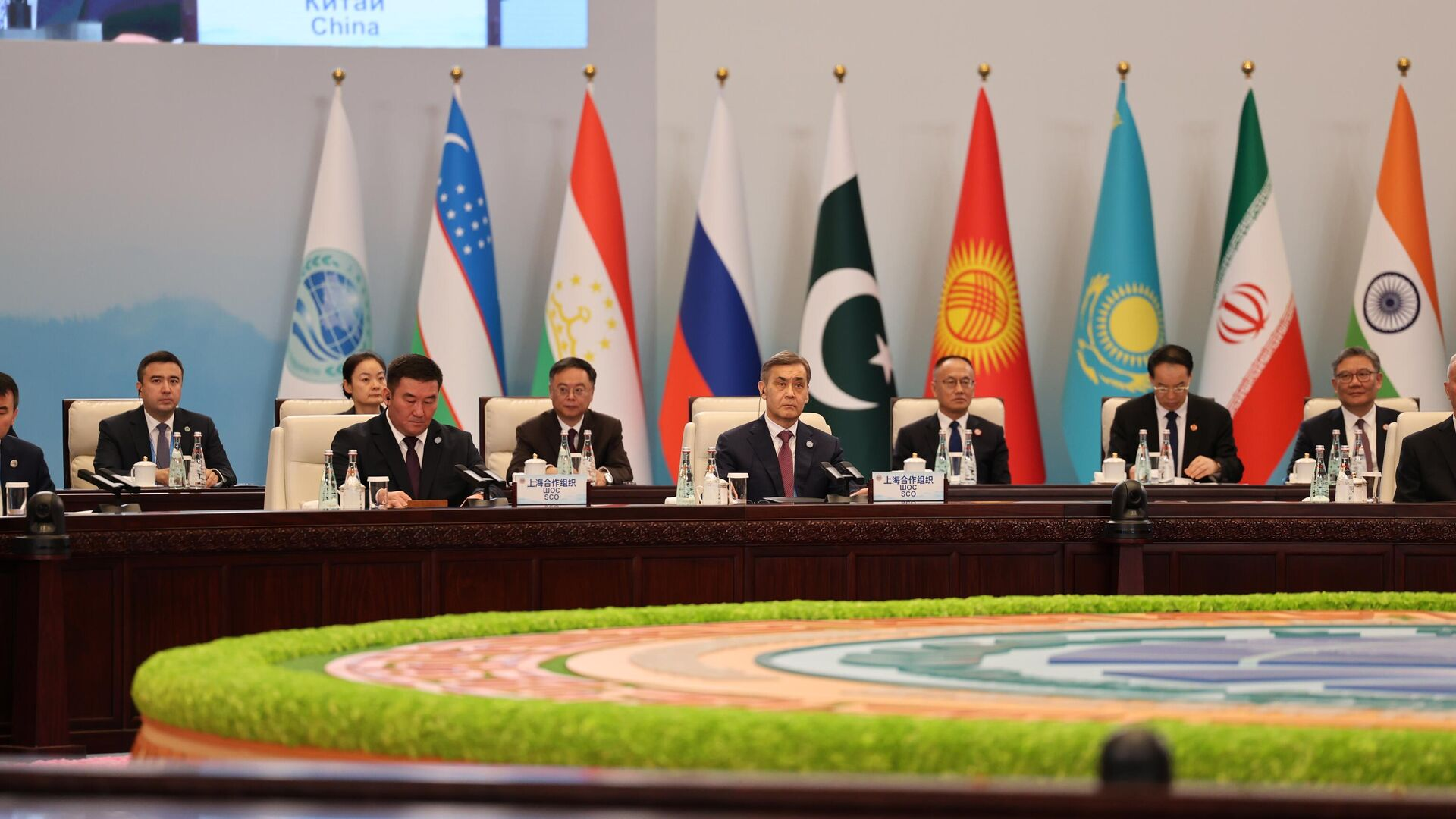
On 1 September 2025, in Tianjin, China, the Shanghai Cooperation Organization (SCO) concluded its 25th summit, with the participation of UN Secretary-General Antonio Guterres, numerous chiefs of international organizations, ASEAN Secretary-General Kao Kim Hourn, Commonwealth of Independent States General Secretary Sergey Lebedev, and the Presidents or Prime Ministers of 24 States including Egypt, India, Indonesia, Pakistan, Russia and Turkey. 

The highlight of the summit was the Global Governance Initiative (GGI) outlined by Chinese President Xi Jinping, in reaffirmation of the  aspirations of the “Global Majority” for an inclusive and balanced world order based on the continued validity of the UN Charter. President Xi Jinping’s five principles for a just and equitable global governance are aimed at guaranteeing a security architecture for all, a multilateral framework to promote world peace and prosperity for future generations.  In brief, “ First, we should adhere to sovereign equality.  Second, we should abide by international rule of law. Third, we should practice multilateralism. Fourth, we should advocate the people-cantered approach. Fifth, we should focus on taking real actions.”

 If nothing else, this summit proved that the unipolar world championed by the United States, the neo-colonial habits of the Europeans, the mindset associated with Rudyard Kipling’s “White Man’s Burden”, have no future.  A reality check confirms that we have moved into a multipolar scenario where global issues will have to be addressed multilaterally.

80 Years United Nations

The international community in the year 2025, eighty years after the adoption of the UN Charter, is facing dauting challenges in global governance. The erosion of the authority of the United Nations, its failure to prevent wars, to stop the genocide in Gaza, to effectively manage the challenges of climate change, manifest the need to enhance the UN’s enforcement powers.  Not only the UN itself, but other UN agencies and associated organizations including the World Trade Organization suffer from a lack of enforcements mechanisms.  Because the world of 2025 is not the world of 1945, it is evident that the United Nations and its agencies must become more representative of today’s world and that the developing countries, what we may call the “Global Majority” must have a decisive voice in global governance.  The UN and in particular the UN Security Council must be reformed to ensure the equitable representation of all States members.

Global governance requires uniform rules, not “international law à la carte”, requires a rules based order — already laid down in the UN Charter, the Vienna Convention on the Law of Treaties, the Vienna Convention on Diplomatic Relations, the Geneva Red Cross Conventions, the 1948 Convention on the Prevention and Punishment of the Crime of Genocide, the UN Convention on the Law of the Sea, the International Covenant on Civil and Political Rights, the International Covenant on Economic, Social and Cultural Rights, the International Convention on the Elimination of All Forms of Racial Discrimination, and hundreds of other conventions, protocols and declarations.  The United Nations has made a superlative job of standard-setting, has established monitoring mechanisms, expert committees, Special Procedures, and international judicial instances.  Alas, there is a glaring implementation gap, because the drafters of the United Nations Charter did not establish a system for the effective enforcement of international norms.

Authority and credibility of the UN

The authority and credibility of the United Nations Organization has been significantly weakened by the gross violations of the UN Charter committed by UN member states, including permanent members of the Security Council.  Judgements, Orders and Advisory Opinions of the International Court of Justice are ignored by numerous countries, notably the United States and the European countries.  Unilateral coercive measures are imposed on judges of the International Criminal Court in complete rebellion against international judicial ethos.  Other gross violations of international law include the bombardment of Yugoslavia in 1999 by NATO countries, in contravention of article 2(4) of the UN Charter.  Although the matter was brought to the International Court of Justice by Serbia and Montenegro, the ICJ failed to exercise jurisdiction and make a clear finding that NATO bombardments without UN approval constituted “international wrongful acts” within the meaning of the 2001 Draft Code on State Responsibility; further, that the victims were entitled to recourse and remedy, according to the principle ubi ius, ibi remedium.  The sovereignty and the territorial integrity of Yugoslavia were deliberately dismantled.  The ICJ failed not only the people of Yugoslavia but also humanity at large, because a fateful “precedent of permissibility” was established, a culture of impunity that facilitated subsequent NATO aggressions and crimes in Afghanistan, Iraq, Libya, Syria, etc.  The 2003 invasion and devastation of Iraq by the US and the “coalition of the willing” was duly qualified by the then UN Secretary General Kofi Annan as an “illegal war”, but no one was ever held accountable, and the Western mainstream media largely went along with and applauded the outlawry of the “coalition of the willing”. 

It was, in a very real sense, a revolt against international law and international morals, committed not by “the usual suspects”, but by those states who proclaim to be the defenders of the rule of law and human rights.  Among the outlaws were the leaders of the United States, Australia, Canada, United Kingdom, Spain and Italy.  Instead of defending peace and reaffirming the sovereign equality of states, NATO countries embraced the imperialistic “regime change” modus and brazenly proclaimed the triumphalist view of Francis Fukuyama of The End of History and the “victory” of the West over the rest of the world.  

This Pax Americana was and is wholly incompatible with the UN Charter, which promotes multilateralism and rejects the neo-colonial animus dominandi, the pretence to full-spectrum dominance over the world.  Of course, the American world order is in the tradition of British Imperialism, the two Opium Wars of the 19th century (which the Chinese never forgot nor forgave), of the criminal exploitation and spoliation of Africa and Asia by the European colonial powers.  In the American and European world order, there is no room for apologies and reparation for the crimes committed in the name of “civilization”.  Hitherto the world order imposed by the United States on the rest of the world has relied on brutal force, bullying, and blackmailing.  The prevailing mantra remains “might is right” – and what the Romans called vae victis.  It is this imperial mindset that leads to the tragedies of Libya, Syria, Ukraine and Palestine.  That is yet another reason why the alternative Chinese Global Governance Initiative appears so attractive.

Equitable Global Governance

A just and equitable global governance would bring the aspiration of all human beings to live together in peace closer to reality.  It would advance the slogan of the International Peace Bureau “Disarmament for Development” and enable the achievement of the Sustainable Development Goals.  An equitable global governance would mean the recognition and acceptance of the equal dignity of all members of the human family,  the celebration of the rich diversity of world civilizations in the sense of the UNESCO Constitution. 

Personally, I have always believed in law as an expression of civilization, as a condition to exercising civil, cultural, economic, political and social rights.  The UN Charter is the only internationally recognized rules based order, and it is still an indispensable guide for all 193 UN member states, as well as for observer states and peoples who aspire to membership. 

Currently there are many commissions and committees looking at various models of UN reform. In my capacity as UN independent expert on international order (2012-18) I produced 14 reports for the UN General Assembly and the Human Rights Council and formulated 25 Principles of International Order.  I made concrete, pragmatic, implementable recommendations to reform the UN system, but hitherto there has been no follow-up.  I developed my concerns in my “human rights trilogy” – three books devoted to advancing the cause of international law, human rights and the right to international solidarity.

The most noble function of the United Nations remains the prevention on conflict and the maintenance of peace. Alas, over the past thirty years we are witnessing a relentless attack on the fundamentals of international law, the deliberate breach of international treaties (pacta sunt servanda, Vienna Convention on the Law of Treaties, Art. 26) the violation of binding orders by the International Court of Justice, the imposition of unilateral coercive measures on members of the International Criminal Court.  The most important tenets of international law are being violated by countries belonging to the “collective West” who pretend to impose their will on the rest of the world, including by imposing illegal – and lethal — unilateral coercive measures and imposing tariffs that violate the very essence of the General Agreement on Tariffs and Trade and the WTO treaty.

This rebellion against international law and morals augurs badly for world peace, stability and prosperity.  The world is not at peace – we are witnessing an ongoing genocide against the People of Palestine, we are witnessing the brutal bombardment of civilian targets, hospitals, schools, mosques, the deliberate starvation of the Gaza population.   Hitherto the United Nations and the International Court of Justice have not been able to stop the genocide, have not been able to provide meaningful assistance to the starving people of Palestine.  The much tooted doctrine of “Responsibility to Protect” (General Assembly resolution 60/1 paragraphs 138-139) has been abandoned by the very states who launched it.  Indeed, if there was a case for R2P, it is the protection of the Palestinians!

China’s geopolitical evolution

In recent years, China has put forward a series of new ideas and initiatives in the field of global governance, including the vision of extensive consultation, joint contribution and shared benefits, multilateralism, and strict adherence to the sanctity of treaties and the rule of international law

Whether our think tanks acknowledge it or not, China has emerged as a major player in international affairs, and it enjoys a level of trust and credibility that the United States has squandered over the past decades. China’s contributions in the field of global governance are being taken seriously by numerous academics and discussed in many universities.  Alas, the government “elites” in the West have an irrational fear of China and have assigned the role of “enemy” to China.  The relentless demonization of China and its leaders hurts us more than it hurts China, and actually amounts to a form of “hate speech”, in violation of article 20 of the International Covenant on Civil and Political Rights.

China’s initiatives for Peace in Ukraine were neutral, just and realistic. Yet, in a world in which the US hegemon does not want to share power, the Chinese and African Proposals have fallen on deaf ears.  I myself also endeavoured to craft a blueprint for peace in Ukraine, which was largely ignored.

The Tianjin Summit has again demonstrated that China and the “Global Majority” want peace and a democratization of the United Nations so as to be able to achieve an equitable  global governance.  The Tianjin Summit follows up on the BRICS declarations, including the 2024 Kazan Declaration and the 2025 Rio de Janeiro Declaration.  BRICS represents the best hope for humanity, to craft a multilateral system for win-win cooperation instead of lose-lose confrontation. As of September 2025, the BRICS grouping accounts for over 45% of global GDP (nominal) and over 50% at PPP.  BRICS represents more than half of the world’s population, and controls significant shares of global energy reserves, industrial capacity, and critical mineral resources.  The Chinese Belt and Road Initiative also bears considerable promise for the future of Asia, Africa – and maybe Europe as well.

It is also worth mentioning that in November 2025 the Second Summit for Sustainable Development will be held in Doha, Qatar.  It is expected that China, India and the developing countries will significantly contribute to its success.  Alas, the earlier UN Summit of the Future and the UN Pact for the Future appear to be a random collection of pious goals that could only bring peace and justice if equipped with credible enforcement mechanisms.

As professor of international law, I take seriously the Global Governance Initiative (GGI) proposed by President Xi Jinping  at the “Shanghai Cooperation Organization Plus” Meeting in Tianjin.  Indeed, it is crucial to continue working with all countries for a more just and equitable global governance system in order to advance toward a community with a shared future for humanity. 


Useful enemies: On anti-imperialism and Israel’s war on Iran


Iran

First published at Midnight Sun.

The US-backed Israeli war of aggression against Iran was only the latest episode in a series of military invasions that Israel has carried out following the Hamas-led attacks of October 7, 2023. The real goal of this military aggression was not simply to remove a so-called nuclear threat, as suggested by Israeli officials, but to consolidate Israel’s military superiority in the Middle East and, by proxy, American influence in the region. In pursuit of this goal, Israel has systematically sought to undermine actual or potential opposition to Israeli-American strategic interests in the region: attempting to decapitate and devastate Hamas in Gaza, defang Lebanese Hizbollah, and significantly damage military infrastructure in Syria and Iran, establishing extensive control of air space in these countries. Nevertheless, echoing Western intelligence agencies, even Israeli officials have acknowledged that some of Iran’s enriched uranium has survived the US-Israeli strikes. And although Israel claims to have only hit military targets in Iran, its attacks have killed hundreds of Iranian civilians, including children. The Iranian side retaliated by launching several rounds of missile and drone attacks, but the impact of these attacks was far less severe, with significantly fewer casualties and minimal infrastructure damage.

Against this backdrop, a principled leftist stance must begin by firmly condemning the US and Israel for launching an imperialist war on Iran. At the same time, opposition to American and Israeli imperialist aggression should not mean that we endorse the Islamic Republic of Iran (IRI)’s authoritarian, clerical-military rule, with its brutal suppression of dissent. In staking out the boundaries of our anti-imperialism, we must be careful not to promote the IRI’s narrative and propaganda about this war, which contains significant distortions. 

Archenemies or useful enemies?

One of the most commonplace among those distortions, which has unfortunately been endorsed by influential voices on the left, is the idea that Israel is pursuing a “regime-change agenda.” This analysis follows a conventional explanatory framework that portrays imperialism as a force that has an irreconcilable antagonism with its opponents, and whenever it makes a military attempt against them, regardless of scale, it is pursuing a regime change. The IRI’s official line echoes this view.

The fact is that, far from an unbridgeable divide and zero-sum confrontation, American and Israeli relations with the IRI have amounted to a calculated, carefully measured hostility in which all parties gain something, albeit through compromises of unequal proportions. Despite seemingly unwavering enmity toward the US and Israel in its official rhetoric and gesturing, the IRI has engaged, often secretly, with the US and Israel when that has suited its interests. From clandestine US arms sales to Iran during the 1980s Iran-Iraq war (the Iran-Contra affair), to a string of cooperations in Afghanistan and Iraq throughout the 2000s and 2010s, to secret direct negotiations between the IRI and the US in 2013, to recent ostensibly indirect talks between the US special envoy to the Middle East and Iran’s foreign minister, the pattern is unmistakable. There are reports that even during the recent war of aggression, the Trump administration gave Iran advance notice regarding the American strikes on the Fordow, Isfahan, and Natanz nuclear sites, leading to evacuations that left most of the sites’ enriched uranium secured. Contradicting Trump’s claim that the US strikes “completely and totally obliterated” Iran’s nuclear facilities, a leaked early US intelligence report and a later US assessment both suggest the damage caused by US bombs may have set back Iran’s nuclear program by only a few months.

For the IRI, survival has always been the top priority in any engagement with the Western imperialist side. The US, for its part, has consistently worked to contain the IRI while carefully calibrating pressure to prevent it from becoming a satellite state of China and Russia or, previously, the Soviet Union. As a sober analysis by the scholar Fouâd Oveisy explains, the Biden and Trump administrations have both seen Iran’s nuclear ambitions as inherently intertwined with the Iranian state’s ties to China. The Biden administration prioritized keeping Iran from aligning too closely with China, while the Trump administration has shown more openness to a multipolar Middle East and has focused instead on curbing Iran’s ability to leverage nuclear capabilities or regional instability for geopolitical gains. Israel, in turn, seeks to contain the IRI’s threat and turn it to a weak and manageable enemy rather than necessarily toppling it — an approach similar to those the Israeli state took in relation to other regional contenders such as Nasser’s Egypt, al-Assad’s Syria, and Saddam Hussein’s Iraq. Not only do Israel’s operational constraints limit its ability to carry out regime change agendas on its own, especially in a big country such as Iran, but the spectre of existential threats from external enemies helps Israel justify its apartheid system and ongoing colonization of Palestine. Since the founding of Iran’s Islamic Republic, it too has benefited from the existence of external arch-dangers as a means of rationalizing its relentless suppression of dissent at home. Israel and the IRI have so far been mutually useful enemies rather than implacable foes.

Cynical state uses of anti-imperialist rhetoric

Faced with competing demands in a multi-ethnic society, the Iranian government has found it expedient to use the Western imperialist threat as a way to demonize local federalist or autonomist movements as destabilizing, or even as foreign conspiracies. A pro-regime scholar interviewed by the personal website of Iran’s supreme leader, for example, argues that the American and Israeli goal is “to topple the Islamic Republic, leading either to a fractured, feudal-style rule or a weak central government in Tehran that would facilitate the country’s breakup. Many in Iran have recognized this.” The left commentator Eskandar Sadeghi-Boroujerdi has echoed a version of this fear; writing in New Left Review’s Sidecar magazine, Sadeghi-Boroujerdi suggests that the recent US and Israeli aggression is “not merely a war on the Islamic Republic but on Iran itself: an attempt to turn it into a patchwork of ethnic enclaves, internally divided and too weak to enjoy sovereign development, let alone pose a regional challenge.”

This way of describing minorities’ grievances has facilitated repressive measures against those social groups. Within 24 hours of the announcement of a ceasefire between Iran and Israel, three Kurdish prisoners were executed on charges of “Moharebeh (enmity against God)” and “espionage for Israel.” Hundreds of individuals, predominantly from ethnic and religious minorities, have been arrested on accusations of collaboration or espionage. Exploiting strong currents of institutional and societal xenophobia against Afghans, the Iranian government accused Afghan immigrants of spying for Israel, which intensified the mass deportation of Afghans, including many who were born and raised in Iran — one of the largest forced expulsions of a population in the last hundred years. According to UN reports, more than 1.5 million Afghans have been deported from Iran so far in 2025, 410,000 of them since the ceasefire between Iran and Israel was announced on June 24. Among those expelled in June, nearly 6700 were unaccompanied children. These populations have been deported to a country whose supreme leader and chief justice are facing International Criminal Court arrest warrants, accused of committing the crime against humanity of persecution on gender and political grounds.

It may be argued that lending support to forces opposing Western imperialism is still necessary even when the politics of the anti-imperialist side are not commendable. This stance is usually justified on the grounds that any blows to imperialism are worth supporting. If such blows were to open up space for working-class gains and social justice, such a position might have some plausibility. But that is certainly not the case with the IRI, which has advanced a deregulatory, anti-labour economic agenda, whereby independent trade unions and other workers’ organizations are severely suppressed. Even worse, the triumph of right-wing resistance to imperialism often leads to draconian measures against the local working class and minoritized groups. When, in August 2021, the US pulled out of Afghanistan and handed the country to the Taliban on a silver plate, it was hailed by some on the left as a defeat of imperialism. Yet this “defeat” meant a ban on secondary and higher education for all women and girls in Afghanistan, as well as an exodus of millions of Afghans. Similarly, while the pro-West Shah of Iran suppressed the Iranian left and killed many militant leftists, it was the so-called anti-imperialist Islamic Republic that virtually wiped out the Iranian organized left and committed a massacre of the revolutionary generation of 1979.

During the Cold War, the existence of the Communist bloc, despite all its systemic failures and undeniable cruelties, afforded certain non-Communist but anti-Western states some room to sustain varying levels of progressive policies, as part of a strategic alignment with the Communist bloc against the encroaching capitalist bloc. Combined with the pressure exerted by workers’ movements in the West, these dynamics also compelled states in the capitalist bloc to make concessions to their working classes, seen as necessary to counter the perceived ideological, political threat of socialism and communism. Today, in a post–Cold War era that has seen the emergence of a unipolar capitalist world and immense working-class setbacks in the West, resistance to imperialism by right-wing authoritarian regimes rarely has a positive impact on the lives of the oppressed. Most often, it leads to deteriorating conditions for them.

In this context, a principled anti-imperialism must centre on working-class political interests, as well as the interests of oppressed and minoritized social groups. This means siding with neither imperialism nor the right-wing authoritarian states opposing it. Such a stance recognizes the imperative to oppose occupation and genocide, and to support any credible efforts to stop the aggressors who perpetrate it, while maintaining a consistent political and ideological opposition to right-wing anti-imperialist regimes. Otherwise, there is a grave risk of legitimizing state violence and the enemies of the working class, becoming an inadvertent mouthpiece for state propaganda, and betraying the socialist principle of internationalist solidarity.

Behnam Amini is a doctoral candidate in Social and Political Thought (York University) and a long-time political activist. Behnam has written extensively on Iranian politics as well as the Kurdish question in various English and Persian journals, including but not limited to Open Democracy, The Bullet, BBC Persian, and Radio Zamaneh.


 Understanding APEC: The Making of Global Value Chains

Source: Originally published by Z. Feel free to share widely.

Understanding our current political conjuncture requires an understanding of the neoliberalist trajectory that nurtured global value chains and how it triggered the current backlash culminating in Trump’s tariff extortion. Contrary to the claims of its proponents, neoliberal globalization was never about free markets. It always involved state intervention on behalf of corporations and investors. Through the IMF, WTO, and World Bank, the US-led global north empowered multinational corporations to exploit workers and resources in the global south by shielding them from democratic control, while dismantling the post-World War II social welfare gains within its own borders.

The economic stagnation of the 1970s—set-off by the decline in profitability of mass production, rising energy costs from OPEC’s oil policies, and the end of fixed exchange rates (after Nixon terminated the dollar’s gold-convertibility) — propelled and freed corporations to spread their production across global value chains. As debt hollowed out its national liberation projects, the Global South would supply the cheap labor. APEC itself emerged amidst the backdrop of a Japan massively increasing FDI to build regional value chains, first exploiting cheap labour in East Asia, then Southeast Asia, and finally China after the appreciation of its yen following the 1985 Plaza Accord.

When Paul Volcker raised interest rates in 1979 to stave off US inflation (brought on by US military spending in the Vietnam War), he increased Third World debt to “catastrophic levels.” As the US exported its economic crises to Third World countries, it provided leverage for multinational corporations to pry open the labor and consumer markets of the Global South. More specifically, the IMF and World Bank restructured these economies as a condition for their crisis-of-payment and development loans. The IMF imposed structural adjustment programs to pry open Global South economies to foreign direct investment, while the World Bank created infrastructure to incorporate them into “global value chains”. Furthermore, technological and economic factors primed the conditions for neoliberal globalization, such as the rapid advances in telecommunications, computerization, and container shipping, which cheapened transport and coordination.

The iPhone’s Unequal Profit Distribution

Apple’s iPhone serves as a paradigmatic case study of how global value chains (GVCs) enable unprecedented efficiency and scale while reinforcing inequalities in profit distribution: while physically assembled by hundreds of thousands of Chinese workers, the vast majority of profits flow back to U.S.-based Apple, leaving suppliers and laborers with minimal compensation. This imbalance reflects the core logic of neoliberal capitalism, where intellectual property and brand power extract maximum value from globalized, low-wage labor pools.

By controlling product design, software development, branding, and services — Apple made 58.5 percent of profit on the sale of each iPhone 4.

The second tier of profit allocation goes to high-tech component manufacturers, primarily based in Taiwan and South Korea. These firms engage in capital-intensive, technologically advanced production yet earn significantly less than Apple. South Korea’s Samsung and LG, which supply OLED displays and memory chips, earned only 14 percent on the sale of an iPhone 4. Foxconn employs hundreds of thousands of workers to assemble iPhones but only receives 1.8percent of the profit per device.

At the base of this profit hierarchy are the Chinese assembly workers who physically construct iPhones. Often, Apple’s pursuit of maximum profits passes on the variability of production to its producers, forcing the latter’s employees to work long and intense hours to meet increased demand within a short time-frame. 250,000 workers assembled the iPhone 4. Despite the increasing wages in China, as of 2023, a Foxconn worker still made less than $3 per hour. Thus, China serves as the world’s factory floor but captures minimal value from the final products. The lion’s share of profits flow to Apple, followed by East Asian suppliers, with only a trickle reaching the Chinese workers who bear the human costs of production.

Stable Investor Environments and Coups

Global Value Chains were not simply built upon trade treaties and bank loans. They were erected through U.S. imperialist interventions that propped up countless authoritarian regimes to ensure “stability” for corporate profits and geopolitical dominance. From Latin America to the Middle East and Southeast Asia, Washington backed brutal dictators to maintain low wages, weak regulations, and open markets for U.S. capital.

In 1965, the US backed the brutal killing of at least 500,000 members of the Indonesian Communist Party, ensuring that US oil companies would not be nationalized. Using Jakarta as a template, the US backed Pinochet in 1973 to overthrow a democratically elected socialist government in Chile to protect American copper interests.

After the Cold War, the logic shifted to “investor confidence.” The U.S. supported Hosni Mubarak in Egypt ($1.3 billion annually in military aid) and the monarchy in Saudi Arabia (where arms sales are worth billions to American defense companies) to secure oil flows and suppress labor movements. In the 2009 coup in Honduras—endorsed by Hillary Clinton— the target was land grabs from agribusiness.

These regimes repressed unions, privatized public assets, and brutally suppressed dissent to create “favorable” conditions for foreign capital. The result? Expanding inequality, entrenched corruption and anti-American blowback (e.g., 9/11 hijackers from U.S.-allied Saudi Arabia).

Today, Washington still trades democracy for profit, backing Egypt’s Sisi and Saudi’s MBS while touting “free markets.” The lesson is clear: U.S.-enforced “stability” means stability for investors—not for the people living under US-backed despots.

Deindustrialization, Union Decline, and the Rise of the Far Right 

The shift of US production from domestic to global value chains led to deindustrialization starting in the 1970s. The ensuing factory closures, offshoring, and decline of manufacturing jobs in industrial hubs like the Rust Belt reshaped the nation’s economy and politics. This economic upheaval was exacerbated by the repression of labor unions, which had secured living wages and benefits for workers.

As manufacturing jobs vanished, so did the social safety nets that cushioned economic blows. The resulting despair created fertile ground for the far right, which weaponized economic anxiety by scapegoating immigrants and ethnic minorities while leaving corporate greed and the bipartisan consensus that enabled it. Politicians like Trump channel working-class disillusionment into nationalist, anti-labor agendas that further enrich billionaires while offering hollow promises of revival.

Despite giving the lion’s share of wealth generated from the global value chains to the Global North , the mouse’s portion has steadily accumulated in the Global South , which is now asserting itself on the global stage. China’s rise as a multipolar power in the world, its Belt and Road Initiative, and BRICS stand up against the US’s unipolar hegemony. The rise of China presents a multipolar global order, which the US views as a threat to its global hegemony. Our next article will explore the rise of this multipolar order and the ensuing New Cold War.


This article is produced by Globetrotter, International Strategy CenterEmail

Rory Ainsworth is a US born university student in South Korea and a member of the International Strategy Center and the Student Coalition for Palestine.