Sunday, September 21, 2025

Congo to replace cobalt export ban with quotas from Oct 16
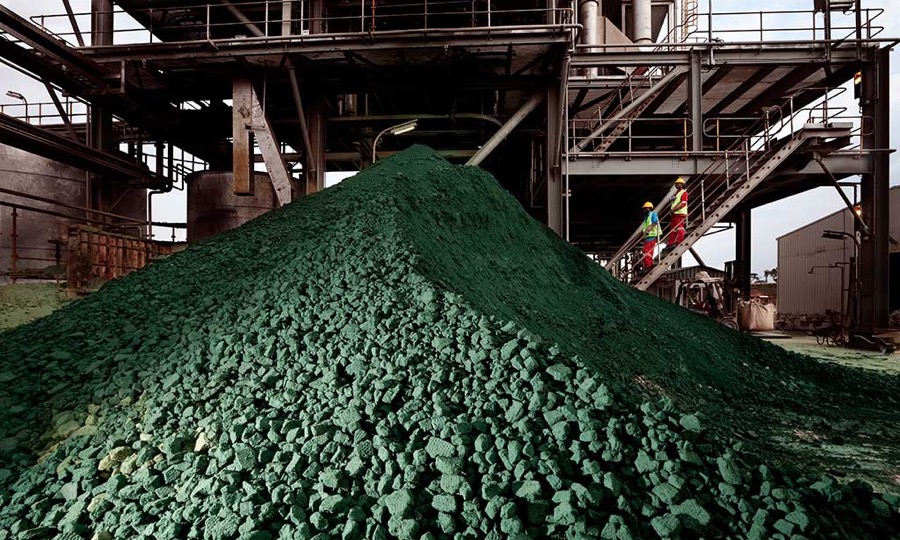

Processing facilities at Tenke Fungurume mine in 2016 before the CMOC acquisition. (Image courtesy of Lundin Mining.)

The Democratic Republic of Congo will lift its ban on cobalt exports from October 16 and manage global supply by imposing annual export quotas, the country’s strategic minerals regulator said on Sunday.

Miners will be allowed to ship up to 18,125 tons of cobalt for the rest of 2025, with annual caps of 96,600 tonnes in 2026 and 2027, the Authority for the Regulation and Control of Strategic Mineral Substances’ Markets said.

Congo, which produced about 70% of global cobalt output last year, suspended exports in February after prices fell to a nine-year low. The move was extended in June, prompting force majeure declarations from major producers including Glencore and China’s CMOC Group.

Congo’s largely unregulated artisanal mining sector accounts for a significant share of cobalt output, complicating traceability and compliance for global buyers.

The move to a quota system comes amid escalating conflict in eastern Congo, where the government says illegal mineral exploitation is fueling violence by M23 rebels.

The new system, backed by Glencore but opposed by CMOC, aims to reduce inventories and support prices. Quotas will be allocated based on historical exports of the critical electric battery material.

Glencore declined to comment. CMOC was not immediately available for comment.

Congo’s regulator said 10% of future volumes will be reserved for strategic national projects and quotas could be revised based on market conditions or progress in local refining.

The regulator can buy back cobalt stocks exceeding the quarterly authorized quotas per company, said the statement signed by its chairman.

(Reporting by Congo newsroom; Writing by Maxwell Akalaare Adombila; Editing by Christina Fincher)


Congo considers cobalt export ban extension, quota plan faces delays
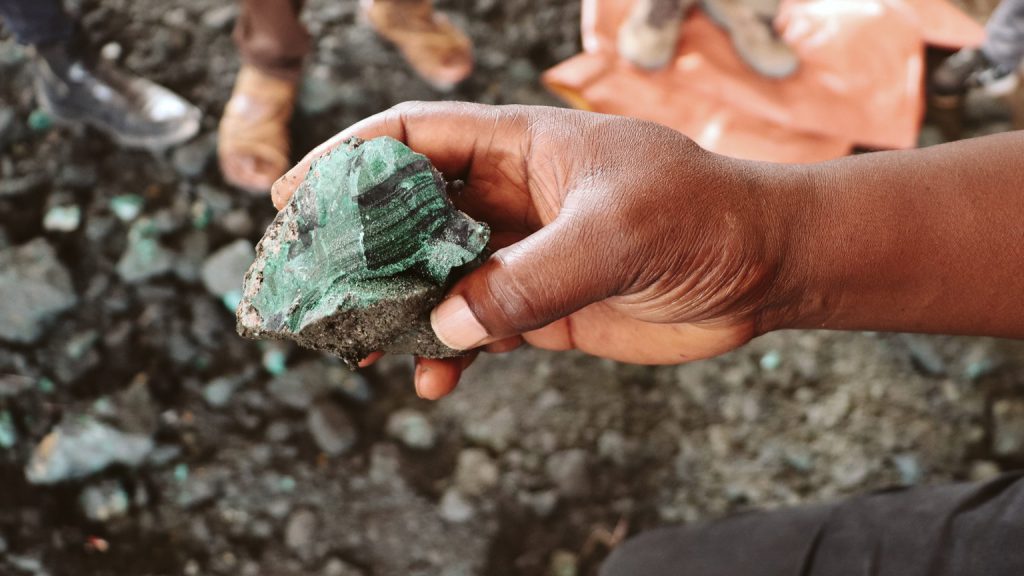
More than three-quarters of the world’s cobalt comes from Congo. Credit: The Impact Facility

The Democratic Republic of Congo is weighing up an extension of its cobalt export ban by at least two months, as officials work to finalize a quota system aimed at replacing the suspension, three sources familiar with the matter told Reuters.

The Mines Ministry arrived at the decision citing a need for further recovery in the cobalt price and more time to implement a quota-based framework, a senior official at the ministry said.

The Mines Ministry’s decision needs approval from the Presidency.

The Presidency and Mines Ministry did not respond to requests for comment.

The current export ban, imposed in February and extended in June, is set to expire on Sunday, Sept. 21.

The ban was introduced to curb oversupply after prices of the key electric battery metal fell to a nine-year low of around $10 per pound.

Cobalt prices on COMEX were last at $16 per lb, having risen 60% since late February.

“The quota system seems to be more difficult for them to put in place,” an analyst and consultant on China-Africa relations with knowledge of the matter said.

Congo’s Mines Minister met with senior mining executives on Thursday before launching broader consultations with industry stakeholders, a mining industry source said.

The proposed quota system has support from Glencore, the world’s second-largest cobalt producer, but faces resistance from China’s CMOC Group, the top producer, which has lobbied for the ban to be lifted.

Glencore declined to comment. CMOC did not immediately respond to request for comment.

The export ban has failed to curb supplies and correct prices, said Silverado Policy Accelerator, a US-based non-profit.

“It is reasonable to expect that a complete removal of the ban could lead to similar results,” it said in response to questions.

Congo, with vast reserves of lithium, coltan and gold among other metals and minerals, accounts for more than 70% of global cobalt output, much of it from artisanal miners who are largely unregulated.

The government says illegal mineral exploitation is a key driver of the ongoing conflict in eastern Congo, where fighting with M23 rebels has killed thousands and displaced hundreds of thousands.

(By Sonia Rolley, Maxwell Akalaare Adombila and Polina Devitt; Editing by Veronica Brown and Jane Merriman)



 

Elton John film on gold shines as price soars like Rocket Man

Elton John in the film Touched by Gold. Credit: World Gold Council

Elton John has said goodbye to the yellow brick road – but not to the yellow metal, which is a big part of his life as the new short film “Touched by Gold” shows.

Released this week by the World Gold Council, the free online movie explores the English pop star’s relationship with the precious metal, from his art to his health.

“Gold is used in pacemakers,” John said while describing being fitted with one of the devices in 1999. “[Gold] is highly conductive which makes it perfect for carrying electrical signals to the heart. I was astonished. It made me feel good about it. So gold is used for things other than glamourization and beautiful objects!”

The release of the film with the “Rocket Man” singer coincides with spot gold rocketing to a historic high of $3,707.40 per oz. on Wednesday. This extends a nearly 18-month increase in the metal’s price driven by geopolitical tensions, inflation and the weakening of the US dollar.

Precious knees, tests

Gold has also become part of John’s knees, in a sense. After he had both kneecaps replaced last year, he hired a jeweller to fit his right kneecap into a gold pendant for a necklace. His left kneecap went into a flowery golden brooch.

The star’s philanthropic work, such as his founding of the Elton John AIDS Foundation in 1992, further reveals gold’s positive contribution to human health. Early in the AIDS epidemic in the 1980s, HIV and AIDS testing involved weeks of clinic visits before results were known. Testing had improved by 2012, when rapid self-care kits that could give results in less than 30 minutes became widely available.

“Gold was used in rapid HIV tests,” John said. “In some tests, the red lines represent gold nanoparticles. I would never think gold could be helpful to a pacemaker or microphones or an HIV test. It has incredibly helpful uses to millions and millions of people.”

Gilded sound

While John confesses in the film that he’s not the most technically minded musician, he said one of the few items he requires in the studio is a good microphone. He was surprised to learn that even microphones have a connection to gold.

“Some of the best studio mics use a gold-coated diaphragm inside to capture the fullest range of my voice. It’s a fascinating thing and I never would have known that,” he said.

Golden Superman

Before he retired from touring in 2023, one of John’s last shows took place at the Glastonbury Festival in southern England.

Holding an old Elvis Presley album showing the star wearing a gold lamé suit, John explained that he had a similar one custom made for Glastonbury.

“You feel like Superman [wearing that], he said. “That suit had more impact than any other suit in my career.”

Fed cut bumps gold

Closer to Earth, gold investors continue to watch interest-rate decisions closely.

While spot gold prices initially rose following the United States’ Federal Reserve’s 0.25% interest rate cut on Wednesday, the market became cautious after Fed chair Jerome Powell said it was a “meeting-by-meeting situation,” BMO Capital Markets analysts Helen Amos and George Heppel said in a note on Friday.

The US Dollar Index (DXY), which tracks the dollar against other major currencies, also rose back above 97. With gold’s value often moving opposite to the US dollar, the index serves as an important gauge for miners and investors tracking gold demand.

Ryan McIntyre, a senior managing partner at Sprott, said Friday the precious metal has absorbed Wednesday’s rate cut. Minneapolis Fed President Neel Kashkari backed Powell’s decision and implied there could be two more cuts this year, which could further support gold prices.

“We remain constructive on gold given heightened geopolitical and economic uncertainty, alongside its growing role as a strategic reserve asset for both institutional investors and sovereign nations,” McIntyre said.

Secure your wealth today — buy gold bullion directly through our trusted partner, Sprott Money.


“We’re in project Manhattan 2.0”, uranium CEO says

The Aurora deposit in Oregon. Image from Eagle Energy Metals.

This week, when US Energy Secretary Chris Wright said the US should look to boost its strategic uranium reserve to buffer against Russian supplies and increase confidence in the long-term prospects of nuclear power generation, it shone a spotlight on the impending uranium supply deficit.

Uranium is a crucial source of reliable baseload power as nuclear energy, and the US requires an estimated 32 million pounds of uranium annually for its current nuclear reactors. Energy Fuels’ White Mesa Mill in Utah is the only producing mill in the US.

Russia supplies about a quarter of the enriched uranium needed by America’s fleet of 94 nuclear reactors, which generate about a fifth of US electricity.

In 2024, the US purchased 50 million pounds of uranium, but only produced 677,000 pounds, according to the Energy Information Administration. That is just over 1% of their needs, and sums up the current geopolitics around US uranium supply.

The rush to ensure domestic US uranium supply hearkens back to the 1940s era Manhattan Project, a secret US-led World War II program to develop nuclear energy capabilities before foreign adversaries could.

Largest mineable uranium deposit in the US

US uranium miner and nuclear reactor technology developer Eagle Energy Metals this summer struck a deal to go public through a merger with blank-check company Spring Valley Acquisition Corp., capitalizing on growing energy demand amid the AI boom.

The deal gives the combined company a pro-forma equity value of $312 million. The company was founded in late 2023 around the American Energy Independence National Security Narrative, Eagle Energy Metals CEO Mark Mukhija told MINING.com in an interview.

The company acquired the Aurora uranium project in 2024, which it says is the largest mineable uranium deposit in the US. The company’s land package spans the Oregon-Nevada border, with the mine on the Oregon side and the plant on the Nevada side.

The Aurora deposit has a near-surface resource of over 50 million pounds of uranium, generated from more than 500 holes drilled to date. Adjacent to Aurora is the Cordex deposit, which has had over 100 holes drilled into it and offers significant upside of additional uranium resources, Mukhija said.

Rising demand

“We saw what was happening with power demand when it comes to AI and cryptocurrencies and quantum computing and not even mentioning the humanoid robot wave that’s probably going to come as well,” Mukhija said.

“So after two decades of relatively flat power demand, we’re at this inflection point where, you know, energy usage could triple by 2050. So we always wanted to be a part of that and addressing that big problem that’s coming.”

“And nuclear, I believe, is the only way to do that, compared to intermittent power sources like wind and solar, which are great, but they don’t provide that baseload power level at the capacity factor that nuclear does.”

Small modular reactor technology

Alongside its Aurora asset, the company is also bringing to market its small modular reactor technology, which was developed at the University of New Mexico.

Mukhija said Eagle Energy Metals will be the first domestic uranium resource exploration firm with SMR technology.

SMR is an advanced nuclear reactor design that is significantly smaller and more flexible than traditional large reactors.

“It’s a fully portable, walkaway safe, liquid-cooled metal fast reactor. And these are built completely at a factory, sealed, and then they’re delivered to site. Our micro modular reactor can deliver up to 3.3 megawatts of power,” Mukhija said, adding that the SMRs can be deployed at disaster relief areas, military outposts, and mine sites.

Mukhija said the executive orders to expand critical minerals production in the US aim to quadruple nuclear energy capacity in the United States by 2050.

“You’re going to go from 50 million pounds to 200 million pounds of uranium that’s needed. And that’s not even taking into consideration the build-out that China is going to be doing.”

“AI cannot be decoupled from national defense – power is the bottleneck. We’re in project Manhattan 2.0. We need to get as much power generation as possible.”

“And we’re excited to be a part of the Western response to all of that because we need to make sure that the United States has uranium and fuel for their reactors. This project meets national policy initiatives of a resource that the country needs.”

The company is focused on baseline environmental and cultural studies, and plans to start a prefeasibility study in H2 2026. This year, it completed a SK1300 technical report summary on the Aurora asset


Dutch Expand Emission-Free Inland Shipping with Swappable Battery Packs

battery powered inland cargo ship
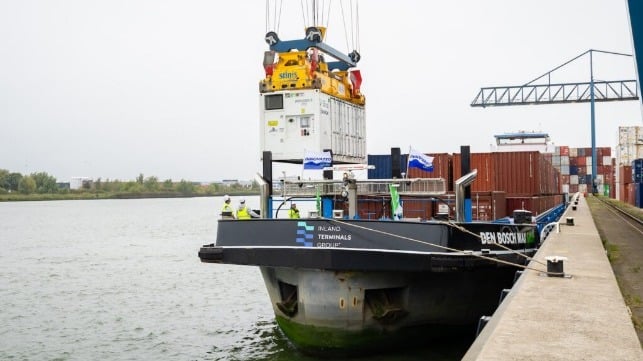
Swappable battery pack being placed on the Dutch inland cargo vessel (ZES)

Published Sep 18, 2025 9:32 PM by The Maritime Executive


Zero Emission Services (ZES), working in collaboration with Nefcargo and Inland Terminals Group, highlighted the launch of its ZES 2.0 service for electric-powered inland cargo shipping. The next phase of the program provides more powerful containerized batteries for the inland ships, which will provide a more economical model for the industry.

The 2.0 Zespacks are swappable battery containers. The company rolled out swapping stations on September 17 at Alphen aan den Rijn, Alblasserdam, and Den Bosch in the Netherlands. It reports that more terminals will soon follow in Rotterdam, Moerdijk, and Nijmegen, with the goal of establishing a robust network that makes battery-electric inland shipping more accessible.

The vessels swap the batteries instead of having to wait longer periods to recharge their power systems. It expedites shipping. They also only pay for the power used, which ZES says makes battery-electric sailing financially more attractive. A subsidy scheme is also available for shipowners converting to battery power.

The first vessel to adopt the exchangeable battery containers is the Den Bosch Max Groen. It was built by Concordia Damen and delivered in January 2021 as the second of two electric-powered inland cargo ships. Both vessels are 90 meters long and 11.5 meters wide (approximately 295 x 38 feet), with the shipbuilder highlighting that the dimensions are the maximum required to pass through the locks of the Dieze Canal at Engelen. Using an innovative design, they were able to give each vessel a capacity of 132 TEU, which is 24 more TEUs than the previous inland vessels.

The first phase of the battery-powered shipping was launched as a partnership to transport cargo for the beer company Heineken. Nedcargo transports approximately 2.5 billion bottles of Heineken beer annually to the ports of Rotterdam and Antwerp. The battery-powered operation cuts CO2 emissions by 800 tonnes per year.

The vessel will be operating between Den Bosch and the Port of Rotterdam. The trip is approximately 60 miles in each direction.

ITG highlights that the new battery operation is part of its broader scheme to transition. Eduard Backer, CEO of ITG, explains, “Alongside this battery-electric vessel, our group also operates a hydrogen-powered ship. Hydrogen is suited to longer distances, while battery containers are ideal for shorter shuttle services. Waterborne transport is the path to a lower footprint. And with the upcoming CO2 levy (ETS-2), this will also bring financial benefits for shippers.”


BOEM Tells Court it Wants to Resume Review of Permits for SouthCoast Wind

offshore wind farm
BOEM is challenging the approved permits for Massachusetts' SouthCoast Wind project (ocean Winds)

Published Sep 19, 2025 8:12 PM by The Maritime Executive


The Bureau of Ocean Energy Management formally filed with a federal court on Thursday, September 18, calling for the court to set aside the actions of the Biden administration so that it can restart the environmental review on a Massachusetts offshore wind farm project as part of the Trump administration’s ongoing review of the industry.

The Department of Justice made the filing to the federal court as part of a legal action brought in March 2025 by Nantucket, which was challenging the approval of the Construction and Operation Plan for the proposed 2.4 GW SoutCoast Wind. The Department of the Interior and its BOEM are parties to the suit. They have asked that the case be postponed and the permits, which were granted on January 17, just days before the end of the Biden presidency, undergo further review.

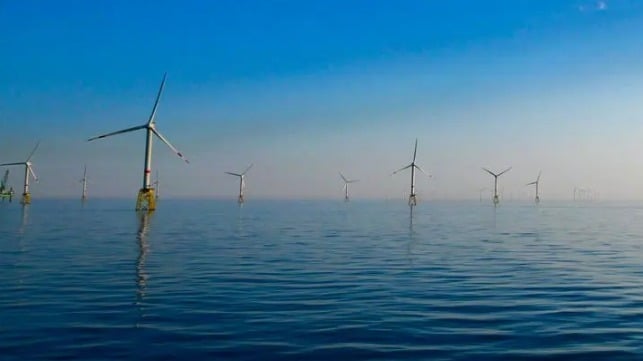
The project, which was approved for up to 141 wind turbines and up to five offshore substation platforms, would be located 20 miles south of Nantucket and approximately 30 miles south of Martha’s Vineyard. It is being developed by Ocean Winds, which is a joint venture between EDP Renewables and Engie. They won the lease for the project originally known as Mayflower Wind at the end of 2018, and the company points out that it spent four years in the review and approval process before the Department of the Interior issued its Record of Decision on December 20. 

The company has vowed to “vigorously defend” its permits. The project, however, still requires additional permits before construction can begin. In addition, it has not completed a power purchase agreement with Massachusetts.

BOEM asserts in its filing that the project’s review process was rushed and may not have fully complied with federal law that requires balancing the use of the coastal waters and protecting the environment and national security. Its action is in part based on the Trump administration’s withdrawal of a 2021 regulation governing the definitions under the Outer Continental Shelf Lands Act and Donald Trump’s executive order signed just hours into his presidency, ordering a full review of the offshore wind energy industry and the leasing processes.

The Trump administration is contending that the Biden administration's policies constrained regulatory review. They have made similar allegations against other offshore wind projects, although in this case BOEM has stopped short of asking the court to vacate the permits. Instead, it says they require additional review. While the review is ongoing, it says the other legal challenges should be stayed.

The filing in the SouthCoast Wind case comes after the administration moved to vacate the permits for Maryland’s offshore wind project. It has also declared that it will be making a filing against the New England Wind project, while the administration is already fighting in court after imposing a stop work order for Revolution Wind being built off Massachusetts. 

Ørsted, which is developing Revolution Wind, has challenged the action in a Washington, D.C. court, while the states of Connecticut and Rhode Island are also challenging the actions in a Rhode Island court. This week, the states filed for a preliminary injunction to permit work to resume. The Department of Justice has filed to combine the cases, saying they all involve the same set of issues.

Interior Secretary Doug Burgum has recently made statements saying he believes the offshore wind industry is over in the United States. He said the administration was reviewing five projects, and with the withdrawal of tax credits and other investments and incentives, the industry is no longer economical. A coalition of U.S. states, however, filed another case earlier this year challenging the administration's review of the industry and continues to call for the construction of renewable energy resources.


Video: Turkey Uses Helicopter to Rescue Crew from Grounded Cargo Ship

resuce
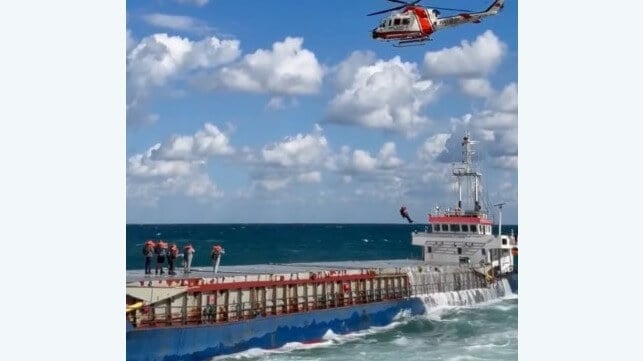
Sever crew were airlifted from the groudned cargo ship (screen shot)

Published Sep 19, 2025 4:03 PM by The Maritime Executive


Turkish authorities responded to reports that a small, Ukrainian-owned cargo ship had gone aground early on Thursday, September 18, on the eastern side of the Sea of Marmara. Weather conditions prevented the Coast Guard from reaching the vessel and required calling in a helicopter to lift the crew from the deck of the grounded cargo ship.

There were seven crewmembers trapped aboard the Tanzanian-flagged cargo ship Rapid (2,587 dwt). The ship had requested assistance around 0600 on September 18 as it was driven aground in the Kocaeli region, not far from Izmit. A Coast Guard vessel was able to reach the area, but according to the reports, strong winds and heavy waves prevented a rescue.

The Coast Guard helicopter was sent to the area. It was able to airlift the crew to safety. The crew was reported to be uninjured after their ordeal. Turkey’s Demirören Agency published dramatic videos of the rescue.


The vessel, built in 1991, was traveling from Bartin, Turkey, bound for Chornomorsk, Ukraine, with a cargo of gypsum. 

Based on reports from the vessel’s inspections, it appears to have a spotty safety record before this incident. In August, it was detained for 13 days by the Turkish authorities after 30 deficiencies were identified. Among the issues listed in the report was that the bridge navigational watch alarm was inoperative, as well as a range of safety and life-saving issues. The SOPEP (oil emergency plan) was also missing, along with other documentation problems.

A prior inspection in June found four deficiencies and did not result in a detention. However, in February 2025, Turkish authorities reported 25 deficiencies, and in September 2024 recorded 33 deficiencies.

No reason other than the bad weather was cited in the reports of the current grounding. The Kocaeli governorship said there had been no environmental pollution but that salvage efforts would have to wait until the weather and sea conditions allow.


Chief Engineer Pleads Guilty in 2024 MSC Runaway Incident in Charleston

containership
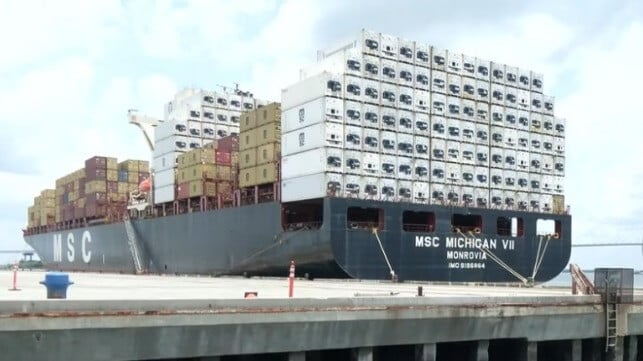
MSC Michigan VII docked in Charleston after the runaway incident (YouTube)

Published Sep 19, 2025 6:50 PM by The Maritime Executive


The chief engineer working on the MSC Michigan VII in June 2024, when the vessel had a runaway incident as it was departing Charleston, South Carolina, entered into a plea agreement with the U.S. attorney’s office. In filing the agreement in the U.S. District Court in South Carolina, the U.S. Attorney’s office revealed a litany of problems aboard the vessel, which the crew was dealing with before the governor controlling the main engine failed on June 5, causing the vessel to reach speeds of up to 16 to 17 knots, more than twice the legal limit, in Charleston harbor.

Fernando San Diego San Juan, age 61 and a Filipino national, had joined the vessel as chief engineer in April 2024. Under the terms of the agreement, he agrees to plead guilty to one count that he failed to report a hazardous condition to the U.S. Coast Guard when the ship arrived in South Carolina, and a second charge that he obstructed the investigation after the incident by giving false information to the USCG and National Transportation Safety Board investigators as well as instructing another engineer not to tell the investigators about the actions taken aboard the vessel that caused the incident. Further, they report the pilot had not been advised of any mechanical issues with the vessel.

MSC Michigan VII was built in 2000 and was registered at the time of the incident in Liberia. Databases show it started operating for MSC in 2022. The vessel is 998 feet (304 meters) in length with a capacity of 6,648 TEU. 

According to a detailed Stipulation of Facts in Support of Guilty Plea filed with the court, San Juan was only given a five-hour handover briefing when he joined the vessel, which they call “insufficient” for him to have obtained a complete picture of the status of the engine room and all the vessel’s critical machinery. They state that he discovered that there were “numerous problems with equipment” in the engine room. They cite oil and air leaking from the crankcase safety valve of the Main Air Compressor for the main engine, and the day before the incident, he also observed the second main air compressor was not functioning properly. It could only achieve approximately 60 percent of its rated capacity. San Juan wrote up the issues, and they were reported to the master of the vessel, who notified the shoreside office of the management company.

Other problems included a reduced capacity on the generators, meaning that many times the bow thruster could not be used while maneuvering. The vessel’s freshwater cooling system is also reported to have had a leak, and the cooling water for the lube oil system had developed a leak.

As early as April 24, San Juan was aware that the RPMs ordered by the bridge telegraph were not always being achieved by the main engine. The only way to achieve them was to manually adjust the length of the linkage rod between the governor and the fuel rack. They report this was in part due to the poor condition of the main engine fuel injector systems and leakages in the barrels and plungers when using lower viscosity, low-sulfur fuel. The main engine required more fuel to achieve the ordered RPMs when using the lower viscosity fuel. They assert the defendant knew the manual adjustments were hazardous because they could cause the linkage rod to fail.

MSC Michigan VII was departing Charleston at midday on June 5, 2024. After completing a turn and starting its departure, the third engineer realized the main engine was not achieving the ordered RPM. He leaves the control room to adjust the governor, and soon thereafter, the linkage rod disconnected from the governor.

According to the court papers, the defendant tried several times unsuccessfully to reconnect the linkage rod. While a fitter was working to repair the rod, the ship became a runaway, unable to slow the main engine. 

Authorities ordered a main roadway bridge crossing the harbor, the Arthur Ravenel Jr. Bridge, to be closed and evacuated local beaches. As the ship sped out of the harbor, it was charged that it caused more than $500,000 in damages along the shoreline. The crew was able to stop the engine by the time the ship exited the harbor. It anchored and was brought back into the port, where it was detained for 44 days by the USCG.

The following day, they write in the statement of fact that the defendant told investigators that the crew never adjusted the linkage rod and that only a qualified technician would adjust the linkage rod. Further, the court papers state that the defendant approached the vessel’s fourth engineer, telling him to repeat the statements that they had not adjusted the rod.

The plea agreement highlights that the first charge of failing to report the hazardous condition on the vessel has a maximum sentence of six years imprisonment and/or a fine of $250,000, as well as a term of up to three years supervised release. The charge of obstructing the proceeding also has a maximum sentence of five years imprisonment and/or a fine of $250,000, as well as up to three years supervised release. No date was announced for the sentencing.


USCG Releases Dramatic Video of Interdiction of Narco Fast-Go Boat

USCG cutter and narco fast go boat
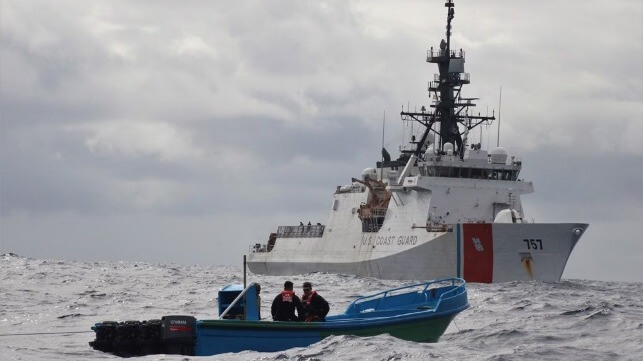
USCG seized the fast go boat with three individuals in the Paciifc (USCG)

Published Sep 19, 2025 8:30 PM by The Maritime Executive


The U.S. Coast Guard began an enhanced drug interdiction program in the Pacific during August, known as Operation Pacific Viper. To date, it reports that more than 75,000 pounds of cocaine have been seized in the Eastern Pacific.

Highlighting the law enforcement portion of the operation, the USCG released dramatic video of a recent chase and capture of a fast go boat. The low-profile vessel has three large outboard motors and is typical of the boats the drug cartels built to avoid capture. They did not report what was seized from this vessel, but the video shows three men being taken into custody. The USCG reports a total of 59 individuals suspected of narco-trafficking have been seized in more than 20 interdictions since the operation was launched.

“The Coast Guard’s maritime fighting force is relentless in our ongoing operations to counter narco-terrorism,” said Rear Adm. Jeffrey Novak, deputy commander Pacific Area. “Our latest milestone through Operation Pacific Viper – over 75,000 pounds of cocaine seized – underscores our commitment to dismantling Foreign Terrorist Organizations and Transnational Criminal Organizations engaged in narco-trafficking.”


Through Operation Pacific Viper, the Coast Guard reports it is accelerating counter-drug operations in the Eastern Pacific Ocean, where significant transport of illicit narcotics continues from South America. In coordination with international and interagency partners, the Coast Guard is surging additional assets—cutters, aircraft, and tactical teams—to interdict, seize, and disrupt transshipments of cocaine and other bulk illicit drugs.

Detecting and interdicting narco-terrorism on the high seas involves significant interagency and international coordination. U.S. Southern Command’s Joint Interagency Task Force-South, based in Key West, Florida, detects and monitors both aerial and maritime transit of illegal drugs. The law enforcement phase of the operation, through the interdiction and apprehension, is conducted by the U.S. Coast Guard.

Customs Officers Arrested and Containers of Illegal Goods Seized at Piraeus

Piraeus container port
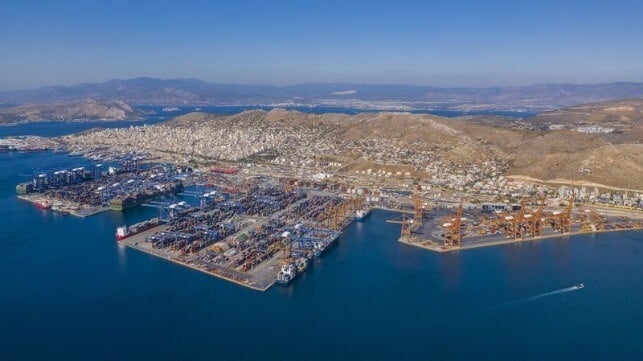
European authorities reported arresting customs officers and freigh forwarders as the broke up a ring smuggling goods into Europe (OLP)

Published Sep 19, 2025 9:25 PM by The Maritime Executi


The European Union (EU) is intensifying the fight against illegal goods imported from China, which are denying the bloc millions in revenues. This week, the Port of Piraeus in Greece became the entry epicenter of the illicit trade, as officials reported the seizure of a massive amount of goods and an ongoing monitoring operation.

The European Public Prosecutor’s Office (EPPO) said it has brought charges against six individuals, including two customs officers, for allegedly being involved in criminal networks flooding the EU market with goods fraudulently imported from China.

The six are being charged in relation to a raid that happened at the port at the end of June and which resulted in the seizure of 2,435 shipping containers that were filled with illegally imported goods, primarily e-bikes, textiles, and footwear. The illegal goods seizure, they reported, is the largest to date, and could have caused €250 ($294 million) in damages through evading customs duties and value-added tax (VAT).

The investigation carried out by EPPO code-named “Calypso” saw coordinated raids across Greece, Spain, France, and Bulgaria targeting criminal networks managing the entire circuit of importing illegal goods from China into the EU. The networks, which are mainly controlled by Chinese nationals, are also involved in money laundering. During the raid, 10 suspects were arrested, including two customs officers and four customs brokers.

The two customs officers have now been charged with repeated false certification, causing unlawful gains and damage to the EU budget, and abetting customs fraud. The four customs brokers are facing charges of repeated customs fraud, as well as inciting false certification.

The Port of Piraeus, which in 2024 handled 4.2 million containers and is located at the crossroads of Europe, Asia, and Africa, has become the entry port of choice for the illicit trade, according to EPPO. A network of professional enablers at the port facilitates the entry of the goods into EU markets through undervaluation or misclassification, thus enabling the importers to evade custom duties. Through a chain of buffer and shell companies, the goods are then sold to companies in specific countries and find their way to the market.

EPPO is highlighting that the first 500 containers were seized during the raid in June, with an additional 1,935 containers that were in transit to the EU also being seized upon arrival at Piraeus. The seized containers are currently undergoing inspection, with all revealing similar fraudulent practices of misdeclaration and undervaluation.

“Highly organized criminal networks have been specializing in this kind of fraud for years. They have grown accustomed to causing massive damage to our finances and economies with close to no risk,” said Laura Codru?a Kövesi, European Chief Prosecutor.

EPPO contends that the fraudulent, illegal importation of goods into the EU has been ongoing for at least eight years, causing an estimated loss of at least €350 million ($412 million) in customs duties and €450 million ($530 million) in VAT.

The EU has been trying to protect its market by imposing punitive anti-dumping duties on imports from China, something that has often instigated trade wars with Beijing, often retaliating.


Shanghai University's Uncrewed Vessels Support China's Maritime Expansion

Image of two Jinghai USVs setting out for Antarctic expedition in 2023: Shanghai University Research Institute of USV Engineering.

Published Sep 21, 2025 2:42 PM by The Strategist


[By Astrid Young]

ASPI’s newly expanded China Defence Universities Tracker reveals how leading Chinese research institutions, including Shanghai University (SHU), are developing advanced uncrewed surface vehicles (USVs) to boost China’s military and territorial ambitions.

SHU’s Jinghai series are reportedly the first Chinese uncrewed vessels to operate in the South and East China seas and the Antarctic. Equipped with advanced technologies such as radar sensors and control systems, SHU’s USVs conduct scientific missions that enhance China’s maritime domain awareness and its ability to project power in contested waters.

USVs are becoming an important capability in the Indo-Pacific’s intensifying maritime contest. As marine vehicles that operate on the surface of the water, USVs are capable of long-endurance autonomy to support research, surveillance and military operations. Like drones, they also function without an onboard crew.

For example, the United States Navy deployed USVs in 2022 for operational surveillance in the Persian Gulf, a contested maritime environment where US vessels are often challenged by Iran’s Islamic Revolutionary Guard Navy.

Historically, the US has had a technological edge, but China’s rapid advances in autonomy, swarm intelligence and cross-domain integration—linking USVs with uncrewed systems in the air, space and land domains—are closing the gap.

Established in 2010, SHU’s Research Institute of Unmanned Surface Vehicle Engineering is China’s first dedicated USV research institute. The institute has a stated focus on uncrewed, intelligent and swarming transportation systems for military and civilian uses, with the explicit goal of contributing to China’s maritime and polar strategies as well as national defense.

SHU holds a secret-level security clearance, an official certification given by key military and defense committees of the Chinese Communist Party that enable it to undertake classified defense projects. ASPI’s Defence Universities Tracker assesses SHU as a high-risk university for its involvement in defense research, strong ties to China’s defense industry, and supervision by the State Administration for Science, Technology and Industry for National Defense.

The institute has developed 15 intelligent USVs, named the ‘Jinghai’ series, that have been deployed on numerous research and geological survey vessels and procured by the China Maritime Safety Administration and the State Oceanic Administration for use on their patrol and surveillance vessels.

Each of the Jinghai vessels is specialized for specific mission tasks. This includes: conducting hydrographic surveys; intelligence, surveillance and reconnaissance; search and rescue operations; firepower strikes; naval battlefield information support; and mine clearing.

Shanghai University’s series of 15 Jinghai uncrewed boats and where they were tested. Source: Shanghai University Artificial Intelligence Research Institute.

In 2013, Jinghai-1 conducted an exploration in the South China Sea with Coast Guard Ship 166, surveying more than 20 islands and reefs in the Paracel and Spratly Islands. This exploration provided data assistance for China’s subsequent reef reclamation and artificial island construction in 2014. This included the Fiery Cross Reef—a contested part of the Spratly Islands claimed by many countries.

Between 2015 and 2017, SHU’s Jinghai-3 conducted extensive geological surveying and nautical mapping of the islands and reefs in the South and East China Seas, deployed from the Xiangyanghong 19 survey vessel. This timing corresponds with China’s large-scale reef reclamation and island construction in 2013 and extensive infrastructure construction in the following years.

The research team was commended by the East China Sea Navigation Support Center of the Ministry of Transport, which recognized that the exploration ‘significantly improved [China’s] marine mapping … and ability to safeguard national sovereignty and maritime rights and interests’. That center also procured the Jinghai-2 USV for its own use in China’s surrounding waters and in Antarctica.

In 2014, SHU’s Jinghai-2 was reportedly China’s first uncrewed vessel to survey Antarctica. The survey results identified an anchorage location for China’s Xuelong polar research vessel. In 2023, two Jinghai uncrewed boats were equipped onto the Chinese Antarctic scientific expedition vessels Xuelong and Xuelong 2 and conducted surveying around China’s research station Changcheng and Marie Byrd Land, an unclaimed Antarctic region. The expedition was crucial in supporting the construction of Qinling, China’s fifth Antarctic station and its first on Antarctica’s Pacific coast. SHU’s Jinghai vessels were also deployed for coastal security patrols during major events including the 2017 BRICS Summit, 2017 Bo’ao Forum and 2018 Shanghai Cooperation Organization summit.

In 2020, SHU built the BGP Boy, reportedly China’s first dedicated USV for seismic exploration. It conducted surveys of oil and gas under the sea floor with the state-owned Bureau of Geophysical Prospecting, a unit under China National Petroleum Corporation.

In 2021, the USV research team tested swarm intelligence for cluster control by integrating USVs and uncrewed aerial vehicles in cross-domain swarming. The latest USV, the Jinghai-15, was developed with multi-functional reconnaissance and vigilance capabilities, both of which are crucial attributes of uncrewed combat systems. The institute has explicitly stated that cross-domain synergy—coordinated operations involving drones, vehicles and vessels guided by swarm intelligence algorithms—will be used to carry out complex surveillance missions. In the same year, SHU established a joint venture company, Jinghai Intelligent Unmanned Technology, to commercialize its USV patents.

Researchers from the USV institute have since worked on national defense projects for the Central Military Commission of Science and Technology as well as the Chinese navy’s Equipment Department in areas such as autonomous defense systems.

ASPI’s China Defence Universities Tracker exposes the sheer breadth of China’s research ecosystem, its integration of the Chinese Communist Party’s military-civilian fusion strategy and its depth of innovation when it comes to critical technologies. This visibility enables policymakers, defense planners and industry partners to grasp the full scope of China’s ambitions, strengthening due diligence processes, risk management and informing future policy decisions.

For more information about SHU and about China’s USV research, visit the ASPI China Defence Universities Tracker website.

Astrid Young is a junior researcher at ASPI, which provided this content. This article may be found in its original form here


The opinions expressed herein are the author's and not necessarily those of The Maritime Executive.