It’s possible that I shall make an ass of myself. But in that case one can always get out of it with a little dialectic. I have, of course, so worded my proposition as to be right either way (K.Marx, Letter to F.Engels on the Indian Mutiny)
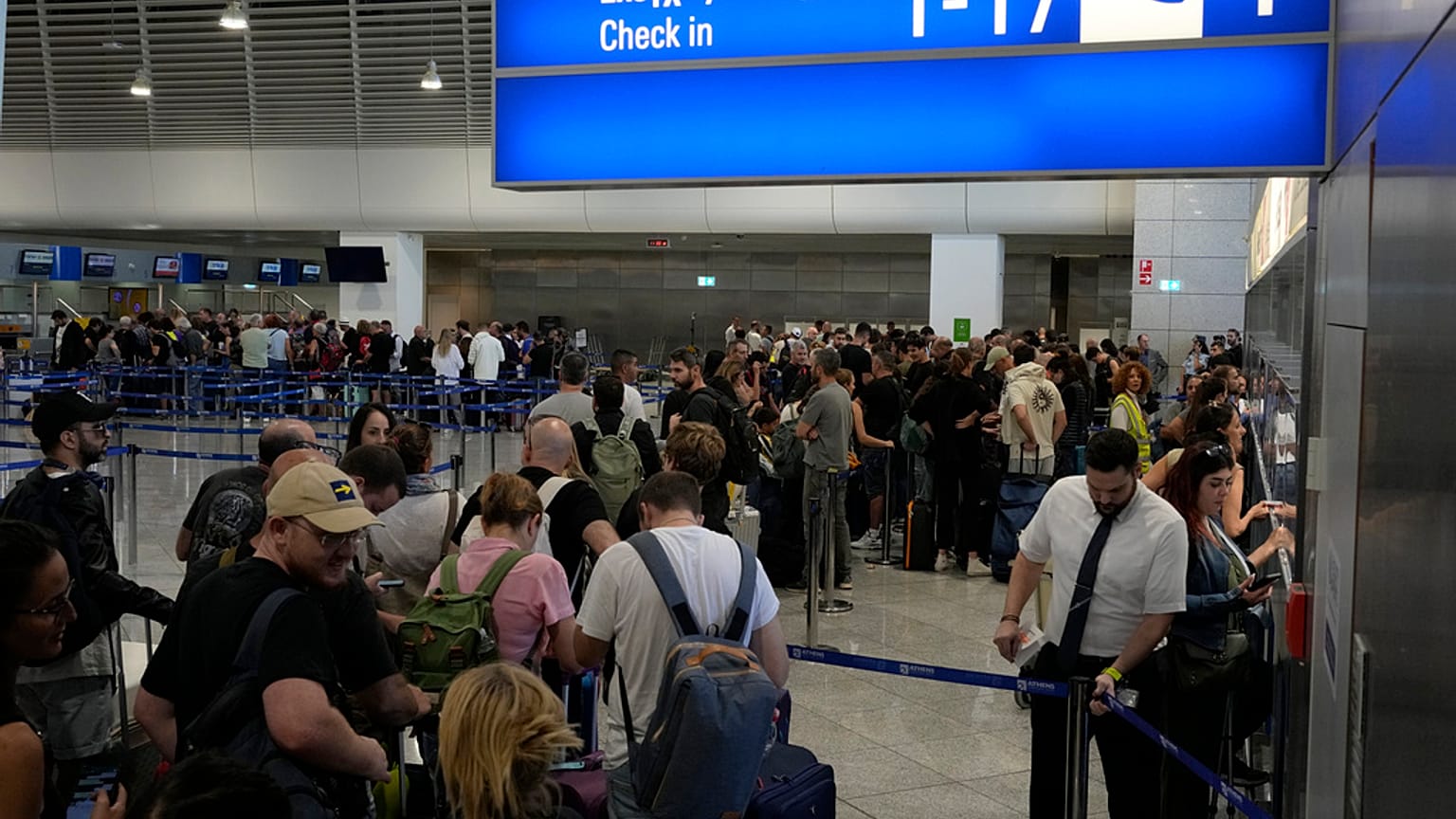
Athens Airport is facing delays after air traffic controllers limited the number of flights they handle.
Passengers travelling to or from Athens International Airport are almost certain to face delays as air traffic controllers have limited the number of flights they manage per hour.
Last Friday, the airport's Air Traffic Controllers announced that they would be restricting the number of takeoffs and landings at the airport due to a heavy workload. They have said that they will now be handling a total of 28 arrivals per hour, down from a peak of 36 during the summer season.
In practice, this translates into delays of between 20 minutes and 2-3 hours for each flight.
Aegean Airlines said on Friday that the decision had reduced arrival capacity by around 25 per cent, causing morning delays of 30 to 40 minutes that lengthened as the day progressed.
Passengers are advised to contact their airline before they fly to check the status of their flight.
The decision by air traffic controllers has caused tension between the workers' union and the government, with Greece's infrastructure and transport minister saying the salaries of ATC workers were already high.
The union called it a "disorienting tactic at a time when our salary costs are 33rd out of 38 countries".
The Greek Minister of Transport and Infrastructure, Christos Dimas, stressed that delays are even worse at other European airports and added that a 364-point, 7-pillar action plan is being implemented in cooperation with the European Commission, with regular progress reports every six weeks.
One of the pillars concerns the transformation of the Greek Civil Aviation Authority (CAA) into a legal entity under public law in order to give it greater administrative autonomy.
"Currently, the CAA is an autonomous agency reporting directly to the Minister. This means that for matters even of everyday life, such as cleaning or maintenance, a ministerial signature is required. These now cease to exist," he said.
Air traffic controllers 'disappointed' by negotiations
"We were disappointed, but unfortunately not surprised, to hear the statements of the Minister of Infrastructure and Transport," the air traffic controllers said in a stateme
They point out that, apart from a meeting in early May at the Ministry and one in early June at the CAA, they have not met with the minister again. On 1 September, they requested another meeting but haven't received a response.
"It is also completely misleading to refer to the amount of our salary in a way that even artificially inflates the figures so that they have no relation to our net earnings, which (as the Minister admits) are taxed and do not burden the budget, while they are paid by airspace users and 90 per cent of them come from foreign airlines," the union said.
They stress that "the Greek taxpayer does not pay a single euro", while the fees are financed by the air navigation charges paid by the airlines.
Based on Eurocontrol's data (ACE Benchmarking report 2025) for 2023, Greek NOCs rank 33rd out of 38 providers in terms of payroll cost per flight hour, while they are fifth in terms of productivity.
They point out that they are more productive than countries such as Germany, Spain, Switzerland and Italy, while their wages remain lower than even countries such as Bulgaria, Romania, Croatia and Slovenia.
At the same time, the Hellenic Aviation Service Provider (HASP) is the cheapest among 38 providers in terms of the cost of providing air navigation services.
"Unfortunately, the attempted misdirection demonstrates that the scale of the real problem facing the HASP, which is not the fees, has not been understood," the union added.
"Unless the Minister believes that the lack of modern systems or the breach of European Regulations is the fault of the fees of the HASP."
As Gaza aid flotilla heads to the Strip, MEP onboard wants to 'pressure' Israel Copyright AP PhotoBy Vincenzo GenovesePublished on 29/09/2025 - EURONEWS
Activists on board the 40-plus boat aid flotilla en route to the Strip told Euronews they are attempting to challenge and increase pressure on Israel to end its maritime blockade.
The ships of the Global Sumud Flotilla are north of Libya and west of Crete, approaching the last leg of their voyage, with two or three days of sailing before reaching the waters in front of the Gaza Strip.
This will be crunch time for the civilian-led convoy carrying humanitarian aid for Palestinians, as the Israeli Navy would likely prevent vessels from going through.
“Israel will not allow ships to enter a combat zone,” said Israeli Foreign Minister Gideon Saar, claiming the right to maintain a naval blockade around Gaza, which it considers a legitimate exercise of the right of self-defence, since it was designed to stop weapons smuggling by Hamas.
Israeli Foreign Ministry director general Eden Bar-Tal added that the Flotilla "is not a humanitarian mission but a political provocation".
By contrast, the Global Sumud Flotilla’s activists believe the blockade is unjustified and provokes victims and suffering among Gaza’s civilians. They want to “break the siege” and create a permanent humanitarian corridor into the Strip.
The crew is also prepared to risk interception by Israeli forces, as Socialist Italian MEP Annalisa Corrado told Euronews, speaking from the vessel “Karma”.
“As with previous [similar] missions, we expect that, at some point, there'll be an interception by Israeli forces who may order us to stop and may arrest us. This is something we take into account. Of course, no one wants to be a kamikaze or a martyr," Corrado said.
"What we want is to increase the political and diplomatic pressure around this mission, especially because the objective is Gaza, not the mission itself. The idea is that once we get there, the pressure on the Israeli government — not on the Flotilla — will be such that we can help restore a humanitarian corridor," she added.
The Flotilla was attacked by drones while sailing in international waters a week ago. The attack caused several explosions, seriously damaged some of the boats, and forced the fleet to pause in Crete. The crew of the unusable vessels was relocated to other ships, while a few people decided to disembark.
“The day after, the force of these explosions was deemed strong enough to dismast a boat. So, just imagine being out at sea at night, with the waves and without the mast. If such an attack had struck just a few dozen centimeters differently, it could really have been a far more serious incident,” Corrado recalled.
After the incident, the Italian government proposed that the Flotilla leave the humanitarian aid in Cyprus, for it to be transferred to the Gaza Strip under the supervision of the Catholic Patriarchate of Jerusalem and under the direction of Cardinal Pierbattista Pizzaballa, a respected figure among pro-Palestine activists.
The Flotilla’s board rejected the idea, despite maintaining an open dialogue with the Patriarchate. According to Corrado, “the Italian government is not a credible interlocutor”, and the proposal coming from Foreign Minister Antonio Tajani was wrong in both manner and timing.
“The Italian government is not recognising the State of Palestine; it is blocking the suspension of the EU’s association agreements with Israel. It has not imposed a total arms embargo [on Israel], it has not demanded a ceasefire, and the restoration of aid deliveries. So it's clear that such a move, if not very clumsy, could certainly appear to be sabotage,” Corrado said.
Italian Prime Minister Giorgia Meloni has recently said that Italy would recognise Palestine, subject to two conditions: release of the hostages taken by Hamas during its 7 October 2023 attacks and exclusion of Hamas from any involvement in a future Palestinian government.
But Annalisa Corrado said that Meloni “is just overtrying to stop the Flotilla, instead of trying to stop Israel. This is unbelievable”.
The Socialist MEP, however, welcomed Italian President Sergio Mattarella’s call to find a compromise solution to protect the crew’s safety and praised Italy’s Defence Minister Guido Crosetto’s attention to the issue.
An Italian and a Spanish military ship are currently following the humanitarian convoy, but neither vessels are authorised to enter Gaza’s waters or to face Israel’s navy, in case of an intervention against the Flotilla.
On Sunday night, a charity's support vessel evacuated one of the boats due to a technical issue, relocating the crew to other ships.
On Monday, the Red Crescent, with the help of Turkish authorities, evacuated activists from another vessel, which had broken down and begun taking on water, according to the Turkish state-run news agency Anadolu.
Björk becomes latest artist to join ‘No Music For Genocide’ Israel boycott
Björk is the latest artist to join the ‘No Music For Genocide’ Israel boycott, making her catalog of music unavailable on Israeli streaming services. The singer now stands alongside Massive Attack, Paramore and Fontaines D.C. and hundreds more artists who are geo-blocking their music in Israel.
Icelandic music legend Björk has become the latest artist to join the ‘No Music For Genocide’ campaign, meaning that her catalog is now geo-blocked on Israeli streaming services.
As we reported last week, the new campaign is a cultural boycott initiative which encourages artists and rights-holders to pull their music from streaming platforms in Israel, in response to the ongoing crisis in Gaza.
More than 400 artists, including Massive Attack, Fontaines D.C., Paramore, Kneecap and Wednesday, have joined ‘No Music For Genocide’, with each involved sending geo-block requests to their distributor or label.
They are encouraging major label groups like Sony, UMG and Warner to follow suit, especially since they blocked their entire music catalogues in Russia a month into their invasion of Ukraine.
A statement from ‘No Music For Genocide’ stated: “Culture can’t stop bombs on its own, but it can help reject political repression, shift public opinion toward justice, and refuse the art-washing and normalization of any company or nation that commits crimes against humanity.”
“This initiative is one part of a worldwide movement to erode the support Israel needs to continue its genocide. We’re inspired by the escalating efforts in pursuit of that goal, from the recent Film Workers For Palestine pledge to Spain’s ban of Israel-bound ships and planes to the Freedom Flotilla Coalition to Demilitarize Brooklyn Navy Yard to dockworkers in Morocco who’ve refused to load weapons onto vessels ordered by Tel Aviv.”
The statement adds: “Many of our peers have felt, like ourselves, unsure how to use music in this moment. Our first goal with No Music For Genocide is to inspire others to reclaim their agency and direct their influence toward a tangible act. We are so grateful for all of the artists, managers and labels who have already committed to this first step, and we’re excited to expand this together. The more of us there are, the stronger we will be. This is just the beginning.”
Björk has yet to issue a statement about her participation in the Israel boycott but has been outspoken in her advocacy for the Palestinian people in the past.
In November 2023, she posted a series of maps of the Israel-Palestine region since 1946, writing: “Is this what you call sharing?”
Speaking to Swedish outlet Dagens Nyheter, she discussed her preference for creating new music over touring.
“The live part is, and always will be, a big part of what I do,” she said, adding: “I’m lucky because I no longer have to raise money on touring, which younger musicians are often forced to do.”
“In that respect,” she continued, “Spotify is probably the worst thing that has happened to musicians. The streaming culture has changed an entire society and an entire generation of artists.”
It isn’t the first time that Björk has been critical of streaming platforms; she refused for her album ‘Vulnicura’ to be released on Spotify in 2015.
Earlier this year, Björk debuted her concert film Cornucopiain theatres around the world, and will release a live album of the tour on 24 October.
John Oliver on Israel and Benjamin Netanyahu: Have you watched 'The Bibi Files'?
In the latest episode of Last Week Tonight with John Oliver, the Emmy Award-winning show tackles the topic of Israel and Benjamin Netanyahu. Many of the points made - as well as clips used - lead to a documentary, 'The Bibi Files', which the Israeli PM tried to ban. Here's why it is a vital watch.
The latest episode of Last Week Tonight with John Oliver tackles Israel, specifically Benjamin Netanyahu, his effect on the humanitarian crisis in Gaza and his longstanding corruption charges.
“It is impossible to overstate the death and suffering Netanyahu’s decisions have caused,” said Oliver. “To the over 65,000 Palestinians who are dead, the thousands of children who are amputees, and the thousands more who are starving, but also to the Israeli hostages who’ve either died or are still being held because of his refusal to prioritize their safety and freedom.”
Oliver outlined Netanyahu’s “increasingly unfavourable” ratings both in Israel and the US, and talked of how the PM has aligned himself with extremist figures within the Israeli government. Extremists like Finance Minister Bezalel Smotrich, who said “it may be just and moral” to starve Gazans.
The host explained why Netanyahu’s allegations of corruption are at the heart of current events, capping off this episode with the following: “It is worth asking: Just who is Netanyahu really looking out for? Is it the people of Israel, who’ve been put at risk by endless war? Or is it the man who’s spent 17 years as prime minister and seems willing to do whatever it takes to squeeze out a few more?”
As is the Last Week Tonight way, this episode manages to address a weighty topic and comprehensively distill it to its essence, masterfully delving into an urgent matter, outlining the “horrific” outcomes of the war, and highlighting how clear it is that Netanyahu is "desperate to stay in power – and will do whatever it takes.”
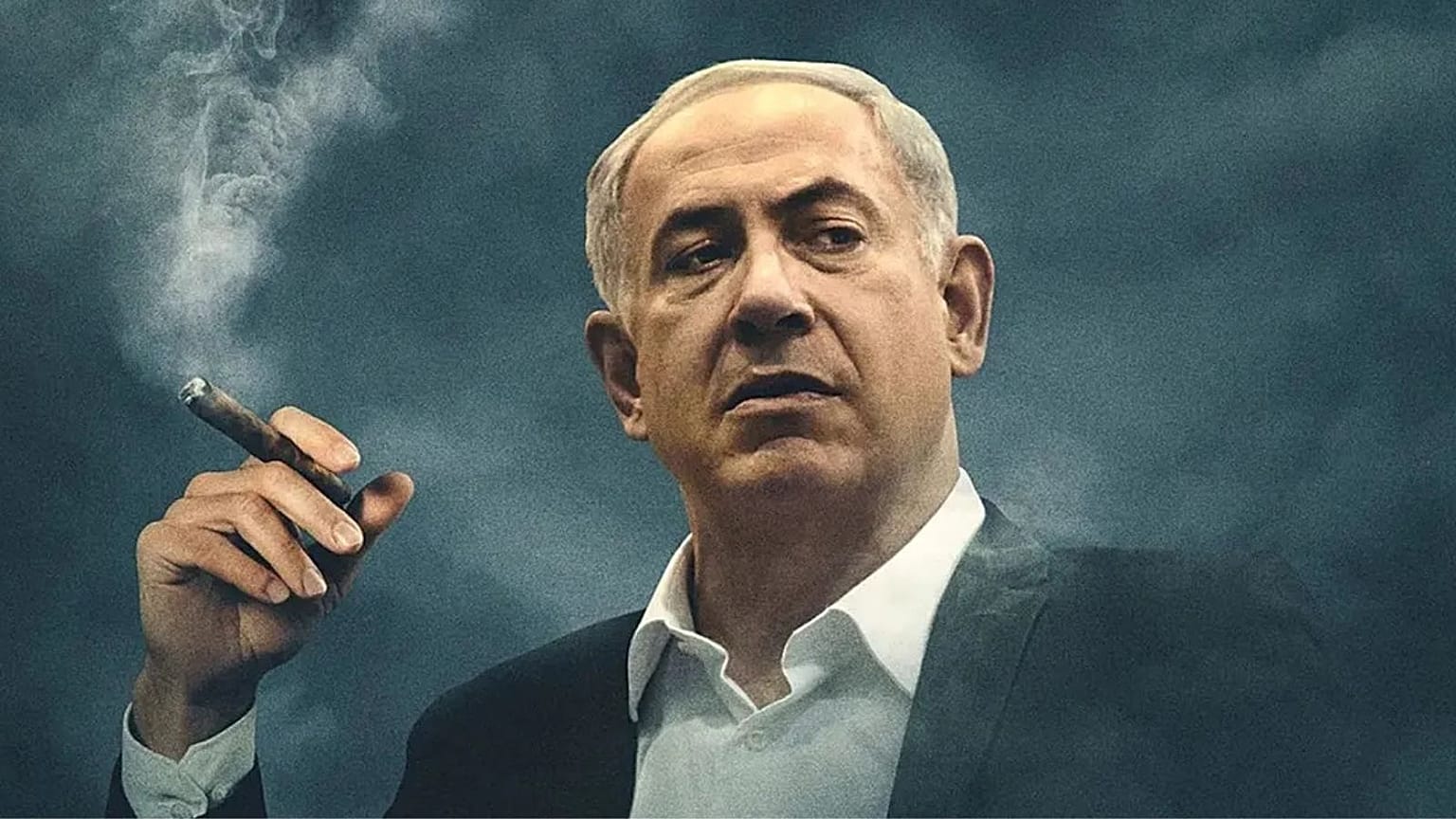
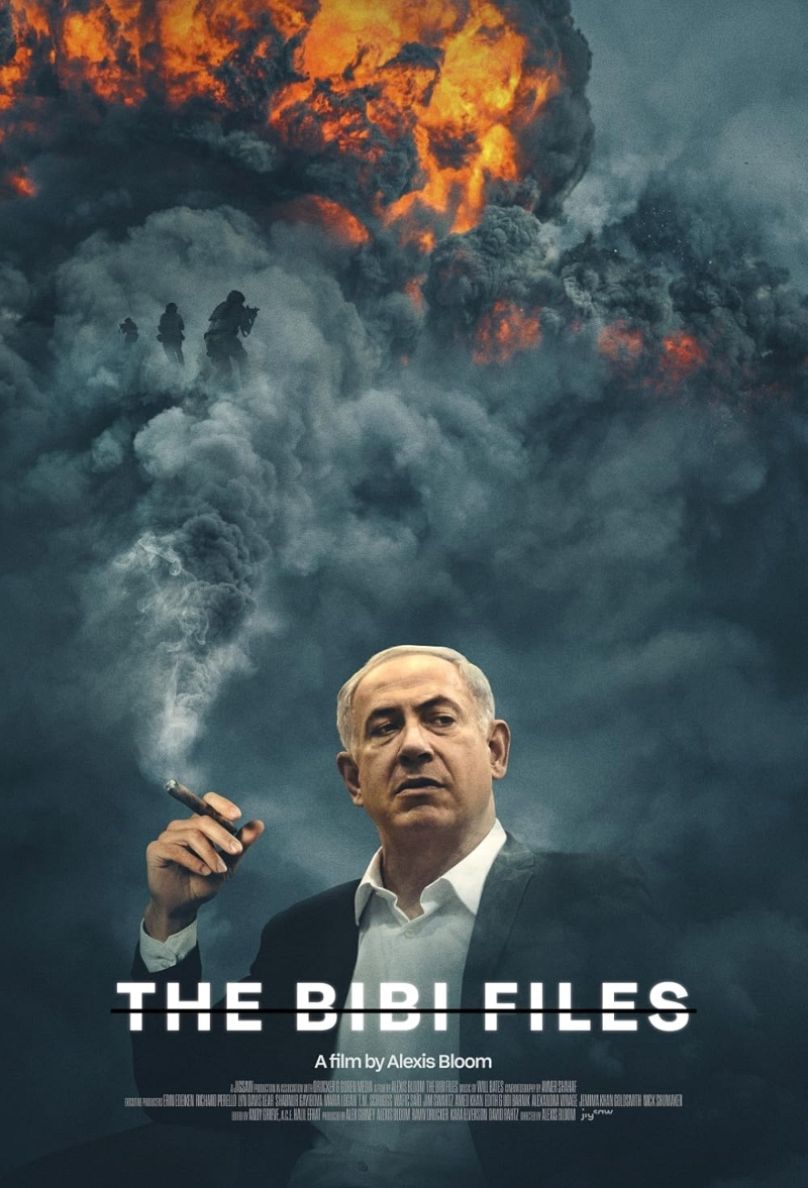
Many of the arguments and facts laid out in the episode are delved into in further detail in a must-see 2024 documentary from Alexis Bloom, titled The Bibi Files.
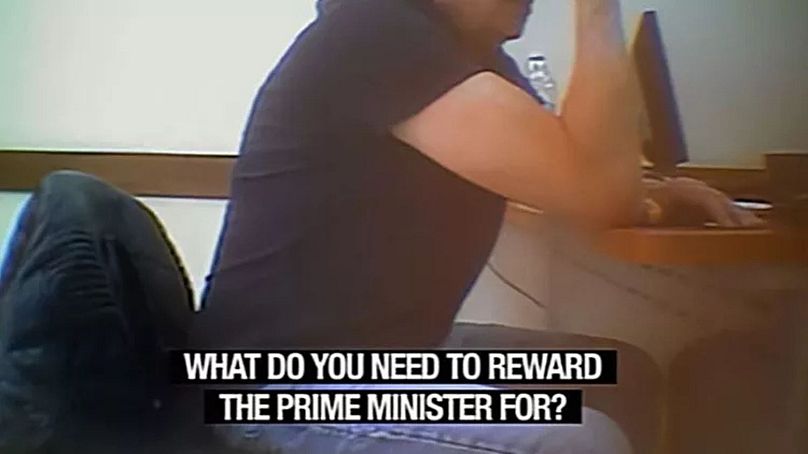
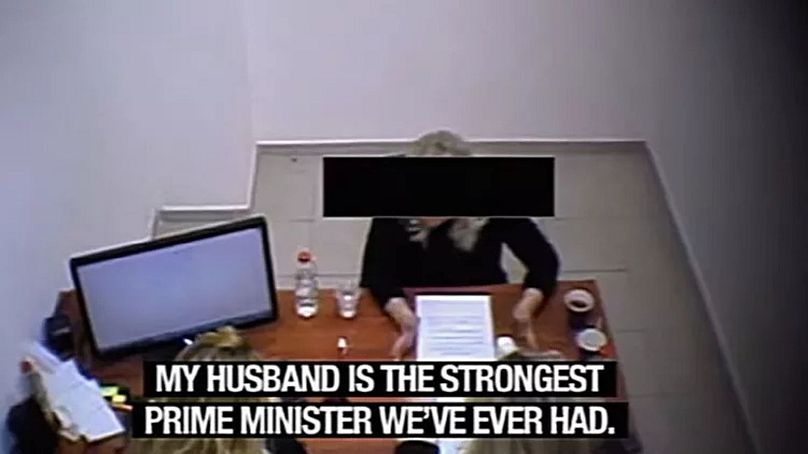
In fact, this week’s episode of Last Week Tonight uses a clip from the documentary, which features leaked interrogation footage from the trial of Netanyahu and interviews with insiders who were willing to speak on the record.
The Bibi FilesDogwoof - Jolt.Film
Netanyahu attempted to stop the film from ever being released. Thankfully, his attempts were unsuccesful, and since its world premiere at last year’s Doc NYC in November, The Bibi Files has won 2025’s Political Film of the Year at the Cinema For Peace Awards.
Much like the eight films we singled out to better understand the Israeli-Palestinian conflict, The Bibi Files is essential to understand the wider implications of a devastating humanitarian crisis which the UN Independent International Commission of Inquiry on the Occupied Palestinian Territory has deemed a genocide. It has also led Doctors Without Borders to suspend its work in Gaza due to the danger its workers face from the Israeli military.
Here is Euronews Culture’s review of The Bibi Files, first published in January this year (09/01/2025), prior to the Oscars:
This is the film Benjamin Netanyahu doesn't want you to see. And he certainly tried.
The Israeli Prime Minister did everything in his power to block the documentary The Bibi Files from being screened. Thankfully, a Jerusalem court rejected Netanyahu’s suit, which claimed that the film violated Israeli law by making use of unapproved interrogation footage. The film ended up screening at the Toronto International Film Festival as a work-in-progress film and officially had its world premiere at Doc NYC last November.
Now, the documentary directed by Alexis Bloom and produced by Oscar winner Alex Gibney has made it onto the shortlist for Best Documentary. In the race for the Academy Award it joins several other titles like the Norwegian-Palestinian production No Other Land, about settler violence and the expulsion of Palestinians from their West Bank villages, as well as anthology film From Ground Zero, about the situation in Gaza after 7 October.
The Bibi Files, however, has been banned from being viewed in Israel and until the new direct-to-consumer film platform Jolt picked it up, the film was in a distribution crisis, with no streaming platform daring to touch it.
And for good reason: it is the urgent and scathing journalistic exposé that, in an ideal world, should topple Israel’s longest-serving prime minister.
The Bibi Files Jolt - Dogwoof
The Bibi Files features never-before-seen video of Netanyahu being interrogated by police on corruption allegations that led to his indictment in 2019. Israeli police recorded thousands of hours of interrogation footage between 2016 and 2018, which was then leaked to Gibney in 2023 via the Signal messaging app.
Known for his insightful and often damning documentaries, the veteran filmmaker behind gems like Mea Maxima Culpa: Silence in the House of God, Taxi to the Dark Side and Going Clear: Scientology & The Prison of Belief, sensed that this was something big. He enlisted the Emmy-nominated Alexis Bloom (Catching Fire: The Story of Anita Pallenberg) to direct while he took on took on producing duties.
The resulting documentary is a hard-hitting chronicle that sheds light not only on Netanyahu’s character but shows how his unscrupulous nature has directly shaped the current state of the Middle East. Bloom does this by comprehensively – and chillingly - putting the puzzle pieces together and exposing how luxury objects like expensive cigars and champagne have impacted the lives of countless Gazan and Israeli families. Dismiss them as trivialities and foibles of the rich, but The Bibi Files establishes a direct line between them and current-day tragedies, and how a man’s corruption and entitlement can trigger a domino effect that leads to war crimes.
It’s not just one man and his sinister trademark grin, however. This shocking documentary utilizes the leaked police interrogation footage of Netanyahu’s wife Sara and his ultra right-wing son Yair, as well as archival footage and several interviews with important voices in Israel (journalists, politicians – including former Prime Minster Ehud Olmert), to paint the picture of a man so self-righteous that he would do anything to keep his strangle hold on power. No matter who he has to accuse. Or who has to die in the process.
The Bibi Files Jolt - Dogwoof
The role of Sara Netanyahu is a particularly interesting part of The Bibi Files. Described as insatiable and volatile by many interviewees, she demands expensive gifts and she is central to her husband’s trial. Through Bloom’s portrayal, we see a foul-mouthed Lady Macbeth who wields extraordinary influence over her husband. Many of her outbursts in the interrogation room (“Your evidence is utter and complete bullshit. Bye!”) are just as damning as the contemptuous attitude her husband displays during his interrogations with the police, in which he insists that everything he does is for the good of Israel.
If these two ego-fuelled characters were fictional, The Bibi Files would be dismissed as cartoonish. However, to watch this documentary is to observe to what extent wickedness thrives when those who think they’re above the law go unchecked.
Aside from Sara and the Prime Minister’s son, Yair, who makes his dad look progressive, another key player is Israeli-born Hollywood billionaire Arnon Milchan - the former spy and Oscar-winning producer behind films like 12 Years A Slave, Heat and Fight Club. We hear of Milchan’s ties to Netanyahu’s requests for luxury items directly from Milchan. When he is further questioned by the police, he confesses to extravagant donations, capping things off with: “All of Bibi’s friends are rich. What can I say? If this comes out I’m dead.”
The Bibi Files Jolt - Dogwoof
All these strands coherently come together to reveal a web of corruption that goes beyond the acquisition of expensive presents, forming The Bibi Files’ central argument.
To fully understand current events, one has to look at Netanyahu’s legal predicament and acknowledge that both ‘Bibi’ and Sara “know how to ‘steal’ things they can’t have”. This segues to the PM’s present tactic of making instability and war the main conditions for his political survival. This in turn leads to the realization that Netanyahu is deliberately prolonging the war in Gaza to avoid imprisonment on corruption charges.
“A forever war is beneficial for Netanyahu,” we’re told, and the evidence for this instrumentalization of conflict is strong.
Which leads to 7 October, described as “another instrument to stay in power.”
The Bibi Files Jolt - Dogwoof
Having established direct correlations between Netanyahu’s corruption trial and the radicalisation of his policies, Bloom perceptively ends the final act of The Bibi Files on the Hamas attacks.
The footage is deeply upsetting, as is the presented evidence that Netanyahu is responsible for the continued existence of Hamas. Many of the experts Bloom interviews persuasively argue that Netanyahu tactically arranged Hamas to receive money via Qatar to maintain instability, believing that he could control the flames. As Netanyahu says in one of the leaked interview tapes: “Keep your friends close and your enemies closer.”
The fact that he’s illustrating his powerplay by quoting The Godfather should tell you all you need to know about the man, whose ploy to sustain extremists and weaken moderates massively backfired.
“He did not create Hamas, but he fed it,” says one interviewee.
This final part of The Bibi Files is the most harrowing, but also ends on a surprising note of hope.
In a moving testimony, Gili Schwartz, a young woman who survived the attack on Kibbutz Be’eri, provides a clear justification for outrage against Netanyahu. She argues that as long as the war goes on, the PM can avoid being toppled or imprisoned. She also reveals that the families of the hostages are nervous to speak out against him in case “he might not help them” if they do.
However, Schwartz eloquently and compassionately calls for all the facts to come out, and expresses how reconciliation is possible. In this moment, she becomes the anti-Yair, the counterforce to the unapologetic and hateful premier’s son who all but assures the continuation of the Netanyahu legacy.
It’s her words that resonate the loudest. Not his.
The Bibi Files Jolt - Dogwoof
The odds are that The Bibi Files won’t oust the Netanyahus from power. However, what Bloom achieves in just under two hours is staggering.
Most impressive of all is how her documentary shines as a thorough and always factual presentation that avoids toppling into polemic. At no point does it become an apology for Hamas or condone any form of violence; it is quite simply art speaking truth to power that goes beyond infantile and frankly stupid arguments that equate any criticism of the leader of Israel to antisemitism and anti-Israel sentiment. Netanyahu is a politician like any other, one that needs no outside help in signing his own despicable portrait when he ends an interview with the glib remark: “Time flies when you’re having fun.”
It’s in these small moments that the viewer knows who they’re faced with, regardless of political alliances or beliefs: a petulant man, devoid of empathy, who sees his supposed service to his country as a way of serving his own interests. In these regards, he is indistinguishable from any textbook snake-oil salesman.
Trump and Netanyahu AP Photo
The fact that The Bibi Files managed to see the light of day in the first place is to be celebrated, especially when taking into account that nervous streamers in the US are not interested in political content. They shy away from it and all the criticism that may come their way. In this respect, kudos to Jolt and the European distributors like September Film (Belgium, Netherlands), Dulaf Distribution (France) and Dogwoof (UK) for acquiring it.
And kudos to the Academy voters if it makes the final five contenders. Should The Bibi Files head to the Oscars in March, there’s a strong case to be made for it winning the Best Documentary trophy. Whether it does or not is irrelevant though, as it remains essential viewing - one deserving of its very own award.
Quite what it would be called is another matter. Best what? Truth-To-Power film? Exposé of Human Greed and Moral Compromise? Cinematic Representation Implicating Morally Indefensible Netanyahu And Lackeys?
We’d give The Bibi Files all three imaginary gongs. Especially that last acrostic one.
The Bibi Files is banned in Israel due to privacy laws. Despite its legal status, it has been widely pirated and distributed in Israel. You can watch the film on Prime Video and Apple TV.
International healthcare workers report on war related injuries among civilians in Gaza
Findings suggest patterns of harm that exceed those reported in previous modern-day conflicts and provide critical insights to tailor humanitarian response
A British led study published by The BMJ today provides detailed data on the pattern and severity of traumatic injuries and medical conditions seen by international healthcare workers deployed to Gaza during the ongoing military invasion.
Healthcare workers describe “unusually severe” traumatic injuries including complex blast injuries, firearm related injuries, and severe burns. Many respondents with previous experience of conflicts reported that the pattern and severity of injuries in Gaza were greater than those they had encountered in previous warzones.
It’s thought to be the first study to provide such detailed data from frontline clinicians during the conflict, which the authors say offers critical insights into the injuries and conditions most relevant to immediate management, rehabilitation, and long term health planning.
Since October 2023, Gaza has faced high intensity Israeli bombardment and ground military incursions. Publicly reported figures show that more than 59,000 Palestinians have been killed and over 143,000 wounded during the conflict, but other analyses suggest these figures may be higher.
To address this gap, healthcare workers were invited to take part in a survey about the nature and pattern of injuries and medical conditions they managed while in Gaza, ranging from explosive and firearm injuries to infections and chronic diseases.
A total of 78 doctors and nurses completed the survey using logbooks and shift records between August 2024 and February 2025, within 3 months of their deployment end date.
Participants represented 22 non-governmental organisations (NGOs) and were mainly from the US, Canada, the UK and European Union member states working in trauma surgery, emergency medicine, paediatrics, or critical care and anaesthesia.
Almost two thirds (65%) had prior experience working in an active conflict zone and their deployment to Gaza ranged from 2-12 weeks, contributing to a total of 322 weeks of frontline clinical care.
Overall, 23,726 trauma related injuries and 6,960 injuries related to weapons were reported. The most common traumas were burns (4,348, 18%), leg injuries (4,258, 18%), and arm injuries (3,534, 15%).
There were 742 obstetric cases reported, of which more than a third (36%) involved the death of the fetus, mother or both. Psychological trauma was also reported, with depression, acute stress reactions, and suicidal ideation being most common.
Some 70% of healthcare workers reported managing injuries across two or more anatomical regions and experiences of mass casualties were widespread, with 77% reporting exposure to 5-10 events and 18% managing more than 10 such scenarios.
Explosive injuries accounted for the majority of weapon related trauma (4,635, 67%), predominantly affecting the head (1,289, 28%) whereas firearm injuries targeted the legs (526, 23%).
The most common general medical conditions reported were malnutrition and dehydration, followed by sepsis and gastroenteritis. Healthcare workers also reported 4,188 people with chronic disease requiring long term treatment.
In free text responses, healthcare workers frequently described injuries as unusually severe, including multi-limb trauma, open skull fractures, and extensive injuries to internal organs. Severe burns were also emphasised, particularly in children.
Respondents with previous experience of deployment in other conflict zones commented that the severity and pattern of injuries encountered in Gaza were greater than those they had previously managed.
Despite the strength of this data, the authors acknowledge limitations. For instance, relying on logbooks and shift records inevitably introduces uncertainty, especially during periods of large influxes of injured people. Nor can they rule out the possibility of duplication, although further analyses indicated minimal impact on overall estimates.
However, they say the volume, distribution, and severity of injuries seem to indicate patterns of harm that exceed those reported in previous modern-day conflicts.
“These findings highlight the urgent need for resilient, context specific surveillance systems, designed to function amid sustained hostilities, resource scarcity, and intermittent telecommunications, to inform tailored surgical, medical, psychological, and rehabilitation interventions,” they conclude.
Patterns of war related trauma in Gaza during armed conflict: survey study of international healthcare workers
Article Publication Date
25-Sep-2025
COI Statement
All authors have completed the ICMJE uniform disclosure form at www.icmje.org/disclosure-of-interest/ and declare: no support from any organisation for the submitted work; no financial relationships with any organisations that might have an interest in the submitted work in the previous three years; OA cofounded OxPal 2.0, an initiative supporting medical education in Palestine in partnership with consultants from the University of Oxford, Oxford, UK and other medical schools in the UK and USA. MQ is head of Emergency Medicine at Nasser Medical Complex, Gaza. AD is medical director of the David Nott Foundation, a British non-governmental organisation (NGO). DN is cofounder of the David Nott Foundation, a British NGO. AM previously served as head of Plastic and Reconstructive Surgery at Al Shifaa Hospital, Gaza. SK is founder and director of Mobile International Surgical Teams Foundation, a UK NGO. NMay is chairman of Medical Aid for Palestinians. ASC is an honorary patron of Medical Aid for Palestinians, a British NGO. OET, AG, MJS, AJe, AD, MM, VR, NMam, SK, NMay, DN, and ASC have volunteered on multiple medical missions worldwide, including in Gaza, with various NGOs. All authors declare no other competing interests.
More than 150 companies, including miners, have ties to Israeli settlements — UN
Bethlehem city, in the central West Bank, before the current conflict. (Image courtesy of Dennis Jarvis.)
More than 150 businesses, including Airbnb, Booking.com BV, Expedia and TripAdvisor, are operating in Israeli West Bank settlements deemed illegal by the UN, a report by the organization’s human rights office showed on Friday.
The list, which was previously updated in 2023, now has 68 new names, taking the total to 158; Israel said it unfairly vilifies companies working legally.
New additions include major German cement maker Heidelberg Materials AG, which said it had disputed the listing, telling Reuters it was no longer active in occupied Palestinian territory. Most of the new companies were domiciled in Israel.
Seven firms previously listed were taken off, including British-registered online travel company Opodo and Spanish-domiciled online travel agent eDreams ODIGEO SA; the report said there were reasonable grounds to believe they were no longer involved in the activities that previously justified their inclusion.
All the companies listed were involved in one or more of the 10 activities that the rights office said raised particular human rights concerns. The accommodation platforms listed did not immediately respond to Reuters requests for comment.
Israel cites biblical and historical ties to the West Bank to dispute the 2024 ruling by the UN’s highest court – which is backed by most of the international community – arguing that the territory is not occupied in legal terms because the land is disputed.
“This database is meant to serve as a blacklist against businesses that have committed no wrongdoing, as there is no general prohibition in international law against business activity in areas of conflict,” the Israeli mission in Geneva said in a statement.
UN rights office calls for remediation
“Where business enterprises identify that they have caused or contributed to adverse human rights impacts, they should provide for or cooperate in remediation through appropriate processes,” the report said.
Most of the firms named in the database are domiciled in Israel but it also includes international firms listed in Canada, China and France alongside those from the United States, Germany and other countries.
Scrutiny of companies’ operations in the Israeli settlements has increased since Israel’s military campaign in Gaza and simultaneous increase in raids in the West Bank that Israel says target militants but which have harmed civilians as well.
The list, which focuses primarily on business activities related to construction, real estate, mining and quarrying, is not exhaustive, as the Office is still to screen more than 300 businesses submitted for assessment.
“This report underscores the due diligence responsibility of businesses working in contexts of conflict to ensure their activities do not contribute to human rights abuses,” UN Human Rights Chief Volker Türk said. The report also said that states should act to ensure businesses were not contributing to abuses.
Israel and the US have long protested the “disproportionate attention” given to Israel by the Geneva-based Human Rights Council.
Civil society groups say the database, mandated by the council in 2016, is an important tool to ensure transparency around business activities in the West Bank and to prompt companies to rethink their activities.
Israeli settlements have grown in size and number since Israel captured the West Bank in the 1967 war. They stretch deep into the Palestinian territory with a system of roads and other infrastructure under Israeli control, further slicing up the land.
A UN Commission of Inquiry on Tuesday found that since October 2023, Israeli policies have demonstrated clear intent to forcibly transfer Palestinians, expand Jewish settlements, and annex the entire West Bank. Israel dismissed the report and said the Commission was pursuing a politically-driven agenda.
US President Donald Trump said on Thursday that he would not allow Israel to annex the West Bank, rejecting calls from some far-right politicians in Israel who want to extend sovereignty over the area and snuff out hopes for a Palestinian state.
(By Olivia Le Poidevin; Editing by Philippa Fletcher)