Wednesday, December 31, 2025

Trump Vetoes Colorado Clean Water Bill—Then Tells State’s Officials to ‘Rot in Hell’

President Donald Trump issued the first veto of his second term this week

The bill vetoed by Trump would have provided funds to finish the Arkansas Valley Conduit, a 130-mile pipeline designed to deliver clean, filtered water to 50,000 residents in the eastern part of the state.


Brad Reed
Dec 31, 2025
COMMON DREAMS

President Donald Trump issued the first veto of his second term this week when he rejected a bill with bipartisan support aimed at ensuring access to clean drinking water in rural Colorado.

As reported by Colorado Public Radio on Tuesday, the bill in question would have provided funds to finish the Arkansas Valley Conduit, a 130-mile pipeline designed to deliver clean, filtered water to 50,000 residents in the eastern part of the state.
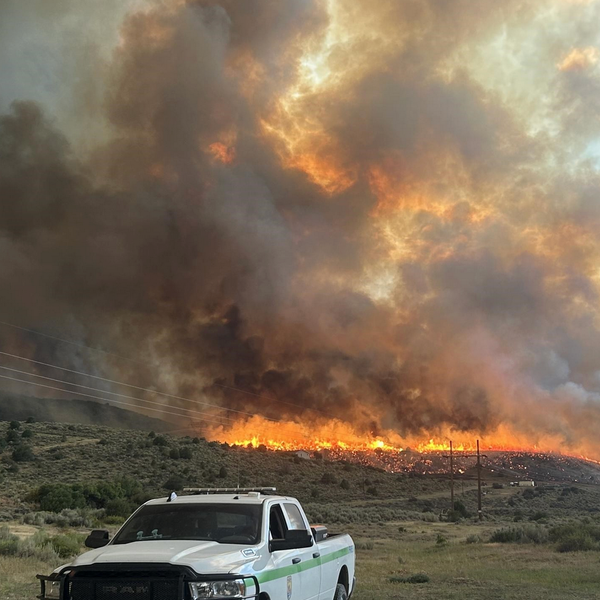

‘Blatant Act of Retaliation’: Trump Denies Colorado Request for Fire, Flooding Disaster Relief


In a statement announcing his video of the bill, Trump cited concerns about the size of the US deficit, even though the Congressional Budget Office has estimated that finishing the conduit will cost less than $500,000.

“My administration is committed to preventing American taxpayers from funding expensive and unreliable policies,” said Trump, whose signature legislation, the One Big Beautiful Bill Act, is projected to increase the US deficit by $3.4 trillion over the next decade. “Ending the massive cost of taxpayer handouts and restoring fiscal sanity is vital to economic growth and the fiscal health of the nation.”

Rep. Lauren Boebert (R-Colo.), a longtime Trump ally who sponsored the legislation, blasted the president for vetoing “a completely non-controversial, bipartisan bill that passed both the House and Senate unanimously.”

Boebert also hinted that Trump’s reasons for passing the bill could be political retribution over her effort to force the release of files related to the criminal prosecution of the late convicted sex offender Jeffrey Epstein, who for years was a friend of the president.

“I sincerely hope this veto has nothing to do with political retaliation for calling out corruption and demanding accountability,” Boebert said. “Americans deserve leadership that puts people over politics.”

It’s not clear what Trump’s motives were for vetoing the bill, though he has been feuding with elected officials in Colorado over the continued imprisonment of Tina Peters, the former county clerk of Mesa County, Colorado who was convicted in 2024 of seven charges related to her allowing unlawful access to voting machines in the wake of the 2020 presidential election.

Trump has demanded that Colorado release Peters, and he even went so far as to give her a presidential pardon, even though she was convicted on state charges rather than federal charges where such a pardon would carry real legal weight.

In a New Year’s Eve Truth Social post, Trump once again made false claims about Peters’ case.

“God Bless Tina Peters, who is now, for two years out of nine, sitting in a Colorado Maximum Security Prison, at the age of 73, and sick, for the ‘crime’ of trying to stop the massive voter fraud that goes on in her State,” Trump wrote.

In reality, there is no evidence of widespread voter fraud in Colorado during the 2020 election.

Trump finished off his post by lashing out at Democratic Colorado Gov. Jared Polis and Mesa County District Attorney Dan Rubinstein, a Republican whose office successfully put Peters in prison for a nine-year sentence.

“To the Scumbag Governor, and the disgusting ‘Republican’ (RINO!) DA, who did this to her (nothing happens to the Dems and their phony Mail In Ballot System that makes it impossible for a Republican to win an otherwise very winnable State!), I wish them only the worst,” Trump wrote. “May they rot in Hell. FREE TINA PETERS!”

'Trump is a disgrace': Gavin Newsom's press office rips into president over water bill

Ewan Gleadow
December 31, 2025
RAW STORY
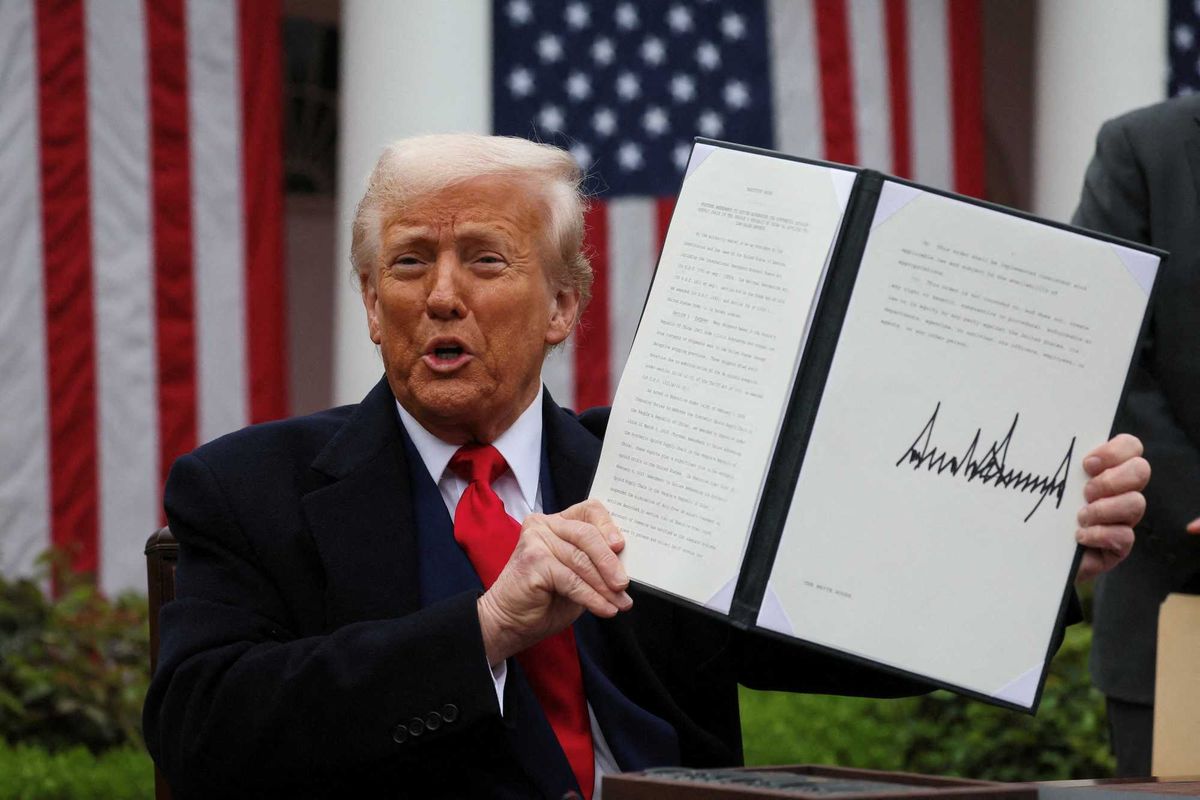

U.S. President Donald Trump holds a signed executive order on tariffs, in the Rose Garden at the White House in Washington, D.C., U.S., April 2, 2025. REUTERS/Leah Millis

Gavin Newsom's Press Office has branded Donald Trump a "disgrace" after the president vetoed a new water bill.


In a string of posts made to X, the Governor of California's official X account backed GOP representative Lauren Boebert's statement regarding a bill that, if passed, would have given clean drinking water to Southeast Colorado. A statement released by the Republican Party rep, who earlier this year challenged Trump to release the Epstein files, criticised the president and his administration for disregarding rural Americans.

Boebert's statement reads, "President Trump decided to veto a completely non-controversial, bipartisan bill that passed both the House and Senate unanimously. Why? Because nothing says 'America First' like denying clean drinking water to 50,000 people in Southeast Colorado, many of whom enthusiastically voted for him in all three elections."

"I must have missed the rally where he stood in Colorado and promised to personally derail critical water infrastructure projects. My bad, I thought the campaign was about lowering costs and cutting red tape."

"But hey, if this administration wants to make its legacy blocking projects that deliver water to rural Americans; that's on them."

Newsom's Press Office had already criticised the decision from Trump to veto the bill, with a post depicting Trump as a member of royalty shared. The image is captioned, "NO WATER FOR YOU PEASANTS, I NEED TO PUNISH YOU FOR A POLITICAL GRUDGE!"

A repost of Bobert's statement from the Press Office also added comment from the Governor of California's team. It reads, "We’re with Lauren Boebert on this one. Trump is a disgrace."

Boebert would end her statement by laying out her hopes that this was not "political retaliation" for demanding the release of the Epstein files.

She wrote, "And I sincerely hope this veto has nothing to do with political retaliation for calling out corruption and demanding accountability. Americans deserve leadership that puts people over politics."


'That's on them!' MAGA rep goes scorched earth on Trump for vetoing state's vital project

Robert Davis
December 30, 2025
RAW STORY


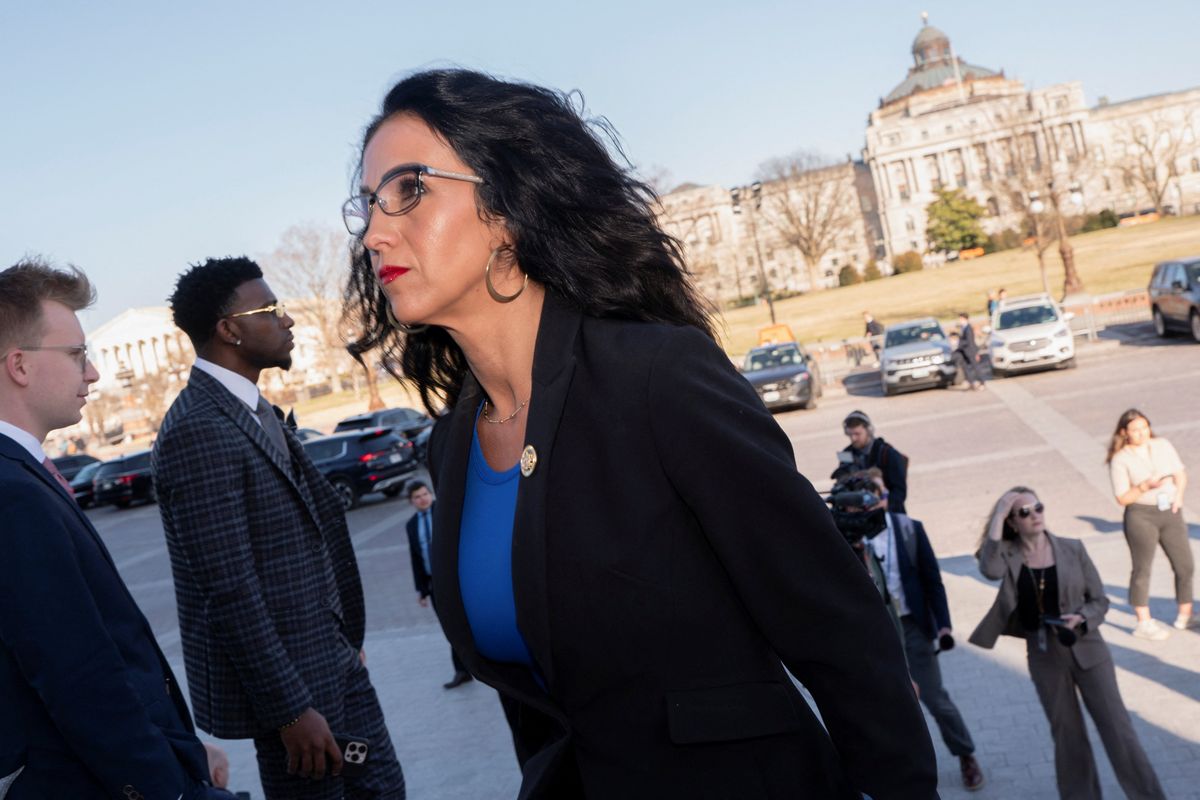
U.S. Rep. Lauren Boebert (R-CO) arrives at the the U.S. Capitol in Washington, D.C., U.S., March 11, 2025. REUTERS/Nathan Howard


Firebrand Colorado Rep. Lauren Boebert (R-CO) went scorched earth on President Donald Trump on Tuesday after he vetoed a water project in her state.

According to a statement Boebert's office shared with journalist Kyle Clark, the Trump administration unilaterally vetoed a "non-controversial, bipartisan bill" for a pipeline project that would have provided clean drinking water to more than 50,000 people in southeastern Colorado. Boebert questioned the timing of the move, considering that she was one of the lawmakers who crossed the aisle to vote on a petition to force Trump to release the Jeffrey Epstein files.

"Nothing says 'America First' like denying clean drinking water to 50,000 people in southeastern Colorado, many of whom enthusiastically voted for [Trump] in the last three elections," Boebert's statement reads in part.

"I must have missed the part of the rally where he stood in Colorado and promised to personally derail critical water infrastructure projects," Boebert added. "My bad, I thought the campaign was about lowering costs and cutting red tape. But hey, if this administration wants to make its legacy blocking projects that deliver water to rural Americans, that's on them."

Boebert also suggested that the veto may have been politically motivated.

"And I sincerely hope this veto has nothing to do with political retaliation for calling out corruption and demanding accountability," she said. "Americans deserve leadership that puts people over politics."


Boebert suggests Trump's veto of funding in her district is 'retaliation' for Epstein vote
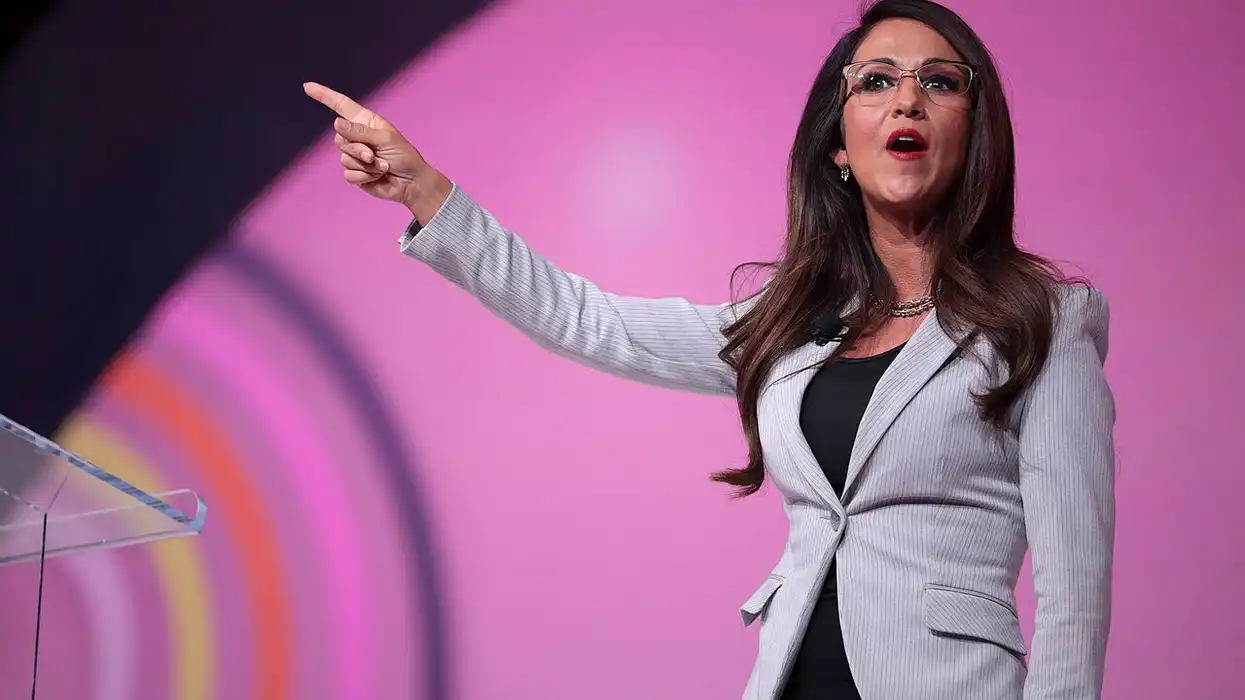

Rep. Lauren Boebert in Grapevine, Texas in June 2023 (Gage Skidmore)

December 30, 2025
ALTERNET


Rep. Lauren Boebert (R-Colo.) is accusing President Donald Trump of blocking a non-controversial water project affecting her district after the lawmaker challenged Trump to force the release of the Epstein files in November.

“… Trump decided to veto … a bipartisan bill that passed both the House and Senate unanimously. Why? Because nothing says ‘America First’ like denying clean drinking water to 50,000 people in Southeast Colorado, many of whom enthusiastically voted for him in all three elections,” Boebert said, according to Colorado news reporter Kyle Clark. “… I sincerely hope this veto has nothing to do with political retaliation for calling out corruption and demanding accountability. Americans deserve leadership that puts people over politics.”

“I thought the [Trump] campaign was about lowering costs and cutting red tape,” Boebert added.

More specifically, Trump vetoed a bill to fund a pipeline project to bring clean drinking water to communities on the Eastern Plains between Colorado’s Pueblo and Lamar cities, according to 9 News. The president’s veto of the “Finish the Arkansas Valley Conduit (AVC) Act,” which passed unanimously in the House and Senate, is Trump’s first veto of his second term.

In his veto letter, Trump wrote: "My Administration is committed to preventing American taxpayers from funding expensive and unreliable policies. Ending the massive cost of taxpayer handouts and restoring fiscal sanity is vital to economic growth and the fiscal health of the Nation."

But Colorado Democrats joined Boebert in accusing Trump of vetoing the project over petty grievance and vengeance, with Clark reporting Sen. John Hickenlooper (D-Colo.) accused the president of “playing partisan games and punishing Colorado by making rural communities suffer without clean drinking water."

Clark also reported U.S. Sen. Michael Bennet (D-Colo.) saying “This is payback because Colorado won't bend to his corruption. It's weak, it's dangerous, and it's un-American."

Social media on X blasted Boebert for not seeing the alleged betrayal coming, with one X user writing: “Another person who blindly supported the face-eating leopard is ranting now that the leopard’s eaten her face.”

“That feeling when you realize you were dating a bully,” posted another commenter on X.

Having passed unanimously, Congress could potentially override Trump’s veto should Trump’s Republican Party find the strength to defy him.

Read the 9 News report at this link.

10 Good Things That Happened in 2025

I hope you can look back on 2025 as the year movements for peace and justice freed political prisoners, slowed the war machine, and helped turn the public against endless wars.


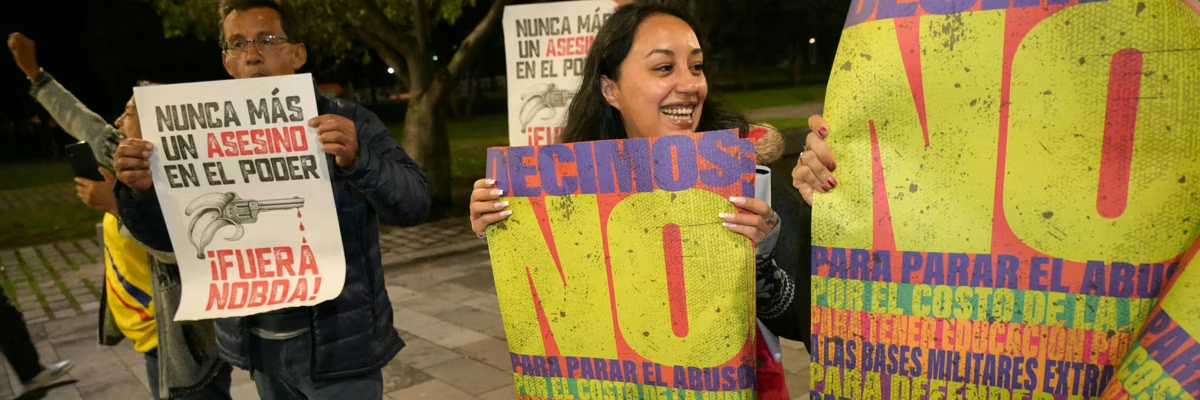
People react following the first results of the referendum in Quito on November 16, 2025 as Ecuadoran voters appeared poised on November 16, 2025, to reject the return of US military bases, according to early referendum results, a damaging blow to Trump-friendly President Daniel Noboa.
(Photo by Rodrigo Buendia/AFP via Getty Images)


Medea Benjamin
Dec 31, 2025
Common Dreams


It’s true—2025 has been a hard year. It’s easy to focus on the disasters, and there have been many. But we also had real victories that moved us closer to a better world. Here are some of my highlights from 2025.

1. Israel Was Forced to Negotiate a Ceasefire

In October, a ceasefire agreement was reached in Gaza, though it would be a lie to call it an end to the genocide we’ve all been witnessing for over two years. Still, the pause matters because it reveals what Israel could not achieve. Israel failed to break the Palestinian people or erase them from their land. It was forced to negotiate. It also gave us one of the rare moments where we saw videos coming out of Gaza with Palestinians celebrating in the streets, and feeling a little bit of relief for the first time in a long time. Yes, the Israelis are violating the ceasefire every day, Palestinians continue to suffer, and the “Peace Plan” passed by the United Nations is a sham. But the fact that Israel was unable to accomplish its goal of defeating and expelling the Palestinians—and instead had to negotiate—is in itself a testament to the power of both the Palestinians and their supporters throughout the world.

2. Mahmoud Khalil Is Free

In June, after months in Immigration and Customs Enforcement (ICE) detention, Palestinian activist Mahmoud Khalil was freed! We got to see him at the People’s Conference for Palestine, and he’s been in action ever since. From the moment he was first detained, the Palestine solidarity movement never stopped demanding his freedom. We knew that if we allowed this to happen to Mahmoud, it could happen to any one of us. His freedom is a testament to the power we all have when we stand together and have a clear demand. The same goes for Turkish student Rümeysa Öztürk, Georgetown scholar Badar Khan Suri, Palestinian student Mohsen Mahdawi, and British Journalist Sami Hamdi—all were freed from ICE’s grip due to mounting public pressure.

3. Majority of Americans Are Against War

Polls came out all year in the US that proved that people inside the belly of the beast are becoming more and more anti-war! Whether the conflicts are in Ukraine, Gaza, or Venezuela, the people of the US are sick and tired of their country going to war. This, if people take action on their beliefs, this will have huge implications for the US war machine! The anti-war movement is growing, and we have the power of the people behind us!

4. People Came Together to Protest ICE Raids and Support Immigrants

From Washington, DC to Chicago to Los Angeles, people across the country have been rising up to reject the unjust and illegal ICE raids ripping through our communities. As ICE agents terrorized grocery stores, elementary schools, and neighborhoods, communities responded by forming rapid-response networks to document abuses, provide legal support, and protect those being targeted. This collective resistance has been an inspiring expression of humanity in action—proof that when President Donald Trump’s administration pushes fear, racism, and a fascist agenda, people come together in solidarity to defend one another and fight back.


5. Zohran Mamdani Will Be the Mayor of the Largest US City

Zohran Mamdani’s victory in the NYC mayoral race was fueled by the Palestine movement and the collective mobilization of hundreds of thousands who are unwilling to be swayed by centrist, big-money interests and are ready for a new system. His win has already inspired others to run for office on a similar platform, showing how campaigns that speak to people’s needs can break through. Mamdani now inherits a seat at the heart of the war economy—presiding over the largest police department in the country and a city with deep political and financial ties to Israel. That reality makes his victory not an endpoint, but an opening: a chance to push demands for divestment and a peace economy to the center of city politics, and to turn the energy of his campaign into sustained, collective action—in the streets, in organizing spaces, and at the ballot box.

6. Global Sumud Flotilla to Gaza Makes History

For the first time in recent history, the Global Sumud Flotilla sailed into Gaza’s waters and came close to breaking the blockade! I was so inspired by the selfless activists, including my friend Adnaan Stumo and his brother Tor, who set sail to Gaza despite great personal risk. The Global Sumud Flotilla was the largest flotilla in history, and even though Israel arrested and detained dozens of brave humanitarians, their souls weren’t shaken. Another Gaza flotilla will soon set sail again, unintimidated by Israel’s threats!

7. AIPAC Is Losing Power

The American Israel Public Affairs Committee’s grip is starting to crack, with a growing number of candidates openly rejecting its money. Even more striking, some AIPAC-backed members of Congress defied the lobby this year—voting against its positions and infuriating a group long used to unquestioned loyalty. More and more people are waking up to AIPAC’s influence over our government, and are calling for a widespread rejection of it!

8. Mexico’s Woman President Shows What Principled Leadership Looks Like

Overseas, Claudia Sheinbaum, Mexico’s first woman president, has delivered bold progress at home—expanding public education, investing in clean energy, and strengthening labor rights and social programs that put working families first. When Trump tried to bully Mexico with tariff threats and demanded that Mexico play border cop, Sheinbaum defended Mexico’s sovereignty with competence, dignity, and a refreshing refusal to be intimidated. And when Trump blocked Venezuelan tankers from delivering oil to Cuba, Mexico stepped in to supply its own oil—a clear act of solidarity that showed what principled leadership looks like on the world stage.

9. Ecuador Rejects US Military Base

At a moment when the US is openly reviving the Monroe Doctrine in Latin America, Ecuador held a national referendum—and nearly 60% of voters said no to reopening a US military base on Ecuadorian soil. By rejecting a foreign base, Ecuadorians asserted their sovereignty and made clear they refuse to be a launchpad for US wars. Even amid a rightward political swing across the region, this vote shows that organized people can still block militarization and defend their self-determination.

10. US and Chinese Citizens Chose Connection Over Fear

This year offered a rare and hopeful reminder of how quickly walls can fall when people are allowed to meet one another as human beings. From the warmth and curiosity circulating on RedNote to iShowSpeed’s unfiltered encounters, a wave of everyday, people-to-people exchanges cut through political fear-mongering and brought Americans and Chinese together around shared humanity. In these small but powerful connections, the image of China as an “enemy” began to fade, replaced by curiosity and connection—and for the first time in five years, the number of Americans who consider China an enemy has dropped by nearly 10%.

I hope you can look back on 2025 as the year movements for peace and justice freed political prisoners, slowed the war machine, and helped turn the public against endless wars. Even in the hardest moments, that’s how I’ll choose to remember it. And I hope 2026 brings us closer to the world we all want to see.


Our work is licensed under Creative Commons (CC BY-NC-ND 3.0). Feel free to republish and share widely.


Medea Benjamin
Medea Benjamin is co-founder of Global Exchange and CODEPINK: Women for Peace. She is the co-author, with Nicolas J.S. Davies, of War in Ukraine: Making Sense of a Senseless Conflict, available from OR Books in November 2022. Other books include, "Inside Iran: The Real History and Politics of the Islamic Republic of Iran" (2018); "Kingdom of the Unjust: Behind the U.S.-Saudi Connection" (2016); "Drone Warfare: Killing by Remote Control" (2013); "Don't Be Afraid Gringo: A Honduran Woman Speaks from the Heart" (1989), and (with Jodie Evans) "Stop the Next War Now" (2005).
Full Bio >
Sanders Backs Push for Billionaire Tax in California as Newsom Raises Money to Fight It

“Yes: We need a wealth tax on billionaires,” said US Sen. Bernie Sanders.


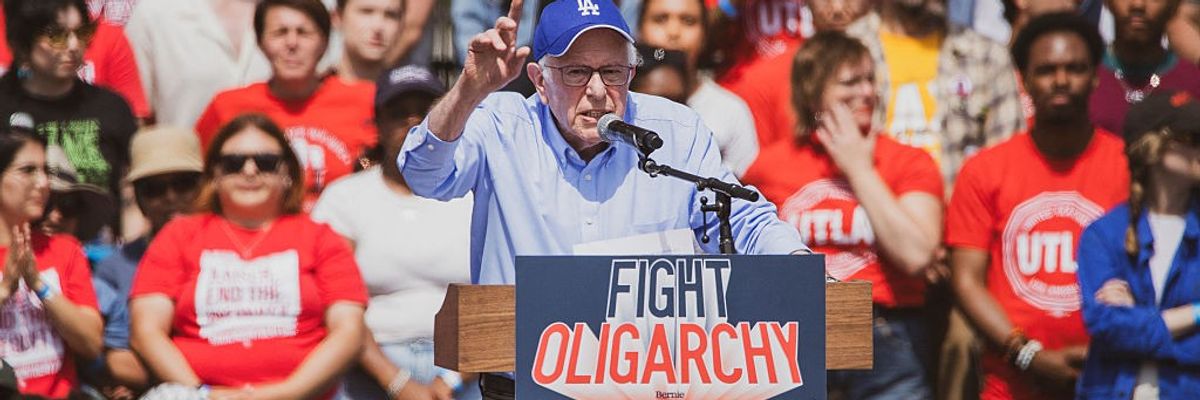
US Sen. Bernie Sanders speaks to a crowd in Los Angeles on April 12, 2025.
(Photo by Sam Ghazi/Middle East Images via AFP)

Jake Johnson
Dec 31, 2025
COMMON DREAMS


US Sen. Bernie Sanders on Tuesday endorsed an effort in California to impose a one-time tax on the wealth of the state’s billionaires, a grassroots campaign that has drawn opposition from Democratic Gov. Gavin Newsom and powerful investors.

Sanders (I-Vt.) said the proposed ballot initiative, which is currently in the signature-gathering phase, “is a model that should be emulated throughout the country.” The senator said he plans to introduce a proposal for a national wealth tax in the near future.

Gavin Newsom Wants a ‘Big Tent Party,’ But Opposes Wealth Tax Supported by Large Majority of Americans

Khanna Hits Back as Silicon Valley Oligarchs Threaten Primary Challenge Over California Billionaires Tax

“In my view, in a democratic society, we cannot continue to tolerate a rigged economy in which 60% of our people live paycheck to paycheck—struggling to pay for housing, food, and healthcare while the top 1% now owns more wealth than the bottom 93%,” Sanders said in a statement posted to social media. “We must not continue a trend in which, over the past 50 years, $79 trillion in wealth in our country has been redistributed from the bottom 90% to the top 1%.”

If placed on the November 2026 ballot and approved by voters, the California Billionaire Tax Act would levy a single 5% tax on the wealth of the roughly 200 billionaires who reside in the state. Those subject to the tax would have the option of paying the amount owed all at once or over a period of five years.

Organizers say the measure would generate $100 billion in revenue, which the state could use to avert a looming healthcare crisis fueled by the unprecedented Medicaid cuts that US President Donald Trump and congressional Republicans enacted over the summer.


“California is facing massive federal healthcare cuts—$20 to $30 billion a year for the next five years,” said Suzanne Jimenez, chief of staff of Service Employees International Union-United Healthcare Workers West, a top supporter of the proposed ballot initiative.

“The billionaire tax would raise dollar-for-dollar emergency funding of $100 billion through a one-time 5% tax on the worldwide net worth of California’s billionaires,” Jimenez added. “Any reductions in state income tax would be negligible in comparison to the billions that will be raised by the billionaire tax. And billionaires would still be taxed at lower rates than were in effect under President Reagan.”

“We need a tax system that demands that the billionaire class finally pays their fair share of taxes.”

Last week, California Attorney General Rob Bonta formally issued the title and summary of the proposed initiative as prominent billionaires—including Peter Thiel and Larry Page—threatened to leave the state over the measure, which would apply retroactively to those living in California as of January 1, 2026. Thiel is facing a potential $1.2 billion tax, while Page would have to pay roughly $12 billion.

The New York Times reported last week that Newsom, “who has been close with people like Mr. Page, is raising money for a committee to oppose the measure.”

“The committee received a $100,000 donation from the venture capitalist Ron Conway in November, according to state campaign finance records,” the Times added.

Other lawmakers from the state are supporting the measure, including US Rep. Ro Khanna (D-Calif.), who represents Silicon Valley.

Sanders, in his Tuesday statement, applauded Khanna, saying he is “absolutely right to support this effort.”

“From a moral, economic, and political perspective, our nation will not thrive when so few own so much while so many have so little,” said Sanders. “We need a tax system that demands that the billionaire class finally pays their fair share of taxes.”

LIBERAL WISHFUL THINKING


How Billionaires of Conscience Can Use Their Wealth to Take Down Trump

The Super Rich are sitting on trillions of dollars of “dead money.” It only takes a few dozen of them to save the Republic with “live money” comprising a fraction of 1% of their assets.


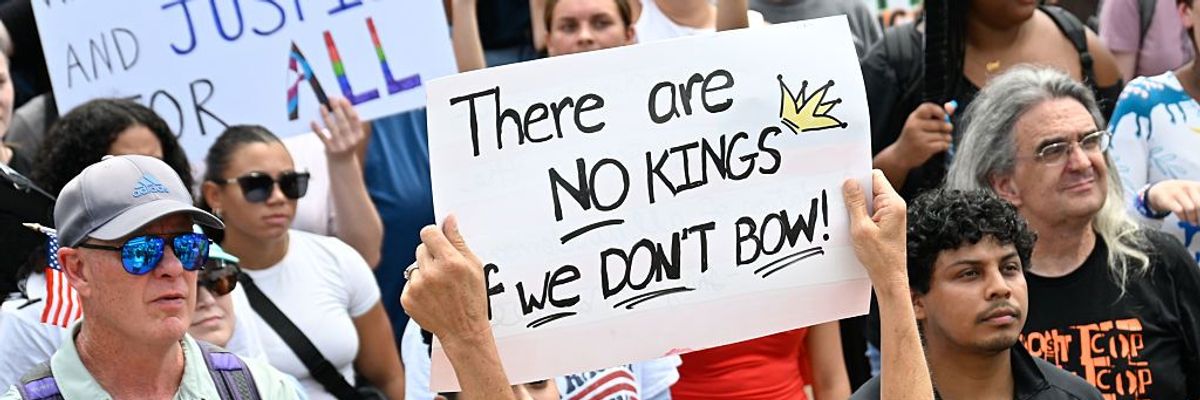
Thousands of demonstrators flood the streets of Charlotte, North Carolina on Flag Day, which also marks the 250th anniversary of the US Army, to protest against President Donald Trump on June 14, 2025.
(Photo by Peter Zay/Anadolu via Getty Images)

Ralph Nader
Dec 31, 2025
Common Dreams


There are reportedly about 900 billionaires (probably more) in the US About 5% can be described as enlightened people who know the importance of contributing to organizations that advance justice. They are also appalled by the Trump dictatorship and are not placated simply because he gave them tax cuts, deregulation, and maybe corporate welfare. On their minds is the well-being and freedoms of millions of their fellow Americans, whose lives are being cruelly and viciously wrecked by President Donald Trump, as he destroys the federal civil service.


I’ve talked with some of these very rich people (VRP) and heard them say they want to get engaged, so appalled are they by the lawless, egomaniacal, self-enriching, violent plutocrat Trump and his dump. Trump and COMPANY are only going to get MUCH WORSE. What follows are some suggestions on how the VRPs can get underway.

1. Sponsor a massive day of protest demanding the impeachment or resignation of Tyrant Trump. More will turn out than did the 7 million Americans marching in hundreds of communities under the “No Kings” banner. A growing majority of people already want this to happen.

With skilled management and verification, these marchers can be asked to take out their iPhones and contribute what they can to create strong local groups that resist Trump’s ongoing wreckage of our basic social safety net; our regulatory health, safety, and economic protections; and our voting rights against Trumpian planned interference in the 2026 elections. Even with just an average of a $10 contribution, at least $100 million would be raised on the protest day to give Americans daily organized power to focus on the White House’s outlawry, violent actions, and thievery. People organizing where they live, work, and raise their families is the first step to reclaiming our democracy.

2. Sponsor a group to counter Trump’s shattering of the Internal Revenue Service (IRS), firing thousands of staff responding to calls by middle-class taxpayers, and hundreds of highly skilled accountants and lawyers working on many cases of giant tax evasions by big corporations and the super rich. Many of these cases have been dropped, and the already starved IRS budget was cut sharply by the Trumpsters.


This project can be ably assisted by seven outspoken former IRS directors from both parties who have already testified and written open letters warning that the shoe will heavily drop next year, with tens of billions of uncollected dollars adding to the federal deficit and, worse, longer delays for taxpayers’ inquiries. (See, “More Tax Breaks For the Wealthy” by Jesse Drucker, New York Times, November 10, 2025).

3. Take on the further shredding of our preparedness toward climate violence and “not if, but when” pandemics (see, The Big One: How We Must Prepare for Future Deadly Pandemics by Dr. Michael T. Osterholm and Mark Olshaker). This should be an easy one to organize and fund with advocates by the VRP. Trump is boosting oil, gas, and coal (the sources of omnicidal greenhouse gases) while crazily doing whatever he can to depress or stop commercial solar energy and wind energy projects. The project would have the public health and scientific professions as well as the solar industry behind it.

4. This White House project is bold because the VRP know they would be assailed by Tyrant Trump. But the case against his extortion of companies, law firms, and universities, forcing them to engage in bribery if they comply with his unlawful demands, is powerfully grounded. Trump—the Bully-in-Chief—likes to dish out the slander and libel, calling for the impeachment of any judge ruling against his misrule, and naming other critical law enforcers as “deranged,” “crazy,” “communist,” “crooked,” “low IQ,” and more. A drive to counter these slurs and hurl some back at Trump would drive this thin-skinned Fuhrer to more self-immolating performances, further lowering his dropping polls.

5. A broad-ranging counterforce can cover the largest shutdown of federal agencies and programs in American history. Vastly immobilized from their congressionally mandated missions are the Consumer Financial Protection Bureau (CFPB), the Environmental Protection Agency (EPA), the Department of Education, and the US Agency for International Development. The latter’s illegal abolition is already costing many lives lost overseas, endangering millions of children and adults who are without medicines, food supplements, shelter, and safe drinking water. All kinds of other mandated missions have been cut at the Centers for Disease Control and Prevention, National Institutes of Health, NOAA (weather research and forecasting), US Department of Agriculture, assistance to people with disabilities, Meals on Wheels, Head Start, AmeriCorps, Medicaid, and food programs for tens of millions of Americans, and much more.

6. There are very-rich corporate and plaintiff tort lawyers who could address the slumber of the 50-state Bar Associations and the American Bar Association. They are supposed to be the First Responders to the destruction of the Rule of Law and our Constitution by the Rule of Raw Power criminal attacks by the Trump regime. Recall Trump’s 2019 declaration, “With Article II, I can do whatever I want as President,” which he is exhibiting every day with his brazen, boasting serial violations and blatant racism.

Waking up the legal profession would receive support from both lawyers who see themselves as Republicans or Democrats. They just need jump-start leadership—as the lessons of reformist history demonstrate time and time again. (See our letter to the Bar Associations.)

7. Finally, a prostrate GOP-dominated Congress is facilitating or enabling, contrary to their sworn vows to uphold the Constitution and the faithful execution of the laws, the deepening fascist state driven by the White House’s seizure of authority exclusively given to Congress by our Founding Fathers. This project would activate the grassroots, which has been calling for strong action at Town Meetings nationwide.

The Super Rich are sitting on trillions of dollars of “dead money.” It only takes a few dozen of them to save the Republic with “live money” comprising a fraction of 1% of their assets. Most of them are looking over their shoulder to see who takes the first steps.

Who takes the first steps? Aristotle had the answer over 2,000 years ago. He said, “Courage is the first of human qualities because it is the quality which guarantees the others.”


Our work is licensed under Creative Commons (CC BY-NC-ND 3.0). Feel free to republish and share widely.


Ralph Nader
Ralph Nader is a consumer advocate and the author of "The Seventeen Solutions: Bold Ideas for Our American Future" (2012). His new book is, "Wrecking America: How Trump's Lies and Lawbreaking Betray All" (2020, co-authored with Mark Green).
Full Bio >


The Reactionary Backwash: 2025 in Review for Latin America and the Caribbean

Through a combination of elections, judicial maneuvers, and extra-parliamentary pressure, including direct interference by Washington, countries that were formerly left or left leaning have swung sharply to the right.


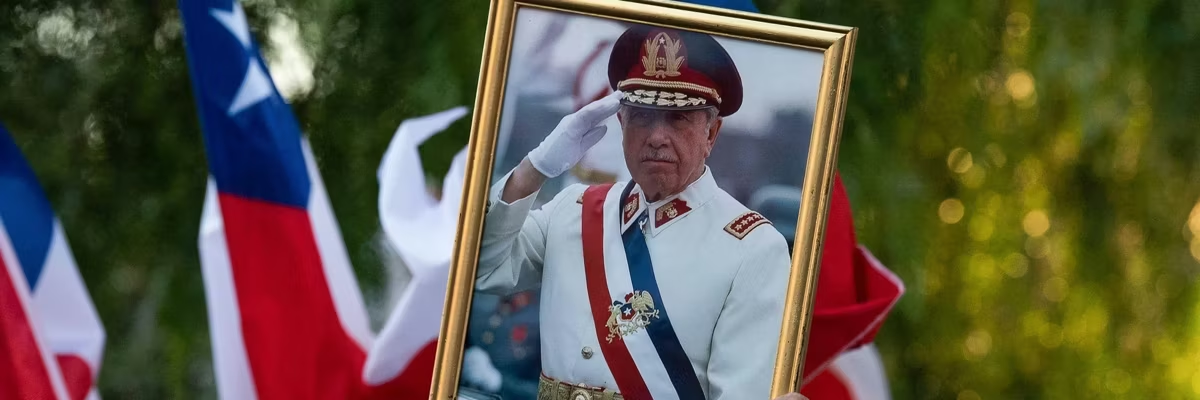
Supporters of Presidential candidate Jose Antonio Kast of the Republicano party celebrate with an image of former Chilean President Augusto Pinochet following the 2025 presidential election on December 14, 2025 in Santiago, Chile.

(Photo by Claudio Santana/Getty Images)
John Perry
Dec 31, 2025
Common Dreams

2025 saw progressive governments in Latin America and the Caribbean delegitimized and displaced. Right-wing forces have seized on drug-related crises to attack the so-called Pink Tide governments, driving a reactionary backwash and putting new, neoliberal administrations in power. The irony is that the rise in drug use and crime is driven by neoliberalism’s failure to meet social needs. But this has been successfully cloaked.

A further irony is that governments with the strongest records in limiting the social damage caused by illegal narcotics have been the principal targets of US destabilization campaigns.Contrary to President Donald Trump’s ludicrous mistruths, reports from the United Nations, the European Union, and even the US Drug Enforcement Agency certify that Venezuela is essentially free of drug production—no cocaine or marijuana production, and certainly no fentanyl.

With its community-based policing, Nicaragua is one of the safest countries in the whole region. In contrast, neighboring Costa Rica—under aggressively neoliberal administrations—is beset by a “tsunami of cocaine” and crime “amid a backdrop of growing inequality, high unemployment, and an erosion of investment in education,” according to a special report in the Los Angeles Times.

Cuba, despite over six decades of punishing Yankee blockades, is arguably the most gang-and drug-free country in the hemisphere.

Despite the reactionary backwash, more than half the region’s population is still governed by progressive administrations, of which the largest countries are Brazil, Mexico, and Colombia.

This could change in 2026, with presidential elections in Colombia and Brazil, where right-wing challenges threaten progressive gains. As the Financial Times observes, “Brazil’s global balancing act is trickier than ever.” Peru, where left-wing President Pedro Castillo was deposed and imprisoned two years ago, may also continue rightwards in elections scheduled for April. Of the current Pink Tide governments, Mexico appears best insulated from an imminent reversal.

The “Donroe” Doctrine


Presiding over these developments is an increasingly assertive US hegemon, citing a “Donroe” corollary to the 19th-century Monroe Doctrine as justification for the havoc it is wreaking. Now formalized in the National Security Strategy, it’s policy aims to “reassert and enforce the Monroe Doctrine to restore American pre-eminence” in Latin America and the Caribbean (LAC). As Venezuelan Ambassador Samuel Moncada warned the UN Security Council, Venezuela is only the “first target of a larger plan” to divide and conquer the region “piece by piece.”

Through a combination of elections, judicial maneuvers, and extra-parliamentary pressure, including direct interference by Washington, countries that were formerly left or left leaning have swung sharply to the right. This trend was evident in LAC’s four major elections in 2025—in Bolivia, Chile, Ecuador, and Honduras.

Across the region, the right now arguably constitutes a significant Washington-aligned force.

There were, however, crumbs of comfort for progressives. In Ecuador, the victorious President Daniel Noboa—whose win is likely attributable to electoral fraud—has since lost key popular referendums. In Bolivia, President Rodrigo Paz faces massive popular resistance as he moves to impose austerity economics. And in Chile, the defeated communist candidate Jeannette Jara did nevertheless secure 42% in December’s runoff vote.

Progressive governments have also shown a degree of unity in opposing US aggression against Venezuela, although Mexico and Brazil have also had to contend with Washington’s direct pressures on them. In Mexico, this included overt military threats.

The rightward shift is starkly illustrated by Chile’s election, where the outgoing Gabriel Boric had been a “flash in the pan” and unfulfilled expectations have “reshaped the political horizon of the left.” In March, when José Antonio Kast takes office, Chile will have a “Nazi” in power—or at least a self-avowed defender of the Pinochet dictatorship and the son of an actual German Nazi. Kast’s first foreign visit after his win was to Argentina’s hard-right Javier Milei, restoring an alliance between the two major Southern Cone countries. Both have large, right-leaning middle classes that sustained dictatorships in the recent past.

“Trump’s policies have intensified the extreme polarization in which the far right has replaced the center right,” notes Steve Ellner, retired professor at Venezuela’s Universidad de Oriente.

Across the region, the right now arguably constitutes a significant Washington-aligned force encompassing not only Chile and Argentina but also Paraguay, Bolivia, Ecuador, Panama, and El Salvador. All support Washington’s military aggression against Venezuela and genocide in Palestine. As Vijay Prashad observes, this new right bloc shares the libertarian economic doctrines of the Pinochet-era “Chicago Boys” (Kast’s brother was one of them), dramatized by Milei waving a chainsaw to symbolize his attack on the state.
Crime and the Criminalization of Migration

Both left and right agree that organized crime poses a major threat to LAC’s security. Although statistics show that most of the region is safer than a decade ago, violence has surged in some previously safe countries and reactionary forces have pushed crime as an issue in many others. “Polls show that in at least eight countries, including Chile, security is the dominant voter concern, driving many Latin Americans to demand iron-fisted measures and show a greater tolerance for tough-on-crime policies,” reports the New York Times.

The right’s response is captured by the phrase la mano dura (“the iron fist”), exemplified by the torturous prisons of Nayib Bukele’s El Salvador. Such approaches have proven more attractive to electorates in Chile, Honduras, and Ecuador than the community-based strategies advanced by the left—even though they are proven to work. Rafael Correa successfully reduced crime in Ecuador a decade ago. Xiomara Castro, too, achieved a significant decrease in Honduras, where the homicide rate dropped to the lowest level in 30 years. Left-leaning Mexico most dramatically reduced homicides by 37%.

The right’s alarming yet successful rhetoric links rising crime to drug trafficking and immigration. Trump-style measures have been sold to many Latin Americans yet, as Michelle Ellner of CodePink explains, in Cuba and Venezuela he is blocking migrants from entering the US “while systematically destroying the conditions that allow them to survive at home.”

This framing resonated even in Chile, which remains Latin America’s safest country despite an increase in gang-related crime. Kast successfully blamed the increase on Chile’s half million Venezuelan migrants, whom he threatens to deport, while also proposing to construct a US-style border wall.

The principal driver of the region’s crime is the drug trade. The unseen elephant in the room is the US—the world’s largest market for illegal narcotics as well as the leading money launderer of drug profits and the cartels’ gunrunner of choice. Yet Washington portrays itself as an ally in drug-related crime prevention, claiming to be tackling “narco-terrorism” not only in Venezuela but also in Colombia and Mexico.

This is hypocrisy of the highest order. As Venezuelan writer Francisco Delgado Rodríquez points out: “The only culprits are cartels and bandits with Latin American surnames, and their US counterparts or partners never appear, defying common sense given that the volumes of drugs, weapons, and profits generated necessarily require organized structures of their own on US soil.”

Nicaragua-based analyst Stephen Sefton also notes “the central role of the US government in manipulating the regional structures of organized crime and money laundering.” In reality, “US government propaganda uses the alibi of fighting organized crime and drug trafficking to justify its extensive military presence in the region.”

Trump has elevated this hypocrisy to new heights by releasing a former Honduran president who was serving a 45-year US prison sentence for drug trafficking and links to violent crime. Trump’s administration has gone on to murder, on the high seas, over 100 supposed drug traffickers, offering no proof of their crimes, and has committed acts of piracy against commercial vessels leaving Venezuela. This is in open defiance of the Law of the Sea, which the US explicitly cites in a different context—its actions to maintain “freedom of navigation” in the South China Sea.

The surge of drug-related crime, and even more of the rhetoric surrounding it, have coincided with the rise of a powerful Christian right. Once overwhelmingly Catholic, the region has seen rapid growth in conservative Protestant evangelical movements, particularly in Central America. Evangelicals constitute approximately 43% of the electorate in Honduras, 40% in Guatemala and Nicaragua, 37% in El Salvador, 29% in Panama, and 27% in Costa Rice and Brazil. Aligned with the populist right, these movements tend to promote social conservatism and pro-Zionism.

Regional fragmentation

In 2014, the 33 member states of the Community of Latin American and Caribbean States (CELAC) declared the region a Zone of Peace, pointedly asserting its sovereignty and its opposition to US military infiltration. In opposition to any such accord, Washington instrumentalizes a “war on drugs,” which Cuba has described as “a pretext to conceal military, paramilitary, and interventionist operations.”

Biden’s expansion of US military penetration continued seamlessly with Trump—only intensified further. This includes the deployment of a full naval armada off Venezuela’s coast; major military buildups in Puerto Rico and Panama; and the recruitment of Trinidad and Tobago, Dominican Republic, and Guyana into the offensive against Venezuela.

Despite the counter-hegemonic presence of China, the power of the US is such that it can threaten punitive tariffs on all the constituent countries and impose unilateral coercive measures on roughly 35% of the states in the Western Hemisphere.

Trump began his new term with mass migrant deportations and sweeping tariffs imposed on the region in January, a lurch toward xenophobia and economic parochialism. In response, Honduran President Xiomara Castro, then head of CELAC, called an emergency meeting, which was then canceled for lack of regional unity. The pan-Caribbean CARICOM has seen unity undermined by Trinidad and Tobago’s servile support of Trump’s armada. In response, Black Studies professor Isaac Saney asks, “Will the Caribbean accept fragmentation as its fate, or will this rupture provoke a renewed Pan-Caribbean struggle for a future beyond empire?”

Indeed, other regional organizations such as the progressive-oriented CELAC and even the US-dominated Organization of American States (OAS) have waned, especially given the latter’s anemic response to US military aggression in the Caribbean. The OAS’ controversy-ridden Summit of the Americas, scheduled for December, has been postponed to 2026.

Among the region’s most progressive forces, the Bolivarian Alliance for the Peoples of Our America (ALBA) has faced setbacks, including the loss of Bolivia following the election of a right-wing president. The influential leadership of Ralph Gonsalves was also lost when he was voted out in St. Vincent and the Grenadines.

“The level of fragmentation that we are seeing today among Latin American countries,” Foreign Policy observes, is “the most dramatic in the last half-century.”

Great Power Competition

Washington’s push to consolidate hemispheric dominance is linked to efforts to counter China, now South America’s largest trading partner and the second largest for the overall LAC region. China’s regional strategy sharply contrasts with Trump’s. China offers a win-win model of economic cooperation for mutual benefit, while the US proffers a zero-sum model of winners and losers.

China rejects excluding third parties from the region, while the US pledges to “deny non-Hemispheric competitors.” China emphasizes multilateral cooperation and shared Global South priorities, such as reforming international financial institutions, scientific collaboration, and high-tech investment. Beijing criticizes Washington’s “unilateral bullying.”

Most LAC governments try to triangulate between Beijing and Washington, while also developing new trading partnerships with countries such as India. Under US pressure, however, Brazil and Mexico may impose new tariffs on Chinese goods, although trade with China remains crucial for both. Argentina’s President Milei accepted a US bailout, but nonetheless renewed a currency swap line with China.

Washington is pressing its client states to take an anti-China stance, which it does not even take itself, by recognizing Taiwan and cutting formal diplomatic relations with the PRC. New rightist presidents in Bolivia and Honduras have promised to do so.

Furthermore, both the US and China need access to lithium, a vital mineral in advanced technology. Argentina, Bolivia, and Chile possess around 60% of the world’s known reserves. But while China offers complementary investment and industrial partnerships in return for a share of such resources, the US offers military bases and threats.

Despite the counter-hegemonic presence of China, the power of the US is such that it can threaten punitive tariffs on all the constituent countries and impose unilateral coercive measures on roughly 35% of the states in the Western Hemisphere. These sanctions, which are collective punishment, are illegal under international law. This is done with relative impunity and little prospect for relief for the victims. And victims there are of the so-called sanctions—especially those imposed on Venezuela and Cuba, which are under country-level embargoes or sectoral restrictions that constitute blockades because the measures are enforced against third countries.

What Pax Americana Looks Like


Haiti represents the ultimate outcome of neoliberal whittling down of the state: a hollowed-out government, near-total loss of sovereignty to the US and its allies, and a vacuum in which criminal gangs operate with impunity. This is the logical outcome of enforced submission to empire.

The US seeks to impose a similar subjugation on Venezuela precisely because Venezuela represents the hope of an alternative socioeconomic order. Michelle Ellner rightly argues that Venezuela is a test case:
What is being refined now—economic siege without formal war, maritime coercion without declared blockade, starvation without bombs—is a blueprint. Any country that refuses compliance with Washington’s political and economic demands should be paying attention. This will be the map for 21st century regime change.

Even if Venezuela had not a drop of oil to be exploited, it still would be in the crosshairs of imperialism as are Marco Rubio’s other two “enemies of humanity”—resource-poor Cuba and Nicaragua. Havana, made more vulnerable by the blockade on Venezuela, is now teetering on the brink of a disaster not of its own making. Nicaragua, so far treated lightly, faces attacks on its tourism industry and the likelihood of punishing tariffs. Also in line for regime change is Colombia, whose President Gustavo Petro has emerged as a continental conscience through his criticism of Washington’s deportation policies and his outspoken support for Palestine.

Nonetheless, Venezuelan President Nicolás Maduro faces the hardest test, likely with worse to come. He embodies a nation and more broadly a region bravely resisting imperial domination with remarkable resolve. Anti-imperialists hope and believe that such resistance by Latin America’s progressive governments will sustain them during 2026 and beyond.


Our work is licensed under Creative Commons (CC BY-NC-ND 3.0). Feel free to republish and share widely.


Roger D. Harris
Roger D. Harris is with the Task Force on the Americas and the US Peace Council.
Full Bio >

John Perry
Nicaragua-based journalist John Perry writes for the London Review of Books, FAIR, Antiwar.com, and Covert Action.
Full Bio >
Unrest in Iran, Plausible Deniability, and the Ghosts of 1953

In a world where information warfare blurs fact and narrative, we must resist the temptation to treat capability as conspiracy. But we must also resist the delusion that the absence of evidence today means an absence of action.


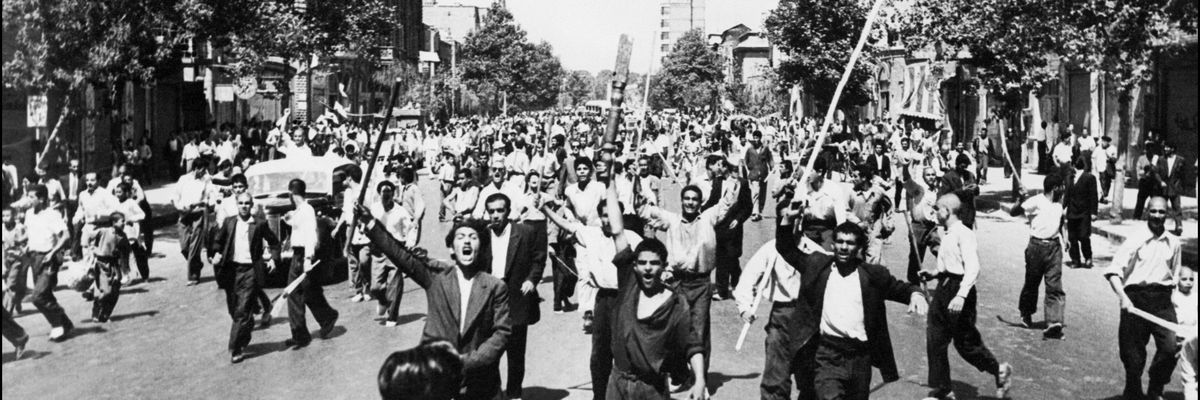
Rioters armed with staves shout slogans during riots in Tehran, Iran in August 1953.
(Photo by - / INTERCONTINENTALE / AFP via Getty Images)

Angel Gomez
Dec 31, 2025
Common Dreams

Speculation about covert operations tends to rise with geopolitical heat, and few places are as historically charged as Iran when it comes to foreign interference. The memory of the 1953 CIA-backed coup remains vivid in Tehran’s political consciousness, shaping both internal paranoia and external discourse. In today’s climate of US-Iran hostility—marked by sanctions, nuclear disputes, and regional proxy conflicts—whispers of destabilization efforts inevitably resurface. But plausibility should not be mistaken for proof.

Yet there are ghosts worth heeding…

In 1953, the CIA executed Operation TPAJAX—a covert operation that overthrew Iran’s democratically elected Prime Minister Mohammad Mossadegh, reinstating the autocratic Shah. This operation was denied, downplayed, and hidden for decades. It wasn’t until 2017—64 years later—that the US government officially declassified key documents from the Foreign Relations of the United States (FRUS) series detailing the planning and implementation of the coup. The materials that confirmed America’s role in the 1953 coup were not fully acknowledged through official channels until generations had passed, long after their geopolitical consequences had reshaped the Middle East.

Given that historical precedent, it’s not unreasonable to wonder: If something like that were happening today, would we know?

If the CIA is involved in orchestrating unrest in Iran today, we may not know until 2089.

Currently, Iran is again roiled by protests. Slogans like “Death to the Dictator” echo in the streets. Western headlines frame this as grassroots unrest, and it may well be. But for a country with a long and painful history of foreign interference cloaked in democracy rhetoric, the line between internal dissent and external orchestration is never clean.

From a strategic standpoint, the United States clearly possesses the capacity to conduct covert influence operations. Legal mechanisms for such actions exist under US law, with covert operations authorized by the president and subject to congressional oversight. The intelligence community, with decades of institutional experience, is equipped with modern tools ranging from cyber operations to narrative influence and financial pressure. These capabilities are real. But capacity alone tells us nothing about intent.

Public policy statements from the US government consistently emphasize deterrence and nonproliferation, not regime change. While tensions are undeniable, open endorsement of covert destabilization would carry significant political and legal costs. Congress, the media, and public opinion create substantial friction for any administration considering escalation by clandestine means. Adversarial relationships can foster suspicion, but they do not constitute motive.

Environmental conditions further complicate the picture. Iran, despite internal pressures and unrest, retains a strong security apparatus and hardened counter-intelligence services. Regional dynamics—involving militias, proxies, and overlapping crises—do not create the same permissive environment that existed in the early Cold War. On the contrary, they elevate the risks of blowback and exposure. Modern operations would need to be diffuse, multi domain, and plausibly deniable—relying on soft pressure through economic levers, information warfare, and alliances rather than the heavy-handed political interventions of the past.

And yet, these more nuanced forms of influence are precisely what make attribution difficult. In a world of cyber shadows, targeted sanctions, and disinformation, it’s easy to see ghosts. But serious allegations require serious evidence. Credible investigative reporting, declassified documents, congressional disputes, or allied intelligence consensus are necessary to move the needle from theoretical possibility to actionable suspicion—let alone attribution.

That’s where Dan Kovalik’s The Plot to Attack Iran enters the conversation. Kovalik draws clear lines from historical US interventions—including the CIA’s own admission of past regime change—to present-day provocations and misinformation. He details a long history of fabricated threats, from nonexistent Iraqi WMDs to exaggerated fears about Iran’s nuclear program. He argues that current rhetoric and actions—sanctions, assassinations, drone incursions, proxy pressures—form a consistent pattern of provocation meant to destabilize Iran under the guise of security policy.

Kovalik also reminds us that accusations of terrorism, often leveled at Iran, are selectively applied. While Iran is listed as a state sponsor of terrorism, US allies like Saudi Arabia—implicated in exporting Wahhabi extremism—are exempt from such labels. Groups like Hezbollah, which Iran supports, are framed by the US as terroristic, while Kovalik argues they act in regional resistance to Israeli occupation. This asymmetry of language is not just semantic—it builds the ideological scaffolding for war.

Legal oversight, international norms, and the specter of asymmetric retaliation all serve as meaningful deterrents. A misstep in this space could trigger regional escalation, damage US credibility, or backfire diplomatically. These are not trivial constraints. They are built-in brakes against rash or covert adventurism. And yet, none of them prevented the 1953 coup. Nor did they stop covert operations in Iraq, Libya, or Syria. History shows us that legal deterrents and political norms often collapse under the weight of perceived strategic necessity.

Bottom line: While it is analytically sound to say the United States could conduct covert operations against Iran under the right conditions, there is no defensible basis to assert that such actions are underway without evidence. Plausibility is not a claim—it is a lens for understanding risk, not a substitute for proof.

But perhaps the more sobering truth is this: If the CIA is involved in orchestrating unrest in Iran today, we may not know until 2089. Sixty-four years is a long time to wait for the truth. In that gap, entire wars can be fought, nations broken, and histories rewritten. The ghosts of TPAJAX aren’t just historical—they’re prophetic. And Iran, perhaps more than any other nation, knows that ghosts have long memories.

In a world where information warfare blurs fact and narrative, we must resist the temptation to treat capability as conspiracy. But we must also resist the delusion that the absence of evidence today means an absence of action. The stakes—diplomatic, strategic, and human—are far too high for anything less than disciplined analysis and historical awareness.

The past may not repeat, but it whispers—and in Iran, it is whispering loudly.


Our work is licensed under Creative Commons (CC BY-NC-ND 3.0). Feel free to republish and share widely.


Angel Gomez
Mr. Angel Gomez is a researcher specializing in the societal impact of government policies. He has a background in psychoanalytical anthropology and general sciences.
Full Bio >
The World Must Act Now to Abort the Next Phase of Extermination in Gaza

Another Israeli genocide is not a distant threat; it is an encroaching reality that will be finalized unless it is stopped.


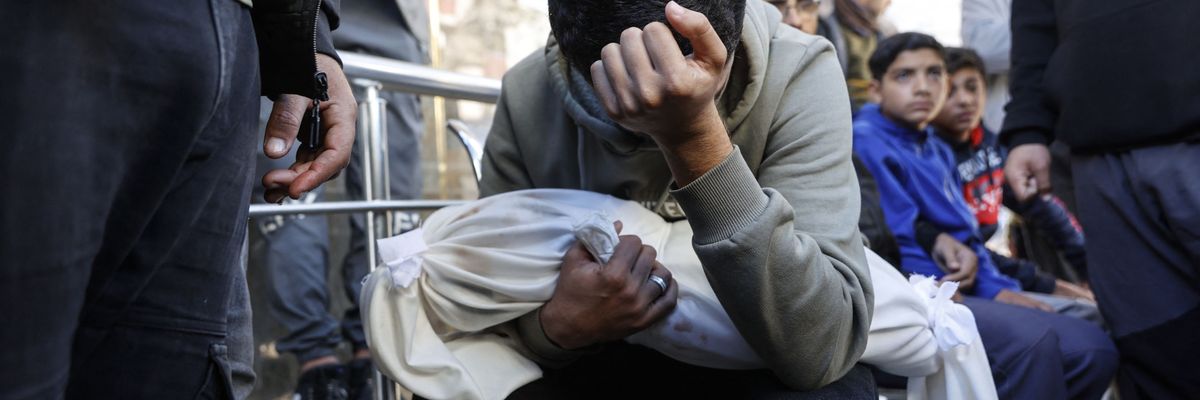
A Palestinian man carries the body of his 5-month-old brother, Ahmed Al-Nader, who was reportedly killed the previous day along with other family members in an Israeli shelling on a school-turned-shelter in the Tuffah neighbourhood of Gaza City, ahead of his funeral on December 20, 2025.

(Photo by Omar al-Qattaa / AFP via Getty Images)


Ramzy Baroud
Dec 31, 2025
Common Dreams

Suppose we accept the fiction that none of us expected Israel to launch a full-scale genocide in Gaza—a premeditated campaign to erase the Strip and exterminate a significant portion of its inhabitants. Let us pretend that nearly 80 years of relentless massacres were not a prelude to this moment, and that Israel had never before sought the physical destruction of the Palestinian people as outlined by the 1948 Genocide Convention.

If we go so far as to accept the sterile, ahistoric claim that the Nakba of 1948 was “merely” ethnic cleansing rather than genocide—ignoring the mass graves and the forced erasure of a civilization—we are still left with a terrifying reality. Having witnessed the unmasked extermination that began on October 7, 2023, who can dare to argue that its perpetrators lack the intent to repeat it?

The question itself is an act of charity, as it assumes the genocide has actually stopped. In reality, the carnage has merely shifted tactics. Since the implementation of the fragile ceasefire on October 10, Israel has killed over 400 Palestinians and wounded hundreds more. Others have perished in the frozen mud of their tents. They include infants like 8-month-old Fahar Abu Jazar, who, like others, froze to death. These are not mere tragedies; they are the inevitable results of a calculated Israeli policy of destruction targeting the most vulnerable.

During this two-year campaign of extermination, more than 20,000 Palestinian children were murdered, accounting for a staggering 30% of the total victims. This blood-soaked tally ignores the thousands of souls entrapped beneath the concrete wasteland of Gaza, and those currently being consumed by the silent killers of famine and engineered epidemics.

In the dominant Western narrative, the Palestinian is the eternal aggressor. They are the occupied, the besieged, the dispossessed, and the stateless; yet they are expected to die quietly in the world’s “largest open-air prison.”

The horrifying statistics aside, we bear witness to the final agonies of a people. We have watched their extermination in real time, broadcast to every handheld screen on Earth. No one can claim ignorance; no one can claim innocence. Even now, we watch as 1.3 million Palestinians endure a precarious existence in tents ravaged by winter floods. We share the screams of mothers, the hollowed-out faces of broken fathers, and the haunted stares of children, and yet, the world’s political and moral institutions remain paralyzed.

If Israel resumes the full, unrestrained intensity of this genocide, will we stop it? I fear the answer is no, because the world refuses to dismantle the circumstances that permitted this slaughter in the first place. Israeli officials never bothered to hide their intent. The systematic dehumanization of Palestinians was a primary export of Israeli media, even as Western corporate outlets worked tirelessly to sanitize this criminal discourse.

The record of intent is undeniable. National Security Minister Itamar Ben-Gvir openly championed the “encouragement of migration” and demanded that “not an ounce of humanitarian aid” reach Gaza. Finance Minister Bezalel Smotrich argued that the starvation of 2 million people could be “just and moral” in the pursuit of military aims. From the halls of the Knesset to the pop charts, the refrain was the same: “Erase Gaza,” “Leave no one there.” When military leaders refer to an entire population as “human animals,” they are not using metaphors; they are issuing a license for extermination.

This was preceded by the hermetic siege—a decades-long experiment in human misery that began in 2006. Despite every Palestinian plea for the world to break this death grip, the blockade was allowed to persist. This was followed by successive wars targeting a besieged, impoverished population under the banner of “security,” always shielded by the Western mantra of Israel’s “right to defend itself.”

In the dominant Western narrative, the Palestinian is the eternal aggressor. They are the occupied, the besieged, the dispossessed, and the stateless; yet they are expected to die quietly in the world’s “largest open-air prison.” Whether they utilized armed resistance, threw rocks at tanks, or marched unarmed toward snipers, they were branded “terrorists” and “militants” whose very existence was framed as a threat to their occupier.

Years before the first bomb of this genocide fell, the United Nations declared Gaza “uninhabitable.” Its water was a toxin, its land a graveyard, and its people were dying of curable diseases. Yet, aside from the typical ritual of humanitarian reports, the international community did nothing to offer a political horizon, a just peace.

This criminal neglect provided the vacuum for the events of October 7, allowing Israel to weaponize its victimhood to execute a genocide of sadistic proportions. Former Defense Minister Yoav Gallant explicitly stripped Palestinians of their humanity, launching a collective slaughter directed by Prime Minister Benjamin Netanyahu.

The stage is being set for the next phase of extermination. The siege is now absolute, the violence more concentrated, and the dehumanization of Palestinians more widespread than ever. As the international media drifts toward other distractions, Israel’s image is being rehabilitated as if the genocide never happened.

Tragically, the conditions that fueled the first wave of genocide are being meticulously reconstructed. Indeed, another Israeli genocide is not a distant threat; it is an encroaching reality that will be finalized unless it is stopped.

The 1948 Convention on the Prevention and Punishment of the Crime of Genocide was a legal vow to “liberate mankind from such an odious scourge.” If those words possess a shred of integrity, the world must act now to abort the next phase of extermination. This requires absolute accountability and a political process that finally severs the grip of Israeli colonialism and violence. The clock is ticking, and our collective voice—or our silence—will make the difference.


Our work is licensed under Creative Commons (CC BY-NC-ND 3.0). Feel free to republish and share widely.


Ramzy Baroud
Ramzy Baroud is a journalist and the Editor of the Palestine Chronicle. He is the author of five books including: "These Chains Will Be Broken: Palestinian Stories of Struggle and Defiance in Israeli Prisons" (2019), "My Father Was a Freedom Fighter: Gaza's Untold Story" (2010) and "The Second Palestinian Intifada: A Chronicle of a People's Struggle" (2006). Dr. Baroud is a Non-resident Senior Research Fellow at the Center for Islam and Global Affairs (CIGA), Istanbul Zaim University (IZU). His website is www.ramzybaroud.net.
Full Bio >
As Trump Claims He’s Slashing Costs, Big Pharma Jacks Up Prices on 350 Drugs

One critic charged that Trump’s earlier deals with pharmaceutical companies “just nibble around the margins in terms of what is really driving high prices for prescription drugs in the US.”


Packaging and pills of different types of psychotropic medications are seen in this illustration photo taken in Warsaw, Poland on April 22, 2025.
(Photo by Jaap Arriens/NurPhoto via Getty Images)


Brad Reed
Dec 31, 2025
COMMON DREAMS

President Donald Trump in recent months has made ludicrously false claims about his administration slashing prescription drug prices in the US by as much as 600%, which would entail pharmaceutical companies paying people to use their products.

In reality, reported Reuters on Wednesday, drugmakers are planning to raise prices on hundreds of drugs in 2026.


Citing data from healthcare research firm 3 Axis Advisors, Reuters wrote that at least 350 branded medications are set for price hikes next year, including “vaccines against COVID, RSV, and shingles,” as well as the “blockbuster cancer treatment Ibrance.”

The total projected number of drugs seeing price increases next year is significantly higher than in 2025, when 3 Axis Advisors estimated that pharmaceutical companies raised prices on 250 medications.

The median price increase for drugs next year is projected at 4%, roughly the same as in 2025.

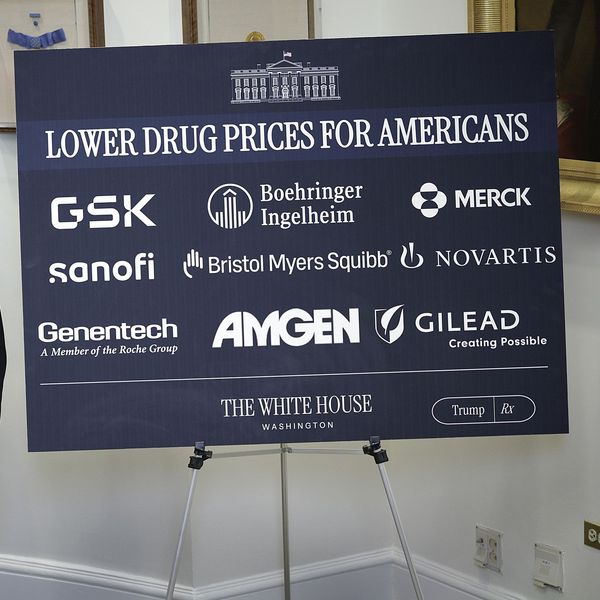
Reuters also found that some of the companies raising prices on their drugs are the same ones who struck deals with Trump to lower the costs of a limited number of prescriptions earlier this year, including Novartis, Pfizer, Boehringer Ingelheim, and GSK.

In announcing the deals with the pharmaceutical companies, Trump declared that “starting next year, American drug prices will come down fast and furious and will soon be the lowest in the developed world.”

But Dr. Benjamin Rome, a health policy researcher at Brigham and Women’s Hospital in Boston, told Reuters that the projected savings for Americans under the Trump deals are a drop in the bucket compared with the continued price hikes on other drugs.

“These deals are being announced as transformative when, in fact, they really just nibble around the margins in terms of what is really driving high prices for prescription drugs in the US,” Rome explained.

Merith Basey, CEO of Patients For Affordable Drugs Now, a patient advocacy organization focused exclusively on lowering the cost of medications, also said she was unimpressed by Trump’s deals with drugmakers.

“Voluntary agreements with drug companies—especially when key details remain undisclosed—are no substitute for durable, system-wide reforms,” she said earlier this month. “Patients are overwhelmingly calling on Congress to do more to lower prescription drug prices by holding Big Pharma accountable and addressing the root causes of high drug prices, because drugs don’t work if people can’t afford them.”