Sunday, January 25, 2026

BAD NEWZ

Global Energy Transition Threatened by Critical Transformer Shortages

  • The global clean energy transition is being jeopardized by critical transformer shortages and aging grid infrastructure in the United States and Europe.

  • Skyrocketing demand for transformers, driven by global economic development and AI, has led to a significant supply deficit with domestic manufacturing unable to keep pace, escalating costs and delaying new generating plants.

  • The growing crisis is attributed to years of underinvestment in domestic manufacturing, a post-pandemic surge in construction, and volatility in key material markets like steel and copper.

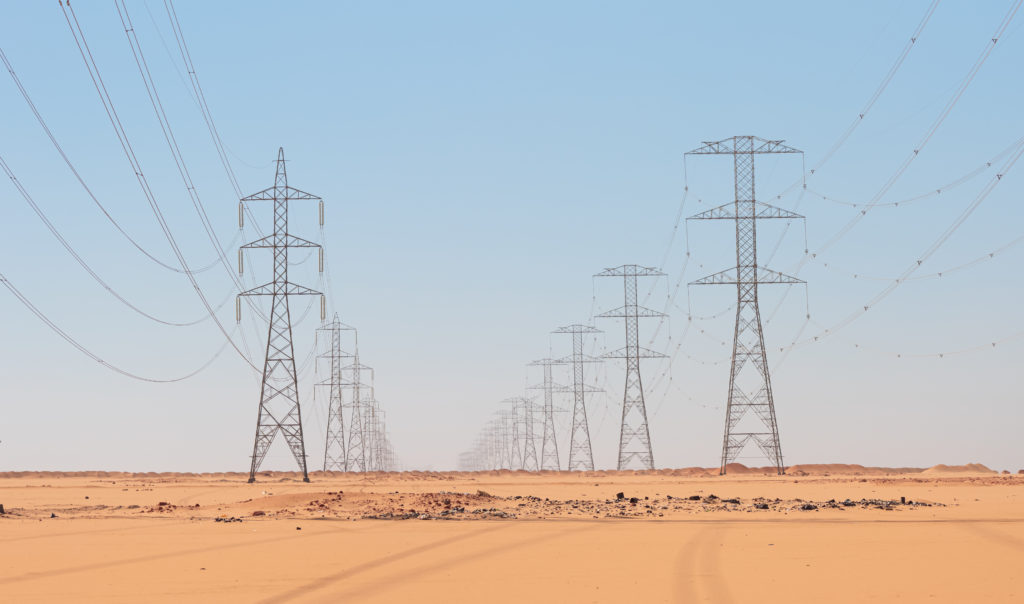
The global clean energy transition has passed a tipping point as renewable energies have simply become too cheap to fail. Worldwide, nations both rich and poor are rushing to install more and more wind and solar capacity to keep up with rising energy demand rates driven by global economic development and the age of AI. But while countries have been investing heavily into increased production capacity, investments in critical grid infrastructure have not kept pace, leading to a major energy transition bottleneck and a potential threat to energy security for an increasing number of countries.

The United States and Europe are both facing critical transformer shortages and aging and inadequate grid infrastructure, and the threat that this shortage poses to energy security is already being felt through historic blackouts such as last year’s cascading grid failure in Spain and Portugal. While these setbacks have raised the profile of infrastructure investing in European policy spheres, “ambition is not yet being matched by action from governments, policy-makers, investors and businesses,” according to a recent report from the World Economic Forum. 

In the United States, specialists foresee a yearslong transformer crunch, with little to no relief forthcoming. While companies have rushed to ramp up production of power transformers and distribution transformers, keeping up with skyrocketing demand is an impossibly tall order. Wood Mackenzie estimates that, since 2019, U.S. demand for power transformers has jumped by 116 percent, while demand for distribution transformers has shot up 41 percent. 


"This surging transformer demand has created a significant supply deficit, with domestic manufacturing capacity unable to keep pace," Wood Mackenzie Senior Analyst Ben Boucher. "Utilities are routinely turning to the import market to meet project timelines. In 2025, imports will account for an estimated 80% of US power transformer supply and 50% of the distribution transformer supply. This market imbalance is escalating costs and lead times and is delaying our ability to bring generating plants online in pace with the surging energy demand."

However, some experts disagree with this takeaway, arguing that the transformer “shortage” is overblown if not fabricated, and the issue lies in self-inflicted procurement problems. There’s room for debate because the issue is a complex one stretching over many different economic sectors and supply chains. Whether the problem is one of supply or one of procurement, however, the impact is the same – major bottlenecks for new electricity with potential pitfalls for national energy security. 

“Over the past few years, what started as a squeeze has gradually morphed into a crisis,” Power Magazine recently reported. The Power article contends that this growing crisis has been “furnished by years of underinvestment in domestic manufacturing, a sudden surge in post-pandemic construction and electrification, and volatility in grain-oriented electrical steel (GOES) and copper markets, which steadily pushed lead times for large power and generator step-up (GSU) transformers beyond historical norms.”

And those driving factors are showing little signs of changing, indicating that delay times for transformer delivery are going to continue to stretch on. Even though demand for these products is now growing exponentially, this spike is coming in the wake of years of lackluster demand, and would-be investors are still warming up to the idea that they’ll get a return on their investment in the sector. 

Hitachi, one major producer of such transformers, for example, has strategically only invested in transformer development when the purchase of those components is already guaranteed and buyer-backed.  “Nobody wants to overinvest” in new production facilities, according to Hitachi Energy CEO Andreas Schierenbeck.

Through these kinds of up-front deals, Hitachi has planned $1 billion in new manufacturing capacity across the United States. However, Schierenbeck told news outlet Semafor this week that these deals are “probably not enough to close the gap between supply and demand… There are still customers who are just in the old world with transactional behavior, and they’ll have to be lucky to get a slot.”

By Haley Zaremba for Oilprice.com 


Why the Humble Capacitor is the Electric Car Industry's New Crisis

  • The shift to 800-volt systems and Silicon Carbide inverters, while increasing efficiency,
  •  imposes extreme thermal and electrical stress on passive components like capacitors, effectively trading short-term battery range for long-term hardware durability.

  • Failures in high-voltage systems, such as a blown $25 fuse in the sealed Integrated Charging Control Unit (ICCU), lead to repair bills between $3,000 and $4,500 because the entire assembly must be replaced, resulting in an impending "totaling" crisis for older EVs.

  • The supply chain for critical capacitor materials, including high-purity etched aluminum foil and ultra-thin polypropylene film, is dangerously concentrated among a handful of manufacturers, which poses a significant and unaddressed risk to future EV production targets.

Lego car

The global electric vehicle transition is currently being sold as a triumph of mineral procurement and gigafactory scaling... a narrative where lithium mines and nickel refineries are the only hurdles between us and a decarbonized fleet. 

But while the industry fixates on the battery, it is ignoring the passive electronic components that must handle the violent throughput of high-voltage energy.

The market for EV capacitors has ballooned to $5.32 billion. This growth is a symptom of a technical crisis. 


The shift to 800V architectures and Silicon Carbide (SiC) inverters has turned the humble capacitor from a commodity into a stubbornly analog, physically massive, and heat- and vibration-prone strategic choke point.

To understand the financial volatility of 2026, one must look past the software and into the etched foil and polypropylene film... because the physics simply isn't adding up to the marketing promises.

The 800-Volt Fever: A Double-Edged Sword

Automakers are currently locked in an arms race to 800-volt systems to enable the 15-minute charge times that consumers demand. On paper, it is a masterstroke of efficiency. In reality, it is a pressure cooker for power electronics.

The International Energy Agency (IEA) reports that global EV spending exceeded $425 billion, but a growing slice of that capital is being eaten by the "multiplier effect" of component density. 

A standard internal combustion engine (ICE) vehicle requires roughly 3,000 Multi-Layer Ceramic Capacitors (MLCCs). A modern Battery Electric Vehicle (BEV) requires up to 22,000.

This represents more high-purity aluminum and specialty ceramic than the existing supply chain was ever designed to extrude... and the friction is starting to smoke.

The DC-link capacitor is the literal dam holding back the reservoir of energy from the battery. In 800V systems, this component must be 20-30% larger to maintain safety margins against electrical arcing. 

Yet, the industry-wide push for "e-axles", where the motor and inverter are one compact unit, forces these larger, more heat-sensitive components into tighter, hotter spaces.

The result is a collision between the marketing department's desire for "fast charging" and the engineering department's struggle with "thermal runaway."

Efficiency at the Expense of Durability

Wall Street loves Silicon Carbide (SiC). It is the material that allows Tesla, BYD, and Hyundai to squeeze 5% more range out of a battery pack by reducing switching losses. 

But SiC is a "violent" switch.

These chips turn on and off in nanoseconds. This speed is what makes them efficient, but it creates a massive dV/dt (change in voltage over time) that hits the capacitor and motor windings like a high-frequency sledgehammer.

"We are effectively trading long-term hardware durability for short-term battery range..."

The high-frequency ripple current generated by SiC switching passes through the capacitor’s internal structure, generating heat through Equivalent Series Resistance (ESR). Since the dominant dielectric—polypropylene—is a thermoplastic, it begins to soften and degrade at 105°C.

In 2026, we are seeing a rising trend of "insulation fatigue." 

You might have a million-mile battery, but if the insulation in your $2,000 inverter is chewed up by the dV/dt of your SiC chips, the car is dead at 100,000 miles. The "efficiency" isn't free... it is being transferred from the battery's Bill of Materials (BOM) to the consumer's future repair bill.

The "Right to Repair" Time Bomb

The most contentious issue at the intersection of finance and hardware is the reparability—or lack thereof—of these high-voltage systems.

Take the Integrated Charging Control Unit (ICCU) failures that have plagued the industry over the last 18 months. When a transient over-current condition—often driven by the very SiC switching we praise—blows an internal high-voltage fuse, the financial fallout is absurd.

The fuse costs roughly $25.

However, because the unit is potted in resin and sealed for liquid cooling, dealers do not open them. They replace the entire assembly. For the owner of a five-year-old EV, this results in a repair bill ranging from $3,000 to $4,500.

This is the EV equivalent of a blown engine caused by a faulty spark plug.

As the first massive wave of 2020-2022 EVs exits warranty in 2026 and 2027, the secondary market is facing a "totaling" crisis. 

A $4,000 repair on a vehicle with $12,000 in remaining equity is an economic death sentence. This "analog entropy" is the silent killer of EV residual values... and it’s a story no OEM wants to tell.

Three Hidden Monopolies: Foil, Film, and Fumes

The supply chain for these components is more concentrated than the market for lithium. If you want to understand the real risk to 2026 production targets, you have to look at the "etched foil oligopoly."

Aluminum electrolytic capacitors rely on high-purity etched foil. This is not kitchen foil; it is an electrochemical marvel that increases surface area hundreds of times through acid-tunnel etching. This process is energy-intensive, environmentally toxic, and almost entirely controlled by a handful of Japanese and Chinese titans: JCC (Japan Capacitor Industrial), Resonac (formerly Showa Denko), and UACJ.

Lead times for these foils have historically blown out to 24 weeks during demand surges.

Then there is the "3-micron bottleneck."

The film capacitors used in 800V inverters rely on ultra-thin, bi-axially oriented polypropylene (BOPP) film. The market leader, Toray Industries, is currently the only supplier that can consistently produce the <3-micron grades required for high-density automotive inverters.

While China is aggressively expanding its capacity, Western OEMs are terrified of the liability. 

A defect in a capacitor film doesn't just make the car stop... it can cause an energetic disassembly (a fire). This risk premium keeps the global supply chain tethered to a few legacy factories in Japan.

Addressing the Supercapacitor Hype

We cannot discuss this market without addressing the hype around supercapacitors. Every few months, a headline suggests supercapacitors will replace batteries.

The data says otherwise.

Supercapacitors have immense power density but pathetic energy density. They are not the "tank"... they are the "booster." 

We see them in high-performance halos like the Lamborghini Sian or in heavy-duty garbage trucks where they capture regenerative braking energy that would otherwise fry a chemical battery.

Skeleton Technologies and Maxwell (now a shadow of its former self) have shown that the real volume is in "shaving the peaks." By using a supercapacitor to handle the instant-on torque or the hard-braking surges, you extend the life of the main battery. It is a protective layer, not a replacement. In 2026, this remains a niche high-cost solution for vehicles that live in a "stop-start" hell.

A Reality Check 

As we look toward the 2030 targets set by the EU, the math for the capacitor supply chain doesn't work without a radical shift in engineering.

The industry is currently running toward a "Hardware Wall."

We have optimized the software, we have scaled the battery chemistry, but we are still relying on a 50-year-old dielectric and a 100-year-old manufacturing process to manage the most advanced powertrains in history.

The financial winners won't be the companies that announce the most pivotal software updates. They will be the ones that solve the serviceability of the inverter and the durability of the insulation.

Short term: The grey market for third-party EV repair will boom as owners realize they don't want to pay $4,000 for a blown fuse.

Long term: The value consolidates around the companies that control the high-purity materials. If you don't own the film or the foil, you don't own the future of the electric vehicle.

The electric transition isn't just a software revolution; it’s an analog brawl... and the capacitor is the one throwing the hardest punches.

By Michael Kern for Oilprice.com 


Zambian power trader plans $100 million link to Tanzania


Stock image.

A Zambian energy trader plans to build a $100 million power-transmission line to neighboring Tanzania — the first such connection — to help boost electricity supplies to copper mines seeking alternative energy sources.

Kanona Power Co.’s planned high-voltage line, which it expects will take a year to build, may be completed before a larger World Bank–financed transmission project that’s seeking to become the first to complete the final link connecting grids stretching from Cape Town to Cairo.

For copper mines in Africa’s second-biggest producer of the metal, projects like Kanona’s are crucial to securing reliable electricity. Zambia relies heavily on hydropower, and a severe drought in 2024 triggered its worst energy crisis on record from which it’s still recovering. Kanona said its project would work alongside a bigger interconnector that the two national governments are developing.

“It will not only increase Zambia’s capacity to bring imported power into the country, but it will also create the necessary redundancy to further strengthen the grid and secure supply,” a company spokesperson said in response to emailed questions.

There has been increasing interest in building regional grid connections, which may help move power from nations with excess supply to those facing shortages. The World Bank last year committed to financing construction of a high-voltage transmission line linking Uganda and Tanzania.

Kanona’s planned line will connect Mwakibete in southwestern Tanzania to Nakonde, a border town in Zambia’s northeast.

Incorporated in 2023, the company has quickly emerged as a key power trader in Zambia.

The competing interconnector, backed by $245 million in World Bank funding, has been in planning for more than a decade and is set to start operating around 2028.

(By Matthew Hill and Taonga Mitimingi)

ZN

Korea Zinc says US smelter’s waste pile has $3 billion in metal


Clarksville zinc refinery is located 4 km southwest of Clarksville, Tennessee, US. (Image courtesy of Nyrstar.)

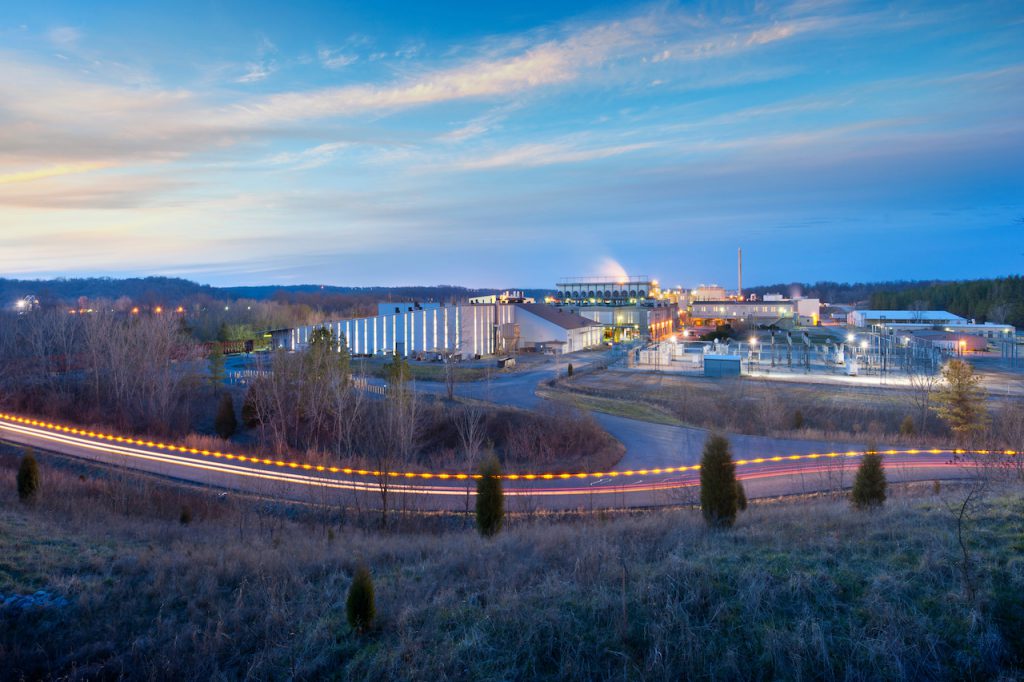
Korea Zinc Co. says it can process about $3 billion worth of leftover metal from an old US smelter it plans to convert into a giant critical minerals complex.

The company — one of the world’s largest processors of zinc and other metals — bought the Nyrstar processing plant in Clarksville, Tennessee, in December and now plans to invest $7.4 billion to expand and refurbish it.

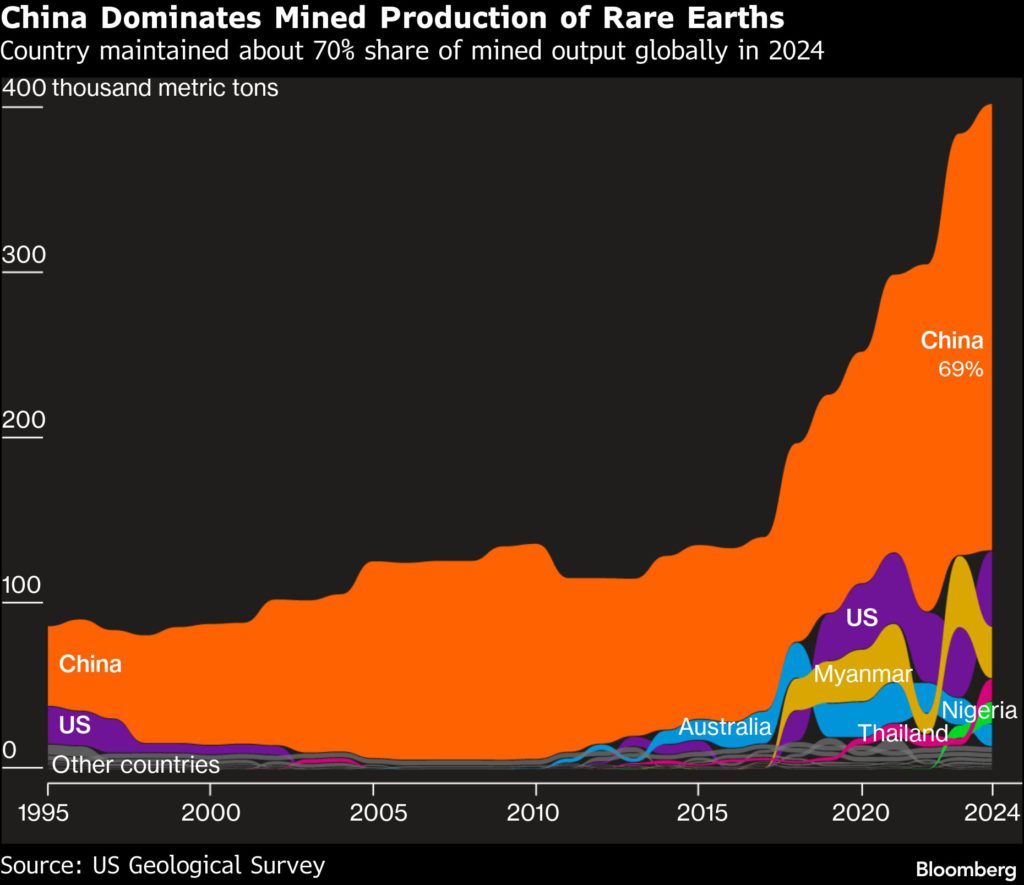
The supply would give a boost to US President Donald Trump’s push to secure a domestic supply of minerals that are essential for consumer electronics, robotics and defense technology. China dominates the critical minerals sector, leaving US industries dependent on foreign imports of the material.

The site already holds a load of waste material that contains key metals like zinc, copper, lead, silver and germanium, according to chief executive officer Yun B. Choi.

“It’s quite attractive for us,” Choi said Wednesday in an interview at the World Economic Forum in Davos. “This is actually a huge bonus that comes with the plant and it will provide us with a very secure source of germanium and gallium and other things that US industries are quite interested in securing.”

Choi estimates the site, which previously was owned by commodities trading house Trafigura Group, holds about 600,000 tons of the discarded material — equivalent to more than $3 billion at today’s prices. Processing it all would likely take six or seven years, he added.

The expansion has the backing of the US government and JPMorgan Chase & Co. Korea Zinc has said it will start the project this year, with commercial operations beginning in 2029. The company has yet to secure raw materials from other operations to feed into the smelter, which makes the on-site waste material key to supply, Choi said.

“We are definitely technically capable of extracting the metals that are contained within the site and extract profit from it, too,” he said.

The CEO also said he sought assurances from the Trump administration that US Immigration and Customs Enforcement would not detain Korean workers at the site. Last year, law enforcement arrested 475 people in a raid at Hyundai Motor Co.’s battery plant in Georgia.

“We had a conversation with the US and we received very, very robust assurances that they will never,” said Choi. “It will not happen.”

The plans come at a time when Korea Zinc is also embroiled in an ownership dispute, sparked last year after its top shareholder launched an unsolicited takeover bid for the Seoul-based firm.

Following the announcement in December, Young Poong Corp., Korea Zinc’s biggest investor, argued the company made the smelter deal to shore up the CEO’s management control rather than serve the company’s business interests.

Choi on Wednesday refuted that take.

“The argument that this deal was done solely because of me wanting the US being a white night or some other ridiculous interpretation of this deal is, I think, quite outlandish,” he said. “Just saying this out loud, I think it kind of reveals how ridiculous that sounds.”

(By Alex Longley and Jacob Lorinc)

 American Rare Earths, Wyoming U team up on byproduct research at Halleck Creek


The Halleck Creek rare earths project in Wyoming. (Image courtesy of American Rare Earths.)

American Rare Earths (ASX: ARR), in partnership with the University of Wyoming, has been selected for a research award to examine and explore end-uses for the tailings and other byproducts resulting from rare earth elements production at the company’s Halleck Creek project.

The funding will be provided through the Accelerating Research Translation (ART) initiative funded by the US National Science Foundation (NSF), which aims to emphasize applied research innovations that have high potential for commercialization.

The AAR-UW partnership was selected for the Seed Translational Acceleration of Research (STAR) Project award, a core component of the NSF ART program specifically designed to advance innovations with validated commercial potential that can be completed in one year.

UW is part of the inaugural cohort of institutions to receive the NSF ART award, which provides $6.3 million in funding over four years.

“The intent is to fund projects on a milestone-driven basis with usable outcomes for the industry partner at the end of the project,” Parag Chitnis, UW’s vice president for research and economic development, said in a news release.

“These projects will serve as a basis for training graduate students and postdoctoral fellows, while simultaneously advancing tangible research that directly impacts development projects in Wyoming.”

Led by Tyler Brown, minerals program manager in SER’s Center for Economic Geology Research, the project team will work directly with Wyoming Rare to examine the tailings and byproducts resulting from rare earths extraction at Halleck Creek. They will also explore potential applications for those materials to determine potential technical viability for end-use applications, processing requirements and implications to overall project economics.

Last year, ARR reached a metallurgical milestone at the project when it upgraded ore from the tenure from 0.34% total rare earth oxides (TREO) to 3.72% TREO. The figure represented a ten-time increase in rare earth concentrate, and metallurgical tests showed that 93.5% of non-rare-earth material can be removed early, leaving only 6.5% of ore needing further refining, the company said.


Critical minerals firm weighs plan to build US rare earth plant


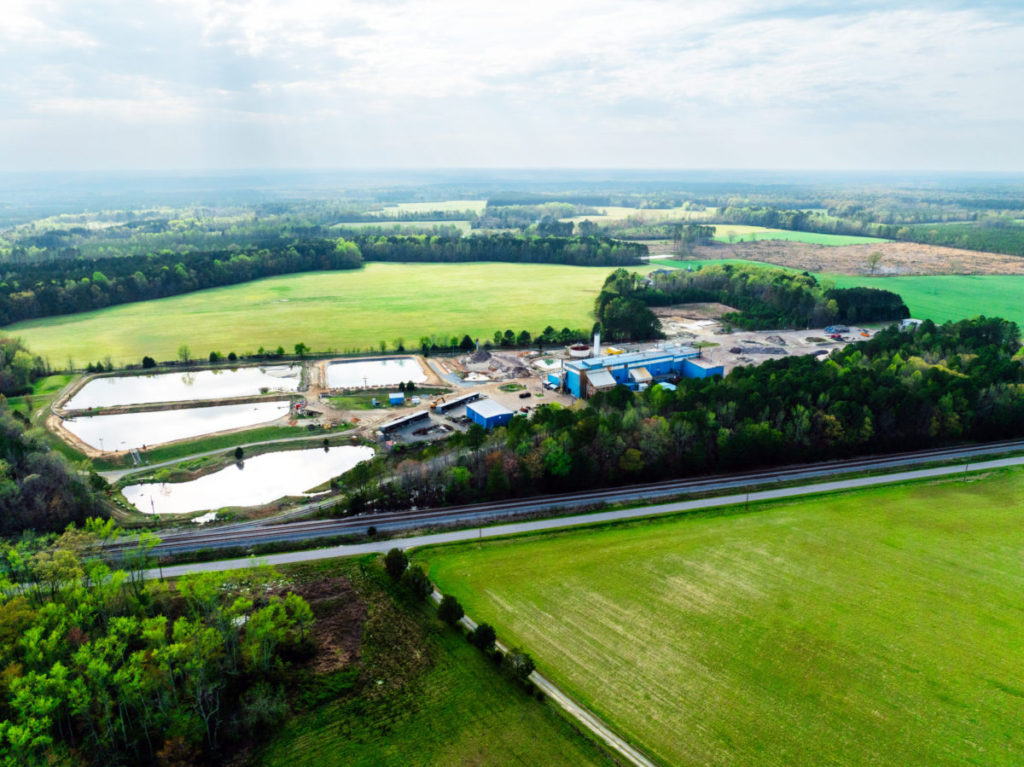
Atlantic Strategic Minerals’ mineral processing facilities in Virginia. Image: ASM.

Atlantic Strategic Minerals, a small US mining company, is considering building a rare earths plant in a bid to join America’s push for domestic production of key materials.

The facility would be at the company’s operations in Stoney Creek, Virginia, about 150 miles from Washington, DC, where it already produces some critical minerals and rare earth elements as a byproduct, according to Michael Scherb, chief executive officer of Appian Capital Advisory, which owns Atlantic Strategic Minerals.

“We’re debating now what we should do with the byproduct,” Scherb said Tuesday in an interview. “You can separate it and you can produce rare earths, but you need a refining facility.”

The decision follows the Trump administration’s push to loosen China’s grip on rare earth minerals, which are essential for products ranging from smartphones and electric vehicles to fighter jets. China controls the vast majority of the world’s rare earth mining and processing capacity, leaving US industries exposed to potential supply shocks.

Appian, which has about $5 billion of assets under management, is one of a few investment firms dedicated to the mining sector, alongside the likes of Orion Resource Partners and Resource Capital Funds. Atlantic Strategic Minerals started commercial operations in June, where it now produces niche minerals like ilmenite — a primary material used in titanium — and zircon, a source for the metal zirconium, which is used in nuclear reactors.

Scherb said Appian has held conversations with the White House seeking government support for the plant, which he estimated would cost under $100 million to build. The firm also is looking at processing domestic and international materials from third—party companies beyond its own operations, including Appian-owned Gippsland Critical Minerals, which has a rare earths project in Australia.

Companies have announced a flurry of investment plans for critical mineral projects in the US in light of President Donald Trump’s efforts to secure domestic supplies. Korea Zinc Co. — one of the world’s largest zinc processors — is planning a $7.4 billion smelter in Tennessee, while MP Materials Corp. is building a rare earths separation plan in California.

Atlantic Strategic Minerals’ facility would be considerably smaller but easier to achieve, said Scherb.

“These grand, huge mega-projects — you don’t need to pursue those,” he said. “You can actually look at more cost-effective, strategic ways to get supply out, whether it be through recycling or better use of the byproduct that comes out of operations like these.”

(By Jacob Lorinc)


US House votes to overturn Minnesota mining ban, Senate to consider next


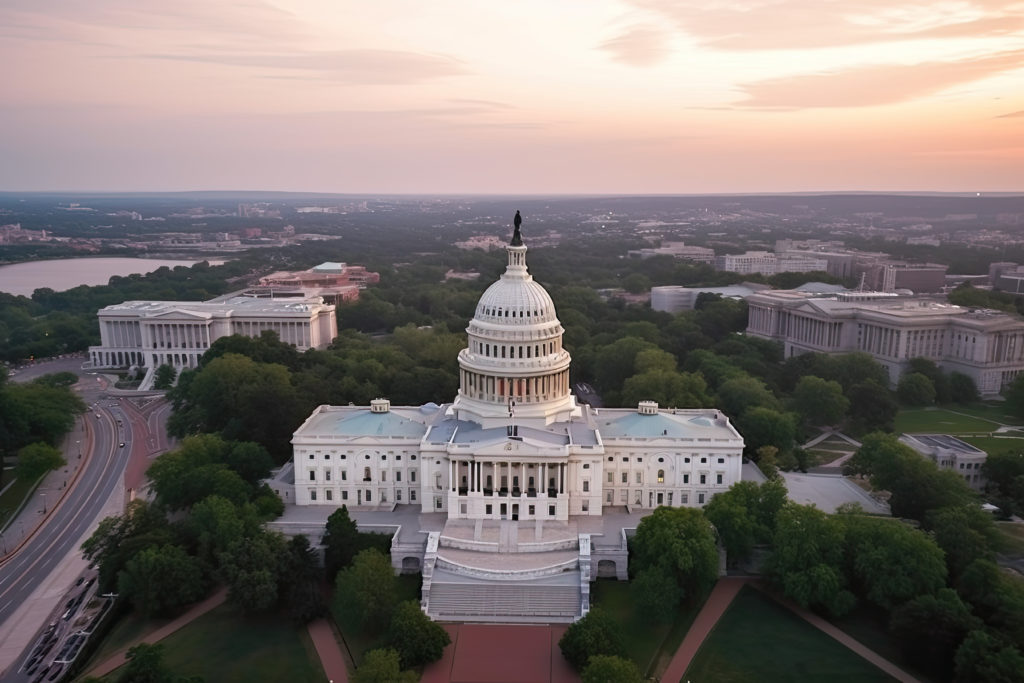
US Capitol Building. Stock image.

The US House of Representatives on Wednesday voted to overturn former President Joe Biden’s mining ban in northern Minnesota, giving a boost to Antofagasta’s Twin Metals copper, cobalt and nickel project.

The measure now moves to the Senate for consideration and, if approved there, to President Donald Trump, who campaigned in 2024 on overturning Biden’s 20-year block on mining across 225,504 minerals-rich acres (91,200 hectares) in the Superior National Forest.

Reuters first reported earlier this month that Trump officials and legislators had launched a complex plan to reverse the ban using the novel claim that Biden had not properly informed Congress.

The Interior Department resubmitted the mining ban with the expectation that it would be rejected by Congress and Trump. Were that to occur, a future president could not replicate Biden’s ban because of a provision in the 1996 Congressional Review Act (CRA).

The House voted 214 to 208 to overturn the ban, which was included in a measure sponsored by Congressman Pete Stauber, a Republican who represents northern Minnesota.

Conservationists have rejected the claim that Congress was not properly informed about Biden’s move, noting it was detailed in federal publications and in letters to members of Congress.

If the ban is lifted, the Trump administration would then be free to reissue mining leases to Chile-focused Antofagasta, which has been trying to develop the mine for decades on land controlled by the federal government. The mine would need to undergo an environmental review and obtain permits.

“Reversing Biden’s mining ban will protect Northern Minnesota jobs, strengthen national security through domestic production and prevent future overreaches from happening again,” Stauber said.

Approval by the Senate likely hinges on whether Elizabeth MacDonough, the Senate Parliamentarian, agrees that the mining ban – known as a withdrawal – constitutes a rule under the provisions of the CRA and thus can pass with a simple majority rather than a 60-vote threshold.

Republicans hold 53 seats in the 100-person Senate, to Democrats’ 47 seats.

Antofagasta’s Twin Metals subsidiary said it was “very appreciative of Congress for their efforts to overturn an unnecessary and detrimental action that locked out a significant domestic source of critical minerals.”

Attempts to overturn the ban with the CRA have received strong pushback from conservationists, many of whom have called the plan “unprecedented.”

“The Senate must reject this attack and the precedent it sets to arbitrarily strike down well-established public lands protections,” said Jordan Schreiber of The Wilderness Society, a conservation group that has pushed to block development in the region for more than 50 years.

Antofagasta has said it likely will export the mine’s copper and other critical minerals for processing overseas.

Overturning the mining ban would also boost helium projects in the region.


(By Ernest Scheyder; Editing by Jamie Freed)

 BAN DEEP SEA MINING

TMC soars after filing for international permit under new Trump rules


DEREGULATION

TMC has carried out exploratory mining expeditions to the Clarion-Clipperton Zone (CCZ) — a vast area between Hawaii and Mexico. (Image: TMC.)

The Metals Co on Thursday became the first deep-sea miner to seek Washington’s approval to mine the international seabed under a streamlined permitting process introduced earlier this week.

Deep-sea mining has the potential to provide large amounts of the minerals needed for electric vehicles and the energy transition, but debate over the environmental damage it may cause has dragged on for decades and prevented licenses being issued.

The US Department of Commerce’s National Oceanic and Atmospheric Administration on Wednesday said it would consolidate the licensing and permitting process into a single and ostensibly shorter review.

“Those amended regulations pave a pathway for faster permitting and us moving into commercial production sooner rather than later,” Gerard Barron, TMC’s CEO, told Reuters.

Permit by year-end

The Vancouver-based company hopes to obtain its permit by the end of the year, Barron said.

London-listed miner and commodity trader Glencore has agreed to buy metals TMC extracts from the seabed.

Under the new guidelines, The Metals Co resubmitted an application it had filed last April to operate in part of the Pacific Ocean between Hawaii and Mexico known as the Clarion-Clipperton Zone.

The company said two zones that The Metals Co has applied to operate in contain an estimated 800 million metric tons of rocks known as polymetallic nodules filled with critical minerals including nickel, copper, cobalt and manganese.

The Metals Co and other supporters of deep-sea mining say it would lessen the need for large mining operations on land, which are often unpopular with host communities.

Environmental groups have called for the activity to be banned, warning that industrial operations on the ocean floor could cause irreversible biodiversity loss.

The United Nations-backed International Seabed Authority has been engaged in a protracted quest for international mining standards.

Any country can allow deep-sea mining in its own territorial waters, roughly up to 200 nautical miles from shore.

(By Ernest Scheyder; Editing by Barbara Lewis)


Vittangi graphite mine in Sweden gets zoning plan approval


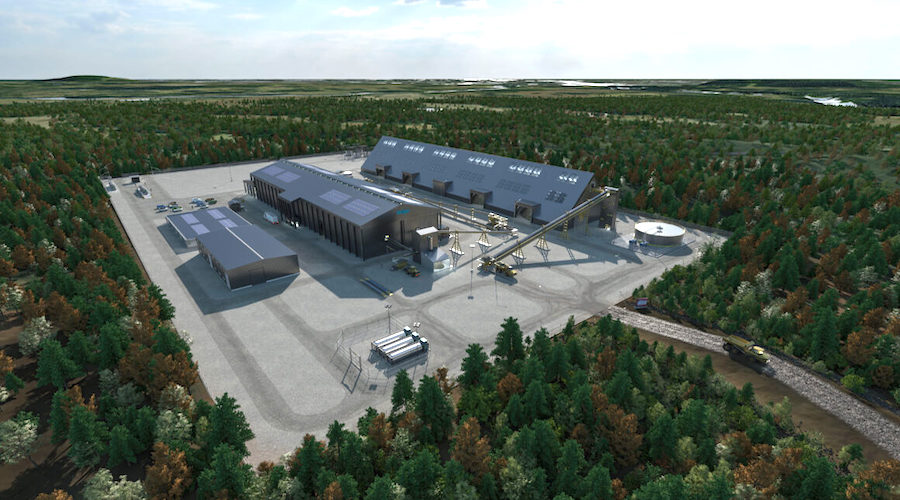
Visualization of Talga’s Vittangi graphite mine. (Image courtesy of Talga Group.)

Sweden has approved a zoning plan for the Nunasvaara South graphite mine near Kiruna as the government looks to speed up the opening of new mines in the mineral-rich country.

The mine, operated by Australia’s Talga Group, is expected to produce around 100,000 metric tons of graphite ore a year which will be processed into about 20,000 tons of battery anode material.

“Sweden is in a unique position when it comes to providing…Europe with a more independent supply of critical raw materials,” Deputy Prime Minister Ebba Busch said in a statement. “Graphite is important not least for the production of steel, batteries and cars and Swedish mining is the most sustainable in the world.”

The European Union wants to boost domestic production of critical minerals and reduce its reliance on China and other suppliers amid growing geopolitical tensions.

Talga said it was currently focusing on building its graphite processing plant in Lulea and that it hoped mining at Vittangi would start around 2029.

“The last major obstacle has been removed,” Talga spokesman Cen Rolfsson said, adding some minor permits were still needed before production could start.

Rolfsson said the Nunasvaara mine would produce around 2% of Europe’s expected graphite demand by 2030, but that production could be scaled up.

Sweden is rich in minerals that are considered key to green technology like batteries and magnets and used in applications from telecoms to missiles.

The country’s biggest project is state-owned LKAB’s Per Geijer iron ore and rare earths mine which was designated a Strategic Project by the EU in 2025.

“Mining policy isn’t just an economic question any more,” Busch said. “It has become a question of national security. We have to strengthen our strategic autonomy and build Sweden strong.”

(By Simon Johnson; Editing by Kirsten Donovan)

CRIMINAL CAPITALI$M

German precious metals refiner Heraeus hit with fraud probe


Credit: Argor-Heraeus

German prosecutors are investigating suspected embezzlement and fraud at precious metals refiner and industrial conglomerate Heraeus Holding GmbH, for which the company set aside nearly €458 million ($537 million) to cover potential risks.

The Frankfurt prosecutors’ office said it’s conducting an investigation into 16 suspects, after suspicions emerged that unlawful removals of customer-delivered material may have taken place at the company’s precious metals recycling business.

The possible criminal irregularities were suspected to have occurred between 2015 and 2025, Frankfurt prosecutors said in a statement. The investigation was initiated after a disclosure from the company and has been ongoing since last June.

Heraeus is one of Germany’s largest private companies and one of the world’s largest precious metals refiners, with operations across the globe, including a trading hub in New York, a refinery in Switzerland and a recycling plant for platinum, palladium and rhodium in Hanau, Germany. The investigation is a blow for the conglomerate’s precious metals business in an industry where trust and long-standing business relationships are the norm.

Irregularities were identified at the Hanau platinum-group metal recycling site, the company said in its 2024 annual report. An internal investigation by an external law firm triggered by Heraeus found discrepancies in its precious metal inventories, and the company said it assumed a significant proportion, if not all, of the excess inventories in fact belonged to customers.

Heraeus booked €457.7 million in provisions for risks arising from the investigation as of end-2024, and said “extensive changes at personnel and organization level” had already been implemented. It also said it had reached out the customers who had been affected.

South African miner Northam Platinum said in August that it had engaged in an “amicable” engagement with Heraeus to redetermine historical refining outcomes with the company, covering roughly a decade. Heraeus made a one-off payment of $66 million to the company.

The family-owned Heraeus Group operates across multiple business lines, with roughly 15,000 employees in more than 40 countries. The firm reported around €29.4 billion in total revenue in 2024.

“Throughout this process, we have acted transparently, proactively notifying the relevant authorities. We are fully cooperating with them, and welcome further clarification of the matter,” a Heraeus spokesperson said. “Personnel consequences have been enacted, and further measures have been initiated to prevent recurrence.”

Northam did not immediately respond to a request for comment. News of the investigation was first reported by the Financial Times.

(By Jack Ryan and Karin Matussek)

 COMMODITY FETISH

Silver price hits $100 milestone, gold price nears $5,000


Stock image.

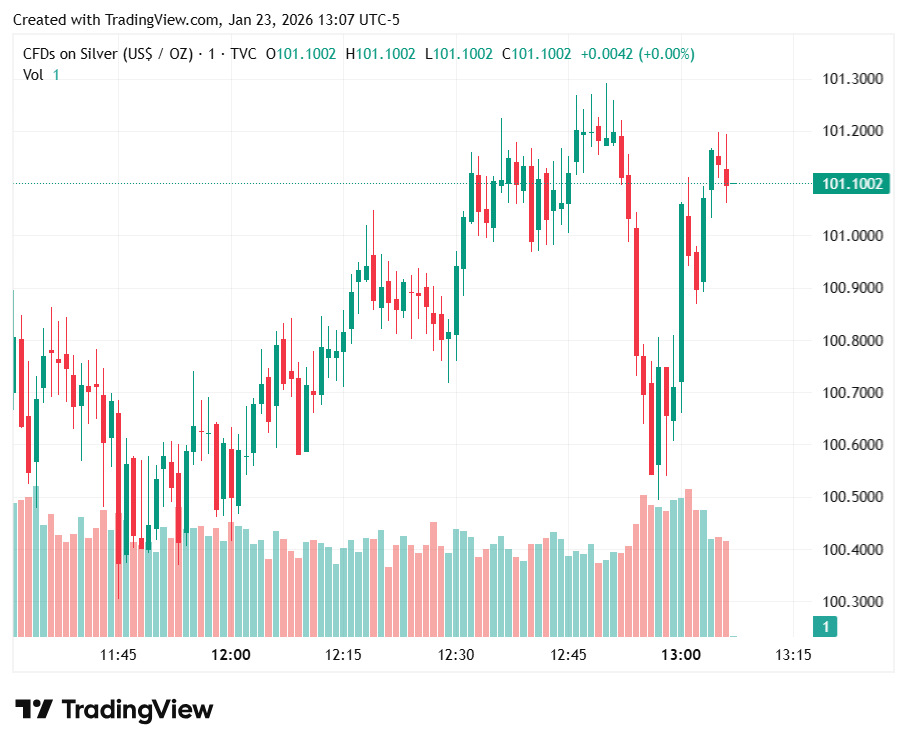
Silver topped $100 an ounce for the first time on Friday amid surging demand for haven assets and frenzied buying in retail markets from Shanghai to New York.

As of noon ET, the metal had surged over 5% to set a new record of $101.22 per ounce, after starting the week below $90 an ounce.

Silver’s advance this week was fueled by a spike in safe-haven demand following a rift in US-Europe relations, as well as a wave of retail buying in China.

In addition to being a financial asset, silver also has a key industrial role, in particular the solar panel industry. This has driven up concerns that the metal could be hit with US tariffs, further supporting prices.

Longer term, silver’s outlook is elevated by concerns over a supply deficit in the years ahead.

Friday’s rally brings its gains this year to more than 25%, extending its scorching rally from 2025 that saw the metal more than double in value.

Gold nears $5,000

Meanwhile, gold also surged to a new record and is now closing in on the $5,000-an-ounce milestone.

At 4,987.69 per ounce, gold’s new peak takes its year-to-date gains to nearly 14%, following a 40% rise in 2025. Over the last five sessions, the metal has risen by 7%, on track for its best week since 2020.

Earlier this week, Goldman Sachs lifted its year-end price target to $5,400 per ounce, citing increased private-sector investment on top of central bank purchases.

(With files from Bloomberg)


CHARTS: New study shows global mining is now a brownfield industry


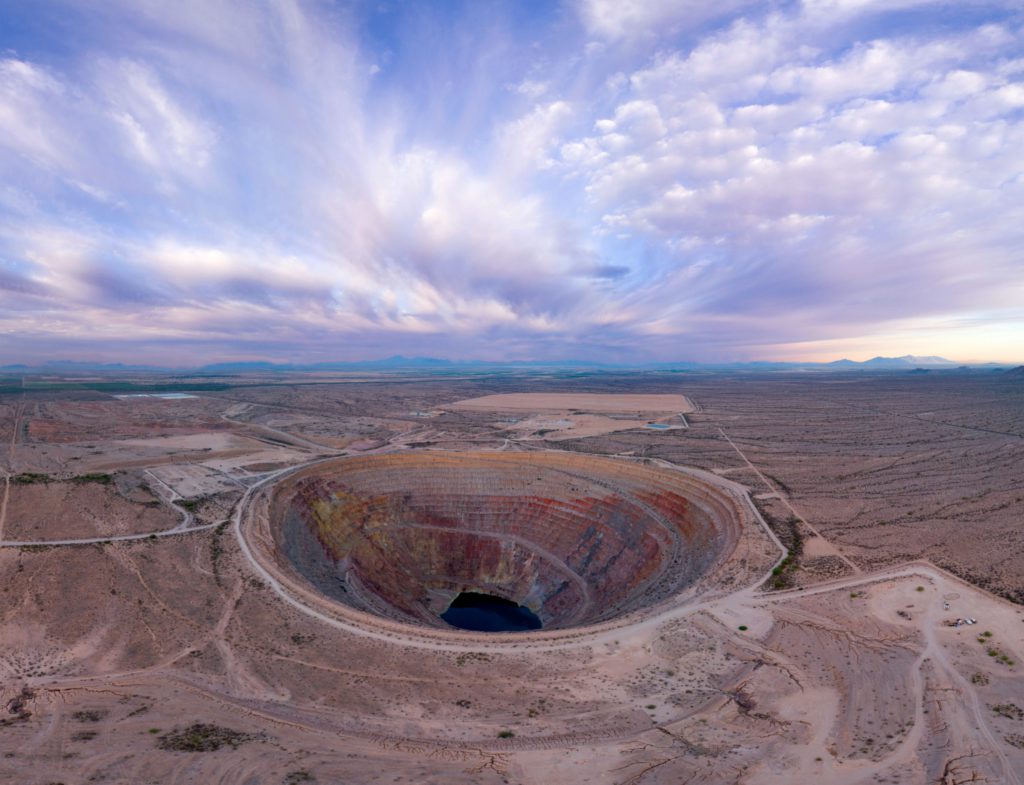
Arizona Sonoran Copper’s Cactus brownfield project in Arizona. Credit: Arizona Sonoran Copper

The dearth of new greenfield mines – particularly copper – has been a problem for the industry for decades. 

new study by the University of Queensland’s Sustainable Minerals Institute provides stark evidence of the extent of the problem and just how reliant global mining has become on brownfield expansion. 

The massive need for more copper to enable the energy transition and much besides has achieved near universal consensus and so has the argument that demand cannot be met by expanding existing mines alone. 

Copper can account for nearly 6% of the capital expenditure of a data center project and the trillions of dollars flowing into electricity and compute to teach robots how to fold laundry will mean you need a new Cobre Panama every two years (and those are hard to come by and even harder to keep).  

It’s not surprising that copper miners have turned to brownfielding despite ever lower grades necessitating ever bigger, deeper and costlier expansions.  Not when it takes nearly 14 years just to bring a copper project to the preliminary economic assessment stage and at least another four for construction if you’re lucky, very lucky, to get permits.

The study published in the OneEarth journal, covered 366 brownfield sites, across 58 countries and 16 minerals, global production, exploration, and capital-expenditure data from 1998 to 2024. 

Deanna Kemp, first author of the study, says brownfielding often unfolds incrementally over time with less public scrutiny:

“Once a mine has been approved and permitted, expansion is typically a business-as-usual part of developing a mine, even when that expansion changes the original risk of social and environmental impact. 

“In the “’middle’” of a mine’s lifespan, when the mine is active there is often less oversight or public focus: changes tend to be regulated, step by step, but the impacts of these expanded operations add up over time.” 

“The risk factors involved in each mine site are unique and no-one has really been looking at the scale of growth of brownfield mining globally.”        

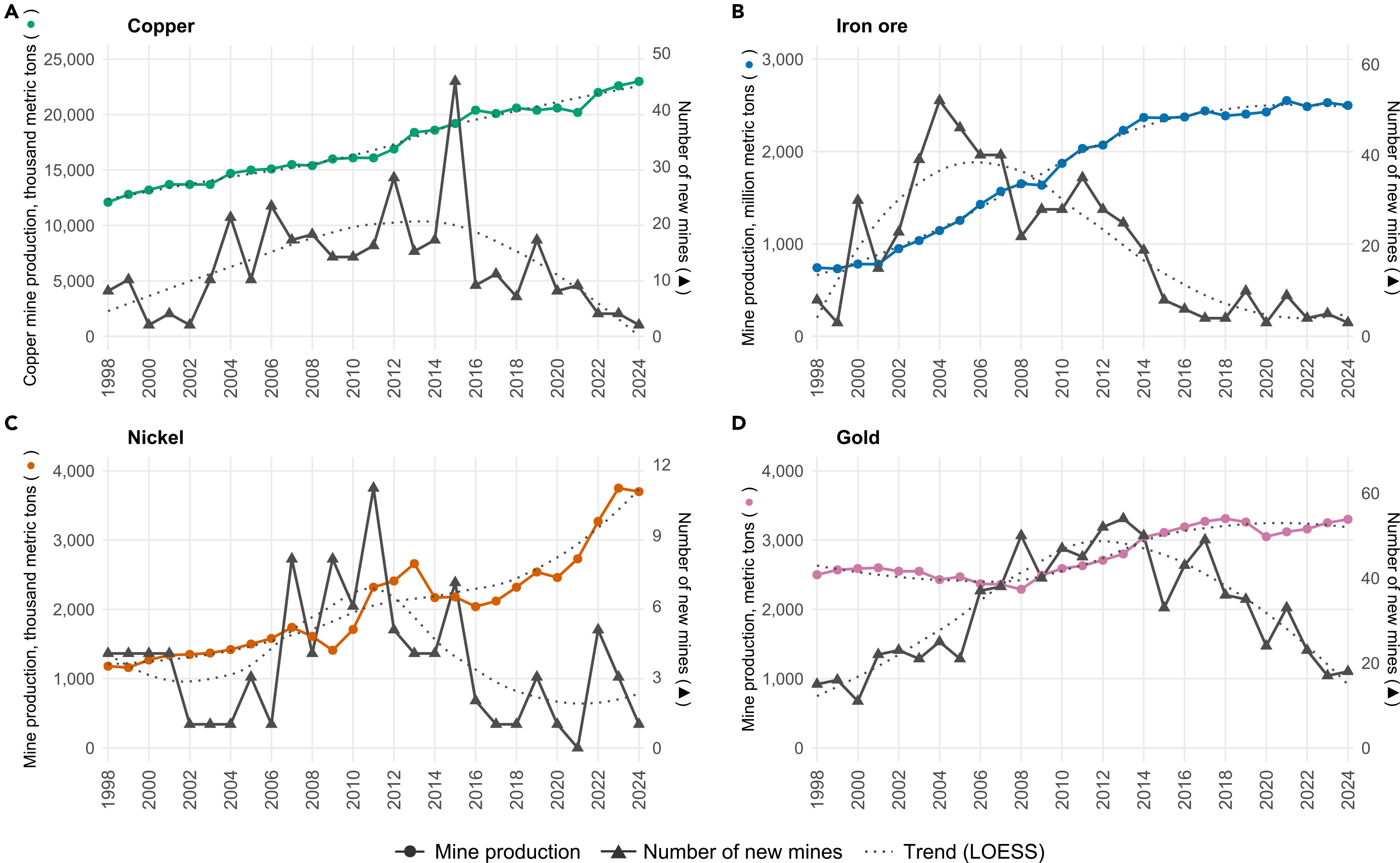
According to study, the number of new mines peaked around 2015 for copper, in the early 2000s for iron ore, around 2010–2012 for nickel, and around 2012–2014 for gold. However, since these peaks, and the subsequent decline in the numbers of new mines, production has continued to rise.

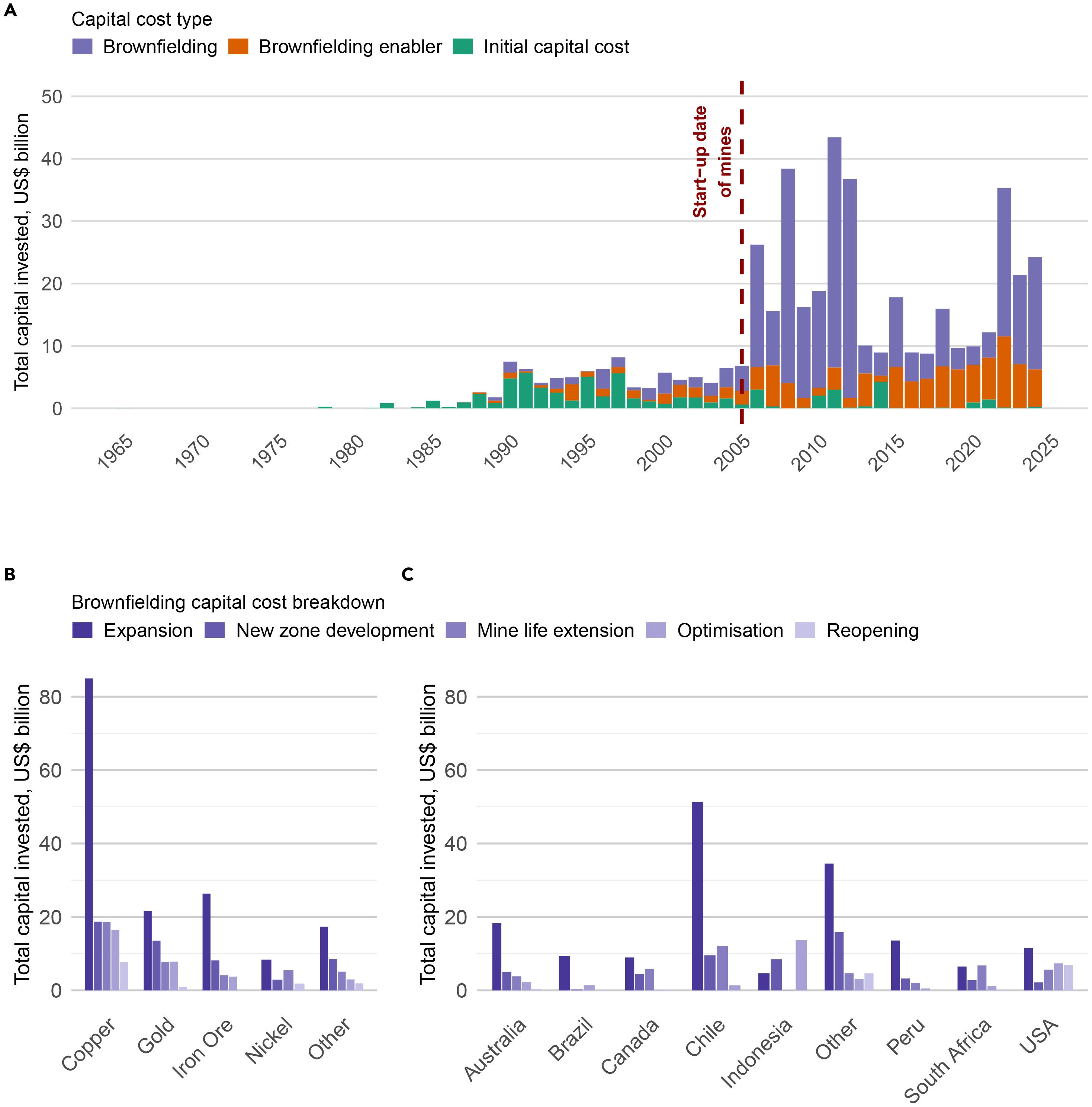
Brownfield capital expenditure is dominated by copper, constituting just under half the total spent followed by gold (17.5%), iron ore (14.4%), and nickel (6.3%). 

Across minerals, brownfielding capital is dominated by physical “expansion,” followed by “new zone development” and “mine life extension,” while “optimization” and “reopening” are comparatively small.

The study found that Chile leads global brownfield development, with 25.2% of total worldwide capital investment, followed by the United States (11.4%) and Australia (10.1%). 

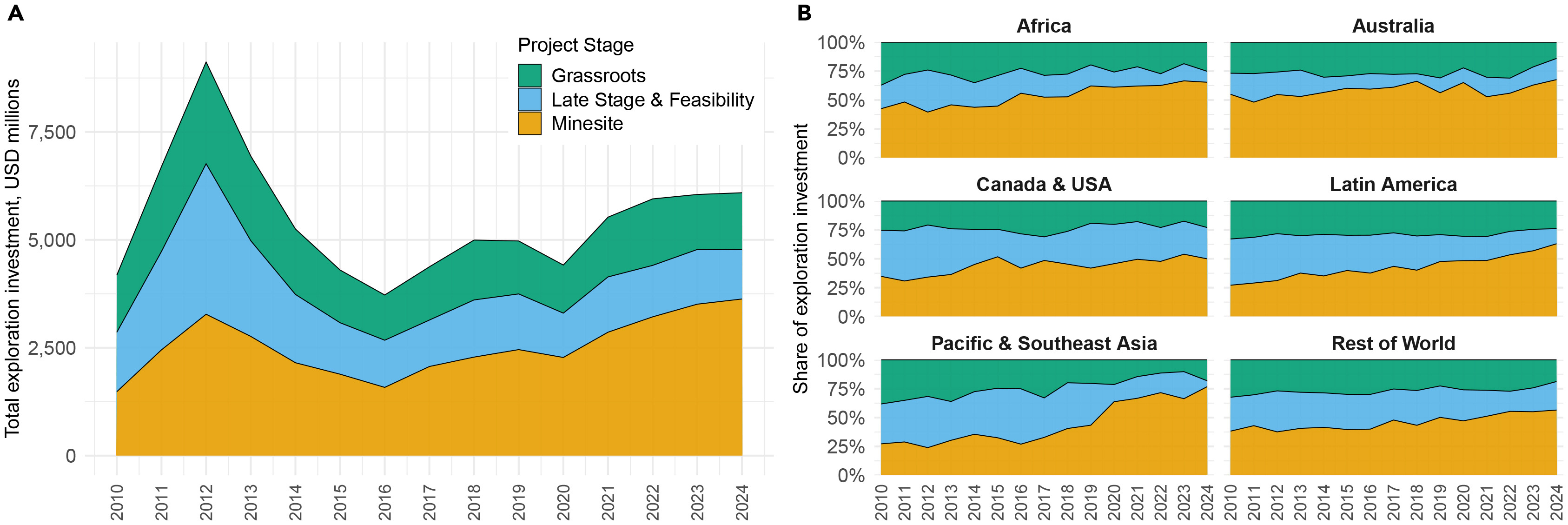
According to the report, the pattern of increasing minesite exploration by major companies holds across all global regions with the early 2020s marked as turning point. 

The pattern is most pronounced in Pacific and Southeast Asia, where the share rises from 27.3% in 2010 to 76.8% in 2024, alongside a marked decline in late stage and feasibility exploration. 

Africa and Latin America retain relatively larger grassroots exploration shares, but regions both show a shift toward minesite exploration over time, increasing from 42.5% to 65.4% in Africa and from 27.1% to 63.0% in Latin America between 2010 and 2024. 

In Australia, work on expansion dominates spending throughout the period while Canada and the US lean more toward late stage and feasibility exploration, with minesite activity rising from 34.8% in 2010 to just under half in 2024. 

According to the authors, nearly 80% of the brownfield mines analyzed using satellite imagery are in locations facing multiple high-risk conditions, which also include water scarcity, weak governance, and limited press freedom. 

More than one-fifth of the sites lie within 50 kilometers (31 miles) of ecologically pristine or partially modified areas, and more than half of the sites are located within 20 kilometers (12 miles) of biodiversity hotspots or protected areas.