Sunday, January 25, 2026

 EVEN MUSK KNOWS IT'S A GRIFT

'Peace' or 'Piece'? Musk mocks Donald Trump's new Board of Peace in Davos
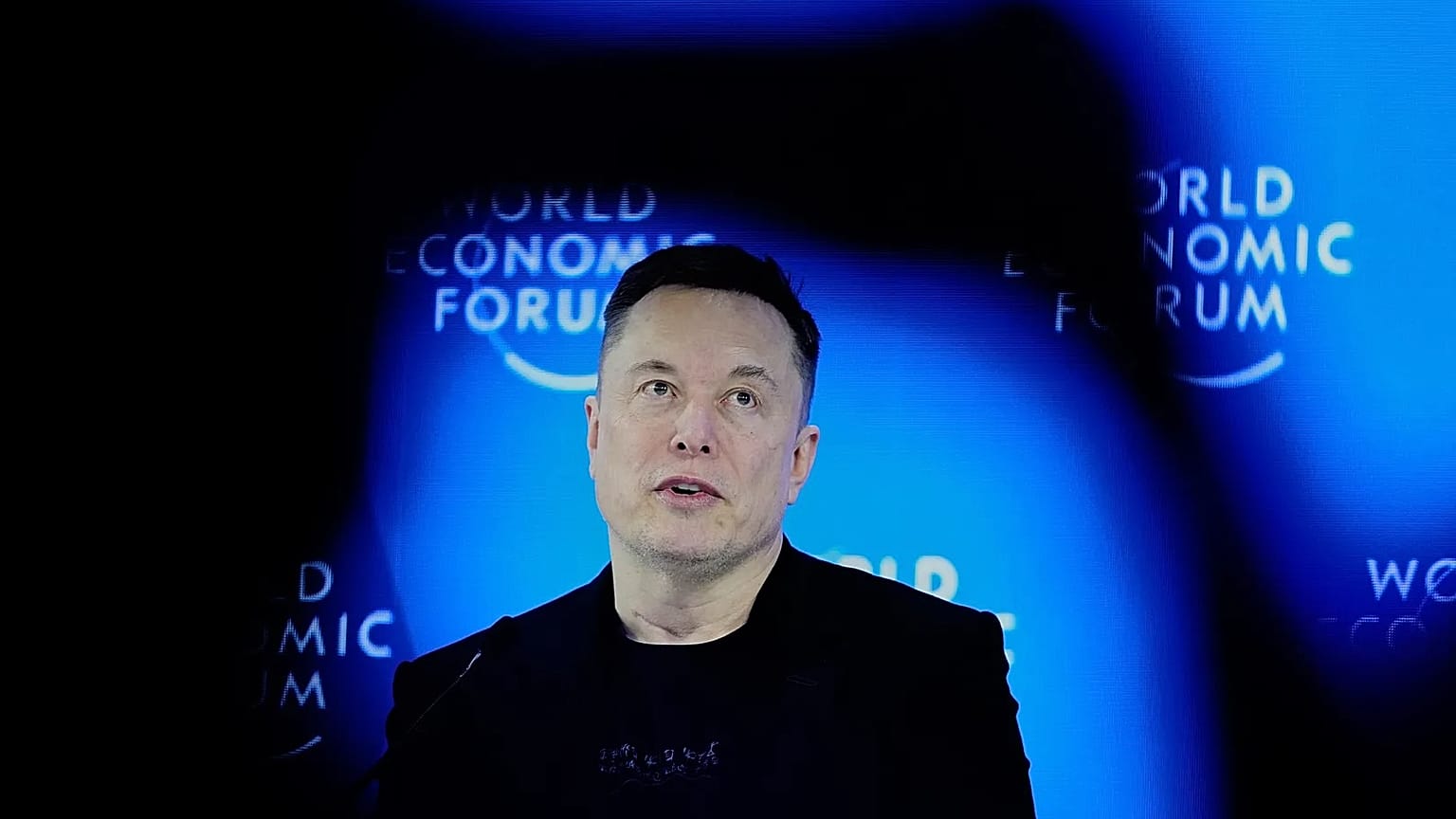
Elon Musk attends the Annual Meeting of the World Economic Forum in Davos, 22 January, 2026
Copyright Copyright 2026 The Associated Press. All rights reserved

By Maja Kunert
Published on 

Musk's swipe at Donald Trump's newly founded Board of Peace touched a nerve as the relationship between the two former close allies has been characterised as volatile for months.

At the World Economic Forum in Davos, Elon Musk mocked US President Donald Trump's newly founded Board of Peace with a play on words, calling the US President's controversial project into question.

"I heard about the formation of the peace summit, and I was like, is that p-i-e-c-e? You know, a little piece of Greenland, a little piece of Venezuela," he said, laughing during his address to the forum.

"All we want is peace," he added to quiet chuckles from the audience.

Musk and Trump have had a visibly chequered relationship since 2025, from cooperation in the corridors of power to public mud-slinging.

In Davos, where politicians and CEOs vie for the power of interpretation, a single sentence is usually enough to create a new narrative.
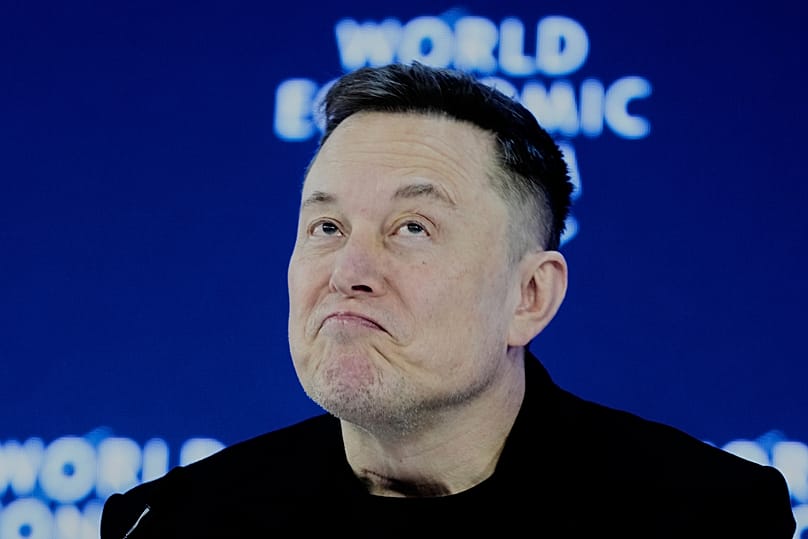
Elon Musk attends the Annual Meeting of the World Economic Forum in Davos, 22 January, 2026 AP Photo

What is Trump's Board of Peace and why is it being criticised?

Trump officially announced the formation of the Board of Peace in Davos. The body is intended to address conflicts and is being discussed as a possible rival or parallel format to the UN.

Criticism has been levelled at the fact that Trump himself is at the helm and that the council has a strong presidential focus.

The planned financial architecture is also raising eyebrows internationally: countries will only be members for a limited period of time, while a payment of $1 billion could enable a permanent status. This reinforces the accusation that this is less about classic diplomacy and more about an exclusive club where access and influence also depend on the price. Moreover, many of the signatory states are run by authoritarian governments.

Precisely because Trump is selling the project as a foreign policy flagship, every public comment carries double weight, especially when it comes from Elon Musk who is not just a spectator but was himself part of the power structure during Trump's second term in office, heading the controversial Department of Government Efficiency (DOGE).
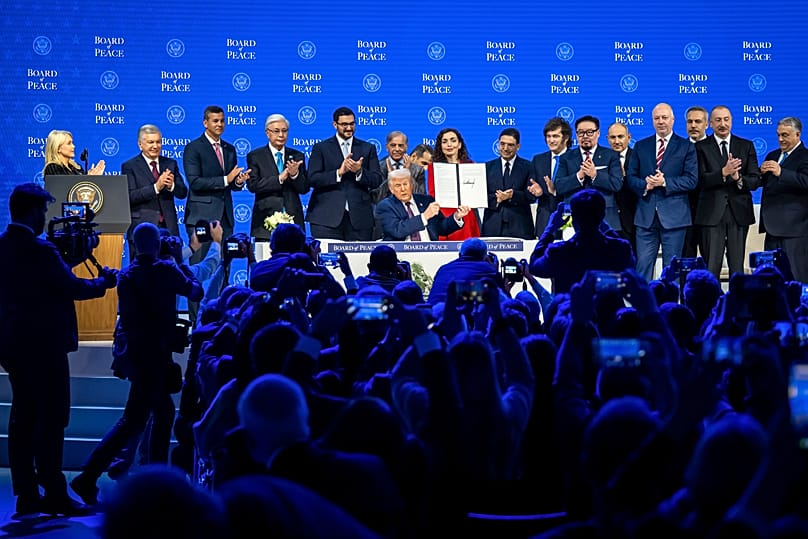
US President Donald Trump holds up a signed Board of Peace charter in Davos, 22 January, 2026 AP Photo

Trump and Musk: An on-off relationship

During the presidential election campaign, Musk supported Trump with over $230 million (€196 million) as the largest single donor and at the same time used his social media platform X as a high-reach megaphone to amplify Trump's messages.

At the beginning of the Trump administration, the tech billionaire headed DOGE, ending his work there at the end of May 2025 after his status as a "special government employee" expired.

There had already been friction before that, for example when Musk publicly insulted Trump's trade adviser Peter Navarro in spring 2025. The big break followed shortly after Musk's DOGE departure after Musk attacked Trump's tax and spending law head-on, setting off a chain of escalation.

In the summer of 2025, this turned into a very public fight in which Trump even hinted at having Musk's immigration status reviewed and at the same time brought subsidies and government contracts for Musk's companies into play.
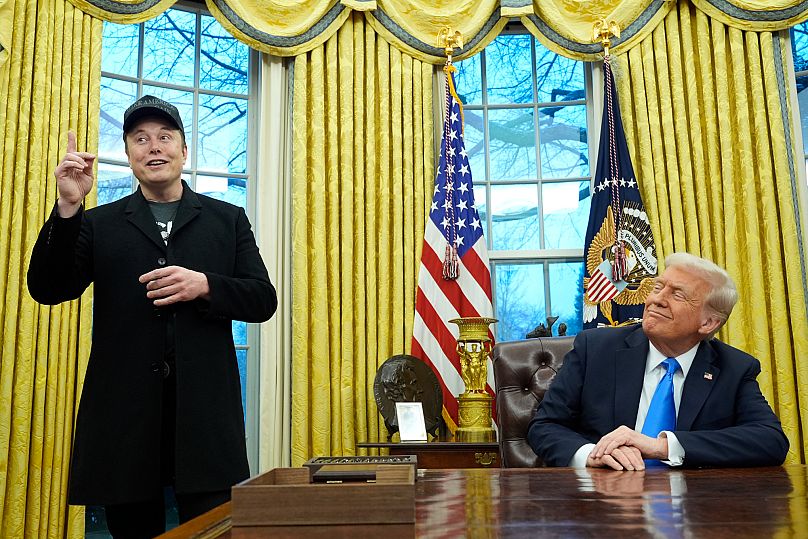
In February 2025, Elon Musk was still considered one of US President Donald Trump's closest confidants. Copyright 2025 The Associated Press. All rights reserved

In the autumn of 2025, the two then indicated a relaxation of tensions again: Musk turned up at a dinner for the Saudi crown prince at the White House, where Trump demonstratively gave him a friendly pat.

Observers have recently described the relationship more as a "fragile truce" or a distrustful alliance of convenience, in which both know how much they can damage each other politically and in the media.

And yet, Musk has already signalled his willingness to mobilise massive amounts of money for Republican candidates again ahead of the mid-term congressional elections in November 2026.

Why the Davos comments carry so much weight

Against this backdrop, Musk's Davos pun is more than just a tongue-in-cheek remark. It is a signal that although this relationship can calm down tactically at times, it could boil over again at any time. Musk is at least not afraid to publicly ridicule Trump's prestige projects.

This is particularly tricky for Trump because the Board of Peace has to explain what it stands for, how it is legitimised and what concrete added value it should offer compared to existing institutions. For Musk, the moment is a demonstration of power of its own kind: it shows that, despite his former closeness to the government, he is not confined to the role of loyal co-player, but can become a commentator and critic at any time.


 

Trump threatens 100% tariff on Canadian goods over China deal


By bne IntelliNews January 24, 2026

US President Donald Trump has threatened to impose a 100% tariff on all Canadian goods entering the United States if Canada allows China to use it as a transit point for exports to America, Trump wrote on January 24.

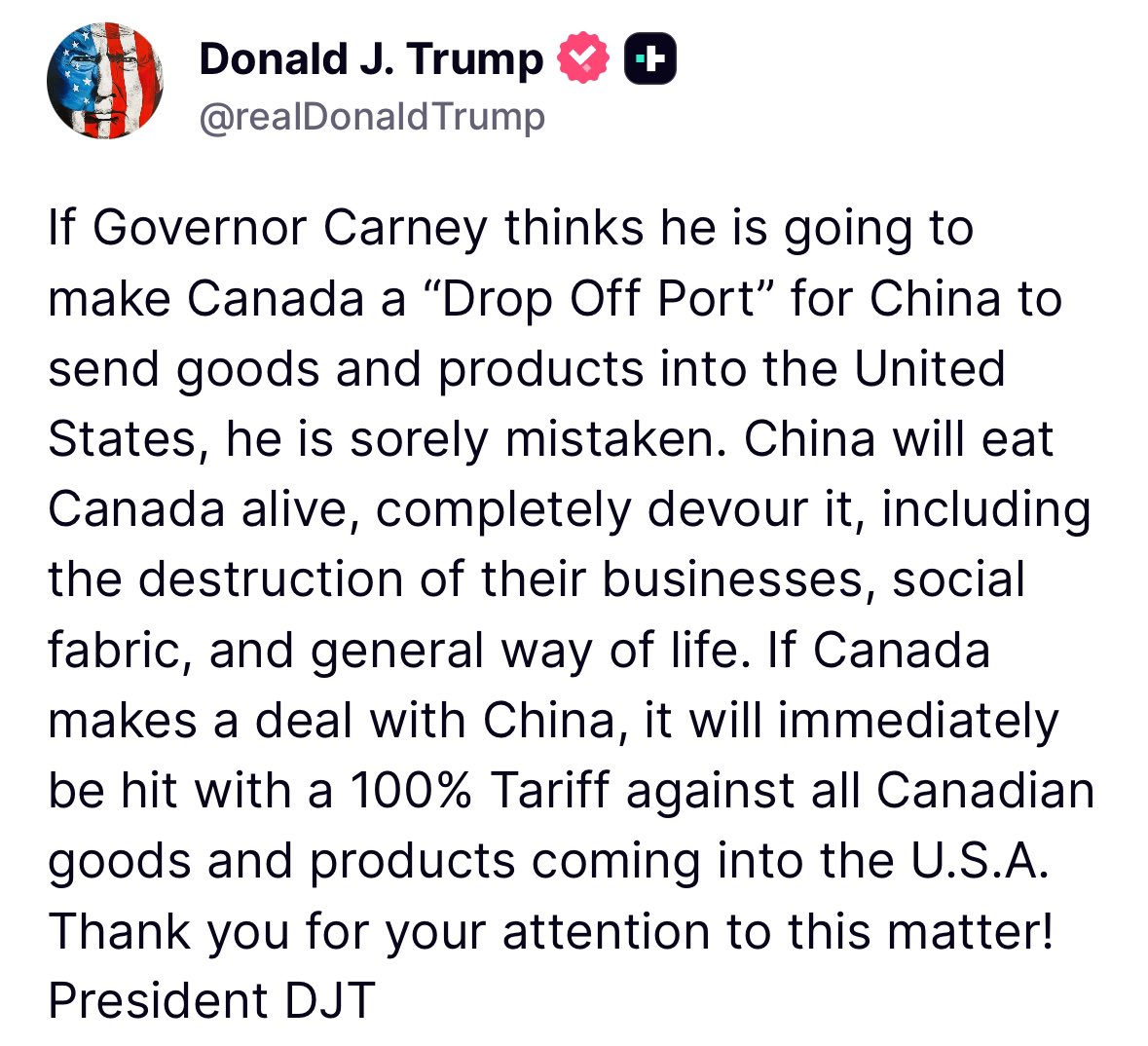
"If Governor Carney thinks he is going to make Canada a 'Drop Off Port' for China to send goods and products into the United States, he is sorely mistaken," Trump said in a post on his social media platform, referring to Canadian Prime Minister Mark Carney.

The threat marks a reversal from Trump's position just last week, when he said Canada's trade agreement with China was "a good thing" and that Carney "should be doing" such deals.

The Canada-China agreement, announced during Carney's visit to Beijing, includes cutting Canada's 100% tariff on Chinese electric vehicles to 6.1% for up to 49,000 vehicles in exchange for lower Chinese tariffs on Canadian farm products including canola.

Trump warned that such an arrangement would have severe consequences for Canada's economy.

"China will eat Canada alive, completely devour it, including the destruction of their businesses, social fabric, and general way of life," the president wrote.

The threat represents a significant escalation in US-Canada trade tensions, with Trump appearing to link Canadian trade policy with China to potential punitive tariffs.

"If Canada makes a deal with China, it will be hit with a 100% Tariff against all Canadian goods and products coming into the U.S.A.," Trump stated.

The warning follows clashes between the two leaders at the World Economic Forum in Davos this week, where Carney delivered a speech about a "rupture" in the US-led global order that earned him a standing ovation,

"Let me be direct. We are in the midst of a rupture, not a transition," Carney told the audience, earning a rare standing ovation for his address. "The old order is not coming back. We should not mourn it. Nostalgia is not a strategy."

Without naming US President Donald Trump, Carney's address was widely interpreted as a direct challenge to American foreign policy, particularly Trump's threats to seize Greenland and impose tariffs on European nations.

The speech came after Trump had posted images on social media showing the American flag extending over Canada, Greenland and Venezuela.

Trump has also withdrawn Carney's invitation to join his "Board of Peace" initiative and said during his own Davos speech that "Canada lives because of the United States".


Trump threatens Canada with 100% tariff over its trade deal with China


By Euronews with AP
Published on 

In his latest social media outburst, US President Donald Trump escalated an intensifying feud with Canada's Mark Carney.

US President Donald Trump on Saturday threatened to impose a 100% tariff on goods imported from Canada if its northern neighbour goes ahead with its trade deal with China.

Trump said in a social media post that if Canadian Prime Minister Mark Carney “thinks he is going to make Canada a ‘Drop Off Port’ for China to send goods and products into the United States, he is sorely mistaken.”

While Trump has waged a trade war over the past year, Canada this month negotiated a deal to lower tariffs on Chinese electric vehicles in return for lower import taxes on Canadian farm products.

Trump initially had said that agreement was what Carney “should be doing and it’s a good thing for him to sign a trade deal.”

Dominic LeBlanc, Canada’s minister responsible for trade with the United States, said Canada and China had resolved “several important trade issues” but there was no pursuit of a free-trade agreement

Trump’s threat came amid an escalating war of words with Carney as the Republican president’s push to acquire Greenland strained the NATO alliance. Trump had commented while in Davos, Switzerland, this week that “Canada lives because of the United States.”

Carney shot back that his nation can be an example that the world does not have to bend toward autocratic tendencies. “Canada doesn’t live because of the United States. Canada thrives because we are Canadian,” he said.

Trump later revoked his invitation to Carney to join his “Board of Peace”, which the US President has said he is forming to try to resolve global conflicts.

Trump's push to acquire Greenland came after he has repeatedly questioned Canada's sovereignty and suggested it also be absorbed the United States as a 51st state. He posted an altered image on social media this week showing a map of the United States that included Canada, Venezuela, Greenland and Cuba as part of its territory.

In his message Saturday, Trump continued his provocations by calling Canada's leader “Governor Carney”. Trump had used the same nickname for Carney's predecessor, Justin Trudeau, and his first use of it toward Carney was the latest mark of their soured relationship.

Carney has emerged as a leader of a movement for countries to find ways to link up and counter the US under Trump. Speaking in Davos before Trump, Carney said, “middle powers must act together because if you are not at the table, you are on the menu” and he warned about coercion by great powers - without mentioning Trump’s name.

'Rupture' between US and the West

The prime minister even spoke of a “rupture” between the US under Trump and its Western allies that would never be repaired.

Trump, in his Truth Social post Saturday, also said that “China will eat Canada alive, completely devour it, including the destruction of their businesses, social fabric, and general way of life.” In a later post, the president said: “The last thing the world needs is to have China take over Canada. It’s not going to happen, or even come close to happening.”

Carney has not yet reached a deal with Trump to reduce some of the tariffs that he has imposed on key sectors of the Canadian economy. But Canada has been protected by the heaviest impact of Trump’s tariffs by the Canada-US-Mexico Agreement. That trade agreement is up for a review this year.

In it trade policy towards China, Canada had initially mirrored the US by putting a 100% tariff on electric vehicles from Beijing and a 25% tariff on steel and aluminium. China had responded by imposing 100% import taxes on Canadian canola oil and meal and 25% on pork and seafood.

But as Trump’s pursued pressure tactics, Canada’s foreign policy has been less aligned with the US, creating an opening for an improved relationship with China. Carney made the tariff announcement earlier this month during a visit to Beijing.

Carney has said that Canada's relationship with the US is complex and deep and that Canada and China disagree on issues such as human rights.

Canada is the top export destination for 36 US states. Nearly $3.6 billion Canadian (€2.3 billion) worth of goods and services cross the border each day. About 60% of US crude oil imports are from Canada, as are 85% of US electricity imports.

Canada is also the largest foreign supplier of steel, aluminum and uranium to the US and has 34 critical minerals and metals that the Pentagon is eager for and investing in for national security.


ALBANIA

Clashes erupt during anti-government protest in Tirana


By Nicoleta Drougka with AP, AFP
Published on 

The protest was led by opposition leader and former prime minister Sali Berisha, and drew thousands of people who gathered in front of Tirana's main government building.

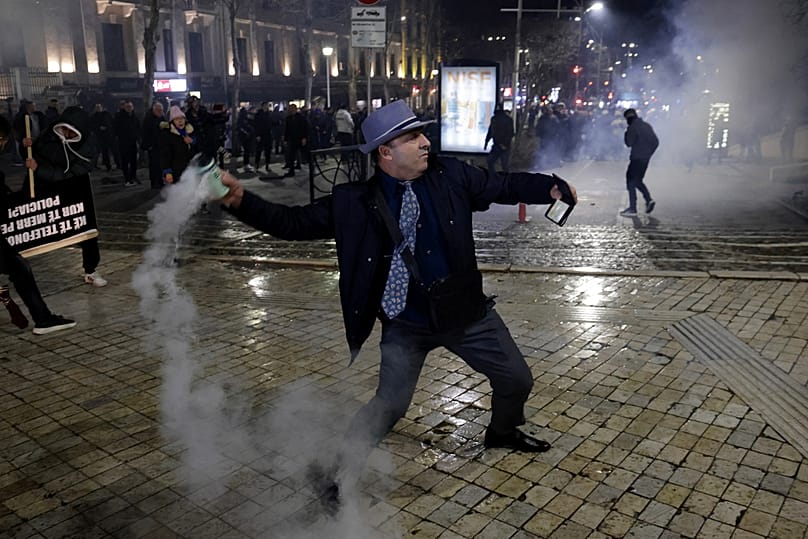
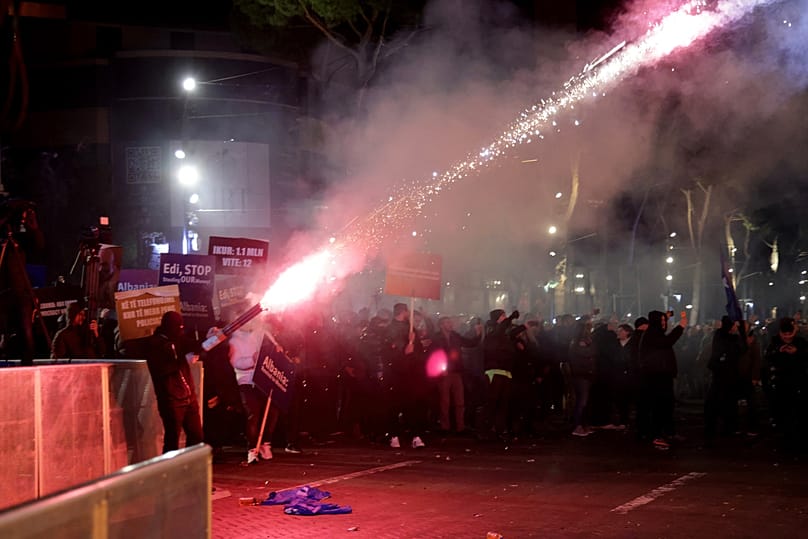
Violent clashes erupted on Saturday evening in the Albanian capital Tirana between police and protesters. The demonstrators accused Socialist Prime Minister Edi Rama of corruption and demanded that he resign

The protest was led by opposition leader and former prime minister Sali Berisha. He called on the thousands who gathered in front of Tirana's main government building to "unite to overthrow this government and to put in place a technical government to prepare early, free and fair elections."

After the speeches took place, some protesters threw Molotov cocktails at police, who in turn responded with teargas and water cannons to disperse the crowd.

A protester in the Albanian capital Tirana during an anti-government rally on 24 January 2026.
A protester in the Albanian capital Tirana during an anti-government rally on 24 January 2026. Hameraldi Agolli/Copyright 2026 The AP. All rights reserved.

More clashes tok place when groups of protesters marched towards the parliament where they tried to break through police cordons, hurling stones and Molotov cocktails.

Police again responded with teargas and water cannons.

At least 10 officers sustained minor injuries, a police statement said.

According to Berisha, 25 protesters were arrested. "This is the last kilometre toward the end of Edi Rama's regime," he said in a speech after the rally outside his party's headquarters, the right-wing Democratic Party.

Anti-government demonstration in Tirana on 24 January 2026.
Anti-government demonstration in Tirana on 24 January 2026. Hameraldi Agolli/Copyright 2026 The AP. All rights reserved.

The protests took place against a backdrop of both left and right wing parties exchanging accusations of corruption and links to organised crime.

In November, a corruption court suspended deputy prime minister Belinda Balluku, who is a close Rama ally, over her alleged role in a public procurement graft case.

Balluku, also infrastructure and energy minister, has denied the allegations while Rama labelled her suspension a "brutal act of interference in the independence of the executive".

Addressed by the government, the Constitutional Court in December temporarily reinstated Balluku to her position pending its final rulin

Next Wednesday, a parliamentary committee is due to review a demand by the corruption and organised crime prosecutors to lift her immunity, which would enable her arrest.

At the same time, Berisha himself is suspected of awarding public contracts to his associates, claims which he strongly denies.


Baltic region’s largest solar park set to come online in western Estonia

Baltic region’s largest solar park set to come online in western Estonia
A Sunly solar park. / Sunly via Facebook
By Linas Jegelevicius in Vilnius January 22, 2026

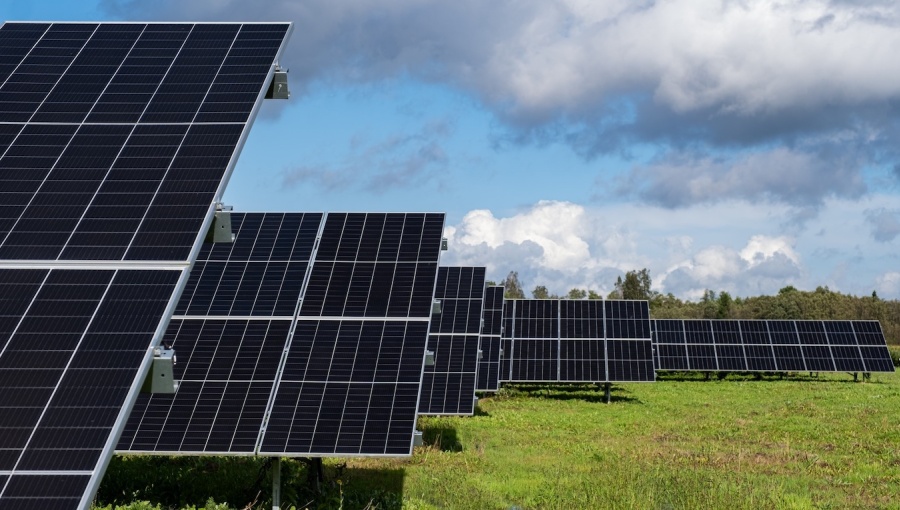
The largest solar power facility – a 244 MW solar park – in the Baltics is expected to begin operations this summer in Risti, Laane County, marking a major milestone in Estonia’s renewable energy expansion, Estonia’s national broadcaster ERR.ee reported on January 22.

It will significantly reduce reliance on imported electricity and fossil fuels, which is strategically important for Estonia and the wider Baltic region. Large scale solar generation, combined with battery storage, helps smooth peak price spikes by supplying power when demand and prices are highest, especially in the morning and evening.

The project, developed by Sunly, carries an investment value exceeding €120mn. A large-scale battery storage facility of a similar cost is planned for construction next to the site in 2027.

Spanning around 250 hectares, the solar park will comprise approximately 350,000 panels. Transporting the equipment to the site required several thousand truck deliveries. Installation began nearly a year ago and is currently about 40% complete, with full deployment expected by August.

Once operational, the 244-megawatt facility will be capable of producing enough electricity annually to meet the needs of roughly 55,000 households. Output, however, will vary significantly over the year, with winter months accounting for just 5% of total generation.

Sunly says the project’s financial viability depends on its ability to supply electricity during peak demand periods, particularly in the morning and evening.

To increase efficiency, the panels are mounted on tracking systems that follow the sun from east to west throughout the day, rather than remaining fixed in a southern orientation.

“Many solar parks in the Baltics are built facing south. They are designed to be controllable. In other words, they follow the sun from east to west throughout the day. As a result, the percentage of production increases significantly,” said Priit Lepasepp, Sunly’s chief executive, ERR.ee reported.

A battery park planned for the same location will allow the solar facility’s entire output to be stored for up to four hours and released to the grid during periods of high demand.

Both the solar and battery projects are being developed without state subsidies.

Estonia has seen rapid growth in solar energy in recent years. Data from Elering shows installed solar capacity has risen from 42 megawatts in 2019 to more than 1,200 megawatts today, ERR.ee said.

Europe’s free-trade India play leaves Washington sidelined

Europe’s free-trade India play leaves Washington sidelined
/ bno IntelliNews
By Mark Buckton - Taipei January 26, 2026

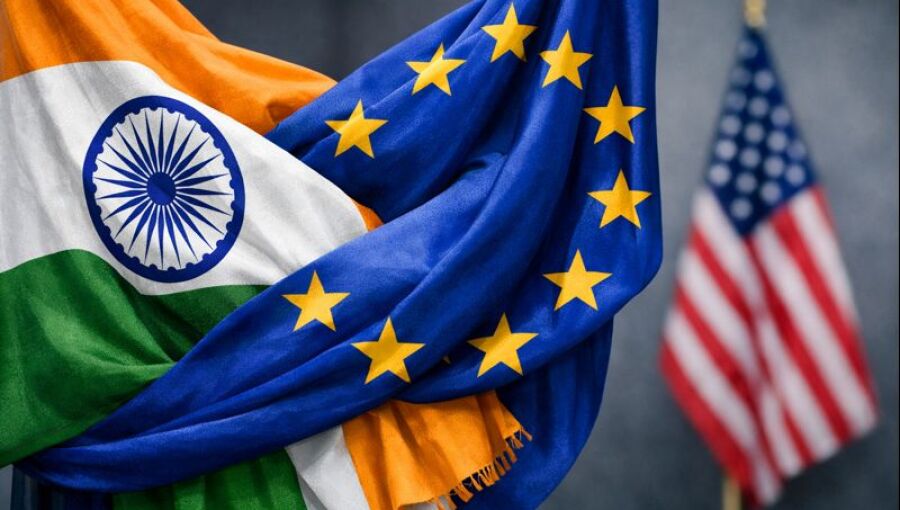
The European Union is moving to lock in a sweeping trade and security agreement with India, exploiting US tariff pressure to tilt one of Asia’s biggest economies further away from Washington’s orbit.

Branded a landmark free-trade pact alongside a defence partnership by the Europeans and European media reporting, the deal is less a gift to India than a strategic win for Brussels.

For the EU, the logic is blunt. Access to India’s fast-expanding market offers relief for European manufacturers squeezed by Chinese competition and US protectionism.

Lower Indian tariffs on cars and alcohol as DW reported recently as well as industrial goods would deliver immediate gains to European exporters in these and other sectors, while labour mobility arrangements would help plug chronic workforce shortages across the bloc. The agreement also strengthens Europe’s hand in setting standards across pharmaceuticals, technology and supply chains tied to future growth.

India’s benefits would be narrower and more defensive though. New Delhi is still scrambling to offset the impact of punitive US tariffs that have hit textiles and consumer exports. The EU offers an alternative outlet, but on terms that favour European industry and regulatory power. This imbalance in the short term at least reflects Europe’s position as India’s largest trading partner in terms of goods – consuming 12.2% of India’s trade in goods in 2023 – and a market New Delhi cannot afford to alienate.

Geopolitics at play

The geopolitical consequences may be more significant, however. By deepening economic and defence ties with Brussels, India reduces its exposure to US financial leverage and trade pressure. That loosening grip gives New Delhi greater room to manoeuvre internationally, making closer alignment with BRICS and the broader Global South easier to pursue without risking immediate economic retaliation from Washington.

Efforts to forge a comprehensive free trade agreement between the European Union and India have been among the most protracted in modern diplomacy. Negotiations first began in 2007, only to stall in 2013 amid disputes over market access, tariffs and regulatory standards. Talks resumed in earnest while COVID was at its peak in 2022, set against a backdrop of shifting global trade patterns. This has led to the current round of discussions bringing the deal closer to reality than ever before, with the EU’s top leadership openly championing its potential to reshape economic relations with Asia.

European Commission President Ursula von der Leyen has cast the pact as pivotal for both sides. In a recent message posted on the social media platform X, she stated that the EU and India had chosen a “The choice of strategic partnership, dialogue and openness.”

At time of typing she has even ‘pinned’ the message  “The mother of all trade deals. We are closing in on the Free Trade Agreement. See you soon in Delhi.” to the top of her X account, and in a video aimed at promoting the deal says the world is on the “cusp of a historic trade agreement”.

As such, Brussels no doubt sees the agreement as a way to diversify trade links and reduce its dependence on China, while also signalling unity with long-standing partners such as the United States. The EU believes that deepening economic engagement with India will bolster global supply chains and offer alternatives to the polarised dynamics of US-China competition.

Yet this strategic framing carries unintended consequences. By positioning the EU–India free trade agreement in part as a complement to Western cohesion, Brussels risks overlooking New Delhi’s own diplomatic calculus. India has been quietly pursuing a more independent course, strengthening ties with emerging markets and fostering multi-currency trade within the Global South. Its leadership in New Delhi has expressed a desire to reduce reliance on the US-dollar-centric system and expand economic links with partners across Asia, Africa and Latin America. These are all moves that sit uncomfortably with a narrative anchored in alignment with Western blocs and in particular US dollar diplomacy.

The broader context of India’s reserve diversification away from US Treasuries, as reported by Bne IntelliNews, and engagement in BRICS-related initiatives suggests a gradual reorientation of its strategic preferences.

To this end, if Brussels misreads this as simple acquiescence to US-aligned strategy, it may underestimate the depth of India’s intent to balance multiple partners. New Delhi is unlikely to sign any agreement that appears to tether it too closely to Western economic priorities at the expense of its autonomy in the Global South.

The result is thus simple. The FTA, if concluded, could be a landmark in global trade. But the way it is framed could be just as important as its terms, affecting not only bilateral ties with Europe, but India’s broader geopolitical alignment and southern shift.


EU Chiefs Aim To Set Trump Aside And Close Bumper India Trade Deal


By 

By Alice Bergoënd

(EurActiv) — After two decades of talking, a trade accord between the EU and India couldn’t come at a better time for the bloc’s beleaguered leadership.

Fresh from fending off threats from Donald Trump over recent weeks, European Commission President Ursula von der Leyen and European Council President António Costa should sign a long-awaited trade deal with India’s Prime Minister Narendra Modi at an EU-India summit in New Delhi on Tuesday.

Its signing – should last minute chinks around climate policy be resolved – come as the EU seeks to diversify its trading partners amid rising trade tensions with the US.

“We are showing a fractured world that another way is possible,” von der Leyen said on Sunday of cooperation with India.


The accord will provide access to a market of around 1.5 billion people, with India emerging as a key strategic partner for Europe as the world’s largest democracy.

Top negotiators have already said the agreement, once dubbed the ‘mother of all deals’ owing to the size of India’s market, has been “extremely difficult” to close.

Art of the deal

Under the agreement, India is set to cut tariffs on cars imported from the EU, down from rates as high as 110% to potentially to 40%, Reuters reported over the weekend.

This would create major opportunities for European car manufacturers such as Volkswagen or Renault which have been struggling of late. Tariff reductions under the pact could also benefit sectors including automotive components, chemicals, and plastics, while the text is also expected to improve market access for EU wines and spirits.

“This is very good news for producers given the size of the market and the excise duties currently in place,” one EU diplomat told Euractiv.

In turn, India should benefit from easier exports for sectors such as textiles, jewellery, pharmaceuticals, machinery, and IT services.

As ever, the EU won’t get everything it wants.

New Delhi and Brussels clashed over the sustainability commitments within the deal.

While human rights and commitments around the Paris Agreement should be included in the deal, they are unlikely to be designated as ‘essential elements,’ an EU diplomat told Euractiv. This means that a breach would not allow the deal to be suspended, unlike for the EU-Mercosur agreement.

India also requested exemptions from EU climate laws, such as the carbon border tax (CBAM), which was refused. The issue appears unresolved.

“Both sides are working intensively to address the remaining challenges,” von der Leyen told The Times of India over the weekend.

Some sensitive areas will remain outside the deal, including agricultural products like dairy. Plans to protect traditional foods under the Geographical Indications (GI) system have been postponeduntil India finalises revisions to its own GI legislation.

Once signed, the agreement will still need to be ratified by the European Parliament before entering into force.

  • Sofia Sanchez Manzanaro contributed reporting.

India’s quiet pivot beyond the dollar

India’s quiet pivot beyond the dollar
/ Ishant Mishra - Unsplash
By Mark Buckton - Taipei January 26, 2026

India is steadily trimming its exposure to US government debt, signalling a broader rethink of how the country shields itself in a more fractured and unpredictable global economy.

Holdings of US Treasuries have fallen to a five-year low of about $174bn, The Times of India writes, roughly a quarter below their 2023 peak. As a result, Treasuries now make up close to one third of India’s foreign exchange reserves, down sharply from around 40% a year ago. The shift marks a clear change in how Asia’s third-largest economy is managing risk.

Part of the explanation is tactical. The Indian rupee has been one of the weakest Asian currencies over the past year, prompting the Reserve Bank of India to step up market intervention. Scaling back Treasury holdings gives the central bank greater flexibility to deploy dollars in support of the currency when pressures build.

Decoupling in progress

However, the move is also strategic. Policymakers in New Delhi are becoming increasingly wary of over-reliance on dollar-denominated assets, a concern sharpened by recent geopolitical shocks and in many ways, US pressure on how India should conduct itself in global markets – not least in terms of imports of Russian crude. First and foremost among said ‘shocks’, the freezing of Russia’s reserves after the Ukraine invasion has become a reference point for many emerging economies seeking to reduce exposure to financial tools that can be weaponised by the US and her allies.

That caution sits alongside India’s deepening engagement with the Global South and its expanding and increasingly influential role within BRICS. New Delhi has been actively promoting trade settlement in local currencies, including rupee-based arrangements with partners such as Russia and several Asian and African economies of late.

These efforts are part of a wider push in Asia to normalise multi-currency transactions and reduce dependence on the dollar in cross-border trade.

As such, India’s evolving stance towards Washington has reinforced this logic. Trade frictions have intensified following the recent return, then supposed removal of punitive US tariffs on Indian exports, while the aforementioned continued imports of Russian oil have kept relations tense despite unproven US claims such imports have collapsed. Against this backdrop, diversifying reserves and payment channels is increasingly seen as prudent risk management rather than ideological positioning.

Gold has been a major beneficiary of the rebalancing. India now holds the world’s seventh-largest gold reserves after a steady increase in purchases. The trend mirrors moves by other emerging economies, including China and Brazil, which have also cut long-term Treasury exposure while boosting holdings of assets viewed as politically neutral.

This is not a rush for the exits though. Overseas ownership of US Treasuries remains near record highs, and the dollar continues to dominate global finance. This will not change for the foreseeable in any earth shattering manner, but India itself remains a smaller holder than Japan or China. Yet its actions add momentum to a growing debate about how durable dollar dominance will be in a more multipolar order.

There are clear limits to the shift. A stabilising rupee would ease the need for currency intervention, and any thaw in US-India trade relations could serve to slow diversification as dollar markets still offer unrivalled depth and liquidity at present.

Even so, the direction of travel is unmistakable. The subcontinent – both physically with the Indian tectonic plate even now edging closer and closer to China each year – and politically, is edging away from the dollar and US domination of global financial markets. The moves by New Delhi, for now at least, are less about rejecting the dollar outright and more about ensuring it is no longer the sole anchor of its financial security.