Thursday, February 26, 2026


Surviving genocide: The story of resistance and solidarity of the Rohingya people
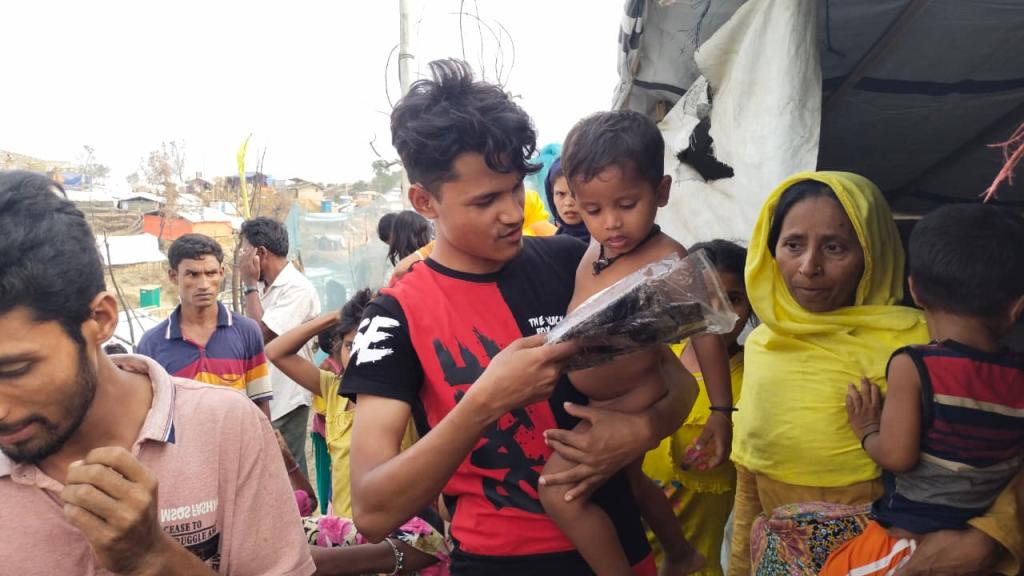

Noor Sadaque in refugee camp

First published at Commons.

Myanmar, known as Burma until 1989, has suffered from authoritarian regimes and civil conflicts since its independence in 1948. These conflicts were waged against armed opposition, ranging from two communist factions to numerous discriminated ethnic minorities, including the Shan, Karen, Mon, Kachin, and others. The military dictatorship, established after the suppression of the popular “8888 Uprising” that began with students from Rangoon Polytechnic, built an incredibly corrupt economy with a hyper-wealthy general-oligarchic elite and a disenfranchised population.

The regime was forced to make some concessions following the 2007 protests, known as the “Saffron Revolution” due to the color of the Buddhist monks’ robes, and to hold freer elections in 2015 and 2020. These elections were won by the democratic opposition led by Nobel laureate Aung San Suu Kyi, the daughter of Burma’s founding father who was assassinated by right-wing conspirators on the eve of independence. However, she still shared power with the military, making disgraceful compromises.

The most horrific of these compromises was the genocide of the Rohingya people — the Muslim population of Rakhine State. With the silent consent of Suu Kyi, a former icon of the struggle for democracy, security forces and ultra-nationalist Buddhist fanatics — who deny “infidels” the right to live there and label them as “strangers” — launched ethnic cleansing in late 2016. These cleansings were accompanied by various atrocities and intensified after the start of a military operation on August 25, 2017. Tens of thousands of Muslim civilians were killed, and another 1.5 million people were forced to flee to neighboring Bangladesh, where the first Rohingya refugees had appeared as early as the 1970s due to persecution by the Burmese authorities. As a result, the world’s largest refugee camp emerged at Cox’s Bazar on the border of the two states.

On February 1, 2021, the military carried out another coup d’état, detained the civilian leadership, and began shooting thousands of protesters who initially tried to resist the junta through civil disobedience and strikes. By drowning the streets of its cities in blood, the dictatorship further fueled the flames of a civil war that erupted with renewed vigor. Relying on military, political, and information support from the Russian Federation and the PRC, the junta — initially called the State Administration Council — defiantly violated agreements even during the ceasefire following a devastating earthquake and recently held farcical sham elections.

However, in the chaos of “everyone against everyone,” more than half of Myanmar’s territory is controlled by groups opposing the junta — from the People’s Defense Forces, subordinate to the opposition National Unity Government, to dozens of militias of various ethnic groups and smaller forces, including the Anti-Fascist Internationalist Front composed of international anarchist volunteers.

In this interview, conducted by Denys Pilash, you can learn firsthand how those who experienced genocide and continue to suffer from war and exile — the Rohingya refugees — survive under these conditions. From the refugee camp, Noor Sadeque tells us about their daily lives and prospects, as well as the importance of understanding mutual experiences and international solidarity.

Tell us about yourself: can you briefly share your journey? How did you end up in the refugee camp?

My name is Noor Sadeque son of Nur Alom from MaungDaw Township of Kyi Khan Pyin Village (Hawar bill), Myanmar. I’m a 25 year old Rohingya. I matriculated in 2016 from Maung Daw No.1 High School. But, I had to flee to Bangladesh to escape from the horrific situation in Rakhine state due to the 25th August 2017 violence, Antagonism. When I became a refugee in a Bangladesh refugee camp at that time, I began to work as a Site Coordination Team leader at Premiere Urgence Internationale (PUI) for 1 year and 3 months in camp no. 8w, 17 and 20. After that I worked at International Organization for Migration (IOM) as a Camp Operation Rohingya Team leader for about 5 years in camp no. 20, Camp-20 extension. Now I’m only focusing on empowering, developing, encouraging the youths, Socialism & Social activities, I have been working in several Civil Society Organizations such as Rohingya Youth Association (RYA), Rohingya Youth Advocacy Network. Now, I’m an advisor, founder of Rohingya Student Network (RSN) as a grassroots organization for the Advocacy of my community people, trying to empower, develop our youth and girls by providing capacity building training, trying to fight for our rights, justice, and fundamental rights.

We faced so many difficulties while we were being displaced and forced to migrate from Myanmar to the nearest country, Bangladesh. The Myanmar military government has given us a title so-called homeless and stateless because we tried to get our denied equal rights such as citizenship, peace, and tranquility. Myanmar’s brutal miliatry including local police extremist groups has planned a systematic and slow-burning genocide and made us the most persecuted minority on this planet. Behind the scene, there was a lot of massacres, gang rape, indoor burning, vivisection of infants, and throwing on to the burning fire, the oldest people were burnt up alive. A lot of people were killed by guns. People were sent into the central jail without investigation. When I was fleeing from Myanmar to Bangladesh, I witnessed many roadside deliveries. I saw so many unlimited dead bodies with my own eyes, isolated children from the parents who were crying and drowning in the water. Some old people were left alone at home because nobody was there to carry them for a long journey. I had to walk for two weeks, sometimes running under the rain and sometimes climbing the mountains. There was neither food nor medicines. Many people died on their way due to extreme fever. After all the hardship, we finally reached Bangladesh. We are very thankful to the Government and people of Bangladesh for taking care of us as their brothers and sisters. And, the humanity shown by the Bangladesh Army may almighty make this Bangladesh forever peaceful.

After reaching Bangladesh through boats, swimming and by foot, I took shelter in a refugee camp with my family. My parents are traumatized considering the future of their children including me. Fortunately, I got a chance to work for the Rohingya Students Network (RSN) as an Operations Coordinator. As a volunteer I can not maintain my poor family. Neither I nor my siblings can study and move freely. I have been scared of the use of smartphones and enjoying sitting in the tea shops inside the camps with my friends and loved ones because of arbitrary arrests and extortion by the Armed Police Battalion (APBn) of Bangladesh, as well as the torture committed by camp-based armed groups. Watching the news and raising a voice sometimes brings harm.

Furthermore, my future, fate and dream turned into a horrible nightmare that I can not see the way to come out of squalid crowded camp and refugee life where I have no right to freedom movement and education access as well. I am unable to relieve the stress in my mind, as I think constantly, day and night about my university studies, graduation, and achieving a professional degree, a goal I have held since childhood. Seeing others freely enjoying their studies abroad, along with their daily progress and achievements, makes me feel useless. This is especially painful because I know I am truly capable of pursuing those same opportunities, yet they are denied to me due to life in the camp. Over time, this situation has left me feeling deeply hopeless about the future.

What people across the world should know about the Rohingya genocide? What was the dynamics of persecutions and apartheid-style policies against the Rohingya people in Burma/Myanmar?

People around the world should first understand who the Rohingya are, an Indigenous Muslim ethnic minority who have lived in Myanmar’s Rakhine (Arakan) State for centuries. Despite this, the Rohingya have been systematically denied recognition, stripped of citizenship under the 1982 Citizenship Law, and excluded from the list of 135 officially recognized ethnic groups of Myanmar. This legal and political erasure laid the foundation for genocide.

Persecution stems from both religious and ethnic discrimination. Since Myanmar’s independence in 1948, the Rohingya have been targeted due to their distinct identity, faith, and historical presence. They have been deprived of fundamental rights such as the right to nationality, political representation, education, and freedom of movement, through a calculated and institutionalized process. The Rohingya have been systematically targeted by the Myanmar military and all branches of the Myanmar government, particularly through policies implemented in Rakhine under Arakan State. More recently, in late August 2024, both Rakhine groups and the Arakan Army (AA) separately engaged in torture and applied similar policies aimed at erasing the Rohingya from the soil of Arakan. This occurred while the Arakan Army had taken control of significant areas where Rohingya communities had lived for centuries.

Apartheid-style policies against the Rohingya date back to colonial times, when the British promised the Rohingya a place within the fabric of Myanmar for their support against Japan during World War II. But, these promises were broken after independence, and the situation deteriorated further with the rise of Myanmar ethno-nationalism. The 1942 Japanese invasion marked a critical turning point, triggering widespread communal violence that profoundly disrupted Rohingya society. This period not only resulted in mass displacement and loss of life but also laid the foundations for long-term segregation, mistrust, and structural marginalization that continue to shape Rohingya lives today.

Over the decades, repeated military operations have forced the Rohingya into exile. In 1978, Operation Nagamin caused over 200,000 Rohingya to flee to Bangladesh. In 1991–92, another military crackdown displaced more than 250,000. The situation worsened in 2012, 2016, and reached its peak in 2017, when more than 700,000 Rohingya fled to Bangladesh after mass killings, village burnings, and systematic violence, the crimes that international bodies, including Human Rights Watch, have recognized as genocide.

The world must understand that this is not just a humanitarian crisis, it is a deliberate, long-standing campaign of erasure, rooted in state policies and implemented through brutality and discrimination.

Myanmar’s mainstream democratic opposition has once made the pact with the devil, letting the military and bigots proceed with the Rohingya genocide, and then paid its price when the Tatmadaw staged another coup and unleashed its repression against the entirety of Myanmar population. Do you think the broader anti-junta movements have learnt the lesson and embraced the rights of minorities?

The broader anti-junta movements in Myanmar have shown some signs of learning from their past silence and complicity during the Rohingya genocide. Especially younger activists and certain ethnic minority coalitions within the resistance have demonstrated a greater willingness to embrace inclusive democratic ideals and acknowledge the rights of marginalized groups, including the Rohingya. But, deep-rooted nationalist ideologies and calculated political strategies still present significant barriers to a unified stance on minority rights.

Although there have been statements of solidarity and calls for a future federal democracy, these gestures have not consistently translated into concrete commitments to protect and recognize the rights of minorities. In many cases, such support appears to be more tactical than principled. For a genuine democratic transformation to take root in Myanmar, the resistance must move beyond opposition to the junta, it must commit to justice, equality, and accountability for all communities, including those who have been historically oppressed, such as the Rohingya.

Are there generational and ideological divides (e.g., between secular leftists, Islamists, or purely survival-oriented pragmatists) inside Rohingya politics today? To what extent are women and youth involved in the political discourse?

There are clear generational and ideological divides within Rohingya politics today. These divisions occur among elder diaspora leaders, younger activists, and religiously-influenced groups. Many elders in the diaspora have decades of experience and a deep understanding of the political history and crises of the Rohingya. Meanwhile, the younger generation, especially those born or raised in exile carry the trauma of direct persecution and are usually more vocal about their lived experiences under the Burmese military. Additionally, some Islamic-oriented actors, particularly those affiliated with or sympathetic to armed groups, claim leadership roles, leveraging their religious knowledge to gain influence.

Currently, three main armed groups claim to represent Rohingya resistance through so-called jihad, the Rohingya Solidarity Organization (RSO), the Arakan Rohingya Army (ARA), and the Arakan Rohingya Salvation Army (ARSA). These groups always attract support from religious students and clerics. But, most Rohingya youth today prioritize education and humanitarian work, specially with NGOs, and always use social media to campaign for peaceful solutions and educational access, which occasionally leads to friction with ideological groups.

Women, however, remain largely underrepresented in political leadership, especially within the refugee camps. Restrictions on free movement, public advocacy, and freedom of expression severely limit their participation. Still, some Rohingya women in the diaspora are advocating for rights and inclusion through various platforms.

Overall, the political landscape remains fragmented and a lack of unified leadership due to the continued marginalization of the Rohingya community, limited space for political engagement, and ongoing structural suppression.

What role do Rohingya armed groups currently play in the civil conflict? How do you assess the involvement of foreign powers (e.g., China, Saudi Arabia, Bangladesh’s DGFI)?

Rohingya armed groups, such as the Arakan Rohingya Salvation Army (ARSA) and the Rohingya Solidarity Organization (RSO), have been involved in Myanmar’s ongoing civil conflict, but their role remains controversial and largely disconnected from the broader Rohingya struggle for justice. While these groups claim to represent Rohingya interests, their actions usually reflect internal power struggles and personal agendas rather than a coherent political strategy. Rather than uniting and protecting the community, they have at times created fear and division within the refugee camps and among the Rohingya population. Their lack of political vision, coordination, and transparency has made them ineffective in pushing for meaningful change.

Arakan Rohingya Salvation Army, for example, has positioned itself as a defender of Rohingya against militant threats, yet its ideology and methods fall short of the kind of leadership needed to bring about justice, reconciliation, or long-term peace. The group’s alleged involvement in violent activities within the camps and its clashes with other Rohingya factions have further undermined its legitimacy.

Regarding foreign influence, there is not minimal evidence of official support from foreign powers like China or Saudi Arabia for Rohingya armed groups. China is known to support the Arakan Army, which has grown significantly in military and political strength, but no such support extends to Rohingya groups. As for Saudi Arabia and Malaysia, some people may offer informal or ideological support to Rohingya fighters, but this is limited, uncoordinated, and lacks institutional backing.

In the case of Bangladesh, particularly the Directorate General of Forces Intelligence (DGFI), there are isolated reports of minor interactions or tacit tolerance in specific instances, often driven by local intelligence strategies rather than genuine support. In general, Bangladeshi authorities, both government and security forces do not support Rohingya armed groups. In fact, they are more likely to monitor or suppress political and social activism within the camps, even among peaceful advocates.

Ironically, some Rohingya armed factions are believed to have made informal arrangements with their historical oppressors, the Myanmar military, to gain leverage over local rivals, including the Arakan Army. This also exposes their lack of political maturity and undermines the Rohingya people’s long-term goals.

In short, while Rohingya armed groups are active in the civil conflict, their role is fragmented, ideologically unclear, and disconnected from the aspirations of the broader Rohingya community for peace, justice, and coexistence. Their current involvement in Myanmar’s civil war does not bring the real hopes of Rohingya civilians or the values of a genuine liberation movement.

How would you describe the current relationship between the Arakan Army and the Rohingya population under its control? Do you see any possibility for negotiated coexistence?

Since the Rohingya have lived in Arakan for centuries, the Rakhine, who later formed the basis of the Arakan Army (AA) historically acted in alignment with the Myanmar government. The mistreatment Rohingya experienced from the Myanmar government was mirrored, and in some cases worsened, by the Rakhine, who exercised local power under the government’s authority.

In late August 2017, the Rohingya community faced near-total destruction as the Myanmar military, with active support from Rakhine collaborators, carried out widespread killings and torture. As a result, nearly one million Rohingya were forced to flee their homes and seek refuge in camps in Bangladesh.

By 2021, Myanmar had fully descended into dictatorship, while the People’s Defense Forces (PDF) were rising to resist the military and restore democracy. In parallel, the Arakan Army pursued similar policies against the Rohingya. After gaining significant control over parts of Arakan, the Arakan Army became an independent armed group, seeking to establish Arakan as a separate, self-governed region, independent of Myanmar. Today, the Arakan Army and local Rakhine communities exercise substantial autonomy in Rakhine State. Their goal of an independent Arakan directly excludes the Rohingya, as they have consistently refused to recognize Rohingya as part of Arakan nationality. When it comes to targeting the Rohingya, the Arakan Army and the Myanmar military always act in alignment. But, regarding the broader political struggle for Arakan’s independence, the AA positions itself against the Myanmar government.

In effect, both the Arakan Army and the Myanmar military through their respective policies have systematically denied the Rohingya recognition as citizens, whether of Arakan or of Myanmar.

The current relationship between the Arakan Army and the Rohingya population under its control can be described as one of cautious pragmatism, which is driven more by strategic considerations than by genuine ideological alignment. Historically, both the Arakan Army and many among the Rakhine Buddhist community have marginalized and even opposed the Rohingya. Today, while the Arakan Army controls large portions of Rakhine (Arakan) State, the remaining Rohingya communities live under silent oppression, with ongoing restrictions and incidents of violence.

While the Arakan Army occasionally permits religious practices or cultural events for the Rohingya, such gestures sometimes appear to be more performative than sincere, intended to garner legitimacy in the eyes of the international community and secure humanitarian aid. These actions serve to obscure the Arakan Army’s past and ongoing abuses and to present itself as a legitimate governing force, rather than a militant actor.

Nonetheless, a pathway to negotiated coexistence is not impossible. For this to happen, the Arakan Army and its political wing, the United League of Arakan (ULA), must shift toward inclusive governance that genuinely embraces the Rohingya as equal citizens of Arakan. This would require political dialogue with Rohingya leaders, protection of human rights for all ethnic groups, and full representation of the Rohingya in the future political structure of Arakan and Myanmar. Only then can sustainable coexistence and reconciliation become achievable.

How can the Rohingya movement align itself with broader democratic or revolutionary forces in Myanmar, including other oppressed ethnic minorities?

The Rohingya movement can align itself with broader democratic and revolutionary forces in Myanmar by advancing a common vision for an inclusive and federal Union, the one that guarantees equal rights, dignity, and self-determination for all ethnic groups. Building trust and solidarity with other oppressed minorities is important and can be achieved through mutual recognition of each group’s history of suffering and resistance under Myanmar’s military dictatorship.

To advance the unity, the Rohingya movement should actively engage in inter-ethnic coalitions that advocate for federalism, indigenous rights, human rights protections, and democratic reforms. Collaboration across ethnic lines based on the principles of “unity in diversity” will strengthen the collective movement against military rule and lay the foundation for a just and representative future for all peoples of Myanmar.

What is life in the camp like? What is the current humanitarian situation in the camps, particularly regarding food security and healthcare? Have the international aid cuts affected it? What are the internal challenges faced by politically active Rohingya in the camps?

Life in the camps is extremely difficult, marked by unending struggles that affect nearly every aspect of daily life. The conditions are harsh, and for the Rohingya refugees, each day is a challenge for survival.

The current humanitarian situation in the camps is dire. Food security is alarmingly low, with families entirely dependent on rations provided by the World Food Programme (WFP). But, these rations are far from sufficient. At times, WFP’s funding shortages have led to a drastic reduction in food assistance, once as low as $7 per person per month, and currently only $10. This amount is below what is needed to meet even basic nutritional needs. With no other accessible food sources, and limited livelihood opportunities inside the camps, most families struggle to sustain themselves. Only a few educated people manage to find work, which is not enough to support the families.

Healthcare services are also deeply inadequate. Although several health facilities exist across the camps, they are poorly equipped and fall far short of providing quality medical care. Vulnerable Rohingya refugees usually need to seek treatment outside the camps, at private hospitals such as Alif and Palong hospital in Kutupalong and Chattor Hospital in Cox’s Bazar, which is costly and logistically challenging. Most people who seek care within the camps report being prescribed only basic medications like low-quality paracetamol, and many express frustration over the lack of proper diagnosis and treatment.

Hospitals like Turkey’s TIKA and Médecins Sans Frontières (MSF) offer relatively better services, their capacity is limited and cannot meet the widespread medical needs of the population. The burden of managing healthcare and food needs always falls on the refugees themselves, with families which make extraordinary efforts, including daily labor for meager wages, to care for their loved ones.

The international aid cuts have had a devastating impact on both food security and healthcare. NGOs and INGOs are no longer able to meet the essential needs of the refugee population, which leave people in sorrow, despair, and a state of mourning for the life they once knew.

In addition to these humanitarian challenges, politically active Rohingya face serious internal threats. Armed groups operating within the camps frequently view political advocacy and community organizing with suspicion, usually perceiving it as a threat. As a result, many politically engaged youths have been targeted, silenced, or intimidated into giving up their work. Fear is widespread, and the space for political expression is rapidly shrinking.

Inside the camps, many armed groups remain active, usually opposing the work of educated and politically experienced experts who strive for peaceful solutions for the Rohingya. The Bangladesh authorities are aligned with these groups, primarily to maintain control over the Rohingya population. The armed groups, lacking sufficient knowledge and expertise, generally follow the directives of the authorities. It makes it nearly impossible for politically active members to receive the protection or recognition they need. Instead, leadership positions in the camps are always handed to unqualified people, sometimes very young boys, who lack the knowledge or maturity to lead, and who disrespect educated, religious, and community-oriented figures.

These trends point to a deeper structural issue. Those in power within the camp always align themselves with people or groups who can offer financial or material support, rather than those who seek to represent and serve the community through peaceful political engagement. Agencies like APBn, DSB, NSI, and DGFI 1 are seen as favoring these armed actors, further marginalizing political advocates.

In short, politically active Rohingya face a serious crisis. They operate without security, support, or recognition, despite their efforts to serve their community peacefully and constructively. Their voices are being silenced, and their efforts overshadowed by violence and fear.

What does “return with dignity” mean to you, and what concrete guarantees must be in place before any repatriation can be considered?

According to the Rohingya refugee, “return with dignity” represents not just a phrase, but a final hope and ultimate destination, it is a dream of reclaiming life, identity, and rights in our homeland. But, such a return must not be rushed or symbolic, it must be rooted in concrete, enforceable guarantees that ensure the full restoration of our rights and safety.

Before any repatriation can be considered dignified, the fundamental rights of the Rohingya must be fully recognized and upheld by the Myanmar government. It should include the unconditional restoration of full citizenship, freedom of movement across the country, and the ability to participate in education, economic activities, social life, and political processes without discrimination or restriction.

Repatriation is very important for us because life as refugees now approaching eight years in the camps of Cox’s Bazar has been overwhelmingly difficult. Every day is a struggle for survival, marred by insecurity, deprivation, and statelessness. Our prolonged displacement has only deepened our pain and eroded our future.

For repatriation to be truly dignified and sustainable, it must be facilitated and monitored by international stakeholders, including the United Nations, humanitarian organizations, and concerned governments. Their active involvement is essential to ensure that the process is conducted with accountability, transparency, and respect for human rights.

Only when these critical guarantees are firmly in place, when safety, justice, and equality are assured, can Rohingya people return to Myanmar with a sense of trust and dignity, ready to rebuild their lives in peace and freedom.

What gives you hope in the face of overwhelming adversity? And what would justice look like — not just for the Rohingya, but for all peoples in Myanmar?

In the face of overwhelming adversity, what gives us hope is the remarkable resilience and strength of our communities. Despite the suffering, displacement, and injustice we continue to endure, our collective courage, unity, and determination to seek justice remain unshaken. Acts of solidarity, whether through global advocacy, grassroots mobilization, or community resistance renew our hope and inspire us to keep fighting for a better future, not only for the Rohingya but for all the people of Myanmar.

Justice, to me, is multi-dimensional and must be inclusive, transformative, and rooted in accountability, human dignity, and equality. For the Rohingya and all people of Myanmar, justice must include,

1. Accountability for Atrocities; all perpetrators responsible for human rights violations, whether against the Rohingya or other ethnic and religious groups must be held accountable through fair and transparent legal processes, both nationally and internationally.

2. Recognition of Rights; the Myanmar government must recognize the rights of all communities, including the Rohingya. This includes restoring full citizenship, ensuring access to education and healthcare, and guaranteeing freedom of movement and protection from discrimination.

3. Ethnic and Religious Harmony; the government must actively promote dialogue and mutual understanding among the diverse ethnic and religious communities of Myanmar, advancing reconciliation and long-term social cohesion.

4. Inclusive Democratic Governance; a truly democratic and inclusive political system must be established, the one that represents all peoples of Myanmar, ensures equal participation in decision-making, and upholds the principles of justice, freedom, and equality.

5. Reparations and Support for Victims; justice also means reparations for victims of violence, discrimination, and displacement. The government must offer unbiased support to those affected, help them rebuild their lives with dignity and security.

Justice for Myanmar cannot be selective. It must serve every community that has suffered and strive to create a future where no one is oppressed because of their identity, religion, or ethnicity. That vision of justice and the global support behind it is what sustains our hope for change.

What do Rohingya refugees know about the war in Ukraine? Has Russia’s role in supporting both the Myanmar junta and the invasion of Ukraine influenced your perception of international power dynamics?

Many Rohingya who have access to education and social media are well aware of the war in Ukraine. We see the images of cities and places in ruins, people forced to flee, and a nation bravely resisting occupation. What stands out most is the double standard in the global response. The international community acted swiftly and decisively in condemning Russia’s invasion of Ukraine. But when it comes to the Myanmar junta, also backed by Russia, the response has been slow, weak, or at times, completely silent.

Russia’s open support for the military that has oppressed and persecuted us reveals the darker reality of international politics. It makes us feel invisible, as if our suffering is less important. It exposes how global power sometimes operates not through principles of justice, but through interests and alliances.

So yes, our perception of international power dynamics has changed. The war in Ukraine has taught us not only about conflict, but also about how the world chooses whose pain to acknowledge and whose to ignore.

What do you most want our audience to understand about the Rohingya struggle today?

We are not just victims, we are human beings, born with hopes and dreams like anyone else. Our struggle is not only about the genocide we endured in the past, it’s also about the future we are trying to build. It’s about our right to education, freedom of movement, citizenship, and the chance to live with dignity.

We were born and raised stateless. Many of us are growing up in refugee camps, where the future is uncertain, and every day is a struggle just to survive. Yet, despite all of this, we educate ourselves, we serve our communities, and we raise our voices even when doing so puts us at risk.

So please, do not see us only as numbers or headlines. See us as students, teachers, parents, artists, and peacebuilders. We don’t want pity. We need your solidarity, genuine and strong.

Do you see any meaningful parallels between the Rohingya struggle against ethnic persecution and the Ukrainian resistance against foreign occupation? Could there be space for mutual solidarity between the two peoples?

Yeah, definitely. Both the Rohingya and the Ukrainian people are fighting for survival, identity, and freedom from forces that seek to erase them. Ukrainians are resisting tanks and missiles. The Rohingya are resisting erasure through statelessness, systemic apartheid, and forced exile.

Although the contexts are different, the pain of losing our homeland, our rights, and our people is deeply human and deeply shared. There is a profound space for solidarity, because pain recognizes pain. Both communities can draw strength from one another’s courage and resilience.

If we can build bridges between our stories, perhaps the world will stop choosing which lives are more worthy of protection and begin defending all human rights equally.

Do you think an international solidarity movement can make a real difference for the Rohingya cause?

Yes, absolutely. An international solidarity movement is important and can play an advanced role in making a real difference for the Rohingya cause. Today, the only reason Rohingya genocide survivors have even a glimpse of hope for survival and justice is because parts of the international community have stepped up, although modestly. The Rohingya people remain heavily reliant on international attention and support, more than on any domestic or regional actors.

Without sustaining international solidarity, the Rohingya crisis risks being forgotten. If the world turns away, our situation will worsen, and justice will remain out of reach. But, it is also important to acknowledge that even though the international community has made efforts, such as humanitarian aid, public condemnation, and some diplomatic pressure, the overall progress remains extremely limited. One major reason is the lack of meaningful involvement from influential powers like China.

China plays a decisive role in Myanmar’s internal politics, particularly through its support for both the Myanmar military and the Arakan Army, who control key territories. Any meaningful resolution to the Rohingya crisis will likely require China’s participation or approval, as both armed and political actors in Myanmar are deeply influenced by China’s interests.

Therefore, for an international solidarity movement to truly bring change, it must include strategic engagement with regional powers such as China, Thailand, and Japan. These countries have real influence and can pressure relevant actors inside Myanmar toward a resolution.

To say shortly, international solidarity is crucial, its effectiveness will depend on a more inclusive approach, one that involves not only western democracies and human rights bodies but also regional powers with real leverage. The Rohingya people are counting on the international community not just for survival, but for a durable and just solution to this long-standing crisis.

(Video) Rojava’s future in Syria? AANES foreign relations co-chair Ilham Ahmed on decentralization, women’s rights & guarantees


First published at The Amargi.

On the sidelines of the Munich Security Conference, Kamal Chomani speaks with Ilham Ahmed, Co-Chair of the Foreign Relations Department of the Autonomous Administration of North and East Syria. 

In this exclusive interview, Ahmed discusses the joint Kurdish–Damascus delegation at Munich, the January 29 agreement and why the March 10 deal failed, constitutional guarantees for Kurdish political and cultural rights, decentralization and Syria’s future governance model, the protection of women’s achievements in Rojava, ongoing negotiations over the role of the YPJ, and the need for international guarantors to prevent renewed conflict. 

Ahmed explains why constitutional safeguards, decentralization, and women’s political participation are central to Syria’s long-term stability. She also addresses concerns over hostile rhetoric, external interference, and the future of Kurdish self-administration within a unified Syrian state.


Marx’s value theory, multidimensional imperialism and ecological breakdown: Interview with Güney Işıkara and Patrick Mokre


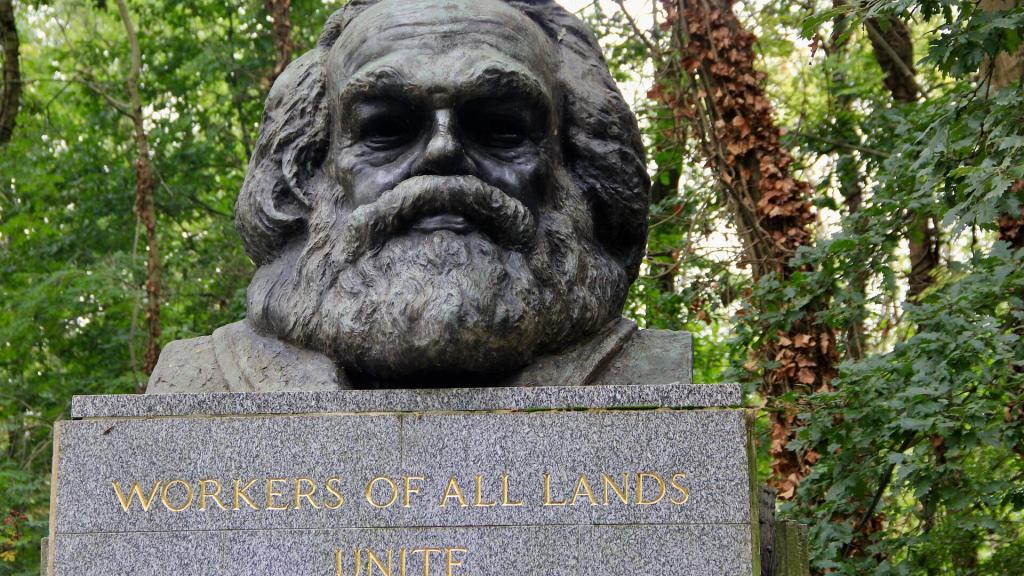
Statute marx

Güney Işıkara and Patrick Mokre are authors of Marx’s Theory of Value at the Frontiers: Classical Political Economics, Imperialism and Ecological Breakdown. Işıkara is Clinical Associate Professor of Liberal Studies at New York University, whose research focuses on ecological breakdown and alternative modes of organising production and reproduction. Mokre is a guest researcher at the Economics of Inequality institute in the Vienna University of Business and Economics (WU), whose studies centre on the political economy of labour, inequality and capitalism.

In this interview with Federico Fuentes for LINKS International Journal of Socialist Renewal, Işıkara and Mokre discuss imperialism’s multidimensional nature, how Karl Marx’s value theory helps explain its economic core and why a value-theoretical framework for studying the global economy is urgently needed.

This interview is the latest in LINKS’ ongoing series on imperialism today.

Discussions regarding imperialism often refer to Vladimir Lenin’s pamphlet on the subject. How do you define imperialism? Do you see Lenin’s concept as still valid? What, if any, elements of Lenin’s concept have since been superseded?

Imperialism shapes the global economy today like no other factor, and that is perfectly clear to most working people around the world. Outsourcing of production, volatile prices of imported goods, exchange rate-induced inflation, foreign investors pushing down wages or domestic capitalists invoking international competition to do the same, debt service on (private and sovereign) foreign debt, and so forth — for most of the global population, imperialism’s effects are felt in everyday life. That does not make its dynamics any less complicated, however.

We see imperialism as the mode of operation of international capital accumulation, rooted in the same dynamics that define capitalism: surplus value production through labour exploitation, which is then reinvested to accumulate and outgrow competitors. Imperialism is a complex, multidimensional phenomenon inherent in the concept of capital as self-expanding value.

It appears as a system of asymmetric economic, political and military power relations that are difficult to distinguish descriptively and separate analytically. It is a mistake therefore to treat these dimensions independently of each other.

From its start, the capitalist mode of production has been international. Its expansion across borders adopted and transformed pre-existing patterns of trade, colonisation and exploitation. When capitalism became the dominant mode of production — first in certain regions and eventually globally — it became clear that internationalisation was an innate feature of capital accumulation, generating specific forms of domination.

Historically, the internationalisation of capital took place in all three functional forms of capital: commodity capital, money capital and production capital. Each phase, however, gave rise to distinct empirical patterns of power relations, along with corresponding waves of imperialism theories.

Lenin’s intervention came at a crucial moment amid World War I — an unprecedented event driven by capital’s expansionist dynamics. It is worth noting that his pamphlet Imperialism: The Highest Stage of Capitalism (subtitled A Popular Outline) was intended as a survey of empirical evidence from advanced capitalist countries. It largely supported previous arguments by John A Hobson (in 1902) and Nikolai Bukharin (written in 1915 and published in 1917).

The emphasis on capital exports was a timely intervention as the internationalisation of productive capital was starting to appear on an unprecedented scale. Capital exports remain a central channel of economic imperialism today. Just consider cross-border ownership structures and so-called foreign direct investment in productive capital, which formed Lenin’s point of departure, or the dominance of a few financial centres over credit and debt worldwide.

We also value that Lenin grounded his explanation of the drive toward capital exports in the tendency of the rate of profit to fall, rather than in problems of realisation or theories of underconsumption.

On the other hand, what was largely missing from the first wave of imperialism theories (roughly the first two-to-three decades of the 20th century) was a sustained attempt to link the study of imperialism — or the internationalisation of capital — to the law of value. Henryk Grossman and Otto Bauer were notable exceptions. Both sought to analyse international transfers of value between regions and countries. This line of inquiry then remained surprisingly dormant until it was revived by Arghiri Emmanuel in the late 1960s.

Your latest book explains how Karl Marx’s value theory can help us better understand the economics of imperialism. Can you outline why?

As we see it, imperialism is the way capitalism functions on the international stage. It is essentially what happens when capital accumulation crosses borders and encounters historically structured unequal development, patterns of domination, and asymmetric power relations. Therefore the economic core of imperialism follows the broader logic of capital accumulation and reproduction, which is precisely what value theory helps explain.

Since the early 20th century, attempts to theorise imperialism have evolved alongside imperialism’s development, or more broadly, alongside the changing patterns of internationalised accumulation.

At the start of the 20th century, Rudolf Hilferding, Bukharin and Lenin emphasised exports of productive capital, while Bauer and Grossmann examined power imbalances and transfers of value through trade.

After World War II, many peripheral countries formally decolonised but found themselves subject to new forms of dependency. Kwame Nkrumah coined the term neo-colonialismWalter Rodney described underdevelopment as an active process driven by the imperialist centre, and, importantly, Emmanuel viewed value transfers as a regular and necessary outcome of international competition.

In the 1990s, when financial deregulation was imposed on the periphery and capital exports increasingly took the form of money capital, Marxist scholars debated financialisation and currency hierarchies.

Binding these different approaches is their common grounding in Marxist theory. Our argument is that value theory can serve as the unifying thread. In the book, we explore one specific dimension of the economics of imperialism by expanding the concept of international value transfers, since these transfers express and reinforce the inequalities structured and reproduced through capitalist competition.

Although the book focuses on the quantitative dimensions of Marx’s value theory — also known as the labour theory of value — we emphasise that this is much more than a quantitative tool. It investigates the law of value, which captures the processes that make the reproduction of capitalist society possible.

Capitalist society is fragmented into private, autonomous units making decisions under competitive pressures, with only partial information and without any mechanism of prior coordination. Marx’s value theory therefore lets us analyse a wide range of phenomena, including capitalist alienation and commodity fetishism, among others.

The labour theory of value examines how production and the social division of labour are regulated by value, particularly from a quantitative perspective. It starts with the creation of value through socially necessary labour time (direct prices), to surplus value’s redistribution in conditions of capitalist competition (prices of production reflecting a general rate of profit), and finally to market prices as indicators of day-to-day shifts in market conditions.

We construct a large dataset of direct prices, prices of production and market prices, and analyse both the regular relationships among these three sets and the systematic deviations between them.

A central thread in the economics of imperialism is the redistribution of surplus value across industries and borders, as well as the appropriation of surplus value produced by workers in one country by capitalists in another. Productive forces in the neo-colonial periphery — outside the traditional colonial and imperial centres — remain underdeveloped and capitals in the centre are powerful enough to mobilise entire states in their interests. Therefore huge redistributions of value occur.

These occur through several channels: the mobility of productive capital (including profit repatriation) and portfolio investment; the capture of value generated in productive industries in one country by non-productive sectors (finance, real estate and so on) in others; and transfers of value across industries and countries through the equalisation of profit rates, that is through the formation of international prices of production.

We examine the last mechanism in detail, focusing on cross-nation and cross-industry differences in the value composition of capital and in rates of surplus value. This line of research had largely faded from Marxist debates after the 1910s, until revived by Emmanuel in his seminal book, Unequal Exchange.

We develop a coherent value-theoretical framework for analysing international transfers of value and, for the first time, present empirical estimates covering a large number of countries over a significant time period. One of our key findings is that aggregate value transfers — representing only one mechanism of economic imperialism — were more than 70 trillion euros between 1995–2020, with gains concentrated in a small group of countries while the majority experienced losses.

This approach’s central strength lies in treating imperialism as an integral part of capitalist competition at the international level, rather than attributing global inequalities to imperfections in an otherwise smoothly functioning capitalism or relying on theoretically eclectic foundations.

In recent times Marxists have sought to incorporate ecology into their understanding of imperialism, raising concepts such as “unequal ecological exchange”. How can Marx’s ideas help us integrate ecology into the concept of imperialism?

The idea of unequal ecological exchange (also called ecologically unequal exchange) emerged from a particular critique of Marx’s value theory. The argument is that Marxist analyses of international trade focus primarily on transfers — and unequal exchanges — of labour values, which are seen as only one form of energy, while overlooking the asymmetric flows of raw materials, land and other forms of energy.

From a broader perspective, it is certainly true that global capitalism's functioning favours the imperial core in terms of the redistribution of surplus value, as well as the appropriation and use of various forms of use value. To describe such processes, Marx used the notion of a “system of robbery,” borrowing the term from German scientist Justus von Liebig, to explain how soil degradation in the countryside accompanied the rise of industrial capitalism in the cities. He also referred to colonial relations in discussing how the dynamics of capital accumulation in England exhausted Irish soil for more than a century.

In recent decades, many studies have analysed international trade through environmental indicators such as ecological footprint (the amount of ecologically productive land area per capita), land or space embodied in commodities, physical trade balances and material flows. These are important contributions because they document the material enrichment of the imperial core at the expense of workers and peasants in the periphery — a key dimension of imperialism.

It is a mistake, however, to think that such material flow patterns have self-constituted dynamics. A defining feature of capitalism is that social and environmental concerns are subordinated to capital accumulation. Social structures and use values — whether from non-capitalist production or non-human nature — are reduced to their usefulness for accumulation and often degraded or destroyed in the process.

Think of a river that offers many use values: it provides enjoyment for swimmers, an ecosystem for fish and algae, and a vital function in the water–groundwater–precipitation cycle, while also serving as a cooling source for data centres. Once its cooling function is fully exploited, the discharged water returns hot and polluted, riverbeds and currents shift, fish and plant life die off, and the water becomes unsafe for recreation. The contradiction between use and exchange value thus lies at the heart of ecological breakdown.

We cannot explain the global distribution of materials, land, energy, space and waste without a coherent theory of accumulation and its relationship to use values. This is precisely what Marx’s value theory provides through the duality of use value and exchange value — a contradiction embedded in every commodity.

The original imperialist powers built their wealth and military might on colonial conquest and pillage of pre-capitalist societies. How have the mechanisms of imperialist exploitation changed over time? Are these countries still the main imperialist powers today?

There is a striking continuity between the pre-capitalist colonial empires and the power centres of contemporary imperialism. Colonial trade and slavery helped fuel industrialisation and the genocidal expropriation of Indigenous lands that accompanied that transition.

However, pre-capitalist colonialism and contemporary imperialism operate through different economic dynamics. The most powerful country in today’s imperial core, the United States, was not a colonial empire in the classical sense but itself a colony. Conversely, once-dominant colonial empires, such as Spain and England, are now far more marginal. Historical continuities exist, but they should not be overstated: colonialism and imperialism follow distinct economic logics.

Under capitalism, capital accumulation is the driving force. Because of this process's internal contradictions, the most advanced capitals in a country eventually run up against limits shaped by the tendency of the rate of profit to fall.

At the same time, they are powerful enough to mobilise their state apparatuses to support their interests abroad. By investing in countries with older and less efficient capitals, lower wages, weaker regulation and generally lower levels of competition, they secure higher profit rates, at least temporarily. They also deploy economic power alongside military, diplomatic and political resources to suppress competitive threats and keep productive forces in other regions underdeveloped.

The dominant mechanisms of international capitalism have shifted over time. Before the 20th century, former colonial empires and emerging imperialist states primarily used the periphery as a source of cheap resources — often close to outright plunder — and cheap or enslaved labour.

A major shift occurred with the large-scale export of capital commodities, not simply for sale to foreign capitalists but as a means to outsource production while retaining ownership. Capital exports generated substantial profit flows from the periphery back to industries in the imperialist countries.

Immediate after World War II, profitability in the imperial centre was a less pressing problem, while formal decolonisation of colonies became central. During this period, a consolidated world market, in which the periphery depended on importing consumer and capital goods while exporting agricultural products and raw materials, grew in importance. This led to significant international transfers of value.

In the 1990s, capitalism was re-introduced in many parts of the world. The imperialist core remained the only viable trading partner, one restructured through the neoliberal backlash to eroding profitability in the 1960s and ’70s. This led to a wave of global deregulation and liberalisation, and the globalisation of financial institutions from the imperialist core exporting capital in financial form and consolidating various forms of dependency.

This is a simplified timeline, but there are two essential points. First, capital exports — in commodity, productive and money form — have always been central to imperialism. One mechanism of economic imperialism emerging does not eliminate others.

For example, value transfers arising from the existence of a world market do not disappear just because value capture linked to money capital becomes more prominent. It remains a single capitalist system, constantly evolving in pursuit of higher profits under conditions of real competition. Analysing imperialism today means examining all mechanisms of dominance, while considering possible countervailing forces.

Second, the economics of imperialism primarily describe capital-to-capital — or, more simply, industry-to-industry — relationships, rather than relations between nations treated as homogeneous entities. Different segments of capital also compete within nations, often over whose interests the state advances. Consider, for instance, tensions between manufacturing industries in the US, which have lost ground during the US-led expansion of global markets, and the tech sector, which has benefited enormously from enforcing technological property rights in formally open markets.

For this reason, we reserve analytical categories such as exploitation for the social relationship between capital and labour — that is, between capitalists and workers — rather than relations between countries. The study of imperialism, while centred on the international dimensions of capital accumulation, cannot be reduced to relations between nations abstracted from class conflict.

Your research shows China is one of the world’s biggest winners in terms of value transfers. Yet China’s per capita GDP is far behind the wealthiest countries. How should we categorise China’s global status? What are the economic foundations and specific features that help explain China’s position? And how should we understand the growing US-China conflict, particularly as their economies are more integrated than ever?

Providing some context for our results is helpful here. Our dataset covers the period 1995–2020, and at the start of this period China occupied a subdominant position. In the 1990s, China accounted for a much smaller share of global output than today, with a low value composition of capital and a high rate of surplus value. Through both channels, it transferred value to the imperialist core.

In the early 2000s, China’s capital composition began to converge toward the global average, and it became a recipient of value transfers through that mechanism. In the early 2010s, a similar shift took place with the rate of surplus value. China’s transition from net loser to net recipient coincides with the Global Financial Crisis, roughly in 2010, and it has maintained this advantageous position since.

During the same period, our results show a relative setback for the US, particularly in terms of value composition. To us, this aligns with broader developments: China’s relative stability, its sustained capitalisation and its rise to global leadership in several key industries contrasted with a turbulent decade in the US economy, economically and politically.

We should stress, however, that our figures only refer to transfers of value resulting from the formation of international prices of production. They do not capture other major mechanisms of economic imperialism, such as the role of non-production industries in appropriating value created abroad, capital exports, advantages linked to currency hierarchies and similar dynamics.

It is reasonable to assume that the US, along with other core imperialist countries, still enjoy significant advantages in these areas, which are not analysed in this book. We plan to extend our research using a coherent value-theoretical framework to examine these extra dimensions and provide a more comprehensive empirical picture.

And then, beyond economics, there is also political and military power. As the US faces relative economic decline — or, more precisely, as it is more directly challenged by China economically — it has mobilised its political and military capacities more frequently and assertively. In strictly military terms, the US still holds clear and substantial supremacy.

For that reason, we do not believe that our findings are enough to conclude that China is already an imperialist power or that it is fully on par with the US as an imperialist rival. What we show is that China has shifted its position in one central dimension of imperialism. That shift is significant and substantial, but not, on its own, enough to determine China’s overall position within the imperialist world system.

Conversely, Russia, which many label as imperialist due to its use of military power abroad, remains a net loser in terms of value transfer. Where do you see Russia fitting into the imperialist North/Global South divide?

With the same caveats mentioned earlier — that the analysis in the book is partial and provisional — our findings indicate that Russia is not a net recipient of international value transfers. That does not mean, however, that it is necessarily a net loser in all other dimensions of economic imperialism.

Nor does it imply that Russia holds a subordinate military position, whether regionally or globally. Our analysis needs to be deepened and extended to extra mechanisms through which value is captured and appropriated on a global scale. We intend to pursue this.

We see the world economy, as well as global political and military power structures, as still dominated by the conventional imperialist countries — above all the US and its G7 allies. At the same time, our analysis of global capitalism is grounded in the concept of real competition. At both micro and macro levels, relations of domination are continuously contested, largely due to capitalism’s internal contradictions. Challenging powers may succeed or fail, and these processes often unfold over long historical periods.

Imperialism is therefore not only a relationship of domination between imperialist and neo-colonial countries. It also involves rivalries within the dominant bloc, as well as competition among neo-colonial countries striving to improve their relative positions.

Over time, a country’s economic and military capacities may erode to such an extent that maintaining its political standing within the imperial bloc becomes its main objective. Conversely, a country may strengthen economically — China is an obvious example — and begin challenging established hierarchies primarily through economic channels, while remaining militarily subordinate and excluded from the core political alliances upholding the existing order.

What do these examples — along with those of countries such as Australia, Taiwan and South Korea, which are generally viewed as part of the imperialist camp yet are net losers in terms of value transfers — tell us about the reliability of focusing on just one or a few economic indicators (value transfers, labour productivity, GDP per capita, etc) to determine a country’s status in the world today? Also, have you encountered any issues in using available economic data to establish results that are meaningful for Marxist economics/value theory?

This question goes straight to the heart of how we understand imperialism — and, more broadly, value theory itself. We are always dealing with counteracting forces and internal contradictions, and these force us to look beyond any single indicator.

Take Taiwan. Taiwanese capital, as a whole, appears as a net giver in terms of value transfers. At the same time, its semiconductor industry is not only internationally competitive but in many respects technologically dominant. However, this strength is concentrated largely in one sector, and that sector remains highly dependent on demand from the tech industries of China and the US.

Value transfers linked to the value composition of capital — where Taiwanese semiconductor producers are clearly in a recipient position — may be offset by value losses in other industries. This reflects Taiwan’s subdominant position within the broader alliance of imperialist countries.

South Korea is somewhat different. It has a relatively diversified production structure, with most major industries domestically owned. Like Germany, South Korea appears as a net giver of international value transfers, yet it also runs a strong trade surplus. In other words, the disadvantages it faces in one mechanism of economic imperialism may be counterbalanced — or even outweighed — by advantages in another.

In the book, we did not systematically analyse ownership structures or trade balances; comparing these different channels remains a future task. But these examples illustrate the broader point: relying on one variable is not enough to determine a country’s position within global capitalism.

Imperialism is shaped by multiple, interacting mechanisms. That is precisely why we believe developing a coherent and consistent value-theoretical framework for studying the global economy is not only useful, but urgently needed.

Considering all of this, what should 21st century anti-imperialist internationalism look like?

Quite frankly, we wrote a book in which one chapter examines two of the many core economic channels of imperialism. When it comes to anti-imperialist internationalism, much more than academic research is needed; solidarity and resistance must also take practical forms.

That said, we believe our work can offer insight into potential choke points and broader structural dynamics — especially for those who are critical of the concentration of power in a small group of imperialist countries or concerned about the growing risk of destructive imperialist wars.

First, we find no evidence supporting the claim, common in the 1970s, that imperialism primarily relies on wage differentials that materially privilege workers in imperialist countries. Depending on one’s position in the debate, this may seem trivial or counterintuitive. But it also weakens the claim — associated with thinkers such as Emmanuel — that international solidarity between workers in neo-colonial and imperialist countries is structurally unviable. On the contrary, as the social contract in the imperial core — relative stability in exchange for relative comfort — gives way to declining living standards, precarious employment, offshoring and increased migration driven by war and deprivation, solidarity across borders and passports becomes more necessary.

Second, the international value transfers we analyse are largely the outcome of the very existence of a world market. In its most basic form, capitalism generates uneven development and widening inequalities. This casts doubt on world market-oriented reforms or capitalist-state-sponsored strategies to mitigate such inequalities. Reforming capitalism at an international scale to tame its social and environmental ills is the greatest illusion right now, where its contradictions are so sharpened that international conventions and laws are increasingly null and void.

Third, it is evident that the imperialist core is ramping up military expenditures, driven both by internal contradictions and by intensifying competition over the strategic inputs required for capital accumulation — rare earths, lithium, copper, cobalt, and similar resources. The drive to directly subordinate the periphery’s resources to the needs of the imperial centre is intensifying.

From the standpoint of these countries, the struggle for national liberation and sovereignty remains as relevant as ever. At the same time, unconditional and practical solidarity from the working classes and socialists within imperialist countries remains indispensable.

If You Can’t Beat ‘Em, Don’t Join ‘Em


by  | Feb 24, 2026 | 

2026 marks yet another year Americans find themselves watching Washington and its media surrogates prepare the country for war in the Middle East. Speaking on Iran, President Donald Trump said that “either we reach a deal, or we’ll have to do something very tough.” He has deployed what he called a “massive armada” to the region and insisted that Iran has only a month to capitulate or face a “very difficult time.” His demands no longer focus solely on the nuclear program; Trump now insists on ending all uranium enrichment, severing Tehran’s ties to regional militias, and placing strict limits on Iran’s ballistic‑missile stockpile. He said a fair agreement would mean “no nuclear weapons, no missiles.” Such conditions, issued by a nation with an arsenal of its own, amount to complete disarmament and have led observers to conclude that the administration is setting Iran up to fail so it can justify another round of attacks. Last June he authorized the bombing of three Iranian nuclear facilities, yet he now argues that more force will be needed if Tehran refuses to accept total capitulation.

Hard‑line commentators have joined the chorus. Conservative media host Mark Levin spoke gleefully about the United States organizing a major attack on Iran and that “this regime must be destroyed,” even issuing a direct threat to Iran’s supreme leader. Israeli Prime Minister Benjamin Netanyahu has adopted similar maximalist rhetoric. Netanyahu has signaled he favors the use of force to topple Iran’s government or at least cripple its missile defenses and that he and his advisors believe Washington should exploit Iran’s recent unrest to end the Islamic Republic’s 47‑year rule. At a February conference he demanded that all enriched uranium be removed from Iran and that any deal include dismantlement of enrichment infrastructure and resolution of the “ballistic‑missile issue” – conditions that would leave Iran defenseless. Tehran has said its ballistic‑missile program is a “firmly established” part of its deterrence and not open for negotiation, but Trump echoed Netanyahu’s stance, saying a fair deal means “no nuclear weapons, no missiles.” These extreme and shifting demands appear less about arms control than about engineering an impasse that can be used to rationalize war.

Repeating Mistakes: The Heavy Burden of Intervention

Long before the current Iran standoff, America’s interventionist foreign policy had left deep scars.  The Iraq War of 2003 – championed by a coalition of neoconservatives and assertive nationalists – killed and maimed hundreds of thousands of people, displaced millions, and cost the United States roughly half a trillion dollars. Brookings Institution analysts noted that war planners believed American power could swiftly conquer threats and spread democracy, but their expectations proved disastrously wrong. The war shattered Iraq’s infrastructure, destabilized the region, and contributed to the rise of extremist groups.

The 20‑year Global War on Terror likewise drained the nation’s resources. Researchers at Brown University’s Costs of War project calculated that the post‑9/11 conflicts have cost over $8 trillion and caused more than 900 000 deaths. Co‑director Catherine Lutz observed that these wars have been “long, complex, horrific and unsuccessful” and that they have absorbed much of the federal discretionary budget. Even after the shooting stops, Americans will be paying for these interventions; future medical care for veterans of the war on terror is estimated to cost at least $2.2 trillion.

These numbers show that war is not just a temporary adventure; it leaves generations of soldiers and civilians grappling with trauma and disability while siphoning away resources that might otherwise build schools, roads, or hospitals. The War Party – composed of hawks from both major U.S. political parties – has promoted these conflicts under the guise of national security, yet the record reveals little security for ordinary Americans and immense suffering abroad.

Recruitment, War Weariness, and a Rebound

The human toll of two decades of war has been felt in military recruiting. In the first years after the September 11 attacks, patriotic fervour kept enlistment high, but by the early 2020s the Pentagon was facing the worst recruiting crisis since 1973. A Modern War Institute analysis from late 2023 noted that the Department of Defense missed its recruiting goals across all branches; the Army fell more than 10,000 recruits short of its 2022 target, the Air Force by just over 2,000, and the Navy by about 7,000. Public fatigue with endless wars and a strong U.S. labor market made enlistment increasingly unappealing.

Yet recruitment has rebounded sharply since 2025. After a 40‑year decline that hit a low in 2022, enlistment rose by 14% in fiscal 2024 and all service branches, except the Space Force, were on track to meet or exceed their goals. By fiscal 2025, the active Army achieved 101.72% of its recruiting goal, the Navy 108.61%, the Air Force 100.22%, the Space Force 102.89%, and the Marine Corps 100%. Service officials boasted that the delayed entry program for 2026 was nearly 40% filled.

Why the turn‑around? Recruiting officers credit improved pay, tuition benefits and advertising, but there is also a political dimension. Donald Trump’s 2024 campaign was framed as an anti‑war crusade. He promised to “remove the warmongers and America‑last globalists” and claimed he would turn the page forever on “stupid days of never‑ending wars.” During the campaign he even argued he was the only recent president who had not started a war. Such rhetoric likely reassured potential recruits that enlisting in 2025 would not mean fighting in another Middle Eastern quagmire. However, this optimism proved misplaced.

The Bipartisan War Party

The lesson of the past quarter‑century is that the appetite for intervention in Washington is bipartisan. Doug Bandow at the Cato Institute describes an “unofficial but bipartisan War Party” whose members “thrive on bad news,” constantly citing new threats to justify ever‑larger military budgets. Interventionists routinely claim the world is more dangerous than ever, yet such rhetoric primarily serves to block any cut to defense spending.

The War Party’s grip has allowed the United States to maintain roughly 750 military bases in 80 countries. In 2024 the U.S. military budget reached $842 billion, and when one adds spending on homeland security, diplomacy and veterans’ benefits, the national security tab climbed above $1.3 trillion. War is good business for contractors and for politicians who can steer military contracts to their districts. Perhaps abolishing the draft in 1973 defanged the anti‑war movement and allowed elites to pursue wars without widespread protests. So long as interventions remain remote and casualties are borne by volunteers, the War Party rarely faces accountability.

This bipartisan consensus is not new. For decades both parties have made promises of peace, but then voted for invasions and interventions.

Ignorance is No Excuse: Don’t Enlist

Young Americans today have the benefit of decades of cautionary tales. They can see the disabled veterans, the spiraling costs, and the geopolitical disasters that have followed each intervention. When someone enlists in 2026, they are not simply signing up for patriotic service; they are volunteering to become an instrument of a regime that routinely wages aggressive wars and then claims immunity for its mistakes. To respond, “I was just following orders” is morally insufficient.

Anti‑war congressman Ron Paul once observed that “Peace is a powerful message” and that voters tend to support the candidate who promises to avoid war. A 2012 analysis of U.S. elections noted that Americans “tend to vote for the peace candidate.” Despite this, each peace candidate in recent memory has proven to be a fraud. The War Party’s dominance ensures that electioneering rhetoric rarely translates into restraint.

If political mechanisms cannot restrain war, the responsibility falls on individuals and communities. We must raise our children to see military service for what it is – the enforcement arm of an empire with a long record of unjust aggression. Enlistment should be regarded not as an honorable rite of passage but as a perilous choice that implicates individuals in injustices abroad. Those who have served and now see the futility of intervention have a special obligation to speak out. Instead of romanticizing their service, repentant veterans should stand outside recruitment offices and urge would‑be recruits to walk away.

The prospect of war with Iran reminds us that America’s War Party marches on regardless of evidence, morality, or public sentiment. Iran’s nuclear program does not justify a U.S. assault, yet politicians and pundits beat the drums of war just the same. Meanwhile, the same policymakers who promised to end “forever wars” have already ordered new bombings. Recruitment has recovered not because wars ended but because too many people believed those hollow promises.

America’s interventionist foreign policy is not simply the fault of a few bad actors; it is the product of a bipartisan system that rewards aggression and punishes restraint. The War Party will not be defeated at the ballot box so long as both major parties share its worldview. If we cannot beat them at the polls, our only option is to stay out of their wars. Refuse to enlist, and shame those who do.

If you can’t beat ’em, DON’T join ’em.

Alan Mosley is a historian, jazz musician, policy researcher for the Tenth Amendment Center, and host of It’s Too Late, “The #1 Late Night Show in America (NOT hosted by a Communist)!” New episodes debut every Wednesday night at 9ET across all major platforms; just search “AlanMosleyTV” or “It’s Too Late with Alan Mosley.”