Tuesday, March 10, 2026

Global Arms Flows Jump Nearly 10 Percent As European Demand Soars


March 10, 2026 
By Eurasia Review


The volume of major arms transferred between states increased by 9.2 per cent between 2016–20 and 2021–25. States in Europe more than trebled their arms imports, making it the biggest recipient region. Total exports by the United States, the world’s largest supplier of arms, increased by 27 per cent. This included a 217 per cent increase in US arms exports to Europe, according to new data published today by the Stockholm International Peace Research Institute (SIPRI).

The increase in global arms flows was the biggest since 2011–15. It was overwhelmingly due to the growth in transfers to Ukraine (which received 9.7 per cent of all arms transfers in 2021–25) and other European states. Besides Europe and the Americas, arms imports to all other world regions decreased.

‘While tensions and conflicts in Asia and Oceania and the Middle East continue to drive large-scale arms imports, the sharp increase in arms flows to European states pushed global arms transfers up almost 10 per cent,’ said Mathew George, Director of the SIPRI Arms Transfers Programme. ‘Deliveries to Ukraine since 2022 are the most obvious factor, but most other European states have also started importing significantly more arms to shore up their military capabilities against a perceived growing threat from Russia.’
USA increases its dominance of arms exports

The United States supplied 42 per cent of all international arms transfers in 2021–25, up from 36 per cent in 2016–20. The USA exported arms to 99 states in 2021–25, including 35 states in Europe, 18 in the Americas, 17 in Africa, 17 in Asia and Oceania and 12 in the Middle East. For the first time in two decades, the largest share of US arms exports went to Europe (38 per cent) rather than the Middle East (33 per cent). Nevertheless, the top single recipient of US arms was Saudi Arabia (12 per cent of US arms exports).

‘The USA has further cemented its dominance as an arms supplier, even in an increasingly multipolar world,’ said Pieter Wezeman, Senior Researcher with the SIPRI Arms Transfers Programme. ‘For importers, US arms offer advanced capabilities and a way of fostering good relations with the USA, while the USA views arms exports as a tool of foreign policy and a way of strengthening its arms industry, as the Trump administration’s new America First Arms Transfer Strategy once again makes clear.’


France was the second largest supplier of major arms in 2021–25, accounting for 9.8 per cent of global exports. Its arms exports increased by 21 per cent between 2016–20 and 2021–25. France exported to 63 states, with the largest shares going to India (24 per cent), Egypt (11 per cent) and Greece (10 per cent). France’s arms exports within Europe rose more than fivefold (+452 per cent), but almost 80 per cent still went outside the region.

Russia was the only top 10 supplier to see its arms exports fall (–64 per cent). Its share of global arms exports shrank from 21 per cent in 2016–20 to 6.8 per cent in 2021–25. Russia supplied major arms to 30 states and 1 non-state actor in 2021–25. Nearly three quarters (74 per cent) of Russian arms exports went to three states in 2021–25: India (48 per cent), China (13 per cent) and Belarus (13 per cent).

Germany overtook China to become the fourth largest arms exporter in 2021–25, with 5.7 per cent of global arms exports. Almost a quarter of all German arms exports (24 per cent) went to Ukraine as aid (and another 17 per cent went to other European states).

Arms exports by Italy increased by 157 per cent, pushing it from the tenth largest exporter in 2016–20 to the sixth largest in 2021–25. Over half of Italy’s exports went to the Middle East (59 per cent), while 16 per cent went to Asia and Oceania and 13 per cent to Europe.


Israel, the seventh largest arms supplier, increased its share of global arms exports from 3.1 per cent in 2016–20 to 4.4 per cent in 2021–25, and for the first time ever overtook the United Kingdom (3.4 per cent).

‘Despite conducting the war in Gaza and attacks in Iran, Lebanon, Qatar, Syria and Yemen, Israel still managed to increase its share of global arms exports,’ said Zain Hussain, Researcher with the SIPRI Arms Transfers Programme. ‘The Israeli arms industry focuses on air defence systems for which there is high global demand, while the Israeli military depends on imports for several types of key equipment.’
Europe the largest arms-importing region

European states received 33 per cent of global arms imports, with the region’s imports increasing by 210 per cent between 2016–20 and 2021–25. After Ukraine, Poland and the United Kingdom were the biggest importers in Europe in the past five years. Almost half of arms transferred to European states came from the USA (48 per cent), followed by Germany (7.1 per cent) and France (6.2 per cent).

Threat perceptions concerning Russia, compounded by uncertainties over the USA’s commitment to defending its European allies, have boosted demand for arms among European member states of the North Atlantic Treaty Organization (NATO). The 29 current European NATO members’ combined arms imports grew by 143 per cent between 2016–20 and 2021–25. The USA supplied 58 per cent of these imports in 2021–25. The next biggest suppliers were South Korea (8.6 per cent), Israel (7.7 per cent) and France (7.4 per cent).

‘Although European firms have ramped up arms production and the European Union’s new investment support for member states’ arms industries has led to a number of intra-EU orders, European states continued to import US arms in 2021–25, especially combat aircraft and long-range air defence systems,’ said Katarina Djokic, Researcher with SIPRI’s Arms Transfers Programme. ‘At the same time, the largest European suppliers continued to send most of their arms exports outside Europe.’

Arms deliveries to Asia and Oceania drop as China’s imports more than halve

At 31 per cent, states in Asia and Oceania imported the second largest share of arms in 2021–25. This was despite a 20 per cent drop in volume compared with 2016–20. The fall was mainly due to decreasing arms imports by China (–72 per cent) and, to a lesser extent, by South Korea (–54 per cent) and Australia (–39 per cent).

Four states in Asia and Oceania ranked among the 10 largest arms importers globally in 2021–25: India, Pakistan, Japan and Australia. The main supplier to the region in 2021–25 was the USA, which accounted for 35 per cent of regional arms imports. Russia accounted for another 17 per cent and China for 14 per cent.

India was the world’s second largest arms importer. Its imports decreased marginally (–4.0 per cent) between 2016–20 and 2021–25. The largest share of Indian arms imports came from Russia, at 40 per cent—a significantly smaller share than in 2016–20 (51 per cent) and almost half that in 2011–15 (70 per cent). India is increasingly turning to Western suppliers. Arms imports by Pakistan grew by 66 per cent between 2016–20 and 2021–25. China supplied 80 per cent of Pakistan’s arms imports in 2021–25, up from 73 per cent in 2016–20.

In East Asia, Japan (+76 per cent) and Taiwan (+54 per cent) saw large increases in their arms imports between 2016–20 and 2021–25. China dropped out of the top 10 arms importers for the first time since 1991–95, due to expanded domestic production of its own designs.

‘Fears over China’s intentions and its growing military capabilities continue to influence armament efforts in other parts of Asia and Oceania, which often still depend on imported arms,’ said Siemon Wezeman, Senior Researcher with the SIPRI Arms Transfers Programme. ‘For example, in South Asia, the high volume of arms that India imports is largely due to the perceived threat from China and to India’s long-running conflict with the main recipient of Chinese arms exports, Pakistan. Imported weapons were used in the 2025 clash between India and Pakistan, both nuclear-armed states.’
Middle East arms imports fall

Arms imports by states in the Middle East shrank by 13 per cent between 2016–20 and 2021–25. Three of the world’s top 10 arms importers in 2021–25 were in the region: Saudi Arabia (6.8 per cent of global imports), Qatar (6.4 per cent) and Kuwait (2.8 per cent). More than half of arms imports to the Middle East came from the USA (54 per cent), while 12 per cent came from Italy, 11 per cent from France and 7.3 per cent from Germany.

‘Gulf Arab states shape arms import trends in the Middle East, with Saudi Arabia having been the region’s largest importer since 2011–15 and Qatar now its second largest after more than doubling its imports between 2016–20 and 2021–25,’ said Zain Hussain. ‘With a number of regional tensions and conflicts, Gulf Arab states are working to strengthen relations with long-standing suppliers like the USA and France while also seeking new suppliers.’

Israel was the world’s 14th largest arms importer in 2021–25, with its imports rising by 12 per cent between 2016–20 and 2021–25. In 2021–25 the USA supplied the largest share of Israel’s arms imports (68 per cent), followed by Germany (31 per cent). Throughout the multi-front war stemming from Israel’s large-scale military offensive in Gaza beginning in October 2023, Israel continued to receive arms from various suppliers, including F-35 combat aircraft, guided bombs and missiles from the USA.

Other notable developments
Imports of major arms by African states fell by 41 per cent between 2016–20 and 2021–25.

Imports by Algeria fell by 78 per cent, while those by Morocco increased by 12 per cent, making Morocco the largest arms importer in Africa.

Arms imports by states in the Americas increased by 12 per cent between 2016–20 and 2021–25. The USA received 52 per cent of arms imports to the region.

Arms imports by states in South America rose by 31 per cent between 2016–20 and 2021–25, with 6 of 12 states increasing their imports. The largest share went to Brazil (60 per cent of imports to South America), whose arms imports grew by 150 per cent between 2016–20 and 2021–25.

 

South Korea backs Philippines nuclear energy revival

South Korea backs Philippines nuclear energy revival
/ Pexels - Johannes Plenio
By bno - Jakarta Office March 10, 2026

South Korea has taken a formal step towards supporting the Philippines’ return to nuclear energy, with three major institutions signing an agreement to cooperate on future atomic power projects. The agreement links Korea Hydro & Nuclear Power, the Export-Import Bank of Korea and Manila Electric Company, widely known as Meralco.

According to World Nuclear News, the memorandum of understanding was signed in Manila during an official visit by South Korean President Lee Jae Myung. Senior executives from the three organisations formalised the pact in the presence of Korean Trade, Industry and Energy Minister Kim Jeong-kwan and Philippine Trade and Industry Secretary Maria Roque.

The Philippines is under growing pressure to cut its reliance on one of Southeast Asia’s most carbon intensive power systems while shielding itself from global fuel price volatility. Nuclear energy, once politically controversial, is now firmly back on the table as a strategic pillar of the country’s long term energy plan.

The agreement outlines wide ranging collaboration covering technology transfer, workforce development, project studies and financing structures for prospective nuclear plants in the Philippines. The partners intend to consult on the overall deployment of Korean reactor technology, design training programmes to build domestic expertise, and coordinate early stage activities such as site identification and community engagement. Financial backing mechanisms will also be explored.

According to KHNP, the structure represents a comprehensive model that combines its experience in constructing and operating reactors, the export credit and lending capacity of Korea Eximbank, and Meralco’s knowledge of the local electricity market. The intention is to provide a joined up pathway from feasibility analysis to funding and delivery.

Under the terms of the understanding, Korea Eximbank will examine potential financial packages for Meralco’s nuclear ventures, World Nuclear News reports. This includes tailored support for Korean firms that may participate in the projects, as well as efforts to cultivate a broader nuclear supply chain ecosystem linking Korean technical capabilities with Philippine industry networks.

Korea Eximbank President Hwang Ki-yeon described the agreement as a gateway for extending the bank’s expertise into the Philippine atomic energy sector. He indicated that the institution aims to act as a financial catalyst so that nuclear development in the Philippines could evolve into a future growth driver for Korean companies.

Meralco Chairman Manuel Pangilinan, for his part, said that pairing Korean engineering strengths with structured financing would bolster the Philippines’ energy resilience and underpin economic expansion.

The long shadow of Bataan

Nuclear power is not a new concept in the Philippines, World Nuclear News reports. In the wake of the 1973 oil crisis, the government opted to construct a two unit facility in Bataan province. Work on the first reactor, a 621-MWe pressurised water unit supplied by Westinghouse Electric Corporation, began in 1976. The plant was completed in 1984 at a cost of $460mn.

Despite its completion, the facility never entered service. Financial constraints and safety fears, particularly concerning seismic risks, led authorities to withhold fuel loading. The plant has been maintained but remains idle. Over the decades, proposals have surfaced to either activate the reactor or convert the installation to a gas fired facility, yet none has materialised.

Momentum revived in October 2024 when KHNP signed a separate energy cooperation agreement with the Philippine Department of Energy to carry out a feasibility assessment on the potential commissioning of the dormant Bataan plant.

Policy direction had already shifted earlier. In March 2022, then President Rodrigo Duterte issued an executive order endorsing the inclusion of nuclear power in the national energy mix, aligning it with economic, social, political and environmental considerations. The government has set out ambitions for its first operational nuclear capacity by 2032, targeting 1,200MW initially, expanding to 2,400MW by 2035 and reaching 4,800MW by 2050.

In October 2026, the Department of Energy published a comprehensive framework designed to accelerate nuclear integration. The policy grants the country’s inaugural commercially developed and operated atomic plant priority dispatch into the grid and access to long term contracting arrangements, along with incentives intended to improve investor certainty.

World Nuclear News also reports that energy Secretary Sharon Garin formalised the circular establishing the policy basis for what is termed the Pioneer NPP. The plant will be categorised as a baseload facility and assured dispatch priority in coordination with the Department of Energy, the Independent Market Operator and the System Operator, irrespective of the reactor technology selected. Officials argue that this approach is intended to create a competitive investment climate and lay the foundation for subsequent projects that would reinforce long term energy security.

Interest is not confined to large conventional reactors. In the previous month, the US Trade and Development Agency announced $2.7mn in technical assistance funding for Meralco PowerGen Corp. The support will enable the company, a subsidiary of Meralco, to assess advanced small modular reactor designs from US suppliers and draft an implementation roadmap for the country’s first SMR installation. The study will deliver a technical review of American developed SMR technologies and allow the company to prepare a shortlist of potential vendors for future procurement.

A carbon heavy system under pressure

The nuclear push is unfolding against the backdrop of a power system dominated by fossil fuels. According to OECD Economic Surveys: Philippines 2026, 62.5% of electricity is produced by 58 operating coal plants, with natural gas accounting for a further 14%. Only 21% of generation comes from low carbon sources, below the global average of 41%. Hydropower contributes 8.5%, geothermal 8.3%, solar 3% and wind 1%. Nuclear power is currently absent from the mix.

This carbon intensive structure resulted in record emissions of 76Mt of CO2e in 2024, representing roughly half of the nation’s total carbon dioxide output.

Reforms have begun to shift the balance. Between 2022 and 2024, renewable capacity expanded by 1.5GW, exceeding the 0.13-GW increase in fossil fuel capacity over the same period. Authorities are aiming for renewables to supply 35% of electricity by 2030 and 50% by 2040.

The technical potential is substantial. Onshore wind resources are estimated at 76GW, while offshore wind could reach 178GW. An ambitious deployment scenario involving 77GW of solar photovoltaics would require about 0.5% of national land area, potentially less if floating and rooftop installations are scaled up, according to World Bank estimates cited in the OECD survey. However, unlocking this capacity would demand comprehensive policy reforms.

The government’s 2024 Nuclear Energy Roadmap places atomic power within a broader decarbonisation and security strategy, with the first units envisaged by 2032. Alongside the possible rehabilitation of the 621-MW Bataan plant, small modular reactors are being examined as flexible options suited to the Philippines’ archipelagic geography.

Nuclear generation offers stable output compared with intermittent renewables and produces low operational carbon emissions. Yet it also raises concerns about severe accident risks, long term waste management and decommissioning costs. As the OECD Surveys notes, any nuclear development should be grounded in transparent, comprehensive life cycle cost benefit analysis, including construction expenses, waste storage, plant retirement and both direct and indirect subsidies across the production chain.

For Manila, the partnership with Seoul signals a determination to keep nuclear power firmly on the table. Whether this collaboration ultimately leads to concrete projects will depend on technical studies, financing terms, regulatory credibility and public acceptance.

Serbia aims to begin construction of first nuclear power plant before 2035

Serbia aims to begin construction of first nuclear power plant before 2035
Construction of Serbia's first nuclear power plant will strengthen energy security and expand electricity generation, Mining and Energy Minister Dubravka Dedovic Handanovic said. / mre.gov.rs
By Tatyana Kekic in Belgrade March 9, 2026

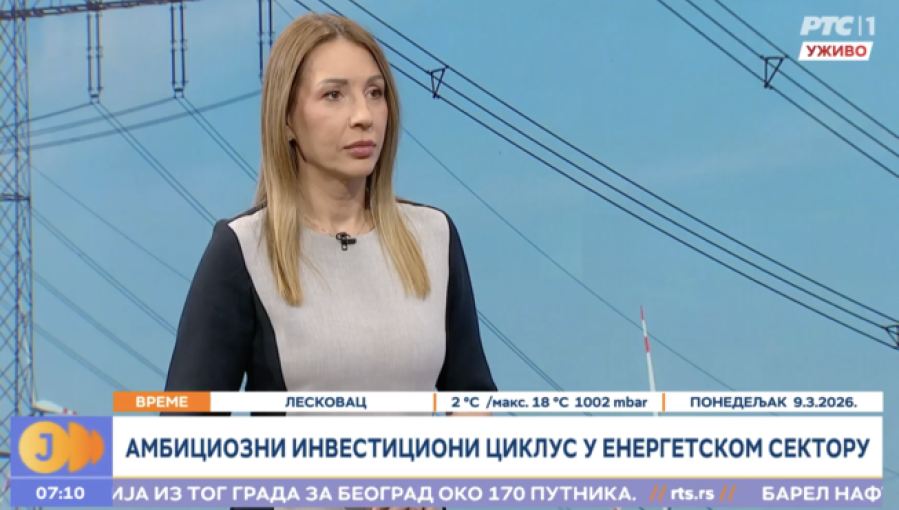
Serbia plans to begin construction of its first nuclear power plant before 2035 to strengthen energy security and expand electricity generation, Mining and Energy Minister Dubravka Dedovic Handanovic said on March 9, according to a ministry statement. 

Belgrade lifted a decades-long ban on nuclear power construction in 2024 and has since held discussions with several potential partners, including France’s EDF and South Korea’s KHNP, as well as Rosatom.

Speaking at the presentation of the Serbia 2030 national strategy on March 7, officials said the government had prioritised nuclear energy within its long-term investment plans for the power sector, Tanjug reported.

“Thirty percent of all planned investments until 2035 are for the energy sector,” Dedovic Handanovic said. “Above all, this includes the start of construction of a new nuclear facility – the first in our country.”

Serbia plans to invest at least €14.4bn in energy projects between 2028 and 2035, according to President Aleksandar Vucic, with nuclear energy emerging as a key pillar of future baseload power supply.

Dedovic Handanovic said about €3bn would be needed for the construction of the plant.

If construction begins as planned, Serbia could commission its first nuclear generating unit shortly after 2040, with a capacity ranging from 1,000 MW to 1,650 MW depending on the technology selected, she said.

In 2024, Serbia amended a law that had been in force for 35 years, removing restrictions that prevented the country from developing nuclear energy.

A national body responsible for developing Serbia’s nuclear programme is now being established, while the government is also focusing on building domestic expertise for the sector.

“We need to strengthen personnel, bring back our experts from abroad and invest in the education of new engineers,” Dedovic Handanovic said.

Serbia is also cooperating with French utility EDF on preparations for the project, drawing on the company’s technical expertise, she told Radio Television of Serbia (RTS) in an interview broadcast on March 9.

Alongside nuclear development, Serbia is planning investments in gas infrastructure and electricity generation to support its energy transition.

Officials say nuclear power will play a central role in ensuring long-term energy stability as demand rises and the country seeks to expand low-carbon electricity production.


The Ultra-High-Energy Neutrino May Have Begun Its Journey In Blazars


Visualization of the ultra-high-energy neutrino event detected by the KM3NeT/ARCA detector in the Mediterranean Sea. The colored tracks show the Cherenkov light produced as secondary particles travel through the water and are recorded by the detector’s optical modules. 

CREDIT: KM3NeT

March 10, 2026 
By Eurasia Review


Three years ago, in the waters of the Mediterranean Sea, the passage of an “ultra-energetic” cosmic neutrino was observed — the most energetic ever detected. The event drew international attention from the scientific community as well as from the media and the public, not least because the origin of this particle — whose energy exceeded that of previously observed neutrinos by more than an order of magnitude — is unknown.


A new paper published in the Journal of Cosmology and Astroparticle Physics (JCAP) by the KM3NeT collaboration, which operates the KM3NeT/ARCA detector off the coast of Sicily, suggests that the source of this particle may be in a population of blazars — active galactic nuclei hosting a supermassive black hole that emit a plasma jet directed toward Earth.

In search of the “culprit”


KM3NeT/ARCA is a neutrino detector immersed in the depths of the sea off the coast of Sicily, and it may come as a surprise that it is still under construction. Nevertheless, on 13 February 2023 it recorded an extraordinary signal: the passage of a neutrino which, at around 220 PeV, far exceeded the energies of all high-energy neutrinos observed up to that point. The event also caught the scientific community off guard: what could have generated a particle with such exceptional characteristics?

To answer this question, the collaboration worked much like forensic investigators deducing who or what left a particular trace at a crime scene: starting from an initial hypothesis, the authors simulated the events that might have occurred and then compared the results with the actual observations.

The authors’ hypothesis — one among several proposed over the past year — is that the ultra-high-energy neutrino may have been produced in a specific class of blazars. “There are several possible explanations for the origin of this particle,” explains Meriem Bendahman, a researcher at INFN Naples and a member of the KM3NeT collaboration, among the authors of the study, which counts hundreds of contributors. “For example, it has been proposed that such neutrinos are generated when ultra-high-energy cosmic rays interact with the cosmic microwave background radiation, the residual light from the early Universe. But there is also the possibility that the neutrino originates from a diffuse flux produced by a population of extreme accelerators, such as blazars.”

A diffuse source

Bendahman explains that there are reasons to believe the observed neutrino did not originate from a single sudden and identified event — such as an explosion or a flare. In similar cases, scientists look for an electromagnetic “counterpart,” that is, a signal in radio, optical, X-ray or gamma-ray emission coming from the same region of the sky in coincidence with the neutrino detection

In the case of the event three years ago, however, no such electromagnetic counterpart was found. “This does not completely rule out the possibility of a point-like source,” Bendahman notes, “but it leads us to consider that our neutrino may come from a diffuse background — that is, from a flux of neutrinos including contributions from many sources.”

“We therefore simulated a population of blazars using an open-source software called AM3, with physically motivated parameters,” Bendahman explains. To build a realistic model of blazars, the researchers fixed many parameters to values already known from other independent observations, such as the magnetic field strength or the size of the emission region.


In the simulations, they mainly varied two key parameters: the baryonic loading, which indicates how much energy is carried by protons compared to electrons (and therefore how many neutrinos can be produced), and the proton spectral index, which determines how the proton energy is distributed and how likely it is to reach extreme energies.

For each combination of these two parameters, they calculated both the diffuse neutrino flux and the corresponding gamma-ray flux, to be compared with observational data.
The comparison with IceCube and Fermi LAT

One of the strengths of Bendahman and colleagues’ work is its integrated approach: in addition to KM3NeT/ARCA data, the authors also considered observations from the IceCube Neutrino Observatory and the Fermi Gamma-ray Space Telescope. They did not rely only on what had been observed, but also — and perhaps especially — on what these instruments had not observed.

The absence of comparable ultra-high-energy events in existing neutrino datasets, including those from IceCube, suggests that such phenomena are extremely rare. Any viable model must therefore also account for this absence. The proposed scenario satisfies this constraint.

Moreover, since neutrino production is generally accompanied by gamma-ray emission, the authors verified that the contribution from blazars does not exceed the extragalactic gamma-ray background measured by Fermi.

In this way, Bendahman and colleagues showed that a population of blazars is a plausible source of the ultra-high-energy neutrino: “We modelled a realistic population of blazars with physically motivated parameters, and we found that this population of blazars could explain the origin of this ultra-high-energy event, while also being consistent with the constraints that we have regarding the gamma-ray and neutrino observations.”

KM3NeT: the best is yet to come


The hypothesis that a population of blazars may lie at the origin of the event remains promising, but it needs to be tested with new data. “We need more observational data,” explains Bendahman. “KM3NeT is still under construction, and we detected this ultra-high-energy neutrino with only a partial configuration. With the full detector and more data, we will be able to perform more powerful statistical analyses and open a new window on the ultra-high-energy neutrino universe.” At the time of the observation, only 21 detection lines of KM3NeT were active, corresponding to about 10% of the final volume of the apparatus.

If confirmed, this KM3NeT collaboration’s interpretation would provide new insights into the ability of blazars to accelerate particles to even more extreme energies than previously hypothesized. “We have never observed such a high-energy neutrino before, and if it turns out to come from cosmic accelerators like blazars,” Bendahman concludes, “it would give us new insight into how these objects can emit particles at energies beyond what we previously expected.”

The Global 5G Divide – STATISTA

The Global 5G Divide – STATISTA
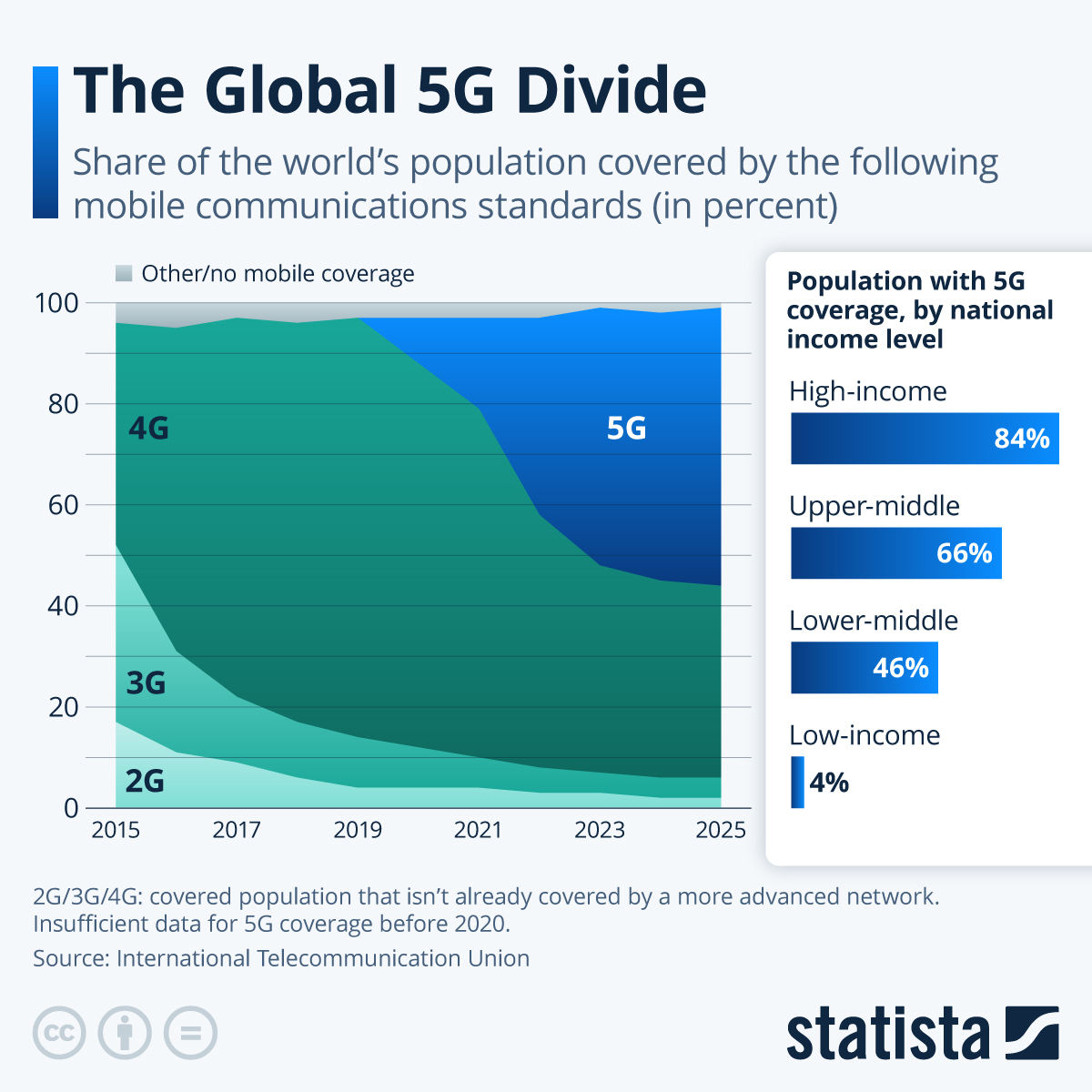
Global 5G coverage reached 55% of the population by the end of 2025, but access remains sharply uneven, with high-income countries enjoying more than 80% coverage while low-income regions — particularly in Africa — remain largely unconnected. / bne IntelliNews
By Tristan Gaudiaut for Statista March 10, 2026

The rollout of 5G technology remains far from bridging the global digital divide. Quite the contrary, the connectivity gap between high-income and low-income regions has widened in recent years, Statista reports.

According to the International Telecommunication Union, 5G networks covered 55% of the world’s population at the end of 2025, but access is highly uneven. As highlighted by our infographic, in high-income countries, over 80% of the population now enjoys 5G coverage, while in low-income countries, less than 5% do. The urban-rural gap is also particularly pronounced: globally, 66% of urban residents have 5G access, compared to just 40% in rural areas (a 26 percentage point difference)​⁠.

Regions like East Asia, led by China, South Korea, and Japan, are at the forefront of 5G deployment, with China alone surpassing the 1bn 5G connections mark in 2024 and reaching near-universal urban coverage. South Korea was the first to launch 5G and now enjoys nearly 100% coverage nationwide, followed by countries such as Denmark, the Netherlands, Switzerland, Singapore and Japan (98 to 99%)​⁠. North America, particularly the United States and Canada, also shows coverage and adoption above the global average, with over 300mn 5G connections and rapid expansion in both urban and suburban areas​⁠.

In contrast, much of Africa and some parts of South Asia and Latin America remain far behind. For example, it was estimated that only 12% of the African population would be covered by 5G by the end of 2025, with rural areas often completely unserved​. Elsewhere in the world, countries like India, while making progress (40% 5G coverage in 2025), still face significant barriers due to infrastructure costs and regulatory challenges.

The ITU emphasizes that closing the global connectivity divide requires not only massive infrastructure investment in developing countries, but also policies addressing affordability, digital skills and equitable access. Without targeted action, the gap is likely to widen in the coming years, leaving rural and low-income populations even further behind in the digital economy. You will find more infographics at Statista

Virtual Reality Games Can Increase A Player’s Desire To Help Others


Immersive Media Communication graduate students Isaac Wu (left; game developer) and Leila Okahata (researcher). The student research team tested a prototype of their custom-built virtual reality game at Climate Change Game Night 2025. 
CREDIT: Photo by Jeremy Henkelman-Parker, University of Oregon


March 10, 2026
By Eurasia Review

Playing a virtual reality game can increase a person’s sense of altruism and influence levels of empathy, according to a new study from University of Oregon researchers.

The study tracked participants’ feelings as played through a virtual reality scenario in which they helped a boy find his lost dog. The results, published in Frontiers in Virtual Reality, suggest that immersive games can motivate people to help, even if they can’t directly relate to someone else’s emotions.

UO communication and media studies expert Samantha Lorenzo is not a gamer, but she knows the power of a good story. Lorenzo has widely studied the social and psychological impacts of different forms of communication and has seen how narratives can play a big role in how people understand information. So when she encountered research about how games can be used for social and emotional benefits, she started getting curious.

She wondered whether narrative-driven games could be used to influence emotional processes, like altruism and empathy. She was especially interested in virtual reality, or VR, due to the immersive nature of the platform, which she theorized could enhance the emotional experience for players, leading to more positive outcomes and longer-lasting effects.

“I had an idea that VR might be an effective tool to influence people’s ability to want to help others and better understand other people’s perspectives,” Lorenzo said. “I wanted to explore possible behavioral changes from immersive environments and the underlying mechanisms that foster altruistic engagement within, and beyond, the gaming world.”


She teamed up with Danny Pimentel, assistant professor at the School of Journalism and Communication. He also codirects the Oregon Reality Lab, where UO students and researchers can develop virtual-, augmented- and mixed-reality media and test their capacity to address social, environmental and business problems.

The research team, led by Lorenzo, decided to explore these questions by developing a narrative-driven VR game that would immerse players in an emotional storyline, so they could analyze whether that gaming experience affected the player’s levels of empathy and altruism. A trio of UO graduate students were instrumental in designing and developing the game.

In their game, Empathy in Action, players enter a neighborhood community where they encounter Alden, a young boy who just lost his dog, Buddy. Players are faced with a range of tasks, both physical and emotional, including searching for clues and deciding whether, and how, to comfort the distraught child.

The researchers considered a few different narratives for the game but landed on the lost dog scenario because it felt like a believable storyline that could happen in real life, Lorenzo said. She and her team thought that a realistic narrative would be the most effective tool for helping people consider how they would actually react in a similar situation.

Both before and after participants played the game, the researchers asked the players a series of questions to gauge whether, and how, the game influenced their levels of empathy and altruism.

“We wanted to see if the game shifted their motivation to help others and if it affected their ability to understand other people’s emotions,” Lorenzo said.

Surprisingly, the team found that a person’s sense of empathy and altruism don’t always increase together.

People’s sense of altruism did go up in the study, but whether they felt greater empathy was more complicated, Lorenzo explained. The researchers saw significantly higher ratings of cognitive empathy, which is an ability to recognize and understand someone else’s feelings. But there was a decline in affective empathy, where a person actually feels the sadness that another person is feeling.

Their data suggested that people might feel moved to help, even if they may not feel greater empathy for those in need.

“People knew that this was a sad situation and that’s why they wanted to help,” she said. However, they didn’t directly feel the same sadness Alden did about losing his dog.


As part of the study, participants suggested potential applications for immersive digital games like Empathy in Action. Their recommendations included classrooms and other learning environments, therapeutic or rehabilitative settings, and conflict-resolution trainings.

Lorenzo stresses that this was an exploratory study, to probe whether VR has the power to influence altruism and empathy, and there’s a lot of room for further research. She believes different storylines could produce different findings. And she personally hopes to build on it through her public health research to see how immersive, narrative-driven interventions could be used for things like understanding and coping with medical challenges.

“This gaming technology is new and exciting, and there’s a lot of potential for researchers to keep exploring how immersive media can be leveraged for social good,” she said.


‘AI brain fry’: Why your brain feels fatigued after using AI chatbots at work

Users with AI brain fry reported difficulty concentrating and headaches, according to a Harvard study.
Copyright Canva

By Anna Desmarais
Published on 

Mental exhaustion from AI use could become more common as employees build and oversee more AI agents.

If you feel mentally drained after spending hours working with artificial intelligence (AI), it may be “AI brain fry,” according to a new study.

Harvard University surveyed over 1,400 American full-time workers at large companies to find out how much they use AI in their work and how it affects their cognition.

Roughly 14 percent of respondents reported feeling a “mental fog” after intensive conversations with AI systems. They described symptoms such as difficulty concentrating, slower decision-making, and even headaches.

Their findings were strong enough for researchers to coin the term “AI brain fry,” describing the mental fatigue from heavy AI use.

The problem is becoming more common as companies start asking their employees to build and manage AI agents, which are capable of performing tasks with little human supervision.

“Employees find themselves toggling between more tools,” the studywrote. “Contrary to the promise of having more time to focus on meaningful work, juggling and multitasking can become the definitive features of working with AI.”

The strain could mean more errors, decision fatigue, and could even boost people’s intentions to quit their jobs, the study found.

The research comes after several social media posts from AI users, claiming they feel increased cognitive load and mental fatigue when working with the programs. One AI founder said he “ends each day exhausted, not from the work itself but from the managing of the work.”

What type of AI work is most mentally draining?

The survey examined how people interact with AI to identify which tasks create the most fatigue.

The most taxing work involved oversight: situations where employees would monitor the outputs from an AI system. Workers doing this kind of monitoring reported 12 percent more mental fatigue than those who did not, the university found.

The researchers say oversight work involves information overload, which the university describes as “feeling overwhelmed by the amount of information one must process at work.”

Oversight workers also said that AI increased their workload because it forces them to track “more outcomes for more tools in the same amount of time.”

There also appears to be a tipping point when it comes to the number of tools people can handle. Productivity began to decline when employees used more than three AI tools simultaneously, the study found.

Participants with brain fry reported making 39 percent more major mistakes than their colleagues who did not experience the same kind of fatigue, the survey found.

Professionals in marketing, operations, engineering, finance and information technologies (IT) were the most likely to report having brain fry.

However, the researchers also found that AI could be used to reduce burnout if it replaces routine or repetitive tasks. They said it is an important distinction between the types of stress that AI can alleviate and others that it could worsen.

Researchers Create Index To Assess Soil Health In Mangroves


March 10, 2026 
By Eurasia Review


Brazilian researchers have developed an index that can measure the health of mangrove soils at different stages. When applied to degraded, restored, and preserved areas, the index revealed that healthy mangroves, including recovered ones, provide ecosystem services at nearly maximum capacity. In contrast, deforested mangroves have only a small fraction of this potential.


The Soil Health Index (SHI) ranges from 0 (worst) to 1 (best) and is described in an article published in the journal Scientific Reports. By translating complex processes into a simple metric, the tool can help managers set conservation and restoration priorities.

The SHI was constructed from a set of variables that together represent the main physical, chemical, and biological processes responsible for soil functioning.

It incorporates attributes related to carbon dynamics, such as soil texture, organic carbon content, and pseudototal iron; the fixation of contaminants, especially different forms of iron minerals; and nutrient cycling, including biological indicators based on the enzymatic activities of soil microorganisms. Together, these variables reflect the soil’s functional state and its capacity to provide ecosystem services.

In the search for nature-based solutions to address the climate crisis, mangroves offer an opportunity to generate environmental and social benefits. In addition to being important carbon sinks, they support fishing and help contain coastal erosion, among other services.


Nevertheless, it is estimated that 30% to 50% of the world’s mangroves have been lost in the last 50 years. This process may be accelerated by climate change, including rising sea levels and more frequent extreme weather events, as well as deforestation and urban expansion.

Brazil has the second largest mangrove area in the world – about 1.4 million hectares along the coastline, second only to Indonesia – and the most extensive continuous stretch, which is located between the states of Amapá and Maranhão. These areas are important for fishing due to their wide biodiversity, with more than 770 species of fauna and flora.
Results

When applied to the Cocó River estuary in the Brazilian state of Ceará, the SHI revealed contrasting conditions in the area, including recovery in restored areas and the associated implications for ecosystem services. Mature mangroves had the highest SHI values (0.99 ± 0.03), and degraded sites had the lowest (0.25 ± 0.01).


Regions replanted nine and 13 years ago had intermediate values (0.37 ± 0.01 and 0.52 ± 0.02, respectively). The oldest regions performed better, indicating gradual recovery.

“The research sought to quantify important aspects related to the health of mangrove soils and their ecosystem services, such as carbon sequestration, contaminant immobilization, and nutrient cycling. We set up a scale from 0 to 1 to monitor ecosystem restoration in relation to the recovery process,” explained environmental manager Laís Coutinho Zayas Jimenez to Agência FAPESP. “My dream now is to use the Soil Health Index in a practical application. To show my peers, the managers, that it’s possible to analyze whether a mangrove that has undergone recovery is fully producing ecosystem services and how long it takes for this to happen.”

The article is based on her doctoral thesis from the Graduate Program in Soils and Plant Nutrition at the Luiz de Queiroz School of Agriculture at the University of São Paulo (ESALQ-USP). It was developed under the guidance of Tiago Osório Ferreira and with the support of FAPESP.

Jimenez is currently the head of the mangrove sector at the Forestry Foundation’s Biodiversity Directorate. She leads a groundbreaking project that aims to measure the carbon stock of São Paulo’s mangroves and detect the presence of toxic elements, such as heavy metals, in their soils.

The work is being carried out in partnership with the Center for Carbon Research in Tropical Agriculture (CCARBON), a FAPESP Research, Innovation, and Dissemination Center (RIDC) based at ESALQ-USP.

The Forestry Foundation is an agency of the São Paulo Department for the Environment, Infrastructure, and Logistics (SEMIL) that is responsible for the state’s Conservation Units. At least 16 of the more than 100 units have mangroves.

“Even if the restoration of mangrove functions is rapid, that can’t be used as an argument for not protecting them from degradation. While some ecosystem services, such as carbon sequestration and nutrient cycling, have been observed to resume, others, such as controlling coastal erosion, take longer,” Jimenez points out.

“Blue carbon”


Mangroves are called “blue carbon forests” because they absorb large amounts of CO₂ from the atmosphere and store organic carbon in the soil for decades more efficiently than tropical forests do. However, changes in land use and pollution increasingly threaten mangrove soils, compromising their functionality.

The global initiative Mangrove Breakthrough aims to restore and conserve 15 million hectares of mangroves globally by 2030. According to the initiative, these ecosystems store the equivalent of more than 22 gigatons of CO₂. Losing just 1% of the remaining mangroves could lead to emissions equivalent to those produced by 50 million cars each year.

“As the study was conducted in a recovery area, the results debunk the idea that the ecosystem is resilient to anthropogenic interventions. We show that it can be degraded at a very rapid rate. But the good news is that the system also recovers quickly, provided that restoration is carried out in an assisted and elaborate manner, respecting the local conditions of the environment in which it’s located. This makes it possible to restore the ecosystem’s functions and its ability to provide services,” says Professor Hermano Melo Queiroz, from the Department of Geography at the Faculty of Philosophy, Languages, and Human Sciences (FFLCH) at USP.

Queiroz is one of the corresponding authors of the article, along with Ferreira, the director of dissemination and a researcher at CCARBON. Other members of the group include Professor Maurício Roberto Cherubin, director of research at the center and a soil health specialist, and Francisco Ruiz.

“In this research, one of the objectives was to translate information on very specific biogeochemical processes for use by environmental managers. By showing that carbon stocks return to restored mangrove areas, the index sends a very important message in the fight against climate change,” says Ferreira, who has been researching mangrove areas for over 25 years and contributed to the creation of a database containing information on the entire Brazilian coast.

Ferreira coordinates the project “BlueShore – Blue Carbon Forests for Offshore Climate Change Mitigation,” which was developed within the Research Center for Greenhouse Gas Innovation (RCGI), an Applied Research Center (ARC) set jointly by FAPESP and Shell, featuring the participation from other companies and hosted by the Engineering School (POLI) of USP.

Open and changeable


The researchers point out that one unique feature of the SHI is the ability to include specific information about each ecosystem and its environment for different regions of the country. For example, it is possible to enter data on ecosystem services, such as carbon sequestration and contaminant immobilization, as well as geochemical data, such as the amount of phosphorus.


“The greater the amount of phosphorus, the more beneficial it is for the ecosystem. However, in the case of mangroves, depending on the context, excess phosphorus can cause contamination or eutrophication,” says Queiroz.

Eutrophication causes the excessive proliferation of algae and cyanobacteria in mangrove areas. These organisms block sunlight and consume oxygen, resulting in foul odors, fish deaths, loss of aquatic biodiversity, and deterioration of water quality.

Now, the scientists say the next step is to understand what type of carbon is “returning” to these soils and how stable it is.

The study also inspired a new project, “Unraveling the Health of Brazilian Mangrove Soils”, which is funded by FAPESP and will apply a similar methodology in different regions of the country.

The proposal combines soil analysis, remote sensing, and spatial modeling to map the health of mangrove soils and their carbon sequestration potential. The initiative aims to generate the first large-scale map of mangrove soil health in Brazil.