Tuesday, March 10, 2026


Dangerous droughts triggered by heatwaves are accelerating at an alarming rate, study shows
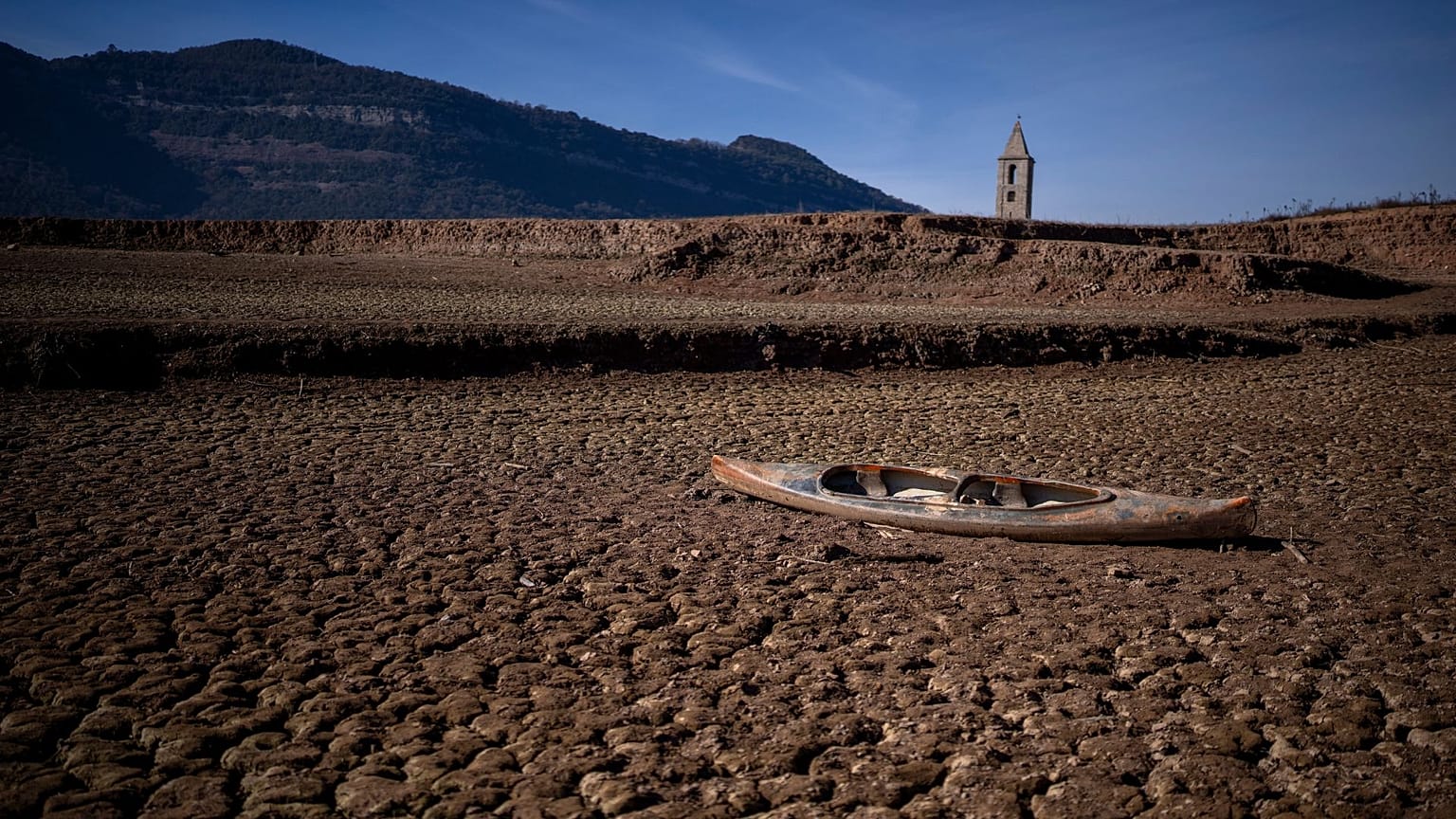
FILE - An abandoned canoe sits on the cracked ground amid a drought at the Sau reservoir, north of Barcelona, Spain, Monday, Jan. 22, 2024.
Copyright AP Photo/Emilio Morenatti, File

By Seth Borenstein with AP
Published on 

Heatwaves, drought, wildfire risk and El Niño are compounding to create a dangerous cocktail of climate change.

Heatwaves that lead to sudden and damaging drought are spreading across the globe at an accelerating rate, highlighting how climate change-fuelled extremes can build dangerously off each other, a new study found.

Researchers from South Korea and Australia looked at compound extreme weather – a one-two punch of heat and drought – and found it increasing as the world warms. But what's rising especially fast is the more damaging type when the heat comes first and that triggers the drought.

In the 1980s, that kind of extreme covered only about 2.5 per cent of Earth's land each year. By 2023, the last year the researchers studied, it was up to 16.7 per cent, with a 10-year average of 7.9 per cent.

The average has likely gone even higher with 2024's record global heat and a 2025 that was nearly as warm, the study's authors said.

Extreme heat followed by drought is rising at an alarming pace

In their study published in Science Advances on 6 March, the scientists said the quickening rate of change is even more concerning than the raw numbers. For about the first two decades since 1980 they examined, the spread of heat-first extremes increased, but the rate in the last 22 years is eight times higher than the earlier rate, the study found.

Events where drought happens first, followed by high heat, remain more common and are also rising. But the researchers focused on those increasing cases where heat struck first. That's because when heat strikes first, the droughts are stronger than when the droughts come first or don't come with high heat, says co-author Sang-Wook Yeh, a climate scientist at Hanyang University in South Korea.

They also lead to 'flash droughts', which are more damaging than ordinary droughts because they come on suddenly, not allowing people and farmers to prepare, says lead author Yong-Jun Kim, a Hanyang climate scientist.

Flash droughts – when warmer air gets thirstier it sucks more water out of soil – have been increasing in a warming world, past studies show.
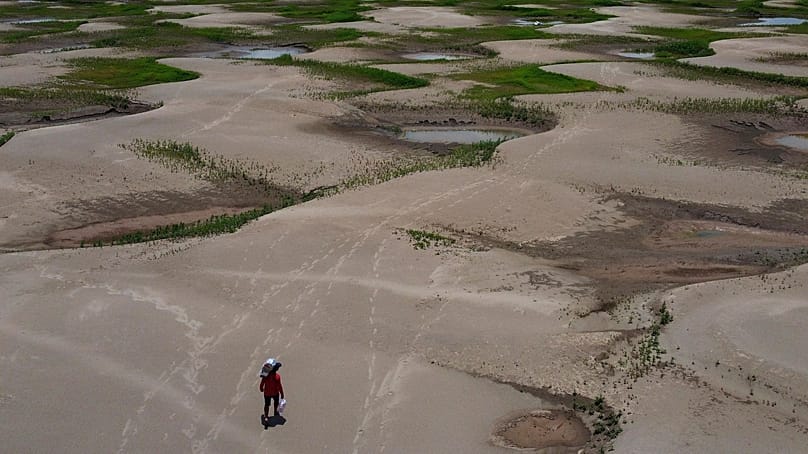
A resident of a riverside community carries food and containers of drinking water during a drought in Careiro da Varzea, Amazonas state, Brazil, Oct. 24, 2023. AP Photo /Edmar Barros, File

Climate change is driving 'compound extremes'

“The study illustrates a key point about climate change: the most damaging impacts often come from compound extremes. When heatwaves, drought and wildfire risk occur together – as we saw in events like the Russian heatwave of 2010 or the Australian bushfires in 2019-20 – the impacts can escalate quickly,” says Andrew Weaver, a climate scientist at the University of Victoria in British Columbia, Canada

“What this study shows is that warming doesn’t just make heatwaves more likely – it changes how heat and drought interact, amplifying the risks we face."

Weaver was not part of the study, but he lives in the Pacific Northwest, where the 2021 heat dome and drought was what Kim calls a top example of what they see rapidly increasing. Others include the 2022 heat and drought around China's Yangtze River and the 2023-24 record heat and drought in the Amazon, Kim says.

“The 2021 Pacific Northwest heat dome illustrates how quickly these compound extremes can escalate – temperatures near 50°C in Lytton (British Columbia) were followed by rapid drying and extreme wildfire conditions that destroyed the community,” Weaver, a former Canadian legislator, says.

Where is most at risk of heat-first droughts?

The study found the biggest increases in heat-first droughts in South America, western Canada, Alaska and the western United States, and parts of central and eastern Africa.

Kim and Yeh say they noticed a “change point” around the year 2000, when everything sped up for heat-then-drought situations.

Jennifer Francis, a Woodwell Climate Research Center climate scientist who wasn’t part of the study, says that change point was “eerily coincident with the onset of rapid Arctic warming, sea-ice loss, and decline in spring snow cover on Northern Hemisphere continents.”

In addition to long-term warming causing more compound extremes, Kim says they saw a speeding-up in the way heat went from land to air and back again just before that 2000 change point. He and Yeh speculate that Earth may have crossed a “tipping point" where the change is irreversible.

Several aspects of Earth's climate and ecological systems changed in the late 1990s, with a possible trigger by a major El Niño event in 1997-98, says Gerald Meehl, a climate scientist at the National Center for Atmospheric Research who wasn't part of the study. But he adds that it's hard to tell whether they are permanent changes.

Some computer models forecast another major El Nino – a natural warming of parts of the Pacific that warp weather worldwide – brewing later this year.


Ariane 64: Europe enters the era of mega-constellations with Amazon Leo satellites


By Monica Pinna
Published on 

On 12 February 2026, the French company Arianespace successfully launched 32 Amazon LEO satellites with its Ariane 64 mega-rocket from the European spaceport in Kourou, French Guiana. The satellites were placed into low Earth orbit with a launch that went far beyond a simple mission.

Ariane’s day starts early. Ours too: we are a group of around thirty international journalists invited to attend the maiden launch of Ariane 64, the most powerful European rocket. We arrive about a hundred metres from the launch pad shortly after three o’clock in the morning to watch the structure surrounding the rocket being moved

Shortly afterwards, the area is evacuated in preparation for the launch. It’s a slow and delicate process.

Philippe Clar, Director of Space Transport Programmes at ArianeGroup, explains:

“In Europe, 13,000 people from 13 countries have been working on this launch vehicle. 600 European companies have supplied the various components of the rocket. ArianeGroup, as prime contractor and designer, has done everything possible to ensure that things run smoothly. But, there is always a small amount of uncertainty, and that is what keeps us excited every time. In the world of launch vehicles, that’s what we live for.”

Europe has come a long way to reach this launch. The Ariane family of European rockets began in 1979 with Ariane 1. Since then, this project has continued to evolve. The development of Ariane 6 began in 2014. It has two versions: Ariane 62, with two boosters – or auxiliary thrusters – and 64, with four boosters. Arianespace selects the version best suited to the mission. On 12 February 2026, the launch of 32 Amazon LEO (Low Earth Orbit) satellites required the maximum power of Ariane 64.

The rocket carried the heaviest payload ever transported by the European launch vehicle into space: nearly 20 tonnes, almost double the payload capacity of the two-booster version, Ariane 62.

David Cavaillolès, Chief Executive Officer of Arianespace, explains:

“This is a major step forward for us. Arianespace was founded 45 years ago, and the vision of my predecessors was to take an institutional launch vehicle, Ariane 1, and bring it to the commercial market.”

Challenge met. After years of waiting, Arianespace has secured its largest private contract with Amazon: 18 launches. The American e-commerce giant plans to deploy more than 3,000 satellites in the coming years. This is a group of satellites - a ‘constellation’ - which work to provide fast internet connectivity to underserved areas. Amazon Leo is in direct competition with Elon Musk’s Starlink.

The hours pass, the excitement builds. I head to the Toucan Station to watch the launch. Only eight kilometres from the launch pad, the closest one authorised. At 1:45 p.m. local time, Ariane 64 takes off. The launch is a success.

“With the success of Ariane 64’s maiden flight,” says Arianespace Chief Executive Officer David Cavaillolès, “the European heavy-lift launch vehicle has demonstrated its ability to accomplish the most complex missions, such as the deployment of large-scale constellations.”

Ariane 5 was decommissioned in 2023 after 27 years of loyal service. The delays accumulated by Ariane 6 left Europe without autonomous launch capacity and dependent on foreign providers for over a year.

The successful launches of Ariane 62 last year, followed by Ariane 64, mark Europe’s return to full autonomy in space access and a step towards greater space sovereignty.

For mere spectators like me, this launch sparked cries of joy, followed by a respectful silence, charged with emotion. This trail of fire in the sky remains etched in my memory, like a striking image of humanity’s ability to go beyond its own limits.

Pakistan: Persistent Peril In Khyber Pakhtunkhwa – Analysis


A map of Pakistan's Khyber Pakhtunkhwa region. Credit: VOA

March 10, 2026
SATP
By Tushar Ranjan Mohanty


On March 7, 2026, three Policemen were killed while 31 people, including five Policemen and 26 civilians, were injured in an improvised explosive device (IED) blast in the Rustam Bazaar area of Wana tehsil (revenue unit) in the South Waziristan District of Khyber Pakhtunkhwa (KP). According to the Police, the explosion occurred when Policemen on routine patrol were present in the area, around 5 pm. Wana Circle Deputy Superintendent of Police (DSP) Asghar Ali Shah said that the explosive material had been planted at the main entrance of the supermarket and was detonated through a remote control or timed device.

On March 7, two people were killed while seven sustained injuries when a quadcopter drone attacked relatives of the Police peace committee in the Manjiwala area of Lakki Marwat District.

On March 6, one person was killed while 19, including two Security Forces (SFs) personnel, were injured in a suicide attack near the Chashma Pul Check Post on the Bannu-Miranshah main road in the Miranshah tehsil of North Waziristan District. Police disclosed that the blast was caused by the detonation of explosives in a vehicle near the checkpost. The Hafiz Gul Bahadur (HGB)-linked Aswad-ul-Khurasan claimed responsibility for the suicide attack, adding that the bomber was from the Al-Hamid suicide force.

On March 4, two Government officials were killed when a bomb landed in the Miranshah camp, the administrative headquarters of North Waziristan District.


On March 4, four terrorists including a key ‘commander’ were killed when a deadly clash erupted between Tehreek-e-Taliban Pakistan (TTP) and Islamic State Khorasan Province (ISKP) in the mountainous area of Ghaljo Narai in Orakzai District. According to local Police, during the exchange of fire, ISKP’s key ‘commander’, Haji Rehman aka Haji Dada, was killed along with three of his associates.

According to partial data compiled by the South Asia Terrorism Portal (SATP), 276 terrorism-related fatalities, including 48 civilians, 71 SF personnel and 157 terrorists, have been reported in the current year, thus far, in KP (data till March 7, 2026). During the corresponding period of 2025, the province recorded 442 fatalities (47 civilians, 83 SF personnel and 312 terrorists).

KP recorded a total of 2,359 fatalities (268 civilians, 455 SF personnel and 1,636 terrorists) in 545 incidents of killing in 2025, as against 1,363 such fatalities (288 civilians, 421 SF personnel, and 654 terrorists) in 487 such incidents in 2024, registering an increase of 73.07 per cent in overall fatalities. On year-on-year basis, overall fatalities have been on a continuous rise since 2020, with an increase from 130 (30 civilians, 69 SF personnel, and 31 terrorists) in 2019 to 216 (61 civilians, 57 SF personnel, and 98 terrorists) in 2020, 301 (72 civilians, 108 SF personnel, and 121 terrorists) in 2021, 527 (119 civilians, 173 SF personnel, and 235 terrorists) in 2022 and further, 941 (205 civilians, 329 SF personnel, and 407 terrorists) in 2023.


Significantly, overall fatalities declined between 2014 and 2019, barring 2018, when they increased to 167, from 129 in 2017. Fatalities had fallen from 946 in 2013 to 607 in 2014, 298 in 2015, and 215 in 2016. Overall fatalities in 2025, at 2,359, broke record of highest fatalities in terrorism-related incidents over the preceding 15 years, since 2009, when 5,883 fatalities were recorded in the province.

Other parameters of violence also underlined the deteriorating security situation in the province in 2025. Fatal terrorism-linked incidents jumped from 702 in 2024 to 766 in 2025, the highest since 2009, when there were 1,432 such incidents. The number of major incidents (each involving three or more fatalities) increased from 140 in 2024 to 245 in 2024, the highest since 2009, when there were 341 such incidents; the resultant fatalities in such attacks also increased from 891 in 2024 to 1,913 in 2025. Similarly, KP accounted for an increased number of explosions, from 142 in 2024 to 159 in 2025 (the highest since 2013, when there were 198 such incidents), with the resulting fatalities in such attacks spiking from 207 to 327.

Similarly, the province recorded an increased number of suicide attacks, from 15 in 2024 to 18 in 2025, with resultant fatalities rising from 93 in 2024 to 151 in 2025. In the worst attack, on June 28, 2025, 13 SF personnel were killed when a suicide bomber rammed an explosive laden vehicle into a Mine-Resistant Ambush Protected (MRAP) vehicle belonging to the Bomb Disposal Unit (BDU) in the Khadi Khel area of Mir Ali tehsil in North Waziristan District. At least 24 persons, with 14 civilians – including women and children – sustained injuries. Following the attack, SFs launched a sanitisation operation in the area, killed at least 14 terrorists. The Hafiz Gul Bahadar affiliated Aswad-ul-Harb’s sub-faction, the Huzaifa suicide bombing cell, claimed responsibility for the attack. The Ittehadul Mujahideen Pakistan (IMP) umbrella alliance linked to Hafiz Gul Bahadur and Lashkar-e-Islam (LI) also claimed for the attack.

Despite a year of rampant violence, the territorial footprint of terrorist groups actually diminished across the Province’s districts. Of 40 districts in KP, 24 recorded terrorism-related violence in 2025, as against 28 Districts in 2024, according to the SATP database. Of 40 districts, 22 districts registered terrorism-related incidents in 2023; 16 in 2022; 21 in 2021; and19 districts in 2020.


The most violent district in 2025 was North Waziristan, with 498 fatalities, followed by Dera Ismail Khan (245 fatalities), Bannu (234 fatalities) and South Waziristan (225 fatalities). In 2024 as well, North Waziristan was the most violent district, with 271 fatalities, followed by South Waziristan (163 fatalities), Khyber (137 fatalities) and Kurram (126 fatalities). In 2023, again, North Waziristan was the most violent District, with 151 fatalities, followed by Peshawar (122), Dera Ismail Khan (109) and South Waziristan (107). In 2022, again, North Waziristan District accounted for 177 fatalities, followed by Peshawar (87), Bannu (60) and Dera Ismail Khan (43). In 2021 again, Waziristan recorded the maximum of 106 fatalities, followed by South Waziristan (51), Peshawar (25) and Bajaur (22). In 2020, North Waziristan recorded 110 fatalities, followed by Peshawar (27) and South Waziristan (21).

In 2025, sectarian violence in KP did not increase, while the province had experienced significant escalation in such violence in 2024, particularly due to the sectarian conflict between Sunni and Shia Muslim groups in Kurram District. Though sectarian conflict between Sunni and Shia Muslim groups is not a new phenomenon in Kurram District, the renewed skirmishing in the district, commencing November 21, 2024, took over a hundred lives. Despite curfews and a ceasefire, sporadic violence continued till the end of 2024. The KP Government disclosed, on January 1, 2025, that both warring Shia and Sunni tribes in Kurram Districts finally signed a peace agreement after more than three weeks of efforts to broker a ceasefire.

Despite the peace agreement, the warring groups never entirely ceased their exchanges of fire. On January 16, 2025, 10 persons, including six drivers, two passengers and two soldiers, were killed in an attack on an aid convoy carrying essential goods to the sectarian violence-marred Kurram District, near the Bagan area. Six terrorists were killed in SF retaliation. At least 10 terrorists and four SF personnel also sustained injuries during the clash. Further, on February 17, 2025, nine persons, including five SF personnel, a truck driver, a passer-by and two attackers, were killed, while another 15, including four drivers and one Police officer were injured, when an aid convoy, consisting of 64 vehicles, en-route to Parachinar, were attacked by unidentified terrorists in the Char Khail, Uchit Baghan and Mandori areas. Another major sectarian attack in the District was on September 3, 2025, when unidentified assailants attacked a passenger vehicle near the Ahmad Khan Kalle area of Kurram, killing at least seven people.

The surge over the past years, in terrorism-related violence in the province can be attributed to three principal factors. First, the United States (US)-Western withdrawal from neighbouring Afghanistan. Second, the fall of Kabul to the Taliban on August 14, 2021. And finally, the collapse of ‘official talks’ between the Pakistan Government and the TTP on November 28, 2022. The spike in violence in KP was foreseeable, when TTP chief Mufti Noor Wali, in the wake of the collapse of peace-talks, asked his fighters to resume attacks.

When the US pulled its forces out from Afghanistan in 2021, it left behind around USD 7 billion worth of military equipment and weapons, including firearms, communications gear, and even armoured vehicles. The Afghan Taliban seized these weapons during the chaotic US withdrawal. On October 10, 2025, Pakistan’s ISPR spokesperson, Major General Ahmed Sharif Chaudhry, claimed that weapons left behind by the US after its withdrawal from Afghanistan had fallen into the hands of TTP militants. Speaking at a press conference in Peshawar, Chaudhry asserted that the Pakistan Army had seized a number of American-made weapons during recent operations against militants. He confirmed that military assessments indicated more than USD 7 billion worth of weapons were abandoned in Afghanistan, many of which were being used by TTP. Chaudhry added that more than 3,000 militant attacks had occurred in Khyber Pakhtunkhwa province over the preceding three months.


With the fall of Kabul to the Afghan Taliban on August 14, 2021, TTP found support from their ideological brothers in their campaigns against Pakistan. On February 4, 2026, the 37th report of the Analytical Support and Sanctions Monitoring Team submitted to the United Nation Security Council (UNSC), revealed that the attacks on Pakistan by the TTP from Afghanistan increased. The report noted that Afghanistan had become a sanctuary for militants who used its territory to launch attacks on Pakistan, but also came at a time when the country was facing a renewed spate of violence. The report noted,
There was an increase in attacks in Pakistan launched by TTP (Tehreek-e Taliban Pakistan) in Afghanistan, which led to military exchanges. Regional relations remained fragile. Islamic State in Iraq and the Levant-Khorasan (ISIL-K) was under sustained counter-terrorism pressure, but it retained a potent capability, coupled with intent to conduct external operations.


The collapse of ‘official talks’ between the then PTI-led Pakistan Government and TTP on November 28, 2022, further aggravated the security situation in the province. On December 16, 2024, the then KP Chief Minister Ali Amin Gandapur claimed that between 22,000 and 24,000 TTP members, had found safe haven in Afghanistan. Gandapur also claimed that an additional 16,000 to 18,000 TTP fighters were operating inside Pakistan. He acknowledged that Pakistan lacked the capacity to maintain law and order along its extensive border with Afghanistan.

On December 6, 2025, the KP Counter-Terrorism Department (CTD) released terrorism statistics for the year, showing a rise in attacks on the Police and significant increases in arrests and intelligence operations. According to the CTD, attacks on the Police rose from 327 in 2024, to 510 in 2025. The CTD also reported the arrest of 25 high-value terrorists, whose carried a bounty on their heads. Intelligence operations increased slightly, by 3 per cent, with 2,791 operations conducted in 2025 compared to 2,703 in 2024. Overall arrests surged from 744 in 2024 to 1,244 in 2025, marking a 40.2 per cent increase. Despite the rise in arrests, terrorist attacks decreased only marginally, with 137 attacks recorded in 2025, compared to 147 the previous year. The number of registered terrorism cases rose by 50 per cent, from 1,058 to 1,588. Police also carried out 320 retaliatory operations in response to 158 terrorist attacks.

Further, on December 14, KP Police released a detailed report revealing that 502 persons, including civilians and security personnel, were killed in terrorism incidents during 2025. According to the report, a total of 1,588 terrorist incidents occurred, resulting in the deaths of 223 civilians and injuries to 570. Additionally, 137 Police personnel were killed and 236 were wounded, while 18 law enforcement personnel from other agencies also lost their lives. The report highlighted the toll on the Federal Constabulary, with 124 personnel killed and 244 injured.

Amid a surge in terrorism-related incidents in the province, SFs were increasingly struggling to respond effectively to the evolving tactics and advanced weaponry used by the terrorist groups. On March 27, 2025, KP Inspector General of Police (IGP) Zulfiqar Hameed acknowledged that the provincial Police lacked the modern equipment necessary to combat the emerging threat. He revealed that militants had begun deploying sophisticated weapons and technologies, including quadcopters, which local law enforcement agencies were currently unable to counter due to technological limitations. Highlighting the growing capability gap, Hameed stated that “They [terrorists] have acquired the latest US weapons and modern gadgets. They’re carrying out quadcopter attacks. If we don’t advance, how will we fight back, since we don’t have anti-quadcopter technology?” He further emphasized that conventional weapons and traditional policing methods were no longer sufficient to counter the evolving nature of terrorist operations.


The Provincial security establishment is constrained not only by the absence of modern and advanced weaponry to confront increasingly capable militant groups, but also by a significant shortage of senior leadership within the Police, the first line of defence against terrorist attacks. On January 8, 2025, KP IGP Zulfiqar Hameed wrote to the Provincial Government, urging it to take up with the Federal Government the issue of a severe shortage of officers in the BPS-18 [Basic Pay Scale 18] and BPS-19 [Basic Pay Scale 19] cadres. In the letter addressed to the Home and Tribal Affairs Department, the IGP noted that the province faced a deficit of 87 officers in these senior ranks, including 48 vacant posts in BPS-18 (Superintendent of Police) and 39 in BPS-19 (Senior Superintendent of Police).

According to the communication, the KP Police had 131 sanctioned posts in BPS-18, but only 83 officers were currently available. These included 21 officers from the Police Service of Pakistan (PSP) and 42 encadered officers, leaving an overall shortfall of 48 positions. Similarly, out of 57 sanctioned posts in BPS-19, only 18 officers were serving – comprising 11 PSP officers and seven encadered officers – resulting in 39 vacancies. The letter further requested the Provincial Government to engage with the Federal Government to facilitate the immediate posting of PSP officers, preferably those with KP domicile, in order to fill the vacant posts and strengthen the leadership capacity of the Police force in the province.

The continuing political confrontation between the PTI-led Government in KP and the Federal Government led by the PML-Nawaz, following the ouster of former Prime Minister Imran Khan, has deepened mistrust between the two administrations, undermining coordinated efforts to counter terrorism in the province. On January 2, 2025, the then KP Chief Minister Ali Amin Gandapur sharply criticized the Federal Government’s policies, arguing that they had contributed to the resurgence of militancy. He asserted that terrorist incidents had increased since the end of Imran Khan’s Government, attributing the trend to what he described as misguided policy decisions at the Federal level.

Subsequently, on April 1, 2025, the then KP Chief Minister’s Adviser on Information, Barrister Muhammad Ali Saif, emphasized that terrorism was a grave national challenge that should not be politicized. His statement called upon the Federal Government to demonstrate its commitment to combating terrorism by strengthening KP’s economic capacity. He urged the immediate release of the province’s pending financial dues, including funds related to hydropower revenues and counter-terrorism initiatives, noting that these payments remained outstanding despite repeated reminders.

While the Federal and Provincial Governments continue to tussle over counter-terrorism coordination and cooperation, Pakistan has repeatedly blamed Afghanistan for allegedly sheltering and patronising anti-Pakistan militant groups operating from its territory following each major attack on Pakistani soil which Afghanistan continues to deny. Amid the escalating exchange of accusations between the two countries, the confrontation intensified on February 22, 2026, when Pakistan carried out a series of predawn airstrikes in eastern and south-eastern Afghanistan, reportedly killing at least 18 civilians, including women and children, and injuring several others. In a statement on X, Pakistan’s Ministry of Information and Broadcasting claimed the strikes targeted camps associated with TTP, its affiliates, and the Islamic State-Khorasan Province (ISKP). It linked the operation to recent suicide attacks in Pakistan, including incidents in Islamabad, Bajaur and Bannu, asserting these were directed by the Afghanistan-based terrorist leadership. The Afghan government rejected these claims, stating that civilian areas, including homes and a madrassa, were struck, and condemned the operation as a violation of its sovereignty, warning of a measured response.


On February 26, 2026, the Afghan forces reportedly launched cross-border attacks targeting military positions in Pakistan. Tensions between the two countries intensified further when Pakistan launched Operation Ghazab-lil-Haq (Righteous Fury) on February 26, 2026. Amid the Pak-Afghan clash, the TTP ‘chief’ Noor Wali Mehsud announced a new spring offensive against Pakistani SFs. This latest directive, named Operation Khyber (or Ghazwa-e-Khyber), was announced by TTP’s Leadership Council on March 4, 2026. The announcement marks a significant escalation in the group’s campaign amidst the ongoing clash between Pakistan and the Afghan Taliban. The directive explicitly instructs militants to focus attacks on Pakistani military outposts, Police, and SF personnel. “Today, on 17 Ramadan 1447 AH (March 2026), after the annual operations of Tehreek-e-Taliban Pakistan titled AL-Khandaq have concluded with many successes, the movement wishes to enter the next phase. According to the instructions of the leadership council, this phase has been named Operation Khyber,” the announcement read. All martyrdoms will be avenged on Pakistan SFs, TTP concluded.

With the ongoing Pakistan-Afghanistan conflict unfolding along Khyber Pakhtunkhwa, the province is likely to bear the brunt of collateral damage and intensified terrorist violence. The volatile security environment along the border not only risks civilian hardship and disruption of economic activities, but may also create opportunities for militant groups to exploit the instability, potentially leading to an escalation in cross-border infiltration, retaliatory attacks, and further deterioration of the already fragile security situation in the province.


Tushar Ranjan Mohanty
Research Associate, Institute for Conflict Management

SATP

SATP, or the South Asia Terrorism Portal (SATP) publishes the South Asia Intelligence Review, and is a product of The Institute for Conflict Management, a non-Profit Society set up in 1997 in New Delhi, and which is committed to the continuous evaluation and resolution of problems of internal security in South Asia. The Institute was set up on the initiative of, and is presently headed by, its President, Mr. K.P.S. Gill, IPS (Retd).
Who is Mojtaba Khamenei, the influential insider now leading Iran?

For decades, Mojtaba Khamenei operated in the shadows, building influence inside Iran’s clerical and security circles without ever holding an official post. Chosen as Iran’s supreme leader, the 56-year-old cleric now steps into the most powerful role in the country after his father was killed in US-Israeli air strikes.


Issued on: 09/03/2026 - RFI

A woman poses with a picture of Iran's new Supreme Leader Ayatollah Mojtaba Khamenei during a rally in central Tehran on Monday 9 March 2026. AFP - ATTA KENARE

Iran’s Assembly of Experts, the clerical body responsible for appointing the country’s supreme leader, elected Mojtaba Khamenei on Sunday during a secret meeting in the holy city of Qom, local media reported.

His name had recently been raised by US President Donald Trump in an interview with the American news site Axios. Trump warned that if Mojtaba Khamenei became supreme leader, “he would be killed like his father”.

Mojtaba Khamenei's wife – the daughter of hardline politician and former parliament speaker Gholamali Haddadadel – was among those killed on 28 February, the first day of the US-Israeli offensive.

For years he had been seen as a possible successor to his father, Ali Khamenei. His prospects appeared to grow after the death of another potential contender, former president Ebrahim Raisi, who was killed in a helicopter crash in 2024.


Years building influence


The younger Khamenei spent decades cultivating close ties with the Islamic Revolutionary Guard Corps (IRGC) and strengthening his influence within Iran’s clerical establishment.

He has consistently opposed supporters of dialogue with Western countries during efforts to limit Iran’s nuclear ambitions.

“He has strong constituency and support within the IRGC, in particular amongst the younger radical generations,” Kasra Aarabi, of the US-based organisation United Against Nuclear Iran, which monitors the activities of the Revolutionary Guard, told Reuters.

Khamenei's rise has also drawn criticism from within Iran’s political system. Some opponents argue that he does not have the religious qualifications required to become supreme leader.

Others say his appointment goes against the intentions of the founders of the Iran, who sought to break with the dynastic traditions of the former monarchy of the shahs.


Shaped by revolution

Born in 1969 in the city of Mashhad, Mojtaba Khamenei grew up as his father joined Ayatollah Ruhollah Khomeini’s movement against the shah.

He later fought in the Iran-Iraq war from 1980 to 1988 and studied theology in the seminaries of Qom, the centre of Shia religious learning.

He holds the clerical title of hodjatoleslam, a rank below ayatollah in the Shia hierarchy, and wears the black turban of a sayyed – indicating direct descent from the Prophet Muhammad.

Mojtaba Khamenei has never held an official position within the government. While he has occasionally appeared at rallies supporting the regime, he has rarely spoken publicly.

Since 2019 Khamenei has been under sanctions imposed by the US Treasury Department, which said he represented the supreme leader “in an official capacity even though he was never elected or appointed to a government position”, apart from working in his father’s office.

The US also said he had been given certain powers by his father and maintained close ties with the commander of the Quds Force – the Revolutionary Guards unit responsible for operations abroad – and with the volunteer Basij militia.

It said those links were used “to advance his father’s regional destabilisation goals and domestic oppression”.


Power and wealth

The new supreme leader heads a financial empire stretching “from shipping in the Persian Gulf to Swiss bank accounts, British luxury real estate and a major Western intelligence service”, an investigation by the US media outlet Bloomberg reported earlier this year.

He is also often seen as having played a role in the rise of ultra-conservative former president Mahmoud Ahmadinejad, who was elected in 2005. Khamenei supported Ahmadinejad’s disputed re-election four years later, which triggered a wave of protests.

In 2022 he became a frequent target of demonstrators during the “Woman, Life, Freedom” protest movement that erupted after the death in custody of student Mahsa Amini, who had been arrested by Iran’s morality police for allegedly violating the country’s strict dress code.

His wife, the daughter of hardline politician and former parliament speaker Gholamali Haddadadel, was killed on 28 February in US-Israeli air strikes, along with several members of her family.

ANALYSIS

Khamenei replaces Khamenei: Iran defies Trump, signals continuity


Iran’s choice of Mojtaba Khamenei to replace his slain father, Ali Khamenei, as supreme leader signals the entrenchment of hardline cleric power and a continued resistance amid the US-Israeli military onslaught. It also underscores US President Donald Trump’s policy failure to detail the goals of the war.


Issued on: 09/03/2026 -
FRANCE24
By: Leela JACINTO

A woman poses with a picture of Iran's new Supreme Leader Ayatollah Mojtaba Khamenei and his late father Ali Khamenei at a rally in in central Tehran on March 9, 2026. © Atta Kenaré, AFP

After more than a week of massive US and Israeli bombardments, around 1,200 reported Iranian deaths, seven fallen US soldiers, damaged infrastructure, skyrocketing oil prices, blocked ships and grounded flights, Iran got the new leader that everyone expected for years.

Mojtaba Khamenei, the 56-year-old son of the late Ayatollah Ali Khamenei, has been named Iran’s new supreme leader as the Islamic regime faces an existential crisis. The message from the Assembly of Experts, the body empowered to appoint the new leader, was clear to Iran and the world. The Velayat-e-Faqih, the Shiite political doctrine underpinning Iran’s Islamic Republic, would continue, the resistance would not be cowed, and the change that many Iranians longed for was nowhere near.

Khamenei was appointed the new leader barely a week after Iranian authorities confirmed the death of his 86-year-old father in the initial round of US-Israeli strikes. Amid rumours about the logistical difficulties of holding a vote and speculation over whether the war could strengthen a reformist voice, the decision was swift and unambiguous.

Trump trying to gauge whether new ayatollah is 'a leader he can work with'
Imagen de archivo de Mojtaba Jamenei, durante su participación en el mitin anual de las milicias Quds. Teherán, 31 de mayo de 2019. AP - Vahid Salemi
10:58


“The message is very clear. It's a message of resoluteness sent by the Iranian government,” said FRANCE 24’s Siavosh Ghazi, reporting from Tehran the morning after the announcement. “The members of the Assembly of Experts have stated that he is continuing his father’s legacy…In effect, the result of the war that was started by [US President] Donald Trump and [Israeli Prime Minister] Benjamin Netanyahu is to replace an 86-year-old with a 56-year-old. So, nothing changes, and the message is: We will stay the course – and continue to resist the Americans and the Israelis.”

To prove the point, Iranian state media followed up the announcement, which was broadcast Monday around 1am local time, with a report of a new attack on Israel. “Iran fired a first wave of missiles under Ayatollah Sayyid Mojtaba Khamenei toward [the Palestinian] occupied territories,” declared state radio stations while state TV aired a photograph of a projectile bearing the slogan, "At Your Command, Sayyid Mojtaba", using an Islamic honorific.

Iran’s oil-rich Gulf neighbours also received a business-as-usual message hours later, with Saudi Arabia, the UAE, Bahrain, Kuwait and Qatar reporting new explosions and attacks on Monday. The Asian markets, opening for a new week of trading, reflected the economic strains of Iran’s blockage of the Strait of Hormuz through which a fifth of the world's oil is transported. Oil prices soared to a historic high of $120 per barrel on Monday morning before falling in a whiplash trading session.

‘Going full dynasty’

Nearly half a century after the Islamic Revolution overthrew the Pahlavi monarchy, the appointment of another Khamenei as leader of the republic was a statement of defiance. During Ali Khamenei’s final years, experts examining likely succession candidates noted the difficulty of choosing his son for a regime that “prides itself on overturning thousands of years of monarchical rule”.

But in the end, the dynastic transfer of power passed without a hitch. “This is not surprising in the sense that all revolutions tend to replace what they destroyed with something very similar,” said Rouzbeh Parsi, a history professor at Sweden’s Lund University. “So, in that sense, going full dynasty is not necessarily surprising. There's also an element of this in Shia theology, where the notion of sacredness and the notion of charisma and leadership goes in succession within the family.”

Iran goes 'full dynasty' © France 24
04:59  


While his father was in office, Mojtaba Khamenei did not have an official government position. But his years of work at the supreme leader’s Beyt office as a sort of aide-de-camp, personal assistant and confidant to his father put him at the centre of political, economic and, most importantly, security networks in Iran.

Iran’s supreme leader is the ultimate authority over all branches of government and head of a security establishment that includes the army, navy, intelligence institutions and, above all, the powerful Islamic Revolutionary Guards Corps (IRGC), a parallel armed force that includes allied organisations such as the Basij militia.

The IRGC also wields economic clout, accounting for nearly 25% of the Iranian economy, according to some estimates.

Khamenei was believed to be his octogenarian father’s right-hand man for several years, fueling speculation that the son was effectively managing the day-to-day running of the state.
Security links, economic assets, religious credentials

Born in 1969 in the city of Mashhad, Khamenei fought in the 1980-1988 Iran-Iraq war with an IRGC division, several of whom ascended to powerful intelligence positions within the force, cementing his links within an organisation that grew to become the country’s most influential institution.

After his father became supreme leader in 1989, he had access to the billions of dollars and business assets spread across Iran's many bonyads, or foundations funded from state industries and other wealth once held by the former shah.

During his father’s rule, Khamenei used his proximity to the leadership to amass his own power, according to US and Israeli sources. US diplomatic cables published by WikiLeaks in the late 2000s suggested that he served as his father’s “principal gatekeeper” and had been forming his own power base within the country.

At a time of crisis, Khamenei’s familiarity with the ropes of administration and knowledge of the shadowy workings of the IRGC – also known as “the Guards” – was viewed as an asset, according to experts.

Khamenei also takes over the position of the Islamic Republic’s spiritual leader with the required religious credentials, unlike his father, who was a midlevel cleric when he replaced Ayatollah Ruhollah Khomeini, the founder of the Islamic republic in 1989.

Khamenei’s clerical studies include instruction in a respected seminary in the holy city of Qom. It was followed by more than a decade of teaching dars-e kharej — the highest level of seminary instruction in Shiite Islamic jurisprudence. He reached the clerical rank of ayatollah in 2022, according to the Qom seminary’s news agency.

This puts him in a secure position in Iran’s power circles, according to experts. “We have to remember that his father needed a decade or so to shore up his own credibility and his own ability to run the system. Now, Mojtaba comes with stronger cards in terms of his connections, but also a weaker position in that he's going to be more dependent on those groups, most likely the Revolutionary Guards,” said Parsi.
‘Replacing the Taliban with the Taliban’

The second of Ali Khamenei’s six children, the new supreme leader was believed to be extremely close to his father. The 56-year-old cleric takes over the post a week after his father, his mother Mansoureh Khojasteh Bagherzadeh, his wife Zahra Adel and one of his sons was killed in the US-Israeli strikes, according to the Iranian government.

The loss is unlikely to see him leaning towards a diplomatic solution to end the current conflict. It also dashes hopes of a reformist faction taking over or influencing the office of the supreme leader.

“I think for the moment, they're all united in that they see an existential threat in the Israeli and American war, and that this is something they need to deal with first,” said Parsi.

Iran’s proxies in the region, including the Houthis in Yemen and Lebanon’s Hezbollah have also fallen in line, pledging allegiance to the new leader.

Across the Persian Gulf, Iranian attacks on the oil-rich Gulf monarchies in retaliation for the US-Israeli strikes have also strengthened the Islamic regime’s ability to disrupt global oil shipments, which in turn determine the power balance in the region, according to some experts.

“What Iran has done is increase the pressure on the Americans, that the whole global system, that the Americans, in a sense, underwrite,” said Parsi. “The Iranians are able to influence what is happening and are making it very difficult for the Americans to contain this conflict to just one country, so the rest of the world would go about their business. That is not the way things are going. The fact that the Americans don't seem to have a clear strategy of what they want with this war, just makes it easier for the Iranians to, in a sense, play this game.”

Last week, Trump declared that he wanted a say in the appointment of Iran’s new leader. That was not to be. As supreme leader, Khamenei, like his father, is now high in the sights of US-Israeli decapitation strikes. But the Islamic regime has delivered its message of continuity no matter the decimation of top personnel.

For some experts, Iran’s appointment of a newer version of an old leader underscores the failure of the US in the region, which was in stark focus during the 2021 Taliban takeover in neighbouring Afghanistan.

Several Iran experts took to social media on Monday to elaborate the point. “The U.S. spent 20 years and trillions of dollars replacing the Taliban with the Taliban,” said Iranian political analyst Ali Alizadeh on X. “Trump replaced Ayatollah Khamenei with Ayatollah Khamenei in just 9 days. The most efficient U.S. president ever,” he noted wryly.
War in the Middle East: economic impact around the world

Paris (France) (AFP) – Here are the latest economic events in the Middle East war on Tuesday:


Issued on: 10/03/2026 - RFI

A petrol station in Cairo. Egypt hiked domestic fuel prices by up to 30 percent, blaming the war © Khaled DESOUKI / AFP

- Markets recover -

- Asian and European stock markets rallied and energy prices eased after US President Donald Trump signalled that the US-Israel war on Iran was "going to be ended soon".

- Tokyo's Nikkei 225 index added more than three percent and the Nang Seng was up 1.5 percent in Hong Kong while Seoul's soared more than six percent as Shanghai advanced a more cautious 0.5 percent.

- European equities were also in the green. Frankfurt's DAX index of top German companies jumped 2.2 percent, the Paris CAC 40 rose 1.7 percent and London's FTSE 100 advanced 1.6 percent. Milan added 2.5 percent.


Energy prices slide back

- World oil prices dropped by around eight percent and European natural gas prices plunged after Trump's comments.

- Brent crude and US crude oil benchmark West Texas Intermediate were hovering either side of the $90 a barrel mark after Monday soaring to almost $120 on fears of fallout disruption to energy supplies from the Middle East.

- But they remain around 20 percent higher than prior to the start of the conflict.

- European gas prices tumbled around 15 percent with the Dutch TTF natural gas contract, considered the European benchmark, trading at around 48 euros ($56), after rising sharply the day before.
Iran warns will block Gulf oil

- Iran on Tuesday vowed to block oil exports from the Gulf while its war with the United States and Israel continues, in a stark rebuke to Trump's boast that the conflict was all but over.

- Oil prices spiked after Iranian attacks on shipping closed the strategic Strait of Hormuz in response to the US-Israeli strikes that killed its supreme leader.

- The Islamic republic's Revolutionary Guards Corps (IRGC) mocked Trump's apparent bid to lessen the economic impact of the war, warning: "The Iranian armed forces... will not allow the export of a single litre of oil from the region to the hostile side and its partners until further notice."
SAS airline hikes prices

- Scandinavian airline SAS said it will introduce a "temporary" price increase due to soaring oil prices triggered by the war in the Middle East.

- "In recent days, jet fuel prices in Europe have risen sharply -- reaching their highest levels since 2022 -- largely driven by disruptions to global supply. This development affects the entire aviation industry and has an immediate impact on airlines' cost base," the company said in a statement to AFP.

- G7 energy ministers -

- G7 energy ministers are to meet Tuesday in Paris to discuss energy policy, French government spokesperson Maud Bregeon told France 2 television.

- "We shall convene the G7 Energy meeting on the sidelines of the international nuclear summit being held in Paris to make progress on this (oil price) issue, with the aim of lowering prices," said Bregeon, who is also minister delegate for energy.
Egypt hikes fuel prices

- Egypt raised domestic fuel prices by up to 30 percent on Tuesday, blaming "exceptional" global energy pressures caused by the Middle East war, which has disrupted oil supplies and shipping routes.

- The increases, announced by the petroleum ministry, apply to gasoline, diesel and natural gas used in vehicles.

© 2026 AFP
Iran says European countries helped create conditions for US, Israeli attacks

Iran on Monday accused European countries including France of creating the conditions that led to the United States and Israel attacking the Islamic republic and triggering a war. Meanwhile, the price of gas is soaring, and attacks on Iran’s oil infrastructure continue.


Issued on: 10/03/2026 - RFI


In this picture obtained from Iran's ISNA news agency on 3 March 2026, rescue workers carry the body of a victim after a strike on a building in Tehran's Enghelab Square. 
AFP - MAJID KHAHI


"European countries have unfortunately helped create these conditions," said foreign ministry spokesman Esmaeil Baqaei during a weekly press briefing.

"Instead of insisting on the rule of law, instead of standing up to the bullying and excesses of the United States, they spoke and agreed with them at the UN Security Council regarding the discussion on restoring sanctions, and all these things together emboldened the American and Zionist parties to continue committing their crimes."

In turn, European Union Commission President Ursula von der Leyen says that “Iran’s war effects are already a reality in Europe."

Oil prices soared Monday with Brent crude peaking just short of $120 (€103) a barrel as the US-Israeli war against Iran continued into a second week, with Tehran launching fresh retaliatory strikes in the Gulf.

This photograph shows a board displaying oil prices at a petrol station in Toulouse south-western France on March 9, 2026. Stock markets plunged on March 9, 2026 as oil and gas prices soared on fears about supplies from the Middle East with the US-Israeli war against Iran continuing into a second week with no sign of letting up. 
AFP - ED JONES


In a meeting with EU ambassadors, von der Leyen said that the Union is "now seeing a regional conflict with unintended consequences. And the spillover is already a reality today."

"Our citizens are caught in the crossfire. Our partners are being attacked," she said, citing an Iranian-made drone hitting a British base on EU-member Cyprus, trade disruptions and the "displacement of people".

Strait of Hormuz


While Iran has not officially shut off the Strait of Hormuz – through which a fifth of the world's crude supplies and a substantial amount of gas run – shipping through the critical waterway has all but dried up.

Iranian Revolutionary Guards said they would not allow the export of oil from the region to allies of the United States and Israel as long as the war continues, according to a report from Iran's Tasnim news agency on Tuesday.

European gas prices jumped as much as 30 percent Monday, albeit remaining well below the peaks reached in the aftermath of Russia's 2022 invasion of Ukraine.

Von der Leyen stressed that "there should be no tears shed for the Iranian regime".

"The people of Iran deserve freedom, dignity, and the right to decide their own future – even if we know this will be fraught with danger and instability during and after the war".

On Tuesday, Iranian Foreign Minister Abbas Araghchi told US broadcaster PBS News that his country was prepared to continue attacks for as long as necessary and ruled out talks after President Donald Trump said the war with Iran would be over "very soon".

Oil depots targeted


Meanwhile, residents of Tehran are facing the aftermath of another relentless volley of Israeli attacks on oil depots outside the Iranian capital.

On Sunday, they woke up to find it was still dark outside, an apocalyptic sight created by thick black smoke billowing from oil depots hit by Israeli strikes.

A dark smoke cloud engulfs a residential building near an ongoing fire following an overnight airstrike on the Shahran oil refinery in northwestern Tehran on March 8, 2026. AFP - -

With the sun blotted out, disoriented people in the Iranian capital had to turn on their lights to see through the gloom.

"I thought my alarm clock was broken," a driver in his fifties told French press agency AFP on condition of anonymity.

The fuel depot strikes are the first time Iranian oil infrastructure has been targeted during the nine-day war.

(With newswires)


Trump ‘gambling with lives’ in Iran, top EU lawmaker Neumann tells Euronews


By Mared Gwyn Jones
Published on 

The European Parliament's top lawmaker on Iran tells Europe Today that she cannot 'endorse a war' where the end game is unclear, saying regime change cannot be triggered by 'bombs alone' as Trump contradicts war timeline.

The chair of the European Parliament's Iran delegation, Hannah Neumann of the German Greens, has warned that US President Donald Trump is "gambling with the lives of 90 million Iranians" as the conflict gripping the Middle East continues to escalate.

"Donald Trump promised that help was on the way to the protesters before he started this war," Neumann said, referring to a brutal crackdown in January by the Iranian regime on protesters sparked by a currency crisis and broadening to political opposition.

On Monday, Trump said he expects the war to end “very soon” but provided no timeline on when that might be, contradicting an earlier timeline indicating the military operation would last four to five weeks. He also made conflicting statements as to whether the war is intended to topple the mullah regime entirely or pursue a Venezuela-style transition.

It is "quite unclear what his (Trump's) goals are, what his strategy is to get there, and he’s gambling with the lives of 90 million Iranians and the whole region, " she told Euronews. "I cannot endorse a war when I don’t know what the strategy is, and the Iranians clearly deserve better."

Indicating a permanence of the hardliners, an assembly of clerical experts appointed Mojtaba Khamenei, the second son of Iran's long-time Supreme Leader Ali Khamenei, as his father's successor. Trump has slammed the appointment as "unacceptable."

Neumann said the appointment "signals continuity and more repression," adding that "this is clearly not what Iranians had hoped for", while stressing regime change can only come from the inside with "with a broad coalition of people from outside and inside Iran who represent the diversity of the country and can come up with a new vision."

"This cannot come from bombs alone," she said.

The European Union's response to the conflict so far has been fragmented, with the Spanish and Slovenian government outliers in their condemnation of the initial US-Israeli strikes on Tehran last week. Madrid called the operation illegal and escalatory.

Neumann, who has for years worked closely with Iran's pro-democracy movements, said that the bloc has a role to play in calling for a return to diplomacy.

"I think we have to indeed urge de-escalation. The first thing is to work together with the Gulf countries. This is not our war, but we have to deal with the consequences," she said.

She urged EU efforts at de-escalation to be directed not only at the Iranian regime, but also towards the US and Israel.

"We should work together with the Gulf countries to push for de-escalation towards Trump and Israel, to clearly make them understand what they are gambling with, and so they tell us what their goals are and then have a reasonable discussion," she said.

"The question is how many of its own people and how much of the region are they dragging into the abyss."


Franz Ferdinand call out ‘warmongering murderers’ IDF and their song theft in propaganda video

Franz Ferdinand call out ‘warmongering murderers’ IDF and their song theft in propaganda video
Copyright AP Photo

By David Mouriquand
Published on 

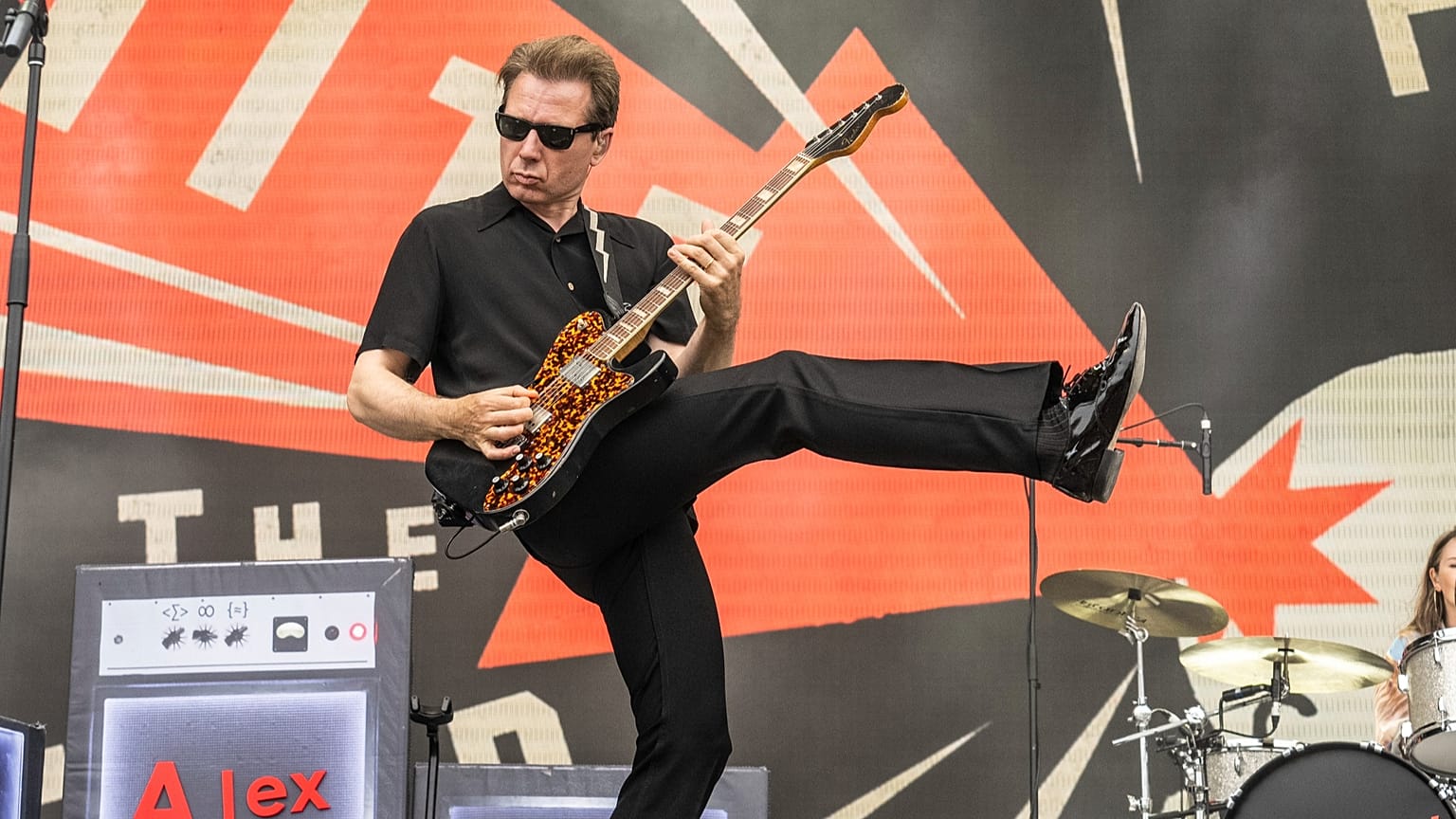
“These warmongering murderers are using our music without our consent." Franz Ferdinand frontman Alex Kapranos has criticised the IDF for using their hit song 'Take Me Out' in a propaganda video praising deadly airstrikes in Iran.

The Israeli Defense Forces (IDF) have taken a page from Donald Trump’s book by using a band’s song without their prior authorisation for a propaganda video.

The IDF have used Franz Ferdinand’s 2004 hit song ‘Take Me Out’ in a new video, with the song playing over footage of fighter planes and ground explosions – while an Israeli soldier praises their deadly airstrikes.

The IDF have labelled the post: “Operation Roaring Lion – this is how it’s done.”

Franz Ferdinand’s frontman Alex Kapranos has responded to the video, posting on his Instagram Stories: “These warmongering murderers are using our music without our consent. This makes us both nauseous and furious. Kind of typical though, isn’t it? To strut up and take what isn’t theirs with a vile arrogance…”

Recently, one of the writers of ‘La Macarena’ has spoken out against the unauthorised use of the song in a White House social media video showing bombings in Operation Epic Fury in Iran.

Antonio Romero Monge, author of the legendary song and one of the members of the duo Los del Río, said he felt "profound discomfort" after the video went viral.

On 28 February, Israel and the US launched joint airstrikes across Iran, killing the country’s supreme leader Ayatollah Ali Khamenei and targeting hundreds of military sites, and a girl’s school.

There have been calls for an independent investigation into the attack on the school which killed 165 young pupils, with United Nations experts denouncing the deadly bombing as “a grave assault on children”.

In a statement last Friday, a group of UN experts said girls between the ages of seven and 12 were the main victims of the attack on the primary school in Minab on the first day of the United States and Israel’s war against Iran.

“An attack on a functioning school during class hours raises the most serious concerns under international law and must be urgently, independently, and effectively investigated, with accountability for any violations,” they said. “There is no excuse for killing girls in a classroom.”

Rights advocates have pointed to the Minab school attack as evidence of potential war crimes being committed by Israel and the US in a war that legal experts say was launched in violation of the UN Charter.